
 Login
Login Register
 Submit a Paper
 Propose a Special lssue
 Open Access
ARTICLE

Profiles of Parent-Child Attachment and Peer Attachment among Adolescents and Associations with Internalizing Problems
Normal College, Shihezi University, Shihezi, 832000, China
* Corresponding Author: Haidong Zhu. Email:
(This article belongs to the Special Issue: Father/Mother Absence and Moral Emotion)
International Journal of Mental Health Promotion 2025, 27(3), 401-420. https://doi.org/10.32604/ijmhp.2025.061059
Received 16 November 2024; Accepted 26 February 2025; Issue published 31 March 2025
 View Full Text
 Download PDF
Abstract
Objectives: Attachment is a profound and enduring connection to the emotion children progressively form with their parents as they mature. It significantly impacts the social and psychological development of kids and teenagers. This study aimed to explore the latent profiles and longitudinal transition patterns of parent-child and peer attachments among adolescents. Methods: A cohort of 914 participants from China completed the measures with a twelve-month interval. There were 46.8% boys and 53.2% girls in this survey. Latent profile analysis (LPA) was adopted to explore the distinct profiles reflecting different parent-child and peer attachment response patterns at each time point. Latent transition analysis (LTA) was used to examine the membership of distinct latent profiles and how individuals move between profiles over time. Results: Three latent profiles were found: the poor parent-child communication profile, the moderate attachment profile, and the good attachment profile. It was shown that the transition probability from the poor parent-child communication and good attachment profiles to the moderate attachment profile was higher than the transition probability between the poor parent-child communication and good attachment profiles. Patterns of parent-child and peer attachments were associated with depression and anxiety. Conclusion: This study demonstrates differences in adolescents’ attachment to fathers, mothers, and peers and the need for targeted interventions for groups of adolescents with moderate levels of parent-child and peer attachment.Keywords
Attachment is a deep, secure, and long-lasting emotional bond that an individual forms with an important other at an early age. It endures throughout life and offers security and comfort [1]. Researchers have always studied attachment from the perspective of multiple subjects. Parent-child attachment and peer attachment are the two primary attachment bonds for kids and teenagers. The emotional connection between a baby and a particular object, particularly the attachment between a baby and its mother—was the primary emphasis of early attachment theory. As studies have advanced, researchers have shown that attachment requirements and feelings continue “from cradle to grave,” accompanying people throughout their lives. The most fundamental of these, parent-child attachment, is linked to a person’s healthy psychological development [2] and significantly influences the formation of other attachment relationships [3]. As a result, it is also the most crucial attachment bond during childhood. Nevertheless, when people approach puberty, they progressively interact with people other than their immediate family and establish strong emotional bonds.
Teenagers encounter more school life than home life, even though the parent-child connection remains the most fundamental attachment bond for people in adolescence. People’s emotional ties to their peers get stronger [4]. According to the multiple attachments phenomenon, adolescents who form strong attachment bonds with significant others—like peers and primary caregivers—are better able to withstand the negative effects of life’s many setbacks, which promotes psychological growth and the formation of a sound personality [5]. Adolescents’ parent-child and peer attachments contribute to individual development, and the roles played by these attachments also show some similarities. On the one hand, adolescents’ social needs with peers are constantly increasing, and their influence from friends is gradually increasing. As their sense of independence awakens, their relationship with their parents changes towards equal interaction, so adolescents perceive their parents’ support to be gradually equal to that of their peers [6]; on the other hand, although parents gradually relax their supervision as their children grow up and give them more space to spend with their friends, they still have an unshakable influence on their children [7].
The Internal Working Model (IWM), a mental model of self-worth assessments and perceptions of support from others, is formed by people during attachment formation. According to Armsden and Greenberg’s investigation into the IWMs of adolescent attachment, adolescents’ attachment objects are primarily their parents, peers, and other significant individuals, and they believe that adolescent attachment includes trust in attachment objects, communication with attachment objects, and alienation caused by inappropriate responses from attachment objects [8]. Ultimately, attachment is divided into trust, communication, and alienation. Among them, adolescents may feel positive emotions through communication and trust, but they may experience bad emotions through alienation. IWMs are not set in stone, even though they are developed early in life. As relationships with others change and experiences accumulate, especially new positive adult relationships emerge, IWMs may be adjusted or changed, impacting existing attachment patterns [9]. According to IWMs, researchers have previously divided attachment relationships into three types: secure attachment has a positive self and a positive other; avoidant attachment has a positive self and a negative attachment; and anxious attachment has a negative self and a positive other [10]. Later, researchers identified an attachment type that vacillates between avoidant and anxious attachment and is uncertain about handling close relationships, which they named disorganized attachment [11]. Additionally, some academics distinguish between two categories of attachment relationships: secure and insecure [12].
Prior studies on parent-child and peer attachments have mostly taken a variable-centered approach. The variable-centered method, on the other hand, assumes that all people are at the same level and often analyze using the mean and standard deviation of item scores. It reveals the types of parent-child and peer attachments at the group level. However, in reality, this is not the case, and there is a significant likelihood of father role absence in the adolescent population. If adolescents do not have emotional engagement with their dads as they grow up, it can lead to several emotional and behavioral issues [13]. Therefore, adolescents from diverse backgrounds also experience different attachment situations. For example, adolescents may exhibit high levels of peer attachment but low levels of parent-child attachment, or they may have very good mother-child attachment but low levels of father-child attachment. The person-centered approach, which has been used in many research studies in recent years, entails determining a person’s category based on sample data and integrating it with information like theoretical assumptions and model fitting to identify many possible kinds of analysis. This method can better explain sample variability between subgroups, show the consequences of mixed effects across dimensions, pinpoint certain conditions for theoretical models, and show how subgroups relate to the end variable [14,15]. One study employed a person-centered approach and classified attachment relationships into five subtypes using latent profile analysis (LPA) to investigate the partner, peer, and parent-child attachment of Finnish youths between the ages of 17 and 19: All secure, All insecure, Parents insecure-Peers secure, Parents secure-Friend insecure and Parents secure-Partner insecure [16]. Other studies have classified adolescent parent-child and peer attachment types as insecure parent-peer attachment, secure parent-insecure peer attachment, insecure parent-secure peer attachment, and secure parent-peer attachment [17]. China’s nuclear families are deeply influenced by Confucianism, which emphasizes traditional family values such as ‘men being responsible for the outside world and women being responsible for the home’ and ‘the husband being the leader and the wife following him’. These values have led to a lack of fatherly figures in many Chinese families and differences in mother-child and father-child attachments [18]. Cultural differences should also be fully considered when exploring attachment relationships. Therefore, a person-centered approach based on sample data classification can more effectively conduct targeted research.
More research is needed to fully understand how parent-child and peer attachments develop. It has been established how parent-child attachment develops. Despite starting in infancy, parent-child attachment evolves as people mature. Adolescents, in particular, experience quick changes in both their internal and external environments, and they may also experience fluctuations in their connection to their parents [19]. According to existing studies, the average degree of attachment styles varies from childhood to late adolescence. Adolescents become more avoidant in their attachment to their mothers, and the overall level decreases [20]. The focus of attachment gradually changes as children become older, with peers having a greater impact on teenagers [21] and peer attachment growing from adolescence to early adulthood [22]. According to a study that collected longitudinal attachment data on Americans aged 13 to 72, attachment levels often tend to decline throughout a person’s life. Consequently, it’s important to monitor changes in adolescent parent-child and peer attachments [23]. One study explored peer attachment and parent-child relationships from a person-centered approach. It classified the peer attachment and parent-child relationships of high school students into three latent profiles: poor, moderate and good peer attachment and parent-child relationships [24]. However, the study only classified the parent-child relationship into two scores, the father-child and mother-child relationships, without delving into the emotional connection between adolescents and their parents. latent transition analysis (LTA) is a longitudinal extension of LPA that can comprehensively examine the horizontal measurement and longitudinal change description of latent variables. It evaluates the transition probability between subtypes over time and enables the person-centered examination of sample data subtypes. To better understand the developmental trends of adolescents’ attachment relationships and the variations in their impact on internalizing problems, LTA can be used to concurrently explore various combinations and patterns of change in parent-child and peer attachments.
Numerous theoretical and empirical studies have shown that attachment relationships can profoundly impact adolescents’ internalizing problems. Attachment theory states that an individual’s early secure attachment experience with a primary caregiver helps them to obtain love and support, making it easier for the individual to trust others, establish positive interpersonal relationships, and cope with the emotional problems that arise in life with optimism [25]. Children in secure attachments have a sense of security and experience more positive emotions [26]. These kids have better social skills and emotional regulation abilities when they reach adolescence, are more likely to use healthy coping mechanisms when faced with difficulties [27], and are better able to lessen internalizing problems [28,29]. This opinion is also supported by empirical research. Insecure parent-child attachment has a preceding Function on individual depression and anxiety [15] and can predict emotional problems [30,31]. According to developmental contextual theory, developmental factors such as family and peers interact to influence adolescents [32]. Peer attachment has also been demonstrated to have a negative predictive on emotional challenges like depression and anxiety [33] and to mitigate the negative of adverse familial circumstances on the development of teenage psychological health [34]. A study on attachment and child development in black families shows that the correct use of attachment theory can help children withstand social pressures, promote their safety, and promote positive development [35]. Results from meta-analyses lend credence to the notion that adolescents who have stable attachment bonds may be less susceptible to anxiety and depressive symptoms [36,37]. Neuroscientific evidence reveals the co-morbidity of depression and anxiety as major components of internalizing problems, requiring a comprehensive and individualized approach to explore their impact on attachment [38,39]. However, the study’s results show cross-cultural differences. According to a study of college students in the United States, peer and mother-child attachments were closely associated with internalizing difficulties, while father-child attachment had no effect on either of these aspects [40]. On the other hand, a study conducted in Pakistan on 936 late adolescents revealed that while peer and maternal attachment quality did not directly correlate with depression and anxiety symptoms, paternal attachment did have a direct predictive effect on depressive symptoms [41]. Research by Chinese scholars has shown that adolescents’ attachment to parents and peers has a certain impact on their emotional and behavioral problems [42,43]. Therefore, this research topic is worth exploring further in terms of the relationship between different parent and peer attachment subtypes in Chinese adolescents and adolescents’ internalizing problems.
In conclusion, this study employed adolescents as participants and utilized LTA to examine the latent profiles and transitions of parent-child and peer attachment at two-time points to confirm the predictive significance of various subtypes of peer and parent attachment on internalizing issues in adolescents.
2.1 Participants and Procedure
The research protocol was reviewed and approved by the Medical Ethics Committee of the First Affiliated Hospital of the Medical College of Shihezi University (KJ2023-476-01) before the study commenced.
This study adopts a longitudinal design. Students from 3 junior high schools and 1 senior high school in Northwest China were selected for two formal surveys. After obtaining the consent of the school administrations, participants, and their guardians, invitation letters were sent to the students in September 2023 (T1) and September 2024 (T2), 4–6 non-graduating classes were selected from each school to conduct a paper questionnaire by professionally trained psychology postgraduate students. During the administration of the test, the master tester explained in detail to all participants the instructions for guiding the questionnaire and how to answer the questions, emphasizing the anonymity of the administration and the fact that the purpose of the test was for research purposes only, to allay the concerns of the subjects. After completing the questionnaire, the questionnaires were collected on the spot, and the whole process took about 30 min. After excluding 38 invalid questionnaires (missing values more significant than one-third of the total number of questions, option answers show regularity), a total of 1008 valid questionnaires were finally recovered in the first questionnaire survey (T1), and 914 valid tracking questionnaires were recovered in the second questionnaire survey (T2). The respondents’ ages ranged from 12–17 years old (mean = 14.16, standard deviation (SD) = 1.41), with male students constituting 46.80% of the respondents. As for socio-demographic characteristics, 18.9% were only children, and 81.1% were not two-parent families. As for socio-demographic characteristics, 18.9% were only children and 81.1% were not only children; 87.6% were two-parent families, 9.1% were single-parent families, and 3.3% were reconstituted families.
The attrition rate between the two administrations was 9.33%, and there were no statistically significant differences (p-value > 0.05) in terms of gender and age in T1 between the attrition subjects and the follow-up subjects.
2.2.1 Parent-Child Attachment Scale
The parent-child attachment questionnaire modified was used to assess parent-child attachment [44]. The questionnaire consists of two sub-questionnaires: father-child attachment and mother-child attachment. Each sub-questionnaire contains 15 questions with a 5-point Likert scale ranging from 1 (rarely or never true) to 5 (almost always or always true), covering three core dimensions: trust, communication, and alienation. Calculating the average value of each dimension, adding the scores of the two dimensions of communication and trust, and subtracting the score of the alienation dimension, the sum obtained is the final score of adolescent parent-child attachment. The higher the score, the stronger the parent-child attachment. In this study, Cronbach’s α of the scale for T1 and T2 are 0.83 and 0.84, respectively, and the Cronbach’s α of the sub-questionnaires are in the range of 0.76–0.90.
The peer attachment subscale of the Parent-Peer Attachment Questionnaire was used to assess peer attachment [8]. The questionnaire consists of 25 questions covering the three core dimensions of trust, communication, and alienation. Items were rated on a 5-point Likert scale ranging from 1 (rarely or never true) to 5 (almost always or always true). Calculating the average value of each dimension, adding the scores of the two dimensions of communication and trust, and subtracting the score of the alienation dimension, the sum obtained is the final score of adolescent peer attachment. The higher the score, the stronger the peer attachment. In this study, Cronbach’s α of the scale for T1 and T2 are 0.81 and 0.84, respectively, and Cronbach’s α of the sub-questionnaires are in the range of 0.68–0.91.
The Center for Epidemiological Studies-Depression (CES-D) was used to assess the frequency of depressive symptoms or feelings in the past week, with a focus on depressive mood [45]. The scale consists of 20 questions, 4 of which are reverse scored. Items were rated on a 4-point Likert scale ranging from 0 (did not apply to me at all) to 3 (applied to me very much or most of the time). In this study, the Cronbach’s α of the scale for T1 and T2 are 0.79 and 0.82, respectively.
The Self-Rating Anxiety Scale (SAS) was used to assess subjects’ subjective feelings of anxiety and changes in their lives [46]. The scale consists of 20 questions, 5 of which are reverse scored. Items were rated on a 4-point Likert scale ranging from 0 (did not apply to me at all) to 3 (applied to me very much or most of the time). In this study, Cronbach’s α of the scale for T1 and T2 are 0.75 and 0.80, respectively.
A small number of missing items were present in this study’s data; therefore, missing values were processed before data analysis. Since missing data were less than 1% of the total data, missing data were processed using full information maximum likelihood estimation.
The data collected was stored and processed using SPSS 26.0 software. The data were then further analyzed using Mplus 8.3. First, we conducted LPA for each time point to explore the different characteristics of parental and peer attachment at each time point separately. Starting with the initial model, the number of profiles in the model gradually increased until the model that fit the data best was found. Model fit indices included the Akaike Information Criterion (AIC), Bayesian Information Criterion (BIC), Adjusted BIC (aBIC), Entropy, Lo-Mendell-Rubin Likelihood Ratio Test (LMR-LRT), and Bootstrapped likelihood ratio test (BLRT). Smaller values of AIC, BIC, and aBIC indicate better model fit [47]. Entropy is a measure of classification accuracy, with higher values indicating better classification quality [48]. The LMRT and BLRT are significance tests between two models with k classes against k-1 classes; a significant p-value indicates that the k class is better [49]. Based on the results of LPA, unconditional latent transition analysis (LTA) was adopted to examine the membership of distinct latent profiles and how individuals move between profiles over time. On this basis, Analysis of Variance (ANOVA) and Multiple Comparison Tests were used to test whether there were significant differences in depression and anxiety across attachment subtypes.
3.1 Common Method Bias Control and Test
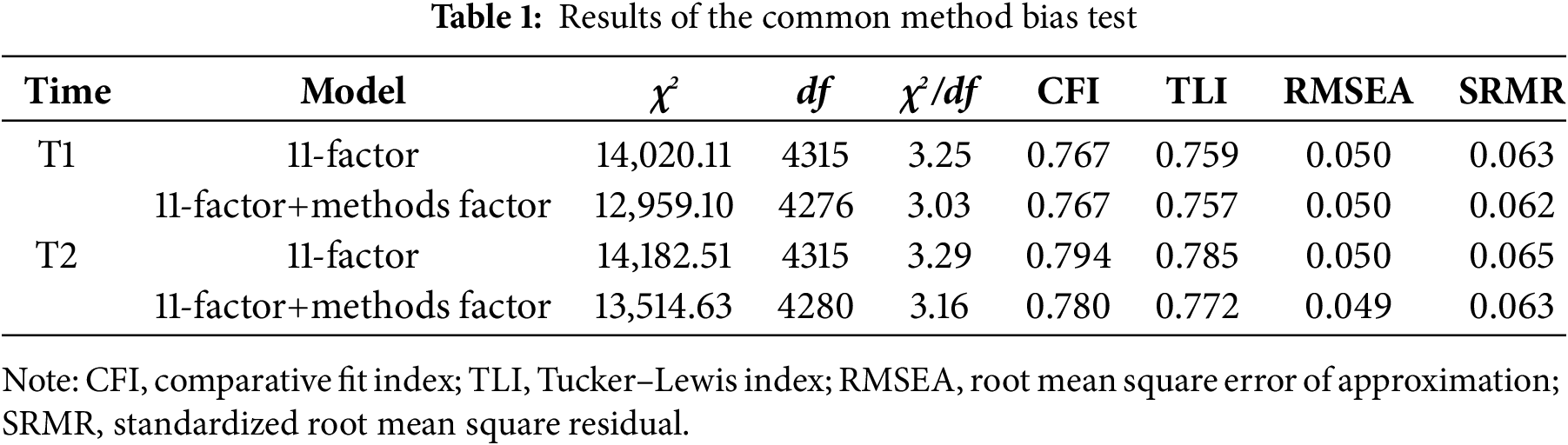
Given the common method bias and need for social approval that self-report scales may cause, some inverse scoring questions are introduced into the questionnaire to enhance the authenticity and reliability of the data. Multiple variables were involved in the study, and adolescents answered all, so we tested for common method bias by controlling for the effects of an unmeasured latent methods factor (ULMC). The two internalizing problem variables in this study, plus the nine dimensions of parental and peer attachment, totaled 11 factors, and a two-factor model was built based on the 11-factor validated factor analysis model plus the method factor as the global factor. The results for the two-time points are shown in Table 1, for which this would have demonstrated a significant common method bias if the two-factor model had fitted significantly better than the original measurement model, with changes in comparative fit index (CFI) and Tucker–Lewis index (TLI) of more than 0.1 and changes in root mean square error of approximation (RMSEA) and standardized root mean square residual (SRMR) of more than 0.05 [50]. The results show that the fit index after adding the method factor did not significantly improve, indicating no serious common method bias at both time points.
3.2 Descriptive Analysis Results
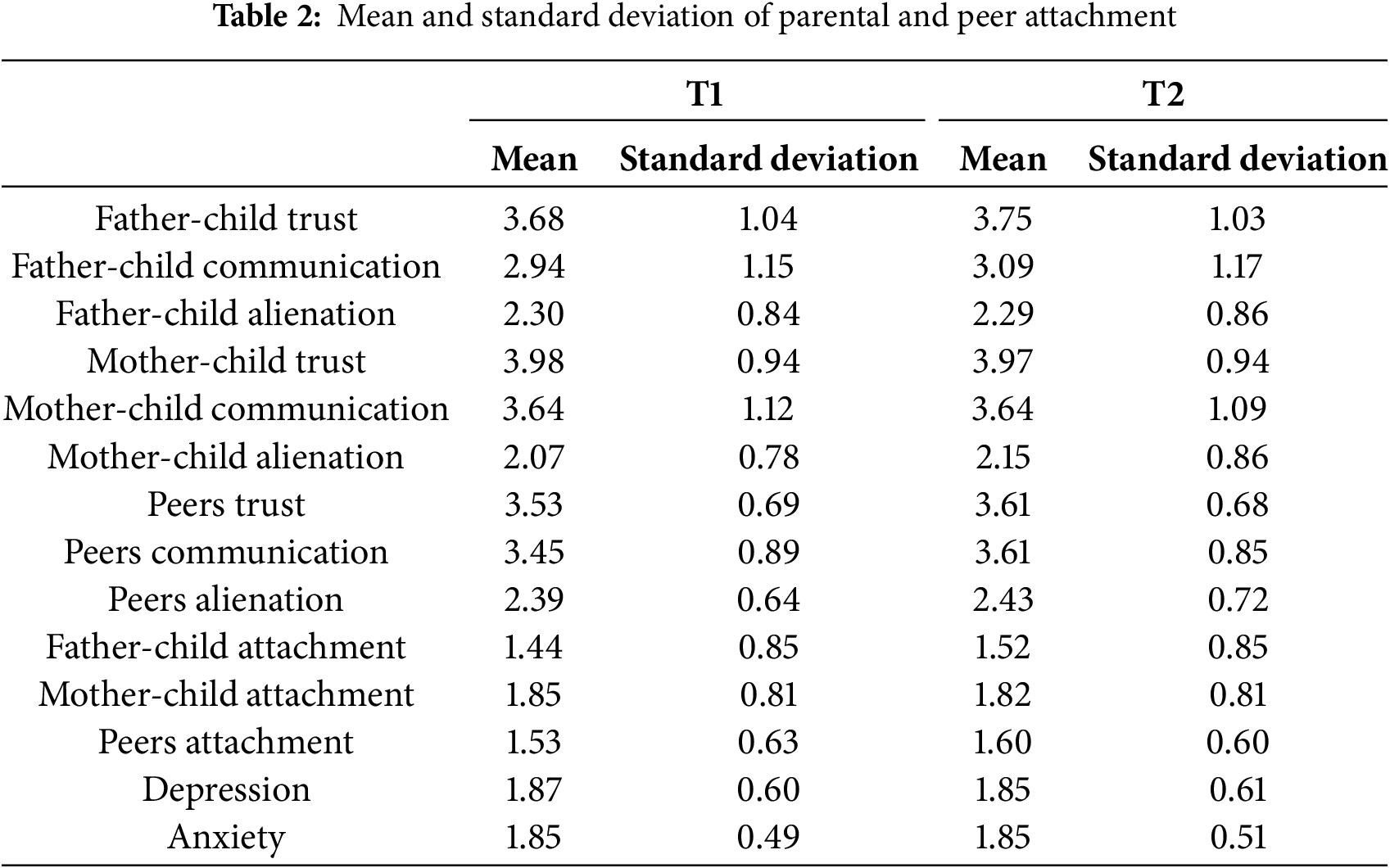
The descriptive information of the variables used in the current study at the two-time points, T1 and T2, are presented in Table 2. Using the Student’s t-test to explore the difference between parental and peer attachment at two-time points, it was found that the difference between father-child attachment at T1 and T2 was not significant, t = –3.89, p > 0.05; while the difference between mother-child attachment at T1 and T2 was significant, t = 1.27, p < 0.05, Cohen’s d = 0.03, and the effect size was less than 0.2, which can be ignored; the difference in peer attachment at the two time points T1 and T2 was not significant, t = –3.72, p > 0.05. The results show that there was no change in parent and peer attachment at the two-time points.
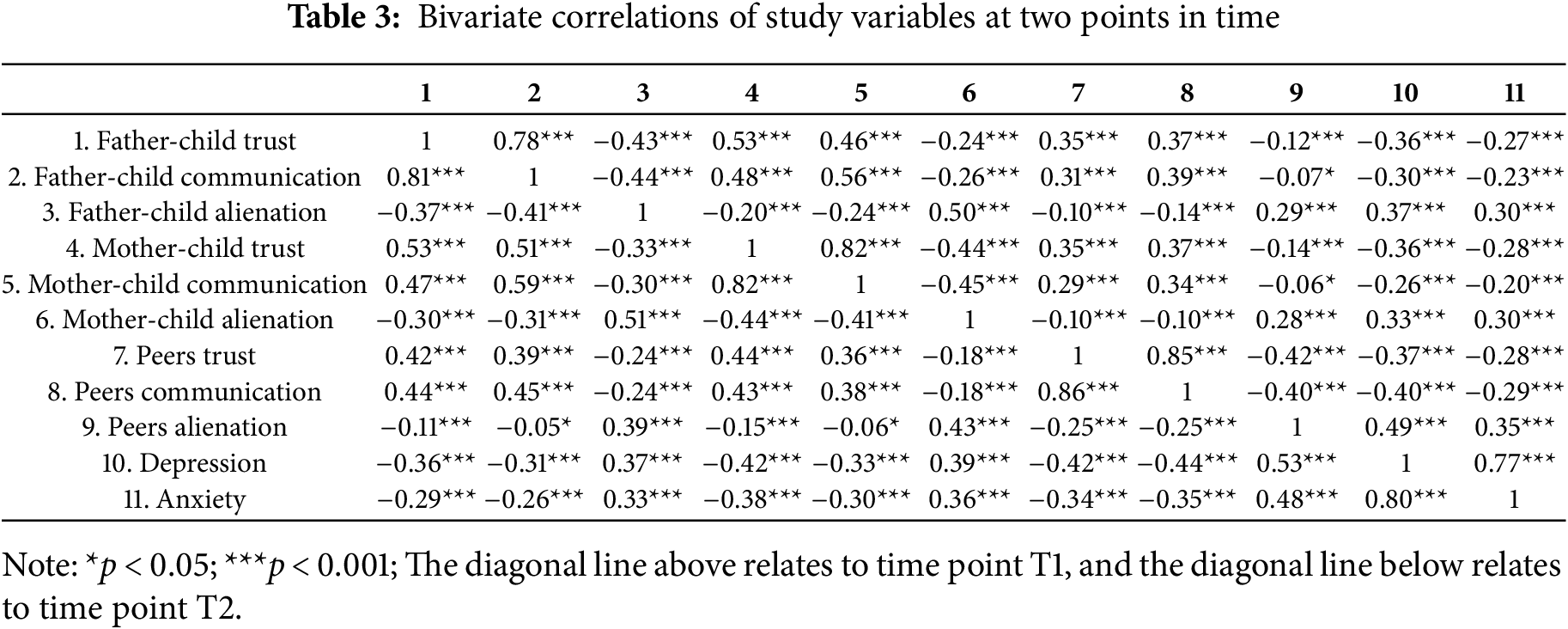
The Pearson correlation matrix is shown in Table 3. The results of the correlation analysis show that the dimensions of parent attachment and the dimensions of peer attachment are significantly correlated with depression and anxiety (p < 0.05).
3.3 Latent Profile Analysis (LPA)
To explore and analyze the subtypes of adolescent attachment, this study used latent profile analysis, using the nine dimensions of father-child trust, father-child communication, father-child alienation, mother-child trust, mother-child communication, mother-child alienation, peer trust, peer communication, and peer alienation as indicators, and extracted a model with profiles 1 to 5. Table 4 summarizes the fit indices of the LPA models for parent-child and peer attachments at each time point. The data show that from one-profile model to five-profile model, the AIC, BIC and aBIC gradually decrease, the entropy value of all models exceeds 0.8, indicating that the accuracy of all models is acceptable. However, the LMR values of the four-profile models at the T1 and T2 time points were no longer significant, indicating that the four-profile models were not significantly better than the three-profile model. Combining all the indicators and theoretical justifications, the three-profile model was ultimately selected as the best model for both T1 and T2.
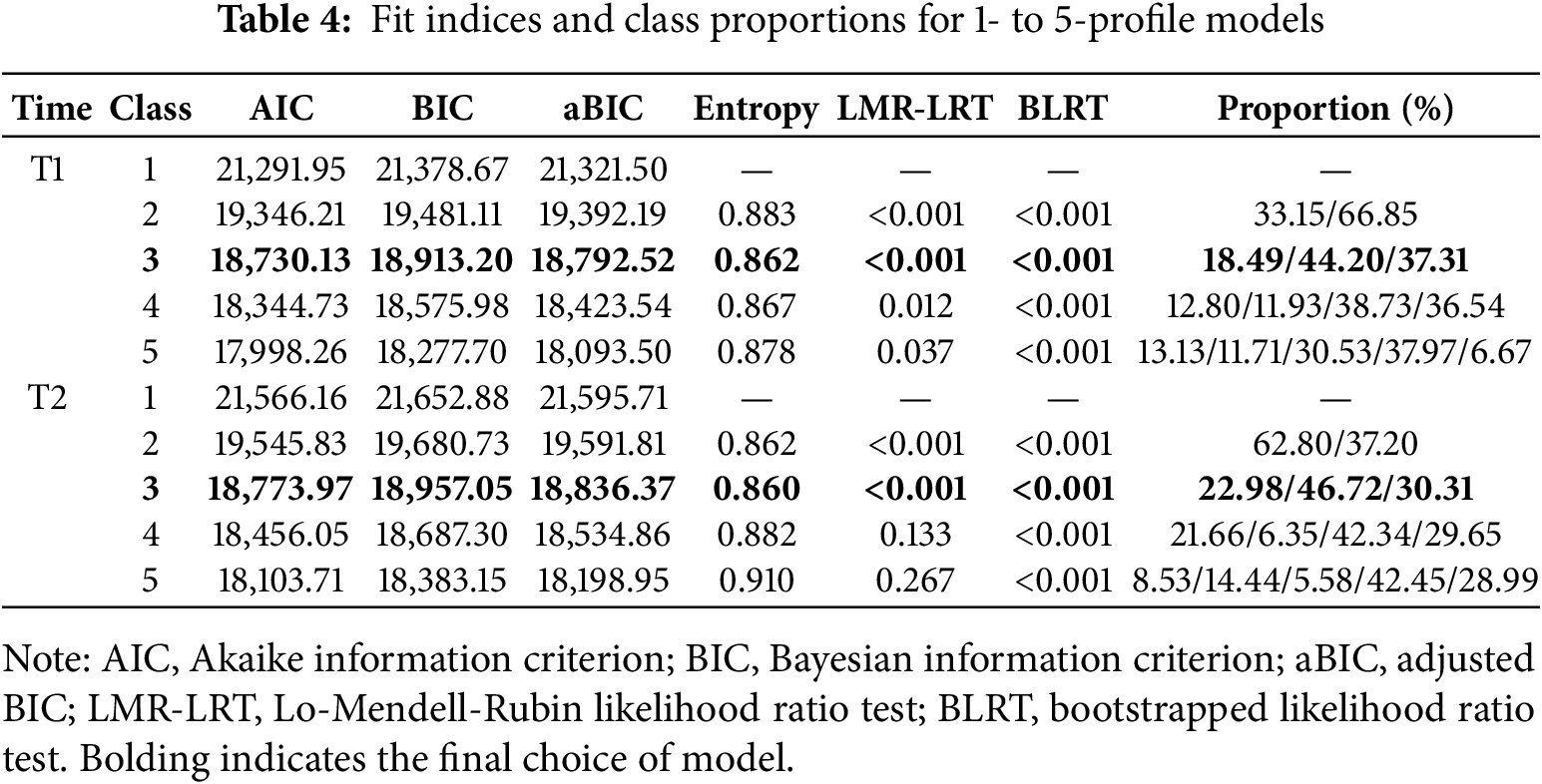
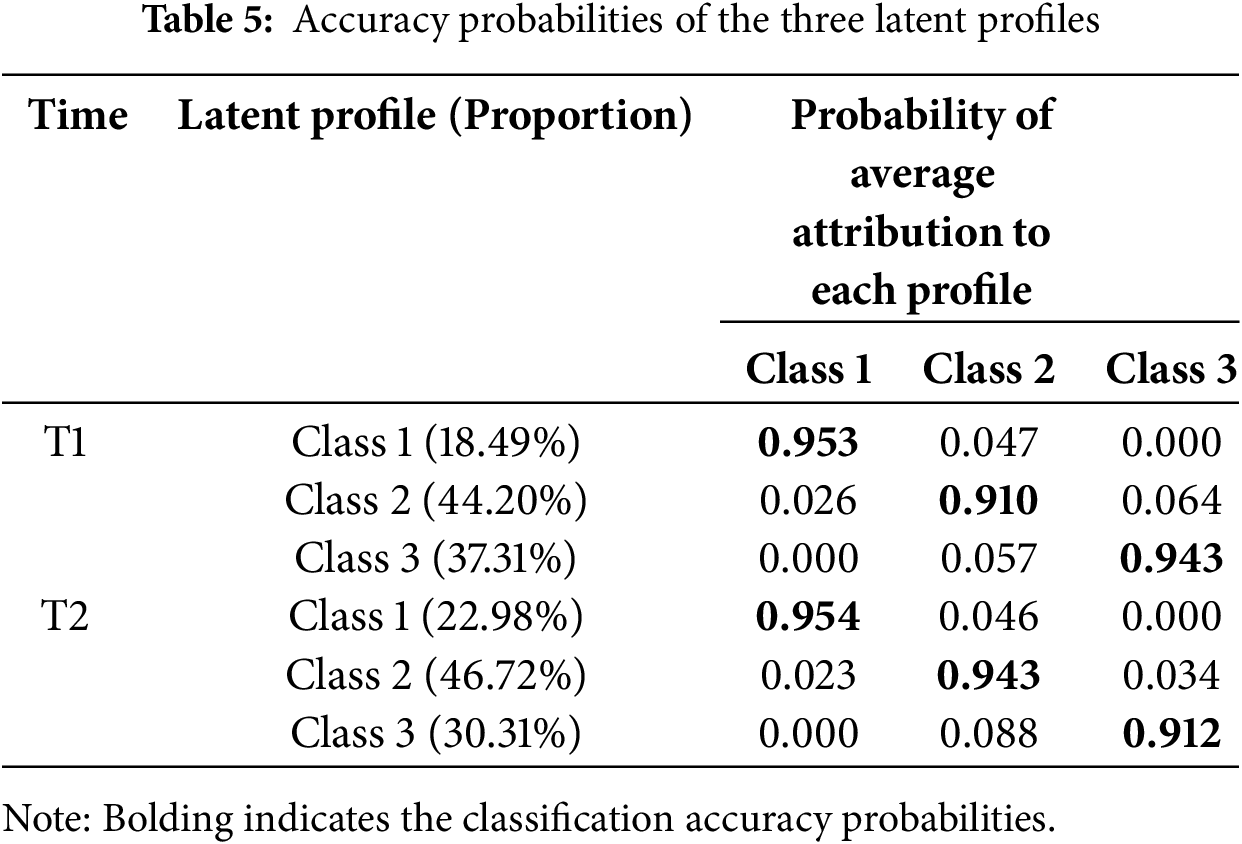
Table 5 presents the average probability of membership of each profile (row) after classifying the attachment into three profiles (columns). The diagonal values are the classification accuracy probabilities. The probabilities of accurate classification of the three profiles in T1 are 95.3%, 91.0% and 94.3%, and the probabilities of accurate classification of the three profiles in T2 are 95.4%, 94.3% and 91.2%, respectively, indicating that the model that classifies attachments into three profiles has good discriminant ability and reliable classification results at both time points.
Each potential profiles of parental and peer attachment corresponds to a subtype. The distinct characteristics of the three profiles at the two-time points are shown in Table 6. Figs. 1 and 2 visually display the mean scores of the three subtypes on each dimension, according to which the subtypes of parental and peer attachment can be named.
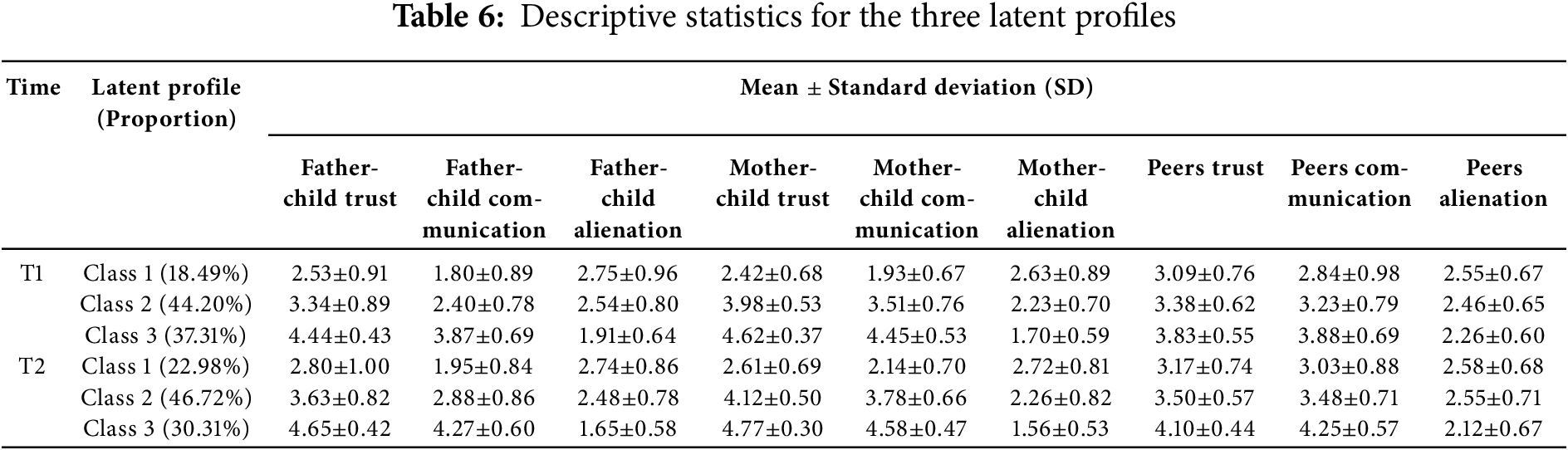
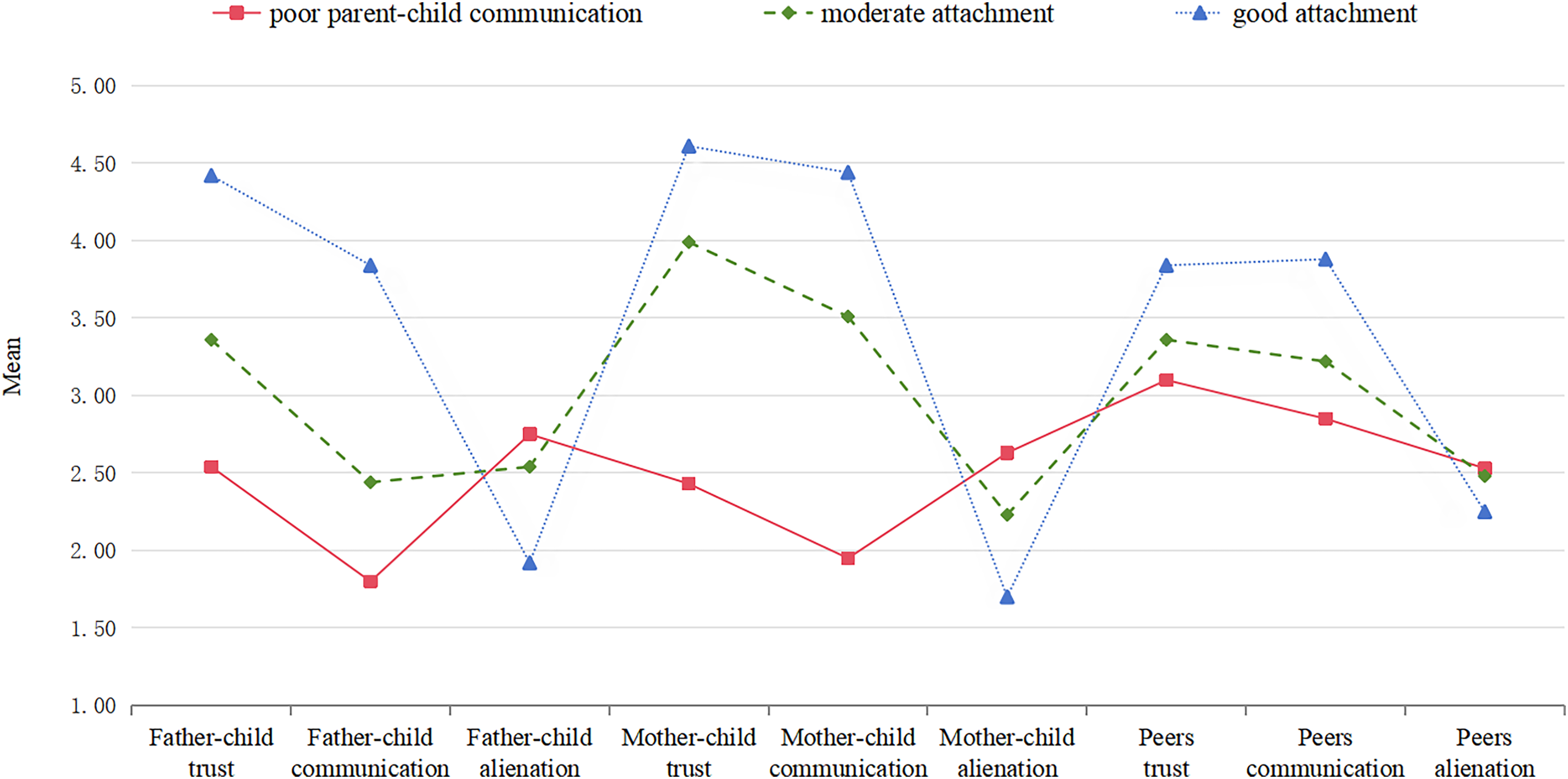
Figure 1: The sample means of latent profiles for parent-child and peer attachments at the T1 time point. Note: The y-axis represents the mean score of parent-child and peer attachments. All the dimensions of each scale are listed on the x-axis
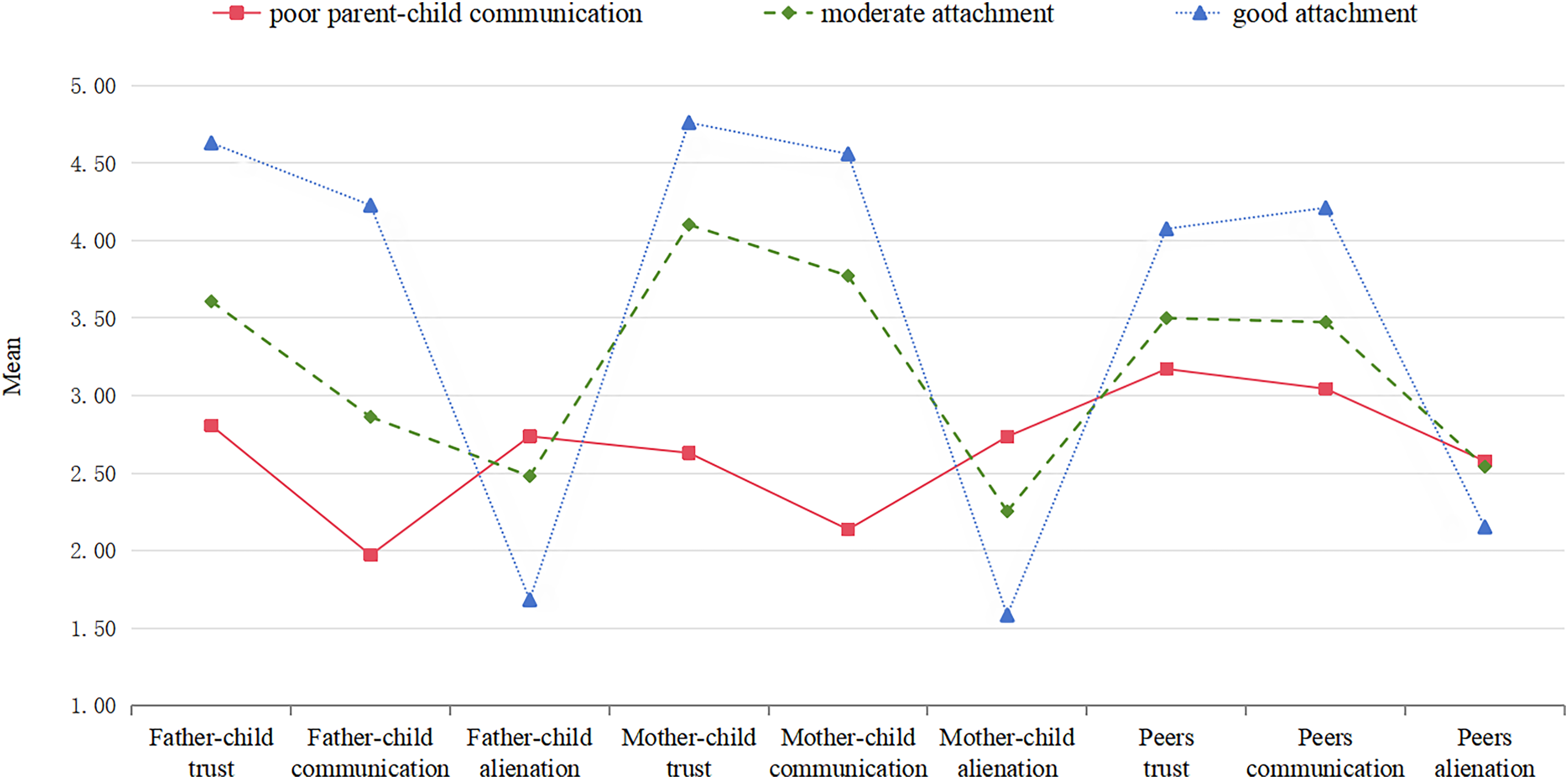
Figure 2: The sample means of latent profiles for parent-child and peer attachments at the T2 time point. Note: The y-axis represents the mean score of parent-child and peer attachments. All the dimensions of each scale are listed on the x-axis
The entries of the attachment scale used in this study are rated from 1 to 5 with a median of 3. The range of scores is from 1 to 5, and the cut-off points for low, medium, and high on the scale are 2.3 and 3.7. The scores for each dimension are calculated as averages so that scores lower than 2.3 can be referred to as low, scores higher than 3.7 as high, and scores between 2.3 and 3.7 as medium. Class 1 scored between 2.3 and 3.7 on all three dimensions of peer attachment, 2.2 to 3.7 on the trust and alienation dimensions of father-child attachment and mother-child attachment, and the mean score on the communication dimension was less than 2. Therefore, class 1 was named ‘poor parent-child communication’. Class 2 scored between 2.3 and 3.7 on the dimensions of father-child attachment and peer attachment, with the trust dimension of mother-child attachment higher than 3.7, the communication dimension of mother-child attachment in the middle, and the alienation dimension of mother-child attachment lower than 2.3. However, the combined scores of the three profiles revealed that each profile showed high scores on mother-child attachment, and therefore, class 2 was named as the ‘moderate attachment’. Class 3 scored higher than 3.7 on the trust and communication dimensions and lower than 2.3 on the detachment dimension in all three types of attachment, so class 3 was named the ‘good attachment’.
The LPA at both time points supported the three-profile model, and the mean scores for each of the nine dimensions in each profile were relatively close between the two-time points, suggesting that there was consistency and stability across time in the LPA classification results of this study. The absence of low attachment subtypes in LPA results suggests that the vast majority of adolescents have attachment relationships at intermediate levels and above.
3.4 Latent Transition Analysis (LTA) of Parent-Child and Peer Attachment
On the basis that the three-profile model for T1 and T2 was optimal, a potential shift analysis was performed to analyze the shifts between the different subtypes between the two-time points.
The results of the two-time points obtained from LTA are not identical to the results of LPA at different time points; the categorisation criteria for the two time points in LPA are determined individually to minimise the fit function of the respective models; however, the class means, and variances of the dimensions have to be set equal across the time points in LTA to make the categories comparable between the two time points before and after [51]. Based on the three-profile model of LPA, the LTA is also set as a three-profile model, and the corresponding entropy of the model is 0.887, which indicates that the model classification accuracy is acceptable.
Table 7 shows the percentage of people with different subtypes of shifts in parent-child and peer attachments; for example, the result shows that it indicates that among all subjects, 17.0% remained unchanged in poor parent-child communication profile, 33.8% shifted from poor parent-child communication profile to moderate attachment profile, and only 1.1% shifted from poor parent-child communication profile to good attachment profile. As can be seen in the last row (percentage of each subtype in T1) and the last column (percentage of each subtype in T2), there was a slight decrease in the percentage of poor parent-child communication profile (from 21.9% to 21.0%), a slight increase in the percentage of moderate attachment profile (from 40.4% to 40.5%), and a significant increase in the percentage of good attachment profile (from 37.7% to 38.5%).
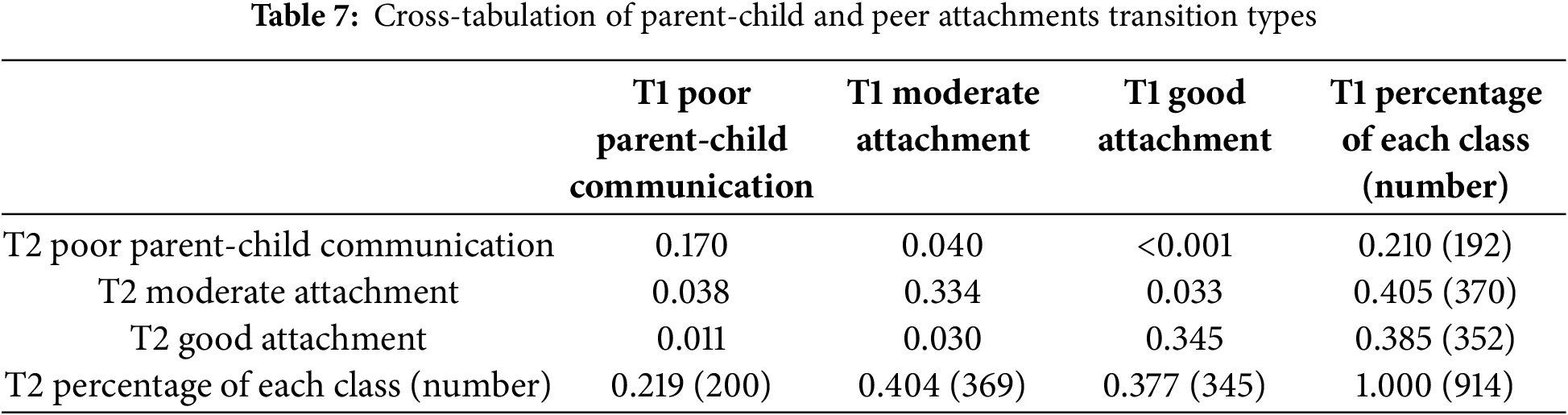
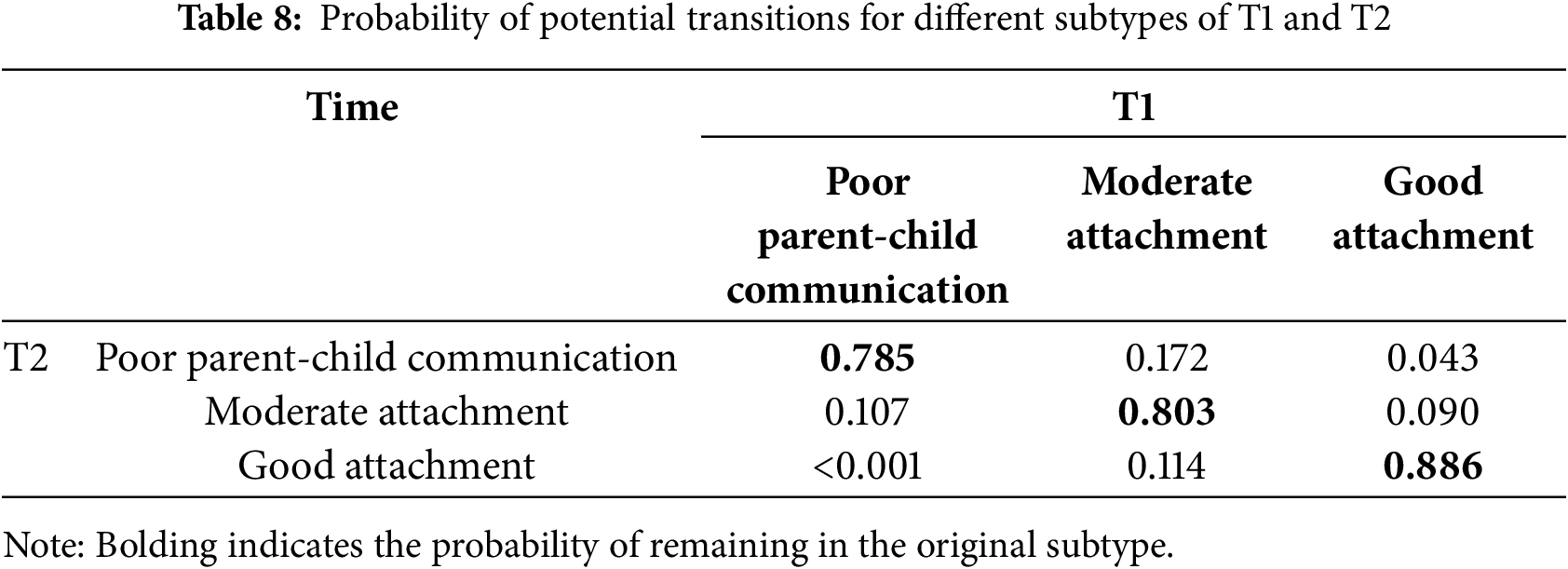
Table 8 shows the probability of members of different subtypes remaining in the original subtype or switching to other subtypes at the next time. The diagonal of the transition matrix indicates the probability that a subject will remain in the same subtype at two adjacent time points. As seen from Table 8, from T1 to T2, the probability that adolescents in good attachment profile will remain in the same subtype is the highest (88.6%). In comparison, adolescents in moderate attachment profile (80.3%) and poor parent-child communication profile (78.5%) show slightly lower stability. Among the adolescents who experienced a change, those who belonged to moderate attachment profile at T1 were more likely to change to poor parent-child communication profile (the probability of change was 17.2%). Adolescents in poor parent-child communication profile and good attachment profile were more likely to change to moderate attachment profile over time (the probability of change was 10.7% and 9.0%, respectively).
3.5 The Role of Latent Profiles of Peer Attachment and Parent-Child Relationships
The mean scores for depression and anxiety for T1 and T2 across the three subtypes are shown in Fig. 3. At both time points, the poor parent-child communication profile had scores of two or more for depression and anxiety, followed by the moderate attachment profile with scores ranging from 1.89–1.95, and the good attachment profile with the lowest scores for depression and anxiety, which did not exceed 1.7 at either time point.
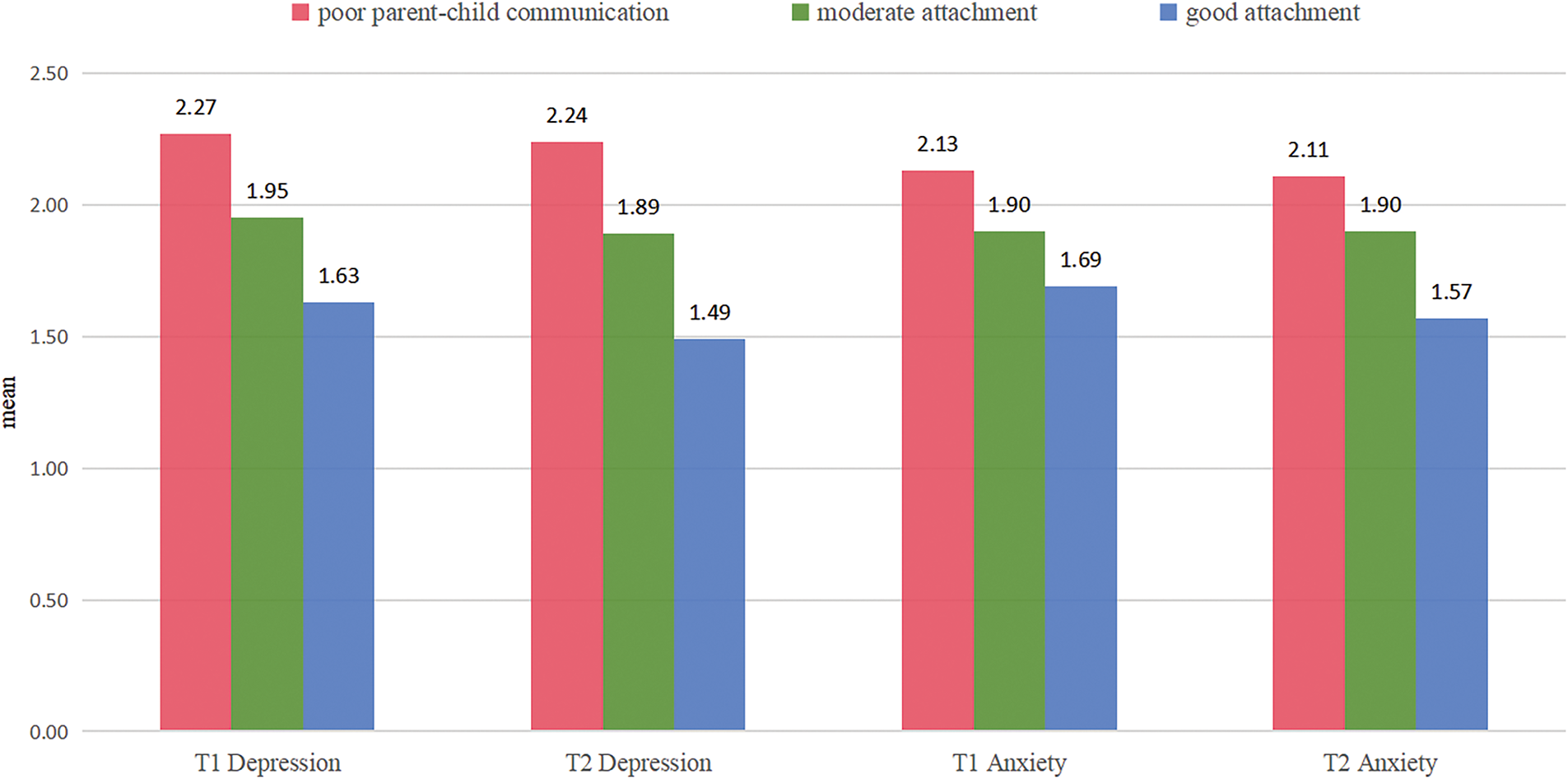
Figure 3: Depression and anxiety scores in each subtype at T1 and T2 time points
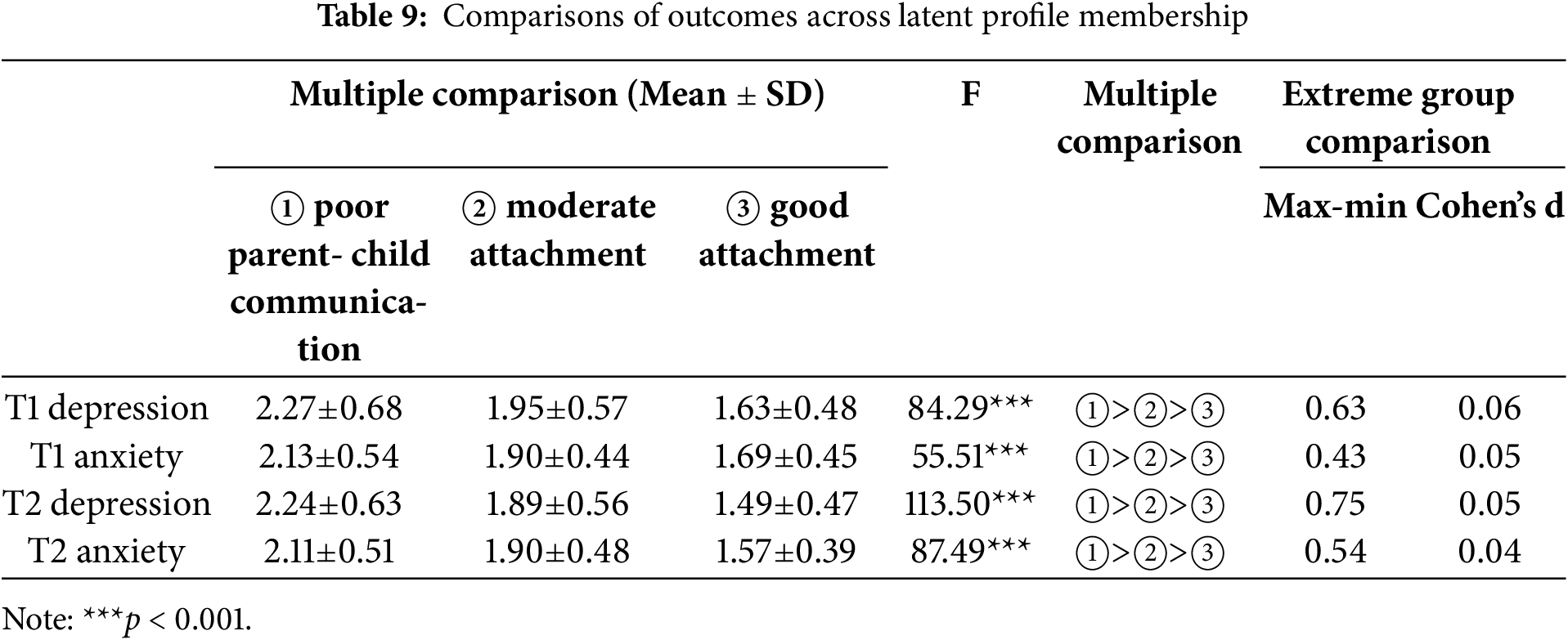
To investigate how the different types of parent-child and peer attachments relate to adolescents’ internalization problems, an analysis of variance was used to test whether there were significant differences in depression and anxiety between different attachment subtypes. The results are shown in Table 9. The subtypes of parent-child and peer attachments at T1 played a crucial role in determining levels of adolescent depression (F = 84.29, p < 0.001). Multiple comparison tests found that, in terms of adolescents’ depression levels, poor parent-child communication profile was significantly higher than moderate attachment profile, and moderate attachment profile was significantly higher than good attachment profile. T1 subtypes of parent-child and peer attachments played a crucial role in shaping adolescent anxiety (F = 55.51, p < 0.001). Multiple comparison tests found that, in terms of adolescent anxiety levels, poor parent-child communication profile was significantly higher than moderate attachment profile, and moderate attachment profile was significantly higher than good attachment profile. The results at time point T2 were similar to those at time point T1. Furthermore, the significance of T2 parent-child and peer attachment subtypes about adolescents’ internalization problems was more pronounced, as evidenced by the fact that the F values and the differences between the maximum and minimum means for the two variables of depression and anxiety were larger than at T1. Extreme group comparison found that the difference in depression scores between the T1 and T2 subtypes was greater than anxiety scores.
4.1 Subtypes of Parent-Child and Peer Attachments at Two-Time Points and Their Characteristics
The nine variables of parent-child and peer attachments in our study exhibited fairly significant positive correlations in both T1 and T2, suggesting that it is feasible to use these dimensions for both LPA and LTA. This study found three subtypes of adolescent parent-child and peer attachments: poor parent-child communication profile, moderate attachment profile, and good attachment profile. Among them, more than 30% of the adolescents belonged to the good attachment profile at both T1 and T2, and they were inclined to trust others and keep lines of communication open with their parents and friends. Moderate attachment profile was the most numerous subtypes at both T1 and T2, with nearly half of the adolescents at a moderate level on all dimensions of parent-child and peer attachments. While they can maintain moderate trust and communication with their parents and friends and perceive an emotional connection with significant others, they also exhibit some distance and have shown some independence in their lives. Notably, adolescents in the moderate attachment profile showed slightly higher mother-child trust and slightly lower father-child communication. This outcome might result from moms spending more time with their children, taking on more child-related responsibilities, and acting as the primary caregiver in the family structure. Adolescents have greater faith in their mothers [52]. While males also make an effort to participate in parenting activities, they mostly serve as facilitators and spend far less time with their children than mothers. Fathers and children engage in less communication activities. As a result, father-child communication is poor among adolescents [53]. The subtype with the lowest number at both T1 and T2 was the poor parent-child communication profile, with about one in five adolescents lacking communication with their parents while still being able to show moderate attachment feelings when confronted with friends. Overall, LPA at the two-time points showed good fit indices and high classification accuracy for the three-type model, suggesting that these three subtypes can represent the typical types of parentals and peer attachment in China.
The present study did not identify the subtype of poor parent-child attachment-poor peer attachment through LPA, suggesting that adolescents in a school environment can generally establish relationships with peers that give warmth and support to each other, consistent with previous research. Individual peer relationships are formed during adolescence, and adolescents at this stage are more likely to perceive positive peer relationships and to be more integrated with their peer group [54]. Since teenagers spend more time with their friends, friendships become more secure and reach a point where both parties are willing to confide in one another. As a result, friends serve a vital purpose. At the same time, secure peer attachment provides individuals with the social competence and adaptability to interact with their peers, which is conducive to the formation of a good level of self-esteem and emotional well-being and the achievement of better self-development in adolescents [55,56]. It is crucial to clarify that the absence of other kinds in the data—such as the bad parent-child attachment-poor peer attachment profile—is not accurate; rather, it is that this subtype was not identified using the LPA and LTA model selection criteria. Furthermore, although the present study found that adolescents’ peer and parent-child attachments may not always be in perfect harmony, it is undeniable that the connections individuals forge with their peers are intimately tied to the attachment patterns they developed with their primary caregivers during their early years. Strong family ties can encourage people to interact well, build strong emotional links with peers, trust others, and maintain this positive attachment style in later life [3].
In summary, this study covered a wider variety of parent-child and peer attachment connections among Chinese adolescents by using a person-centered approach to establish three possible parent-child and peer attachment subtypes. Regarding the scoring method of parent-child and peer attachments, it is not rigorous enough to examine the extent of adolescents’ parent-child and peer attachments by simply calculating the total score or examining the score of a particular dimension. It is necessary and meaningful to fully consider the situation perceived by individuals under the influence of parent-child and peer attachments. On the other hand, in terms of the combination status of different dimensions of parent-child and peer attachments, the relationship between the dimensions is not fixed; they may be the same high and low, or there may be high and low, which is also worth considering.
4.2 Transformative Features of Parent-Child and Peer Attachments
The current study discovered that the subtypes of parent-child and peer attachments evolve. About 80% of the original poor parent-child communication profile remained unchanged, and about 10% changed to moderate attachment profile. Nearly 80% of the original moderate attachment profile remain unchanged, less than 20% change to poor parent-child communication profile, and about 10% change to good attachment profile. More than 80% of the original good attachment profile remain unchanged, a small number change to moderate attachment profile, and a very small number change to poor parent-child communication profile. Overall, roughly 80% of each type will remain unchanged. For the subtypes at either end of the spectrum, about 10% will shift in the other direction, mainly to the proximity subtype. The result is a slight decrease in the percentage of poor parent-child communication profile and a slight increase in the percentage of moderate attachment profile and good attachment profile.
The results are not the same as those of Western research. According to a follow-up study conducted on young Americans aged 7 to 19, the quality of attachment decreased gradually as they grew older, and they showed more avoidant or anxious emotional interactions [57]. A different study, however, found that mother-child attachment was rather stable among White adolescents in Western Europe, with the majority of sub-items at moderate levels [58]. The current study showed that attachment bonds are generally more stable among Chinese adolescents. Apart from the unaltered state, there are instances where teenagers with moderate attachment profiles and bad parent-child communication profiles have moved to higher subtypes, indicating that the attachment bonds of Chinese teenagers are steady and getting better. This trend may be explained by the spiritual teachings of “father and son have kinship” and “friends have trust” in traditional Chinese culture, which help adolescents develop positive attachment bonds with their parents and peers and perceive the emotional connection with significant others more deeply as they grow. However, it is worth noting that adolescents in moderate attachment profile are more likely to shift to poor parent-child communication profile if they are not maintained. Therefore, in addition to intervening with adolescents with poor parent-child communication profile, it is necessary to intervene with adolescents with moderate attachment profile in practice to avoid progression toward a lack of communication with parents.
4.3 Effects of Parent-Child and Peer Attachments Subtypes on Internalizing Problems of Adolescents
The current study reveals that the subtypes of parent-child and peer attachments played a notable part in adolescent internalizing issues. The poor parent-child communication profile was the least helpful in improving internalizing problems in adolescents, while the good attachment profile was the most helpful in lowering internalizing problems in adolescents. Specifically, adolescents in the poor parent-child communication profile had the highest scores for both depression and anxiety; adolescents in the good attachment profile had the lowest scores for both depression and anxiety. Adolescents in the moderate attachment profile had scores for both depression and anxiety that fell between the poor parent-child communication and good attachment profiles, and the gap between depression scores was greater than anxiety scores for all three subtypes.
The above results suggest that parent-child and peer attachment, serving as a positive emotional bond, safeguards adolescents from internalization problems. The findings support the augmentation model of the developmental context theory, suggesting that suitable peer attachment can amplify the positive impact of parent-child attachment on an individual, which aligns with previous studies’ findings [5,59]. Attachment theory states that an individual’s experience of secure attachment to a primary caregiver will help them access love and support [1] and that positive relationships with parents and peers can be protective against adolescent psychological problems. Furthermore, the impacts of parent-child and peer attachments on adolescents intensify over time, leading to wider differences in the anxiety and despair that adolescents in various subtypes create. For adolescents in the poor parent-child communication profile, due to the lack of anxiety with their parents in their lives, they will perceive less emotional warmth and support from their parents, have unfulfilled emotions, and are more prone to emotional problems [28]; at the same time, they will develop negative evaluations of self and others in the process and have self-values and inability to deal with their negative emotions rationally, increasing the risk of depression and anxiety [60]. Adolescents in moderate attachment profile were able to obtain support and comfort from their significant others despite life’s disappointments, which somewhat eased their emotional stress and decreased the likelihood that they would internalize problems. Adolescents with a good attachment profile feel completely secure and have more satisfying emotional experiences. This group of adolescents can be protected, and the formation of internalizing problems can be decreased since they can sense greater emotional support when faced with challenges [61].
The present study also found that the difference between depression scores of various subtypes was greater than anxiety scores, which may be because adolescents generally have some emotional problems when they enter the critical period of learning, so they have depression and anxiety regardless of parent-child and peer attachment, in which anxiety arises instantly along with life events [58]. In contrast, depression is more likely to be cumulative. Children who have a strong parent-child and peer emotional connection can communicate and confide in relieving depression. Hence, the differences in depressed mood were more significant than anxious mood among adolescents of different subtypes in middle school. In addition, our study discovered that variations in the development of internalizing issues among adolescents over time were more closely associated with the type of parent-child and peer attachments, suggesting that attachment relationships continue to have a significant impact on adolescents and that changes in parent-child and peer attachments are the antecedent variables in internalizing problems in adolescents. Thus, the impact of parent-child and peer attachments on adolescents is tightly linked to attachment relationship developments in addition to the initial base level. It is especially crucial to offer adolescents in moderate attachment relationships positive and successful interventions because the likelihood of both maintaining the moderate attachment profile at its initial level and moving to a poor parent-child communication profile is higher than the likelihood of moving to a good attachment profile.
By taking individual differences into account, classifying parent-child and peer attachments using an individual-centered approach, and analyzing the traits of various subtypes of these attachment styles in connection to internalizing problems among adolescents, our study extends and complements variable-centered research. This study offers empirical support for dealing with at-risk groups, which has significant practical implications for enhancing adolescents’ parent-child and peer bonds. In practice, we should focus more on the growth of groups of adolescents with moderate attachment profiles and give preference to adolescents who are less emotionally attached to their parents and friends. Our findings also provide further support for determining the timing of intervention and the direction of transition. For students in poverty and those with moderate status, interventions could target points in time with high transition likelihood and focus on increasing transitions to better status rather than poverty. In addition, individuals with good parent-child and peer attachments have lower levels of depression and anxiety. Strengthening parental attachments and good relationships with friends may help to improve adolescents’ mental health.
However, the study still has shortcomings. First, the survey in our study was conducted using a self-report scale, and it is hard to prevent social probability from influencing the study’s findings. Future studies can measure and assess from a variety of angles, including combining self-evaluation with that of others and including evaluations from other sources, such as teacher and parent reports. Second, although this study conducted longitudinal tracking to discover the transformation of parental and peer attachment, the tracking time was limited, considering the long-term nature of attachment. Future studies could further explore this through longitudinal tracking. In addition, our study employed convenience sampling, which limited the survey’s reach. The sampling scope could be increased in subsequent studies to confirm the results of this one. Lastly, our study focused on parent-child attachment and peer attachment and did not fully consider the impact of several factors, particularly other contextual factors at the family level, on adolescents [62]. Future research could include more influences to reduce unobserved bias and fully examine family contextual factors’ impact on students’ health.
In conclusion, by using a person-centered approach in a longitudinal study, this research contributed to our understanding of the diversity and variance of parent-child and peer attachments. Three profiles for parent-child and peer attachments were used by LPA to identify the correct classification. With a greater likelihood of being the original traits throughout time, the three latent traits for parent-child and peer attachments are rather stable. The relationship between a good attachment profile and a poor parent-child communication profile had the lowest transition probability. The study further found that transitioning from poor parent-child communication and good attachment profiles to moderate attachment profiles is more likely. The significance of the moderate attachment profile is underscored by our findings. Anxiety and depression were linked to parent-child and peer attachment patterns.
Acknowledgement: None.
Funding Statement: This study was funded by the Shihezi University Innovation and Development Special Project “Research and Application of Knowledge Graph Based Big Data Platform for the Development Trend of College Students’ Mental Health” (CXFZSK202205) and by the China Young Pioneers Research Topic General Topic (2022YB16).
Author Contributions: Conceptualization, Haidong Zhu and Chao Qu; Methodology, Haidong Zhu and Xiaoshan Jia; Software, Chao Qu and Xiaoshan Jia; Validation, Chao Qu; Formal analysis, Chao Qu and Xiaoshan Jia; Investigation, Chao Qu and Xiaoshan Jia; Resources, Haidong Zhu; Data curation, Haidong Zhu and Chao Qu; Writing—original draft, Chao Qu; Writing—review and editing, Haidong Zhu and Xiaoshan Jia; Supervision, Haidong Zhu and Xiaoshan Jia; Project administration, Chao Qu and Xiaoshan Jia; Funding acquisition, Haidong Zhu. All authors reviewed the results and approved the final version of the manuscript.
Availability of Data and Materials: The original data are available on reasonable request from the corresponding author.
Ethics Approval: This study was conducted in accordance with the Declaration of Helsinki and approved by the Medical Ethics Committee of the First Affiliated Hospital of Shihezi University School of Medicine (KJ2023-476-01).
Informed Consent: Informed consent was obtained from all subjects involved in this study.
Conflicts of Interest: The authors declare no conflicts of interest to report regarding the present study.
References
1. Bowlby J. Attachment and loss, separation: anxiety and anger, Vol. 2. New York, NY, USA: Basic Books; 1973. p. 124–63. [Google Scholar]
2. Cortes-Garcia L, Takkouche B, Rodriguez-Cano R, Senra C. Mediational mechanisms involved in the relation between attachment insecurity and depression: a meta-analysis. J Affect Disord. 2020;277(36):706–26. doi:10.1016/j.jad.2020.08.082. [Google Scholar] [PubMed] [CrossRef]
3. Delgado E, Serna C, Martínez I, Cruise E. Parental attachment and peer relationships in adolescence: a systematic review. Int J Environ Res Public Health. 2022;19(3):1064. doi:10.3390/ijerph19031064. [Google Scholar] [PubMed] [CrossRef]
4. Zhou Y, Zhong H, Li X, Xiang Y. The relationship between father-love absence and loneliness: based on the perspective of the social functionalist theory and the social needs theory. Int J Ment Health Promot. 2024;26(2):139–48. doi:10.32604/ijmhp.2023.046598. [Google Scholar] [CrossRef]
5. Muzi S, Rogier G, Pace CS. Peer power! Secure peer attachment mediates the effect of parental attachment on depressive withdrawal of teenagers. Int J Environ Res Public Health. 2022;19(7):4068. doi:10.3390/ijerph19074068. [Google Scholar] [PubMed] [CrossRef]
6. Wu L, Yao L, Guo Y. Social media exposure and left-behind children’s tobacco and alcohol use: the roles of deviant peer affiliation and parent-child contact. Behav Sci. 2022;12(8):275. doi:10.3390/bs12080275. [Google Scholar] [PubMed] [CrossRef]
7. Laible DJ, Carlo G, Raffaelli M. The differential relations of parent and peer attachment to adolescent adjustment. J Youth Adolesc. 2000;13(2):161–84. doi:10.1023/A:1005169004882. [Google Scholar] [CrossRef]
8. Armsden GC, Greenberg MT. The inventory of parent and peer attachment: individual differences and their relationship to psychological well-being in adolescence. J Youth Adolesc. 1987;16(5):427–54. doi:10.1007/BF02202939. [Google Scholar] [PubMed] [CrossRef]
9. Chris Fraley R. Attachment stability from infancy to adulthood: meta-analysis and dynamic modeling of developmental mechanisms. Pers Soc Psychol Rev. 2002;6(2):123–51. doi:10.1207/S15327957PSPR0602_03. [Google Scholar] [CrossRef]
10. Cassidy J, Stern JA, Mikulincer M, Martin DR, Shaver PR. Influences on care for others: attachment security, personal suffering, and similarity between helper and care recipient. Pers Soc Psychol Bull. 2018;44(4):574–88. doi:10.1177/0146167217746150. [Google Scholar] [PubMed] [CrossRef]
11. Crittenden PM. Quality of attachment in the preschool years. Dev Psychopathol. 1992;4(2):209–41. doi:10.1017/S0954579400000110. [Google Scholar] [CrossRef]
12. Chris Fraley R, Roisman GI. The development of adult attachment styles: four lessons. Curr Opin Psychol. 2019;25:26–30. doi:10.1016/j.copsyc.2018.02.008. [Google Scholar] [PubMed] [CrossRef]
13. Zhou Y, Li X, Xiang Y. The relationship between father-love absence and non-suicidal self-injury: based on nock’s integrated theoretical model of NSSI. Int J Ment Health Promot. 2024;26(1):31–8. doi:10.32604/ijmhp.2023.043167. [Google Scholar] [CrossRef]
14. Coyle S, Cipra A, Rueger SY. Bullying types and roles in early adolescence: latent classes of perpetrators and victims. J Sch Psychol. 2021;89(2):51–71. doi:10.1016/j.jsp.2021.09.003. [Google Scholar] [PubMed] [CrossRef]
15. Spruit A, Goos L, Weenink N, Rodenburg R, Niemeyer H, Stams GJ, et al. The relation between attachment and depression in children and adolescents: a multilevel meta-analysis. Clin Child Fam Psychol Rev. 2020;23(1):54–69. doi:10.1007/s10567-019-00299-9. [Google Scholar] [PubMed] [CrossRef]
16. Flykt M, Vänskä M, Punamäki RL, Heikkilä L, Tiitinen A, Poikkeus P, et al. Adolescent attachment profiles are associated with mental health and risk-taking behavior. Front Psychol. 2021;12:761864. doi:10.3389/fpsyg.2021.761864. [Google Scholar] [PubMed] [CrossRef]
17. He J, Chen X, Fan X, Cai Z, Hao S. Profiles of parent and peer attachments of adolescents and associations with psychological outcomes. Child Youth Serv Rev. 2018;94(3):163–72. doi:10.1016/j.childyouth.2018.10.001. [Google Scholar] [CrossRef]
18. Keizer R, Helmerhorst KO, van Rijn-van Gelderen L. Perceived quality of the mother-adolescent and father-adolescent attachment relationship and adolescents’ self-esteem. J Youth Adolesc. 2019;48(6):1203–17. doi:10.1007/s10964-019-01007-0. [Google Scholar] [PubMed] [CrossRef]
19. Li Z, Yu C, Cao Y, Nie Y, Tu W, Liu B, et al. The association between parent-child attachment and prosocial behavior: a longitudinal study. Curr Psychol. 2024;43(3):2432–41. doi:10.1007/s12144-023-04474-8. [Google Scholar] [CrossRef]
20. Theisen JC, Chris Fraley R, Hankin BL, Young JF, Chopik WJ. How do attachment styles change from childhood through adolescence? Findings from an accelerated longitudinal Cohort study. J Res Pers. 2018;74:141–6. doi:10.1016/j.jrp.2018.04.001. [Google Scholar] [CrossRef]
21. Kurock R, Gruchel N, Bonanati S, Buhl HM. Family climate and social adaptation of adolescents in community samples: a systematic review. Adolesc Res Rev. 2022;7(4):551–63. doi:10.1007/s40894-022-00189-2. [Google Scholar] [CrossRef]
22. Gallego DI, Delgado OA, Sánchez-Queija IS. Peer attachment during adolescence and emerging adulthood. Anales De Psicología. 2011;27:155–63. (In Spanish). [Google Scholar]
23. Chopik WJ, Edelstein RS, Grimm KJ. Longitudinal changes in attachment orientation over a 59-year period. J Pers Soc Psychol. 2019;116(4):598–611. doi:10.1037/pspp0000167. [Google Scholar] [PubMed] [CrossRef]
24. Gao T, Liang L, Su Y, Li M, Mei S, Zhou C, et al. Longitudinal transition patterns of peer attachment and parent-child relationships among high school students. J Child Fam Stud. 2024;33(7):2348–58. doi:10.1007/s10826-023-02729-3. [Google Scholar] [CrossRef]
25. Ainsworth MS, Bowlby J. An ethological approach to personality development. Am Psychol. 1991;46(4):333. doi:10.1037/0003-066X.46.4.333. [Google Scholar] [CrossRef]
26. Kokkinos CM, Algiovanoglou I, Voulgaridou I. Emotion regulation and relational aggression in adolescents: parental attachment as moderator. J Child Fam Stud. 2019;28(11):3146–60. doi:10.1007/s10826-019-01491-9. [Google Scholar] [CrossRef]
27. Chen X, Wang Z, Shao J. The relationship between parent-child attachment and depression among Chinese adolescents: the effect of emotional regulation strategies and beliefs about adversity. Curr Psychol. 2023;42(20):17187–97. doi:10.1007/s12144-022-02714-x. [Google Scholar] [CrossRef]
28. Liu C, Rahman A, Nazri M, Eva N. Relationship between parent-child attachment and problem behaviors among Chinese firstborn children in family transitions: a meta-analysis. Int J Ment Health Promot. 2023;25(11):1161–72. doi:10.32604/ijmhp.2023.030324. [Google Scholar] [CrossRef]
29. Tasel-Gunal Z, Arikan G. How do emotional availability, attachment, and parenting stress relate to attachment security? findings from Turkish mother-toddler dyads. J Child Fam Stud. 2024;33(7):2310–23. doi:10.1007/s10826-024-02783-5. [Google Scholar] [CrossRef]
30. Chan KM, Hong RY, Ong XL, Cheung HS. Emotion dysregulation and symptoms of anxiety and depression in early adolescence: bidirectional longitudinal associations and the antecedent role of parent-child attachment. Br J Dev Psychol. 2023;41(3):291–305. doi:10.1111/bjdp.12445. [Google Scholar] [PubMed] [CrossRef]
31. Hao S, Zhang X, Xu H. Insecure parental attachment and anxiety in vocational college students: the mediating role of subjective well-being and the moderating role of self-esteem. Psychol Res Behav Manag. 2024;17:1221–30. doi:10.2147/PRBM.S442839. [Google Scholar] [PubMed] [CrossRef]
32. Ehrlich KB, Dykas MJ, Cassidy J. Tipping points in adolescent adjustment: predicting social functioning from adolescents’ conflict with parents and friends. J Fam Psychol. 2012;26(5):776–83. doi:10.1037/a0029868. [Google Scholar] [PubMed] [CrossRef]
33. Schoeps K, Mónaco E, Cotolí A, Montoya-Castilla I. The impact of peer attachment on prosocial behavior, emotional difficulties and conduct problems in adolescence: the mediating role of empathy. PLoS One. 2020;15(1):e0227627. doi:10.1371/journal.pone.0227627. [Google Scholar] [PubMed] [CrossRef]
34. Ying L, Wang Y, Yu S. Marital conflict, family socioeconomic status, and depressive symptoms in migrant children: a moderating mediational model. Behav Sci. 2023;13(6):441. doi:10.3390/bs13060441. [Google Scholar] [PubMed] [CrossRef]
35. Stern JA, Coard SI, Barbarin OA, Cassidy J. What attachment scholars can learn from research on Black family resilience. Child Dev Perspect. 2024;18(1):10–8. doi:10.1111/cdep.12492. [Google Scholar] [CrossRef]
36. Gorrese A. Peer attachment and youth internalizing problems: a meta-analysis. Child Youth Care Forum. 2016;45(2):177–204. doi:10.1007/s10566-015-9333-y. [Google Scholar] [CrossRef]
37. Cooke JE, Kochendorfer LB, Stuart-Parrigon KL, Koehn AJ, Kerns KA. Parent-child attachment and children’s experience and regulation of emotion: a meta-analytic review. Emotion. 2019;19(6):1103–26. doi:10.1037/emo0000504. [Google Scholar] [PubMed] [CrossRef]
38. Tanaka M, Chen C. Towards a mechanistic understanding of depression, anxiety, and their comorbidity: perspectives from cognitive neuroscience. Front Behav Neurosci. 2023;17:1268156. doi:10.3389/fnbeh.2023.1268156. [Google Scholar] [PubMed] [CrossRef]
39. Tironi M, Charpentier Mora S, Cavanna D, Borelli JL, Bizzi F. Physiological factors linking insecure attachment to psychopathology: a systematic review. Brain Sci. 2021;11(11):1477. doi:10.3390/brainsci11111477. [Google Scholar] [PubMed] [CrossRef]
40. McGinley M, Evans AM. Parent and/or peer attachment? Predicting emerging adults’ prosocial behaviors and internalizing symptomatology. J Child Fam Stud. 2020;29(7):1833–44. doi:10.1007/s10826-020-01715-3. [Google Scholar] [CrossRef]
41. Irfan S, Zulkefly NS. Parent-peer attachment, negative automatic thoughts and psychological problems among Pakistani adolescents: a moderated mediation model. Curr Psychol. 2023;42(3):1979–95. doi:10.1007/s12144-021-01599-6. [Google Scholar] [CrossRef]
42. Yang S, Ren Y, Song X, Ge J, Peng Y. Insecure attachment and depressive symptoms among a large sample of Chinese young adults: the mediating role of positive and negative self-compassion. Behav Sci. 2024;14(3):238. doi:10.3390/bs14030238. [Google Scholar] [PubMed] [CrossRef]
43. Yu X, Zhang Y, Xin S. Longitudinal and bidirectional relationships between parental rejection, peer attachment, and adolescent depression. Child Youth Serv Rev. 2024;160(5):107601. doi:10.1016/j.childyouth.2024.107601. [Google Scholar] [CrossRef]
44. Jin C, Zou H, Zeng R, Dou D, Hui. The trait of attachment and the effect of attachment on social adjustment of middle school students: parents intimacy as a moderator. Psychol Dev Educ. 2010;6:577–83. (In Chinese). [Google Scholar]
45. Radloff LS. The CES-D scale: a self-report depression scale for research in the general population. Appl Psychol Meas. 1977;1(3):385–401. doi:10.1177/014662167700100306. [Google Scholar] [PubMed] [CrossRef]
46. Zung WW, Gianturco JA. Personality dimension and the self-rating depression scale. J Clin Psychol. 1971;27(2):247–8. doi:10.1002/(ISSN)1097-4679. [Google Scholar] [CrossRef]
47. Marsh HW, Lüdtke O, Trautwein U, Morin AJ. Classical latent profile analysis of academic self-concept dimensions: synergy of person-and variable-centered approaches to theoretical models of self-concept. Struct Equ Modeling. 2009;16(2):191–225. doi:10.1080/10705510902751010. [Google Scholar] [CrossRef]
48. Lubke G, Muthén BO. Performance of factor mixture models as a function of model size, covariate effects, and class-specific parameters. Struct Equ Modeling. 2007;14(1):26–47. doi:10.1080/10705510709336735. [Google Scholar] [CrossRef]
49. Lo Y, Mendell NR, Rubin DB. Testing the number of components in a normal mixture. Biometrika. 2001;88(3):767–78. doi:10.1093/biomet/88.3.767. [Google Scholar] [CrossRef]
50. Wen Z, Huang B, Tang D. Preliminary work for modeling questionnaire data. J Psychol Sci. 2018;1:204–10. (In Chinese). [Google Scholar]
51. Wen Z, Fang J, Shen J, Tan Y, Li T, Ma Y. A review of research on psychological statistics in China’s mainland from 2001 to 2020. Adv Psychol Sci. 2021;8:1331–44. (In Chinese). [Google Scholar]
52. Cao H, Leerkes EM, Zhou N. Origins and development of maternal self-efficacy in emotion-related parenting during the transition to parenthood: toward an integrative process framework beyond Bandura’s model. Psychol Rev. 2023;130(6):1612–52. doi:10.1037/rev0000382. [Google Scholar] [PubMed] [CrossRef]
53. Feldman R. Father contribution to human resilience. Dev Psychopathol. 2023;35(5):2402–19. doi:10.1017/S0954579423000354. [Google Scholar] [PubMed] [CrossRef]
54. Mitic M, Woodcock KA, Amering M, Krammer I, Stiehl KA, Zehetmayer S, et al. Toward an integrated model of supportive peer relationships in early adolescence: a systematic review and exploratory meta-analysis. Front Psychol. 2021;12:589403. doi:10.3389/fpsyg.2021.589403. [Google Scholar] [PubMed] [CrossRef]
55. Adare AA, Zhang Y, Hu Y, Wang Z. Relationship between parental marital conflict and social anxiety symptoms of Chinese college students: mediation effect of attachment. Front Psychol. 2021;12:640770. doi:10.3389/fpsyg.2021.640770. [Google Scholar] [PubMed] [CrossRef]
56. Lu C. A study on the relationship between parental emotional warmth, teacher-student relationships, peer trust and hope among rural adolescents. Curr Psychol. 2023;42(33):29403–17. doi:10.1007/s12144-022-03957-4. [Google Scholar] [CrossRef]
57. Khan F, Chong JY, Theisen JC, Chris Fraley R, Young JF, Hankin BL. Development and change in attachment: a multiwave assessment of attachment and its correlates across childhood and adolescence. J Pers Soc Psychol. 2020;118(6):1188–206. doi:10.1037/pspi0000211. [Google Scholar] [PubMed] [CrossRef]
58. Waters TE, Yang R, Finet C, Verhees MW, Bosmans G. An empirical test of prototype and revisionist models of attachment stability and change from middle childhood to adolescence: a 6-year longitudinal study. Child Dev. 2022;93(1):225–36. doi:10.1111/cdev.13672. [Google Scholar] [PubMed] [CrossRef]
59. Rodrigues GA, Obeldobel CA, Kochendorfer LB, Brumariu LE, Fareri DS, Kerns KA. Parent-child attachment security and depressive symptoms in early adolescence: the mediating roles of gratitude and forgiveness. Child Psychiatry Hum Dev. 2024;55(1):262–73. doi:10.1007/s10578-022-01394-9. [Google Scholar] [PubMed] [CrossRef]
60. Hayre RS, Sierra Hernandez C, Goulter N, Moretti MM. Attachment & school connectedness: associations with substance use, depression, & suicidality among at-risk adolescents. Child Youth Care Forum. 2024;53(1):1–24. doi:10.1007/s10566-023-09743-y. [Google Scholar] [CrossRef]
61. Aliri J, Balluerka N, Gorostiaga A, Soroa G. Assessment of attachment representations in basque adolescents and their relationship with internalizing and externalizing problems. Psychol Rep. 2023;126(2):18–41. doi:10.1177/00332941211057147. [Google Scholar] [PubMed] [CrossRef]
62. Kim J. The quality of social relationships in schools and adult health: differential effects of student-student versus student-teacher relationships. Sch Psychol. 2021;36(1):6–16. doi:10.1037/spq0000373. [Google Scholar] [PubMed] [CrossRef]
Cite This Article
 Copyright © 2025 The Author(s). Published by Tech Science Press.
This work is licensed under a Creative Commons Attribution 4.0 International License , which permits unrestricted use, distribution, and reproduction in any medium, provided the original work is properly cited.
 Downloads
 Citation Tools
