
 Login
Login Register
 Submit a Paper
 Propose a Special lssue
 Open Access
ARTICLE

The Relationship between TikTok (Douyin) Addiction and Social and Emotional Learning: Evidence from a Survey of Chinese Vocational College Students
1 Faculty of Education, Beijing Normal University, Beijing, 100875, China
2 National Institute of Vocational Education, Beijing Normal University, Beijing, 100875, China
3 School of Education, Guangxi University of Foreign Languages, Nanning, 530222, China
4 Graduate Institute of Technological & Vocational Education, National Taipei University of Technology, Taipei City, 106344, Taiwan
5 Faculty of Educational Administration, Beijing Institute of Education, Beijing, 100120, China
* Corresponding Authors: Weiguaju Nong. Email: ,
# These two authors contributed equally to this work
(This article belongs to the Special Issue: Causes, Consequences and Interventions for Emerging Social Media Addiction)
International Journal of Mental Health Promotion 2025, 27(7), 995-1012. https://doi.org/10.32604/ijmhp.2025.066326
Received 05 April 2025; Accepted 27 June 2025; Issue published 31 July 2025
 View Full Text
 Download PDF
Abstract
Objectives: The addiction of the student population to short-form video platforms such as TikTok (Douyin) is becoming increasingly apparent and is rapidly expanding. This emerging addiction is also believed to have negative impacts on students’ academic, social, and emotional well-being. Consequently, video addiction has become an important public health issue on campuses around the world. Therefore, this study aimed to investigate the relationship between two types of TikTok addiction (video and live streaming) and social and emotional learning (SEL), including self-awareness, self-management, social awareness, relationship skills, and responsible decision-making. Methods: Previous research has indicated that some students at vocational colleges become addicted to short-form videos. Accordingly, this study employed a snowball sampling method to survey students at vocational institutions across China. A total of 563 valid responses were obtained, yielding an effective response rate of 84.66%. The mean age of participants was 20.20 years old (SD = 1.36). Data were validated with structural equation modeling. Results: Results showed that both video content addiction and live-streaming content addiction negatively correlated with all five dimensions of SEL. This also represents that all 10 hypotheses are valid and significant at p < 0.001. The effect sizes ranged from 0.48 to 0.54, which represents larger effect sizes. Notably, TikTok addiction showed the strongest explanatory power for self-awareness. This indicates that higher levels of addiction to either video or live-streaming content are associated with poorer performance across all facets of social and emotional learning, including self-awareness, emotion regulation, interpersonal relationships, sense of responsibility, and empathy. Conclusion: This study found that TikTok addicts entered a state of ego depletion due to impaired self-regulation. This depletion then caused their subsequent self-control efforts during learning to fail. Our results also support the ego depletion theory, which posits that engaging in self-regulatory behaviors consumes limited self-control resources and can trigger a range of complex cognitive, emotional, and behavioral problems. This result also draws attention to the negative consequences of excessive use of short videos for social awareness and emotional performance.Keywords
As the world’s most successful short-video platform, TikTok (Douyin) has accumulated a large number of student users. Users share their daily lives, engage in social activities, and entertain themselves on TikTok. Tian et al. and Wang et al. all demonstrated the significant value of integrating emerging technologies such as TikTok into education [1,2]. This approach is essential to enhance student engagement and improve learning outcomes. At present, the average user now spends over 22 h per month watching short videos—more time than on mobile games. This makes short-video viewing the leading entertainment activity by both average usage and year-on-year growth. As short-video media use becomes increasingly pervasive in daily life, there is growing concern about the negative effects of spending excessive time on short video media [3]. Excessive use of short-video applications can be considered a state in which users continue to spend significant time on these platforms despite experiencing negative consequences [4]. Moreover, live streaming on these platforms offers users a multidimensional experience, including interactivity, emotional engagement, entertainment, practicality, and convenience. Influenced by algorithms and account tracking systems, users can have easier access to real-time information and can receive constant new live streaming content [5]. As can be seen from the above, student addiction to platforms such as TikTok that integrate short videos and live streaming is rapidly expanding and is increasingly evident.
Because most students use smartphones to access social media and consequently spend 3 to 5 h daily on these platforms, educators and mental health professionals must address the negative impact of social media addiction on emotional well-being [6]. One hallmark of TikTok addiction lies in users’ continued problematic use of the platform despite facing negative consequences. Although there have been a number of studies that have explored the adverse effects of TikTok addiction or short video addiction on learning, the explanatory mechanisms for the effects of TikTok addiction on learning remain insufficient. In this context, more empirical studies are necessary to clarify the impact of short videos on students [7,8]. Cedrún and Civila highlighted that TikTok users are particularly prominent in the amount of time they spend on the platform [9]. Therefore, it is more important than ever to identify, manage, and control the various ways in which social media affect social and emotional learning (SEL) [10]. Chinese TikTok users represent one of the most representative samples for studying short-video addiction [1]. Thus, this study adopted this context as its foundation.
One theoretical perspective on addiction is the ego depletion theory. According to this theory, self-regulation failure is reflected in a shift in motivational balance. When people become more inclined to pursue enjoyable activities, they often neglect less pleasurable tasks [11]. Baumeister demonstrated that many users feel unable or unwilling to conform their behavior to their ideals and standards [12]. They tend to follow problematic impulses instead of controlling them. This pattern suggests that self-regulation failure may contribute to addiction development. In summary, the ego depletion effect has been observed across a wide range of interdisciplinary fields [11].
Previous studies have shown negative social-emotional effects of addiction. For example, Volungis et al. found that the more students reported smartphone addiction, the higher their social-emotional distress, while Agırkan found that there was a negative correlation between technology addiction and social and emotional learning achievement [13,14]. However, there is no evidence yet to show the correlation between TikTok addiction and socio-emotional learning, despite the fact that this has become a pressing issue.
A growing body of research suggests that SEL, the process whereby adolescents identify, expand, and enhance their knowledge and social-emotional skills, is a critical component of student engagement in learning and career development. In order to effectively manage emotions and social interactions, a complex interplay of cognitive skills is required. These include attention and problem-solving, self-beliefs in one’s competence and autonomy, and social awareness, which covers empathy and conflict resolution [15]. SEL therefore comprises five components, namely self-awareness, self-management, social awareness, relationship skills, and responsible decision-making [16]. Collaborative for Academic, Social and Emotional Learning (CASEL) provided a framework for developing students’ social intelligence, mental health, and non-cognitive skills. It is widely recognized as a crucial foundation for students’ future well-being. In addition, SEL is also referred to by many other names. Common terms for this skillset include character education, dispositions, 21st century skills, soft skills, and non-cognitive skills [15]. Given the importance of SEL for today’s students, it is essential to understand the factors that influence their learning outcomes. On the one hand, using social media is the easiest and fastest way to gain recognition and connect with the world at large [10]. However, Vanco and Christensen used process modeling to predict that placing people in a temporary state of ego depletion leads to a shift in motivation toward the pursuit of pleasurable stimuli [11]. In other words, although TikTok serves a social function, addicted students may focus more on its entertainment value. This shift reduces the effectiveness of implicitly learned social emotions.
As citizens of the country where the TikTok software was invented, TikTok has become an important part of Chinese students’ daily lives. As students increasingly access TikTok and use it more frequently, TikTok addiction has become an important issue for parents, teachers, and scholars. Therefore, there is a need for more research to examine TikTok addiction’ s relevance to learning. Accordingly, the aim of this study was to examine the relationship between two forms of TikTok addiction (video and live streaming) and SEL, which encompasses self-awareness, self-management, relationship skills, responsible decision-making and social awareness. Through analysis of TikTok addiction’s relevance to the dimensions of SEL (i.e., self-awareness, self-management, relationship skills, responsible decision-making, and social awareness), we can further refine and deepen the connotations and development paths of SEL theory in the context of short video media.
2 Research Hypotheses and Models
Ego depletion theory assumes that a person’s capacity for self-control is limited. When individuals engage in self-control behaviors and do not immediately replenish this resource, it may be temporarily depleted [17]. Once exhausted, it impairs performance on self-control tasks [18]. Owing to brain resources being depleted and taking time to recover, a failure of self-regulation may occur. Therefore, ego depletion is used to describe the self-regulation failure and impaired task performance observed during this recovery period [19]. When faced with a conflict between dual motivations, individuals may experience self-depletion. Consequently, they must suppress one motivation in order to satisfy the other, either by overriding their desire to act to do something (inhibitory response) or not to do something (amplification response).
Ego depletion is one of the most reliably replicated phenomena in social psychology. Its relevance extends across many areas due to the importance of self-control for various desirable behaviors. This has led to the theory’ s application in decision-making, planning, and initiative [20]. Moreover, ego depletion influences how individuals learn and what content they absorb [21]. When self-control is depleted, it can hinder a successful academic career [17]. In summary, this theory should adequately explain the correlation between TikTok addiction and SEL. Therefore, this study explored the literature through the lens of ego depletion theory, which informs the research hypotheses and hypothesized model.
The direction of the relationship between addictive social media use and social-psychological issues remains unclear. Moreover, there is no direct evidence linking TikTok addiction to SEL. However, there are still indications from the results of past related studies. For example, Xiao et al. suggested that excessive use of the internet may lead to the development of problems [22]. According to their argument, changes in adolescents’ social media interactions and time spent online are driving the increase in psychosocial issues. Dhingra and Parashar also highlighted a growing body of evidence showing that social media can enhance social connections, provide emotional support during difficult times, and serve as a source for discovering valuable information and learning [10]. It can also illustrate the acquisition of perspectives. However, they noted that there is only a thin line between using and abusing the media. It is reasonable to believe that richer and denser social interactions lead to more information and emotional support. This also enhances the internalization of social world diversity. However, both users and media are diverse and are influenced by usage practices [23].
2.2.1 The Relationship between Two Types of TikTok Addiction and Self-Awareness
It is quite possible that short video addicts may not be aware of their addiction. Nonetheless, excessive viewing of short videos can result in emotional instability, irritability, and indifference to real-life issues [7]. Addiction is considered destructive and adversely affects physical, emotional, and social well-being [6]. For example, research has found a significant negative relationship between students’ smartphone addiction and their emotional self-awareness [24], which refers to accurately identifying one’s emotions and thoughts, and understanding how they influence one’s behavior. This process requires an accurate assessment of one’s strengths and limitations, along with strong self-confidence and a positive attitude. Moreover, previous research has shown that social media addiction has neurological and psychological effects such as poor concentration, memory impairment, anxiety, depression, and addiction. These effects have long-term impacts on students’ cognitive and emotional development, leading to poor academic performance and a lower quality of life [6]. Additionally, addicted users exhibit poorer mental health than both non- and moderate users, including higher levels of depression, anxiety, stress, loneliness, social anxiety, and attention problems, plus poorer life satisfaction and sleep quality [25]. The theory holds that human psychological energy is limited and that self-regulation consumes energy. When energy is depleted, self-regulation and self-control decline, making procrastination more likely. Therefore, college students who use short video applications for extended periods deplete their psychological energy. This depletion leads to reduced self-control, lower self-efficacy, and increased procrastination, which in turn affects their physical activity levels [26]. In summary, short videos shape students’ worldviews, life perspectives, and values in the virtual world. They may also adversely affect users’ self-awareness and profoundly influence their daily lives, behaviors, and overall physical and mental health.
2.2.2 The Relationship between Two Types of TikTok Addiction and Self-Management
Many individuals may not voluntarily reduce their excessive use of short video applications, especially adolescents and those who often lack self-control [4]. Short-video addiction is a result of trait self-regulation failure [8], which may lead to lower self-management levels in addicts. Self-management refers to the ability to regulate one’s emotions, thoughts, and behaviors in changing circumstances. It includes delaying immediate gratification, coping with stress, inhibiting impulses and self-motivation, and setting and pursuing personal and academic achievement goals. Research has found a moderate negative correlation between problematic Internet use and self-control and self-management [27]. Based on ego depletion theory, hedonic information technology such as short-video applications may distract users and reduce their self-control [28]. Research has also found that addicts exhibit increased impulsivity, risky decision-making, and biased probabilistic reasoning compared to non-addicts [29]. Short-video addiction negatively impacts an individual’s approach strategies. Addictive behaviors reduce one’s ability to reflect on and evaluate strategies. They also result in inadequate strategy preparation or poor execution. Moreover, short-video addiction distracts learners and compromises performance strategies [7]. Furthermore, according to ego depletion theory, ego depletion may result from one’s inability to exert control. Moreover, in a state of ego depletion, attempts to exert self-control are more likely to fail [30]. Thus, a lack of self-control is thought to be associated with both behavioral and impulse control problems, meaning that ego-depletion may be due to having strong impulsive desires, low levels of self-control, or other conditions that overwhelm one’s self-management skills [31]. Overall, taking the relevant literature together, we can infer that when TikTok users develop an addiction, it can also affect their performance of self-management.
2.2.3 The Relationship between Two Types of TikTok Addiction and Relationship Skills
Relationship skills refer to the ability to build and maintain healthy, beneficial relationships with diverse individuals and groups. They include effective communication, active listening, collaboration, resisting undue social pressure, constructively negotiating conflicts, and seeking help when necessary. In contemporary society, social media widely impacts young people’s relationship skills. It influences daily interactions and significantly alters virtual social patterns [9]. However, individuals’ interpersonal interactions through social media networks are not as real or as satisfying as real-life relationships because they do not involve interacting with others face-to-face [32]. Short video platforms offer a social model that appeals to users. They particularly attract young users who seek escape from strong real-life relationship [33]. In addition, Chao et al. indicated that short video platforms serve as public performance spaces driven by individual participation [25]. The TikTok experience involves repeated self-interaction rather than genuine interpersonal connection. Furthermore, research has proven that users immerse themselves in short videos to avoid the embarrassment caused by social anxiety [28]. Ego depletion theory links interpersonal relationships to the availability of self-control resources. When individuals exhaust their self-control resources, their interpersonal interactions suffer [34]. Recent studies have also linked ego depletion to interpersonal conflict [20]. Therefore, short video addiction leads to social difficulties [33]. Based on the relevant literature, it can be inferred that when TikTok users become addicted, it will also affect the performance of their relational skills.
2.2.4 The Relationship between Two Types of TikTok Addiction and Responsible Decision-Making
Responsible decision-making refers to the ability to make positive choices regarding personal behavior, social interactions, and organizational expectations. This ability relies on an accurate assessment of the consequences of actions while considering various factors and the well-being of oneself and others. Addictive behaviors negatively impact decision-making, because addiction can impair an individual’s ability to choose freely among alternative actions [35,36]. Moreover, addicts show weakened neural mechanisms for reflection and choice. They shift from self-directed behavior to automatic, sensation-driven behavior [35]. Platform design alters viewing behavior and continuously reinforces dependency. This reinforcement weakens users’ critical thinking and even creates feelings of anxiety and emptiness [33]. Addicts frequently deny or remain unaware of their problems. When faced with a choice that offers immediate rewards at the risk of future negative consequences, they typically choose short-term gains while neglecting long-term risks [37]. Depleting these resources undermines self-determination and increases passivity [38]. Ego depletion also heightens the likelihood of selfish decision-making [39]. Given these competing perspectives on addicts’ control over their own behavior, TikTok addicts struggle to self-monitor even their software use. Consequently, learning how to make responsible decisions poses a significant challenge for them.
2.2.5 The Relationship between Two Types of TikTok Addiction and Social Awareness
Social awareness involves understanding others from diverse backgrounds and cultural perspectives. It requires showing empathy, grasping social and moral norms, and identifying available resources and support in families, schools, and communities. Many social awareness initiatives are conducted on social media. Social media is widely recognized as a tool that bridges gaps among people, raises their awareness, and enhances global consciousness [40]. Moreover, TikTok and similar short-video platforms spread widely among young people, and undoubtedly exert a profound impact on youth socialization [41]. If used properly, social media can be an effective tool for raising social awareness and concern among youth. However, it also poses significant risks [42]. As short videos gain influence, people’s interactions increasingly blend virtual and real environments. This shift has raised concerns about related socio-psychological issues [43]. Although responsible social media use can enhance social awareness and concern for others, research has shown that internet addiction is negatively correlated with social awareness [42,44]. Furthermore, Vannucci et al. found that frequent short video use among adolescents is associated with increased social isolation [45]. Therefore, although short videos like those on TikTok could enhance social awareness, excessive use or addiction weakens this benefit.
Based on the above literature, the hypotheses about the two types of TikTok addiction, short video addiction and live content addiction, and the five dimensions of SEL are as follows:
Hypothesis 1 (H1): Video content addiction is negatively correlated with self-awareness;
Hypothesis 2 (H2): Video content addiction is negatively correlated with self-management;
Hypothesis 3 (H3): Video content addiction is negatively correlated with relationship skills;
Hypothesis 4 (H4): Video content addiction is negatively correlated with responsible decision-making;
Hypothesis 5 (H5): Video content addiction is negatively correlated with social awareness;
Hypothesis 6 (H6): Video content addiction is negatively correlated with self-awareness;
Hypothesis 7 (H7): Live streaming content addiction is negatively correlated with self-management;
Hypothesis 8 (H8): Live streaming content addiction is negatively correlated with relationship skills;
Hypothesis 9 (H9): Live streaming content addiction is negatively correlated with responsible decision-making;
Hypothesis 10 (H10): Live streaming content addiction is negatively correlated with social awareness.
Short video addiction (SVA) is a potential behavioral addiction that leads to negative health and social consequences [46]. Based on ego depletion theory and relevant literature, although TikTok serves social functions, addicted students may prioritize its entertainment aspects. This shift can diminish its socio-emotional benefits. Moreover, students engrossed in entertainment may reduce their engagement in learning essential competencies, including self-awareness, self-management, social awareness, relationship skills, and responsible decision-making. The research model is shown in Fig. 1.
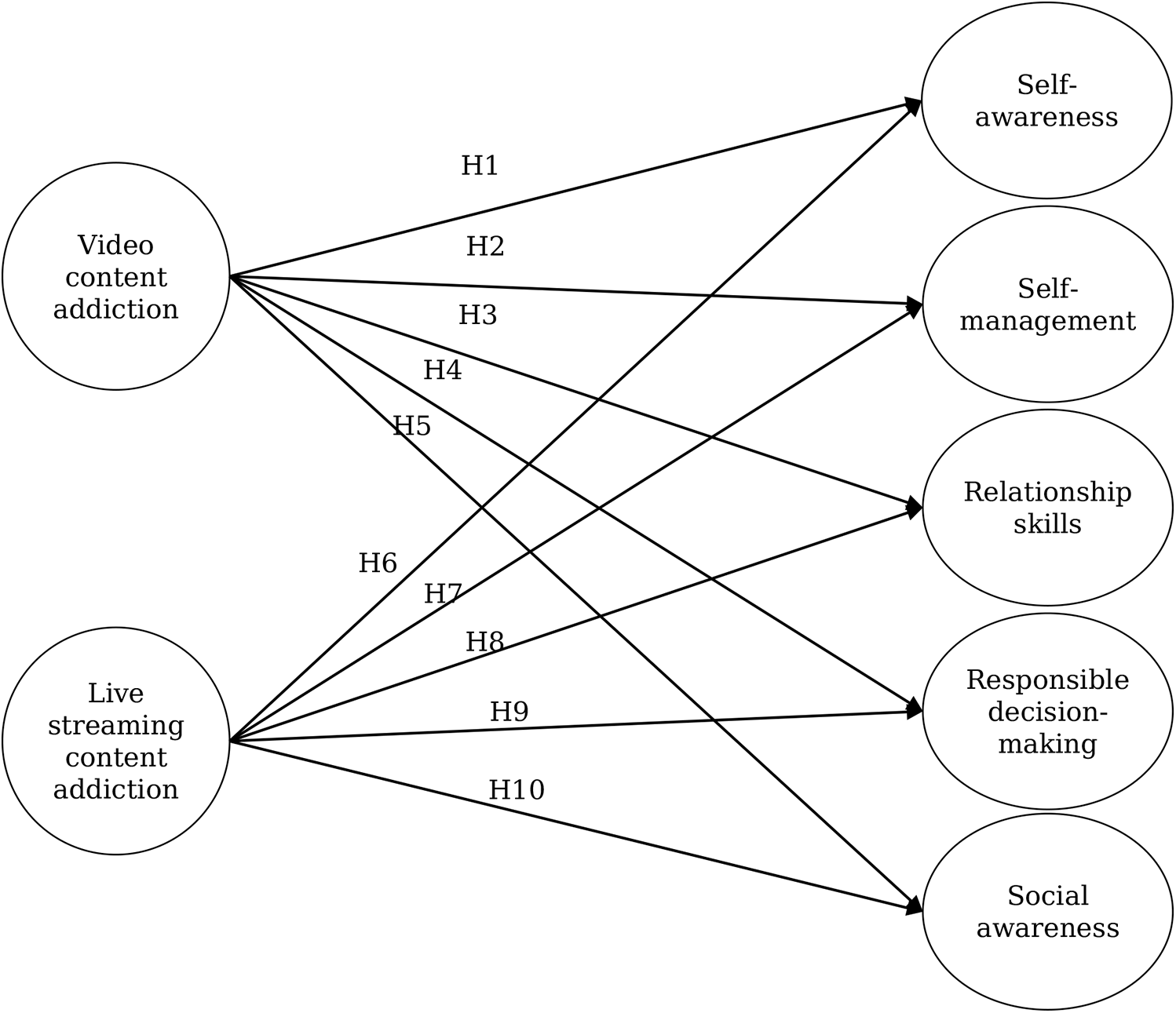
Figure 1: Research model
3.1 Procedure and Participants
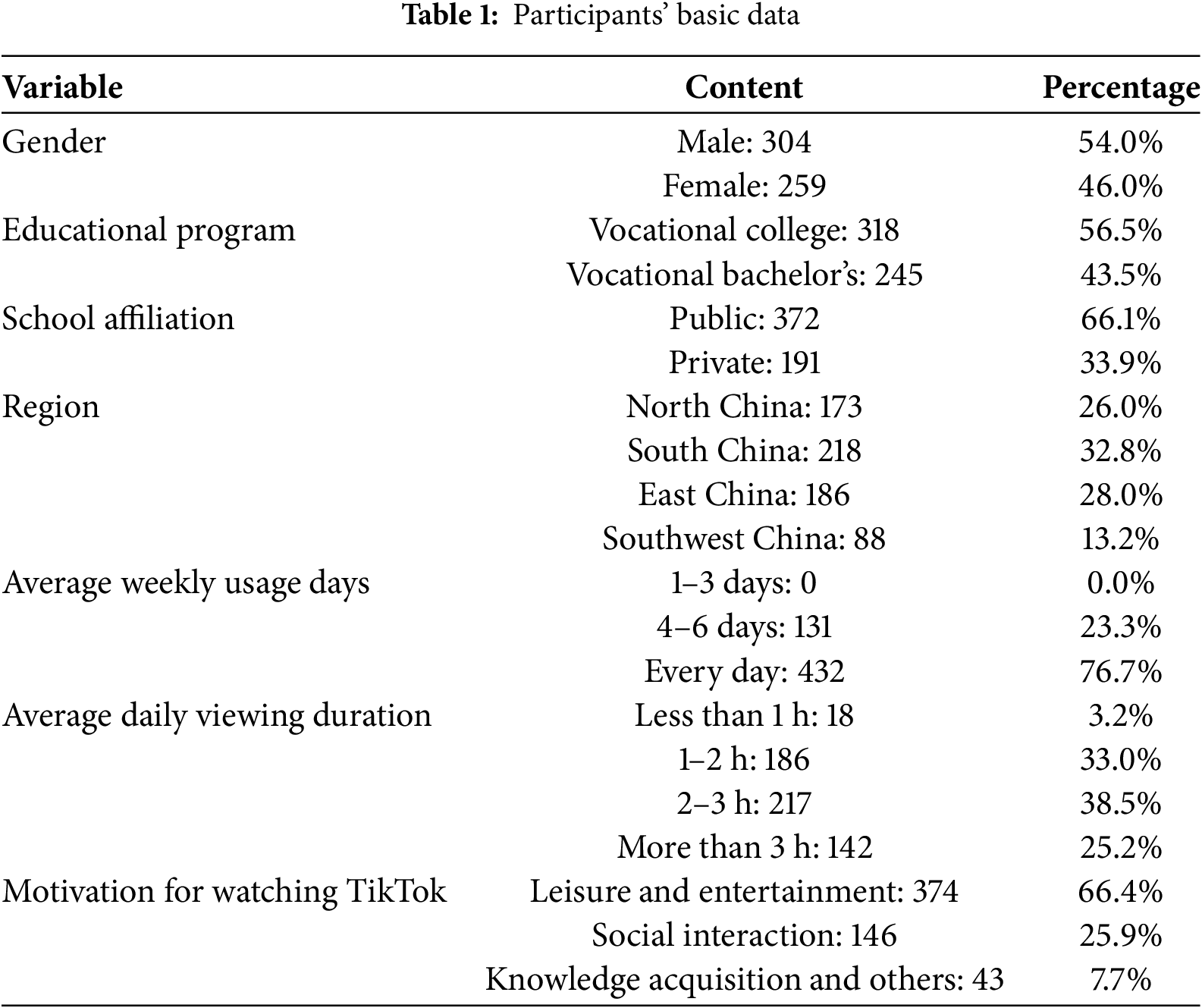
After obtaining ethics approval from the academic committee of the co-authors’ institution (the Academic Committee of the School of Education, Guangxi University of Foreign Languages; Approval number: GXUFL-SE-24016), we conducted data collection using a cross-sectional design. We administered an online survey on the Wenjuanxing platform and employed a snowball sampling method to recruit students from Chinese vocational colleges. The survey period spanned from 6 December 2024, to 3 January 2025. A total of 665 questionnaires were collected. After excluding 102 responses completed in less than 3 min (with the standard derived from the average time of completing the answers), 563 valid responses remained. This resulted in an effective response rate of 84.66%. Participants had an average age of 20.20 years (SD = 1.36). Additional participant details are provided in Table 1.
The questionnaire used in this study was adapted from an established instrument with proven reliability and validity. We translated and revised the instrument by replacing the vague term “short video” in the Short Video Addiction Scale with the more specific labels “short-video content” and “live-streaming content.” We also expanded several items on the Social-Emotional Learning Scale to reflect the Chinese context. Two experts in Internet addiction research and three educators then reviewed the revised questionnaire draft to ensure wording accuracy and confirm its cultural appropriateness. The questionnaire used a 5-point Likert scale, where 1 = “strongly disagree,” 2 = “disagree,” 3 = “neutral,” 4 = “agree,” and 5 = “strongly agree.”
This study adapted Ye et al.’s short video addiction scale, which contains 20 items [47]. The scale measures participants’ perceptions of addictive symptoms when watching short videos or live streaming content on TikTok. An example item for video content addiction is: “I would set aside tasks I need to complete in order to watch short videos.” An example item for live streaming content addiction is: “I become angry if someone interrupts me while I am watching a live stream.” The scale’s two dimensions showed a Cronbach’s alpha of 0.96, factor loadings between 0.86 and 0.87, a composite reliability (CR) of 0.96, and average variance extracted (AVE) values ranging from 0.74 to 0.76.
3.2.2 Social and Emotional Learning
This study expanded Shi et al.’s social-emotional skills scale to 38 items, assessing participants’ perceived development of various social and emotional skills [48]. Example items include “I can describe my feelings” (self-awareness), “I have clear goals when I do things” (self-management), “I can stand up to defend others’ rights” (social awareness), “I care about others’ feelings” (relationship skills), and “I take responsibility for my actions” (responsible decision-making). The five dimensions of the questionnaire reported Cronbach’s α values ranging from 0.90 to 0.93, factor loadings (FL) between 0.77 and 0.83, CR values from 0.90 to 0.93, and AVE values of 0.60 to 0.68.
After excluding invalid questionnaires with excessively short completion times, we conducted a series of analyses using SPSS 23 (IBM Corp., Armonk, NY, USA). First, we tested for common method bias to ensure that no systematic error influenced our findings. Next, we examined the reliability and validity of each scale to confirm the integrity of all variables. We calculated descriptive statistics—means, standard deviations, and so on—and evaluated the correlations among variables. To validate our measurement and structural models, we employed AMOS 26 (IBM Corp., Armonk, NY, USA), assessed factor loadings and fit indices, and confirmed that the model met acceptable criteria. Finally, we performed path analysis to evaluate the ten research hypotheses and the overall hypothesized framework.
This study used principal component analysis with Varimax rotation. Seven factors emerged with eigenvalues exceeding 1, and the cumulative variance explained was 25.30% after rotation. According to Podsakoff and Organ, if a single factor explains less than 50% of the variance in exploratory factor analysis, severe common method bias is unlikely [49].
4.2 Measurement Model Analysis
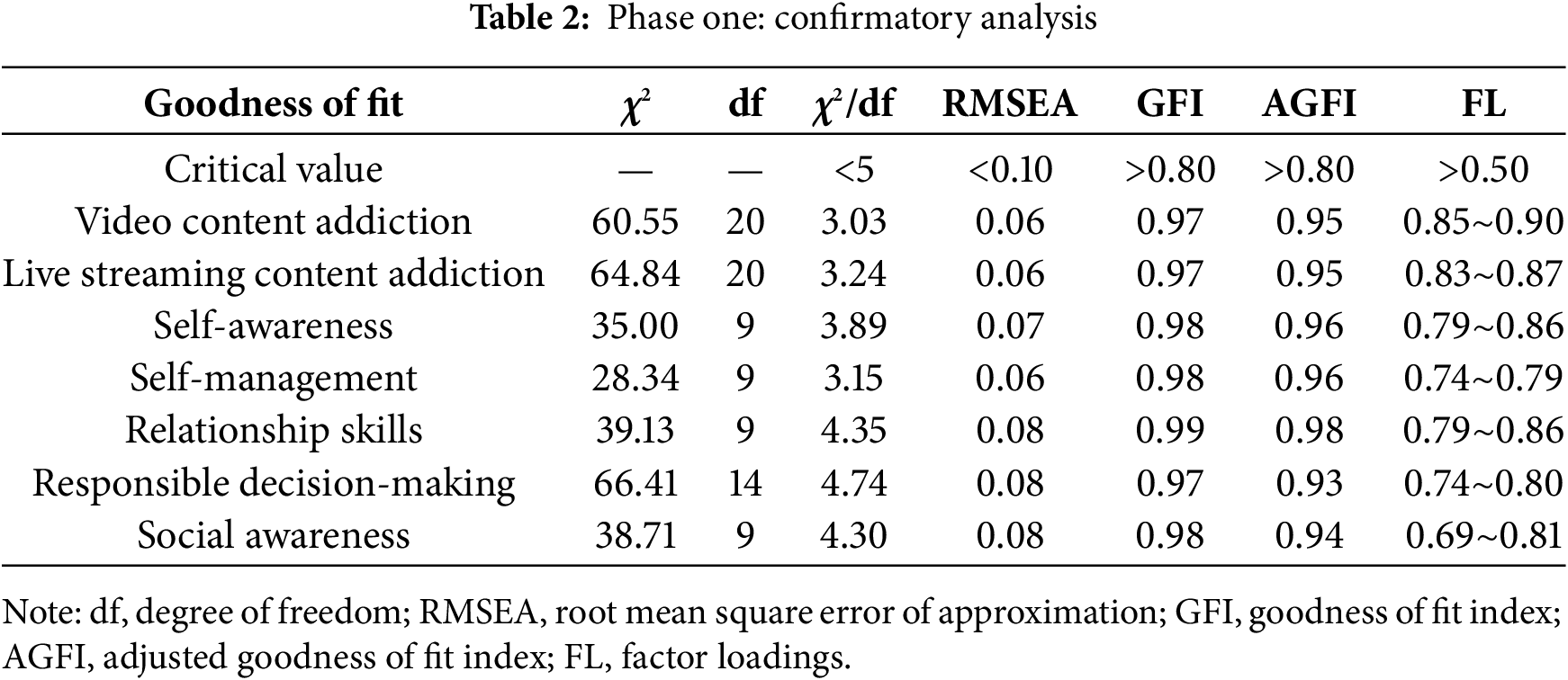
Before running the structural equation model, we first examined the fit of the measurement model. Hair et al. and Kenny et al. recommended that the chi-square/degrees of freedom (χ2/df) should be below 5, the root mean square error of approximation (RMSEA) should be below 0.10, and both goodness of fit index (GFI) and adjusted goodness of fit index (AGFI) should be above 0.80, while factor loadings should exceed 0.5 [50,51]. Table 2 shows the results. According to the criteria, we removed items as follows: the video content addiction scale was reduced from 10 to eight items; the live streaming content addiction scale was also reduced from 10 to eight items; the self-awareness scale was reduced from eight to six items; the self-management scale was reduced from seven to six items; the relationship skills scale was reduced from eight to six items; and the social awareness scale was also reduced from eight to six items.
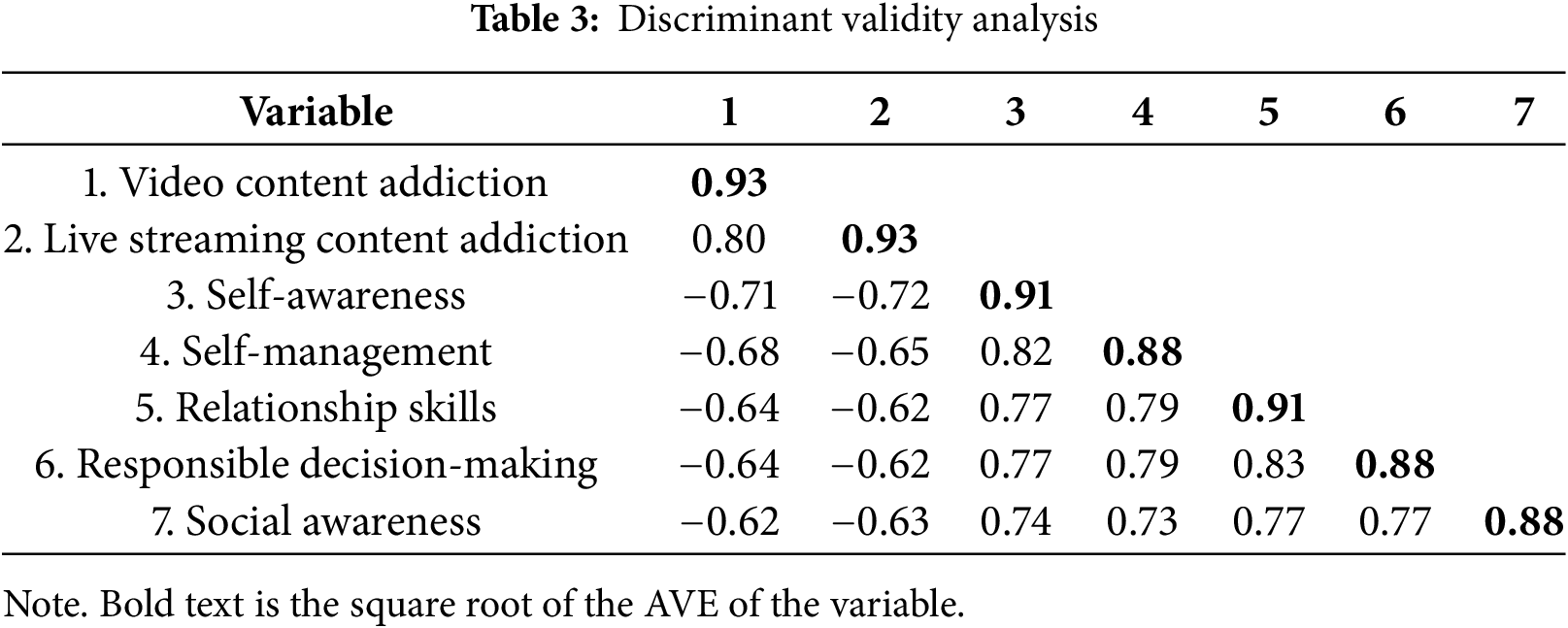
4.3 Discriminant Validity Analysis
Assessing discriminant validity is a widely accepted prerequisite for examining relationships among latent variables [52]. According to the Fornell-Larcker criterion, discriminant validity is established if the correlations among variables (or dimensions) are lower than the square root of the AVE. As shown in Table 3, all variables in this study demonstrated adequate discriminant validity.
4.4 Overall Model Fit Analysis
We evaluated the overall model fit using AMOS. Hair et al. and Abedi et al. recommend that the χ2/df value should be below 5, the RMSEA below 0.10, and the indices GFI, AGFI, NFI, NNFI, CFI, IFI, and RFI above 0.80, while PNFI and PGFI should exceed 0.50 [50,53]. In this study, the fit indices were: χ2 = 1627.78, df = 1002, χ2/df = 1.63, RMSEA = 0.03, GFI = 0.89, AGFI = 0.88, NFI = 0.93, NNFI = 0.97, CFI = 0.97, IFI = 0.93, RFI = 0.93, PNFI = 0.87, and PGFI = 0.79.
4.5 Hypothesis Model Verification
We verified the model using AMOS. The results revealed that: Video content addiction was negatively correlated with self-awareness (β = −0.38, p < 0.001); video content addiction was negatively correlated with self-management (β = −0.48, p < 0.001); video content addiction was negatively correlated with relationship skills (β = −0.39, p < 0.001); video content addiction was negatively correlated with responsible decision-making (β = −0.42, p < 0.001); video content addiction was negatively correlated with social awareness (β = −0.35, p < 0.001); live streaming content addiction was negatively correlated with self-awareness (β = −0.44, p < 0.001); live streaming content addiction was negatively correlated with self-management (β = −0.30, p < 0.001); live streaming content addiction was negatively correlated with relationship skills (β = −0.31, p < 0.001); live streaming content addiction was negatively correlated with responsible decision-making (β = −0.32, p < 0.001); and live streaming content addiction was negatively correlated with social awareness (β = −0.38, p < 0.001).
Cohen’s f² allows researchers to assess the local effect size of a single predictor in a multiple regression model [54]. We calculated f 2 using Cohen’s formula, f 2 = (R2AB−R2A/1−R2AB). Conventionally, f 2 values of 0.02, 0.15, and 0.35 indicate small, medium, and large effects, respectively [55]. Furthermore, video and live streaming addiction together explained 62% of the variance in self-awareness (f 2 = 0.54), 56% in self-management (f 2 = 0.48), 48% in relationship skills (f 2 = 0.54), 50% in responsible decision-making (f 2 = 0.48), and 49% in social awareness (f 2 = 0.48). As shown in Fig. 2, TikTok addiction explained the greatest variance in self-awareness and the least in social awareness. These findings suggest that TikTok addiction may significantly influence social-emotional learning, especially self-awareness and relationship skills.
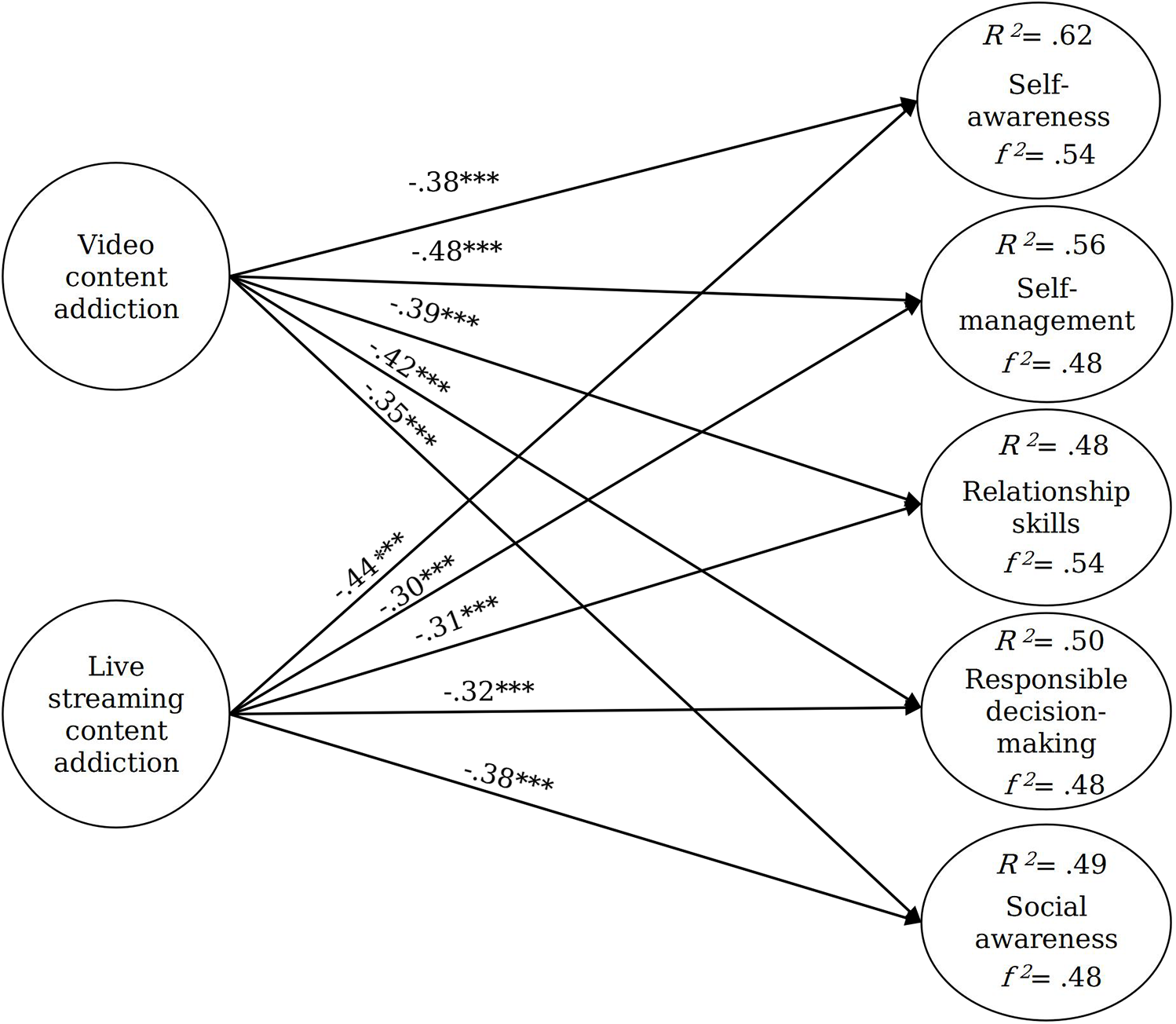
Figure 2: Model verification. ***p < 0.001
Previous research has shown that the effects of ego depletion on student learning—both in knowledge acquisition and in learning processes—are incompletely understood [21]. In this study, we confirmed a negative relationship between TikTok addiction and SEL.
5.1 The Two Types of TikTok Addiction Showed a Negative Correlation with Self-Awareness
This study found that both short video and live streaming addiction were negatively correlated with self-awareness, it also means that the assumptions of H1 and H6 are supported. In other words, the more severe a user’s addictive behavior on TikTok, the poorer the development of their self-awareness. TikTok’s rich and varied content readily immerses students in video viewing. They often become so absorbed that they neglect self-reflection and self-monitoring. Over time, this neglect undermines their self-awareness. Irudayasamy stated that addictive behaviors are considered destructive and their negative impact on the emotional and social well-being of individuals cannot be ignored [6]. Cedrún and Civila reported that over 50% of TikTok users are influenced by the platform’s content, absorbing its values and changing their personal views [9]. This finding reveals the subtle influence of short video platforms on users’ thought processes. Furthermore, Shasizadeh et al. demonstrated a significant negative relationship between smartphone addiction and students’ emotional self-awareness [24]. Relevant studies have also shown that social media addiction exerts profound neurological and psychological effects, harming students’ cognitive abilities and potentially causing long-term negative consequences for their emotional development [6].
5.2 The Two Types of TikTok Addiction Showed a Negative Correlation with Self-Management
This study indicated that both video content addiction and live streaming content addiction were negatively correlated with self-management, it also means that the assumptions of H2 and H7 are supported. In other words, the more pronounced the addictive behaviors of TikTok users, the less effective their self-management development becomes. This is because addicted TikTok users often struggle to regulate their short-video app usage, and this self-control failure further impairs their self-management capacity. This finding is consistent with Yilmaz and Karaoglan Yilmaz, who reported a moderate negative correlation between problematic internet use and both self-control and self-management [27]. Moreover, Ye et al. indicated that short video addiction is often a consequence of trait self-regulation failure [8]. Therefore, addicts tend to exhibit higher levels of impulsivity, risky decision-making, and biased reasoning compared to non-addicts [29]. Meanwhile, through ego depletion theory, Mu et al. proposed that applications such as short video platforms may distract users, thereby diminishing their self-control capacity [28]. Collectively, these findings underscore the negative impact of addictive behaviors on individuals’ self-management and self-control abilities.
5.3 The Two Types of TikTok Addiction Showed a Negative Correlation with Relationship Skills
This study confirmed that both video content addiction and live streaming addiction were negatively correlated with relationship skills, it also means that the assumptions of H3 and H8 are supported. In other words, the more pronounced the addictive behaviors exhibited by TikTok users, the poorer their ability to develop effective relationship skills. This is because excessive reliance on TikTok for social interaction leads students to neglect face-to-face communication in real life, thereby undermining their interpersonal skills. This finding is supported by Camilleri, who noted that interactions conducted via social media networks often lack the authenticity and satisfaction inherent in face-to-face exchanges [32]. Furthermore, Liao also mentioned that the social model promoted by short video platforms caters to users’ tendencies to evade the high level of interpersonal skills required in real-life interactions [33]. Meanwhile, Mu et al. demonstrated that short videos allow users to immerse themselves in the platform and avoid awkward situations caused by social phobia [28]. These findings underscore the character of short video platforms as tools for evading genuine interpersonal engagement, suggesting that short video addiction may exacerbate users’ social difficulties [33].
5.4 The Two Types of TikTok Addiction Showed a Negative Correlation with Responsible Decision-Making
The results of this study indicated that both video content addiction and live streaming addiction were negatively correlated with responsible decision-making, it also means that the assumptions of H4 and H9 are supported. This result is due to the fact that problematic use of TikTok itself can be seen as a form of poor self-management. When TikTok users exhibit severe addictive behaviors, they struggle to develop responsible decision-making skills. Liao noted that the platform continuously alters users’ viewing behavior through its design mechanisms [33]. This process reinforces dependency and weakens critical thinking. Consequently, addictive behaviors adversely affect decision-making [35]. Bechara further showed that addicted individuals often deny or fail to recognize their problems [37]. When facing risks that could lead to long-term negative consequences, they tend to choose immediate rewards over future benefits. Racine et al. highlighted that addiction impairs an individual’s freedom to choose among different options [36]. We attribute this impairment to weakened neural mechanisms for reflection and decision-making, which shift behavior from self-directed control to automated, sensation-driven responses [35].
5.5 The Two Types of TikTok Addiction Showed a Negative Correlation with Social Awareness
This study confirmed that both video content addiction and live streaming addiction were negatively correlated with social awareness, it also means that the assumptions of H5 and H10 are supported. In other words, as TikTok users’ addictive behaviors intensify, their ability to develop social awareness declines. Excessive use of TikTok for entertainment or personal interests traps student users in an information cocoon. As a result, they overlook social events, public issues, and others’ needs, which limits their understanding of social diversity and complexity. Educators and experts can use TikTok in engaging ways to raise public awareness of important social issues [56]. However, social media use still poses significant risks [42]. Despite the fact that responsible social media use contributes to increased social awareness and concern for others, research has found a correlation between increased frequency of short video use and increased social isolation among adolescents [45]. As short videos gain more influence, people shift their social interactions toward the integration of virtual reality. This transition raises concerns about potential socio-psychological issues [43]. In addition, Hsieh et al. supported these concerns by finding that Internet addiction is negatively associated with social awareness [44]. Their study indicated that excessive reliance on the Internet may weaken individuals’ social cognition and interpersonal skills.
Social media continually innovates and offers people the chance to better understand the world around them. It enables people to socialize, build connections, share information, and learn. Short-video platforms such as TikTok prioritize user experience. Their product mechanisms and functionalities deliver the commercial results that companies expect. However, evidence based on ego depletion theory raises serious concerns. We must carefully consider how to effectively reduce TikTok addiction or problematic short video use. This study distinguished two main types of TikTok addiction based on short videos. This classification allowed us to explore TikTok addiction issues in greater detail. In addition, the instrument developed in this study can also help to examine the rapidly growing issue of live streaming addiction.
Furthermore, TikTok’s video quality and creator competence vary widely. The platform should strengthen its AI screening and human review processes to prevent gradual exposure to distorted worldviews, values, employment outlooks, and career perspectives that may harm users’ physical and mental development. At the same time, the platform should also provide alert notices for excessive use and enforce usage restrictions for minors to prevent students from becoming addicted to TikTok and other short video platforms. Moreover, managing leisure time effectively is crucial. We must cultivate students’ self-leadership, self-management skills, and media literacy. In addition, according to self-depletion theory, teaching self-regulation strategies is an effective measure to prevent addiction. Student users should be trained to accumulate self-resources, enabling better self-monitoring and control over short video consumption habits.
SEL is considered one of the keys to success in a student’s career. Teachers and parents should actively encourage responsible decision-making and self-management. They should help students develop social awareness and relationship skills. This support would enable students to build and maintain healthy interpersonal interactions. Improving self-awareness lets students monitor and reflect on their thoughts and actions. Over time, this process will shape them into global citizens with strong social and emotional competencies. We must also pay attention to the way in which students use social media and the content they watch to ensure that these practices do not undermine the effectiveness of their SEL.
SEL can help students use short videos more effectively by guiding them through five key steps. First, it guides them to reflect on and record their motivations and emotions when they watch short videos. Second, it teaches them alternative emotion-regulation strategies for coping with anxiety or boredom instead of immediately opening video apps. Third, it helps them recognize that face-to-face interactions provide a deeper emotional exchange than virtual content. Fourth, it educates students about the risks of excessive viewing and trains them to plan their screen time responsibly. Finally, it encourages them to align their viewing choices with their interests and values by selecting knowledge-based content, which naturally reduces time spent on purely entertaining videos.
5.7 Research Limitations and Future Research
Our study provides evidence that TikTok addiction negatively affects learning. However, several limitations warrant further investigation.
First, our reliance on self-report surveys lacks objective data for comparison. Future studies should incorporate objective measures (such as app-recorded usage time and physiological indicators) to validate our results. At the same time, the cross-sectional survey method collects data at a single time point, preventing observation of variable changes over time. Consequently, it cannot determine the temporal sequence of variables, hindering causal inferences between TikTok addiction and SEL. We should therefore employ longitudinal and experimental designs that collect data at multiple time points to clarify the directionality of these associations so as to yield more robust conclusions. Additionally, researchers must remain vigilant about potential sample attrition in longitudinal studies. Therefore, beyond increasing sample size, it is essential to recruit participants with a high willingness to participate. Although we confirmed that both types of TikTok addiction negatively correlate with SEL, the underlying mechanisms remain unclear. Future research should employ qualitative methods such as interviews or network ethnography to further explore these causes.
Second, to reduce social desirability bias, we encouraged students to repost the survey on social media to boost data collection. This practical approach may introduce selection bias and limit our findings’ generalizability to all Chinese vocational college students. Future research should adopt diverse sampling strategies so that sample characteristics better reflect the target population and strengthen the inferential power of the results.
Third, emerging social media addiction, such as TikTok addiction, adversely affects students’ health, well-being, academic performance, and non-cognitive skill development. TikTok’ s influence continues to expand. It affects not only adolescents but also young children and older adults to varying degrees. Future studies should examine these differences across age groups and regions.
Fourth, in addition to the mechanism of TikTok, the content is also an important factor in causing addiction. Future research can classify content by themes such as short videos, micro-dramas, or live streams to determine which types most easily trigger addictive behaviors. Moreover, although our study explored live streaming addiction, this emerging phenomenon can also bring about the information cocoon effect, high levels of adhesion, overuse, irrational rewards, impulsive consumption, and other problems. There is still a lack of research on the causes and effects of live content addiction. Therefore, more evidence and data are urgently needed to raise awareness of the potential dangers of excessive live stream viewing. It can be explored as a topic in subsequent studies. Clearly, the overall impact of short video platforms, including TikTok, has not been fully examined. More research is needed to understand both their benefits and drawbacks.
Fifth, this study focused on individual-level links between addiction and SEL. External factors such as institutional policies, educational support systems or platform governance may moderate these links. Future research can apply ecosystem theory to explore how these factors buffer or amplify TikTok addiction’s negative impact on students’ SEL development. The interplay between addiction and platform use also warrants further study. For instance, TikTok’s ease of use, convenience and familiarity may reinforce addictive behavior. Thus, future work should consider users’ prior technological experience as a key factor.
From the perspective of ego depletion theory, this study examined the relationships between two types of TikTok addiction, that is, video and live streaming, and five dimensions of SEL: self-awareness, self-management, social awareness, relationship skills, and responsible decision-making. All 10 proposed research hypotheses were supported. The findings revealed that both video content addiction and live streaming addiction negatively affect all five SEL dimensions. Notably, TikTok addiction showed the strongest explanatory power for self-awareness.
We found that TikTok-addicted users entered an ego-depleted state marked by impaired self-regulation, which caused their subsequent self-control efforts in learning to fail. These findings support ego depletion theory’ s claim that consuming limited self-control resources during regulatory tasks can trigger a cascade of complex cognitive, emotional, and behavioral problems. Taken together, ego depletion theory offers a robust framework for explaining the pathway relationships in addiction models.
Acknowledgement: Not applicable.
Funding Statement: This work was supported by the First-Class Education Discipline Development of Beijing Normal University (Grant Numbers: YLXKPY-XSDW202408, YLXKPY-ZYSB202201).
Author Contributions: Jian-Hong Ye: Conceptualization, Data curation, Formal analysis, Funding acquisition, Investigation, Methodology, Validation, Writing—original draft. Yongjian Wang: Formal analysis, Project administration, Writing—original draft, Writing—review & editing. Weiguaju Nong: Conceptualization, Investigation, Validation, Writing—review & editing. Jhen-Ni Ye: Data curation, Investigation, Writing—review & editing. Yuting Cui: Methodology, Writing—review & editing. All authors reviewed the results and approved the final version of the manuscript.
Availability of Data and Materials: The data in the article are available with the consent of the first author.
Ethics Approval: The study was approved by the Academic Committee of the School of Education, Guangxi University of Foreign Languages (Approval number: GXUFL-SE-24016).
Informed Consent: All participants were informed that the survey was voluntary and anonymous before filling in the questionnaire. They were told they could quit at any time. All the students responded by volunteering to participate in the survey.
Conflicts of Interest: The authors declare no conflicts of interest to report regarding the present study.
References
1. Tian X, Bi X, Chen H. How short-form video features influence addiction behavior? Empirical research from the opponent process theory perspective. Inf Technol People. 2023;36(1):387–408. doi:10.1108/ITP-04-2020-0186. [Google Scholar] [CrossRef]
2. Wang S, Sun Z, Li M, Zhang H, Metwally AHS. Leveraging TikTok for active learning in management education: an extended technology acceptance model approach. Int J Manag Educ. 2024;22(3):101009. doi:10.1016/j.ijme.2024.101009. [Google Scholar] [CrossRef]
3. Nong W, He Z, Ye JH, Wu YF, Wu YT, Ye JN, et al. The relationship between short video flow, addiction, serendipity, and achievement motivation among Chinese vocational school students: the post-epidemic era context. Healthcare. 2023;11(4):462. doi:10.3390/healthcare11040462. [Google Scholar] [PubMed] [CrossRef]
4. Zhang X, Wu Y, Liu S. Exploring short-form video application addiction: socio-technical and attachment perspectives. Telemat Inform. 2019;42(6):101243. doi:10.1016/j.tele.2019.101243. [Google Scholar] [CrossRef]
5. Ye JH, Zheng J, Nong W, Yang X. Potential effect of short video usage intensity on short video addiction, perceived mood enhancement (‘TikTok brain’and attention control among Chinese adolescents. Int J Ment Health Promot. 2025;27(3):271–86. doi:10.32604/ijmhp.2025.059929. [Google Scholar] [CrossRef]
6. Irudayasamy J. Social media addiction and the impacts on young adults’ academic performance: emotional status and the implications. NeuroQuantology. 2022;20(10):12503–12. doi:10.48047/NQ.2022.20.10.NQ551211. [Google Scholar] [CrossRef]
7. Ye JH, Wu YF, Nong W, Wu YT, Ye JN, Sun Y. The association of short video problematic use, learning engagement, and perceived learning ineffectiveness among Chinese vocational students. Healthcare. 2023;11(2):161. doi:10.3390/healthcare11020161. [Google Scholar] [PubMed] [CrossRef]
8. Ye JH, Cui Y, Wang L, Ye JN. The relationships between the short video addiction, self-regulated learning, and learning well-being of Chinese undergraduate students. Int J Ment Health Promot. 2024;26(10):805–15. doi:10.32604/ijmhp.2024.055814. [Google Scholar] [CrossRef]
9. Cedrún LC, Civila S. The influence of TikTok use on young people’s identity formation and virtual socialisation. MLS Commun J. 2024;2(1):7–22. doi:10.69620/mlscj.v2i1.2531. [Google Scholar] [CrossRef]
10. Dhingra R, Parashar B. Social media and social emotional learning: adolescents’ perspective. J Posit Sch Psychol. 2022;6(5):3917–29. [Google Scholar]
11. Vanco BM, Christensen JL. Ego depletion increases regulatory success in educational digital media environments. Comput Hum Behav. 2016;62(1):602–12. doi:10.1016/j.chb.2016.04.031. [Google Scholar] [CrossRef]
12. Baumeister RF. Ego depletion and self-regulation failure: a resource model of self-control. Alcohol Clin Exp Res. 2003;27(2):281–4. doi:10.1097/01.ALC.0000060879.61384.A4. [Google Scholar] [PubMed] [CrossRef]
13. Volungis AM, Kalpidou M, Popores C, Joyce M. Smartphone addiction and its relationship with indices of social-emotional distress and personality. Int J Mental Health Addict. 2020;18(5):1209–25. doi:10.1007/s11469-019-00119-9. [Google Scholar] [CrossRef]
14. Agırkan M. The mediating effect of social emotional learning between relationship on basic psychological needs and technology addiction. J Edu Sci Environ Health . 2023;9(4):268–80. doi:10.55549/jeseh.1381065. [Google Scholar] [CrossRef]
15. Jones SM, Doolittle EJ. Social and emotional learning: introducing the issue. Future Child. 2017;27(1):3–11. doi:10.1353/foc.2017.0000. [Google Scholar] [CrossRef]
16. Collaborative for Academic, Social, and Emotional Learning. Safe and sound: an educational leader’ s guide to evidence-based social and emotional learning programs. Chicago, IL, USA: Collaborative for Academic, Social, and Emotional Learning (CASELThe Laboratory for Student Success (LSSTemple University; 2003. [Google Scholar]
17. Englert C, Bertrams A. Ego depletion negatively affects knowledge retrieval in secondary school students. Educ Psychol. 2017;37(9):1057–66. doi:10.1080/01443410.2017.1313963. [Google Scholar] [CrossRef]
18. Hagger MS, Wood C, Stiff C, Chatzisarantis NLD. Ego depletion and the strength model of self-control: a meta-analysis. Psychol Bull. 2010;136(4):495–525. doi:10.1037/a0019486. [Google Scholar] [PubMed] [CrossRef]
19. Baumeister RF. Self-regulation, ego depletion, and inhibition. Neuropsychologia. 2014;65:313–9. doi:10.1016/j.neuropsychologia.2014.08.012. [Google Scholar] [PubMed] [CrossRef]
20. Baumeister RF, André N, Southwick DA, Tice DM. Self-control and limited willpower: current status of ego depletion theory and research. Curr Opin Psychol. 2024;60:101882. doi:10.1016/j.copsyc.2024.101882. [Google Scholar] [PubMed] [CrossRef]
21. Greene JA, Duke RF, Freed R, Dragnić-Cindrić D, Cartiff BM. Effects of an ego-depletion intervention upon online learning. Comput Educ. 2022;177(4):104362. doi:10.1016/j.compedu.2021.104362. [Google Scholar] [CrossRef]
22. Xiao W, Peng J, Liao S. Exploring the associations between social media addiction and depression: attentional bias as a mediator and socio-emotional competence as a moderator. Int J Environ Res Public Health. 2022;19(20):13496. doi:10.3390/ijerph192013496. [Google Scholar] [PubMed] [CrossRef]
23. Sun M, Meng S. Short-video platform and intrinsic motivation of rural adolescents: a comparative case study on two Chinese middle school classes. Youth Soc. 2023;55(4):772–95. doi:10.1177/13548565241246082. [Google Scholar] [CrossRef]
24. Shasizadeh E, Eftekhar Saadi Z, Jayrvand H, Bakhtiarpoor S, Makvandi B. Evaluation of social well-being and emotional self-awareness based on the quality of relationship with parents due to smartphone addiction in high-intelligence students. J Pediatr Nurs. 2022;8(3):16–26. doi:10.22034/JPEN.8.3.16. [Google Scholar] [CrossRef]
25. Chao M, Lei J, He R, Jiang Y, Yang H. TikTok use and psychosocial factors among adolescents: comparisons of non-users, moderate users, and addictive users. Psychiatry Res. 2023;325(4):115247. doi:10.1016/j.psychres.2023.115247. [Google Scholar] [PubMed] [CrossRef]
26. Zhao Z, Kou Y. Effects of short video addiction on college students’ physical activity: the chain mediating role of self-efficacy and procrastination. Front Psychol. 2024;15:1429963. doi:10.3389/fpsyg.2024.1429963. [Google Scholar] [PubMed] [CrossRef]
27. Yilmaz R, Karaoglan Yilmaz FG. Problematic internet use in adults: the role of happiness, psychological resilience, dispositional hope, and self-control and self-management. J Ration-Emot Cogn-Behav Ther. 2023;41(3):727–45. doi:10.1007/s10942-022-00482-y. [Google Scholar] [PubMed] [CrossRef]
28. Mu H, Jiang Q, Xu J, Chen S. Drivers and consequences of short-form video (SFV) addiction amongst adolescents in China: stress-coping theory perspective. Int J Environ Res Public Health. 2022;19(21):14173. doi:10.3390/ijerph192114173. [Google Scholar] [PubMed] [CrossRef]
29. Grassi G, Pallanti S. Common neural networks between ocd and behavioural addictions: is ocd a behavioral addiction? Eur Psychiat. 2017;41(S1):S21–2. doi:10.1016/j.eurpsy.2017.01.120. [Google Scholar] [CrossRef]
30. Inzlicht M, Schmeichel BJ. What is ego depletion? Toward a mechanistic revision of the resource model of self-control. Perspect Psychol Sci. 2012;7(5):450–63. doi:10.1177/1745691612454134. [Google Scholar] [PubMed] [CrossRef]
31. Baumeister RF, Vohs KD, Tice DM. The strength model of self-control. Curr Dir Psychol. 2007;16(6):351–5. doi:10.1111/j.1467-8721.2007.00534.x. [Google Scholar] [CrossRef]
32. Camilleri MA. Metaverse applications in education: a systematic review and a cost-benefit analysis. Interact Technol Smart Educ. 2024;21(2):245–69. doi:10.1108/ITSE-01-2023-0017. [Google Scholar] [CrossRef]
33. Liao M. Analysis of the causes, psychological mechanisms, and coping strategies of short video addiction in China. Front Psychol. 2024;15:1391204. doi:10.3389/fpsyg.2024.1391204. [Google Scholar] [PubMed] [CrossRef]
34. Lewandowski GW Jr, Ciarocco NJ, Pettenato M, Stephan J. Pick me up: ego depletion and receptivity to relationship initiation. J Soc Pers Relatsh. 2012;29(8):1071–84. doi:10.1177/0265407512449401. [Google Scholar] [CrossRef]
35. Bettinardi-Angres K, Angres DH. Understanding the disease of addiction. J Nurs Regul. 2010;1(2):31–7. doi:10.1016/S2155-8256(15)30348-3. [Google Scholar] [CrossRef]
36. Racine E, Sattler S, Escande A. Free will and the brain disease model of addiction: the not so seductive allure of neuroscience and its modest impact on the attribution of free will to people with an addiction. Front Psychol. 2017;8:1850. doi:10.3389/fpsyg.2017.01850. [Google Scholar] [PubMed] [CrossRef]
37. Bechara A. Risky business: emotion, decision-making, and addiction. J Gamb Stud. 2003;19(1):23–51. doi:10.1023/A:1021223113233. [Google Scholar] [PubMed] [CrossRef]
38. Baumeister RF. Ego depletion and self-control failure: an energy model of the self’s executive function. Self Identity. 2002;1(2):129–36. doi:10.1080/152988602317319302. [Google Scholar] [CrossRef]
39. Osgood JM. Ego-depletion increases selfish decision making, but may also increase self-conflict and regret about those decisions. J Soc Psychol. 2019;159(4):417–30. doi:10.1080/00224545.2018.1505706. [Google Scholar] [PubMed] [CrossRef]
40. Bhati VS, Bansal J, Villa S. Social media and Indian youth. Int J Comput Sci Eng. 2019;7(1):818–21. [Google Scholar]
41. Zhang Y. Study on the influence of TikTok use and individual socialization among adolescents. J Educat Human Soc Sci. 2023;9:204–10. doi:10.54097/ehss.v9i.6454. [Google Scholar] [CrossRef]
42. Sari AA, Silviyana R, Paramasasta R. The role of social media in shaping adolescent prosocial behavior. Linguanusa: Soc Humanit Educ Linguist. 2024;2(1):23–8. doi:10.63605/ln.v2i1.40. [Google Scholar] [CrossRef]
43. Yao Y, She K, Wang Y. Deconstructing social contact: short video-mediated internet addiction in the post-COVID-19 era (a research survey based on university students). Curr Psychol. 2025;44(8):7551–67. doi:10.1007/s12144-025-07293-1. [Google Scholar] [CrossRef]
44. Hsieh YP, Wei HS, Hwa HL, Shen ACT, Feng JY, Huang CY. The effects of peer victimization on children’ s internet addiction and psychological distress: the moderating roles of emotional and social intelligence. J Child Fam Stud. 2019;28(9):2487–98. doi:10.1007/s10826-018-1120-6. [Google Scholar] [CrossRef]
45. Vannucci A, Flannery KM, Ohannessian CM. Social media use and anxiety in emerging adults. J Affect Disord. 2017;207(12):163–6. doi:10.1016/j.jad.2016.08.040. [Google Scholar] [PubMed] [CrossRef]
46. Sun R, Zhang MX, Yeh C, Ung COL, Wu AM. The metacognitive-motivational links between stress and short-form video addiction. Technol Soc. 2024;77(14):102548. doi:10.1016/j.techsoc.2024.102548. [Google Scholar] [CrossRef]
47. Ye JH, Wu YT, Wu YF, Chen MY, Ye JN. Effects of short video addiction on the motivation and well-being of Chinese vocational college students. Front Public Health. 2022;10:847672. doi:10.3389/fpubh.2022.847672. [Google Scholar] [PubMed] [CrossRef]
48. Shi J, Cheung AC, Zhang Q, Tam WWY. Development and validation of a social emotional skills scale: evidence of its reliability and validity in China. Int J Educ Res. 2022;114(4):102007. doi:10.1016/j.ijer.2022.102007. [Google Scholar] [CrossRef]
49. Podsakoff PM, Organ DW. Self-reports in organizational research: problems and prospects. J Manag. 1986;12(4):531–44. doi:10.1177/014920638601200408. [Google Scholar] [CrossRef]
50. Hair JF, Black WC, Babin BJ, Anderson RE, Tatham RL. Multivariate data analysis. 8th ed. London: Cengage; 2019. [Google Scholar]
51. Kenny DA, Kaniskan B, McCoach DB. The performance of RMSEA in models with small degrees of freedom. Sociol Methods Res. 2015;44(3):486–507. doi:10.1177/0049124114543236. [Google Scholar] [CrossRef]
52. Henseler J, Ringle CM, Sarstedt M. A new criterion for assessing discriminant validity in variance-based structural equation modeling. J Acad Mark Sci. 2015;43(1):115–35. doi:10.1007/s11747-014-0403-8. [Google Scholar] [CrossRef]
53. Abedi G, Rostami F, Nadi A. Analyzing the dimensions of the quality of life in hepatitis B patientsusing confirmatory factor analysis. Glob J Health Sci. 2015;7(7):22–31. doi:10.5539/gjhs.v7n7p22. [Google Scholar] [PubMed] [CrossRef]
54. Selya AS, Rose JS, Dierker LC, Hedeker D, Mermelstein RJ. A practical guide to calculating Cohen’ sf 2, a measure of local effect size, from PROC MIXED. Front Psychol. 2012;3:111. doi:10.3389/fpsyg.2012.00111. [Google Scholar] [PubMed] [CrossRef]
55. Cohen JE. Statistical power analysis for the behavioral sciences. Hillsdale, NJ, USA: Lawrence Erlbaum Associates, Inc.; 1988. [Google Scholar]
56. Khan FS, Khalid M, Ali AH, Ghanim F. Optimal control strategies for taming TikTok addiction: a mathematical model and analysis. Arabian J Math. 2025;80(1):372. doi:10.1007/s40065-025-00499-y. [Google Scholar] [CrossRef]
Cite This Article
 Copyright © 2025 The Author(s). Published by Tech Science Press.
This work is licensed under a Creative Commons Attribution 4.0 International License , which permits unrestricted use, distribution, and reproduction in any medium, provided the original work is properly cited.
 Downloads
 Citation Tools
