Guest Editor(s)
Prof. Aaron Moiss Santana-Cordero
Email: aaron.santana@usal.es
Affiliation: Departamento de Geografía, Universidad de Salamanca, Salamanca, 37001, Spain
Homepage:
Research Interests: historical landscape studies

Dr. José Delgado Álvarez
Email: jdelgado@zamora.uned.es
Affiliation: Research Center of "Population, Linkage and Development", Universidad Nacional de Educación a Distancia, Zamora, 49014, Spain
Homepage:
Research Interests: landscape studies, both historically and in terms of their configuration and the impact of human activity
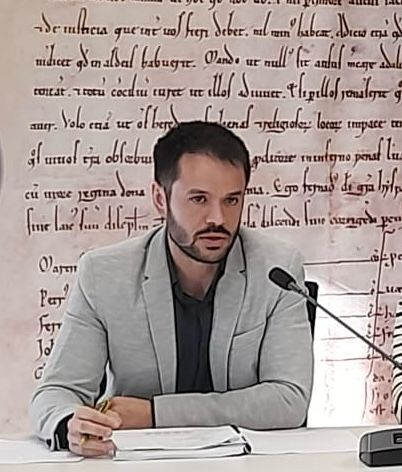
Dr. Carla Garcia-Lozano
Email: carla.garcia@udg.edu
Affiliation: Laboratory of Landscape Analysis and Management, University of Girona, Girona, 1 17004, Spain
Homepage:
Research Interests: historical landscape studies

Summary
Landscapes are complex features in terms of its elements and dynamics. Science has several types of approaches and methodological strategies (qualitative, quantitative, mixed-methods) of landscape research that introduces the geographic information science as a core methodological resource. The vast tools and advances done in this field, can benefit landscape scientists to explore landscapes: understand their dynamics, explore their pasts, and analyse their spatio-temporal changes. As the landscape integrates nature and culture, the different agents involved (human agency and natural dynamics) may be studied for reaching and advancing in the interplay of them. Thus, socioeconomic systems act transforming or maintaining land cover and uses, which are crucial to study land dynamics. In this context, the advance of geographical information technologies (GIS, remote sensing, etc.) can yield complex analysis which formerly were impossible or so difficult to do. In addition, free software development projects (e.g. QGIS) and open geographical projects maintained by a community of volunteers via open collaboration (e.g. OpenStreetMaps) have given a boost in the development of spatial analysis studies, with low or no cost for researchers and their research groups. This opens a world of opportunities in the study of landscapes.
Keywords
Landscape; changes; land dynamics; spatial analysis; geographical information science

 Login
Login Register
 Submit a Paper
 Propose a Special lssue