
 Login
Login Register
 Submit a Paper
 Propose a Special lssue
 Open Access
REVIEW
A Review of the Application of Bionic Microchannels in the Thermal Management of Electronic Components
School of Low-Carbon Energy and Power Engineering, China University of Mining and Technology, Xuzhou, China
* Corresponding Author: Cong Qi. Email:
Energy Engineering 2026, 123(11), 2 https://doi.org/10.32604/ee.2026.079423
Received 21 January 2026; Accepted 16 March 2026; Issue published 24 September 2026
 View Full Text
 Download PDF
Abstract
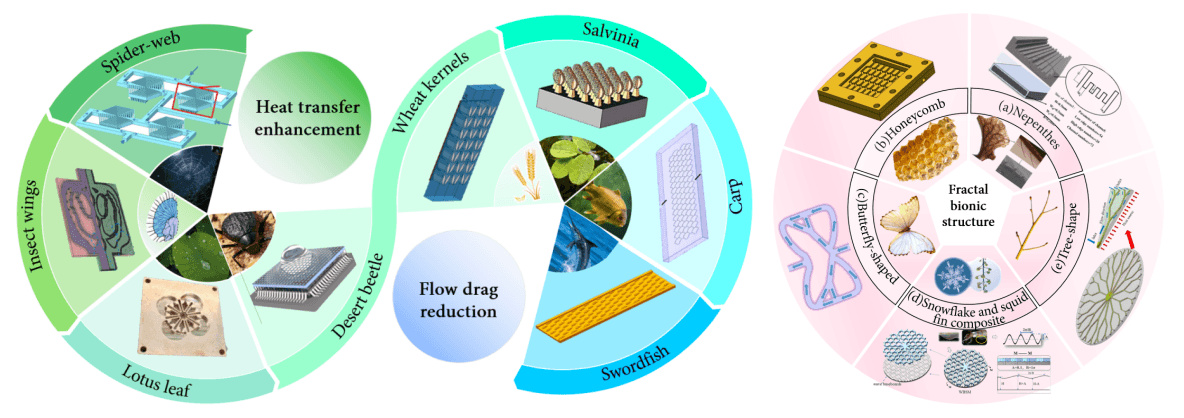
The relentless increase in power density and integration of electronic devices is pushing conventional thermal dissipation technologies beyond their limits. Bionic microchannels, leveraging their unique structural advantages, have emerged as a critical research direction to overcome this bottleneck. This paper systematically reviewed the research progress of bionic microchannels in the thermal management of electronic components, elucidating the intrinsic logic and synergistic relationships among structural mechanisms, optimization methods, and engineering applications. From a mechanistic perspective, bionic structures are categorized into two types: heat transfer enhancement structures (such as variable cross-sections, turbulators, fractal networks) and flow drag reduction structures (such as streamlined contours, adaptive structures). This review highlighted the application strategies and effectiveness of multi-objective optimization and topology optimization in addressing the trade-off between heat transfer enhancement and flow resistance, comparing their core principles, applicable scenarios, computational costs, and limitations. Based on the thermal management requirements of various electronic components, the cooling performance of bionic structures was evaluated. Furthermore, the heat transfer advantages arising from their coupling with nanofluids, porous media, phase change materials, pulsating flow, and impinging jet cooling were explored. The research encompassed both laminar and turbulent flow regimes, as well as single-phase and two-phase heat transfer. Bionic structures demonstrate an enhancement in heat transfer coefficient by 8.2%–78.1% and a reduction in pressure drop by 7.8%–79.1% under heat fluxes of 5–1000 W/cm2, achieving a Performance Evaluation Coefficient (PEC) up to 1.82. The novelty lies in elucidating the intrinsic structure-performance correlation and identifying critical Reynolds number failure mechanisms. It identifies ongoing challenges in standardizing performance evaluation, topology optimization for multiple operating conditions, intelligent adaptive structures, high-precision additive manufacturing, and long-term reliability. The aim is to provide a theoretical foundation and design paradigm for next-generation high-performance and low-energy electronic cooling technologies.Graphic Abstract
Keywords
With the rapid advancement in fields such as artificial intelligence, high-performance computing, and electric vehicles, the power density and integration level of electronic devices continue to rise [1,2]. The resulting hotspot effect caused by a high heat flux not only compromises device performance and reliability but may also lead to thermal failure [3]. Consequently, ensuring the reliable operation of electronic systems is now fundamentally dependent on the implementation of efficient thermal management solutions [4]. However, conventional air-cooling methods and basic liquid-cooling solutions [5] are increasingly inadequate to address the growing thermal dissipation demands [6]. To meet the increasing heat dissipation requirements of electronic components, Tuckerman and Pease [7] firstly proposed a microchannel radiator in 1981. With its compact structure, extremely high specific surface area, and high heat-transfer performance [8], it represents a key strategy in overcoming the thermal barriers inherent to high-power density electronic devices.
However, enhancing heat transfer in traditional parallel straight microchannels often entails a substantial penalty in flow resistance. This not only elevates overall system energy consumption but can also lead to uneven flow distribution and localized overheating [9]. To overcome these drawbacks, researchers have proposed modifying the microchannel flow path (such as wavy [10], manifold [11], or zigzag [12]), introducing reinforcing structures (adding porous [13], cavities [14], adding fins or raised structures [15,16], and combining the two structures [17,18]), and combining structures (porous and wavy flow paths [19], cavities and double-layer flow paths [20], etc.), thereby effectively improving heat transfer performance and enhancing temperature uniformity. Nevertheless, these structures often come with additional pressure drop, which restricts their engineering application.
After billions of years of evolution in nature, numerous efficient systems for the transmission of mass and energy have emerged. These biological systems, with their optimal structures, achieve efficient transmission with minimal energy consumption, providing endless inspiration for the enhancement of heat transfer through microchannels.
The design concept of bionic microchannels can be traced back to the 1990s [21]. Research indicates that compared to traditional microchannels, bionic microchannels can improve heat transfer performance and reduce pressure drop, presenting a dual potential [22]. Fig. 1 shows common natural biological prototypes and their corresponding bionic structures [23–30]. However, how to systematically optimize these complex structures to achieve the best balance between enhanced heat transfer and reduced flow resistance remains the core challenge in current research.
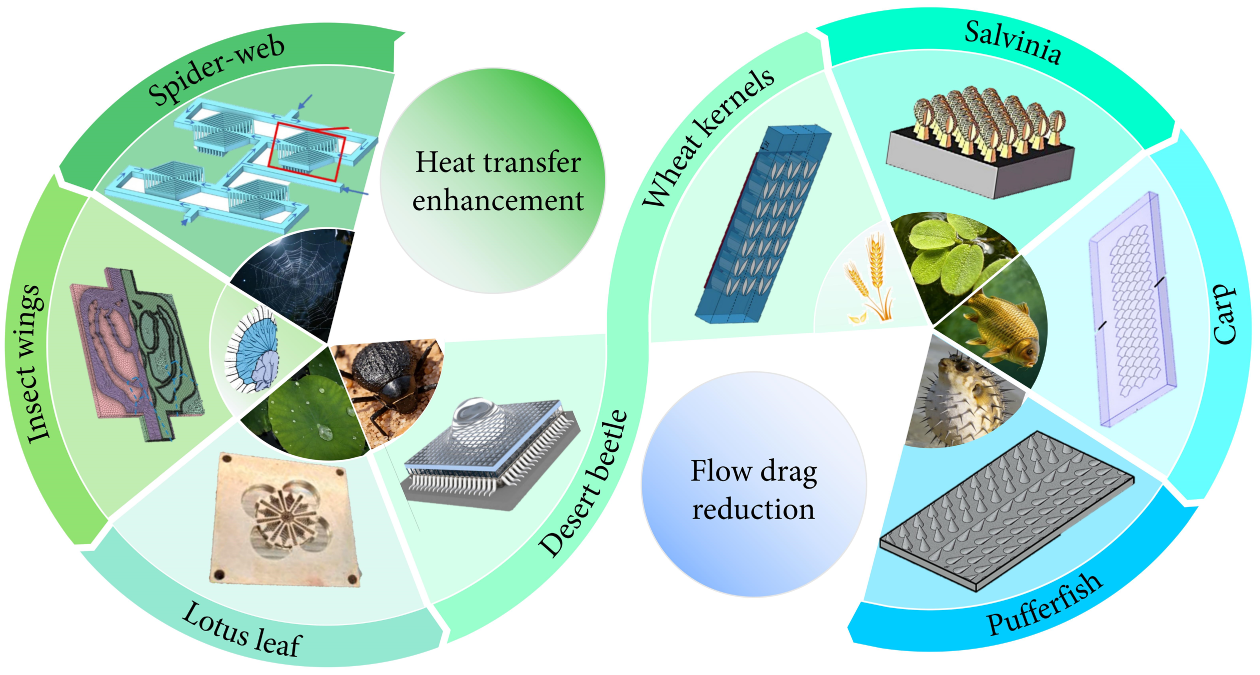
Figure 1: Bionic prototype and corresponding bionic structure [23–30].
With the advancement of intelligent optimization algorithms, computational fluid dynamics (CFD), and additive manufacturing (AM) technologies, the structural optimization of bionic microchannels has gradually shifted from being driven by experience and simulation to being driven by data and intelligence [31,32]. Consequently, numerous optimization approaches have emerged and are being utilized to achieve superior heat dissipation in microchannels. Cui et al. [33] constructed a high-accuracy surrogate model using an artificial neural network (ANN) approach, which effectively replaced iterative CFD simulations to reduce optimization costs. This model was integrated with the nondominated sorting genetic algorithm II (NSGA-II) to obtain the Pareto front. Subsequently, the technique for order preference by similarity to an ideal solution (TOPSIS) was employed to identify the optimal compromise solution, achieving an effective balance between heat transfer enhancement and flow resistance. Xu et al. [34] employed a second-order response surface methodology (RSM) with an explicit functional form to construct a surrogate model. This model was combined with NSGA-II to perform a multi-objective optimization of a bionic impact target surface structure inspired by blue whale skin. Under a constant flow rate, the average Nusselt number is enhanced by 14.5%, and the performance evaluation criterion is improved by 14.1%. Wang et al. [35] addressed the underlying flow and heat transfer mechanisms by leveraging fractal theory and topology optimization principles. Their strategy eliminates flow stagnation and optimizes the flow field distribution at the structural level, thereby achieving a fundamental enhancement in heat transfer characteristics. These studies indicated that bionic microchannel design is developing towards a more efficient and systematic direction.
However, existing research exhibits several notable gaps and limitations. Current studies predominantly provide a descriptive enumeration of structures based on biological archetypes such as shark skin, leaf veins, and spider webs. While intuitive, these approaches have yet to achieve a generalized understanding rooted in the physical mechanisms governing heat transfer and fluid flow. Moreover, there is a scarcity of research that encompasses the entire spectrum from mechanistic understanding to methodological optimization and subsequent application. Although parametric studies, multi-objective optimization algorithms, surrogate models, and topology optimization have been widely employed, a systematic comparison of their core principles, applicable scenarios, computational costs, and inherent limitations remains lacking. Furthermore, most investigations are confined to specific operating conditions or single electronic components. Consequently, comparative analysis and synthesis of the adaptive performance of bionic microchannel heat sinks, tailored to the distinct heat dissipation requirements of diverse high-power electronic devices, including microchips, power batteries, and semiconductor lasers, remain insufficiently explored.
Within electronic cooling, bionic design and optimization are dedicated to component-level thermal management. They target challenges such as localized hotspots in high-power chips, temperature uniformity in battery packs, and high-heat-flux dissipation in semiconductor lasers. Crucially, the integration of these concepts with optimization methods is what enables the creation of manufacturable, efficient, and structurally compatible designs.
Guided by this perspective, this review innovatively constructed a full-chain logical framework that systematically integrates bionic mechanisms, optimization design, and engineering applications. First, rooted in the physical principles of heat transfer and fluid flow, bionic structures were categorized into two primary types: those designed for heat transfer enhancement and those for flow drag reduction. The operational principles and synergistic regulatory mechanisms of representative architectures, including fractal networks and micro-scale groove structures, are systematically elucidated. Furthermore, the applicable Reynolds number ranges for various bionic structures were analyzed, alongside their critical failure mechanisms and their long-term functional stability and structural reliability. Second, focusing on the methodological framework for structural optimization, this review systematically examined the application strategies and effectiveness of parametric studies, multi-objective optimization algorithms, surrogate models, and topology optimization in addressing the trade-off between high efficiency and low energy consumption. Subsequently, addressing the distinct thermal management requirements of critical components such as microchips, power batteries, and semiconductor lasers, the core performance advantages of bionic microchannel heat sinks, namely high heat transfer efficiency, low flow resistance, and superior temperature uniformity, were quantitatively evaluated. In addition, the synergistic enhancement effects and underlying mechanisms arising from their integration with nanofluids, porous media, and phase change materials were rigorously explored. Finally, current challenges were summarized, and future research directions were proposed to provide a theoretical foundation and reference for the advancement of next-generation electronic thermal management technologies that achieve both high performance and low energy consumption.
The main performance parameters discussed in this paper, along with their definitions, are summarized in Table 1 for quick reference.
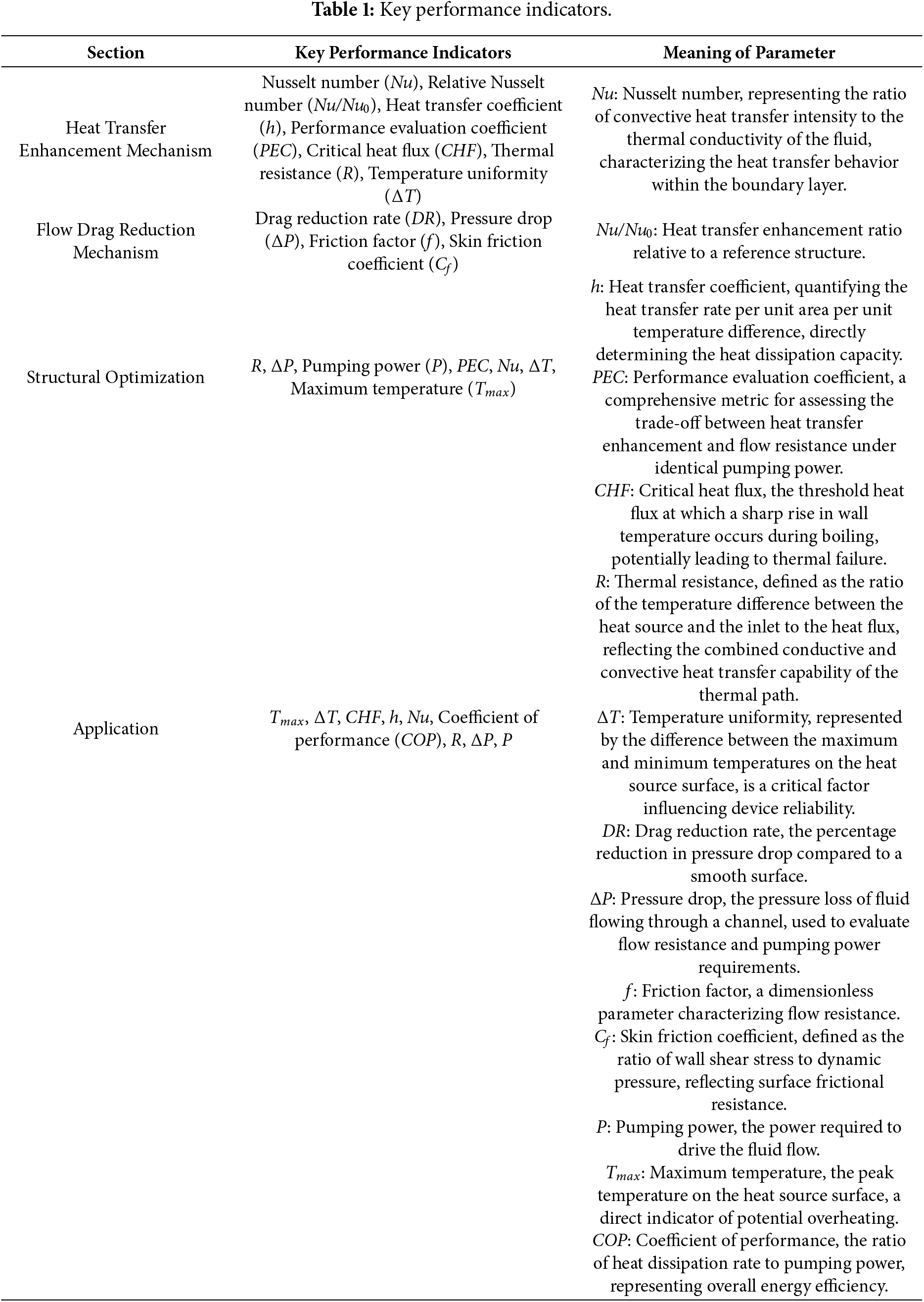
Over millions of years of natural selection, organisms have developed structures that are most suitable for their environment. These structures exhibit outstanding performance in heat transfer and drag reduction, providing a natural bionic example for the innovation of heat exchangers.
2.1 Heat Transfer Enhancement Mechanism
Bionic structures achieve efficient heat transfer through various mechanisms that disrupt the thermal boundary layer, enhance fluid turbulence, and increase contact area. This section reviewed the bionic heat transfer mechanisms from aspects such as variable cross-sectional structures and internal turbulence elements, fractal networks, active adaptation, and biological structures (porous, hierarchical, and surface micro-nano) that promote phase change heat transfer.
Bionic structures, such as those with variable cross-sections and internal flow-disturbing elements, periodically disrupt or suppress the thermal boundary layer, simultaneously generating secondary flows, longitudinal vortices, or turbulence for improved thermal transport between fluid streams. Zhao et al. [36] proposed a bionic fin-rib composite microchannel based on numerical simulations, demonstrating that periodic cross-sectional variations induce vortices that disrupt the thermal boundary layer. At a constant pumping power corresponding to a Reynolds number (Re) of 800, this design achieves a PEC of 1.82 and a relative Nusselt number (Nu/Nu0) of 4.12. Drawing inspiration from the wall roughness of dragonfly wing structures (Fig. 2a), Wang et al. [37] developed a bionic rectangular microchannel (BRM). Their results indicated that the rough surface induces high-velocity vortices, significantly thinning the thermal boundary layer and enhancing fluid disturbance. Under constant pumping power, the optimized BRM exhibits a 218.0% increase in heat transfer and a 14.3 K reduction in maximum temperature compared to a smooth rectangular microchannel. Notably, Dey and Saha [38] experimentally validated the heat transfer enhancement potential of bionic fish-scale structures. Through numerical simulations, they further compared the performance of porous and solid configurations: the porous structure allows fluid permeation, achieving a substantial 78.1% enhancement in heat transfer while effectively mitigating pressure drop penalties. At a constant pumping power, the porous design attains a PEC of 1.60, outperforming its solid counterpart. Under constant flow rate conditions, Zhu et al. [39] designed swallow-shaped microchannels with triangular concave and convex ribs (Fig. 2b), which promote multi-vortex longitudinal and transverse flows to enhance heat transfer. Numerical simulations revealed that variations in rib spacing significantly influence heat exchanger performance. Similarly, under constant flow rate assumptions, Wang et al. [40] numerically investigated the synergistic effects of primary and secondary ribs in a shark-skin-inspired microchannel (Fig. 2c). Their findings showed that increasing the height ratio of primary to secondary ribs steepens the near-wall velocity gradient, thereby improving heat transfer and reducing entropy generation. Enlarging the inter-rib valley width prevents boundary layer coalescence, enhancing temperature uniformity. Furthermore, simulations predict superior heat transfer performance for outwardly inclined secondary rib configurations at low Reynolds numbers. In terms of arrangement strategy, Gao et al. [41] constructed four types of microchannels with bionic fish-shaped ribs arranged differently, inspired by the flight of wild geese and the swimming of fish schools. Numerical simulations demonstrated that the configuration mimicking the V-shaped wing-beating formation of geese enables periodic disruption and regeneration of the hydrodynamic and thermal boundary layers, resulting in optimal heat transfer efficiency and overall performance. Liang et al. [42], inspired by the locomotion of octopuses, investigated a central conical wavy insert (Fig. 2d). Their results revealed that this insert generates flow and temperature fields similar to those produced by conventional wavy inserts, but with less disturbance to the core flow region, thereby enhancing heat transfer while substantially suppressing flow resistance. At a constant pumping power, the optimal Nusselt number (Nu) achieved with this design is 5.23 to 8.99 times higher than that of a wavy insert, yielding a peak PEC of 2.62.
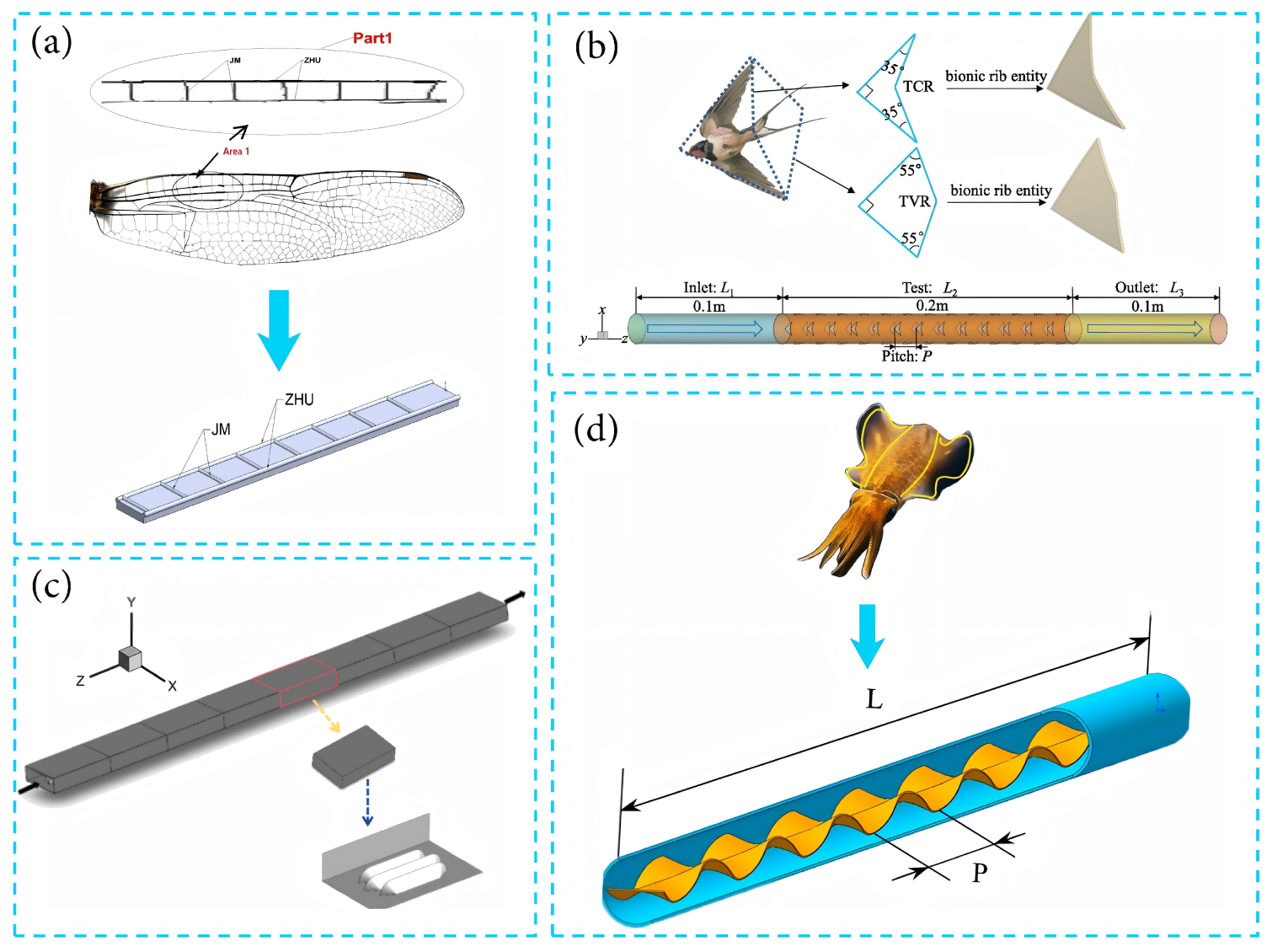
Figure 2: (a) Bionic dragonfly wings rough structure [37]; (b) Swallow-shaped ribs [39]; (c) Bionic shark skin ribs [40]; (d) Bionic octopus central conical wave-shaped insert [42].
Plant leaf veins, spider webs, snowflakes, and other natural, sudden contraction structures show the characteristics of efficient fractal networks. These structures not only have a large specific surface area, but also have high heat transfer capacity because the fluid boundary layer is periodically interrupted and redeveloped at the branch point or sudden expansion and structure of the fractal channel, so that it always maintains a thin state. Based on Murray’s law, fractal architecture design forms the foundational principle in this research domain. Duan et al. [43] applied this law to optimize a bilayer Y-shaped bionic microchannel heat sink. Their numerical simulations revealed that at a bifurcation angle of 60°, the boundary layer restart mechanism led to an average pressure drop reduction of 68.46% compared to a rectangular straight microchannel under the same pumping power, while significantly improving the temperature uniformity. Subsequently, fractal bionic designs have expanded to incorporate a wider range of biological prototypes. Inspired by the unique hierarchical structures on the surface of Nepenthes pitchers, Li et al. [44] developed a bionic gradient-structured flat-plate heat pipe (BGFHP, Fig. 3a). Experimental observations demonstrated that the graded structure spontaneously forms a liquid film, transitioning the liquid transport mode to super-slip capillary action, which substantially reduces flow resistance. Compared with conventional flat-plate heat pipes, this design achieves a 22% reduction in thermal resistance and a more than 40% enhancement in thermal conductivity. Optimal temperature uniformity was observed at an inclination angle of 45° and a heating power of 24 W. Focusing on flow channel topology, Zhang et al. [45] proposed an annular thermosyphon with a bionic honeycomb-channel evaporator (Fig. 3b) and conducted experiments using a parallel-flow evaporator as the control. Their findings indicated that the branching network of the honeycomb structure provides more nucleation sites for vapor generation, while inter-channel connections promote a more uniform flow field, facilitating rapid vapor escape. The bionic honeycomb thermosyphon exhibited lower thermal resistance, achieving a maximum reduction of 21.6% in total thermal resistance. Extending the bionic concept from channel structures to system-level layout, Wei et al. [46] drew inspiration from the cooling mechanism of biological tissue cells and devised an alveolar honeycomb liquid-cooling structure. Numerical optimization revealed that the bionic flow channels enhance overall heat transfer primarily by improving flow velocity uniformity at the outlets of each branch, thereby eliminating local hot spots. This design reduced the temperature difference within the battery pack by 62.7%, transformed the traditional long-series flow into a short-parallel configuration, and achieved a 90% reduction in pressure drop through geometric optimization. Li et al. [47] experimentally compared spider-web and honeycomb microchannel membranes. Under a constant flow rate of 40 mL/min, the honeycomb structure exhibits superior heat transfer and temperature uniformity due to its ability to induce continuous flow redirection. Based on the morphology of butterfly wings and the transport principle of wing veins, Wang et al. [48] introduced a liquid cooling plate featuring a bionic butterfly-shaped channel design (Fig. 3c). Both numerical simulations and experiments confirmed that the diverging-converging flow paths enable precise coolant distribution, while reverse backflow enhances cooling in the electrode region. Through structural optimization, the maximum temperature is limited to 32.72°C. Under constant mass flow rate, this design demonstrated significantly reduced pressure drop and improved temperature uniformity compared to serpentine channels. Building upon these foundations, research has advanced toward hybrid structures and active control strategies. Yue et al. [49] numerically investigated a composite snowflake-squid fin bionic microchannel (Fig. 3d) combined with a nanofluid. They observed that the wavy bottom structure continuously perturbs the flow and disrupts the thermal boundary layer. With an optimized inlet angle of 60°, local hot spots caused by flow direction differences were eliminated. At a constant flow rate, the PEC reached a peak value of 1.68. Huang et al. [50] added fan-shaped cavities and sidewall ribs to the sidewalls of a tree-shaped microchannel (Fig. 3e). Numerical simulations revealed that the cavity structure enhances heat transfer by generating secondary flows that disrupts the boundary layer and intensifies the bifurcation effect, while the ribs can suppress the adverse effects of bifurcation.
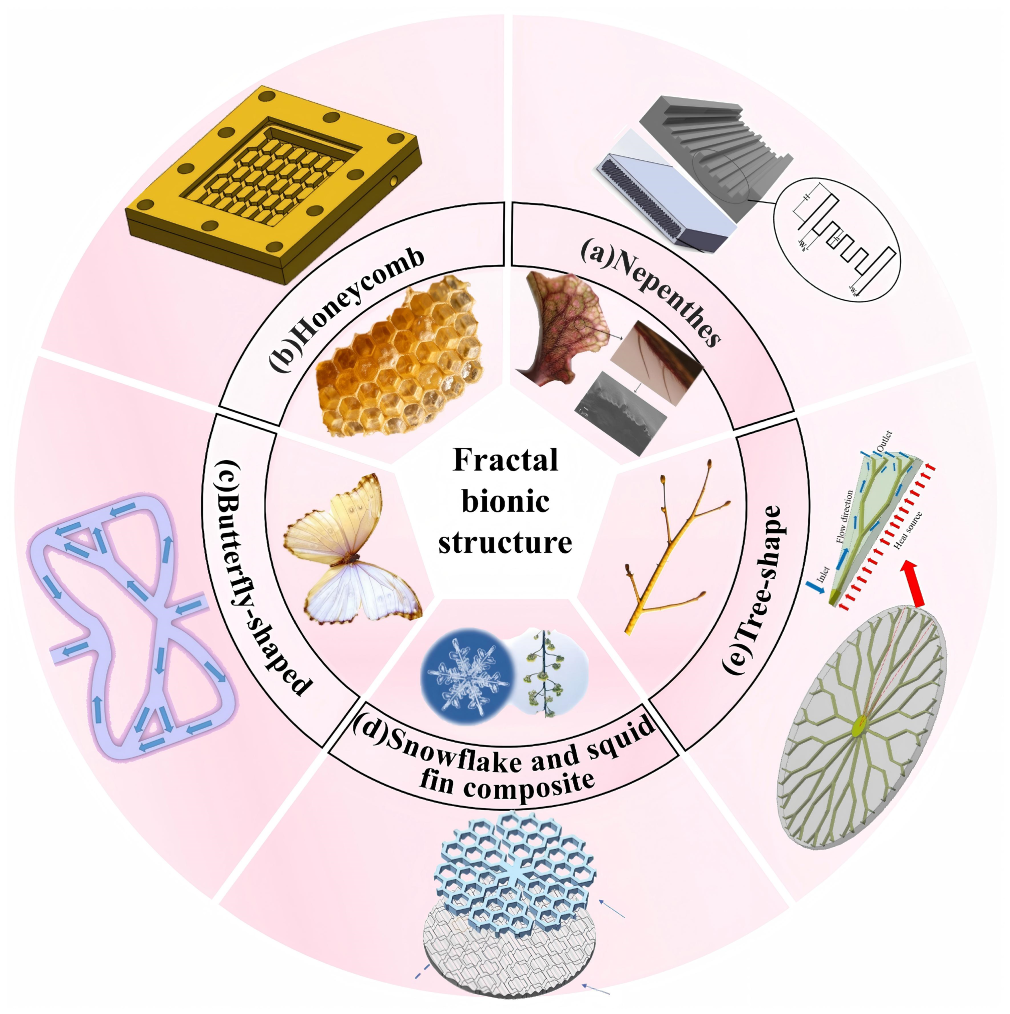
Figure 3: (a) Nepenthes [44]; (b) Honeycomb [45]; (c) Butterfly-shaped [48]; (d) Snowflake and squid fin composite [49]; (e) Tree-shaped [50].
Organisms can actively adjust their morphology, behavior, or physiological state according to environmental changes (such as temperature and humidity), and can achieve optimal heat balance. Regany et al. [51] designed a bimetal adaptive heat sink based on the shape memory alloy (SMA). Their experimental results showed that at elevated temperatures, the fins could deflect up to 30% of the channel height, enhancing flow disturbance and convective heat transfer. Upon returning to lower temperatures, the fins flattened to reduce flow resistance, leading to a 63% improvement in temperature uniformity. Inspired by this, Yu et al. [52] developed a bionic design featuring SMA-valve-controlled artificial sweat pores and an array of micropillars in the evaporation region to achieve adaptive evaporative cooling (Fig. 4). When the chip temperature exceeds the phase transformation point, the SMA valve opens, allowing coolant to flow directly to the micropillar-covered evaporation zone on the chip backside. This design shortens the heat transfer path and enables phase-change cooling, as the liquid evaporates on the hot micropillar surfaces, harnessing latent heat for efficient thermal management. For localized hotspot mitigation, Yan et al. [53] proposed a hydrogel-based fractal microchannel heat sink, termed GFCY. The adaptive cooling mechanism relies on the lower critical solution temperature (LCST) of the hydrogel (approximately 310 K). Once the bottom temperature exceeds this threshold, the hydrogel undergoes rapid volume shrinkage to 12.5% of its original size, thereby locally enlarging the flow channel cross-section. This guides an increased coolant flow to the hotspot region and enhances convective heat transfer. Compared to a microchannel heat sink embedded with micro-pin fins, the GFCY design achieves a twofold greater temperature reduction. Collectively, these studies represent a convergence of materials science and thermal-fluid engineering, leveraging phase transitions or deformation responses of smart materials to dynamically reconstitute flow channel topologies. The underlying principle is consistent: temperature serves as the actuation signal, altering material properties to modulate flow paths and heat transfer intensity. However, current research remains largely at the proof-of-concept stage under steady thermal loads. Critical barriers to practical implementation include insufficient systematic assessment of material fatigue life, response latency, and long-term operational stability under periodic thermal shock conditions.
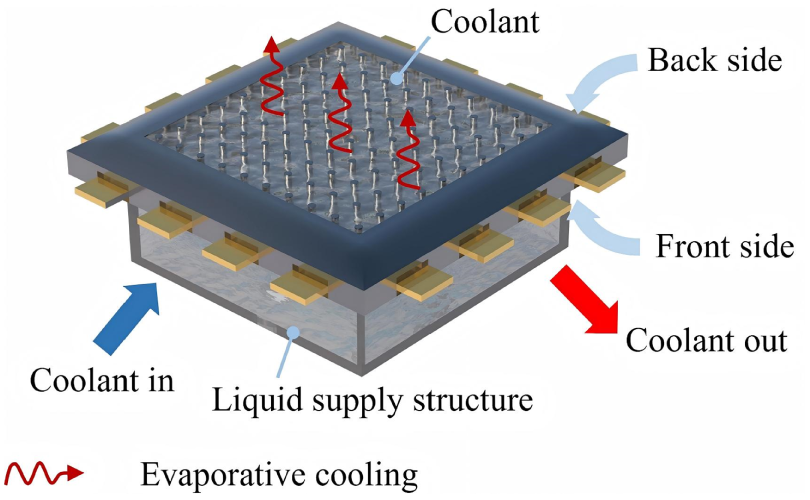
Figure 4: Electronic devices simulate biological sweating [52].
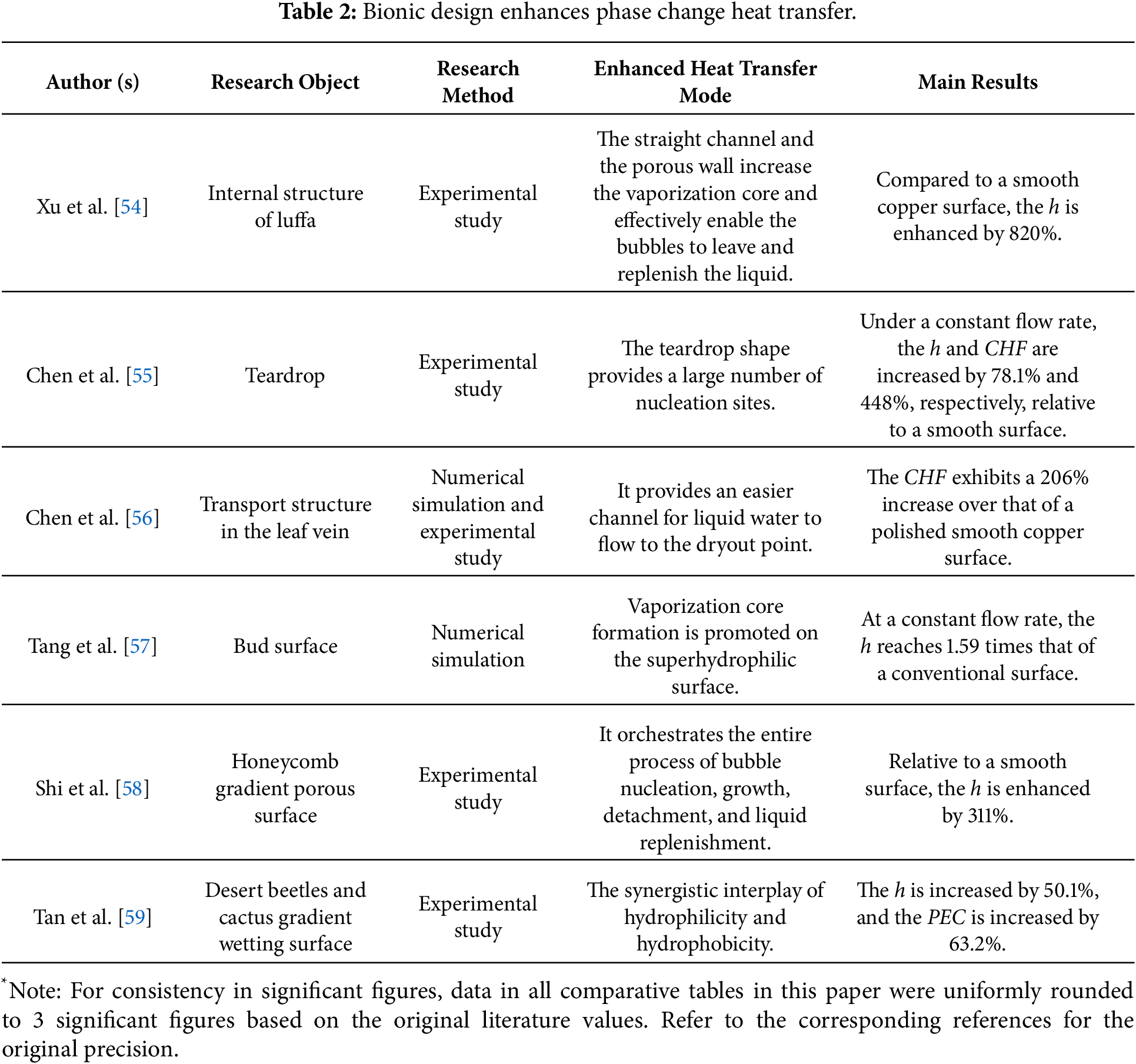
Inspired by the porous, surface micro-nano and hierarchical structures in nature, researchers have enhanced the performance of phase change heat transfer surfaces through bionic design. The straight microchannels and porous walls of loofah enhance pool boiling by supplying abundant nucleation sites and promoting efficient bubble detachment and the rewetting process. This inspired the design of a bionic loofah copper wick for boiling applications. Using the hydrogen bubble template method, Xu et al. [54] fabricated a bionic loofah copper wick and conducted an experimental study on the thermal properties of these wicks across varying channel diameters. The wick with a 153 μm channel diameter demonstrates excellent performance, achieving a heat transfer coefficient (h) 820% higher than that of a smooth copper surface. Chen et al. [55] proposed a teardrop-shaped micro-pin-fin structure featuring a high density of nucleation sites. Their results demonstrated that the micro-pin-fins provide abundant nucleation sites, while the pinning effect constrains bubble expansion and accelerates bubble departure. Additionally, the semi-open configuration offers ample space for bubble growth and evacuation, collectively resulting in significantly enhanced heat transfer performance. Chen et al. [56] simulated a structure of leaf veins, which grow from the petiole to deliver water and nutrients throughout the leaf. They found that the novel bionic structure provides easier pathways for liquid flow toward dry-out spots, enhances local liquid wicking and the density of active nucleation sites, and results in a 206% increase in critical heat flux (CHF). By numerical simulation, Tang et al. [57] examined the impact of petal spacing and superheat level on the flow boiling heat transfer in bud-inspired superhydrophilic microchannels. Their findings indicated that under constant flow rate conditions, the superhydrophilic surface promotes a greater number of vaporization cores, enhances the boiling heat transfer capability, and achieves a maximum heat transfer coefficient up to 1.59 times that of a conventional surface. Shi et al. [58] experimentally examined the heat transfer characteristics of more complex surfaces, including hierarchical bionic honeycomb gradient porous surfaces, nanoporous surfaces, and smooth surfaces. The findings indicated that the nanoporous surface enhances the heat transfer coefficient by 251.58%, while the hierarchical bionic structure achieves an improvement of 310.9%, both relative to the smooth surface baseline. Intense boiling heat transfer is prone to flow reversal, leading to performance degradation. To address this, Tan et al. [59] proposed a microchannel featuring a bionic gradient wettability surface inspired by the desert beetle and cactus. Their experimental results showed that the upstream hydrophobic region promotes bubble expansion and suppresses backflow and turbulence through interfacial fluctuations, whereas the downstream hydrophilic zone enhances fluid replenishment and vapor removal to mitigate dry-out. This configuration increases the heat transfer coefficient by up to 50.1% and the PEC by 63.2% under constant mass flow conditions. These biologically inspired bionic structures provide substantial theoretical support for enhanced heat transfer in thermal management of electronic components, significantly improving heat dissipation efficiency (as shown in Table 2).
A unifying principle in bionic heat transfer enhancement is the modulation of the thermal boundary layer, where geometric interventions reconfigure the flow and temperature fields. However, distinct bionic strategies exhibit significant divergences in their underlying mechanisms and performance characteristics. Variable-cross-section and turbulence-inducing elements achieve enhanced mixing through locally induced vortices and secondary flows, yet this enhancement is invariably accompanied by an increase in flow resistance. As the most mature and widely adopted approach, current research is dedicated to the nuanced trade-off between heat transfer gain and frictional losses. In contrast, fractal networks reconfigure flow and reset boundary layers through hierarchical, branching topologies, offering advantages in global temperature uniformity and reduced flow resistance. Nevertheless, compared to fin designs that augment perturbation and surface area, fractal architectures present more complex failure modes. Structural intricacy can lead to flow maldistribution, geometric parameter sensitivity may precipitate sharp increases in drag, and anisotropy can give rise to localized hot spots. Although fractal networks herald a paradigm shift from localized intensification to global optimization, their topological complexity poses a persistent bottleneck for manufacturability and practical implementation. Adaptive structures introduce a dynamic dimension, achieving on-demand regulation via changes in material constitutive behavior. This represents a leap from passive biomimicry to intelligent bioinspiration. However, their technological readiness remains low, constrained by the response speed and cyclic durability of smart materials, as well as challenges in integration with microchannel fabrication techniques. Bionic phase-change surfaces, which optimize nucleation site density and bubble dynamics, surpass the single-phase heat transfer limit in boiling regimes and demonstrate substantial performance gains. Yet, their long-term reliability, particularly mechanical stability and fouling resistance, demands systematic validation. A potential synergy exists between phase-change surfaces and fractal networks. Hierarchical porous architectures can concurrently provide abundant nucleation sites and optimize liquid replenishment pathways, exemplifying the multiscale optimization wisdom inherent in natural evolution. In summary, future breakthroughs will likely emerge from the synergistic integration of multiple heat transfer mechanisms, the confluence of topology optimization with additive manufacturing, and a sustained focus on reliability studies under realistic operating conditions.
2.2 Flow Drag Reduction Mechanism
While enhancing heat transfer, bionic structures also aim to reduce flow resistance to lower the pumping power consumption. This section reviewed biological mechanisms for flow drag reduction, spanning streamlined morphologies, microscale groove structures, superhydrophobic surfaces, the flexibility and viscoelasticity of skin, as well as active regulatory behaviors observed in organism motion. The corresponding bionic strategies were systematically summarized.
Imitating the streamlined shapes of fish, birds, and other organisms can reduce flow separation and vortex generation, enhancing heat transfer while effectively decreasing flow resistance. Liu et al. [60] discovered that the undulating morphology mimicking seal whiskers (Fig. 5a) modifies the wake vortex street, suppresses vortex-induced vibrations, and contributes to reduced flow resistance. Wang et al. [61] designed a bionic attachment structure by imitating the lip contour features of Ostracion cubicus (Fig. 5b). Numerical simulations revealed that this streamlined geometry shifts the boundary layer separation point forward and reduces the width of the trailing wake vortex, achieving a drag reduction of 66.5%. Liu et al. [62] developed a bionic slotted wingtip structure inspired by bird wings, which enables relative motion during flapping. This non-planar dynamic slotted wingtip structure decomposes the concentrated wingtip vortex into multiple weaker vortices, effectively minimizing drag. Based on the streamlined body shape of butterfly fish, Zhou et al. [63] proposed two types of slotted bionic micro-pillar arrays: an arcuate fishtail slot (Type A) and a cylindrical substrate featuring a centrally located guiding channel (Type B). Through combined experimental and numerical investigations, it was found that, compared to solid micropillars, Type A increases the Nu by 8.2%–16.5% while decreasing the pressure drop by 7.8%–16.0%. Type B enhances the Nu by 2.7%–12.5% and reduces the pressure drop by 10.1%–16.7%. Both configurations leverage secondary flows to increase the velocity in the wake region and suppress vortex formation, thereby achieving synergistic heat transfer enhancement and flow resistance reduction. Inspired by maple leaf veins and streamlined design, Liu et al. [64] developed a bionic microchannel plate mimicking leaf veins (Fig. 5c). The channel geometry and curvature were optimized through streamlined profiling, resulting in a more uniform internal pressure distribution compared to serpentine channels. Furthermore, the bionic fractal network facilitates uniform fluid distribution and eliminates stagnant flow zones, significantly improving temperature uniformity while maintaining low pumping power requirements.
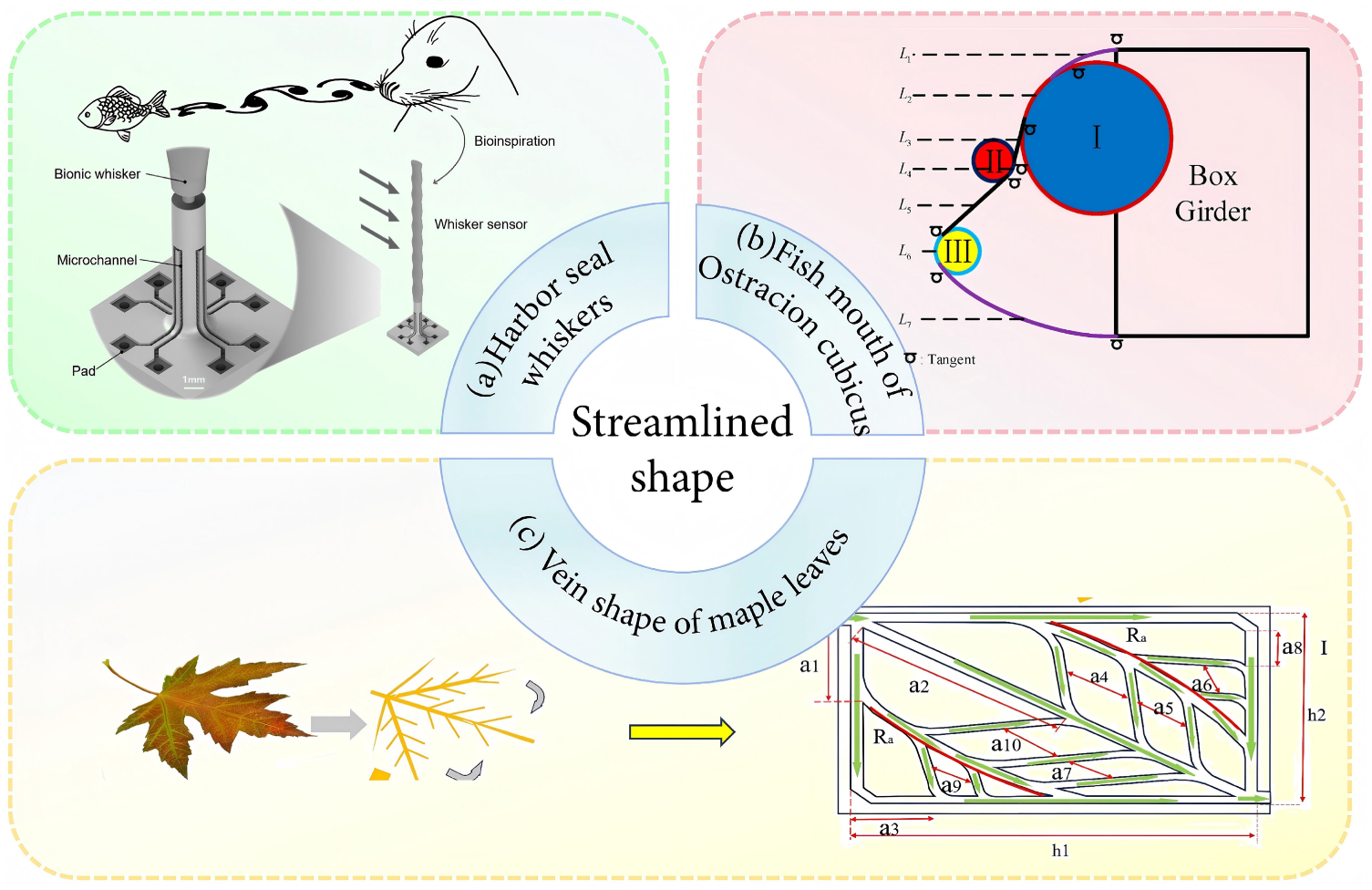
Figure 5: Streamlined shape: (a) Seal beard [60]; (b) Box puffer fish mouth [61]; (c) Maple leaf vein and streamline design [64].
In the sea, in the air, and even in the soil, organisms overcome resistance in fluids with their unique structures all the time. This is not only related to the streamlined shape, but also closely related to its surface microstructure. Micron-scale groove structures can suppress turbulence in the near-wall region, stabilize the flow, and significantly reduce the surface friction resistance. The swordfish is renowned for its high-speed swimming capability [65]. Inspired by this, Ma et al. [66] proposed novel bionic microchannel fins with variable cross-sections. Numerical simulations demonstrated that the bionic fin exhibits a smoother leading edge and a reduced frontal area, effectively mitigating flow impingement and suppressing the formation of localized high-pressure regions at the fin front. This leads to a more uniform pressure distribution around the fin. Under constant flow rate conditions, the bionic fin heat sink achieves a 10.3% reduction in pressure drop compared to the airfoil fin heat sink. Additionally, its variable cross-sectional geometry induces secondary flows in the leading and trailing regions, further enhancing heat transfer performance. Taking inspiration from the morphology of pufferfish spines, Zhu et al. [23] engineered inclined conical microstructures featuring surfaces with convergent, divergent, and straight profiles. The research demonstrated that the divergent microstructures effectively suppress momentum exchange between adjacent flow regions, reduce turbulent disorder, and achieve a maximum drag reduction of 10.48%. Inspired by the asymmetric microstructure of pigeon feathers, Wang et al. [67] designed trapezoidal spanwise grooves. The vortex structures formed within the grooves transform the gas-solid interface into a gas-gas interface, significantly reduce wall shear stress, and achieve approximately 19% drag reduction in wind-tunnel experiments with a flat-plate model. Wang et al. [68] imitated a groove structure of shark skin, and studied bionic Space-V-groove and V-grooves. The Space-V-groove geometry more effectively disrupts shedding vortices and wake vortices, reduces energy loss, and achieves drag reduction rates of 2.86% and 1.82%, respectively, at the rated flow rate. Hu et al. [24] experimentally investigated a bionic multi-scale micro/nano structure mimicking fish scales. Under constant flow velocity, secondary flow vortices forming within the macroscopic grooves are observed to propel the overlying fluid forward in a manner analogous to roller bearings. Meanwhile, low-velocity vortices downstream of the micro-protrusions facilitates the formation of a stable fluid lubrication film, contributing to drag reduction. The bionic common carp scale composite structure achieves a maximum drag reduction rate of 36.17%. Zheng et al. [69], drawing inspiration from the ridged skin structure of killer whales, designed a transverse bionic grooved surface. Numerical simulations revealed that grooves with an aspect ratio of 25 effectively constrain lateral flow in the near-wall region, yielding a frictional drag reduction rate of 26.91%.
Superhydrophobic surfaces inspired by organisms such as lotus leaves and aquatic ferns feature micro-nanoscale composite structures that can stably trap air to form an air film. This enables water flow slippage at the gas-liquid interface, thereby achieving effective drag reduction. Deng et al. [70] prepared a lotus-inspired superhydrophobic composite surface by spraying (Fig. 6a). The coating surface develops a micro-nanostructure capable of sustaining a continuous air layer underwater, which reduces drag by minimizing solid-liquid contact, achieving a drag reduction rate of 27%. Li et al. [71] fabricated bionic rhombic placoid scale structures inspired by shark skin via femtosecond laser ablation. The drag reduction mechanism lies in the air trapped by the microstructure, which forms an air-liquid interface that induces a slip effect on the fluid, achieving an average drag reduction rate of 15% in deionized water. Building upon the slip-effect drag reduction, Zhao et al. [72] fabricated a shark-skin ribbed structure on a composite coating (Fig. 6b). This structure not only facilitates slip but also effectively regulates the near-wall flow and pressure fields, reducing turbulent kinetic energy and thereby significantly decreasing resistance. Inspired by aquatic ferns, Zhang and Guo [26] developed a bionic multilayer structured surface (BSS). This surface achieves drag reduction through the slip effect, while its streamlined geometry suppresses the formation and development of vortices in the near-wall region. Under low-speed flow conditions, it attains a maximum drag reduction rate of up to 56.8%. Chen et al. [73] modeled after the scales of butterfly wings to develop a multilevel superhydrophobic surface composed of longitudinal ridges and regularly arranged cavities at the base (Fig. 6c). In both open-channel and closed-channel flow conditions, a maximum drag reduction rate of 20.56% is achieved. The mechanism stems from the synergistic effect of the multilevel structure pinning the gas-liquid interface, which enhances air-film stability, and drag reduction is induced by secondary vortices.
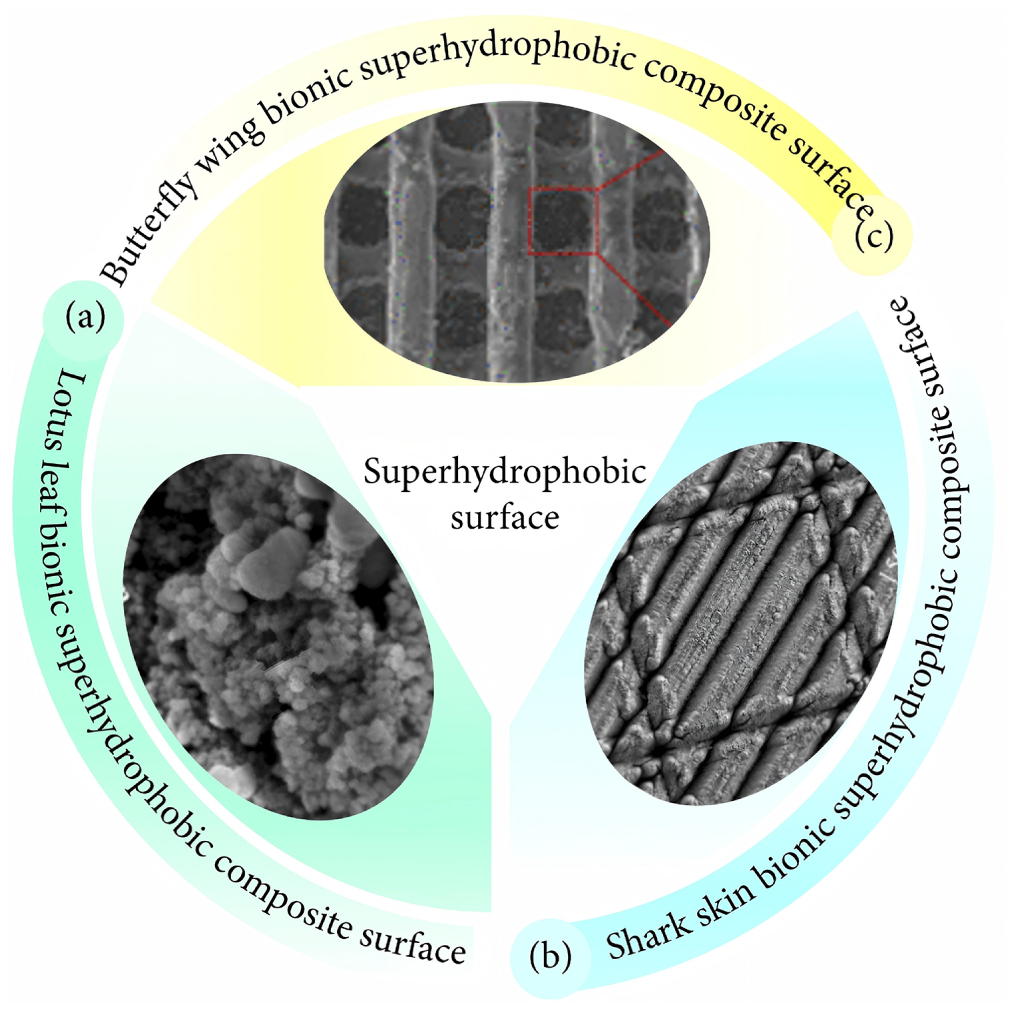
Figure 6: Superhydrophobic surface micro-junction: (a) Lotus leaf bionic superhydrophobic composite surface [70]; (b) Shark skin bionic superhydrophobic composite surface [72]; (c) Butterfly wing bionic superhydrophobic composite surface [73].
In addition to the common drag-reduction strategies inspired by streamlined biological shapes, micro-scale groove structures, and superhydrophobic surfaces, other bionic approaches. As illustrated in Fig. 7, these structures encompass flexible and viscoelastic surfaces, as well as active regulatory behaviors observed in biological locomotion.
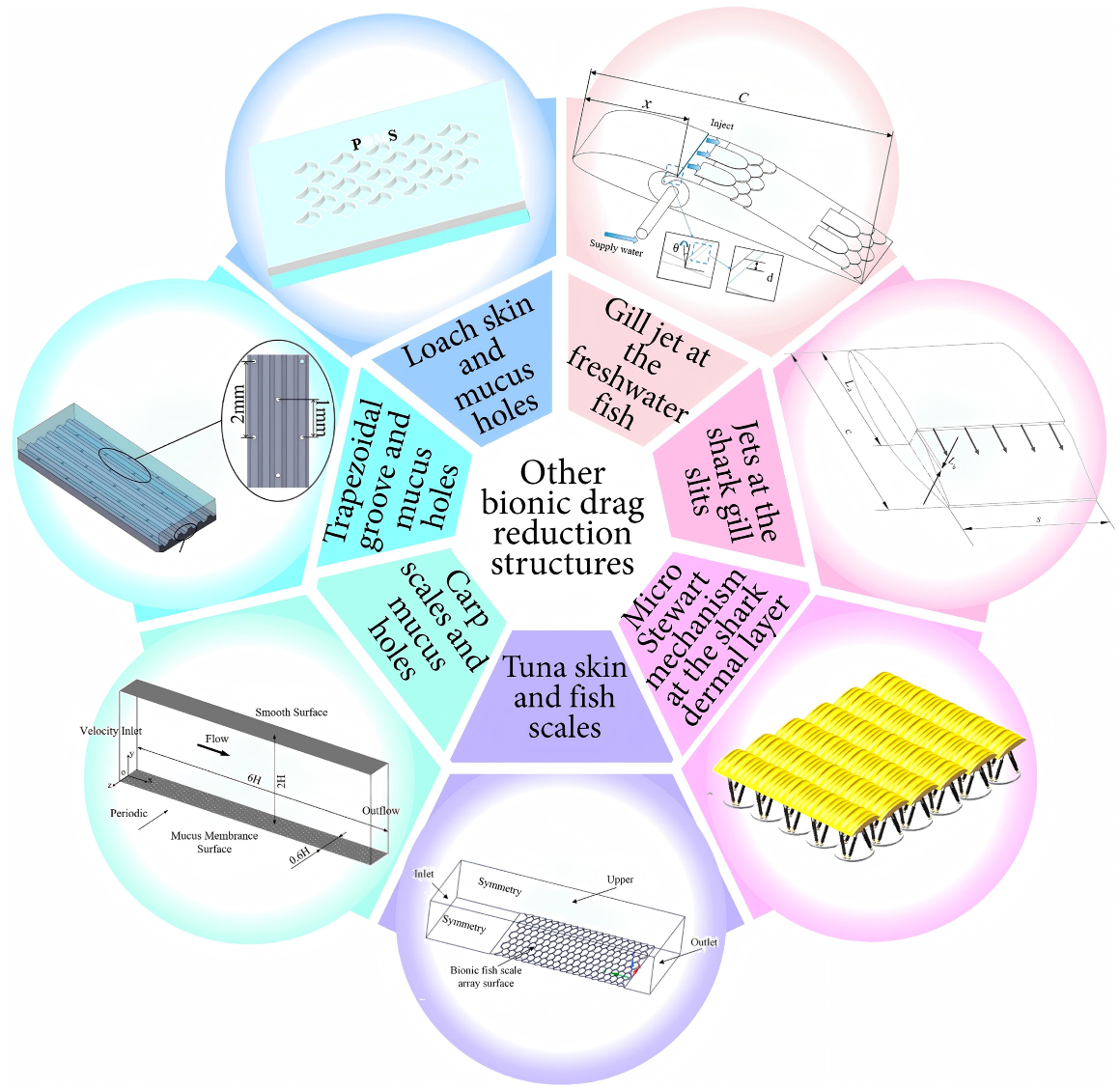
Figure 7: Other bionic drag reduction structures [74–76,78,80,81].
In contrast to rigid microstructures, compliant and viscoelastic surfaces, inspired by the skin of dolphins, bighead carp, and other organisms, can respond to flow-field pressure fluctuations through self-deformation. Such surfaces absorb and dissipate part of the kinetic energy within the turbulent boundary layer, and then reduce drag. Inspired by the skin structure of loaches, Zhao et al. [74] proposed a flexible bionic structure featuring scales and slime pore configurations, which achieves a maximum drag reduction rate of 28.5% by altering the near-wall boundary layer flow pattern. In their study, Zhang et al. [75] replicated the mucus secretion mechanism found on fish epidermal surfaces. Their findings indicated that the bionic mucus establishes a stable distribution along the wall, effectively suppressing the formation and intertwining of near-wall streak structures, while reducing the number and density of streamwise vortices. The research revealed that a simulated drag reduction rate of up to 31.06% is achieved, and the experimental rate reaches 28.11%. Ma et al. [76] designed a bionic mucus surface featuring 408 secretion pores on the wall. By simulating the mucus secretion process with the Carreau viscoelastic model and employing large eddy simulations, they demonstrated that the mucus surface effectively mitigates turbulent intensity and Reynolds stress, achieving a maximum drag reduction rate of 14.10%. Through large eddy simulations, Zhang et al. [77] showed that a bionic structure combining triangular grooves and a mucus layer effectively reduces drag in turbulent boundary layers, and a drag reduction rate of 20.06% is achieved. The study indicated that the groove structure modifies the shape of Λ-vortices, while the mucus layer reduces the number of three-dimensional vortices and then suppresses turbulence and lowers frictional resistance. Moreover, the surface groove structure generates secondary flow vortices near the bottom; the rotation direction of these vortices promotes forward transport of the overlying fluid, analogous to the rolling-bearing effect, which further reduces flow resistance. Chen et al. [78] constructed a dual-structure coupled surface based on the fan-shaped overlapping scale arrangement of tuna skin and a flexible coating. A drag reduction rate of 7.22% is realized through the coupled mechanism of vortex stretching and elastic energy absorption.
In addition to static passive bionics, structures that emulate the active regulatory behaviors of organisms in motion have also been applied for flow drag reduction. Li et al. [79] integrated a Micro-Stewart mechanism with a placoid array to design a bionic shark-skin structure capable of multi-degree-of-freedom motion. Compared to a bionic placoid skin without the Micro-Stewart mechanism, this structure achieves a maximum drag reduction rate of 15.78%. Compared to existing riblet groove skins, the maximum drag reduction reaches 14.18%. The drag reduction mechanism lies in the Micro-Stewart mechanism’s ability to effectively suppress the generation and development of vortex structures in the bionic placoid array and then delay flow separation. Gu et al. [80] constructed a bionic jet structure mimicking shark gill slits, aligning with mainstream design principles, positioned at 0.6 times the chord length from the leading edge. By introducing localized momentum to modulate boundary layer development, this configuration effectively suppresses cavitating flow and enhances drag reduction performance. Yan et al. [81] designed a bionic jet structure based on fish scales on a hydrofoil. The optimized geometry achieves drag reduction through three synergistic mechanisms: jet flow balances the low-pressure region on the suction surface, inhibits near-wall reverse flow, and accelerates vortex breakdown, which attenuates turbulence intensity.
Research in bionic drag reduction encompasses a diverse array of biological prototypes; however, these strategies share a common scientific rationale: attenuating flow resistance through targeted manipulation of the near-wall flow field. The fundamental objective is to transition the solid-liquid interface from a state of high shear to one of slip or low energy dissipation. The underlying mechanisms are unified by a coherent logic: streamlined morphologies suppress flow separation to mitigate form drag; micro-grooves induce near-wall vortices, transforming direct fluid shear into a rolling effect; superhydrophobic surfaces leverage a stable gas film to achieve slip; and compliant surfaces dissipate turbulent energy through deformation. Active structures further extend the scope of flow control by introducing momentum interventions within the boundary layer. Despite this shared foundation, the efficacy of these individual mechanisms varies significantly in microchannel applications. Streamlining offers limited benefits in predominantly laminar flows. Micro-grooves are susceptible to fouling and wear. The gas film on superhydrophobic surfaces is prone to destabilization. Compliant coatings may introduce complex fluid-structure interactions, and active control systems inherently increase system complexity. Currently, micro-groove and streamlined configurations are relatively mature and have seen preliminary engineering applications. Superhydrophobic surfaces demonstrate viability under specific conditions, although their long-term stability requires further development. In contrast, compliant and actively controlled surfaces remain largely in the exploratory phase, with practical implementation facing substantial hurdles. As the incremental gains from singular bionic strategies diminish, the research frontier is transitioning from passive, single-point imitation toward a more holistic design philosophy that emphasizes the synergistic integration of multiple mechanisms and system-level reliability throughout the operational lifecycle.
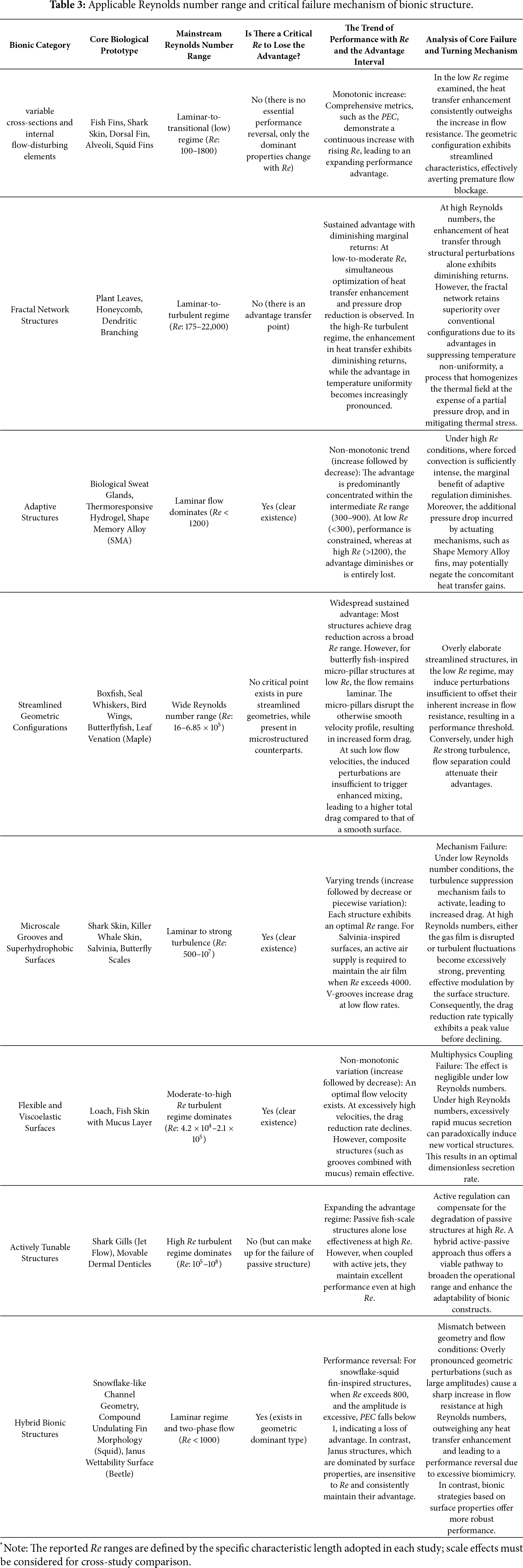
The performance advantages of bionic microchannel heat sinks exhibit a significant Reynolds number dependence, and their applicability is closely related to the typical operating conditions in microchannel heat dissipation scenarios. In electronic cooling applications, the flow within microchannels is typically in the low-Reynolds-number laminar regime (Re < 1000), where viscous forces dominate the flow and heat transfer characteristics. The enhancement benefits achieved by bionic structures, through inducing local perturbations, disrupting thermal boundary layers, and improving temperature uniformity, are most pronounced in this regime. Concurrently, the alignment of bionic features revealed by topology optimization, such as bifurcations and wavy configurations, with optimal heat transfer pathways becomes more prominent at low Reynolds numbers, further confirming the inherent suitability of bionic design under such conditions. As the Reynolds number increases into the inertia-dominated regime, optimized structures generally require an increased number of bifurcations or adjustments in geometric morphology to accommodate the change in flow regime. Although a few studies have explored performance at higher Reynolds numbers, such conditions fall outside the primary application range for microchannel heat dissipation. Table 3 summarizes the applicable Reynolds number ranges, evolutionary trends in thermal-hydraulic performance advantages, and critical failure conditions, aiming to provide a theoretical basis for condition matching in the bionic optimization design of microchannel heat sinks. In summary, the thermohydraulic performance benefits of bionic structures are confined to well-defined operational boundaries: when the Reynolds number deviates from the low-Reynolds-number laminar regime, the dominant physical mechanisms may become ineffective. Specifically, mismatches between structural geometric parameters and flow conditions can lead to two typical failure modes: persistent performance degradation across the entire operational range, or a decline in comprehensive performance below the baseline at high Reynolds numbers. Therefore, the engineering application of bionic microchannels must involve parameter matching tailored to the target velocity range, ensuring optimal performance under viscosity-dominated typical operating conditions.
The engineering application of bionic microchannels is constrained not only by initial performance enhancement but also, more critically, by functional stability and structural reliability during long-term operation [82]. Bifurcation points and sudden expansion-contraction sections in fractal microchannels are susceptible to forming stagnant flow zones, which serve as preferential sites for the deposition of suspended particles or degradation byproducts from the coolant. Over extended operational periods, such deposits progressively alter the flow channel geometry, compromise the inherent flow distribution uniformity of the fractal network, and may even induce localized blockages. These effects ultimately degrade heat transfer performance and lead to the recurrence of hot spots [83]. For surface micro-groove structures, the drag reduction mechanism is highly dependent on the integrity of microscale geometric features. Accumulation of nanoscale particles or corrosion products can directly fill the grooves, thereby nullifying the rolling-bearing effect or gas film slip. Furthermore, when superhydrophobic surfaces are immersed in high-temperature coolant for prolonged durations, their micro-nano composite structures are prone to chemical degradation or gas layer dissolution, inducing a transition from hydrophobicity to hydrophilicity and causing a substantial decline in both drag reduction and heat transfer enhancement capabilities. Current studies have primarily focused on short-term validation under clean operating conditions, leaving a critical gap in systematic understanding of the coupled mechanisms involving coolant property evolution and particulate deposition. Therefore, anti-clogging capacity and long-term durability must be integrated as core design criteria, steering research efforts from mere performance validation toward comprehensive lifetime assessment.
In summary, bionic heat transfer enhancement mechanisms, which primarily rely on fluid disturbance and surface area expansion, are typically accompanied by an increase in flow resistance. In contrast, drag reduction strategies focus on modifying solid-liquid interactions and stabilizing flow fields, yet may compromise thermal performance by suppressing near-wall fluid mixing. Although these two design paradigms have distinct functional objectives, they can be synergistically integrated in well-engineered bionic architectures. It should be noted, however, that such synergy is highly contingent upon precise tuning of structural parameters. The significance of any substantial enhancement in heat transfer is contingent upon the associated penalty in pumping power not exceeding the resulting thermal gain. Consequently, achieving an optimal balance between heat transfer enhancement and flow drag reduction remains a central challenge in the development of bionic microchannel systems.
3 Bionic Microchannels in the Thermal Management of Electronic Components
High-power electronic components, such as chips, lasers, and battery packs, represent a critical application domain for bionic microchannel thermal management technology. Given the complex geometric configurations and multivariable design space of bionic microchannels, traditional trial-and-error approaches are inefficient. The central challenge in application lies in developing microchannel heat sinks with superior thermal performance, low pressure drop, and high reliability through optimized structural design.
3.1 Structural Optimization of Bionic Microchannels
Enhanced heat transfer and flow drag reduction mechanisms present a complex coupling and trade-off relationship. Structural optimization acts as a bridge to reconcile this inherent conflict, translating bionic inspiration into high-performance heat sinks. The ultimate objective is to identify the optimal equilibrium point within this multi-objective design paradigm. To achieve performance beyond that of the original bionic prototypes, the implementation of systematic optimization algorithms is essential. In response to the multiparameter, multi-objective, and nonlinear nature of bionic microchannels, researchers have developed and applied a variety of optimization methods, which can be broadly categorized as follows:
Parametric studies and orthogonal experimental design (DOE) serve as fundamental optimization tools. They enable the efficient identification of the primary and secondary influences, trends, and interactions of various geometric parameters on performance metrics through a limited number of simulations or experiments, and provide clear guidance for optimization. Wang et al. [84] numerically optimized a bionic spider-web microchannel cold plate using an orthogonal experimental design. Their study revealed that channel width is the most significant factor affecting thermal performance, with the number of channels being the second most influential, while the channel angle exhibits the least effect. Under constant flow rate conditions, the optimized configuration reduces the maximum temperature of a lithium-ion battery from 64.16°C to 37.892°C, and maintains a maximum temperature difference of 8.864°C and a low pressure drop of 27.06 Pa.
In the design of bionic microchannels, multi-objective algorithms offer a pathway to resolve the competing demands of thermal management and hydraulic efficiency. The genetic algorithm is a commonly employed multi-objective method. In addition, other gradient-free or multi-objective approaches have been applied, including those combining Gaussian surrogate models with reference vector evolutionary algorithms, multi-objective particle swarm optimization, the Taguchi-grey method, and predator-prey algorithms.
Yan et al. [85] performed multi-objective optimization of a microchannel heat sink featuring a four-level Y-shaped fractal network by integrating a genetic algorithm (GA) with the ε-constraint method. The hydraulically optimal configuration requires a pumping power of only 13.7 mW, while the thermally optimal design achieves a thermal resistance of 0.121 K/W. Notably, the multi-objective optimized model yields maximum temperature (Tmax) and temperature difference (ΔT) values merely 3 and 2 K higher than those of the thermally optimal model, respectively. This performance is attained with a 25.0% reduction in pumping power at a flow rate of 400 mL/min, thereby achieving an effective balance between heat dissipation and fluid performance. Yao et al. [86] employed a genetic algorithm to optimize a bionic tree-shaped fractal microchannel. Under constant mass flow rate conditions, adjustments to the length ratio, diameter ratio, and branch number of the layered channels results in a 23.0% decrease in heat transfer relative to the pre-optimized structure. However, this modification concurrently reduces power consumption by 44.0%, highlighting a trade-off between thermal performance and energy efficiency.
The second-generation non-dominated sorting genetic algorithm (NSGA-II) efficiently approximates the Pareto front while maintaining excellent diversity and distribution of the solution set. Zhan et al. [87] employed the NSGA-II algorithm to optimize a tree-inspired channel cold plate. Numerical simulations and experimental investigations revealed that, with optimized parameters of an inlet channel count of n = 8, an aspect ratio of α = 1:2:1, a channel width of d = 3 mm, and an inlet mass flow rate of m = 15 g/s, the proposed design achieves substantial performance improvements over conventional straight-channel cold plates. Specifically, the maximum battery temperature is reduced by 13.9%, the standard temperature difference by 52.9%, and the pressure drop by 61.5%, leading to an 89.0% enhancement in the PEC. Fan et al. [88] designed a double-layer dendritic bionic microchannel liquid cooling plate based on constructal theory. After multi-objective optimization using the NSGA-II algorithm, the configuration achieves a 280% reduction in pressure drop and a 19.4% reduction in maximum temperature compared to a serpentine channel under constant mass flow rate. He et al. [89] designed a bionic microchannel structure inspired by a shark’s dorsal fin. This structure enhances the Nu by 52.82% at a Reynolds number of 1200, and it can reach a peak PEC of 1.54. By integrating the NSGA-II algorithm with the technique for order of preference by similarity to ideal solution (TOPSIS), the Pareto-optimal solution set generated by NSGA-II can be further evaluated. TOPSIS quantifies the proximity of each solution to the ideal point, and then identifies the best compromise solution and supports decision-makers in selecting the most suitable option from multiple optimal candidates. Under the condition of constant flow, the optimized configuration achieves an 12.0% reduction in thermal resistance and a 16.5% decrease in pumping power relative to the base model.
Hu et al. [90] integrated a Gaussian surrogate model with a reference vector evolutionary algorithm to propose a gradient-free multi-objective approach for addressing heat transfer optimization problems involving more than three objectives. Using a self-organizing structure inspired by termite nest morphology, they performed multi-objective optimization on a heat sink. Under the same hotspot temperature, the optimized structure reduces the pressure drop by 51.0% and temperature variance by 60.0% compared to a pin-fin array, and increases the solid volume by only 3% and improves the overall thermal performance by 105%.
Multi-objective particle swarm optimization (MOPSO) employs a swarm-based collaborative search mechanism, which not only maintains computational efficiency but also incorporates adaptive gradient techniques [91] and balanced fitness estimation [92]. This enables effective approximation of the Pareto front for multi-objective problems in a single run, and also balances convergence with solution diversity. Ge et al. [93] applied both MOPSO and GA to co-optimize the cross-sectional shape of a microchannel controlled by six design variables. Under constant pumping power, the performance of the TOPSIS-based optimal design shows improvement over the straight channel, yielding a 7.47% drop in thermal resistance or a 31.5% lowering of pumping power. When the TOPSIS-optimal solution and the straight channel operate under the same pumping power, the TOPSIS-optimal solution increases the convective heat transfer area by 12.2%.
Naqiuddin et al. [94] designed a segmented microchannel heat sink and, under constant flow rate conditions, optimized geometric parameters including fin width, length, transverse distance, number of segments, and channel width using the Taguchi-Grey method. The optimal configuration enhances fluid mixing and promotes thermal boundary layer redevelopment, reducing the chip temperature to 56.6°C while requiring minimal pumping power. Compared to straight-channel designs, this approach achieves approximately a three-fold reduction in thermal resistance and consumes only about 1/18 of the pumping power.
Hamadneh et al. [95] applied the predator-prey algorithm (PPA) integrated with an ANN to perform multi-objective optimization of channel width and fin width in a rectangular microchannel heat sink, with the aim of reducing the multi-objective function value.
Rao et al. [96] introduced a parameter-free Jaya algorithm, which updates solutions by moving them toward the best candidate while driving them away from the worst. This approach was applied to optimize the thermal resistance alongside the pumping power of microchannel heat sinks. The study demonstrated that after optimizing the geometrical dimensions in two distinct cases, the results achieved are superior to those obtained using a hybrid multi-objective evolutionary algorithm (MOEA).
The computationally intensive nature of high-fidelity fluid flow and heat transfer simulations can limit efficiency when directly nested within optimization loops. A synergistic framework that integrates surrogate models like RSM and ANN with optimization algorithms provides an effective means to mitigate the trade-off between accuracy and efficiency. By constructing approximate mappings between the design space and performance responses, this approach significantly reduces the computational load per optimization iteration and establishes a key technical pathway for practical design exploration.
The integration of response surface methodology with the NSGA-II algorithm leverages the high-fidelity surrogate models constructed by RSM to substantially reduce the computational cost during genetic algorithm optimization, and ensures the accuracy of results and global search capability. Liu et al. [97] applied the Fibonacci spiral to a bionic microchannel and optimized its structure using RSM and NSGA-II. The results identified channel width as the primary parameter governing performance. Under the condition of constant flow, compared to a conventional uniform pin-fin array, the optimized bionic design achieves an 8.8% reduction in maximum temperature and a 34.6% improvement in temperature uniformity. The overall superiority of this configuration is confirmed by its Pareto front and PEC, which demonstrate a minimum performance enhancement of 6.1% over traditional designs. Ma et al. [98] employed RSM in combination with the NSGA-II algorithm to optimize the near-branch length (X1), far-branch length (X2), and branching angle (θ) of a leaf-vein fractal microchannel under constant mass flow rate. At a high heat flux of 220 W/cm2, the optimized design achieves an enhancement in the heat transfer coefficient of 8.025 kW/m2·K compared to a conventional rectangular microchannel. Furthermore, it yields a 9.0% reduction in pressure drop under identical thermal resistance conditions and a 4.42% decrease in thermal resistance at the same pressure drop. The wall temperature is further reduced by 4.0–5.0 K, accompanied by a 0.030 K/W decrease in thermal resistance. Notably, bubble-induced flow blockages are mitigated by 30%–40% relative to conventional designs, effectively suppressing flow instabilities.
Artificial neural networks are capable of approximating with high accuracy the highly nonlinear mapping between the thermal-hydraulic performance of bionic microchannels and their complex geometric and flow parameters. This approach leads to a substantial reduction in the computational expense associated with simulation-based multi-objective optimization, without compromising the reliability of predictions. To model the nanofluid flow and heat transfer in a microchannel, Tafarroj et al. [99] utilized an ANN, which achieves high predictive accuracy with mean relative errors of merely 0.3% for the Nu and 0.2% for the heat transfer coefficient. Meng et al. [100] employed an ANN coupled with the NSGA-II algorithm to optimize the spacing and flow distribution ratio of the side-plate microchannels within a hybrid cooling plate. This optimization results in a non-uniform channel distribution characterized by higher density at the inlet and lower density at the outlet. Under a constant flow rate and a 3C discharge rate, the optimized design achieves a 7.79% reduction in the maximum battery temperature and a 27.0% reduction in pumping power compared to the initial design, demonstrating a substantial enhancement in both the heat transfer performance and energy efficiency of the microchannels. Vaferi et al. [101] utilized both RSM and ANN as optimization tools to construct predictive models for Nu and pressure drop, and the coefficient of determination R2 achieves 99.9%. Using an efficiency index (η) as the optimization objective for parameter search, they determined that for trapezoidal grooves with an aspect ratio t/b = 0.2 and h/b = 0.2 at a Re = 1000, the predictive accuracy of the established ANN model is comparable to that of RSM. The ANN yields a maximum efficiency index of 1.067, while RSM gave 1.070.
While conventional approaches primarily focus on optimizing dimensional parameters within predefined bionic configurations, topology optimization (TO) represents a significant methodological advance. It determines the optimal load path by optimizing material distribution within a bounded design space, achieves a transition from shape imitation to shape creation, and establishes the fundamental morphology and layout of the structure. Subsequently, multi-objective optimization fine-tunes the detailed design parameters, such as channel width, fin height, and angles, within this established morphological framework to seek optimal trade-offs among multiple performance objectives.
Han et al. [102] employed the TO to structurally optimize a bionic spider-web microchannel heat sink. By generating secondary channels within the design domain, the fluid mixing is enhanced, and the boundary layer is thinned. Under the condition of constant flow, the topology-optimized Model M2 heat sink, developed to simultaneously reduce temperature non-uniformity and pressure drop, demonstrates a 57.4% decrease in temperature difference and an 8.0% reduction in thermal resistance relative to a conventional spider-web design, also achieves a significant decrease in pressure loss, and demonstrates the optimal overall cooling performance. Utilizing the NSGA-II algorithm, Zhan et al. [103] pioneered the development of an optimized cooling plate (OCP) featuring a bionic leaf-vein structure. Building upon this initial solution, a bionic topology cooling plate (BTCP) was derived from topology optimization with the dual aims of maximizing heat transfer and minimizing power dissipation. Under constant flow rate conditions, the maximum temperature is further reduced by 0.71°C, the pressure drop is decreased by 71.3%, and temperature uniformity is improved by 40.8% compared to the OCP design, resulting in a remarkable 96.0% enhancement in overall performance. Moreover, the convergence speed of the model is reduced by half, significantly improving computational efficiency. Li et al. [104] performed topology optimization on a bionic honeycomb-structured microfluidic thermal camouflage film and achieved a 28.9% reduction in maximum temperature difference compared to conventional honeycomb structures at a constant flow rate and Reynolds number of 2201, thereby substantially enhancing heat transfer uniformity. The optimization alters the flow path layout by redistributing material, and then optimizes the solid-fluid interface distribution and flow pathways overall. Through topology optimization, Huang et al. [105] designed a double-layer microchannel heat sink. Under constant pumping power, the study revealed that the optimized parallel-flow structure enhances the heat transfer performance by a factor of up to 2.04 compared to a traditional parallel microchannel design. Additionally, the counter-flow configuration reduces the maximum temperature difference by 5.0–16.9 K and significantly improves the temperature uniformity. Qin et al. [106] conducted topology optimization on linear, spiderweb, and lateral-channel microchannel configurations. Under constant flow rate, the average temperature of the topology-optimized microchannel heat sinks is reduced by 2.0–13.0 K relative to conventional bionic designs. At a weighting factor of 50, an optimal balance between thermal performance and flow resistance is attained, yielding a 15.0%–26.1% reduction in pressure drop compared to structures optimized with a weighting factor of 70. Under constant pumping power, the overall performance is improved by 3.70%–16.2%. Dong et al. [107] employed a topology optimization approach to induce the formation of airfoil-shaped perforated channels within three-dimensional natural convection fin structures, effectively disrupting boundary layer development. Compared to the original rectangular fin configuration, the optimized fins reduce convective thermal resistance by 8.30%–11.3% over a wide range of heat fluxes, corresponding to a temperature reduction of 1.92–4.54 K. The improvement becomes more pronounced with increasing heat flux, demonstrating a significant enhancement in natural convection heat transfer performance while concurrently reducing material usage. Zhong et al. [108] achieved simultaneous optimization of heat transfer performance and flow resistance in the design of a curved vein-inspired bionic microchannel heat sink using topology optimization. Notably, in the dual-objective optimization strategy implemented in the Bionic Topology Microchannel Heat Sink II, the average heat source temperature is decreased by approximately 7.91 K and the pressure is dropped by about 32.8% compared to the initial bionic design at a Reynolds number of 1047, resulting in a PEC value of 1.85. These studies provide efficient structural optimization methods for enhancing the comprehensive performance of bionic microchannel designs (as shown in Table 4).
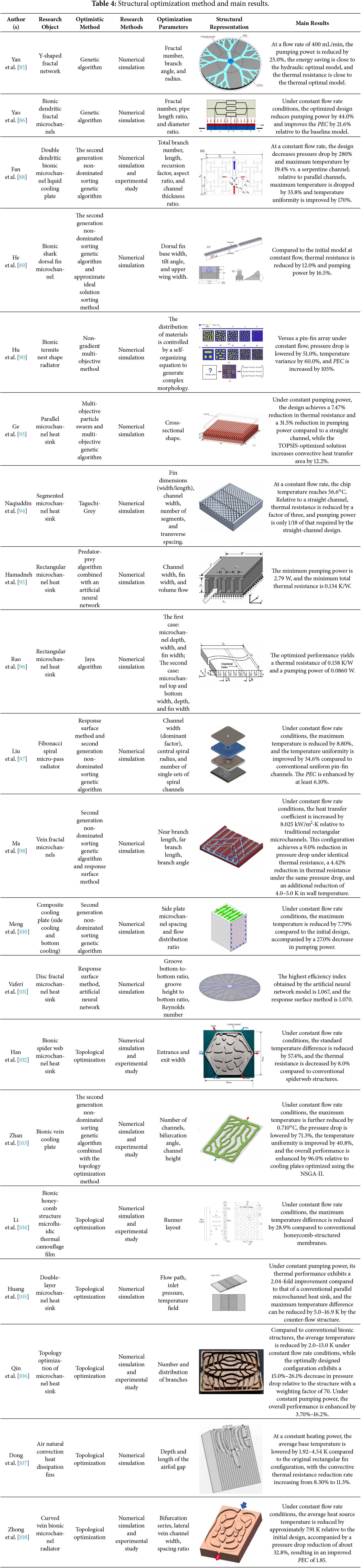
Researchers have developed a suite of methodologies aimed at the structural optimization of bionic microchannels.
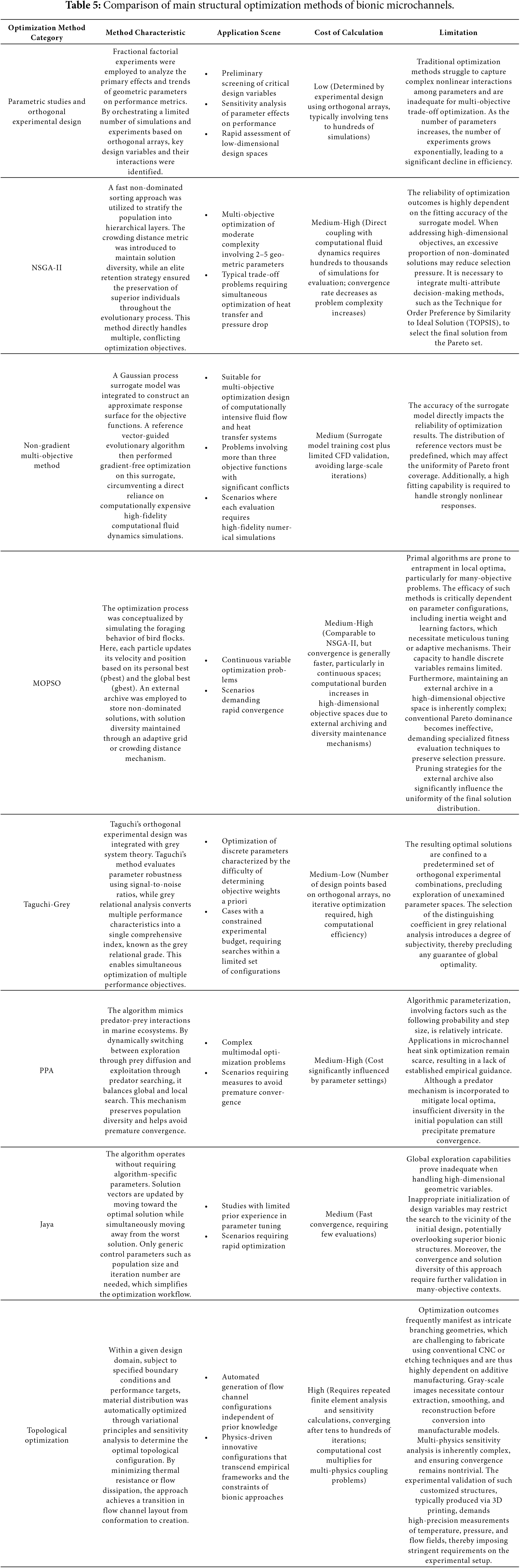
In the study of structural optimization for bionic microchannel heat sinks, various methodological approaches, while distinct in their pathways, collectively exhibit profound commonalities and synergistic relationships in their objectives and logical frameworks. The fundamental goal of all such methods is to reconcile the inherent conflict between heat transfer enhancement and flow resistance reduction. This is universally pursued through a multi-objective optimization paradigm, seeking an optimal trade-off between thermal and hydraulic performance. Furthermore, these approaches are highly dependent on numerical simulation for performance evaluation and are progressively evolving toward data-driven and intelligence-driven paradigms. At the methodological level, parametric studies serve as a foundational tool for screening key variables but are inherently limited in addressing complex multi-objective trade-offs. Multi-objective optimization algorithms, such as NSGA-II, effectively resolve typical conflicting objectives, albeit at a high computational cost, necessitating coupling with surrogate models to enhance efficiency. Topology optimization, by contrast, transcends the constraints of bionic mimicry, advancing the design of flow channel layouts from form imitation to form creation. However, the resulting complex configurations are heavily reliant on additive manufacturing for realization. These methods are progressive and complementary, collectively and systematically transforming bionic inspiration into efficient, low-consumption engineering thermal management solutions. Currently, the optimization framework coupling multi-objective algorithms with surrogate models is relatively mature and represents the mainstream choice for practical engineering applications. Topology optimization, meanwhile, points toward future development, promising structural innovation in a higher-dimensional space. Nevertheless, its full-scale engineering implementation still requires breakthroughs in addressing manufacturability constraints and multi-physics coupling modeling challenges. To facilitate the selection of the most appropriate optimization strategy based on specific design requirements, Table 5 provides a systematic comparison of the aforementioned primary optimization methods across four dimensions: core technical principles, typical application scenarios, computational cost, and inherent limitations.
3.2 Application of Bionic Microchannels in the Heat Dissipation of Electronic Components
The design of bionic microchannels is, in essence, the translation of efficient mass and heat transfer architectures evolutionarily refined in nature over hundreds of millions of years into innovative solutions for critical engineering thermal management challenges. Their superior performance is fundamentally rooted in the two core physical mechanisms previously elaborated: enhanced heat transfer and flow drag reduction. The integrated application of structural optimization methodologies serves as a pivotal bridge between bionic principles and the realization of high-performance heat sinks.
The inherent characteristics of multi-stage flow division and flow restructuring in bionic fractal networks enable the mitigation of issues such as localized overheating caused by uneven flow distribution in microchannels. For thermal management of lithium-ion batteries in electric vehicles, Fan et al. [109] designed a double-layered tree-shaped channel liquid cooling plate based on constructal theory and Murray’s law. By optimizing structural parameters such as aspect ratio, width-to-height ratio, and channel volume fraction, the dendritic channel achieves a 1.79% reduction in maximum temperature, a 69.3% improvement in surface temperature uniformity, and a 79.1% decrease in pressure drop compared to the conventional serpentine channel under constant flow rate. Inspired by the fluid pathways in lotus leaf veins, Xin et al. [29] introduced a bionic manifold annular channel cold plate for power chip cooling. Through optimized channel layout and the addition of baffles, under constant flow rate, it reduces the pressure drop by 50.7%, improves temperature uniformity by 43.7%, increases the coefficient of performance (COP) by 132% compared to traditional parallel microchannels, and dissipates the heat at a rate of 1987 W. Building on single-phase cooling studies, Xin et al. [110] further investigated the flow boiling heat transfer performance of the bionic manifold annular channel cold plate. Among the five flow patterns identified in the manifold region, pulsating annular flow exhibits the highest heat transfer coefficient. Under a constant flow rate, the heat transfer coefficient is enhanced by up to 56.3%, the CHF is increased by up to 1728.28%, and the COP is improved by up to 473% compared to traditional parallel microchannels, with a CHF reaching 267 W/cm2. For practical CPU cooling in computers, Huang et al. [111] experimentally demonstrated that under constant voltage operation, a bionic spider-web microchannel heat sink reduces internal pressure drop by 20.7% and increases the Nu by 13.7% compared to a series Y-shaped microchannel heat sink. This structure optimizes thermal performance through a synergistic mechanism: enhanced diffusive heat transfer in the central low-velocity region and intensified convective heat transfer in the peripheral high-velocity region. When integrated with a piezoelectric pump, it maintains a 30.0 W CPU at a stable temperature of 55.0°C, highlighting its potential for compact, efficient, and low-power integrated thermal management. For heat dissipation from high-heat-flux chips, Du and Fang [28] designed an embedded manifold-cooled bionic spider-web microchannel incorporating a five-inlet, four-outlet manifold structure. Under a chip heat flux of 10,000 kW/m2, the effective thermal resistance is measured at 0.047 cm2·°C/W and a maximum temperature standard deviation of 1.18°C, and it reduces temperature non-uniformity by up to 53.3% compared to a single-outlet configuration. To improve the heat dissipation efficiency and operational stability of semiconductor lasers, Hou et al. [112] enhanced the performance of a bionic leaf-vein microchannel heat sink through optimizations in fin height and the angle between primary and secondary channels. Under a constant flow rate, increasing the Reynolds number to 20,000 yields the highest enhancement in Nu for the Type I structure, with a 91.0% increase compared to that at a Reynolds number of 7000.
The microstructures inherent to biological forms and surfaces exhibit exceptional properties, and incorporating these properties into microchannel walls can simultaneously reduce flow resistance and enhance heat transfer. Addressing the thermal management needs of electronic devices with high heat fluxes, Ali et al. [113] integrated alveoli-inspired clover-shaped cavities into the base wall, side walls, and all walls of a microchannel heat sink for investigation. Based on their results, the base wall cavity configuration achieves the optimal thermohydraulic performance. At a Reynolds number of 1000, it increases the heat transfer coefficient by 58.0% compared to a smooth wall channel. Based on the bionic concept of shark skin, Li et al. [114] designed four types of water-cooled microchannel heat sinks with distinct flow-control configurations. Under laminar flow conditions, these designs achieve a thermal performance factor as high as 3.10 and a maximum Nu/Nu0 of 4.60. Among them, the Type C design, derived from actual measured data of shark skin microstructure, demonstrates superior overall performance at high laminar Reynolds numbers. It effectively balances significant heat transfer enhancement with low entropy generation, which makes it suitable for highly efficient and compact cooling solutions. Wang et al. [115] examined a microchannel heat sink with a bionic design based on shark skin placoid scales. Through systematic optimization, they concluded that a configuration employing 32 structural units, an inclination angle of 8 degrees, and 4 to 5 micro fins reduces the heat sink’s top surface temperature by approximately 2.0°C compared to a design with 40 units. At a flow velocity of 6 m/s, the corresponding inlet pressure is 38.08 kPa. This performance improvement is attributed to mechanisms including an enlarged heat transfer area, regulated local flow fields, and a reshaped thermal boundary layer. The design provides a viable bionic solution for the compact thermal management of artificial intelligence chips and high power processors. Inspired by the Namib Desert beetle, Wang et al. [27] proposed a Janus microchannel heat sink featuring a hydrophilic bottom and a superhydrophobic top surface. This design enables microsecond-scale directional bubble transport via Laplace pressure differences. Under constant flow conditions, it increases the critical heat flux by 125% compared to conventional microchannels while reducing pumping power by 68%. This configuration enables a CPU to sustain its maximum clock frequency under full load without thermal throttling, which means that its performance ceiling remains uncompromised during sustained high-demand operation.
The streamlined morphologies developed through biological evolution also inspire microchannel design. In their study on lithium-ion battery thermal management, Liu et al. [64] proposed a novel cold plate featuring flow channels modeled after leaf venation. Under numerical simulation and experimental verification, this design demonstrates superior thermal management capability and energy efficiency compared to conventional straight, fishbone, and serpentine channels, thereby enhancing the thermal safety and cycle life of the batteries. Similarly, Li et al. [25] applied a bionic microchannel heat sink featuring wheat-grain-shaped pin fins to high-performance electronic cooling. By optimizing geometric parameters, including vertex angle, longitudinal spacing, lateral spacing, and lateral offset, they found that the streamlined geometry and the arrangement mimicking wheat grains effectively increase the heat transfer area and enhance the fluid mixing, which disrupts the thermal boundary layer. Under constant flow rate conditions, the proposed configuration achieves the PEC of 11.2%, 19.3%, and 31.9% compared to elliptical, diamond, and square pin-fin designs, respectively, while simultaneously enabling a maximum pressure drop reduction of up to 55.8%.
Aiming at the special working conditions such as transient thermal shock, boiling heat transfer, and extreme heat flow, researchers have integrated the bionic concept with technologies such as nanofluids, porous media, phase change materials (PCM), pulsating flow, and jet impingement to form a multi-functional coupling heat dissipation solution.
Nanofluids enhance the heat dissipation efficiency and temperature uniformity of cooling systems through several mechanisms. Nanoparticles enhance the base fluid’s heat conduction due to their high thermal conductivity, while Brownian motion-induced micro-convection disrupts the thermal boundary layer. Synergistic effects among particles and their aggregation morphology further optimize heat conduction pathways, and then lead to overall performance improvement [116,117]. As a key focus in thermal management for 35 kV high-temperature superconducting synchronous capacitors, Zhang et al. [30], inspired by the evolutionary mechanisms of vein systems in earwig insect wings, conducted numerical simulations and experimental validations on microchannels featuring evolutionary sequences and fractal flow passages. When utilizing nanofluids, the fully evolved configuration under constant flow rate conditions reduces the maximum temperature of the heating surface by 34.36% and the average temperature by 23.07% compared to deionized water, achieving a PEC of 1.61 at a heat flux of 50,000 W/m2. Beyond flow channel geometry optimization, Hu et al. [118] demonstrated through simulations that modifying the wall material of microchannels can effectively regulate the aggregation process of Fe3O4 nanoparticles, thereby offering a new control dimension for enhancing the heat transfer performance of microchannel heat sinks. Concurrently, investigations into non-Newtonian nanofluids within microchannels warrant significant attention. Yao et al. [119] reported numerical findings indicating that the implementation of superhydrophobic surfaces combined with a 1.5% water-CMC/CuO non-Newtonian nanofluid minimizes total entropy generation at a Reynolds number of 250, elevating the PEC to approximately 1.1.
Porous media enhances the overall thermal efficiency and thermal response characteristics of heat sinks by leveraging its high specific surface area and pore structures. These features intensify heat conduction and convective heat transfer between the fluid and the solid matrix, while its substantial heat capacity enables temporary thermal energy storage [120]. Inspired by the stomatal networks of plant leaves and the fluid transport systems in branches, Song et al. [121] developed a bionic manifold microchannel heat sink suitable for wide-bandgap semiconductor power devices with heat flux densities reaching the kW/cm2 level. Experimental findings demonstrated that by modulating the pore density, backbone height, and flow velocity of copper foam structures under constant flow rate conditions, the configuration with 20 PPI pore density achieves a 33.6% enhancement in critical heat flux compared to a smooth surface, while its average heat transfer coefficient is approximately 23.0% higher than that of the structure with 60 PPI pore density. However, this configuration also results in the highest pressure drop among the tested designs.
Phase change materials achieve efficient thermal energy absorption under near-isothermal conditions through reversible solid-liquid phase transitions, which enable the temporal heat transfer and temperature stabilization [122]. Inspired by the growth pattern of Nephrolepis, An et al. [123] introduced a bionic water-cooled composite PCM system designed to manage the thermal load of lithium-ion batteries. Through a combined experimental and numerical investigation, it was demonstrated that optimizing the cross-sectional dimensions, number of layers, and inlet/outlet angles of the cooling channels enables the maximum battery temperature to be maintained at 310 K with a temperature difference of only 4.21 K at a 4 C discharge rate, representing a substantial improvement over conventional liquid cooling methods. Jia et al. [124] employed numerical simulations to investigate a bionic microchannel embedded in a PCM composite honeycomb structure for liquid cooling. Their findings indicated that, under constant flow rate conditions, this configuration reduces the maximum temperature of the battery module by 2.08°C and the temperature and the temperature difference by 0.950°C compared to cooling with PCM alone. They also found that cooling performance can be enhanced by adding ethylene glycol to pure polypropylene, adopting a counter-flow arrangement of liquid-cooling microchannels, and increasing the inlet flow velocity. Yao et al. [125] developed a hybrid battery thermal management system coupling spider-web-inspired microchannel liquid cooling with PCM. Under constant flow conditions at a high discharge rate of 5 C, numerical simulations revealed that, compared to natural convection cooling, the maximum temperature of the battery module is reduced by 43.2%, the temperature uniformity is improved by 40.8% relative to parallel channel designs, with a pressure drop of only 6.05 Pa.
Pulsating flow augments heat transfer via periodic velocity oscillations, which disrupt the boundary layer and intensify fluid mixing [126]. Xu et al. [127] tackled the thermal management issues of proton exchange membrane fuel cells by developing a bionic microchannel featuring a dendritic topology. Their findings indicated that compared to steady flow, both sinusoidal and rectangular pulsating flows yield superior heat transfer and a more uniform temperature distribution within the dendritic structure. Separately, Daba et al. [128] developed a bionic bark-patterned microchannel heat sink. Under constant flow rate conditions, the combination of pulsating flow and a bionic corrugated wall is found to reduce thermal resistance by approximately 40.0% compared to steady-state flow scenarios. Relative to the no-slip boundary condition, the implementation of a slip boundary further enhances heat transfer performance by about 1.20%.
Jet impingement cooling achieves rapid forced convective heat dissipation from localized hotspots by directing a high-speed fluid stream onto the heated surface, which disrupts the thermal boundary layer and enhances turbulent mixing [129]. Yang et al. [130] designed a leaf-vein-inspired microchannel integrated with circular flow-guiding channels and coupled it with jet impingement. Their study, focused on cooling an 800 W chip, found that reducing the channel spacing and increasing the microchannel height effectively lowers the chip temperature. Under a constant flow rate, the circular diversion channels reduce the maximum chip temperature by 8.47%, decrease thermal resistance by 14.2%, and lower the temperature difference by 20.5% relative to the basic bionic structure.
These bionic microchannel designs demonstrate significant advantages in enhancing temperature uniformity, heat transfer enhancement, and controlling pressure drop, which provides efficient thermal management solutions for electronic components (Table 6).
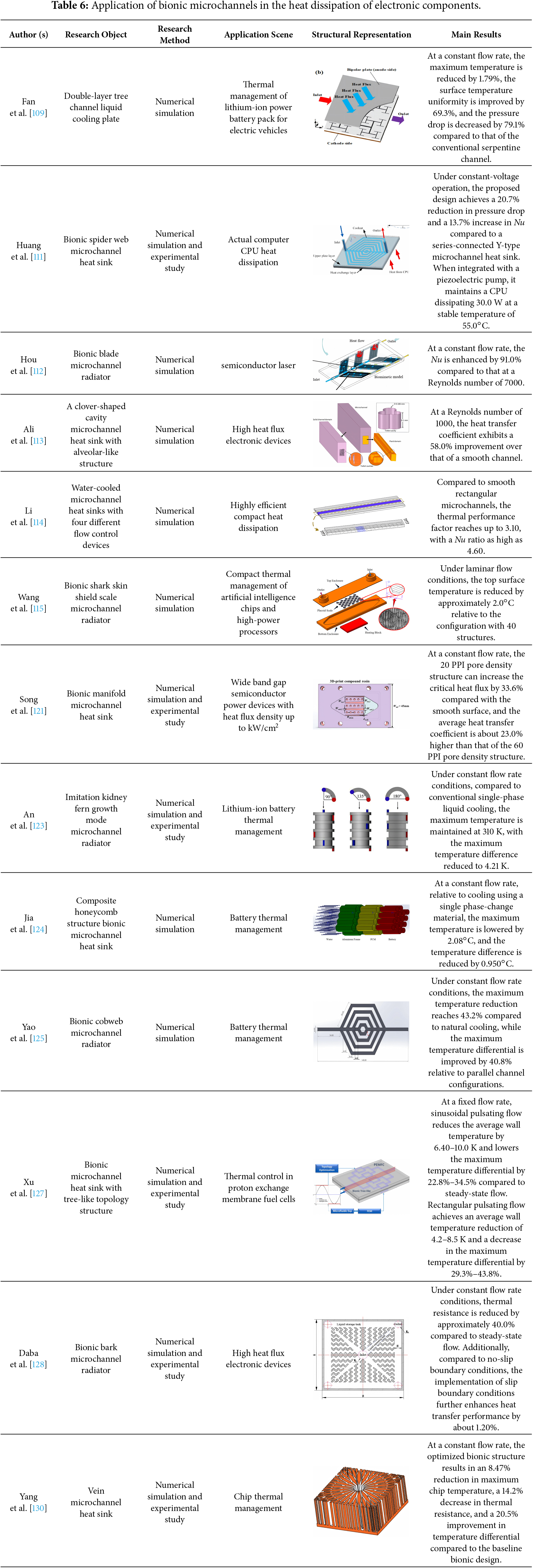
A statistical analysis of the current literature indicates a paucity of experimental data for complex bionic structures under conditions of high heat flux, multiphase flow, and transient operation in bionic microchannel research. This scarcity limits the rigorous calibration and validation of predictive numerical models. Widely adopted computational fluid dynamics approaches, including Reynolds-Averaged Navier-Stokes (RANS) equations, Large Eddy Simulation (LES), and the Volume of Fluid (VOF) method, inherently exhibit uncertainties when applied to microscale flow and heat transfer simulations. Within the framework of uncertainty quantification, these discrepancies can be categorized as either epistemic or aleatory uncertainties [131]. Epistemic uncertainty arises from the inherent simplifications of physical reality embedded in the turbulence models, whereas aleatory uncertainty stems from stochastic variations in boundary conditions, geometric dimensions, and thermophysical properties. Furthermore, the choice of mesh resolution, discretization schemes, and convergence criteria substantially influences simulation outcomes; inadequate grid convergence analysis is estimated to introduce numerical errors of 5% to 15% [132]. In multiphysics simulations involving phase change or nanofluids, model simplifications, such as neglecting the microscale kinetics of particle migration or bubble nucleation, can lead to deviations in predicted heat transfer performance exceeding 20% [133]. Consequently, numerical predictions must be rigorously calibrated against experimental data, as the two approaches are indispensable and complementary.
Advances in the application of bionic microchannels for electronic component thermal management were systematically reviewed herein. This review systematically examined the fundamental logic underpinning research into bionic structural heat transfer and drag reduction mechanisms, structural optimization methodologies, and their engineering applications. It traced the critical pathway from the mechanistic understanding of micro-scale heat transfer processes to the optimization of macro-scale device design. Through an in-depth analysis of cutting-edge advancements, this synthesis delineated the principal findings concerning the synergistic enhancement mechanisms of bionic structures, methods for multi-objective optimization design, and their exemplary application in the thermal management of high-power electronic components.
(1) From the perspective of physical mechanisms, this paper presented a systematic synthesis of bionic structures, representing a pioneering departure from previous approaches that merely catalogued biological prototypes. By emulating biological morphologies such as variable cross-sectional geometries, internal turbulators, and fractal networks, the thermal boundary layer can be effectively disrupted, secondary flows is induced, and fluid mixing is enhanced. Certain structures further enable adaptive regulation or augment phase-change heat transfer, substantially improving thermal exchange efficiency. The replication of fish-inspired streamlined contours, shark-skin-inspired micro-grooves, and superhydrophobic surfaces serves to suppress turbulence, stabilize the boundary layer, or facilitate gas-film slippage, thereby achieving significant reductions in flow resistance. Furthermore, this review systematically compared the performance trends of representative bionic structures across varying Reynolds numbers, elucidating their dominant regimes and critical failure thresholds in laminar, transitional, and turbulent flows.
(2) This study systematically compared major optimization methods across four dimensions: core technological principles, application scenarios, computational costs, and inherent limitations. The integrated application of parametric studies, multi-objective optimization algorithms, surrogate models, and topology optimization has shifted the paradigm of bionic microchannel design from an experience-driven approach to a data-driven one. This integration systematically addresses the challenge of multi-objective trade-offs within complex, high-dimensional parameter spaces. It has not only significantly enhanced the thermohydraulic performance and energy efficiency of heat sinks but also provides systematic methodological support for developing next-generation, high-performance, low-energy cooling technologies capable of meeting future challenges of substantially higher heat fluxes.
(3) Bionic microchannels exhibit broad applicability in thermal management for electronic components such as chips, batteries, and lasers. Fractal networks, surface microstructures, streamlined profiles, and composite bionic designs can achieve a low temperature rise, high uniformity, and a low pressure drop across different application scenarios. The integration of bionic structures with nanofluids and phase change materials demonstrates exceptional heat dissipation performance under extreme operating conditions, including boiling heat transfer and transient thermal shock.
(4) Current research on bionic microchannel thermal management has been dominated by numerical simulations, with experimental validation remaining relatively scarce. In particular, experimental data under complex structural configurations and extreme operating conditions are lacking. While numerical simulations provide efficient means for structural optimization, their outcomes are subject to inherent uncertainties arising from model assumptions, mesh resolution, and simplifications in multiphysics coupling, necessitating high-precision experimental calibration. Therefore, future research efforts should be directed toward establishing a synergistic paradigm wherein numerical simulations guide experimental design and experiments, in turn, validate and refine the models. Such an approach is essential to advance bionic microchannel heat dissipation technologies from theoretical optimization toward engineering validation and practical applications.
Despite significant progress in research on bionic microchannels, several challenges remain. Future efforts should focus on the following directions:
(1) Significant variations in test conditions, such as the range of Reynolds numbers, applied heat flux, and boundary conditions, along with differences in channel dimensions and configurations across studies, make direct performance comparison and reproducibility of various bionic structures challenging. Therefore, future efforts should prioritize the establishment of standardized protocols for performance testing that accommodate both diversity and comparability, tailored to the specific requirements of distinct application scenarios. Concurrently, the construction of a standardized database of bionic microchannels is essential to facilitate interdisciplinary collaborative research. These initiatives will provide a robust scientific foundation and data support for the quantifiable evaluation, reliable replication, and systematic optimization of bionic thermal management technologies.
(2) Topology optimization has transcended the constraints of traditional bionic design, enabling a paradigm shift in flow channel configuration from mere imitation to genuine innovation. Future efforts should focus on advancing topology optimization methodologies, particularly through the integration of multi-condition topology optimization with responsive materials to achieve intelligent, co-adaptive design. This approach holds the potential to realize adaptive bionic networks capable of autonomously reconfiguring flow channel topology in response to real-time thermal loads. Furthermore, broadening the scope of bioinspiration by incorporating multisource biological topological principles as a priori knowledge and a source of generative constraints will guide algorithms toward flow channel architectures that embody both physical optimality and the refined efficiency inherent in natural evolution.
(3) The inherent complexity of bionic structures imposes stringent requirements on microfabrication techniques: bionic fractal networks necessitate precise interconnection across multi-level microchannels, porous surfaces demand simultaneous control over pore geometry and porosity, and micro-fin arrays are exceedingly sensitive to inclination angles and surface roughness during formation. High-performance configurations derived from computational fluid dynamics optimization often feature geometric asymmetry, high aspect ratios, or enclosed cavities, rendering them difficult to replicate effectively using conventional silicon etching or precision computer numerical control machining. Metal additive manufacturing, with its layer-by-layer fabrication paradigm, offers a transformative pathway to overcome these manufacturing bottlenecks. Future efforts should advance an integrated philosophy, embedding additive manufacturing constraints into the early stages of topology optimization to enhance the manufacturability of designed structures.
(4) Current research on bionic microchannels remains primarily confined to instantaneous performance evaluation under clean conditions, with insufficient attention given to long-term operational reliability in realistic environments. Complex fractal networks are susceptible to particle deposition, microgroove structures face the risk of wear-induced failure, and superhydrophobic surfaces are subject to chemical degradation. These three factors collectively constrain engineering applications. Future efforts should focus on conducting long-term reliability experiments and establishing performance degradation models. Reliability must be incorporated as a core design constraint to provide durability criteria for industrial implementation.
Acknowledgement: Not applicable.
Funding Statement: The authors received no specific funding for this study.
Author Contributions: The authors confirm contribution to the paper as follows: conceptualization, methodology: Cong Qi; investigation: Guowei Feng, Cong Qi; writing—original draft: Guowei Feng; writing—review & editing: Cong Qi, Jinyang Luo, Lichen Zhu. All authors reviewed and approved the final version of the manuscript.
Availability of Data and Materials: All data and materials supporting this study are publicly accessible and have been properly cited within the manuscript.
Ethics Approval: Not applicable.
Conflicts of Interest: The authors declare no conflicts of interest.
References
1. Zhang Q, Deng K, Wilkens L, Reith H, Nielsch K. Micro-thermoelectric devices. Nat Electron. 2022;5(6):333–47. doi:10.1038/s41928-022-00776-0. [Google Scholar] [CrossRef]
2. Hinov N. From energy efficiency to energy intelligence: power electronics as the cognitive layer of the energy transition. Electronics. 2025;14(23):4673. doi:10.3390/electronics14234673. [Google Scholar] [CrossRef]
3. Asim M, Siddiqui FR. Hybrid nanofluids—Next-generation fluids for spray-cooling-based thermal management of high-heat-flux devices. Nanomater. 2022;12(3):507. doi:10.3390/nano12030507. [Google Scholar] [PubMed] [CrossRef]
4. Wu Z, Xiao W, He H, Wang W, Song B. Jet-enhanced manifold microchannels for cooling electronics up to a heat flux of 3000 W cm−2. Nat Electron. 2025;8(9):810–7. doi:10.1038/s41928-025-01449-4. [Google Scholar] [CrossRef]
5. Chen H, Li D. Current status and challenges for liquid-cooled data centers. Front Energy Res. 2022;10:952680. doi:10.3389/fenrg.2022.952680. [Google Scholar] [CrossRef]
6. Li B, Kuo H, Wang X, Chen Y, Wang Y, Gerada D, et al. Thermal management of electrified propulsion system for low-carbon vehicles. Automot Innov. 2020;3(4):299–316. doi:10.1007/s42154-020-00124-y. [Google Scholar] [CrossRef]
7. Tuckerman DB, Pease RFW. High-performance heat sinking for VLSI. IEEE Electron Device Lett. 1981;2(5):126–9. doi:10.1109/EDL.1981.25367. [Google Scholar] [CrossRef]
8. Wang Q, Tao J, Cui Z, Zhang T, Chen G. Passive enhanced heat transfer, hotspot management and temperature uniformity enhancement of electronic devices by micro heat sinks: a review. Int J Heat Fluid Flow. 2024;107(4):109368. doi:10.1016/j.ijheatfluidflow.2024.109368. [Google Scholar] [CrossRef]
9. Zhang X, Ji Z, Wang J, Lv X. Research progress on structural optimization design of microchannel heat sinks applied to electronic devices. Appl Therm Eng. 2023;235(1):121294. doi:10.1016/j.applthermaleng.2023.121294. [Google Scholar] [CrossRef]
10. Pourhammati S, Hossainpour S. Improving the hydrothermal characteristics of wavy microchannel heat sink by modification of wavelength and wave amplitude. Int Commun Heat Mass Transf. 2022;130(1):105805. doi:10.1016/j.icheatmasstransfer.2021.105805. [Google Scholar] [CrossRef]
11. Chen C, Wang X, Yuan B, Du W, Xin G. Investigation of flow and heat transfer performance of the manifold microchannel with different manifold arrangements. Case Stud Therm Eng. 2022;34:102073. doi:10.1016/j.csite.2022.102073. [Google Scholar] [CrossRef]
12. Zhou X, Zeng C, Song Y, Jiao M, Zhang F, Liu M. Experimental study on heat transfer and flow resistance performance of a microchannel heat exchanger with zigzag flow channels. Prog Nucl Energy. 2022;147:104190. doi:10.1016/j.pnucene.2022.104190. [Google Scholar] [CrossRef]
13. Bhatti MM, Bég OA, Ellahi R, Abbas T. Natural convection non-Newtonian EMHD dissipative flow through a microchannel containing a non-darcy porous medium: homotopy perturbation method study. Qual Theory Dyn Syst. 2022;21(4):97. doi:10.1007/s12346-022-00625-7. [Google Scholar] [CrossRef]
14. Hou T, Lin S, Tu Z. Heat transfer performance of microchannels with different reentrant cavities based on field synergy principle and entropy production analysis. Int Commun Heat Mass Transf. 2024;158(1):107851. doi:10.1016/j.icheatmasstransfer.2024.107851. [Google Scholar] [CrossRef]
15. Du L, Hu W, Deng N, Zhang Z, Wang H. Computational analysis of heat transfer and fluid flow characteristics in a diamond microchannel heat sink with orthogonal ribs. Case Stud Therm Eng. 2025;67(4):105850. doi:10.1016/j.csite.2025.105850. [Google Scholar] [CrossRef]
16. Chen JC, Luo RH, Yuan WZ, Hong NL, Wang WH. Numerical study on heat transfer characteristic of the plate-fin microchannel heat sink for water-based thermal management of CPU chip. Energy Eng. 2022;119(4):1327–39. doi:10.32604/ee.2022.019331. [Google Scholar] [CrossRef]
17. Rezaei A, Niknejadi M, Toghraie D, Salahshour S. Simulation of water-graphene oxide two-phase nanofluid flow in a porous ribbed microchannel by considering heat transfer and particle migration. Case Stud Therm Eng. 2026;79(2):107706. doi:10.1016/j.csite.2026.107706. [Google Scholar] [CrossRef]
18. Li Y, Wang T, Zhu C, Wang Z, Yang J, Yang B. Effect of porous structure on the thermal and hydraulic features of combined heat sinks with open microchannels and pin-fins. Int J Therm Sci. 2025;214(5):109933. doi:10.1016/j.ijthermalsci.2025.109933. [Google Scholar] [CrossRef]
19. Liu P, Chen W. Thermal-hydraulic characteristics analysis in porous-wall corrugated microchannel with microencapsulated phase change slurry. Int Commun Heat Mass Transf. 2022;138(13–14):106316. doi:10.1016/j.icheatmasstransfer.2022.106316. [Google Scholar] [CrossRef]
20. Tang K, Amin Masoumi M, Rajabi H, Alireza Rozati S, Ali Akbari O, Montazerifar F, et al. Modifications in the physical structure of a new two-layer micro-size heat sink with sinusoidal shaped cavities for heat transfer augmentation of nanofluid flow. Alex Eng J. 2022;61(12):11019–30. doi:10.1016/j.aej.2022.04.015. [Google Scholar] [CrossRef]
21. Bejan A, Errera MR. Deterministic tree networks for fluid flow: geometry for minimal flow resistance between a volume and one point. Fractals. 1997;5(4):685–95. doi:10.1142/s0218348x97000553. [Google Scholar] [PubMed] [CrossRef]
22. Li W, Ma Y, Zhang X, Zhao J. Review of bionic study on enhanced microchannel heat transfer by passive methods. Renew Sustain Energy Rev. 2025;222(5):115926. doi:10.1016/j.rser.2025.115926. [Google Scholar] [CrossRef]
23. Zhu D, Zhao L, Feng X, Tian G. Experimental study of turbulent drag reduction characteristics of biomimetic divergent spines surfaces based on particle image velocimetry and proper orthogonal decomposition. Ocean Eng. 2024;311:119007. doi:10.1016/j.oceaneng.2024.119007. [Google Scholar] [CrossRef]
24. Hu Z, Wang Y, Wu X, Wang Y, Yu H, Zhang Q, et al. Fish-scales inspired multilevel micro-nano structures for water drag reduction on metal surface. Surf Topogr Metrol Prop. 2025;13(2):025001. doi:10.1088/2051-672X/adc58e. [Google Scholar] [CrossRef]
25. Li Y, Yang Y, Gong L, Cui W, Yang B. Design of biomimetic wheat-grain-shaped pin fins for enhanced heat transfer in microchannel heat sink. Appl Therm Eng. 2026;284(8):129074. doi:10.1016/j.applthermaleng.2025.129074. [Google Scholar] [CrossRef]
26. Zhang SY, Guo JG. Salvinia -like surfaces with stable gas-liquid interface for drag reduction. Int J Mech Sci. 2025;305:110751. doi:10.1016/j.ijmecsci.2025.110751. [Google Scholar] [CrossRef]
27. Wang Z, Yang S, Xie M, Wang X, Xie Q, Shuai Y. Bioinspired Janus microfluidic heat sink for ultra-efficient CPU cooling via millisecond-scale bubble transport. Adv Funct Mater. 2025:e24703. doi:10.1002/adfm.202524703. [Google Scholar] [CrossRef]
28. Du J, Fang Y. Bioinspired spider-web microchannel with five-input-four-output manifold: enhanced thermal performance for 10,000 kW/m2 chip-scale embedded cooling. Int J Heat Fluid Flow. 2025;114:109794. doi:10.1016/j.ijheatfluidflow.2025.109794. [Google Scholar] [CrossRef]
29. Xin Z, Shi Y, Shah AK, Hong S, Wu Z. Highly efficient bio-inspired manifold microchannel cooling for steady-state and transient thermal management of high-power chips. Energy. 2025;340:139269. doi:10.1016/j.energy.2025.139269. [Google Scholar] [CrossRef]
30. Zhang J, Ge B, Huang Q, Gou Z, Xiao S, Zhang J, et al. Numerical and experimental investigation on flow and heat transfer characteristics of the Dermaptera-inspired microchannel heat sink for potential application in high-temperature superconducting synchronous condenser. Appl Therm Eng. 2026;285(2):129196. doi:10.1016/j.applthermaleng.2025.129196. [Google Scholar] [CrossRef]
31. Yin L, E. J, Tu Y, Luo W. Biomimetic microchannel structures and their topological optimization: a review. Int Commun Heat Mass Transf. 2025;163(1):108689. doi:10.1016/j.icheatmasstransfer.2025.108689. [Google Scholar] [CrossRef]
32. Dong G, Huang C, Wu D, Liu S, Wu N, Huang P, et al. A review of the impacts of the microchannel structure on the heat transfer performance of microchannel heat exchangers. Int Commun Heat Mass Transf. 2025;169(4):109806. doi:10.1016/j.icheatmasstransfer.2025.109806. [Google Scholar] [CrossRef]
33. Cui P, Liu W, Liu Z. Thermal-hydraulic performance analysis and multi-objective optimization of a microchannel with staggered semi-elliptical ribs. Sci China Tech Sci. 2024;67(10):3152–67. doi:10.1007/s11431-023-2686-0. [Google Scholar] [CrossRef]
34. Xu L, Yang Z, Xi L, Duan D, Yang X, Gao J, et al. Multi-objective performance optimization of target surface of bionic blue whale-skin impinged by array jet. Int Commun Heat Mass Transf. 2023;141(4):106611. doi:10.1016/j.icheatmasstransfer.2022.106611. [Google Scholar] [CrossRef]
35. Wang Y, Sun L, Qi C, Yu J, Zhang W. Topology optimization of a novel bionic fractal microchannel applied in thermal management of electronic components. Asia Pac J Chem Eng. 2023;18(3):e2900. doi:10.1002/apj.2900. [Google Scholar] [CrossRef]
36. Zhao C, He L, You W, Meng X, Li Z. Numerical simulation of flow and heat transfer characteristics of microchannels with ribbed structures of bionic fish fins. Int J Refrig. 2025;178(32):298–311. doi:10.1016/j.ijrefrig.2025.07.012. [Google Scholar] [CrossRef]
37. Wang Z, Li B, Luo QQ, Zhao W. Effect of wall roughness by the bionic structure of dragonfly wing on microfluid flow and heat transfer characteristics. Int J Heat Mass Transf. 2021;173(1):121201. doi:10.1016/j.ijheatmasstransfer.2021.121201. [Google Scholar] [CrossRef]
38. Dey P, Saha SK. Fluid flow and heat transfer in microchannel with porous bio-inspired roughness. Int J Therm Sci. 2021;161:106729. doi:10.1016/j.ijthermalsci.2020.106729. [Google Scholar] [CrossRef]
39. Zhu S, Li L, Qi T, Hu W, Cheng C, Cao S, et al. The effect of swallow-shaped bionic ribs on the thermal-hydraulic performance of heat exchanger tubes. Therm Sci Eng Prog. 2023;46(05):102180. doi:10.1016/j.tsep.2023.102180. [Google Scholar] [CrossRef]
40. Wang R, He G, Li D, Shi Y, Meng Z, Zhang N, et al. Numerical investigation of laminar flow heat transfer characteristics and entropy generation in microchannel with shark-skin bionic structure. Int J Heat Fluid Flow. 2025;116(64):109954. doi:10.1016/j.ijheatfluidflow.2025.109954. [Google Scholar] [CrossRef]
41. Gao Q, Zou H, Li J. Numerical investigations of heat transfer and fluid flow characteristics in microchannels with bionic fish-shaped ribs. Processes. 2023;11(6):1861. doi:10.3390/pr11061861. [Google Scholar] [CrossRef]
42. Liang Y, Liu P, Zheng N, Shan F, Liu Z, Liu W. Numerical investigation of heat transfer and flow characteristics of laminar flow in a tube with center-tapered wavy-tape insert. Appl Therm Eng. 2019;148:557–67. doi:10.1016/j.applthermaleng.2018.11.090. [Google Scholar] [CrossRef]
43. Duan Z, Xie G, Shen H, Wang CC. Thermal performance and entropy generation of single-layer and double-layer constructal Y-shaped bionic microchannel heat sinks. Int J Energy Res. 2021;45(6):9449–62. doi:10.1002/er.6473. [Google Scholar] [CrossRef]
44. Li H, Ren J, Yin D, Lu G, Du C, Jin X, et al. Effects of inclination angle and heat power on heat transfer behavior of flat heat pipe with bionic grading microchannels. Appl Therm Eng. 2022;206(5–6):118079. doi:10.1016/j.applthermaleng.2022.118079. [Google Scholar] [CrossRef]
45. Zhang H, Ding J, Liu H, Ding T, Feng Y. Start-up investigation and heat transfer enhancement analysis of a loop thermosyphon with biomimetic honeycomb-channel evaporator. Int J Refrig. 2025;169:383–90. doi:10.1016/j.ijrefrig.2024.11.016. [Google Scholar] [CrossRef]
46. Wei Y, Zeng Z, Du R, Baig A, Farooq MS, Liu S. Design of alveolar biomimetic enhanced heat transfer structure for cylindrical lithium battery pack. J Energy Storage. 2024;101(23):113721. doi:10.1016/j.est.2024.113721. [Google Scholar] [CrossRef]
47. Li L, Chen C, An M, Liu G, Li S. Flow and heat transfer analysis of the microfluidic thermal camouflage film based on bionic structure. Case Stud Therm Eng. 2023;45(10):102906. doi:10.1016/j.csite.2023.102906. [Google Scholar] [CrossRef]
48. Wang Y, Xu X, Liu Z, Kong J, Zhai Q, Zakaria H, et al. Optimization of liquid cooling for prismatic battery with novel cold plate based on butterfly-shaped channel. J Energy Storage. 2023;73:109161. doi:10.1016/j.est.2023.109161. [Google Scholar] [CrossRef]
49. Yue L, Qi C, Tang M. Cooling characteristics of nanofluids in a snowflake and squid fin composite bionic microchannel heat sink. Colloids Surf A Physicochem Eng Aspects. 2025;705(66):135614. doi:10.1016/j.colsurfa.2024.135614. [Google Scholar] [CrossRef]
50. Huang P, Dong G, Zhong X, Pan M. Numerical investigation of the fluid flow and heat transfer characteristics of tree-shaped microchannel heat sink with variable cross-section. Chem Eng Process Process Intensif. 2020;147(5):107769. doi:10.1016/j.cep.2019.107769. [Google Scholar] [CrossRef]
51. Regany D, Majós F, Barrau J, Rosell J, Ibáñez M, Fréchette LG, et al. Design and test of shape memory alloy fins for self-adaptive liquid cooling device. Appl Therm Eng. 2022;206(5):118010. doi:10.1016/j.applthermaleng.2021.118010. [Google Scholar] [CrossRef]
52. Yu L, Jiao B, Ye Y, Du X, Kong Y, Liu R, et al. An adaptive thermal management method via bionic sweat pores on electronic devices. Appl Therm Eng. 2024;247:122953. doi:10.1016/j.applthermaleng.2024.122953. [Google Scholar] [CrossRef]
53. Yan Y, Zhang C, Liu Y, He Z, Li J. Numerical study on hotspots adaptive cooling and thermal-hydraulic performance enhancement of fractal microchannel heat sink embedded with hydrogels. Int J Therm Sci. 2022;172(5):107272. doi:10.1016/j.ijthermalsci.2021.107272. [Google Scholar] [CrossRef]
54. Xu M, Luo JL, Liao JX, Mo DC, Lyu SS. Biomimetic luffa copper wicks with extraordinary pool boiling heat transfer performance. Appl Therm Eng. 2025;267(17):125787. doi:10.1016/j.applthermaleng.2025.125787. [Google Scholar] [CrossRef]
55. Chen H, Gao Q, Zhang Y, Yang X, Wei J, Di Marco P. Experimental study of the flow boiling heat transfer characteristics of teardrop-like micro-pin-finned chip surface in semi-open microchannel. Int J Heat Mass Transf. 2025;238:126442. doi:10.1016/j.ijheatmasstransfer.2024.126442. [Google Scholar] [CrossRef]
56. Chen G, Chukwunenye N, Jones GF, Li CH. Biomimetic structures by leaf vein growth mechanism for pool boiling heat transfer enhancements. Int J Heat Mass Transf. 2020;155(8):119699. doi:10.1016/j.ijheatmasstransfer.2020.119699. [Google Scholar] [CrossRef]
57. Tang Z, Wang C, Qi C, Wang Y, Chen L. Boiling heat transfer characteristics of bionic flower bud structure microchannels. Korean J Chem Eng. 2022;39(12):3246–60. doi:10.1007/s11814-022-1256-3. [Google Scholar] [CrossRef]
58. Shi E, Wang Q, Yi P, Peng Q, Jiang C, Zhao B. Subcooled pool boiling heat transfer enhancement on hierarchically biomimetic laser-structured surfaces with gradient pores. Int J Therm Sci. 2024;195(8):108651. doi:10.1016/j.ijthermalsci.2023.108651. [Google Scholar] [CrossRef]
59. Tan K, Hu Y, He Y. Enhancement of flow boiling in the microchannel with a bionic gradient wetting surface. Appl Therm Eng. 2023;230:120784. doi:10.1016/j.applthermaleng.2023.120784. [Google Scholar] [CrossRef]
60. Liu G, Jiang Y, Wu P, Ma Z, Chen H, Zhang D. Artificial whisker sensor with undulated morphology and self-spread piezoresistors for diverse flow analyses. Soft Robot. 2023;10(1):97–105. doi:10.1089/soro.2021.0166. [Google Scholar] [PubMed] [CrossRef]
61. Wang Y, Cheng W, Du R, Wang S. Bionic drag reduction for box girders based on Ostracion cubicus. Energies. 2020;13(17):4392. doi:10.3390/en13174392. [Google Scholar] [CrossRef]
62. Liu D, Cheng J, Song B, Yang W, Xue D. Numerical investigation of non-planarity and relative motion for bionic slotted wings. AIP Adv. 2023;13(8):085322. doi:10.1063/5.0156163. [Google Scholar] [CrossRef]
63. Zhou F, Wang H, Fang Z, Song Z, Qian L. Bio-inspired micropillar arrays for enhanced thermal-hydraulic performance in microchannel heat sinks: a numerical and experimental study. Int J Therm Sci. 2026;220:110342. doi:10.1016/j.ijthermalsci.2025.110342. [Google Scholar] [CrossRef]
64. Liu Z, Liu W, Lv S. Numerical study of battery thermal management system using bionic leaf-shaped channel liquid cooling plate. Appl Therm Eng. 2025;268:125898. doi:10.1016/j.applthermaleng.2025.125898. [Google Scholar] [CrossRef]
65. Sagong W, Jeon WP, Choi H. Hydrodynamic characteristics of the sailfish (Istiophorus platypterus) and swordfish (Xiphias gladius) in gliding postures at their cruise speeds. PLoS One. 2013;8(12):e81323. doi:10.1371/journal.pone.0081323. [Google Scholar] [PubMed] [CrossRef]
66. Ma Y, Xuan Y, Li W. Design and experimental validation of a bio-inspired fin microchannel heat sink with superior thermal-hydraulic features. Int J Therm Sci. 2024;205(7):109305. doi:10.1016/j.ijthermalsci.2024.109305. [Google Scholar] [CrossRef]
67. Wang Y, Wei Y, Weng D, Wang J. Aerodynamic drag reduction by the trapezoid spanwise groove inspired by pigeon feathers. Energies. 2023;16(5):2379. doi:10.3390/en16052379. [Google Scholar] [CrossRef]
68. Wang Y, Dong L, Zhou R, Guo C, Dai C. Energy loss and noise reduction of centrifugal pump based on bionic V-groove geometry. Water. 2024;16(15):2183. doi:10.3390/w16152183. [Google Scholar] [CrossRef]
69. Zheng S, Liang X, Li J, Liu Y, Tang J. Drag reduction using bionic groove surface for underwater vehicles. Front Bioeng Biotechnol. 2023;11:1223691. doi:10.3389/fbioe.2023.1223691. [Google Scholar] [PubMed] [CrossRef]
70. Deng Y, Li Z, Yin Z, Chen Y, Yang C, Luo Y, et al. A facile method for constructing scalable and low-cost superhydrophobic coating with anti-corrosion and drag-reduction properties. Ind Crops Prod. 2024;216:118732. doi:10.1016/j.indcrop.2024.118732. [Google Scholar] [CrossRef]
71. Li P, Wang S, Yu K, Zhang L, Jiang Y, Wang G. Superhydrophobic biomimetic microstructures prepared by laser-ablation for drag reduction. Colloids Surf A Physicochem Eng Aspects. 2024;686(47):133381. doi:10.1016/j.colsurfa.2024.133381. [Google Scholar] [CrossRef]
72. Zhao L, Ruan H, Zhu D, Song Z, Tian G, Feng X, et al. Study on the fabrication and drag reduction performance of biomimetic riblet-polydimethylsiloxane-graphene composite superhydrophobic surface. Mater Today Commun. 2025;46:112884. doi:10.1016/j.mtcomm.2025.112884. [Google Scholar] [CrossRef]
73. Chen Y, Hu Y, Zhang LW. Effective underwater drag reduction: a butterfly wing scale-inspired superhydrophobic surface. ACS Appl Mater Interfaces. 2024;16(20):26954–64. doi:10.1021/acsami.4c04272. [Google Scholar] [PubMed] [CrossRef]
74. Zhao P, Li X, Luo Z, Jia Z, Zhang K, Zhang X. Research on drag reduction for flexible skin inspired by bionics. Coatings. 2024;14(9):1189. doi:10.3390/coatings14091189. [Google Scholar] [CrossRef]
75. Zhang K, Zhang K, Zhang Y, Zhang J. The mechanism of drag reduction performance depending on the secretion rate of biomimetic mucus for a bio-inspired surface. Ocean Eng. 2024;310(2):118594. doi:10.1016/j.oceaneng.2024.118594. [Google Scholar] [CrossRef]
76. Ma C, Zhang K, Zhang B, Zhao B, Wang Q. Drag reduction characteristics of bionic mucous membrane acting on the turbulent boundary layer. J Appl Fluid Mech. 2021;14(5):1317–27. doi:10.47176/jafm.14.05.32209. [Google Scholar] [CrossRef]
77. Zhang K, Ma C, Zhang J, Zhang B, Zhao B. Drag reduction characteristics of bionic structure composed of grooves and mucous membrane acting on turbulent boundary layer. J Appl Fluid Mech. 2021;15(1):283–92. doi:10.47176/jafm.15.01.32901. [Google Scholar] [CrossRef]
78. Chen D, Chen H, Cui X. Dual-coupling drag reduction inspired by tuna skin: fan-shaped imbricated fish scale composited with flexible coating. AIP Adv. 2022;12(3):035218. doi:10.1063/5.0066195. [Google Scholar] [CrossRef]
79. Li S, Liu S, Zhao D, Dong L, Jiao H. Drag reduction characteristics of the placoid scale array skin sup-ported by micro Stewart mechanism based on penalty immersed boundary method. Appl Ocean Res. 2024;149(4):104049. doi:10.1016/j.apor.2024.104049. [Google Scholar] [CrossRef]
80. Gu Y, Yin Z, Yu S, He C, Wang W, Zhang J, et al. Suppression of unsteady partial cavitation by a bionic jet. Int J Multiph Flow. 2023;164(6):104466. doi:10.1016/j.ijmultiphaseflow.2023.104466. [Google Scholar] [CrossRef]
81. Yan H, Xie T, Li J, Fan J, Dai X. Drag reduction of Clark-Y hydrofoil by biomimetic fish scale structure under the condition of biomimetic jet. Front Energy Res. 2024;12:1360495. doi:10.3389/fenrg.2024.1360495. [Google Scholar] [CrossRef]
82. Zhang W, Zhang Z, Xu Y, Yao B, Jing J, Hai Z, et al. A stress-dispersed MEMS bionic turbulence sensor with enhanced reliability. IEEE Sens J. 2024;24(22):36477–86. doi:10.1109/JSEN.2024.3464508. [Google Scholar] [CrossRef]
83. Yodh JS, Spandan V, Mahadevan L. Suspension jams in a leaky microfluidic channel. Phys Rev Lett. 2020;125(4):044501. doi:10.1103/PhysRevLett.125.044501. [Google Scholar] [PubMed] [CrossRef]
84. Wang J, Liu X, Liu F, Liu Y, Wang F, Yang N. Numerical optimization of the cooling effect of the bionic spider-web channel cold plate on a pouch lithium-ion battery. Case Stud Therm Eng. 2021;26(9):101124. doi:10.1016/j.csite.2021.101124. [Google Scholar] [CrossRef]
85. Yan Y, Yan H, Yin S, Zhang L, Li L. Single/multi-objective optimizations on hydraulic and thermal management in micro-channel heat sink with bionic Y-shaped fractal network by genetic algorithm coupled with numerical simulation. Int J Heat Mass Transf. 2019;129(15):468–79. doi:10.1016/j.ijheatmasstransfer.2018.09.120. [Google Scholar] [CrossRef]
86. Yao Z, Pan L, Mu B, Wei X. Multi-objective optimization on bionic fractal structure for heat exchanging of single fluids by genetic algorithm. Int J Heat Fluid Flow. 2024;110(12):109652. doi:10.1016/j.ijheatfluidflow.2024.109652. [Google Scholar] [CrossRef]
87. Zhan S, Que Y, Yin Y, Li Z, Yu C. A novel tree-like bionic structure for liquid-cooled lithium-ion battery plates. Int J Therm Sci. 2024;203(2):109098. doi:10.1016/j.ijthermalsci.2024.109098. [Google Scholar] [CrossRef]
88. Fan Y, Wang Z, Fu T. Multi-objective optimization design of lithium-ion battery liquid cooling plate with double-layered dendritic channels. Appl Therm Eng. 2021;199(2):117541. doi:10.1016/j.applthermaleng.2021.117541. [Google Scholar] [CrossRef]
89. He L, Zhao C, Meng X, Wang J, You W, Li Z. Thermal analysis and structural optimization of microchannels of bionic dorsal fin structure using multi-objective genetic algorithm. Int J Heat Fluid Flow. 2026;117(5):110114. doi:10.1016/j.ijheatfluidflow.2025.110114. [Google Scholar] [CrossRef]
90. Hu K, Lu C, Yu B, Yang L, Rao Y. Optimization of bionic heat sinks with self-organized structures inspired by termite nest morphologies. Int J Heat Mass Transf. 2023;202:123735. doi:10.1016/j.ijheatmasstransfer.2022.123735. [Google Scholar] [CrossRef]
91. Han H, Lu W, Zhang L, Qiao J. Adaptive gradient multiobjective particle swarm optimization. IEEE Trans Cybern. 2018;48(11):3067–79. doi:10.1109/TCYB.2017.2756874. [Google Scholar] [PubMed] [CrossRef]
92. Lin Q, Liu S, Zhu Q, Tang C, Song R, Chen J, et al. Particle swarm optimization with a balanceable fitness estimation for many-objective optimization problems. IEEE Trans Evol Comput. 2018;22(1):32–46. doi:10.1109/TEVC.2016.2631279. [Google Scholar] [CrossRef]
93. Ge Y, Wang S, Liu Z, Liu W. Optimal shape design of a minichannel heat sink applying multi-objective optimization algorithm and three-dimensional numerical method. Appl Therm Eng. 2019;148:120–8. doi:10.1016/j.applthermaleng.2018.11.038. [Google Scholar] [CrossRef]
94. Naqiuddin NH, Saw LH, Yew MC, Yusof F, Poon HM, Cai Z, et al. Numerical investigation for optimizing segmented micro-channel heat sink by Taguchi-Grey method. Appl Energy. 2018;222:437–50. doi:10.1016/j.apenergy.2018.03.186. [Google Scholar] [CrossRef]
95. Hamadneh N, Khan W, Tilahun S. Optimization of microchannel heat sinks using prey-predator algorithm and artificial neural networks. Machines. 2018;6(2):26. doi:10.3390/machines6020026. [Google Scholar] [CrossRef]
96. Rao RV, More KC, Taler J, Ocłoń P. Dimensional optimization of a micro-channel heat sink using Jaya algorithm. Appl Therm Eng. 2016;103(2):572–82. doi:10.1016/j.applthermaleng.2016.04.135. [Google Scholar] [CrossRef]
97. Liu S, Chen M, Xiang Z, Hu D, Liang Y, Xu H, et al. Multi-objective optimization of a bionic microchannel heat sink based on Fibonacci spiral for electronic components. Int J Heat Mass Transf. 2025;253:127544. doi:10.1016/j.ijheatmasstransfer.2025.127544. [Google Scholar] [CrossRef]
98. Ma J, Zhang D, Liu Z, Zhang W, Li Y, Gong L. Study on the influence of biomimetic leaf veins microchannel structure optimization on flow boiling heat transfer in high heat flux devices. Int Commun Heat Mass Transf. 2026;171:110121. doi:10.1016/j.icheatmasstransfer.2025.110121. [Google Scholar] [CrossRef]
99. Tafarroj MM, Mahian O, Kasaeian A, Sakamatapan K, Dalkilic AS, Wongwises S. Artificial neural network modeling of nanofluid flow in a microchannel heat sink using experimental data. Int Commun Heat Mass Transf. 2017;86(3):25–31. doi:10.1016/j.icheatmasstransfer.2017.05.020. [Google Scholar] [CrossRef]
100. Meng JH, Ma CY, Liu Y, Wang L, Xu C, Lu G. Artificial neural network (ANN) based prediction and optimization of battery thermal management for non-uniform flow channel design. J Energy Storage. 2025;111:115404. doi:10.1016/j.est.2025.115404. [Google Scholar] [CrossRef]
101. Vaferi K, Vajdi M, Nekahi S, Heydari A, Sadegh Moghanlou F, Nami H, et al. Thermo-hydraulic performance optimization of a disk-shaped microchannel heat sink applying computational fluid dynamics, artificial neural network, and response surface methodology. Heliyon. 2023;9(10):e21031. doi:10.1016/j.heliyon.2023.e21031. [Google Scholar] [PubMed] [CrossRef]
102. Han XH, Liu HL, Xie G, Sang L, Zhou J. Topology optimization for spider web heat sinks for electronic cooling. Appl Therm Eng. 2021;195(2):117154. doi:10.1016/j.applthermaleng.2021.117154. [Google Scholar] [CrossRef]
103. Zhan S, Liang L, Li Z, Yu C, Wang F. Topology optimization of liquid cooling plate for lithium battery heat dissipation based on a bionic leaf-vein structure. Int J Heat Mass Transf. 2024;231:125898. doi:10.1016/j.ijheatmasstransfer.2024.125898. [Google Scholar] [CrossRef]
104. Li L, Huang J, Li S, Xu J. Flow and heat transfer improvement in microfluidic thermal camouflage film by topology optimization. Int Commun Heat Mass Transf. 2025;162:108626. doi:10.1016/j.icheatmasstransfer.2025.108626. [Google Scholar] [CrossRef]
105. Huang P, Dong G, Liu W. Topology optimization of laminated-sheet microchannel heat sinks based on a pseudo-three-dimensional method. Appl Therm Eng. 2024;236(1):121565. doi:10.1016/j.applthermaleng.2023.121565. [Google Scholar] [CrossRef]
106. Qin Y, Li L, Zhao Y, Chen Z, Wang X, Xu B. Experimental and numerical investigation of liquid-cooled microchannel heat sink by topology optimization for uniform heat source. Int J Heat Mass Transf. 2026;256(1):127932. doi:10.1016/j.ijheatmasstransfer.2025.127932. [Google Scholar] [CrossRef]
107. Dong C, Zhang C, He G, Li D, Zhang Z, Cong J, et al. 3D topology optimization design of air natural convection heat transfer fins. Nucl Eng Des. 2024;429(9):113623. doi:10.1016/j.nucengdes.2024.113623. [Google Scholar] [CrossRef]
108. Zhong X, Yang G, Yang L, Guo W, Li M, Cao M, et al. Topology optimization and experimental evaluation of curved leaf vein microchannel heat sink by selective laser melting. Appl Therm Eng. 2026;286:129299. doi:10.1016/j.applthermaleng.2025.129299. [Google Scholar] [CrossRef]
109. Fan Y, Wang Z, Fu T, Wu H. Numerical investigation on lithium-ion battery thermal management utilizing a novel tree-like channel liquid cooling plate exchanger. Int J Heat Mass Transf. 2022;183(1):122143. doi:10.1016/j.ijheatmasstransfer.2021.122143. [Google Scholar] [CrossRef]
110. Xin Z, Tang W, Hong S, Wu Z. Flow boiling heat transfer in a lotus leaf-inspired microchannel heat sink with enhanced critical heat flux for large area chips. Energy Convers Manag. 2026;348:120795. doi:10.1016/j.enconman.2025.120795. [Google Scholar] [CrossRef]
111. Huang J, Li L, Yang J, Affane H, Zhang Q. Experimental study on the bionic microchannel heat sink integrated with a piezoelectric pump. Appl Therm Eng. 2024;240(3):122282. doi:10.1016/j.applthermaleng.2023.122282. [Google Scholar] [CrossRef]
112. Hou Z, Zhou Z, Zhang K, Ji Y, Zheng Y, Wang L, et al. Heat dissipation performance analysis of semiconductor lasers with microchannel structure inspired by biomimetic plant leaves. J Appl Fluid Mech. 2025;18(9):2406–20. doi:10.47176/jafm.18.9.3357. [Google Scholar] [CrossRef]
113. Ali S, Habib N, Ahmad F, Sharif A, Vafadar A. Performance investigation of microchannel heat sink with biomimetic trefoil cavities on different walls. Int J Therm Sci. 2026;219(1):110225. doi:10.1016/j.ijthermalsci.2025.110225. [Google Scholar] [CrossRef]
114. Li P, Guo D, Huang X. Heat transfer enhancement, entropy generation and temperature uniformity analyses of shark-skin bionic modified microchannel heat sink. Int J Heat Mass Transf. 2020;146:118846. doi:10.1016/j.ijheatmasstransfer.2019.118846. [Google Scholar] [CrossRef]
115. Wang K, Shi Y, Chen J, Dai Y. A biomimetic microchannel heat sink for enhanced thermal performance in chip cooling. Biomimetics. 2025;10(7):459. doi:10.3390/biomimetics10070459. [Google Scholar] [PubMed] [CrossRef]
116. Singh R, Gupta A, Paul AR, Paul B, Saha SC. Improving heat transfer in parabolic trough solar collectors by magnetic nanofluids. Energy Eng. 2024;121(4):835–48. doi:10.32604/ee.2024.046849. [Google Scholar] [CrossRef]
117. Li Y, Zhu C, Lyu Z, Yang B, Olofsson T. Thermo-hydrodynamic characteristics of hybrid nanofluids for chip-level liquid cooling in data centers: a review of numerical investigations. Energy Eng. 2025;122(9):3525–53. doi:10.32604/ee.2025.067902. [Google Scholar] [CrossRef]
118. Hu X, Derakhshanfard AH, Patra I, Khalid I, Jalil AT, Opulencia MJC, et al. The microchannel type effects on water-Fe3O4 nanofluid atomic behavior: molecular dynamics approach. J Taiwan Inst Chem Eng. 2022;135(9):104396. doi:10.1016/j.jtice.2022.104396. [Google Scholar] [CrossRef]
119. Yao Z, Derikvand M, Solari MS, Zhang J, Altalbawy FMA, Al-Khafaji AHD, et al. Numerical assessment of the impacts of non-Newtonian nanofluid and hydrophobic surfaces on conjugate heat transfer and irreversibility in a silicon microchannel heat-sink. J Taiwan Inst Chem Eng. 2023;142(2):104642. doi:10.1016/j.jtice.2022.104642. [Google Scholar] [CrossRef]
120. Mola A, Ibrahim SH, Shari NQ, Wahhab HAA. Performance analysis of solar porous media collector integrated with thermal energy storage charged by CuFe2O4/water nanofluids coil tubes. Energy Eng. 2025;122(6):2239–55. doi:10.32604/ee.2025.061590. [Google Scholar] [CrossRef]
121. Song G, Zhang Y, Ma X, Yang X, Wei J. Enhanced heat transfer in bioinspired manifold microchannels with porous copper for efficient thermal management of high-power electronic devices. Appl Therm Eng. 2025;279:127703. doi:10.1016/j.applthermaleng.2025.127703. [Google Scholar] [CrossRef]
122. Sarrafzadeh Javadi F, Simon Cornelis Metselaar H, Balan Ganesan P. Experimental investigation on prototype latent heat thermal battery charging and discharging function integrated with solar collector. Energy Eng. 2022;119(4):1587–610. doi:10.32604/ee.2022.020304. [Google Scholar] [CrossRef]
123. An Z, Zhang C, Gao Z, Luo Y, Dong Y. Heat dissipation performance of hybrid lithium battery thermal management system using bionic nephrolepis micro-channel. Appl Therm Eng. 2022;217:119127. doi:10.1016/j.applthermaleng.2022.119127. [Google Scholar] [CrossRef]
124. Jia Y, Liu S, Zhao D, Luo Y, Wang J. Thermal management system with phase change material and liquid cooling for high temperature environments: heat dissipation performance analysis. J Energy Storage. 2026;141(6):119224. doi:10.1016/j.est.2025.119224. [Google Scholar] [CrossRef]
125. Yao F, Guan X, Chen Q, Lin L. Research on thermal management system of lithium-ion battery with a new type of spider web liquid cooling channel and phase change materials. J Energy Storage. 2024;81(7):110447. doi:10.1016/j.est.2024.110447. [Google Scholar] [CrossRef]
126. Ren F, Li Q, Shi L, Xin L. Enhanced thermal performance of latent heat thermal energy storage systems with pulsating flow: a biomimetic approach inspired by alveolar vascular structures. Renew Energy. 2025;251:123417. doi:10.1016/j.renene.2025.123417. [Google Scholar] [CrossRef]
127. Xu P, Zhu J, Xu L, Zhang X, Qiu S, Gu H, et al. Bionic tree-like microchannel with steady and pulsating flow for thermal management of proton exchange membrane fuel cell. Int J Hydrogen Energy. 2024;93(2):328–37. doi:10.1016/j.ijhydene.2024.10.376. [Google Scholar] [CrossRef]
128. Daba R, Xu S, Wang W, Huang Y, Luo X, Fang K. Effect of flow pulsation on heat transfer performance of biomimetic bark microchannel heat sink. Case Stud Therm Eng. 2024;56(5):104255. doi:10.1016/j.csite.2024.104255. [Google Scholar] [CrossRef]
129. Chen Q, Zhou J, Wang J, Zhang K, Li X, Huai X. Review of jet impingement boiling heat transfer: mechanisms, influencing parameters and enhancement strategies. Int J Heat Mass Transf. 2026;256:128133. doi:10.1016/j.ijheatmasstransfer.2025.128133. [Google Scholar] [CrossRef]
130. Yang K, Zhang Y, Zhang B, Sun Q, Luo W, Dong K, et al. Performance study of a biomimetic leaf vein microchannel coupled jet impingement system for high-power chip thermal management. Int J Heat Fluid Flow. 2026;117(3):110054. doi:10.1016/j.ijheatfluidflow.2025.110054. [Google Scholar] [CrossRef]
131. Carnevale M, Montomoli F, D’Ammaro A, Salvadori S, Martelli F. Uncertainty quantification: a stochastic method for heat transfer prediction using LES. J Turbomach. 2013;135(5):051021. doi:10.1115/1.4007836. [Google Scholar] [CrossRef]
132. Eça L, Hoekstra M. A procedure for the estimation of the numerical uncertainty of CFD calculations based on grid refinement studies. J Comput Phys. 2014;262(1):104–30. doi:10.1016/j.jcp.2014.01.006. [Google Scholar] [CrossRef]
133. Yin S, Zhu M, Liu Q, Wang H. Two-phase modeling of micro-channel critical flows with inlet sub-cooling: a review and benchmark study. Int J Therm Sci. 2022;179(80-):107657. doi:10.1016/j.ijthermalsci.2022.107657. [Google Scholar] [CrossRef]
Cite This Article
 Copyright © 2026 The Author(s). Published by Tech Science Press.
This work is licensed under a Creative Commons Attribution 4.0 International License , which permits unrestricted use, distribution, and reproduction in any medium, provided the original work is properly cited.
 Downloads
 Citation Tools
