
 Login
Login Register
 Submit a Paper
 Propose a Special lssue
 Open Access
ARTICLE

Geostress Evolution and Construction Parameter Optimization in Shale Gas Infill Well Development
1 Sichuan Changning Natural Gas Development Co., Ltd., PetroChina Southwest Oil and Gas Field Company, Chengdu, 610056, China
2 Shale Gas Research Institute of PetroChina Southwest Oil & Gasfield Company, Chengdu, 610056, China
3 Engineering Technology Department of PetroChina Southwest Oil & Gasfield Company, Chengdu, 610056, China
4 Development Divisiont of PetroChina Southwest Oil & Gasfield Company, Chengdu, 610056, China
* Corresponding Author: Yuduo Sun. Email:
(This article belongs to the Special Issue: Enhanced Oil and Gas Recovery in Unconventional Reservoirs)
Energy Engineering 2026, 123(3), 8 https://doi.org/10.32604/ee.2025.070942
Received 28 July 2025; Accepted 23 September 2025; Issue published 27 February 2026
 View Full Text
 Download PDF
Abstract
The shale gas development in China faces challenges such as complex reservoir conditions and high development costs. Based on the pore pressure and geostress coupling theory, this paper studies the geostress evolution laws and fracture network characteristics of shale gas infill wells. A mechanism model of CN platform logging data and geomechanical parameters is established to simulate the influence of parent well’s production on the geostress in the infill well area. It is suggested that with the increase of production time, normal fault stress state and horizontal stress deflection will occur. The smaller the parent well spacing and the longer the production time, the earlier the normal fault stress state appears and the larger the range. Based on the model, the fracture network morphology and construction parameters of infill wells are optimized.parentparentparentparent The results indicate that: 1: A well spacing of 500 m achieves a Pareto optimum between “full reserve coverage” and “stress barrier”; 2: A parent well recovery degree of 30% corresponds to the critical point of stress reversal, where the lateral deflection rate of the infill fracture is less than 8% and the SRV loss is minimized; 3: 6-cluster intensive completion with twice the liquid intensity increases the fracture complexity index by 1.7 times, enhances well group EUR by 15.4%, and reduces single-well cost by 22%. This research fills the theoretical gap in the collaborative optimization of “multi-parameter, multi-objective and multi-constraint” and provide parameter optimization basis for shale gas infill well development in China and help to improve the development efficiency and economic benefits.Keywords
The development of unconventional shale gas resources in China faces considerable challenges, including low porosity and permeability of reservoirs, limited gas flow capacity and preservation conditions, and high development costs. After years of practical experience, a comprehensive shale gas development technology system has been established in China. This system is centered on the “horizontal well with volumetric fracturing” approach and integrated with a centralized “well factory” development mode. By coordinating the deployment of multiple horizontal well groups, this system enables centralized management and efficient operations in drilling, fracturing, and production [1–3].
A critical element of this development strategy involves rationally designing well spacing, expanding the drainage area per well, and enhancing recovery rates. In the United States, for example, the initial parent well spacing for shale gas horizontal wells was approximately 400 m, which has now been reduced to within 200 m through infill drilling [4–6]. In China, however, due to an incomplete understanding of reservoir stimulation mechanisms and fracture network engineering, well spacing designs in the early stages of block development tend to be conservative, leading to severe well interference and substantial non-producing reserves. For instance, well spacing in the southern Sichuan Basin typically ranges from 400 to 500 m, while initial spacing in the Fuling block was about 600 m [7,8]. This underscores the imperative for China to strategically deploy infill wells based on the primary development well pattern, with the objective of rationally reducing well spacing.
Extensive research has been conducted on optimal deployment of infill wells in unconventional reservoirs. Yu et al. developed a semi-analytical model to quantify the pressure response and interference level between wells connected through fracture, proposing a dimensionless pressure scalar that exhibits linear proportionality with the square root of time for rapid assessment of production interference [9]. Roussel et al. employed a coupled geomechanical and flow model based on the symmetric Galerkin boundary element method (SGBEM) and finite element method (FEM) to simulate stress reorientation and fracture deflection in refractured parent wells, demonstrating that repressurization and stress realignment can significantly reduce fracture interaction from infill wells [10]. Morales et al. advanced the modeling of interwell fracturing interference by integrating finite element analysis for stress evolution with complex hydraulic fracture and multiwell production simulation, the research shows that that refracturing parent wells before infill drilling alters the stress state and promotes transverse fracture propagation away from depleted zones [11]. Studies by Yang et al. and Pei et al. highlighted that excessively narrow well spacing exacerbates asymmetric fracture growth in child wells due to stress sink effects, which can severely impair stimulation effectiveness and lead to significant production underperformance [12–14]. Additionally, Cipolla et al. optimized fracture initiation and propagation in horizontal wells by applying limited-entry techniques and advanced diversion strategies to improve perforation cluster efficiency and ensure uniform fluid distribution across multiple stages [15].
The timing of infill well operations is equally critical. Using fully coupled flow-geomechanics simulations, Guo et al. demonstrated that stress alteration induced by parent well depletion significantly affects the optimal time window for infill drilling—a window that is highly sensitive to fracture spacing and reservoir stiffness [16]. Pichon et al. emphasized that earlier stimulation on child wells enhances stress interference, improves parent well performance, and increases overall recovery in multi-well pad development scenarios in the Vaca Muerta Shale [17]. Kumar et al. revealed that delayed infill well stimulation exacerbates asymmetric fracture growth due to depleted stress zones, thereby reducing fracture efficacy and hydrocarbon recovery [18]. Syed et al. developed machine learning-based models to determined optimum fracturing timing for infill wells by integrating geological characteristics, completion parameters, and production data from major North American shale plays [19]. Adachi et al. suggested that fluid injection strategies via parent wells can modify the in-situ stress field, mitigate detrimental stress shadows, and create more favorable conditions for subsequent infill well fracturing, as demonstrated through their numerical simulations [20].
Current research, both domestic and international, has systematically demonstrated that reducing well spacing from 400–600 m to 200–300 m can significantly improve recovery rates and estimated ultimate recovery (EUR) [21–23]. It is also well established that the optimal timing for infill drilling lies between the start of parent well production and the onset of stress reversal [24,25]. However, existing studies have predominantly focused on individual factors such as spacing or timing, while synergistic optimization of parameters such as fluid intensity and cluster spacing remains inadequately explored. Comprehensive research on the integrated optimization of key parameters—including fluid volume, cluster spacing, and operational timing—is still relatively limited.
Building on previous research outcomes, this paper focuses on optimizing infill well parameters. Incorporating the principles of pore pressure-induced changes in crustal stress and investigating the four-dimensional evolution of the stress field during infill development, we analyze the mechanisms by which infill well parameters influence fracture distribution, reservoir stimulation effectiveness, and gas well productivity. The objective is to provide a comprehensive and systematic parameter optimization framework to support shale gas development with infill wells in China, thereby enhancing operational efficiency and economic performance. this paper has deeply analyzed the influencing mechanisms of infill well parameters on fracture distribution, reservoir stimulation and gas well productivity, aiming to provide a comprehensive and systematic parameter optimization basis for the shale gas development with infill wells in China and assist the improvement of shale gas development efficiency and economic benefit.
2 Principles of Pore Pressure Inducing Geostress Variation
The disturbance of pore pressure variation to geostress field is a dynamic rebalancing process of rock skeleton-fluid system under the constraint of stress balance. This process is essentially the interactive outcome of external force (overburden load and tectonic stress) and internal force (pore pressure and skeleton stress), and its quantitative description cannot be realized without coupling effective stress principle and boundary displacement constraint.
2.1 Principle of Effective Stress
Total stress consists of pore pressure and effective stress. Effective stress is dependent on the deformation of rock skeleton. Total stress is under the joint influence of mechanical parameters, pore pressure and boundary conditions. The decline of pore pressure can cause skeleton shrinkage, and the traction of external rocks restricts skeleton deformation (effective stress variation ≠ pore pressure variation), leading to a decrease in total stress. The effective stress defined by Terzaghi is expressed as:
where,
Although shale reservoirs may exhibit nonlinear, anisotropic, and even plastic characteristics during actual fracturing processes, in the initial stage of the stress redistribution induced by the production of the parent well, the rock deformation is still within the small strain range. Therefore, this paper adopts the pore media constitutive model of linear elastic. Based on the effective stress principle, this model can reasonably describe the evolution trend of the stress field caused by the change of pore pressure, which is widely used in the study of the stress mechanism of shale gas. This model takes into account both computational efficiency and physical rationality, which is suitable for the mechanism analysis of the stress evolution in the area of infill wells in this study.
First, the variation amplitude of geostress in the period of shale gas reservoir production is relatively small, so it is deemed that the reservoir rock in the model does not undergo significant elastic deformation. Therefore, the poroelastic medium model of shale gas reservoir is assumed to have the characteristics of linear elastic deformation;
Second, rock deformation rate is obviously different from the seepage rate in the production process, so the rock deformation process during the production stage is approximately treated as a quasi-static stress balancing process;
Third, for the time being, no consideration is given to the changes in temperature field and chemical field in the process of shale gas reservoir production, and only the change in geostress field during the production of parent well is taken into consideration.
According to Newton’s second law, the balance equation involving mechanical balance is expressed as:
where,
In the case of small deformation, based on geometric relationship, the first-order partial derivation of displacement field can be used to characterize the deformation behavior of an object. For the linear elastic body following Hooke’s law, the relationship between strain tensor and displacement gradient can be expressed via Eq. (3), which is derived through geometric differential analysis of displacement field, and reveals the quantitative relationship between deformation state and displacement change of each particle within the object.
where
The linear elastic porous medium model is based on Biot’s theory, assuming that the reservoir deformation is a quasi-static and isothermal process, and ignoring the coupling effect of temperature and chemical fields. It focuses on the dominant influence of pore pressure changes on geostress. This simplification is representative in the simulation of the evolution of the geostress field in the early stage of shale gas development and can effectively capture the stress redistribution characteristics caused by the production of the mother well, providing a mechanical basis for the subsequent deployment of infill wells.
2.3 Boundary Conditions and Finite Element Discrete
Stress, displacement and strain serve as boundary conditions, shown as Eq. (4):
where
The displacement interpolation of finite element discrete is set as follows:
where
The shape function
As for the pore pressure interpolation,
As for pore pressure, the shape function
This paper adopts the standard finite element method (FEM) to spatially discretize the control equations. Hexahedral elements are selected to mesh the model area, and the displacements and pore pressures at the nodes are solved through shape function interpolation. FEM has significant advantages in coupling heterogeneous rock properties, complex boundary conditions, and multi-physics field, making it particularly suitable for simulating the redistribution of geostress induced by Heterogeneous pore pressure fields in shale gas reservoirs. Additionally, the coupling of FEM with Biot’s poroelastic theory is well established, facilitating its subsequent extension to a fluid-solid coupling model to support more complex geomechanical simulation requirements.
3 Four-Dimensional Geostress Evolution Laws in Infill Wells
According to the logging data of the CN platform and the statistical results of geomechanical parameters, a mechanism model of 900 m × 990 m × 90 m was established, which is a geological model with single grid size of 5 m × 5 m × 6 m, as shown in Fig. 1. The statistics of reservoir physical and geomechanical parameters are shown in Table 1. The model sets uniform natural fracture parameters based on physical properties and geomechanical parameters to ensure that the subsequent simulation can better explore the patterns considering the interaction between hydraulic fractures and natural fractures.
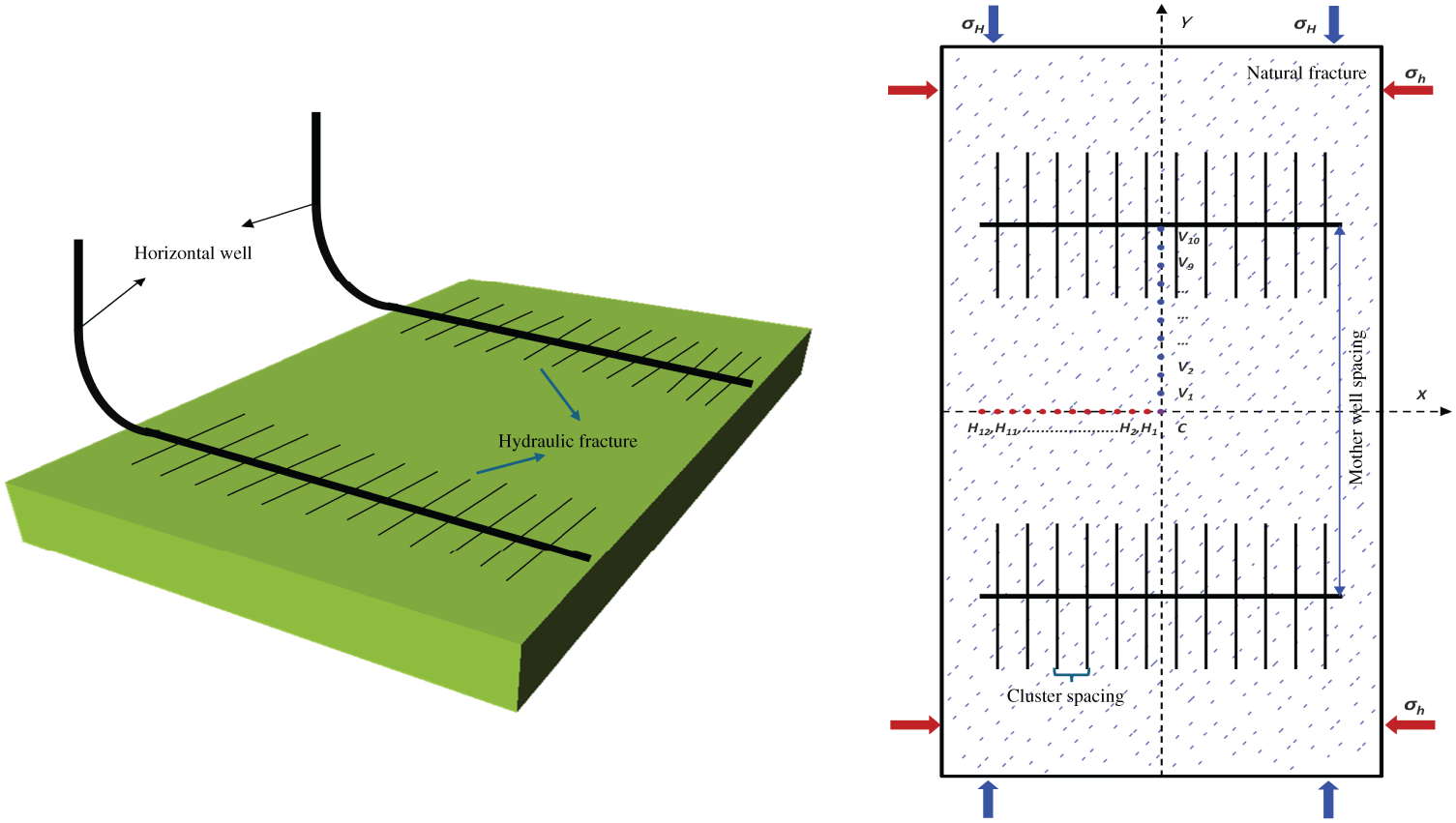
Figure 1: Sketch of the model
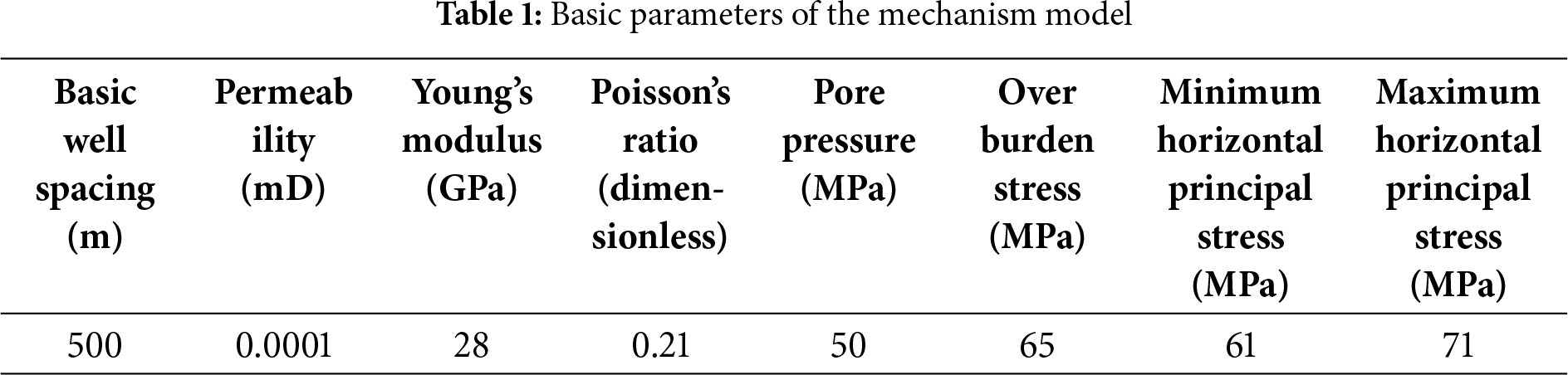
Based on the CN platform, a fracture propagation model was established. Fracturing simulation was carried out with parent well spacing of 500 m, 6 fracturing stages, 3 clusters each stage, cluster spacing of 90 m, fracturing fluid volume each stage of 300 m3 and proppant volume of 20 m3, seeing Table 2. In view that the average fracture length in the fracture propagation simulation of actual platform is 223.57 m, the fracture length was set to 220 m. Fig. 2 shows fracture propagation and distribution.
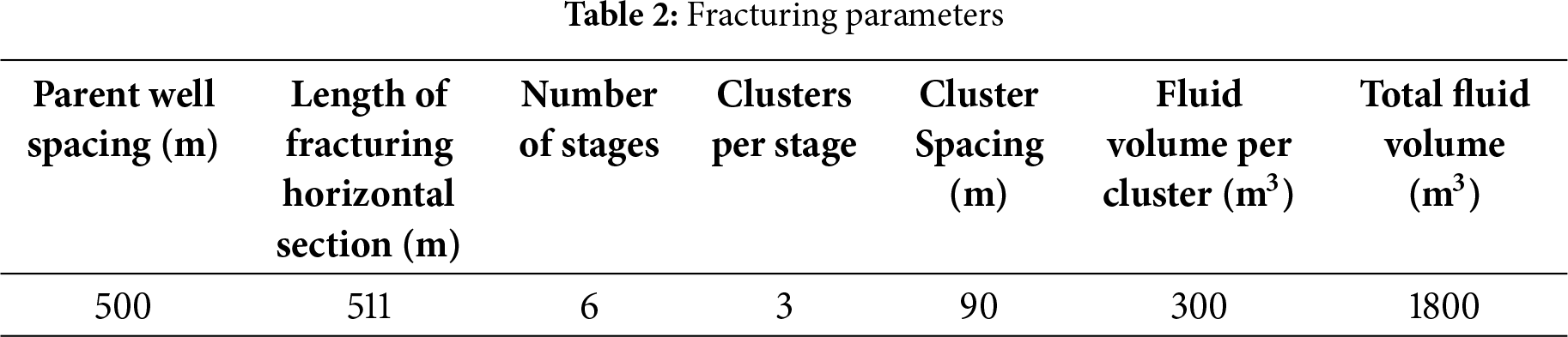
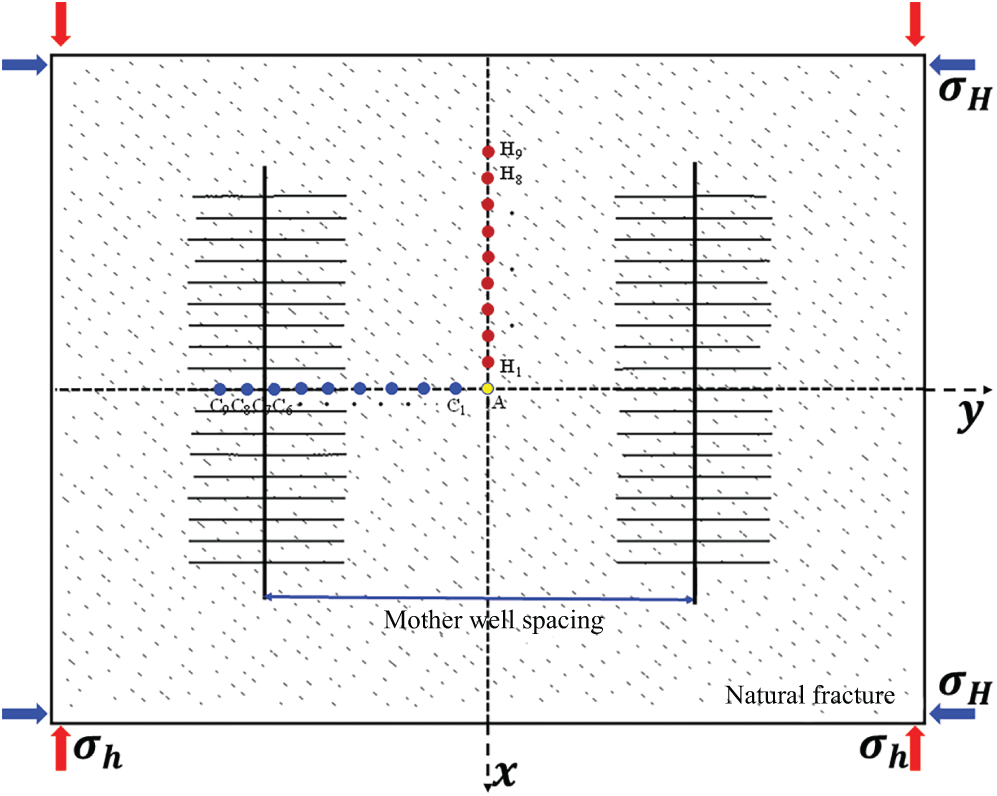
Figure 2: Fracture propagation simulation and stress statistical point
The production simulation duration was set to 10 years based on the EUR forecast duration (10 years) of the CN actual platform, and the single-well production allocation was set to 10,000 m3/d based on the conversion from the predicted EUR of the actual platform and the length of the horizontal section.
3.2.1 Triaxial Stress Variation
The production-induced plane stress variations after 2 and 10 years of production (Fig. 3) were simulated, and the induced stress variations at different locations were compared. The figure shows that the stress variation presents different laws in different regions, and the maximum horizontal stress in the infill well area decreases slightly.
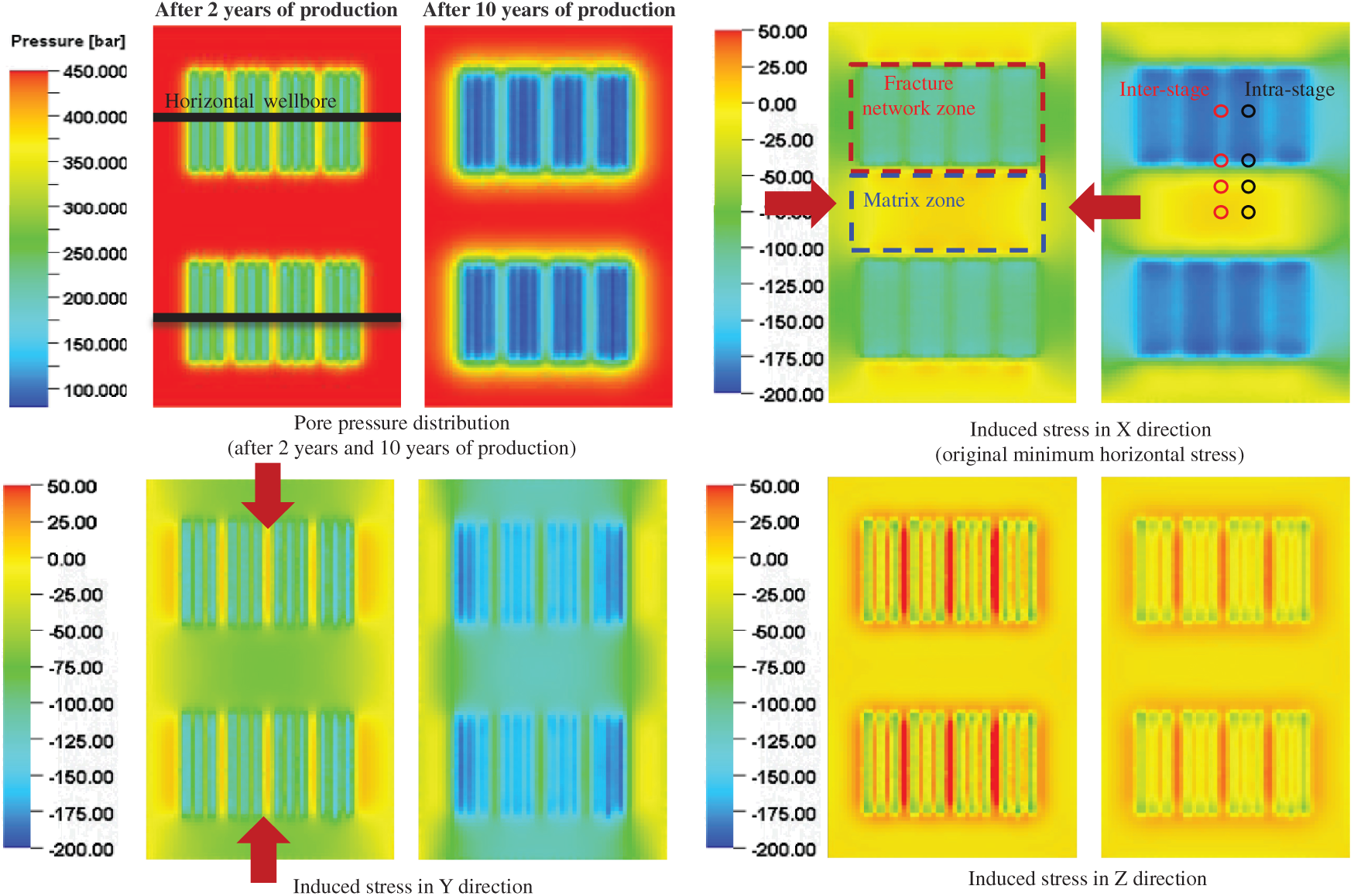
Figure 3: Production induced plane stress variation
As shown in Fig. 4:
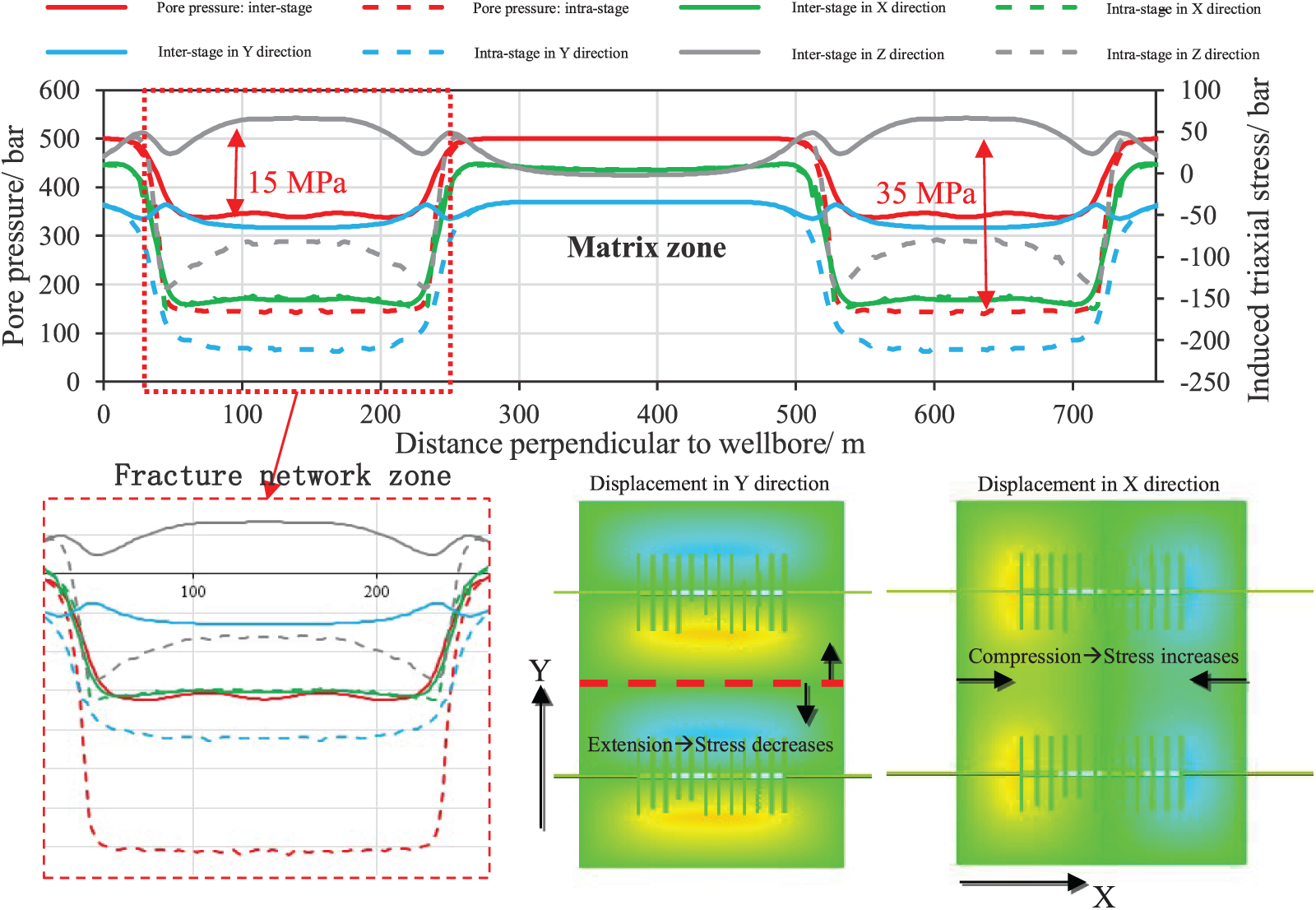
Figure 4: Production induced plane stress variation
Intra-stage: Pore pressure is the largest in decreasing amplitude, triaxial stress declines, and the minimum, maximum and vertical stress decreases are 42%, 60% and 28% of pore pressure decrease, respectively.
Inter-stage: Pore pressure decreases relatively slowly, the decrease of maximum horizontal stress slows down, vertical stress increases slightly, and the ratio of minimum, maximum and vertical to pore pressure variation are 100%, 43%, and −44%, respectively.
Inter-well: There is no significant change in pore pressure, vertical stress and minimum principal stress, and the maximum horizontal stress decreases by about 3.5 MPa (pressure drop around the fracture is 35 MPa).
3.2.2 Changes in Stress State and Direction
The simulation of the changes in stress state and direction at different time and well spacing shows that with the increasing production time, the stress state of normal fault and the horizontal stress deflection occur successively.
The change in stress state is shown in Fig. 5. As the maximum horizontal stress of infill well decreases slightly, the vertical stress gradually grows to be the maximum principal stress, the normal fault stress appears, and the horizontal stress turns.
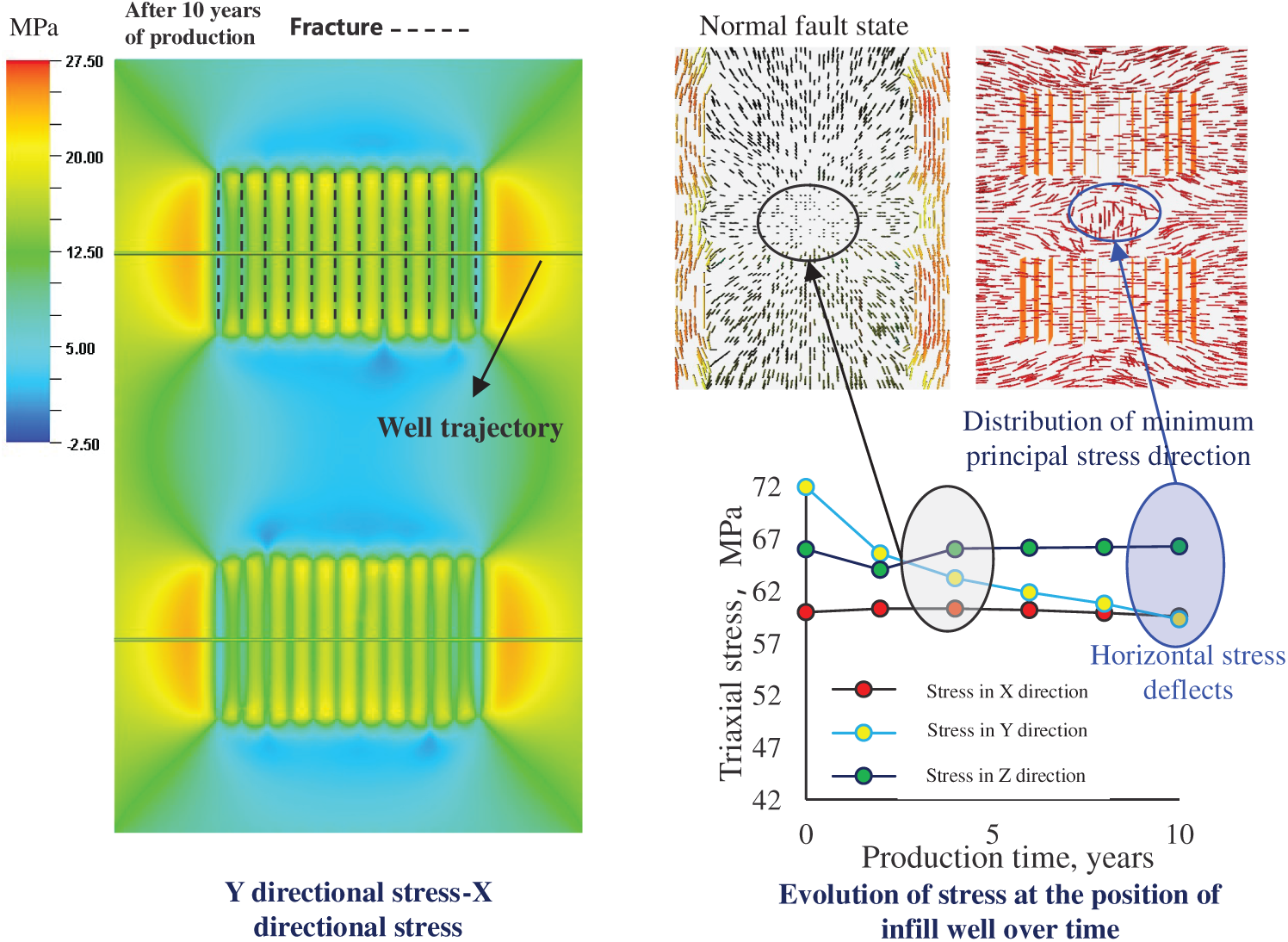
Figure 5: Change in stress direction
The analysis on the influences of well spacing and production time (Fig. 6) indicates that the smaller the well spacing of the parent well and the longer the production time, the earlier the normal fault stress state appears and the larger the range. For example, after 5 years of production at well spacing of 400 m and 10 years of production at well spacing of 600 m, the stress mechanism at the position of infill well slips into a normal fault, and the probability of the normal fault stress mechanism is greater than that of horizontal stress deflection.
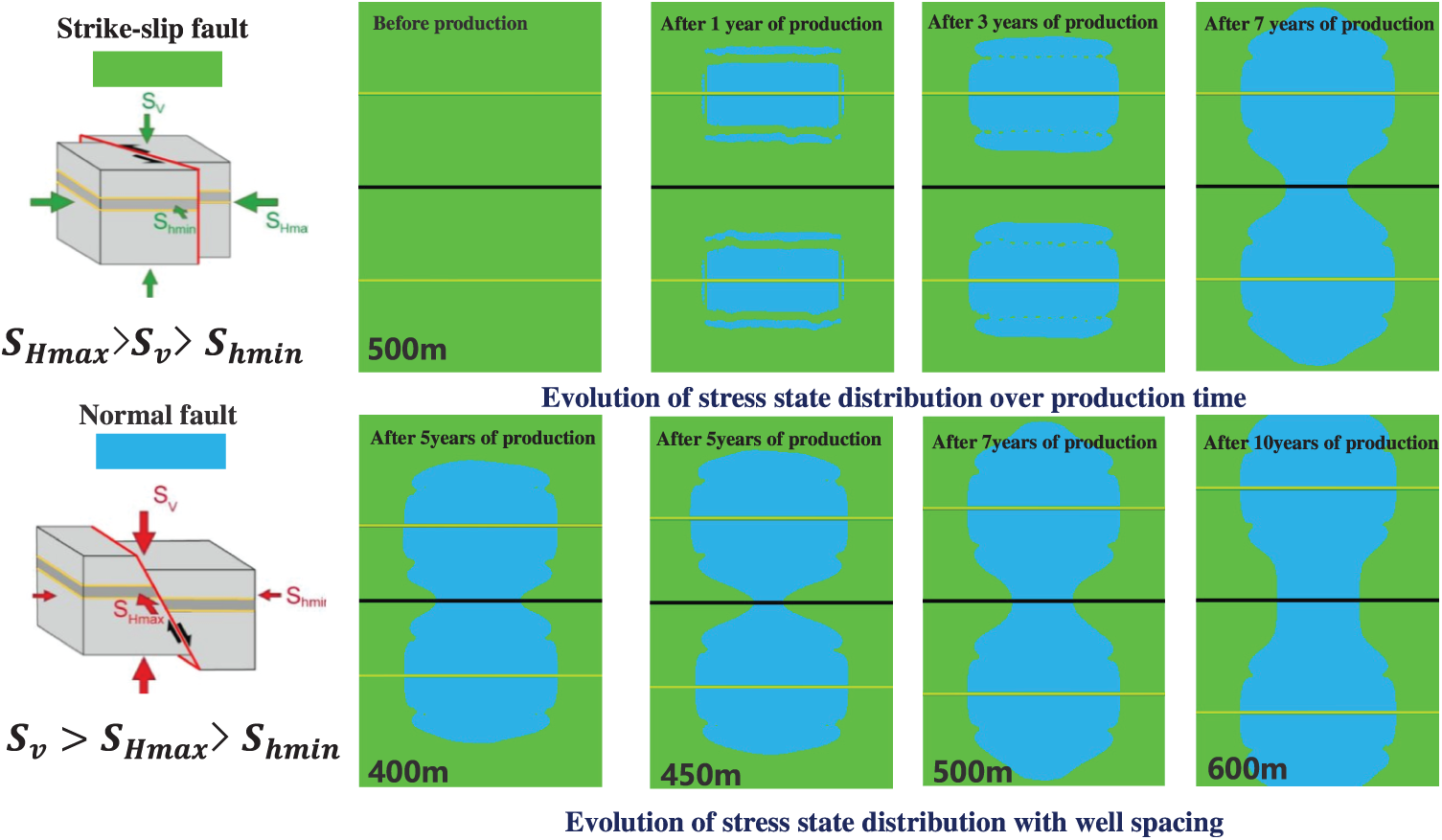
Figure 6: Change in stress state
4 Fracture Network Characteristics and Construction Parameter Optimization of Infill Well
The studies on stress evolution law suggest that the continuous production of parent wells can cause the redistribution of formation pore pressure and geostress. The redistribution of geostress has an important impact on the fracture propagation in infill wells. Geostress state varies with infill time and parent well spacing, resulting in different fracture morphologies in the infill well. Therefore, the influences of infill well fracture timing, parent well spacing, fracturing fluid intensity for infill wells and cluster spacing on the propagation of asymmetric fractures were analyzed to figure out the fracture propagation laws in infill wells.
The simulated fracture morphology after 7 years of production (Fig. 7) shows that with the increasing parent well spacing, the degree of stress change around the infill well decreases, the fracture deflection weakens, the vertical fracture propagation in the middle part of the infill well is weak, and there is a “barrier zone”. Fracture morphology has a certain effect on the cumulative gas production, so the cumulative gas production of the parent wells, infill wells and well group with different degrees of reserve recovery at 400, 500 and 600 m well spacing were simulated, as shown in Fig. 8.
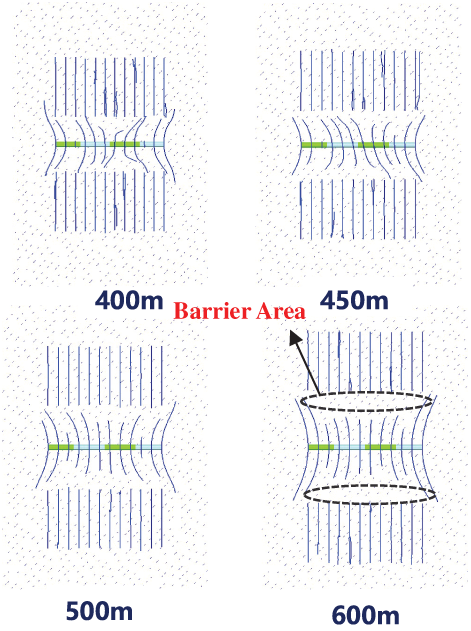
Figure 7: Influence of parent well spacing on fracture morphology
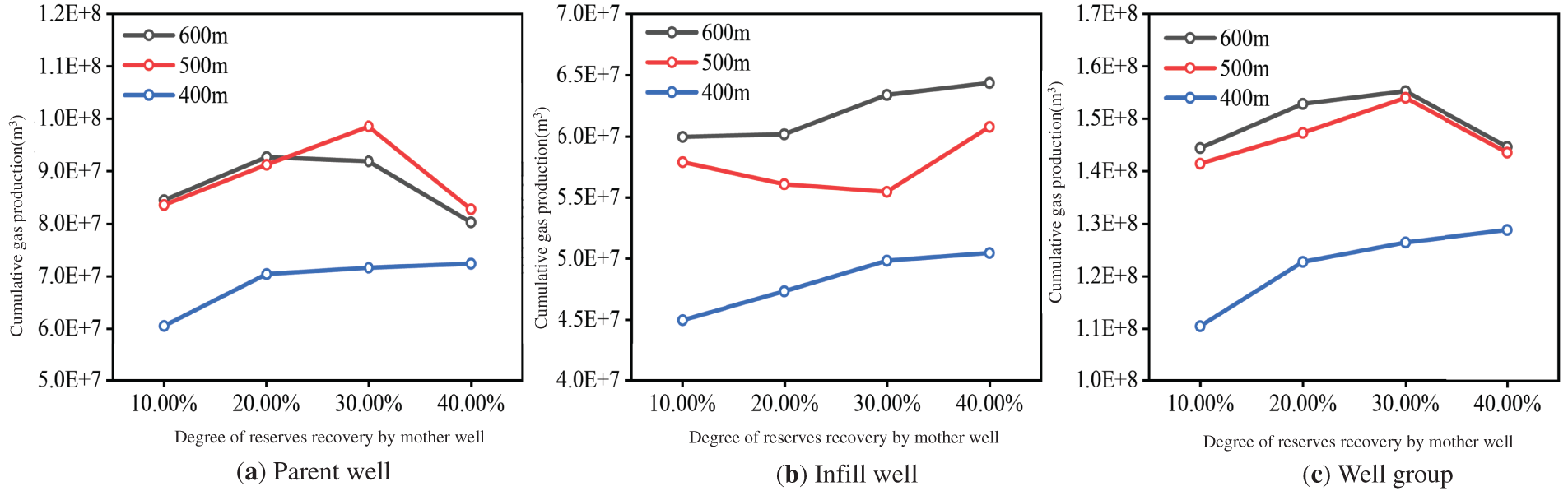
Figure 8: Cumulative gas production at different well spacing
As mentioned above, the triaxial stress changes with the production of parent well, which can make the fractures in the child well deflect laterally to a certain degree, resulting in a decrease in stimulated volume and cumulative production of the child well, as shown in Fig. 9.
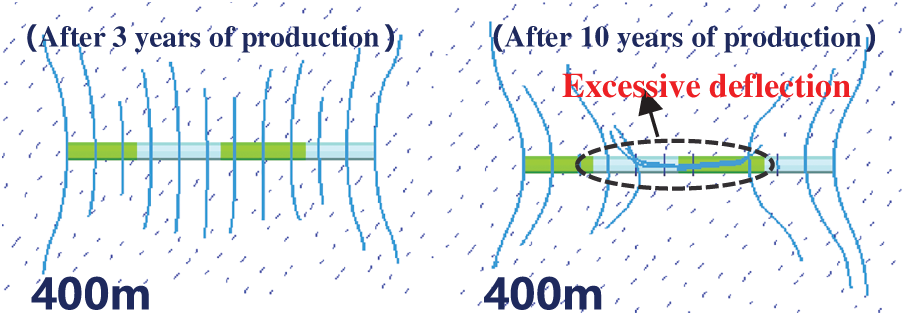
Figure 9: Deflection of fractures in the child well at different production time of the parent well
Accordingly, there must be an optimal infill time to prevent a decrease in cumulative production of the child well caused by excessive deflection (too late infill).
As shown in Fig. 10, there is a maximum inflection point in the cumulative gas production of the well group, and the larger the well spacing, the later the infill time for cumulative production. For example, at the 500 m well spacing, the infill time occurs after the fifth year, and both the cumulative gas production of parent well and child well decrease.
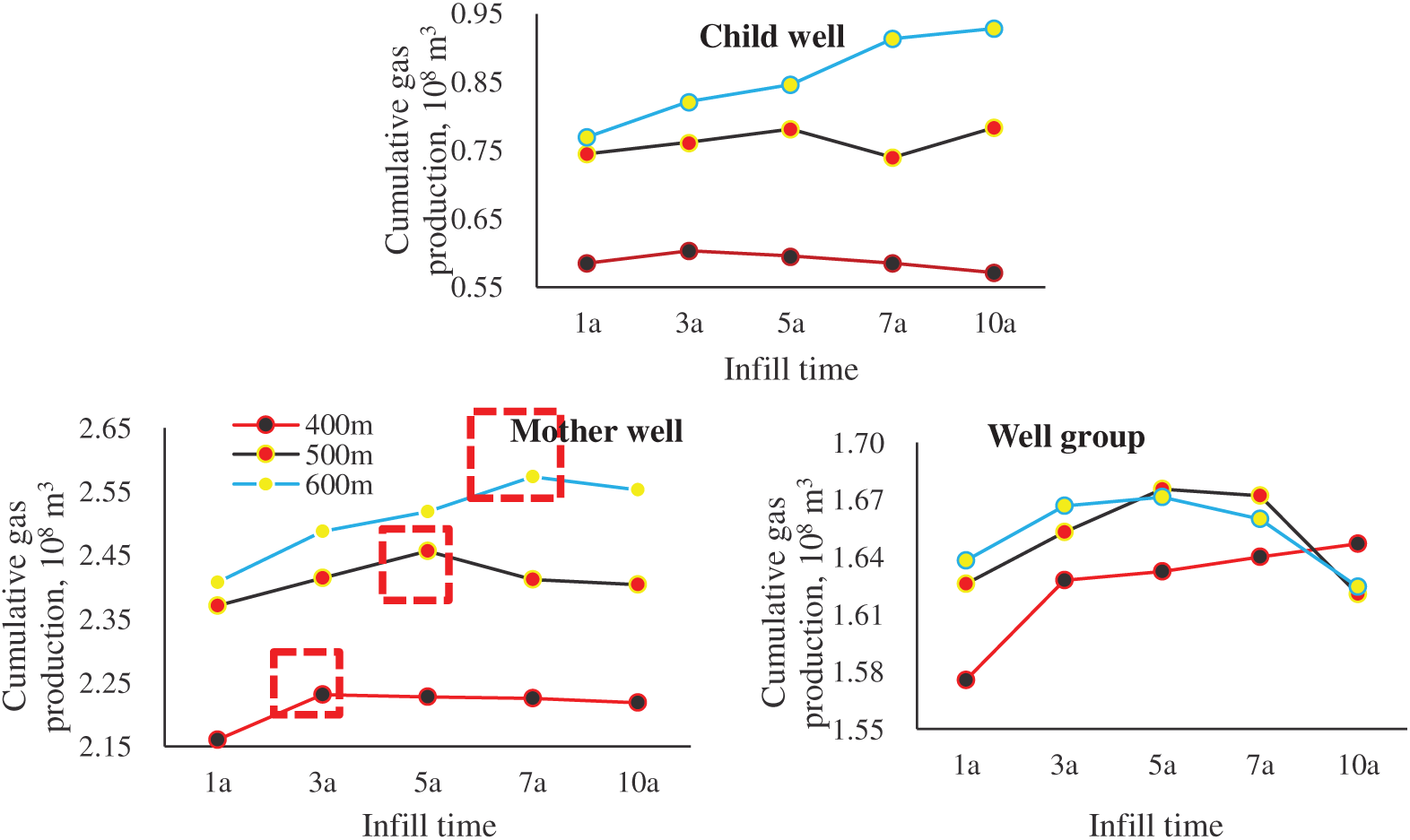
Figure 10: Variation of cumulative production with infill time
Fig. 11 shows the statistical cumulative gas production of parent well, infill well and well group at different infill times. The analysis on the production relationships between parent well and infill well indicates that when the recovery degree of the parent well reaches 30%, the cumulative gas production of the well group is the highest, and the interference on the parent well is the least. Therefore, it is recommended to perform infill operation when the recovery degree of the parent well is about 30%.
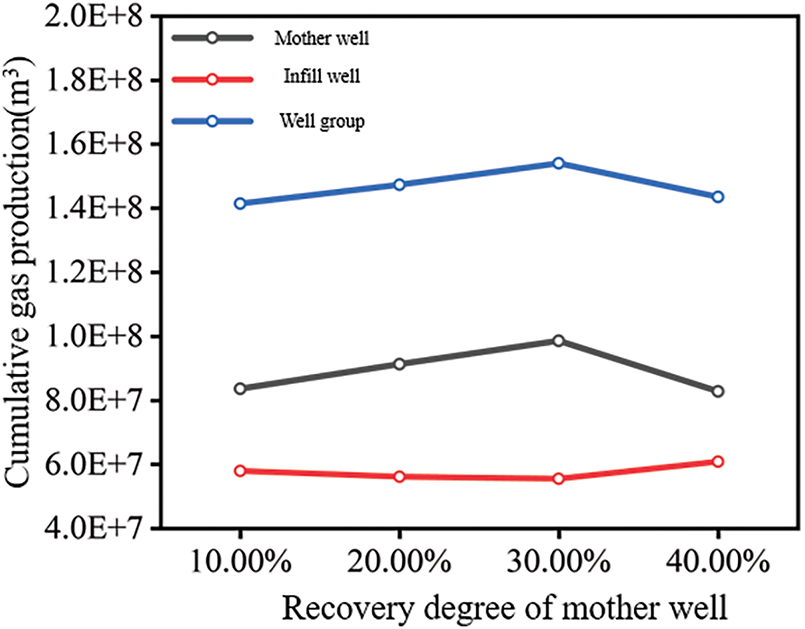
Figure 11: Cumulative gas production at different recovery degrees of parent well
4.3 Fracturing Fluid Intensity for Infill Wells
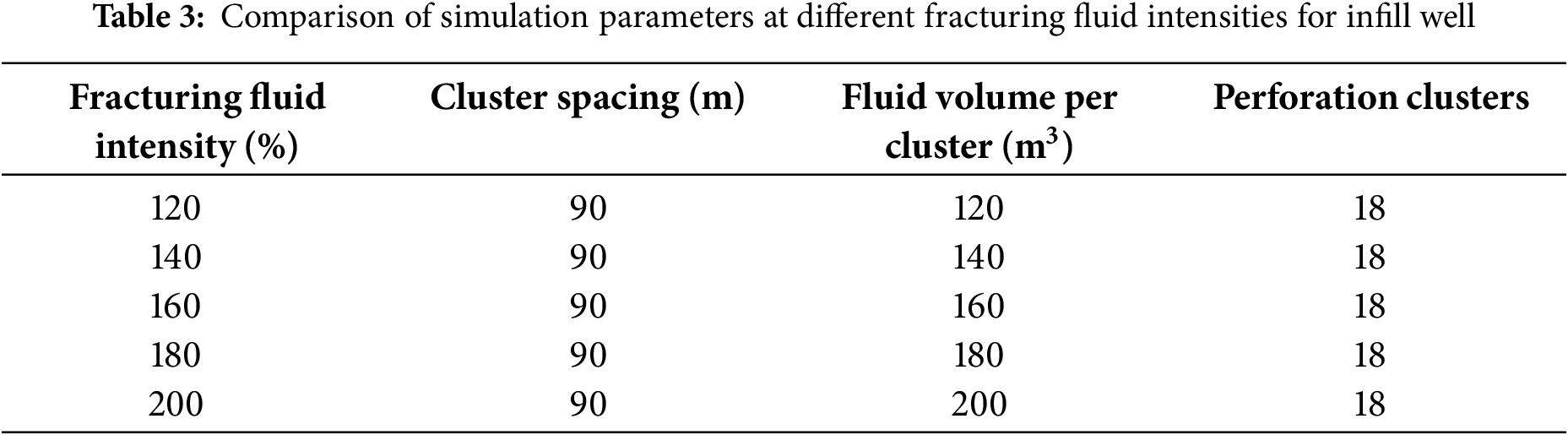
The fracturing fluid intensity was optimized based on the optimization of infill timing and well spacing. The fracturing fluid intensity of 120%, 140%, 160%, 180% and 200% was simulated and comparatively analyzed at the infill time corresponding to the 30% recovery degree of parent well and the 500 m well spacing, seeing Table 3.
As shown in Fig. 12, increasing the fracturing fluid intensity can lead to an increase in the fracture distribution range of infill well, so that the fracture control range of the infill well gets larger, but there is a risk of frac hit if the fracture barrier zone of the parent well is broken through in the middle position of the infill well.
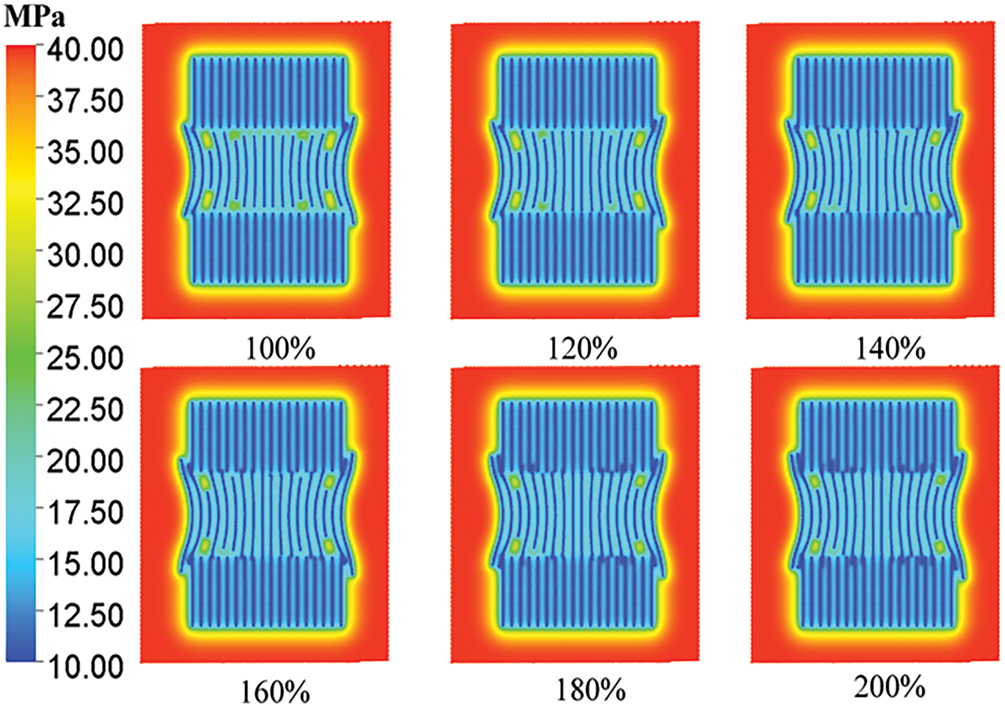
Figure 12: Cumulative gas production at different fracturing fluid intensities
As shown in Fig. 13, the cumulative gas production of parent well, infill well and well group increase with the increasing fracturing fluid intensity for infill well at given well spacing and infill time, indicating they are positively correlated, but there is an inflection point in the increase rate.
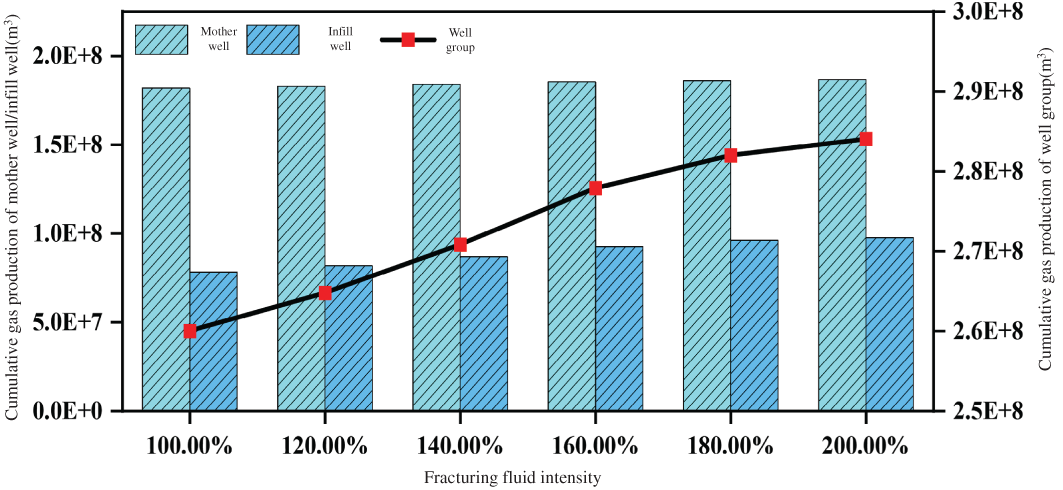
Figure 13: Cumulative gas production of parent well/infill well/well group at different fracturing fluid intensities
The stimulation effect and morphology of fractures are under the joint control of fracturing fluid intensity and cluster spacing. To further understand the laws of fracturing fluid intensity for infill wells, the fracture distribution was simulated at 3, 6 and 9 clusters and different fracturing fluid intensities with other parameters unchanged, to determine the optimal combination of number of clusters and fracturing fluid intensity.
As shown in Fig. 14, dense cutting technology is helpful for improving the stimulation effect. The more perforation clusters of fracturing stage need higher fracturing fluid intensity to enlarge the distribution range of fracture network, but excessive fracturing fluid intensity can lead to more impact of child well on parent well. The statistical gas production of well group at 500 m well spacing and different fracturing fluid intensities and numbers of clusters (seeing Fig. 15) show that the gas production of well group at 6 clusters of perforation and 200% fracturing fluid intensity is the highest.
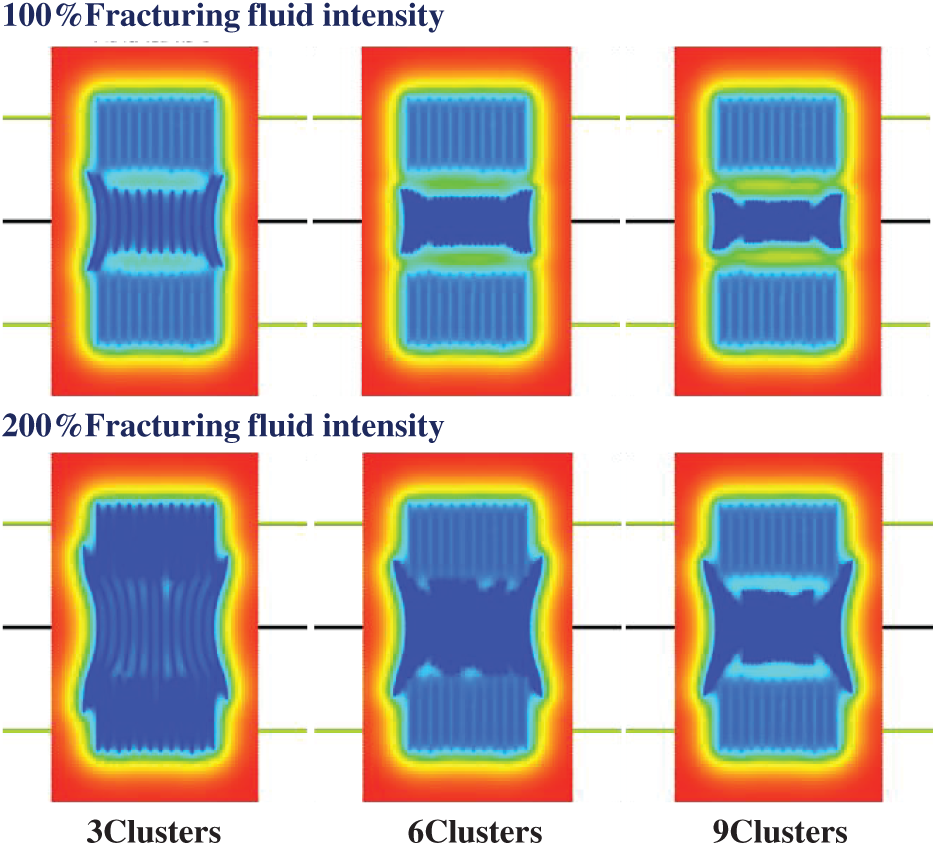
Figure 14: Cumulative gas production of parent well/infill well/well group at different fracturing fluid intensities and number of clusters
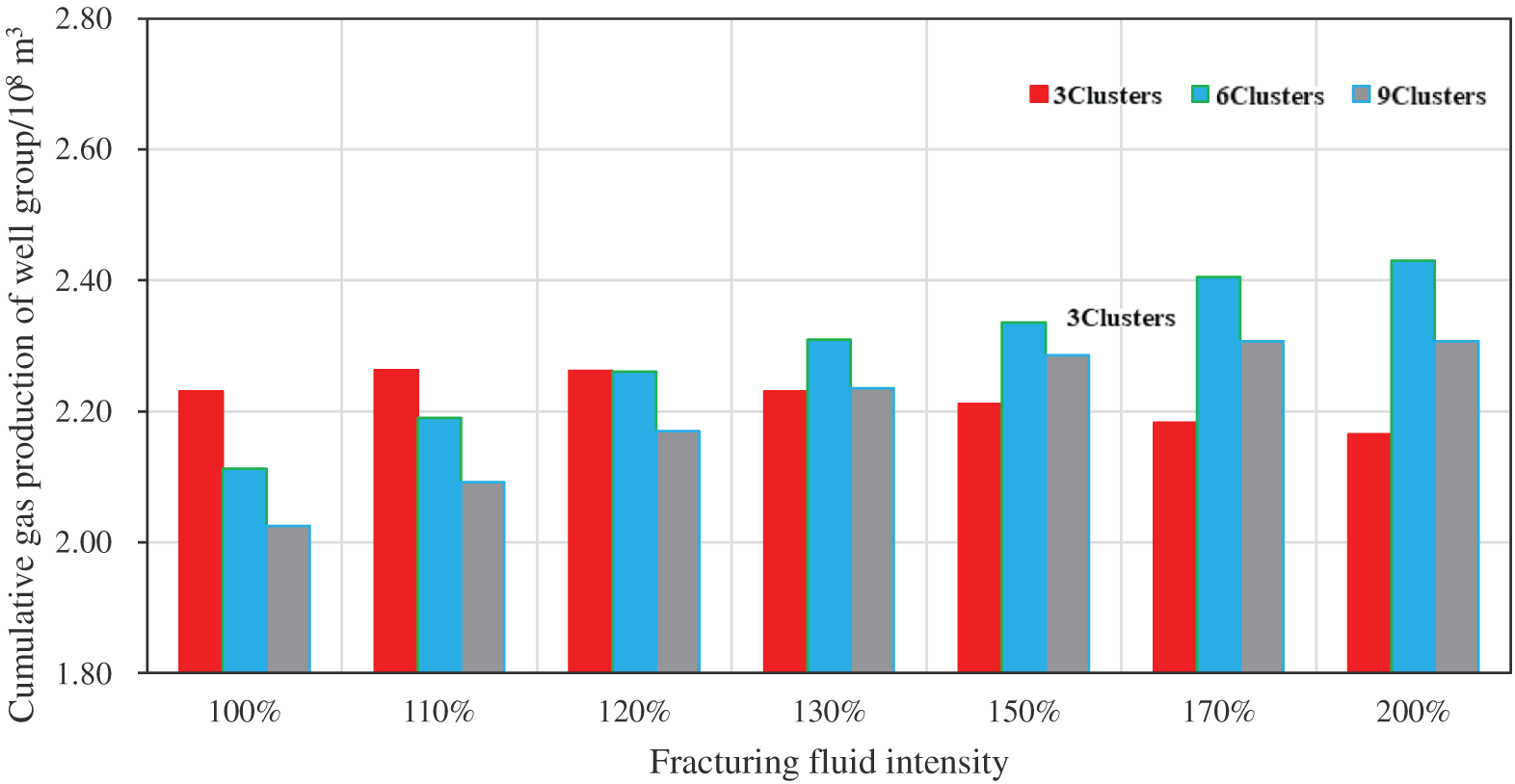
Figure 15: Statistical cumulative gas production of well group at different fracturing fluid intensities and numbers of clusters
Based on the previous text, it is decided to infill well when the production degree of the mother well reaches 30% and calculates the benefits. Since the number of perforation clusters does not increase the cost, only the relationship between the fluid intensity and the benefits is calculated, as shown in Table 4. The gas price for benefit settlement is calculated at 0.4 RMB.
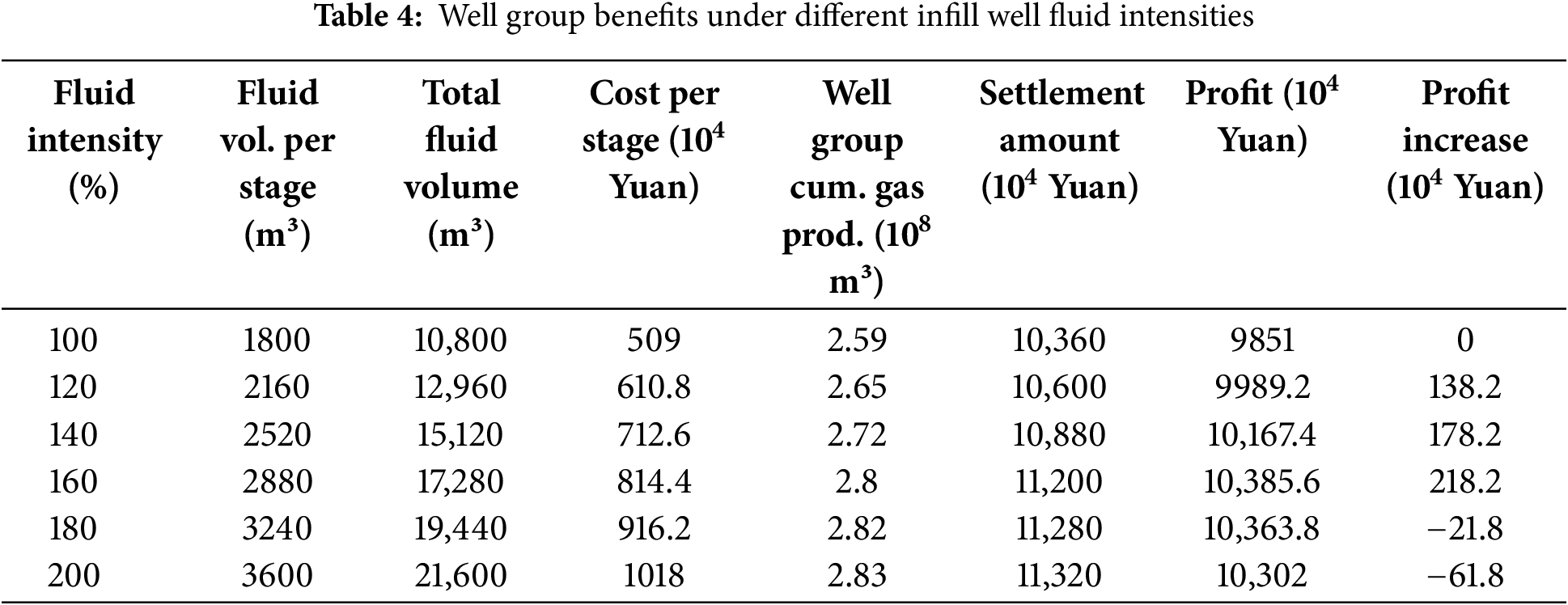
Whether considering total profit or profit increase, a 160% fluid intensity is indeed the best choice. However, more complex issues need to be considered in actual production processes, requiring field analysis based on specific circumstances.
(1) Based on the pore pressure and geostress coupling theory, this paper studies the geostress evolution laws and fracture network characteristics in the shale gas development with infill wells. In addition, a mechanism model of CN platform logging data and geomechanical parameters is established to simulate the influence of parent well’s production on the geostress in the infill well area. It is suggested that with the increase of production time, normal fault stress state and horizontal stress deflection will occur successively. The smaller the parent well spacing and the longer the production time, the earlier the normal fault stress state appears and the larger the range. For example, after 5 years of production at well spacing of 400 m and 10 years of production at well spacing of 600 m, the stress mechanism at the position of infill well slips into a normal fault, and the probability of the normal fault stress mechanism is greater than that of horizontal stress deflection.
(2) Based on the model, the fracture network morphological characteristics and construction parameters of infill well are optimized:
① Theoretical Level: Revealed the quantitative transmission chain between infill well parameters, complexity of fracture network and EUR under the coupling drive of pore pressure, geostress and natural fractures, filling the gap in China’s multi-parameter collaborative optimization theory for shale gas. It provides a replicable scientific paradigm for transitioning complex shale reservoirs from “experience-based infill” to “model-driven” development.
② Engineering Level:
a. A well spacing of 500 m achieves a Pareto optimum between “full reserve coverage” and “stress barrier”—compared with the well group with a well spacing of 600 m, the EUR of the well group with a 500 m well spacing decreases by only 1.8%, while drilling footage is reduced by 18% and land occupancy by 15%, directly reducing costs by 16,000 CNY per meter.
b. A parent well recovery factor of 30% corresponds to the critical point of stress reversal. At this point, the infill fracture lateral deflection rate is less than 8%, SRV loss is less than 5%, increasing production by 9.8% compared to infill at 20% recovery and by 7.2% compared to infill at 40% recovery. This provides a measurable benchmark for the optimal fracturing timing.
c. 6-cluster intensive completion with twice the liquid intensity increases the fracture complexity index by 1.7 times, enhances the EUR of well group by 15.4%, reduces single-well cost by 22%, and decreases the probability of fracture hits by 35%, achieving the stimulation of “low-cost but high-efficiency”.
③ Strategic Level: The research results break the traditional perception that “infill means interference” and establish a new order for infill wells with three-dimensional controllability in time, space and intensity. It is estimated to unlock over 2000 × 108 m³ of remaining reserves in developed blocks in China, equivalent to adding a new hundred-billion-cubic-meter gas field. This provides key technological support for achieving the annual shale gas production target of 500 × 108 m³ and ensuring national energy security.
Acknowledgement: The authors express their gratitude to the Sichuan Changning Natural Gas Development and the Research Institute of Shale Gas, which enabled the completion.
Funding Statement: The source of funding for this research comes purely from the authors’ funds.
Author Contributions: Yongjun Xiao and Yuduo Sun: Conceptualization, Methodology, Data Collection, Data Analysis, Manuscript Writing, and Editing. Jian Zheng: Supervision and Manuscript Review. Xiaojin Zhou: Supervision, Data Analysis, and Manuscript Review. Wang Liu: Data Collection and Data Analysis. Cheng Shen: Conceptualization, Data Analysis, Manuscript Writing, and Editing. Qi Deng: Manuscript Writing and Manuscript Review. Hao Zhao: Manuscript Review. All authors reviewed the results and approved the final version of the manuscript.
Availability of Data and Materials: The data that were used is confidential.
Ethics Approval: Not applicable.
Conflicts of Interest: The authors declare no conflicts of interest to report regarding the present study.
References
1. Sun H, Lu Z, Liu L, Fang J, Zheng A, Li J, et al. Technology and understanding of post-fracturing coring in three-dimensional development zone of Fuling shale gas, Sichuan Basin, SW China. Petrol Explor Dev. 2025;52(3):731–45. doi:10.1016/s1876-3804(25)60599-4. [Google Scholar] [CrossRef]
2. Zhu Q, Xiong W, Weng D, Li S, Guo W, Zhang X, et al. Theory and practice of energy-focused fracturing development technology. Petrol Explor Dev. 2025;52(3):746–58. doi:10.1016/s1876-3804(25)60600-8. [Google Scholar] [CrossRef]
3. Han L, Li X, Liu Z, Guo W, Cui Y, Qian C, et al. Study on rock mechanics characteristics of deep shale in Luzhou block and the influence on reservoir fracturing. Energy Sci Eng. 2023;11(1):4–21. doi:10.1002/ese3.1360. [Google Scholar] [CrossRef]
4. Zou C, Zhao Q, Wang H, Xiong W, Dong D, Yu R. Principal characteristics of marine shale gas, and the theory and technology of its exploration and development in China. Nat Gas Ind B. 2023;10(1):1–13. doi:10.1016/j.ngib.2023.01.002. [Google Scholar] [CrossRef]
5. Xiong H, Wu W, Gao S. Optimizing well completion design and well spacing with integration of advanced multi-stage fracture modeling & reservoir simulation—a Permian basin case study. In: SPE Hydraulic Fracturing Technology Conference and Exhibition; 2018 Jan 23–25; The Woodlands, TX, USA. doi:10.2118/189855-ms. [Google Scholar] [CrossRef]
6. Zhang QL, Mao YY, Feng JS. A new method for infill well placement in fracture-pore carbonate reservoirs: a case study of Cambrian reservoirs in Tanghai Oilfield, Huanghua Depression, Bohai Bay Basin. Lithol Reserv. 2025;37(3):165–75. (In Chinese). [Google Scholar]
7. Tang XH, He YS, Zhu HY, Wang DJ, Li KD, Xiao JL, et al. Mechanisms of old well pressure buildup and energy increase by hydraulic fracturing of infill wells in shale gas reservoirs: a case study on Fuling national shale gas demonstration area. Nat Gas Ind. 2025;45(4):85–97. (In Chinese). doi:10.2118/202485-pa. [Google Scholar] [CrossRef]
8. Chang C, Li Y, Li X, Liu C, Fiallos-Torres M, Yu W. Effect of complex natural fractures on economic well spacing optimization in shale gas reservoir with gas-water two-phase flow. Energies. 2020;13(11):2853. doi:10.3390/en13112853. [Google Scholar] [CrossRef]
9. Yu W, Wu K, Zuo L, Tan X, Weijermars R. Physical models for inter-well interference in shale reservoirs: relative impacts of fracture hits and matrix permeability. In: Proceedings of the 4th Unconventional Resources Technology Conference; 2016 Aug 1–3; San Antonio, TX, USA. p. 1535–8. doi:10.15530/urtec-2016-2457663. [Google Scholar] [CrossRef]
10. Roussel NP, Florez HA, Rodriguez AA. Hydraulic fracture propagation from infill horizontal wells. In: SPE Annual Technical Conference and Exhibition; 2013 Sep 30–Oct 2; New Orleans, LA, USA. doi:10.2118/166503-ms. [Google Scholar] [CrossRef]
11. Morales A, Zhang K, Gakhar K, Marongiu Porcu M, Lee D, Shan D, et al. Advanced modeling of interwell fracturing interference: an eagle ford shale oil study-refracturing. In: SPE Hydraulic Fracturing Technology Conference; 2016 Feb 9–11; The Woodlands, TX, USA. doi:10.2118/179177-ms. [Google Scholar] [CrossRef]
12. Pei Y, Wu J, Chang C, Liu C, Wu K, Yu W, et al. Parent-child well spacing optimization in deep shale gas reservoir with two complex natural fracture patterns: a Sichuan basin case study. Transp Porous Medium. 2023;149(1):147–74. doi:10.1007/s11242-022-01824-1. [Google Scholar] [CrossRef]
13. Yang X, Yu W, Wu K, Weijermars R. Assessment of production interference level due to fracture hits using diagnostic charts. SPE J. 2020;25(6):2837–52. doi:10.2118/200485-pa. [Google Scholar] [CrossRef]
14. Wang B, Liang T, Deng W, Ma S, Wu J, Zhou F. Optimizing extreme limited entry design for lateral heterogeneous reservoirs. Phys Fluids. 2024;36(2):023355. doi:10.1063/5.0188993. [Google Scholar] [CrossRef]
15. Cipolla CL, Motiee M, Kechemir A. Integrating microseismic, geomechanics, hydraulic fracture modeling, and reservoir simulation to characterize parent well depletion and infill well performance in the bakken. In: Proceedings of the 6th Unconventional Resources Technology Conference; 2018 Jul 23–25; Houston, TX, USA. p. 2334–45. doi:10.15530/urtec-2018-2899721. [Google Scholar] [CrossRef]
16. Guo X, Song H, Wu K, Killough J. Pressure characteristics and performance of multi-stage fractured horizontal well in shale gas reservoirs with coupled flow and geomechanics. J Petrol Sci Eng. 2018;163(2):1–15. doi:10.1016/j.petrol.2017.12.038. [Google Scholar] [CrossRef]
17. Pichon S, Cafardi Orihuela FG, Lagarrigue E, Cavazzoli G. When, where, and how to drill and complete pads of multiple wells? Four-dimensional considerations for field development in the Vaca muerta shale. In: SPE Argentina Exploration and Production of Unconventional Resources Symposium; 2018 Aug 14–16; Neuquen, Argentina. doi:10.2118/191836-ms. [Google Scholar] [CrossRef]
18. Kumar A, Shrivastava K, Elliott B, Sharma M. Effect of parent well production on child well stimulation and productivity. In: SPE Hydraulic Fracturing Technology Conference and Exhibition; 2020 Feb 4–6; The Woodlands, TX, USA. doi:10.2118/199700-ms. [Google Scholar] [CrossRef]
19. Syed FI, Alnaqbi S, Muther T, Dahaghi AK, Negahban S. Smart shale gas production performance analysis using machine learning applications. Petrol Res. 2022;7(1):21–31. doi:10.1016/j.ptlrs.2021.06.003. [Google Scholar] [CrossRef]
20. Adachi J, Siebrits E, Peirce A, Desroches J. Computer simulation of hydraulic fractures. Int J Rock Mech Min Sci. 2007;44(5):739–57. doi:10.1016/j.ijrmms.2006.11.006. [Google Scholar] [CrossRef]
21. Liu Y, Yang X, Guo J, Wang S, Zhao Z. Optimization method of fracture parameters in multistage fracturing of horizontal wells. Energy Sources Part A Recovery Util Environ Eff. 2025;47(1):6743–61. doi:10.1080/15567036.2021.1914243. [Google Scholar] [CrossRef]
22. Gao H, Sun Y, Zhao H, Zhou F, Tian W, Wen Z, et al. An improved method for predicting the permeability of Chang 7 shale oil reservoirs based on lithology and hydraulic flow units. In: Proceedings of the ECF 2024: 14th Asia Pacific Shale Gas and Unconventional Energy Conference; 2024 Oct 16; Shanghai, China. p. 297–316. doi:10.26914/c.cnkihy.2024.060775. [Google Scholar] [CrossRef]
23. Guo XJ. Optimization of fracturing design and analysis of fracture monitoring results for well X1. Chem Eng Equip. 2022;3:117–8. (In Chinese). doi:10.19566/j.cnki.cn35-1285/tq.2022.03.076. [Google Scholar] [CrossRef]
24. Ju Y, Li Y, Yang Y, Wang Y. Reorientation of hydraulic fractures and stress-shadow effect in double-well fracturing of hydrocarbon reservoirs: 3D numerical model and analysis. Int J Min Sci Technol. 2025;35(4):499–517. doi:10.1016/j.ijmst.2025.02.011. [Google Scholar] [CrossRef]
25. Yang H, Zhu H, Liu Y, Tang X, Wang D, Xiao J, et al. Optimization of fracturing parameters in multi-layer and multi-period cube development infill well pad: a case study on a three-layer cube development well pad of Sichuan Basin, SW China. Petrol Explor Dev. 2025;52(3):817–29. doi:10.1016/s1876-3804(25)60605-7. [Google Scholar] [CrossRef]
Cite This Article
 Copyright © 2026 The Author(s). Published by Tech Science Press.
This work is licensed under a Creative Commons Attribution 4.0 International License , which permits unrestricted use, distribution, and reproduction in any medium, provided the original work is properly cited.
 Downloads
 Citation Tools
