
 Login
Login Register
 Submit a Paper
 Propose a Special lssue
 Open Access
ARTICLE

Profiling student’s psychological capital and risk for learner burnout: Results and implications of a Chinese study
Department of Applied Psychology, Changsha Normal University, Changsha, 410100, China
* Corresponding Author: Ruijun Song. Email:
Journal of Psychology in Africa 2025, 35(2), 265-270. https://doi.org/10.32604/jpa.2025.065778
Received 20 February 2024; Accepted 08 March 2025; Issue published 30 June 2025
 View Full Text
 Download PDF
Abstract
The current study conducted the psychological capital profiles and the relation between profile memberships and learning burnout among undergraduates. Participants were 541 Chinese undergraduates ranging from 18 to 21 years old (48.2% male; Mean years = 19.54, SD = 1.09 years). Latent profile analysis revealed three categories of psychological capital profile consistent high psychological capital profile (50.5%), consistent low psychological capital profile (38.1%), and dominate loss-orientated psychological capital profile (11.4%). The undergraduates in consistent high profile reported high self-efficacy, resilience, hope, and optimism. Consistent low profile characterized by a little low (~0.50 SD below the M) self-efficacy, resilience, hope, and optimism. Dominant loss-orientated profile displayed low self-efficacy, hope, optimism, but a little relatively high resilience. Specifically, undergraduates in consistent high profile exhibited low level of learning burnout; while undergraduates with low level of psychological capital (i.e., consistent low profile and dominate loss-orientated profile) reported high level of learning burnout. The findings have theoretical significance which provides important knowledge about psychological capital profile among Chinese undergraduates. They have practical implications for student counselling and development providing person-centric support to students based on their individual psychological profiles.Keywords
Psychology capital refers to individual’s positive mental state of development, subsuming self-efficacy (i.e., the confidence to accomplish a task successfully), resilience (i.e., the ability to recover from adversity), hope (perseverance to success) and optimism (tendency to positive outcomes) (Luthans et al., 2007). Among students, psychology capital report is associated with academic flourishing (e.g., learning empowerment, school adjustment, and academic achievement), and reduced languishing from mental health symptoms (e.g., depression and anxiety) (Avey et al., 2011; Carmona-Halty et al., 2019; Datu et al., 2018; Song & Song, 2021). Although a study explored undergraduates’ psychological capital profile in Western cultures, the profiles from non-Western cultures are underrepresented given that psychological capital is affected by culture (Ferradás et al., 2019). Student population psychological profiles are less well studied in non-western countries such as China. Accordingly, the current research proposes to explore psychological capital profiles using latent profile analysis in a sample of Chinese undergraduates. We further assessed the association between psychological capital profiles and risk for learner burnout among undergraduates for drawing implications for student counselling and development.
Psychological capital profiling
Psychological capital as self-efficacy, resilience, hope, and optimism have some common attributes to encourage synergetic action (Luthans & Youssef-Morgan, 2017). Specifically, the components of psychological capital share the common theme of positive appraisal of circumstances and probability for success, thus maintaining an internalized sense of control and intentionality while goals are being pursued (Luthans et al., 2007). Hence, it is plausible to expect the existence of two distinct groups of undergraduates with varying profiles of psychological capital: a consistent high group and a consistent low group.
According to conservation of resources framework (Bouckenooghe et al., 2019; Hobfoll, 2001, 2011), psychological capital comprises distinct components: gain-orientated (i.e., self-efficacy, hope, optimism) and loss-oriented resources (i.e., resilience). Gain-orientated resources tend to gain new resources using toward energetic action, however, loss-orientated resources are inclined to prevent resources losses retaining sufficient buffer of current resources. Conceivably, different configurations of the components of psychological capital may exist: dominate gain-orientated group or dominate loss-orientated group.
Profile types. Four psychological capital profiles have been reported on average. As examples, Bouckenooghe et al. (2019) identified six profiles among 171 Pakistan clerical staff based on self-efficacy, resilience, hope, and optimism. They labeled these profiles “high”, “moderate”, “low”, “high moderate”, “dominant low resilience”, and “dominant low optimism”. Gao et al. (2023) identified three latent profiles among 2790 Chinese kindergarten teachers with rich (43.2%), medium (46.3%), and poor (10.5%) level of each variable. Ferradás et al. (2019) also found the similar profiles among Spain non-university teachers. Geremias et al. (2022) identified four profiles among 480 Angola undergraduates using cluster analysis that were labeled “empty PsyCap (8.5%)”, “fully PsyCap (40.6%)”, “optimism based PsyCap (30.4%)”, and “hopeful-efficacy based PsyCap (20.5%)” .
Profile contents. There is less consensus on how self-efficacy, resilience, hope, and optimism combined, although they all found high and low in all variables of psychological capital. A candidate explanation to address these mixed results is that psychological capital profiles may vary among different populations.
Psychological capital profiles and learning burnout
Learning burnout has been conceptualized as the feeling of exhaustion caused by school-related stress or academic burden, accompanied by detached and cynical attitudes towards learning activities (Lian et al., 2005; Maslach et al., 1986). The broaden-and-build theory suggests that positive psychological state would promote individuals to engage with environment and participate in activities (Fredrickson, 2001). That means individual with psychological capital are less likely to report learning burnout. Consist with theoretical assumption, empirical researchers have found that psychological capital are negative associated with learning burnout in variable-centered approach (Yu et al., 2021; Zhang et al., 2021). In the same vein, the association between psychological capital and learning burnout may the same true in person-centered approach.
Contemporary China provides a special context for the development of psychological capital. With the upgrading of industries and the transformation towards knowledge intensive economy in contemporary China, achieving academic success has become the main path to achieve future socioeconomic success (Wu et al., 2020). However, not all students succeed academically. Meanwhile, China has undergone educational reforms leading to a rise in the enrollment rate for higher education followed by an issue of unemployment among undergraduates (Song et al., 2023). Clearly, these fierce challenges probably exhausted the more resources of psychological capital in China than in Western cultures.
Individual difference of psychological capital among Chinese undergraduates is not well understood. The current research addressed this gap by exploring the latent profiles of psychological capital in a sample of Chinese undergraduates. Specifically, the present study examined whether distinct groups of undergraduates would emerge based on self-efficacy, resilience, hope, and optimism, whether these groups would differ in learning burnout. We wanted to determine these would cluster into three distinct profiles: consistent high group, consistent low group, dominate gain-orientated group or dominate loss-orientated group.
Our specific research questions were:
1. Could different students’ psychological capital profiles be identified based on their reported psychological capital?
2. Would psychological capital profiles of undergraduates be associated with their learning burnout?
A total of 581 undergraduates were invited to participate but 40 of them did not agree to participate for unknown reasons. Participants were 541 undergraduates (48.2% males) aged 18~21 years (M = 19.54 years, SD = 1.09) from four universities in China assessed during September of 2023.
Ethics approval for the study was provided by Changsha Normal University. Following a brief about the content of the study, all participants provided the informed consent. Participants filled out the questionnaire during regular class hours, taking approximately 20 min.
Psychological capital. Psychological capital was measured using Chinese version of Positive PsyCap Questionnaire (PPQ, Zhang et al., 2010). The measure comprises 26 items (e.g., when facing difficulties, I will calmly seek solutions) on four subscales: hope, self-efficacy, resilience, and optimism. Response options range from 1 (strongly disagree) to 7 (strongly agree). The Cronbach’s alpha coefficient for scores from the PPQ was 0.80 in the present study.
Learner burnout. The Maslach Burnout Inventory-Student Survey (Schaufeli et al., 2002) was used to measure undergraduates’ risk for learner burnout. The survey contains 15 items (e.g., I feel emotionally drained by my studies) which are scored on a seven-point scale from 0 (never) to 6 (always). The reliability of scores from the MBISS in our sample was 0.81.
Control variables. Undergraduates’ gender (0 = girls, 1 = boys), age, and location (0 = rural, 1 = urban) were controlled in the analyses.
Latent profile analysis (LPA) was performed to determine patterns of responses to the psychological capital variables. We used several fit indices to determine the number of latent patterns, including the Akaike Information Criterion (AIC), Bayesian Information Criterion (BIC), adjusted BIC (aBIC), Lo-Mendell-Rubin Likelihood Ratio Test (LMR-LRT) and entropy. The model with the lower BIC and aBIC values indicate better fit, a significant LMR-LRT value suggests an improvement of k cluster over k-1 clusters, and entropy value close to 1 indicates a better classification (Nylund et al., 2007). In addition, we investigated the relation of psychological capital membership and learning burnout among undergraduates. The model was conducted in Mplus 7.0 and SPSS 20.0.
Table 1 showed the descriptive statistics and correlations for the variables used in this study. All four dimensions of psychological capital were significantly positive related to each other (rs = 0.31–0.67). All psychological capital dimensions were negatively correlated with learning burnout. The dimension most strongly associated with learning burnout was hope (r = −0.48).

Identification of latent psychological capital profiles
Table 2 summarizes the fit statistics for the LPA models ranging from one to four classes. The 3-profile solution was determined to be the most optimal in profiling the data. First, the 3- and 4-profile had lower AIC, BIC, and aBIC compared with the 1-profile and 2-profile. Second, the LMR-LRT comparing the 3-profile to the 4-profile was not significant, suggesting that a model with 3-profile fit the data better than the model with 4-profile. Additionally, the entropy of 3-profile was higher than 4-profile, indicating the 3-profile providing a clear classification.

The z-standardized scores of the indicators for the 3-profile are presented in Figure 1. Undergraduates in profile 1 (50.5%, n = 272) was named “consistent-high”. That means 50.5% of the participating adolescents were most likely to be classified into the “consistent-high” profile, where participants reported high self-efficacy, resilience, hope, and optimism. Profile 2 (38.1%, n = 205) was labeled “consistent-low”. Participants in this profile reported a little low (~0.50 SD below the M) self-efficacy, resilience, hope, and optimism. Profile 3 (11.4%, n = 61) was considered “dominate loss-orientated”. Participants in this profile reported low self-efficacy, hope, optimism, but a little relatively high resilience.
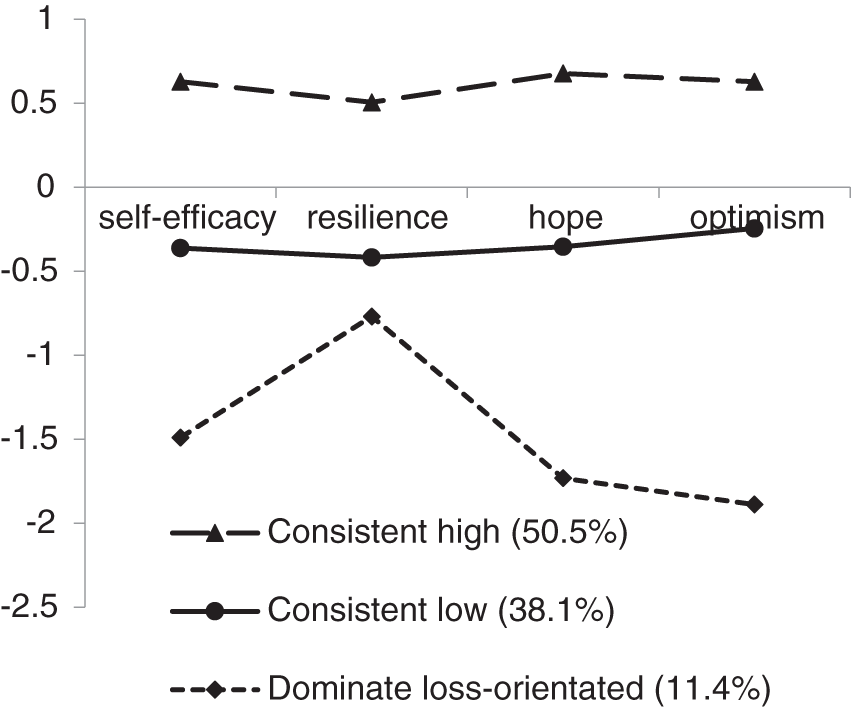
Figure 1: Mean psychological capital scores for each of the three profiles
Relation of psychological capital profiles to learning burnout
Table 3 presented the results of the multiple group analysis of the differences among the three profiles. All profiles differed significantly from each other in the psychological capital and learning burnout level (p < 0.001). The finding indicates that undergraduates in consistent high profile reported highest levels of self-efficacy, resilience, hope, and optimism but lowest level of learning burnout in comparison to undergraduates in the consistent low and dominate loss-orientated profiles. While, undergraduates in the dominate loss-orientated profile reported lowest level of self-efficacy, resilience, hope, and optimism but highest level of learning burnout compared to the other profiles.

Results of LPA indicated that there were three profiles of psychological capital: consistent high profile (50.5%), consistent low profile (38.1%), and dominate loss-orientated profile (11.4%). In line with previous literature, we found profiles with consistent high or consistent low in psychological capital components (Bouckenooghe et al., 2019; Ferradás et al., 2019; Gao et al., 2023). Of note, the consistent high profile, which was characterized by high self-efficacy, resilience, hope, and optimism, was the most positive profile. A gratifying finding was that this profile comprised more than half of undergraduates, indicating that most undergraduates have positive psychological capital. Consistent with previous research, profile with high self-efficacy, resilience, hope, and optimism also had the highest proportion among teachers and Angola undergraduates (Ferradás et al., 2019; Gao et al., 2023; Geremias et al., 2022). In addition, more than 30% undergraduates followed consistent low profile. The prevalence was higher than Angola undergraduates (Geremias et al., 2022). One explanation for the finding may be that Chinese undergraduates face the fierce challenges such as issue of unemployment, which exhausted their psychological resources (Song et al., 2023). These two profiles combine the psychological capital components in similar ways, such all high or all low in four components among undergraduates. The result supports psychological capital theory, which demonstrates that psychological capital variables have common attributes encouraging synergetic action (Luthans & Youssef-Morgan, 2017).
However, it is worth noting that a small proportion of undergraduates were in dominate loss-orientated profile. The result is consistent with previous work that found the profiles qualitatively different in the combinations of the psychological capital components (Bouckenooghe et al., 2019; Ferradás et al., 2019). For example, profiles with high levels of hope and optimism, and low level of resilience and self-efficacy or high in optimism but low in other components. This finding is in line with conservation of resources framework, suggesting that gain-orientated resource (i.e., self-efficacy, hope, hope) and loss-orientated resource (i.e., resilience) are distinct mechanisms (Hobfoll, 2001, 2011). Taken together, these results suggest that the components of psychological capital share common attributes, yet, the presence of distinct subpopulations of psychological capital configurations that differentially combine gain-orientated and loss-orientated resources (Bouckenooghe et al., 2019).
Our findings showed that undergraduates with high level of psychological capital (i.e., consistent high profile) exhibited low level of learning burnout; while undergraduates with low level of psychological capital (i.e., consistent low profile and dominate loss-orientated profile) reported high level of learning burnout. From the perspective of broaden-and-build theory, this may because undergraduates with high level of psychological capital are endowed with positive personal resources to make effort to overcome difficulties and reach academic goals (Fredrickson, 2001; Geremias et al., 2022). However, undergraduates with low level of psychological capital are lack of resources and capabilities to overcome uncertainties in learning process, which is related to high vulnerability to suffer from learning burnout (Bouckenooghe et al., 2019; Luthans et al., 2012).
Implications for student counselling and development
The current study has important theoretical and practical implications. The current study provides important knowledge about psychological capital profile among undergraduates, helping practitioners target those who are in urgent need of intervention. The findings expand the literature by using a person-centered approach to identify three profiles of psychological capital in a sample of Chinese undergraduates and examine concurrent relation between psychological capital profiles and learning burnout. These findings enrich our understanding of psychological capital profiles. Identifying subgroups of undergraduates with different level of psychological capital helps school counselors to inform interventions. Practitioners should pay specific attention to undergraduates in consistent low and dominate loss-orientated groups, and provide target intervention according to psychological capital intervention model considering the developable strait of psychological capital (Finch et al., 2023; Luthans et al., 2007).
Limitations of the study and future directions
This study has some limitations should be considered. First, the data is cross-sectional. Hence we do not explore the development of psychological capital profiles and examine the longitudinal relation of psychological capital profiles and learning burnout. Future longitudinal research could examine the stability of profiles and the causal association between the profile membership and learning burnout. Second, this study focused on undergraduates, which may reduce generalizability to the other population. Future studies should examine the psychological capital profiles in broader population.
The aim of the current study was to explore the psychological capital profiles and further examine the relations between profile memberships and learning burnout among Chinese undergraduates. Using latent profile analysis, we identified three profiles: consistent high psychological capital profile, consistent low psychological capital profile, and dominate loss-orientated psychological capital profile. Further, three profiles could be differentiated by learning burnout. The findings make a significant contribution to previous literature.
Acknowledgement: The authors thank all the participants.
Funding Statement: The research was supported by Hunan Province Education Department Outstanding Youth Project (23B1131) and Hunan Province Education Science Fourteenth Five-Year Plan Project (XJK24BXL003).
Author Contributions:: Ruijun Song conceived of the study, participated in the interpretation of the data, performed the statistical analysis and drafted the paper; Xiaomei Yang, Mei Wu and Jinyu Hong helped to draft the paper; Youping Cao, Xichen Qin and Yuting Ning revised the paper critically. All authors reviewed the results and approved the final version of the manuscript.
Availability of Data and Materials: The data that support the findings of this study are available from the corresponding author upon reasonable request.
Ethics Approval: Ethical approval for this study was obtained from the Ethical Committee of Changsha Normal University. The committee reviewed the study protocol to ensure compliance with ethical guidelines, including participant welfare and data confidentiality. It should be pointed out that our research has been reviewed and approved by the institution's ethics committee, however, our institution does not assign specific approval numbers.
Conflicts of Interest: The authors declare no conflicts of interest to report regarding the present study.
References
Avey, J. B., Reichard, R. J., Luthans, F., & Mhatre, K. H. (2011). Meta-analysis of the impact of positive psychological capital on employee attitudes, behaviors, and performance. Human Resource Development Quarterly, 22(2), 127–152. https://doi.org/10.1002/hrdq.20070 [Google Scholar] [CrossRef]
Bouckenooghe, D., De Clercq, D., & Raja, U. (2019). A person-centered, latent profile analysis of psychological capital. Australian Journal of Management, 44(1), 91–108. https://doi.org/10.1177/0312896218775153 [Google Scholar] [CrossRef]
Carmona-Halty, M., Salanova, M., Llorens, S., & Schaufeli, W. B. (2019). Linking positive emotions and academic performance: The mediated role of academic psychological capital and academic engagement. Current Psychology, 40(6), 2938–2947. https://doi.org/10.1007/s12144-019-00227-8 [Google Scholar] [CrossRef]
Datu, J. A. D., King, R. B., & Valdez, J. P. M. (2018). Psychological capital bolsters motivation, engagement, and achievement: Cross-sectional and longitudinal studies. The Journal of Positive Psychology, 13(3), 260–270. https://doi.org/10.1080/17439760.2016.1257056 [Google Scholar] [CrossRef]
Ferradás, M. D. M., Freire, C., García-Bértoa, A., Núñez, J. C., & Rodríguez, S. (2019). Teacher profiles of psychological capital and their relationship with burnout. Sustainability, 11(18), 5096. https://doi.org/10.3390/su11185096 [Google Scholar] [CrossRef]
Finch, J., Waters, A. M., & Farrell, L. J. (2023). Developing the HERO within: Evaluation of a brief intervention for increasing Psychological Capital (PsyCap) in Australian female students during the final year of school in the first year of COVID-19. Journal of Affective Disorders, 324(2), 616–623. https://doi.org/10.1016/j.jad.2022.12.169 [Google Scholar] [PubMed] [CrossRef]
Fredrickson, B. L. (2001). The role of positive emotions in positive psychology: The broaden-and-build theory of positive emotions. American Psychologist, 56(3), 218–226. https://doi.org/10.1037/0003-066X.56.3.218 [Google Scholar] [PubMed] [CrossRef]
Gao, Y., Yue, Y., & Li, X. (2023). The relationship between psychological capital and work engagement of kindergarten teachers: A latent profile analysis. Frontiers in Psychology, 14, 1–10. https://doi.org/10.3389/fpsyg.2023.1084836 [Google Scholar] [PubMed] [CrossRef]
Geremias, R. L., Lopes, M. P., & Soares, A. E. (2022). Psychological capital profiles and their relationship with internal learning in teams of undergraduate students. Frontiers in Psychology, 13, 1–13. https://doi.org/10.3389/fpsyg.2022.776839 [Google Scholar] [PubMed] [CrossRef]
Hobfoll, S. E. (2001). The influence of culture, community, and the nested-self in the stress process: Advancing conservation of resources theory. Applied Psychology: an International Review, 50(3), 337–421. https://doi.org/10.1111/1464-0597.00062 [Google Scholar] [CrossRef]
Hobfoll, S. E. (2011). Conservation of resource caravans and engaged settings. Journal of Occupational and Organizational Psychology, 84(1), 116–122. https://doi.org/10.1111/j.2044-8325.2010.02016.x [Google Scholar] [CrossRef]
Lian, R., Yang, L. X., & Wu, L. H. (2005). Relationship between professional commitment and learning burnout of undergraduates and scales developing. Acta Psychologica Sinica, 37(5), 632–636. [Google Scholar]
Luthans, B. C., Luthans, K. W., & Jensen, S. M. (2012). The impact of business school students’ psychological capital on academic performance. Journal of Education For Business, 87(5), 253–259. https://doi.org/10.1080/08832323.2011.609844 [Google Scholar] [CrossRef]
Luthans, F., Youssef, C. M., & Avolio, B. J. (2007). Psychological capital: Developing the human competitive edge. Oxford, UK: Oxford University Press. [Google Scholar]
Luthans, F., & Youssef-Morgan, C. M. (2017). Psychological capital: An evidence-based positive approach. Annual Review of Organizational Psychology and Organizational Behavior, 4(1), 339–366. https://doi.org/10.1146/annurev-orgpsych-032516-113324 [Google Scholar] [CrossRef]
Maslach, C., Jackson, S. E., Leiter, M. P., Schaufeli, W. B., & Schwab, R. L. (1986). Maslach burnout inventory. Palo Alto,CA: Consulting Psychologists Press. [Google Scholar]
Nylund, K. L., Asparouhov, T., & Muthe’n, B. O. (2007). Deciding on the number of classes in latent class analysis and growth mixture modeling: A Monte Carlo simulation study. Structural Equation Modeling, 14(4), 535–569. https://doi.org/10.1080/10705510701575396 [Google Scholar] [CrossRef]
Schaufeli, W. B., Martinez, I. M., Pinto, A. M., Salanova, M., & Bakker, A. B. (2002). Burnout and engagement in university students: A cross-national study. Journal of Cross-Cultural Psychology, 33(5), 464–481. https://doi.org/10.1177/0022022102033005003 [Google Scholar] [CrossRef]
Song, R., Chen, L., Zhang, L., Yu, F., & Zhang, W. (2023). Profiles and developmental transitions of educational future orientation among senior high school students in China. Journal of Youth and Adolescence, 1–16. https://doi.org/10.1007/s10964-023-01806-6 [Google Scholar] [PubMed] [CrossRef]
Song, R. J., & Song, L. J. (2021). The dampen effect of psychological capital on adolescent depression: A moderated mediation model. Current Psychology, 40(1), 56–64. https://doi.org/10.1007/s12144-020-00626-2 [Google Scholar] [CrossRef]
Wu, L., Yan, K., & Zhang, Y. (2020). Higher education expansion and inequality in educational opportunities in China. Higher Education, 80(3), 549–570. https://doi.org/10.1007/s10734-020-00498-2 [Google Scholar] [CrossRef]
Yu, J., Wang, Y., Tang, X., Wu, Y., Tang, X. et al. (2021). Impact of family cohesion and adaptability on academic burnout of Chinese college students: Serial mediation of peer support and positive psychological capital. Frontiers in Psychology, 12, 1–11. https://doi.org/10.3389/fpsyg.2021.767616 [Google Scholar] [PubMed] [CrossRef]
Zhang, C., Li, G., Fan, Z., Tang, X., & Zhang, F. (2021). Psychological capital mediates the relationship between problematic smartphone use and learning burnout in Chinese medical undergraduates and postgraduates: A cross-sectional study. Frontiers in Psychology, 12, 1–11. https://doi.org/10.3389/fpsyg.2021.600352 [Google Scholar] [PubMed] [CrossRef]
Zhang, K., Zhang, S., & Dong, Y. H. (2010). Positive psychological capital: Measurement and relationship with mental health. Studies of Psychology and Behavior, 8(1), 58–64. [Google Scholar]
Cite This Article
 Copyright © 2025 The Author(s). Published by Tech Science Press.
This work is licensed under a Creative Commons Attribution 4.0 International License , which permits unrestricted use, distribution, and reproduction in any medium, provided the original work is properly cited.
 Downloads
 Citation Tools
