
 Login
Login Register
 Submit a Paper
 Propose a Special lssue
 Open Access
REVIEW

Multifunctional Carbonaceous Nanoreinforced Polymeric Nanofibers—Bridging Fundamental Aspects to Technological Resolves
National Center for Physics, Quaid-i-Azam University Campus, Islamabad, Pakistan
* Corresponding Author: Ayesha Kausar. Email:
(This article belongs to the Special Issue: Synthesis, Characterization, and Applications of Polymer-based Nanocomposites)
Journal of Polymer Materials 2026, 43(1), 3 https://doi.org/10.32604/jpm.2026.078233
Received 26 December 2025; Accepted 28 February 2026; Issue published 03 April 2026
 View Full Text
 Download PDF
Abstract
Purpose of this novel review article is to unfold the current scientific worth of high performance polymer nanocomposite nanofibers, owing to growing scientific interests in this field. Accordingly, this state-of-the-art manuscript has been systematically categorized into distinct sections related to (i) fundamentals of carbonaceous nanoreinforcements, (ii) design-structure-property-performance aspects of different categories of polymer nanocomposite nanofibers (conducting polymers, thermoplastics, and thermosets with carbonaceous nanofillers (carbon nanotubes, graphene, fullerene), and then (iii) existing scientific worth (energy devices, electronics, space/defense, environmental sectors), future prospects, challenges, and conclusions. As per literature to date, polymer/carbonaceous nanocomposite nanofibers had myriad of advantageous physical characters (morphologies, electrical/charge conduction, thermal conduction, mechanical/thermal resistance, anticorrosion, permeability, radiation absorption). Notably, among conducting polymer nanofibers, polyaniline/carbon nanotube nanofibers revealed superior specific capacitance (~380 Fg−1) due to interfacial synergies and electron/charge transfer. Moreover, poly(3-hexylthiophene):phenyl-C61-butyric acid methyl ester/fullerene nanofibers revealed power conversion efficiency ~3.6%. Out of thermoplastic systems, poly(vinyl alcohol)/carbon nanotube nanofibers have been designed for piezoelectric sensors (pressure sensitivity ~0.28 kPa−1) and toxic metal ion sensors (lead(II)). In addition, cellulose/carbonaceous nanocomposite nanofibers have been applied for supercapacitor electrodes (specific capacitance ~250 Fg−1) and electromagnetic interference shielding effectiveness (~64–70 dB). Furthermore, epoxy/carbon nanotube nanocomposites revealed ~20%–40% enhancements in tensile strength and shear strength due to load transfer properties. As per literature, technological performance of these materials depends upon types/amount of polymers, nanocarbons, and processing methods/parameters used. Owing to novelty of topic, outline, and literature coverage, this review will serve as an all-inclusive guide for concerned field researchers to carry out further industrial scale advancements in the field of nanocomposite nanofibers.Graphic Abstract
Keywords
Carbonaceous nanoparticles based nanoreinforcements in different polymeric matrices have broadened the scope of high performance nanomaterials for significant technological deployments [1–3]. Further advancements in the field of polymer/nanocarbon hybrids have led to the development of distinct nanostructures, such as nanocomposite nanofibers [4]. In this regard, conversion of conventional carbonaceous nanoreinforced polymeric nanocomposites into nanofibers seemed to improve their design proficiencies, microstructural contours, physical characters (mainly electrical, mechanical, thermal, anticorrosion, radiation defense) and related applied performances [5,6]. Herein, it is important to state the difference between polymer nanofibers, nanocomposite nanofibers, and hybrid nanofibers. As per definition, polymer nanofiber are ultra-fine fibers with diameters, ranging from few nm to >100 nm. The nanofibers are made up of pristine polymers without containing nanoparticles. On the other hand, polymer nanocomposite nanofibers (also termed as polymer hybrid nanofibers) are polymer nanofibers containing nanoparticle reinforcements or these are nanofibers of polymer nanocomposites. For polymer/nanocarbon nanocomposite nanofibers, the most frequently used carbonaceous nanoadditives include carbon nanotube, graphene, graphene oxide, fullerene C60/C70 [7,8]. For these nanocomposite nanofibers, various efficient processing techniques (spinning, drawing, printing, solution based, and others) have been employed [9–11]. Among nanofiber processing methods reported so far, electrospinning appeared as one of the most competent technique for the formation of nanocarbons based nanocomposite nanofibers [12]. Consequently, the electrospun multifunctional nanocomposite nanofibers depicted methodological promise for wide ranging applied sectors, such as energy/electronic devices, aeronautical/automotive engineering, membranes, coatings, etc. [13].
Recently, biobased polymer nanocomposite nanofibers need to be focused for technical industries to meet today’s environmental and sustainability goals. In this regard, superior biodegradability features of these materials need to be considered in addition to mechanical, thermal, electrical, and physical properties for scalable, economic, and reproducible fabrication. Among few prominent recent scientific attempts, bio-based nanocomposite designs based on poly(butylene adipate terephthalate) or chitosan matrices and inorganic nanoparticles (like metal oxides and nanoclays) have been reported for packaging [14–16] and antibacterial applications [17–19]. Nevertheless, bio-based polymer nanocomposites need to be expanded towards the development of modified nanocomposite nanofibers in future [20–22]. Similarly, few attempts seen so far regarding self healable and biomimetic designs of polymer nanocomposites having remarkable mechanical stability and thermal conductivity features [23,24]. Although these nanomaterials need to be further processed for future nanocomposite nanofiber designs.
In recent decades, increasing research trends have been observed polymer/carbonaceous nanocomposite nanofibers. One of the key reasons for progress in this filed seems to be continuously progressing technical applications of polymer nanocomposite nanofibers in various industrial sectors, such as space/auto engineering, energy devices, electronic/electrical devices, smart fabrics, medical, and so on. Despite the technological significance of polymer/nanocarbon nanofibers, recent dedicated reviews with up-to-date literature coverage have not been noticed so far. Although, to the best of knowledge, few old literature reviews and research reports were available on this topic; however, stated literature is not in a well-assembled and updated form. For example, a previous review article by Scaffaro et al. [25] only reported tissue engineering aspects of electrospun polymer/nanocarbon nanofiber, thereby, lacking a broader prospective on basics, synthesis, properties, and applied aspects of these materials. Similarly, another very recent review manuscript by Anbazhagan and Mahalingam [26] was observed on biomedical application of electrospun nanofibers. Few other relevant reviews on this topic were seen from the years before 2010 [27,28]. Therefore, looking at the to date literature discrepancy, this specific review is planned to portray the current state-of-the-art of fundamentals, manufacturing, and structure-property performance of polymer/nanocarbon nanofiber nanocomposites. Hence, real motivation behind this review is to report a pioneering review article for advanced nanocomposite nanofibers as a future guide for field researchers. Consequently, future advances in the field of nanocomposite nanofibers are not possible for upcoming researchers before getting prior knowledge of recent literature in the form of a compiled comprehensive review.
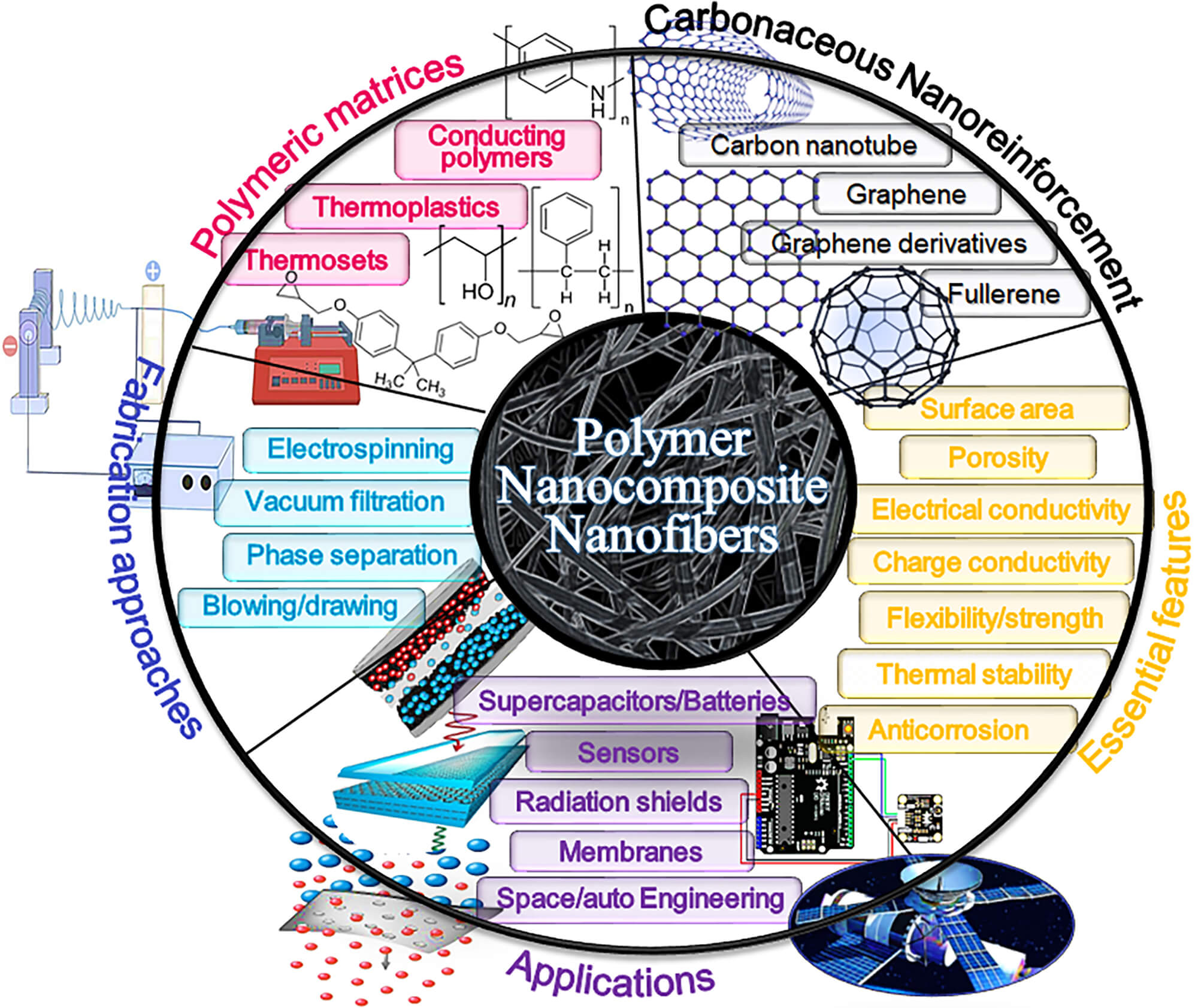
In a nutshell, looking at the current scientific state of carbonaceous nanoparticle reinforced polymer based nanocomposite nanofibers, we planned this review article to present a detailed and broad prospective of these valuable nanomaterials, from fundamentals—to—design/features—to—applications (Fig. 1). Correspondingly, different categories of polymer/carbonaceous nanocomposite nanofibers have been argued for their unique designs, synthesis, and property-performance profiles. As per literature reports hitherto, high performance polymer/carbonaceous nanocomposite nanofibers have been fabricated depending upon design strategies, manufacturing methods, and controlled processing parameters. The resulting polymer/carbonaceous nanocomposite nanofibers revealed a range of promising morphological, electrical/charge conducting, mechanical, thermal, anticorrosion, radiation shielding, and other physical characteristics. To the best of the literature knowledge so far, this review article will be ground-breaking to valuably assist the field scientist, engineers, and researchers to discover industrial scale potential of polymer/carbonaceous nanocomposite nanofibers from devices-to-engineering structures.
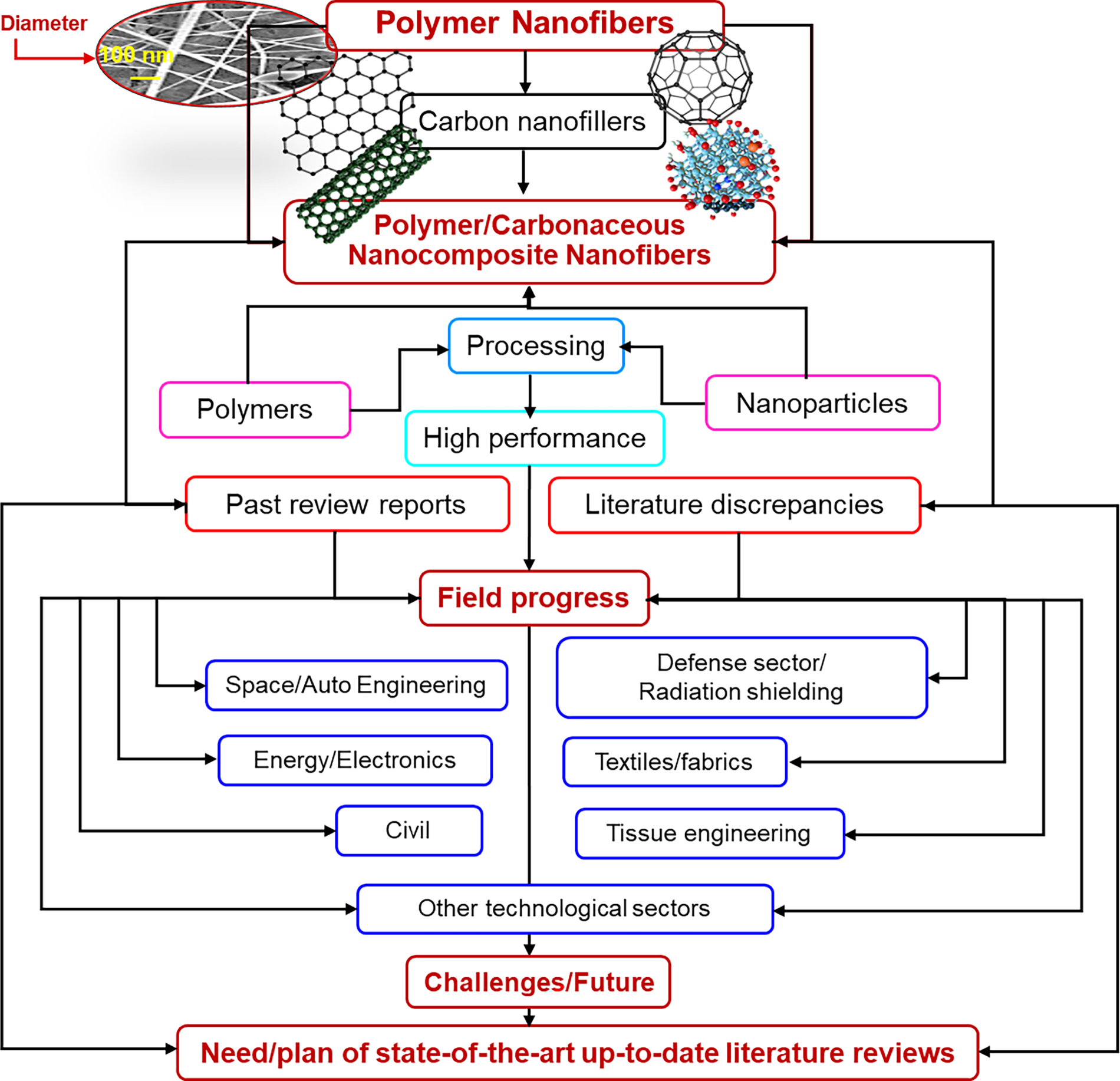
Figure 1: Purpose, need, and consensus behind current review of polymer/nanocarbon nanocomposite nanofibers.
2 Carbonaceous Nanoreinforcements for Polymer Nanofibers
Nanocarbons or carbonaceous nanoparticles have gained significant scientific interest owing to their distinct structure, features, and technical significance [29,30]. Consequently, research advancements to date have led to the development of different types of carbonaceous nanoparticles [31]. Accordingly, Fig. 2 shows few important types of nanocarbons, including fullerene, graphene, and carbon nanotube, and their derivative nanostructures.
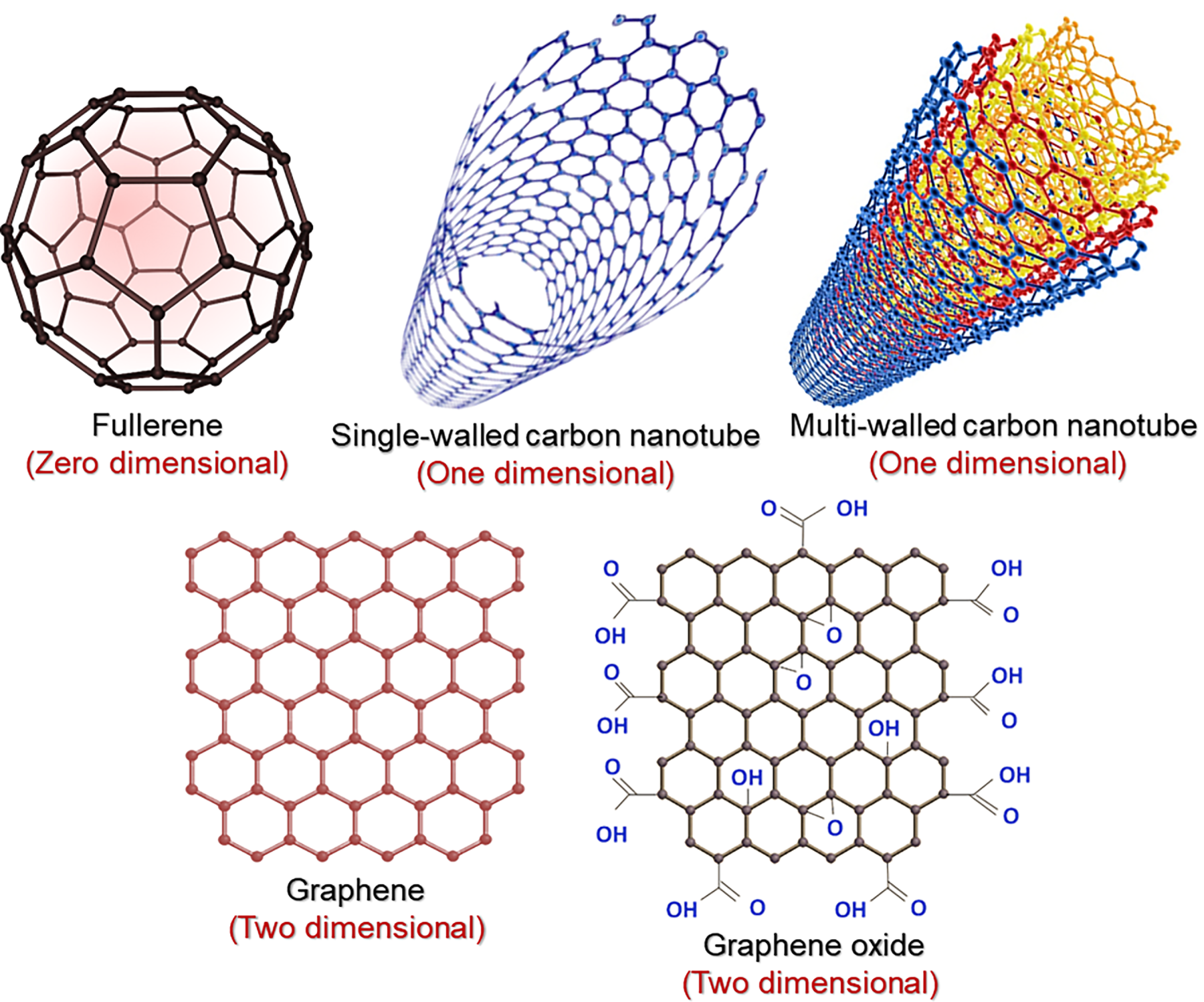
Figure 2: Significant types of carbonaceous nanostructures.
Carbon nanotube is one of the most commonly known one dimensional hollow carbonaceous tube like nanostructure (diameter < 100 nm) [32,33]. Carbon nanotube consists of hexagonal arrays of sp2 hybridized carbon atoms [34–36]. These carbonaceous nanostructures have been produced by using various efficient techniques, such as chemical vapor deposition, electric arc discharge, laser ablation, and so on [37]. Comprehensive research efforts have been performed so far to unfold their optical, electrical, magnetic, mechanical, and other properties and structure-property aspects [36,38]. Subsequently, applications of carbon nanotubes have been observed in the areas of aeronautics, energy/electronics, civil, textiles, and biomedical fields [37]. One of the important applications of carbon nanotubes has been discovered as efficient nanoreinforcements for polymer matrices [39–41]. Particularly, myriad of advanced polymeric nanocomposites and nanocomposite nanofibers have been designed and reported using carbon nanotube nanoparticles [42,43].
Similar to carbon nanotube, graphene is a carbonaceous nanomaterial, however it has a two dimensional nanosheet like structure consisting of sp2 hybridized carbon atoms [44,45]. For graphene synthesis, various techniques have been reported so far, including chemical vapor deposition, hydrothermal, microwave, and exfoliation (chemical, electrochemical, liquid phase, mechanical) methods [46]. The distinguished characteristics of graphene include enormously high Young’s modulus, thermal conductivity, and electron conductivity of ~1 TPa, 3000–6000 W/(m·K), and 200,000 cm2/V·s, respectively [47]. Sequentially, practical applications of graphene have been observed for technical structural engineering, energy, environment, medical, and countless other fields [48,49]. Like carbon nanotube, graphene has gained immense scientific curiosities for the fabrication of high tech nanocomposites [50,51]. Consequently, polymer/graphene nanocomposite nanofibers have been investigated by the field researchers [52].
In to the bargain, fullerene (hollow zero dimensional nanostructure of sp2 hybrid carbon) also belongs to the category of carbonaceous nanoparticles [53]. Depending upon the number of carbon atoms in spherical nanostructure, fullerene exists in different forms, like C24, C60, C70, C120, and more [54]. This unique carbonaceous nanostructure has been frequently produced by using hydrocarbon evaporation, combustion, and microwave techniques. Accordingly, depending upon structure-property specification, fullerene molecules exhibited technical worth for optoelectronics, energy devices, sensors, drug delivery, and nanocomposites systems [55,56].
Variety of polymers (conducting, thermoplastics, thermosets) have been processed as nanofibers (~50–100 nm in diameter) to enhance their intrinsic properties [57,58]. Accordingly, polymeric nanofibers have been produced into various forms, including solid, hollow, smooth/round surfaced, wavy/ribbon like, spiral, and others [59]. Polymeric nanofibers have been fabricated via range of facile techniques; however, electrospinning has appeared as the most widely used method for the nanofiber synthesis [60,61]. Other commonly practiced manufacturing techniques for polymeric nanofibers include phase inversion, drawing, blowing, etc. [62]. Accordingly, Fig. 3 presents commonly used synthesis methods and essential physical properties of polymeric nanofibers.
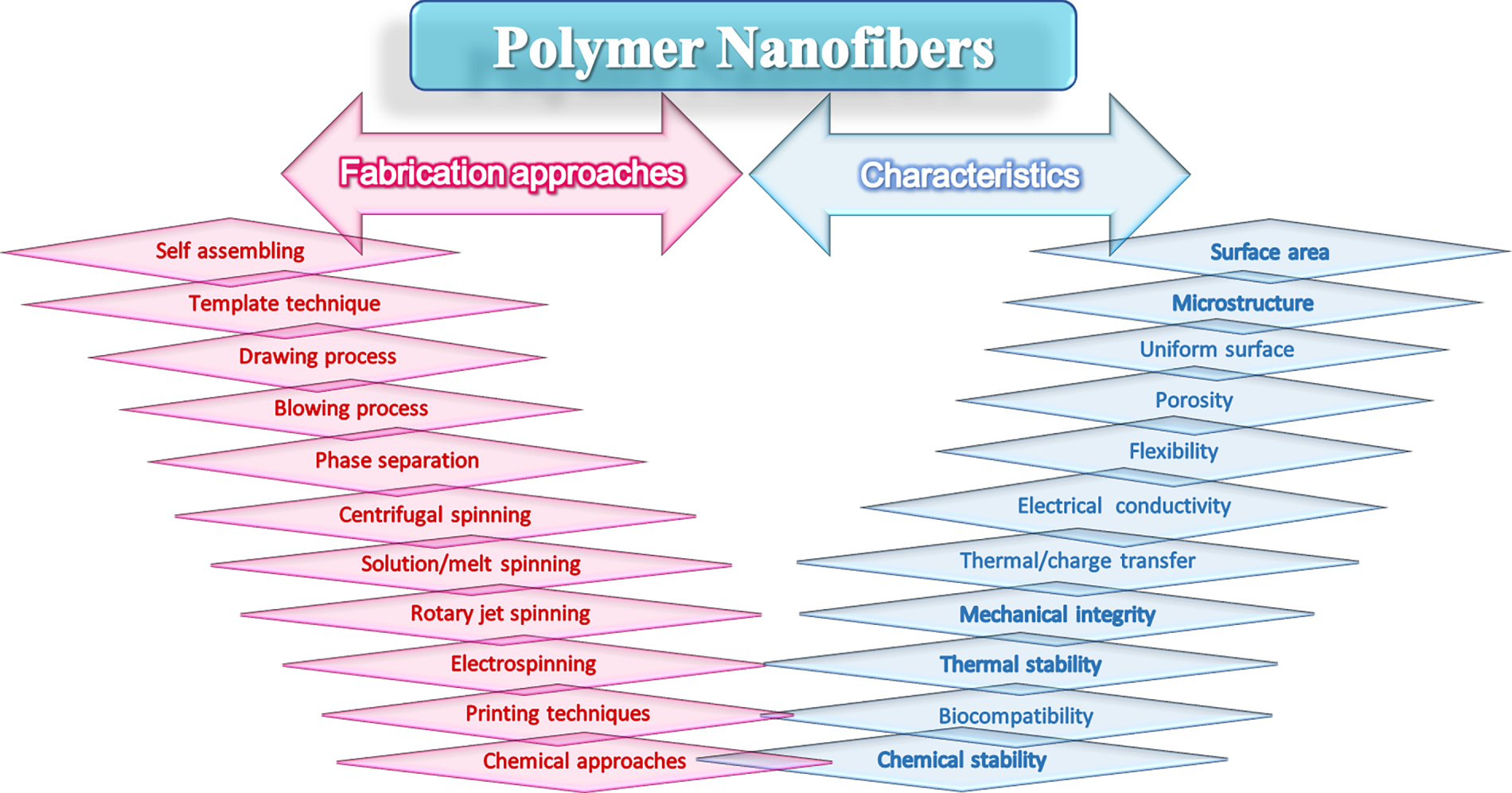
Figure 3: Common fabrication approaches and essential features of polymeric nanofibers.
A typical electrospinning set up consists of a syringe with needle, pump, collector, and a high voltage source [63]. The polymer solution or melt is usually evicted from the syringe needle by pumping to form a filament. Then, the polymer filament may travel to collector under the effect of applied electric field forming a nanofiber [64]. The final texture and associated features of electrospun polymeric nanofibers usually depend on polymer type, molecular weight, polymer solution/melt concentration, sample flow rate, needle-collector distance, applied field voltage, etc. [65]. Progress in the field of electrospinning technologies led to various advanced coupled electrospinning setups with three dimensional printing and other sophisticated nanofiber synthesis systems [66,67]. The resulting finely electrospun polymeric nanofibers exhibited significant applications in the fields of space engineering, energy devices, textiles, and biological systems [68].
3 Conductive Polymers/Carbonaceous Nanoparticle Nanofibers
Conductive or conjugated polymers have been processed as valuable matrices into nanofibers and carbonaceous nanoreinforced nanocomposite nanofibers [69]. In this regard, Lu and Chen [70] fabricated pristine polyaniline based nanofibers by using electrospinning method. The resulting semiconducting nanofibers revealed superior specific capacitance (~134 F/g), relative to the bulk polyaniline (~75 F/g). The polyaniline nanofibers were considered useful for supercapacitors and light emitting diode devices. Similarly, recent scientific reports can be seen regarding the applications of conducting polymers in advanced capacitor and diode devices [71–73]. Similar to pristine conjugated polymers, carbonaceous nanoparticles, e.g., carbon nanotubes, have been essentially reinforced to form conductive polymer nanofibers [74]. The resulting conducting polymer/carbon nanotube nanocomposite nanofibers exhibited uniform texture, unique morphologies, and superior electrical/charge and mechanical features [75].
Notably, the polyaniline and nanocarbon based nanocomposite nanofibers have been reported for energy devices [76]. An earlier attempt by Hyder et al. [77], polyaniline/carbon nanotube nanocomposite nanofibers were fabricated via layer by layer technique. These hybrid nanofibers depicted fine interconnected conducting network formation, so resulting in specific capacitance of >230 F/g. Chaudhari et al. [78] designed electrospun polyaniline/carbon nanotube nanocomposite nanofibers with diameter of ~200 nm. The nanocomposite nanofibers had notable specific capacitance and capacitance retention of >260 F/g and 86%, respectively, in a 1000 cyclic recital. Moreover, Simotwo et al. [79] reported polyaniline/carbon nanotube nanocomposite nanofibers produced by electrospinning method (Fig. 4A). As per scanning electron microscopy micrographs, the resulting nanocomposite nanofibers had lower diameter (~490 nm), as compared with the pristine polyaniline nanofibers (~680 nm) (Fig. 4B,C). This decrease in the diameters of nanocomposite nanofibers was attributed to the effect of conducting carbon nanotubes in polyaniline matrix during electrospinning process. Furthermore, Fig. 4D shows transmission electron microscopy micrograph of polyaniline/carbon nanotube nanocomposite nanofibers with seamless and non-aggregated nanoparticle dispersion, owing to the effectiveness of fiber processing technique. Fig. 4E presents current density vs. scan rate plots for polyaniline/carbon nanotube nanocomposite nanofibers. It seems that increasing scan rates caused shifts in the cathodic/anodic peaks, owing to valuable fluctuations in charge-discharge behavior. Fig. 4F portrays specific capacitance of neat polyaniline and polyaniline/carbon nanotube nanocomposite nanofibers. Herein, the nanocomposite nanofibers had visibly higher specific capacitance (~380 F/g), than that of the neat polyaniline nanofibers (~300 F/g). Thus, overall superior morphology and charge conductivity performance of the polyaniline/carbon nanotube nanocomposite nanofibers can be credited to the mutual matrix-nanofiller network formation and percolation effects. Recently, Gazzato and Frasconi [80] investigated scientific worth of carbon nanotube filled polyaniline based nanocomposite nanofibers. These nanomaterials had superior electrical/charge conduction, electrochemical, and mechanical characteristics. The promising applications of polyaniline/carbon nanotube nanocomposite nanofibers have been observed for supercapacitors and sensing devices.
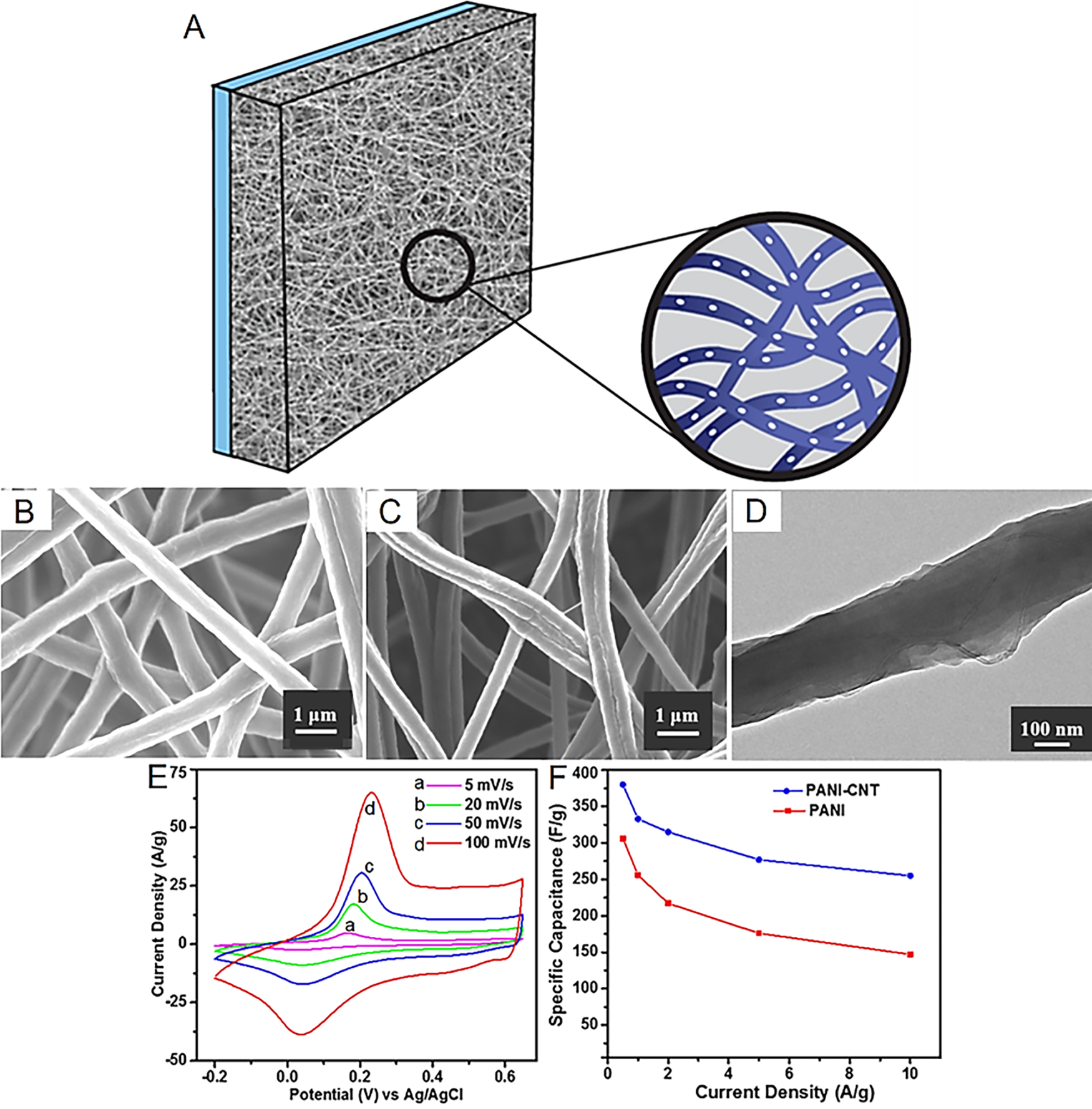
Figure 4: (A) A snapshot of nanofibrous network consisting of carbon nanotube filled polyaniline nanofibers for better electron and charge transportation; (B,C) scanning electron microscopy images of polyaniline and electrospun polyaniline/carbon nanotube nanocomposite nanofibers; (D) transmission electron microscopy image of polyaniline nanocomposite nanofibers with uniform/nonaggregated carbon nanotube dispersion; (E) current density vs. potential plots of polyaniline/carbon nanotube nanocomposite nanofiber at scan rates of 5–100 mVs−1; (F) plots showing superior specific capacitance of polyaniline/carbon nanotube nanocomposite nanofibers than pristine polyaniline nanofibers [79]. PANI = polyaniline; PANI-CNT = polyaniline/carbon nanotube nanocomposite nanofiber. Reproduced with permission from ACS.
In addition, graphene and modified graphene filled conducting nanocomposite nanofibers have gained immense research curiosities [81]. Particularly, the polyaniline/graphene nanocomposite nanofibers have been explored for energy storage electrodes [82]. In this regard, various efficient techniques (such as templating, in situ/electrochemical, spinning) have been used to fabricate polyaniline and graphene derived nanofibers [83]. Consequently, electron and charge conductivity performance of graphene filled polyaniline nanofibers has been studied for energy devices [84]. In earlier times, Zhou et al. [85] reported graphene wrapped polyaniline nanofibers obtained by self assembly technique. Fig. 5A shows the self assembling of nanocomposite nanofibers by electrostatic interactions of positively charged polyaniline nanofibers (an aqueous dispersion) with negatively charged graphene nanosheets. Fig. 5Ba shows transmission electron microscopy micrograph of pristine polyaniline nanofibers, whereas Fig. 5Bb,c illustrates microstructures of polyaniline/graphene nanocomposite nanofibers (low and high resolutions, respectively). As per images, nanocomposite nanofibers had visibly fine dispersion of graphene and coating in polymeric nanofibers, as compared to smooth unfilled polyaniline nanofibers. Such type of microstructures confirms the electrostatic interactions between the polyaniline and nanosheets. Fig. 5C demonstrates specific capacitance vs. current density plots of polyaniline/graphene nanocomposite nanofibers. As per outcomes, the hybrid nanofibers had higher specific capacitance (250 F/g), compared with that of the unfilled nanofibers (~175 F/g) in 1000 cycles. The resulting superior capacitance was attributed to the interfacial synergies of polyaniline-graphene hybrid system, so resulting in efficient electron and charge transfer performance [86]. Fig. 5D presents a real photograph of polyaniline/graphene nanofibers based thin film electrode designed for supercapacitors. Despite the so far research efforts regarding polyaniline/graphene nanocomposite nanofibers, functional graphene based conducting polymeric systems have been developed for further superior performance of advanced energy devices.
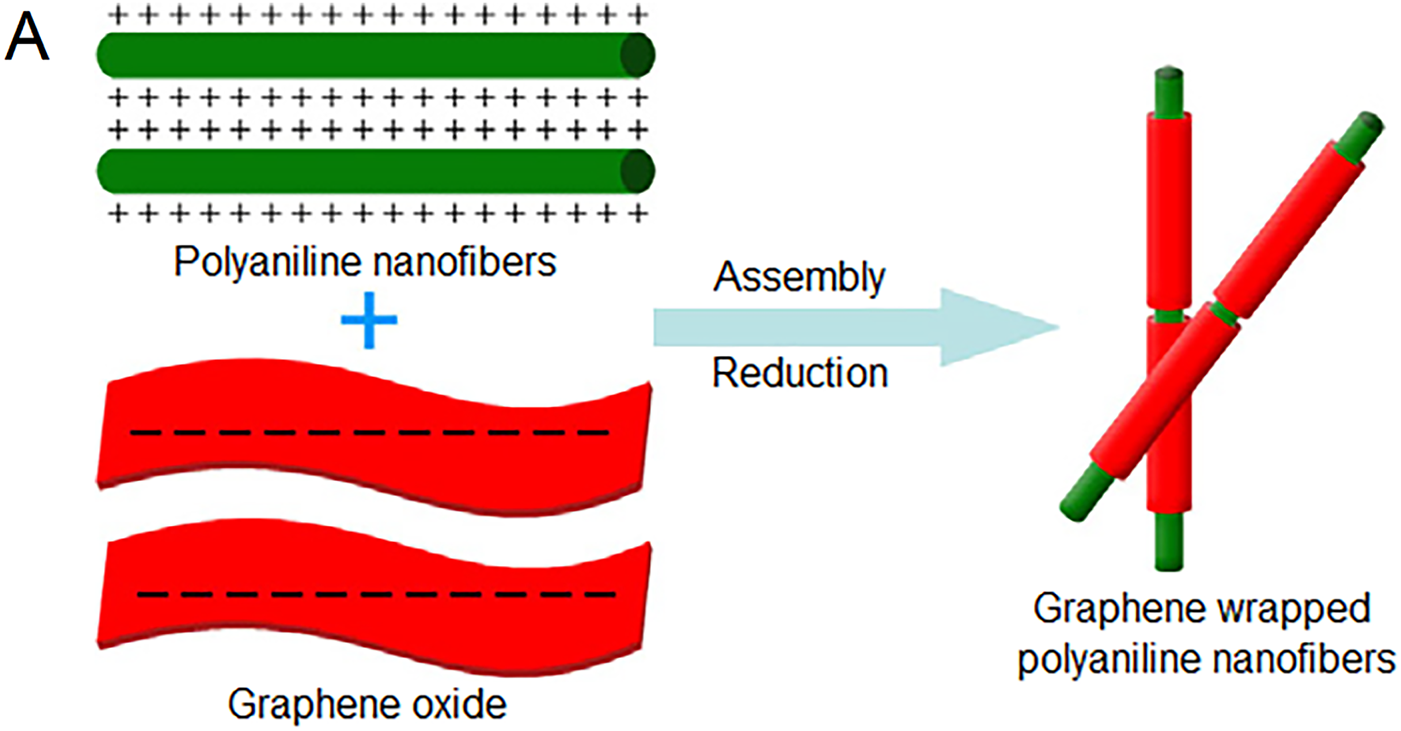
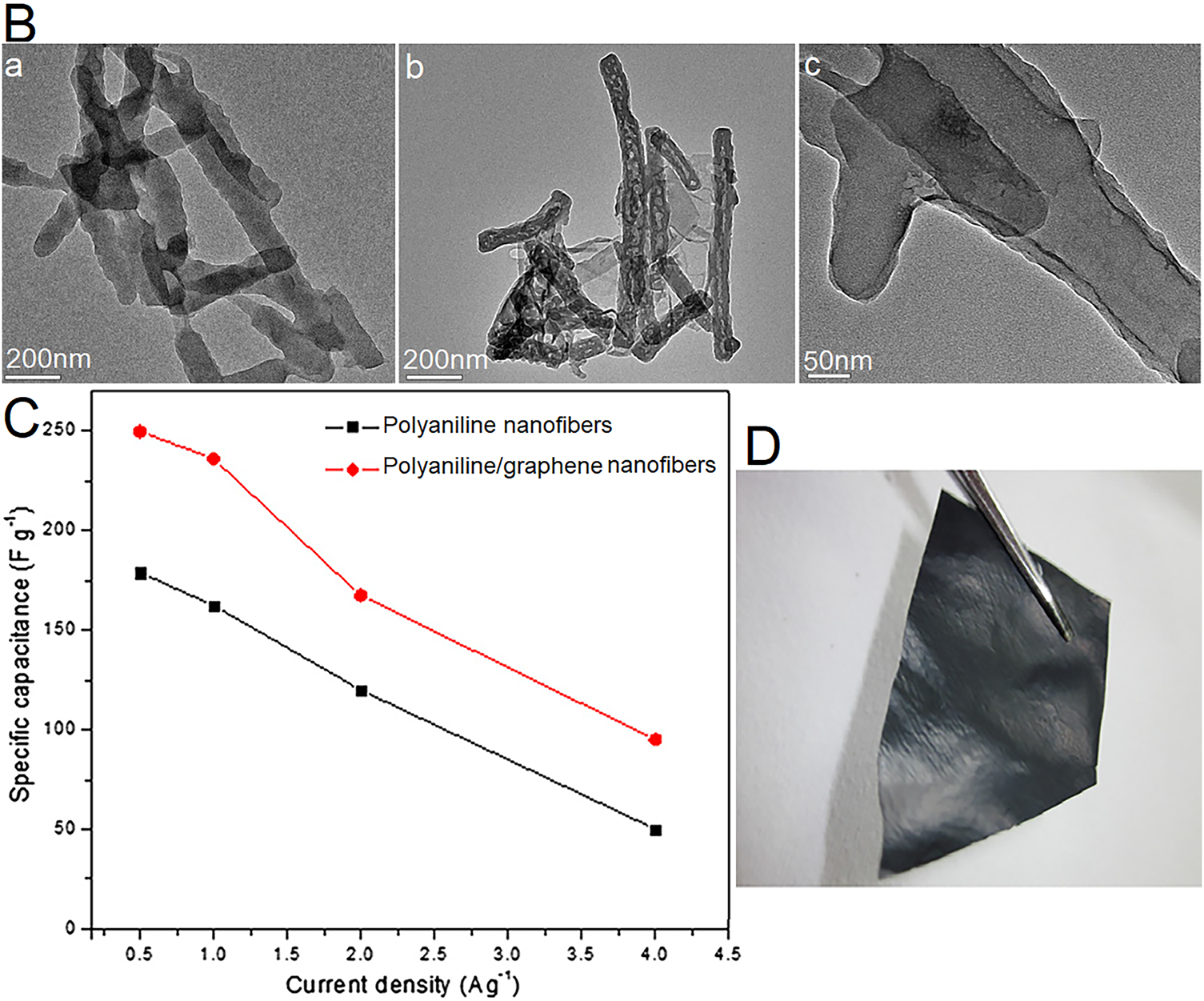
Figure 5: (A) Design of self assembled graphene wrapped polyaniline nanofibers obtained via electrostatic interactions between positively charged polyaniline nanofibers and negatively charged graphene; (B) transmission electron microscopy images of: (a) transparent smooth unfilled polyaniline nanofibers; (b,c) polyaniline/graphene nanofibers with fine nonaggregate nanofiller dispersion (low and high resolutions, respectively); (C) specific capacitance vs. current density plots of polyaniline/graphene polyaniline/graphene nanocomposite nanofibers; (D) a photograph of polyaniline/graphene polyaniline/graphene nanocomposite nanofibers based thin film [85]. Reproduced with permission from Elsevier.
Few research endeavors were also observed for conjugated polymer/fullerene nanocomposite nanofibers [87]. These polymer/fullerene nanocomposite nanofibers have been mostly focused for solar cells or photovoltaic devices [88,89]. Kurniawan et al. [90] manufactured nanofibers of poly(3-hexylthiophene):phenyl-C61-butyric acid methyl ester. For comparative studies, non-annealed and thermally annealed poly(3-hexylthiophene):phenyl-C61-butyric acid methyl ester systems were designed for photovoltaic devices. Accordingly, Table 1 demonstrates photovoltaic parameters of the as prepared samples. According to the results, poly(3-hexylthiophene):phenyl-C61 butyric acid methyl ester revealed superior performance than the nonannealed sample, however the performance was comparable to the thermally annealed poly(3-hexylthiophene):phenyl-C61-butyric acid methyl ester system. Consequently, Fig. 6 shows current density and external quantum efficiency plots for poly(3-hexylthiophene):phenyl-C61-butyric acid methyl ester nanofibers and non-annealed and thermally annealed poly(3-hexylthiophene):phenyl-C61-butyric acid methyl ester. Herein, the nanofibers and annealed samples depicted superior power conversion efficiency and photovoltaic performances, owing to better interfacial contacts, macromolecular order, and related efficient electron and charge transfer properties. Nevertheless, limited scientific efforts have been noticed in field of polymer/fullerene nanocomposite nanofibers, as compared to other nanocarbon reinforced hybrid nanofibers. Thus, further advanced designs of polymer/fullerene nanocomposite nanofibers need to be developed and exploited for future energy applications [91].
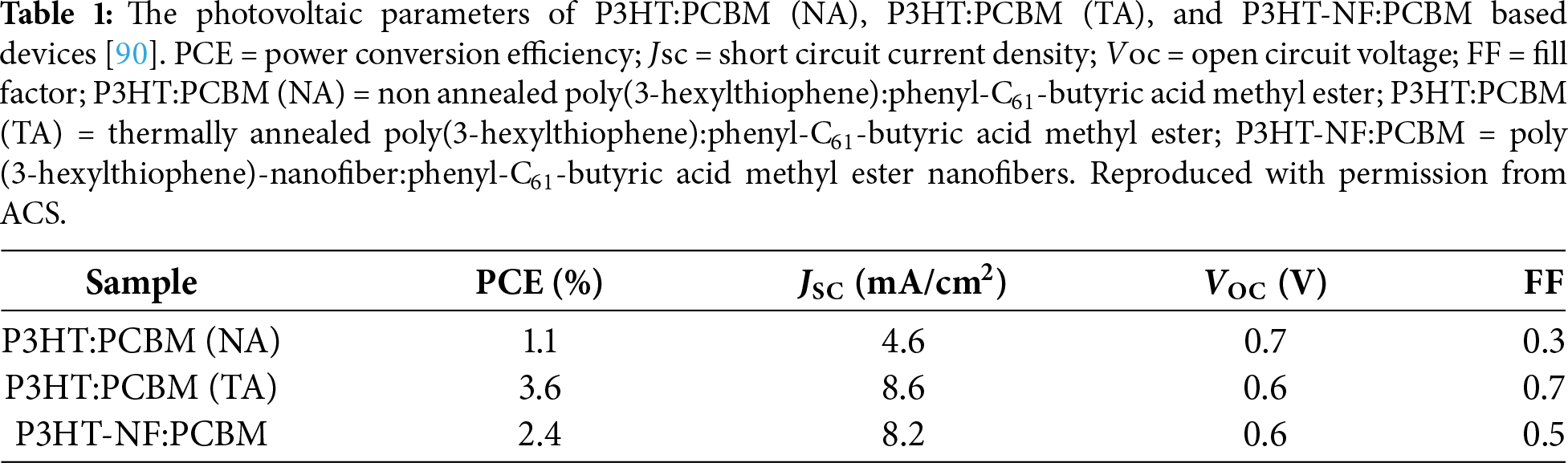
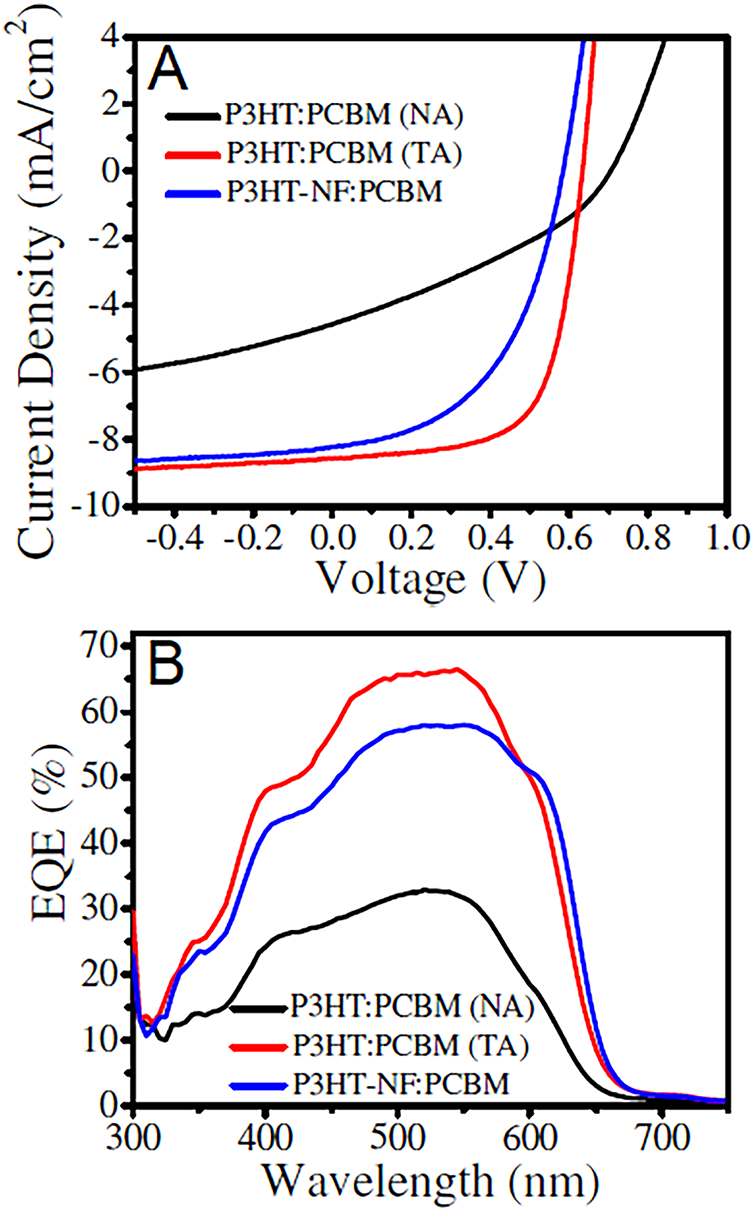
Figure 6: (A) J-V plots for P3HT:PCBM (NA), P3HT:PCBM (TA), and P3HT-NF:PCBM; (B) EQE measurements of the three devices [90]. P3HT:PCBM (NA) = non annealed poly(3-hexylthiophene):phenyl-C61-butyric acid methyl ester; P3HT:PCBM (TA) = thermally annealed poly(3-hexylthiophene):phenyl-C61-butyric acid methyl ester; P3HT-NF:PCBM = poly(3-hexylthiophene):phenyl-C61-butyric acid methyl ester nanofibers; EQE = external quantum efficiency. Reproduced with permission from ACS.
4 Thermoplastic Nanofibers with Nanocarbon Nanofillers
Various thermoplastic polymers have been considered for nanofiber nanostructures [92]. In addition, high performance carbonaceous nanoreinforced thermoplastic polymeric nanofibers have been reported in the literature [93,94]. Predominantly, carbon nanotubes filled thermoplastic polymeric nanofibers have been developed [95]. In this regard, carbon nanotube and carbon nanofibers have been considered as valuable nanofillers to form electrospun poly(ethylene glycol) nanofibers [96]. Song and Xiao [97] used a block copolymer of poly(vinyl alcohol), i.e., poly(vinyl alcohol-co-ethylene) and reinforced with carbon nanotubes to form nanofibers by using hydroxyl aldehyde condensation method. These nanocomposite nanofibers were used to form a piezoresistive sensor. Accordingly, the resulting poly(vinyl alcohol-co-ethylene)/carbon nanotube nanocomposite nanofibers had layered pillar hierarchical nanostructures with ultralow density and strain restoring capability of 18.27 mg/cm3 and 80%, respectively. Additionally, the nanocomposite nanofibers had pressure sensitivity of ~0.28 kPa−1 (3000 cycles). Further advancements in this field may lead to the next generation of wearable electronics based on thermoplastic polymer/carbon nanotube hybrid nanofibers. Recently, Shoba et al., [98] used a combination of poly(vinyl alcohol), polyaniline, and functional carbon nanotubes to form hybrid nanofibers. In this concern, they formed core shell poly(vinyl alcohol)/polyaniline/tetra-4-(3-oxyflavonephthalocyaninato)cobalt(II)/carboxylic acid functionalized multiwalled carbon nanotubes nanofibers by electrospinning technique. Afterwards, the nanocomposite nanofibers were used to form gold deposited electrode through adsorption technique. The step wise preparation scheme for these nanomaterials is given in Fig. 7A. Consequently, Fig. 7Ba–c shows scanning electron microscopy micrographs of the as designed nanocomposite nanofibers, pristine nanofibers, and woven mats of the hybrid nanofibers, respectively. It appears that nanocomposite nanofibrous mats had better nanofiber alignment, relative to pristine nanofibers. However, multiwalled carbon nanotubes filled nanofibers showed few beads in their strands, may be due to aggregation effect of nanofiller in matrix. The nanocomposite nanofibers seemed to develop three dimensional interlinked microstructures leading to superior surface area for better electrical/charge conduction and electrochemical interactions. Fig. 7C,D, respectively, illustrate Nyquist plots for pristine gold electrode and nanocomposite nanofibers coated gold electrode. As per results, diameters of the semicircles indicated the intrinsic resistance of the electrodes. Here, the nanofibers coated electrode depicted lower charge transfer resistance due to facilitated interfacial reactions, relative to the noncoated electrode. Consequently, the nanocomposite nanofiber based electrode had superior charge/ion transport and electrochemical features for sensing applications. Moreover, experimental and theoretical results for the nanofibers coated gold electrode were in close agreement due to the effectiveness of synthesis technique used.
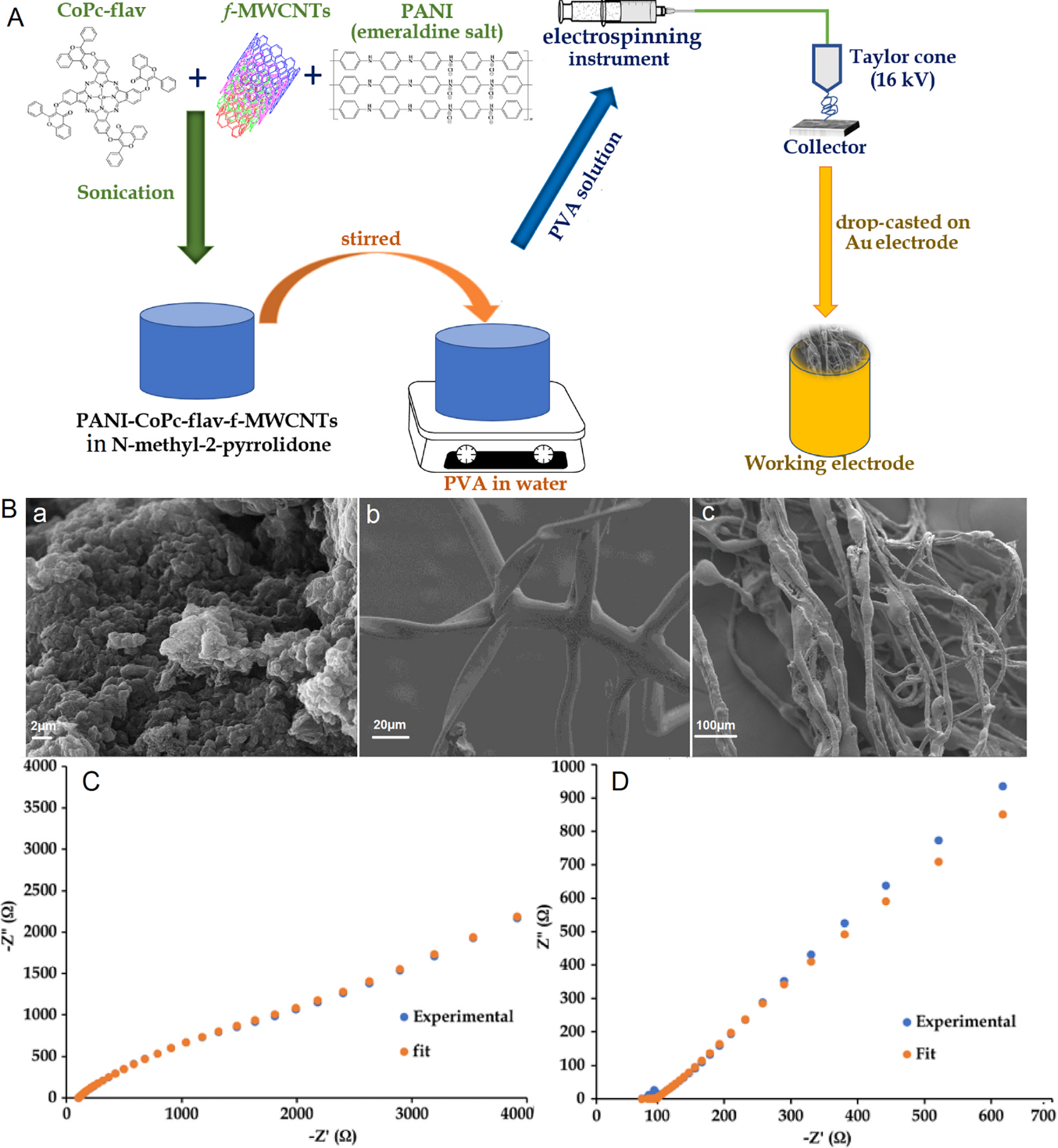
Figure 7: (A) Schematic for the fabrication of polyaniline/tetra-4-(3-oxyflavonephthalocyaninato)cobalt(II)/carboxylic acid functionalized multiwalled carbon nanotubes nanofibers and poly(vinyl alcohol)/polyaniline/tetra-4-(3-oxyflavonephthalocyaninato)cobalt(II)/carboxylic acid functionalized multiwalled carbon nanotubes nanofibersgold deposited electrode; (B) scanning electron microscopy images of: (a) polyaniline/tetra-4-(3-oxyflavonephthalocyaninato)cobalt(II)/carboxylic acid functionalized multiwalled carbon nanotubes nanofibers; (b) polyaniline nanofibers; and (c) polyaniline/tetra-4-(3-oxyflavonephthalocyaninato)cobalt(II)/carboxylic acid functionalized multiwalled carbon nanotubes nanofibers as beaded woven-mats; (C) Nyquist plots of pristine gold electrode; (D) Nyquist plots of nanocomposite nanofibers coated gold electrode [98]. PVA = poly(vinyl alcohol); PANI = polyaniline; CoPc-flav = tetra-4-(3-oxyflavonephthalocyaninato)cobalt(II); f-MWCNTs = carboxylic acid functionalized multiwalled carbon nanotubes; PANI-CoPc-flav-f-MWCNTs = polyaniline/tetra-4-(3-oxyflavonephthalocyaninato)cobalt(II)/carboxylic acid functionalized multiwalled carbon nanotubes. Reproduced with permission from Elsevier.
Similar to carbon nanotube, graphene nanoreinforced thermoplastic nanocomposite nanofibers were also reported in the literature [99]. Accordingly, a number of thermoplastics, such as polyethylene, poly(vinyl alcohol), poly(lactic acid), polycarbonate, etc., have been processed with graphene nanofillers by electrospinning technique [100–103]. Accordingly, morphologies, conductivity, mechanical and thermal constancy, and other physical/chemical features of the electrospun thermoplastics nanofibers have been explored [104]. Polystyrene has been considered as an essential matrix to form nanocomposite nanofibers with graphene nanofillers [105]. Particularly, electrospun polystyrene/graphene nanocomposite nanofibers were studied for superior morphologies, hydrophobicity, mechanical/thermal stability, and electrical/thermal conductivity properties [106].
Li et al. [107] manufactured polystyrene and graphene nanoplatelet derived nanocomposite nanofibers by electrospinning method. The scanning electron microscopy (Fig. 8A,B) and transmission electron microscopy (Fig. 8C,D) studies were performed for unfilled polystyrene nanofibers and 10 wt.% graphene nanoplatelet filled polystyrene derived nanocomposite nanofibers. As per micrographs, the nanocomposite nanofibers revealed uniform texture and surface morphology without any nanofiller aggregation, similar to that of the unfilled nanofibers. Moreover, high resolution micrograph further confirmed the visibly uniform alignment of graphene nanoplatelets throughout the nanocomposite nanofibers. Such microstructures usually validate the effectiveness of the electrospinning technique for the nanofiber formation. Fig. 8E,F illustrates diameter statistics of unfilled polystyrene nanofibers and 10 wt.% graphene nanoplatelet reinforced polystyrene based nanocomposite nanofiber, respectively. The nanocomposite nanofibers had lower diameter than unfilled nanofibers, due to the presence of conducting graphene nanoplatelet nanoparticles and electrical field effect of electrospinning process. Among green polymers, cellulose nanofibers loaded with graphene have been designed and exploited for engineering applications [108].
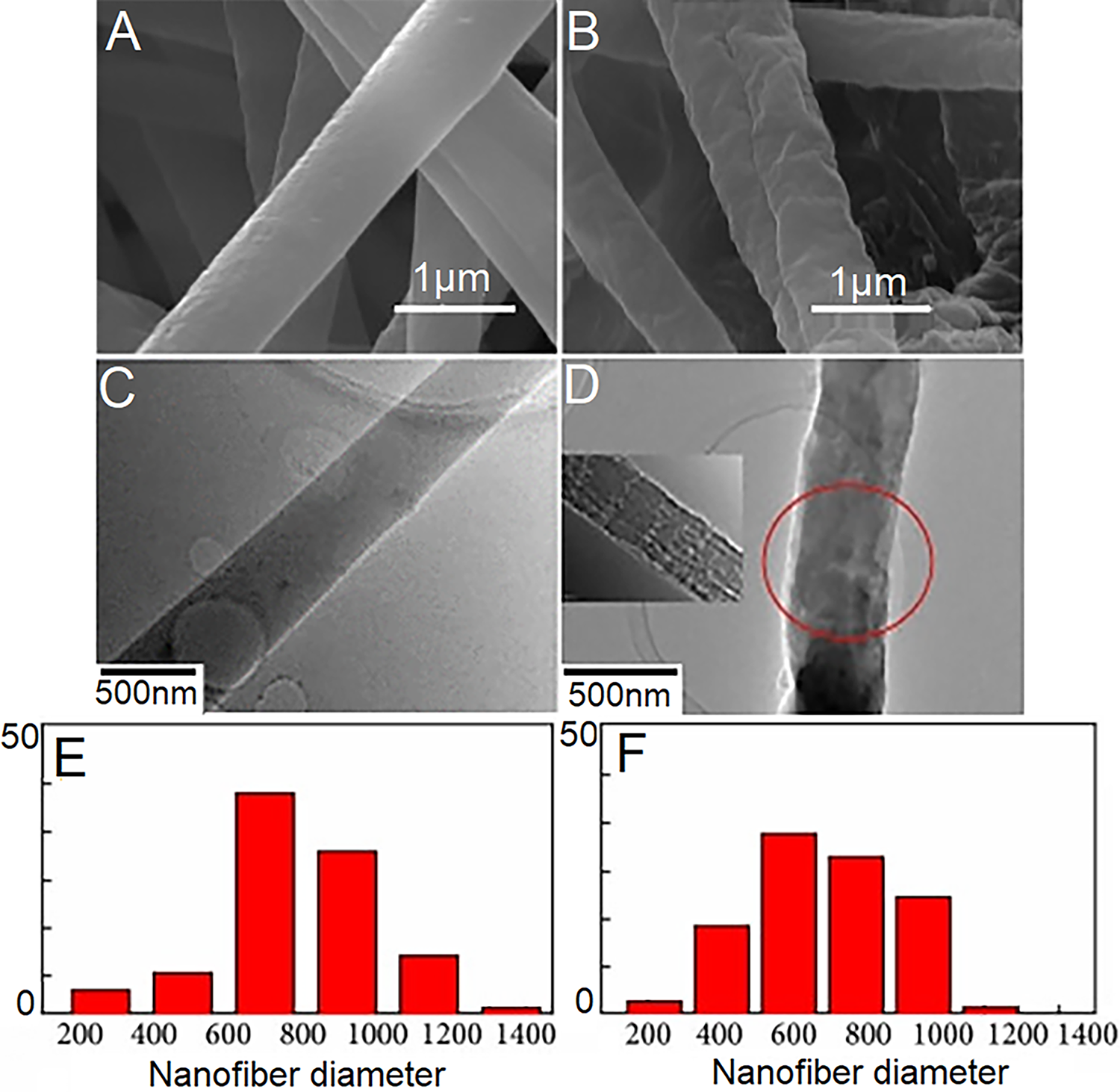
Figure 8: (A,B) Scanning electron microscopy images; (C,D) transmission electron microscopy images, inset: high resolution image; and (E,F) diameter statistics of pristine polystyrene and 10 wt.% reinforced polystyrene/graphene nanoplatelet nanocomposite nanofiber, respectively [107]. Reproduced with permission from Wiley (open access).
Rath and Kundu [109] formed electrospun cellulose/graphene oxide nanofibers having fine electron and charge conductivity features. These nanofibers revealed superior specific capacitance (~255 F/g), than pristine graphene based electrode (~78 F/g) [110]. Nevertheless, limited articles were noticed on graphene filled green nanofibers. Wu et al. [111] fabricated layered nanocomposites of cellulose nanofibers with polypyrrole, carbon nanofibers, and silver nanowire by using step by step vacuum filtration approach. The unique combinations of green polymer, nanocarbons, and inorganic nanoparticles resulted in advanced hybrid nanofibers with superior electron conductivity and interfacial polarization. Consequently, superior electromagnetic shielding effectiveness of ~64–70 dB was observed. Further research efforts in these directions will obviously lead to high tech electronics and radar stealth applications.
Few reports can be seen for fullerene C60 filled thermoplastic polymeric nanofibers [112]. In this concern, poly(L-lactide) and fullerene based nanocomposite nanofibers have been developed [113,114]. Liu et al. [115] produced electrospun poly(L-lactide) and tetraethylene glycol functional fullerene C60 and C70 derivative hybrid nanofibers. The transmission electron microscopy micrographs of unfilled and 10 wt.% tetraethylene glycol functional fullerene C60 filled poly(L-lactide) nanofibers are given in Fig. 9A,B, respectively. Accordingly, functional fullerene nanoparticles (diameter ~20 nm) seemed to be consistently dispersed in the hybrid nanofibers (diameter ~300–600 nm).
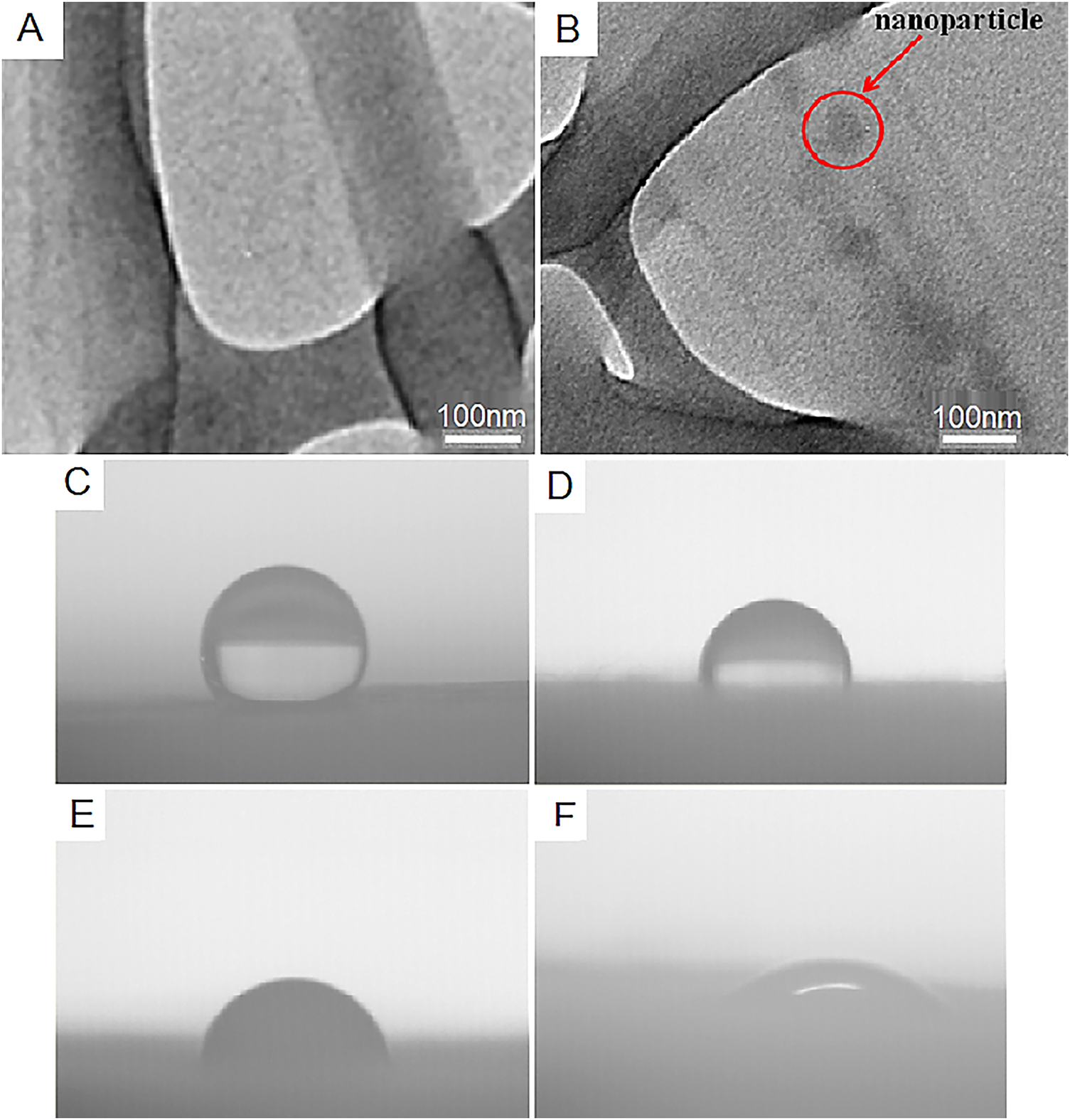
Figure 9: (A,B) Transmission electron microscopy images of unfilled and 10 wt.% tetraethylene glycol functional fullerene C60 filled poly(L-lactide) nanofibers, respectively; (B) optical images for water contact angles of (C) 0 wt.%; (D) 5 wt.%; (E) 10 wt.%; and (F) 20 wt.% tetraethylene glycol functional fullerene C60 filled poly(L-lactide) nanofibers [115]. Reproduced with permission from ACS.
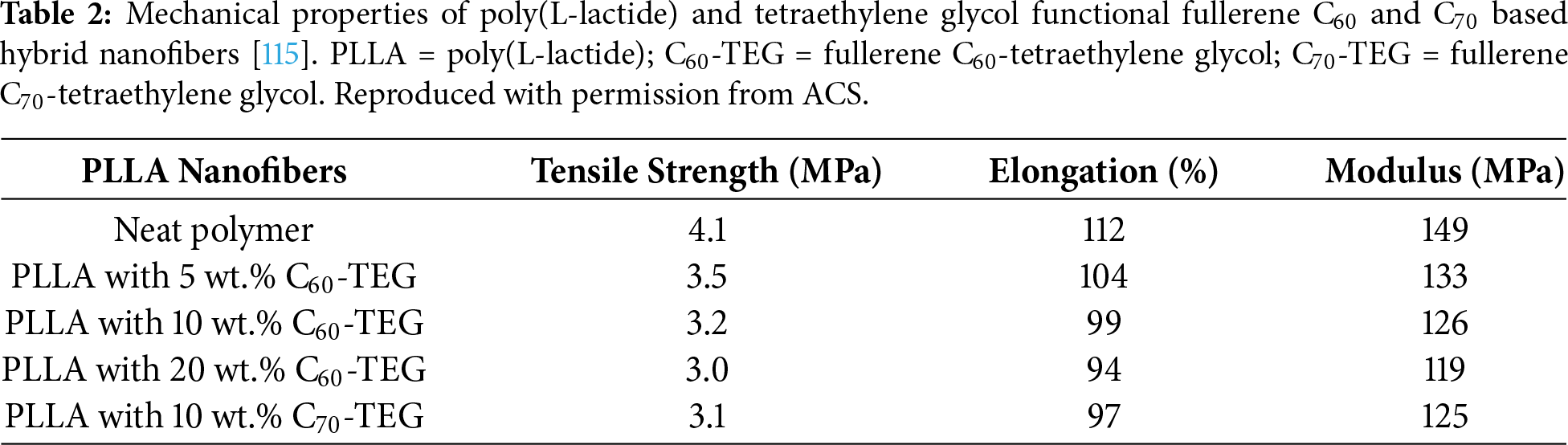
The optical photographs for water contact angles of 0, 5, 10, and 20 wt.% tetraethylene glycol functional fullerene C60 reinforced poly(L-lactide) nanofibers are given in Fig. 9C–F, respectively. Herein, adding nanofiller contents gradually reduced the water contact angles from 68° to 0°, than unfilled nanofibers (120°). In addition, functional fullerene enhanced the hydrophilicity of the hybrid nanofibers. Furthermore, Table 2 shows mechanical properties of unfilled poly(L-lactide) nanofibers and nanocomposite nanofibers. Compared with the tensile strength and modulus of pristine poly(L-lactide) nanofibers (4.1 and 149 MPa, respectively), poly(L-lactide)/fullerene nanocomposite nanofibers had lower mechanical properties (3.1 and 125 MPa, respectively). This decrease in mechanical properties of nanocomposite nanofibers was attributed to increase in their hydrophilicity. Tensile strain was also slightly decresaed from 112%–97%, due to nanofiller induced rigidity in the hybrid nanofibers.
Henceforth, substantial scientific endeavors have been performed regarding carbonaceous nanoparticles nanoreinforced thermoplastic polymer nanofibers [116]. Despite of different types of polymers and carbon nanoparticles used, these nanocomposite nanofibers have not yet been well explored for design-property-performance optimizations. Therefore, industrial scale deployments of thermoplastic polymer/nanocarbon nanofibers have not been achieved for space engineering, electronic devices, etc.
5 Thermosets/Carbonaceous Nanocomposite Nanofibers
Thermosets have also been processed into nanofibers both in pristine and carbon nanoreinforced forms [117,118]. Nanofibers of thermosetting polymers have been designed for space or auto related engineered structures [119,120]. Edvardsen et al. [121] fabricated epoxy/carbon nanotube nanocomposite nanofibers through electrospinning approach. These nanofibers revealed resistivities of 30–50 kΩ/cm2; therefore, were noticed valuable for anticorrosion coating applications. Aliahmad et al. [122] manufactured epoxy and carbon nanotube based nanocomposite nanofibers by using electrospinning method (Fig. 10A). Fig. 10B–D presents scanning electron microscopy and transmission electron microscopy micrographs of the epoxy/carbon nanotube nanocomposite nanofibers. As per results, the electrospun hybrid nanofibers had smooth surfaces, fine dispersion, and alignment of carbon nanotube nanoparticles in the matrix. Especially, transmission electron microscopy micrograph revealed clear dispersion of tiny carbon nanotubes in the epoxy matrix. Fig. 10E displays tensile modulus vs. carbon nanotube loading contents trend for epoxy/carbon nanotube nanocomposite nanofibers. In this case, 4 wt.% carbon nanotube contents were considered optimum for efficient load transfer and superior tensile modulus features (~4.8 GPa) of the hybrid nanofibers. Furthermore, Wable et al. [123] formed electrospun epoxy/carbon nanotube nanocomposite nanofibers. These nanofibers were amalgamated with carbon fibers to enhance their mechanical properties. Accordingly, epoxy/carbon nanotube/carbon fiber system had higher fatigue resistance and interlaminar shear strength (27% and 29%, respectively), relative to neat carbon fibers. The superior mechanical properties were observed due to fine interfacial adhesion and load transfer of carbon fibers induced by epoxy/carbon nanotube nanofibers. Liyanage et al. [124] also used electrospinning technique to form epoxy and carbon nanotube based nanocomposite nanofibers. Afterwards, epoxy/carbon nanotube nanofibers were filled into carbon fiber reinforced polymer laminates using lateral belt-driven technique. Consequently, adding nanocomposite nanofibers in carbon fiber reinforced polymer laminates enhanced the interlaminar shear strength and fatigue performance, by 29% and 27%, respectively.
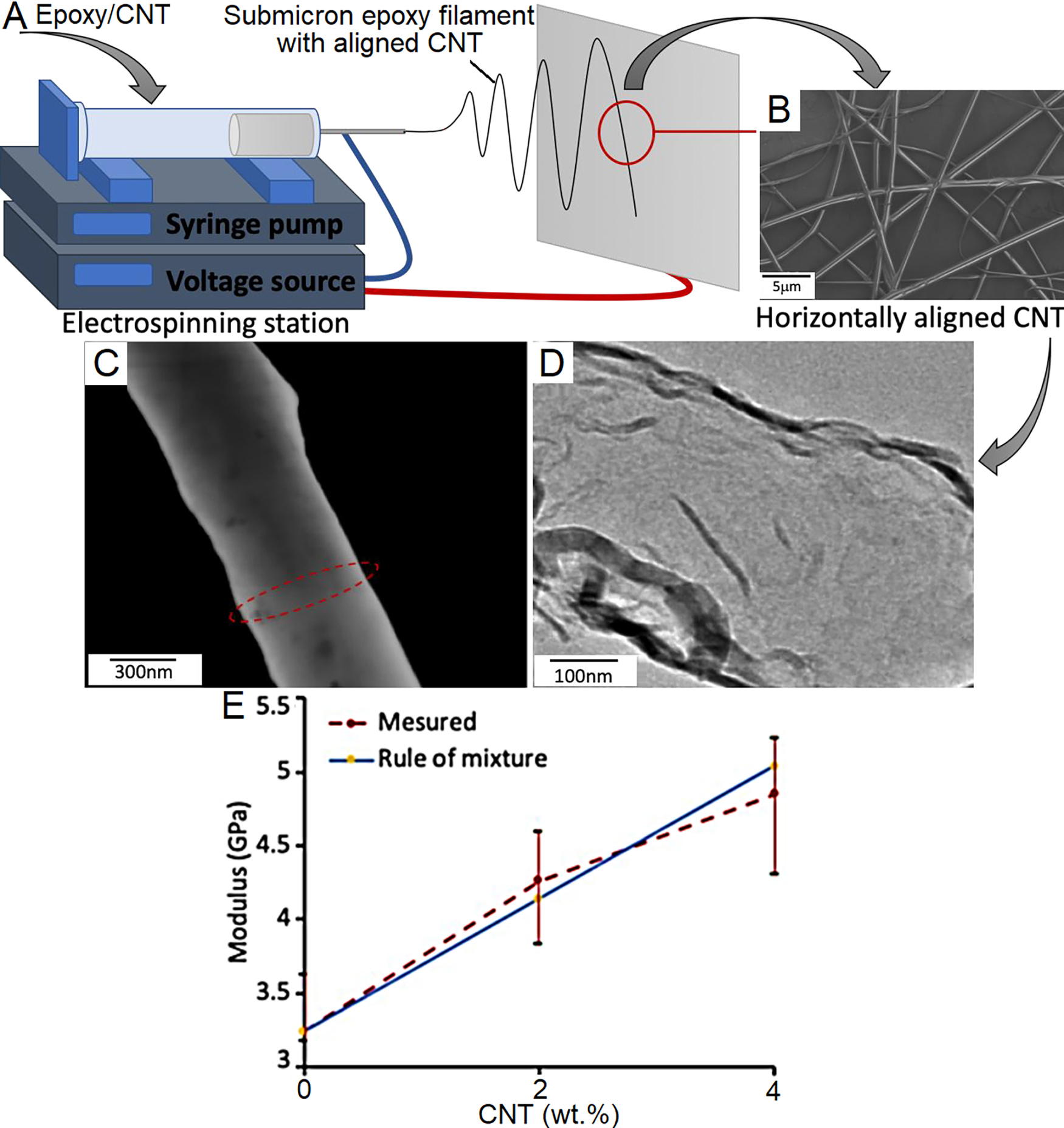
Figure 10: (A) Manufacture of epoxy/carbon nanotube nanocomposite nanofibers using electrospinning set up; (B) scanning electron microscopy image of epoxy/carbon nanotube nanocomposite nanofibers; (C) scanning transmission electron microscopy image of a epoxy/carbon nanotube nanocomposite nanofiber at higher resolution; (D) transmission electron microscopy image of epoxy/carbon nanotube nanocomposite nanofibers; and (E) tensile modulus vs. increasing carbon nanotube contents plots for hybrid nanofibers [122]. CNT = carbon nanotube. Reproduced with permission from ACS.
Few epoxy/fullerene nanocomposites have also been reported in literature [125]. For example, Jiang et al. [126] produced epoxy and fullerene nanoparticle based nanocomposite nanofibers. In these nanofibers, adding 2–3 wt.% fullerene contents enhanced the nanofiber/matrix bonding strength, so leading to ~26%–42% enhancements in the tensile strength of the nanocomposite nanofibers, compared to that of the neat epoxy matrix. This enhancement in tensile strength was attributed to the interfacial bonding between fiber and matrix and fullerene-modification of the epoxy matrix [127].
Unfortunately, very limited research attempts were reported so far for epoxy/nanocarbons nanocomposite nanofibers. Future scientific interest in this field may lead to competent engineering structures, corrosion resistant coatings, and energy devices [128–130].
6 Prospects, Challenges and Future Aspects of Conducting, Thermoplastic, and Thermosetting Nanocomposite Nanofibers
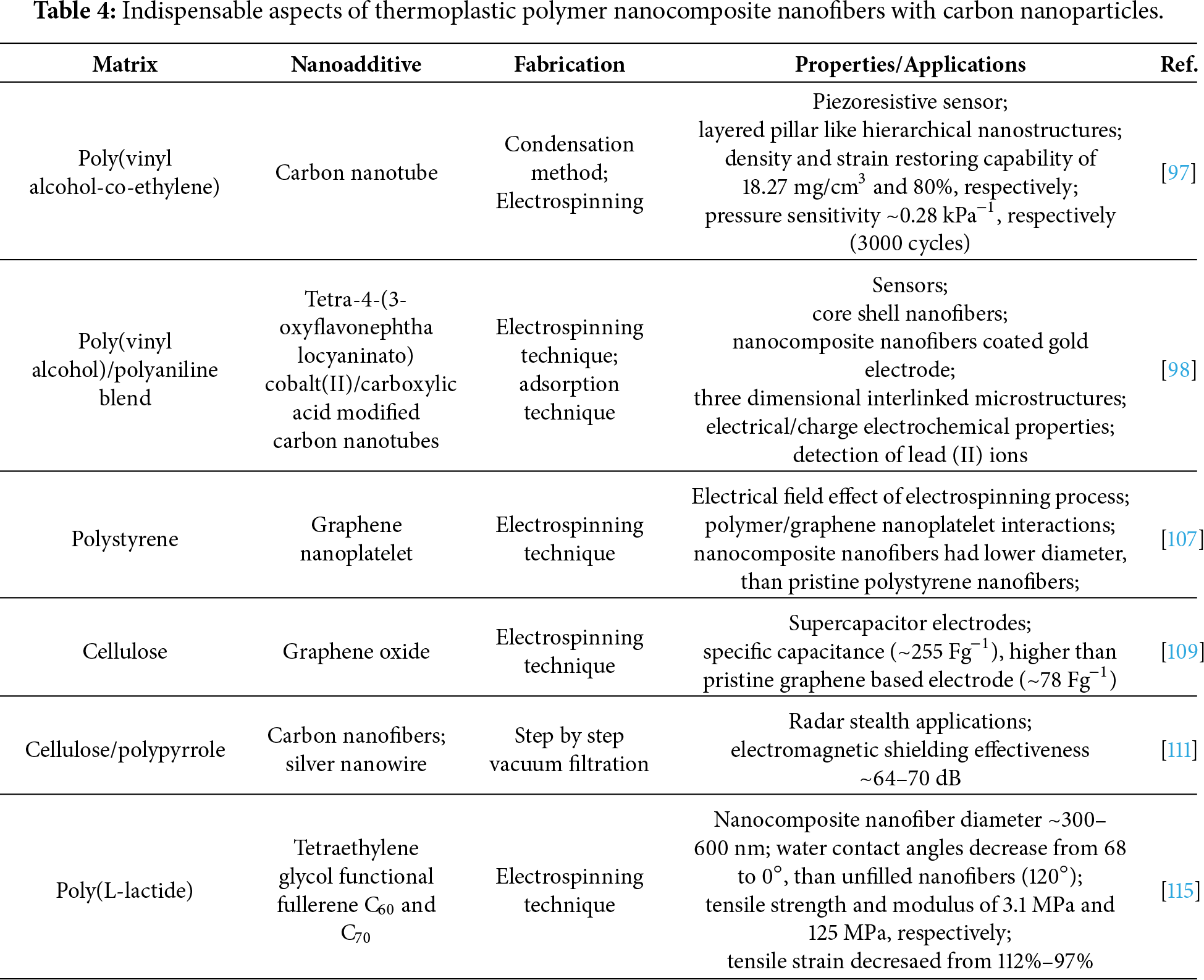
Among nanocarbon nanofillers, carbon nanotubes, graphene, and fullerene have been extensively applied as nanoreinforcements to form nanocomposite nanofibers with conductive polymers, thermoplastics, and thermosetting polymers. For nanofiber processing, electrospinning method has been frequently employed along with few other techniques, such as infiltration and solution methods. Succes of electrospinning approach for nanocomposite nanofibers depends upon its efficiency for developing nanofibers having high surface area, narrow diameter, smooth texture, flexibility, and mechanical strength. Moreover, electrospinning method allows easy control of processing parameters, such as flow rate, applied voltage, needle/spinneret to collector distance adjustments, and the like. Subsequently, electrospun polymer/carbonaceous nanocomposite nanofibers exhibited promising structural, microstructural, electron/heat/charge conductivities, and thermal/mechanical stabilities. Tables 3–5 present comparative outlook of design, fabrication, and performance of carbon nanoparticles reinforced conducting, thermoplastic, and thermosetting polymer nanocomposite nanofibers.
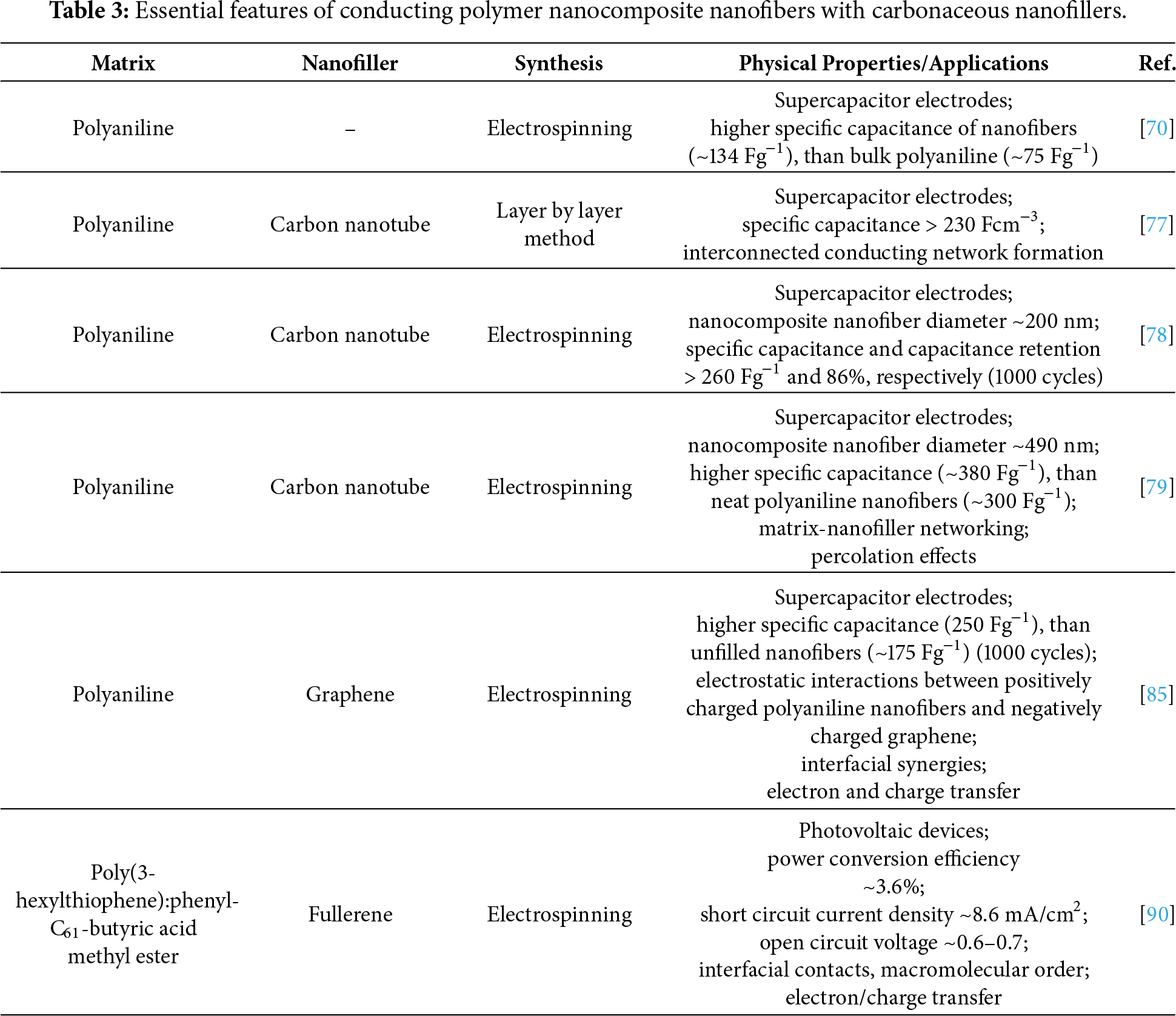
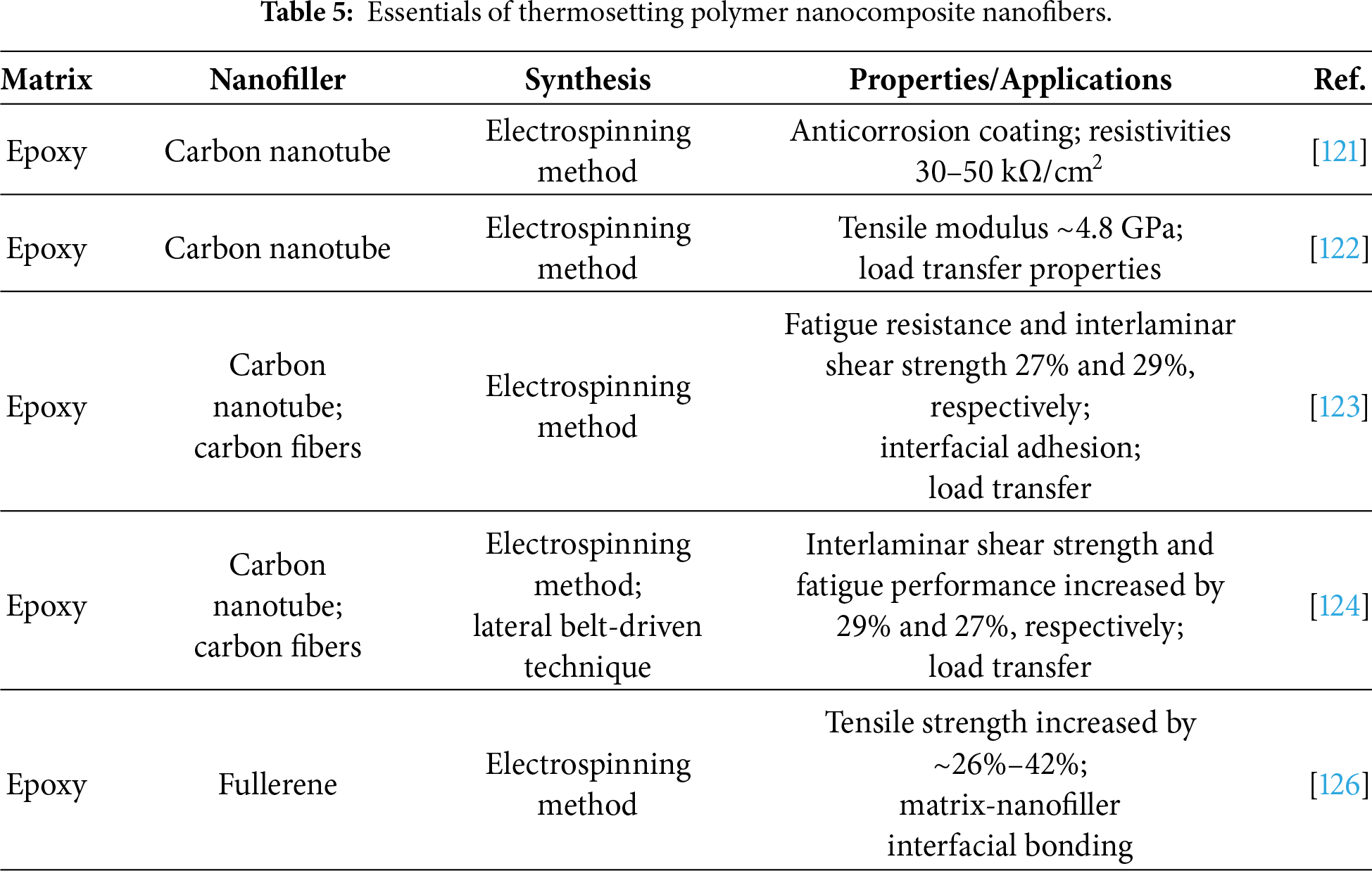
As discussed in preceding sections of this review, high performance conducting polymers polyaniline nanocomposite nanofibers with carbon nanoparticles have been successfully designed for supercapacitors and diodes. Furthermore, conducting polymers (e.g., polythiophene derivatives) with fullerene have been processed into nanofibers for photovoltaic applications.
Nanofibers of various thermoplastic polymers (poly(vinyl alcohol), poly(lactic acid), polyethylene, polystyrene, etc.) and their copolymers/blends with carbon nanotubes/graphene have been designed by electrospinning approach. In this concern, nanocomposite nanofibers of thermoplastic polymers (e.g., poly(vinyl alcohol) derivatives) with carbon nanotubes were formed by condensation method. These nanomaterials were studied for strain sensing and piezoelectric sensors. Thermoplastic polymer (e.g., polystyrene) and graphene derivatives based nanocomposite nanofibers were also investigated for supercapacitors. Like so, few green thermoplastics (e.g., cellulose) were processed into nanocomposite nanofibers for essential device related and structural applications. Particularly, adding carbon nanotube and graphene nanofillers in thermoplastic nanocomposite nanofibers have unique interfacially compatible microstructures, mechanical robustness, dimensional stability, thermal stability, and radiation shielding features. Subsequently, these nanofibers have been employed for structural engineering applications for aerospace, automotive, defense, and environmental membranes related industries.
Few researches observed for thermosetting polymers (e.g., epoxies) derived nanocomposite nanofibers with carbon nanotube or graphene. These hybrid nanofibers seemed to be worthwhile for anticorrosion and strength applications.
As per scientific reports, electrospinning technique revealed remarkable success for manufacturing high performance polymer nanocomposite nanofibers because of facile controllable parameters both for melt/solution precursors [131]. Primarily, solution viscosity, applied voltage, collector distance, flow rate, etc. affect the nanofiber texture and properties [132]. Herein, increasing solution viscosity or polymer solution concentration may lead to nonuniform thicker fibers. Moreover, optimally high molecular weight of polymers seems essential to produce even surface nonbeaded nanofibers. Notably, control of applied voltage has been found essential to induce stretching of polymer filament from needle tip to collector and Taylor cone formation. Furthermore, slow polymer solution flow rate, i.e., below critical threshold, may lead to broad distributions of fibers and large diameters. Therefore, marinating an optimum polymer solution flow rate seems to be indispensable to attain uniform nanofibers having narrow diameter. Besides, needle-to-collector distance must be suitably extended to suitably stretch polymer jet for fabricating fine and long nanofiber. In polymer nanocomposite nanofibers, alignment, orientation, or crosslinking depend upon surface interactions and nanofiber-nanofiber interactions. In addition, depending upon the types and functionalities of polymers and nanofillers, matrix-nanofiller interactions due to physical interactions, like hydrogen bonding, van der Waals, covalent interactions, etc., have been observed. Subsequently, well-controlled valuable properties of polymer nanocomposite nanofibers, including surface/volume ratio, surface porosity, texture/uniformity, and microstructural features, can be attained [133]. Following that, improvements in other physical properties of polymer nanocomposite nanofibers, including mechanical, electrical, dielectric, thermal, and biological aspects, have been reported [134].
Among foremost challenges of nanocomposite nanofiber processing, poor nanofiller dispersion and lack of predefined processing parameters seemed to be hindering the reproducibility and scalability for industrial scale applications. Actually, improper nanofiller dispersion may destroy the uniformity of nanofiber surface, matrix-nanofiller interactions, interfacial effects, and so desirable high end properties (e.g., electrical conductivity, percolation networks, mechanical integrity, etc.) and high end applications. To overcome these reproducibility and scalability challenges for industrial scale deployments, modified processing techniques need to be developed with easily controllable and optimizable parameters. Secondly, environmental impacts of processing and reprocessing polymer nanocomposite nanofibers need to be considered. For instance, toxicity of base materials for nanocarbon synthesis, use of green solvents and precursors, solvent recovery, use of green synthesis techniques appeared as crucial factors for salable nanofiber designs. Unfortunately, environmental aspects of nanocomposite nanofiber processing yet not focused in the literature hitherto. Thirdly, economics and cost of nanocarbon synthesis, nanocarbon modification, and polymer nanocomposite nanofiber fabrication must be considered to ensure feasible industrial level production and reproducibility of these materials. Here again, resituated scientific efforts seen to date for economical production/reproduction of polymer nanocomposite nanofibers. Afterwards, next challenges seemed to be the successful integration of valuable hybrid nanofibers into device architectures and engineering structures. In this concern, high performance nanocomposite nanofibers designs must be developed for utilization in electronics/energy devices. Consequently, it is important for electrical engineers to have prior knowledge of properties (percolation, conductivity, durability, etc.), reproducibility, and scalability = of nanofiber nanomaterials. As per literature up till now, focused future investigations and expert solutions seem to be indispensable for designing nanocomposite nanofibers for industrial scale electronics, energy, and device related systems.
Despite the progress so far in the field of nanocomposite nanofibers, several research gaps have been identified hindering their future industrial applications. Notably, fewer research attempts have been performed to control nanofiller dispersion, electrospinning parameters, reproducibility, green designs, and large scale modules. Up till now, theoretical investigations have not been performed for understanding the interfacial mechanisms and structure-property-performance of polymer/carbonaceous nanocomposite nanofibers.
Henceforth, in future, there is an utmost need of designing promising green matrices/nanocarbons nanocomposite nanofibers for green industrial revolutions in energy sector, electronics, space/auto engineering, etc. Thus, future advancements of polymer/carbonaceous hybrid nanofibers rely on concentrated efforts by the concerned scientists/engineers to develop precise large scale designs to meet commercial standards.
Conclusively, this manuscript presents up-to-date technological value of integrating carbonaceous nanoparticles (mainly carbon nanotube, graphene, fullerene) in conjugated, thermoplastics, and thermosetting polymer nanofibers. In this concern, fundamentals of carbon nanofillers and pristine polymeric nanofibers have been presented. The main emphasis of this review is to highlight different categories of polymer/nanocarbon nanocomposite nanofibers for their unique design combinations, microstructures, physical properties, and applications. Afterwards, potential prospects, challenges, and future demands for industrialization of conjugated, thermoplastic, and thermosetting nanofibers with carbonaceous nanoparticles have been discussed. In this regard, electrospinning was observed as the most frequently employed manufacturing technique for developing multidimensional nanocomposite nanofibers. Subsequently, variety of polymer/nanocarbon nanocomposite nanofibers have been designed depending upon the types of polymers, nanofillers, polymer/nanocarbon contents, and processing conditions. Furthermore, functionalities of carbonaceous nanofillers, matrix-nanofiller interfaces, polymer-nanocarbon synergies, and structure-characteristics interlinks define physical performance of these nanofibers. Consequently, the promising application areas of these nanomaterials have been noticed for supercapacitors, sensors, radiation shields, membranes, engineering structures, and other high tech devices and systems. Nevertheless, future industrial scale progress of these distinct hybrid nanostructures depends upon continuous field efforts to resolve the underlying challenges.
Acknowledgement: Not applicable.
Funding Statement: The author received no specific funding for this study.
Availability of Data and Materials: Not applicable.
Ethics Approval: Not applicable.
Conflicts of Interest: The author declares no conflicts of interest.
References
1. Mubasshira, Rahman MM, Uddin MN, Rhaman M, Roy S, Sarker MS. Next-generation smart carbon-polymer nanocomposites: advances in sensing and actuation technologies. Processes. 2025;13(9):2991. doi:10.3390/pr13092991. [Google Scholar] [CrossRef]
2. de Moura Morgado NK, de Melo Morgado GF, dos Anjos EGR, Passador FR. Advanced poly(lactic acid)/thermoplastic polyurethane blend-based nanocomposites with carbon nanotubes and graphene nanoplatelets for shape memory. J Polym Mater. 2025;42(1):95–110. doi:10.32604/jpm.2025.059364. [Google Scholar] [CrossRef]
3. Tiwari S, Srivastava M, Bag DS. Infrared and microwave radiation assisted self-healing property of exfoliated-graphene incorporated styrene-isoprene-styrene nanocomposites. J Polym Mater. 2025;42(1):187–204. doi:10.32604/jpm.2025.057322. [Google Scholar] [CrossRef]
4. Li Y, Hong J, Zhang J, Yang H, Wang H, Ye L, et al. Synergistically enhanced thermal conductivity, electrical insulation, and mechanical toughness of polymer composites with carbon nanofibers segregated by alumina nanoparticles. Compos Part B Eng. 2025;289(4):111935. doi:10.1016/j.compositesb.2024.111935. [Google Scholar] [CrossRef]
5. Sunil M, Jelmy EJ, Thomas RM, Saji KJ, John H. Self-powered impact sensors based on electrospun acrylonitrile butadiene styrene triboelectric nanogenerators for wearable helmet applications. RSC Appl Polym. 2026;4(1):226–35. doi:10.1039/d5lp00089k. [Google Scholar] [CrossRef]
6. Li J, Fu X, Wen Y, Xu H, Liao Q, Yu DG, et al. Self-assembled hollow microporous organic polymers embedded in polymer fibers for advanced food preservation. J Polym Mater. 2025;42(2):435–48. doi:10.32604/jpm.2025.064290. [Google Scholar] [CrossRef]
7. Giannopoulos GI. Carbon nanotuballs: can they drive the future of nanofibers? Carbon Trends. 2024;16(13):100390. doi:10.1016/j.cartre.2024.100390. [Google Scholar] [CrossRef]
8. Liu Y, Liu L, Zhao H, Yin J. The fabrication of polyimide-based tunable charge traps ternary memristors doped with Ni-co coated carbon composite nanofibers. Polymers. 2024;16(21):2993. doi:10.3390/polym16212993. [Google Scholar] [PubMed] [CrossRef]
9. Zare Y, Naqvi M, Rhee KY, Park SJ. Simulation of electrical conductivity for polymer carbon nanofiber composites assuming an extended nanofiber by interphase depth and tunneling distance. Sci Rep. 2025;15(1):31623. doi:10.1038/s41598-025-17613-x. [Google Scholar] [PubMed] [CrossRef]
10. Zhang H. Research progress of polylactic acid/graphene composites and polylactic acid/graphene oxide composites. Appl Comput Eng. 2025;130(1):23–9. doi:10.54254/2755-2721/2025.20277. [Google Scholar] [CrossRef]
11. Huang X, Li Y, Li Z, Zhang Y, Ran L, Zheng G, et al. Preparation, performance enhancement, and energy storage applications of lignin-based carbon nanofibers. Biomass Convers Biorefin. 2025;15(3):3313–32. doi:10.1007/s13399-024-05387-7. [Google Scholar] [CrossRef]
12. Chronakis IS. Micro- and nanofibers by electrospinning technology. In: Micromanufacturing engineering and technology. Amsterdam, The Netherlands: Elsevier; 2026. p. 569–609. doi:10.1016/b978-0-443-15449-2.00028-5. [Google Scholar] [CrossRef]
13. Liu J, Chai X, Zhang X, Jia X, Yao H, Fu J. Review on functional electrospun nanofibers: theory, application and fabrication. Mater Sci Eng B. 2024;307:117488. doi:10.1016/j.mseb.2024.117488. [Google Scholar] [CrossRef]
14. Ma J, Xu J, Zao Y, Sun S, Liu S, Jin Y, et al. Mechanical and thermal enhancement of polylactic acid/poly (butylene adipate-co-terephthalate) composites by modified chitin micro-nanofibers. Polym Compos. 2026;47(3):2340–8. doi:10.1002/pc.70285. [Google Scholar] [CrossRef]
15. Mishra RK, Goel S, Sharma A. Multifunctional chitin, chitosan, and nano-chitosan composites for water purification, eco-friendly packaging, flexible electronics, clean energy, and biomedical solutions: a comprehensive review. Polym Bull. 2026;83(5):269. doi:10.1007/s00289-025-06280-7. [Google Scholar] [CrossRef]
16. Adeyeye SA, Sankarganesh P. Applications of biopolymers as sustainable materials in value-added and functional food packaging: a review. Nutr Food Sci. 2026;56(1):114–42. doi:10.1108/NFS-03-2025-0126. [Google Scholar] [CrossRef]
17. Jin SG. Recent applications of chitosan-based biomaterials as wound dressings. Int J Mol Sci. 2026;27(4):1637. doi:10.3390/ijms27041637. [Google Scholar] [PubMed] [CrossRef]
18. Mayakrishnan V, Venkatesan R, Madhavan AA. Development and characterization of antimicrobial nisin/MMT K10/AgNPs nanocomposite coatings on oxygen plasma surface-modified polypropylene for food packaging applications. Food Bioprocess Technol. 2025;18(4):3553–65. doi:10.1007/s11947-024-03683-8. [Google Scholar] [CrossRef]
19. Venkatesan R, Kamaraj E, Mayakrishnan V, Alrashed MM, Kim SC. Advanced PBAT/Fe3O4 nanocomposite films for extending the shelf life of cherry tomatoes. Food Chem. 2025;496(3):146837. doi:10.1016/j.foodchem.2025.146837. [Google Scholar] [PubMed] [CrossRef]
20. Wang Y, Zhai W, Li J, Liu H, Li C, Li J. Friction behavior of biodegradable electrospun polyester nanofibrous membranes. Tribol Int. 2023;188:108891. doi:10.1016/j.triboint.2023.108891. [Google Scholar] [CrossRef]
21. Xiao C, Peng J, Jiao Y, Shen Q, Zhao Y, Zhao F, et al. Strong and tough multilayer heterogeneous pyrocarbon based composites. Adv Funct Mater. 2024;34(51):2409881. doi:10.1002/adfm.202409881. [Google Scholar] [CrossRef]
22. Wang Y, Xu Y, Zhai W, Zhang Z, Liu Y, Cheng S, et al. In-situ growth of robust superlubricated nano-skin on electrospun nanofibers for post-operative adhesion prevention. Nat Commun. 2022;13(1):5056. doi:10.1038/s41467-022-32804-0. [Google Scholar] [PubMed] [CrossRef]
23. Jing J, Yao B, Sun W, Chen J, Xu J, Fu J. Ultra-tough, yet rigid and healable supramolecular polymers with variable stiffness for multimodal actuators. Angew Chem Int Ed. 2024;63(42):e202410693. doi:10.1002/anie.202410693. [Google Scholar] [PubMed] [CrossRef]
24. Chen J, Wang D, Fu J. Stiff yet tough, moisture-tolerant, room temperature self-healing and thermoconductive biomimetic nanocomposites. Adv Mater. 2025;37(42):e07548. doi:10.1002/adma.202507548. [Google Scholar] [PubMed] [CrossRef]
25. Scaffaro R, Maio A, Lopresti F, Botta L. Nanocarbons in electrospun polymeric nanomats for tissue engineering: a review. Polymers. 2017;9(2):76. doi:10.3390/polym9020076. [Google Scholar] [PubMed] [CrossRef]
26. Anbazhagan MK, Mahalingam S. Advancements in nanofibers and nanocomposites: cutting-edge innovations for tissue engineering and drug delivery—a review. Sci Prog. 2025;108(2):00368504241300842. doi:10.1177/00368504241300842. [Google Scholar] [PubMed] [CrossRef]
27. Huang ZM, Zhang YZ, Kotaki M, Ramakrishna S. A review on polymer nanofibers by electrospinning and their applications in nanocomposites. Compos Sci Technol. 2003;63(15):2223–53. doi:10.1016/S0266-3538(03)00178-7. [Google Scholar] [CrossRef]
28. Chronakis IS. Novel nanocomposites and nanoceramics based on polymer nanofibers using electrospinning process—a review. J Mater Process Technol. 2005;167(2–3):283–93. doi:10.1016/j.jmatprotec.2005.06.053. [Google Scholar] [CrossRef]
29. Shahila FD, Ashwini A. Nanoscopic marvels: exploring carbon nanoparticles in biomedicine. In: New frontiers in materials science: interdisciplinary approaches to innovation and technologies. Hoboken, NJ, USA: John Wiley & Sons, Inc.; 2025. p. 61–76. doi:10.1002/9781394314935.ch4. [Google Scholar] [CrossRef]
30. Masroor S. Carbon allotrope composites: basics, properties, and applications. In: Carbon allotropes and composites: materials for environment protection and remediation. Hoboken, NJ, USA: John Wiley & Sons, Inc.; 2023. p. 17–30. [Google Scholar]
31. Xin X, Nepal J, Shohag JI, de Souza Junior JC, He S, Ahmad W, et al. Enhancing corn growth and nutrient uptake using carbon nanoparticles derived from carbon black: a two-year field study. J Soil Sci Plant Nutr. 2025;25(1):1159–74. doi:10.1007/s42729-024-02192-z. [Google Scholar] [CrossRef]
32. Yim YJ, Yoon YH, Kim SH, Lee JH, Chung DC, Kim BJ. Carbon nanotube/polymer composites for functional applications. Polymers. 2025;17(1):119. doi:10.3390/polym17010119. [Google Scholar] [PubMed] [CrossRef]
33. Wang X, Zhong J. Revisiting the effects of carbon nanotube agglomerates in cement. Carbon. 2025;231:119710. doi:10.1016/j.carbon.2024.119710. [Google Scholar] [CrossRef]
34. Kim M, Goerzen D, Jena PV, Zeng E, Pasquali M, Meidl RA, et al. Human and environmental safety of carbon nanotubes across their life cycle. Nat Rev Mater. 2024;9(1):63–81. doi:10.1038/s41578-023-00611-8. [Google Scholar] [CrossRef]
35. Abubakre OK, Medupin RO, Akintunde IB, Jimoh OT, Abdulkareem AS, Muriana RA, et al. Carbon nanotube-reinforced polymer nanocomposites for sustainable biomedical applications: a review. J Sci Adv Mater Devices. 2023;8(2):100557. doi:10.1016/j.jsamd.2023.100557. [Google Scholar] [CrossRef]
36. Sabet M. Advanced developments in carbon nanotube polymer composites for structural applications. Iran Polym J. 2025;34(6):917–46. doi:10.1007/s13726-024-01419-1. [Google Scholar] [CrossRef]
37. Reddy AKMR, Darwiche A, Reddy MV, Zaghib K. Review on advancements in carbon nanotubes: synthesis, purification, and multifaceted applications. Batteries. 2025;11(2):71. doi:10.3390/batteries11020071. [Google Scholar] [CrossRef]
38. Cao D. Strengthening the interphase of thermoplastic sandwich composites by interleaving carbon nanotube yarns. Mater Today Commun. 2023;36(2):106655. doi:10.1016/j.mtcomm.2023.106655. [Google Scholar] [CrossRef]
39. Liu C, Cai Y, Liang T, Zang T, Fei G, Xia H. Additive manufacturing flexible, conductive and self-healing polydimethylsiloxane carbon nanotubes composites for electromagnetic interference shielding and microwave absorption. Chem Eng J. 2025;520(5):165717. doi:10.1016/j.cej.2025.165717. [Google Scholar] [CrossRef]
40. Li Y, Dang NK, Gao G, Shin H, Sharma S, Wu X, et al. Gold nanocrystals and conjugated polymer-wrapped single-walled carbon nanotube composites for catalyzing CO2 electroreduction. ACS Appl Nano Mater. 2025;8(17):9077–89. doi:10.1021/acsanm.5c01797.s001. [Google Scholar] [CrossRef]
41. Wang Y, Lu H, Lian W, Sun Y, Meng Z, Zhang Q, et al. Construction of multi-functional silicone rubber/reduced graphene oxide/multi-walled carbon nanotube composites with segregated structure by surfactant-free pickering emulsion method. Compos Sci Technol. 2025;259(32):110950. doi:10.1016/j.compscitech.2024.110950. [Google Scholar] [CrossRef]
42. Sabet M. Innovations in carbon nanotube polymer composites: electrical, thermal, and mechanical advancements for aerospace and automotive applications. Synth Met. 2025;310:117794. doi:10.1016/j.synthmet.2024.117794. [Google Scholar] [CrossRef]
43. Cao W, Wang X, Wang Z, Ji D, Su Z, Zhao K, et al. Stiff, compressible and multi-functional aramid nanofiber/carbon nanotube composite wet-gel with tunable strength and toughness. Polymer. 2025;334(2):128764. doi:10.1016/j.polymer.2025.128764. [Google Scholar] [CrossRef]
44. Galvagno E, Tartaglia E, Stratigaki M, Tossi C, Marasco L, Menegazzo F, et al. Present status and perspectives of graphene and graphene-related materials in cultural heritage. Adv Funct Mater. 2024;34(13):2313043. doi:10.1002/adfm.202313043. [Google Scholar] [CrossRef]
45. Lalire T, Longuet C, Taguet A. Electrical properties of graphene/multiphase polymer nanocomposites: a review. Carbon. 2024;225:119055. doi:10.1016/j.carbon.2024.119055. [Google Scholar] [CrossRef]
46. Ramezani MJ, Rahmani O. A review of recent progress in the graphene syntheses and its applications. Mech Adv Mater Struct. 2025;32(21):5256–88. doi:10.1080/15376494.2024.2420911. [Google Scholar] [CrossRef]
47. García-Mochales P, Martínez-Galera AJ. Strain engineering in graphene at the nanometer scale. Nano Lett. 2025;25(45):16097–103. doi:10.1021/acs.nanolett.5c03926. [Google Scholar] [PubMed] [CrossRef]
48. Van Goethem C, Shen Y, Chi HY, Mensi M, Zhao K, Nijmeijer A, et al. Advancing molecular sieving via Å-scale pore tuning in bottom-up graphene synthesis. ACS Nano. 2024;18(7):5730–40. doi:10.1021/acsnano.3c11885. [Google Scholar] [PubMed] [CrossRef]
49. Devi N, Kumar R, Singh S, Singh RK. Recent development of graphene-based composite for multifunctional applications: energy, environmental and biomedical sciences. Crit Rev Solid State Mater Sci. 2024;49(1):72–140. doi:10.1080/10408436.2022.2132910. [Google Scholar] [CrossRef]
50. Bhatt S, Punetha VD, Pathak R, Punetha M. Graphene in nanomedicine: a review on nano-bio factors and antibacterial activity. Colloids Surf B Biointerfaces. 2023;226(4):113323. doi:10.1016/j.colsurfb.2023.113323. [Google Scholar] [PubMed] [CrossRef]
51. Latif Z, Ali M, Lee EJ, Zubair Z, Lee KH. Thermal and mechanical properties of nano-carbon-reinforced polymeric nanocomposites: a review. J Compos Sci. 2023;7(10):441. doi:10.3390/jcs7100441. [Google Scholar] [CrossRef]
52. Park B, Movaghgharnezhad S, Lee SM, Park Y, Son S, Huh YS, et al. Graphene nanofibers by integrated manufacturing of electrospinning and laser graphitization for miniaturized energy storage devices. Adv Sci. 2025;12(21):2414607. doi:10.1002/advs.202414607. [Google Scholar] [PubMed] [CrossRef]
53. Smalley RE. Discovering the fullerenes. Rev Mod Phys. 1997;69(3):723–30. doi:10.1103/revmodphys.69.723. [Google Scholar] [CrossRef]
54. Chang X, Xu Y, von Delius M. Recent advances in supramolecular fullerene chemistry. Chem Soc Rev. 2024;53(1):47–83. doi:10.1039/d2cs00937d. [Google Scholar] [PubMed] [CrossRef]
55. Wu Q, Ding S, Sun A, Xia Y. Recent progress on non-fullerene acceptor materials for organic solar cells. Mater Today Chem. 2024;41:102290. doi:10.1016/j.mtchem.2024.102290. [Google Scholar] [CrossRef]
56. Kausar A. Breakthroughs of fullerene in optoelectronic devices—an overview. Hybrid Adv. 2024;6(5):100233. doi:10.1016/j.hybadv.2024.100233. [Google Scholar] [CrossRef]
57. Peng K, Huang H. Investigating the origin of the core-shell structure of polymeric nanofibers during fabrication process at the atomistic scale. Appl Surf Sci. 2023;608:155105. doi:10.1016/j.apsusc.2022.155105. [Google Scholar] [CrossRef]
58. Dou L, Yang B, Lan S, Liu Y, Liu Y, Nan CW, et al. High-entropy-nanofibers enhanced polymer nanocomposites for high-performance energy storage. Adv Energy Mater. 2023;13(11):2203925. doi:10.1002/aenm.202203925. [Google Scholar] [CrossRef]
59. Razzaghi D, Babazadeh-Mamaqani M, Babaie A, Esmati F, Roghani-Mamaqani H, Rezaei M, et al. Chromic electrospun polymer nanofibers: preparation, applications, and the future. ACS Appl Mater Interfaces. 2025;17(3):4247–89. doi:10.1021/acsami.4c17105. [Google Scholar] [PubMed] [CrossRef]
60. Yuan H, Zhou Q, Zhang Y. Improving fibre alignment during electrospinning. In: Electrospun nanofibers. Amsterdam, The Netherlands: Elsevier; 2026. p. 91–113. doi:10.1016/b978-0-443-21519-3.00025-x. [Google Scholar] [CrossRef]
61. Elfawal GF, Šišková AO, Andicsová AE. Electrospinning: a game-changer in fiber production and practical applications. Fibres Polym. 2025;26(10):4133–60. doi:10.1007/s12221-025-01105-w. [Google Scholar] [CrossRef]
62. Yang C, Wang K, Lyu W, Liu H, Li J, Wang Y, et al. Nanofibrous porous organic polymers and their derivatives: from synthesis to applications. Adv Sci. 2024;11(19):2400626. doi:10.1002/advs.202400626. [Google Scholar] [PubMed] [CrossRef]
63. Liu Y, Hao M, Zhou C, Yang B, Jiang S, Huang J, et al. Scale-up strategies for electrospun nanofiber production. In: Electrospun and nanofibrous membranes. Amsterdam, The Netherlands: Elsevier; 2023. p. 205–66. doi:10.1016/B978-0-12-823032-9.00020-9. [Google Scholar] [CrossRef]
64. Hosseini Ravandi SA, Sadrjahani M, Valipouri A, Dabirian F, Ko FK. Recently developed electrospinning methods: a review. Text Res J. 2022;92(23–24):5130–45. doi:10.1177/00405175211069880. [Google Scholar] [CrossRef]
65. Nguyen TD, Roh S, Nguyen MTN, Lee JS. Structural control of nanofibers according to electrospinning process conditions and their applications. Micromachines. 2023;14(11):2022. doi:10.3390/mi14112022. [Google Scholar] [PubMed] [CrossRef]
66. Jiang J, Liu Y, Chen J, Wang X, Yu Z, Li W, et al. In-situ molding of micro three-dimensional columnar structure by electric-field-focused electrospinning. Mater Today Commun. 2023;35(3):105589. doi:10.1016/j.mtcomm.2023.105589. [Google Scholar] [CrossRef]
67. Akhoundi B, Modanloo V, Mashayekhi A. Design and manufacture of an additive manufacturing printer based on 3D melt electrospinning writing of polymer. Int Polym Process. 2023;38(3):424–33. doi:10.1515/ipp-2023-4352. [Google Scholar] [CrossRef]
68. Cho Y, Beak JW, Sagong M, Ahn S, Nam JS, Kim ID. Electrospinning and nanofiber technology: fundamentals, innovations, and applications. Adv Mater. 2025;37(28):2500162. doi:10.1002/adma.202500162. [Google Scholar] [PubMed] [CrossRef]
69. Zahid M, Anum R, Siddique S, Shakir HF, Rehan ZA. Polyaniline-based nanocomposites for electromagnetic interference shielding applications: a review. J Thermoplast Compos Mater. 2023;36(4):1717–61. doi:10.1177/08927057211022408. [Google Scholar] [CrossRef]
70. Lu C, Chen X. Electrospun polyaniline nanofiber networks toward high-performance flexible supercapacitors. Adv Mater Technol. 2019;4(11):1900564. doi:10.1002/admt.201900564. [Google Scholar] [CrossRef]
71. Mahanty B, Ghosh SK, Malavekar DB, Kim JH, Lee DW. PANI nanowire-decorated electrospun composite nanofibers for advanced triboelectric Nanogenerators and rectifier-free self-charging supercapacitors. Chem Eng J. 2025;519:165418. doi:10.1016/j.cej.2025.165418. [Google Scholar] [CrossRef]
72. Li J, Guo D, Wang Q, Chen X, Li J, Sha L, et al. Effective approaches to co-dope lignin based concave shaped carbon nanofibers with multiple elements for supercapacitors. Int J Biol Macromol. 2025;307(Pt 1):141921. doi:10.1016/j.ijbiomac.2025.141921. [Google Scholar] [PubMed] [CrossRef]
73. Wang Y, Wu S, Chang S, Rong K, Dong S. Lignin-derived hierarchically porous carbon nanofibers via deep eutectic solvent electrospinning and silica-templated etching for high-performance supercapacitors. ACS Appl Mater Interfaces. 2025;17(31):44825–39. doi:10.1021/acsami.5c10539. [Google Scholar] [PubMed] [CrossRef]
74. Sharma S, Lakshmi SM. Conducting polymer nanofibers and nanotubes as a potential nanotechnology: current status and future directions. Curr Nanomater. 2025;10(3):256–72. doi:10.2174/0124054615293683240405060440. [Google Scholar] [CrossRef]
75. Zare Y, Munir MT, Rhee KY, Park SJ. A new method for conductivity prediction in polymer carbon nanofiber system by the interphase size and total conductivity of constituents. Polymer. 2025;316:127869. doi:10.1016/j.polymer.2024.127869. [Google Scholar] [CrossRef]
76. Wu Z, Yao X, Xing Y, Huang P, Li B, Liu L. Enhanced electromagnetic shielding and surface modulation of electrospun cellulose acetate-based fiber membranes via multi-walled carbon nanotubes and in-situ polyaniline polymerization. Colloids Surf A Physicochem Eng Aspects. 2025;718:136957. doi:10.1016/j.colsurfa.2025.136957. [Google Scholar] [CrossRef]
77. Hyder MN, Lee SW, Cebeci FÇ, Schmidt DJ, Shao-Horn Y, Hammond PT. Layer-by-layer assembled polyaniline nanofiber/multiwall carbon nanotube thin film electrodes for high-power and high-energy storage applications. ACS Nano. 2011;5(11):8552–61. doi:10.1021/nn2029617. [Google Scholar] [PubMed] [CrossRef]
78. Chaudhari S, Sharma Y, Archana PS, Jose R, Ramakrishna S, Mhaisalkar S, et al. Electrospun polyaniline nanofibers web electrodes for supercapacitors. J Appl Polym Sci. 2013;129(4):1660–8. doi:10.1002/app.38859. [Google Scholar] [CrossRef]
79. Simotwo SK, DelRe C, Kalra V. Supercapacitor electrodes based on high-purity electrospun polyaniline and polyaniline-carbon nanotube nanofibers. ACS Appl Mater Interfaces. 2016;8(33):21261–9. doi:10.1021/acsami.6b03463. [Google Scholar] [PubMed] [CrossRef]
80. Gazzato L, Frasconi M. Carbon nanotubes and their composites for flexible electrochemical biosensors. Anal Sens. 2025;5(1):e202400038. doi:10.1002/anse.202400038. [Google Scholar] [CrossRef]
81. Zhu S, Huang Y, Fang B. Progress and prospect for conducting polymer fibers. Adv Mater. 2025;37(48):e04071. doi:10.1002/adma.202504071. [Google Scholar] [PubMed] [CrossRef]
82. Liu W, Qiao F, Chu H. Multishell hierarchical GCNF/PANI/NiCo-LDH nanofibers film for high-performance supercapacitors. Electrochim Acta. 2025;511:145410. doi:10.1016/j.electacta.2024.145410. [Google Scholar] [CrossRef]
83. Liu Y, Jin Q, Wang Y, Qin Z. Restricted growth of polyaniline nanofiber arrays between holey graphene sheets on carbon cloth towards improved charge storage capacity. J Energy Storage. 2025;106(8):114857. doi:10.1016/j.est.2024.114857. [Google Scholar] [CrossRef]
84. Lu G, Zhang H, Cao G. Design and electrochemical performance of one-dimensional polyaniline anode materials: a review. Coatings. 2025;15(11):1283. doi:10.3390/coatings15111283. [Google Scholar] [CrossRef]
85. Zhou S, Zhang H, Zhao Q, Wang X, Li J, Wang F. Graphene-wrapped polyaniline nanofibers as electrode materials for organic supercapacitors. Carbon. 2013;52(15–16):440–50. doi:10.1016/j.carbon.2012.09.055. [Google Scholar] [CrossRef]
86. Ehsani A, Heidari AA, Shiri HM. Electrochemical pseudocapacitors based on ternary nanocomposite of conductive polymer/graphene/metal oxide: an introduction and review to it in recent studies. Chem Rec. 2019;19(5):908–26. doi:10.1002/tcr.201800112. [Google Scholar] [PubMed] [CrossRef]
87. Chung D, Balamurugan C, Park B, Lee H, Cho I, Yoon C, et al. Fast-growth polymer: fullerene bulk-heterojunction thin films for efficient organic photovoltaics. Nanomater. 2024;14(6):502. doi:10.3390/nano14060502. [Google Scholar] [PubMed] [CrossRef]
88. Kim JY. Phase behavior of conjugated polymer solutions and blends: the flory-Huggins lattice model. J Phys Chem C. 2025;129(7):3983–92. doi:10.1021/acs.jpcc.5c00343. [Google Scholar] [CrossRef]
89. Rani D, Tripathi P, Priyanka, Kumar P. Low-dimensional and multifunctional hybrid materials for energy storage: an introduction. In: Low-dimensional multifunctional hybrid nanostructured materials. Berlin/Heidelberg, Germany: Springer; 2025. p. 1–24. doi:10.1007/978-981-96-7952-2_1. [Google Scholar] [CrossRef]
90. Kurniawan M, Salim T, Tai KF, Sun S, Sie EJ, Wu X, et al. Carrier dynamics in polymer nanofiber: fullerene solar cells. J Phys Chem C. 2012;116(34):18015–22. doi:10.1021/jp302968e. [Google Scholar] [CrossRef]
91. Rezić Meštrović I, Somogyi Škoc M. Nanofiber-based innovations in energy storage systems. Polymers. 2025;17(11):1456. doi:10.3390/polym17111456. [Google Scholar] [PubMed] [CrossRef]
92. Baltrocchi APD, Carnevale Miino M, Maggi L, Rada EC, Torretta V. A comprehensive critical review of life cycle assessment applied to thermoplastic polymers for mechanical and electronic engineering. Environ Technol Rev. 2025;14(1):458–70. doi:10.1080/21622515.2025.2491632. [Google Scholar] [CrossRef]
93. Kausar A. Thermally conducting polymer/nanocarbon and polymer/inorganic nanoparticle nanocomposite: a review. Polym Plast Technol Mater. 2020;59(8):895–909. doi:10.1080/25740881.2019.1708103. [Google Scholar] [CrossRef]
94. Sabantina L. Nanocarbons-based textiles for flexible energy storage. In: Nanosensors and nanodevices for smart multifunctional textiles. Amsterdam, The Netherlands: Elsevier; 2021. p. 163–88. doi:10.1016/b978-0-12-820777-2.00011-x. [Google Scholar] [CrossRef]
95. Fajardo-Diaz JL, Morelos-Gomez A, Cruz-Silva R, Ishii K, Yasuike T, Kawakatsu T, et al. Low-pressure reverse osmosis membrane made of cellulose nanofiber and carbon nanotube polyamide nano-nanocomposite for high purity water production. Chem Eng J. 2022;448(1):137359. doi:10.1016/j.cej.2022.137359. [Google Scholar] [CrossRef]
96. Arjmandi SK, Khademzadeh Yeganeh J, Zare Y, Rhee KY. Development of Kovacs model for electrical conductivity of carbon nanofiber-polymer systems. Sci Rep. 2023;13(1):7. doi:10.1038/s41598-022-26139-5. [Google Scholar] [PubMed] [CrossRef]
97. Song W, Xiao R. Covalently interconnected thermoplastic polymeric nanofiber/carbon nanotube composite nanofibrous aerogels for piezoresistive sensors. ACS Appl Nano Mater. 2024;7(7):7510–9. doi:10.1021/acsanm.4c00080. [Google Scholar] [CrossRef]
98. Shoba S, Mambanda A, Booysen IN. Synergism in the electrocatalytic properties of cobalt phthalocyanine-carbon nanotube-polymeric electrospun nanofibers immobilized on a gold electrode for the detection of lead(II) ions. Mater Chem Phys. 2024;325:129730. doi:10.1016/j.matchemphys.2024.129730. [Google Scholar] [CrossRef]
99. Yalcinkaya B, Buzgo M. A guide for industrial needleless electrospinning of synthetic and hybrid nanofibers. Polymers. 2025;17(22):3019. doi:10.3390/polym17223019. [Google Scholar] [PubMed] [CrossRef]
100. Scaffaro R, Settanni L, Gulino EF. Release profiles of carvacrol or chlorhexidine of PLA/graphene nanoplatelets membranes prepared using electrospinning and solution blow spinning: a comparative study. Molecules. 2023;28(4):1967. doi:10.3390/molecules28041967. [Google Scholar] [PubMed] [CrossRef]
101. Jeong C, Starr FW, Beers KL, Douglas JF. Influence of functionalization on the crystallinity and basic thermodynamic properties of polyethylene. Macromolecules. 2023;56(11):3873–83. doi:10.1021/acs.macromol.2c02569. [Google Scholar] [CrossRef]
102. Mohd Abdah MAA, Zubair NA, Azman NHN, Sulaiman Y. Fabrication of PEDOT coated PVA-GO nanofiber for supercapacitor. Mater Chem Phys. 2017;192(Part B):161–9. doi:10.1016/j.matchemphys.2017.01.058. [Google Scholar] [CrossRef]
103. Shah S, Yin PT, Uehara TM, Chueng SD, Yang L, Lee KB. Graphene: guiding stem cell differentiation into oligodendrocytes using graphene-nanofiber hybrid scaffolds (Adv. Mater. 22/2014). Adv Mater. 2014;26(22):3570. doi:10.1002/adma.201470146. [Google Scholar] [CrossRef]
104. Kausar A. Polymer/nanocarbon nanocomposite-based eco-friendly textiles. In: Handbook of nanomaterials and nanocomposites for energy and environmental applications. Berlin/Heidelberg, Germany: Springer; 2021. p. 2917–39. doi:10.1007/978-3-030-36268-3_57. [Google Scholar] [CrossRef]
105. Öz Ö, Öztürk FH. A comprehensive experimental study of the potential use of 3D printable thermoplastic polymers as structural adhesives. Int J Adv Manuf Technol. 2025;137(11):6073–90. doi:10.1007/s00170-025-15532-9. [Google Scholar] [CrossRef]
106. Torrisi L, Silipigni L, Torrisi A, Cutroneo M, Malara A, Fotia A, et al. Physical characterization of multiwire polystyrene produced by electrospinning technique. Polymers. 2025;17(19):2587. doi:10.3390/polym17192587. [Google Scholar] [PubMed] [CrossRef]
107. Li Y, Porwal H, Huang Z, Zhang H, Bilotti E, Peijs T. Enhanced thermal and electrical properties of polystyrene-graphene nanofibers via electrospinning. J Nanomater. 2016;2016(4):4624976. doi:10.1155/2016/4624976. [Google Scholar] [CrossRef]
108. Fan L, Wu C, Zheng J, Song F, Wang H, Li F. Mechanical properties and micro-mechanism of cement-based materials strengthened by organic-inorganic synergistic effects of cellulose nanofibers and graphene oxide. Constr Build Mater. 2025;476(7):141296. doi:10.1016/j.conbuildmat.2025.141296. [Google Scholar] [CrossRef]
109. Rath T, Kundu PP. Reduced graphene oxide paper based nanocomposite materials for flexible supercapacitors. RSC Adv. 2015;5(34):26666–74. [Google Scholar]
110. Li XY, Yan Y, Zhang B, Bai TJ, Wang ZZ, He TS. PAN-derived electrospun nanofibers for supercapacitor applications: ongoing approaches and challenges. J Mater Sci. 2021;56(18):10745–81. doi:10.1007/s10853-021-05939-6. [Google Scholar] [CrossRef]
111. Wu B, Yu Y, Huang J, Wu P, Wu Y, Song X, et al. Cellulose nanofiber/carbon Nanotube@Polypyrrole-silver nanowires composite films with a multilayer double conductive structure for high-efficiency electromagnetic interference shielding and infrared stealth. ACS Appl Eng Mater. 2024;2(4):965–74. doi:10.1021/acsaenm.4c00029.s001. [Google Scholar] [CrossRef]
112. Younes B. Nanofibers and modern solar cell a short review. J Text Inst. 2025;116(12):3058–67. doi:10.1080/00405000.2025.2472092. [Google Scholar] [CrossRef]
113. Naffakh M. Biopolymer nanocomposite materials based on poly(L-lactic acid) and inorganic fullerene-like WS2 nanoparticles. Polymers. 2021;13(17):2947. doi:10.3390/polym13172947. [Google Scholar] [PubMed] [CrossRef]
114. Tsuji H, Kawashima Y, Takikawa H. Poly(L-lactide)/C60 nanocomposites: effects of C60 on crystallization of poly(L-lactide). J Polym Sci Part B Polym Phys. 2007;45(16):2167–76. doi:10.1002/polb.21215. [Google Scholar] [CrossRef]
115. Liu W, Wei J, Chen Y, Huo P, Wei Y. Electrospinning of poly(L-lactide) nanofibers encapsulated with water-soluble fullerenes for bioimaging application. ACS Appl Mater Interfaces. 2013;5(3):680–5. doi:10.1021/am400037s. [Google Scholar] [PubMed] [CrossRef]
116. Amer Flayeh A, Jawad Kadhim H. Enhancing the physical properties of polystyrene nanofibers by adding multiwall carbon nanotubes and natural dye. Fuller Nanotub Carbon Nanostruct. 2022;30(11):1090–6. doi:10.1080/1536383X.2022.2070156. [Google Scholar] [CrossRef]
117. Dąbrowska A. Nanocarbon/epoxy composites: preparation, properties, and applications. In: Nanocarbon and its composites. Amsterdam, The Netherlands: Elsevier; 2019. p. 421–48. doi:10.1016/b978-0-08-102509-3.00013-4. [Google Scholar] [CrossRef]
118. Sun Y, Li C, Liu D, Zhang F, Xue J, Zheng Q. Surface and interfacial engineering for multifunctional nanocarbon materials. ACS Nano. 2025;19(2):1944–80. doi:10.1021/acsnano.4c14128. [Google Scholar] [PubMed] [CrossRef]
119. Wang L, Heng Z, Liang M, Chen Y, Zou H, Luo Y, et al. Microstructured and nanostructured epoxy thermosetting polymer blends and their nanocomposites. In: Micro- and nanostructured epoxy thermosetting polymer blends and their nanocomposites. Amsterdam, The Netherlands: Elsevier; 2026. p. 117–52. doi:10.1016/b978-0-443-21679-4.00003-8. [Google Scholar] [CrossRef]
120. Mathew M, Paul RR, Abraham AR, Haghi AK. Electrospun nanofiber composites. In: Electrospun porous nanofibers. Berlin/Heidelberg, Germany: Springer; 2025. p. 51–67. doi:10.1007/978-3-031-86106-2_4. [Google Scholar] [CrossRef]
121. Edvardsen L, Grandcolas M, Lædre S, Yang J, Lange T, Bjørge R, et al. Conductive epoxy/carbon nanofiber coatings for scale control. Surf Coat Technol. 2021;425(2):127694. doi:10.1016/j.surfcoat.2021.127694. [Google Scholar] [CrossRef]
122. Aliahmad N, Biswas PK, Wable V, Hernandez I, Siegel A, Dalir H, et al. Electrospun thermosetting carbon nanotube-epoxy nanofibers. ACS Appl Polym Mater. 2021;3(2):610–9. doi:10.1021/acsapm.0c00519. [Google Scholar] [CrossRef]
123. Wable V, Biswas PK, Moheimani R, Aliahmad N, Omole P, Siegel AP, et al. Engineering the electrospinning of MWCNTs/epoxy nanofiber scaffolds to enhance physical and mechanical properties of CFRPs. Compos Sci Technol. 2021;213(9):108941. doi:10.1016/j.compscitech.2021.108941. [Google Scholar] [CrossRef]
124. Liyanage AAH, Biswas PK, Dalir H, Agarwal M. Engineering uniformity in mass production of MWCNTs/epoxy nanofibers using a lateral belt-driven multi-nozzle electrospinning technique to enhance the mechanical properties of CFRPs. Polym Test. 2023;118(1):107883. doi:10.1016/j.polymertesting.2022.107883. [Google Scholar] [CrossRef]
125. Yang K, Zhang F, Chen Y, Zhang H, Xiong B, Chen H. Recent progress on carbon-based composites in multidimensional applications. Compos Part A Appl Sci Manuf. 2022;157(7):106906. doi:10.1016/j.compositesa.2022.106906. [Google Scholar] [CrossRef]
126. Jiang Z, Zhang H, Zhang Z, Murayama H, Okamoto K. Improved bonding between PAN-based carbon fibers and fullerene-modified epoxy matrix. Compos Part A Appl Sci Manuf. 2008;39(11):1762–7. doi:10.1016/j.compositesa.2008.08.005. [Google Scholar] [CrossRef]
127. Li R, Xu Z, Zou X, Hu C, He X. A frictional cohesive zone model for characterizing transverse compression responses of unidirectional fiber-reinforced polymer composites. Mech Adv Mater Struct. 2023;30(11):2164–72. doi:10.1080/15376494.2022.2051103. [Google Scholar] [CrossRef]
128. Mashkoor F, Shoeb M, Kim BJ, Kim D, Jeong C. Beyond materials: the interface as a design paradigm in structural supercapacitors. Langmuir. 2025;41(41):27631–50. doi:10.1021/acs.langmuir.5c03247. [Google Scholar] [PubMed] [CrossRef]
129. Saikia M, Dutta T, Jadhav N, Kalita DJ. Insights into the development of corrosion protection coatings. Polymers. 2025;17(11):1548. doi:10.3390/polym17111548. [Google Scholar] [PubMed] [CrossRef]
130. Górski M, Safuta M. Functional carbon-based materials for structural health monitoring and protection of concrete structures. Struct Concr. 2025;26(5):5370–90. doi:10.1002/suco.202400841. [Google Scholar] [CrossRef]
131. Shankhwar N, Verma AK, Noumani A, Singh T, Rao KS, Vivekanand, et al. Integrating advanced synthesis techniques and AI-driven approaches with nanofiber technology: a state-of-the-art approach to wound care management. Next Nanotechnol. 2025;8(6):100147. doi:10.1016/j.nxnano.2025.100147. [Google Scholar] [CrossRef]
132. Abdulhussain R, Adebisi A, Conway BR, Asare-Addo K. Electrospun nanofibers: exploring process parameters, polymer selection, and recent applications in pharmaceuticals and drug delivery. J Drug Deliv Sci Technol. 2023;90(1–2):105156. doi:10.1016/j.jddst.2023.105156. [Google Scholar] [CrossRef]
133. Al-Abduljabbar A, Farooq I. Electrospun polymer nanofibers: processing, properties, and applications. Polymers. 2022;15(1):65. doi:10.3390/polym15010065. [Google Scholar] [PubMed] [CrossRef]
134. Grilc NK, Kristl J, Zupančič Š. Can polymeric nanofibers effectively preserve and deliver live therapeutic bacteria? Colloids Surf B Biointerfaces. 2025;245:114329. doi:10.1016/j.colsurfb.2024.114329. [Google Scholar] [PubMed] [CrossRef]
Cite This Article
 Copyright © 2026 The Author(s). Published by Tech Science Press.
This work is licensed under a Creative Commons Attribution 4.0 International License , which permits unrestricted use, distribution, and reproduction in any medium, provided the original work is properly cited.
 Downloads
 Citation Tools
