
 Login
Login Register
 Submit a Paper
 Propose a Special lssue
 Open Access
REVIEW

A Systematic Review of Sisal Fiber-Reinforced Polymer Composites: Sustainable Innovations, Industrial Applications, and Future Prospects
1 Department of Textile Engineering, BGMEA University of Fashion and Technology (BUFT), Dhaka, Bangladesh
2 Department of Natural Sciences, BGMEA University of Fashion and Technology (BUFT), Dhaka, Bangladesh
3 Innovation Center, University of Nis, Nis, Serbia
4 Faculty of Technology Leskovac, University of Nis, Nis, Serbia
5 Department of Chemistry, Pabna University of Science and Technology, Pabna, Bangladesh
* Corresponding Author: Md. Abdul Jalil. Email:
(This article belongs to the Special Issue: Cellulose and Nanocellulose in Polymer Composites: Sustainable Engineering Approach)
Journal of Polymer Materials 2026, 43(2), 5 https://doi.org/10.32604/jpm.2026.075107
Received 25 October 2025; Accepted 13 February 2026; Issue published 30 June 2026
 View Full Text
 Download PDF
Abstract
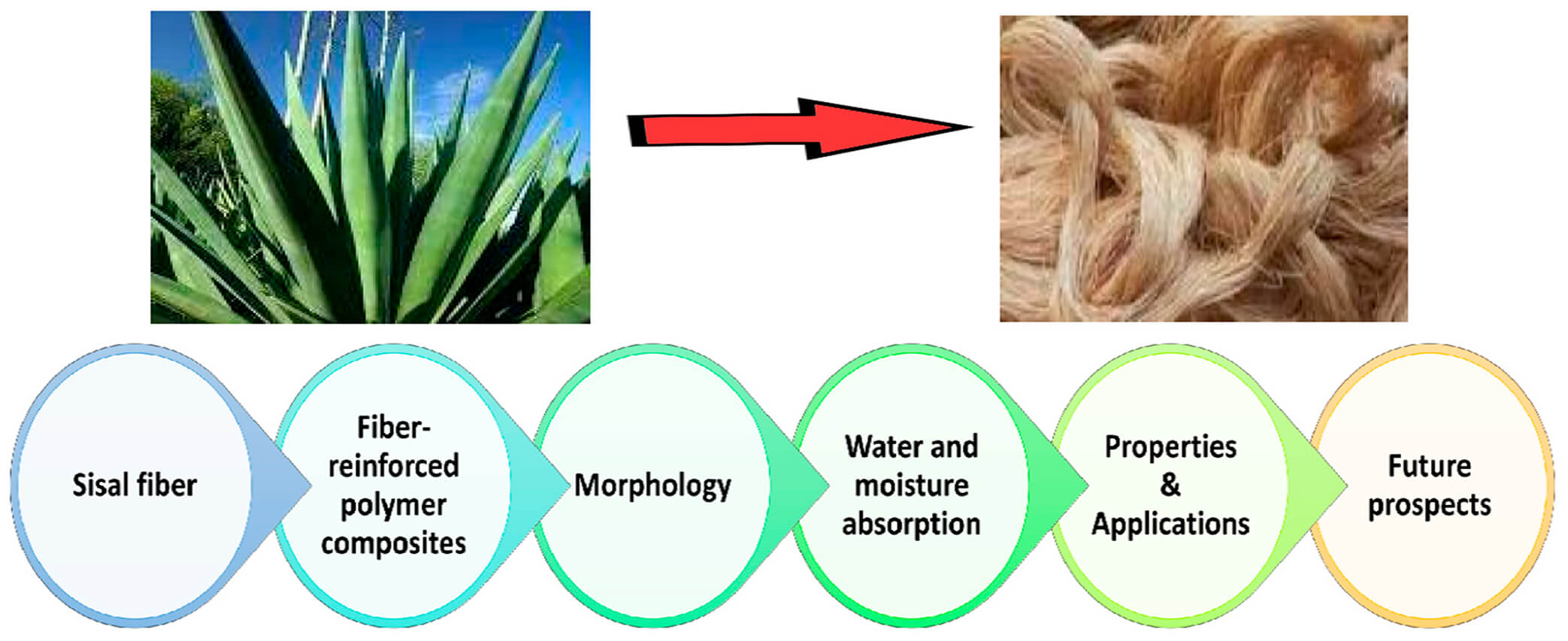
This systematic review critically evaluates the mechanical performance, durability, processing routes, and industrial applicability of sisal fiber reinforced polymer (FRP) composites in relation to their readiness for wider engineering and industrial implementation. The review analyzes and summarizes science articles published 2020, 2025 to identify the performance trends, technical limitations, and techno, economic constraints influencing the application of these composites. A PRISMA, based approach was implemented, which included systematic searches of Scopus, Web of Science, PubMed, and Google Scholar by using pre, set keywords, inclusion criteria, and clear screening procedures, to ensure reproducibility and quality control. The articles under review illustrate how sisal fiber composites provide a strength, to, weight ratio that is on par with glass fiber systems as well as a significantly lower environmental impact and a good cost potential. Mechanical performance and interfacial stability can be significantly improved, as demonstrated in the various studies, and consistently achieved by fiber surface modification, hybrid reinforcement, and processing condition optimization. At the same time, the study points to some of the previous issues, which include the composite’s moisture sensitivity, the variability in quality from one batch of fiber to another, a lack of datasets on long, term durability, and scale, up limitations associated with fiber grading, decortication efficiency, cycle time, and scrap rates. The findings highlight the increasing industrial utility of sisal fiber composites for automotive interior components, low, cost building materials, consumer products, and biodegradable packaging, also pointing out new possibilities in aerospace secondary and semi, structural applications. In general, this review outlines a clear, application, oriented plan that points out the necessity for consistent durability testing methods, fiber quality standards harmonization, and validated design data to make the large, scale and reliable use of sisal fiber composites for high, performance engineering sectors possible.Graphic Abstract
Keywords
Supplementary Material
Supplementary Material FileCite This Article
 Copyright © 2026 The Author(s). Published by Tech Science Press.
This work is licensed under a Creative Commons Attribution 4.0 International License , which permits unrestricted use, distribution, and reproduction in any medium, provided the original work is properly cited.
 Downloads
 Citation Tools
