
 Login
Login Register
 Submit a Paper
 Propose a Special lssue
 Open Access
REVIEW

A Systematic Review of Sisal Fiber-Reinforced Polymer Composites: Sustainable Innovations, Industrial Applications, and Future Prospects
1 Department of Textile Engineering, BGMEA University of Fashion and Technology (BUFT), Dhaka, Bangladesh
2 Department of Natural Sciences, BGMEA University of Fashion and Technology (BUFT), Dhaka, Bangladesh
3 Innovation Center, University of Nis, Nis, Serbia
4 Faculty of Technology Leskovac, University of Nis, Nis, Serbia
5 Department of Chemistry, Pabna University of Science and Technology, Pabna, Bangladesh
* Corresponding Author: Md. Abdul Jalil. Email:
(This article belongs to the Special Issue: Cellulose and Nanocellulose in Polymer Composites: Sustainable Engineering Approach)
Journal of Polymer Materials 2026, 43(2), 5 https://doi.org/10.32604/jpm.2026.075107
Received 25 October 2025; Accepted 13 February 2026; Issue published 30 June 2026
 View Full Text
 Download PDF
Abstract
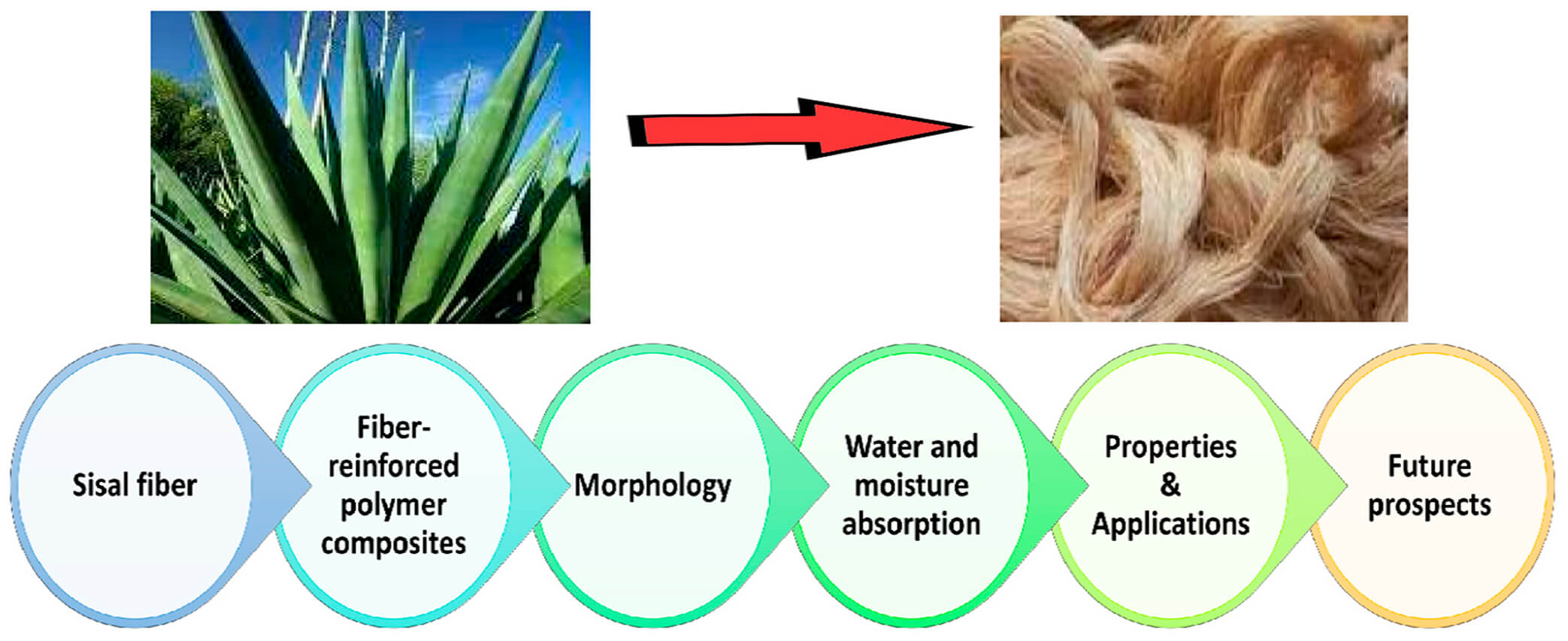
This systematic review critically evaluates the mechanical performance, durability, processing routes, and industrial applicability of sisal fiber reinforced polymer (FRP) composites in relation to their readiness for wider engineering and industrial implementation. The review analyzes and summarizes science articles published 2020, 2025 to identify the performance trends, technical limitations, and techno, economic constraints influencing the application of these composites. A PRISMA, based approach was implemented, which included systematic searches of Scopus, Web of Science, PubMed, and Google Scholar by using pre, set keywords, inclusion criteria, and clear screening procedures, to ensure reproducibility and quality control. The articles under review illustrate how sisal fiber composites provide a strength, to, weight ratio that is on par with glass fiber systems as well as a significantly lower environmental impact and a good cost potential. Mechanical performance and interfacial stability can be significantly improved, as demonstrated in the various studies, and consistently achieved by fiber surface modification, hybrid reinforcement, and processing condition optimization. At the same time, the study points to some of the previous issues, which include the composite’s moisture sensitivity, the variability in quality from one batch of fiber to another, a lack of datasets on long, term durability, and scale, up limitations associated with fiber grading, decortication efficiency, cycle time, and scrap rates. The findings highlight the increasing industrial utility of sisal fiber composites for automotive interior components, low, cost building materials, consumer products, and biodegradable packaging, also pointing out new possibilities in aerospace secondary and semi, structural applications. In general, this review outlines a clear, application, oriented plan that points out the necessity for consistent durability testing methods, fiber quality standards harmonization, and validated design data to make the large, scale and reliable use of sisal fiber composites for high, performance engineering sectors possible.Graphic Abstract
Keywords
Supplementary Material
Supplementary Material FileNatural fiber-reinforced polymer composites have garnered much attention in transportation, sports goods, packaging, architecture, marine, aviation, and railway sectors due to their excellent balance between mechanical performance and environmental sustainability [1,2]. The growing stringency of global regulations in waste management, embodied carbon, and utilization of non-renewable resources has stirred interest in natural fibers as renewable, biodegradable, and energy-efficient substitutes for synthetic reinforcements. Their low density, competitive strength-to-weight ratio, and reduced carbon footprint make them attractive candidates for lightweight structures where both the mechanical and sustainability metrics are critical [3].
NFRPCs are generally made of thermoset or thermoplastic matrices, reinforced with fibers from plants and animals [4,5]. Of the natural fibers, much attention has been given to sisal, jute, flax, kenaf, banana, and bagasse due to their mechanical stability, availability, and good structural morphology [6,7]. Synthetic fibers like glass, carbon, and aramid continue to dominate most high-performance applications despite their processing being energy-intensive, nonbiodegradable, and high in environmental burdens [8]. The production of synthetic fibers uses about an order of magnitude more energy compared to natural fiber processing and generates much higher amounts of CO2 [9]. Life Cycle Assessment (LCA) studies have consistently reported the lower embodied energy and global warming potential of natural fiber composites by roughly 20%–50% compared to glass fiber composites, further reinforcing the relevance of sisal-based systems to low-carbon manufacturing [10].
The addition of natural fibers to polymer matrices develops lightweight structures with increased stiffness and higher energy efficiency in service. It has been estimated that the substitution of synthetic fibers by natural ones can provide ~10% less component weight, up to 80% less manufacturing energy, and ~5% less material cost [11]. Sisal is one of the natural fibers used owing to its strong agricultural supply chain, relatively high length-to-diameter ratio, and better mechanical stability compared with other leaf fibers.
Thermoplastic matrices based on polypropylene, polyethylene, PVC, polystyrene, and PEEK are still widely used due to their recycling possibilities and lower environmental impact than thermosets [12]. Thermoset polymers like epoxy, polyester, vinyl ester, phenolic, urethane, and urea–formaldehyde, however, exhibit superior structural properties but have problems with non-recyclability and end-of-life waste disposal. Bio-based thermosets from plant oils, lignin-based epoxies, cardanol, furanics, and PLA have been recent developments that are changing this situation by allowing partial recyclability and low toxicity resin systems [13–15].
Given the enormous progress with natural fiber composites, comprehensive and comparative studies regarding the behavior of sisal fibers within both thermoset and thermoplastic matrices remain scant. The novelty of this review is that it presents the first systematically synthesized, side-by-side evaluation of sisal fiber composites, embodying mechanical, durability, tribological, acoustic, thermal, crystallinity, flame-retardant, and failure mechanism behaviors under one framework. By pinpointing unresolved challenges in moisture sensitivity, processing variability, and interfacial deterioration, this review consolidates cross-study insights in prioritizing research needs and offering directions for the advancement of next-generation sisal fiber-reinforced polymer composites.
This review was conducted following the reporting framework of the PRISMA (Preferred Reporting Items for Systematic Reviews and Meta Analyses), ensuring a transparent and systematic approach for identifying, screening, and synthesizing relevant literature on sisal fiber-reinforced polymer composites.
Literature Search Strategy
A comprehensive literature search was performed across four major scientific databases: Scopus, Web of Science, PubMed, and Google Scholar. The search covered publications from January 2000 to December 2025, and the final search was conducted on 15 January 2026. The search strategy employed Boolean operators to combine keywords related to sisal fibers and polymer composites. A representative search string used in the databases was:
(“sisal fiber” OR “sisal fibre”) AND (“polymer composite” OR “fiber reinforced polymer” OR “natural fiber composite”) AND (“mechanical properties” OR “mechanical behavior” OR “strength” OR “tensile” OR “flexural” OR “impact”) AND (“thermoset” OR “thermoplastic” OR “epoxy” OR “polyester” OR “polypropylene”)
Database-specific adjustments were applied where necessary to accommodate indexing formats and search interfaces. In addition to database searching, the reference lists of relevant review articles and key publications were manually screened to identify additional eligible studies.
Study Selection and Screening
The study selection process followed the PRISMA 2020 workflow for systematic reviews. The identification, screening, eligibility assessment, and inclusion stages are summarized in Fig. 1.

Figure 1: PRISMA flow diagram illustrating the identification, screening, eligibility assessment, and final inclusion of studies in this systematic review.
The database search yielded a total of 1248 records from four sources: Scopus, Web of Science, PubMed, and Google Scholar. After removing 236 duplicate records, 1012 unique articles remained for title and abstract screening. During the initial screening stage, 760 articles were excluded because they were unrelated to sisal fiber composites, focused on other natural fibers, or did not involve polymer composite systems. The remaining 252 articles were assessed for full-text eligibility. Following detailed evaluation, 104 articles were excluded due to insufficient experimental data, lack of relevance to polymer composite reinforcement, or non-peer-reviewed publication formats. Ultimately, 148 studies met the inclusion criteria and were incorporated into the qualitative synthesis of this review. The screening process was conducted independently by two reviewers, and any discrepancies regarding article inclusion were resolved through discussion and consensus.
Data Extraction and Synthesis
Relevant information from the selected studies was systematically extracted, including fiber composition, surface treatments, matrix type, fabrication methods, testing standards, and reported mechanical properties. The extracted data were organized into thematic categories to facilitate comparative analysis across studies. A qualitative synthesis approach was applied to identify trends in processing techniques, structure–property relationships, durability behavior, and emerging technological developments in sisal fiber-reinforced composites. Methodological quality, experimental design, and potential sources of bias were also considered to ensure that conclusions are balanced and supported by robust evidence.
3 Overview of Natural Fibers in Composites
Natural fibers are obtained from biological sources and can be broadly categorized into plant, animal, and mineral types. While animal fibers such as silk and wool are primarily protein-based [16–18], plant-derived fibers—including bast fibers (jute, flax, kenaf), leaf fibers (sisal, banana), fruit/seed fibers (cotton, coir), and grass fibers (bamboo, bagasse)—dominate composite applications owing to their mechanical strength, renewability, and widespread availability [19–24]. Most natural fibers exhibit a lignocellulosic structure, with cellulose microfibrils embedded in a hemicellulose–lignin matrix. Variations in cellulose content, crystallinity, microfibril angle, and lignin proportion strongly influence stiffness, moisture uptake, and durability [23]. High-cellulose fibers such as flax, ramie, and sisal generally offer superior reinforcement potential, whereas lignin-rich fibers like coir and bagasse provide enhanced toughness at the expense of stiffness.
3.1 Classification of Natural Fibers
Among natural fibers, plant-based types constitute the primary category for polymer composites due to their high cellulose content and favorable mechanical behavior. Animal fibers provide elasticity and flexibility but limited structural reinforcement. Mineral fibers, such as asbestos, have been largely phased out due to toxicity concerns. Fig. 2 summarizes the main classifications of natural fibers [24].

Figure 2: Presents a detailed classification of natural fibers [24] [open source].
3.2 Chemical Composition and Structure of Natural Fibers
Natural fibers are primarily composed of 60%–80% cellulose, 5%–20% hemicellulose, and 5%–45% lignin, with smaller contributions from pectin, wax, and ash. Cellulose contributes to tensile strength and stiffness [16,25,26], hemicellulose governs moisture absorption, and lignin enhances compressive strength but reduces flexibility [27–31]. Their nanoscale fibrillar morphology and high aspect ratio enable effective load transfer in composite matrices [29,32,33].
Table 1 summarizes representative compositional and physical characteristics of major natural fibers, including cellulose content, crystallinity, microfibril angle, and moisture absorption, providing a comparative framework for evaluating reinforcement potential in polymer composites.

Differences in composition directly influence fiber performance in composites: high-cellulose fibers generally exhibit superior stiffness and strength, whereas lignin-rich fibers provide higher toughness but lower modulus [51,52]. Fig. 3 illustrates the chemical structures of key fiber components, including cellulose, hemicellulose, lignin, and pectin, which influence the overall behavior of natural fiber composites.

Figure 3: Chemical structures of key natural fiber components: (a) cellulose; (b) hemicellulose; (c) phenols in lignin; and (d) pectin [51,52].
3.3 Advantages and Challenges of Natural Fibers in Composites
Natural fibers are increasingly adopted as reinforcements in polymer composites owing to their renewability, biodegradability, low density, and favorable specific mechanical properties. Among this class, sisal fiber is of particular interest due to its relatively high tensile strength and stiffness and abrasion resistance, hence its suitability for load-bearing and semi-structural composite applications [1–4]. Its wide availability, together with its reasonable cost and compatibility with both thermoplastic and thermoset matrices, further reinforces its industrial appeal [6–9].
Despite these benefits, several performance-limiting challenges are specific to lignocellulosic reinforcements but show unique features in the case of sisal systems. The inherent hydrophilicity of sisal fibers, for instance, favors moisture uptake and subsequent swelling of the fibers, debonding at the interface, and mechanical property degradation under humid or cyclic environmental exposures [5,11]. Besides, batch-to-batch variations in fiber diameter, cellulose content, and microfibril angle—often resulting from cultivation conditions and decortication processes—negatively impact composite performance [34]. Thermal sensitivity of sisal fibers further narrows processing windows, especially in the case of high-temperature thermoplastics, where fiber degradation may occur above ~200°C [6,27].
However, recent studies have shown that these deficiencies could be overcome in sisal-based composites using various surface modifications (such as alkali, silane, or bio-sourced modifications), gradation of fibers, as well as maleic-anhydride grafted polymers as a compatibilizer [28,29]. Hybridization of sisal with other synthetic or natural fibers has also enhanced mechanical strength, durability, as well as other properties while continuing to yield sustainability advantages [11,42]. Individually, these efforts have strengthened interactions between the fibers and the matrix, resistance to moisture, and retention of properties, thus firmly establishing the place of sisal-based fiber-reinforced composites as a promising alternative material to traditionally acknowledged reinforcements in the automotive, building, and consumer goods sectors, among others [25].
4 Sisal Fiber: Structure, Properties, and Formation
Among natural fibers, sisal (Agave sisalana) stands out due to its high tensile strength, long fiber length, and sustainable profile. Its hierarchical structure, chemical composition, and global availability make it a preferred reinforcement in both thermoset and thermoplastic composites. Understanding the botanical origin, structural characteristics, and chemical composition of sisal is essential to optimizing its use in reinforced polymer composites and other industrial applications.
4.1 Botanical Origin and Availability
Sisal is a leaf fiber cultivated extensively in tropical and subtropical regions and is regarded as one of the most economical natural fibers [53,54]. Its mechanical strength, thermal insulation, and environmental friendliness make it suitable for carpets, ropes, home furnishings, and industrial textiles [55,56]. The plant absorbs CO2, releases oxygen, and requires minimal agricultural inputs, contributing to its sustainability [57]. Major producers include Brazil and Tanzania, followed by Kenya, Mexico, and Pakistan [58,59]. Sisal offers a high aspect ratio, excellent strength-to-weight ratio, and favorable insulating properties, while its cultivation supports socio-economic development in rural communities [57,60].
4.2 Structure and Formation of Sisal Fiber
Sisal fibers exhibit a hierarchical microstructure composed primarily of cellulose microfibrils embedded in a hemicellulose–lignin matrix [61,62]. Individual fibers have diameters of 100–300 μm and lengths of 1–1.5 m, containing hollow sub-fibers and a wax-lignin-coated surface that influences polymer adhesion [63]. The fiber surface is coated with a thin layer of lignaceous material and waxes, which influence interfacial adhesion in composite applications. However, sisal’s high hydrophilicity reduces its moisture resistance, making strong bonding with hydrophobic polymer matrices challenging [64].
The cell wall is organized into three layers: the primary wall with a reticulated fibrillar structure; the secondary wall with outer S-layers (microfibril angle ~40°) and inner S-layers (18°–25°) providing strength and stiffness; and a thin tertiary wall with parallel fibrils maintaining integrity. Each microfibril within a fibrillae consists of 20 nm-thick cellulose strands, with individual cellulose molecules measuring 0.7 nm in thickness and extending several micrometers in length [65].
Ribbon fibers, located along the leaf’s midline near the conducting tissues, exhibit superior mechanical strength due to their association with vascular bundles. They are the longest fibers in the sisal plant and can be easily split lengthwise during processing. In contrast, xylem fibers, which have irregular shapes, are positioned opposite to the ribbon fibers and are connected to the vascular system [59,66,67].
The hierarchical organization of these structural components, from molecular cellulose strands to macroscopic fiber bundles, underpins the mechanical behavior and performance of sisal fibers, as illustrated in Fig. 4.

Figure 4: Structure of sisal fiber.
4.3 Chemical Composition and Properties of Sisal Fiber
Sisal fibers primarily consist of 43%–78% cellulose, 10%–24% hemicellulose, and 3.75%–11% lignin, with minor ash content (0.6%–1.1%), depending on geographic origin, plant maturity, and extraction method [23,68–70]. Variations in chemical composition arise from differences in soil mineral availability, climatic conditions (rainfall and temperature), genetic cultivar, and fiber extraction techniques, all of which influence lignification, wax deposition, and the retention or removal of non-cellulosic constituents. In general, hot and arid environments promote higher lignin and surface wax contents, while humid conditions favor increased hemicellulose fractions, and more mature leaves typically exhibit higher cellulose crystallinity.
In addition to chemical composition, the density and moisture content of sisal fibers also show notable variability, which influences composite performance. The true (real) density of sisal fibers typically ranges from 1.45 to 1.50 g/cm3, reflecting the intrinsic density of the cellulose-rich cell wall, whereas the apparent or bulk density varies more widely (≈0.7–1.33 g/cm3) due to internal pores and lumen structure. Chemical treatments such as alkali (NaOH) treatment can increase fiber density by removing surface waxes and hemicellulose, resulting in a more compact structure. Sisal fibers are inherently hydrophilic, with typical moisture content ranging from about 9.8% to 11.5% under standard atmospheric conditions, which contributes to dimensional instability and moisture sensitivity in composites. These variations further highlight the influence of fiber structure, treatment, and environmental exposure on sisal fiber properties.
Table 2 integrates the chemical, structural, and environmental attributes of sisal fibers, providing a multidimensional perspective relevant to composite performance, including mechanical behavior, moisture response, and fiber–matrix interactions.

This illustrates that variations in cellulose content, microfibril angle, and fiber morphology significantly influence mechanical response, processing behavior, and fiber–matrix interactions. While sisal’s high tensile strength, long fiber length, and sustainability profile make it an excellent reinforcement material, its hydrophilic nature and moisture sensitivity necessitate ongoing research in surface modification, compatibilization, and processing optimization to maximize composite performance.
5 Polymer Composites and Matrix Materials
The polymer matrix is a critical component in defining the structural, thermal, and durability performance of sisal fiber-reinforced composites. By embedding natural fibers, the matrix governs stress transfer, interfacial adhesion, environmental resistance, and overall functional behavior of the composite system. In natural fiber-reinforced polymer composites (NFRPCs), the selection of a suitable matrix—thermoset or thermoplastic—is essential to achieving the desired mechanical and long-term performance characteristics [71,72].
Increasing environmental concerns and depletion of fossil-based resources have accelerated interest in polymer matrices compatible with sustainable reinforcements such as sisal. While conventional petroleum-based resins continue to dominate, bio-based and recyclable polymers are increasingly explored for eco-conscious composite applications [10]. Understanding the key differences between thermoset and thermoplastic matrices is therefore vital for optimal material selection in sisal fiber composites.
5.1 Thermoset and Thermoplastic Matrices
Thermoset and thermoplastic matrices differ in curing behavior, molecular architecture, recyclability, and mechanical response, all of which influence fiber–matrix interactions, moisture uptake, and processability.
Thermoset resins—including epoxy, polyester, vinyl ester, and phenolic systems—undergo irreversible crosslinking during curing, forming a rigid three-dimensional network. This imparts excellent mechanical stiffness, thermal stability, and chemical resistance. Epoxy, in particular, exhibits strong wetting of natural fibers due to reactive functional groups, enhancing interfacial adhesion. However, thermosets are inherently brittle and non-recyclable [10,72–74].
In contrast, thermoplastic matrices such as polypropylene (PP), polyethylene (PE), polyvinyl chloride (PVC), and polylactic acid (PLA) soften upon heating and solidify upon cooling without chemical change. They offer high impact resistance, formability, and recyclability. Due to their relatively low polarity, compatibilizers (e.g., maleic anhydride-grafted polypropylene, MAPP) are required to improve bonding with hydrophilic sisal fibers [10,71]. Although thermoplastics are generally less stiff than thermosets at room temperature, they provide superior damage tolerance and are widely used in automotive, consumer, and packaging applications.
To consolidate these distinctions, Table 3 presents a comparative overview of the key physical, thermal, and functional properties of thermoset and thermoplastic matrices relevant to sisal fiber composites. This table assists in selecting matrices that meet application-specific requirements for mechanical performance, durability, and processability.

5.2 Common Polymer Matrices Used in Sisal Fiber Composites
Sisal fibers have been successfully incorporated into a wide range of polymer matrices depending on application requirements. Among thermosets, epoxy is the most extensively studied due to its strong adhesion to natural fibers, excellent stiffness-to-weight ratio, and favorable interfacial bonding. Polyester and vinyl ester resins offer cost-effectiveness and good processing flexibility, while phenolic resins are employed in fire-resistant and high-temperature applications owing to their dimensional stability [53].
Within thermoplastics, PP dominates in sisal fiber composites due to its low density, recyclability, and suitability for high-volume manufacturing. PLA has gained interest for biodegradable and sustainable applications, although its moisture sensitivity and lower thermal stability limit certain structural uses. Effective bonding of hydrophilic sisal fibers with these matrices typically requires coupling agents or surface modification strategies.
Figs. 5 and 6 illustrate the classification of polymer matrices and representative chemical structures that influence fiber–matrix interactions. Fig. 5 presents thermoset and thermoplastic categories alongside emerging bio-based alternatives, while Fig. 6 highlights functional groups in matrix polymers that enhance adhesion to sisal fibers.

Figure 5: Classification of polymer matrices used in natural fiber composites, showing thermoset, thermoplastic, and emerging bio-based options.

Figure 6: Representative chemical structures of common polymer matrices, illustrating functional groups relevant to interfacial bonding with sisal fibers.

Figure 7: Alkali treatment (mercerization) of natural cellulose-based fibers.
5.3 Matrix Selection Considerations
The performance of sisal fiber composites is critically influenced by matrix selection. Thermosets provide high stiffness and chemical resistance but are brittle and non-recyclable, whereas thermoplastics offer ductility, recyclability, and impact resistance, often at the expense of modulus. Bio-based matrices like PLA enable sustainable composites but require careful moisture management. In all cases, interfacial adhesion between sisal fibers and the polymer matrix must be optimized—typically through compatibilizers, coupling agents, or fiber surface treatments—to achieve reliable load transfer, dimensional stability, and long-term durability.
Understanding the synergy between fiber characteristics and matrix properties is essential before implementing surface modification techniques. Section 6 builds upon this foundation by detailing chemical treatments and surface modification strategies designed to enhance fiber–matrix interactions, thereby improving the mechanical performance, environmental resistance, and processing behavior of sisal fiber composites.
6 Chemical Treatment of Sisal Fiber for Composite Applications
A primary challenge in using sisal fibers as reinforcement in hydrophobic polymer matrices is their intrinsic hydrophilicity. The cellulose microfibrils within sisal are arranged in alternating crystalline and amorphous regions: the crystalline domains provide structural rigidity and resist chemical penetration, whereas the amorphous regions are rich in hydroxyl (–OH) groups that readily absorb moisture [75]. This hydrophilicity promotes water uptake, internal swelling, microvoid formation, and stress concentration under load, ultimately reducing fiber–matrix adhesion and compromising composite strength and durability [76].
Chemical modification strategies are employed to alter the fiber surface chemistry, reduce polarity, and improve interfacial bonding with polymer matrices. Such treatments target reactive –OH groups, modify surface morphology, and enhance wettability and roughness [77]. Among the most effective and widely reported methods for sisal fiber composites are alkaline treatment (mercerization), benzoylation, acetylation, silane coupling, and graft copolymerization [75].
6.1 Alkaline Treatment (Mercerization)
Alkaline treatment is the most economical and widely used method for natural fiber modification. Immersion of fibers in sodium hydroxide (NaOH) partially removes hemicellulose, lignin, pectin, waxes, and surface impurities, resulting in fibrillation and exposure of crystalline cellulose microfibrils (Fig. 7) [78].
The benefits of mercerization include enhanced surface roughness for mechanical interlocking, reduced fiber diameter for greater surface area, and removal of surface impurities to facilitate polymer penetration. Additionally, increased cellulose crystallinity decreases moisture absorption and improves thermal and biological stability [79,80]. These effects collectively enhance fiber–matrix adhesion, load transfer efficiency, and composite mechanical performance, forming a foundational pre-treatment for subsequent chemical modifications [81,82].
Benzoylation substitutes hydroxyl groups with hydrophobic benzoyl groups via esterification with benzoyl chloride, reducing polarity and improving compatibility with nonpolar matrices [83]. This treatment is most effective on clean, activated fiber surfaces, and is typically applied after alkaline treatment [84]. Benzoylated fibers exhibit improved thermal resistance, reduced moisture absorption, and enhanced fiber–matrix bonding (Fig. 8) [85].

Figure 8: Benzoylation and grafting of sisal fibers.
Acetylation involves esterification of cellulose –OH groups with acetic anhydride or vinyl acetate, often catalyzed by pyridine, to introduce hydrophobic acetyl (–COCH3) groups [86]. This reduces water absorption and improves dimensional stability while maintaining cellulose crystallinity. Acetylated fibers show improved dispersion and interfacial adhesion with hydrophobic matrices, particularly in the amorphous hemicellulose-rich regions that facilitate reagent penetration (Fig. 9) [87,88].

Figure 9: (a) Reaction between sisal fiber and acetic anhydride or vinyl acetate; (b) acetylation mechanism with pyridine as catalyst.
Silane coupling agents provide dual reactivity: the hydrolyzed silanol groups bond with cellulose –OH groups, while the organofunctional group interacts with the polymer matrix. This creates a molecular bridge at the interface, enhancing stress transfer, reducing interfacial defects, and improving long-term durability under moisture and thermal cycling (Fig. 10) [83]. Silane treatment also reduces water absorption and stabilizes the fiber surface, making it highly effective for both thermoset and thermoplastic composites.

Figure 10: Proposed mechanism for the silane treatment of sisal fiber.
Graft copolymerization involves covalently attaching vinyl monomers (e.g., methyl methacrylate, acrylonitrile, ethyl acrylate) to cellulose chains via free radicals generated by initiators such as ceric ammonium nitrate (CAN) [89,90]. This increases surface energy, wettability, dispersion, and fiber–matrix adhesion. Grafting is particularly effective for thermoplastic matrices, improving toughness, tensile strength, and resistance to interfacial debonding. Fig. 11 illustrates the proposed mechanism for the graft copolymerization of ethyl acrylate onto cellulose-based natural fiber.


Figure 11: Proposed mechanism for the graft copolymerization of ethyl acrylate onto cellulose-based natural fiber [91] [open source].
Chemical surface treatments are therefore essential for improving sisal fiber compatibility and performance in polymer composites. Selecting an appropriate method based on the matrix type, service environment, and target mechanical properties allows for significant enhancements in reliability, durability, and functional performance, enabling applications across automotive, aerospace, packaging, and construction sectors.
Table 4 provides a concise summary of these treatments, their mechanisms, and the typical effects on fiber properties.

7 Manufacturing Techniques for Sisal Fiber Reinforced Polymer Composites
The processing method traditionally represents one of the most important factors affecting the performance, cost, and applicability of fiber-reinforced polymer composites. There are several fabrication techniques for sisal fiber-reinforced composites, including pultrusion, resin transfer molding, compression molding, injection molding, and hand lay-up techniques, similar to those used for glass fiber-reinforced systems. The choice of processing method significantly affects fiber dispersion, interfacial adhesion, void content, and, consequently, the mechanical and functional properties of the composite. Natural fibers, due to their inherent variability, moisture sensitivity, and specific anatomical structure, have to be processed under conditions that carefully take these features into consideration in order to obtain consistent quality and performance.
Compression molding is extensively used to manufacture SMC under controlled temperature and pressure. Short fiber mats are sandwiched between resin-coated carrier sheets, with extra resin applied in order to achieve uniform impregnation. Rollers compress the sheets to remove entrapped air and to fully saturate fibers. Prepared SMC sheets are cut to size and placed in heated molds that are clamped under 500–1200 psi pressure to facilitate resin flow and curing. This technique is particularly suitable for processing at moderate fiber lengths and uniform distribution, and these components show high mechanical performance and repeatability. Compression molding is also more viable for automotive and aerospace purposes because it can be combined with natural fibers and scaled up for large-volume production [57]. Its compatibility with natural fibers—including sisal—also makes it a preferred technique when moderate fiber lengths and uniform fiber distribution are required.
Injection molding is a high-precision, high-throughput technique most commonly applied to short natural fiber-reinforced thermoplastics of complicated geometries. Screw-driven barrel melts short fibers and polymer granules and homogenizes them before injection into the mold. Thermoset bulk molding compounds (BMC) with 15%–20% chopped fibers are also used in motor parts, appliance housings, and automotive electrical components. The process allows rapid production, about 2000 small parts per hour, with minimal post-processing. Advantages include high reproducibility, improved toughness, and recyclability. However, key limitations include the shortening of fibers and thermal degradation, which must be managed through process optimization [92,93].
7.3 Resin Transfer Molding (RTM)
RTM is a closed-mold technique in which liquid resin is injected under pressure or vacuum into a fiber preform made of woven, stitched, or continuous mats. Epoxy, vinyl ester, polyester, and phenolic resins are normally used [94]. A few works have already been developed regarding the manufacturing of natural fiber-reinforced composites by RTM with renewable polymer matrices [95]. RTM has a number of key advantages over open-mold methods, including superior fiber wetting, lower void content, minimal material wastage, and enhanced fiber–matrix bonding, leading to improved tensile strength, Young’s modulus, and flexural properties compared to compression-molded composites. Reduced voids also enhance water resistance and durability [96,97].
Natural fibers pose a problem with lower compaction compared to glass fibers, which is again attributed to the presence of lumens and irregular anatomical structures. Fiber pre-treatment, optimized preform design, and chemical modification can enhance the infiltration of resin and improve the mechanical performance of sisal composites. RTM is preferred for large and high-strength applications in automotive, aerospace, and marine sectors.
Hand lay-up is a manual, versatile technique in which layers of fiber reinforcement are placed in a mold and impregnated with resin matrix. Consolidation is performed using rollers, brushes, or squeegees to eliminate air within layers and achieve good wetting of fibers. Steps in this process include mold preparation, gel coating, fiber lay-up, and curing [98].
While labor-intensive, hand lay-up has the advantage of being suitable for geometrically complex molds due to accommodation of long fibers and low tooling cost. The disadvantages are its relatively low fiber loading, variable mechanical properties, and longer curing times. Nevertheless, it remains widely used for small-scale, customized, or prototype composites. Epoxy-based sisal fiber laminates fabricated via hand lay-up have demonstrated potential for structural, automotive, and sports equipment applications [99]. Fig. 12 illustrates the principal manufacturing techniques for sisal fiber composites.

Figure 12: Illustrations of composite manufacturing techniques: (a) compression molding, (b) injection molding, (c) resin transfer molding, and (d) hand lay-up [open source] [100].
7.5 Additive Manufacturing of Natural Fiber–Reinforced Polymer Composites
Additive manufacturing (AM), particularly methods such as fused deposition modeling (FDM), has recently revolutionized the production of fiber-reinforced polymer composites. This approach enables complex patterns, reduces material waste, and provides enhanced design versatility [101,102]. Filaments reinforced with natural fibers derived from thermoplastic substances such as PLA and PP are increasingly popular because of their environmental advantages and suitability for extrusion-based additive manufacturing techniques. Studies on fiber-reinforced filaments made from wood, flax, hemp, jute, and bamboo indicate that these short natural fibers can enhance stiffness and reduce environmental effects. Nonetheless, challenges remain to tackle, including fiber dispersion, bonding problems, nozzle blockages, and the anisotropic characteristics of mechanical properties [103,104].
In the realm of sisal fiber composites, additive manufacturing remains in its early stages. Nonetheless, the elevated cellulose content, low density, and broad availability of sisal position it as a prime option for creating AM feedstock [105]. For FDM-compatible systems, sisal fibers must be transformed into shorter fibers or microfibers and blended into thermoplastic matrices—usually PLA or PP. This frequently includes employing compatibilizers or surface treatments to boost the bond between the fibers and the matrix, along with enhancing printability [102,104]. Key elements such as fiber loading, raster alignment, layer thickness, and extrusion temperature significantly influence the interlayer adhesion, porosity, and overall mechanical properties of the printed composites [106].
Recent reviews highlight that the moisture sensitivity of natural fibers, thermal breakdown during filament extrusion, and poor interfacial adhesion are major obstacles in producing high-performance additive manufacturing (AM) composites [102,105]. These issues are especially significant for sisal fibers, highlighting the need to enhance fiber surface alterations, use hybrid reinforcement methods, and manage filament production techniques. Despite these challenges, additive manufacturing offers an excellent chance to integrate sisal fibers into customized, lightweight, and functionally graded parts for automotive interiors, consumer products, and low-load structural uses. Upcoming studies should focus on creating printable filaments from sisal, investigating the structure–property interactions in the printed components, and contrasting AM-produced sisal composites with those generated via conventional processing techniques [103,106].
7.6 Comparative Summary of Manufacturing Techniques
Table 5 offers a comparative summary of the main manufacturing methods utilized for sisal fiber-reinforced polymer composites, highlighting their specific benefits, processing limitations, and typical areas of application. Through the comparison of techniques from traditional molding processes to new additive manufacturing methods, this analysis offers a useful guide for choosing suitable processing strategies according to fiber length specifications, matrix material, desired mechanical properties, part shape, and production volume.

The selection of manufacturing method significantly influences the mechanical performance, cost, and longevity of sisal fiber-reinforced composites. Mass production benefits from compression and injection molding, whereas RTM is suited for strong, low-void structural parts. Hand lay-up continues to be significant for tailor-made and experimental uses. Aligning fiber pre-treatments with processing methods is crucial for enhancing composite performance and facilitating sustainable, lightweight, high-performance natural fiber composites
8 Performance Characteristics of Sisal Fiber-Reinforced Polymer Composites
Sisal fiber-reinforced polymer composites merge the high tensile strength, lightweight nature, and renewability of sisal fibers with the mechanical versatility and thermal properties of polymer matrices. These are broadly classified into thermoset- and thermoplastic-based systems, each offering distinct advantages depending on processing conditions, fiber content, and end-use requirements. Thermoplastic matrices offer recyclability and ease of forming under heat, while thermoset matrices offer superior dimensional stability, chemical resistance, and structural performance. The interaction of sisal fibers with diverse polymer matrices is therefore critical in determining load transfer efficiency, toughness, and long-term durability.
8.1 Sisal Fiber-Reinforced Thermoset Composites
Extensive studies have been conducted on the properties of sisal fiber-reinforced thermoset composites based on epoxy, polyester, vinyl ester, and phenolic matrices. The mechanical properties such as tensile strength, tensile modulus, flexural strength, flexural modulus, and impact strength of these composites are significantly related to the fiber-matrix interfacial adhesion. The addition of sisal fibers generally improves such properties with respect to neat matrices thanks to the effective load transfer and distribution of stresses occurring at the interface. Thermoset matrices, due to their crosslinked networks, reduce the mobility of the polymer chains, which increases stiffness and enhances structural performance under loading.
The suitability of sisal fiber for thermoset composites is further supported by its low cost and availability, combined with compatibility regarding fabrication techniques like filament winding, lamination, and compression molding. Whereas glass fiber composites result in higher absolute tensile strengths, the specific strength of the sisal-based composites is still competitive. Unidirectional sisal-epoxy composites, for instance, show tensile moduli up to 8.5 GPa [65].
Several studies illustrate performance trends in thermoset matrices: Mukherjee and Satyanarayana [107] reported a specific modulus for chopped sisal-polyester composites equivalent to glass fiber composites, and impact resistance three times that of neat polyester. Pavithran et al. [108] found that maximal fracture work for long-strand sisal-polyester composites was obtained at 50% fiber volume fraction. Sanadi et al. [109] showed linear increases in tensile strength and modulus to 40% fiber volume fraction, whereupon interfacial degradation resulted in reduced performance. Bai et al. [110] studied the failure mechanisms of longitudinally oriented sisal-epoxy composites using four-point bending tests and SEM and noted that sisal-epoxy composites had moderate interfacial adhesion whereas microtubular fiber formations had weak adhesion. Joseph et al. [111] pointed out the superior performance of sisal-phenol-formaldehyde composites compared to polyester and epoxy systems due to enhanced interfacial compatibility. Bisanda and Ansell also presented the influence of fiber volume fraction on the flexural properties of unidirectional sisal-epoxy composites; at 40% fiber volume, the flexural modulus was 16 GPa with a flexural strength of 266 MPa. The tensile modulus for sisal fibers was measured to be 24 GPa, but the effective fiber modulus in the composite was 40 GPa, indicating improved stress distribution [63].
Oksman et al. [112] investigated fiber strength distribution and obtained effective fiber strengths of 420, 400, and 390 MPa for fiber volume fractions of 0.28, 0.35, and 0.46, respectively. These values were based on an average measured fiber strength of 550 MPa. As expected, the study concluded that poor interfacial adhesion resulted in the debonding of fibers from the matrix near fracture sites, with corresponding load redistribution. Mechanical testing showed that sisal fibers embedded in a polymer matrix exhibited higher modulus values compared to neat polymeric materials. However, the overall composite strength was constrained due to a fraction of weak fibers. To improve this, future composite designs must take advantage of enhanced fiber-matrix adhesion and proper fiber distribution. Representative mechanical properties for sisal fiber-reinforced thermoset composites are summarized in Table 6.

Overall, thermoset matrices confer high stiffness, superior stress distribution, and enhanced fracture resistance in sisal-reinforced composites, though fiber-matrix interface quality remains the primary factor controlling mechanical performance.
8.2 Sisal Fiber-Reinforced Thermoplastic Composites
Sisal fiber-reinforced thermoplastics, which include PLA, LDPE, HDPE, PP, PEEK, PVC, and PS, have found increasing use in semi-structural and consumer applications. Thermoplastics are characterized by recyclability, short processing cycles, and ease of remolding, which make them ideal for applications related to automotive interiors, packaging, and consumer products. Strong fiber-matrix adhesion, which is usually achieved through the use of coupling agents, for example, MAPP, is important for effective stress transfer in such composites, considering that most thermoplastics exhibit low polarity.
Experimental investigations have reported an increase in mechanical properties with fiber content. Accordingly, Mohanty et al. [119] recorded that tensile strength increased by 60%–70%, flexural strength increased by 140%–150%, and impact strength increased to a maximum of 125% for an increase in the sisal fiber loading from 10% to 30%. Oksman et al. [120] noticed that the addition of fibers increased the flexural modulus in sisal-PP composites. The use of MAPP further increased the modulus to a value of 4.6 GPa. Jarukumjorn and Suppakarn [121] reported increases in flexural strength by 58%, flexural modulus by 9%, and Young’s modulus by 55% in PP-sisal composites. However, impact strength was reduced significantly at higher fiber loading. Other investigations on composites with sisal fibers in PP, PS, and PE matrices showed improved tensile strength and Young’s modulus and reduced elongation at break with increased fiber content. These studies point out the necessary optimization of fiber-matrix adhesion and fiber orientation to improve the comprehensive performance of thermoplastic composites based on sisal fibers [65,122].
Table 7 presents some representative mechanical properties of thermoplastic-based sisal fiber composites, focusing on the effects that fiber content and coupling agents exert on their performance.

Performance in thermoplastic composites is sensitive to fiber dispersion, matrix compatibility, and processing conditions. The use of coupling agents and optimized processing parameters is therefore critical to achieve a balance between stiffness, strength, and toughness.
9 Sisal Fiber-Based Hybrid Polymer Composites
Hybrid polymer composites incorporate sisal fibers with other natural or synthetic reinforcements to achieve improved mechanical, thermal, and physical performance. Hybridization allows the designers to tailor properties like stiffness, toughness, moisture resistance, and thermal stability by combining different fiber types while overcoming the natural limitations of pure sisal composites, such as moderate strength and hydrophilicity. Hybridization is, therefore, a strategic means to extend the application opportunities of sisal fiber composites, especially for automotive, aerospace, packaging, and construction industries.
9.1 Natural–Natural Fiber Hybrids
Available studies show that the combination of sisal with other natural fibers such as jute, coir, banana, or cork enhances particular mechanical properties. Accordingly, Ramesh et al. [123] investigated sisal-jute-glass-epoxy hybrids; here, the tensile strength obtained in the case of sisal-glass hybrids was higher (68.55 MPa), while the jute-glass hybrids gave better flexural capacity. Akash et al. [124] added SSP as a natural binder to epoxy composites reinforced by sisal-coir hybrids, and found significant rises in the tensile and flexural performances at low SSP contents up to 10 wt%, with lower gains above this content.
Alkali treatment further optimizes the performance of natural-natural hybrids. For example, NaOH-treated sisal fibers improved interfacial bonding and mechanical strength upon incorporating 10% alkali treatment with 40 wt% sisal content [125]. Acetylated sisal fibers similarly showed improved tensile and flexural properties during hybridization with glass fibers and epoxy resin at low incorporation levels (≤4 wt%) [115]. The above studies identify fiber surface modification to play an important role in optimizing synergistic reinforcement effects for hybrid natural fiber composites.
9.2 Natural–Synthetic Fiber Hybrids
Sisal fibers are often blended with glass, aramid, or carbon synthetic reinforcements to obtain enhanced stiffness, strength, and durability. Zhong et al. [126] illustrated that microfibrillated sisal-aramid composites exhibit enhanced wear resistance and tensile strength, which can be explained by a better interfacial adhesion. Glass-sisal fiber-polypropylene (PP) hybrid composites also demonstrated improved mechanical, thermal, and moisture resistance properties [121]. These hybrid systems take full advantage of the high modulus and dimensional stability of synthetic fibers while retaining the sustainability and lightweight benefits of the sisal.
Fber processing and surface modification of sisal fibers are of prime importance for natural–synthetic hybrids. Coupling agents, chemical treatments (alkali, acetylation, silane), and appropriate fiber orientation greatly enhance the load transfer and reduce moisture-induced degradations, which lead to long-term durability of hybrid composites [127,128].
9.3 Sisal Fiber Hybrids with Polymer Matrices
There is a different response by the thermoset and thermoplastic matrices to the hybridization strategies. In epoxy-based hybrid composites, both tensile and flexural strengths increased with moderate contents of sisal; higher loadings can lead to interfacial debonding or stress concentrations. Among thermoplastic hybrids, coupling agents improve interfacial adhesion and promote uniform fiber dispersion. Fernandes et al. [129] reported improvements in tensile and flexural properties of the sisal-cork-HDPE hybrids at 10 wt% sisal, enabled by coupling agents, which they confirmed using FTIR, TGA, and XRD analyses.
Banana-sisal-epoxy hybrids also exhibit decreased moisture absorption and enhanced mechanical properties up to a maximum of 50 wt% sisal; performance also remains inferior to that of fully synthetic fiber-based composites [11]. These observations indicate that the main issue in hybrid composite optimization concerns the balance between fiber content and treatment and the compatibility with the matrix.
9.4 Comparative Performance of Sisal-Based Hybrids
Table 8 summarizes some representative mechanical performance metrics of sisal-based hybrid composites reported in recent studies, including fiber type, matrix, fiber content, and key mechanical outcomes to facilitate a clear overview for researchers and industry practitioners.

10 Specialized Properties of Sisal Fiber Composites
Sisal fiber-reinforced polymer composites display a wide range of specialized functional properties beyond conventional mechanical behavior, making them competitive candidates for lightweight and low-carbon applications within areas like automotive engineering, building acoustics, packaging, and tribological systems. The inherent hierarchical structure of sisal fibers, along with composite design variables such as chemical surface modification, hybrid reinforcement, filler incorporation, and fiber orientation, controls the sisal composites’ properties related to tribology, acoustics, thermal behavior, and crystallinity. Due to their hydrophilic, porous, and chemically heterogeneous nature, devising such functional properties of sisal fibers calls for a mechanistic understanding of the fiber-matrix interactions not only during operational but also during environmental stresses. This section integrates the tribological, acoustic, and thermal behaviors of sisal fiber reinforced composites.
10.1 Tribological Properties of Sisal Fiber Composites
The tribological behavior of sisal fiber–reinforced polymer composites has been investigated under varying test conditions, including applied load, sliding velocity, counterface material, and environment. Since tribological responses are highly sensitive to these parameters, meaningful comparison across studies is generally possible only within similar experimental envelopes. Most reported investigations employ pin-on-disc configurations under dry sliding against steel or hardened steel (EN31), with applied loads of 10–40 N and sliding speeds of 0.5–2.0 m/s. Within this range, consistent trends in friction and wear behavior can be identified.
Sisal fibers possess a rough surface morphology with high asperity density and contain hemicellulose and lignin, which typically result in moderate to high friction coefficients under dry sliding. In composites, however, the dominant factor governing tribological performance is the quality of fiber–matrix interfacial adhesion. Poor adhesion, moisture uptake, and fiber softening promote asperity-driven interactions, leading to increased friction, micro-cracking, fibrillation, and fiber pull-out, particularly at higher loads and speeds [130–132]. Moisture absorption further accelerates wear due to reduced stiffness, whereas dry conditions may induce brittle fragmentation. Consequently, minimizing moisture sensitivity through chemical treatments or hybridization is critical for stable tribological performance.
Several studies conducted under comparable conditions demonstrate that improved interfacial bonding significantly enhances wear resistance. Miniappan et al. [133] reported substantially lower wear rates in tungsten carbide-reinforced sisal/epoxy composites, attributed to increased surface hardness and improved fiber–matrix adhesion. Similarly, Aslan et al. [134] observed that increasing sisal content in hybrid polypropylene composites raised the friction coefficient, while wear behavior depended strongly on hybrid architecture. Sisal/glass hybrids exhibited lower wear volumes than sisal/carbon systems due to superior interfacial stabilization.
Studies operating within similar load–speed ranges further reinforce these trends. Maurya et al. [135] found that specific wear rates in sisal/epoxy composites increased with load and sliding velocity, while friction coefficients decreased due to the formation of smoother transfer layers. Using Taguchi optimization, Dangi and Thakur [136] identified optimal fiber length, weight fraction, and filler content combinations that minimized abrasive and erosive wear. Dhanasekar et al. [137] further demonstrated that low silica nanoparticle additions (≈3 wt%) reduced void content and improved interfacial bonding, resulting in enhanced wear resistance.
Chemical surface modification further stabilizes tribological response. Behera et al. [138] showed that sodium citrate-treated sisal fibers improved frictional stability and wear resistance in epoxy matrices. Under similar test conditions, Gehlen et al. [130] reported that sisal/polyester composites formed compact tribofilms that reduced friction and wear more effectively than glass fiber composites, where abrasive micro-cutting dominated. In hybrid sisal/fly-ash polypropylene systems, cetyltrimethylammonium-bromide treatment also improved mechanical integrity, indirectly enhancing resistance to tribological degradation [135].
Across studies conducted under comparable dry sliding conditions (10–40 N, 0.5–2 m/s), a consistent hierarchy in wear resistance emerges. Properly treated or nanoparticle-reinforced sisal composites outperform untreated systems, while sisal/glass hybrids generally show lower wear rates than pure sisal composites while maintaining moderate friction levels suitable for semi-structural use. Under near-matched conditions, the relative wear resistance typically follows:
nanoparticle-reinforced sisal composites > sisal/glass hybrids > chemically treated sisal composites > untreated sisal composites.
Overall, although untreated sisal composites exhibit only moderate wear resistance, targeted strategies such as chemical modification, hybrid reinforcement, filler incorporation, and moisture control substantially enhance their tribological performance. Under optimized conditions, sisal fiber composites show strong potential for automotive components, moderate load-bearing interfaces, and environmentally sustainable tribological applications.
10.2 Acoustic Properties of Sisal Fiber Composites
The acoustic performance of sisal fiber–reinforced composites is governed by porosity, fiber–matrix interaction, density, thickness, and fiber content. Sound energy dissipation occurs primarily through viscous losses within interconnected pores, interfacial vibration damping, and resonance-related scattering, leading to effective absorption in the mid-to-high frequency range. Most sisal-based composites exhibit efficient absorption between 500 and 4000 Hz, with reported noise reduction coefficient (NRC) values typically ranging from 0.40 to 0.80. Such performance is generally achieved at thicknesses of 20–40 mm, densities of 150–250 kg/m3, and fiber contents of 25–35 wt%, depending on matrix stiffness and pore architecture. These characteristics position sisal composites as sustainable alternatives to synthetic acoustic absorbers in building, automotive, and industrial noise-control applications [139,140].
10.2.1 Experimental Studies on Sound Absorption
Experimental investigations consistently demonstrate that increasing sisal fiber content enhances sound absorption by improving pore connectivity and airflow resistivity. Fatmawati et al. reported a significant increase in absorption as sisal content rose from 10% to 30%, achieving a maximum coefficient of 0.494 at 200 Hz for 30% fiber loading [139].
Hybridization further refines frequency response. Dhandapani and Megalingam [141] showed that sisal–palm hybrids significantly enhanced high-frequency absorption (1600–4000 Hz), attributed to finer pore networks, while Jayamani et al. identified maximum absorption in PLA composites containing 30 wt% sisal, confirming the role of high fiber fractions in optimizing acoustic performance [142].
Comparative studies by Yang et al. [143] indicated that while sugarcane fibers exhibited superior absorption due to higher airflow resistivity, sisal composites outperformed glass fiber in several mid-frequency bands, reinforcing the acoustic advantages of natural fibers. In sisal/polypropylene systems, Munde et al. [144] demonstrated that increased fiber content improved both SAC and transmission loss, highlighting the suitability of sisal composites for combined absorption–barrier applications.
10.2.2 Hybridization and Structural Optimization
Hybrid reinforcement and structural tailoring provide additional control over acoustic behavior. Prabhu et al. showed that sisal combined with tea or glass fibers achieved a balance between mechanical integrity and sound absorption, with tea fibers particularly enhancing mid-frequency SAC [145]. Mamtaz et al. [146] noted that drying improves durability but may reduce absorption, suggesting granular fillers as a strategy to recover low-frequency performance.
Systematic studies by da Silva et al. [147] revealed that, at comparable densities (~200 kg/m3) and thicknesses (20–40 mm), sisal fibers offer balanced mid-to-high frequency absorption, whereas sugarcane fibers perform better at low frequencies due to higher airflow resistivity. Wadgave et al. [148] reported a wide range of SAC (0.10–0.999) and sound transmission loss (STL), confirming that sisal-based composites can be tailored for specific acoustic targets. Hygrothermal effects remain important: Bhuvaneswari et al. [149] showed that sisal’s hydrophilicity increases porosity and absorption but compromises moisture durability, necessitating targeted moisture-resistance treatments. Further studies confirmed that fiber orientation, density, and hybrid reinforcement critically influence acoustic performance, enabling sisal composites to serve as cost-effective and environmentally sustainable acoustic materials [150,151].
Design-Ready Guidance and Worked Example
For mid-frequency noise control (500–2000 Hz), sisal composites with thicknesses of 25–30 mm, densities of 150–200 kg/m3, and fiber contents of 20–30 wt% typically achieve NRC values of 0.50–0.65. High-frequency absorption (2000–4000 Hz) is favored by thinner panels (15–20 mm), densities of 180–220 kg/m3, and fiber contents above 30 wt% or hybrid reinforcement with palm or tea fibers.
An illustrative automotive application involves a 30 mm thick sisal/PLA composite with a density of 180 kg/m3 and 30 wt% sisal, which achieves NRC values of 0.55–0.70 with peak absorption between 1500 and 3500 Hz [142]. When installed behind a perforated trim panel (5%–8% hole ratio), enhanced airflow pathways further improve high-frequency absorption in the 1–4 kHz range relevant to wind, road, and engine noise.
10.3 Thermal Behavior and Crystallinity of Sisal Fiber Composites
The thermal behavior of sisal fiber–reinforced composites is primarily governed by fiber chemical composition, crystallinity, and surface treatment. Sisal fibers consist mainly of cellulose, hemicellulose, lignin, and minor waxy components, with cellulose being the key contributor to crystallinity and thermal resistance. Owing to their relatively high tensile strength (300–600 MPa) and density (1.3–1.5 g/cm3), sisal fibers can enhance the thermal response of polymer matrices more effectively than some synthetic reinforcements, including glass fibers [152]. Thermal degradation typically proceeds through moisture loss (50°C–150°C), decomposition of hemicellulose and lignin (200°C–350°C), and cellulose breakdown (280°C–400°C), defining the usable temperature window of sisal-based composites.
Chemical treatments strongly influence crystallinity and thermal stability. Alkali treatment removes amorphous hemicellulose and surface impurities, exposing cellulose microfibrils and increasing crystalline order, as reflected by enhanced XRD peaks at 2θ ≈ 16° and 22° [153]. Increased fiber crystallinity generally improves composite stiffness and heat deflection temperature (HDT), although the extent of improvement depends on matrix type and interfacial bonding, particularly when coupling agents such as silanes are used
Experimental studies consistently link crystallinity enhancement with improved thermal performance. Liu et al. reported superior thermal stability in NaOH-treated sisal composites compared with silane-treated systems, attributed to increased V-type crystallinity in thermoplastic starch matrices [154]. Ferreira et al. observed stable morphology below 200°C but significant microcracking and crystallinity loss at 250°C, emphasizing the role of crystalline integrity in resisting thermal degradation [155].
In thermoplastic systems, sisal fibers also act as nucleating agents for polymer crystallization. Ye et al. [156] showed that sisal increased PLA crystallinity but reduced thermal stability due to interfacial incompatibility; annealing mitigated this effect by increasing Tg, HDT, and crystal perfection. Samouh et al. [157] similarly reported an increase in PLA crystallinity from 47% to 61% with increasing sisal content. The presence of hybrid fillers modifies this behavior: Ji et al. [158] found that talc, CaCO3, and eggshell powder improved thermal stability but reduced crystallinity due to disruption of polymer chain alignment.
Treatment intensity and processing routes further affect thermal response. Krishnaiah et al. [159] reported a 38.5°C improvement in thermal stability following strong alkali and ultrasound-assisted treatments. HDT trends reflect these structural changes: Orue et al. [160] observed modest HDT increases (~4°C) in untreated sisal composites, while annealed systems containing 20–40 wt% sisal showed HDT enhancements up to 38°C. Hybrid reinforcement with flax fibers or powdered sisal further improved degradation temperatures and overall thermal resistance [152,161].
Overall, sisal fiber composites exhibit moderate thermal stability and semi-crystalline behavior, with performance strongly dependent on fiber treatment, crystallinity development, and fiber–matrix interactions. While higher crystallinity enhances stiffness, Tg, and HDT—particularly in annealed thermoplastic systems—excessive removal of amorphous phases may reduce damping capacity and toughness, requiring careful optimization. With appropriate treatment and hybrid design, sisal composites are suitable for thermally demanding applications in automotive, construction, and packaging sectors [162].
10.4 Flame-Retardant Properties of Natural Fiber Composites
Natural fiber–reinforced polymer composites, particularly sisal fiber–reinforced polypropylene (PP), offer low density, renewability, and cost advantages, but their inherent flammability remains a major barrier to use in automotive, construction, and packaging applications [163,164]. Combustion originates from the flammable PP matrix and volatile release during thermal decomposition of cellulose and hemicellulose. Consequently, flame-retardant (FR) strategies focus on promoting protective char formation, suppressing melt dripping, and reducing heat release (Fig. 13) [163].

Figure 13: Possible flame-retardant mechanism of PP/SF flame-retardant composites [open source] [163].
Current FR approaches for sisal composites include intumescent flame retardants (IFRs), mineral additives, and fiber-level chemical modification. While IFR systems effectively form insulating char layers, they may reduce mechanical strength due to plasticization or poor dispersion. Mineral fillers such as Mg(OH)2 or zinc borate often improve stiffness and fire resistance but can reduce ductility. Therefore, achieving an optimal balance between fire safety and mechanical performance remains critical.
Advances in IFR and Additive Systems
Among IFR formulations, silane-coated ammonium polyphosphate (APP) combined with pentaerythritol has proven particularly effective in PP/sisal systems. Wang et al. [163] reported that a two-step blending process achieved an LOI of 28.3% and UL-94 V-0 rating, alongside reductions in peak and total heat release of 11.3% and 13.7%, respectively. Mechanical penalties were moderate, with tensile strength reductions of 5%–10% and minimal impact strength loss, while char stability remained intact after thermal cycling.
Mineral-based FR additives offer alternative pathways. Prabhakar and Rajasekaran showed that APP, Mg(OH)2, zinc borate, and graphite enhance flame resistance through char promotion and endothermic cooling [165]. Mg(OH)2 and zinc borate preserved or slightly improved tensile strength, whereas graphite occasionally reduced impact resistance due to stress concentration. Synergistic APP–Mg(OH)2–Zn-borate systems further improved thermal stability and achieved LOI values above 26% with UL-94 V-1 performance, without severe mechanical degradation or moisture-induced dispersion issues [166].
Fiber-Level Modification and Hybrid Strategies
Direct modification of sisal fibers introduces flame-retardant functionality into the lignocellulosic structure. Mukhopadhyay and Srikanta demonstrated that sisal fibers inherently suppress melt dripping and shift degradation to higher temperatures (~476°C), supporting stable char formation [167]. Kang et al. showed that impregnating sisal fibers with APP, polyethyleneimine, and nano-silica increased LOI values from 20.7% to 37.8% for fibers and from 18.9% to 22.8% for composites, with tensile strength losses typically below 5% [168]. A later biomimetic flow-field modification further increased LOI to 39.1% while maintaining thermal stability [169]. Although long-term aging data remain limited, such coatings improved moisture resistance by sealing fiber surfaces.
Performance Trade-Offs, Aging, and Best Practice
Flammability performance is strongly influenced by fiber content, thickness, and dispersion. Increased sisal loading generally reduces burning rate and mass loss, though excessive fiber content may reduce impact strength due to agglomeration [170,171]. Jeencham et al. identified an optimized APP (30 phr) + zinc borate (10 phr) formulation that consistently achieved UL-94 V-0 classification while retaining tensile strength within 3%–5% of untreated composites, representing one of the best-balanced systems reported [172]. Zinc borate also improved resistance to humidity-induced degradation, addressing a known weakness of APP-rich formulations.
Chemical treatments such as ammonium sulfamate yielded LOI values of 28–32 while preserving structural integrity and stable char morphology during thermal cycling [173]. Hybrid strategies incorporating graphene nanoplatelets further reduced burning rate (from 11.22 to 7.6 mm/min at 0.5 wt%) while simultaneously improving tensile and impact properties, demonstrating rare synergy between fire retardancy and mechanical enhancement [171].
A comparative summary of these approaches, mechanisms, and trade-offs is provided in Table 9. Collectively, the literature indicates that the APP (30 phr) + zinc borate (10 phr) system offers the most practical compromise between flame retardancy, mechanical retention, and environmental durability for PP/sisal composites.

Flame-retardant innovations—including intumescent systems, mineral additives, nano-fillers, and fiber-surface modifications—have significantly improved the fire safety of sisal fiber composites by delaying ignition, suppressing melt dripping, and reducing heat release. However, future research must prioritize environmentally benign, non-toxic FR chemistries, alongside systematic durability assessments under humidity, UV exposure, and thermal cycling. Optimizing synergistic FR combinations at lower additive loadings and maintaining fiber–matrix compatibility will be essential for translating laboratory-scale advances into reliable applications in automotive interiors, building panels, and sustainable packaging technologies.
10.5 Failure and Enhancement Mechanisms of Sisal Fiber–Reinforced Composites
Failure in sisal fiber–reinforced composites (SFRCs) results from damaging mechanisms interacting at various length scales, such as interfacial debonding, fiber pullout, fiber breakage, matrix cracking, delamination, buckling, and damage from impact. The prevalence of a specific failure mode is influenced by fiber-matrix adhesion, fiber orientation and length, fiber quality, matrix toughness, and the existence of hybrid or nanoscale reinforcements. Similarly, mechanical improvement in SFRCs arises from the intentional suppression or postponement of these failure mechanisms via interfacial modification, microstructural control, and hierarchical reinforcement techniques.
Mechanisms at the Interfacial and Fiber Levels
At the fiber–matrix interface, insufficient adhesion encourages early debonding and fiber pullout, resulting in ineffective stress transfer and diminished strength. Surface treatments like alkali treatment, silanization, and acetylation enhance interfacial compatibility by raising surface roughness, revealing reactive hydroxyl groups, and creating chemical or physical bonds with the matrix. These changes improve load transfer effectiveness, extend critical fiber length, and shift failure from interfacial debonding to fiber fracture, thus enhancing tensile strength and stiffness [67,176].
Influence of Fiber Orientation, Length, and Hybridization
The orientation of fibers plays a crucial role in determining the distribution of stress and the paths of crack propagation. Alemayehu et al. [177] showed that sisal fibers treated with alkali and oriented at 0° exhibit better tensile strength and crack resistance than those at ±45° and 90° orientations, thanks to efficient axial load transfer. Combining with complementary fibers (such as jute or glass) boosts interfacial shear strength and limits crack propagation by redistributing stresses among layers with varying stiffness and failure strains [178].
At the microscale, Li et al. [179] discovered a failure sequence consisting of three stages—fiber-matrix debonding, basic fiber separation, and microfibrillar fracture—through multi-interface finite element modeling. This framework emphasizes fiber length and interfacial strength as crucial factors influencing the initiation and progression of failure.
Nanomodification and Hierarchical Toughening
Nanofillers provide extra reinforcement methods that function at sub-micron levels. Carbon nanotubes, graphene derivatives, and oxide nanoparticles enhance interfacial load transfer by raising surface energy, creating mechanical interlocks, and connecting microcracks. CNT-modified SFRCs show improved crack-arrest effectiveness, fatigue resilience, and damage tolerance due to crack bridging and pullout resistance [180].
Hierarchical toughening mechanisms—such as fiber bridging, crack deflection, twisting, and entanglement—create complex crack paths and greatly enhance energy dissipation during fracture, as demonstrated by experimental and finite element analyses [181,182].
Structural, Fatigue, and Specialized Systems
Hybrid SFRC systems that include bamboo, glass, cork, or other natural fibers show enhanced tensile, flexural, and compressive performance when the treatments of the fibers and laminate design are optimized [129,183,184] In cementitious and bio-composite systems, sisal fibers improve fatigue resistance and longevity by postponing crack formation and enhancing stress redistribution during cyclic loading [185,186]. Hybrid sisal-reinforced bio-concrete panels also demonstrate enhanced shear transfer and energy absorption when the ideal fiber dimensions and volume ratios are utilized [187].
In general, the improvement in sisal fiber–reinforced composites is due to the combined effect of interfacial strengthening, microstructural management, hierarchical reinforcement, and optimized composite design. By preventing early debonding, postponing crack growth, and enhancing fracture energy, these mechanisms together allow SFRCs to attain better strength, toughness, fatigue resistance, and structural dependability in various engineering applications.
10.6 Water and Moisture Absorption Properties (Hydrophilicity and Degradation)
Sisal fibers are inherently hydrophilic due to their high cellulose and hemicellulose content, which promotes moisture uptake and accelerates degradation [56]. When embedded in hydrophobic matrices, absorbed water weakens fiber–matrix adhesion, reduces stress-transfer efficiency, and accelerates microcracking and aging [188,189]. Cyclic moisture exposure progressively degrades tensile strength and fracture toughness in sisal/epoxy and sisal/vinyl ester composites [190].
Moisture absorption increases with fiber loading; however, an optimum balance between mechanical performance and water resistance is typically observed around 30 wt% sisal [191]. High-temperature immersion often results in non-Fickian diffusion behavior, driven by fiber–matrix incompatibility and polymer relaxation effects [192].
Chemical treatments—including mercerization, acetylation, cyanoethylation, silanization, and thermal modification—significantly reduce hydrophilicity by enhancing interfacial bonding and limiting diffusion pathways [193,194]. Hybrid systems (e.g., sisal/glass, sisal/banana, sisal/coir) show moisture responses dependent on fiber ratios and surface treatments [11,195,196].
The moisture-induced degradation sequence involves fiber swelling, microcrack initiation, water ingress, dissolution of soluble components, and interfacial debonding (Fig. 14). These findings underscore the need for optimized fiber treatment, controlled fiber content, compatible matrix selection, and hybridization strategies to ensure long-term durability of sisal-based composites.

Figure 14: Water absorption and debonding mechanism at the fiber-matrix interface. (a) Fiber swelling leads to microcrack formation; (b) water molecules penetrate the cracks; (c) dissolution of water-soluble substances occurs; (d) debonding at the fiber-matrix interface reduces mechanical integrity [197] [open source].
11 Nano-Filler–Based Sisal Fiber-Reinforced Polymer Composites
Nano-engineered sisal fiber–reinforced polymer (SFRP) composites represent an important class of sustainable lightweight materials with performance approaching that of synthetic fiber composites. The incorporation of nanoscale fillers—such as SiO2, TiO2, Al2O3, carbon nanotubes (CNTs), graphene and graphene oxide (GO), and nanocellulose—addresses the inherent limitations of natural fibers by improving fiber–matrix compatibility, interfacial bonding, and load-transfer efficiency. As a result, notable enhancements are achieved in tensile, flexural, impact, and fracture properties, alongside improved thermal stability, flame retardancy, dimensional stability, and moisture resistance [198,199]. These improvements expand the applicability of nano-modified SFRPs to automotive components, lightweight structures, consumer goods, and noise-control applications.
The effectiveness of nanofillers strongly depends on filler chemistry, particle morphology, dispersion quality, and loading level. TiO2, Al2O3, and SiO2 nanoparticles have been widely reported to enhance mechanical strength and thermal stability at optimized loadings, while excessive additions lead to agglomeration and property degradation [200]. Manufacturing-focused studies further demonstrate that nanofillers improve surface quality and processability, which is critical for precision-engineered components [201]. Synergistic effects between fiber orientation and nanofiller concentration confirm that nanoscale modification and composite architecture jointly govern performance [202].
Hybrid nanocomposites combining nanofillers with secondary reinforcements such as glass, carbon, or Kevlar fibers further extend the performance envelope. These multiscale systems show superior stiffness, strength, impact resistance, and fracture toughness compared with mono-reinforced composites, while also reducing variability associated with natural fibers [203–205]. Graphene-based nanofillers are particularly attractive due to their multifunctional benefits, including improved mechanical properties, reduced water absorption, and enhanced flame retardancy [175].
Bio-based nanofillers offer an additional pathway toward sustainability. Nanocellulose, especially cellulose nanocrystals, significantly enhances stiffness and strength through strong interfacial hydrogen bonding and high specific surface area [206]. Similarly, green-synthesized nanoparticles, such as plant-derived Al2O3, demonstrate effective reinforcement while maintaining environmental compatibility, though moisture uptake remains governed by natural fiber content [207].
Overall, nanofillers including CNTs, GO, TiO2, Al2O3, SiO2, and nanocellulose substantially improve the mechanical performance, thermal stability, and durability of sisal fiber–reinforced polymers. When combined with hybrid fiber architectures, these nano-engineered composites exhibit enhanced strength, fracture resistance, and moisture tolerance, confirming their strong potential as high-performance, sustainable materials for next-generation engineering applications. Table 10 summarizes the key nanofiller types, typical loading ranges, reinforcement mechanisms, and associated performance gains in SFRP composites.

12 Morphological and Structural Analysis
Understanding the morphological, structural, and interfacial characteristics of sisal fiber–reinforced polymer (SFRP) composites is essential for interpreting their mechanical, thermal, viscoelastic, and electrical performance. Microstructural features—including fiber surface morphology, fiber–matrix adhesion, void content, nanofiller dispersion, and treatment efficiency—govern stress transfer, fracture mechanisms, damping behavior, and dielectric response. This section synthesizes findings from SEM, DMA, and electrical characterization to elucidate structure–property relationships in SFRP composites.
12.1 Scanning Electron Microscopy (SEM): Fiber–Matrix Adhesion, Surface Treatments, and Failure Morphology
The fiber–matrix interface is the primary load-transfer zone in natural fiber composites, where adhesion is governed by mechanical interlocking, hydrogen bonding, and limited chain diffusion, all of which depend on fiber surface chemistry and cleanliness [208,209]. SEM is therefore widely used to evaluate fiber dispersion, treatment effects, interfacial bonding, and fracture features.
Untreated sisal fibers typically exhibit surface impurities, waxy layers, and microvoids that hinder wetting and promote fiber pull-out, leading to premature interfacial failure [210]. In contrast, well-bonded systems display cohesive fracture with minimal fiber debonding, indicating efficient stress transfer [211].
Chemical treatments—particularly alkali treatment—effectively remove amorphous constituents, increase surface roughness, and improve adhesion, although excessive treatment can damage fiber cell walls [212,213]. Mercerization, coupling agents, and eco-friendly treatments further enhance fibrillation and interfacial contact when optimally applied [214–216].
Alternative treatments, including bicarbonate treatment, compatibilized matrices, organic acids, and MAPE modification, consistently reduce voids and improve fiber wetting and dispersion [138,184,217,218]. Overall, SEM studies confirm that optimized surface treatment and effective wetting are critical for improving load-bearing capacity and delaying interfacial failure in SFRP composites.
12.2 Viscoelastic Behavior of Sisal Fiber Composites
Dynamic mechanical analysis (DMA) provides insight into the temperature- and frequency-dependent viscoelastic response of sisal composites through storage modulus (E′), loss modulus (E″), damping factor (tan δ), and glass transition temperature (Tg) [219–224]. These parameters reflect fiber reinforcement efficiency, interfacial bonding quality, and polymer chain mobility.
In general, increasing sisal fiber content enhances E′ across a wide temperature range, indicating improved stiffness, while reductions in E″ and tan δ signify restricted molecular mobility and stronger fiber–matrix coupling [225]. Fiber orientation further influences viscoelastic response, with aligned fibers providing superior load transfer and higher modulus values [226]. Reduced tan δ peak intensity and stabilized modulus in the rubbery region consistently indicate improved interfacial adhesion and reduced interfacial slippage [227].
Collectively, DMA results demonstrate that sisal fiber incorporation increases composite stiffness, suppresses molecular relaxation, and stabilizes the glass–rubber transition, particularly when fiber content, orientation, and surface treatment are optimized.
12.3 Electrical Properties of Sisal Fiber Polymer Composites
The electrical and dielectric behavior of SFRP composites is governed by dipolar polarization, ionic mobility, moisture absorption, and interfacial polarization between hydrophilic fibers and polymer matrices. These factors determine suitability for insulation, dielectric, or conductive applications. Dielectric constant and loss generally increase with fiber loading, particularly at low frequencies, due to enhanced interfacial polarization and ionic conduction, while higher frequencies and longer fibers reduce polarization effects [228]. Hybrid natural fiber systems show promising insulation performance suitable for electrical and transformer applications [229]. Conductivity can be significantly enhanced through fiber modification or incorporation of conductive fillers such as polyaniline, CNTs, graphene, or metal nanoparticles, enabling semiconductive behavior [230–232].
Chemical treatments often reduce dielectric constant by removing polar groups and limiting moisture uptake, thereby improving insulation reliability [233–235]. Sisal/PLA systems typically exhibit higher dielectric constants due to their lignocellulosic nature, while alkali-treated sisal composites show improved dielectric strength and long-term stability [236,237].
Overall, electrical characterization highlights that fiber loading, chemical treatment, nanofiller incorporation, and interfacial bonding collectively govern dielectric and conductive behavior, allowing SFRP composites to be tailored for specific electrical and functional applications. To integrate these findings, a comparative summary of morphological, viscoelastic, and electrical characteristics of sisal fiber-reinforced polymer composites is presented in Table 11.

13 Applications of Sisal Fiber–Reinforced Polymer Composites
Sisal fiber–reinforced polymer (SFRP) composites have gained increasing scientific and industrial attention due to their favorable combination of low density, adequate mechanical performance, renewability, and cost effectiveness. Compared with synthetic reinforcements such as glass or carbon fibers, sisal offers a low–embodied-energy alternative aligned with sustainability and circular-economy goals. Advances in fiber surface modification, hybrid reinforcement strategies, and polymer matrix engineering have broadened the applicability of SFRPs in construction, transportation, packaging, and consumer products, particularly where eco-efficiency and moderate structural performance are required [239,240].
13.1 Applications in Construction and Infrastructure
Construction is one of the most established application areas for sisal-reinforced composites. Sisal fibers enhance crack resistance, toughness, impact strength, and load-carrying capacity in cementitious and polymer-based matrices, while also reducing water permeability [241–243]. As a result, sisal-reinforced sheets, boards, and prefabricated panels are increasingly used in roofing, ceiling panels, partition walls, and low-cost housing.
Earlier durability concerns related to fiber degradation in alkaline cement environments have been largely mitigated through low-alkali and modified cement systems, significantly improving service life and structural reliability [244]. These developments position sisal-based composites as cost-effective and sustainable materials for housing and infrastructure applications, particularly in developing regions.
13.2 Automotive and Aerospace Sectors
The automotive sector has shown sustained interest in sisal-based composites due to light weighting requirements, vibration damping capability, and reduced environmental impact. Current applications are primarily limited to non-load-bearing interior components such as door panels, dashboard inserts, seatbacks, trunk liners, and acoustic insulation. The use of sisal and flax fibers in interior panels of commercial vehicles demonstrates the feasibility of large-scale industrial adoption [57].
In aerospace applications, sisal-reinforced composites are under evaluation for lightweight interior and insulation components where structural demands are moderate. When combined with suitable flame-retardant systems, these composites offer weight reduction and improved fuel efficiency while meeting safety requirements.
13.3 Packaging, Consumer Products, and Bio-Composites
The packaging industry represents a rapidly growing market for sisal-reinforced biocomposites due to the transition away from petroleum-based plastics. Incorporation of sisal fibers improves stiffness and dimensional stability of biodegradable polymer matrices, enabling applications in rigid and semi-rigid packaging, including trays, pallets, containers, and protective packaging [57].
Sisal composites are also increasingly used in consumer goods such as furniture components, household items, sporting goods, and decorative products. Their natural aesthetics, biodegradability, and lower environmental footprint make them attractive alternatives in sustainability-driven markets.
13.4 Sustainability, Circularity, and Environmental Performance
SFRP composites exhibit a strong sustainability profile due to low embodied energy, renewability, and compatibility with circular material systems. Depending on matrix selection, end-of-life options include biodegradation, mechanical recycling, or energy recovery. Sisal cultivation typically involves low-input agricultural practices, resulting in a significantly lower carbon footprint than synthetic fiber production.
Ongoing advances in surface functionalization, nanofiller hybridization, and tailored resin systems continue to improve mechanical stability, moisture resistance, and durability. As these challenges are progressively addressed, sisal fiber-reinforced composites are increasingly positioned as competitive, sustainable alternatives to conventional synthetic composites across construction, transportation, packaging, and consumer product sectors.
Scale Up and Cost Consideration
When it comes to scaling up and keeping costs in check, there are some significant hurdles that are holding back the broader use of natural fiber–reinforced polymer composites in industry. Even though raw sisal fiber is plentiful in key producing areas, the commercial supply chains are still quite fragmented and localized. Processed and decorticated fibers often come with hefty price tags due to factors like grade variability, seasonal changes, and logistical challenges. The quality of decortication has been pinpointed as a major bottleneck in manufacturing, as it directly affects fiber damage, residual lignin content, length distribution, and ultimately the variability in composite properties and rejection rates downstream [53,224]. If decortication isn’t controlled properly, it can lead to mechanical defects and chemical inconsistencies that increase variability in the final composite product.
On the bright side, advancements in mechanical and biochemical pretreatment methods have made strides in improving fiber uniformity and cutting down on impurities. However, these technologies haven’t been widely adopted on an industrial scale yet, and securing a consistent fiber supply remains a real challenge in many areas [221,245]. This inconsistency continues to pose problems for reproducibility and traceability of fiber properties, especially for high-volume and safety-critical applications. Additionally, the processing methods we choose can further limit scalability. High-throughput thermoplastic methods like injection molding and long-fiber thermoplastic (LFT) compounding can speed up production cycles, but they often struggle with fiber length loss and are very sensitive to the quality of the input fibers. Recent reviews on automotive composites indicate this production efficiency is a key driver in industry adoption trends [246]. When we look at compression molding and sheet molding compound (SMC) processes, they really shine in preserving longer fiber lengths and delivering impressive mechanical performance. However, they do come with longer cycle times, often taking minutes instead of seconds, and can have scrap rates ranging from 2% to 10% in industrial settings [247].
When it comes to material costs, things can vary quite a bit based on local fiber prices, how much preprocessing is done, and how efficient the process is. Market studies show that processed natural fibers usually cost around US $0.7 to US $3.5 per kilogram in regions like Asia, South America, and Africa. In contrast, high-quality, traceable fibers in Europe and North America can go for US $3 to US $8 per kilogram [248–250]. For a typical automotive interior trim piece weighing about 0.5 kg, natural fiber-reinforced polypropylene compounds might save you a bit on material costs—around US $0.15 to US $0.30 less per part compared to glass fiber systems. But keep in mind, these savings could be negated by higher scrap rates, the need for reprocessing, or longer molding cycles. So, when conducting techno-economic analyses, it’s better to use a range of scenarios for fiber prices, decortication yields, cycle times, and scrap rates instead of relying on a single fixed value.
Key Barriers to Adoption in Aerospace and Automotive Interiors
Despite significant advancements in material development, there are still three major hurdles that hinder the use of sisal-based composites in aerospace and automotive interiors. First off, we still don’t fully grasp how these materials hold up under changing humidity and temperature conditions. Natural fibers, like sisal, tend to absorb moisture, which can lead to fiber swelling, plasticization of the matrix, and eventual debonding between the fiber and matrix. This chain reaction can cause long-term mechanical issues. Studies have shown that interfacial strength and stiffness can drop by 15%–40% after repeated exposure to humidity or hydrothermal cycling, although the exact outcomes can vary based on how the fibers are treated and the chemistry of the matrix [224,251]. Unfortunately, we still lack reliable long-term durability models that meet FAA or EASA certification standards.
Secondly, maintaining consistent fiber quality with traceable grading standards is a significant challenge in the supply chain. Sisal fiber batches can vary greatly in length, microfibril angle, cellulose-to-lignin ratio, and even damage from harvesting and processing. This inconsistency can directly impact stiffness, impact resistance, moisture absorption, and fatigue performance. Many reviews highlight that the lack of internationally recognized grading and qualification protocols makes it difficult to ensure reliable design and certification for components that are critical to safety [10,221].
Lastly, there’s a shortage of validated design data produced under controlled and standardized moisture conditions. While sisal fiber composites are becoming more common in automotive interior panels, mechanical properties—like tensile strength, flexural strength, impact resistance, fatigue, creep, and fire performance—are seldom reported consistently across different moisture states or after accelerated aging. Aerospace qualification frameworks usually call for A- and B-basis property datasets that have been statistically validated under various environmental conditions. However, there’s a bit of a gap here, as only a handful of natural fiber composite systems currently offer such thorough data.
Roadmap and Measurable Targets
Addressing these challenges will require a coordinated research-industry program in the following areas: Interface Durability: The adoption of standard cyclic humidity protocols (e.g., 30% to 90% RH at 25°C to 60°C) and predictive degradation models for interface durability are necessary. Quantitative targets could be given as less than 10% loss in interfacial shear strength and less than 15% reduction in flexural strength after 100 cycles. Fiber Quality and Grading: We need to establish international standards on fiber length, fineness, biochemical composition, and processing damage. The tensile strength and modulus from batch to batch must be within ±10%. Validated Design Data: Develop standard mechanical and durability property data sets using ASTM/ISO methods in various moisture conditions; target to include complete property packages for a minimum of three most commonly employed natural-fiber composite systems.
14 Conclusion and Future Perspectives
Sisal fiber–reinforced polymer composites have emerged as promising sustainable alternatives to conventional synthetic composites due to their low density, biodegradability, favorable mechanical performance, and cost effectiveness. The inherent tensile strength, toughness, and insulation properties of sisal fibers have enabled applications across construction, automotive, packaging, and consumer products. In construction, sisal-reinforced cementitious composites offer low-cost solutions for housing and partition materials, while in the automotive sector they are increasingly used in interior components, demonstrating their feasibility in eco-efficient designs. The growing adoption of sisal-based bio-composites in packaging and consumer goods further highlights their potential to replace petroleum-based materials in line with circular-economy objectives.
Despite these advantages, several challenges remain. The hydrophilic nature and biological variability of sisal fibers lead to moisture sensitivity, interfacial degradation, and variability in mechanical performance. Limitations in fiber–matrix adhesion, processing consistency, and long-term durability under cyclic or high-load conditions restrict wider adoption, particularly in high-performance structural and aerospace applications where synthetic composites still dominate.
Future research should therefore focus on improving fiber durability and interfacial stability through advanced surface treatments, chemical modification, nanomodification, and hybrid reinforcement strategies. Optimization of processing routes and the increased use of bio-based resins can further enhance reproducibility and multifunctional properties, including thermal stability, impact resistance, and electrical insulation. Performance benchmarking against synthetic composites, together with comprehensive life-cycle and techno-economic assessments, will be essential for guiding industrial-scale implementation.
Overall, sisal fiber–reinforced polymer composites represent a transformative materials class capable of bridging sustainability and performance requirements. Continued advances in fiber treatment, hybridization, and processing technologies are expected to enable their broader deployment in mainstream engineering applications, contributing to reduced reliance on synthetic composites and supporting the transition toward a low-carbon, circular materials economy.
Acknowledgement: Not applicable.
Funding Statement: The authors received no specific funding for this study.
Author Contributions: The authors confirm contribution to the paper as follows: conceptualization, investigation, literature research, writing draft: Shahidul Islam; supervision, conceptualization, literature research, validation, writing—review, editing and final manuscript: Md. Abdul Jalil; literature research, investigation, writing draft: Marija Kodric, Zorica Erakovic and Md. Byzed Hasan. All authors reviewed and approved the final version of the manuscript.
Availability of Data and Materials: Not applicable.
Ethics Approval: Not applicable.
Conflicts of Interest: The authors declare no conflicts of interest.
Supplementary Materials: The supplementary material is available online at https://www.techscience.com/doi/10.32604/jpm.2026.075107/s1.
References
1. Koronis G, Silva A, Fontul M. Green composites: a review of adequate materials for automotive applications. Compos Part B Eng. 2013;44(1):120–7. doi:10.1016/j.compositesb.2012.07.004. [Google Scholar] [CrossRef]
2. Mohit H, Mavinkere Rangappa S, Siengchin S, Gorbatyuk S, Manimaran P, Alka Kumari C, et al. A comprehensive review on performance and machinability of plant fiber polymer composites. Polym Compos. 2022;43(1):608–23. doi:10.1002/pc.26403. [Google Scholar] [CrossRef]
3. Dunne R, Desai D, Sadiku R, Jayaramudu J. A review of natural fibres, their sustainability and automotive applications. J Reinf Plast Compos. 2016;35(13):1041–50. doi:10.1177/0731684416633898. [Google Scholar] [CrossRef]
4. Gupta MK, Srivastava RK, Bisaria H. Potential of jute fibre reinforced polymer composites: a review. Int J Fiber Text Res. 2015;5(3):30–8. [Google Scholar]
5. Ibrahim ID, Jamiru T, Sadiku ER, Kupolati WK, Agwuncha SC, Ekundayo G. Mechanical properties of sisal fibre-reinforced polymer composites: a review. Compos Interfaces. 2016;23(1):15–36. doi:10.1080/09276440.2016.1087247. [Google Scholar] [CrossRef]
6. Huber T, Müssig J, Curnow O, Pang S, Bickerton S, Staiger MP. A critical review of all-cellulose composites. J Mater Sci. 2012;47(3):1171–86. doi:10.1007/s10853-011-5774-3. [Google Scholar] [CrossRef]
7. Nasir M, Khali DP, Jawaid M, Tahir PM, Siakeng R, Asim M, et al. Recent development in binderless fiber-board fabrication from agricultural residues: a review. Constr Build Mater. 2019;211(3):502–16. doi:10.1016/j.conbuildmat.2019.03.279. [Google Scholar] [CrossRef]
8. Khalid MY, Al Rashid A, Arif ZU, Ahmed W, Arshad H, Ali Zaidi A. Natural fiber reinforced composites: sustainable materials for emerging applications. Results Eng. 2021;11(6):100263. doi:10.1016/j.rineng.2021.100263. [Google Scholar] [CrossRef]
9. Gupta MK, Ramesh M, Thomas S. Effect of hybridization on properties of natural and synthetic fiber-reinforced polymer composites (2001–2020a review. Polym Compos. 2021;42(10):4981–5010. doi:10.1002/pc.26244. [Google Scholar] [CrossRef]
10. Faruk O, Bledzki AK, Fink HP, Sain M. Biocomposites reinforced with natural fibers: 2000–10. Prog Polym Sci. 2012;37(11):1552–96. doi:10.1016/j.progpolymsci.2012.04.003. [Google Scholar] [CrossRef]
11. Venkateshwaran N, ElayaPerumal A, Alavudeen A, Thiruchitrambalam M. Mechanical and water absorption behaviour of banana/sisal reinforced hybrid composites. Mater Des. 2011;32(7):4017–21. doi:10.1016/j.matdes.2011.03.002. [Google Scholar] [CrossRef]
12. Dehghani A, Madadi Ardekani S, Al-Maadeed MA, Hassan A, Wahit MU. Mechanical and thermal properties of date palm leaf fiber reinforced recycled poly (ethylene terephthalate) composites. Mater Des. 2013;52(11):841–8. doi:10.1016/j.matdes.2013.06.022. [Google Scholar] [CrossRef]
13. Mustapha R, Rahmat AR, Abdul Majid R, Mustapha SNH. Vegetable oil-based epoxy resins and their composites with bio-based hardener: a short review. Polym Plast Technol Mater. 2019;58(12):1311–26. doi:10.1080/25740881.2018.1563119. [Google Scholar] [CrossRef]
14. Ma S, Li T, Liu X, Zhu J. Research progress on bio-based thermosetting resins. Polym Int. 2016;65(2):164–73. doi:10.1002/pi.5027. [Google Scholar] [CrossRef]
15. Liu J, Zhang L, Shun W, Dai J, Peng Y, Liu X. Recent development on bio-based thermosetting resins. J Polym Sci. 2021;59(14):1474–90. doi:10.1002/pol.20210328. [Google Scholar] [CrossRef]
16. Gorrepotu SR, Debnath K, Mahapatra RN, Srivatsan TS. A critical review on mechanical and morphological characteristics of injection molded biodegradable composites. Polym Compos. 2022;43(12):8634–72. doi:10.1002/pc.27096. [Google Scholar] [CrossRef]
17. Potluri R. Natural fiber-based hybrid bio-composites: processing, characterization, and applications. In: Green composites: processing, characterisation and applications for textiles. Singapore: Springer; 2019. p. 1–46. doi:10.1007/978-981-13-1972-3_1. [Google Scholar] [CrossRef]
18. Jagadeesh P, Puttegowda M, Boonyasopon P, Rangappa SM, Khan A, Siengchin S. Recent developments and challenges in natural fiber composites: a review. Polym Compos. 2022;43(5):2545–61. doi:10.1002/pc.26619. [Google Scholar] [CrossRef]
19. Jagadeesh P, Puttegowda M, Mavinkere Rangappa S, Siengchin S. A review on extraction, chemical treatment, characterization of natural fibers and its composites for potential applications. Polym Compos. 2021;42(12):6239–64. doi:10.1002/pc.26312. [Google Scholar] [CrossRef]
20. Ganesan G, Muthunadar S, Ramasamy M. Experimental investigation on mechanical properties and free vibration characteristics of epoxy-based glass/flax laminates. Polym Compos. 2022;43(9):6004–12. doi:10.1002/pc.26899. [Google Scholar] [CrossRef]
21. Siakeng R, Jawaid M, Ariffin H, Sapuan SM, Asim M, Saba N. Natural fiber reinforced polylactic acid composites: a review. Polym Compos. 2019;40(2):446–63. doi:10.1002/pc.24747. [Google Scholar] [CrossRef]
22. Ilyas RA, Sapuan SM, Harussani MM, Hakimi MYAY, Haziq MZM, Atikah MSN, et al. Polylactic acid (PLA) biocomposite: processing, additive manufacturing and advanced applications. Polymers. 2021;13(8):1326. doi:10.3390/polym13081326. [Google Scholar] [PubMed] [CrossRef]
23. Mohanty AK, Misra M, Drzal LT. Natural fibers, biopolymers, and biocomposites. Boca Raton, FL, USA: CRC Press; 2005. [Google Scholar]
24. Islam S, Karim FE, Islam MR. Assessing the consequences of water retention on the structural integrity of jute fiber and its composites: a review. SPE Polym. 2024;5(4):457–80. doi:10.1002/pls2.10142. [Google Scholar] [CrossRef]
25. Madhu P, Sanjay MR, Senthamaraikannan P, Pradeep S, Saravanakumar SS, Yogesha B. A review on synthesis and characterization of commercially available natural fibers: part-I. J Nat Fibres. 2019;16(8):1132–44. doi:10.1080/15440478.2018.1453433. [Google Scholar] [CrossRef]
26. Huo S, Ulven CA. Study on residual stresses in unidirectional flax fiber/vinyl ester composites by XRD technique. J Renew Mater. 2017;5(1):106–16. doi:10.7569/jrm.2017.634136. [Google Scholar] [CrossRef]
27. Asim M, Paridah MT, Chandrasekar M, Shahroze RM, Jawaid M, Nasir M, et al. Thermal stability of natural fibers and their polymer composites. Iran Polym J. 2020;29(7):625–48. doi:10.1007/s13726-020-00824-6. [Google Scholar] [CrossRef]
28. Kabir MM, Wang H, Lau KT, Cardona F. Chemical treatments on plant-based natural fibre reinforced polymer composites: an overview. Compos Part B Eng. 2012;43(7):2883–92. doi:10.1016/j.compositesb.2012.04.053. [Google Scholar] [CrossRef]
29. Chen D, Huang B, Wang Z, Zheng Z, Li Z, Zhou H, et al. Development and molecular dynamics simulation of green natural rubber composites with modified sisal microcrystalline cellulose. J Vinyl Addit Technol. 2023;29(2):294–310. doi:10.1002/vnl.21964. [Google Scholar] [CrossRef]
30. Balla VK, Kate KH, Satyavolu J, Singh P, Tadimeti JGD. Additive manufacturing of natural fiber reinforced polymer composites: processing and prospects. Compos Part B Eng. 2019;174:106956. doi:10.1016/j.compositesb.2019.106956. [Google Scholar] [CrossRef]
31. Lau KT, Hung PY, Zhu MH, Hui D. Properties of natural fibre composites for structural engineering applications. Compos Part B Eng. 2018;136(2):222–33. doi:10.1016/j.compositesb.2017.10.038. [Google Scholar] [CrossRef]
32. He X, Guo F, Ge T, Tang K, Shi S, Geng M. Preparation and properties of carboxylated cellulose nanofibers/monomer casting nylon composites. Polym Eng Sci. 2022;62(10):3462–9. doi:10.1002/pen.26118. [Google Scholar] [CrossRef]
33. Wang X, Li Y, Meng D, Gu X, Sun J, Hu Y, et al. A review on flame-retardant polyvinyl alcohol: additives and technologies. Polym Rev. 2023;63(2):324–64. doi:10.1080/15583724.2022.2076694. [Google Scholar] [CrossRef]
34. Barreto ACH, Rosa DS, Fechine PBA, Mazzetto SE. Properties of sisal fibers treated by alkali solution and their application into cardanol-based biocomposites. Compos Part A Appl Sci Manuf. 2011;42(5):492–500. doi:10.1016/j.compositesa.2011.01.008. [Google Scholar] [CrossRef]
35. Selver E, Ucar N, Gulmez T. Effect of stacking sequence on tensile, flexural and thermomechanical properties of hybrid flax/glass and jute/glass thermoset composites. J Ind Text. 2018;48(2):494–520. doi:10.1177/1528083717736102. [Google Scholar] [CrossRef]
36. Sinha AK, Narang HK, Bhattacharya S. Mechanical properties of natural fibre polymer composites. J Polym Eng. 2017;37(9):879–95. doi:10.1515/polyeng-2016-0362. [Google Scholar] [CrossRef]
37. Vinu Kumar SM, Senthil Kumar KL, Siddhi Jailani H, Rajamurugan G. Mechanical, DMA and sound acoustic behaviour of Flax woven fabric reinforced Epoxy composites. Mater Res Express. 2020;7(8):085302. doi:10.1088/2053-1591/abaea5. [Google Scholar] [CrossRef]
38. Cho D, Lee HS, Han SO. Effect of fiber surface modification on the interfacial and mechanical properties of kenaf fiber-reinforced thermoplastic and thermosetting polymer composites. Compos Interfaces. 2009;16(7–9):711–29. doi:10.1163/092764409X12477427307537. [Google Scholar] [CrossRef]
39. Liu ZT, Yang Y, Zhang L, Sun P, Liu ZW, Lu J, et al. Study on the performance of ramie fiber modified with ethylenediamine. Carbohydr Polym. 2008;71(1):18–25. doi:10.1016/j.carbpol.2007.05.008. [Google Scholar] [CrossRef]
40. Malkapuram R, Kumar V, Negi YS. Recent development in natural fiber reinforced polypropylene composites. J Reinf Plast Compos. 2009;28(10):1169–89. doi:10.1177/0731684407087759. [Google Scholar] [CrossRef]
41. Ramesh M, Atreya TSA, Aswin US, Eashwar H, Deepa C. Processing and mechanical property evaluation of banana fiber reinforced polymer composites. Procedia Eng. 2014;97:563–72. doi:10.1016/j.proeng.2014.12.284. [Google Scholar] [CrossRef]
42. Nurazzi NM, Asyraf MRM, Athiyah SF, Shazleen SS, Rafiqah SA, Harussani MM, et al. A review on mechanical performance of hybrid natural fiber polymer composites for structural applications. Polymers. 2021;13(13):2170. doi:10.3390/polym13132170. [Google Scholar] [PubMed] [CrossRef]
43. Mulinari DR, Voorwald HJC, Cioffi MOH, da Silva MLCP, da Cruz TG, Saron C. Sugarcane bagasse cellulose/HDPE composites obtained by extrusion. Compos Sci Technol. 2009;69(2):214–9. doi:10.1016/j.compscitech.2008.10.006. [Google Scholar] [CrossRef]
44. Gond RK, Gupta MK. A novel approach for isolation of nanofibers from sugarcane bagasse and its characterization for packaging applications. Polym Compos. 2020;41(12):5216–26. doi:10.1002/pc.25788. [Google Scholar] [CrossRef]
45. Sathishkumar TP, Navaneethakrishnan P, Shankar S, Kumar J. Mechanical properties of randomly oriented snake grass fiber with banana and coir fiber-reinforced hybrid composites. J Compos Mater. 2013;47(18):2181–91. doi:10.1177/0021998312454903. [Google Scholar] [CrossRef]
46. Jawaid M, Awad SA, Asim M, Fouad H, Alothman OY, Santulli C. A comparative evaluation of chemical, mechanical, and thermal properties of oil palm fiber/pineapple fiber reinforced phenolic hybrid composites. Polym Compos. 2021;42(12):6383–93. doi:10.1002/pc.26305. [Google Scholar] [CrossRef]
47. Jawaid M, Khalil HA, Abu Bakar A, Hassan A, Dungani R. Effect of jute fibre loading on the mechanical and thermal properties of oil palm-epoxy composites. J Compos Mater. 2013;47(13):1633–41. doi:10.1177/0021998312450305. [Google Scholar] [CrossRef]
48. Liew FK, Hamdan S, Rahman MR, Rusop M. Thermomechanical properties of jute/bamboo cellulose composite and its hybrid composites: the effects of treatment and fiber loading. Adv Mater Sci Eng. 2017;2017:8630749–10. doi:10.1155/2017/8630749. [Google Scholar] [CrossRef]
49. Chaowana P. Bamboo: an alternative raw material for wood and wood-based composites. J Mater Sci Res. 2013;2(2):90. doi:10.5539/jmsr.v2n2p90. [Google Scholar] [CrossRef]
50. Nagarjun J, Kanchana J, Rajesh Kumar G. Improvement of mechanical properties of coir/epoxy composites through hybridization with sisal and Palmyra Palm fibers. J Nat Fibres. 2022;19(2):475–84. doi:10.1080/15440478.2020.1745126. [Google Scholar] [CrossRef]
51. Gurunathan T, Mohanty S, Nayak SK. A review of the recent developments in biocomposites based on natural fibres and their application perspectives. Compos Part A Appl Sci Manuf. 2015;77(4):1–25. doi:10.1016/j.compositesa.2015.06.007. [Google Scholar] [CrossRef]
52. Faridul Hasan KM, Horváth PG, Alpár T. Potential natural fiber polymeric nanobiocomposites: a review. Polymers. 2020;12(5):1072. doi:10.3390/polym12051072. [Google Scholar] [PubMed] [CrossRef]
53. Elfaleh I, Abbassi F, Habibi M, Ahmad F, Guedri M, Nasri M, et al. A comprehensive review of natural fibers and their composites: an eco-friendly alternative to conventional materials. Results Eng. 2023;19(3):101271. doi:10.1016/j.rineng.2023.101271. [Google Scholar] [CrossRef]
54. Ferraz-Almeida R, Ribeiro Ferreira da Silva OR. Sisal fiber (Agave sisalana) production in the Brazilian semiarid from 1988 to 2024. J Nat Fibers. 2025;22(1):2502651. doi:10.1080/15440478.2025.2502651. [Google Scholar] [CrossRef]
55. Terzopoulou ZN, Papageorgiou GZ, Papadopoulou E, Athanassiadou E, Alexopoulou E, Bikiaris DN. Green composites prepared from aliphatic polyesters and bast fibers. Ind Crops Prod. 2015;68:60–79. doi:10.1016/j.indcrop.2014.08.034. [Google Scholar] [CrossRef]
56. Rohit K, Dixit S. A review—future aspect of natural fiber reinforced composite. Polym Renew Resour. 2016;7(2):43–59. doi:10.1177/204124791600700202. [Google Scholar] [CrossRef]
57. Saxena M, Pappu A, Haque R, Sharma A. Sisal fiber based polymer composites and their applications. In: Cellulose fibers: bio- and nano-polymer composites. Berlin/Heidelberg, Germany: Springer; 2011. p. 589–659. doi:10.1007/978-3-642-17370-7_22. [Google Scholar] [CrossRef]
58. Sharma S, Varshney VK. Chemical analysis of Agave sisalana juice for its possible utilization. Acta Chim Pharm Indica. 2012;2(1):60–6. [Google Scholar]
59. Li Y, Mai YW, Ye L. Sisal fibre and its composites: a review of recent developments. Compos Sci Technol. 2000;60(11):2037–55. doi:10.1016/S0266-3538(00)00101-9. [Google Scholar] [CrossRef]
60. Senthilkumar K, Saba N, Rajini N, Chandrasekar M, Jawaid M, Siengchin S, et al. Mechanical properties evaluation of sisal fibre reinforced polymer composites: a review. Constr Build Mater. 2018;174:713–29. doi:10.1016/j.conbuildmat.2018.04.143. [Google Scholar] [CrossRef]
61. Bai SL, Li RKY, Mai YW, Wu CML. Morphological study of sisal fibres. Adv Compos Lett. 2002;11(3):096369350201100304. doi:10.1177/096369350201100304. [Google Scholar] [CrossRef]
62. Yan L, Kasal B, Huang L. A review of recent research on the use of cellulosic fibres, their fibre fabric reinforced cementitious, geo-polymer and polymer composites in civil engineering. Compos Part B Eng. 2016;92(3):94–132. doi:10.1016/j.compositesb.2016.02.002. [Google Scholar] [CrossRef]
63. Bisanda ETN, Ansell MP. The effect of silane treatment on the mechanical and physical properties of sisal-epoxy composites. Compos Sci Technol. 1991;41(2):165–78. doi:10.1016/0266-3538(91)90026-L. [Google Scholar] [CrossRef]
64. Hua L, Zadorecki P, Flodin P. Cellulose fiber-polyester composites with reduced water sensitivity (1)—chemical treatment and mechanical properties. Polym Compos. 1987;8(3):199–202. doi:10.1002/pc.750080308. [Google Scholar] [CrossRef]
65. Joseph K, Tolêdo Filho RD, James B, Thomas S, de Carvalho LH. A review on sisal fiber reinforced polymer composites. Rev Bras Eng Agríc Ambient. 1999;3(3):367–79. doi:10.1590/1807-1929/agriambi.v3n3p367-379. [Google Scholar] [CrossRef]
66. Bisanda ETN, Ansell MP. Properties of sisal-CNSL composites. J Mater Sci. 1992;27(6):1690–700. doi:10.1007/BF00542934. [Google Scholar] [CrossRef]
67. Naveen J, Jawaid M, Amuthakkannan P, Chandrasekar M. Mechanical and physical properties of sisal and hybrid sisal fiber-reinforced polymer composites. In: Mechanical and physical testing of biocomposites, fibre-reinforced composites and hybrid composites. Amsterdam, The Netherlands: Elsevier; 2019. p. 427–40. doi:10.1016/b978-0-08-102292-4.00021-7. [Google Scholar] [CrossRef]
68. Chand N. Effect of plant age on structure and strength of sisal fibre. Met Mater Process. 1993;5(11):51–7. doi:10.1007/bf00721503. [Google Scholar] [CrossRef]
69. Young RA. Activation and characterization of fiber surfaces for composites. In: Emerging technologies for materials and chemicals from biomass. Washington, DC, USA: American Chemical Society; 1992. p. 115–35. doi:10.1021/bk-1992-0476.ch009. [Google Scholar] [CrossRef]
70. Ngaga H, Haule L, Nambela L. Review on modifications of sisal fibers for textile applications. Tanzan J Eng Technol. 2023;42(2):250–65. doi:10.52339/tjet.v42i2.916. [Google Scholar] [CrossRef]
71. Mylsamy B, Shanmugam SKM, Aruchamy K, Palanisamy S, Nagarajan R, Ayrilmis N. A review on natural fiber composites: polymer matrices, fiber surface treatments, fabrication methods, properties, and applications. Polym Eng Sci. 2024;64(6):2345–73. doi:10.1002/pen.26713. [Google Scholar] [CrossRef]
72. Gholampour A, Ozbakkaloglu T. A review of natural fiber composites: properties, modification and processing techniques, characterization, applications. J Mater Sci. 2020;55(3):829–92. doi:10.1007/s10853-019-03990-y. [Google Scholar] [CrossRef]
73. Mohammad NAB. Synthesis, characterization and properties of the new unsaturated polyester resins for composite applications. MARA Univ Technol. 2007;45–56. [Google Scholar]
74. Sinha R. Outlines of polymer technology: manufacture of polymers. Delhi, India: PHI Learning Pvt. Ltd.; 2004. [Google Scholar]
75. Gomez NA, Grech BE, Muscat M, Muscat-Fenech CD, Camilleri D, Sinagra E, et al. Chemical and physical modifications of the surface of sisal agave fibre used as a reinforcement in epoxy resin—a review. J Nat Fibres. 2024;21(1):2390077. doi:10.1080/15440478.2024.2390077. [Google Scholar] [CrossRef]
76. Mohammed M, Rahman R, Mohammed AM, Adam T, Betar BO, Osman AF, et al. Surface treatment to improve water repellence and compatibility of natural fiber with polymer matrix: recent advancement. Polym Test. 2022;115(8):107707. doi:10.1016/j.polymertesting.2022.107707. [Google Scholar] [CrossRef]
77. Li X, Tabil LG, Panigrahi S. Chemical treatments of natural fiber for use in natural fiber-reinforced composites: a review. J Polym Environ. 2007;15(1):25–33. doi:10.1007/s10924-006-0042-3. [Google Scholar] [CrossRef]
78. Verma D, Goh KL. Effect of mercerization/alkali surface treatment of natural fibres and their utilization in polymer composites: mechanical and morphological studies. J Compos Sci. 2021;5(7):175. doi:10.3390/jcs5070175. [Google Scholar] [CrossRef]
79. Kalia S, Kaith BS, Kaur I. Pretreatments of natural fibers and their application as reinforcing material in polymer composites—a review. Polym Eng Sci. 2009;49(7):1253–72. doi:10.1002/pen.21328. [Google Scholar] [CrossRef]
80. Tragoonwichian S, Yanumet N, Ishida H. Effect of fiber surface modification on the mechanical properties of sisal fiber-reinforced benzoxazine/epoxy composites based on aliphatic diamine benzoxazine. J Appl Polym Sci. 2007;106(5):2925–35. doi:10.1002/app.25797. [Google Scholar] [CrossRef]
81. Reddy KO, Reddy KRN, Zhang J, Zhang J, Varada Rajulu A. Effect of alkali treatment on the properties of century fiber. J Nat Fibres. 2013;10(3):282–96. doi:10.1080/15440478.2013.800812. [Google Scholar] [CrossRef]
82. Shesan OJ, Stephen AC, Chioma AG, Neerish R, Rotimi SE. Fiber-matrix relationship for composites preparation. In: Renewable and sustainable composites. London, UK: IntechOpen; 2019. doi:10.5772/intechopen.84753. [Google Scholar] [CrossRef]
83. Sreekumar PA, Saiah R, Saiter JM, Leblanc N, Joseph K, Unnikrishnan G, et al. Effect of chemical treatment on dynamic mechanical properties of sisal fiber-reinforced polyester composites fabricated by resin transfer molding. Compos Interfaces. 2008;15(2–3):263–79. doi:10.1163/156855408783810858. [Google Scholar] [CrossRef]
84. Annie Paul S, Boudenne A, Ibos L, Candau Y, Joseph K, Thomas S. Effect of fiber loading and chemical treatments on thermophysical properties of banana fiber/polypropylene commingled composite materials. Compos Part A Appl Sci Manuf. 2008;39(9):1582–8. doi:10.1016/j.compositesa.2008.06.004. [Google Scholar] [CrossRef]
85. Kalia S, Kaushik VK, Sharma RK. Effect of benzoylation and graft copolymerization on morphology, thermal stability, and crystallinity of sisal fibers. J Nat Fibres. 2011;8(1):27–38. doi:10.1080/15440478.2011.551002. [Google Scholar] [CrossRef]
86. Rowell RM. Acetylation of natural fibers to improve performance. Mol Cryst Liq Cryst. 2004;418(1):153–64. doi:10.1080/15421400490479244. [Google Scholar] [CrossRef]
87. Tserki V, Zafeiropoulos NE, Simon F, Panayiotou C. A study of the effect of acetylation and propionylation surface treatments on natural fibres. Compos Part A Appl Sci Manuf. 2005;36(8):1110–8. doi:10.1016/j.compositesa.2005.01.004. [Google Scholar] [CrossRef]
88. Mokaloba N, Batane R. The effects of mercerization and acetylation treatments on the properties of sisal fiber and its interfacial adhesion characteristics on polypropylene. Int J Eng Sci Technol. 2014;6(4):83. doi:10.4314/ijest.v6i4.9. [Google Scholar] [CrossRef]
89. Thakur VK, Thakur MK, Gupta RK. Graft copolymers of natural fibers for green composites. Carbohydr Polym. 2014;104(5):87–93. doi:10.1016/j.carbpol.2014.01.016. [Google Scholar] [PubMed] [CrossRef]
90. Bledzki AK, Reihmane S, Gassan J. Properties and modification methods for vegetable fibers for natural fiber composites. J Appl Polym Sci. 1996;59(8):1329–36. doi:10.1002/(SICI)1097-4628(19960222)59:. [Google Scholar] [CrossRef]
91. Kalia S, Kumar A, Kaith BS. Sunn hemp cellulose graft copolymers polyhydroxybutyrate composites: morphological and mechanical studies. Adv Mater Lett. 2012;2(1):17–25. doi:10.5185/amlett.2010.6130. [Google Scholar] [CrossRef]
92. Singh I, Chaitanya S. Injection molding of natural fiber reinforced composites. In: Green biorenewable biocomposites. Oakville, ON, Canada: Apple Academic Press; 2016. p. 293–308. doi:10.1201/b18092-14. [Google Scholar] [CrossRef]
93. Arzondo LM, Vazquez A, Carella JM, Pastor JM. A low-cost, low-fiber-breakage, injection molding process for long sisal fiber reinforced polypropylene. Polym Eng Sci. 2004;44(9):1766–72. doi:10.1002/pen.20178. [Google Scholar] [CrossRef]
94. Francucci G, Rodríguez ES, Vázquez A. Experimental study of the compaction response of jute fabrics in liquid composite molding processes. J Compos Mater. 2012;46(2):155–67. doi:10.1177/0021998311410484. [Google Scholar] [CrossRef]
95. Lotfi A, Li H, Dao DV, Prusty G. Natural fiber-reinforced composites: a review on material, manufacturing, and machinability. J Thermoplast Compos Mater. 2021;34(2):238–84. doi:10.1177/0892705719844546. [Google Scholar] [CrossRef]
96. Salim MS, Mohd Ishak ZA, Abdul Hamid S. Effect of stitching density of nonwoven fiber mat towards mechanical properties of kenaf reinforced epoxy composites produced by resin transfer moulding (RTM). Key Eng Mater. 2011;471–472:987–92. doi:10.4028/www.scientific.net/kem.471-472.987. [Google Scholar] [CrossRef]
97. Sreekumar PA, Joseph K, Unnikrishnan G, Thomas S. A comparative study on mechanical properties of sisal-leaf fibre-reinforced polyester composites prepared by resin transfer and compression moulding techniques. Compos Sci Technol. 2007;67(3–4):453–61. doi:10.1016/j.compscitech.2006.08.025. [Google Scholar] [CrossRef]
98. Rahman MA, Parvin F, Hasan M, Hoque ME. Introduction to manufacturing of natural fibre-reinforced polymer composites. In: Manufacturing of natural fibre reinforced polymer composites. Cham, Switzerland: Springer; 2015. p. 17–43. doi:10.1007/978-3-319-07944-8_2. [Google Scholar] [CrossRef]
99. Anidha S, Latha N, Muthukkumar M. Effect of polyaramid reinforced with sisal epoxy composites: tensile, impact, flexural and morphological properties. J Mater Res Technol. 2020;9(4):7947–54. doi:10.1016/j.jmrt.2020.04.081. [Google Scholar] [CrossRef]
100. Maiti S, Islam MR, Uddin MA, Afroj S, Eichhorn SJ, Karim N. Sustainable fiber-reinforced composites: a review. Adv Sustain Syst. 2022;6(11):2200258. doi:10.1002/adsu.202200258. [Google Scholar] [CrossRef]
101. Ngo TD, Kashani A, Imbalzano G, Nguyen KTQ, Hui D. Additive manufacturing (3D printinga review of materials, methods, applications and challenges. Compos Part B Eng. 2018;143(2):172–96. doi:10.1016/j.compositesb.2018.02.012. [Google Scholar] [CrossRef]
102. Wickramasinghe S, Do T, Tran P. FDM-based 3D printing of polymer and associated composite: a review on mechanical properties, defects and treatments. Polymers. 2020;12(7):1529. doi:10.3390/polym12071529. [Google Scholar] [PubMed] [CrossRef]
103. Le Duigou A, Castro M, Bevan R, Martin N. 3D printing of wood fibre biocomposites: from mechanical to actuation functionality. Mater Des. 2016;96:106–14. doi:10.1016/j.matdes.2016.02.018. [Google Scholar] [CrossRef]
104. Lee CH, Padzil FNBM, Lee SH, Ainun ZMA, Abdullah LC. Potential for natural fiber reinforcement in PLA polymer filaments for fused deposition modeling (FDM) additive manufacturing: a review. Polymers. 2021;13(9):1407. doi:10.3390/polym13091407. [Google Scholar] [PubMed] [CrossRef]
105. Tolcha MA, Derese MM, Altenbach H, Lemu HG, Naumenko K. Development and characterization of enset and sisal fiber-reinforced PLA composites for FDM 3D printing. Mater Today Adv. 2026;29(10):100720. doi:10.1016/j.mtadv.2026.100720. [Google Scholar] [CrossRef]
106. Bayas E, Kumar P, Harne M. Impact of process parameters on mechanical properties of FDM 3D-printed parts: a comprehensive review. Eur Chem Bull. 2023;12(S5):708–25. [Google Scholar]
107. Mukherjee PS, Satyanarayana KG. Structure and properties of some vegetable fibres. J Mater Sci. 1984;19(12):3925–34. doi:10.1007/BF00980755. [Google Scholar] [CrossRef]
108. Pavithran C, Mukherjee PS, Brahmakumar M, Damodaran AD. Impact properties of natural fibre composites. J Mater Sci Lett. 1987;6(8):882–4. doi:10.1007/BF01729857. [Google Scholar] [CrossRef]
109. Sanadi AR, Prasad SV, Rohatgi PK. Sunhemp fibre-reinforced polyester. J Mater Sci. 1986;21(12):4299–304. doi:10.1007/BF01106545. [Google Scholar] [CrossRef]
110. Bai SL, Wu CML, Mai YW, Zeng HM, Li RKY. Failure mechanisms of sisal fibres in composites. Adv Compos Lett. 1999;8(1):096369359900800102. doi:10.1177/096369359900800102. [Google Scholar] [CrossRef]
111. Joseph K, Varghese S, Kalaprasad G, Thomas S, Prasannakumari L, Koshy P, et al. Influence of interfacial adhesion on the mechanical properties and fracture behaviour of short sisal fibre reinforced polymer composites. Eur Polym J. 1996;32(10):1243–50. doi:10.1016/S0014-3057(96)00051-1. [Google Scholar] [CrossRef]
112. Oksman K, Wallström L, Berglund LA, Filho RDT. Morphology and mechanical properties of unidirectional sisal-epoxy composites. J Appl Polym Sci. 2002;84(13):2358–65. doi:10.1002/app.10475. [Google Scholar] [CrossRef]
113. Abera Betelie A, Nicholas Sinclair A, Kortschot M, Li Y, Tilahun Redda D. Mechanical properties of sisal-epoxy composites as functions of fiber-to-epoxy ratio. AIMS Mater Sci. 2019;6(6):985–96. doi:10.3934/matersci.2019.6.985. [Google Scholar] [CrossRef]
114. Siva R, Kesavaram B, Jones Martin J, Mathiselvan G, Navas KB, Sangeetha M. Mechanical behavior of sisal and banana fiber reinforced hybrid epoxy composites. Mater Today Proc. 2021;44(4):3692–6. doi:10.1016/j.matpr.2020.10.805. [Google Scholar] [CrossRef]
115. Rana RS, Kumre A, Rana S, Purohit R. Characterization of Properties of epoxy sisal/Glass Fiber Reinforced hybrid composite. Mater Today Proc. 2017;4(4):5445–51. doi:10.1016/j.matpr.2017.05.056. [Google Scholar] [CrossRef]
116. Manjula P, Venkatachalam CD, Anbupazhani MS, Chandran SS, Lakshmanan C, Kumar N. Fabrication and properties testing of sisal fiber reinforced epoxy composites with random orientation. AIP Conf Proc. 2020;2240(1):090008. doi:10.1063/5.0011049. [Google Scholar] [CrossRef]
117. Baloyi RB, Ncube S, Moyo M, Nkiwane L, Dzingai P. Analysis of the properties of a glass/sisal/polyester composite. Sci Rep. 2021;11(1):361. doi:10.1038/s41598-020-79566-7. [Google Scholar] [PubMed] [CrossRef]
118. Johnson RDJ, Arumugaprabu V, Ko TJ. Mechanical property, wear characteristics, machining and moisture absorption studies on vinyl ester composites-a review. Silicon. 2019;11(5):2455–70. doi:10.1007/s12633-018-9828-x. [Google Scholar] [CrossRef]
119. Mohanty S, Verma SK, Nayak SK, Tripathy SS. Influence of fiber treatment on the performance of sisal-polypropylene composites. J Appl Polym Sci. 2004;94(3):1336–45. doi:10.1002/app.21161. [Google Scholar] [CrossRef]
120. Oksman K, Mathew AP, Långström R, Nyström B, Joseph K. The influence of fibre microstructure on fibre breakage and mechanical properties of natural fibre reinforced polypropylene. Compos Sci Technol. 2009;69(11–12):1847–53. doi:10.1016/j.compscitech.2009.03.020. [Google Scholar] [CrossRef]
121. Jarukumjorn K, Suppakarn N. Effect of glass fiber hybridization on properties of sisal fiber-polypropylene composites. Compos Part B Eng. 2009;40(7):623–7. doi:10.1016/j.compositesb.2009.04.007. [Google Scholar] [CrossRef]
122. Patel VK, Kant R, Chauhan PS, Bhattacharya S. Trends in fabrication of polymers and polymer composites. Ithaca, NY, USA: AIP Publishing LLC; 2022. doi:10.1063/9780735423916. [Google Scholar] [CrossRef]
123. Ramesh M, Palanikumar K, Reddy KH. Comparative evaluation on properties of hybrid glass fiber-sisal/jute reinforced epoxy composites. Procedia Eng. 2013;51:745–50. doi:10.1016/j.proeng.2013.01.106. [Google Scholar] [CrossRef]
124. Akash, Gupta NSV, Rao KVS, Arunkumar DS. Effect of Samanea Saman pod pulp on sisal/coir fiber hybrid composites. Mater Today Proc. 2018;5(1):3064–9. doi:10.1016/j.matpr.2018.01.108. [Google Scholar] [CrossRef]
125. Akash Venkatesha Gupta NS, Sreenivas Rao KV. An experimental study on sisal/hemp fiber reinforced hybrid composites. Mater Today Proc. 2018;5(2):7383–7. doi:10.1016/j.matpr.2017.11.408. [Google Scholar] [CrossRef]
126. Zhong LX, Fu SY, Zhou XS, Zhan HY. Effect of surface microfibrillation of sisal fibre on the mechanical properties of sisal/aramid fibre hybrid composites. Compos Part A Appl Sci Manuf. 2011;42(3):244–52. doi:10.1016/j.compositesa.2010.11.010. [Google Scholar] [CrossRef]
127. Saba N, Jawaid M, Asim M. Recent advances in nanoclay/natural fibers hybrid composites. In: Nanoclay reinforced polymer composites. Singapore: Springer; 2016. p. 1–28. doi:10.1007/978-981-10-0950-1_1. [Google Scholar] [CrossRef]
128. Swolfs Y, Gorbatikh L, Verpoest I. Fibre hybridisation in polymer composites: a review. Compos Part A Appl Sci Manuf. 2014;67(23):181–200. doi:10.1016/j.compositesa.2014.08.027. [Google Scholar] [CrossRef]
129. Fernandes EM, Mano JF, Reis RL. Hybrid cork-polymer composites containing sisal fibre: morphology, effect of the fibre treatment on the mechanical properties and tensile failure prediction. Compos Struct. 2013;105(7):153–62. doi:10.1016/j.compstruct.2013.05.012. [Google Scholar] [CrossRef]
130. Gehlen GS, Neis PD, de Barros LY, Poletto JC, Ebeling M, Ferreira NF, et al. Tribological behavior of glass/sisal fiber reinforced polyester composites. Polym Compos. 2020;41(1):112–20. doi:10.1002/pc.25350. [Google Scholar] [CrossRef]
131. Nagamadhu M, Jeyaraj P, Mohan Kumar GC. Mechanical and tribological behavior of woven sisal fabric. Tribol Ind. 2019;41(4):622–33. doi:10.24874/ti.2019.41.04.14. [Google Scholar] [CrossRef]
132. Oladele IO, Daramola OO, Fasooto S. Effect of chemical treatment on the mechanical properties of sisal fibre reinforced polyester composites. Leonardo Electron J Pract Technol. 2014;24:1–12. [Google Scholar]
133. Miniappan PK, Marimuthu S, Kumar SD, Gokilakrishnan G, Sharma S, Li C, et al. Mechanical, fracture-deformation, and tribology behavior of fillers-reinforced sisal fiber composites for lightweight automotive applications. Rev Adv Mater Sci. 2023;62(1):20230342. doi:10.1515/rams-2023-0342. [Google Scholar] [CrossRef]
134. Aslan M, Tufan M, Küçükömeroğlu T. Tribological and mechanical performance of sisal-filled waste carbon and glass fibre hybrid composites. Compos Part B Eng. 2018;140(16):241–9. doi:10.1016/j.compositesb.2017.12.039. [Google Scholar] [CrossRef]
135. Maurya HO, Jha K, Tyagi YK. Tribological behavior of short sisal fiber reinforced epoxy composite. Polym Polym Compos. 2017;25(3):215–20. doi:10.1177/096739111702500306. [Google Scholar] [CrossRef]
136. Dangi A, Thakur D. Investigation of tribological properties and fabrication of sisal fiber reinforced polyester composite. J Innov Eng Res. 2019;2(2):25–30. [Google Scholar]
137. Dhanasekar K, Krishnan AM, Kaliyaperumal G, De Poures MV, Chandramohan P, Parthipan N, et al. Influences of nanosilica particles on density, mechanical, and tribological properties of sisal/hemp hybrid nanocomposite. Adv Polym Technol. 2023;2023(3):3684253. doi:10.1155/2023/3684253. [Google Scholar] [CrossRef]
138. Behera S, Gautam RK, Mohan S. The effect of eco-friendly chemical treatment on sisal fiber and its epoxy composites: thermal, mechanical, tribological and morphological properties. Cellulose. 2022;29(17):9055–72. doi:10.1007/s10570-022-04826-w. [Google Scholar] [CrossRef]
139. Hendrik F, Widyawati F, Desiasni R. Effect of sisal fiber composition on thermal conductivity and sound absorption of composite boards. Hexagon. 2024;5(1):75–82. [Google Scholar]
140. Hassan T, Jamshaid H, Mishra R, Khan MQ, Petru M, Tichy M, et al. Factors affecting acoustic properties of natural-fiber-based materials and composites: a review. Textiles. 2021;1(1):55–85. doi:10.3390/textiles1010005. [Google Scholar] [CrossRef]
141. Dhandapani N, Megalingam A. Mechanical and sound absorption behavior of sisal and palm fiber reinforced hybrid composites. J Nat Fibres. 2022;19(12):4530–43. doi:10.1080/15440478.2020.1863893. [Google Scholar] [CrossRef]
142. Jayamani E, Hamdan S, Rahman MR, Bin Bakri MK, Kakar A. An investigation of sound absorption coefficient on sisal fiber poly lactic acid bio-composites. J Appl Polym Sci. 2015;132(34):42470. doi:10.1002/app.42470. [Google Scholar] [CrossRef]
143. Yang T, Hu L, Xiong X, Petrů M, Noman MT, Mishra R, et al. Sound absorption properties of natural fibers: a review. Sustainability. 2020;12(20):8477. doi:10.3390/su12208477. [Google Scholar] [CrossRef]
144. Munde YS, Ingle RB, Siva I. Vibration damping and acoustic characteristics of sisal fibre-reinforced polypropylene composite. Noise Vib Worldw. 2019;50(1):13–21. doi:10.1177/0957456518812784. [Google Scholar] [CrossRef]
145. Prabhu L, Krishnaraj V, Gokulkumar S, Sathish S, Ramesh M. Mechanical, chemical and acoustical behavior of sisal-tea waste-glass fiber reinforced epoxy based hybrid polymer composites. Mater Today Proc. 2019;16(4):653–60. doi:10.1016/j.matpr.2019.05.142. [Google Scholar] [CrossRef]
146. Mamtaz H, Fouladi MH, Al-Atabi M, Narayana Namasivayam S. Acoustic absorption of natural fiber composites. J Eng. 2016;2016(7):5836107. doi:10.1155/2016/5836107. [Google Scholar] [CrossRef]
147. da Silva CCB, Terashima FJH, Barbieri N, de Lima KF. Sound absorption coefficient assessment of sisal, coconut husk and sugar cane fibers for low frequencies based on three different methods. Appl Acoust. 2019;156:92–100. doi:10.1016/j.apacoust.2019.07.001. [Google Scholar] [CrossRef]
148. Wadgave I, Kulkarni S, Katekar S, Kulkarni M. A comprehensive review on: mechanical and acoustical characterization of natural fiber-reinforced composite. Mater Today Proc. 2024;8(2):194. doi:10.1016/j.matpr.2024.05.002. [Google Scholar] [CrossRef]
149. Bhuvaneswari V, Devarajan B, Arulmurugan B, Mahendran R, Rajkumar S, Sharma S, et al. A critical review on hygrothermal and sound absorption behavior of natural-fiber-reinforced polymer composites. Polymers. 2022;14(21):4727. doi:10.3390/polym14214727. [Google Scholar] [PubMed] [CrossRef]
150. Thiagamani SMK, Krishnasamy S, Muthukumar C, Tengsuthiwat J, Nagarajan R, Siengchin S, et al. Investigation into mechanical, absorption and swelling behaviour of hemp/sisal fibre reinforced bioepoxy hybrid composites: effects of stacking sequences. Int J Biol Macromol. 2019;140:637–46. doi:10.1016/j.ijbiomac.2019.08.166. [Google Scholar] [PubMed] [CrossRef]
151. Rajappan S, Bhaskaran P, Ravindran P. An insight into the composite materials for passive sound absorption. J Appl Sci. 2017;17(7):339–56. doi:10.3923/jas.2017.339.356. [Google Scholar] [CrossRef]
152. Nayak N, Reddappa HN, Suresh R, Kumar R. The effect of reinforcing sisal fibers on the mechanical and thermal properties of polypropylene composites. J Mater Environ Sci. 2019;10(12):1238–49. [Google Scholar]
153. da Silva Barbosa Ferreira E, da Silva FS, Luna CBB, de Matos Costa AR, de Sousa FM, de Carvalho LH, et al. Toward producing biopolyethylene/babassu fiber biocomposites with improved mechanical and thermomechanical properties. Polymers. 2024;16(3):419. doi:10.3390/polym16030419. [Google Scholar] [PubMed] [CrossRef]
154. Liu Y, Liao L, Xiong J, Liang Z. Thermal degradation behavior and structures of thermoplastic cassava starch/sisal fiber composites. Polym Compos. 2022;43(4):2022–33. doi:10.1002/pc.26516. [Google Scholar] [CrossRef]
155. Ferreira SR, Silva LE, McCaffrey Z, Ballschmiede C, Koenders E. Effect of elevated temperature on sisal fibers degradation and its interface to cement based systems. Constr Build Mater. 2021;272:121613. doi:10.1016/j.conbuildmat.2020.121613. [Google Scholar] [CrossRef]
156. Ye C, Ma G, Fu W, Wu H. Effect of fiber treatment on thermal properties and crystallization of sisal fiber reinforced polylactide composites. J Reinf Plast Compos. 2015;34(9):718–30. doi:10.1177/0731684415579090. [Google Scholar] [CrossRef]
157. Samouh Z, Molnar K, Boussu F, Cherkaoui O, El Moznine R. Mechanical and thermal characterization of sisal fiber reinforced polylactic acid composites. Polym Adv Technol. 2019;30(3):529–37. doi:10.1002/pat.4488. [Google Scholar] [CrossRef]
158. Ji M, Li F, Li J, Li J, Zhang C, Sun K, et al. Enhanced mechanical properties, water resistance, thermal stability, and biodegradation of the starch-sisal fibre composites with various fillers. Mater Des. 2021;198(1):109373. doi:10.1016/j.matdes.2020.109373. [Google Scholar] [CrossRef]
159. Krishnaiah P, Ratnam CT, Manickam S. Enhancements in crystallinity, thermal stability, tensile modulus and strength of sisal fibres and their PP composites induced by the synergistic effects of alkali and high intensity ultrasound (HIU) treatments. Ultrason Sonochem. 2017;34:729–42. doi:10.1016/j.ultsonch.2016.07.008. [Google Scholar] [PubMed] [CrossRef]
160. Orue A, Anakabe J, Zaldua-Huici AM, Eceiza A, Arbelaiz A. Preparation and characterization of composites based on poly(lactic acid)/poly(methyl methacrylate) matrix and sisal fiber bundles: the effect of annealing process. J Thermoplast Compos Mater. 2022;35(8):1132–53. doi:10.1177/0892705720930780. [Google Scholar] [CrossRef]
161. Sundeep D, Varadaraj EK, Ephraim SD, Sastry CC, Krishna AG. Mechanical, morphological and thermal analysis of unidirectional fabricated sisal/flax hybrid natural fiber composites. Surf Topogr Metrol Prop. 2022;10(1):015028. doi:10.1088/2051-672X/ac5780. [Google Scholar] [CrossRef]
162. Mungle NP, Jadhav VD, Kulkarni SK, Vijayan DS, Saminathan R, Satishkumar P. Optimizing mechanical strength and thermal stability of sisal fiber-plastic composites by high-temperature treatment. Interactions. 2024;246(1):1. doi:10.1007/s10751-024-02227-y. [Google Scholar] [CrossRef]
163. Wang Z, Feng W, Ban J, Yang Z, Fang X, Ding T, et al. Sisal-fiber-reinforced polypropylene flame-retardant composites: preparation and properties. Polymers. 2023;15(4):893. doi:10.3390/polym15040893. [Google Scholar] [PubMed] [CrossRef]
164. Madyaratri EW, Ridho MR, Aristri MA, Lubis MAR, Iswanto AH, Nawawi DS, et al. Recent advances in the development of fire-resistant biocomposites-a review. Polymers. 2022;14(3):362. doi:10.3390/polym14030362. [Google Scholar] [PubMed] [CrossRef]
165. Prabhakar VM, Rajasekaran T. Machinability and flammability properties of sisal fiber reinforced polymer composites. IOP Conf Ser Mater Sci Eng. 2018;402:012035. doi:10.1088/1757-899x/402/1/012035. [Google Scholar] [CrossRef]
166. Jeencham R, Suppakarn N, Jarukumjorn K. Effect of flame retardants on flame retardant, mechanical, and thermal properties of sisal fiber/polypropylene composites. Compos Part B Eng. 2014;56(2):249–53. doi:10.1016/j.compositesb.2013.08.012. [Google Scholar] [CrossRef]
167. Mukhopadhyay S, Srikanta R. Effect of ageing of sisal fibres on properties of sisal-Polypropylene composites. Polym Degrad Stab. 2008;93(11):2048–51. doi:10.1016/j.polymdegradstab.2008.02.018. [Google Scholar] [CrossRef]
168. Kang F, Han H, Wang H, He D, Zhou M. Construction of a flame retardant three-dimensional network structure in sisal/polypropylene composites. Ind Crops Prod. 2024;209:117973. doi:10.1016/j.indcrop.2023.117973. [Google Scholar] [CrossRef]
169. Kang F, Han H, He D, Yi M, Wang R, Zhou M. Biomimetic flow field flame retardant modification of sisal fiber and its polypropylene composites. Ind Crops Prod. 2025;223:120176. doi:10.1016/j.indcrop.2024.120176. [Google Scholar] [CrossRef]
170. Gerezgiher AG, Bsrat HA, Simon A, Szabó T. Development and characterization of sisal fiber reinforced polypropylene composite materials. Int J Eng Manag Sci. 2019;4(1):348–58. doi:10.21791/ijems.2019.1.43. [Google Scholar] [CrossRef]
171. Kejariwal RK, Keerthi Gowda BS. Flammability and moisture absorption behavior of sisal-polyester composites. Mater Today Proc. 2017;4(8):8040–4. doi:10.1016/j.matpr.2017.07.142. [Google Scholar] [CrossRef]
172. Jeencham R, Suppakarn N, Jarukumjorn K. Flammability and mechanical properties of sisal fiber/polypropylene composites: effect of combination of flame retardants. Adv Mater Res. 2010;123–125:85–8. doi:10.4028/www.scientific.net/amr.123-125.85. [Google Scholar] [CrossRef]
173. Basak S, Bhowmick M, Sengupta S. Flame retardant sisal rope: combustion properties and characterization. Cellulose. 2023;30(6):3931–52. doi:10.1007/s10570-023-05092-0. [Google Scholar] [CrossRef]
174. Suppakarn N, Jarukumjorn K. Mechanical properties and flammability of sisal/PP composites: effect of flame retardant type and content. Compos Part B Eng. 2009;40(7):613–8. doi:10.1016/j.compositesb.2009.04.005. [Google Scholar] [CrossRef]
175. Kamesh B, Gude R, Maddamsetty A, Kebede Kassa M, Kumar Singh L, Arumugam AB. Investigation of the mechanical, absorption, flammability and swelling properties of graphene filled sisal/glass fiber reinforced polymer hybrid nanocomposites. Cogent Eng. 2024;11(1):2342433. doi:10.1080/23311916.2024.2342433. [Google Scholar] [CrossRef]
176. Li Y, Li Q. Interface in plant fiber reinforced composites. In: Plant fiber reinforced composites. Singapore: Springer; 2022. p. 57–100. doi:10.1007/978-981-19-5162-6_4. [Google Scholar] [CrossRef]
177. Alemayehu Z, Nallamothu RB, Liben M, Nallamothu SK, Nallamothu AK. Experimental investigation on characteristics of sisal fiber as composite material for light vehicle body applications. Mater Today Proc. 2021;38:2439–44. doi:10.1016/j.matpr.2020.07.386. [Google Scholar] [CrossRef]
178. Ramesh M, Palanikumar K, Reddy KH. Influence of fiber orientation and fiber content on properties of sisal-jute-glass fiber-reinforced polyester composites. J Appl Polym Sci. 2016;133(6):42968. doi:10.1002/app.42968. [Google Scholar] [CrossRef]
179. Li Q, Li Y, Zhang Z, Zhang Z, Zhou L. Quantitative investigations on multi-layer interface debonding behaviors for sisal fiber reinforced composites using acoustic emission and finite element method. Compos Part B Eng. 2020;196(2):108128. doi:10.1016/j.compositesb.2020.108128. [Google Scholar] [CrossRef]
180. Babu A, Kumar DBR, Prasanthi DPP, Vidya C, Kumar AE. Fatigue characterization of sisal fiber reinforced composites using experimental and finite element method. Int J Innov Technol Explor Eng. 2019;8(10):1728–32. doi:10.35940/ijitee.j9049.0881019. [Google Scholar] [CrossRef]
181. Li Q, Li Y, Zhou L. The investigations of multi-layer interface failure behavior for sisal fiber reinforced composites via acoustic emission and finite element method. In: Proceedings of the 21st International Conference on Composite Materials; 2017 Aug 20–25; Xi’an, China. [cited 2026 Feb 1]. Available from: https://iccm-central.org/iccm-21/. [Google Scholar]
182. Li Q, Li Y, Zhang Z, Zhou L. Multi-layer interfacial fatigue and interlaminar fracture behaviors for sisal fiber reinforced composites with nano- and macro-scale analysis. Compos Part A Appl Sci Manuf. 2020;135(11):105911. doi:10.1016/j.compositesa.2020.105911. [Google Scholar] [CrossRef]
183. Getu D, Nallamothu RB, Masresha M, Nallamothu SK, Nallamothu AK. Production and characterization of bamboo and sisal fiber reinforced hybrid composite for interior automotive body application. Mater Today Proc. 2021;38(5):2853–60. doi:10.1016/j.matpr.2020.08.780. [Google Scholar] [CrossRef]
184. Vimalanathan P, Suresh G, Rajesh M, Manikandan R, Rajesh Kanna SK, Santhanam V. A study on mechanical and morphological analysis of banana/sisal fiber reinforced IPN composites. Fibres Polym. 2021;22(8):2261–8. doi:10.1007/s12221-021-0917-x. [Google Scholar] [CrossRef]
185. de Carvalho Bello CB, Boem I, Cecchi A, Gattesco N, Oliveira DV. Experimental tests for the characterization of sisal fiber reinforced cementitious matrix for strengthening masonry structures. Constr Build Mater. 2019;219(65):44–55. doi:10.1016/j.conbuildmat.2019.05.168. [Google Scholar] [CrossRef]
186. Venkatesan K, Rajaram S, Jenish I, Bhaskar GB. Fatigue and creep behavior of abaca-sisal natural fiber-reinforced polymeric composites. Biomass Convers Biorefin. 2024;14(16):19961–72. doi:10.1007/s13399-023-04295-6. [Google Scholar] [CrossRef]
187. da Gloria MYR, Toledo Filho RD. Innovative sandwich panels made of wood bio-concrete and sisal fiber reinforced cement composites. Constr Build Mater. 2021;272(8):121636. doi:10.1016/j.conbuildmat.2020.121636. [Google Scholar] [CrossRef]
188. Gudayu AD, Steuernagel L, Meiners D, Gideon R. Effect of surface treatment on moisture absorption, thermal, and mechanical properties of sisal fiber. J Ind Text. 2022;51(2_suppl):2853S–73S. doi:10.1177/1528083720924774. [Google Scholar] [CrossRef]
189. Farsi M. Thermoplastic matrix reinforced with natural fibers: a study on interfacial behavior. In: Some critical issues for injection molding. London, UK: IntechOpen; 2012. p. 225–50. doi:10.5772/34527. [Google Scholar] [CrossRef]
190. Kim HJ, Seo DW. Effect of water absorption fatigue on mechanical properties of sisal textile-reinforced composites. Int J Fatigue. 2006;28(10):1307–14. doi:10.1016/j.ijfatigue.2006.02.018. [Google Scholar] [CrossRef]
191. Ferede E, Atalie D. Mechanical and water absorption characteristics of sisal fiber reinforced polypropylene composite. J Nat Fibres. 2022;19(16):14825–38. doi:10.1080/15440478.2022.2069188. [Google Scholar] [CrossRef]
192. Chow CPL, Xing XS, Li RKY. Moisture absorption studies of sisal fibre reinforced polypropylene composites. Compos Sci Technol. 2007;67(2):306–13. doi:10.1016/j.compscitech.2006.08.005. [Google Scholar] [CrossRef]
193. Rong MZ, Zhang MQ, Liu Y, Zhang ZW, Yang GC, Zeng HM. Mechanical properties of sisal reinforced composites in response to water absorption. Polym Polym Compos. 2002;10(6):407–26. doi:10.1177/096739110201000601. [Google Scholar] [CrossRef]
194. Sreekumar PA, Thomas SP, Saiter JM, Joseph K, Unnikrishnan G, Thomas S. Effect of fiber surface modification on the mechanical and water absorption characteristics of sisal/polyester composites fabricated by resin transfer molding. Compos Part A Appl Sci Manuf. 2009;40(11):1777–84. doi:10.1016/j.compositesa.2009.08.013. [Google Scholar] [CrossRef]
195. Gupta MK, Srivastava RK, Kumar S, Gupta S, Nahak B. Mechanical and water absorption properties of hybrid sisal/glass fibre reinforced epoxy composite. Am J Polym Sci Eng. 2015;3:208–19. [Google Scholar]
196. Gupta MK, Singh R. PLA-coated sisal fibre-reinforced polyester composite: water absorption, static and dynamic mechanical properties. J Compos Mater. 2019;53(1):65–72. doi:10.1177/0021998318780227. [Google Scholar] [CrossRef]
197. Islam S, Hasan B. An overview of the effects of water and moisture absorption on the performance of hemp fiber and its composites. SPE Polym. 2025;6(1):e10167. doi:10.1002/pls2.10167. [Google Scholar] [CrossRef]
198. Luo H, Yang Z, Yao F, Li W, Wan Y. Improved properties of corn fiber-reinforced polylactide composites by incorporating silica nanoparticles at interfaces. Polym Polym Compos. 2020;28(3):170–9. doi:10.1177/0967391119867236. [Google Scholar] [CrossRef]
199. Das PP, Chaudhary V, Ahmad F, Manral A. Effect of nanotoxicity and enhancement in performance of polymer composites using nanofillers: a state-of-the-art review. Polym Compos. 2021;42(5):2152–70. doi:10.1002/pc.25968. [Google Scholar] [CrossRef]
200. Gopal KV, Kumar KRV, Suresh G, Rajasekharan V, Nagarajan PK, Meenakshi CM. Investigation of TiO2 nano filler in mechanical, thermal behaviour of sisal/jute fiber reinforced interpenetrating polymer network (IPN) composites. Mat Res. 2022;25(4):e20220406. doi:10.1590/1980-5373-mr-2022-0406. [Google Scholar] [CrossRef]
201. Dhinakarraj CK, Perumal G, Chandramohan P, Srinivasan D, Rajaraman A. Drilling response optimization of hybrid bamboo-sisal-E-glass fiber composites reinforced with Al2O3 nanofillers. J Environ Nanotechnol. 2024;13(4):442–51. doi:10.13074/jent.2024.12.2441067. [Google Scholar] [CrossRef]
202. Natrayan L, Seeniappan K. Effectiveness of titanium dioxide nano fillers on sisal fiber for enhanced mechanical properties and occupant protection in hybrid nanocomposites. SAE Tech Pap Ser. 2024;1:5114. doi:10.4271/2023-01-5114. [Google Scholar] [CrossRef]
203. Saravanan R, Arunachalam SJ, Sathish T. Comparing the Carbon Fibre influence in pp/sisal/SiO2 nanoparticle fillers/Carbon hybrid nanocomposites with neat nanocomposite for improving the mechanical properties. Interactions. 2024;245(1):101. doi:10.1007/s10751-024-01944-8. [Google Scholar] [CrossRef]
204. Sathish T, Saravanan R, Arunachalam SJ, Parthiban A, Giri J. Comparing Kevlar Fiber influence on PP/sisal/SiO2 nanoparticle fillers/Kevlar hybrid nanocomposites with plain nanocomposite for enhanced mechanical properties. Interactions. 2024;245(1):91. doi:10.1007/s10751-024-01935-9. [Google Scholar] [CrossRef]
205. Sathish T, Saravanan R, Arunachalam SJ. Glass fiber influence on PP/Sisal/SiO2 nanofillers/glass hybrid nanocomposites/plain nanocomposite for mechanical property improvement. Interactions. 2025;246(1):25. doi:10.1007/s10751-025-02252-5. [Google Scholar] [CrossRef]
206. Jain M, Pradhan MK. Morphology and mechanical properties of sisal fiber and nano cellulose green rubber composite: a comparative study. Int J Plast Technol. 2016;20(2):378–400. doi:10.1007/s12588-016-9161-4. [Google Scholar] [CrossRef]
207. Lakshmaiya N, Ganesan V, Paramasivam P, Dhanasekaran S. Influence of biosynthesized nanoparticles addition and fibre content on the mechanical and moisture absorption behaviour of natural fibre composite. Appl Sci. 2022;12(24):13030. doi:10.3390/app122413030. [Google Scholar] [CrossRef]
208. Zhou Y, Fan M, Chen L. Interface and bonding mechanisms of plant fibre composites: an overview. Compos Part B Eng. 2016;101(6):31–45. doi:10.1016/j.compositesb.2016.06.055. [Google Scholar] [CrossRef]
209. Amiandamhen SO, Meincken M, Tyhoda L. Natural fibre modification and its influence on fibre-matrix interfacial properties in biocomposite materials. Fibres Polym. 2020;21(4):677–89. doi:10.1007/s12221-020-9362-5. [Google Scholar] [CrossRef]
210. da Costa DS, da Silva Souza JA, da Silva Costa D, de Oliveira PS. Characterization of sisal fibers for use as reinforcement in polymer composites. Int J Eng Innov Technol. 2015;4(8):70–5. [Google Scholar]
211. Sahoo G, Kamalakannan R, Pradeep GM, Manivelmuralidaran V, Girimurugan R. A process of analyzing the performance evaluation of sisal fiber in fiber reinforced composites. Mater Today Proc. 2022;56(2):3201–6. doi:10.1016/j.matpr.2021.09.285. [Google Scholar] [CrossRef]
212. Boopalan M, Umapathy MJ, Jenyfer P. A comparative study on the mechanical properties of jute and sisal fiber reinforced polymer composites. Silicon. 2012;4(3):145–9. doi:10.1007/s12633-012-9110-6. [Google Scholar] [CrossRef]
213. Arthanarieswaran VP, Kumaravel A, Kathirselvam M. Evaluation of mechanical properties of banana and sisal fiber reinforced epoxy composites: influence of glass fiber hybridization. Mater Des. 2014;64(11):194–202. doi:10.1016/j.matdes.2014.07.058. [Google Scholar] [CrossRef]
214. Kim JT, Netravali AN. Mercerization of sisal fibers: effect of tension on mechanical properties of sisal fiber and fiber-reinforced composites. Compos Part A Appl Sci Manuf. 2010;41(9):1245–52. doi:10.1016/j.compositesa.2010.05.007. [Google Scholar] [CrossRef]
215. Zhu Z, Hao M, Zhang N. Influence of contents of chemical compositions on the mechanical property of sisal fibers and sisal fibers reinforced PLA composites. J Nat Fibres. 2020;17(1):101–12. doi:10.1080/15440478.2018.1469452. [Google Scholar] [CrossRef]
216. Li Z, Zhou X, Pei C. Effect of sisal fiber surface treatment on properties of sisal fiber reinforced polylactide composites. Int J Polym Sci. 2011;2011(1):803428. doi:10.1155/2011/803428. [Google Scholar] [CrossRef]
217. Chaitanya S, Singh I. Sisal fiber-reinforced green composites: effect of ecofriendly fiber treatment. Polym Compos. 2018;39(12):4310–21. doi:10.1002/pc.24511. [Google Scholar] [CrossRef]
218. Mohanty S, Nayak SK. Interfacial, dynamic mechanical, and thermal fiber reinforced behavior of MAPE treated sisal fiber reinforced HDPE composites. J Appl Polym Sci. 2006;102(4):3306–15. doi:10.1002/app.24799. [Google Scholar] [CrossRef]
219. Chartoff RP, Menczel JD, Dillman SH. Dynamic mechanical analysis (DMA). In: Thermal analysis of polymers. Hoboken, NJ, USA: John Wiley & Sons, Inc; 2009. p. 387–495. doi:10.1002/9780470423837.ch5. [Google Scholar] [CrossRef]
220. Saba N, Jawaid M, Alothman OY, Paridah MT. A review on dynamic mechanical properties of natural fibre reinforced polymer composites. Constr Build Mater. 2016;106(3):149–59. doi:10.1016/j.conbuildmat.2015.12.075. [Google Scholar] [CrossRef]
221. Ashok RB, Srinivasa CV, Basavaraju B. Dynamic mechanical properties of natural fiber composites—a review. Adv Compos Hybrid Mater. 2019;2(4):586–607. doi:10.1007/s42114-019-00121-8. [Google Scholar] [CrossRef]
222. Wang Z, Xian G, Zhao XL. Effects of hydrothermal aging on carbon fibre/epoxy composites with different interfacial bonding strength. Constr Build Mater. 2018;161(5):634–48. doi:10.1016/j.conbuildmat.2017.11.171. [Google Scholar] [CrossRef]
223. Liu K, Zhang X, Takagi H, Yang Z, Wang D. Effect of chemical treatments on transverse thermal conductivity of unidirectional abaca fiber/epoxy composite. Compos Part A Appl Sci Manuf. 2014;66(7):227–36. doi:10.1016/j.compositesa.2014.07.018. [Google Scholar] [CrossRef]
224. Chandrasekar M, Ishak MR, Sapuan SM, Leman Z, Jawaid M. A review on the characterisation of natural fibres and their composites after alkali treatment and water absorption. Plast Rubber Compos. 2017;46(3):119–36. doi:10.1080/14658011.2017.1298550. [Google Scholar] [CrossRef]
225. Sathishkumar G, Sivabalan S, Joseph Irudaya Raja S, Sivaganesan S. Vibration and viscoelastic characteristics of sisal fiber reinforced polyester composite. Int J Mech Prod Eng Res Dev. 2018;2018:329–8. [Google Scholar]
226. Joseph K, Thomas S, Pavithran C. Viscoelastic properties of short-sisal-fiber-filled low-density polyethylene composites: effect of fiber length and orientation. Mater Lett. 1992;15(3):224–8. doi:10.1016/0167-577X(92)90150-I. [Google Scholar] [CrossRef]
227. Ghamsari AK, Zegeye E, Woldesenbet E. Viscoelastic properties of syntactic foam reinforced with short sisal fibers. J Compos Mater. 2015;49(1):27–34. doi:10.1177/0021998313514258. [Google Scholar] [CrossRef]
228. Nigrawal A, Kumar Sharma A, Zia Haque F. Sisal fibre based polymeric composites. In: Fiber-reinforced plastics. London, UK: IntechOpen; 2022. doi:10.5772/intechopen.101107. [Google Scholar] [CrossRef]
229. Nimanpure S, Hashmi SAR, Kumar R, Bhargaw HN, Kumar R, Nair P, et al. Mechanical, electrical, and thermal analysis of sisal fibril/kenaf fiber hybrid polyester composites. Polym Compos. 2019;40(2):664–76. doi:10.1002/pc.24706. [Google Scholar] [CrossRef]
230. Sridhar R, Karthikeyan R, Solaiachari S, Suresh R. Appraising the microstructure and electrical conductivity characteristics of polyaniline-coated natural fiber composites. Biomass Convers Biorefin. 2025;15(5):7453–63. doi:10.1007/s13399-024-05519-z. [Google Scholar] [CrossRef]
231. Sundeep D, Varadharaj EK, Sastry CC. Effect of interfacial bonding characteristics on electrical properties of natural fiber reinforced polymeric matrix composite. In: Interfacial bonding characteristics in natural fiber reinforced polymer composites. Singapore: Springer; 2024. p. 259–90. doi:10.1007/978-981-99-8327-8_12. [Google Scholar] [CrossRef]
232. Dwivedi UK, Trihotri M, Gupta SC, Khan FH, Malik MM, Qureshi MS. Effect of carbon nanotubes implantation on electrical properties of sisal fibre-epoxy composites. Compos Interfaces. 2017;24(2):111–23. doi:10.1080/09276440.2016.1192314. [Google Scholar] [CrossRef]
233. Nimanpure S, Hashmi SAR, Kumar R, Nigrawal A, Bhargaw HN, Naik A. Sisal fibril epoxy composite—a high strength electrical insulating material. Polym Compos. 2018;39(S4):E2175–84. doi:10.1002/pc.24527. [Google Scholar] [CrossRef]
234. Nimanpure S, Hashmi SAR, Kumar R, Nigrawal A, Naik A. Electrical and dynamic mechanical analysis of sisal fibril reinforced epoxy composite. IEEE Trans Dielectr Electr Insul. 2018;25(5):2020–8. doi:10.1109/TDEI.2018.006661. [Google Scholar] [CrossRef]
235. Abou-Kandil AI, Shehata AB, Yousef E, El-Sabbagh I, Salem K. Effect of microstructural changes on thermal, electrical, and mechanical properties of HDPE reinforced by sisal fibers. J Thermoplast Compos Mater. 2017;30(10):1373–92. doi:10.1177/0892705716679479. [Google Scholar] [CrossRef]
236. Bhaskar KB, Santhanam V, Devaraju A. Dielectric strength analysis of Acacia nilotica with chemically treated sisal fiber reinforced polyester composite. Dig J Nanomater Biostruct. 2020;15(1):107–13. doi:10.15251/djnb.2020.151.107. [Google Scholar] [CrossRef]
237. Jayamani E, Hamdan S, Rahman MR, Bin Bakri MK. Dielectric properties of lignocellulosic fibers reinforced polymer composites: effect of fiber loading and alkaline treatment. Mater Today Proc. 2015;2(4–5):2757–66. doi:10.1016/j.matpr.2015.07.269. [Google Scholar] [CrossRef]
238. Sreekumar PA, Saiter JM, Joseph K, Unnikrishnan G, Thomas S. Electrical properties of short sisal fiber reinforced polyester composites fabricated by resin transfer molding. Compos Part A Appl Sci Manuf. 2012;43(3):507–11. doi:10.1016/j.compositesa.2011.11.018. [Google Scholar] [CrossRef]
239. Saxena M, Asokan P, Bakshi P. Sisal potential for engineering application—an overview. In: Sisal fiber technologies for sustainable rural employment generation. New Delhi, India: Allied Publishers Pvt. Ltd.; 2008. p. 112–54. [Google Scholar]
240. Satyanarayana KG, Sukumaran K, Mukherjee PS, Pavithran C, Pillai SGK. Natural fibre-polymer composites. Cem Concr Compos. 1990;12(2):117–36. doi:10.1016/0958-9465(90)90049-4. [Google Scholar] [CrossRef]
241. Bessell TJ, Mutuli SM. The interfacial bond strength of sisal—cement composites using a tensile test. J Mater Sci Lett. 1982;1(6):244–6. doi:10.1007/BF00727846. [Google Scholar] [CrossRef]
242. de Andrade Silva F, Filho RDT, de Almeida Melo Filho J, de Moraes Rego Fairbairn E. Physical and mechanical properties of durable sisal fiber-cement composites. Constr Build Mater. 2010;24(5):777–85. doi:10.1016/j.conbuildmat.2009.10.030. [Google Scholar] [CrossRef]
243. Savastano H, Warden PG, Coutts RSP. Brazilian waste Fibres as reinforcement for cement-based composites. Cem Concr Compos. 2000;22(5):379–84. doi:10.1016/S0958-9465(00)00034-2. [Google Scholar] [CrossRef]
244. Agopyan V, Savastano H, John VM, Cincotto MA. Developments on vegetable fibre-cement based materials in São Paulo, Brazil: an overview. Cem Concr Compos. 2005;27(5):527–36. doi:10.1016/j.cemconcomp.2004.09.004. [Google Scholar] [CrossRef]
245. Al-Azad N, Asril MFM, Shah MKM. A review on development of natural fibre composites for construction applications. J Mater Sci Chem Eng. 2021;9(7):1–9. doi:10.4236/msce.2021.97001. [Google Scholar] [CrossRef]
246. Khan F, Hossain N, Mim JJ, Rahman SM, Iqbal MJ, Billah M, et al. Advances of composite materials in automobile applications—a review. J Eng Res. 2025;13(2):1001–23. doi:10.1016/j.jer.2024.02.017. [Google Scholar] [CrossRef]
247. Mallick PK. Fiber-reinforced composites. Boca Raton, FL, USA: CRC Press; 2007. doi:10.1201/9781420005981. [Google Scholar] [CrossRef]
248. Elseify LA, Midani M, El-Badawy A, Jawaid M. Natural fibers in the automotive industry. In: Manufacturing automotive components from sustainable natural fiber composites. Cham, Switzerland: Springer; 2021. p. 1–10. doi:10.1007/978-3-030-83025-0_1. [Google Scholar] [CrossRef]
249. Skoczinski P, Carus M, Tweddle G, Ruiz P, Hark N, Zhang A, et al. Bio-based building blocks and polymers global capacities, production and trends 2023–2028. Ind Biotechnol. 2024;20(2):52–9. doi:10.1089/ind.2024.29333.psk. [Google Scholar] [CrossRef]
250. Thomas S, Ninan N, Mohan S, Francis E. Natural polymers, biopolymers, biomaterials, and their composites, blends, and IPNs. Boca Raton, FL, USA: CRC Press; 2012. [Google Scholar]
251. Sharma K, Devnani GL. Recent advancement in sisal fiber reinforced polymer composites. Mater Today Proc. 2022;65(11):3893–901. doi:10.1016/j.matpr.2022.07.185. [Google Scholar] [CrossRef]
Cite This Article
 Copyright © 2026 The Author(s). Published by Tech Science Press.
This work is licensed under a Creative Commons Attribution 4.0 International License , which permits unrestricted use, distribution, and reproduction in any medium, provided the original work is properly cited.
 Downloads
 Citation Tools
