
 Login
Login Register
 Submit a Paper
 Propose a Special lssue
 Open Access
REVIEW
Carbon-Based Polymer Composites and Nanocomposites: Innovations and Emerging Trends
1 Department of Civil and Environmental Engineering, College of Engineering, King Faisal University, Al Ahsa, 31982, Saudi Arabia
2 Chemical Engineering Department, College of Engineering, Imam Mohammad Ibn Saud Islamic University (IMSIU), Riyadh, 11432, Saudi Arabia
3 Department of Chemical Engineering, College of Engineering, King Faisal University, Al Ahsa, 31982, Saudi Arabia
4 RAC Research and Innovation Department, Walton Hi-Tech Industries PLC., Gazipur, Bangladesh
5 Department of Mechanical Engineering, Faculty of Engineering, University of Tabuk, Tabuk, 71491, Saudi Arabia
* Corresponding Author: Md Arifuzzaman. Email:
Journal of Polymer Materials 2026, 43(3), 4 https://doi.org/10.32604/jpm.2026.089953
Received 28 July 2026; Accepted 17 September 2026; Issue published 24 September 2026
 View Full Text
 Download PDF
Abstract
Advanced multifunctional materials, Carbon-Based Polymer Composites (CBPCs) have attracted wide attention due to their excellent mechanical, thermal, electrical and barrier properties. Carbon-Based Reinforcements (CBRs) such as Carbon Nanotubes (CNTs), Graphene (GR), Graphene Oxide (GO) and biochar greatly improve the performance of polymer matrices while retaining lightness. The high strength to weight ratio, thermal stability, electrical conductivity and Electromagnetic Interference (EMI) shielding property of these composites have given rise to enormous interest in their use in aerospace, automotive, construction, electronics and biomedical applications. This review is grounded in 106 papers published from 2024 to 2026 and identified from Scopus, Web of Science, ScienceDirect, SpringerLink, Wiley, and IEEE Xplore databases following specific selection criteria. Different synthesis and fabrication methods, including hand lay-up, compression moulding, Resin Transfer Moulding (RTM), Additive Manufacturing (AM), electrospinning, melt blending, and in situ polymerisation, are critically examined. In addition, mechanical/thermal/barrier/electrical properties and their effects with the carbon fillers are examined in detail, and especially tensile strength, flexural behaviour, thermal conductivity, electrical conductivity, EMI shielding effectiveness and durability. Different carbon reinforcements are compared in terms of performance, sustainability, cost and scalability. Besides, the durability factors, environmental issues, Life Cycle Assessment (LCA) and new industrial applications are presented. Lastly, the problems existing in the field, research gaps, and prospects are identified and discussed with particular focus on sustainable carbon nanomaterials, green manufacturing processes and advanced multifunctional composites. There was an improvement in the composite performance in the reviewed studies. Composites with graphene and CNTs improved their mechanical, thermal, and electrical properties. Carbon fibre composites showed improvement in mechanical and stiffness properties, while biochar composites showed 15–40% improvement in mechanical properties and were more economical and sustainable. Reported performance improvements were interpreted according to the polymer matrix, filler type and loading, processing conditions, and testing methods, ensuring accurate and comparable quantitative claims across the reviewed studies.Keywords
CBPCs and nanocomposite materials have been identified as one of the most promising advanced materials owing to their remarkable properties [1]. They are created by adding reinforcements of carbon-based materials, such as carbon fibres, CNTs, GR, GO, and biochar, to polymer matrices to improve their properties [2]. The lightweight property, coupled with a high strength-to-weight ratio, good durability, and multifunctionality, has led to the increased use of carbon-based materials in aerospace, automotive, building construction, electronics, and biomedical applications [3]. The capability of these materials to satisfy the increasing demands for advanced and sustainable materials has made them an important research area within materials science and engineering [4].
The use of polymer-based composite materials with carbon fillers increases due to the requirement for materials that provide enhanced performance with a decrease in weight and energy usage [5]. The use of lightweight and high-performance materials has risen rapidly within the aerospace, automotive, and transportation industry [6]. Furthermore, the rising demands for electronics, energy storage systems, and smart materials have been very instrumental in the development of carbonaceous composites [7]. Several factors dictate the properties of these materials, including the kind of fillers employed, the percentage of fillers within the matrix, good dispersion, good interface bonding, and cost [8]. The employment of such fillers has made it possible to develop multifunctional composites capable of meeting the demands of contemporary technological and engineering applications [9]. The recent research interest has been inclined towards improving the fabrication process and interactions.
To improve the characteristics of polymer composites made of carbon-based materials, various manufacturing methods have been extensively examined [10]. Manufacturing methods that are usually employed for making polymer composites include hand lay-up, compression moulding, resin transfer moulding, and filament winding [11]. Modern manufacturing processes, such as melt blending, solution casting, electrospinning, additive manufacturing, and in situ polymerization, have also improved the performance of these materials [12]. In addition to these, different techniques such as surface modification, interface engineering, and hybrid reinforcement have been used to enhance the dispersion, adhesion at interfaces, mechanical strength, thermal stability, and electrical conductivity [13]. 3D-printed continuous carbon fiber composites demonstrate rate-dependent mechanical and self-monitoring behavior, with damage evolution, resistance changes, microcracking, and fiber breakage supporting their potential for structural health monitoring applications. Recent developments in BN-based hybrid architectures highlight the benefits of integrating different filler morphologies. A dual-path architecture comprising BN nanoribbons and BN nanosheets achieved a thermal conductivity of 3.12 W m−1 K−1 at a BN loading of 14 wt%, while maintaining 82% filler recyclability. These findings indicate that combining different filler morphologies with interfacial functionalization can promote more efficient thermal-conduction pathways than single-filler configurations while improving the recyclability of the composite system [14].
Although there have been substantial advancements, problems such as the need for proper nanofiller dispersion, improved durability, an effective and low-cost manufacturing process, and full-scale production still exist. While there have been many advancements made in carbon-polymer composite technology, the vast literature that continues to increase through 2024–2026 is still scattered in terms of reinforcement type, manufacturing process, interfacial modification methods, material functionalities, sustainability, and application areas. For this reason, a systematic review on the comparison of the developments and analyzing current trends together with the challenges encountered in dispersion, interface bonding, scalability, cost, and sustainability is necessary at this point.
Despite recent advances, CBPCs still face challenges related to nanofiller dispersion, interfacial bonding, durability, processing complexity, cost, and large-scale manufacturing. Differences in matrix type, filler concentration, processing conditions, and testing methods also limit direct comparison of reported results. Furthermore, integrated evaluations of performance, sustainability, recyclability, scalability, and environmental impact remain limited, highlighting important gaps for systematic investigation.
In order to solve these problems, this review offers a detailed examination of recent developments and trends in carbon-based polymeric composites and nanocomposites. These include different types of CBRs, manufacturing methods, ways to improve material properties, comparisons of performance, durability, and applications in industry. Moreover, recent advancements in smart materials, sustainable nanomaterials, hybrid reinforcements, and AI-enabled material development have also been considered. This review can be of great help in the further development of carbon-based composite materials. The primary contribution of the paper is shown below,
- Analyse recent developments in CBPCs and nanocomposites, focusing on carbon fibres, CNTs, GR, GO, and biochar as reinforcing materials.
- Evaluate the effects of processing technologies, functionalization techniques, and interface engineering on the mechanical, thermal, electrical, and barrier properties of CBPCs.
- Compare different carbon-based composites in terms of performance, sustainability, cost, scalability, and potential application areas.
- Identify current research challenges and knowledge gaps and highlight future research opportunities for advanced and sustainable carbon-polymer composites.
The rest of this paper is arranged as follows. In Section 2, the methodology of carrying out the systematic review is presented; the process of literature search and the selection criteria for studies according to PRISMA are discussed. Section 3 contains basic facts on CBPCs. In Section 4, the methods of synthesis and fabrication of CBPCs are explained. The mechanical properties of CBPCs, such as tensile strength, flexural properties, and impact resistance, are discussed in Section 5. Functional properties of CBPCs, such as thermal, electrical, and barrier properties, are covered in Section 6. The comparative analysis is described in Section 7. Durability and Environmental issues are mentioned in Section 8. The applications are reviewed in Section 9, while the challenges and gaps in the research are considered in Section 10. Future Directions are provided in Section 11. Finally, conclusions are drawn in Section 12.
The overall structure of the carbon polymeric composites is shown in Fig. 1. Various kinds of carbon fillers, such as carbon fibre, CNTs, GR, GO, and biochar, have been added to the polymer matrix to form composite materials by different means. The composites exhibit enhanced behaviour in terms of their mechanical, thermal, electrical, barrier, and durable properties for use in aerospace, automotive, building and construction, electronic, and biomedical industries.
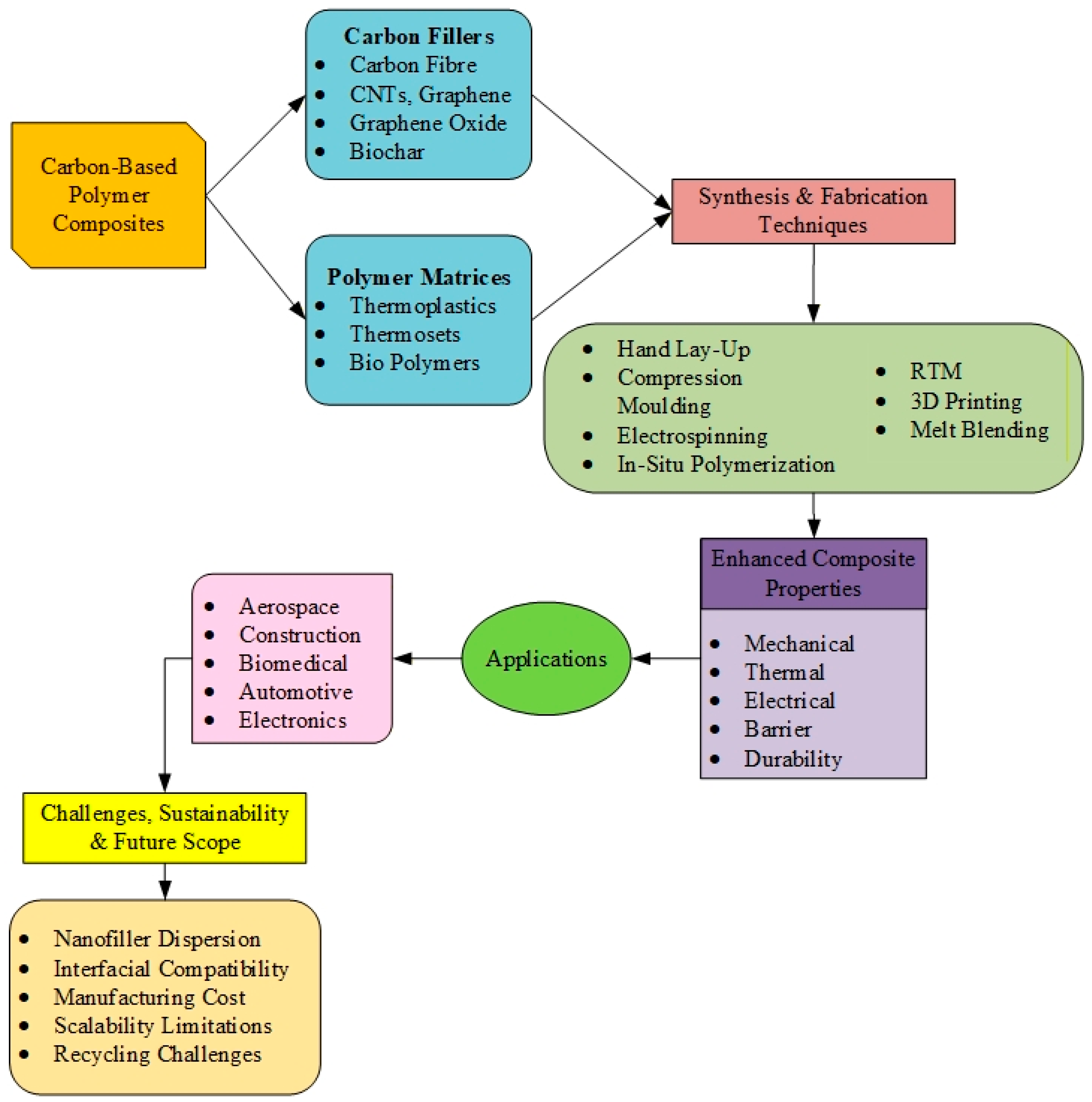
Figure 1: Overview of Carbon-Based Polymer Composites Showing Reinforcement Types, Enhanced Properties, Processing Approaches, and Major Applications.
2.1 Literature Search Strategy
A systematic review of literature was conducted using online databases such as Scopus, Web of Science, Science Direct, IEEE Xplore, Springer Link, and Wiley Online Library. Key terms used for searches include carbon-based polymer composite materials, carbon fibre, CNTs, GR, GO, biochar, and properties of composites. Searches were conducted for publications between 2024 and 2026.
2.2 Inclusion and Exclusion Criteria
Peer-reviewed journal papers from 2024 to 2026 have been utilized to identify current developments related to carbon-polymer composite materials. The selection of literature sources was based on their pertinence to materials, preparation methods, properties, applications, and sustainability issues. Quality assessment involved evaluating the source’s prestige and relevancy in relation to the purpose of this review. Conference papers, books, patents, duplicate entries, non-English language publications, and out-of-scope articles have been omitted. Literature search was done through Boolean searching techniques specific to each database, with pre-defined search dates and a publication period of 2024–2026. The resulting citations were evaluated for eligibility via title and abstract screening, while those that passed through that step were subjected to a full-text evaluation against predetermined inclusion and exclusion criteria. The methodological quality and potential risks of bias were evaluated among included studies based on methodological clarity, completeness of reporting, and relevance to review objectives.
PRISMA was used to guide the systematic process of screening the articles for inclusion. First, duplicates were removed, then the titles, abstracts, and full texts were reviewed. In total, based on the inclusion criteria, 106 articles were included for the qualitative analysis.
The PRISMA study selection strategy is illustrated in Fig. 2. To start with, a total of 1200 references were sourced from different databases. After the exclusion of 240 duplicates, there were 960 studies left for screening based on their titles and abstracts. In this stage, 760 references were screened out due to failing to meet the inclusion criteria. Of the remaining 200 full-text references, 94 articles were excluded owing to the following reasons: lack of adequate data, irrelevance, non-English publications, conference articles, and duplicates. The final number of articles that met all inclusion criteria and therefore were included in this systematic review was 106.
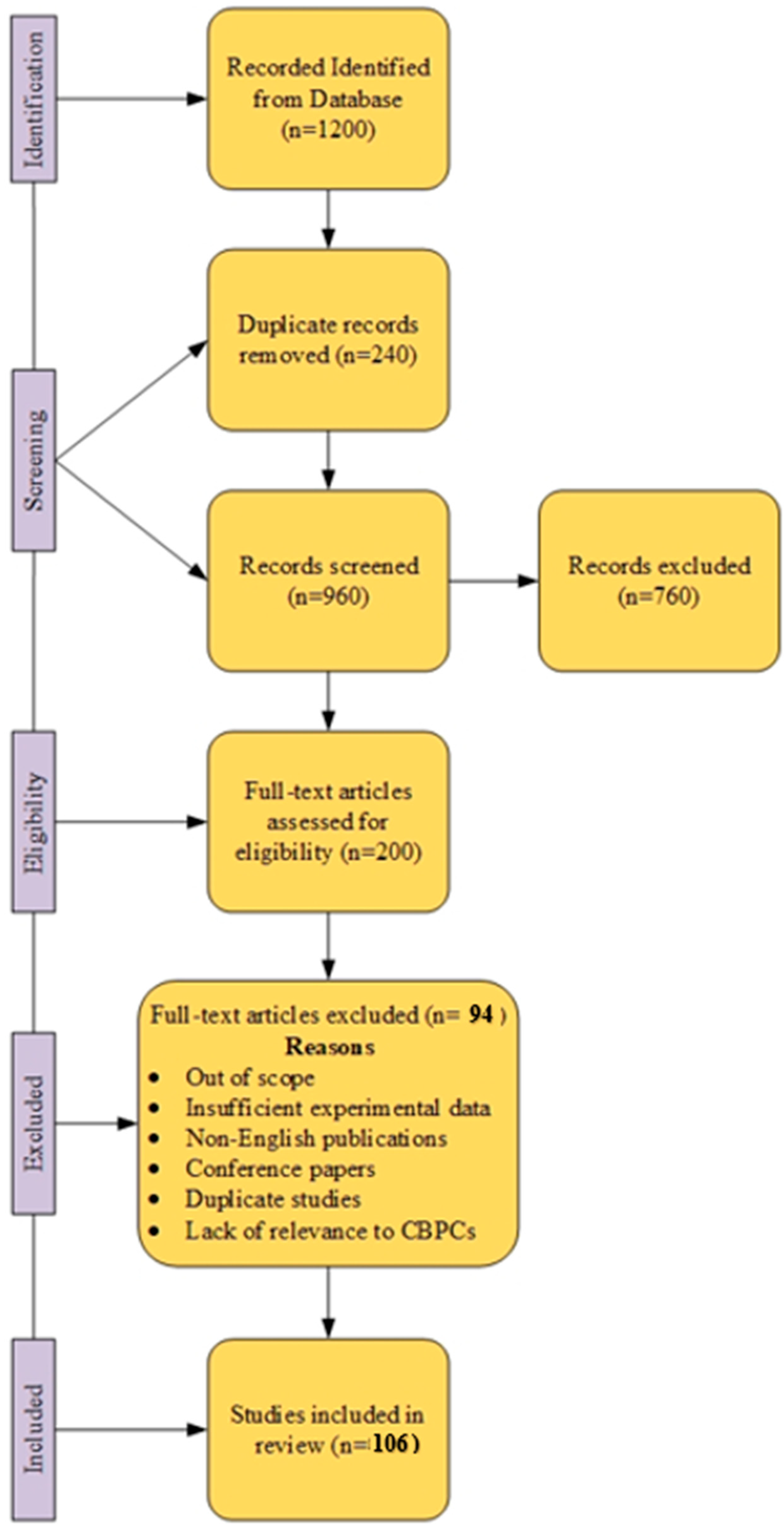
Figure 2: PRISMA Flow Diagram Showing the Literature Identification, Screening, Eligibility Assessment, and Final Study Selection Process.
2.4 Data Extraction and Analysis
The relevant data, such as the type of reinforcement, polymer matrix, method of manufacture, properties, durability, and applications, were obtained from the studies. The data were classified based on material types, processes, properties, applications, and sustainability issues. Qualitative comparative analysis was conducted in order to establish significant trends, performances, limitations, and areas for further investigation in the field of carbon polymer composite materials.
3 Fundamentals of Carbon-Based Polymer Composites
3.1 Constituents of Carbon-Based Polymer Composites
CBPCs are considered highly sophisticated materials that have been produced using a mixture of a polymer matrix and carbon-based fibres. Current research has revealed that adding carbon nanoparticles to the material leads to improved composite characteristics and allows such materials to be used in the field of aerospace, automotive, electronics, and the energy industry [15]. Moreover, carbon-based polymer nanocomposites possess excellent electromagnetic shielding properties [16].
The main components of these composites are the polymer matrix and CBRs. In these materials, the polymer matrix serves as the continuous phase which acts as a structure for the reinforcement phase. Engineered carbon structures, known for their special bonding properties, have been proven effective for improving the efficiency of these composites [17]. Porous CBPCs are also known for their gas separation capability and environmental friendliness [18].
Carbon-containing reinforcing agents can be obtained in various forms, including carbon fibres, CNTs, GR, GO, fullerenes, activated carbon, and biochar. Such materials possess unique characteristics like superior strength, low density, excellent conductivities, and high surface area.
The developments that have been made in AM technologies have enabled the manufacture of complex carbon-filled composite materials with improved structure and performance [19].
The great advantage of CBPCs can be associated with synergistic effects between the matrix polymer and the carbon reinforcements. Such a material class has significant benefits for their mechanical, thermal, electric, and multifunctional properties [20]. Among all other reinforcements, CNTs have been given special attention because of their unique properties, although there are problems with dispersion and interfacial adhesion [21].
3.2 Types of Carbon-Based Reinforcements
Carbon-based reinforcing agents are critical for improving the mechanical, thermal, and electrical properties of polymeric composites. Some common reinforcing materials used are carbon fibres, CNTs, GR, GO, Graphene Nanoplatelets (GnPs), and other carbon-based nanoparticles. The unique properties of each reinforcement are important for designing advanced composite materials for different industries such as aerospace, automotive, electronics, and energy.
Table 1 provides information about the important types of CBRs utilized for making polymer composites. The table gives a brief idea of the significant characteristics of these materials, as well as their strengths and uses. The disparities in dimensionality, functionality, reinforcing efficiency, and applicability among the different CBRs. The data thus generated can be used to determine the most suitable reinforcement based on the needed mechanical, thermal, electrical, and structural characteristics of the composite.
Table 1: Types, Structural Characteristics, Key Properties, Advantages, and Applications of Carbon-Based Reinforcements Used in Polymer Composites.
| Reinforcement Type | Dimensionality | Key Properties | Major Advantages | Typical Applications | Ref. |
|---|---|---|---|---|---|
| GnPs | 2D Nanosheet Structure | Enhanced mechanical and thermal properties | Improved reinforcement efficiency | Biopolymer composites | [22] |
| Carbon Fibres | 1D Fibrous Structure | High strength and impact resistance | Excellent structural reinforcement | Flexible composite structures | [23] |
| Hybrid Carbon Reinforcements | Multi-scale Structure | Synergistic mechanical enhancement | Combined reinforcement effects | Cement-based composites | [24] |
| GO | 2D Nanosheet Structure | Improved mechanical properties | Enhanced interfacial interaction | Rubber blend composites | [25] |
| Carbon-Based Nanoparticles | 0D Nanoscale Particles | Enhanced microstructure and strength | Improved coating performance | Epoxy coatings | [26] |
| Carbon Fibres | 1D Fibrous Structure | High strength and durability | Effective reinforcement capability | Cementitious composites | [27] |
| CNTs | 1D Tubular Nanostructure | Electrical conductivity and sensing capability | Multifunctional reinforcement | Smart cement composites | [28] |
| GnPs | 2D Layered Structure | Thermal, electrical, and tribological performance | Improved multifunctionality | Conductive composites | [29] |
| GFRP Reinforcement | Fibrous Structure | Structural strengthening | Enhanced shear performance | Reinforced concrete beams | [30] |
The categorisation of carbon polymer composites depends on the nature, size, and distribution used in their production. The various categorizations have different characteristics and thus are used for varied purposes such as structural components, sensors, electrical applications, and many others. It is important to understand these categorizations to choose the appropriate composite for a particular use.
Table 2 categorizes the carbon-based polymer composite materials based on the reinforcing materials used and the properties exhibited by the materials. The main focus of this classification is the versatility of the functions served by the carbon-based reinforcing materials, which include structure reinforcement, sensing, and conductivity, among others.
Table 2: Classification of Carbon-Based Polymer Composites According to Reinforcement Type, Matrix, Structure, and Functional Characteristics.
| Composite Category | Reinforcement Type | Key Characteristics | Representative Applications | Ref. |
|---|---|---|---|---|
| Carbon Fibre-Reinforced Polymer Composites (CFRPs) | Carbon Fibres | High strength and damage resistance | Aerospace and structural components | [31] |
| Conductive Polymer Composites | Conductive carbon particles | Enhanced electrical conductivity and percolation behaviour | EMI shielding and electronic devices | [32] |
| Doped Polymer Composites | Carbon fillers with metal complexes | Improved optical and electrical properties | Optoelectronic applications | [33] |
| Particle-Reinforced Polymer Composites | Carbon nanoparticles and bitumen fillers | Enhanced structural and morphological properties | Coatings and industrial materials | [34] |
| Hybrid Polymer Composites | CNTs and Fe fillers | Multifunctional mechanical and magnetic properties | Smart materials and advanced manufacturing | [35] |
| Polymer Nanocomposites | Nanoscale carbon fillers | Improved elastic and functional performance | High-performance engineering materials | [36] |
| Carbon Fibre-Reinforced Polymer Composites (CFRPs) | Carbon Fibres | Enhanced impact resistance and structural reliability | Automotive and aerospace structures | [37] |
| Carbon Nanotube-Reinforced Composites | Multiwall Carbon Nanotubes (MWCNTs) | High conductivity and sensing capability | Flexible sensors and wearable electronics | [38] |
3.4 Reinforcement–Matrix Interactions in Carbon-Based Polymer Composites
The behaviour of carbon-polymer composite materials is primarily governed by the interfacial properties between the reinforcement and matrix materials. The interface acts as an important parameter for stress transfer and dispersion of the filler material, improving composite performance [39].
Carbonaceous filler materials, like MWCNTs, graphite, and hybrid filler materials, increase the mechanical, electrical, and functional characteristics of polymer composites through efficient matrix adhesion [40]. Also, carbon nanotube-filled dynamic polymer networks show better self-healing and structural performance owing to improved reinforcement-matrix interaction [41].
Incorporating sustainable carbon-based materials, such as biochar, into filler materials helps improve the properties of the composites due to increased compatibility [42]. For fibre-reinforced composites, the orientation, volume, and bonding of fibres play important roles in determining their impact strength and ability to transfer loads [43]. The design of optimized interfaces is vital for increasing heat transfer in polymer nanocomposites [44].
Charcoal-reinforced composites have better thermal, physical, and microstructural properties because of improved filler-matrix interaction [45]. Moreover, carbon nanotube addition enhances the mechanical and tribological behaviour of fibre-reinforced composites because of improved interfacial bonding [46]. Advanced composite structures of carbon fibres have exhibited good performance for electromagnetic shielding [47], while biofibre-reinforced carbon composites have good potential for electromagnetic shielding for aerospace applications [48].
3.5 Structure–Property Relationships of Carbon-Based Polymer Composites
CBPCs’ characteristics are largely determined by structural factors, such as the types of reinforcing materials and filler arrangements. Structural design can help make substantial advancements in various performances, such as mechanical, electrical, thermal, and functional performances [49].
Incorporation of carbon fibres into composite materials has increased strength, stiffness, and durability through effective load transfer [50]. Parameters involved in manufacturing processes and the configuration of structures are equally important in deciding the mechanical behaviour of such composite structures [51]. Moreover, machine learning techniques have also been used for the prediction of the bending properties of polymers [52].
Carbon-reinforced structures play an important role in electrochemical and electromagnetic systems. Composites of polymers and carbon show good energy storage capacity in supercapacitor applications [53]. The arrangement of carbon-based structures plays an important role in electromagnetic wave attenuation and absorption [54].
High concentration and dispersion of carbon fillers significantly influence the electrical and dielectric performance of polymer-based composites. Improved electrical and dielectric performances have been observed in activated carbon-filled composites [55]. In addition, GO-based polymer composites demonstrate good structure, morphology, and optoelectronic performances owing to better microstructural attributes [56]. Table 3 summarizes the key structural parameters and their influence on composite properties. Composite performance is influenced by structural parameters based on type, density, distribution, interface bonding, orientation, structure, porosity, flaws, and microstructure. All these parameters together have an effect on strength, thermal stability, electrical conductivity, and multifunctionality.
Table 3: Key Structural Parameters and Their Effects on the Mechanical, Thermal, Electrical, and Durability Properties of Carbon-Based Polymer Composites.
| Structural Parameter | Description | Affected Properties |
|---|---|---|
| Reinforcement Type | Type of carbon filler (carbon fibres, CNTs, GR, GO, biochar) | Mechanical, thermal, and electrical properties |
| Filler Concentration | Amount of reinforcement incorporated into the matrix | Strength, conductivity, and dielectric behaviour |
| Filler Dispersion | Distribution of fillers within the polymer matrix | Load transfer efficiency and durability |
| Interfacial Bonding | Adhesion between reinforcement and polymer matrix | Mechanical strength and thermal stability |
| Reinforcement Orientation | Alignment of fibres or nanofillers | Stiffness and impact resistance |
| Composite Architecture | Layered, hybrid, or nanocomposite configuration | Multifunctional performance |
| Porosity and Defects | Presence of voids and imperfections | Structural reliability and durability |
| Microstructure | Internal morphology and phase distribution | Optical, thermal, and electrical properties |
4 Synthesis and Fabrication Techniques
The process of synthesis and manufacturing that is used for making CBPCs is extremely important for the development of the microstructure of these materials, the proper dispersion of reinforcement, as well as interfacial bonding. Both classical and modern approaches to manufacturing are applied for obtaining high-performance CBPCs. It is necessary to select the correct method of manufacturing for CBPCs to obtain the required results.
Table 4 describes the widely employed process and fabrication methods that are utilized in making carbon polymer composites and their composite systems, and the important benefits associated with them. The choice of the processes is critical for enhancing composite performance.
Table 4: Synthesis and Fabrication Techniques, Composite Systems, and Key Performance Advantages of Carbon-Based Polymer Composites.
| Fabrication Technique | Composite System | Key Advantages | Ref. |
|---|---|---|---|
| Hand Lay-Up | Carbon Fabric-Reinforced Polymeric Composite | Improved tensile strength, lightweight structure, and enhanced load-bearing capability | [57] |
| Hand Lay-Up and Compression Moulding | Biodegradable Hybrid Fibre-Reinforced Sandwich Composite | Improved mechanical performance, lightweight design, and environmental sustainability | [58] |
| RTM | Epoxy-Based Composite | Uniform resin distribution and reduced void formation | [59] |
| Electrospinning | Carbon Black–PAN/Nickel Foam Composite | Production of ultrafine nanofibers with high surface area | [60] |
| 3D Printing of Nanocomposites | Graphitic Nanofiller-Reinforced PLA Composite | Design flexibility and multifunctional properties | [61] |
| Nanofiller Reinforcement Processing | MWCNT-Reinforced Glass Fibre Composite | Improved mechanical performance and failure resistance | [62] |
| FGF 3D Printing | CNT-modified basalt fiber/PA6 composite | Improved tensile and flexural properties, strong interfacial interaction, and reduced warping | [63] |
5 Mechanical Property Enhancement
Enhancement of mechanical properties is one of the main goals pursued during the fabrication of CBPCs. Use of CBRs like CNTs, GR, carbon fibres, and nanocomposites enhances the mechanical properties of the polymers, such as strength, rigidity, toughness, impact resistance, and durability. The above factors contribute to enhanced mechanical performance due to effective stress transfer, high bonding at the interface between the polymer matrix and reinforcing particles, and proper dispersion of fillers in polymer matrices.
The important reinforcement techniques for increasing the mechanical properties of composite materials are illustrated in Table 5. The different types of carbon reinforcements and mixed reinforcements increase the tensile strength, flexural strength, toughness, stiffness, impact strength, and adhesion strength. Reinforcement engineering plays an important role in composite development.
Table 5: Carbon Reinforcements, Composite Systems, and Their Effects on the Mechanical Properties of Carbon-Based Polymer Composites.
| Reinforcement Material | Composite System | Mechanical Property Enhancement | Ref. |
|---|---|---|---|
| CNT-modified basalt fibres | Basalt fibre/nylon 6 composite fabricated by FGF 3D printing | Improved tensile and flexural properties due to enhanced interfacial interaction | [63] |
| GO and Reduced Graphene Oxide (rGO) | Epoxy Nanocomposite | Improved tensile and flexural strength | [64] |
| Structural Optimization Approach | Battery Pack Composite Structure | Enhanced impact resistance and fatigue endurance | [65] |
| Nano- and Micro-Scale Reinforcements | Polymer Matrix Composite | Improved mechanical property estimation and performance | [66] |
| CNTs and GnPs | Epoxy Nanocomposite | Enhanced strength, stiffness, and mechanical stability | [67] |
| Functionalized Boron Nitride Nanosheets | Thermal Interface Composite | Enhanced interfacial strength and structural performance | [68] |
| MWCNT-Grafted Aramid Fibres | Epoxy Composite | Improved interfacial interaction and mechanical properties | [69] |
| Hybrid Polypropylene Fibres | Concrete Composite | Improved mechanical strength and crack resistance | [70] |
| Nanostructured resin matrix and hybrid fibre networks | Biomimetically engineered FRP composite | Enhanced mechanical strengthening through hierarchical architecture and improved interfacial interactions | [71] |
6 Functional Properties of Carbon-Based Polymer Composites
Thermal conductivity is one of the most important functional properties of carbon-filled polymer composites. The addition of carbon fibres, graphene, and CNTs increases the rate of heat flow by forming conductive pathways within the composite matrix. It was observed by Lu et al. [72] that the incorporation of graphene networks together with vertical alignment of carbon fibres improves thermal conduction by lowering thermal resistance.
Nanocomposites made from CNTs possess enhanced fire-resistance and thermal stability characteristics [73]. Likewise, bio-based composites made from microencapsulated CNTs have superior thermal conductivities for thermal management purposes [74].
The silicon-containing polymer nanocomposites are more thermally stable at high temperatures [75]. The combination of boron nitride and GR filler in a single composite material provides higher thermal conductivity along with electrical insulation [76]. The development of composites having dual functionality in thermal conduction and microwave absorption shows advanced thermal properties [77]. In addition, flax-carbon-Kevlar composite materials possess better thermal properties [78].
Table 6 shows the main thermal characteristics of carbon-reinforced polymers and their importance in determining material behaviour. These carbon-based materials play a role in heat dissipation, heat stability, fire resistance, and dimensional stability, which makes these materials ideal for use in thermal and high-temperature applications. The thermal properties of CBPCs include thermal conductivity, stability, flame retardancy, heat resistance, dimensional stability, and thermal management. Carbon reinforcements improve heat transfer, thermal durability, fire resistance, structural stability, and efficient heat regulation under elevated-temperature conditions.
Table 6: Major Thermal Properties of Carbon-Based Polymer Composites and the Contributions of Carbon-Based Reinforcements.
| Thermal Property | Role in Composites | Contribution of CBRs |
|---|---|---|
| Thermal Conductivity | Facilitates heat dissipation and transfer | Creates efficient thermal conduction pathways |
| Thermal Stability | Maintains performance at elevated temperatures | Enhances resistance to thermal degradation |
| Flame Retardancy | Reduces flammability and heat release | Improves fire resistance and combustion delay |
| Heat Resistance | Withstands prolonged thermal exposure | Increases durability under thermal stress |
| Dimensional Stability | Maintains structural integrity during heating | Minimizes thermal expansion and deformation |
| Thermal Management Capability | Controls heat accumulation in devices and structures | Enables efficient thermal regulation |
Electrical properties stand out as some of the most important functional properties exhibited by CBPCs due to their use in the development of electrically conducting materials, EMI shielding structures, sensors, and bioelectronics. Carbon-based fillers improve electrical conductivity through the formation of a conductive network structure within the polymer matrix [79].
Conductive hydrogels based on carbon display outstanding conductivity, flexibility, and biocompatibility features, which render them ideal for bioelectronic interface purposes [80]. Furthermore, thin-film composite membranes have also been found to possess enhanced charge and functional performance attributes, thus emphasizing the possibility of using more complex polymer composite structures for electrical purposes [81]. Hybrids of filler and polymer-based composites also enhance multi-functionality features through better conductivity attributes [82].
The electrical performance of carbon fibre-based composite materials could also be enhanced by surface treatment with nanostructured materials to obtain increased conductivity and functionality [83]. Functionalized conducting polymer-based nanocomposites have also proven promising in applications such as supercapacitors and biological sensing devices [84].
Furthermore, CNT-based polymer composites are widely employed in sensing applications due to their excellent piezoresistive behaviour. Flexible CNT composites have demonstrated effective human motion monitoring capabilities [85], while 3D-printed CNT-based composites exhibit reliable strain-sensing performance for smart sensing systems [86].
Noted that g-C3N4/LSR composites show nonlinear electrical conductivity with the effect of filler concentration and microstructure. Oxygen doping makes the materials show more nonlinearity at lower filler concentrations without altering their thermal conductivity [87].
Table 7 compares the various network structures used to enhance thermal conductivity in carbon-based polymer composites. The roles of filler loading, filler interactions, and interface interactions have been highlighted. The new BN-based systems have shown improvement in heat transfer routes due to segregation, magnetization, and 3D networks. The comparison clearly indicates that optimization of network structure and interface interactions is a key factor for obtaining high thermal conductivity without increasing filler loadings.
Table 8 describes the filler content, percolation point, connectivity, and interfacial thermal resistance. SEM, TEM, and EDS characterization techniques are also indicated for the evaluation of filler dispersion and structural homogeneity. Statistical indicators including average ± SD and sample size ensure the reproducibility of properties. Thermal and mechanical properties are provided.
Table 7: Comparison of Network Architecture, Filler Loading, and Thermal Conductivity in Carbon-Based Polymer Composites.
| System | Network/Architecture | Heat-Transfer Mechanism | Loading | Thermal Conductivity | Key Advantage/Trade-Off |
|---|---|---|---|---|---|
| BNNS–graphene/PEG (baseline) | Interconnected hybrid network | Graphene bridges BNNS platelets | 10 vol% | 2.45 W m−1 K−1 | Good thermal transport and electrical insulation |
| BNNS/PVA film | Segregated BNNS network | Enhanced BNNS–BNNS contacts | 40 wt% | 5.2 W m−1 K−1 | High conductivity; complex processing |
| BN/epoxy | Magnetically aligned 3D network | Improved network continuity | 25 wt% | 229% enhancement | Directional transport; magnetic processing required |
| 3D BN/PDMS | Binder-free 3D BN skeleton | Direct BN–BN heat pathways | 40.70 vol% | 3.889 W m−1 K−1 | Continuous network; complex fabrication |
| CBPCs reviewed | Hybrid, aligned, interconnected networks | Interface and filler–filler interactions | Varies | Varies | Network architecture and interface are important beyond filler loading |
Table 8: Mechanistic and Statistical Parameters for Evaluating Thermal and Mechanical Performance of CBPCs.
| Assessment Parameter | What Should Be Extracted/Reported from Literature | Mechanistic Significance |
|---|---|---|
| Filler loading | Filler concentration (wt% or vol%) and corresponding thermal conductivity | Identifies loading-dependent improvement and optimum filler content |
| Percolation threshold | Estimated critical filler concentration, φc, where a continuous filler network is formed | Indicates the onset of an interconnected heat-transfer network |
| Network connectivity | Dispersed, partially connected, interconnected, or 3D network | Explains the formation of efficient thermal pathways |
| Interfacial modification | Functionalization, coupling agents, surface treatment, polymer–filler interactions | Reduces interfacial thermal resistance and improves heat transfer |
| Interfacial thermal resistance | Reported/calculated Rk, where available | Quantifies the thermal resistance at the polymer–filler interface |
| Microstructure | SEM/TEM images with scale bars and multiple fields of view | Evaluates filler dispersion, agglomeration, orientation, and network uniformity |
| Elemental distribution | EDS elemental mapping, where available | Confirms spatial distribution and compositional homogeneity |
| Thermal conductivity | Mean ± SD, number of specimens (n), and measurement method | Establishes reproducibility and reliability of thermal performance |
| Mechanical properties | Mean ± SD, n ≥ 5 were reported | Establishes statistical reliability of mechanical enhancement |
| Statistical significance | Standard deviation, confidence interval, or significance testing where available | Distinguishes genuine improvement from experimental scatter |
| Structure–property relationship | Filler loading → dispersion/network → interface → thermal/mechanical property | Provides the polymer-physics mechanism behind the observed performance |
The barrier characteristics play an important role in increasing the durability of CBPCs. The barrier characteristics can decrease the effects of moisture uptake, gas permeation, and deterioration of materials [88].
NFPRPs are characterized by better moisture resistance and environmental stability [89]. The polymer composite coating offers excellent protection against corrosion in aggressive environments [90]. Carbon-based filler material increases the corrosion resistance [91].
Gas barrier efficiency in composites is significantly affected by filler-matrix interactions and membrane morphology. It was found that carbon fibre composites show better gas barrier due to improved interface properties [92]. Composite electrodes improve gas transport performance in energy-related applications [93]. Carbon-based porous structures help in improving gas transport performance [94]. Nanocomposite membranes containing CNTs show improved gas separation efficiency [95]. Polymer membranes incorporating porous structures improve gas separation efficiency due to a diffusion-controlled process [96]. Moreover, composite microporous layers regulate gas transport and minimize oxygen transport resistance in fuel cells [97].
7 Comparative Analysis of Carbon-Based Polymer Composites
Comparative analysis is used to judge the performance and appropriateness of carbon polymer-based composite materials for use in various fields. The effect of different carbon reinforcements, including carbon fibres, CNTs, GR, GO, and biochar, on the physical properties of the material varies. Some of the benefits associated with carbon fillers include improved mechanical properties, heat dissipation ability, electrical conductivity, and EMI shielding capability, whereas bio-based materials add to the environmental sustainability aspect. In addition to that, production costs and industry viability are some of the other major considerations when choosing the right material. Rankings of 1–10 were assigned based on predetermined criteria through the normalization of reported values of the reviewed articles. For mechanical performance, tensile strength, stiffness, toughness, and load transfer were assessed, while sustainability and scalability included renewability, environmental effects, economic value, recyclability, and industrial feasibility. Normalization of values was then converted into a 1–10 scale utilizing the same scoring system for carbon reinforcement in general. Processing conditions significantly affect the dispersion, alignment, networking, and microstructure of the carbon-based polymer composite materials. Microstructural characteristics, along with the interaction between the filler and polymer interface, control stress transfer, heat, and electrical conductivity, as well as the barrier properties. Hence, proper processing, good filler dispersion, and effective interface interaction are crucial in obtaining enhanced material characteristics.
Table 9 is presented to provide an outline of the research topics addressed within the field of CBPCs and nanocomposites. Research papers included in this review are classified according to various criteria such as types of reinforcing materials, types of composites, processing techniques, property improvements, new applications, and sustainability concerns. It should be noted that CBRs have been found to impart a wide range of improved properties to polymeric matrices.
Table 10: A comparative analysis of the sustainability and scalability of various carbon-based fillers based on 5 important criteria is presented. Environmental impact, recyclability, economic viability, energy requirements, and scalability are assessed on a scale of 1 to 5. Biochar/activated carbon demonstrates the most favorable profile among all, while CNTs demonstrate comparatively low values.
Fig. 3 illustrates a qualitative ranking of the mechanical properties of CBRs. A score from 1 to 10 was given to each material according to the literature-based trend in terms of tensile strength, stiffness, toughness, and efficiency in load transfer. Carbon fibres gained the highest relative ranking due to their excellent structural reinforcement properties, followed by CNTs and GR. GO and biochar ranked lower in terms of mechanical performance; however, they have higher sustainability and lower-cost synthesis processes. The ranking is literature-based and qualitative and is used for comparison purposes only.
Fig. 4 depicts a qualitative ranking of the sustainability and scalability of CBRs. Values between 1 and 10 have been provided based on the trends of renewability, environmental friendliness, cost of production, recyclability, and industrial applicability of CBRs. Biochar has received the highest value due to its renewability and environment-friendliness, while graphene and CNTs received relatively lower values due to their higher cost of production and scalability issues. The above values depict only the qualitative comparison of sustainability and cannot be considered as a sustainability index or LCA.
Table 9: Comparative Overview of Carbon-Based Reinforcements, Composite Types, Fabrication Methods, Enhanced Properties, Applications, and Sustainability.
| Category | Subcategory | Key Characteristics | Representative References |
|---|---|---|---|
| CBRs | Carbon Fibres | High strength, stiffness, and structural reinforcement | [18,22,34,38,78] |
| CNTs | Excellent mechanical, thermal, and electrical properties | [15,19,30,62,83] | |
| GR and GO | Enhanced conductivity, mechanical performance, and multifunctionality | [16,41,47,58,73] | |
| Biochar and Activated Carbon | Sustainable and cost-effective reinforcement materials | [33,36,46,92,98] | |
| Composite Classification | Fibre-Reinforced Composites | Carbon fibres embedded in polymer matrices for structural applications | [22,28,34,78,99] |
| Particle-Reinforced Composites | Carbon nanoparticles dispersed within polymer matrices | [24,25,26,47,93] | |
| Hybrid Nanocomposites | A combination of multiple reinforcements for multifunctional properties | [26,31,62,77,86] | |
| Fabrication Techniques | Conventional Methods | Hand lay-up, compression moulding, RTM, filament winding | [48,49,50,51] |
| Advanced Manufacturing | 3D printing, electrospinning, melt blending, in-situ polymerization | [52,53,54,55,56] | |
| Performance Enhancement | Mechanical Properties | Tensile strength, flexural strength, toughness, impact resistance | [58,62,65,70,82] |
| Thermal Properties | Thermal conductivity, stability, and flame retardancy | [68,71,83,86,89] | |
| Electrical Properties | Conductivity, EMI shielding, sensors, and smart devices | [78,82,93,100,101] | |
| Barrier Properties | Moisture resistance, corrosion protection, and gas barrier performance | [91,93,102] | |
| Emerging Applications | Energy Storage | Batteries, supercapacitors, and fuel cells | [44,94,100] |
| Sensors and Smart Systems | Strain sensors, wearable electronics, and monitoring systems | [87,93,101,103,104] | |
| Aerospace and Automotive | Lightweight structural and EMI shielding applications | [38,39,78,81,99] | |
| Sustainability and Scalability | Sustainable Materials | Bio-based fillers, recycled carbon materials, and green composites | [33,87,98,105] |
| Industrial Scale-Up | Cost-effective manufacturing and commercial feasibility | [56,100] |
Table 10: Comparative Analysis, specifically after the discussion comparing the performance and sustainability of different CBPC fillers.
| Filler | Environmental | Recyclability | Economic | Energy* | Scalability | Overall |
|---|---|---|---|---|---|---|
| Carbon fibre | 3 | 3 | 3 | 2 | 5 | 3.2 |
| CNTs | 2 | 2 | 2 | 1 | 3 | 2 |
| Graphene/GO | 3 | 3 | 2 | 2 | 3 | 2.6 |
| Biochar/AC | 5 | 4 | 5 | 4 | 5 | 4.6 |
| BN/BNNS | 4 | 3 | 2 | 2 | 3 | 2.8 |
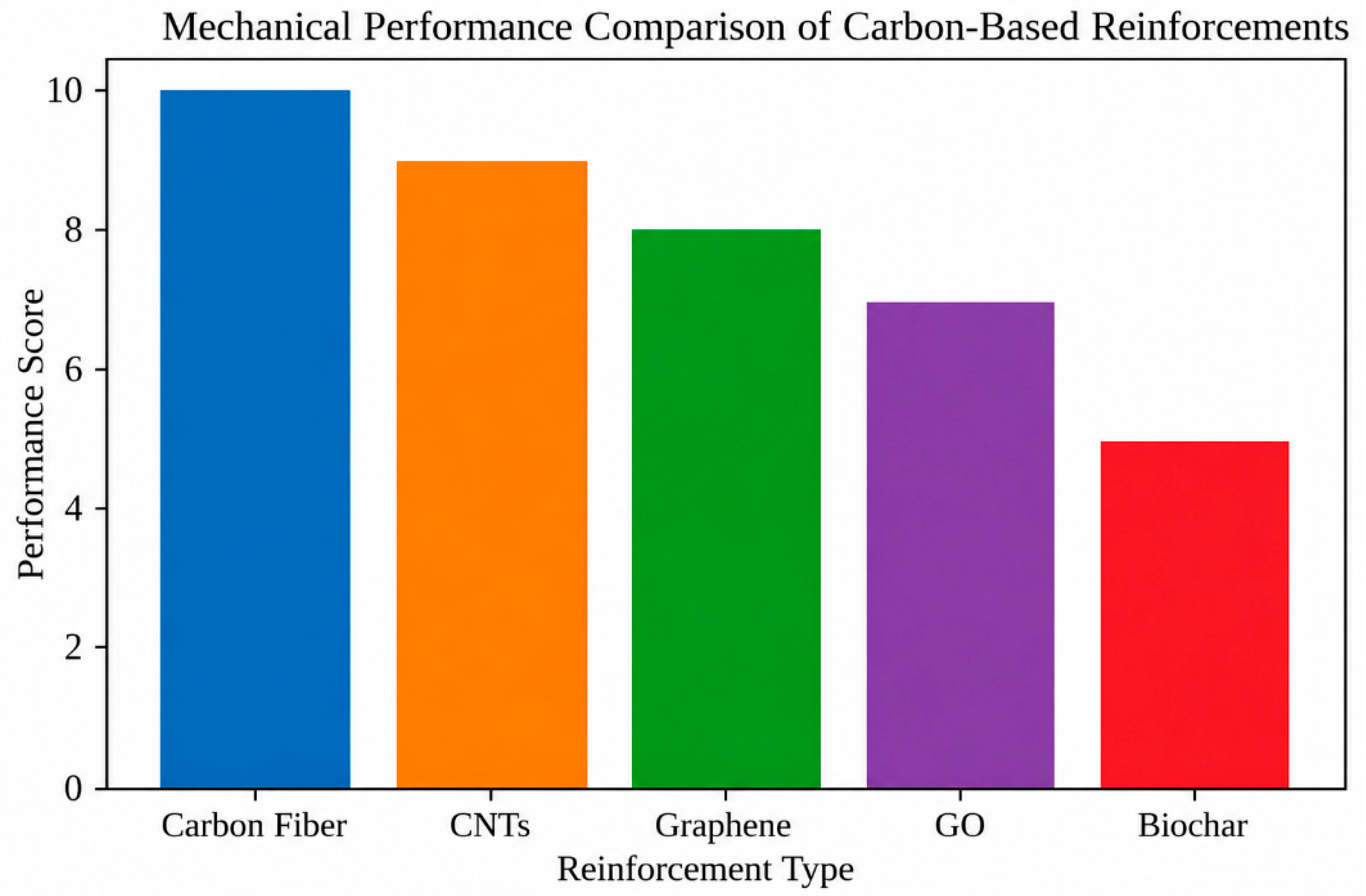
Figure 3: Comparative Mechanical Performance of Carbon-Based Reinforcements Based on Tensile Strength, Stiffness, Toughness, and Load-Transfer Capability.
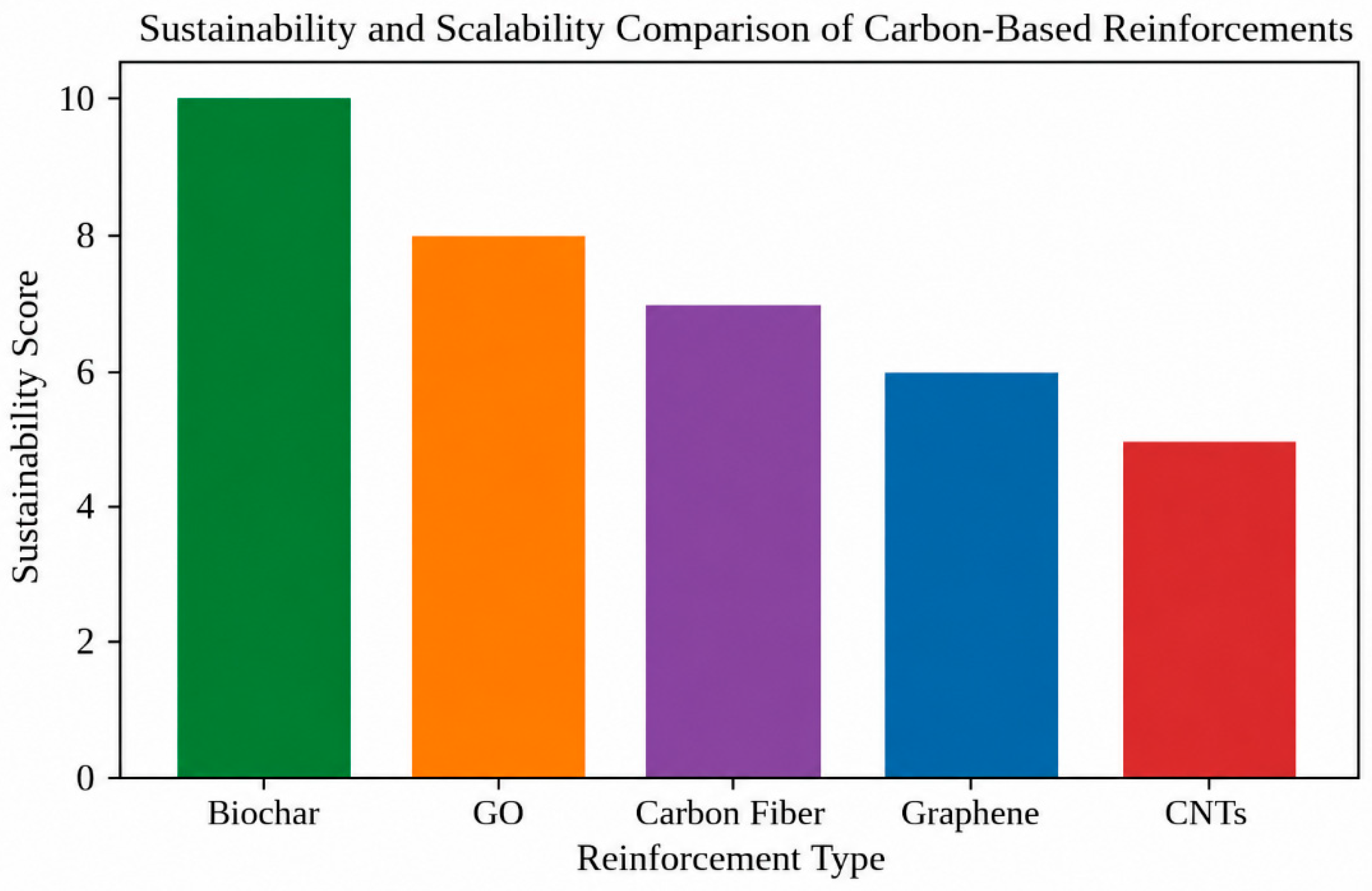
Figure 4: Comparative Sustainability and Scalability of Carbon-Based Reinforcements Based on Renewability, Environmental Impact, Cost, Recyclability, and Industrial Feasibility.
8 Durability and Environmental Considerations
The durability of the material and the effect on the environment are essential factors for the performance of CBPCs. The following aspects may affect their long-term performance: the effect of ultraviolet light, moisture uptake, thermal ageing, and chemical effects. On the other hand, the use of recyclable composites, biopolymers, eco-friendly synthesis techniques, and LCA allows achieving greater sustainability.
Table 11 provides a summary of studies related to durability and sustainability issues of composite materials. The findings reveal progress in environmental stability, corrosion resistance, thermal stability, recycling potential, and the use of bio-materials. Green fabrication techniques and LCA facilitate sustainable composite production.
Table 11: Durability and Sustainability Characteristics of Carbon-Based Polymer Composites, Including Environmental Stability, Recyclability, and Long-Term Performance.
| Aspect | Material/System | Key Outcome | Ref. |
|---|---|---|---|
| Environmental Stability | Conductive Rubber Composite | Demonstrated excellent mechanical strength, environmental stability, and electrical conductivity | [99] |
| Corrosion Resistance | GR-Based Nanocomposite Coating | Improved corrosion protection and durability in automotive applications | [100] |
| Bio-Based Materials | Starch Bioplastic Composite | Developed sustainable and biodegradable packaging materials | [101] |
| Thermal Aging | Resin–Polymer Composite System | Thermal ageing significantly influenced bonding performance and durability | [103] |
| Flame Retardancy and Environmental Adaptability | Hierarchical Polymer Structure | Enhanced flame resistance and adaptability under environmental conditions | [104] |
| Recycling and Sustainability | Recycled Steel Fibre Composite | Promoted waste utilization and sustainable composite development | [98] |
| LCA | PLA/PHA Bio-Based Polymer System | Evaluated environmental impact and sustainability through LCA analysis | [102] |
| Green Synthesis and LCA | Waste-Derived GR Production | Demonstrated environmentally sustainable GR production routes | [105] |
9 Applications of Carbon-Based Polymer Composites
CBPCs are widely applied in aerospace construction owing to their lightweight and corrosion resistance, along with the ability to resist fatigue. Composite structures made of carbon fibres reinforced with polymers are popular for use in the fuselage, wing, tail structure, and internal components of an aircraft. These composite structures have several advantages over the traditional metallic structures since they can achieve a reduction of up to 20–50% of the total weight of such components.
CBPCs are utilized in automotive applications such as body panels of electric vehicles, battery housing units, chassis, and crash-resistant structures. The use of carbon fibre and graphene in automotive composites ensures that the vehicles remain light yet mechanically strong and safe. Lighter composite structures increase the energy efficiency and driving range of electric vehicles. Furthermore, composite battery cases increase impact resistance and thermal stability of electric vehicles. Red mud was found to be a suitable substitute for copper in resin matrix brake composites with enhanced hardness, impact strength, and high-temperature friction characteristics [106].
Polymer composites consisting of carbon are currently being widely used in civil engineering construction projects for strengthening, repairing, and rehabilitation purposes. They are used in various infrastructure constructions, such as bridges and buildings, to increase load-bearing capability and durability. Self-healing composite systems offer increased durability by preventing cracks from forming and thus decreasing maintenance needs. Due to their corrosion-resistant properties, they are useful in tough environments.
CBPCs are highly conductive electrically and have been widely applied in flexible electronics, conductive coatings, wearable sensors, and smart electronics. The electric conductivity of the CNT-based and graphene-based composites can be in the range between 10−2 and 104 S/m based on the type of filler and its content in the composite material. In addition to their use in electronic applications, CBPCs find applications in the development of EMI shielding materials, flexible electronics, energy storage, and sensing devices.
CBPCs have been the subject of intense research in the field of biomedical engineering because of their high level of biocompatibility, mechanical stability, and functionality. These CBPCs find application in diverse biomedical applications such as drug delivery systems, tissue engineering systems, biosensors, etc. Composites of graphene and CNTs can be effective for promoting cell growth in tissue regeneration applications. Toxicity issues in some carbon-based materials still pose a challenge that must be addressed.
10 Challenges and Research Gaps
- Uniform distribution of carbon nanofillers in the polymer matrix is one of the biggest problems. Poor distribution results in agglomeration of fillers, thus affecting their efficiency as reinforcing materials. Advanced technologies should be used to attain a homogeneous distribution of the fillers.
- The performance of carbon-polymer composite materials is highly dependent on how the filler interacts with the polymer matrix. Poor bonding at the interface reduces the efficiency of stress transfer within the material, hence limiting its mechanical performance. Surface modification becomes necessary in such instances.
- Manufacturing high-grade carbon-based nanomaterials like CNTs and GR requires very costly manufacturing processes, which contribute to making the entire process of composite manufacture more expensive. It is necessary to develop cost-efficient manufacturing processes to ensure industrial viability.
- Many laboratory-scale processes for fabricating materials cannot be easily scaled up to a production-level scale. Achieving consistency in quality and performance throughout the production process is hard. Thus, there is a need for efficient processing methods.
- The recycling process of carbon-filled polymer matrix composites is quite challenging due to the strong bond between the filler and the polymer matrix. In addition, the lack of recycling facilities and expensive processing techniques has posed a problem in the commercialization of such composites.
- Future studies are anticipated to revolve around the production of sustainable carbon nanomaterials using renewable resources and industrial waste. The produced materials would be environmentally friendly, along with having good composite properties. The approach adopted would be an example of developing sustainable composite technology.
- The use of various CBRs together may result in the development of hybrid composites, which have better multifunctional properties. Multifunctionality is achieved due to improvements in the material’s mechanical, thermal, and electrical properties all at once.
- Green fabrication processes have become very important for composite manufacturing. Such green fabrication processes not only help in saving energy but also in reducing toxic chemicals as well as waste material used during the manufacturing process.
- Composites of the future have various functions incorporated into one system, like strength, heat transfer capability, electrical conductivity, and sensing capability. This enhances their efficiency, as well as reduces the need for different components. These kinds of composites would be ideal for aerospace, automotive, and electronics applications.
- The design of smart materials that can sense, monitor, and adapt is an emerging field of study. Such materials able to sense damage and monitor themselves, adapting as per their environment. The use of such smart materials improves the safety, reliability, and efficiency of structures.
The review has systematically analyzed recent progress in the field of CBPCs and showcased the major impact made by carbon-based fillers on improving the performance of composites. It has been observed that carbon fibres are the best type of filler used for making composites strong and reliable, while CNTs and graphene-based filler materials have proved themselves to be great at thermal and electrical conduction and multifunctionality. Biochar composites can also be termed sustainable and affordable options for developing composites. On the other hand, some advanced fabrication methods like compression moulding, RTM, electrospinning, additive manufacturing, and in-situ polymerization have been found to greatly improve the performance of composites.
The comparative analysis showed that using CNTs and graphene in composite materials is the best solution for achieving optimal performance, whereas carbon fibre-based composite materials are still recommended in cases requiring strength and stiffness. Although significant advancements have been made in recent years, the issues connected to the distribution of nanofillers within the matrix, compatibility between the interface, cost of production, scalability, and recyclability have prevented their mass adoption. In general, the reviewed literature confirms that CBPCs are materials with great promise for applications in the aerospace, automotive, construction, electronics, energy storage, and biomedicine sectors due to their low weight and multifunctional nature. The reviewed studies suggest that the suitability of CBPCs depends on the combined influence of reinforcement type, processing method, mechanical characteristics, functionality, cost, and sustainability. Carbon fibres are particularly suitable for structural applications requiring high strength and stiffness, whereas CNTs and graphene are advantageous for multifunctional and conductive applications. Overall, the analysis indicates that future CBPC development should focus on balancing performance with cost, scalability, recyclability, and environmental sustainability to support wider industrial adoption.
Acknowledgement:
Funding Statement: This work was supported by the Deanship of Scientific Research, Vice Presidency for Graduate Studies and Scientific Research, King Faisal University, Saudi Arabia [Grant No. KFU265017].
Author Contributions: The authors confirm contribution to the paper as follows: Conceptualization, Md Arifuzzaman and Md Enamul Hoque; methodology, Md Arifuzzaman and Mohammod Hafizur Rahman; validation, Sayeed Rushd, Mohammad Anwar Parvez and Mohammad Rakib Hasan; formal analysis, Md Arifuzzaman and Mohammod Hafizur Rahman; investigation, Mohammad Anwar Parvez and Mohammad Rakib Hasan; resources, Md Arifuzzaman; data curation, Sayeed Rushd; writing—original draft preparation, Md Arifuzzaman, Mohammod Hafizur Rahman and Sayeed Rushd; writing—review and editing, Mohammad Anwar Parvez, Mohammad Rakib Hasan and Md Enamul Hoque; visualization, Mohammad Rakib Hasan; supervision, Md Enamul Hoque; project administration, Md Arifuzzaman; funding acquisition, Md Arifuzzaman. All authors reviewed and approved the final version of the manuscript.
Availability of Data and Materials: This article is a review and does not generate or analyze new data; all material discussed is available in the cited published references.
Ethics Approval: Not applicable.
Conflicts of Interest: The authors declare no conflicts of interest.
References
1. Alawi AI , Al-Bermany E . Exploring the impact of silicon nanoparticles on polymer nanocomposites: Advancements in fabrication techniques and exciting applications in solar cells, photoelectronic, and sensors. AIP Conf Proc. 2025; 3169: 060007. doi:10.1063/5.0254334. [Google Scholar] [CrossRef]
2. Abas KM , Ngida REA , Abbas SM . Impact of reinforcement additives on physical and electrical properties of fly ash-based geopolymer materials. Sci Rep. 2026; 16: 12207. doi:10.1038/s41598-026-46494-x. [Google Scholar] [CrossRef]
3. Praveen , Saha R , Grover S . Sustainable 3D printing of polymer composites in material selection and performance evaluation aspects. J Bio Tribo Corros. 2026; 12( 3): 107. doi:10.1007/s40735-026-01167-0. [Google Scholar] [CrossRef]
4. Bekemeier S , Caldeira Rêgo CR , Mai HL , Saikia U , Waseda O , Apel M , et al. Advancing digital transformation in material science: The role of workflows within the MaterialDigital initiative. Adv Eng Mater. 2025; 27( 8): 2402149. doi:10.1002/adem.202402149. [Google Scholar] [CrossRef]
5. Raja T , Devarajan Y . Development of hemp fiber-reinforced epoxy composite with cobalt oxide nanoparticles for fuel cell and energy storage applications. Results Eng. 2025; 25: 103839. doi:10.1016/j.rineng.2024.103839. [Google Scholar] [CrossRef]
6. Tang H . Research progress of carbon fiber composite materials in automobile body lightweight. MATEC Web Conf. 2025; 410: 03011. doi:10.1051/matecconf/202541003011. [Google Scholar] [CrossRef]
7. Li K , Du J , She X , Yang L , Hou X . Polyimide-derived carbon-filled polyimide composites with ultrahigh-dielectric constant and ultralow loss. Polym Eng Sci. 2026; 66( 4): 3009– 18. doi:10.1002/pen.70415. [Google Scholar] [CrossRef]
8. Alaboodi AS , Sivasankaran S , Ammar HR . Influence of date-palm-fibers (DPFs) content and nanocrystallite FeCrCuMnTi high-entropy alloy fillers in polypropylene matrix on mechanical and structural performance of thermoplastic composite materials. J Thermoplast Compos Mater. 2026; 39( 4): 1548– 82. doi:10.1177/08927057251371598. [Google Scholar] [CrossRef]
9. Bieliatynskyi A , Bouziane L , Bakulich O , Trachevskyi V , Ta M . Technological aspects and problems of using nanoparticles as a modifier of composite materials. Rev Chem Eng. 2026; 42( 1): 31– 47. doi:10.1515/revce-2025-0037. [Google Scholar] [CrossRef]
10. Vakili H , Foroughirad S , Ranjbar Z . Coatings for carbon fiber reinforced polymer composites. J Mater Res Technol. 2026; 41: 5437– 52. doi:10.1016/j.jmrt.2026.02.133. [Google Scholar] [CrossRef]
11. Nagarajan VA , Vinod Kumar KP , Edwin M , Dhanesh E . Fabrication of fiber reinforced plastic composites using a vacuum assisted resin transfer moulding process. AIP Conf Proc. 2025; 3137( 1): 050011. doi:10.1063/5.0263077. [Google Scholar] [CrossRef]
12. Donoughue M , Lumpp C , Pakulski J , McClain M . Material and surface roughness effects on adhesion of thermoplastic-elastomeric interfaces for dissimilar material 3D printing. npj Adv Manuf. 2025; 2: 12. doi:10.1038/s44334-025-00023-2. [Google Scholar] [CrossRef]
13. Raghuvanshi V , Dodla S , Khan D . Mechanical, thermal, and tribological response of MWCNT-silane coated basalt fiber reinforced epoxy composites in marine environments. Compos Interfaces. 2026; 33( 5): 1119– 39. doi:10.1080/09276440.2025.2565916. [Google Scholar] [CrossRef]
14. Liu L , Miao Y , Deng Q , Hu X , Zhang Y , Wang R , et al. Rate-dependent mechanical and self-monitoring behaviors of 3D printed continuous carbon fiber composites. Compos Sci Technol. 2025; 259: 110914. doi:10.1016/j.compscitech.2024.110914. [Google Scholar] [CrossRef]
15. Eren O , Yüksel N , Şahin İ . Investigation of mechanical and electrical properties of photopolymer nanocomposites reinforced with carbon-based nanoparticles produced by digital light processing 3D printing technique. Polym Compos. 2025; 46( 5): 4729– 42. doi:10.1002/pc.29271. [Google Scholar] [CrossRef]
16. Urooge S , Abu Bakar S , Fazil S , Liaqat K , Alam M , Shahzad K , et al. Synthesis of polymeric carbon-based nanocomposites for electromagnetic shielding. Radiat Eff Defects Solids. 2025; 180( 3–4): 520– 35. doi:10.1080/10420150.2024.2391743. [Google Scholar] [CrossRef]
17. Zhu J , Guo M , Hu M , Fu F , Qiu K , Wang S , et al. Functional carbon-based covalent bridging bonds unlocking superior sodium-ion storage. J Mater Chem A. 2025; 13( 6): 3958– 72. doi:10.1039/d4ta07030e. [Google Scholar] [CrossRef]
18. Chen M , Zhou J , Ma J , Zheng W , Dong G , Li X , et al. Merging polymers of intrinsic microporosity and porous carbon-based zinc oxide composites in novel mixed matrix membranes for efficient gas separation. Green Energy Environ. 2025; 10( 1): 203– 13. doi:10.1016/j.gee.2024.03.002. [Google Scholar] [CrossRef]
19. Saharudin MS , Ullah A , Younas M . Innovative and sustainable advances in polymer composites for additive manufacturing: Processing, microstructure, and mechanical properties. J Manuf Mater Process. 2025; 9( 2): 51. doi:10.3390/jmmp9020051. [Google Scholar] [CrossRef]
20. Díez-Pascual AM . Carbon-based polymer nanocomposites for high-performance applications. Polymers. 2020; 12( 4): 872. doi:10.3390/polym12040872. [Google Scholar] [CrossRef]
21. Kumar GSP , Keshavamurthy R , Panigrahi SP , Thomas S , R T , Hebbar GS , et al. Enhanced mechanical properties of CNT/Graphene reinforced PLA-based composites fabricated via fused deposition modelling. Results Eng. 2025; 25: 104472. doi:10.1016/j.rineng.2025.104472. [Google Scholar] [CrossRef]
22. Azka MA , Sapuan SM , Zainudin ES . Enhancing natural fiber-reinforced biopolymer composites with graphene nanoplatelets: Mechanical, morphological, and thermal properties. Nanotechnol Rev. 2025; 14: 20250202. doi:10.1515/ntrev-2025-0202. [Google Scholar] [CrossRef]
23. Miao Y , Kurkin A , Wang P , Ye L , Zhang X . Flexible carbon fiber composite with enhanced durable impact-resistance and sensing capability based on polyborosiloxane network. Adv Funct Mater. 2025; 35( 24): 2503952. doi:10.1002/adfm.202503952. [Google Scholar] [CrossRef]
24. Lavagna L , Suarez-Riera D , Pavese M . Synergistic effect of carbon-based reinforcements on the mechanical properties of cement-based composites. J Compos Sci. 2023; 7( 10): 430. doi:10.3390/jcs7100430. [Google Scholar] [CrossRef]
25. Vishvanathperumal S , Kannan A . Effect of graphene oxide (GO) on the mechanical properties of ethylene-propylene-diene monomer/acrylonitrile butadiene rubber (EPNBR) blend composites. J Polym Res. 2025; 32( 4): 145. doi:10.1007/s10965-025-04393-1. [Google Scholar] [CrossRef]
26. Xu LY , Wang XY , Lin YZ , Huang Y , Tao CC , Zhang DW . Experimental and numerical investigations of carbon-based nanoparticle reinforcement on microstructure and mechanical properties of epoxy coatings. Chin J Polym Sci. 2025; 43( 1): 211– 24. doi:10.1007/s10118-025-3252-7. [Google Scholar] [CrossRef]
27. Ghamarpoor R , Jamshidi M , Zojaji K . Surface treating and hybridizing short carbon fibers: Toward reinforcement of cementitious composites. Struct Concr. 2025; 26( 3): 2900– 15. doi:10.1002/suco.202400468. [Google Scholar] [CrossRef]
28. Vairagade VS . Artificial intelligence-driven predictive modeling of multi-functional carbon nanotube infused smart cement for structural reinforcement and real-time damage sensing. Front Struct Civ Eng. 2025; 19( 9): 1403– 17. doi:10.1007/s11709-025-1219-y. [Google Scholar] [CrossRef]
29. Mingione E , Salvi D , Almonti D , Ponticelli GS . Improvement of thermal, electrical, and tribological performances of GnPs composites produced by selective laser sintering. Polym Compos. 2025; 46( 9): 7924– 38. doi:10.1002/pc.29467. [Google Scholar] [CrossRef]
30. Oukaili N , Allawi AA , Issa MA , Said AI , AlBayati A , Ibrahim TH , et al. On the effectiveness of shear reinforcement type in GFRP-reinforced concrete beams: Experimental study. Struct Concr. 2025; 26( 5): 6547– 75. doi:10.1002/suco.70114. [Google Scholar] [CrossRef]
31. Xue S , Wang J , Liang Y , Ma L , Zhou W . Indentation damage identification of carbon fiber composite laminates based on modal acoustic emission and machine learning. Polym Compos. 2025; 46( 8): 6944– 55. doi:10.1002/pc.29405. [Google Scholar] [CrossRef]
32. Wang Z , Zhang J , Weng GJ . Modeling the percolation behavior of conductive particles/insulating polymer-based composites with equivalent circuit of resistance. Polymer. 2025; 324: 128262. doi:10.1016/j.polymer.2025.128262. [Google Scholar] [CrossRef]
33. Mohammed HA , Mohammed PA , Aziz SB . Investigation of optical band gap in PEO-based polymer composites doped with green-synthesized metal complexes using various models. RSC Adv. 2025; 15( 29): 23319– 41. doi:10.1039/d5ra01881a. [Google Scholar] [CrossRef]
34. Muhemmed AS , Aziz SB . Structural, spectroscopic, morphological and optical studies of new polymer composite based on polystyrene inserted with natural bitumen. Sci Rep. 2025; 15: 25978. doi:10.1038/s41598-025-10486-0. [Google Scholar] [CrossRef]
35. Omosa GB , Mwema FM , Akinlabi ET , Jen TC . Optimization of open-casting process parameters for fabrication of high-performance TPU/CNT/Fe multi-functional polymer composites: A Taguchi with TOPSIS approach. Int J Adv Manuf Technol. 2025; 137( 7): 3841– 76. doi:10.1007/s00170-025-15365-6. [Google Scholar] [CrossRef]
36. Soudmand BH , Asiri JM , Samad S , Anqi AE , Alqahtani S , Hazzazi F , et al. Microstructural-based elastic property analysis in polymer nanocomposites via a fully convolutional semantic segmentation and meta-modeling approaches. Polym Compos. 2025; 46( S3): S943– 57. doi:10.1002/pc.30010. [Google Scholar] [CrossRef]
37. Hiremath S , Jung Y , Oh J , Kim TW . Impact behavior analysis of carbon fiber-reinforced polymer composites via a data-driven scheme with Artificial Neural Network approach. Polym Compos. 2025; 46( 6): 5400– 18. doi:10.1002/pc.29299. [Google Scholar] [CrossRef]
38. Milić L , Zambry NS , Ibrahim F , Petrović B , Kojić S , Laszczyk K , et al. Flexible screen-printed carbon-based electrode functionalized with multiwall carbon nanotubes for portable point-of-care pH sensing. IEEE Sens J. 2025; 25( 4): 6025– 34. doi:10.1109/jsen.2024.3522569. [Google Scholar] [CrossRef]
39. Laad M , Sur A , Kale G , Razoumny Y , Shalu A . Synthesis and characterization of carbon based polymer composites reinforced with MWCNTs and graphite in PVDF matrix. Sci Rep. 2025; 15( 1): 28928. doi:10.1038/s41598-025-13421-5. [Google Scholar] [CrossRef]
40. Ucpinar B , Aytac A . Promising electromagnetic interference shielding materials: Hybrid fillers reinforced bio-based composites. J Appl Polym Sci. 2025; 142( 12): e56618. doi:10.1002/app.56618. [Google Scholar] [CrossRef]
41. Yu H , Chen C , Duan Y , Wang L , Qin M , Feng W . Dual dynamic network polymer reinforced carbon nanotube foam with rapid self-healing and reversible cycling capabilities. SmartMat. 2025; 6( 2): e70006. doi:10.1002/smm2.70006. [Google Scholar] [CrossRef]
42. Sankaran S , Palani G , Yang YL , Trilaksana H . Enhancing natural fiber-based polymeric composites with biochar filler particles derived from groundnut shell biomass waste. Biomass Convers Biorefin. 2025; 15( 9): 14399– 410. doi:10.1007/s13399-024-06201-0. [Google Scholar] [CrossRef]
43. Shah S , Hazell PJ , Wang H , Escobedo JP . Shock response of unidirectional carbon fibre-reinforced polymer composites: Influence of fibre orientation and volume fraction. Compos Part B Eng. 2025; 299: 112438. doi:10.1016/j.compositesb.2025.112438. [Google Scholar] [CrossRef]
44. Liu X , Yang R , Bie Z , Nie F , Fan Y , Oterkus E , et al. Enhanced interfacial thermal transport in diamond nanothread reinforced polymer nanocomposites: Insights from atomistic simulations and density functional theory. Nanoscale. 2025; 17( 21): 13419– 33. doi:10.1039/d5nr00908a. [Google Scholar] [CrossRef]
45. Dias JO , Conceição AO , Siqueira R , Coelho BF , Oliveira PS . Investigation of the thermal, physical, and microstructural properties of polymeric composites bio-reinforced with charcoal fines. Polymers. 2025; 17( 10): 1370. doi:10.3390/polym17101370. [Google Scholar] [CrossRef]
46. Singh M , Dodla S , Gautam RK , Chauhan V . Enhancement of mechanical and tribological properties in glass fiber-reinforced polymer composites with multi-walled carbon nanotubes and ANN-based COF prediction. Compos Interfaces. 2025; 32( 4): 439– 59. doi:10.1080/09276440.2024.2417164. [Google Scholar] [CrossRef]
47. Küçükelyas B , Kaykılarlı C , Eken TY , Erbaş U , Tabakcıoğlu MB . High entropy alloy reinforcement for superior electromagnetic interference shielding performance in carbon fiber-reinforced polymer composites. Polym Compos. 2025; 46( 5): 4576– 90. doi:10.1002/pc.29260. [Google Scholar] [CrossRef]
48. Dash AK , Barik R , Nath G . Biofiber-reinforced composite for extenuation of electromagnetic interference in aerospace application. Compos Interfaces. 2025; 32( 11): 1501– 22. doi:10.1080/09276440.2025.2493478. [Google Scholar] [CrossRef]
49. Olowonigba JK . Process–structure–property optimization of carbon fiber-reinforced polyetheretherketone composites manufactured via high-temperature automated fiber placement techniques. World J Adv Res Rev. 2025; 27( 2): 851– 70. doi:10.30574/wjarr.2025.27.2.2914. [Google Scholar] [CrossRef]
50. Malyadri T , Suresh Kumar J , Nagaraja S . Impact of Graphene Nano particles on static and dynamic mechanical properties of basalt-glass fibre reinforced epoxy polymer hybrid composites. Adv Mater Process Technol. 2025; 11( 4): 2742– 66. doi:10.1080/2374068X.2024.2424032. [Google Scholar] [CrossRef]
51. Ulkir O , Ersoy S . Hybrid experimental-machine learning study on the mechanical behavior of polymer composite structures fabricated via FDM. Polymers. 2025; 17( 15): 2012. doi:10.3390/polym17152012. [Google Scholar] [CrossRef]
52. Jain A , Upadhyay S , Pathik K , Raj T , Sahai A , Sharma RS . Predictive modelling of flexural behaviour of polymer composites: A machine learning approach through material extrusion. Prog Addit Manuf. 2025; 10( 8): 5135– 53. doi:10.1007/s40964-024-00893-6. [Google Scholar] [CrossRef]
53. Devendran A , Nagai A . Covalent organic framework-derived highly defective carbon-integrated polymer composite electrode for supercapacitor applications. ACS Appl Energy Mater. 2025; 8( 4): 2597– 611. doi:10.1021/acsaem.4c03219. [Google Scholar] [CrossRef]
54. Chen Y , Zhang ZY , Yin XQ , Zhang F . Research progress in the regulation of wave absorbing properties of carbon-based materials. Russ J Phys Chem B. 2025; 19( 1): 171– 92. doi:10.1134/s1990793124701641. [Google Scholar] [CrossRef]
55. Kurnaz S . Influence of activated carbon concentration on the dielectric, conductivity and ımpedance properties of TPU composites. J Mater Sci Mater Electron. 2025; 36( 18): 1083. doi:10.1007/s10854-025-15154-7. [Google Scholar] [CrossRef]
56. Khasraw SS , Mamand DM , Saeed SR , Hassanzadeh A , Abdullah OG , Aziz SB . Structural, morphological, and optical properties of PVA polymer composites incorporated with various concentrations of GO: Linear and nonlinear optoelectronic studies. J Mater Sci Mater Electron. 2025; 36( 18): 1067. doi:10.1007/s10854-025-15127-w. [Google Scholar] [CrossRef]
57. Sirin O , Sahin Y , Omer EC . Carbon fabric-reinforced polymeric composites produced by hand lay-up and investigation of the tensile behavior. Eurasia Proc Sci Technol Eng Math. 2025; 38: 791– 7. doi:10.55549/epstem.1277. [Google Scholar] [CrossRef]
58. Kartik Shubham S , Pandey A , Purohit R . Development and characterization of biodegradable hybrid fiber-reinforced sandwich composites using hand lay-up and compression molding technique. J Mater Eng Perform. 2025; 34( 18): 20436– 47. doi:10.1007/s11665-025-10742-4. [Google Scholar] [CrossRef]
59. Yao JN , Zhou W , Zhang J , Liu G . Synthesis of polyetherimide with different end groups and their influence mechanism on the toughness of epoxy resin and its composites fabricated by resin transfer molding. High Perform Polym. 2025; 37( 10): 537– 48. doi:10.1177/09540083251358866. [Google Scholar] [CrossRef]
60. Arslan Çarpan M , Tokgöz SR , Düzyer Gebizli S , Peksöz A . Synthesis and properties of carbon black (CB)-added polyacrylonitrile (PAN)/nickel foam (NF) flexible electrodes by electrospinning, and their supercapacitive performance. J Mater Sci Mater Electron. 2025; 36( 6): 377. doi:10.1007/s10854-025-14403-z. [Google Scholar] [CrossRef]
61. Triveni BV , Lalithamba HS , Rashmi , Prashanth GK . Green synthesis of graphitic nanofillers and analysis of 3D-printed graphitic nanofiller-reinforced PLA nanocomposites by impedance spectroscopy. J Mater Sci Mater Electron. 2025; 36( 31): 1982. doi:10.1007/s10854-025-16025-x. [Google Scholar] [CrossRef]
62. Kumar JS , Thamizhvalavan P , Balasubramanian M , Rajkumar S . Enhanced mechanical performance and failure mechanisms of woven glass fiber-reinforced polymer composites with optimized multi-walled carbon nanotube reinforcement. Polym Compos. 2025; 46( S3): S743– 54. doi:10.1002/pc.29995. [Google Scholar] [CrossRef]
63. Xiang D , Tian H , Ma J , Harkin-Jones E , Li Y , Wang M , et al. 3D printing and properties of carbon nanotube modified basalt fiber/nylon 6 composites. Compos Commun. 2025; 55: 102313. doi:10.1016/j.coco.2025.102313. [Google Scholar] [CrossRef]
64. Kumar A , Singh S , Varshney D , Sreenivasa S , Beemkumar N , Karthikeyan A . Comparison of the tensile and flexural properties of epoxy nanocomposites reinforced by graphene oxide and reduced graphene oxide. Polym Compos. 2025; 46( S2): S835– 45. doi:10.1002/pc.29875. [Google Scholar] [CrossRef]
65. Li Z , Qin J , Zhao M , Xu M , Huang W , Wu F . Multi-objective structural optimization design for electric excavator-specific battery packs with impact resistance and fatigue endurance. Energies. 2025; 18( 3): 669. doi:10.3390/en18030669. [Google Scholar] [CrossRef]
66. Nagaraja AM , Abhiram BR , Ramesh C , Ghosh D , Gururaja S . Multiscale modeling for mechanical property estimation of polymer matrix composites with nano- and micro-scale reinforcements. J Reinf Plast Compos. 2026; 45( 5–6): 1001– 21. doi:10.1177/07316844241291718. [Google Scholar] [CrossRef]
67. Yaqoob S , Ali Z , D’Amore A , Lo Schiavo A , Petraglia A , Rubino M . Enhanced mechanical and electrical performance of epoxy nanocomposites through hybrid reinforcement of carbon nanotubes and graphene nanoplatelets: A synergistic route to balanced strength, stiffness, and dispersion. J Compos Sci. 2025; 9( 7): 374. doi:10.3390/jcs9070374. [Google Scholar] [CrossRef]
68. An L , An M , Yao B , Song J , Zhang X , Ma W . Unlocking the trade-off between intrinsic and interfacial thermal transport of boron nitride nanosheets by surface functionalization for advanced thermal interface materials. Adv Mater. 2025; 37( 1): e2412137. doi:10.1002/adma.202412137. [Google Scholar] [CrossRef]
69. Peng H , Zhan Y , He Z , Lei F , Bai Z , Wang P , et al. Enhancing the interfacial interactions and thermal oxidative mechanical properties of aramid fiber-reinforced epoxy composites through hyperbranched epoxy-grafted multi-walled carbon nanotubes. Polym Compos. 2026; 47( 2): 1676– 92. doi:10.1002/pc.70244. [Google Scholar] [CrossRef]
70. Tan CT , Yew MK , Yew MC , Lee FW , Lim SK , Beh JH , et al. Mechanical property enhancement in concrete composites with hybrid polypropylene fibre reinforcement. Sci Rep. 2025; 15( 1): 24986. doi:10.1038/s41598-025-04219-6. [Google Scholar] [CrossRef]
71. Jin Z , Wang H , Pang B , Li S , Xu M , Shen A . Biomimetically-engineered FRP composites: Integration of nanostructured resin matrix with hybrid fiber networks towards ultrahigh chemical stability and mechanical strengthening. Adv Compos Hybrid Mater. 2026; 9( 4): 286. doi:10.1007/s42114-026-01823-6. [Google Scholar] [CrossRef]
72. Lu XH , Liu J , Shu C , Zhang SC , Zhao HY , Zhang Y , et al. Densifying conduction networks of vertically aligned carbon fiber arrays with secondary graphene networks for highly thermally conductive polymer composites. Adv Funct Mater. 2025; 35( 11): 2417324. doi:10.1002/adfm.202417324. [Google Scholar] [CrossRef]
73. Lee I , Kim S , Shim JO , Cho JS , Cho C . High flame retardancy of carbon nanotubes reinforced polyelectrolyte multilayered nanocomposites. J Appl Polym Sci. 2025; 142( 22): e56967. doi:10.1002/app.56967. [Google Scholar] [CrossRef]
74. Yang C , Zhou Y , Wang X , Zhou Y . Sustainable high thermal conductivity composites from biomass: Bio-based polyimide/microencapsulated CNTs for green thermal management. ACS Appl Polym Mater. 2026; 8( 4): 2762– 75. doi:10.1021/acsapm.5c04260. [Google Scholar] [CrossRef]
75. Shirinova HA , Surkhayli AE , Pashayev BG , Mammadov HM , Jafarov MA , Gahramanli LR . Preparation, characterization and thermal properties of the PS+Si based polymer nanocomposites. J Thermoplast Compos Mater. 2025; 38( 5): 1785– 98. doi:10.1177/08927057241288195. [Google Scholar] [CrossRef]
76. Hu R , Wen S , Chen Q , Sun X , Liu H , Gao W , et al. Universal construction of electrical insulation and high-thermal-conductivity composites based on the in situ exfoliation of boron nitride-graphene hybrid filler. ACS Appl Mater Interfaces. 2025; 17( 4): 6783– 92. doi:10.1021/acsami.4c18250. [Google Scholar] [CrossRef]
77. Luo J , Lv Z , Zhang L , Zhong Y , Xu H , Mao Z . Modulation of dielectric behavior in ceramic-based materials for integrated electromagnetic waves absorption and thermal conduction. Adv Funct Mater. 2025; 35( 24): 2420086. doi:10.1002/adfm.202420086. [Google Scholar] [CrossRef]
78. Ismail AS , Jawaid M , Zainudin ES , Yahaya R , Alothman OY , Abu-Jdayil B , et al. Dimensional stability, mechanical and thermal performance of flax/carbon/kevlar reinforced bio-phenolic/epoxy hybrid composites. J Nat Fibres. 2025; 22: 2461491. doi:10.1080/15440478.2025.2461491. [Google Scholar] [CrossRef]
79. Mohanasundaram S , Kumar DS , Kumar SM , Priyadarsini CI , Sachuthananthan B , Nagabhooshanam N , et al. Evaluation of dielectric, magnetic, mechanical and EMI shielding behaviors of flexible PVA composites incorporated with bio-carbon particles and basalt fiber. Waste Biomass Valorization. 2026; 17( 3): 1559– 69. doi:10.1007/s12649-025-03182-7. [Google Scholar] [CrossRef]
80. Yao S , Zhang C , Bai L , Wang S , Liu Y , Li L , et al. Tailoring stretchable, biocompatible, and 3D printable properties of carbon-based conductive hydrogel for bioelectronic interface applications. Adv Funct Mater. 2025; 35( 12): 2418554. doi:10.1002/adfm.202418554. [Google Scholar] [CrossRef]
81. Gutiérrez-Hernández SV , Pardo F , Foster AB , Budd PM , Zarca G , Urtiaga A . Gas separation performance of branched PIM-1 thin-film composite hollow fiber membranes. Sep Purif Technol. 2025; 363: 132254. doi:10.1016/j.seppur.2025.132254. [Google Scholar] [CrossRef]
82. Wang R , Zhao H , Yue T , Yang S , Liu J . Understanding thermal conductivity of polymer composites with hybrid fillers: A molecular dynamics simulation study. ACS Appl Polym Mater. 2025; 7( 2): 878– 88. doi:10.1021/acsapm.4c03395. [Google Scholar] [CrossRef]
83. Yao X , Yang G , Chen J , Zhao Q , Jiang J . Enhancing mechanical, EMI shielding, and thermal properties of pitch-based carbon fiber composites via MXene/polydopamine modification. Polym Compos. 2025; 46( 16): 14883– 98. doi:10.1002/pc.30097. [Google Scholar] [CrossRef]
84. Puniyanikkottil MA , Mal SS . Polyoxometalate integrated with conducting polymer nanocomposites for supercapacitor and biological sensor applications. Inorg Chem. 2025; 64( 16): 8222– 37. doi:10.1021/acs.inorgchem.5c00473. [Google Scholar] [CrossRef]
85. Chen L , Huang Y , Ning H , Liu Y , Tang H , Zhou R , et al. Flexible piezoresistive sensor based on CNT/PVA composite with wide linear detection range for human motion monitoring. Polymers. 2025; 17( 10): 1378. doi:10.3390/polym17101378. [Google Scholar] [CrossRef]
86. Poompiew N , Sukmas W , Aumnate C , Román AJ , Bovornratanaraks T , Osswald TA , et al. Strain sensing characteristics of 3D-printed carbon nanotubes/polypyrrole/UV-curable composites: Experimental validation and machine learning predictions. Prog Addit Manuf. 2025; 10( 1): 581– 91. doi:10.1007/s40964-024-00642-9. [Google Scholar] [CrossRef]
87. Han P , Li J , Hu P , Zhang Z , Zhao C , Zhang D . Nonlinear electrical conductivity and thermal conductivity of g-C3N4/liquid silicone rubber field grading composites. Materials. 2026; 19( 11): 2367. doi:10.3390/ma19112367. [Google Scholar] [CrossRef]
88. Somarathna US , Garakani B , Weerawarne DL , Alhendi M , Poliks MD , Misner M , et al. Reliability of screen-printed water-based carbon resistors for sustainable wearable sensors. IEEE Sens J. 2025; 25( 4): 6449– 63. doi:10.1109/jsen.2024.3525055. [Google Scholar] [CrossRef]
89. Thanikodi S , Giri J , Saravanan R , Mohammad F . Eco-friendly alternatives to printed circuit boards: Developing natural fiber polymer composites with optimized flammability and moisture resistance. J Mater Sci Mater Electron. 2025; 36( 6): 368. doi:10.1007/s10854-025-14441-7. [Google Scholar] [CrossRef]
90. El Magri A , Hsissou R , Ech-chihbi E , Salim R , Khaled KF , Hammouti B . Exploring new formulated polymer composite coatings by glass for corrosion protection of additively manufactured 316 L stainless steel alloy in acidic environment: Electrochemical measurements characterization and computational approaches. Prog Addit Manuf. 2025; 10( 9): 7029– 49. doi:10.1007/s40964-025-01024-5. [Google Scholar] [CrossRef]
91. Li B , Ma L , Li S , Cui J , Liang X , Sun W , et al. Electromagnetic wave absorption and corrosion resistance performance of carbon nanoclusters/Ce–Mn codoped barium ferrite composite materials. Int J Miner Metall Mater. 2025; 32( 3): 699– 709. doi:10.1007/s12613-024-2997-2. [Google Scholar] [CrossRef]
92. Allusse G , De Almeida O , Govignon Q , Pucci M , Schmidt F . Influence of fiber/matrix interface on gas permeability properties of CF/TP composites. Compos Part B Eng. 2025; 298: 112358. doi:10.1016/j.compositesb.2025.112358. [Google Scholar] [CrossRef]
93. Rabiee H , Dutta A , Yan P , Ge L , Dorosti F , Yu X , et al. From flue gas to syngas: Composite electrode based on ionic liquid and microporous polymer for MEA-based CO2 electrolysis. Angew Chem. 2025; 137( 40): e202513103. doi:10.1002/ange.202513103. [Google Scholar] [CrossRef]
94. Altuntepe A , Çelik S , Zan R . Optimizing hydrogen storage and fuel cell performance using carbon-based materials: Insights into pressure and surface area effects. Hydrogen. 2025; 6( 2): 22. doi:10.3390/hydrogen6020022. [Google Scholar] [CrossRef]
95. Vuono D , Clarizia G , Zampino DC , Bernardo P . Binary and ternary nanocomposite membranes for gas separation incorporating finely dispersed carbon nanotubes in a polyether block amide matrix. Polymers. 2025; 17( 3): 314. doi:10.3390/polym17030314. [Google Scholar] [CrossRef]
96. Uliana AA , Velasquez EO , Graf KI , Kwon O , Engler KE , Miller DJ , et al. Generalizable porous aromatic framework-included polymer membranes for diffusion-enhanced gas separations. Adv Mater. 2025; 37( 45): e09150. doi:10.1002/adma.202509150. [Google Scholar] [CrossRef]
97. Wang P , Kitahara T . Hydrophilic and hydrophobic composite microporous layer coated gas diffusion layer to reduce oxygen transport resistance of polymer electrolyte fuel cell. J Electrochem Soc. 2025; 172( 3): 034513. doi:10.1149/1945-7111/adbf4d. [Google Scholar] [CrossRef]
98. Amran M . Innovative technology for converting automobile tire waste bead wires into recycled steel fibers for sustainable concrete composites: Insights for the Al-Kharj Governorate construction industry. Int J Build Pathol Adapt. 2025; 43( 4): 665– 92. doi:10.1108/ijbpa-03-2024-0067. [Google Scholar] [CrossRef]
99. Gao W , Pan W , Gao X , Xie T , Ou F , Ning C , et al. Special rubber with excellent mechanical strength, environmental stability, and electrical conductivity for accordion-structured high-performance triboelectric nanogenerators. Adv Funct Mater. 2025; 35( 28): 2425366. doi:10.1002/adfm.202425366. [Google Scholar] [CrossRef]
100. Priyadharshini R , Xavier JR . Recent advances in graphene-based nanocomposite coatings for corrosion resistance in the automotive industry and their smart functional applications. J Bio Tribo Corros. 2025; 11( 4): 113. doi:10.1007/s40735-025-01040-6. [Google Scholar] [CrossRef]
101. Gurunathan MK , Navasingh RJH , Selvam JDR , Čep R . Development and characterization of starch bioplastics as a sustainable alternative for packaging. Sci Rep. 2025; 15: 15264. doi:10.1038/s41598-025-00221-0. [Google Scholar] [CrossRef]
102. Dzreke SS , Dzreke SE . Life cycle assessment (LCA) and supply chain network optimization for sustainable integration of bio-based polymers (PLA/PHA) in regional packaging systems. Eng Sci Technol J. 2025; 6( 7): 355– 74. doi:10.51594/estj.v6i7.1998. [Google Scholar] [CrossRef]
103. Robaian A , Alshehri AM , Alqhtani NR , Almudahi A , Alanazi KK , Abuelqomsan MAS , et al. Effect of surface treatments and thermal aging on bond strength between veneering resin and CAD/CAM provisional materials. Polymers. 2025; 17( 5): 563. doi:10.3390/polym17050563. [Google Scholar] [CrossRef]
104. Li CB , Wang F , Wang YY , Guo ML , Li JL , Deng C , et al. Deformation resistant monolithic hierarchical textures inducing stretchable superamphiphobicity with environmental adaptability and flame retardancy. Nat Commun. 2025; 16( 1): 2729. doi:10.1038/s41467-025-58191-w. [Google Scholar] [CrossRef]
105. Siddique S , Cheela VRS , Tiwary CS , Dubey BK . Environmental life cycle assessment of synthesis routes for industrial-scale graphene production from waste-based feed stocks. Environ Sci Pollut Res. 2025; 32( 17): 10818– 35. doi:10.1007/s11356-025-36352-0. [Google Scholar] [CrossRef]
106. Zheng K , Zheng F , Lin J , Ren Z , Lin Y . Utilization of red mud as copper substitute in eco-friendly resin-based brake composites: Performance evaluation and machine learning prediction. Tribol Int. 2026; 214: 111324. doi:10.1016/j.triboint.2025.111324. [Google Scholar] [CrossRef]
Cite This Article
 Copyright © 2026 The Author(s). Published by Tech Science Press.
This work is licensed under a Creative Commons Attribution 4.0 International License , which permits unrestricted use, distribution, and reproduction in any medium, provided the original work is properly cited.
 Downloads
 Citation Tools
