
 Login
Login Register
 Submit a Paper
 Propose a Special lssue
 Open Access
ARTICLE

Optimizing Wood Pellet Quality: Physical Properties of Acacia hybrid and Pine Wood Waste for Industrial Applications
Wood Testing Laboratory, Faculty of Tropical Forestry, University of Malaysia Sabah, Kota Kinabalu, 88400, Sabah, Malaysia
* Corresponding Author: Rafidah Md Salim. Email:
Journal of Renewable Materials 2026, 14(2), 4 https://doi.org/10.32604/jrm.2026.02025-0066
Received 19 March 2025; Accepted 12 September 2025; Issue published 25 February 2026
 View Full Text
 Download PDF
Abstract
The growing demand for renewable energy has increased the use of wood pellets as a clean and efficient biomass fuel. This study aims to evaluate the physical properties of wood pellets produced from Acacia hybrid (AC) veneer waste and Pine wood (PW) waste mixed with varying ratios. The objectives are to investigate the effect of different blend ratios of Acacia hybrid veneer waste and pine wood waste on the physical properties, specifically moisture content, density, and pellet durability index (PDI) of wood pellets, and to identify the optimal ratio that yields the most desirable pellet quality. The wood pellets were produced by blending Acacia hybrid veneer waste and Pine wood waste (AC:PW) in weight ratios of 100:0, 75:25, 50:50, 25:75, and 0:100. The materials were dried to 10%–12% moisture before pelletizing using a pellet mill under consistent pressure and temperature. Moisture content (MC), density (ρ) and pellet durability index (PDI) were measured following the International Organization for Standardization (ISO). The study found that blending Acacia hybrid veneer waste with Pine wood waste significantly improved pellet density and durability compared to the control. The moisture was lowest in pellets with 50:50 and 25:75 blends, indicating better drying and stability. The blend 50:50 achieves the highest density, and for pellet durability index, the best blend is 25:75, suggesting improved resistance to breakage. Overall, the 50:50 and 25:75 ratios produced pellet with the most desirable combination of low moisture, high density, high durability and the blend meets key ISO 17225 and ENplus quality standards for industrial wood pellet.Keywords
The global transition toward renewable and low-carbon energy sources has significantly increased interest in biomass-based fuels, particularly wood pellets [1]. Wood pellets are biomass products created using sawdust, chips, wood residues, and other lignocellulosic materials that are compressed into cylindrical fuels [2]. Wood pellets as alternative fossil fuels are rising due to their high energy density, uniform sizes, and ease of handling [3]. This offers significant benefits in terms of reduced greenhouse gas emissions and promoting a much more circular economy in the forestry and agricultural sectors [4].
Lignin is the cause of the enhancement of wood pellet quality, being a natural binder that heightens durability and energy content. Lignin becomes soft when exposed to heat at 140°C–180°C, enabling wood particles to bind and the use of synthetic additives to be avoided, particularly in hardwoods like Oak and Acacia that contain 20%–30% lignin, resulting in high calorific value pellets (26–30 MJ/kg) [5]. However, excessive lignin can enhance ash content and equipment wear, while softwoods with lower lignin content (25%–28%) may require more compression to reach optimal pelletizing [6]. It has been found that the addition of lignin, e.g., from hot water extraction or Kraft processes, can significantly enhance the durability of pellets, energy content, and reduce toxic emissions like carbon monoxide [7]. Thus, the optimization of lignin content is paramount in producing high-quality pellets with intended industry specifications of strength and energy efficiency [8].
Various hardwood and softwood species have been studied extensively for pellet production. Acacia hybrid and Pine are the two most commonly available species in Malaysia [9]. Acacia hybrid are known for their fast-growing, nitrogen-fixing hardwood known for its high lignin content, making it particularly suitable for high-density, durable pellets with relatively low moisture content [10]. On the other side, Pine wood is a softwood with lower density and higher moisture content; however, here in Sabah, most wood factories use Pine due to its cheaper price and easier handling to create furniture [11].
Mixing different species of wood with different ratios has the potential to combine the desirable characteristics of both species [12]. This helps improve the overall physical properties of the pellets. However, different ratios of mixers between two different species will bring different results [13]. It is very important to understand how these ratios influence wood pellet physical properties such as density, pellet durability index, and moisture content [14]. These physical properties directly impact the performance of pellets in industrial applications, including heating and electricity generation [15].
Wood pellet research has developed by leaps and bounds over the past ten years in our drive for renewable energy. Foremost have been projects to maximize pellet quality through the utilization of lignin as a natural binder, enhancing strength and burning efficiency, notably for torrefied biomass pellets where the binding capacity of lignin may be lost through thermal decomposition [16]. Alternative feedstock development, like agricultural residues, has been prioritized to enhance energy density and reduce ash content, avoiding the limitations of traditional wood residues [17]. Life cycle assessments identified that wood pellets can make drastic reductions in greenhouse gas emissions compared to fossil fuels and reinforced their environmental benefits [18]. Besides, developments in transportation and storage practices have mitigated issues of moisture sorption and degradation [19]. Efforts towards standardization, such as International Organization for Standardization 17225 and ENplus certification, have also been critical in ensuring uniform pellet quality in global markets [20]. This work highlights the central role of wood pellets in renewable energy and directions for future study, including feedstock diversity and process optimization.
Wood pellets have increasingly diversified their applications beyond traditional energy generation, becoming integral in various industries due to their sustainability and economic viability. In the power generation sector, co-firing wood pellets with coal has emerged as a transitional strategy to reduce carbon emissions, particularly in Europe and Asia, where studies indicate that even a 5% blend can lower furnace exit gas temperatures and maintain operational efficiency [21]. The cement and steel industries utilize wood pellets as a partial fossil fuel substitute in high-temperature processes, capitalizing on their consistent quality and lower carbon footprint [20]. Additionally, the animal bedding industry benefits from wood pellets’ absorbency and low dust content, making them ideal for poultry and horse stables [22]. Emerging uses in biotechnology and bio-based composites further underscore the versatility of wood pellets, aligning with circular bioeconomy principles and enhancing their role in sustainable industrial practices [23].
The objective of this study is to investigate the physical properties of wood pellets made from different mixed ratios of Y Acacia Hybrid and Pine wood waste, such as the moisture content, pellet durability index, and density. Another objective is to compare all the ratios and identify which ratio shows better physical properties [24]. The findings of this study are expected to provide valuable insights into optimizing wood pellet production, ensuring that pellets made from wood types can meet the quality requirements of industrial users and contribute to the development of more efficient and sustainable biomass fuel production methods [25].
There are two phases in this research project. Phase one involved raw material preparation, and phase two is wood pellet preparation. All the processes were conducted in wood chemistry, wood testing laboratory, and a wood workshop.
Acacia hybrid veneer and Pine wood waste were collected from Darau Furniture factory, Kota Kinabalu, Sabah, Malaysia. The waste from this sawmill consists of wood sheets, chips, and sawdust generated as by-products during timber processing. The samples were transferred to the Wood Workshop of the Faculty of Forestry, University of Malaysia Sabah, for further processing.
Both types of waste were processed into smaller particles using a FOMA/BX-213 wood chipper. The resulting wood chips were subsequently subjected to sieving to isolate dust particles with a particle size of 500 micrometers (μm). The sieving process ensured uniformity in particle size distribution, which is critical for palletization. The collected 500 μm of the waste was then used as the raw material to produce wood pellets. Figs. 1 and 2 show Acacia hybrid veneer waste and Pine wood waste, respectively.
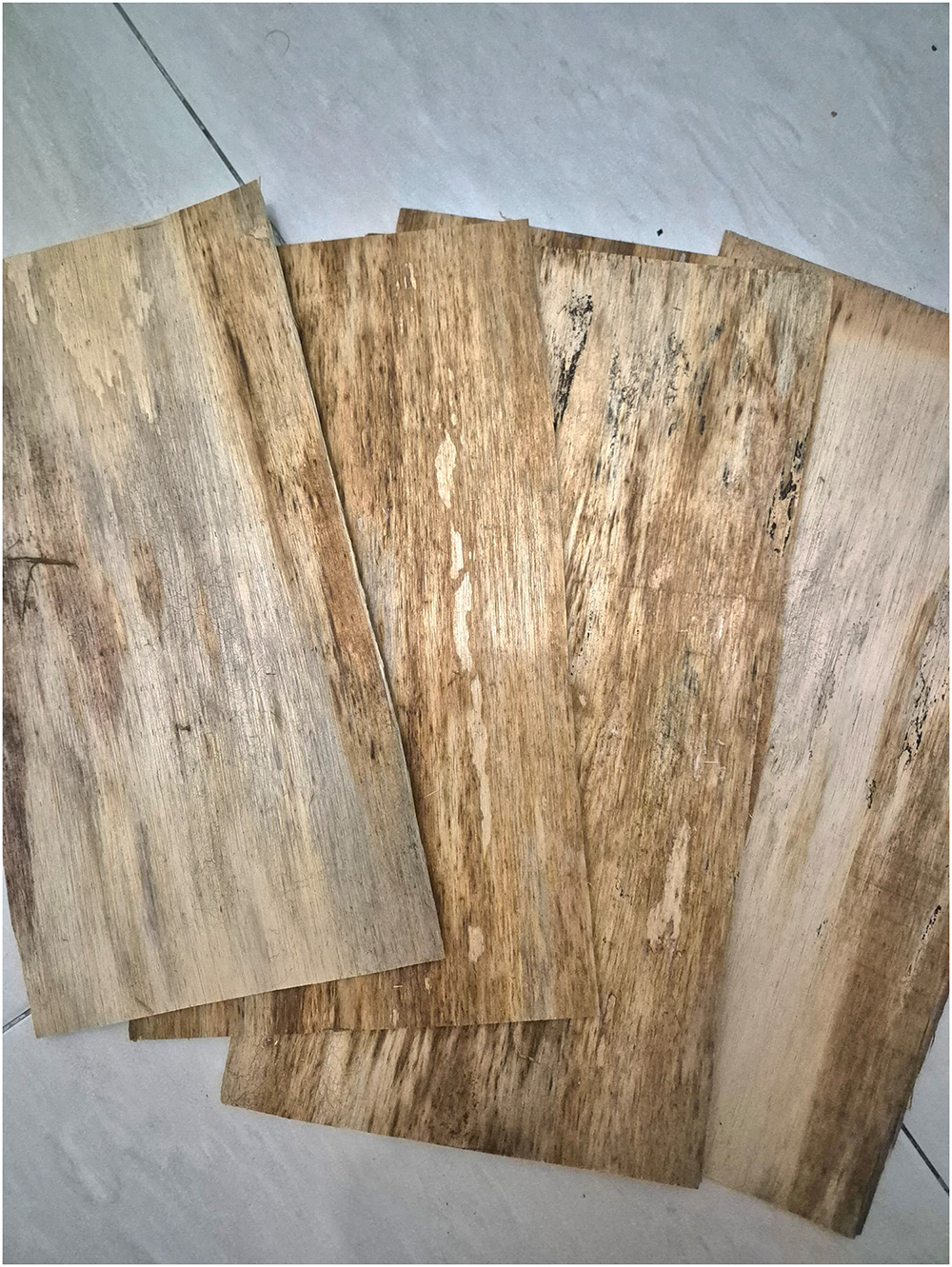
Figure 1: Acacia hybrid veneer waste
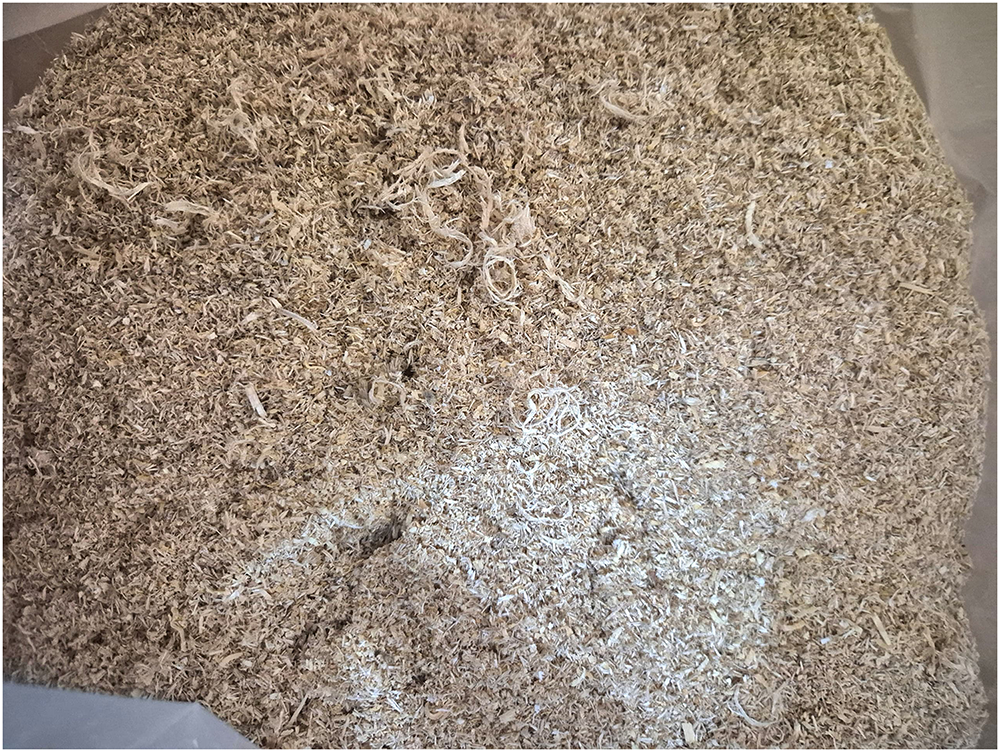
Figure 2: Pine wood waste
The 500 μm particle size was initially assessed for its moisture content using a moisture analyzer. The particle size range of 0.5–1.5 mm is, in fact, optimal for the manufacturing of pellets. Optimal moisture content for palletization typically ranges from 8% to 12%. If the material exceeded this range, it was dried in a forced-air convection oven at 105°C for 24 h until the desired moisture level was achieved. Once dried, each wood dust was homogenized using a mechanical mixer to ensure uniform distribution of particle size and moisture content throughout the batch. This consistency is essential for producing pellets with stable density and structural integrity.
The pelletizer machine was used to produce wood pellets from compression and heat-activated treatment. Approximately 500 g of Acacia hybrid wood dust went into the pelletizer, in which a flat die generated a frictional heat of 140°C–180°C. This melted lignin was included in the wood dust, activating its natural binding mechanisms. Meanwhile, rotation rollers were compressing the materials, forcing them out from the 6–8 mm diameter holes of the die, and the pelletizing machine operates at a compressive pressure range of 15,000–20,000 psi, which is critical for effective lignin activation and wood dust densification during pellet formation. After the pellet exited the die, it hardened and cooled into pellets in a cylindrical shape of high density. The densification process strengthens the energy content per unit volume of the wood pellet. Once production is finished, the Acacia hybrid (AC) wood pellets with a percentage ratio of 100:0 to Pine wood (PW) are placed directly in a zip-lock bag to prevent the wood pellets from absorbing moisture from the surroundings. The process is repeated for another ratio of Acacia hybrid to Pine wood pellets (75:25, 50:50, 25:75, and 0:100). The samples are ready for the physical properties test. In this study, commercial wood pellet was used as a control for comparison. Fig. 3 shows the flowchart of the pellet-making process.
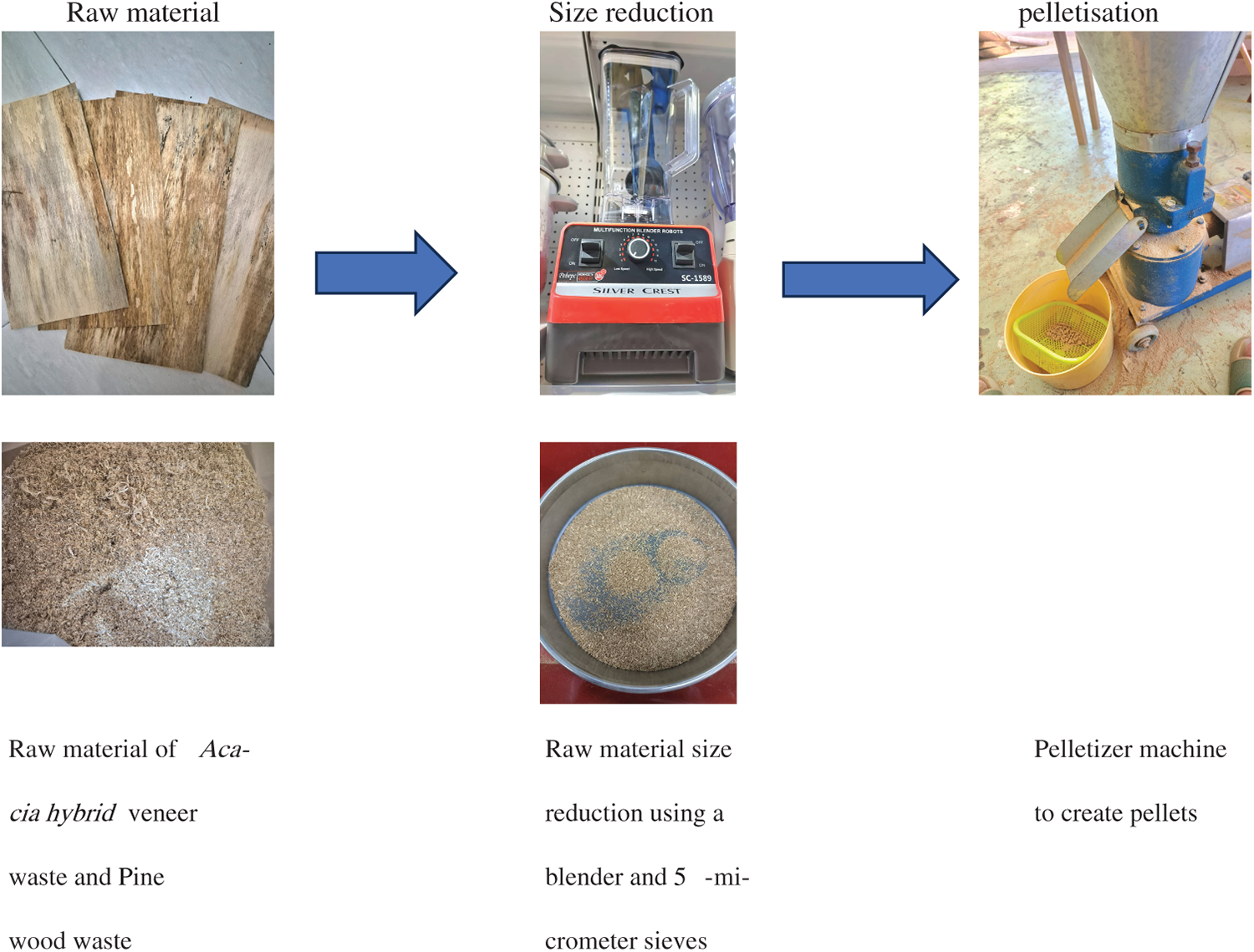
Figure 3: Flowchart of the pellet-making process
The selection of pure white Pine pellets (Pinus strobus) as a control material is justified by their industry-standard certification, physicochemical consistency, and representative softwood characteristics, which are essential for comparative analysis against Acacia hybrid feedstock. These pellets exhibit a density of 600–650 kg/m3, a moisture content below 8%, and a durability index exceeding 96.5%, verified through ISO testing, ensuring high quality for combustion applications [26]. Their guaiacyl-dominant lignin profile, comprising 26%–28% content, necessitates higher press pressures (25,000–30,000 psi) and die temperatures (100°C–120°C) compared to Acacia, highlighting their robust binding properties [27]. Furthermore, the control pellets demonstrate favorable combustion characteristics, including a calorific value of 18.5–19.5 MJ/kg and low ash content (≤0.7%), which are critical for evaluating performance against alternative biomass sources [28]. This careful selection process ensures that the experimental results are reliable and relevant to industrial applications.
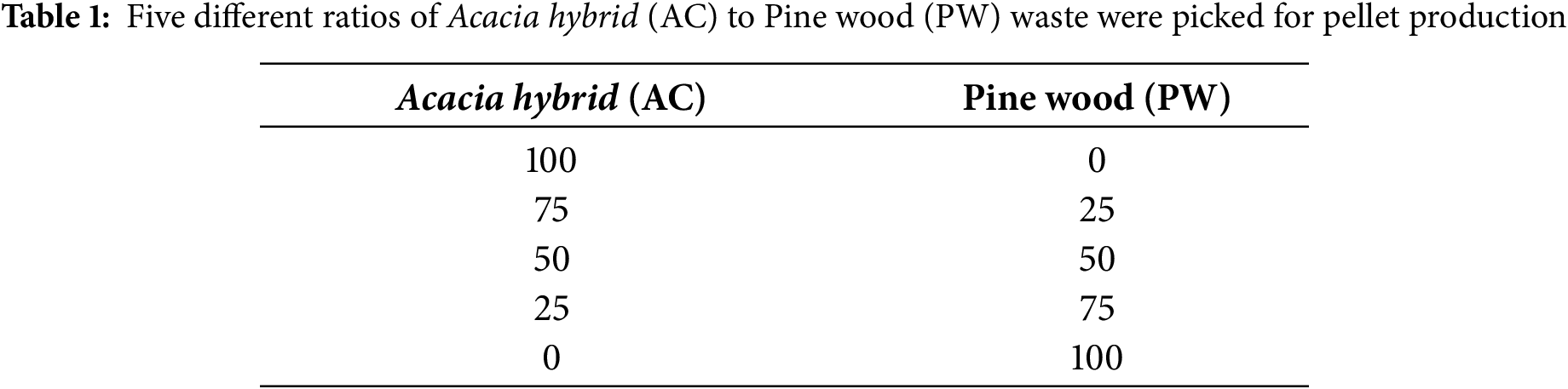
Each wood ratio was thoroughly mixed to ensure uniform distribution of the two species before being fed into the pelletizer. The production process was done in a controlled environment to maintain consistent moisture content and temperature. After the pelletizing process, the pellets were stored in a zip bag and stored in a dry and well-ventilated area to prevent moisture absorption. Table 1 shows 5 different ratios used for this research.
2.3 Evaluation of the Physical Properties of Wood Pellets
Determination of physical properties of wood pellet samples involves evaluation of moisture content, density, and pellet durability test with 5 replicates for each different ratio.
A total of thirty wood pellets with dimensions of 6 mm × 10–30 mm were subjected to moisture content (MC) evaluations. All samples were conditioned in a conditioning room at 25 ± 2°C and 65 % relative humidity (approximately 8%–12% MC) until they reached a consistent weight. The samples were then weighed and oven-dried at 103 ± 2°C until a consistent weight was obtained. Finally, the oven-dry weights were recorded and used to compute the moisture content of the wood pellets using Eq. (1).
Moisture content,
where Wi represents the initial weights of the samples in grams and WOD denotes the oven-dried weights of the samples in grams.
A digital caliper is a precise instrument used to measure external dimensions such as the length and diameter of wood pellets, with an accuracy of up to 0.01 mm (0.00001 m). Before taking measurements, the caliper should be cleaned to remove any dust or debris that could affect its accuracy. The pellet must also be inspected to ensure it is intact and free from cracks or deformation. After switching on the caliper, it should be zeroed and set to millimeters (mm); if inches are used, the values must be converted to metric units. To measure the diameter (short axis), the pellet is held horizontally, and the outside jaws of the caliper are gently used to grip the circular side. One measurement is taken near the center, then the pellet is rotated to 90 degrees, and a second measurement is taken at a different point. Both readings are recorded and averaged to obtain the final diameter. To measure the length (long axis), the pellet is held vertically, and the outside jaws are used to measure from end to end. Measurements are taken on one side and then on the opposite side, as pellet ends may be slightly uneven. Both readings are recorded and averaged to determine the final length. Eq. (2) was utilized to determine the density of the wood pellet samples.
where m represents the mass of the sample in grams and V represents the volume of the sample in cm3.
One sample of wood pellets is accurately weighed and placed into a tumbling canister, which is a square or cylindrical metal container fitted with internal baffles to promote impact and abrasion. The canister is rotated at a speed of 50 revolutions per minute (rpm) for 10 min, during which the pellets collide with each other and the container walls. After tumbling, the entire contents are sieved using a 3.15 mm mesh screen to separate broken particles or fines from intact pellets. The remaining intact pellets retained on the sieve are collected and weighed. The Pellet Durability Index is calculated by dividing the mass of the intact pellets after tumbling by the original mass before tumbling and multiplying the result by 100. Eq. (3) was utilized to determine the Pellet durability index of the wood pellet samples.
where W1 represents the weight after tumbling in grams, and W0 represents the weight before tumbling. A higher PDI value (typically above 95%) indicates superior durability, meaning the pellets can withstand mechanical stress without significant fragmentation. To ensure accuracy and repeatability, the test is usually conducted in triplicate, and results are reported as the average PDI ± standard deviation.
The data obtained from the physical property tests were analyzed using the List Significant Test to determine the significant differences between the pellet blends for each test and as a mean test. All statistical analyses were performed using IBM SPSS Statistics version 29.0.2.0, with significance determined at p < 0.05.
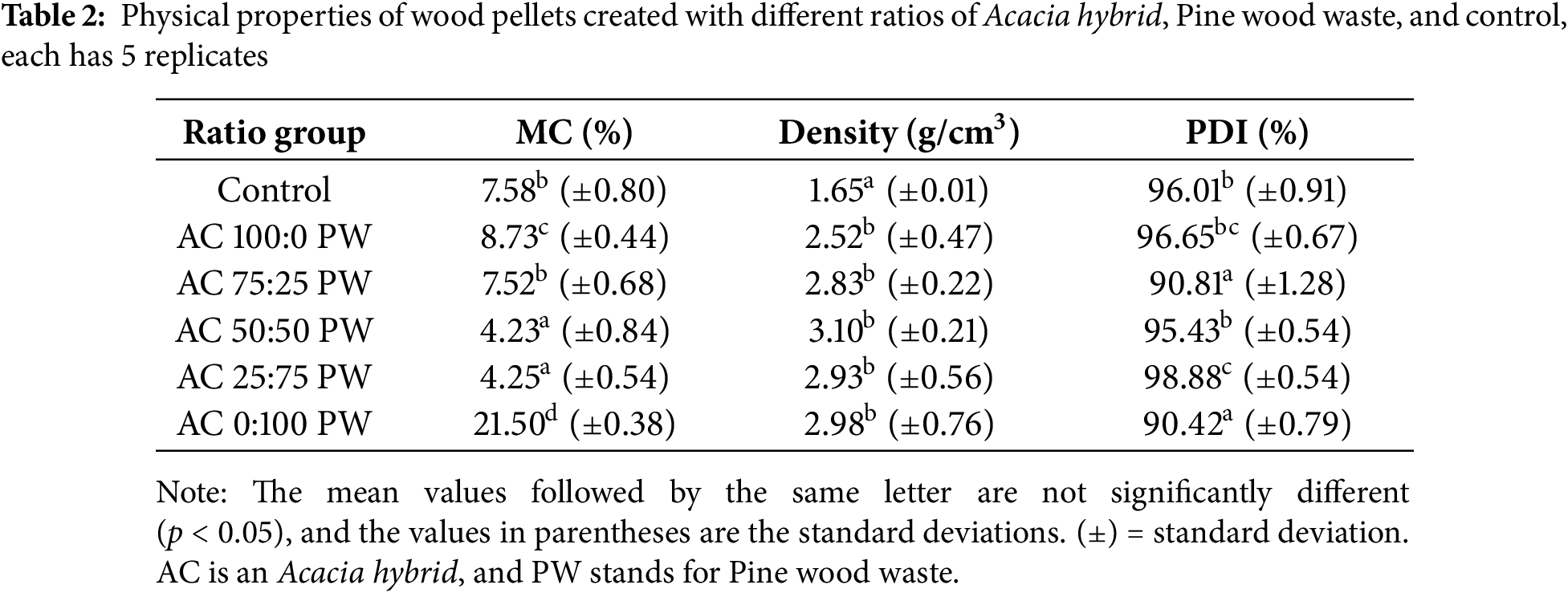
Table 2 shows the physical properties of all pellet blends. The 50:50 mix had the highest density (3.10/cm3), while the 25:75 blend was most durable (98.88% PDI). Pure pine pellets (0.100) absorbed the most moisture (21.50%) significantly more than other blends (p < 0.05). Overall, mixes containing 25%–50% Acacia performed best.
This study examines the physical properties of wood pellets produced from various ratios of Acacia hybrid and Pine wood waste. The key physical properties analyzed include moisture content (MC), density, and pellet durability index (PDI). The data from Fig. 4 provides valuable insights into how the ratio of Acacia hybrid and Pine wood influences these properties compared to the control group. Moisture content (MC) is one of the most critical factors influencing the overall performance of wood pellets, affecting their storage stability, energy content, and combustion efficiency. The analysis of various pellet formulations made from Acacia hybrid (AC) and Pine wood waste (PW) waste provides a deeper understanding of how different wood species, and their proportions, influence the MC and its subsequent effects on pellet performance.
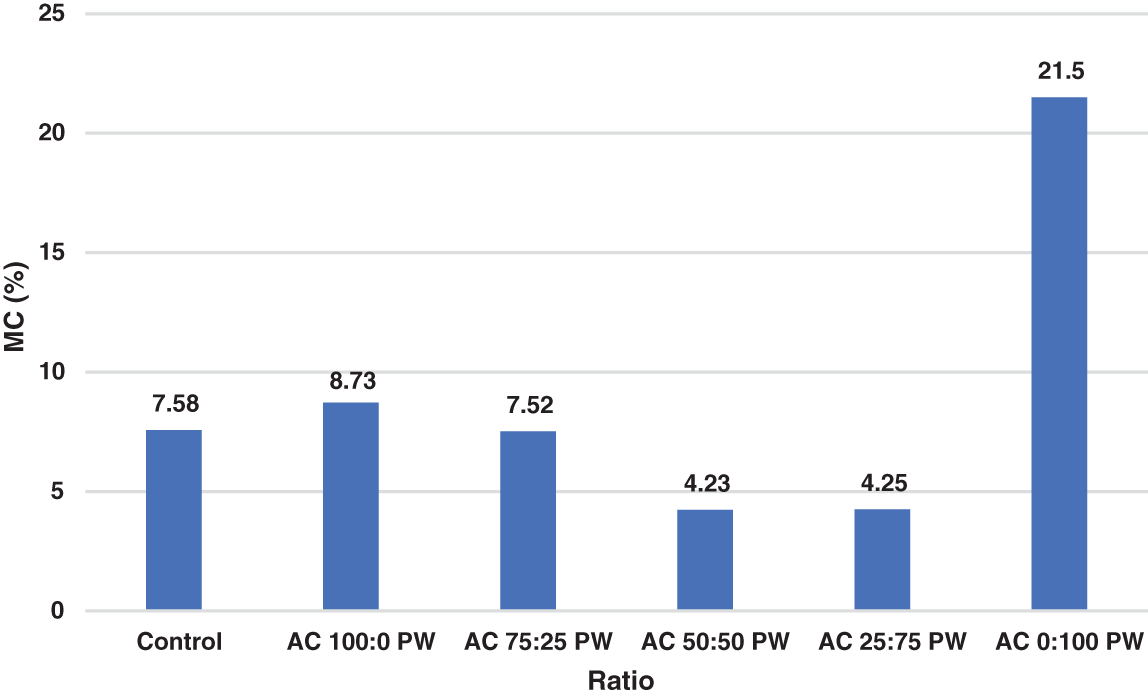
Figure 4: Moisture content of wood pellets with different ratios of Acacia hybrid to Pine wood waste
The AC 100:0 PW group, consisting solely of Acacia hybrid, demonstrated a significantly higher moisture content of 8.73%. This shows that the species Acacia hybrid, when compared to Pine wood, contains a higher affinity for moisture. Elevated cellulose and hemicellulose content can be a factor in the hygroscopic nature of Acacia hybrid. Acacia hybrid possess multiple hydroxyl groups that facilitate hydrogen bonding with water molecules, further enhancing their moisture retention capabilities [29]. The Acacia hybrid does indicate a denser anatomical structure when compared to Pine wood, thus contributing to its superior water retention within the fiber matrix [30]. Additionally, studies indicate that Acacia species, including Acacia mangium, demonstrate lower hygroscopicity than some temperate softwoods, with moisture adsorption behaviors influenced by their unique chemical compositions and structural characteristics [31]. The combination of high polysaccharide content and dense fiber structure positions Acacia hybrid as a significant material for applications requiring moisture management [32].
The higher MC in the AC 100:0 PW poses challenges for pellet performance. First, increased moisture content in pellets leads to a decrease in their energy density. During combustion, the presence of moisture in fuel pellets significantly impacts ignition and overall efficiency. Higher moisture content leads to ignition delays, as observed in lignite particles, where moisture levels above 5% resulted in increased ignition times and reduced combustion efficiency [33]. Similarly, municipal sewage sludge studies indicated that higher initial moisture contents correlated with elevated ignition temperatures and decreased performance indices, emphasizing the energy required to evaporate moisture before effective combustion can occur [34]. Additionally, wood pellets demonstrated a heat release potential of 47 kJ/kg when moisture levels increased, indicating that moisture not only affects ignition but also contributes to self-heating risks during storage [35]. Overall, these findings illustrate that moisture management is crucial for optimizing combustion processes and minimizing fuel consumption [36,37].
The AC 75:25 PW, with a moisture content of 7.52%, exhibited values like the control pellets. This suggests that the incorporation of 25% Pine wood is sufficient to stabilize the moisture content and bring it in line with that of typical commercial pellets. The Pine wood’s lower moisture absorption capacity likely helped balance out the hygroscopic properties of Acacia hybrid, resulting in a more stable MC that is desirable for both storage and combustion. Maintaining moisture content like the control pellets (around 7.5%) is beneficial for ensuring that the pellets do not suffer from the same combustion inefficiencies seen in the AC 100:0 PW group. The balance between Acacia hybrid and Pine wood, especially at the 75:25 ratio, ensures that the pellets retain their structural integrity and combustion efficiency, making them a viable option for commercial use.
Ratio AC 50:50 PW and AC 25:75 PW do show significantly lower moisture contents of 4.23% and 4.25%, respectively. The ratio with a higher amount of Pine does indicate less moisture content, which will enhance their physical properties. The reason for the lower moisture content for the ratio with a higher amount of pine can be attributed to Pine wood’s lower hygroscopicity when compared to Acacia hybrid, which typically has higher moisture retention properties [38]. Studies show that maintaining moisture content below 10% is very crucial in preserving pellet integrity and quality. High moisture content can lead to multiple problems, such as pellet instability and pellet degradation during storage [16]. In addition, the torrefaction process undertaken on Pine wood pellets not only reduces moisture but also increases energy density as well as burning efficiency, rendering them suitable for advanced applications [39]. In gist, the careful selection of Pine wood in pellet formulations helps make supply solutions to moisture issues, thus optimizing their bioenergy application performance [40,41].
Pellets with lower moisture content, typically between 6% and 7%, are more efficient in combustion, requiring less energy for water evaporation and thus generating more heat [42]. This efficiency is crucial in industrial settings, where energy consumption is significant, and the durability of low-moisture pellets enhances their storage and handling capabilities [43]. High-moisture pellets, conversely, exhibit reduced durability and require more energy for processing, with energy consumption for high-moisture pelleting being 64–72% less than conventional methods that necessitate drying [44]. Additionally, the mechanical properties of low-moisture pellets, such as high durability exceeding 99.4%, contribute to their suitability as reliable fuel sources for both industrial and non-industrial applications [45]. Overall, the interplay of moisture content and mechanical properties significantly influences the performance and practicality of biomass pellets in energy generation [46].
The significant drop in MC with higher Pine wood content in the AC 50:50 PW and AC 25:75 PW groups also suggests that an optimal balance of Acacia hybrid and Pine wood could be the key to producing high-performance pellets. These pellets offer a good compromise between the desirable characteristics of both wood types: the high density and durability associated with Acacia hybrid, combined with the low moisture retention and stability of Pine wood.
The extremely high moisture content (MC) of 21.50% in AC 0:100 PW pellets, way above the tolerable level of <10% as specified in ISO 17225-2 and ENplus standards, indicates probable processing or material quality shortcomings. Probable causes for this would be inadequate drying before pelletizing, where a high resin content in pine can impede moisture release during this stage [47]. Also, poor activation of lignin during pelletizing could have influenced the structural integrity and moisture content of the pellets [48]. The anomalous moisture reading from this batch suggests post-production hygroscopicity, as expected due to the low natural hydrophobicity of pine, so that moisture would be absorbed in storage [49]. Also, the packaging material employed for the MC test could have had defects, contributing to the high moisture content.
The analysis of moisture content in pellet formulations, validated by Tukey HSD and Fisher’s LSD tests, shows how material composition plays a significant role in determining moisture levels. The distinct statistical groupings in the study match findings from different research settings. Pure Acacia pellets, with a moisture content of 8.73%, stand out because of Acacia’s ability to absorb moisture. This is linked to its polysaccharide makeup and cellular structure, confirming its higher moisture retention compared to other formulations [50]. The intermediate moisture content of the 75:25 Acacia-Pine blend at 7.52% suggests a balance between the moisture-absorbing properties of Acacia and the less moisture-retaining traits of Pine. This is in line with findings that different raw materials have varying optimal moisture contents for pellet density and strength [51]. The 50:50 and 25:75 blends, with moisture levels around 4.24%, form a coherent group, indicating a notable reduction in moisture content compared to Acacia-dominant formulations. This reduction aligns with studies showing that lower moisture content can improve pellet durability and strength, as seen in other biomass materials like switchgrass, where the right moisture content is crucial for maintaining physical properties [52]. These findings emphasize the importance of material composition and moisture management in optimizing pellet formulas for specific applications.
The evidence about Pine’s moisture-stabilizing effects shows that these effects become clear at a 50% inclusion ratio. Research highlights the link between moisture content and the physical properties of wood pellets. Studies reveal that moisture content has a notable impact on the mechanical stability and hygroscopic properties of wood pellets, with a critical threshold of 10% moisture needed to maintain structural integrity under load [53]. Furthermore, the unusual moisture content found in pure Pine pellets points to processing issues rather than properties of the material, as statistical analyses confirm this outlier [54]. The small moisture difference (1.22%) between 75:25 and pure Acacia formulations may be acceptable for some uses.
Concerning wood pellets, density as a physical property is critical because it influences mechanical strength, energy value, and even combustion efficiency. Usually, a greater density value correlates with better quality of the pellets, as greater density pellets are more compacted, carry more energy per unit volume, and are less likely to sustain physical damage during handling. Moreover, the density of wood pellets aids in combustion by more adequately controlling the release of energy. The result of this study shows how the proportions of Acacia hybrid (AC) and Pine wood (PW) can change the density of the pellets. Fig. 5 shows the result of the density test.
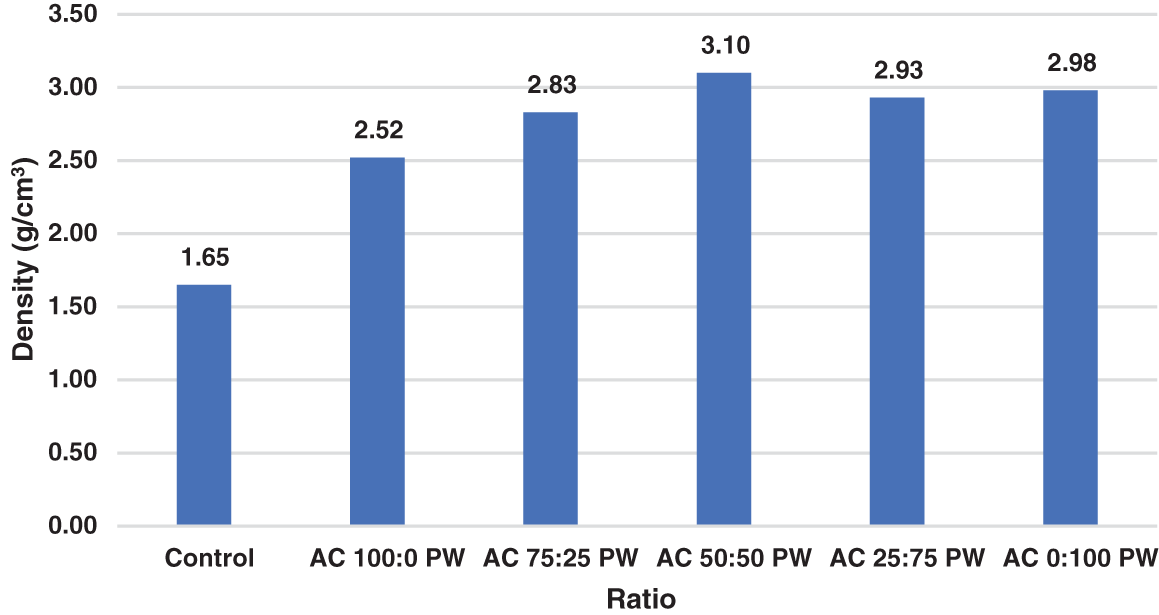
Figure 5: Density of wood pellets with different ratios of Acacia hybrid to Pine wood waste
The various pellet formulations’ density tests reveal that the densities of Acacia hybrid pellets are substantially higher than control pure white pine pellets, with a value of 1.65 g/cm3. Specifically, AC 100:0 PW, a formulation consisting entirely of Acacia hybrid, had a density of 2.52 g/cm3, a 52.7% rise from the control. This increased strength is credited to Acacia’s more compact cellular structure, with smaller vessel elements and thicker fiber walls, and a higher lignin content (25–30% in Acacia hybrid but only 26–28% in pine) for increased interparticle bonding when compressed [55]. Its increased physical strength and water retention also increase the scope of Acacia hybrid as a raw material for high-quality wood pellets [34]. Overall, the study points out the promising role of Acacia hybrid in power generation and biomass densification [56].
The AC 75:25 PW blend density increase to 2.83 g/cm3 indicates a synergistic relationship between Pine and Acacia due to Pine’s valuable thermoplastic resins assisting in particle rearrangement during compression without compromising the strength of Acacia. The observation confirms previous studies that have indicated that incremental incorporation of softwood can enhance hardwood matrix compaction by filling gaps between the hard fibers [57]. AC 50:50 PW exhibited the highest density of 3.10 g/cm3, which is a rise of 87.9% over the control and 23.0% over pure Acacia pellets. The explanation for this optimum performance is the effective blending of Acacia’s structural fibers and pine’s binding resins, enabling the best packing arrangement, since pine’s lower molecular weight lignin acts as a natural binder [58].
The reduction in pellet density at greater than 50% pine content, observed, is the result of the complex interaction between moisture content and the inherent properties of pine. Whereas the AC 25:75 PW mixture attained a density of 2.93 g/cm3, pure Pine pellets attained 2.98 g/cm3, both much higher than control pellets, attributed to maximized processing conditions and natural properties of Pine, including higher content of resin and elastic fiber structure, which promote particle deformation upon compression [59]. However, the higher moisture content in pure Pine pellets (21.50% compared to 7.58% for controls) is a concern about durability and combustion performance and indicates some trade-off between density and other quality measures [57]. Although density matters, thus, the moisture content and its related implications for pellet quality cannot be avoided, since it has a significant influence on combustion efficiency and the overall performance of the pellet [60].
The study of the mixing of Acacia and Pine pellets determines that an equal 50:50 ratio best blends the strength of Acacia with the binding and lubrication characteristics of Pine to create increased pellet density and quality. Pure Acacia pellets show substantial improvements compared to commercial pine pellets, obtaining high durability and density that are vital for numerous applications [61]. Also, blending different types of biomasses, e.g., Switchgrass and Pine, has been reported to increase physical properties like bulk density and calorific value while reducing ash content [62]. Future research must determine how such changes in density impact other quality factors, i.e., mechanical strength and energy content, to develop integrated optimization models for biomass pellet recipe [25]. This focused blending approach could substantially improve the efficiency and usability of biomass pellets for energy generation.
The interpretation of AC 0:100 PW density requires caution as it is skewed by the 21.50% over-moisture content, far more than any other group, and liable to distort density measurements because water adds weight without adding structural density [48]. This agrees with the best moisture content for pellet density research, which is typically 5% to 10% for most biomass feedstocks, where increased moisture content adversely influences pellet strength and quality [63]. Moisture content also influences efficiency of processing, such as seen in the research where increased moisture led to lower screening yield and altered physical properties of bark substrates [64]. Hence, the observed high density for AC 0:100 PW most likely reflects a processing anomaly rather than an actual material advantage, corroborating well-processed Pine to have lower densities than Acacia blends [65].
The statistical analysis revealed clear density advantages in laboratory-produced pellets compared to commercial controls. The density characteristics of wood pellets, especially those from Acacia species, have been studied, providing important insights into their production and performance. Control pellets had a density of 1.65 g/cm3, which was lower than most experimental formulations, except for pure Acacia at 2.52 g/cm3 [66]. Adding Pine to the blends, particularly the 50:50 Acacia-Pine mix, raised the density significantly to 3.10 g/cm3, surpassing controls by 23% (p < 0.001) [67]. Furthermore, creating fuel pellets from Acacia mangium bark waste showed promising quality, meeting international standards and showing that these materials could serve as effective alternatives to fossil fuels [68]. Overall, these results highlight the need for careful formulation to optimize pellet density and quality for industrial uses.
3.3 Pellet Durability Index (PDI)
Pellet Durability Index (PDI) is one of the critical measures of the mechanical strength of a pellet and its ability to maintain the integrity of its structure during handling, transportation, and burning. High values of PDI are reflective of pellets with high resistance to breakage, crumbling, or fragmentation, which has great importance in ensuring the maximum performance of the pellets throughout their life cycle. Higher PDI enhances the stability of pellets to facilitate effective burning and easy storage. In this study, the PDI of pellets made from different ratios of Acacia hybrid (AC) and Pine wood (PW) was evaluated to identify the impact of various percentages of these two woods on pellet durability. Fig. 6 represents the data from the PDI test.
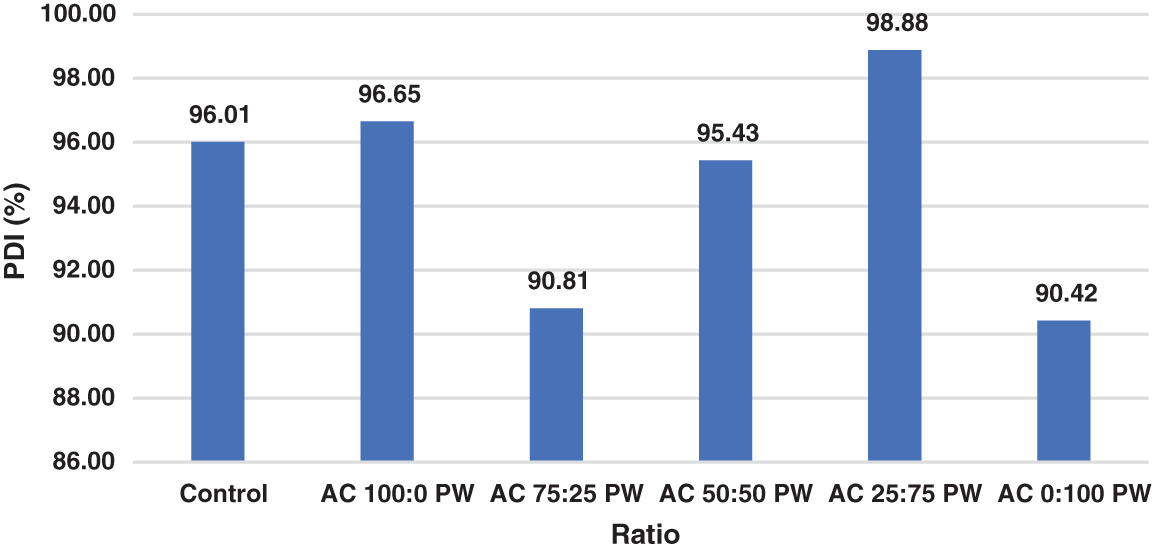
Figure 6: Pellet durability index of wood pellets with different ratios of Acacia hybrid to Pine wood waste
AC 100:0 PW pellets with pure Acacia hybrid showed PDI of 96.65%, indicating resistance comparable with control pellets for 8.73% higher moisture levels. This degree of moisture, while potentially detrimental to long-term operation, is neutralized by the mechanical properties of Acacia hybrid, such as high lignin content and dense cell structure that enable intensive bonding during pellet production [69]. Better mechanical characteristics, i.e., higher modulus of rupture and elasticity, were observed in treated Acacia hybrid, suggesting durability and strength could be increased further [70]. However, the higher moisture content would lead to quicker degradation upon storage, particularly under humid conditions, which could render practical application null and void despite the favorable PDI [71]. Thus, although Acacia hybrid holds promise, careful attention to moisture management must be given for its effective use on the ground.
The AC 75:25 PW group, comprising 25% Acacia hybrid and 75% Pine wood, demonstrated a notably lower PDI of 90.81%, likely due to several interrelated factors. Acacia hybrid’s mechanical properties may inherently be weaker than those of Pine, which is known for its superior flexibility and strength, potentially leading to reduced overall pellet durability [72]. Additionally, the combination of these two wood types could result in uneven bonding, further compromising structural integrity [73]. The increased moisture content of 7.52% in the AC 75:25 PW pellets may exacerbate these issues, as higher moisture levels can lead to swelling and degradation of wood fibers, ultimately affecting performance [74]. This underscores the necessity of optimizing the ratio of Acacia hybrid to Pine wood to enhance both strength and moisture management in composite materials [14].
The AC 50:50 PW group, comprising equal parts of Acacia hybrid and Pine wood, demonstrates a PDI of 95.43%, indicating a favorable balance between durability and moisture content. This blend capitalizes on the strengths of Acacia hybrid, known for its rapid growth and enhanced mechanical properties when treated [75], and Pine wood, which offers stability and lower moisture retention [76]. The moisture content of 4.23% in this group is particularly advantageous, as it mitigates the adverse effects of excess moisture on pellet durability while ensuring structural integrity [77]. Although the PDI is slightly lower than that of the control and AC 100:0 PW groups, the mechanical strength remains acceptable, suggesting that this 50:50 ratio may represent an optimal compromise for engineered wood applications [78]. Overall, the AC 50:50 PW group may provide a more practical solution for pellet production, offering improved durability without the risks associated with higher moisture content.
The AC 25:75 PW group, comprising 75% Pine wood and 25% Acacia hybrid, demonstrates a high Pellet Durability Index (PDI) of 98.88%, indicating enhanced mechanical strength and durability attributed to the predominance of Pine wood. Pine, recognized for its favorable mechanical properties, facilitates robust inter-fiber bonding during pelletisation, which is crucial for structural integrity, especially given the lower moisture content of 4.25% in this group, as excess moisture can compromise these bonds [39]. Additionally, studies show that higher Pine content can improve calorific value and reduce ash content, further enhancing pellet quality [79]. The incorporation of Acacia hybrid may also contribute to the overall performance, as tannin extracts from Acacia have been shown to improve the mechanical and biological resistance of wood products [80]. Thus, the combination of these factors makes the AC 25:75 PW pellets particularly suitable for efficient combustion and handling [81].
The significantly lower pellet durability index (PDI) of the AC 0:100 PW pellets, due to their elevated moisture content (MC), aligns with the findings in numerous studies that binding mechanisms are disrupted by too much moisture, resulting in structural flaws in pellets [82]. Optimal moisture content is key, as studies have demonstrated by observing that the greatest durability is at a level near 8.6% MC, but that considerably higher contents can be extremely harmful to pellet integrity [63]. Also, that pellet quality is associated with moisture as well, as supported by research that has demonstrated that moisture content can be manipulated to enhance production efficiency without any negative impact on durability if it is at optimum levels [83]. That AC 0:100 PW is an outlier point to a processing problem rather than a feedstock limitation and emphasizes the need for tight control over moisture in future trials to accurately determine this formulation’s viability [40]. Hence, effective pelleting demands not only proportionate feedstock proportions but also managed moisture control for durability.
The analysis of pellet durability among different formulations shows that the makeup of raw materials has a big impact on the mechanical properties of the pellets. The 25:75 Pine-Acacia blend had the highest durability at 98.88%, surpassing all other formulations. Pure Acacia reached 96.65% durability [84]. In contrast, pure Pine pellets and the 75:25 Pine-Acacia blend showed lower durability, with values of 90.42% and 90.81%, respectively, forming a similar group. The 50:50 blend performed moderately at 95.44%, indicating that a balanced composition can improve durability while remaining close to the controls [85]. These findings support earlier research that shows the composition of raw materials, including moisture and particle size, is key to pellet quality and durability [86]. Therefore, optimizing blend ratios and processing conditions is important for enhancing pellet performance.
The study of durability in blends with pine resin shows that blends with about 25% Pine content have the best durability. These blends perform much better than those with higher Pine content and the control blends. The 50:50 blend was more durable than the Pine-rich formulations (p < 0.001) but less durable than the 25:75 blend (p = 0.007). The control blends had average durability, exceeding the Pine-rich blends (p < 0.001) but not reaching the level of the 25:75 blend (p = 0.022). This points to a curvilinear relationship where durability is highest at around 25% Pine content and then drops as Pine content increases. The analysis of similar groups supports this, showing that Pine-rich formulations are different from those that are more durable. This highlights the need for the right amount of pine to improve material properties [55]. The 25:75 Acacia-Pine blend has better durability than Pine-rich mixes by 8.46% to 8.88%. While pure Acacia performs reasonably well, adding 25% Pine not only increases durability but also keeps other quality measures intact. These insights offer clear guidelines for blending natural polymers in sustainable uses [87].
This study demonstrates that optimized blending of Acacia hybrid and Pine wood waste produces high-quality pellets that meet industrial standards while promoting sustainable biomass utilization. The following conclusions can be drawn:
1 The 25:75 Acacia-Pine blend achieved exceptional durability (PDI 98.88%) and optimal moisture resistance (4.25% MC), surpassing commercial Pine pellets in mechanical stability. This performance is attributed to the synergistic binding between Acacia’s structural fibers and pine’s lignin mobility at this specific ratio.
2 The 50:50 blend showed superior density (3.10 g/cm3) while maintaining excellent durability (PDI 95.43%), making it ideal for energy-intensive applications. Both optimal blends maintained moisture contents below the 10% ISO threshold, unlike pure pine pellets, which exhibited unacceptable moisture levels due to incomplete drying (21.50% MC).
3 Pellet quality was significantly influenced by feedstock composition, with pure pine formulations failing durability tests (PDI 90.42%) due to moisture-related structural weaknesses. The study confirms that strategic blending can overcome the limitations of single-species pellets while enhancing specific performance characteristics.
In summary, Acacia-Pine blended pellets offer an environmentally sustainable alternative to conventional wood pellets, with the 25:75 and 50:50 ratios providing distinct advantages for different industrial applications. While matching commercial standards in key parameters, these blends demonstrate unique performance profiles based on their composition, particularly in terms of density-durability balance and moisture resistance. The findings provide a scientifically validated approach for transforming wood processing wastes into high-value bioenergy products.
This study focused on physical properties under controlled laboratory conditions. Future work should test combustion efficiency (e.g., calorific value, emission profiles) of optimized blends under real-world conditions. Evaluate long-term storage stability, including moisture sorption and degradation kinetics in humid environments, and investigate the effects of industrial-scale production parameters (e.g., die temperature variability, feedstock heterogeneity) on pellet quality.
Acknowledgement: The authors would like to thank Airin Termin, and Azli Sulid for their valuable and encouraging conversation and support. We acknowledge the facilities and scientific and technical support from the Wood Testing Laboratory, Faculty of Tropical Forestry, University of Malaysia, Sabah, Malaysia.
Funding Statement: The authors gratefully acknowledge the financial support provided by UMS Great (GUG0670-1/2024), which played a crucial role in the completion of this study. Additionally, we would like to express our sincere appreciation for the financial assistance and scholarships generously offered by the University of Malaysia Sabah (UMS) throughout the Ministry of Higher Education Malaysia (KPT) throughout the research period. These contributions were invaluable in facilitating our research endeavors.
Author Contributions: The authors confirm their contribution to the paper as follows: study conception and design: Janshah Mohktar; data collection: Faiz Rahman; analysis and interpretation of results: Faiz Rahman; draft manuscript preparation: Faiz Rahman and Rafidah Md Salim. All authors reviewed the results and approved the final version of the manuscript.
Availability of Data and Materials: Data not available due to commercial restrictions. Due to the nature of this research, participants in this study did not agree for their data to be shared publicly, so supporting data is not available.
Ethics Approval: Ethical approval was not required for this study as it involved neither human participants nor animal subjects. All experiments utilized plant-derived waste materials (Acacia hybrid and Pine wood byproducts) without endangered or protected species.
Conflicts of Interest: The authors declare no conflicts of interest to report regarding the present study.
Nomenclature
| AC | Acacia hybrid |
| P | Pine wood |
| g | Gram |
| cm3 | Centimeter cubic |
| PW | Density |
| MC | Moisture content |
| PDI | Pellet durability index |
| psi | per square inch |
References
1. Newell R, Raimi D, Aldana G. Global energy outlook 2019: the next generation of energy. Resour Future. 2019 Jul;1(8):1–37. [Google Scholar]
2. Scott C, Desamsetty TM, Rahmanian N. Unlocking power: impact of physical and mechanical properties of biomass wood pellets on energy release and carbon emissions in power sector. Waste Biomass Valorization. 2025;16(1):441–58. doi:10.1007/s12649-024-02669-z. [Google Scholar] [CrossRef]
3. Drobniak A, Jelonek Z, Mastalerz M, Jelonek I, Widziewicz-Rzońca K. Quality assessment of biomass pellets available on the market; example from Poland. Environ Sci Pollut Res Int. 2024;31(23):33942–59. doi:10.1007/s11356-024-33452-1. [Google Scholar] [PubMed] [CrossRef]
4. RodinoS. Potential of agricultural biomass valorization for circular bioeconomy. Sci Pap Ser Manag Econ Eng Agric Rural Dev. 2024;24(3):749–57. [Google Scholar]
5. Ahn J. A numerical simulation of the combustion processes of wood pellets. Adv Comput Meth Exp Heat Transf XIII. 2014;1:149–56. doi:10.2495/ht140141. [Google Scholar] [CrossRef]
6. Drobniak A, Jelonek Z, Widziewicz-Rzońca K, Mastalerz M, Schimmelmann A, Jelonek I. Domestic combustion of biomass pellets: example from Poland. Int J Coal Geol. 2025;304:104757. doi:10.1016/j.coal.2025.104757. [Google Scholar] [CrossRef]
7. Anggraini R, Khabibi J, Adelka YF. Karakteristik papan partikel dari campuran limbah akasia (Acacia mangium Willd.) Dan kulit kelapa Muda (Cocos nucifera Willd.characteristics of particle board from mixed waste of Acacia (Acacia mangium Willd.) and coconut shell (Cocos nucifera L.). J Silv Trop. 2021;5(1):366–81. doi:10.22437/jsilvtrop.v5i1.12170. [Google Scholar] [CrossRef]
8. Liu J, Jiang X, Li Z, Gu H, Li T. Insights into the pelletization behaviors of artificial lignocellulosic biomass based on cellulose, hemicellulose and lignin: a simplex lattice mixture design approach. Int J Biol Macromol. 2024;280(4):136000. doi:10.1016/j.ijbiomac.2024.136000. [Google Scholar] [PubMed] [CrossRef]
9. Kim SH, Jeong HM, Han GS. Fuel characteristics of wood pellets fabricated with hydrothermal treatment of wood chips. J Korean Wood Sci Technol. 2020;48(6):527–35. [Google Scholar]
10. Elnour AY, Alghyamah AA, Shaikh HM, Poulose AM, Al-Zahrani SM, Anis A, et al. Effect of pyrolysis temperature on biochar microstructural evolution, physicochemical characteristics, and its influence on biochar/polypropylene composites. Appl Sci. 2019;9(6):1149. doi:10.3390/app9061149. [Google Scholar] [CrossRef]
11. Kim KH, Jeong TY, Kim SM, Seong KJ, Jeong YG, Lee BH, et al. Evaluation of physicochemical properties and combustion behavior of biomass refuse-derived fuel. Fuel. 2024;366:131439. doi:10.1016/j.fuel.2024.131439. [Google Scholar] [CrossRef]
12. García R, Gil MV, Rubiera F, Pevida C. Pelletization of wood and alternative residual biomass blends for producing industrial quality pellets. Fuel. 2019;251:739–53. doi:10.1016/j.fuel.2019.03.141. [Google Scholar] [CrossRef]
13. Pal H, Malek S. Analytical equations for predicting effective thermal conductivity in laminated wood composites. BioResources. 2024;20(1):2150–70. doi:10.15376/biores.20.1.2150-2170. [Google Scholar] [CrossRef]
14. Li W, Wang M, Meng F, Zhang Y, Zhang B. A review on the effects of pretreatment and process parameters on properties of pellets. Energies. 2022;15(19):7303. doi:10.3390/en15197303. [Google Scholar] [CrossRef]
15. Park Y, Kim CK, Jeong H, Lee HM, Kim KM, Lee IH, et al. Evaluation of the basic properties for the Korean major domestic wood species. J Korean Wood Sci Technol. 2024;52(1):87–100. doi:10.5658/wood.2024.52.1.87. [Google Scholar] [CrossRef]
16. Das D, Anand A, Gautam S, Rajak VK. Assessment of utilization potential of biomass volatiles and biochar as a reducing agent for iron ore pellets. Environ Technol. 2024;45(1):158–69. doi:10.1080/09593330.2022.2102936. [Google Scholar] [PubMed] [CrossRef]
17. Negi S, Jaswal G, Dass K, Mazumder K, Elumalai S, Roy JK. Torrefaction: a sustainable method for transforming of agri-wastes to high energy density solids (biocoal). Rev Environ Sci Bio Technol. 2020;19(2):463–88. doi:10.1007/s11157-020-09532-2. [Google Scholar] [CrossRef]
18. Sgarbossa A, Boschiero M, Pierobon F, Cavalli R, Zanetti M. Comparative life cycle assessment of bioenergy production from different wood pellet supply chains. Forests. 2020;11(11):1127. doi:10.3390/f11111127. [Google Scholar] [CrossRef]
19. Civitarese V, Acampora A, Sperandio G, Bassotti B, Latterini F, Picchio R. A comparison of the qualitative characteristics of pellets made from different types of raw materials. Forests. 2025 2023;14(10):2025. doi:10.3390/f14102025. [Google Scholar] [CrossRef]
20. Duc Viet D, Ma T, Inagaki T, Tu Kim N, Quynh Chi N, Tsuchikawa S. Physical and mechanical properties of fast growing polyploid Acacia hybrids (A. auriculiformis × A. mangium) from Vietnam. Forests. 2020;11(7):717. doi:10.3390/f11070717. [Google Scholar] [CrossRef]
21. de Avila Delucis R, dos Santos PSB, Beltrame R, Gatto DA. Chemical and fuel properties of forestry wastes from pine plantations. Rev Árvore. 2017;41(5):e410507. doi:10.1590/1806-90882017000500007. [Google Scholar] [CrossRef]
22. Masebo NT, Benedetti B, Mountricha M, Lee L, Padalino B. A literature review on equine bedding: impacts on horse and human welfare, health, and the environment. Animals. 2025;15(5):751. doi:10.3390/ani15050751. [Google Scholar] [PubMed] [CrossRef]
23. Ghebre-Sellassie I. Mechanism of pellet formation and growth. In: Pharmaceutical pelletization technology. Boca Raton, FL, USA: CRC Press; 2022. p. 123–43. [Google Scholar]
24. Stelte W, Holm JK, Sanadi AR, Barsberg S, Ahrenfeldt J, Henriksen UB. A study of bonding and failure mechanisms in fuel pellets from different biomass resources. Biomass Bioenergy. 2011;35(2):910–8. doi:10.1016/j.biombioe.2010.11.003. [Google Scholar] [CrossRef]
25. Kaliyan N, Vance Morey R. Factors affecting strength and durability of densified biomass products. Biomass Bioenergy. 2009;33(3):337–59. doi:10.1016/j.biombioe.2008.08.005. [Google Scholar] [CrossRef]
26. Carvalho GHSFL, Galvão I, Mendes R, Leal RM, Moreira AB, Loureiro A. The role of physical properties in explosive welding of copper to stainless steel. Def Technol. 2023;22:88–98. doi:10.1016/j.dt.2022.08.016. [Google Scholar] [CrossRef]
27. Karkania V, Fanara E, Zabaniotou A. Industrial-grade biomass pellet optimization: bridging the gap between laboratory research and commercial production. Appl Energy. 2022;306(6):117983. doi:10.1016/j.apenergy.2021.117983. [Google Scholar] [CrossRef]
28. Kamperidou V. Quality analysis of commercially available wood pellets and correlations between pellets characteristics. Energies. 2022;15(8):2865. doi:10.3390/en15082865. [Google Scholar] [CrossRef]
29. Gunawan I, Muharyani N, Hendrasetiafitri C. Reducing the ash content of Gliricidia (Gliricidia sepium) and Calliandra (Calliandra calothyrsus) wood pellets through debarking and mixing with Acacia (Acacia mangium) and pines (Pinus merkusii) wood. IOP Conf Ser Earth Environ Sci. 2023;1187(1):012015. doi:10.1088/1755-1315/1187/1/012015. [Google Scholar] [CrossRef]
30. Muhammad AJ, Ong SS, Ratnam W. Characterization of mean stem density, fibre length and lignin from two Acacia species and their hybrid. J For Res. 2018;29(2):549–55. doi:10.1007/s11676-017-0465-9. [Google Scholar] [CrossRef]
31. Khan D, Sahito ZA. Variation in pod-and seed-sizes and seed packaging cost in Acacia stenophylla A. Cunn. Ex. Benth.—an Australian wattle growing in Karachi, Pakistan. FUUAST J Biol. 2013;3(1):15. [Google Scholar]
32. Wieruszewski M, Turbański W, Mydlarz K, Sydor M. Economic efficiency of pine wood processing in furniture production. Forests. 2023;14(4):688. doi:10.3390/f14040688. [Google Scholar] [CrossRef]
33. Xu X, Pan R, Chen R. Combustion characteristics, kinetics, and thermodynamics of pine wood through thermogravimetric analysis. Appl Biochem Biotechnol. 2021;193(5):1427–46. doi:10.1007/s12010-020-03480-x. [Google Scholar] [PubMed] [CrossRef]
34. Gorzelany J, Zardzewiały M, Murawski P, Matłok N. Analysis of selected quality features of wood pellets. Agric Eng. 2020;24(1):25–34. doi:10.1515/agriceng-2020-0003. [Google Scholar] [CrossRef]
35. Bekhouche S, Trache D, Chelouche S, Abdelaziz A, Tarchoun AF, Benchaa W, et al. Unraveling the impact of heat- or moist-aging on the combustion heat, ignition features, multistep thermal decomposition, and kinetics of a magnesium-based energetic composite. Combust Sci Technol. 2024;196(14):2603–20. doi:10.1080/00102202.2022.2147792. [Google Scholar] [CrossRef]
36. Hartley I. Wood: moisture content, hygroscopicity, and sorption. In: Encyclopedia of materials: science and technology. Amsterdam, The Netherlands: Elsevier; 2001. p. 9668–73. doi:10.1016/b0-08-043152-6/01753-8. [Google Scholar] [CrossRef]
37. Huang X, Yin T, Li G, Ma X, Wang Y, Li Z, et al. Experimental study on drying biomass with a spherical heat carrier. ACS Omega. 2023;8(30):27482–7. doi:10.1021/acsomega.3c03037. [Google Scholar] [PubMed] [CrossRef]
38. Ismaili G, Bibi Suriani MY, Openg I, Yahya NS, Zurina I. Comparison of compression parallel to grain of Acacia hybrid for untreated and treated at different combination of age groups. Mater Sci. 2025;32(2):194–203. doi:10.5755/j02.ms.37746. [Google Scholar] [CrossRef]
39. Ismaili G, Enduat E, Yahya NS, Malek FM, Jaimudin NA, Abdul Rahim KK, et al. Physical and mechanical properties performance between untreated and treated with CCA treatment at different age groups of fast-growing Acacia hybrid of sarawak. Forests. 1969 2022;13(12):1969. doi:10.3390/f13121969. [Google Scholar] [CrossRef]
40. Pal J, Ghorai S, Rajshekar Y, Koranne VM. Development of blast furnace quality pellet optimising blue dust, hard ore and friable ore ratio. Ironmak Steelmak. 2017;44(8):568–76. doi:10.1080/03019233.2016.1222778. [Google Scholar] [CrossRef]
41. Sunarti S, Nirsatmanto A, Brawner J, Setyaji T, Kartikaningtyas D, Handayani BR, et al. Effect of genetic gain in diameter and wood density on advanced generation breeding strategy of Acacia mangium in Indonesia. J Trop For Sci. 2022;34(1):92–102. doi:10.26525/jtfs2022.34.1.92. [Google Scholar] [CrossRef]
42. Zaihan J, Hill CA, Curling S, Hashim WS, Hamdan H. Moisture adsorption isotherms of Acacia mangium and Endospermum malaccense using dynamic vapour sorption. J Trop For Sci. 2009;21(3):277–85. [Google Scholar]
43. Nyuk Khui PL, Rahman MR, Hamdan S, Bakri MKB, Jayamani E, Kakar A. Study of surface behavior of Acacia wood bio-composites by morphological analysis. In: Acacia wood bio-composites. Cham, Switzerland: Springer; 2019. p. 121–34. doi:10.1007/978-3-030-29627-8_5. [Google Scholar] [CrossRef]
44. Wang D, Li X, Hao X, Lv J, Chen X. The effects of moisture and temperature on the microwave absorption power of poplar wood. Forests. 2022;13(2):309. doi:10.3390/f13020309. [Google Scholar] [CrossRef]
45. Niu M, Yao Y, Shi Y, Luo J, Duan X, Liu T, et al. Multifunctional green sensor prepared by direct laser writing of modified wood component. Ind Eng Chem Res. 2019;58(24):10364–72. doi:10.1021/acs.iecr.9b00850. [Google Scholar] [CrossRef]
46. Nilsson C, Ramebäck H, Hill C, Arshadi M. Water up-take in fuel pellets studied by dynamic vapour sorption (DVS) analysis and its potential role in self-heating during storage. Eur J Wood Wood Prod. 2019;77(1):5–14. doi:10.1007/s00107-018-1359-z. [Google Scholar] [CrossRef]
47. Siwale W, Frodeson S, Finell M, Arshadi M, Henriksson G, Berghel J. Influence of sapwood/heartwood and drying temperature on off-gassing of Scots pine wood pellets. Bioenerg Res. 2024;17(1):479–90. doi:10.1007/s12155-023-10668-6. [Google Scholar] [CrossRef]
48. Kangash A, Kehrli D, Maryandyshev P, Brillard A, Lyubov V, Brilhac JF. Analysis of the impact of high moisture contents on the combustion of Russian peat under low heating rates, on the subsequent gaseous emissions and on the associated kinetic modeling. Biomass Convers Biorefin. 2025;15:21769–88. doi:10.1007/s13399-022-02622-x. [Google Scholar] [CrossRef]
49. Ilek A, Siegert CM, Wade A. Hygroscopic contributions to bark water storage and controls exerted by internal bark structure over water vapor absorption. Trees. 2021;35(3):831–43. doi:10.1007/s00468-021-02084-0. [Google Scholar] [CrossRef]
50. Sadeq A, Heinrich D, Pietsch-Braune S, Heinrich S. Influence of oscillating water content on the structure of biomass pellets. Powder Technol. 2023;426(5):118631. doi:10.1016/j.powtec.2023.118631. [Google Scholar] [CrossRef]
51. Alves CLM, da Silva ACCB, Santos Silva S, Silva ALA, de Castro JA. Impact evaluation of amount of burnt lime, moisture and pellet feed on the sinter fines fraction by utilizing a sintering pilot plant. Tecnol Metal Mater Min. 2024;21:e3037. doi:10.4322/2176-1523.20243037. [Google Scholar] [CrossRef]
52. Lee HH, Hsu CM. Total quality management enhances wood pellet utilization for sustainable energy. Sustainability. 2025;17(4):1562. doi:10.3390/su17041562. [Google Scholar] [CrossRef]
53. Arrofi AI, Febryano IG, Prasetia H, Hidayat W. Thermal degradation-induced hydrophobicity and improved moisture resistance of pyrolyzed betung bamboo and rubberwood pellets. For Nat. 2025;1(3):143–51. doi:10.63357/fornature.v1i3.21. [Google Scholar] [CrossRef]
54. Malico I. Forest biomass as an energy resource. In: Forest bioenergy. Cham, Switzerland: Springer; 2024. p. 171–207. doi:10.1007/978-3-031-48224-3_7. [Google Scholar] [CrossRef]
55. Sun C, Tan H, Zhang Y. Simulating the pyrolysis interactions among hemicellulose, cellulose and lignin in wood waste under real conditions to find the proper way to prepare bio-oil. Renew Energy. 2023;205:851–63. doi:10.1016/j.renene.2023.02.015. [Google Scholar] [CrossRef]
56. Sunarti S, Nirsatmanto A, Kartikawati NK, Putri AL, Herawan T, Haryjanto L, et al. Introducing a new varieaty of interspecific Acacia hybrid (Acacia mangium × A. Auriculiformis) for renewable biomass energy. IOP Conf Ser Earth Environ Sci. 2023;1182(1):12020. [Google Scholar]
57. Tumuluru JS, Rajan K, Hamilton C, Pope C, Rials TG, McCord J, et al. Pilot-scale pelleting tests on high-moisture pine, switchgrass, and their blends: impact on pellet physical properties, chemical composition, and heating values. Front Energy Res. 2022;9:788284. doi:10.3389/fenrg.2021.788284. [Google Scholar] [CrossRef]
58. Neiva DM, Godinho MC, Simões RMS, Gominho J. Encouraging invasive Acacia control strategies by repurposing their wood biomass waste for pulp and paper production. Forests. 2024;15(5):822. doi:10.3390/f15050822. [Google Scholar] [CrossRef]
59. Jones D, Harper D, Taylor A. Wood pellets, an introduction to their production and use. For Prod Cent Mississipi State Univ. 2012;2012:1–4. [Google Scholar]
60. Huang Y, Finell M, Larsson S, Wang X, Zhang J, Wei R, et al. Biofuel pellets made at low moisture content—influence of water in the binding mechanism of densified biomass. Biomass Bioenergy. 2017;98(3):8–14. doi:10.1016/j.biombioe.2017.01.002. [Google Scholar] [CrossRef]
61. Colley Z, Fasina OO, Bransby D, Lee YY. Moisture effect on the physical characteristics of switchgrass pellets. Trans ASABE. 2006;49(6):1845–51. doi:10.13031/2013.22271. [Google Scholar] [CrossRef]
62. Sadeq A, Frank A, Tyslik M, Jägers J, Pietsch-Braune S, Scherer V, et al. Influence of cyclic water content changes during long-term storage on the mechanical stability of wood pellets. Powder Technol. 2023;428(5):118866. doi:10.1016/j.powtec.2023.118866. [Google Scholar] [CrossRef]
63. Ungureanu N, Vladut V, Voicu G, Dinca MN, Zabava BS. Influence of biomass moisture content on pellet properties—review. Eng Rural Dev. 2018:1876–83. doi:10.22616/erdev2018.17.n449. [Google Scholar] [CrossRef]
64. Altland JE, Owen JS, Jackson BE, Fields JS. Physical and hydraulic properties of commercial pine-bark substrate products used in production of containerized crops. HortScience. 2018;53(12):1883–90. doi:10.21273/hortsci13497-18. [Google Scholar] [CrossRef]
65. Mahanim S, Hashim B, Rafidah J, Tumirah K, Shaharuddin H, Puad E, et al. Physicochemical, mechanical and thermal properties evaluation of biofuel pellets from sago bark and Acacia mangium wastes. J Trop For Sci. 2025;37(1):22–35. doi:10.26525/jtfs2025.37.1.22. [Google Scholar] [CrossRef]
66. Núñez-Retana VD, Rosales-Serna R, Prieto-Ruíz JÁxs, Wehenkel C, Carrillo-Parra A. Improving the physical, mechanical and energetic properties of Quercus spp. wood pellets by adding pine sawdust. PeerJ. 2020;8(2):e9766. doi:10.7717/peerj.9766. [Google Scholar] [PubMed] [CrossRef]
67. Lykidis C, Kamperidou V, Mantanis GI. The use of black pine bark for improving the properties of wood pellets. Forests. 2023;14(6):1069. doi:10.3390/f14061069. [Google Scholar] [CrossRef]
68. Mortadha H, Kerrouchi HB, Al-Othman A, Tawalbeh M. A comprehensive review of biomass pellets and their role in sustainable energy: production, properties, environment, economics, and logistics. Waste Biomass Valorization. 2025;16(9):4507–39. doi:10.1007/s12649-024-02873-x. [Google Scholar] [CrossRef]
69. Obi OF, Pecenka R, Clifford MJ. A review of biomass briquette binders and quality parameters. Energies. 2022;15(7):2426. doi:10.3390/en15072426. [Google Scholar] [CrossRef]
70. Sulaiman MS, Razali SM, Wahab R, Edin T, Mokhtar N, Razak AF, et al. Evaluation of termal treatment effect on the physical and mechanical properties of Acacia hybrid. Int J Mech Eng. 2022;7:218–26. [Google Scholar]
71. Ali Siyal A, Liu Y, Mao X, Ali B, Husaain S, Dai J, et al. Characterization and quality analysis of wood pellets: effect of pelletization and torrefaction process variables on quality of pellets. Biomass Convers Biorefin. 2021;11(5):2201–17. doi:10.1007/s13399-020-01235-6. [Google Scholar] [CrossRef]
72. Jia G. Combustion characteristics and kinetic analysis of biomass pellet fuel using thermogravimetric analysis. Processes. 2021;9(5):868. doi:10.3390/pr9050868. [Google Scholar] [CrossRef]
73. Franco-Urquiza EA. Effect of interfacial bonding characteristics on fire performance of flax fiber reinforced composites. In: Interfacial bonding characteristics in natural fiber reinforced polymer composites. Singapore: Springer; 2024. p. 231–58. doi:10.1007/978-981-99-8327-8_11. [Google Scholar] [CrossRef]
74. Stachowicz P, Stolarski MJ. Pellets from mixtures of short rotation coppice with forest-derived biomass: production costs and energy intensity. Renew Energy. 2024;225(12):120250. doi:10.1016/j.renene.2024.120250. [Google Scholar] [CrossRef]
75. Anukam A, Berghel J, Henrikson G, Frodeson S, Ståhl M. A review of the mechanism of bonding in densified biomass pellets. Renew Sustain Energy Rev. 2021;148(23):111249. doi:10.1016/j.rser.2021.111249. [Google Scholar] [CrossRef]
76. Kim SH, Jeong HM, Han GS. Fuel characteristics of wood pellets fabricated with tropical Acacia wood. J Korea TAPPI. 2020;52(1):103–9. doi:10.7584/jktappi.2020.02.52.1.103. [Google Scholar] [CrossRef]
77. Lee JS, Sokhansanj S, Lau AK, Lim J, Bi XT. Moisture adsorption rate and durability of commercial softwood pellets in a humid environment. Biosyst Eng. 2021;203(6):1–8. doi:10.1016/j.biosystemseng.2020.12.011. [Google Scholar] [CrossRef]
78. Ahmed A, Abu Bakar MS, Razzaq A, Hidayat S, Jamil F, Amin MN, et al. Characterization and thermal behavior study of biomass from invasive Acacia mangium species in Brunei preceding thermochemical conversion. Sustainability. 2021;13(9):5249. doi:10.3390/su13095249. [Google Scholar] [CrossRef]
79. Yang Y, Song L, Li Y, Shen Y, Yang M, Wang Y, et al. Effects of different biomass types on pellet qualities and processing energy consumption. Agriculture. 2025;15(3):316. doi:10.3390/agriculture15030316. [Google Scholar] [CrossRef]
80. Li J, Lyu Y, Li C, Zhang F, Li K, Li X, et al. Development of strong, tough and flame-retardant phenolic resins by using Acacia mangium tannin-functionalized graphene nanoplatelets. Int J Biol Macromol. 2023;227(7):1191–202. doi:10.1016/j.ijbiomac.2022.11.305. [Google Scholar] [PubMed] [CrossRef]
81. Jaelani A, Rostini T, Sugiarti MIZS, Fitryani R. Maintaining the physical quality and digestibility of pellet feed through the use of plant-based pellet binder. J Adv Vet Anim Res. 2024;11(1):93–9. doi:10.5455/javar.2024.k752. [Google Scholar] [PubMed] [CrossRef]
82. Purusatama BD, Wibowo ES, Santoso A, Kim NH, Iswanto AH, Lubis MAR. Exploring bonding and interfacial adhesion properties of normal and reaction wood in wood-based composites—a review. Int J Adhes Adhes. 2025;140(1):104008. doi:10.1016/j.ijadhadh.2025.104008. [Google Scholar] [CrossRef]
83. Atteya YM, Barbadikar DR, Mourad AI, Aly MF. Optimization of nano and micro filler concentration in epoxy matrix for better mechanical and anticorrosion properties. Metall Mater Trans A. 2024;55(5):1448–68. doi:10.1007/s11661-024-07329-4. [Google Scholar] [CrossRef]
84. Sarker TR, Borugadda VB, Meda V, Dalai AK. Optimization of pelletization process conditions and binder concentration for production of fuel pellets from oat hull and quality evaluation. Biomass Bioenergy. 2023;174:106825. doi:10.1016/j.biombioe.2023.106825. [Google Scholar] [CrossRef]
85. Butler JW, Skrivan W, Lotfi S. Identification of optimal binders for torrefied biomass pellets. Energies. 2023;16(8):3390. doi:10.3390/en16083390. [Google Scholar] [CrossRef]
86. Duca D, Riva G, Foppa Pedretti E, Toscano G. Wood pellet quality with respect to EN 14961-2 standard and certifications. Fuel. 2014;135:9–14. doi:10.1016/j.fuel.2014.06.042. [Google Scholar] [CrossRef]
87. Pokhrel G, Han Y, Gardner DJ. Comparative study of the properties of wood flour and wood pellets manufactured from secondary processing mill residues. Polymers. 2021;13(15):2487. doi:10.3390/polym13152487. [Google Scholar] [PubMed] [CrossRef]
Cite This Article
 Copyright © 2026 The Author(s). Published by Tech Science Press.
This work is licensed under a Creative Commons Attribution 4.0 International License , which permits unrestricted use, distribution, and reproduction in any medium, provided the original work is properly cited.
 Downloads
 Citation Tools
