
 Login
Login Register
 Submit a Paper
 Propose a Special lssue
 Open Access
ARTICLE

Potential of Quebracho Tannin to Substitute Urea-Formaldehyde Adhesive in Plywood: Comparative Technical and Environmental Performance
1 School of Architecture, Wood and Civil Engineering, Bern University of Applied Sciences, Biel, 2500, Switzerland
2 Silvateam S.p.A., San Michele Mondovì, 12080, Italy
* Corresponding Author: Belén Rovira. Email:
Journal of Renewable Materials 2026, 14(3), 3 https://doi.org/10.32604/jrm.2025.02025-0173
Received 02 September 2025; Accepted 13 November 2025; Issue published 25 March 2026
 View Full Text
 Download PDF
Abstract
The construction sector is facing significant challenges in transitioning to a defossilised system. While wood-based products have considerable potential, reliance on adhesives derived from fossil fuels poses significant sustainability concerns. Tannin-based adhesives present a compelling bio-based alternative, offering advantageous bonding properties with the potential to reduce toxicity, minimise fossil resource use, and enhance end-of-life scenarios. Despite extensive research demonstrating the technical potential of tannin-based adhesives, industrial adoption remains limited—partly due to the paucity of studies addressing their environmental impacts. The present study investigates the use of tannin-based adhesives in the production of interior-grade plywood, employing urea-formaldehyde (UF) adhesive as reference. The evaluated formulations incorporate quebracho tannin with hexamine or novel protein-containing ingredients, namely soy protein isolate, soy flour, and tara germ powder. Technical tests assessed bonding quality, bending strength, and modulus of elasticity in five-layer plywood. A cradle-to-grave life cycle assessment (LCA) was conducted, with the novelty of using plywood as the functional unit. One formulation, combining tannin and hexamine, exhibited performance comparable to UF-bonded plywood, meeting EN 310 and EN 314 Class 1 standards. Environmental benefits were notable, with carcinogenic human toxicity reduced by 47%, even without accounting for formaldehyde emissions during the use stage. Fossil resource depletion decreased by up to 13%, and global warming potential from fossil sources fell by 10%, in accordance with EN 15804:2012+A2:2019. These findings provide a foundation for further optimisation, broader application in wood-based panels, and enhanced sustainability in construction.Keywords
Wood-based panels have become essential in the construction industry owing to their engineered uniformity, dimensional stability, and capacity for carbon storage [1,2]. Nevertheless, their environmental performance is strongly influenced by the adhesives employed. The sector remains largely dependent on fossil-based resins, which undermine material circularity, hinder recyclability, and contribute significantly to life-cycle environmental impacts. The anticipated demographic increase and the resulting demand for building materials [3] is expected to drive the expansion of the wood-based material industry in future years. This growth creates a need to improve the environmental impact of wood-based materials and enhance their end-of-life options. While wood materials are naturally effective carbon sequestrants [2], their function as carbon sinks can be turned to carbon storage by the extension of their life cycle. At the moment, the focus is on the enhancement of cascading wood waste systems. Recent projects aim to optimise the recycling of waste fibreboards into new panels and other materials [4]. While this strategy would successfully extend the life of wood-based materials, the incorporation of fossil-based resins disrupts the material’s circularity upon reaching the end of its useful life, as the chemicals present in the resins do not ultimately contribute to a biological cycle. In practice, their utilisation compromises the recyclability of panels into particle boards [5]. Additionally, these resins are usually linked to other negative impacts, on the environment and human health. Jia et al. [6], conducted a cradle-to-gate life cycle assessment (LCA) of plywood production in China, and estimated that approximately 20% of the impacts associated with global warming, eutrophication and acidification potentials are associated with the manufacturing and use of the resin and curing agent. Furthermore, a significant concern at present pertains to the related formaldehyde emissions, which constitute a major health concern, given the classification of formaldehyde as a human carcinogen [7].
Historically, adhesive selection has been driven mainly by application requirements, productivity considerations and cost [8]. However, increasing sustainability pressures have revived interest in bio-based alternatives [9]. Tannins are identified as a particularly promising compound in the production of more sustainable resins. Their attractiveness for the industry relies on the chemical reactivity of the molecule, compatible with most current adhesive formulations [7], and their sourcing, since they are extracted from the bark and wood of several plant species [10]. Despite the numerous studies available, the widespread application of tannins remains limited by several technical and processing constraints, including lower water resistance, higher viscosity that hinders industrial handling, and, in some cases, the need for elevated pressing temperatures or extended curing times [11]. Most formulations require cross-linking agents, often synthetic (e.g., hexamine), although bio-based alternatives have been explored, with varying performance in curing rate and mechanical properties [12–15]. The utilisation of hexamine as a hardener in tannin adhesives appears to be a promising formulation in several studies, reportedly being capable of producing interior and exterior grade panels, depending on the conditions and types of tannins employed [16–18]. More novel approaches explore the gelling properties of proteins modified with cross-linkers, where tannins act as enhancers through reactions with amino groups, forming cross-linked structures [19] that appear to improve water resistance as adhesives [20]. Feasibility studies on soy protein–tannin adhesives exist, some incorporating formaldehyde [21] or hexamine [22].
Although tannin–formaldehyde adhesives achieve good mechanical properties and low formaldehyde emissions [7], the present study focuses exclusively on formaldehyde-free formulations. This approach seeks to minimise emissions not only during use but also across raw material production and panel manufacturing. It is crucial to emphasise that when hexamine is incorporated as a hardener in a formulation with compounds exhibiting high nucleophilic sites, such as tannins, and in alkaline conditions, it does not decompose to formaldehyde. The intermediates react with the tannins to form amino methylene bridges at a high degree of speed, resisting extensive temperature and time conditions. Consequently, pressing conditions are remarkably important to ensure no formaldehyde is released [7]. Moreover, the majority of the studies identified do not typically incorporate comprehensive studies encompassing diverse dimensions. They are usually focused on the technical viability of the adhesive, while some address environmental implications, yet not in sufficient depth. To the best of the authors’ knowledge, no studies have adopted a holistic, cradle-to-grave perspective at the plywood product level, leaving a clear research gap. The novelty of this study lies in comparing adhesives using plywood as the functional unit. This approach not only captures the potential impact of higher resin loads and more demanding pressing conditions for tannin-based adhesives, but also integrates the contribution of the adhesive into the overall environmental performance of the final product.
The study aims to answer the following research questions: Which tannin-based adhesives are most effective in meeting the technical standards required to replace fossil-based adhesives in plywood production? And, from a life-cycle perspective, is there a strong case for shifting to a tannin alternative? Addressing these questions requires going beyond existing studies, which are often limited in scope. Therefore, the objective of this study is to evaluate the technical feasibility and cradle-to-grave environmental performance of substituting fossil-based resins with formaldehyde-free tannin-based formulations in plywood production, using plywood as the functional unit. To this end, a preliminary selection of adhesives was made, inspired by a comprehensive review of the existing literature on tannin-based adhesive formulations, followed by laboratory-scale trials. The selected adhesives were prepared and subsequently employed in the production of plywood. A technical assessment was carried out to evaluate the performance of the adhesives in the final product. Based on these assessments, the most promising adhesive was identified through a comparison with the reference sample, a urea-formaldehyde (UF)-based adhesive. An LCA was conducted on both: plywood bonded with the most promising tannin-based adhesive, and with the fossil-based reference. This integrated analysis provides insights into the potential role of tannins in advancing sustainability within the wood-based panel industry.
Four tannin-based formulations were selected for trial based on a preliminary analysis, which included a review of literature on the state of research in this field. Materials and methodologies employed for the technical and environmental assessments can be found in detail in this section. Plywood bonded with tannin-based adhesives were compared with reference plywood, prepared with a UF adhesive, which is utilised in the production of Class 1 plywood, as defined by the EN 314 standard and intended for interior use [22].
Quebracho tannin with high polyphenol content (Fintan QRC) and tara germ powder were supplied by the company Silvateam S.p.A., San Michele Mondovì, Italy, Soy protein isolate (SPI) was purchased from Myprotein, Manchester, United Kingdom, and soy flour from Alnatura, Darmstadt, Germany, both food grade products available in the market. Hexamine was purchased from Sigma-Aldrich, Darmstadt, Germany. The UF resin’s commercial name is Sadecol L 3084, and was provided by Sadepan Chimica S.r.l., Viadana, Italy. Poplar veneers from cultivation in Italy were provided by the company IBL S.p.A., Coniolo, Italy, with a size of 0.50 m × 0.50 m, and a thickness corresponding to 1.4 mm for surface veneers, and 2.6 mm for core layer veneers. The production of plywood and the subsequent testing were conducted exclusively in Switzerland, utilising the facilities of the School of Architecture, Wood and Civil Engineering at the Bern University of Applied Sciences.
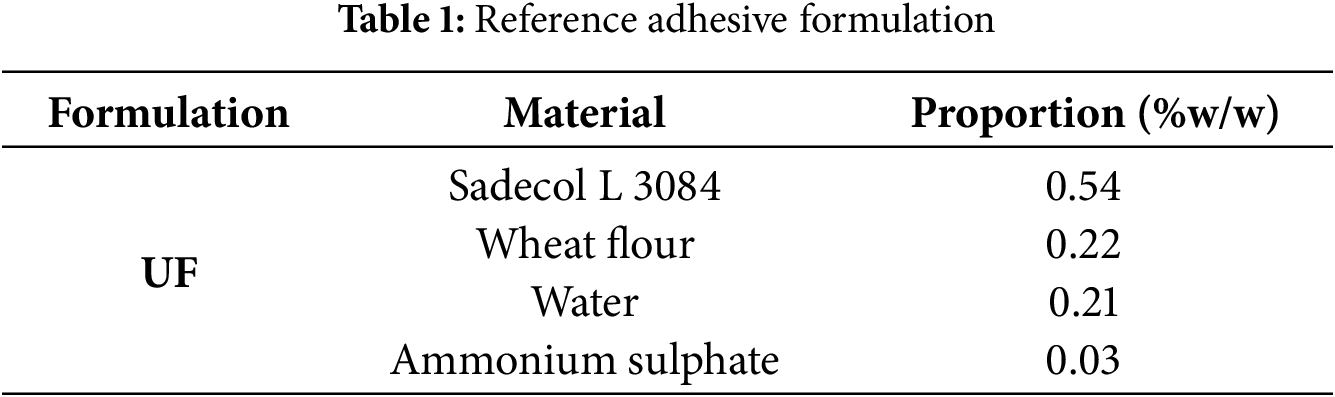
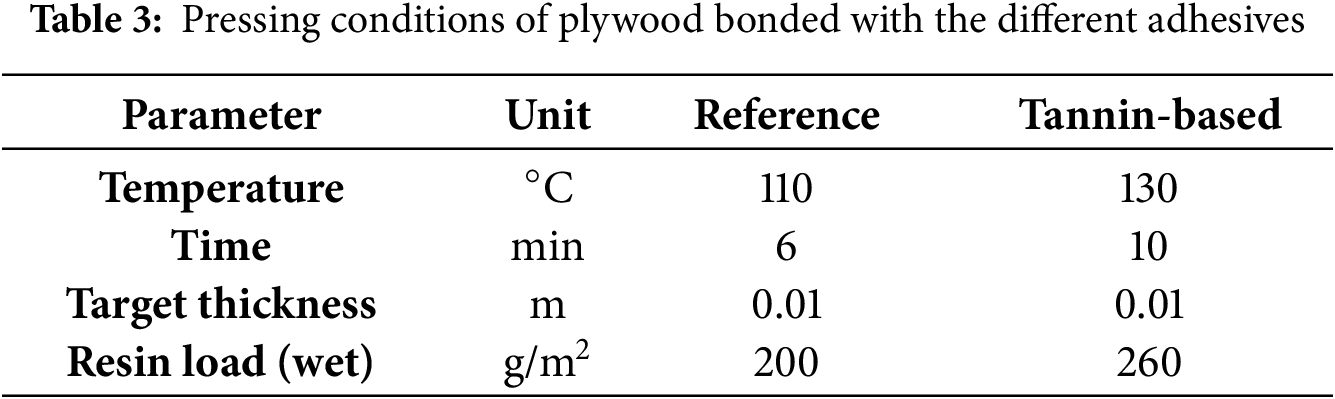
In accordance with the exploratory nature of the technical assessment, a single five-layer board was produced for each adhesive type. The formulation of the reference adhesive (Table 1) followed the provider’s specifications, whereas the tannin adhesive formulations (Table 2) were based on previous laboratory experiences; the corresponding resin loads and pressing conditions (Table 3) were defined in accordance with these respective sources. In the case of tannin-based adhesives longer pressing times and higher temperatures were used. This approach was taken with a view to conservatism and with the understanding that it could be optimised in the future.
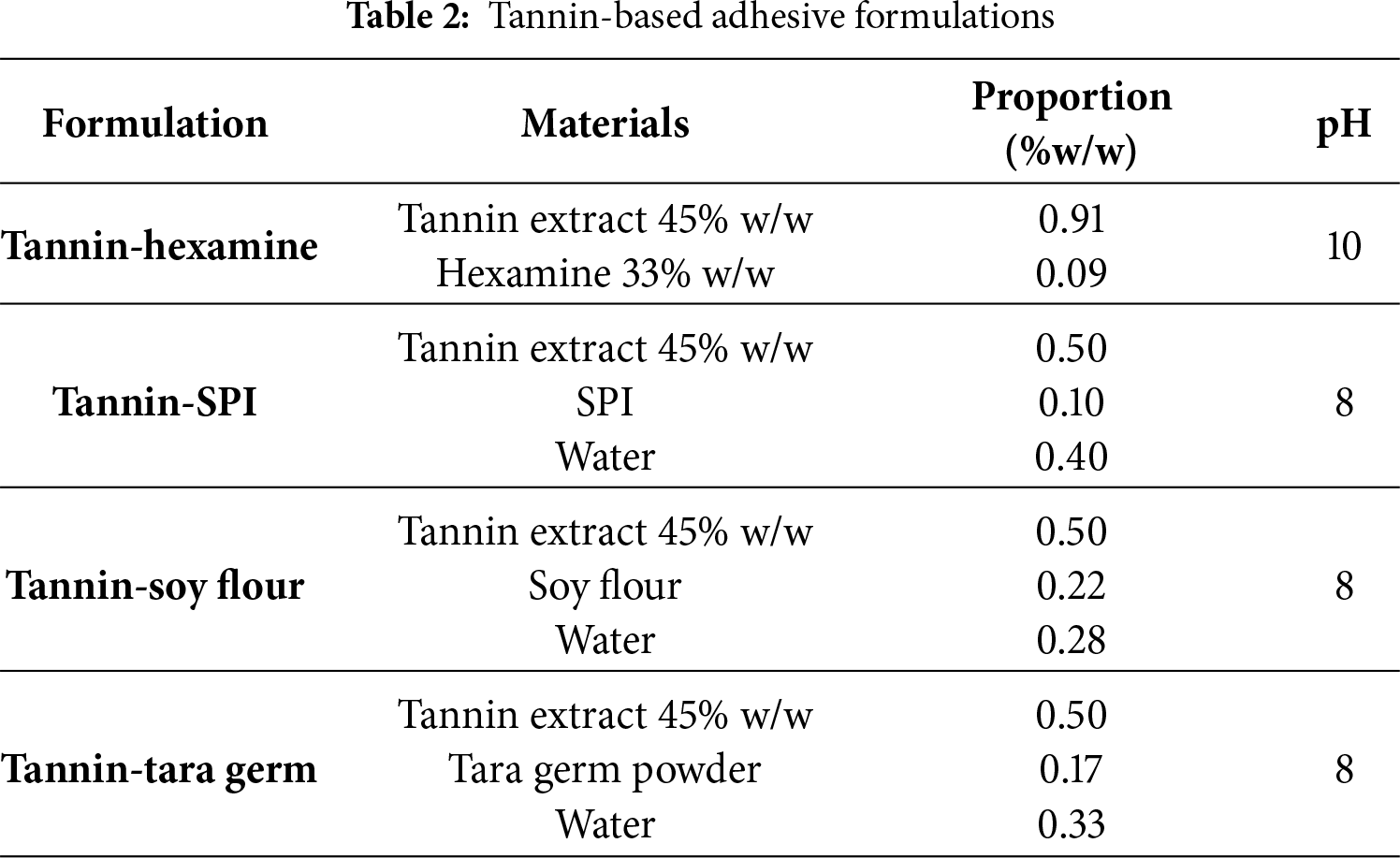
Tannin–hexamine formulations were prepared using a liquid tannin extract (45% w/w) as the starting material. Hexamine was gradually added under continuous mechanical stirring at room temperature. The pH was adjusted at the end of the preparation using a sodium hydroxide solution, and the formulations were used immediately thereafter.
Tannin–protein formulations were prepared by first dispersing the corresponding high-protein powder in water under continuous mechanical stirring at room temperature. The 45% w/w tannin solution was then gradually incorporated, followed by pH adjustment with sodium hydroxide. These formulations were also used immediately after pH adjustment.
The fabrication of the five-layer plywood samples included the weighing and spreading of the adhesive on the veneers, followed by the hot-pressing. The adhesive was spread on a single face of the veneer for each glue-line. A higher resin load was employed for tannin-based adhesives (see Table 3), which possess a lower solid content, close to 40%, and therefore require larger amounts of resin than UF adhesives, which have a solid content proximate to 60%. The samples were subsequently stored under controlled conditions of temperature and humidity until sampling and analysis.
The bonding quality of plywood samples were assessed according to EN 314-1/2 standards [23]. Plywood was tested in dry conditions, and after a basic pre-treatment of 24 h of cold soaking. Sixteen samples from each board were subjected to testing, with these extracted from the three pairs of glue lines.
The bending strength (BS) and modulus of elasticity (MOE) of plywood samples was assessed according to the EN 310 standard [24]. Two formulations were selected based on the results of the bonding quality test and compared to the reference sample. Five samples from each board, cut in the longitudinal grain direction, were subjected to testing.
The average and standard deviation were calculated for each of the 4 parameters measured—dry shear strength, wet shear strength, BS and MOE. Despite acknowledging the constraints of the sample size, a statistical analysis was performed to identify differences between the adhesives on the four parameters under investigation. The data was processed using the statistical software RStudio. A Levene test was conducted to ascertain whether the within-group variance could be considered homogeneous between the adhesives, for each parameter measured. This was followed by the corresponding ANOVA test. In the event of variance heterogeneity, the Welch ANOVA test was employed. A post-hoc test was subsequently conducted when significant differences were identified between the adhesives, with the objective of determining which ones differed. In the presence of variance homogeneity, the Tukey HSD test was performed, while if variance heterogeneity had been identified, the test selected was Games-Howell. All statistical tests were conducted with an alpha level of 0.05.
2.4 Life Cycle Assessment (LCA)
The objective of the LCA was to evaluate the environmental impacts of plywood bonded with the best technically performing tannin-based adhesive, identified through the technical assessment, and compare it to the reference sample. In order to carry out this study, an LCA was conducted for both types of plywood, separately, followed by a contribution analysis and a sensitivity analysis, which provided further insights.
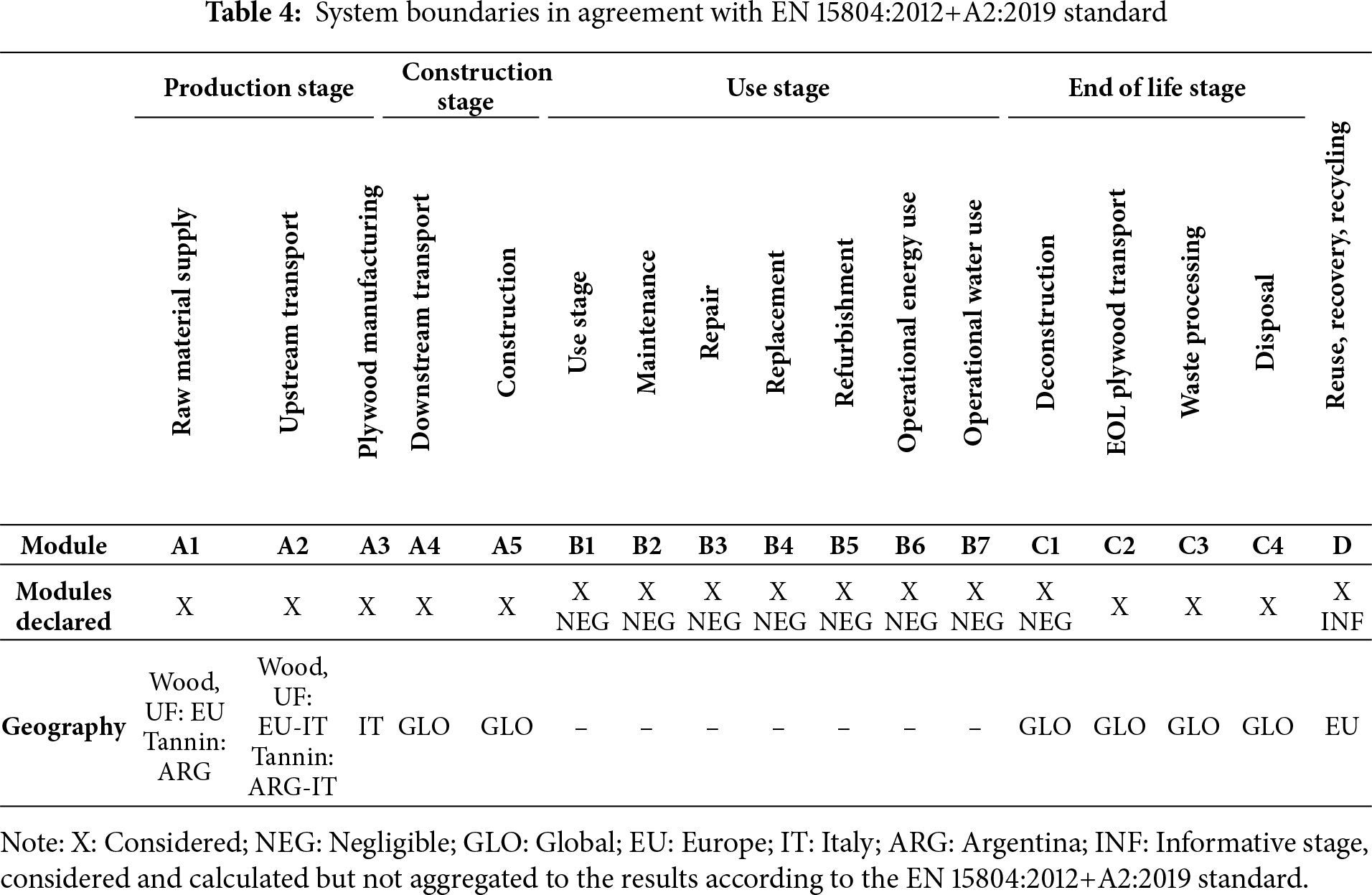
In accordance with the specifications stipulated in the EN 15804:2012+A2:2019 standard for environmental product declaration (EPD) of construction products, a “cradle to grave and module D” LCA type was conducted, in order to encompass the entire life cycle stages of plywood [25,26]. The system boundaries considered in this approach are summarised in Table 4, with a detailed breakdown of the processes included in each life cycle stage in Table 5. It is worth noting that considering the assumptions for the use stage (modules B1–B7), the conducted LCA is comparable to a “cradle-to-gate with options, the modules C1–C4 and module D” LCA type, according to the EN 15804:2012+A2:2019 standard, which is the common LCA type conducted for EPDs of plywood where the use stage (modules B1–B7) is excluded. The functional unit selected is 1 m3 of plywood which is the common functional unit considered in EPDs of plywood. Therefore, the comparability of the results of this study with the ones from EPDs of plywood producers is ensured.
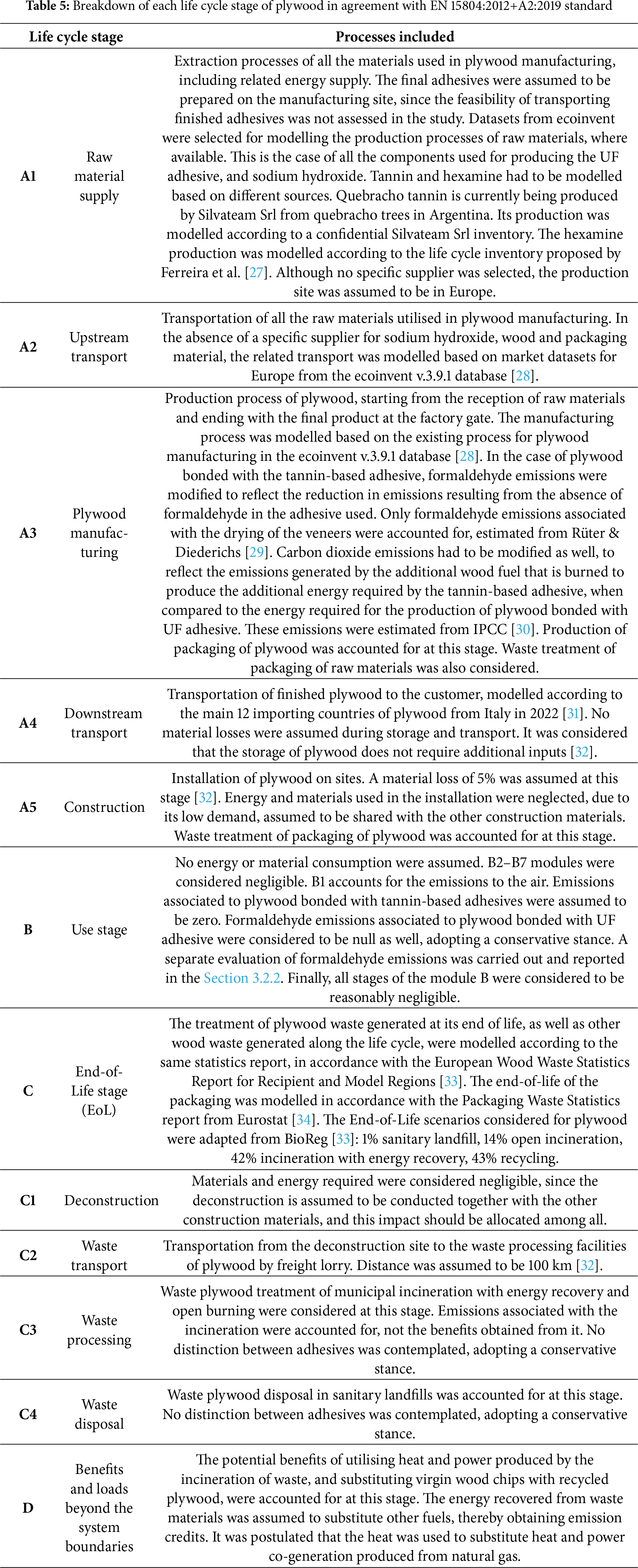
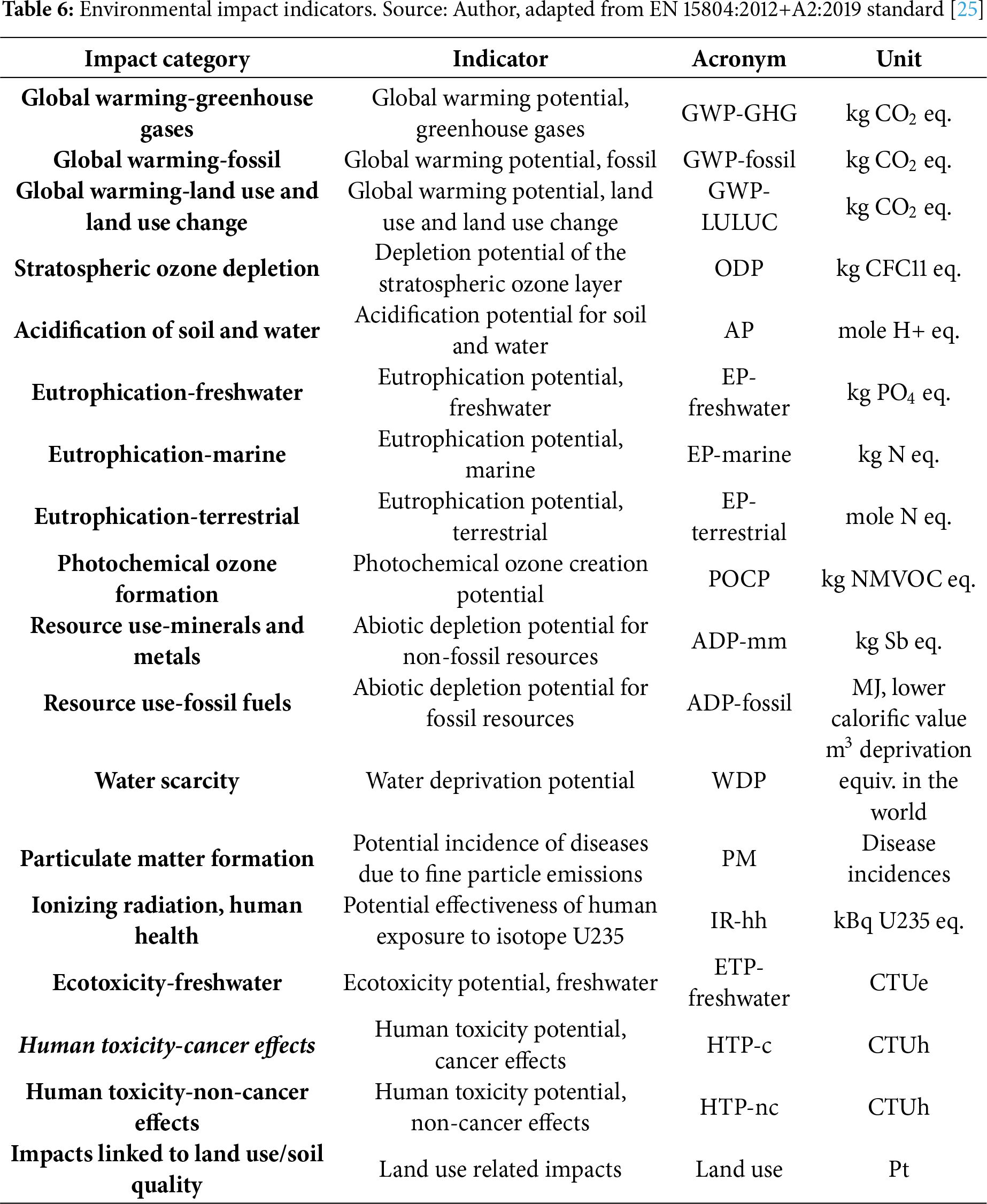
The impact categories and corresponding indicators studied are presented in Table 6. Their selection was based on the EN 15804:2012+A2:2019 standard which gives the required environmental indicators to be integrated in EPDs of construction materials. In consideration of the global warming potential (GWP) indicators, given the assumption used for modelling the C stage by which no differences were contemplated between the different types of plywood, the indicator GWP-biogenic and consequently the GWP-total indicator, were not identified as representative for the comparison of plywood bonded with the different types of adhesives. This is due to the fact that the carbon capture related to the biogenic content of the tannin-based adhesives is accounted for in stage A1, but the emissions associated with this are not accounted for in stage C. Consequently, an additional indicator was used for the comparison of GWP: GWP, greenhouse gas emissions (GHG), which encompasses fossil, land use and land use change (LULUC) and biogenic methane emissions, excluding biogenic carbon dioxide emissions and capture.
The LCA was conducted with the software openLCA 2.0.0., using the ecoinvent v.3.9.1 database and the impact assessment method openLCA-EN15804+A2.
The results of the shear strength test are presented in Table 7.
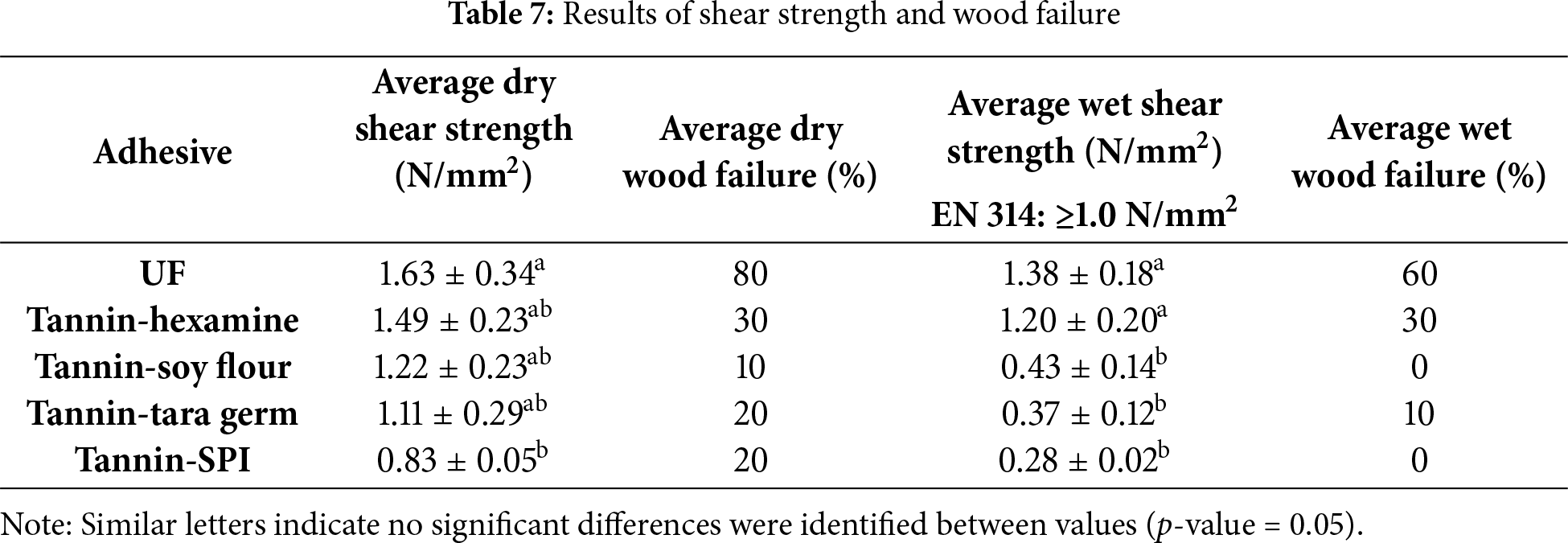
The adhesive exhibiting the highest dry shear strength was the reference adhesive, with an average value of 1.63 N/mm2. However, the statistical analysis did not identify any statistically significant differences between the shear strengths of the reference, tannin-hexamine, tannin-soy flour and tannin-tara germ adhesives. Moreover, the four mentioned exceed the shear strength value specified by the EN 314 standard, of 1.0 N/mm2. Although this requirement is fixed for samples that underwent a water soaking treatment prior to measurement, the fact that the dry shear strength exceeds it suggests that the adhesive has bonding potential. Nevertheless, its performance should be more properly assessed after the recommended sample treatment.
With regard to the wet shear strength, once more, the adhesive which exhibited the highest value was the reference adhesive, with a value of 1.38 N/mm2, which represents a mere 15% reduction in shear strength relative to the value obtained in dry conditions. However, tannin-hexamine adhesive did not exhibit significant differences with the reference adhesive according to the statistical analysis, presenting a shear strength of 1.20 N/mm2, which represents a 19% reduction in comparison to the value observed in the absence of pre-treatment, and merely 13% lower in comparison to the reference adhesive. The tannin-hexamine adhesive did show lower wood failure than the reference, suggesting room for improvement in interfacial bonding, especially if denser wood species than poplar are used. Nevertheless, both adhesives exceeded the EN 314 requirement of 1.0 N/mm2. The remaining three adhesives tested exhibit significant differences in their wet shear strength when compared to the reference and tannin-hexamine. The wood failure presented by these adhesives did not exceed 40% in any case, while the reference sample presented a value of 60%. These findings indicate that they do not meet the specifications outlined in the EN 314 standard for Class 1 plywood.
It should be noted that some of the adhesives present considerably high variances, which are clearly reflected in the results obtained in the statistical analysis, when identifying differences among adhesives. This might be attributed, on the one hand, to variations between the amount of adhesive or distribution of it in different glue lines, and on the other hand, to the number of samples tested. The results obtained in this study should be validated by increasing the number of samples analysed.
3.1.2 MOE and Bending Strength
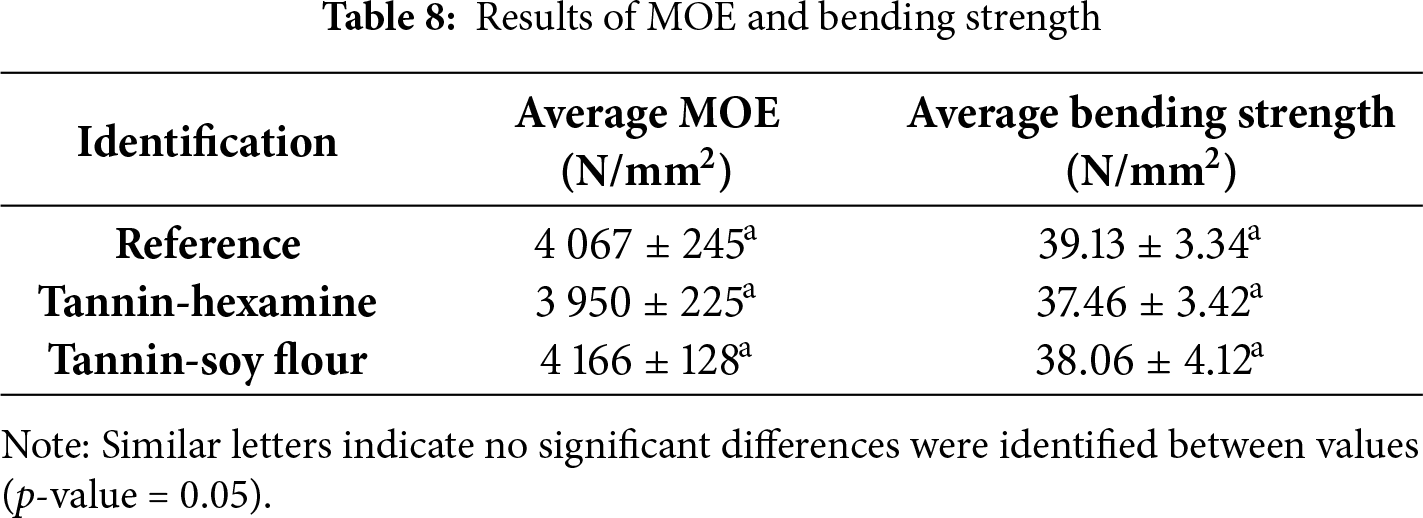
Plywood samples bonded with tannin-hexamine, tannin-soy flour and the reference sample were selected for performing the bending strength and MOE tests. The reason for this selection was the superior performance of the tannin-hexamine adhesive against the other tannin-based adhesives, followed by the tannin-soy flour formulation. The results of the MOE and bending strength tests are presented in Table 8. The statistical analysis did not reveal statistically significant differences between the MOE and bending strength values obtained for the three adhesives tested. Both exhibited comparable strength to the reference sample.
It can thus be concluded that according to the present analysis, the performance of the tannin-hexamine adhesive is comparable to that of the reference one. Therefore, plywood bonded with the tannin-hexamine formulation would likely comply with the EN 314 and EN 310 standards and could be utilised as a substitute for UF adhesive for Class 1 plywood. Nevertheless, to provide more robust evidence, a larger number of samples would be required, including the production and testing of more plywood boards, to increase the representativeness of the statistical analysis.
The results of the life cycle impact assessment (LCIA) over all the considered life cycle stages are presented in Table 9. The results for stage D were not aggregated in order to be compliant with the EN 15804:2012+A2:2019 standard, which stipulates that stage D is strictly informative. The environmental assessment reveals that the use of tannin-based adhesives has a number of beneficial effects. The most significant reduction was evidenced for human toxicity potential-cancer effects (HTP-c), achieving a reduction of 47% of the impact when using the tannin-hexamine adhesive instead of the UF one. This is translated into a nearly halved impact. It is acknowledged that the hypothesis considered for the end-of-life of plywood that 14% of the product is incinerated without energy recovery has a substantial impact on the HTP-c of plywood, irrespective of the adhesive used. Other impact categories which presented significant reductions as a consequence of the adhesive shift were abiotic depletion potential (ADP), related to both, fossil and minerals and metals, with a reduction of 13% and 42%, respectively, water deprivation potential (WDP) and freshwater ecotoxicity potential (ETP-freshwater), both with a reduction of 24%, and GWP-GHG, which evidenced a reduction of 10%. It is important to note that the conservative approach regarding plywood bonded with tannin-hexamine adhesive considered for the C3 stage “Waste processing” (Table 5) leads to an underestimation of the reduction of the GWP-fossil impact when tannin-hexamine adhesive is employed. Indeed, the same assumption has been taken into account for both adhesives, considering municipal incineration mean values in both cases. This implies that the additional fossil emissions from burning the UF adhesive compared to burning the tannin-hexamine adhesive were not considered.
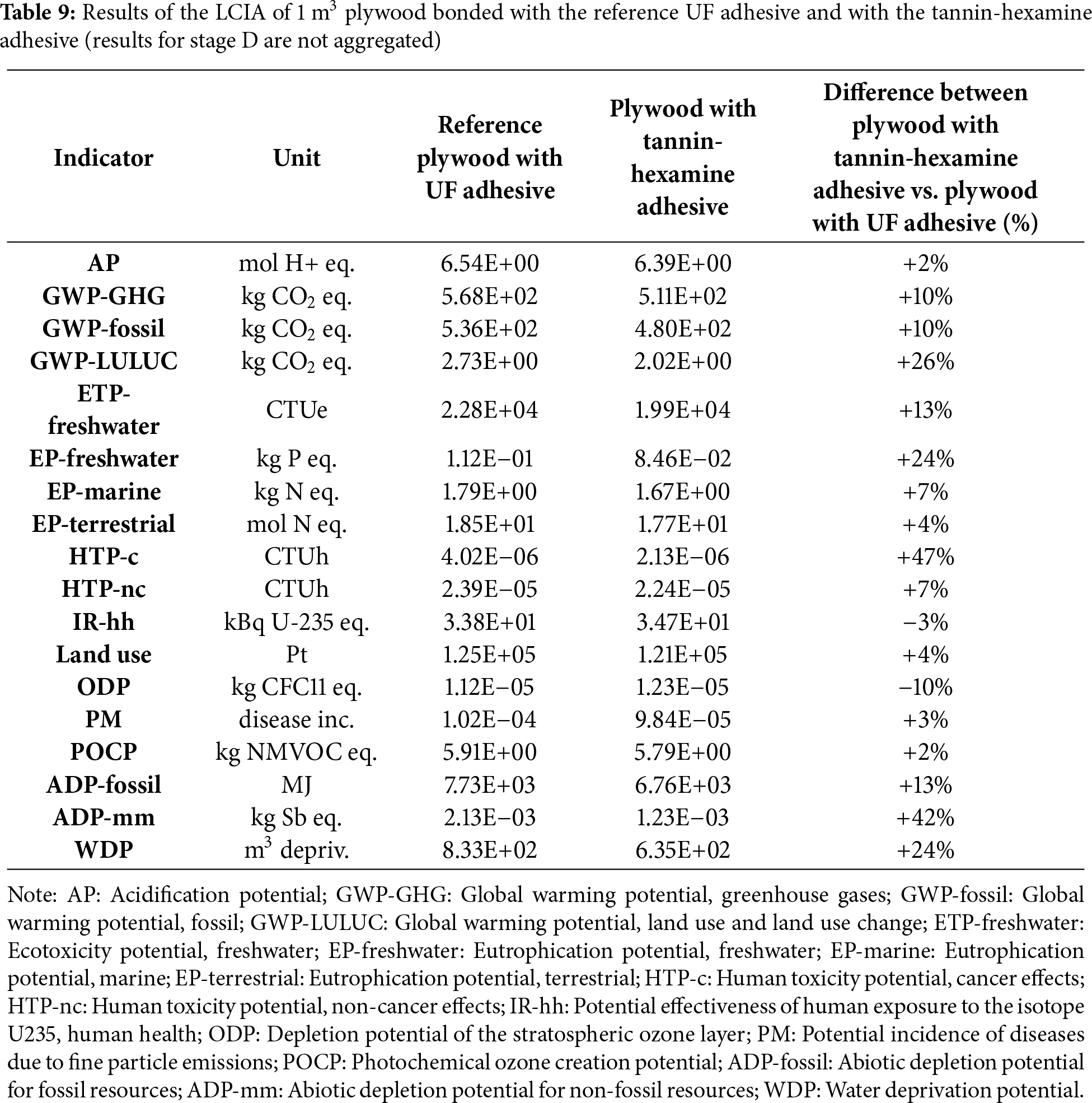
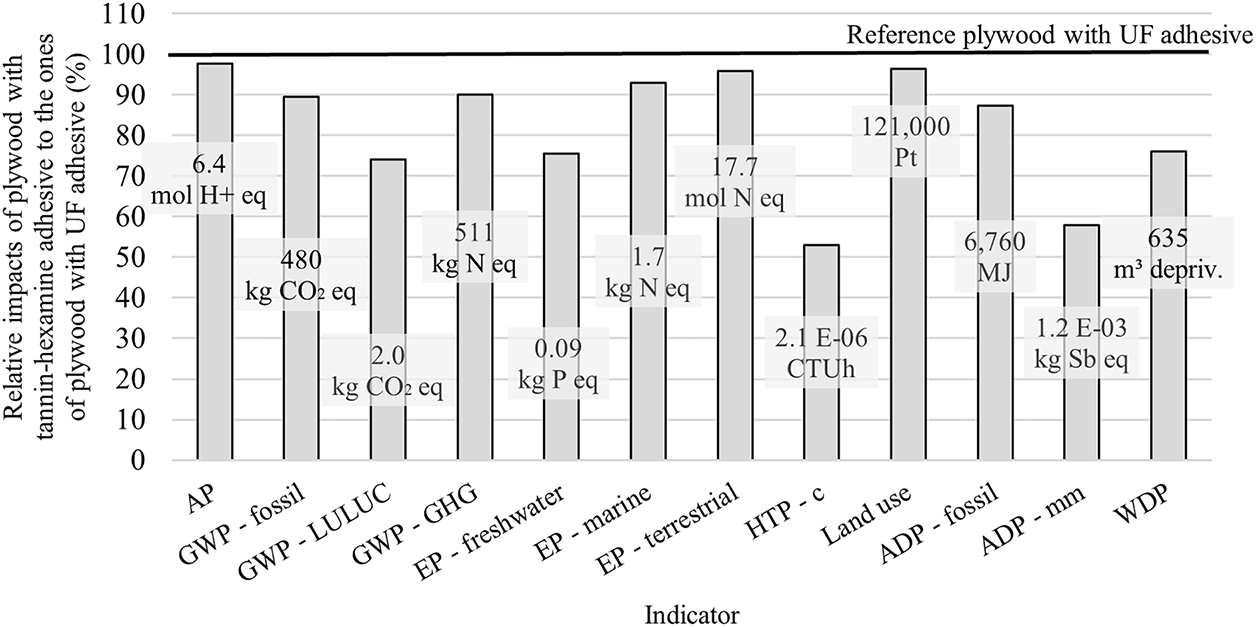
Figure 1: Relative impact of the LCIA of 1 m3 plywood bonded with tannin-hexamine adhesive, compared to plywood bonded with UF adhesive (absolute values for plywood with tannin-hexamine adhesive are on the bars, results for stage D are not aggregated). AP: Acidification potential; GWP-fossil: Global warming potential, fossil; GWP-LULUC: Global warming potential, land use and land use change; GWP-GHG: Global warming potential, greenhouse gases; EP-freshwater: Eutrophication potential, freshwater; EP-marine: Eutrophication potential, marine; EP-terrestrial: Eutrophication potential, terrestrial; HTP-c: Human toxicity potential, cancer effects; ADP-fossil: Abiotic depletion potential for fossil resources; ADP-mm: Abiotic depletion potential for non-fossil resources; WDP: Water deprivation potential
Considering land-use impacts, bio-based adhesives involve higher requirements; however, this effect was observed to be strongly diluted at the plywood level, as veneer production accounts for over 90% of land-use and the associated GWP–LULUC contributions. Moreover, the apparent advantage of UF adhesives was offset by the addition of wheat flour, which increased their land-use and GWP–LULUC impacts beyond those of tannin-based formulations. Ultimately, because fossil-derived emissions contribute far more to total GWP than land-use change, tannin-based adhesives remained environmentally preferable to UF adhesives, in terms of GWP, regardless of whether wheat flour was included in the formulation. The relative impacts of plywood bonded with tannin-hexamine adhesive compared to plywood bonded with UF adhesive can be more clearly observed in Fig. 1.
A contribution analysis was carried out to evaluate which are the stages of the life cycle of plywood that have the greatest impact on each impact category. Figs. 2 and 3 illustrate the percentage of contribution of each stage to the different impact categories, respectively for plywood bonded with UF adhesive and with tannin-hexamine adhesive.
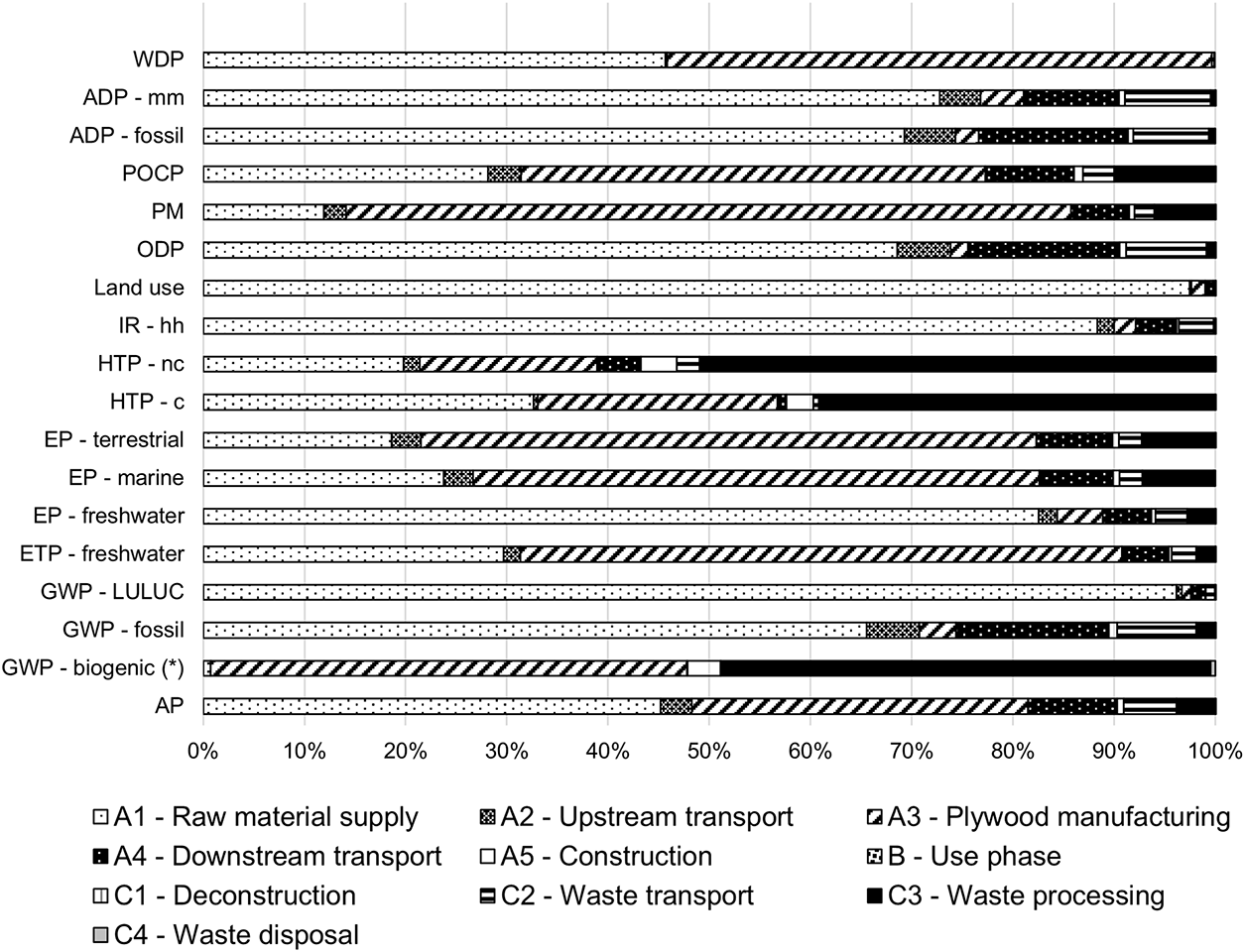
Figure 2: Contribution analysis of 1 m3 plywood bonded with UF adhesive (results for stage D are not aggregated). (*) Excludes carbon sequestration. WDP: Water deprivation potential; ADP-mm: Abiotic depletion potential for non-fossil resources; ADP-fossil: Abiotic depletion potential for fossil resources; POCP: Photochemical ozone creation potential; PM: Potential incidence of diseases due to fine particle emissions; ODP: Depletion potential of the stratospheric ozone layer; IR-hh: Potential effectiveness of human exposure to the isotope U235; HTP-nc: Human toxicity potential, non-cancer effects; HTP-c: Human toxicity potential, cancer effects; EP-terrestrial: Eutrophication potential, terrestrial; EP-marine: Eutrophication potential, marine; EP-freshwater: Eutrophication potential, freshwater; ETP-freshwater: Ecotoxicity potential, freshwater; GWP-LULUC: Global warming potential, land use and land use change; GWP-fossil: Global warming potential, fossil; GWP-biogenic: Global warming potential, biogenic; AP: Acidification potential
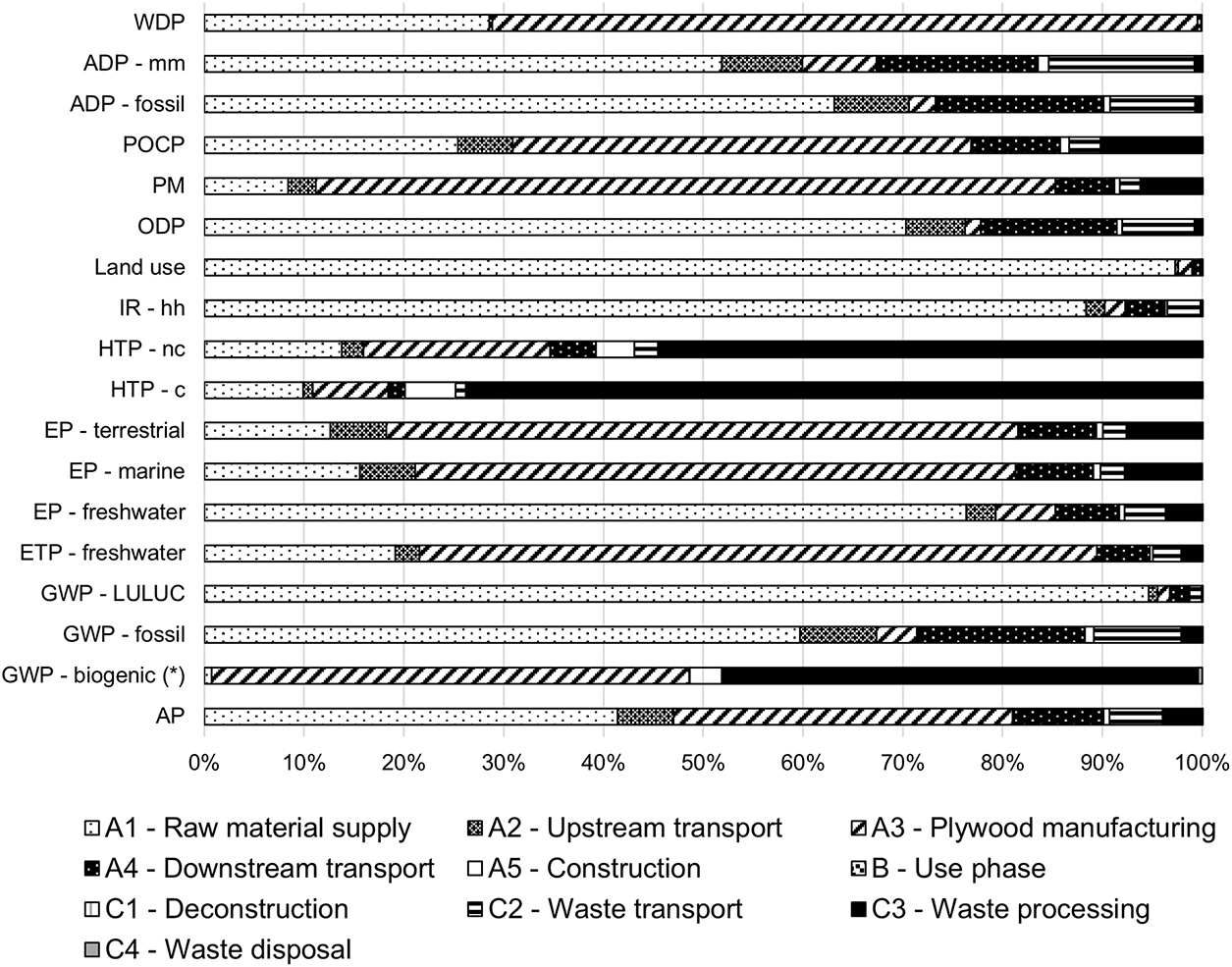
Figure 3: Contribution analysis of 1 m3 plywood bonded with tannin-hexamine (results for stage D are not aggregated). (*) Excludes carbon sequestration. WDP: Water deprivation potential; ADP-mm: Abiotic depletion potential for non-fossil resources; ADP-fossil: Abiotic depletion potential for fossil resources; POCP: Photochemical ozone creation potential; PM: Potential incidence of diseases due to fine particle emissions; ODP: Depletion potential of the stratospheric ozone layer; IR-hh: Potential effectiveness of human exposure to the isotope U235; HTP-nc: Human toxicity potential, non-cancer effects; HTP-c: Human toxicity potential, cancer effects; EP-terrestrial: Eutrophication potential, ter-restrial; EP-marine: Eutrophication potential, marine; EP-freshwater: Eutrophication potential, freshwater; ETP-freshwater: Ecotoxicity potential, freshwater; GWP-LULUC: Global warming potential, land use and land use change; GWP-fossil: Global warming potential, fossil; GWP-biogenic: Global warming potential, biogenic; AP: Acidification potential
The contribution analysis revealed no substantial differences between process stages significantly impacting environmental indicators, with the exception of HTP-c. Due to the absence of formaldehyde in the tannin-hexamine adhesive, stage A1 exhibited a lower contribution, identifying stage C3 (waste processing) as the primary contributor for plywood bonded with this adhesive. Similarly, for HTP-nc, stage C3 remained the principal contributor due to the waste treatment scenario modelled using BioReg [33], which incorporated both open incineration without energy recovery and partial energy recovery. The product’s impact may be mitigated by increasing the proportion of plywood subjected to controlled incineration.
For most environmental indicators, the primary contributing stages are A1 (raw material supply) and A3 (manufacturing). Indicators for which A1 was the main contributor include AP, GWP-fossil, GWP-LULUC, EP-freshwater, IR-hh, land use, ODP, ADP-fossil, and ADP-minerals and metals. Indicators for which the most significant contributor was A3 include ETP-freshwater, EP-marine, EP-terrestrial, PM, POCP, and WDP. For GWP-biogenic, stages A3 and C3 are the dominant contributors due to emissions associated with wood co-product incineration during manufacturing and plywood incineration at end-of-life. Carbon sequestration during stage A1 was excluded from the analysis to isolate emissions-generating processes.
3.2.2 Formaldehyde Emissions during Use Stage
Although three categories of formaldehyde emissions in plywood’s lifecycle can be distinguished (i.e., residual free formaldehyde in resins, formaldehyde released by hydrolytic attack of the resin after curing, and formaldehyde released by the wood itself when exposed to high temperatures such as hot-pressing) [7], only the latter was accounted for in the LCA. The estimation of formaldehyde emissions associated with the use stage was omitted in the interest of maintaining a conservative approach, in recognition of the complexity of its quantification. Consequently, a sensitivity analysis was conducted for the purpose of investigating the extent to which emissions occurring during the use stage could influence the overall impact of the product. The emissions were estimated based on the maximum emissions allowed to comply with class E1, in accordance with the EN 717 standard, reported in 0.124 mg/m3, measured through the test chamber method [35]. In accordance with EU legislation, plywood is required to comply with class E1 in terms of formaldehyde release, in order to be authorised for interior use [26]. A half-life value of formaldehyde emissions of 3.0 years was selected for the study [36]. Two scenarios were modelled, with estimated use stages of 10 and 100 years, respectively. The results obtained for the impact category HTP-c are presented in Fig. 4.
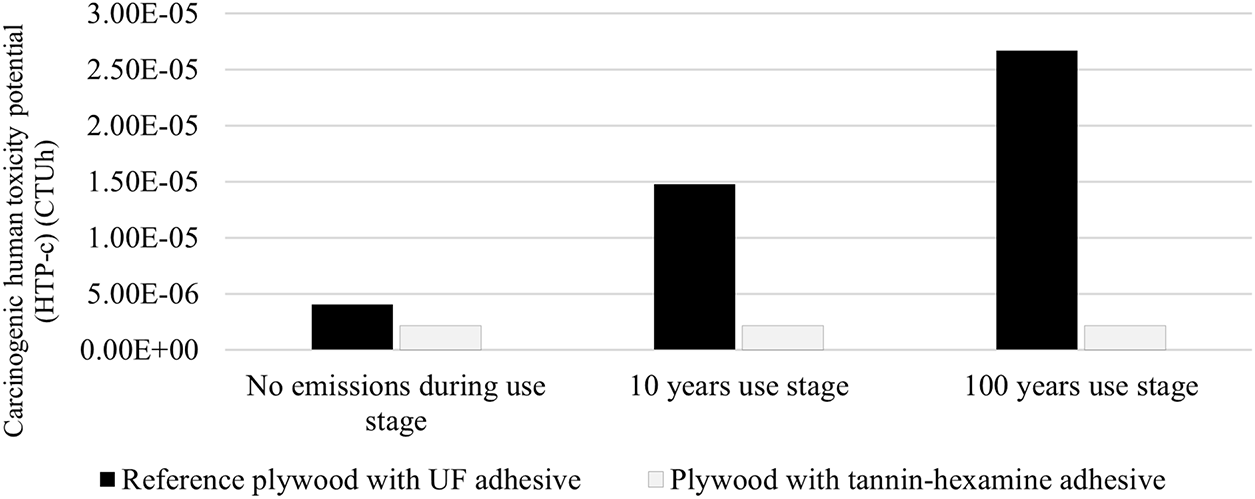
Figure 4: Sensitivity analysis results with estimation of the formaldehyde emissions during the use stage B of 1 m3 plywood bonded with UF adhesive. (Base scenario: assumes that the emissions from the use stage are null, 10 years: includes an estimation of the emissions assuming a use stage of 10 years, 100 years: includes an estimation of the emissions assuming a use stage of 100 years)
The HTP-c indicator presents a value for the base scenario of plywood bonded with the UF adhesive that is twice the value of plywood bonded with tannin-hexamine adhesive. However, the new scenarios with use stages of 10 and 100 years, show a significantly higher difference: 7 and 12 times higher impact than that of the tannin-based alternative, respectively. Consequently, the use of the tannin-hexamine adhesive instead of the UF one, should result in an impact associated with the carcinogenic human toxicity that is between 47% and 92% lower, depending on the use stage considered. It should be noted that the recently adopted Regulation (EU) 2023/1464 establishes stricter formaldehyde emission limits for wood-based articles (0.062 mg/m3), which are considerably lower than the E1 threshold under EN 717-1 [37]. This raises uncertainty as to whether conventional UF adhesives will comply without reformulation. Future studies should therefore reassess the comparative performance of tannin-based adhesives against UF formulations that meet these upcoming requirements.
It is of the utmost importance to ensure that the quality of the final product is not compromised when bio-based materials are used as substitutes for fossil-based materials. The principal risk is that the product’s lifespan will be reduced, leading to an increase in the demand for virgin materials and the manufacturing of the new product. This would be incompatible with the fundamental principle of the circular economy, which is predicated on optimising the utility of materials while minimising the environmental impact of a product [38]. While a comprehensive study is necessary to fully assess this situation, the environmental assessment conducted in this study indicates that the differences observed in several impact categories when comparing the use of the tannin-hexamine adhesive to that of the UF one, is not significant enough to offset a potential reduction in product lifespan. For instance, the impact associated with GWP-fossil would be reduced for plywood bonded with tannin-hexamine adhesive, provided that the lifespan of the product is not reduced by more than 10% compared to that of plywood bonded with UF adhesive. The European Parliament’s report on the Circular Economy Action Plan, places emphasis on the promotion of long-term carbon storage, while also advocating for the respect of the most appropriate utilisation of wood in accordance with the cascading principle [39]. A greater emphasis should be placed on raising awareness among stakeholders and promoting the implementation of circular “R” strategies. In consideration of potential end-of-life scenarios, it was determined that the optimal scenario for plywood would be to prioritize reuse and refurbishment for as long as feasible. It can be postulated that the optimal subsequent action would be the recycling of the product. The incorporation of end-of-life plywood to substitute virgin wood in particleboard production was identified as the most advanced method for implementing this [40]. Nevertheless, a significant obstacle for the enhancement of the recycling rates is the optimisation of classification and sorting processes [41,42]. This is also currently being done with plywood bonded with fossil-based adhesives, which negates major advantages that the alternative adhesive may otherwise have possessed. However, once all the “R” strategies have been exhausted, the possibility of energy recovery should be considered, and the benefits of the tannin-based adhesive over the UF one should be perceived in light of this. The higher biogenic content and absence of formaldehyde in the novel adhesive based on tannin-hexamine suggest that the impact associated with end-of-life disposal, whether through combustion or landfill, is likely to be less damaging than when UF adhesive is used. At this stage, it is important to note that the main concerns linked to plywood disposal are not carcinogenic effects from residual formaldehyde emissions, but rather air pollutants generated during combustion, the presence of heavy metals in ash, and the leaching of chemicals under landfill conditions [43,44]. In this study, the LCA was conducted under the assumption that the composition of both types of plywood was the same at the end of their lifecycle, due to the complexity of modelling the impact of different adhesives when landfilled. It is therefore hypothesised that a greater reduction in the environmental impact than that estimated in the present LCA could be achieved if these end-of-life phenomena were accounted for.
This study is subject to several limitations, which are outlined here in the interest of transparency. First, only a limited number of samples were tested. Nevertheless, the results are considered representative given the controlled preparation methods, which ensured reproducibility and alignment with realistic applications. Second, important practical aspects such as adhesive viscosity and pot life were not evaluated and should be systematically addressed in future work, as they directly affect processability and industrial applicability under different production conditions. With regard to the life cycle assessment, the quality of the inventory data and the representativeness of several assumptions are subject to uncertainty. To mitigate this, conservative assumptions were deliberately adopted, and sensitivity analysis was performed to establish the validity range of the results. Accordingly, the findings are deemed sufficiently robust to serve as a basis for further testing. Finally, the economic dimension was excluded from this analysis but represents a crucial area for future research. Without optimisation of both the resin formulation and the plywood production process, the tannin–hexamine alternative is expected to remain more costly than fossil-based solutions, due to current tannin market prices and the longer pressing times assumed in this study. Future investigations could help reduce this economic gap and allow for a more comprehensive assessment that includes health and environmental benefits.
This study comprehensively assessed tannin-based adhesives as substitutes for UF resins in plywood production, integrating technical testing with life cycle analysis. The tannin–hexamine formulation achieved comparable performance to UF in terms of bonding quality, bending strength, and MOE, meeting EN 310 and EN 314 requirements for interior-grade plywood, though with a lower wood failure, pointing to opportunities for optimisation, particularly for denser wood species. Other tannin-based formulations containing soy flour, soy protein isolate, or tara germ powder did not meet EN 314 standards but showed potential if water resistance is improved. The LCA revealed consistent environmental advantages: plywood bonded with tannin–hexamine showed reductions in greenhouse gas emissions, fossil resource depletion, and human toxicity, with carcinogenic toxicity impacts up to 47% lower than UF even when formaldehyde emissions during the use stage were excluded. These findings demonstrate that replacing UF with tannin–hexamine has the potential to lower emissions, reduce toxicity, and cut reliance on fossil resources without compromising product quality or lifespan. Acknowledging the limitations of the study, further research is recommended to improve formulation robustness, test performance under more demanding conditions, and broaden the potential applications of tannin-based adhesives in the wood panel industry.
Acknowledgement: Not applicable.
Funding Statement: The authors received no specific funding for this study.
Author Contributions: The authors confirm contribution to the paper as follows: conceptualization, Frédéric Pichelin, Sauro Bianchi and Aude Chabrelie; formal analysis, Belén Rovira; investigation, Belén Rovira; resources, Frédéric Pichelin; writing—original draft preparation, Belén Rovira; writing—review and editing, Frédéric Pichelin, Sauro Bianchi and Aude Chabrelie; visualization, Belén Rovira; supervision, Frédéric Pichelin, Sauro Bianchi and Aude Chabrelie; project administration, Belén Rovira. All authors reviewed the results and approved the final version of the manuscript.
Availability of Data and Materials: The data that support the findings of this study are available from the Corresponding Author, Belén Rovira, upon reasonable request.
Ethics Approval: Not applicable.
Conflicts of Interest: The authors declare no conflicts of interest to report regarding the present study.
References
1. Irle M, Barbu MC. Wood-based panel technology. In: Thoemen H, Irle M, Sernek M, editors. Wood-based panels—an introduction for specialists. Uxbridge, UK: Brunel University Press; 2010. p. 1–94. doi:10.4018/978-1-4666-4554-7.ch001. [Google Scholar] [CrossRef]
2. Costa D, Serra J, Quinteiro P, Dias AC. Life cycle assessment of wood-based panels: a review. J Clean Prod. 2024;444:140955. doi:10.1016/j.jclepro.2024.140955. [Google Scholar] [CrossRef]
3. Allied Market Research. Wood-based panel market size, share, competitive landscape and trend analysis report by product type, by application, by end user: global opportunity analysis and industry forecast, 2021–2031 [Internet]. 2022 [cited 2024 Jul 10]. Available from: https://www.alliedmarketresearch.com/wood-based-panel-market-A16049. [Google Scholar]
4. European Panel Federation. EcoReFibre project [Internet]. 2023 [cited 2024 Aug 20]. Available from: https://europanels.org/about-us/overview/eu-projects/ecorefibre-project/. [Google Scholar]
5. Zhong R, Gu J, Gao Z, Tu D, Hu C. Impacts of urea-formaldehyde resin residue on recycling and reconstitution of wood-based panels. Int J Adhes Adhes. 2017;78:60–6. doi:10.1016/j.ijadhadh.2017.06.019. [Google Scholar] [CrossRef]
6. Jia L, Chu J, Ma L, Qi X, Kumar A. Life cycle assessment of plywood manufacturing process in China. Int J Environ Res Public Health. 2019;16(11):2037. doi:10.3390/ijerph16112037. [Google Scholar] [PubMed] [CrossRef]
7. Kumar RN, Pizzi A. Adhesives for wood and lignocellulosic materials. Hoboken, NJ, USA: John Wiley & Sons, Inc.; 2019. [Google Scholar]
8. Dunky M. Adhesives in the wood industry. In: Pizzi A, Mittal KL, editors. Handbook of adhesive technology. 3rd ed. Boca Raton, FL, USA: CRC Press; 2017. p. 511–74. [Google Scholar]
9. Arias A, González-García S, Feijoo G, Moreira MT. Tannin-based bio-adhesives for the wood panel industry as sustainable alternatives to petrochemical resins. J Ind Ecol. 2022;26(2):627–42. doi:10.1111/jiec.13210. [Google Scholar] [CrossRef]
10. Das AK, Islam MN, Faruk MO, Ashaduzzaman M, Dungani R. Review on tannins: extraction processes, applications and possibilities. S Afr J Bot. 2020;135:58–70. doi:10.1016/j.sajb.2020.08.008. [Google Scholar] [CrossRef]
11. Oktay S, Pizzi A, Köken N, Bengü B. Tannin-based wood panel adhesives. Int J Adhes Adhes. 2024;130:103621. doi:10.1016/j.ijadhadh.2024.103621. [Google Scholar] [CrossRef]
12. Jorda J, Cesprini E, Barbu MC, Tondi G, Zanetti M, Král P. Quebracho tannin bio-based adhesives for plywood. Polymers. 2022;14(11):2257. doi:10.3390/polym14112257. [Google Scholar] [PubMed] [CrossRef]
13. Cesprini E, Šket P, Causin V, Zanetti M, Tondi G. Development of quebracho (Schinopsis balansae) tannin-based thermoset resins. Polymers. 2021;13(24):4412. doi:10.3390/polym13244412. [Google Scholar] [PubMed] [CrossRef]
14. Boussetta A, Ablouh EH, Benhamou AA, Taourirte M, Moubarik A. Valorization of Moroccan brown seaweeds: elaboration of formaldehyde-free particleboards based on sodium alginate–corn-starch-Mimosa tannin wood adhesives. Int J Adhes Adhes. 2021;108:102894. doi:10.1016/j.ijadhadh.2021.102894. [Google Scholar] [CrossRef]
15. Xiao G, Liang J, Li D, Tu Y, Zhang B, Gong F, et al. Fully bio-based adhesive from tannin and sucrose for plywood manufacturing with high performances. Materials. 2022;15(24):8725. doi:10.3390/ma15248725. [Google Scholar] [PubMed] [CrossRef]
16. Efhamisisi D, Thevenon MF, Hamzeh Y, Karimi AN, Pizzi A, Pourtahmasi K. Induced tannin adhesive by boric acid addition and its effect on bonding quality and biological performance of poplar plywood. ACS Sustain Chem Eng. 2016;4(5):2734–40. doi:10.1021/acssuschemeng.6b00230. [Google Scholar] [CrossRef]
17. Pichelin F, Nakatani M, Pizzi A, Wieland S. Structural beams from thick wood panels bonded industrially with formaldehyde-free tannin adhesives. For Prod J. 2006;56(5):31. [Google Scholar]
18. Pizzi A. Recent developments in eco-efficient bio-based adhesives for wood bonding: opportunities and issues. J Adhes Sci Technol. 2006;20(8):829–46. doi:10.1163/156856106777638635. [Google Scholar] [CrossRef]
19. Ghahri S, Pizzi A, Hajihassani R. A study of concept to prepare totally biosourced wood adhesives from only soy protein and tannin. Polymers. 2022;14(6):1150. doi:10.3390/polym14061150. [Google Scholar] [PubMed] [CrossRef]
20. Frihart CR, Lorenz LF. Protein adhesives. In: Pizzi A, Mittal KL, editors. Handbook of adhesive technology. 3rd ed. Boca Raton, FL, USA: CRC Press; 2017. p. 145–75. [Google Scholar]
21. Li H, Wang Y, Xie W, Tang Y, Yang F, Gong C, et al. Preparation and characterization of soybean protein adhesives modified with an environmental-friendly tannin-based resin. Polymers. 2023;15(10):2289. doi:10.3390/polym15102289. [Google Scholar] [PubMed] [CrossRef]
22. Ghahri S, Chen X, Pizzi A, Hajihassani R, Papadopoulos AN. Natural tannins as new cross-linking materials for soy-based adhesives. Polymers. 2021;13(4):595. doi:10.3390/polym13040595. [Google Scholar] [PubMed] [CrossRef]
23. EN 314-1/2. Plywood-bonding quality—part 1: test methods; part 2: requirements. Brussels, Belgium: CEN; 1993/2004. [Google Scholar]
24. EN 310. Wood-based panels—determination of modulus of elasticity in bending and of bending strength. Brussels, Belgium: CEN; 1993. [Google Scholar]
25. EN 15804: 2012+A2:2019. Sustainability of construction works—environmental product declarations—core rules for the product category of construction products. Brussels, Belgium: CEN; 2019. [Google Scholar]
26. EN 13986: 2004+A1:2015. Wood-based panels for use in construction—characteristics, evaluation of conformity and marking. Brussels, Belgium: CEN; 2015. [Google Scholar]
27. Ferreira C, Freire F, Ribeiro J. Environmental assessment of military systems with the life-cycle assessment methodology. In: Energetic materials and munitions. Hoboken, NJ, USA: John Wiley & Sons, Inc.; 2019. p. 169–97. [Google Scholar]
28. Wernet G, Bauer C, Steubing B, Reinhard J, Moreno-Ruiz E, Weidema B. The ecoinvent database version 3 (part Ioverview and methodology. Int J Life Cycle Assess. 2016;21(9):1218–30. doi:10.1007/s11367-016-1087-8. [Google Scholar] [CrossRef]
29. Rüter S, Diederichs S. Ökobilanz-basisdaten für bauprodukte aus holz [basic life cycle assessment data for timber construction products]. Hamburg, Germany: Johann Heinrich von Thünen-Institut; 2012. [Google Scholar]
30. Intergovernmental Panel on Climate Change. 2006 IPCC guidelines for national greenhouse gas inventories [Internet]. 2006 [cited 2024 Aug 2]. Available from: https://www.ipcc-nggip.iges.or.jp/public/2006gl. [Google Scholar]
31. Observatory of Economic Complexity. Plywood (HS: 4412) product trade, exporters and importers [Internet]. [cited 2024 Aug 20]. Available from: https://oec.world/en/profile/hs/plywood. [Google Scholar]
32. UPM Plywood Oy. EPD-IES-0004168: 002 (S-P-04168)-WISA spruce plywood, uncoated. Helsinki, Finland: UPM; 2021. [Google Scholar]
33. BioReg. European wood waste statistics report for recipient and model regions [Internet]. 2018 [cited 2024 Jul 23]. Available from: https://ec.europa.eu/research/participants/documents/downloadPublic?documentIds=080166e5bf1792ce&appId=PPGMS. [Google Scholar]
34. Eurostat. Packaging waste statistics [Internet]. 2023 [cited 2024 Jul 23]. Available from: https://ec.europa.eu/eurostat/statistics-explained/index.php?title=Packaging_waste_statistics. [Google Scholar]
35. EN 717. Wood-based panels—determination of formaldehyde release. Brussels, Belgium: CEN; 1994. [Google Scholar]
36. US Environmental Protection Agency. FIAM-pwp-Formaldehyde indoor air model—pressed wood products [Internet]. 2015 [cited 2024 Jul 25]. https://www.epa.gov/tsca-screening-tools/fiam-pwp-formaldehyde-indoor-air-model-pressed-wood-products. [Google Scholar]
37. European Commission. Commission regulation (EU) 2023/1464 of 14 July 2023 amending annex XVII to regulation (EC) No 1907/2006 as regards formaldehyde and formaldehyde releasers [Internet]. 2023 [cited 2025 Jan 1]. Available from: https://eur-lex.europa.eu/eli/reg/2023/1464/oj. [Google Scholar]
38. de Carvalho Araújo CK, Salvador R, Moro Piekarski C, Sokulski CC, de Francisco AC, de Carvalho Araújo Camargo SK. Circular economy practices on wood panels: a bibliographic analysis. Sustainability. 2019;11(4):1057. doi:10.3390/su11041057. [Google Scholar] [CrossRef]
39. Huitema J. Report on the new circular economy action plan (2020/2077(INI)). Brussels, Belgium: European Parliament; 2021. [Google Scholar]
40. Höglmeier K, Weber-Blaschke G, Richter K. Utilization of recovered wood in cascades versus utilization of primary wood—a comparison with life cycle assessment using system expansion. Int J Life Cycle Assess. 2014;19(10):1755–66. doi:10.1007/s11367-014-0774-6. [Google Scholar] [CrossRef]
41. European Panel Federation. EPF feedback on environmental impact of waste management—revision of EU waste framework [Internet]; 2022 [cited 2024 Aug 15]. Available from: https://europanels.org/european-policy-developments/circular-economy-package-waste-framework-directive/. [Google Scholar]
42. Besserer A, Troilo S, Girods P, Rogaume Y, Brosse N. Cascading recycling of wood waste: a review. Polymers. 2021;13(11):1752. doi:10.3390/polym13111752. [Google Scholar] [PubMed] [CrossRef]
43. Zimmer A, Angie Lunelli Bachmann S. Challenges for recycling medium-density fiberboard (MDF). Results Eng. 2023;19:101277. doi:10.1016/j.rineng.2023.101277. [Google Scholar] [CrossRef]
44. US Environmental Protection Agency. Life cycle inventories of end-of-life pathways of construction and demolition materials [Internet]. Washington, DC, USA: EPA; 2021 [cited 2024 Sep 28]. Available from: https://cfpub.epa.gov/si/si_public_record_report.cfm?dirEntryId=354357&Lab=CESER. [Google Scholar]
Cite This Article
 Copyright © 2026 The Author(s). Published by Tech Science Press.
This work is licensed under a Creative Commons Attribution 4.0 International License , which permits unrestricted use, distribution, and reproduction in any medium, provided the original work is properly cited.
 Downloads
 Citation Tools
