
 Login
Login Register
 Submit a Paper
 Propose a Special lssue
 Open Access
REVIEW

A Review of Natural-Oil Soot-Derived Carbon Nanoparticles: Significance, Synthesis, and Applications
1 Department of Environmental Protection Technologies, Eskişehir Vocational School, Eskişehir Osmangazi University, Eskişehir, 26040, Türkiye
2 Advanced Materials Technologies Application and Research Center (IMATEK), Eskişehir Osmangazi University (ESOGU), Eskişehir, 26040, Türkiye
* Corresponding Author: Naile Karakehya. Email:
Journal of Renewable Materials 2026, 14(4), 4 https://doi.org/10.32604/jrm.2025.02025-0131
Received 02 July 2025; Accepted 15 August 2025; Issue published 24 April 2026
 View Full Text
 Download PDF
Abstract
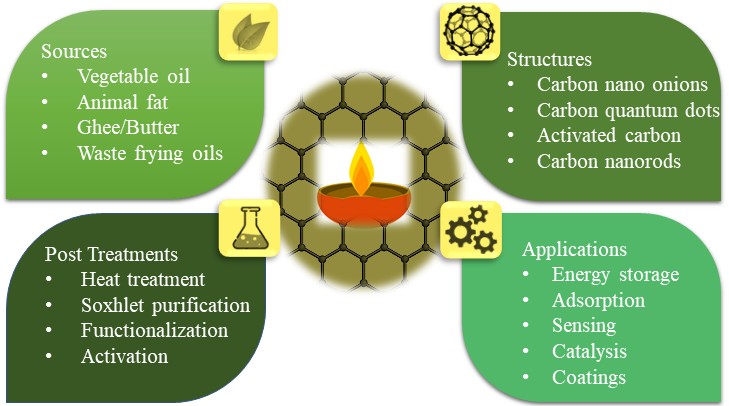
In the early years of the Industrial Revolution, the extensive use of fossil resources and energy-intensive production methods was widely accepted, even celebrated, as signs of progress. However, growing concerns over environmental degradation, resource depletion, and climate change have necessitated a transition toward more sustainable and environmentally responsible production strategies. Within this context, wick-and-oil flame synthesis has emerged as a simple, energy-efficient, and cost-effective method that utilizes natural oils as both fuel and renewable carbon sources for the generation of carbon nanoparticles, particularly carbon nano-onions. This review presents a comprehensive overview of this emerging synthesis approach, highlighting its potential to transform the perception of carbon soot from a pollutant to a valuable nanomaterial. The method’s scalability, minimal equipment requirements, and compatibility with green chemistry principles position it as a promising alternative to more complex or fossil-dependent routes, especially in resource-limited settings. In this review, a key focus is given to the physicochemical properties of the soot, including particle morphology, structure, and surface characteristics, which are examined in detail, along with relevant post-synthesis strategies. Particular attention is given to the application performance of natural-oil-derived carbon nanoparticles across multiple domains such as electrochemical energy storage, surface engineering, environmental remediation, and sensor technologies. In each case, the advantages and current limitations of these materials are discussed in light of competing state-of-the-art technologies. However, several research gaps remain, including a limited understanding of the structure–function relationship, insufficient control over purity and size distribution, and challenges in integrating these materials into scalable manufacturing systems.Graphic Abstract
Keywords
Carbon soot, also known as black carbon, is not a new material, as it has been a part of human life since the invention of fire. However, the first scientific considerations on soot date back to 1860, when Michael Faraday, an English scientist known for his significant contributions to the understanding of the principles of electricity, described the soot as incompletely burned carbon in his lectures, titled “The Chemical History of a Candle” [1]. In the 90s, the Space Shuttle USML-1 and the Mir Space Station provided a microgravity research environment for experiments to answer key questions about soot and combustion [2,3]. In 2007, Mao’s group prepared multicolor fluorescent carbon nanoparticles from candle soot, which ignited interest in the systematic investigation of soot-based carbon nanoparticles [4,5].
Soot is a highly variable material due to its complex formation mechanism which strongly depends on fuel type (i.e., biomass, fossil fuel) and combustion environment (i.e., flame temperature, oxygen-deficient conditions) [6]. In general terms, soot is a carbonaceous material in the form of agglomerated submicron-sized particles resulting from pyrolysis and incomplete combustion of hydrocarbons [7]. Almost every combustion system (i.e., candles, laboratory burners, automobile internal combustion engines, aircraft engines, industrial burners, especially coal-fired power plants) produces soot as an unavoidable by-product [8]. Soot particles are easily deposited on the inner walls of combustion equipment, which can cause mechanical problems if not removed regularly. Furthermore, soot is considered a pollutant because it is mostly composed of ultra-fine carbon particles and condensed aromatic structures (two or more fused benzene rings), negatively impacting human health and the environment [9]. To find the treasure in the trash, soot can be used as a carbon source to generate various carbon nanoparticles (CNPs) on an industrial scale that have found applications in many fields, including energy conversion/storage, reinforcement of thermoplastic polymers, coating, bioimaging, sensing, drug delivery, dying and separation, etc. [10,11].
The term soot has become less common since flame-synthesized carbon nanomaterials have a remarkable market value [12]. Carbon black (CB) is a mature soot, sometimes called technical soot, characterized by its aciniform morphology, which resembles clusters similar to grapes [13]. CB consists of predominantly pure carbon, exceeding 97%, whereas soot contains a significantly lower carbon composition, below 80% [14,15]. According to literature, CB is a substance deliberately manufactured under regulated conditions, possessing diverse commercial uses, and is nearly omnipresent in contemporary society. In contrast, soot is an unintentional by-product of combustion, which poses some risks to human health [16]. The human health risks are primarily attributed to the condensed aromatics, such as polycyclic aromatic hydrocarbons (PAHs), that are adsorbed onto soot. When soot is subjected to thermal treatment to attain a state of near-complete carbonization, its maturity increases, which reduces health risks if the appropriate precautions are taken [13,17]. The process involves the removal of heteroatoms (such as hydrogen) and forming new carbon-carbon bonds (atomic rearrangement in the solid phase) due to high temperatures. However, the process by which molecular precursors in the gas phase transform into condensed-phase nanoparticles (soot inception) during combustion is still not completely understood [18].
Prior to delving into the synthesis and applications of soot-derived carbon nanoparticles from renewable sources, which constitutes the primary objective of this review, it is essential to identify and articulate justifications that support their usefulness and economic value. Toward the end of the 19th century, it was found that the incorporation of CB into rubber significantly enhanced the durability of automobile tires. In the mid-20th century, the more efficient and environmentally sustainable “furnace process” was developed for CB production [19]. These breakthroughs paved the way for the development of CB industry and make it one of the top 50 industrial chemicals manufactured globally with an average price of ∼$1000 per tonne in 2025 [20]. Although CB is one of the most abundantly produced CNPs, its production is considered as a low-profit industry branch. On the other hand, the market value of other CNPs, including carbon nanotubes and carbon nano-onions, is estimated to be between USD 100,000 and USD 10 million per tonne [21]. The total market size for carbon nanomaterials is expected to grow from USD 5.83 billion in 2024 to USD 66.15 billion by 2034 [22].
Currently, there are various methods (e.g., chemical vapor deposition, arc-discharge, laser ablation, plasma radiation, etc.) for preparing/synthesizing CNPs, but their commercial production is still challenging because of expensive equipment, extreme operating conditions, high costs, and low production yields [23]. Catalytic chemical vapor deposition often requires high temperatures and may introduce impurities from catalyst residues, while laser ablation is energy-intensive and unsuitable for continuous production [24]. Thermal annealing of nanodiamond particles can yield well-structured CNPs, but separating them from the diamond matrix is difficult [25]. Moreover, this method typically requires extremely high temperatures (1100°C–1200°C) and ultrahigh vacuum conditions (as low as 1.0 × 10⁻⁶ Torr) [26], which significantly hinder scalability and limit practical applications. The carbon arc technique requires careful control of experimental conditions and suffers from low yield [27]. In addition, electric arc and laser ablation techniques are not economical for large-scale production [28] and produce a mixture of various carbon structures, including nanotubes, graphite compounds, and nano-onions [29,30]. Furthermore, all these methods predominantly rely on carbon sources derived from fossil-based and highly purified materials, raising significant concerns regarding sustainability and environmental impact. For instance, the arc discharge method typically utilizes highly pure graphite electrodes, while chemical vapor deposition employs hydrocarbon gases such as methane, acetylene, or benzene. Similarly, laser ablation involves the use of high-purity graphite or carbon targets. These limitations underscore the pressing need for more economical and environmentally friendly routes to the synthesis of carbon-based nanomaterials [31]. Flame synthesis via combustion of natural oils (e.g., mustard, linseed, olive, castor) offers a rapid, catalyst-free, and scalable route to CNPs production, commonly in the 10–60 nm range, with diverse morphological and compositional characteristics depending on the type of oil used, design of the burning apparatus (e.g., sampling collecting locations, substrate materials, and deposition time), and combustion conditions (e.g., air-to-fuel ratio and temperature) [32]. Compared to conventional approaches, this biosourced route reduces hazardous byproducts and fossil-based energy consumption. By leveraging renewable biomass feedstocks and an inherently low environmental impact process, this approach aligns with sustainability goals at both the material and process levels. Integrating such sustainable sources into critical technological applications enables the replacement of conventional, high-carbon footprint components, supporting the broader transition to environmentally responsible material design. As highlighted by Rahaman et al. (2024), one of the most significant barriers to the widespread adoption of eco-friendly technologies and achieving environmental sustainability lies in the tendency of manufacturers to prioritize cost-effective value-added products over strict adherence to environmental norms and regulations [33].
A variety of innovative flame-synthesized materials, such as fullerenes and carbon nanotubes, have been introduced to niche markets by start-ups like Nano-C [12,13]. The majority of these CNPs are synthesized from fossil-derived precursors; however, as highlighted above, abundant and inexpensive biomass sources are highly recommended for eco-friendly production and sustainability [34]. Furthermore, expanding renewable alternatives to fossil-based resources for CNP production is essential, especially in light of potential resource depletion or escalating costs driven by geopolitical instability. While activated carbon and biochar are commonly cited examples of renewable carbon materials, the scope should extend beyond these conventional options. The development of innovative methods for producing CNPs from sustainable sources is critical to meet the rapidly increasing market and industrial demand. Recent studies have demonstrated the conversion of combustion-derived soot from renewable sources into a variety of nanocarbon structures, including carbon nanofibers [35], carbon nano onions (CNOs) [36], carbon quantum dots [37], activated carbon [38], carbon nanorods [39], carbon nanotubes [40], and graphene nanosheets [41]. This review focuses on the oil-wick flame synthesis of economical and eco-friendly CNPs derived entirely from renewable sources. It is hoped that this review will serve as a useful resource for interdisciplinary researchers seeking concise information on wick-and-oil flame synthesis and the applications of soot-derived carbon nanoparticles.
Soot is a by-product of pyrolysis (high-temperature), combustion, and gasification, which are the widely used approaches for biomass utilization. Although soot has been known since prehistoric times, controlling the soot generation process is a significant challenge. For example, lighting a candle at a dining table produces approximately 1.5 million nanocarbon particles in the flame per second, based on the transmission electron microscopy observations reported by Su et al. [42]. The flame synthesis is a sustainable method for the preparation of carbon and metallic nanopowders, which yields a higher purity of material than most of the alternative techniques [38]. Moreover, the competitive advantages of flame synthesis allow the continuous-flow production of scalable and catalyst-free nanomaterials at extremely low production cost and nearly perfect homogeneity while avoiding extreme temperature conditions, artificial atmosphere, sophisticated instrumentation, and tedious wet chemistry steps [43]. Different variations of flame synthesis exist, determined by the type of combustion (spray, wick, or grate), fuel source (internal or external), and state (vapor, liquid, or solid) of the precursor [44].
2.1 Wick-and-Oil Flame Synthesis
Due to their importance from environmental and economic points of view, growing efforts have been devoted to utilizing bio-precursors such as vegetable oil, animal fat oil, or ghee/butter as sustainable feedstocks for nanocarbon synthesis from a flame process with no moving parts and machinery. In this process, also known as “wick-and-oil flame synthesis” or “wick pyrolysis”, bio-precursors serve as both a fuel and a carbon source. Despite the complexity of the soot-forming mechanism (Fig. 1a), the procedure and the apparatus are straightforward and convenient (Fig. 1b), respectively. A typical laboratory-scale wick-and-oil synthesis apparatus consists of a non-flammable container holding a liquid or a low-temperature heat-meltable solid (such as wax) precursor, which is soaked up by a wick to draw the liquid to the flame through capillary action. The energy supplied by the flame vaporizes the precursor, which is essential for maintaining the combustion process under ambient conditions [45]. The burning system is generally surrounded by a chamber, usually made of a quartz tube (such as a chimney). Partially isolating the burning system from the surrounding environment is very important because it protects the flame from disturbances of ambient air movements. However, more importantly, higher oxygen concentrations due to air circulation could promote the burning of various chemical species, resulting in reduced soot formation. The emitted carbon soot condenses onto a cold surface (substrate) held at a short distance from the visible flame tip, where soot formation is considered complete [46].

Figure 1: (a) A schematic representation of the soot formation mechanism (Adapted with Permission from Ref. [47]. Copyright© 2022 Elsevier Ltd.); (b) Wick-and-oil flame synthesis method (Adapted with Permission from Ref. [43]. Copyright© 2016 Elsevier Ltd.)
In their review paper, Serrano-Bayona et al. [48] highlighted that key flame parameters, such as flame configuration, flame temperature, and residence time, play a critical role in tailoring the physicochemical properties of nanoparticles. By adjusting the fuel/oxidizer ratio and flame temperature, it is possible to modulate the oxidation state and phase composition of the resulting materials. High flame temperatures have been shown to enhance crystallinity and phase purity, whereas lower temperatures tend to yield amorphous or partially crystalline structures. Furthermore, it has been shown that the time particles spend in the flame affects their size and shape. Shorter residence times lead to smaller particles due to limited growth. Similarly, Watson and Valberg [14] discussed how variations in flue gas temperature can influence particle surface chemistry and the vapor-particulate partitioning of organic compounds, potentially leading to different soot characteristics at various sampling positions. Although these findings were derived from controlled diffusion flame configurations and chimney flue studies, the underlying principles may still offer valuable guidance for understanding particle formation in wick-and-oil flame synthesis. However, further investigation is required to systematically assess how these variables influence soot characteristics in wick-based systems.
2.1.1 Mechanism of Soot Formation
The establishment of the soot formation model is rooted in the innovative contributions made by Bockhorn [49]. The soot-forming mechanism is usually divided into two main stages: (1) the formation stage (or the molecular zone) and (2) the growth stage (the particle zone) [50]. Firstly, hydrocarbon fragments are released from the precursor due to volatilization. Then, they crack into gas-phase hydrocarbons, which react with each other and the surrounding gases to generate aromatic rings called PAHs (soot-precursor species) [51]. The formation stage is completed by the generation of primary soot particles resulting from the gas-to-condensed-phase transition (nucleation/inception), driven by the physical interactions between PAHs as well as aliphatic hydrocarbons [52,53]. The second stage is predominantly related to surface growth by condensation of CnHm or PAH components, agglomeration, and oxidation of the soot particles [6,52]. The fragile agglomerated particles consist of irregular chain-like and branching aggregates held together by weak physical interactions, as shown in Fig. 2. The pore network, morphology and chemical characteristics of soot are primarily influenced by the precursor and synthesis conditions.

Figure 2: TEM images of soot particles with different scales (a) 100 nm and (b) 500 nm
Young soot particles prepared via wick-and-oil flame synthesis could contain high concentrations of toxic PAH residuals, and post-synthesis purification would be required to remove them [54]. On the other hand, post-treatments can bring extra economic value to soot and improve various specific and technical properties, especially for the tough requirements of high-performance applications (i.e., energy storage, sensing, and catalysis). A wide variety of post-processing methods, such as heat treatment, Soxhlet purification, activation, and surface functionalization, have been employed so far. Heat treatment (>600°C) under an inert atmosphere has long been used to carbonize the PAH-containing soot particles and form mature soot particles with an increased graphitization degree [55]. Some researchers have focused on Soxhlet purification with organic solvents (i.e., tetrahydrofuran, toluene, methanol, and acetone), which has the potential to remove adhered unburnt organic impurities (especially PAHs) from the surface of soot, as a means of achieving similar benefits with thermal treatment [56]. Generally, CNPs can be decorated with surface functional groups, metal oxides (i.e., MnO2), or conductive polymers (i.e., polyaniline) [57]. Chemical functionalization can enhance the selectivity, adsorption capacity, and wettability of CNPs by adding chemical groups (such as hydroxyl, carbonyl, carboxyl, and amino groups) to the surface [58]. The most commonly used functionalization method for CNPs is introducing oxygen-containing groups using acidic oxidants such as aqueous HNO3, H2SO4, or a mixture of them [59]. This acid treatment fulfills a dual benefit by allowing the addition of new chemical groups while simultaneously removing metal impurities and amorphous carbon [60]. However, adding functional groups to the soot surface is limited due to the small surface area [61]. Activation (chemical or steam) treatment is generally intended to modify the textural properties and enhance surface area and porosity characteristics of soot [62], broadening its applicability in many fields, including wastewater treatment and energy storage. On the other hand, modification of surface chemistry via doping heteroatoms like nitrogen, oxygen, sulfur, or boron into the CNOs is another effective strategy to improve their adsorption capacity and electrochemical performances. Nitrogen is the most thoroughly examined heteroatom due to the relative ease of its incorporation into the carbon structure [63].
2.1.3 Bio-Precursors in Wick-and-Oil Flame Synthesis
Plant-derived materials have long been utilized to produce “vegetable black” (E153), a commercial cosmetic and food industry coloring agent [64]. Such applications, and similar traditional uses, were generally limited to low-end purposes that did not require strict control over particle size, morphology, or purity, which makes them differ markedly from modern black carbon designed for advanced technological applications. Recently, various approaches have been developed to isolate carbon nanoparticles (CNPs) from carbon soot generated through the combustion or pyrolysis of diverse biomass materials, including wood [65], wheat straw [66] and nutshells [67]. The synthesis methods employed in these studies primarily involve solid-to-solid conversion processes. Although these materials demonstrated promising functional properties for diverse applications, the labor-intensive pre-treatments (e.g., washing, drying, grinding, hydrolysis) and batch operation mode present significant scalability challenges [68]. In contrast, the use of liquid biomass feedstocks, such as vegetable oils, provides a more feasible and scalable alternative due to their advantageous properties, like storability and ease of feeding [64]. Moreover, liquid-phase processes more effectively mimic continuous industrial carbon black production and typically require less preprocessing.
Vegetable oils (VOs), generally extracted from oil-rich seeds, fruits, or nuts, are mainly composed of triacylglycerol molecules (around 95%) and trace amounts of various organic compounds [69]. Even though VOs are primarily consumed as food, they have been used in specific nonfood applications for thousands of years, such as lamp fuel, lubricant, and soap production [70]. VOs can be considered as renewable carbon sources for CNP production. In numerous studies documented in the literature, a wide range of different plant-based oils, including soybean oil [38,71,72], castor oil [23,39,73], mustard oil [40,74–77], flaxseed oil [78–82], sesame oil [83,84], grapeseed oil [85], rapeseed oil [86–88], olive oil [89,90], sunflower cooking oil [41], coconut oil [91] and corn oil [92,93], were used for the wick-and-oil flame synthesis of the carbon nanostructures for various applications.
Waste vegetable oil is defined as oil that has altered its physical and chemical properties due to its repeated use in the frying process of food. The estimated worldwide annual generation of waste from frying vegetable oil reached approximately 41 million tons [94]. A considerable amount of waste vegetable oil is discharged into the environment without any treatment, leading to serious soil and water contamination problems [95]. However, its utilization for the combined production of heat and carbon nanostructures can provide significant economic and environmental benefits. Recently, several research efforts have been devoted to preparing onion-like carbon nanoparticles by wick pyrolysis using waste-frying vegetable oil as a green, efficient, and freely available precursor [36,96–100].
Ghee, also called clarified butter or anhydrous milk fat, is generally produced by heating butter or cream to a temperature slightly exceeding 100°C. This technique effectively eliminates water through boiling and evaporation, and subsequently, ghee is obtained by removing precipitated milk solids through filtration [101]. Ghee has a diverse composition of saturated and unsaturated fats, including glyceryl oleate, retinol, tocopherol, and phytomenadione [102]. Recent investigations have shown that the carbon soot produced from ghee has been identified as CNO [103–106]. Apart from these precursors, chicken fat oil was also considered a cost-effective precursor for preparing CNOs by the oil-wick flame pyrolysis approach [107].
3 Applications of Soot-Derived Nanocarbon
3.1 Supercapacitor Applications
Supercapacitors are one of the most common electrochemical energy storage systems [108], and biomass-derived carbonaceous materials are extensively utilized as electrode materials in these systems due to their easy availability, eco-friendliness, and cost-effectiveness [109]. Among carbonaceous materials, activated carbons, with high surface area and hierarchical pore structure, are usually the primary choice in high-performance supercapacitors [110]. However, their limited packing density, below 0.5 g cm−3, and therefore reduced mass loading of active electrode materials, restricts the volumetric energy density [96]. Low volumetric energy density impedes their incorporation into miniaturized electronic systems and diminishes their effectiveness in high-frequency alternating current applications [111]. In particular, high-frequency supercapacitor electrodes of activated carbon usually exhibit unsatisfactory frequency-response performances due to their tortuous pore paths and high ionic diffusion resistance [112]. CNOs are spherical multi-shelled graphitic nanoparticles, an intermediate entity between graphite and fullerene, and can be easily synthesized at the gram scale from the wick-and-oil flame method [113]. Generally, CNOs exhibit a moderate specific surface area (SSA) in the range of 200–600 m2 g−1 compared to that of activated carbons (1000–3000 m2 g−1) [114]. However, the nonporous outer shell of CNOs could offer electrolytes a rapidly accessible and fully available surface and exhibit significantly reduced constraints related to mass transfer kinetics, resulting in fast charge/discharge rates and high power density [96,113,115,116]. For that reason, CNOs are highly desirable for high-power applications, such as pulsed operation in hybrid electric cars or power stabilization for grid-scale applications [57]. In addition, the positively curved surface of CNOs can reduce charge overscreening at high voltage levels, which is crucial for maintaining stable capacitance performance across a broad potential range in various electrolytes [112]. Pech et al. [116] fabricated interdigital onion-like carbon electrodes with thicknesses of 7 µm for micrometer-sized supercapacitors. Results show that the discharge current and scan rate have a linear relationship up to about 100 V s−1 and a maximum power density obtained with CNOs, which is 100 times higher than that achieved with activated carbons, reaching nearly 1 kW cm−3 [113,116]. In addition to these, soot-derived CNOs can be composited with polymers and amorphous metal oxides, broadening their potential in energy-related fields by making them well-suited as robust electrode materials for supercapacitors and anode materials in advanced energy storage systems [32].
Numerous studies documented in the literature show that a wide range of bio-based oils were used for the wick-and-oil synthesis of pure carbon nanostructures for supercapacitor applications, as seen in Table 1. The electrochemical performance data in Table 1 reveal significant variation in specific capacitance, energy density, and power density depending on the precursor oil type, post-processing method, and resultant carbon morphology. Among all samples, the highest specific capacitance (342 F g−1) and energy density (164.33 Wh kg−1) were delivered by the ZIHC device constructed using CNOs obtained from waste frying oil via wick-and-oil flame synthesis and subsequent thermal treatment at 900°C [36]. In another example, S-doped CNPs derived from cow margarine exhibited a remarkable energy density of 37.9 Wh kg−1 along with excellent cycle stability (90% over 20,000 cycles), underscoring the beneficial role of heteroatom doping in improving long-term pseudocapacitive behavior [105]. Similarly, CNOs doped with sulfur and nitrogen from chicken fat yielded high capacitance (261 F g−1) and excellent cycle retention (94% after 10,000 cycles), despite having a moderate surface area, suggesting that the chemical functionalities introduced via doping can compensate for surface area limitations [107].

In terms of structural features, SSA shows a general but not absolute correlation with performance (Table 1). This suggests that not only SSA, but also the accessibility of pores, electrolyte compatibility, and the degree of graphitization (as typical in CNOs) are critical for charge storage. Furthermore, samples with hierarchical porosity or conductive polymer integration, such as the PANI/CNOs heterostructure, demonstrated promising electrochemical behavior despite low SSA, underscoring the impact of synergistic effects at the nanoscale. These results affirm that morphology and chemical composition are decisive factors in defining the electrochemical properties of soot-derived carbon materials.
3.2 Water Treatment Applications
Adsorption is a commonly used separation process in which contaminants are transferred from a solution to the surface of an adsorbent. Activated carbons are excellent adsorbents due to their high adsorptive capacity and wide application range. However, the adsorption and desorption kinetics of activated carbon are often controlled by intra-particle diffusion, requiring long adsorption and regeneration periods [117]. For instance, Trucillo et al. [118] reported that the adsorption of Acid Red 97 on activated carbon took place over a long time, reaching equilibrium conditions after about 11 days. As listed in Table 2, several studies have demonstrated that adsorption on soot-based carbon nanomaterials is a rapid process and equilibrium is attained in a short time, because the adsorption takes place at the easily accessible nonporous outer shell rather than in the microporous structure. On the other hand, their adsorptive capacity is generally lower than activated carbons. Kumari et al. [78] used CNOs, synthesized from flaxseed oil by a wick-and-oil flame procedure, to eliminate 4-nitrophenol from the water via the adsorption method. The CNOs demonstrated a significantly fast equilibrium process where almost 80% of the equilibrium adsorption capacity (74.34 mg g−1) was achieved within 5 min, with equilibrium reached within 20 min. In another study, the adsorption capacity of commercial granular activated carbon for 4-nitrophenol adsorption in a batch system was found to be 3 h with a relatively high adsorption capacity of 333.3 mg g−1 compared with the CNOs [119].

As a result, compared to conventional adsorbents, CNOs exhibit competitive adsorption capacities, particularly toward organic pollutants such as dyes and phenolic compounds. For instance, activated carbons typically show methylene blue adsorption capacities ranging from tens to several hundreds of mg g−1 [120], while graphene oxide, due to its high density of functional groups and two-dimensional structure, can achieve capacities up to ~700 mg g−1 under optimized conditions [121]. In comparison, CNOs have demonstrated methylene blue uptake of approximately 139 mg g−1. This performance, despite their moderate specific surface area, suggests that CNOs provide effective adsorption potential, likely due to their unique morphology and surface chemistry.
3.3 Other Notable Applications
Numerous studies have indicated that carbon nanomaterials are exceptionally suitable for applications in microwave catalytic, photocatalytic, and electrocatalytic fields, owing to their distinctive physical and chemical characteristics. Asati et al. reported the synthesis of CNOs via a wick pyrolysis method using waste frying oil (Fig. 3a), which were subsequently employed as microwave catalysts for the degradation of various dyes, including crystal violet, rhodamine B, methylene blue (MB), congo red, and their mixture [97]. The efficiency of microwave catalytic degradation was found to be superior to that of both photocatalytic and adsorption techniques (Fig. 3b). The microwave activity of CNOs is attributed to the polarization in their defective shells, which plays an important role in the absorption of microwave irradiation [97]. In another study, the CNOs produced through the wick-and-oil flame method utilizing flaxseed oil were applied to the surface of T-ZnO through chemical mixing. The CNO-functionalized zinc-oxide tetrapod (T-ZnO) hybrid composite was shown to exhibit superior photocatalytic degradation performance for 2,4-dinitrophenol (DNP) under visible-light irradiation, achieving 92% degradation within 140 min (initial DNP concentration: 0.1 mM; dose ratio: 2 mg mL−1) (Fig. 3c) [122]. Prasad et al. prepared carbonyl-activated CNPs via surface functionalization of castor oil-derived carbon soot by conventional HNO3 acidic treatment and used them in the electrocatalytic experiments [23]. The carbonyl-activated CNPs -modified electrode exhibited enhanced electrocatalytic activity for a range of biologically significant molecules (serotonin, tyrosine, and uric acid) compared to the unmodified electrode, presumably attributable to the edge plane defects and surface C=O functionalities.

Figure 3: (a) Schematic representation of CNOs synthesis by using waste frying oil; (b) Comparison of dyes degradation under optimized parameters in three different conditions: adsorption, photocatalytic, and microwave degradation with CNOs (Adapted with Permission from Ref. [97]. Copyright© 2024 Elsevier Ltd.); (c) Visible-light-induced photodegradation of DNP with different photocatalysts, as a function of irradiation time and plotted against (C/C0) (Adapted with Permission from Ref. [122]. Copyright© 2019 Springer Nature Ltd.); (d) Schematic representation of the synthesis of carbon nanorods from castor oil (Adapted with Permission from Ref. [39] Copyright© 2018 Elsevier Ltd.)
The research conducted by Mohapatra et al. indicates that CNOs, flame-synthesized using clarified butter, are a promising candidate for developing both enzymatic and non-enzymatic sensors, demonstrating enhanced response and sensitivity compared to traditional sensors [123]. In a study conducted by Tripathi et al., carbon nanorods were synthesized via the wick pyrolysis of castor oil (Fig. 3d) and utilized to construct the conducting architecture of quantum resistive vapor sensors for the detection of volatile organic compounds with sub-ppm sensitivity [39]. In another study [82], water-soluble CNOs were synthesized by pyrolyzing flaxseed oil using a cotton wick under ambient conditions. The resulting soot was subsequently oxidized with nitric acid to enhance its hydrophilicity and aqueous stability, enabling its use as a highly selective fluorescent probe for Al(III) ion detection, with a detection limit of 0.77 μM. Another example of a CNO-based gas sensing system was presented in a study by Mongwe et al. [124], where CNOs were synthesized from olive oil via wick-and-oil flame pyrolysis. The study investigated the use of both pristine CNOs-MnO2-polymer and nitrogen-doped CNOs-MnO2-polymer composites as active materials in chemi-resistive gas sensors for acetone detection at room temperature. The CNOs–MnO2–polymer sensor exhibited the highest sensitivity toward acetone (2.0 × 10⁻⁴ ppm−1), while the nitrogen-doped CNOs–MnO2–polymer sensor achieved the lowest detection limit (1.2 ppm), demonstrating the beneficial effect of nitrogen doping on sensing performance.
In research conducted by Arjunkumar et al., carbon soot was generated through the wick-and-oil pyrolysis, employing castor oil as the carbon source and a green leaf as the wick [73]. The carbon nanospheres were derived from the carbon soot using the solvothermal technique. The carbon soot and the nanospheres were evaluated for their potential applications in dye-sensitized solar cell (DSSC) and supercapacitors, with a detailed analysis of the performance of each device. Ultimately, an integrated photo supercapacitor device (DSSC + Supercapacitor) was constructed (Fig. 4a) using the carbon nanospheres, and their overall and storage efficiencies were thoroughly examined. In their study, Bhandari et al. synthesized CNPs via the combustion of cotton fabrics in the presence of mustard oil, aiming to incorporate them into mesoporous carbon-based perovskite solar cells [76]. The resulting CNPs were employed both as a low-temperature counter electrode and, in combination with NiO, as a high-temperature composite counter electrode in various perovskite device configurations.

Figure 4: (a) photo supercapacitor device (DSSC + Supercapacitor) (Adapted with Permission from Ref. [73]. Copyright© 2024 Elsevier Ltd.); (b) Image of water droplets with different sizes on the as-prepared superhydrophobic surface with a substrate of aluminum alloy. Inset: water contact angle: 156 ± 1° (Adapted with Permission from Ref. [86]. Copyright© 2010 Elsevier Ltd.). Cross-sectional SEM images of produced soot-coated surfaces (c) without using a chimney and (d) with using a specially-designed cone-shaped aluminum chimney (Adapted with Permission from Ref. [88]. Copyright© 2016 Elsevier Ltd.)
CNOs prepared by wick-and-oil flame pyrolysis have been investigated as stable and effective alternative catalyst support materials in fuel cell applications [125]. The investigation by Nair et al. focused on CNOs as a viable catalyst support for platinum in polymer electrolyte membrane fuel cells, which were produced through flame pyrolysis using corn oil [93]. Modifications to the CNOs revealed superior corrosion resistance compared to carbon black (Vulcan XC-72R). Sikeyi et al. synthesized CNOs using flame pyrolysis of olive oil [126]. They used CNO-supported palladium nanoparticles as hybrid anodic electrocatalysts for direct alkaline ethanol fuel cells.
Earlier studies have demonstrated that producing carbon soot coatings via wick-and-oil flame pyrolysis is one of the most uncomplicated techniques for obtaining superhydrophobic surfaces with remarkable stability. Furthermore, this method is highly time-efficient, allowing for the creation of superhydrophobic carbon coatings in just 20 to 60 s; it does not need additives, solvents, or a catalyst and can be utilized on nearly any surface, including paper [88]. Geraldi et al. investigated the snail-repellent characteristics of a novel superhydrophobic surface created by incorporating soot from the combustion of rapeseed oil into a polydimethylsiloxane substrate, resulting in a flexible membrane exhibiting superhydrophobic properties [87]. Qu et al. prepared anti-corrosive superhydrophobic surfaces with the carbon nanosphere films, which were formed through soot deposition from burning rapeseed oil (Fig. 4b) [86]. The surfaces exhibited consistent superhydrophobic characteristics and anti-corrosive properties, even in numerous corrosive solutions. The results exhibit that the soot deposition approach is effective for the large-scale fabrication of superhydrophobic surfaces with a wide variety of substrates. Esmeryan et al. developed durable superhydrophobic rapeseed oil-based carbon soot coatings that were applied to various substrates, including glass, metal, plastic, and wood [88]. They reported that reducing oxygen increases the quantity of non-combusted material, which results in thicker carbon soot coatings. The results exhibit that the carbon soot coating without using a chimney is approximately 14 µm (Fig. 4c), while using a specially designed cone-shaped aluminum chimney is around 70 µm (Fig. 4d).
Soot-derived CNPs are also potentially valuable for biological imaging applications. For instance, Tripathi et al. employed the wick pyrolysis technique to synthesize CNOs utilizing vegetable ghee as an economical carbon source [11]. The soot collected from this process was purified using Soxhlet extraction, and the purified soot was subsequently refluxed with a 60% HNO3 solution to yield water-soluble CNOs. Subsequently, small-sized water-soluble CNOs were isolated from the bulk material via gel filtration, resulting in a highly fluorescent fraction that was utilized for cell imaging of Escherichia coli and Pseudomonas putida, as well as for the selective and immediate detection of glucose molecules. Recently, researchers have also examined the antifungal and antibacterial potential of natural-oil soot [65,127,128]. The study conducted by Nadeem et al. highlighted the antifungal activity of CNPs obtained from the wick pyrolysis of several seed oils against Monilinia fructicola and Botrytis cinerea [129]. Additionally, Joly-Pottuz et al. [130] demonstrated that CNOs exhibit superior tribological performance compared to graphite powder when used as lubricant additives in polyalphaolefin base oils, particularly in terms of anti-wear efficiency on steel surfaces. However, these CNOs were synthesized via nanodiamond thermal annealing, which differs significantly from the wick and oil flame synthesis route. To the best of our knowledge, there are currently no studies reporting the direct use of CNOs produced from wick and oil flame synthesis as lubricant additives.
Nanomanufacturing research involves the development of physical processes and methodologies aimed at overcoming scientific and technical barriers that hinder the transition from lab-scale synthesis to industrial-scale production of nanoscale materials and structures. This field specifically addresses critical manufacturability challenges, including scalability, reliability, controllability, efficiency, quality, yield, and cost-effectiveness [131]. Flame-based techniques have a proven track record of scalability and hold significant potential for continuous, efficient, and high-volume production. Flame synthesis offers several inherent advantages [132], including:
1. Operation under atmospheric pressure, eliminating the need for vacuum or inert gas environments typically required in carbon arc discharge or CVD processes.
2. Capability to deposit carbon nanomaterials over large surface areas using either flame rastering or multiple flame configurations.
3. Dual functionality of the precursor as both a heat and carbon source.
4. Tunable residence time within specific flame zones, facilitating better control over particle size and morphology.
5. Compatibility with a wide range of substrates, even paper.
6. Potential for scalable mass production through the use of multiple flames.
Besides these, natural oils allow tailored formulations through the controlled blending of additives, making the process adaptable for application-specific material design. Additive-enriched soot materials are well-suited for small to large-scale applications, such as microfluidic devices, lab-on-a-chip platforms, piezoresonance sensors, filtration systems, and oil-water separation meshes [54].
Despite its numerous advantages, this synthesis approach still faces practical engineering challenges, particularly in maintaining a stable laminar flame and precise combustion conditions, which are critical for achieving uniform particle formation. These requirements become more difficult to control as the process is scaled up. In larger setups, multiple flames may disrupt airflow, introducing turbulence and affecting particle consistency [5]. Yang et al. [133] introduced a roll-to-roll rotating deposition system for the continuous production of carbon nanoparticles (CNPs) from candle soot. The system enables scalable fabrication by continuously collecting soot particles on a circulating stainless-steel surface positioned above a candle flame. As the surface rotates, deposited CNPs are simultaneously gathered into a vessel, allowing uninterrupted operation. By adjusting the collection position relative to the flame, different types of CNPs can be selectively obtained. This simple and low-cost setup can be further scaled up by expanding the carrier width, offering a promising strategy for large-scale nanoparticle synthesis.
5 Conclusion and Future Prospects
Green sources for nanoparticle synthesis are increasingly favored due to their alignment with environmental sustainability goals. These approaches reduce toxic chemical use, energy consumption, and ecological impact by employing renewable, biocompatible, and low-cost precursors. Green synthesis strategies not only mitigate environmental risks but also support the development of safe, scalable, and economically viable nanomaterials for various applications.
Natural oil-derived soot is progressively becoming a viable precursor for the sustainable production of carbon-based materials. In particular, wick-and-oil flame synthesis is a facile approach promising to solve economic and environmental issues in carbon nanoparticle production with industrial processes. It has advantages over sophisticated techniques, such as chemical vapor deposition and arc discharge, particularly in terms of low cost, simplicity, and suitability for continuous operation and mass production with high purity. Additionally, the wick-and-oil flame synthesis method is highly energy efficient due to the exothermic nature of the process. Moreover, in the wick-and-oil flame pyrolysis technique, various waste natural oils (i.e., waste animal fat and frying oil) can be used as feedstock and fuel for soot generation. This approach could help lessen the environmental effects of their disposal. This win-win scenario could rekindle the appetite for developing novel carbon nanoparticle-containing industrial products. Nonetheless, the commercialization of the wick-and-oil flame synthesis method demands extensive efforts beyond laboratory experiments, specifically through the implementation of pilot-scale studies.
Soot-derived carbon nanomaterials, particularly CNOs, have various possible uses, including adsorption, energy storage, solar energy systems, and biotechnological applications. However, various post-synthesis treatments are often applied to pristine soot to meet the requirements of different applications. The morphology, surface texture, and chemistry of soot can be modified using different chemical/thermal treatments and activation methods according to their prospective applications. However, in-situ doping techniques for heteroatom-doped soot preparation during wick-and-oil flame synthesis remain unexplored, which could be a wise strategy for realizing novel carbon nanoparticles without complicated chemical and thermal post-treatment. Additionally, future research on flame-based synthesis should prioritize two key directions to advance the practical utility of this method. First, achieving scalable production of carbon nanomaterials with precisely tailored structures is critical for enabling broader industrial and technological applications. Second, it is essential to explore novel applications that take advantage of the unique microstructures formed under specific environmental conditions, which often impart distinctive morphological and functional properties.
Compared to other CNPs, CNOs can offer significant benefits such as a high packing density, robust structural stability, highly curved convex surface, narrow size distribution, and excellent pore accessibility for liquid media, which provide great opportunities particularly in thin-film processing applications (e.g., for developing new functional micro/nanodevices, slit geometry microreactors, ultra-thin coatings, composites for nanofiltration and thin-film solar cells). However, these potential uses have been slightly overlooked because of the significant costs associated with their synthesis. As a result, wick-and-oil flame synthesis is characterized as a continuous-flow, scalable, and eco-friendly approach, promising for producing high-purity CNPs at a considerably reduced cost compared to other available methods.
Acknowledgement: Not applicable.
Funding Statement: The author received no specific funding for this study.
Availability of Data and Materials: Not applicable.
Ethics Approval: Not applicable.
Conflicts of Interest: The author declares no conflicts of interest to report regarding the present study.
References
1. Faraday M. The chemical history of a candle. New York, NY, USA: Barnes & Noble Publishing; 2005. [Google Scholar]
2. Ferkul P, Sacksteder K, Greenberg P, Dietrich D, Ross H, Tien J, et al. Combustion experiments on the Mir Space Station. In: 37th Aerospace Sciences Meeting and Exhibit. Reno, NV, USA; 1999. doi:10.2514/6.1999-439. [Google Scholar] [CrossRef]
3. Greenberg PS, Sacksteder KR, Kashiwagi T,editors. Wire insulation flammability experiment: USML-1 One Year Post Mission Summary. In: NASA technical reports server; 1994. [Google Scholar]
4. Liu H, Ye T, Mao C. Fluorescent carbon nanoparticles derived from candle soot. Angewandte Chemie Int Edit. 2007;46(34):6473–5. doi:10.1002/anie.200701271. [Google Scholar] [PubMed] [CrossRef]
5. Mulay MR, Chauhan A, Patel S, Balakrishnan V, Halder A, Vaish R. Candle soot: journey from a pollutant to a functional material. Carbon. 2019;144:684–712. doi:10.1016/j.carbon.2018.12.083. [Google Scholar] [CrossRef]
6. E. J, Xu W, Ma Y, Tan D, Peng Q, Tan Y, et al. Soot formation mechanism of modern automobile engines and methods of reducing soot emissions: a review. Fuel Process Technol. 2022;235:107373. doi:10.1016/j.fuproc.2022.107373. [Google Scholar] [CrossRef]
7. Kumar Sahoo S, Kumar Sahoo J, Kumar Panigrahi G, Kumar Pattanayak D, Sundar Rout A, Lenka A. Preparation of graphene oxide from Bio-soot wastes: as an efficient adsorbent for highly noxious Congo red dye. FlatChem. 2020;24(7):100198. doi:10.1016/j.flatc.2020.100198. [Google Scholar] [CrossRef]
8. Higgins KJ, Jung H, Kittelson DB, Roberts JT, Zachariah MR. Size-selected nanoparticle chemistry: kinetics of soot oxidation. J Phys Chem A. 2002;106(1):96–103. doi:10.1021/jp004466f. [Google Scholar] [CrossRef]
9. Tang R, Shang J, Qiu X, Gong J, Xue T, Zhu T. Origin, structural characteristics, and health effects of atmospheric soot particles: a review. Current Pollut Rep. 2024;10(3):532–47. doi:10.1007/s40726-024-00307-9. [Google Scholar] [CrossRef]
10. Saini D, Gunture, Kaushik J, Aggarwal R, Tripathi KM, Sonkar SK. Carbon nanomaterials derived from black carbon soot: a review of materials and applications. ACS Appl Nano Mater. 2021;4(12):12825–44. doi:10.1021/acsanm.1c02840. [Google Scholar] [CrossRef]
11. Tripathi KM, Singh A, Bhati A, Sarkar S, Sonkar SK. Sustainable feasibility of the environmental pollutant soot to few-layer photoluminescent graphene nanosheets for multifunctional applications. ACS Sustain Chem Eng. 2016;4(12):6399–408. doi:10.1021/acssuschemeng.6b01045. [Google Scholar] [CrossRef]
12. Kelesidis GA, Goudeli E, Pratsinis SE. Flame synthesis of functional nanostructured materials and devices: surface growth and aggregation. Proc Combust Instit. 2017;36(1):29–50. doi:10.1016/j.proci.2016.08.078. [Google Scholar] [CrossRef]
13. Martin JW, Salamanca M, Kraft M. Soot inception: carbonaceous nanoparticle formation in flames. Prog Energy Combust Sci. 2022;88(4–6):100956. doi:10.1016/j.pecs.2021.100956. [Google Scholar] [CrossRef]
14. Watson AY, Valberg PA. Carbon black and soot: two different substances. AIHAJ. 2001;62(2):218–28. doi:10.1080/15298660108984625. [Google Scholar] [PubMed] [CrossRef]
15. Ban S, Malek K, Huang C, Liu Z. A molecular model for carbon black primary particles with internal nanoporosity. Carbon. 2011;49(10):3362–70. doi:10.1016/j.carbon.2011.04.044. [Google Scholar] [CrossRef]
16. Dames E, Rohani V, Fulcheri L. Chapter five—plasma chemistry and plasma reactors for turquoise hydrogen and carbon nanomaterials production. In: Pelucchi M, Maestri M, editors. Advances in chemical engineering. New York, NY, USA:Academic Press; 2023. p. 253–317. doi:10.1016/bs.ache.2023.05.001. [Google Scholar] [CrossRef]
17. Zhou Y, Wang M, He Q, You X. Experimental investigation on the size-dependent maturity of soot particles in laminar premixed ethylene burner-stabilized stagnation flames. Proc Combust Instit. 2023;39(1):1147–55. doi:10.1016/j.proci.2022.09.030. [Google Scholar] [CrossRef]
18. Elias J, Faccinetto A, Irimiea C, Nuns N, Pirim C, Focsa C, et al. On the chemical composition and structure of incipient soot in a laminar diffusion flame. Fuel. 2024;373:132056. doi:10.1016/j.fuel.2024.132056. [Google Scholar] [CrossRef]
19. Stark WJ, Pratsinis SE. Aerosol flame reactors for manufacture of nanoparticles. Powder Technolog. 2002;126(2):103–8. doi:10.1016/s0032-5910(02)00077-3. [Google Scholar] [CrossRef]
20. Aprianti N, Kismanto A, Supriatna NK, Yarsono S, Nainggolan LMT, Purawiardi RI, et al. Prospect and challenges of producing carbon black from oil palm biomass: a review. Bioresou Technol Rep. 2023;23:101587. doi:10.1016/j.biteb.2023.101587. [Google Scholar] [CrossRef]
21. Licht G, Hofstetter K, Licht S. Buckypaper made with carbon nanotubes derived from CO2. RSC Adv. 2024;14(37):27187–95. doi:10.1039/d4ra04358h. [Google Scholar] [PubMed] [CrossRef]
22. Carbon Nanomaterials Market Size, Share, and Trends 2024 to 2034; 2024. [cited 2025 Aug 14]. Available from: https://www.precedenceresearch.com/carbon-nanomaterials-market. [Google Scholar]
23. Prasad KS, Chuang M-C, Ho J-AA. Synthesis, characterization, and electrochemical applications of carbon nanoparticles derived from castor oil soot. Talanta. 2012;88:445–9. doi:10.1016/j.talanta.2011.10.056. [Google Scholar] [PubMed] [CrossRef]
24. Sun DL, Hong RY, Liu JY, Wang F, Wang YF. Preparation of carbon nanomaterials using two-group arc discharge plasma. Chem Eng J. 2016;303:217–30. doi:10.1016/j.cej.2016.05.098. [Google Scholar] [CrossRef]
25. Bystrzejewski M, Rummeli MH, Gemming T, Lange H, Huczko A. Catalyst-free synthesis of onion-like carbon nanoparticles. New Carbon Mater. 2010;25(1):1–8. doi:10.1016/S1872-5805(09)60011-1. [Google Scholar] [CrossRef]
26. Zou Q, Wang MZ, Li YG. Onion-like carbon synthesis by annealing nanodiamond at lower temperature and vacuum. J Exper Nanosc. 2010;5(5):375–82. doi:10.1080/17458080903583899. [Google Scholar] [CrossRef]
27. Yan J, Fan Z, Zhi L. Functionalized carbon nanotubes and their enhanced polymers. Polym Sci Compr Ref. 2012;8:439–78. doi:10.1016/b978-0-444-53349-4.00217-x. [Google Scholar] [CrossRef]
28. Egbosiuba TC, Ani IJ, Okafor BO, Mustapha S, Tijani JO, Igwegbe CA, et al. Chapter 6—carbon nanotubes-based nanoadsorbents in wastewater treatment. In: Verma C, Aslam J, Khan ME, editors. Adsorption through advanced nanoscale materials. Amsterdam, The Netherlands: Elsevier; 2023. p. 103–41 doi:10.1016/b978-0-443-18456-7.00006-7. [Google Scholar] [CrossRef]
29. McDonough JK, Gogotsi Y. Carbon onions: synthesis and electrochemical applications. Electrochem Soc Interface. 2013;22(3):61. doi:10.1149/2.f05133if. [Google Scholar] [CrossRef]
30. Ozalp N, Epstein M, Kogan A. Cleaner pathways of hydrogen, carbon nano-materials and metals production via solar thermal processing. J Clean Product. 2010;18(9):900–7. doi:10.1016/j.jclepro.2010.01.020. [Google Scholar] [CrossRef]
31. Lesch R, Visser E-D, Seroka N-S, Khotseng L. Biomass-derived carbon-based nanomaterials: current research, trends, and challenges. J Renew Mater. 2025:1–43. doi:10.32604/jrm.2025.02025-0026. [Google Scholar] [CrossRef]
32. Kumari R, Ravi Kant C. A review on oil-derived soot electrodes for efficient and sustainable supercapacitor energy storage applications: a new paradigm on reusability. J Electr Mater. 2025;54(8):6029–53. doi:10.1007/s11664-025-12019-x. [Google Scholar] [CrossRef]
33. Rahaman MT, Pranta AD, Repon MR, Ahmed MS, Islam T. Green production and consumption of textiles and apparel: importance, fabrication, challenges and future prospects. J Open Innovat Technol Market Complex. 2024;10(2):100280. doi:10.1016/j.joitmc.2024.100280. [Google Scholar] [CrossRef]
34. Titirici M-M, White RJ, Brun N, Budarin VL, Su DS, del Monte F, et al. Sustainable carbon materials. Chem Soc Rev. 2015;44(1):250–90. doi:10.1039/c4cs00232f. [Google Scholar] [PubMed] [CrossRef]
35. Vadukumpully S, Basheer C, Jeng CS, Valiyaveettil S. Carbon nanofibers extracted from soot as a sorbent for the determination of aromatic amines from wastewater effluent samples. J Chromatograp A. 2011;1218(23):3581–7. doi:10.1016/j.chroma.2011.04.003. [Google Scholar] [PubMed] [CrossRef]
36. Das GS, Panigrahi R, Ghosh S, Tripathi KM. Waste frying oil derived carbon nano-onions as a cost-effective cathode material for high-voltage zinc-ion hybrid supercapacitors. Mater Today Sustain. 2024;25:100656. doi:10.1016/j.mtsust.2023.100656. [Google Scholar] [CrossRef]
37. Kumari R, Kharangarh PR, Singh V, Jha R, Ravi Kant C. Sequential processing of nitrogen-rich, biowaste-derived carbon quantum dots combined with strontium cobaltite for enhanced supercapacitive performance. J Alloys Comp. 2023;969(1):172256. doi:10.1016/j.jallcom.2023.172256. [Google Scholar] [CrossRef]
38. Kumari R, Kumar Sharma S, Singh V, Ravi Kant C. Facile, two-step synthesis of activated carbon soot from used soybean oil and waste engine oil for supercapacitor electrodes. Mater Today Proc. 2022;67(6):483–9. doi:10.1016/j.matpr.2022.07.253. [Google Scholar] [CrossRef]
39. Tripathi KM, Sachan A, Castro M, Choudhary V, Sonkar SK, Feller JF. Green carbon nanostructured quantum resistive sensors to detect volatile biomarkers. Sustain Mater Technol. 2018;16:1–11. doi:10.1016/j.susmat.2018.01.001. [Google Scholar] [CrossRef]
40. Dubey P, Muthukumaran D, Dash S, Mukhopadhyay R, Sarkar S. Synthesis and characterization of water-soluble carbon nanotubes from mustard soot. Pramana. 2005;65(4):681–97. doi:10.1007/bf03010456. [Google Scholar] [CrossRef]
41. Lekshmi GS, Tamilselvi R, Prasad K, Bazaka O, Levchenko I, Bazaka K, et al. Growth of rGO nanostructures via facile wick and oil flame synthesis for environmental remediation. Carbon Letters. 2021;31(4):763–77. doi:10.1007/s42823-021-00244-3. [Google Scholar] [CrossRef]
42. Su Z, Zhou W, Zhang Y. New insight into the soot nanoparticles in a candle flame. Chem Communicat. 2011;47(16):4700–2. doi:10.1039/c0cc05785a. [Google Scholar] [PubMed] [CrossRef]
43. Mohapatra D, Badrayyana S, Parida S. Facile wick-and-oil flame synthesis of high-quality hydrophilic onion-like carbon nanoparticles. Mater Chem Phy. 2016;174:112–9. doi:10.1016/j.matchemphys.2016.02.057. [Google Scholar] [CrossRef]
44. Virji MA, Stefaniak AB. A review of engineered nanomaterial manufacturing processes and associated exposures. In: Hashmi S, Batalha GF, Van Tyne CJ, Yilbas B, editors. Comprehensive materials processing. Oxford, UK: Elsevier; 2014. p. 103–25. doi:10.1016/b978-0-08-096532-1.00811-6. [Google Scholar] [CrossRef]
45. Gregory JA. Thermal conversion of triglycerides of vegetable oil for production of renewable lamp fuel. Canada: The University of Western Ontario; 2015. [Google Scholar]
46. Ren A, Kume S, Fujiwara M, Nakano S. Evaluation of soot particles from different-sized rapeseed oil flames: scientific focus on a traditional Japanese craft, Nara sumi. Carbon Trends. 2025;18(10):100433. doi:10.1016/j.cartre.2024.100433. [Google Scholar] [CrossRef]
47. Xu L, Wang Y, Liu D. Effects of oxygenated biofuel additives on soot formation: a comprehensive review of laboratory-scale studies. Fuel. 2022;313:122635. doi:10.1016/j.fuel.2021.122635. [Google Scholar] [CrossRef]
48. Serrano-Bayona R, Chu C, Liu P, Roberts WL. Flame synthesis of carbon and metal-oxide nanoparticles: flame types, effects of combustion parameters on properties and measurement methods. Materials. 2023;16(3):1192. doi:10.3390/ma16031192. [Google Scholar] [PubMed] [CrossRef]
49. Bockhorn H. Soot formation in combustion: mechanisms and models. Berlin/Heidelberg, Germany: Springer Science & Business Media; 2013. [Google Scholar]
50. Singh VP, Date IM, Sharma JD. A review on waste carbon soot as a functional material for water remediation. Int J Environm Sci Technol. 2025;22(4):2793–808. doi:10.1007/s13762-024-05886-0. [Google Scholar] [CrossRef]
51. Obaidullah M, Verma VK, Bram S, Ruyck JD. Characteristics of particle mass concentrations from small scale biomass combustion: a review. In: Rodriguez ASM, editor. VII International Scientific Conference on Energy and Environment for XXI Century. Villa Clara, Cuba: Central University Marta Abreu of Las Vilas; 2011. [Google Scholar]
52. Ferreiro AI, Segurado R, Costa M. Modelling soot formation during biomass gasification. Renew Sustain Energ Rev. 2020;134:110380. doi:10.1016/j.rser.2020.110380. [Google Scholar] [CrossRef]
53. Michelsen HA, Colket MB, Bengtsson P-E, D’Anna A, Desgroux P, Haynes BS, et al. A review of terminology used to describe soot formation and evolution under combustion and pyrolytic conditions. ACS Nano. 2020;14(10):12470–90. doi:10.1021/acsnano.0c06226. [Google Scholar] [PubMed] [CrossRef]
54. Baldelli A, Esmeryan KD, Popovicheva O. Turning a negative into a positive: trends, guidelines and challenges of developing multifunctional non-wettable coatings based on industrial soot wastes. Fuel. 2021;301(10):121068. doi:10.1016/j.fuel.2021.121068. [Google Scholar] [CrossRef]
55. Castoldi L, Matarrese R, Brambilla L, Serafini A, Tommasini M, Lietti L. Effect of potassium on a model soot combustion: raman and HRTEM evidences. Aerosol Sci Technol. 2016;50(4):405–15. doi:10.1080/02786826.2016.1158398. [Google Scholar] [CrossRef]
56. Dubey P, Tripathi KM, Mishra R, Bhati A, Singh A, Sonkar SK. A simple one-step hydrothermal route towards water solubilization of carbon quantum dots from soya-nuggets for imaging applications. RSC Adv. 2015;5(106):87528–34. doi:10.1039/c5ra14536h. [Google Scholar] [CrossRef]
57. Zeiger M, Jäckel N, Mochalin VN, Presser V. Review: carbon onions for electrochemical energy storage. J Mater Chem A. 2016;4(9):3172–96. doi:10.1039/c5ta08295a. [Google Scholar] [CrossRef]
58. Kumar R, Khan MA, Haq N. Application of carbon nanotubes in heavy metals remediation. Critical Revi Environ Sci Technol. 2014;44(9):1000–35. doi:10.1080/10643389.2012.741314. [Google Scholar] [CrossRef]
59. Thi Mai Hoa L. Characterization of multi-walled carbon nanotubes functionalized by a mixture of HNO3/H2SO4. Diam Relat Mater. 2018;89:43–51. doi:10.1016/j.diamond.2018.08.008. [Google Scholar] [CrossRef]
60. Lavagna L, Nisticò R, Musso S, Pavese M. Functionalization as a way to enhance dispersion of carbon nanotubes in matrices: a review. Mater Today Chem. 2021;20:100477. doi:10.1016/j.mtchem.2021.100477. [Google Scholar] [CrossRef]
61. Bagi S, Sharma V, Aswath PB. Role of dispersant on soot-induced wear in Cummins ISB engine test. Carbon. 2018;136(3):395–408. doi:10.1016/j.carbon.2018.04.066. [Google Scholar] [CrossRef]
62. Thomas SC. Post-processing of biochars to enhance plant growth responses: a review and meta-analysis. Biochar. 2021;3(4):437–55. doi:10.1007/s42773-021-00115-0. [Google Scholar] [PubMed] [CrossRef]
63. Rosales S, Zapata K, Medina OE, Rojano BA, Taborda EA, Cortés FB, et al. Effect of the chemical nature of the nitrogen source on the physicochemical and optoelectronic properties of carbon quantum dots (CQDs). Nanoscale Adv. 2025;13(3):554. doi:10.1039/d5na00554j. [Google Scholar] [PubMed] [CrossRef]
64. Silva MM, Reboredo FH, Lidon FC. Food colour additives: a synoptical overview on their chemical properties, applications in food products, and health side effects. Foods. 2022;11(3). doi:10.3390/foods11030379. [Google Scholar] [PubMed] [CrossRef]
65. Linson N, Jacob J, Kuriakose S. Bovine serum albumin (BSA) stabilised wood soot based carbon nanoparticles as potentially viable anti-bacterial agents for bio-medical applications. Brazilian J Chem Eng. 2024;41(1):359–69. doi:10.1007/s43153-023-00334-x. [Google Scholar] [CrossRef]
66. Trubetskaya A, Jensen PA, Jensen AD, Garcia Llamas AD, Umeki K, Gardini D, et al. Effects of several types of biomass fuels on the yield, nanostructure and reactivity of soot from fast pyrolysis at high temperatures. Appl Energy. 2016;171(3):468–82. doi:10.1016/j.apenergy.2016.02.127. [Google Scholar] [CrossRef]
67. Olawale SH, Alabdo F, Kraiya C, Darwish IA, Aly Saad Aly M, Alahmad W. Nutshell combustion soot as a sustainable carbon material: from morphology to electrochemical and adsorptive performance. ACS Omega. 2025;10(26):28478–88. doi:10.1021/acsomega.5c04992. [Google Scholar] [PubMed] [CrossRef]
68. Toth P, Vikström T, Molinder R, Wiinikka H. Structure of carbon black continuously produced from biomass pyrolysis oil. Green Chem. 2018;20(17):3981–92. doi:10.1039/c8gc01539b. [Google Scholar] [CrossRef]
69. Oswell NJ, Gunstone FD, Pegg RB. Vegetable oils. In: Bailey’s industrial oil and fat products. Hoboken, NJ, USA: John Wiley & Sons, Ltd.; 2020. p. 1–30. doi:10.1002/047167849x.bio018.pub2. [Google Scholar] [CrossRef]
70. McKeon TA, Hayes DG, Hildebrand DF, Weselake RJ. Chapter 1—introduction to industrial oil crops. In: McKeon TA, Hayes DG, Hildebrand DF, Weselake RJ, editors. Industrial oil crops. Champaign, IL, USA: AOCS Press; 2016. p. 1–13. doi:10.1016/b978-1-893997-98-1.00001-4. [Google Scholar] [CrossRef]
71. Kumari R, Singh V, Ravi Kant C. Enhanced performance of activated carbon-based supercapacitor derived from waste soybean oil with coffee ground additives. Mater Chem Phys. 2023;305(4):127882. doi:10.1016/j.matchemphys.2023.127882. [Google Scholar] [CrossRef]
72. Sánchez-Rodriguez CE, Elisea-Espinoza JJ, Portillo-Rodríguez B, López-Sandoval R. Effect of temperature on the chemical activation of carbon nanospheres and their efficiency in supercapacitors. Diam Relat Mater. 2024;146:111213. doi:10.1016/j.diamond.2024.111213. [Google Scholar] [CrossRef]
73. Arjunkumar B, Mangalaraja RV, Ragupathi C, Ramalingam G, Alam MM, Al-Sehemi AG, et al. Green carbon nanospheres for integrated photo-supercapacitors device with improved efficiency. Diam Relat Mater. 2024;150(4):111699. doi:10.1016/j.diamond.2024.111699. [Google Scholar] [CrossRef]
74. Tyagi A, Mishra K, Shukla VK. Structural and electrochemical properties of KOH-activated carbon soot derived from Sinapis alba (Yellow Mustard Oil) for EDLC application. J Electron Mater. 2022;51(10):5670–85. doi:10.1007/s11664-022-09832-z. [Google Scholar] [CrossRef]
75. Tyagi A, Mishra K, Sharma SK, Shukla VK. Performance studies of an electric double-layer capacitor (EDLC) fabricated using edible oil-derived activated carbon. J Mater Sci Mater Electron. 2022;33(11):8920–34. doi:10.1007/s10854-021-06978-0. [Google Scholar] [CrossRef]
76. Bhandari S, Roy A, Ali MS, Mallick TK, Sundaram S. Cotton soot derived carbon nanoparticles for NiO supported processing temperature tuned ambient perovskite solar cells. Sci Rep. 2021;11(1):23388. doi:10.1038/s41598-021-02796-w. [Google Scholar] [PubMed] [CrossRef]
77. Sahu V, Marichi RB, Singh G, Sharma RK. Hierarchical polyaniline spikes over vegetable oil derived carbon aerogel for solid-state symmetric/asymmetric supercapacitor. Electrochimica Acta. 2017;240(1):146–54. doi:10.1016/j.electacta.2017.04.058. [Google Scholar] [CrossRef]
78. Kumari P, Tripathi KM, Awasthi K, Gupta R. Adsorptive removal of nitrophenols from water by biomass-derived carbon nano-onions. Indust Eng Chem Res. 2023;62(46):19801–12. doi:10.1021/acs.iecr.3c02522. [Google Scholar] [CrossRef]
79. Kumari P, Tripathi KM, Awasthi K, Gupta R. Sustainable carbon nano-onions as an adsorbent for the efficient removal of oxo-anions. Environ Scid Pollut Res. 2023;30(6):15480–9. doi:10.1007/s11356-022-22883-3. [Google Scholar] [PubMed] [CrossRef]
80. Kumari P, Tripathi KM, Awasthi K, Gupta R. Biomass-derived carbon nano-onions for the effective elimination of organic pollutants and oils from water. Environ Sci Pollut Res. 2023;30(27):71048–62. doi:10.1007/s11356-023-27457-5. [Google Scholar] [PubMed] [CrossRef]
81. Kadyan P, Sharma S, Sharma K, Sharma RK, Singh V, Grover S. Zero-dimensional hydrophilic carbon nano-onions derived from waste flaxseed oil for symmetric supercapacitor device. J Mater Sci Mater Electron. 2025;36(3):197. doi:10.1007/s10854-024-14172-1. [Google Scholar] [CrossRef]
82. Tripathi KM, Tran TS, Kim YJ, Kim T. Green fluorescent onion-like carbon nanoparticles from flaxseed oil for visible light induced photocatalytic applications and label-free detection of Al(III) ions. ACS Sustain Chem Eng. 2017;5(5):3982–92. doi:10.1021/acssuschemeng.6b03182. [Google Scholar] [CrossRef]
83. Tyagi A, Mishra K, Shukla VK. Optimization of Sesamum indicum oil (sesame oil) derived activated carbon soot for electric double-layer capacitor (EDLC) application. Biomass Convers Bioref. 2024;14(16):19349–67. doi:10.1007/s13399-023-04121-z. [Google Scholar] [CrossRef]
84. Das PP, Pramanik S, Chatterjee S, Roy A, Saha A, Devi PS, et al. Multiband fluorescent graphitic carbon nanoparticles from queen of oils. ACS Sustain Chem Eng. 2018;6(8):10127–39. [Google Scholar]
85. Shaku B, Mofokeng TP, Mongwe TH, Coville NJ, Ozoemena KI, Maubane-Nkadimeng MS. Physicochemical properties of nitrogen doped carbon nano-onions grown by flame pyrolysis from grapeseed oil for use in supercapacitors. Electroanalysis. 2020;32(12):2946–57. doi:10.1002/elan.202060383. [Google Scholar] [CrossRef]
86. Qu M, He J, Cao B. Facile fabrication of large-scale stable superhydrophobic surfaces with carbon sphere films by burning rapeseed oil. Appl Surf Sci. 2010;257(1):6–9. doi:10.1016/j.apsusc.2010.05.011. [Google Scholar] [CrossRef]
87. Geraldi NR, Morris RH, McHale G, Newton MI. Snail deterrent properties of a soot based flexible superhydrophobic surface. PLoS One. 2012;7:e36983. [Google Scholar]
88. Esmeryan KD, Castano CE, Bressler AH, Abolghasemibizaki M, Mohammadi R. Rapid synthesis of inherently robust and stable superhydrophobic carbon soot coatings. Appl Sur Sci. 2016;369:341–7. doi:10.1016/j.apsusc.2016.02.089. [Google Scholar] [CrossRef]
89. Joshi P, Lawaju U, Nakarmi ML, Rai RC, Khatri S, Pradhan R. Olive oil lampblack for supercapacitor electrodes; 2024. doi:10.56042/ijpap.v62i7.8435. [Google Scholar] [CrossRef]
90. Ntuli TD, Mongwe TH, Sikeyi LL, Mkhari O, Coville NJ, Nxumalo EN, et al. Removal of hexavalent chromium via an adsorption coupled reduction mechanism using olive oil derived carbon nano-onions. Environ Nanotechnol Monitor Manag. 2021;16:100477. doi:10.1016/j.enmm.2021.100477. [Google Scholar] [CrossRef]
91. Swapna MNS. Synthesis and characterization of carbon nano kajal. Juniper Online J Mater Sci. 2017;4(1):555566. [Google Scholar]
92. Chang BP, Gupta A, Mekonnen TH. Flame synthesis of carbon nanoparticles from corn oil as a highly effective cationic dye adsorbent. Chemosphere. 2021;282(2):131062. doi:10.1016/j.chemosphere.2021.131062. [Google Scholar] [PubMed] [CrossRef]
93. Nair AS, Mane RS, Jha N, Jafri RI. Application of corn oil derived carbon nano-onions using flame pyrolysis as durable catalyst support for polymer electrolyte membrane fuel cells. Electrocatalysis. 2025;16(2):292–302. doi:10.1007/s12678-024-00916-4. [Google Scholar] [CrossRef]
94. Quintana L, Coronado MA, Ayala JR, Montes DG, Pérez LJ. Waste vegetable oil collection: a comprehensive logistics system for sustainable and efficient resource recovery. J Mater Cycles Waste Manag. 2024;26(1):642–53. doi:10.1007/s10163-023-01832-3. [Google Scholar] [CrossRef]
95. Capuano D, Costa M, Di Fraia S, Massarotti N, Vanoli L. Direct use of waste vegetable oil in internal combustion engines. Renew Sustain Energy Rev. 2017;69(11):759–70. doi:10.1016/j.rser.2016.11.016. [Google Scholar] [CrossRef]
96. Jung S, Myung Y, Das GS, Bhatnagar A, Park J-W, Tripathi KM, et al. Carbon nano-onions from waste oil for application in energy storage devices. New J Chem. 2020;44(18):7369–75. doi:10.1039/d0nj00699h. [Google Scholar] [CrossRef]
97. Asati H, Mondal R, Tripathi KM. Ultra-fast microwave catalytic degradation of multiple dyes by waste derived carbon nano onions. Mate Today Sustain. 2024;26:100724. doi:10.1016/j.mtsust.2024.100724. [Google Scholar] [CrossRef]
98. Patel D, Tripathi KM, Sonwani RK. Waste-derived carbon nano-onions for the removal of organic dye from wastewater and phytotoxicity studies. ACS Omega. 2024;9(28):30834–45. doi:10.1021/acsomega.4c03570. [Google Scholar] [PubMed] [CrossRef]
99. Kumari P, Tripathi KM, Awasthi K, Gupta R. Cost-effective and ecologically sustainable carbon nano-onions for antibiotic removal from wastewater. Indus Eng Chem Res. 2023;62(35):13837–47. doi:10.1021/acs.iecr.3c01700. [Google Scholar] [CrossRef]
100. Lawaniya SD, Kumar S, Yu Y, Awasthi K. Nitrogen-doped carbon nano-onions/polypyrrole nanocomposite based low-cost flexible sensor for room temperature ammonia detection. Sci Rep. 2024;14(1):7904. doi:10.1038/s41598-024-57153-4. [Google Scholar] [PubMed] [CrossRef]
101. Sharma H, Zhang X, Dwivedi C. The effect of ghee (clarified butter) on serum lipid levels and microsomal lipid peroxidation. AYU. 2010;31(2):134–40. [Google Scholar] [PubMed]
102. Mongwe TH, Matsoso BJ, Mutuma BK, Coville NJ, Maubane MS. Synthesis of chain-like carbon nano-onions by a flame assisted pyrolysis technique using different collecting plates. Diam Related Mat. 2018;90:135–43. doi:10.1016/j.diamond.2018.10.002. [Google Scholar] [CrossRef]
103. Periasamy K, Darouie M, Das R, Khatibi AA. Investigating the potential of ghee precursor-derived carbon nano onions for enhancing interfacial bonding in thermoplastic composites. Molecules. 2024;29(5):928. doi:10.3390/molecules29050928. [Google Scholar] [PubMed] [CrossRef]
104. Muduli S, Pati SK, Martha SK. Bio-waste derived carbon nano-onions as an efficient electrode material for symmetric and lead-carbon hybrid ultracapacitors. Int J Energy Res. 2022;46(10):14074–87. doi:10.1002/er.8123. [Google Scholar] [CrossRef]
105. Bondarde MP, Wadekar PH, Some S. Synthesis of sulfur doped carbon nanoparticle for the improvement of supercapacitive performance. J Energy Storage. 2020;32:101783. doi:10.1016/j.est.2020.101783. [Google Scholar] [CrossRef]
106. Majumder M, Thakur AK, Bhushan M, Mohapatra D. Polyaniline integration and interrogation on carbon nano-onions empowered supercapacitors. Electrochim Acta. 2021;370:137659. doi:10.1016/j.electacta.2020.137659. [Google Scholar] [CrossRef]
107. Nallapureddy J, Sreekanth TVM, Pallavolu MR, Srinivasa Babu PS, Nallapureddy RR, Jung JH, et al. Strategic way of synthesizing heteroatom-doped carbon nano-onions using waste chicken fat oil for energy storage devices. ACS Appl Mater Interf. 2024;16(18):23334–43. doi:10.1021/acsami.4c02753. [Google Scholar] [PubMed] [CrossRef]
108. Sujithkrishnan E, Prasath A, Govindasamy M, Alshgari RA, Elumalai P. Pyrrolic-nitrogen-containing hierarchical porous biocarbon for enhanced sodium-ion energy storage. Energy Fuels. 2021;35(6):5320–32. [Google Scholar]
109. Ferdous AR, Shah SS, Shah SNA, Johan BA, Al Bari MA, Aziz MA. Transforming waste into wealth: advanced carbon-based electrodes derived from refinery and coal by-products for next-generation energy storage. Molecules. 2024;29(9):2081. doi:10.3390/molecules29092081. [Google Scholar] [PubMed] [CrossRef]
110. Haider R, Sagadevan S, Cameron NR, Johan MR. Biomass-derived activated carbon for high-performance energy storage devices. J Power Sources. 2025;633(12):236404. doi:10.1016/j.jpowsour.2025.236404. [Google Scholar] [CrossRef]
111. Zhang C, Du H, Ma K, Yuan Z. Ultrahigh-rate supercapacitor based on carbon nano-onion/graphene hybrid structure toward compact alternating current filter. Adv Energy Mater. 2020;10(43):2002132. doi:10.1002/aenm.202070179. [Google Scholar] [CrossRef]
112. Liu H, Wang H, Wang Z, Ma Y, Zhang C. From pollution to wealth: soot-graphene hybrid structure as supercapacitor electrode for high-performance alternating current filtering. Diam Relat Mater. 2022;129:109397. doi:10.1016/j.diamond.2022.109397. [Google Scholar] [CrossRef]
113. Plonska-Brzezinska ME, Echegoyen L. Carbon nano-onions for supercapacitor electrodes: recent developments and applications. J Mater Chem A. 2013;1(44):13703–14. doi:10.1039/c3ta12628e. [Google Scholar] [CrossRef]
114. Gao Y, Zhou YS, Qian M, He XN, Redepenning J, Goodman P, et al. Chemical activation of carbon nano-onions for high-rate supercapacitor electrodes. Carbon. 2013;51:52–8. doi:10.1016/j.carbon.2012.08.009. [Google Scholar] [CrossRef]
115. Moussa G, Matei Ghimbeu C, Taberna P-L, Simon P, Vix-Guterl C. Relationship between the carbon nano-onions (CNOs) surface chemistry/defects and their capacitance in aqueous and organic electrolytes. Carbon. 2016;105:628–37. doi:10.1016/j.carbon.2016.05.010. [Google Scholar] [CrossRef]
116. Pech D, Brunet M, Durou H, Huang P, Mochalin V, Gogotsi Y, et al. Ultrahigh-power micrometre-sized supercapacitors based on onion-like carbon. Nature Nanotechnol. 2010;5(9):651–4. doi:10.1038/nnano.2010.162. [Google Scholar] [PubMed] [CrossRef]
117. Acuña-Bedoya JD, Alvarez-Pugliese CE, Castilla-Acevedo SF, Bravo-Suárez JJ, Marriaga-Cabrales N. Degradation of diclofenac aqueous solutions in a 3D electrolytic reactor using carbon-based materials as pseudo third electrodes in fluidized bed, anodic and cathodic configurations. J Environ Chem Eng. 2022;10(4):108075. doi:10.1016/j.jece.2022.108075. [Google Scholar] [CrossRef]
118. Trucillo P, Lancia A, Di Natale F. Adsorption-desorption process to separate dyes from tanning wastewaters. Processes. 2023;11(10):3006. doi:10.3390/pr11103006. [Google Scholar] [CrossRef]
119. Al-Aoh HA, Maah MJ, Yahya R, Abas MRB. Isotherms, kinetics and thermodynamics of 4-nitrophenol adsorption on fiber-based activated carbon from coconut husks prepared under optimized conditions. Asian J Chem. 2013;25(17):9573. doi:10.14233/ajchem.2013.15082. [Google Scholar] [CrossRef]
120. Alhawtali S, El-Harbawi M, Al-Awadi AS, El Blidi L, Alrashed MM, Yin C-Y. Enhanced adsorption of methylene blue using phosphoric acid-activated hydrothermal carbon microspheres synthesized from a variety of palm-based biowastes. Coatings. 2023;13(7):1287. doi:10.3390/coatings13071287. [Google Scholar] [CrossRef]
121. Chia CH, Razali NF, Sajab MS, Zakaria S, Huang NM, Lim HN. Methylene blue adsorption on graphene oxide. Sains Malaysiana. 2013;42(6):819–26. [Google Scholar]
122. Park SJ, Das GS, Schütt F, Adelung R, Mishra YK, Tripathi KM, et al. Visible-light photocatalysis by carbon-nano-onion-functionalized ZnO tetrapods: degradation of 2,4-dinitrophenol and a plant-model-based ecological assessment. NPG Asia Mater. 2019;11(1):8. doi:10.1038/s41427-019-0107-0. [Google Scholar] [CrossRef]
123. Mohapatra J, Ananthoju B, Nair V, Mitra A, Bahadur D, Medhekar NV, et al. Enzymatic and non-enzymatic electrochemical glucose sensor based on carbon nano-onions. Appl Surf Sci. 2018;442(1):332–41. doi:10.1016/j.apsusc.2018.02.124. [Google Scholar] [CrossRef]
124. Mongwe TH, Ntuli TD, Sikeyi LL, Coville NJ, Mamo MA, Serbena JP, et al. The use of ex-situ nitrogen-doped olive oil-derived carbon nano-onions for application in chemi-resistive gas sensors to detect acetone at room temperature. S Afr J Chem. 2022;76:38–48. [Google Scholar]
125. Sikeyi LL, Ntuli TD, Mongwe TH, Maxakato NW, Coville NJ, Maubane-Nkadimeng MS. Platinum nanoparticles loaded on pristine and boron oxide modified carbon nano-onions for enhanced ammonia electrooxidation in alkaline direct ammonia fuel cells. J Electroanal Chem. 2022;917(5):116411. doi:10.1016/j.jelechem.2022.116411. [Google Scholar] [CrossRef]
126. Sikeyi LL, Ntuli TD, Mongwe TH, Maxakato NW, Carleschi E, Doyle BP, et al. Microwave assisted synthesis of nitrogen doped and oxygen functionalized carbon nano onions supported palladium nanoparticles as hybrid anodic electrocatalysts for direct alkaline ethanol fuel cells. Int J Hydro Energy. 2021;46(18):10862–75. doi:10.1016/j.ijhydene.2020.12.154. [Google Scholar] [CrossRef]
127. Kumar RS, Sampathkumar B, Hemalatha N, Suganthi V, Bhuvaneswari S, Prakash NU. Antibacterial and antifungal studies on the biosoot of commo n weeds. J Pharma Neg Results. 2022;13:851–5. [Google Scholar]
128. Varsha CS, Gopal J. Extraction and characterization of antibacterial and antibiofilm Carbon nanodots from Havan smoke; 2024. doi:10.21203/rs.3.rs-4075204/v1. [Google Scholar] [CrossRef]
129. Nadeem S, Rasool M, Javed M, Iqbal S, Mahmood S, Allah Ditta N, et al. Preparation of carbon nanoparticles constructed from seed Oils, physical characterizations and antifungal performance. Inorg Chem Commun. 2024;159(10):111774. doi:10.1016/j.inoche.2023.111774. [Google Scholar] [CrossRef]
130. Joly-Pottuz L, Vacher B, Ohmae N, Martin JM, Epicier T. Anti-wear and friction reducing mechanisms of carbon nano-onions as lubricant additives. Tribology Letters. 2008;30(1):69–80. doi:10.1007/s11249-008-9316-3. [Google Scholar] [CrossRef]
131. Cooper K. Scalable nanomanufacturing—a review. Micromachines. 2017;8(1):20. [Google Scholar]
132. Luo C, Liao L, Qi X, Liu Y, Cao B, Zhang J, et al. Carbon nanomaterials in flames: from 0-D to 1-D and 2-D. MRS Advances. 2016;1(19):1313–25. doi:10.1557/adv.2016.188. [Google Scholar] [CrossRef]
133. Yang C, Li Z, Huang Y, Wang K, Long Y, Guo Z, et al. Continuous roll-to-roll production of carbon nanoparticles from candle soot. Nano Letters. 2021;21(7):3198–204. doi:10.1021/acs.nanolett.1c00452. [Google Scholar] [PubMed] [CrossRef]
Cite This Article
 Copyright © 2026 The Author(s). Published by Tech Science Press.
This work is licensed under a Creative Commons Attribution 4.0 International License , which permits unrestricted use, distribution, and reproduction in any medium, provided the original work is properly cited.
 Downloads
 Citation Tools
