
 Login
Login Register
 Submit a Paper
 Propose a Special lssue
 Open Access
REVIEW

Research Prospective of Lignin-Based Carbon Electrode Materials for Advanced Electrochemical Energy Storage Applications
College of Mechanical and Electronic Engineering, Shaanxi University of Science and Technology, Xi’an, China
* Corresponding Author: Rui Lou. Email:
Journal of Renewable Materials 2026, 14(4), 2 https://doi.org/10.32604/jrm.2026.02025-0193
Received 15 October 2025; Accepted 27 January 2026; Issue published 24 April 2026
 View Full Text
 Download PDF
Abstract
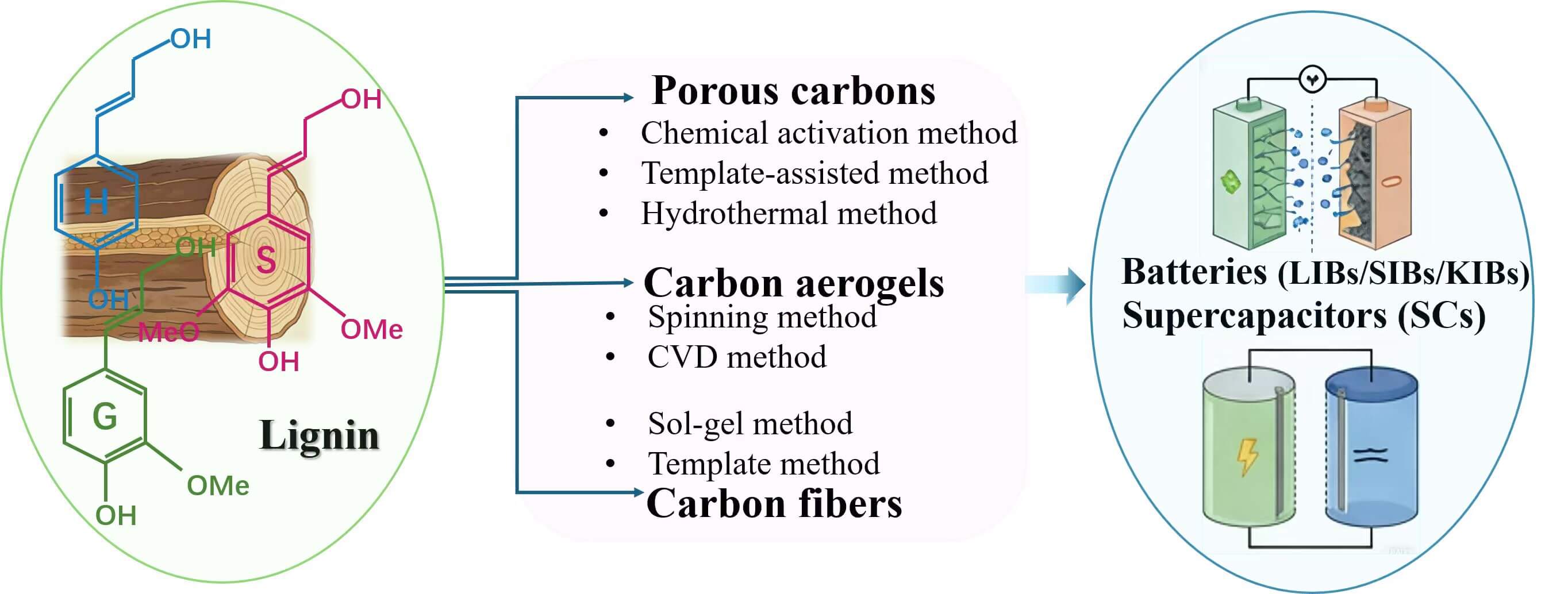
Amidst escalating global energy demands and the depletion of fossil fuel reserves, there is an urgent need to develop energy storage materials derived from low-cost and sustainable biomass. Lignin, an abundant aromatic polymer, has gained increasing recognition as a highly promising precursor for electrode materials due to its low cost, high carbon content, and rich functional groups. For electrochemical energy storage applications, lignin-derived carbon materials, including porous carbon, carbon fibers, and carbon aerogels, demonstrate considerable potential as effective electrodes. This review provides a comprehensive summary and analysis of recent advances in the field. It systematically elaborates on the types of lignin-based carbon materials, their preparation methods, as well as their microstructures and porosity. The application performance of these materials as carbon electrodes in batteries and supercapacitors is thoroughly examined. Furthermore, the review analyzes and summarizes the relationships between structure-performance, and highlights the current research progress and challenges associated with their preparation. Finally, it discusses the existing challenges in utilizing lignin-based carbon electrodes for electrochemical energy storage and explores their potential integration with emerging green technologies and novel theoretical approaches. By offering a critical perspective on these aspects, this review aims to provide valuable insights and strategic directions for future breakthroughs in the development of lignin-based energy storage materials.Graphic Abstract
Keywords
In light of rising global resource demands and the ongoing depletion of fossil fuel reserves, the advancement for renewable energy sources and energy storage technologies has become a critical priority for the new energy sector [1]. Transitioning toward renewable energy worldwide is essential to mitigate climate change, reduce carbon footprints, and achieve a more sustainable energy future [2]. Consequently, research is increasingly focused on identifying resource-efficient, environmentally benign, and sustainable energy alternatives [3]. Renewable biomass, derived from plants, animals, and microorganisms, has emerged as a pivotal sustainable substitute for fossil fuels. As one of the most abundant renewable resources on earth, biomass has been extensively investigated for various applications, including carbon dioxide (CO2) capture [4], hydrogen storage [5], dye-sensitized solar cells [6], water treatment [7], and energy storage [8]. The diagram of lignocellulosic biomass utilization and application fields, summarized in Fig. 1a, illustrates the unique advantages and broad applicability of biomass. Beyond its established uses in environmental catalysis and biomedical nanomaterials [9,10], biomass exhibits significant promise in bioenergy and electrical applications, particularly in biofuel production and electrochemical energy storage [11].

Figure 1: (a) Diagram of lignocellulosic biomass utilization and applications. (b) The trend of published papers on energy storage research involving lignin-based carbon materials over the past decade (the data from the Web of Science).
In contemporary energy storage technologies, batteries [12,13] and supercapacitors [14–16] represent the most promising and vital components. Biomass offers both readily modifiable surface functional groups and a hierarchical three-dimensional (3D) porous architecture containing macropores, mesopores, and micropores. These structural features endow biomass-derived porous carbon with distinct characteristics, making it an attractive candidate for use in energy storage devices and high-performance supercapacitors [17]. Accordingly, the synthesis of biomass-derived carbon materials for energy storage applications constitutes an important research frontier [18]. Fig. 1b shows the trend of published papers on energy storage research involving lignin-based carbon materials over the past decade.
Lignin is a chemically diverse, aromatic macromolecule predominantly found in the plant cell wall and primarily obtained as a byproduct of the pulp and paper industry. Once considered a low-value waste stream, lignin has emerged as a promising precursor for the synthesis of high-value carbon materials [19,20]. Its complex molecular architecture consists of three phenylpropane units: guaiacyl (G), syringyl (S), and p-hydroxyphenyl (H), as illustrated in Fig. 2a. Accounting for 20–30 wt% of lignocellulosic biomass, lignin is generated globally at an estimated annual rate of approximately 60 billion dry tons from lignocellulosic biorefineries [21,22]. Prior to its conversion into value-added products or functional materials, lignin must be efficiently isolated. Industrially, the pulp and paper sector remains the dominant large-scale source of technical lignins. The most widely available commercial lignins are derived from conventional pulping methods, namely the Kraft, soda, sulfite, and organosolv processes [23–25]. The chemical structure of lignin varies significantly with botanical origin and extraction method. Common technical lignins include Kraft lignin, alkali lignin, enzymatic hydrolysis lignin, and lignosulfonate. These variants differ considerably in terms of functional groups, molecular weight, sulfur content, and solubility, which directly influence the properties of the resulting carbon materials. For instance, Kraft lignin contains sulfur groups that can enable in situ S-doping during carbonization, thereby enhancing the electrical conductivity of carbon materials, though its typically higher ash content may compromise purity. Alkali lignin, rich in phenolic hydroxyl groups and exhibiting strong cross-linking capability, is well-suited for the preparation of porous carbon aerogels. Enzymatic hydrolysis lignin generally possesses a lower molecular weight, facilitating pore structure control via templating approaches. Lignosulfonate, bearing sulfonate groups, shows good water solubility and is often used in wet-spinning processes, its inherent sulfur and nitrogen also provide a source for self-doping in carbon materials [26].

Figure 2: (a) Three primary lignin monomers of p-coumaryl, coniferyl, and sinapyl alcohols. (b) Multidimensional strategies for lignin-derived carbon materials and their industrial applications.
Furthermore, lignin possesses several attractive characteristics, including low cost, high carbon content (>60%), high aromaticity, and an abundance of oxygen-containing functional groups that allow for structural tuning [27]. Lignin and its derivatives are rich in phenolic groups, which can be converted into redox-active quinone/hydroquinone structures capable of storing both electrons and protons [28,29]. Based on its chemical and physical properties, lignin can be engineered through chemical and thermochemical strategies to produce carbon materials with diverse morphologies [30]. Based on the chemical and physical characteristics of lignin, one can design various carbonization strategies to synthesize a variety of carbon materials for various industrial applications in battery, supercapacitor, catalysis and environment, as summarized in Fig. 2b.
As a key component in energy storage devices, carbon electrode materials significantly govern the electrochemical performance of both supercapacitors [31–33] and batteries [34,35]. This review provides a systematic examination of three major categories of lignin-derived carbon materials, i.e., porous carbons, carbon fibers, and carbon aerogels, covering their synthesis strategies, structural characteristics, and electrochemical properties. Emphasis is placed on comparing the advantages and limitations of different preparation methods and elucidating the structure-performance relationships that govern their behavior. By integrating these aspects, this review aims to offer clear guidance for the rational design of lignin-based carbons and the selection of appropriate fabrication processes. The overall scope is outlined in Fig. 3.

Figure 3: The schematic diagram of this review.
Carbon-based nanomaterials, owing to their exceptional and tunable properties along with programmable surface chemistry, are promising candidates for fabricating high-energy and high-power energy storage devices [36,37]. Among them, lignin-based porous carbons (LPCs) have been widely applied in various fields including electrochemistry [38], hydrogen storage [39], catalyst support [40], as well as gas adsorption and separation [41]. Owing to the interconnected nanostructured frameworks and structural stability, LPCs function as effective host matrices for ion storage and offer highly conductive pathways for electron transport [42]. As one promising energy storage material, the LPCs exhibit favorable characteristics such as good electrical conductivity, tunable surface chemistry, high specific surface area (SSA), and well-developed porosity, all of which are critical for enhancing the capacity and cycling stability of energy storage devices [43]. The charge-storage mechanism in LPC-based electrodes primarily relies on the electrostatic accumulation and release of charges at the electrode-electrolyte interface, a process strongly influenced by the SSA and pore size distribution (PSD) of the carbon material [44]. LPCs are typically synthesized from lignin precursors through chemical activation, templating strategies, or hydrothermal methods. These synthesis routes play a decisive role in tailoring the microstructural properties and, consequently, the electrochemical performance of the resulting porous carbons.
2.1 Chemical Activation Method
Activation methods are widely employed to tailor the SSA and PSD of LPCs. In a typical chemical activation process, lignin precursors are first impregnated or mixed with activating agents such as alkali compounds (e.g., KOH, K2CO3), metal salts (e.g., ZnCl2), or inorganic acids (e.g., H3PO4). During subsequent heat treatment, carbonization and activation proceed simultaneously. The activating agent promotes intense cross-linking and polycondensation reactions with the lignin framework, leading to the release of carbon, hydrogen, and oxygen atoms from the lignin matrix. Simultaneously, the agent acts as a structural scaffold that intercalates between carbon layers. After activation, the scaffold is removed via acid washing (pickling), leaving behind a well-developed porous network.
An alternative chemical activation route, referred to as post-activation, involves mixing pre-carbonized lignin char with a chemical activator before heating under an inert atmosphere [21]. Compared with post-activation, the pre-activation approach generally yields LPCs with higher SSA due to its more efficient pore-forming ability. For instance, Zhang et al. [45] prepared a 3D hierarchical porous carbon (HPC) using KOH activation, achieving a SSA of 907 m2 g−1 (The preparation process is illustrated in Fig. 4a). When employed as an anode material for lithium-ion batteries, the obtained HPC delivered a high reversible capacity of 470 mA h g−1 after 400 galvanostatic charge-discharge cycles at 200 mA g−1, along with excellent rate capability. These favorable electrochemical properties are ascribed to its 3D interconnected macroporous backbone decorated with micro- and mesopores, which provides ample space for lithium storage and facilitates efficient ion transport pathways.

Figure 4: (a) Schematic diagram of the formation process of multi-stage porous structure in HPC [45]. (b) The diagrammatic sketch of the preparation of N,S-LHPC [46]. (c) The lithium storage mechanism of the HLPC [47]. Copyrights: Adapted with permission from Reference [45], Copyright © 2015, Elsevier; Adapted with permission from Reference [46], Copyright © 2024, Elsevier; Adapted with permission from Reference [47], Copyright © 2020, Royal Society of Chemistry.
Moreover, chemical activation employing a dual-activator system through hybrid strategies demonstrates superior performance compared to the single-activator approach. For example, Zhai et al. [46] prepared 3D hierarchical N,S-co-doped porous carbons (N,S-LHPC) from lignin using thiourea and KOH as combined activating agents (Fig. 4b). The resulting porous carbon exhibited a remarkably high SSA of 1639.8 m2 g−1 and a specific capacitance of 185.5 F g−1 at 0.5 A g−1. A symmetric supercapacitor (SSC) assembled with N,S-LHPC achieved an energy density of 5.73 W h kg−1 at a power density of 125 W kg−1. The synergistic use of thiourea and KOH not only acted as an efficient activator but also introduced N and S co-doping, which collectively contributed to the substantial increase in SSA. This optimized porous architecture provided abundant electrochemically active sites and enhanced ion-accessible interfaces, thereby improving charge storage capacity and ultimately boosting the capacitive performance. Xi et al. [47] prepared a 3D hierarchical lignin-derived porous carbon (HLPC) with an optimized microstructure and abundant mesoporosity through activation via CO2 released from the thermal decomposition of ZnCO3. The released gas exfoliated large lignin particles into smaller ones, resulting in a carbon material with a uniform particle size of approximately 200 nm (Fig. 4c). This fine particle size facilitates improved infiltration between the electrode and electrolyte and significantly shortens the lithium-ion diffusion distance. As a result, the HLPC-based electrode delivered simultaneously high volumetric and gravimetric energy densities of 730 mA h cm−3 and 550 mA h g−1, respectively, after 200 cycles at 0.2 A g−1.
The template-assisted method is a versatile synthetic strategy for tailoring the pore architecture of carbon materials through the introduction of structure-directing agents. In the fabrication of LPCs materials, templates are generally categorized into hard templates (e.g., SiO2, or ZnO nanoparticles) and soft templates (e.g., Pluronic F127 surfactants). During carbonization, these templates promote the formation of a porous framework, which is subsequently removed via etching to obtain carbon materials with precisely controlled pore channels. Du et al. [48] prepared N-doped carbon anode materials for sodium-ion batteries (SIBs) using an azo-linked polymer derived from alkali lignin (AL-azo-NO2) as a low-cost carbon precursor, employing SiO2 as a hard template (Fig. 5a). The resulting material, AL-aN-100, possesses a SSA of 449.7 m2 g−1 and displays a honeycomb-like morphology with uniform nanopores. Electrochemically, it delivered a specific capacity of 205 mA h g−1 at a current density of 50 mA g−1. Additionally, lignin-based porous carbon prepared using the template method has applications in lithium-ion batteries [49]. In some studies, Li et al. [50] and Lou et al. [51] developed lignin-based porous carbon using a dual-template method; the materials showed excellent electrochemical performance for using in SCs. To achieve precise microstructural engineering with enhanced mechanical strength, thermal stability, and chemical robustness, the “template-assisted in-situ crosslinking” strategy has emerged as a cutting-edge approach. This method allows fine control over pore structure, morphology, and particle size. Muddasar et al. [52] demonstrated this approach in fabricating lignin-based 3D spherical porous carbons (LSPCs) with hierarchical porosity. Using polyvinyl alcohol (PVA) as both a crosslinking agent and sacrificial template, they produced LSPCs via a cryogenic templating process. Rapid freezing in liquid nitrogen induced the nucleation of dendritic ice crystals on the surface of lignin/PVA droplets (Fig. 5b). The growth of these ice crystals directed the alignment of lignin molecules into nanochannel-like structures extending from the periphery toward the center, thereby increasing the SSA and enhancing electrochemical performance. The resulting materials exhibited the SSA ranging from 426.6 to 790.5 m2 g−1, and the electrode showed a specific capacitance of 102.3 F g−1 at 0.5 A g−1 in SC tests. In addition, Huang et al. [53] developed a dual-template-assisted self-assembly method to synthesize 3D honeycomb-like carbon/silica composites from lignin. The dual-template approach enables precise control over mesopore size and ordering. The ordered mesoporous structure and high pore volume work synergistically to fast lithium-ion diffusion and provide abundant storage sites, while the robust carbon skeleton ensures structural stability during cycling (Fig. 5c). When evaluated as an anode material for LIBs, the composite exhibited a high reversible capacity of 1109 mA h g−1, excellent rate capability, and long-term cycling stability.

Figure 5: (a) Preparation of lignin-derived nitrogen-doped porous carbon by the SiO2 template method [48]. (b) Schematic diagram of LSPC preparation via ice crystal growth and soft polymer templates [52]. (c) Schematic illustration of lithiation/delithiation process of the carbon/silica composite from lignin [53]. Copyrights: Adapted with permission from Reference [48], Copyright © 2024, Elsevier; Adapted with permission from Reference [52], Copyright © 2024, American Chemical Society; Adapted with permission from Reference [53], Copyright © 2021, Elsevier.
Hydrothermal synthesis is a technique for material preparation that involves heating a solution in a sealed vessel. Under hydrothermal conditions, the aromatic frameworks and oxygen-containing functional groups in lignin undergo various chemical reactions, leading to the formation of porous carbon materials. This method is straightforward to perform and promotes the development of abundant porous structures. It is important to note that the optimizing hydrothermal parameters is crucial for tailoring the structural and functional characteristics of the resulting carbon materials. Abifarin et al. [54] employed the Taguchi-Probability method to optimize lignin doping and hydrothermal conditions to fabricate porous hierarchical carbon with improved energy storage performance. Their study determined the optimal hydrothermal conditions to be a temperature of 220°C, a duration of 18 h, a precursor concentration of 80 g L−1, and a pH of 4.0. Several studies have demonstrated the application of hydrothermal synthesis in producing LPC. Li et al. [55] prepared 3D hierarchical porous carbon from enzymatic hydrolysis lignin through hydrothermal carbonization followed by activation. The resulting material, denoted as 3D-7-2K, exhibited a 3D interconnected porous architecture with a high SSA of 1504 m2 g−1. When tested in supercapacitors, it delivered an exceptional capacitance of 324 F g−1 at 0.5 A g−1. Similarly, Liang et al. [56] synthesized hollow hierarchical porous carbon spheres (HPCSs) via hydrothermal treatment. The sample HPCS-900 possessed a high SSA of 1959 m2 g−1 and achieved a specific capacitance of 293 F g−1 0.2 A g−1 when used as an SC electrode material.
The LPCs have demonstrated considerable promise as electrode materials for electrochemical energy storage devices, including SCs, LIBs, and LSBs. The electrochemical performance of LPCs is predominantly governed by their porous architecture, specifically, the SSA, PSD, and the interconnectivity among micro-, meso-, and macro-pores, which collectively dictate ion-accessible sites and diffusion pathways. As evidenced by the preparation methods described above, activation approaches can effectively enhance the SSA and improve electrochemical performances of carbon materials. However, these methods often entail prolonged processing times and involve corrosive agents (e.g., KOH), raising both environmental and practical concerns. In contrast, templating methods allow for the fabrication of porous carbons with ordered pore structures, yet they typically involve multiple synthesis steps. Furthermore, a single-template system usually fails to produce an optimal hierarchical PSD. Prior studies also indicate that LPCs synthesized via hydrothermal methods can achieve high SSA, leading to correspondingly enhanced electrochemical performance. To advance this field in a more sustainable direction, further research should prioritize the development of greener and more efficient synthesis strategies. Promising pathways include one-step fabrication, template-free approaches, bio-inspired templating techniques, and environmentally benign activation methods such as molten-salt processing [57].
Carbon fibers (CFs), an advanced class of fibrous materials with a carbon content exceeding 90%, exhibit outstanding high-temperature resistance, corrosion resistance, and mechanical strength, enabling broad applications across multiple industrial sectors. These include automotive engineering [58], energy storage systems [59], sensor technologies [60], and environmental remediations [61]. Currently, the primary raw materials utilized in industrial CF production are polyacrylonitrile (PAN) and petroleum pitch. PAN-derived CFs dominate the market owing to their superior mechanical properties [62]. However, the high manufacturing cost and inherent toxicity of PAN impose significant constraints on both the production and application of conventional CFs [63].
The development of biomass-derived carbon fibers or/and lignin-derived carbon fibers is an exciting new avenue to explore as far as high-performance green electrode materials for batteries and supercapacitors are concerned [64]. Lignin, with its high carbon content, abundant aromatic structure, and diverse functional groups, represents an ideal renewable precursor for CFs fabrication. Lignin-derived carbon fibers (LCFs) not only demonstrate improved electrical conductivity, tailored specific surface area, and enhanced electrochemical performance but also offer notable economic and environmental benefits [65]. As a result, LCFs have emerged as a promising sustainable alternative to traditional CFs. The development of scalable production processes for LCFs is thus a major research focus in the field. The most widely used methods for producing LCFs include spinning and chemical vapor deposition (CVD). On the one hand, spinning techniques are regarded as attractive due to their simple equipment requirements, relatively low operational costs, and wide feedstock adaptability. On the other hand, CVD is often preferred for industrial-scale applications because of its high throughput and potential for mass production.
According to existing studies, the primary methods for producing LCFs via spinning include electrospinning, wet spinning, and melt spinning. Among these, electrospinning has emerged as a leading technique for fabricating LCFs and lignin-derived carbon nanofibers (LCNFs), owing to its ability to produce micro- to nanoscale fibers (with diameters as small as 250 nm), high SSA, and tunable pore structures [66]. This process involves dissolving lignin in a suitable solvent system to form a spinnable dope, which is then extruded and stretched mechanically using a spinning apparatus (Fig. 6a). Key processing parameters include polymer concentration and molecular weight, solvent volatility, solution viscosity, surface tension, and electrical conductivity [67]. Among these, solution viscosity plays a critical role in governing extensional deformation during fiber formation and directly influences the resulting fiber morphology. Thus, achieving appropriate solution viscosity is essential for successful electrospinning [68].

Figure 6: (a) Schematic representation of the electrospinning concept [66]. (b) Schematic diagram of lignin esterification reaction [70]. (c) Novel biomass nitrogen-doped free-standing fused CFs made of lignin and PEO [71]. (d) The fabrication process of CG@GF electrodes and the flexible SC [75]. (e) The noncovalent interactions of the GOF-AL between reduced GO sheets and AL chains via wet spinning [76]. Copyrights: Adapted with permission from Reference [66], Copyright © 2023, Wiley-VCH; Adapted with permission from Reference [70], Copyright © 2020, Elsevier; Adapted with permission from Reference [71], Copyright © 2013, American Chemical Society; Adapted with permission from Reference [75], Copyright © 2021, American Chemical Society; Adapted with permission from Reference [76], Copyright © 2024, American Chemical Society.
Current researches often employ lignin blended with other polymers for CF production, with PAN being the most widely used co-polymer. For instance, Perera Jayawickramage et al. [69] produced CF electrodes via electrospinning, thermal stabilization, carbonization, and CO2 activation of a PAN/lignin blend (70:30 by mass). When assembled into coin-type supercapacitors, these electrodes exhibited notable electrochemical performance at: a gravimetric capacitance of 128 F g−1 and an energy density of 59 W h kg−1 at 1 A g−1. Lignin’s inherent structural complexity provides numerous chemical active sites, such as hydroxyl, carbonyl, carboxyl, and methoxy groups, that enable targeted chemical modifications to enhance electrochemical performance. For example, esterification with butyric anhydride can reduce the glass transition temperature (Tg) and improve electrical conductivity. Dai et al. [70] developed a sustainable approach to convert waste lignin into N,O-co-doped carbon nanofibers (E-CNFs) through esterification and electrospinning (Fig. 6b). The resulting E-CNF electrode delivered a high specific capacitance of 320 F g−1 at 1 A g−1. Additionally, poly(ethylene oxide) (PEO) has also gained attention due to its excellent aqueous processability, biocompatibility, and tunable properties. It can be combined with functional materials (e.g., drugs) to form highly porous and absorbent fibrous dressings. Wang et al. [71] fabricated a nitrogen-doped freestanding CF mat through electrospinning of a PEO/lignin blend, which showed promising performance as an anode material in LIBs (Fig. 6c). The optimized electrode achieved a specific charge capacity of 576 mA h g−1 along with excellent rate capability.
However, the high cost of PAN and PEO presents an economic challenge that hinders the industrial scalability of LCNFs. Moreover, growing environmental and biosafety concerns regarding PAN toxicity have spurred the search for alternative polymer matrices. Polyvinyl alcohol (PVA), a non-toxic, water-soluble, and biodegradable polymer, has shown promise. Electrospun PVA nanofibers exhibit small diameters and high SSAs. Perera Jayawickramage et al. [72] prepared freestanding flexible electrodes from a PVA/lignin blend (80:20 mass ratio) via electrospinning, followed by thermal stabilization, carbonization, and CO2 activation. The resulting activated carbon nanofibers (ACNFs) possessed a hierarchical porous structure and delivered a specific capacitance of 87 F g−1 and an energy density of 38 W h kg−1 in a symmetric supercapacitor. Electrospun CNFs show broad potential beyond supercapacitors, including applications in LIBs [73] and SIBs [74].
Wet spinning leverages the solubility of lignin by blending it with other polymers to form a spinnable solution, which is then extruded into a coagulation bath to solidify into fibers. For example, Hu et al. [75] employed coaxially wet spinning to fabricate lignin-based carbon/graphene hybrid fibers with a hierarchical porous structure (Fig. 6d). The resulting fiber electrodes exhibited a notable areal specific capacitance of 260.48 mF cm−2 at a current density of 0.1 mA cm−2. Graphene-based fibers have also attracted considerable attention for next-generation wearable electronics, owing to their high mechanical strength, flexibility, and electrical conductivity. Wu et al. [76] produced high-performance graphene oxide (GO)-alkali lignin (AL) composite fibers via wet spinning (Fig. 6e). The fibers exhibited outstanding tensile strength and electrical conductivity, while also being recyclable and environmentally friendly, and the corresponding SC demonstrated excellent capacitive performance, reaching 46.5 mF cm−2 at 0.5 mA cm−2.
Furthermore, the melt spinning process offers a cost-effective and environmentally friendly approach for producing LCFs. This method involves spinning thermoplastically modified lignin into fibers, which are subsequently stabilized and carbonized to obtain products with high carbon content and desirable mechanical properties. For instance, Qu et al. [77] fabricated LCFs through melt spinning, stabilization, and carbonization. These fibers were directly employed as substrates for self-standing and flexible fiber-shaped pseudocapacitor electrodes, achieving a high areal specific capacitance of 136.26 mF cm−2 at 0.19 mA cm−2. Moreover, LCFs produced via melt spinning are also widely utilized in LIB electrodes [78].
Chemical vapor deposition (CVD) is a widely employed technique for synthesizing solid materials on substrate surfaces. This process involves introducing gaseous precursors into a reaction chamber, where they undergo thermal decomposition or chemical reactions at elevated temperatures conditions to form a deposited solid layer. CVD has proven highly effective for preparing lignin-derived carbon nanofiber materials. CNFs can be grown on a variety of substrates, including glass, silicon, graphite, titanium, and nickel mesh. Notably, the substrate choice has minimal impact on the synthesis outcome, underscoring the versatility of this method [79]. For catalysts, iron-based organometallic compounds such as ferrocene are commonly used. For example, Liu et al. [80] utilized ferrocene and thiophene as catalysts with sulfate lignin as the precursor. They achieved continuous production of carbon nanotube (CNT) fibers via CVD through a sequence comprising solvent dispersion, high-temperature pyrolysis, catalytic synthesis, and assembly at 1400°C. The resulting lignin-derived CNT fibers exhibited tensile strength of 1.33 GPa and conductivity of 1.19 × 10⁵ S m−1.
In summary, the principal structure-property relationship in LCFs is governed by the hierarchical alignment, mean diameter, and interfacial surface chemistry of the fibrous scaffold. A well-defined fibrous morphology exhibiting high aspect ratio and continuous conductive pathways facilitates efficient electron transport, which directly enhance rate capability and cycling stability in electrochemical devices. LCFs are widely utilized in battery and SC electrodes due to their high SSA, excellent electrical conductivity, and renewable sourcing. A comparison analysis of the preparation methods discussed indicates that electrospinning yields LCFs with superior electrochemical performance, high SSA, and exceptional cycling stability. In contrast, although wet spinning and melt spinning offer distinct advantages, such as outstanding mechanical properties or high production speed and efficiency, they are limited by factors including high cost and the inherent poor spinnability and melt processability of lignin. Therefore, electrospinning emerges as a more promising technique for fabricating high-performance LCF-based electrode materials.
4 Lignin-Based Carbon Aerogels
Carbon aerogels (CAs) are the porous amorphous carbon materials typically synthesized by pyrolyzing or carboning organic aerogels in an inert atmosphere (e.g., nitrogen, argon, or helium) at temperatures above 600°C. During thermal decomposition, an intricate porous carbon network is formed, containing substantial disordered structures that endow the material with advantageous properties such as excellent electrical conductivity, moderate porosity, ultralow density, and high SSA. These characteristics make CAs highly suitable for electrochemical energy storage applications, particularly as electrode materials for supercapacitors and rechargeable batteries. Moreover, their potential extends to diverse fields including thermal insulation [81], adsorption media [82], capacitive deionization substrates [83], catalyst supports [84], and sensing platforms [85].
Lignin contains abundant functional groups, especially aromatic rings, hydroxyl groups, and methoxy groups, which confer self-crosslinking capabilities, enabling it to serve as a sustainable alternative to phenolic compounds in polymerization reactions. Chen et al. [86] suggested that lignin can partially replace phloroglucinol in the synthesis of phenolic gels. The combination of high SSA, superior charge transport capability, low production cost, and renewable origin makes lignin-based carbon aerogels (LCAs) an ideal candidate for advanced SC electrodes. Currently, common preparation methods include the sol-gel process and templating approaches. In addition, novel strategies such as forming gels through physical/chemical crosslinking between lignin and cellulose are also being actively explored [87].
The sol-gel method is a widely employed technique for synthesizing LCAs. By precisely controlling the sol-to-gel transition of precursor solutions, followed by drying and carbonization, this approach enables the fabrication of porous carbon materials with tailored pore structures and enhanced physicochemical properties. Wang et al. [88] prepared LCAs from kraft lignin using a combined sol-gel and chemical activation strategy for SSC electrodes. During the process, lignin was cross-linked with epichlorohydrin to form hydrogel networks, which were subsequently freeze-dried to obtain aerogel precursors. Owing to the high thermal stability of these precursors, the porous architecture remained intact during pre-carbonization, facilitating effective penetration of KOH activator (Fig. 7a). The optimized material exhibited a remarkable SSA of 3675 m2 g−1. As a SC electrode, it delivered an excellent specific capacitance of 504.7 F g−1 at 0.2 A g−1 and high cycling stability, retaining 87.7% of its capacity after 10,000 cycles.

Figure 7: (a) The LCA preparation from kraft lignin using sol-gel method combined with chemical activation [88]. (b) Schematic illustration of 3D cross-interlinked LRFC self-assembled in DES co-solvent [90]. Copyrights: Adapted with permission from Reference [88], Copyright © 2023, Elsevier; Adapted with permission from Reference [90], Copyright © 2023, American Chemical Society.
Intriguingly, deep eutectic solvents (DESs) have garnered significant attention in recent decade due to their low cost, biodegradability, nontoxicity, excellent solubility, high conductivity, and broad electrochemical stability [89]. These advantageous properties have led to various applications of DES in the fabrication of LCAs. For example, Cao et al. [90] synthesized a lignin-resorcinol-formaldehyde carbon aerogel (LRFC) using lignin nanoparticles with DES as a co-solvent (Fig. 7b). The SSC assembled with LRFC12 electrodes demonstrated a notable specific capacitance of 193 F g−1 at 0.5 A g−1 and a maximum energy density of 28.2 W h kg−1 at a power density of 262.6 W kg−1. Furthermore, the introduction of copper salts as catalysts during the sol-gel process was found to significantly enhance gelation efficiency and tailor the pore structure of LCAs. Zhang et al. [91] utilized DES as a reaction solvent and incorporated copper salts (e.g., Cu-MOF, Cu(NO3)2, CuCl2) as in-situ catalysts to produce LCAs with a well-defined microporous and 3D interconnected architecture. This strategy reduced the gelation time to 2.5 h, and the resultant electrode exhibited a specific capacitance of 347.6 F g−1 at 0.5 A g−1. This method effectively addresses the challenges of slow gelation and heterogeneous pore distribution in conventional lignin aerogels through catalytic polycondensation and metal doping synergies. Besides supercapacitors [92], LCAs also show promising potential in other energy storage systems, such as potassium-ion batteries [93] and Zn-air batteries [94].
The template method is a powerful and versatile strategy for fabricating high-performance LCAs with well-controlled architectures. For instance, Saha et al. [95] synthesized lignin-based gels using polyether F127 as a surfactant along with poly(ethylene oxide) and poly(phenylene oxide) as template agents, resulting in a carbon material rich in mesoporous structures. Among various templating techniques, the ice-templating method stands out due to its minimal equipment requirements, environmental friendliness, and sustainability, offering broad application prospects. This approach utilizes ice crystals formed during the directional freezing of aqueous solution as templates. The growth and subsequent sublimation of these crystals create well-defined porous architectures. It is particularly suitable for producing LCAs with aligned microporous structures, which significantly enhance the ion transport efficiency of electrode materials. Thomas et al. [96] fabricated hierarchically porous LCAs via ice-templating with a cooling rate of 7.5 K min−1 (Fig. 8a). The resulting LCA exhibited a high SSA of 1260 m2 g−1. Electrodes made from these aerogels delivered superior electrochemical performance, achieving a specific capacitance of 410 F g−1 at 2 mV s−1. When assembled into a supercapacitor, the device demonstrated a remarkable specific capacitance of 240 F g−1 at 0.1 A g−1. Similarly, Geng et al. [97] produced high-performance multifunctional LCAs with tailorable and anisotropic pore structures using lignin and TOCNF precursors via ice-templating (Fig. 8b). These LCAs excelled in both CO2 capture and capacitive energy storage: the best-performing sample showed a CO2 adsorption capacity of 5.23 mmol g−1 at 273 K and 100 kPa, and an electrical double-layer capacitance of 124 F g−1 at 0.2 A g−1.

Figure 8: (a) Schematic diagram of LCA preparation using ice template method for SCs [96]. (b) Schematic of LTCA microstructure after carbonization process [97]. Copyrights: Adapted with permission from Reference [96], Copyright © 2022, American Chemical Society; Adapted with permission from Reference [97], Copyright © 2020, American Chemical Society.
LCAs have recently emerged within the family of biomass-origin functional materials and exhibit exceptional promise for electrochemical energy storage, heterogeneous catalysis, and selective adsorption. Their outstanding performance originates from a monolithic, 3D interconnected framework that simultaneously provides a percolated electron-conducting backbone and a hierarchical pore architecture. This dual structure shortens electron-transport pathways while enabling rapid ion migration and complete electrolyte wetting, thereby reconciling high energy and high-power requirements. Among the synthetic routes examined, the sol-gel approach uniquely decouples the nucleation and growth of the polymeric network, allowing independent tuning of pore volume, SSA, and PSD. The resulting continuous porosity maximizes electrochemically accessible surface sites, translating into elevated specific capacitance and rate capability, and the process is readily scaled under ambient conditions. Conversely, ice-templating affords deterministic control over microstructural anisotropy and wall thickness by crystallographically directing solvent segregation, this precision yields LCAs with ultrahigh SSA and exceptional ion-transport kinetics. Consequently, the preferred fabrication strategy can be selected according to application-specific figures of merit, while hybrid protocols that integrate sol-gel chemistry with ice-templating solidification are expected to synergistically enhance SSA, electronic conductivity, and mass-transfer efficiency, further advancing the electrochemical performance ceiling of LCAs.
5.1 Comparison of Lignin-Based Carbons in Electrochemical Performance
Table 1 consolidates representative studies on lignin-derived carbon electrodes for batteries and SCs. Chemically activated LPCs prepared with KOH or dual templating routinely exhibit high SSA exceeding 1500 m2 g−1. These values scale linearly with enhanced charge-storage capacity, delivering specific capacitances up to 324 F g−1 in the SSC and reversible Li-ion capacities above 500 mA h g−1 in half-cells. Heteroatom doping (N, S) introduces additional pseudocapacitive redox sites, further amplifying areal capacitance and rate capability. Electrospun LCFs possess continuous, high-aspect-ratio conductive pathways that minimize inter-fibrillar contact resistance, endowing devices with exceptional high-rate performance (>20 A g−1) and capacity retention (>90% over 10,000 cycles). LCAs integrate hierarchical micro-, meso-, and macro-porosity within a monolithic 3D scaffold, concurrently maximizing ion-accessible surface area and electronic conductivity, thereby enabling the simultaneous realization of high energy and power densities.

5.2 Challenges and Limitations
This article systematically reviews recent advances in the application of lignin-derived carbon materials, including porous carbon, carbon fibers, and carbon aerogels, as electrodes for batteries and SCs. Through fabrication strategies such as activation, templating, hydrothermal synthesis, electrospinning, CVD, and sol-gel processing, lignin-based carbons have been engineered into high-performance electrode architectures with tunable properties. In summary, lignin-derived porous carbon demonstrates broad applicability in battery systems and exhibits high specific capacitance. Comparative analysis suggests that hydrothermal synthesis trends to produce carbon materials with higher SSA, which contributes to enhanced electrochemical performance in both batteries and SCs. For LCFs, spinning techniques represent the predominant preparation route, with electrospinning outperforming other methods in terms of specific capacity in energy storage applications. In the case of LCAs, each synthesis method offers distinct advantages, indicating that future studies could benefit from integrating multiple approaches to further improve electrode performance.
Nevertheless, several critical challenges must be addressed to advance this field:
(1) Source Variability and Structural Inconsistency: The inherent heterogeneity of lignin, arising from diverse botanical sources and extraction method, results in significant variations in its molecular weight, polydispersity, and macromolecular architecture. These inconsistencies directly translate into poor reproducibility in the porosity, morphology, and ultimately the electrochemical properties of the derived carbon materials. A major obstacle, particularly for carbon fiber production, is the lack of standardized, high-purity lignin feedstocks with tailored properties. Lignin’s nature heterogeneity and hyperbranched structure often impair spinnability and hinder precise structural control during processing.
(2) Energy-Intensive and Environmentally Sensitive Processing: Conventional preparation typically involves a two-step carbonization and chemical activation process, which is not only time- and energy-consuming but also relies on corrosive agents (e.g., KOH). This imposes stringent equipment requirements and raises environmental concerns. Although emerging greener synthesis routes have mitigated some pollution issues, challenges related to process robustness, consistency, and scalability persist.
(3) Unoptimized Heteroatom Doping Strategies: While heteroatom doping (e.g., with N or S) can effectively enhance conductivity and introduce pseudocapacitance in lignin-derived carbons, the optimal selection of dopants and their concentrations remain poorly understood and is rarely systematic. For example, lignosulfonates possess intrinsic sulfurous groups and are therefore ideal precursors for S-doped carbons, whereas other lignin types require additional exogenous doping steps to achieve similar functionality, complicating the design of universal doping protocols.
5.3 Future Perspectives and Conclusion
From a techno-economic and application-oriented standpoint, the advancement of lignin-based carbon electrodes necessitates a balanced integration of performance, cost-effectiveness, and sustainability. A primary economic advantage stems from lignin’s abundance and low cost as an industrial byproduct, offering a renewable alternative to conventional fossil-based precursors. To achieve commercial viability, key challenges must be overcome, including the development of low-energy, scalable synthesis routes to reduce production costs, and the establishment of standardized lignin feedstock systems to ensure material consistency and quality. Consequently, future research should aim not only at enhancing electrochemical metrics but also at systematically optimizing the trade-offs between performance, cost, and environmental impact to facilitate real-world implementation.
In summary, advancing lignin-derived carbon electrodes requires addressing multifaceted challenges related to feedstock variability, structural control, synthesis processes, and performance optimization. Promising strategies include combining low-cost lignin with structurally well-defined framework materials (e.g., COFs, MOFs, or HOFs) and highly conductive 2D materials (e.g., MXenes) to enhance stability, electrical conductivity, and porosity for next-generation energy technologies [98–100]. Furthermore, employing 3D printing to fabricate the tailored lignin-derived architectures offers a customizable route to electrode design [101,102], while multiscale simulation and machine learning present powerful tools for elucidating reaction pathways and predicting optimal synthesis conditions.
Future efforts should merge principles from green chemistry, nanotechnology, and data-driven science to build an integrated innovation chain, from feedstock selection and structural design to process optimization and application engineering. By employing multi-scale simulations and machine learning, it may become possible to elucidate the pyrolysis pathways of different lignin precursors at the atomic level and predict optimal processing conditions for synthesizing high-performance carbons. Progress along these lines will not only accelerate the journey toward carbon peak and neutrality goals but also promote the development of sustainable, high-performance, and economically viable energy storage systems. The schematic diagram of the summary and outlook section is shown in Fig. 9.

Figure 9: The schematic diagram of summary and outlooks.
Acknowledgement: Not applicable.
Funding Statement: This work was supported by the National Natural Science Foundation of China (No. 22378252), the Key Research and Development Project of Shaanxi Province of China (No. 2024GX-YBXM-472) and Shaanxi Provincial Education Department Youth Innovation Team Research Project (No. 23JP016).
Author Contributions: Rui Lou: Conceptualization, Funding acquisition, Project administration, and Writing—review & editing. Chendan Xie: Visualization, Data curation, Formal analysis, Investigation, and Writing—original draft. Haiyuan Yang: Visualization and Investigation. Yunyun Liu: Resources and Writing—review & editing. Bin Zhang: Methodology. Long He: Supervision. Wei Chen: Writing—review & editing. All authors reviewed and approved the final version of the manuscript.
Availability of Data and Materials: Not applicable.
Ethics Approval: Not applicable.
Conflicts of Interest: The authors declare no conflicts of interest.
References
1. Ling H, Chen R, Huang Q, Shen F, Wang Y, Wang X. Transparent, flexible and recyclable nanopaper-based touch sensors fabricated via inkjet-printing. Green Chem. 2020;22(10):3208–15. doi:10.1039/D0GC00658K. [Google Scholar] [CrossRef]
2. Kabir M, Habiba U, Iqbal MZ, Shafiq M, Farooqi ZR, Shah A, et al. Impacts of anthropogenic activities & climate change resulting from increasing concentration of Carbon dioxide on environment in 21st Century; A critical review. IOP Conf Ser Earth Environ Sci. 2023;1194(1):012010. doi:10.1088/1755-1315/1194/1/012010. [Google Scholar] [CrossRef]
3. Yang Z, Zhang X, Zhang J, Liu H, Yu X. Application of biomass-based nanomaterials in energy. Adv Energy Sustain Res. 2023;4(12):2300141. doi:10.1002/aesr.202300141. [Google Scholar] [CrossRef]
4. Mallesh D, Anbarasan J, Mahesh Kumar P, Upendar K, Chandrashekar P, Rao BVSK, et al. Synthesis, characterization of carbon adsorbents derived from waste biomass and its application to CO2 capture. Appl Surf Sci. 2020;530:147226. doi:10.1016/j.apsusc.2020.147226. [Google Scholar] [CrossRef]
5. Ariharan A, Ramesh K, Vinayagamoorthi R, Rani MS, Viswanathan B, Ramaprabhu S, et al. Biomass derived phosphorous containing porous carbon material for hydrogen storage and high-performance supercapacitor applications. J Energy Storage. 2021;35:102185. doi:10.1016/j.est.2020.102185. [Google Scholar] [CrossRef]
6. Li J, Yun S, Han F, Si Y, Arshad A, Zhang Y, et al. Biomass-derived carbon boosted catalytic properties of tungsten-based nanohybrids for accelerating the triiodide reduction in dye-sensitized solar cells. J Colloid Interface Sci. 2020;578:184–94. doi:10.1016/j.jcis.2020.04.089. [Google Scholar] [PubMed] [CrossRef]
7. Chen T, Li M, Zhou L, Ding X, Lin D, Duan T, et al. Bio-inspired biomass-derived carbon aerogels with superior mechanical property for oil–water separation. ACS Sustain Chem Eng. 2020;8(16):6458–65. doi:10.1021/acssuschemeng.0c00910. [Google Scholar] [CrossRef]
8. Shanmuga Priya M, Divya P, Rajalakshmi R. A review status on characterization and electrochemical behaviour of biomass derived carbon materials for energy storage supercapacitors. Sustain Chem Pharm. 2020;16:100243. doi:10.1016/j.scp.2020.100243. [Google Scholar] [CrossRef]
9. Kumar R, Butreddy A, Kommineni N, Reddy PG, Bunekar N, Sarkar C, et al. Lignin: drug/gene delivery and tissue engineering applications. Int J Nanomed. 2021;16:2419–41. doi:10.2147/IJN.S303462. [Google Scholar] [PubMed] [CrossRef]
10. Wang M, Yang D, Xu Q, Li P, Yi C, Qian Y, et al. Highly efficient evaporation method to prepare pH-responsive lignin-hollow-nanosphere with controllable size and its application in oral drug delivery. Ind Crops Prod. 2021;162:113230. doi:10.1016/j.indcrop.2020.113230. [Google Scholar] [CrossRef]
11. Zhao Q, Xu T, Liu K, Du H, Zhang M, Wang Y, et al. Biomass-based functional materials for rechargeable Zn-ion batteries. Energy Storage Mater. 2024;71:103605. doi:10.1016/j.ensm.2024.103605. [Google Scholar] [CrossRef]
12. Rosaiah P, Niyitanga T, Sambasivam S, Kim H. Graphene based magnetite carbon nanofiber composites as anodes for high-performance Li-ion batteries. New J Chem. 2023;47(1):482–90. doi:10.1039/d2nj04821c. [Google Scholar] [CrossRef]
13. Pitcheri R, Nunna GP, Merum D, Ali Al-Asbahi B, Sangaraju S, Uppala C, et al. Bifunctional ZnMn2O4/reduced graphene oxide microspheres with a needle-like surface architecture as effective electrodes for energy storage. New J Chem. 2023;47(21):10061–9. doi:10.1039/d3nj00978e. [Google Scholar] [CrossRef]
14. Chalmpes N, Tantis I, Alsmaeil AW, Aldakkan BS, Dimitrakou A, Karakassides MA, et al. Elevating waste biomass: supercapacitor electrode materials derived from spent coffee grounds. Energy Fuels. 2025;39(2):1305–15. doi:10.1021/acs.energyfuels.4c05250. [Google Scholar] [CrossRef]
15. Liu B, Ye Y, Yang M, Liu Y, Chen H, Li H, et al. All-in-one biomass-based flexible supercapacitors with high rate performance and high energy density. Adv Funct Mater. 2024;34(10):2310534. doi:10.1002/adfm.202310534. [Google Scholar] [CrossRef]
16. Xiong C, Zheng C, Jiang X, Xiao X, Wei H, Zhou Q, et al. Recent progress of green biomass based composite materials applied in supercapacitors, sensors, and electrocatalysis. J Energy Storage. 2023;72:108633. doi:10.1016/j.est.2023.108633. [Google Scholar] [CrossRef]
17. Kumar YA, Alagarasan JK, Ramachandran T, Rezeq M, Bajaber MA, Alalwiat AA, et al. The landscape of energy storage: insights into carbon electrode materials and future directions. J Energy Storage. 2024;86:111119. doi:10.1016/j.est.2024.111119. [Google Scholar] [CrossRef]
18. Figueiredo JL. Nanostructured porous carbons for electrochemical energy conversion and storage. Surf Coat Technol. 2018;350:307–12. doi:10.1016/j.surfcoat.2018.07.033. [Google Scholar] [CrossRef]
19. Munir MT, Naqvi M, Li B, Raza R, Khan A, Ali Ammar Taqvi S, et al. From Waste to Watts: emerging role of waste lignin-derived materials for energy storage. J Energy Storage. 2024;82:110477. doi:10.1016/j.est.2024.110477. [Google Scholar] [CrossRef]
20. Chio C, Sain M, Qin W. Lignin utilization: a review of lignin depolymerization from various aspects. Renew Sustain Energy Rev. 2019;107:232–49. doi:10.1016/j.rser.2019.03.008. [Google Scholar] [CrossRef]
21. Liu H, Xu T, Liu K, Zhang M, Liu W, Li H, et al. Lignin-based electrodes for energy storage application. Ind Crops Prod. 2021;165:113425. doi:10.1016/j.indcrop.2021.113425. [Google Scholar] [CrossRef]
22. Mehta S, Jha S, Liang H. Lignocellulose materials for supercapacitor and battery electrodes: a review. Renew Sustain Energy Rev. 2020;134:110345. doi:10.1016/j.rser.2020.110345. [Google Scholar] [CrossRef]
23. Wang HM, Yuan TQ, Song GY, Sun RC. Advanced and versatile lignin-derived biodegradable composite film materials toward a sustainable world. Green Chem. 2021;23(11):3790–817. doi:10.1039/d1gc00790d. [Google Scholar] [CrossRef]
24. Wang H, Ben H, Ruan H, Zhang L, Pu Y, Feng M, et al. Effects of lignin structure on hydrodeoxygenation reactivity of pine wood lignin to valuable chemicals. ACS Sustain Chem Eng. 2017;5(2):1824–30. doi:10.1021/acssuschemeng.6b02563. [Google Scholar] [CrossRef]
25. Ralph J, Lapierre C, Boerjan W. Lignin structure and its engineering. Curr Opin Biotechnol. 2019;56:240–9. doi:10.1016/j.copbio.2019.02.019. [Google Scholar] [PubMed] [CrossRef]
26. Zhang M, Xu Y, Li K. Removal of residual lignin of ethanol-based organosolv pulp by an alkali extraction process. J Appl Polym Sci. 2007;106(1):630–6. doi:10.1002/app.26622. [Google Scholar] [CrossRef]
27. Budnyak TM, Slabon A, Sipponen MH. Lignin–inorganic interfaces: chemistry and applications from adsorbents to catalysts and energy storage materials. ChemSusChem. 2020;13(17):4344–55. doi:10.1002/cssc.202000216. [Google Scholar] [PubMed] [CrossRef]
28. Li T, Wang S, Huang Y, Zhou H, Zhang L, Wang Z. Lignin-induced rapid-synthesis of deep eutectic solvent-based gel with high robustness and conductivity applied for flexible quasi-solid-state supercapacitors. Chem Eng J. 2023;472:144864. doi:10.1016/j.cej.2023.144864. [Google Scholar] [CrossRef]
29. Li XY, Wang HM, Han YC, Li J, Yang MC, Hou QX, et al. Recent advances in lignin-based gel electrolytes for energy storage. Appl Energy. 2025;401:126711. doi:10.1016/j.apenergy.2025.126711. [Google Scholar] [CrossRef]
30. Zhang W, Qiu X, Wang C, Zhong L, Fu F, Zhu J, et al. Lignin derived carbon materials: current status and future trends. Carbon Res. 2022;1(1):14. doi:10.1007/s44246-022-00009-1. [Google Scholar] [CrossRef]
31. Siddig LA, Alzard RH, Abdelhamid AS, Ramachandran T, Nguyen HL, Paz AP, et al. Cobalt hydrogen-bonded organic framework as a visible light-driven photocatalyst for CO2 cycloaddition reaction. Inorg Chem. 2023;62(38):15550–64. doi:10.1021/acs.inorgchem.3c02051. [Google Scholar] [PubMed] [CrossRef]
32. Liu Z, Zhang S, Wang L, Wei T, Qiu Z, Fan Z. High-efficiency utilization of carbon materials for supercapacitors. Nano Sel. 2020;1(2):244–62. doi:10.1002/nano.202000011. [Google Scholar] [CrossRef]
33. Tholkappiyan R, Naveen AN, Sumithra S, Vishista K. Investigation on spinel MnCo2O4 electrode material prepared via controlled and uncontrolled synthesis route for supercapacitor application. J Mater Sci. 2015;50(17):5833–43. doi:10.1007/s10853-015-9132-8. [Google Scholar] [CrossRef]
34. Li Z, Xiao D, Xu C, Li Z, Bi S, Xu H, et al. MnO2/carbon nanotube free-standing electrode recycled from spent manganese-oxygen battery as high-performance supercapacitor material. J Mater Sci. 2022;57(19):8818–27. doi:10.1007/s10853-022-07223-7. [Google Scholar] [CrossRef]
35. Rezk A, Abbas Y, Saadat I, Nayfeh A, Rezeq M. Charging and discharging characteristics of a single gold nanoparticle embedded in Al2O3 thin films. Appl Phys Lett. 2020;116(22):223501. doi:10.1063/5.0004000. [Google Scholar] [CrossRef]
36. Kulurumotlakatla DK, Yedluri AK, Kim HJ. Hierarchical NiCo2S4 nanostructure as highly efficient electrode material for high-performance supercapacitor applications. J Energy Storage. 2020;31:101619. doi:10.1016/j.est.2020.101619. [Google Scholar] [CrossRef]
37. Anil Kumar Y, Koyyada G, Ramachandran T, Kim JH, Sajid S, Moniruzzaman M, et al. Carbon materials as a conductive skeleton for supercapacitor electrode applications: a review. Nanomaterials. 2023;13(6):1049. doi:10.3390/nano13061049. [Google Scholar] [PubMed] [CrossRef]
38. Ngidi NPD, Koekemoer AF, Ndlela SS. Recent advancement in the electrochemical performance of electrochemical capacitors based on biomass-derived porous carbon: a review. J Energy Storage. 2024;89:111638. doi:10.1016/j.est.2024.111638. [Google Scholar] [CrossRef]
39. Beak S, Kim S, Oh S, Bae J. Lignin-based porous carbon for efficient hydrogen storage. J Environ Chem Eng. 2025;13(2):116086. doi:10.1016/j.jece.2025.116086. [Google Scholar] [CrossRef]
40. Cao Y, Mao S, Li M, Chen Y, Wang Y. Metal/porous carbon composites for heterogeneous catalysis: old catalysts with improved performance promoted by N-doping. ACS Catal. 2017;7(12):8090–112. doi:10.1021/acscatal.7b02335. [Google Scholar] [CrossRef]
41. Zhang C, Kong R, Wang X, Xu Y, Wang F, Ren W, et al. Porous carbons derived from hypercrosslinked porous polymers for gas adsorption and energy storage. Carbon. 2017;114:608–18. doi:10.1016/j.carbon.2016.12.064. [Google Scholar] [CrossRef]
42. Wang L, Hu X. Recent advances in porous carbon materials for electrochemical energy storage. Chem Asian J. 2018;13(12):1518–29. doi:10.1002/asia.201800553. [Google Scholar] [PubMed] [CrossRef]
43. Liu YS, Ma C, Wang KX, Chen JS. Recent advances in porous carbons for electrochemical energy storage. New Carbon Mater. 2023;38(1):1–15. doi:10.1016/j.carbon.2023.02.025. [Google Scholar] [CrossRef]
44. Wang S, Feng J, Pan H. Facile preparation of nitrogen-doped hierarchical porous carbon derived from lignin with KCl for supercapacitors. Colloids Surf A Physicochem Eng Aspects. 2022;651:129622. doi:10.1016/j.colsurfa.2022.129622. [Google Scholar] [CrossRef]
45. Zhang W, Yin J, Lin Z, Lin H, Lu H, Wang Y, et al. Facile preparation of 3D hierarchical porous carbon from lignin for the anode material in lithium ion battery with high rate performance. Electrochim Acta. 2015;176:1136–42. doi:10.1016/j.electacta.2015.08.001. [Google Scholar] [CrossRef]
46. Zhai S, Li K, Li C, Zhai C, Han Q, Zhang Z, et al. Lignin–derived N,S-codoped hierarchical porous carbons with high mesoporous rate for sustainable supercapacitive energy storage. J Energy Storage. 2024;85:111036. doi:10.1016/j.est.2024.111036. [Google Scholar] [CrossRef]
47. Xi Y, Huang S, Yang D, Qiu X, Su H, Yi C, et al. Hierarchical porous carbon derived from the gas-exfoliation activation of lignin for high-energy lithium-ion batteries. Green Chem. 2020;22(13):4321–30. doi:10.1039/D0GC00945H. [Google Scholar] [CrossRef]
48. Du L, Wu W, Luo C, Xu D, Guo H, Wang R, et al. Lignin-derived nitrogen-doped porous carbon as a high-rate anode material for sodium ion batteries. J Electrochem Soc. 2019;166(2):A423–8. doi:10.1149/2.1361902jes. [Google Scholar] [CrossRef]
49. Li S, Jiang Z, Liu A, Lu J, Du J, Tao Y, et al. A porous carbon based on the surface and structural regulation of wasted lignin for long-cycle lithium-ion battery. Int J Biol Macromol. 2022;222(6):1414–22. doi:10.1016/j.ijbiomac.2022.09.269. [Google Scholar] [PubMed] [CrossRef]
50. Li H, Zhao Y, Liu S, Li P, Yuan D, He C. Hierarchical porous carbon monolith derived from lignin for high areal capacitance supercapacitors. Microporous Mesoporous Mater. 2020;297:109960. doi:10.1016/j.micromeso.2019.109960. [Google Scholar] [CrossRef]
51. Lou R, Yan YX, Tian J, Niu TY, Dong LH, Zhang B, et al. Study on the properties of hierarchical lignin nanoparticles-based porous carbon using template method. Renew Energy Resour. 2024;42(7):853–9. (In Chinese). doi:10.13941/j.cnki.21-1469/tk.2024.07.001. [Google Scholar] [CrossRef]
52. Muddasar M, Mushtaq M, Beaucamp A, Kennedy T, Culebras M, Collins MN. Synthesis of sustainable lignin precursors for hierarchical porous carbons and their efficient performance in energy storage applications. ACS Sustain Chem Eng. 2024;12(6):2352–63. doi:10.1021/acssuschemeng.3c07202. [Google Scholar] [PubMed] [CrossRef]
53. Huang S, Yang D, Zhang W, Qiu X, Li Q, Li C. Dual-templated synthesis of mesoporous lignin-derived honeycomb-like porous carbon/SiO2 composites for high-performance Li-ion battery. Microporous Mesoporous Mater. 2021;317:111004. doi:10.1016/j.micromeso.2021.111004. [Google Scholar] [CrossRef]
54. Abifarin JK, Abifarin FB, Ofodu JC. Lignin-hydrothermal fabrication of 3D hierarchical porous carbon for energy storage application. Bioresour Technol Rep. 2024;26(1–2):101883. doi:10.1016/j.biteb.2024.101883. [Google Scholar] [CrossRef]
55. Li H, Shi F, An Q, Zhai S, Wang K, Tong Y. Three-dimensional hierarchical porous carbon derived from lignin for supercapacitors: insight into the hydrothermal carbonization and activation. Int J Biol Macromol. 2021;166:923–33. doi:10.1016/j.ijbiomac.2020.10.249. [Google Scholar] [PubMed] [CrossRef]
56. Liang Y, Yu Y, Qi X. Synthesis of hollow hierarchical porous carbon spheres from lignin by soft template and hydrothermal method for supercapacitors. Int J Biol Macromol. 2025;307(Pt 1):141938. doi:10.1016/j.ijbiomac.2025.141938. [Google Scholar] [PubMed] [CrossRef]
57. Jiang TB, Zhang WW, Wu KL, Wu M, Wang HM, Liu W, et al. An aqueous, wide-voltage window and biodegradable all-solid-state supercapacitor with an ultrahigh energy density. Ind Crops Prod. 2022;187:115516. doi:10.1016/j.indcrop.2022.115516. [Google Scholar] [CrossRef]
58. Souppez JB, Pavar G. Recycled carbon fibre composites in automotive manufacturing. Int J Automot Manuf Mater. 2023;12. doi:10.53941/ijamm0201003. [Google Scholar] [CrossRef]
59. Ismail KBM, Kumar MA, Mahalingam S, Raj B, Kim J. Carbon fiber-reinforced polymers for energy storage applications. J Energy Storage. 2024;84:110931. doi:10.1016/j.est.2024.110931. [Google Scholar] [CrossRef]
60. Ozioko O, Odiyi DC, Diala U, Akinbami F, Emu M, Shafik M. Capacitive sensors based on recycled carbon fibre (rCF) composites. Sensors. 2024;24(14):4731. doi:10.3390/s24144731. [Google Scholar] [PubMed] [CrossRef]
61. Ruiz-Cornejo JC, Sebastián D, Lázaro MJ. Synthesis and applications of carbon nanofibers: a review. Rev Chem Eng. 2020;36(4):493–511. doi:10.1515/revce-2018-0021. [Google Scholar] [CrossRef]
62. Ding R, Wu H, Thunga M, Bowler N, Kessler MR. Processing and characterization of low-cost electrospun carbon fibers from organosolv lignin/polyacrylonitrile blends. Carbon. 2016;100:126–36. doi:10.1016/j.carbon.2015.12.078. [Google Scholar] [CrossRef]
63. Aprojanz J, Dreyer B, Wehr M, Wiegand J, Baringhaus J, Koch J, et al. Highly anisotropic electric conductivity in PAN-based carbon nanofibers. J Phys Condens Matter. 2017;29(49):494002. doi:10.1088/1361-648X/aa9494. [Google Scholar] [PubMed] [CrossRef]
64. Wang X, Hu A, Meng C, Wu C, Yang S, Hong X. Recent advance in Co3O4 and Co3O4-containing electrode materials for high-performance supercapacitors. Molecules. 2020;25(2):269. doi:10.3390/molecules25020269. [Google Scholar] [PubMed] [CrossRef]
65. Jia G, Yu Y, Wang X, Jia C, Hu Z, Yu S, et al. Highly conductive and porous lignin-derived carbon fibers. Mater Horiz. 2023;10(12):5847–58. doi:10.1039/d3mh01027a. [Google Scholar] [PubMed] [CrossRef]
66. Keirouz A, Wang Z, Reddy VS, Nagy ZK, Vass P, Buzgo M, et al. The history of electrospinning: past, present, and future developments. Adv Mater Technol. 2023;8(11):2201723. doi:10.1002/admt.202201723. [Google Scholar] [CrossRef]
67. Wang S, Bai J, Innocent MT, Wang Q, Xiang H, Tang J, et al. Lignin-based carbon fibers: formation, modification and potential applications. Green Energy Environ. 2022;7(4):578–605. doi:10.1016/j.gee.2021.04.006. [Google Scholar] [CrossRef]
68. Nie H, He A, Zheng J, Xu S, Li J, Han CC. Effects of chain conformation and entanglement on the electrospinning of pure alginate. Biomacromolecules. 2008;9(5):1362–5. doi:10.1021/bm701349j. [Google Scholar] [PubMed] [CrossRef]
69. Perera Jayawickramage RA, Balkus KJ, Ferraris JP. Binder free carbon nanofiber electrodes derived from polyacrylonitrile-lignin blends for high performance supercapacitors. Nanotechnology. 2019;30(35):355402. doi:10.1088/1361-6528/ab2274. [Google Scholar] [PubMed] [CrossRef]
70. Dai Z, Ren PG, He W, Hou X, Ren F, Zhang Q, et al. Boosting the electrochemical performance of nitrogen-oxygen co-doped carbon nanofibers based supercapacitors through esterification of lignin precursor. Renew Energy. 2020;162(10):613–23. doi:10.1016/j.renene.2020.07.152. [Google Scholar] [CrossRef]
71. Wang SX, Yang L, Stubbs LP, Li X, He C. Lignin-derived fused electrospun carbon fibrous mats as high performance anode materials for lithium ion batteries. ACS Appl Mater Interfaces. 2013;5(23):12275–82. doi:10.1021/am4043867. [Google Scholar] [PubMed] [CrossRef]
72. Perera Jayawickramage RA, Ferraris JP. High performance supercapacitors using lignin based electrospun carbon nanofiber electrodes in ionic liquid electrolytes. Nanotechnology. 2019;30(15):155402. doi:10.1088/1361-6528/aafe95. [Google Scholar] [PubMed] [CrossRef]
73. Culebras M, Geaney H, Beaucamp A, Upadhyaya P, Dalton E, Ryan KM, et al. Bio-derived carbon nanofibres from lignin as high-performance Li-ion anode materials. ChemSusChem. 2019;12(19):4516–21. doi:10.1002/cssc.201901562. [Google Scholar] [PubMed] [CrossRef]
74. Peuvot K, Hosseinaei O, Tomani P, Zenkert D, Lindbergh G. Lignin based electrospun carbon fiber anode for sodium ion batteries. J Electrochem Soc. 2019;166(10):A1984–90. doi:10.1149/2.0711910jes. [Google Scholar] [CrossRef]
75. Hu W, Xiang R, Zhang K, Xu Q, Liu Y, Jing Y, et al. Electrochemical performance of coaxially wet-spun hierarchically porous lignin-based carbon/graphene fiber electrodes for flexible supercapacitors. ACS Appl Energy Mater. 2021;4(9):9077–89. doi:10.1021/acsaem.1c01379. [Google Scholar] [CrossRef]
76. Wu P, Wang S, Lü B, Peng F, Ma M, Wang X, et al. Wet-spinning assembly of flexible, ultratough, and conductive alkali lignin functionalized graphene oxide composite fibers for fiber-shaped supercapacitor. ACS Appl Polym Mater. 2024;6(11):6400–7. doi:10.1021/acsapm.4c00617. [Google Scholar] [CrossRef]
77. Qu W, Hu P, Liu J, Jin H, Wang K. Lignin-based carbon fiber: a renewable and low-cost substitute towards featured fiber-shaped pseudocapacitor electrodes. J Clean Prod. 2022;343:131030. doi:10.1016/j.jclepro.2022.131030. [Google Scholar] [CrossRef]
78. Nowak AP, Hagberg J, Leijonmarck S, Schweinebarth H, Baker D, Uhlin A, et al. Lignin-based carbon fibers for renewable and multifunctional lithium-ion battery electrodes. Holzforschung. 2018;72(2):81–90. doi:10.1515/hf-2017-0044. [Google Scholar] [CrossRef]
79. Shoukat R, Khan MI. Synthesis of vertically aligned carbon nanofibers using inductively coupled plasma-enhanced chemical vapor deposition. Electr Eng. 2018;100(2):997–1002. doi:10.1007/s00202-017-0561-z. [Google Scholar] [CrossRef]
80. Liu F, Yuan M, He Y, Zhai G, Xiang H, Wu Q, et al. Insights into the nucleation and structure of lignin-based carbon nanotubes synthesized using iron via floating catalyst chemical vapor deposition. ACS Appl Nano Mater. 2024;7(7):7184–94. doi:10.1021/acsanm.3c06235. [Google Scholar] [CrossRef]
81. Cen Q, Chen S, Yang D, Zheng D, Qiu X. Full bio-based aerogel incorporating lignin for excellent flame retardancy, mechanical resistance, and thermal insulation. ACS Sustain Chem Eng. 2023;11(11):4473–84. doi:10.1021/acssuschemeng.2c07652. [Google Scholar] [CrossRef]
82. Wu Z, Huang W, Shan X, Li Z. Preparation of a porous graphene oxide/alkali lignin aerogel composite and its adsorption properties for methylene blue. Int J Biol Macromol. 2020;143:325–33. doi:10.1016/j.ijbiomac.2019.12.017. [Google Scholar] [PubMed] [CrossRef]
83. Alfahel R, Tong Y, Pasha M, Hawari AH, Mahmoud KA. A lamellar chitosan-lignosulfonate/MXene nanocomposite as binder-free electrode for high-performance capacitive deionization. Desalination. 2024;573:117187. doi:10.1016/j.desal.2023.117187. [Google Scholar] [CrossRef]
84. He X, Kim H, Dong TG, Gates I, Lu Q. Green synthesis of Ag/lignin nanoparticle-loaded cellulose aerogel for catalytic degradation and antimicrobial applications. Cellulose. 2022;29(17):9341–60. doi:10.1007/s10570-022-04848-4. [Google Scholar] [CrossRef]
85. Steiner SA 3rd, Baumann TF, Kong J, Satcher JH Jr, Dresselhaus MS. Iron-doped carbon aerogels: novel porous substrates for direct growth of carbon nanotubes. Langmuir. 2007;23(9):5161–6. doi:10.1021/la063643m. [Google Scholar] [PubMed] [CrossRef]
86. Chen F, Xu M, Wang L, Li J. Preparation and characterization of organic aerogels from a lignin–resourcinol–formaldehyde copolymer. BioResources. 2011;6(2):1262–72. doi:10.15376/biores.6.2.1262-1272. [Google Scholar] [CrossRef]
87. Lin Y, Huang C, Huang C, Deng Y, Zou X, Ma W, et al. Cellulose regulated lignin/cellulose-based carbon materials with hierarchical porous structure for energy storage. Adv Compos Hybrid Mater. 2024;7(2):51. doi:10.1007/s42114-024-00850-5. [Google Scholar] [CrossRef]
88. Wang T, Liu Z, Li P, Wei H, Wei K, Chen X. Lignin-derived carbon aerogels with high surface area for supercapacitor applications. Chem Eng J. 2023;466:143118. doi:10.1016/j.cej.2023.143118. [Google Scholar] [CrossRef]
89. Hansen BB, Spittle S, Chen B, Poe D, Zhang Y, Klein JM, et al. Deep eutectic solvents: a review of fundamentals and applications. Chem Rev. 2021;121(3):1232–85. doi:10.1021/acs.chemrev.0c00385. [Google Scholar] [PubMed] [CrossRef]
90. Cao Q, Lou R, Dong L, Niu T, Wei G, Lyu G. Evaluation of gelation time affecting the self-assembled framework of lignin nanoparticle-based carbon aerogels and their electrochemical performances. ACS Appl Energy Mater. 2023;6(21):10874–82. doi:10.1021/acsaem.3c01574. [Google Scholar] [CrossRef]
91. Zhang YY, Lou R, Cao QH, Niu TY, Zhang B, Wei G, et al. Study on copper salt assisted fast preparation of lignin-based carbon aerogel and its electrochemical properties. Trans China Pulp Pap. 2023;38(3):97–103. (In Chinese). doi:10.11981/j.issn.1000-6842.2023.03.97. [Google Scholar] [CrossRef]
92. Lou R, Cao Q, Niu T, Zhang Y, Zhang Y, Wang Z, et al. Metal-organic-framework-mediated fast self-assembly 3D interconnected lignin-based cryogels in deep eutectic solvent for supercapacitor applications. Polymers. 2023;15(8):1824. doi:10.3390/polym15081824. [Google Scholar] [PubMed] [CrossRef]
93. Feng Y, Wu K, Xu C, Wu S, Guo Z, He M, et al. Cellulose/lignin-based carbon nanobelt aerogels coating on VSe2 nanosheets as anode for high performance potassium-ion batteries. J Power Sources. 2022;548(4):232033. doi:10.1016/j.jpowsour.2022.232033. [Google Scholar] [CrossRef]
94. Chen Z, Zhong L, Chen Z, Zhuo H, Zhao X, Lai H, et al. Reconstructed wood carbon aerogel with single-atom sites for flexible Zn-air batteries. ACS Nano. 2025;19(26):23859–68. doi:10.1021/acsnano.5c04945. [Google Scholar] [PubMed] [CrossRef]
95. Saha D, Li Y, Bi Z, Chen J, Keum JK, Hensley DK, et al. Studies on supercapacitor electrode material from activated lignin-derived mesoporous carbon. Langmuir. 2014;30(3):900–10. doi:10.1021/la404112m. [Google Scholar] [PubMed] [CrossRef]
96. Thomas B, Geng S, Wei J, Lycksam H, Sain M, Oksman K. Ice-templating of lignin and cellulose nanofiber-based carbon aerogels: implications for energy storage applications. ACS Appl Nano Mater. 2022;5(6):7954–66. doi:10.1021/acsanm.2c01033. [Google Scholar] [CrossRef]
97. Geng S, Wei J, Jonasson S, Hedlund J, Oksman K. Multifunctional carbon aerogels with hierarchical anisotropic structure derived from lignin and cellulose nanofibers for CO2 capture and energy storage. ACS Appl Mater Interfaces. 2020;12(6):7432–41. doi:10.1021/acsami.9b19955. [Google Scholar] [PubMed] [CrossRef]
98. Tian Z, Li G, Chen X, Li C, Liu R, Yue X, et al. Innovative lignin-based MOFs and COFs for biomedicine, energy storage, and environmental remediation. Adv Compos Hybrid Mater. 2025;8(1):114. doi:10.1007/s42114-024-01201-0. [Google Scholar] [CrossRef]
99. Mukherjee D, Saha A, Moni S, Volkmer D, Das MC. Anhydrous solid-state proton conduction in crystalline MOFs, COFs, HOFs, and POMs. J Am Chem Soc. 2025;147(7):5515–53. doi:10.1021/jacs.4c14029. [Google Scholar] [PubMed] [CrossRef]
100. Blanco E, Rosenkranz A, Espinoza-González R, Fuenzalida VM, Zhang Z, Suárez S, et al. Catalytic performance of 2D-Mxene nano-sheets for the hydrodeoxygenation (HDO) of lignin-derived model compounds. Catal Commun. 2020;133:105833. doi:10.1016/j.catcom.2019.105833. [Google Scholar] [CrossRef]
101. Yuan LL, Wang HM, Wu YC, Hou QX, Sun RC. The booming lignin-derived functional composites/nanocomposites. Compos Part B Eng. 2024;287:111869. doi:10.1016/j.compositesb.2024.111869. [Google Scholar] [CrossRef]
102. Wu KL, Zhang WW, Jiang TB, Wu M, Liu W, Wang HM, et al. Structure regulated 3D flower-like lignin-based anode material for lithium-ion batteries and its storage kinetics. Int J Biol Macromol. 2023;227:146–57. doi:10.1016/j.ijbiomac.2022.12.095. [Google Scholar] [PubMed] [CrossRef]
Cite This Article
 Copyright © 2026 The Author(s). Published by Tech Science Press.
This work is licensed under a Creative Commons Attribution 4.0 International License , which permits unrestricted use, distribution, and reproduction in any medium, provided the original work is properly cited.
 Downloads
 Citation Tools
