
 Login
Login Register
 Submit a Paper
 Propose a Special lssue
 Open Access
REVIEW
Kenaf Fibre–Based Composites as Sustainable Materials for Marine Applications: A Short Review
1 Centre for Advanced Composite Materials (CACM), Universiti Teknologi Malaysia, Johor Bahru, Johor, Malaysia
2 Faculty of Mechanical Engineering, Universiti Teknologi Malaysia, Johor Bahru, Johor, Malaysia
3 Department of Biosystem Engineering, Faculty of Industrial Technology, Institut Teknologi Sumatera, Lampung Selatan, Indonesia
4 Institute of Tropical Forestry and Forest Products (INTROP), Universiti Putra Malaysia, UPM Serdang, Selangor, Malaysia
5 Research Collaboration Center for Nanocellulose, BRIN and Andalas University, Padang, Indonesia
6 Faculty of Chemical and Energy Engineering, Universiti Teknologi Malaysia, Johor Bahru, Johor, Malaysia
7 Research Center for Biomass and Bioproducts, National Research and Innovation Agency (BRIN), Serpong, South Tangerang, Indonesia
* Corresponding Author: Muhammad Asyraf Muhammad Rizal. Email:
(This article belongs to the Special Issue: Biomass-based Thermoset and Thermoplastic Polymers for Biomass-based Composites)
Journal of Renewable Materials 2026, 14(9), 3 https://doi.org/10.32604/jrm.2026.02025-0207
Received 10 November 2025; Accepted 13 March 2026; Issue published 23 September 2026
 View Full Text
 Download PDF
Abstract
Kenaf fibre has attracted increasing attention as a sustainable reinforcement material for polymer composites, particularly for applications in marine environments where lightweight structures, corrosion resistance, and environmental compatibility are essential. This review critically examines the current state of research on kenaf fibre–reinforced composites for marine applications, focusing on their mechanical performance, environmental durability, processing methods, and sustainability potential. Existing studies consistently indicate that kenaf fibres offer favourable strength-to-weight ratios, low density, and renewable characteristics, making them promising alternatives to conventional synthetic reinforcements. Surface modification techniques, including alkaline and silane treatments, have been widely reported to enhance fibre–matrix interfacial bonding, thereby improving tensile strength and reducing moisture absorption in composite systems. In addition, hybridisation strategies and the use of bio-based polymer matrices, such as polylactic acid (PLA), have demonstrated potential for improving both mechanical performance and environmental sustainability. However, despite these advantages, several challenges remain unresolved, particularly concerning long-term durability under marine exposure, moisture-induced degradation, and biofouling susceptibility. Current literature also highlights the need for further investigation into lifecycle performance, large-scale manufacturing feasibility, and optimisation of fibre treatment methods. Overall, the collective evidence suggests that kenaf fibre composites represent a promising class of environmentally responsible materials for selected marine applications, especially in non-load-bearing and semi-structural components, although further research is required to address durability and performance limitations before broader industrial implementation can be achieved.Keywords
The increasing demand for sustainable and environmentally responsible materials has become a central concern within the marine engineering sector. Growing awareness of environmental degradation, coupled with stricter international regulations on emissions and marine pollution, has intensified the need for innovative material solutions that minimise ecological impact while maintaining structural performance [1]. In this context, material selection plays a pivotal role in the development of marine structures, as it directly influences mechanical reliability, service life, and environmental sustainability [2].
Among the various material alternatives being explored, kenaf fibre–based composites have attracted considerable attention for marine applications owing to their favourable balance between mechanical performance and environmental compatibility. To be suitable for marine environments, such composites must fulfil stringent requirements, including high mechanical strength, resistance to moisture-induced degradation, long-term durability, and chemical stability under harsh operating conditions [3,4]. In environmentally friendly, kenaf (Hibiscus cannabinus L.) fibre does not pose a significant threat to the marine ecosystem. Unlike conventional synthetic materials, kenaf fibre is biodegradable and can be naturally decomposed by marine microorganisms, thereby minimising long-term accumulation and reducing the risk of persistent marine debris. This characteristic makes kenaf fibre-based composites a more sustainable alternative for applications where environmental impact is a critical consideration. These composites that demonstrate favourable mechanical performance, particularly in terms of impact resistance, offer considerable potential as substitutes for metals, for instance in the fabrication of ship bearings [5]. Their inherent resistance to friction and corrosion further enhances their suitability as protective coatings for marine components [6], Islam et al. [7] reported that the integration of composites in ship propellers is feasible, particularly when optimised for improved impact strength. Moreover, research has shown that composites are widely employed in the construction of yachts, racing boats, high-speed ferries, naval and coast guard patrol vessels, fishing vessels, work-boats, and offshore oil and gas platforms [8]. In general, composite materials demonstrate broad applicability across numerous marine structural elements. For example, El Hawary et al. [9] highlighted that components such as hulls, decks, and sail masts in sea vessels can be effectively manufactured using composite technologies.
Despite these advantages, the increasing use of polymer-based composites in marine environments has raised concerns regarding their long-term environmental footprint. The accumulation of plastic debris and microplastics generated from the degradation of synthetic materials presents a significant ecological threat to marine ecosystems [10,11]. Studies have reported that microplastic contamination in marine environments is escalating at an alarming rate, with projections indicating substantial increases in oceanic pollution levels in the coming decades [12]. For instance, Everaert et al. [13] estimates that in 2010, about 0.17% of global sea level (depth 0–5 m) is at risk of microplastic contamination, with projected increases to 0.52% by 2050 and 1.62% by 2100. In particular, the Mediterranean Sea and the Yellow Sea have been identified as hotspots of microplastic pollution risk.
In response to these challenges, natural fibre-reinforced composites have emerged as a promising class of materials for marine applications. Their inherent advantages including low density, renewability, biodegradability, and creep resistance reduced carbon footprint, make them attractive substitutes for conventional synthetic composites [14,15]. In particular, kenaf fibre has gained recognition for its favourable mechanical properties, cost-effectiveness, and environmental compatibility, positioning it as a viable reinforcement material for marine structures [16]. The integration of kenaf fibres into composite systems not only contributes to weight reduction and improved energy efficiency but also supports broader sustainability objectives by lowering greenhouse gas emissions and dependence on non-renewable resources [17].
Against this backdrop, the present review focuses on the potential of kenaf fibre–based composites for marine applications, with particular emphasis on their mechanical performance, durability, and environmental advantages. By synthesising current research findings, this work aims to highlight the suitability of kenaf-based composites as sustainable alternatives to conventional marine materials and to identify key challenges and future research directions necessary for their wider industrial adoption.
2 Kenaf Fibre and Its Properties
2.1 Brief History and Cultivation of Kenaf
Kenaf is a bast fibre plant native to central and eastern Africa and has been cultivated for more than six millennia, initially for rope production and animal feed [18] Belonging to the Malvaceae family, kenaf is now extensively cultivated across tropical and subtropical regions, including Asia, Africa, and parts of the Americas. Major producing countries include India, China, Bangladesh, Thailand, Indonesia, Malaysia, and the United States, reflecting its adaptability to diverse agro-climatic conditions [19].
Kenaf thrives in warm, humid climates, typically requiring temperatures between 20°C and 40°C and annual rainfall ranging from 500 to 1200 mm [20]. The kenaf plant is characterised by filaments composed of discrete fibres measuring 2–5 mm in length [21,22]. Structurally, the kenaf stem consists of two distinct regions: the outer bast and the inner core. The bast region, accounting for approximately 30%–40% of the stem mass, contains long, strong fibres with high cellulose content, while the woody core comprises the remaining 60%–70% and is characterised by lower density and strength [23,24].
2.2 Chemical Compositions of Kenaf Fibres
Kenaf is widely recognised as one of the most promising lignocellulosic fibres for composite applications due to its favourable chemical composition and sustainability profile [25]. The primary constituents of kenaf fibre include cellulose, hemicellulose, lignin, and minor amounts of extractives, each of which plays a crucial role in determining the fibre’s mechanical, thermal, and interfacial behaviour [26].
Numerous studies have reported variability in the chemical composition of kenaf fibres depending on plant maturity, cultivation conditions, and processing techniques. For instance, cellulose content typically ranges from 56 to 64 wt%, hemicellulose from 21 to 35 wt%, and lignin from 8 to 14 wt% [27,28]. Table 1 summarises the compositional variations reported under different treatment conditions. Chemical treatments, particularly alkaline and pressure-assisted processes, have been shown to significantly increase cellulose content, with values reaching up to 73.89% in optimised systems. The value of the chemical composition depends on the chemical, mechanical and enzymatic treatment carried out. From Table 1, it can be known that chemical treatment can increase the concentration of cellulose kenaf up to 92%.
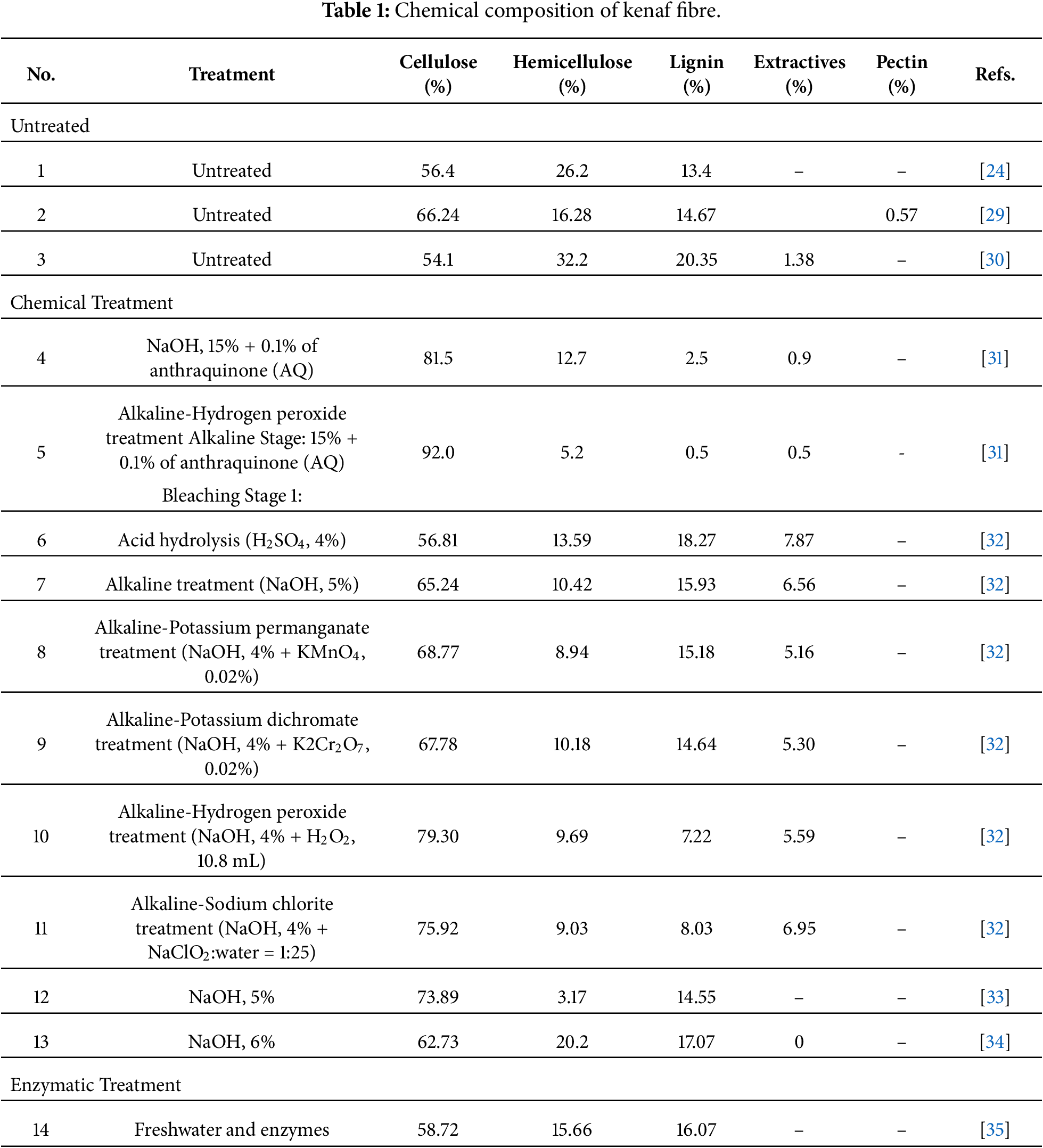
Chemical modification techniques, including alkaline, silane, acetylation, permanganate, peroxide, benzoylation, acrylonitrile grafting, maleic anhydride grafting, and isocyanate treatments, have been shown to alter cellulose concentrations and improve fibre performance [17]. These treatments primarily function by altering the chemical composition and surface characteristics of the fibres, thereby improving fibre–matrix interfacial bonding. Cellulose, the principal structural component of kenaf fibre, contributes significantly to tensile strength and stiffness owing to its highly crystalline structure. Hemicellulose, in contrast, plays an important role in fibre–matrix interaction through its amorphous nature, facilitating stress transfer within composite systems. Lignin, particularly in the form of Klason lignin, acts as a natural binder that imparts rigidity and dimensional stability; however, its hydrophobic character can adversely affect interfacial adhesion with polymer matrices. Extractives, although present in smaller quantities, influence surface energy, moisture affinity, and biological resistance, thereby affecting the overall durability of the fibres.
Materials used in marine applications experience swelling due to water absorption, natural fibres, especially kenaf, have amorphous surface areas derived from hemicellulose and lignin which have easy properties to absorb water and crystalline comes from cellulose with the characteristics of good mechanical properties and low water absorption. The crystalline regions of the kenaf are levelled using chemical treatments such as alkalizing, bleaching and acid hydrolysis. Research conducted by Fiore et al. showed that a 10% sodium bicarbonate solution affects the mechanical properties and aging of natural composite fibres in the marine environment [36]. However, research on the effect of natural fibre chemical treatment on water absorption and prevention of antifouling of composites in the marine environment has not been widely carried out, including kenaf fibre biocomposites. This is supported by a review conducted by Fragassa et al. that studies of natural fibre composites (NFC) using chemically treated fibres generally discuss improved mechanical performance because the interface bond between the matrix and the fibres is better after chemical treatment [37]. These findings have the potential for future research development related to the influence of chemical treatments such as alkali, silane, acetylation, sodium bicarbonate and enzymatic treatment on water absorption and antifouling in marine applications.
The chemical composition of kenaf fibres is commonly determined using gravimetric analytical techniques in accordance with standardised protocols such as those established by TAPPI and the National Renewable Energy Laboratory (NREL), ensuring reliable and reproducible quantification of constituent components [32,38]. Numerous studies have demonstrated that chemical treatments, including alkalisation, silane coupling, and maleic anhydride modification which effectively enhance fibre–matrix interfacial bonding, resulting in improved tensile strength, impact resistance, and reduced moisture absorption in kenaf-reinforced composites [39]. Collectively, these modifications play a critical role in optimising the performance of kenaf fibres for advanced composite applications, particularly in demanding structural and environmental conditions.
2.3 Mechanical Properties of Kenaf Fibre
Kenaf fibres are increasingly utilised as reinforcement in polymer composites due to their favourable strength-to-weight ratio and compatibility with both thermoset and thermoplastic matrices. Numerous studies have demonstrated that kenaf-reinforced composites exhibit competitive mechanical performance, particularly when combined with suitable matrices such as epoxy, polyester, and biodegradable polymers.
The tensile strength of kenaf fibres typically ranges from 427 to 930 MPa, depending on fibre source, extraction technique, and surface treatment [40]. The Young’s modulus generally lies between 2.09 and 2.31 GPa, reflecting adequate stiffness for load-bearing applications. Although the elongation at break of kenaf fibres (approximately 1.6%) is lower than that of many synthetic fibres, it remains comparable to other natural fibres such as jute and hemp. Several studies report that kenaf composites exhibit fatigue properties of 18,630 cycles at 60% ultimate tensile strength and fracture energy (261.3 kJ/m2), indicating potential for medium-load structural applications [41]. Other studies revealed that kenaf composites have a fairly good balance between static strength and fatigue strength with low fatigue sensitivity in a bidirectional plane [40]. These properties collectively render kenaf fibres suitable for semi-structural applications which could influence the resistance toward wave oscillation in marine environment. Table 2 summarises the tensile properties of various kenaf-based composite systems, highlighting the influence of fibre architecture, chemical treatment, matrix selection, and hybridisation strategies. The table shows that the value of tensile strength is in the range of 4.22–190.92 MPa. This difference in tensile strength value is significantly influenced by the type of matrix used, the content of kenaf fibre in the composite and the chemical treatment. This review shows that natural matrix-based biocomposites such as PLA with a combination of chemical treatments have the potential to become construction materials, especially in marine applications due to their tensile strength capabilities and better impact on the environment than composites based on synthetic polymers such as polypropylene and epoxy.
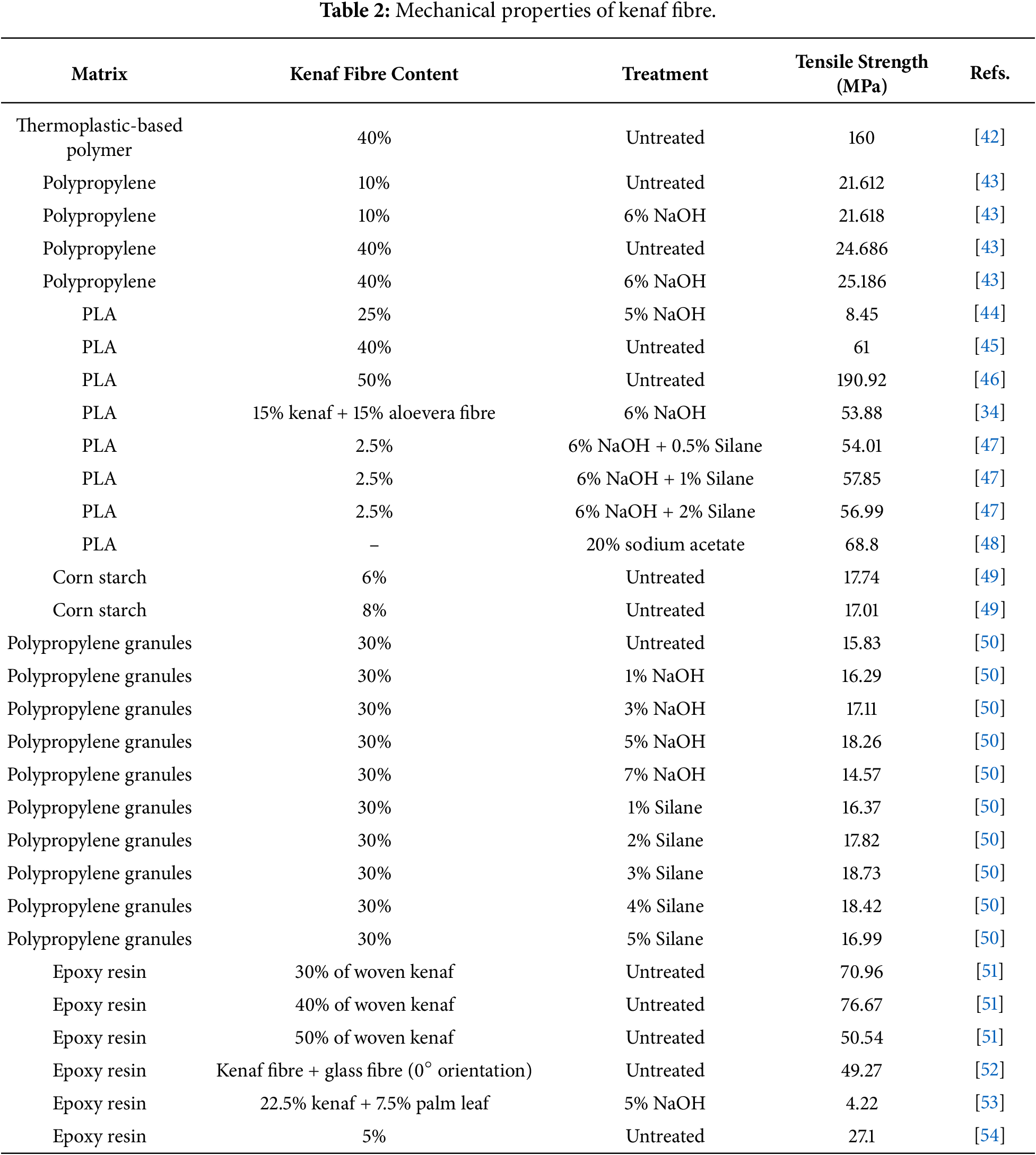
In term of marine applications, the mechanical properties refer to the capability of kenaf fibres to enhance the structural performance of composite materials, particularly in relation to the requirements for marine products. For instance, Fu et al. [55] marine structural materials are generally required to exhibit mechanical strength in the range of 355–690 MPa. As shown in Table 2, kenaf-based composites demonstrate mechanical properties that approach these requirements, indicating their potential suitability for marine applications.
Several strategies have been reported to further enhance the mechanical performance of kenaf composites. For instance, hybridisation with other natural fibres has been shown to improve strength and stiffness, where the combination of kenaf and oil palm fibres resulted in notable enhancements in tensile properties [56], Similarly, Verma et al. [57] reported that the incorporation of 5 wt% of NaOH-treated kenaf fibres together with glass fibre reinforcement significantly improved tensile strength, flexural behaviour, and impact resistance. In addition, the use of geopolymer-modified matrices has been identified as a promising approach for improving the mechanical performance of composite materials intended for marine environments [58].
Beyond material selection and hybridisation, optimization techniques such as Response Surface Methodology (RSM) and the Taguchi method have been effectively employed to further enhance the mechanical performance of kenaf-based biocomposites. These approaches enable the systematic optimisation of processing parameters, leading to substantial improvements in material performance. For instance, optimisation using RSM has been reported to achieve increases of up to 100%, 174%, and 100% in compressive, tensile, and flexural strengths, respectively, compared with untreated control sample [59,60]. Collectively, these findings reinforce the suitability of kenaf-based composites for marine structural applications when appropriately engineered and optimised.
2.4 Other Properties of Kenaf Fibre
Beyond mechanical performance, the physical characteristics of kenaf fibres play a decisive role in determining their suitability for composite applications. Density, moisture absorption, thermal stability, and surface morphology are particularly critical parameters. Kenaf fibres exhibit relatively low density, typically ranging from 0.53 to 1.00 g/cm3, which contributes to the high specific strength of kenaf-based composites. However, increasing fibre content can raise composite density, as observed in bio-epoxy systems reaching values up to 1.26 g/cm3.
Moisture absorption remains a key challenge due to the hydrophilic nature of kenaf fibres. Water uptake can reach 10%–20%, leading to swelling, interfacial debonding, and degradation of mechanical properties [61]. Similar behaviour has been reported in hybrid systems such as kenaf–bamboo composites, where moisture absorption and thickness swelling increase proportionally with fibre content [62]. Similar behaviour has been reported in hybrid systems such as kenaf–bamboo composites, where moisture absorption and thickness swelling increase proportionally with fibre content [63]. Yusuff et al. [51] further demonstrated that water absorption increases linearly with fibre content until saturation is reached, confirming the strong dependence of moisture uptake on fibre volume fraction.
Despite these limitations, the physical characteristics of kenaf fibres remain attractive for environmentally sustainable applications. The equilibrium moisture content of kenaf fibres typically ranges from 8%–12%, depending on climatic conditions and storage environment. Although such hygroscopic behaviour may induce dimensional instability, it can be effectively mitigated through chemical treatments such as alkalisation and acetylation, which reduce hydroxyl group availability and improve fibre–matrix interfacial bonding [64]. These modifications significantly enhance dimensional stability and broaden the applicability of kenaf-based composites in moisture-prone environments.
From a thermal perspective, kenaf fibres exhibit initial thermal degradation temperatures in the range of 200°C–250°C, as determined by thermogravimetric analysis. Exceeding this threshold results in the decomposition of cellulose and lignin constituents, thereby compromising structural integrity. Consequently, careful control of processing temperatures is essential, particularly for thermoplastic composite manufacturing. Morphologically, kenaf fibres display rough and porous surfaces, especially following chemical or mechanical treatments. Scanning electron microscopy reveals surface irregularities and micro voids that promote mechanical interlocking and improve interfacial adhesion with polymer matrices.
The degree of crystallinity of kenaf fibres, typically ranging from 40% to 70%, also plays a significant role in governing mechanical performance. Higher crystallinity contributes to increased stiffness and strength, although excessive crystallinity may reduce flexibility. Therefore, controlled modification strategies, including thermal, chemical, and enzymatic treatments, are often employed to balance stiffness and toughness according to application requirements. In parallel, recent studies have highlighted the importance of interfacial strengthening mechanisms, such as load transfer efficiency, thermal mismatch mitigation, and microstructural refinement in enhancing the performance of bio-based composites. For instance, Notably, advanced approaches involving improved interfacial bonding and thermal management have demonstrated potential for reducing thermal degradation in hybrid biocomposites by up to 492°C [65].
Collectively, the physical and thermal characteristics of kenaf fibres underscore their suitability as sustainable reinforcement materials. When combined with appropriate surface modification techniques and optimised composite design strategies, kenaf-based fibres offer a promising, environmentally responsible alternative for advanced engineering and marine applications.
3 Processing and Treatment of Kenaf Fibre
Following harvesting, kenaf stems undergo fibre extraction through a process commonly referred to as retting. This process facilitates the separation of fibre bundles from the surrounding non-fibrous tissues by exploiting biological, chemical, or mechanical actions. Fig. 1 illustrates the structural components of the kenaf stem, while Fig. 2 depicts the fibres obtained after separation. Retting relies primarily on the degradation of pectic substances within the middle lamella, which bind adjacent fibre cells together, thereby enabling the release of individual fibres.
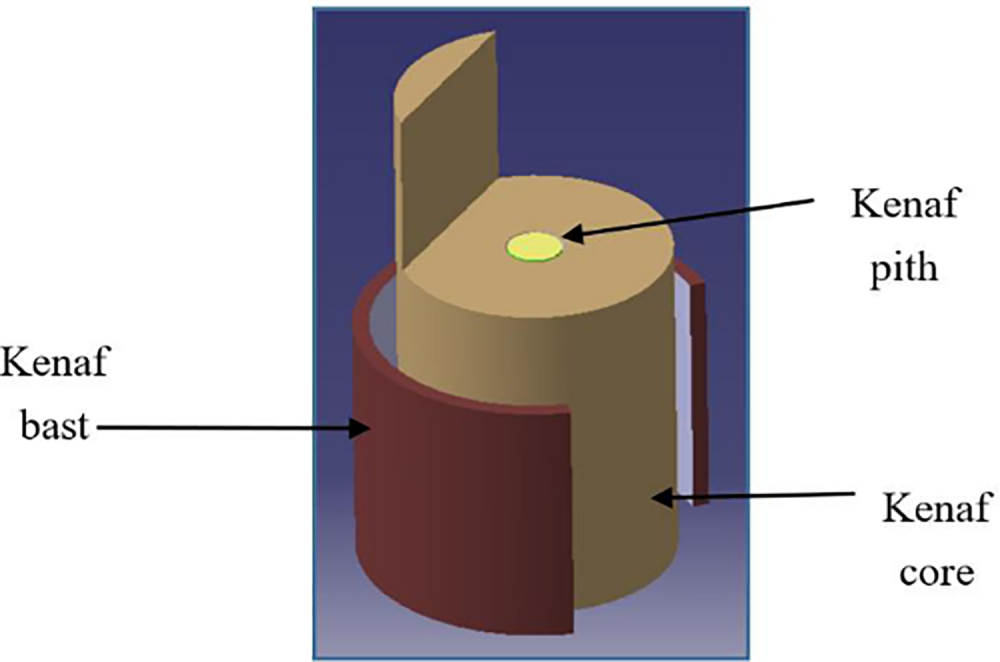
Figure 1: Schematic diagram of kenaf stem components [62]. Creative common CC BY license.
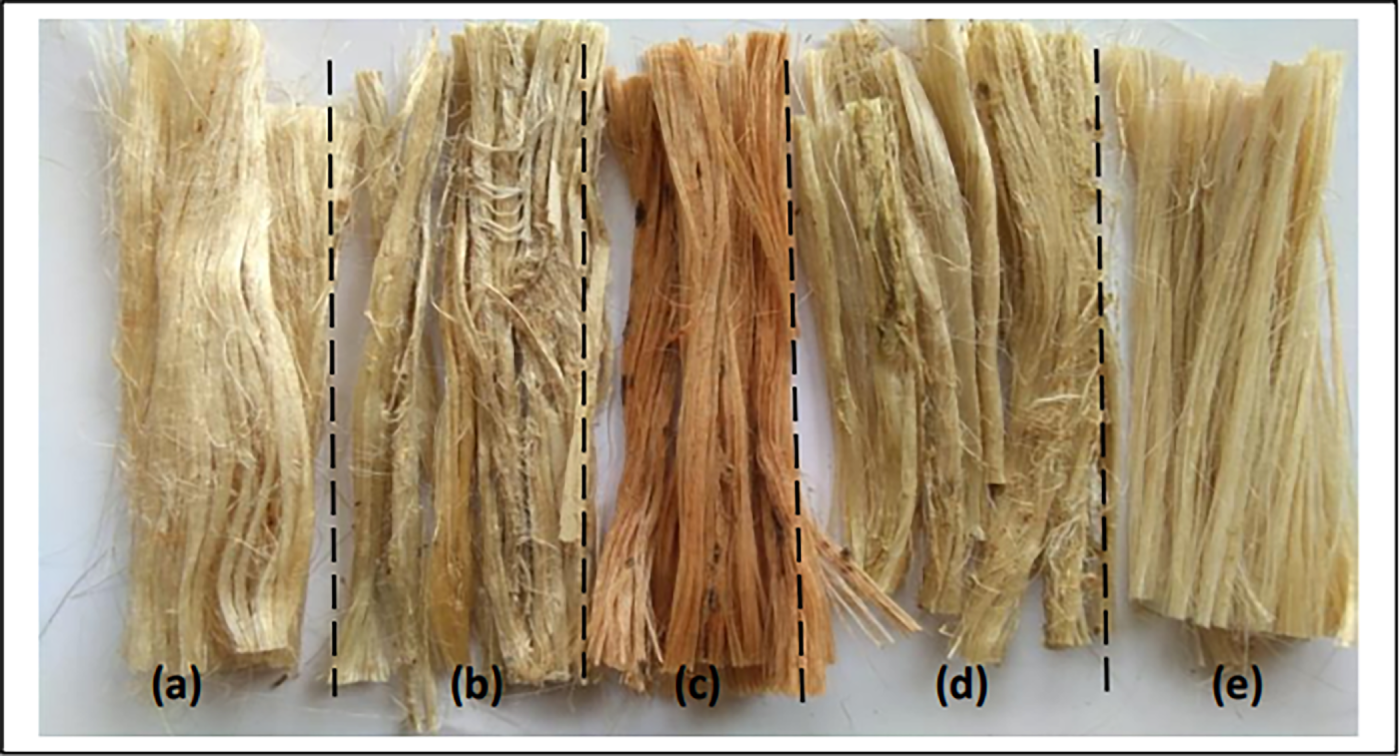
Figure 2: Kenaf fibres after mechanical separation: (a) clean water; (b) pond immersion for 10 days; (c) combined pond–ditch immersion for 8 days; (d) pond connected to a small river stream for 10 days; (e) rain and bore water immersion for 14 days, followed by washing with clean water [21]. Creative Common CC BY license.
Several retting techniques have been developed, including dew retting, water retting, enzymatic retting, chemical retting, and mechanical retting, each offering distinct advantages and limitations [66]. Scanning electron microscopy (SEM) observations indicate that properly retted kenaf fibres exhibit relatively smooth and well-defined surfaces with minimal fibrillation or fibre pull-out as shown in Fig. 3 [21]. In particular, water-retted fibres display clean surfaces with limited structural damage, as the controlled microbial action effectively removes non-cellulosic materials without excessive fibre degradation [67]. In contrast, mechanically retted fibres often exhibit surface irregularities and microstructural defects due to the aggressive nature of the separation process.
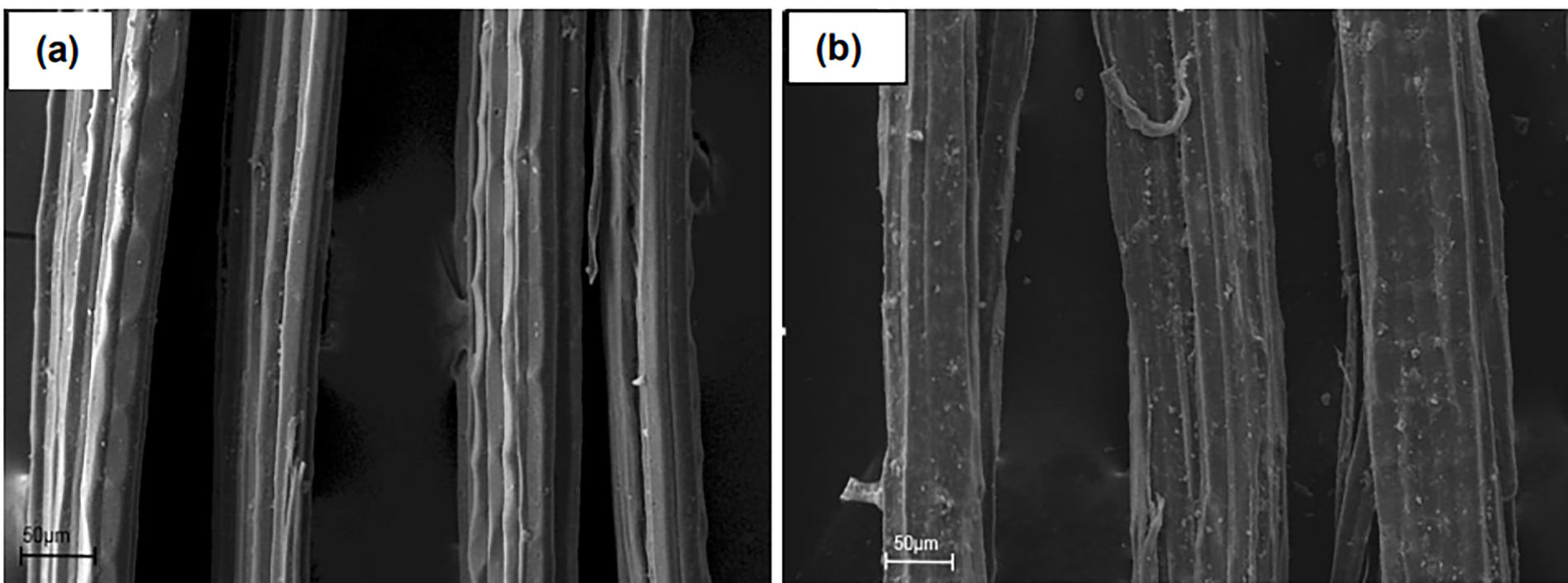
Figure 3: SEM of kenaf fibre resulting from retting treatment (a) untreated fibres exhibiting relatively smooth surfaces with longitudinal grooves and minimal surface irregularities; (b) treated fibres showing increased surface roughness, the presence of surface deposits, and micro-scale irregularities [21]. Creative Common CC BY license.
Chemical retting techniques, employing agents such as sodium hydroxide, hydrogen peroxide, or sodium benzoate, are widely used to accelerate fibre separation and enhance surface cleanliness. These methods efficiently remove hemicellulose, lignin, and other amorphous constituents, yielding fibres with improved uniformity and surface quality compared with untreated or mechanically processed fibres [68]. However, the use of aggressive chemical treatments requires careful optimisation to prevent excessive fibre damage.
Water retting, on the other hand, is known for producing fibres with good uniformity and relatively high quality, although the process requires longer treatment periods and careful control to prevent excessive fibre degradation. Dew retting offers the advantage of facilitating the natural breakdown of pectic substances through microbial activity, allowing for easier fibre separation under favourable environmental conditions. Enzymatic retting represents a more controlled and environmentally friendly alternative, as specific enzymes can be selected to target particular fibre components. This method allows the tailoring of fibre properties by adjusting enzyme type and treatment duration, resulting in fibres suited for specific end-use applications. In contrast, mechanical retting is characterised by its ability to rapidly produce large quantities of short fibres, making it suitable for high-throughput industrial processing, although it may result in greater fibre damage.
Beyond fibre separation, the retting process also influences the internal structure of the fibres. Studies have shown that retting can significantly increase the crystallinity index of kenaf fibres, which is closely associated with improved mechanical performance. For instance, chemically treated fibres have demonstrated a higher crystallinity index (approximately 71.93%) compared with untreated fibres (57.39%) and enzyme-treated fibres (66.70%) [69]. This increase in crystallinity contributes to enhanced stiffness and strength, further supporting the suitability of chemically treated kenaf fibres for composite applications.
3.2 Surface Treatment Techniques
Despite their favourable intrinsic properties, kenaf fibres exhibit limited interfacial compatibility with polymer matrices due to the presence of non-cellulosic components such as lignin, hemicellulose, pectin, and surface waxes. These constituents hinder effective stress transfer at the fibre–matrix interface, thereby reducing composite performance [66]. To address this limitation, a variety of surface modification techniques have been developed to enhance fibre–matrix adhesion and overall composite behaviour.
Chemical surface treatments remain the most widely adopted approach and include alkalisation, silane treatment, acetylation, peroxide treatment, and other coupling-agent-based modifications, as summarised in Table 3. Among these, alkalisation is particularly effective and widely employed as shown in Fig. 4. As reported by Guo et al. [32], alkali treatments using reagents such as sodium hydroxide, potassium permanganate, potassium dichromate, hydrogen peroxide, and sodium chlorite promote the removal of surface impurities and expose reactive hydroxyl groups on the fibre surface. This enhances interfacial bonding and facilitates stronger chemical interactions with polymer matrices [70].
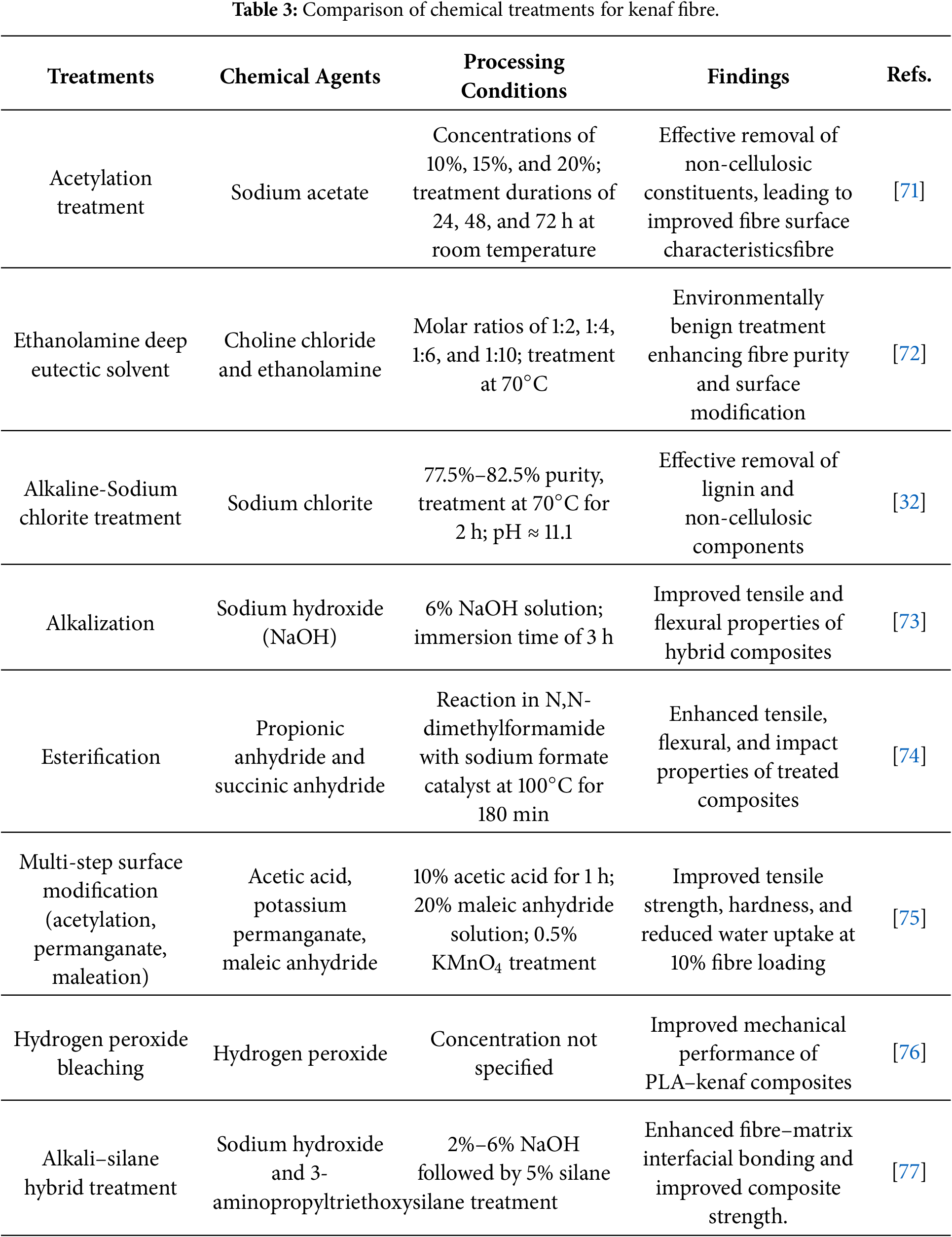
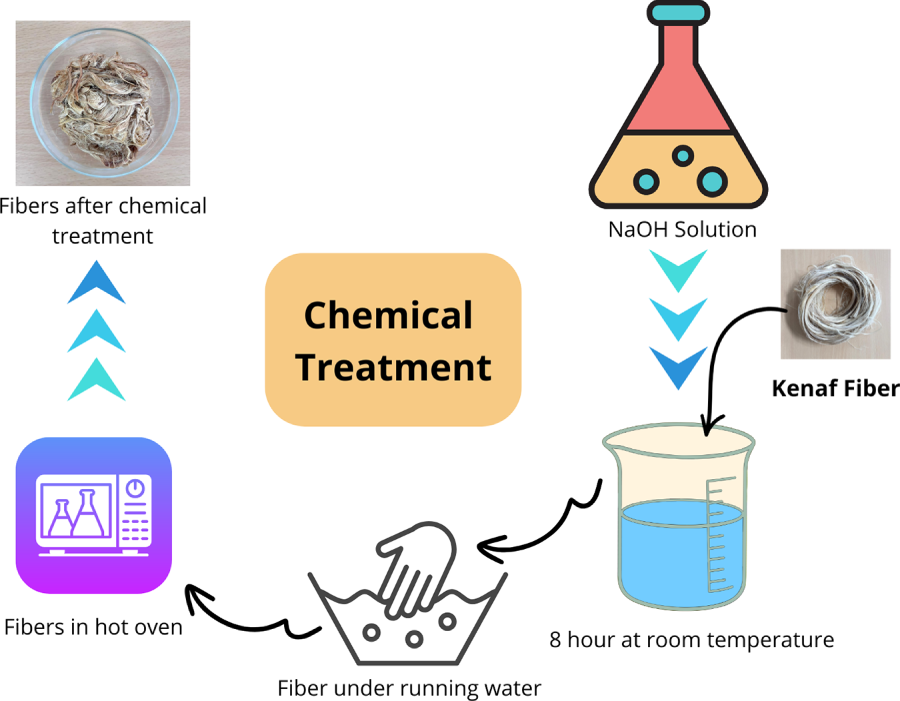
Figure 4: Schematic representation of the chemical treatment process.
Surface modification not only improves interfacial adhesion but also enhances the thermal stability of kenaf fibres. Nursheila Wan Jusoh et al. [78] demonstrated that surface treatments can also improve the thermal stability of kenaf fibres. In their study, fibres treated with ammonium polyphosphate (APP), 6% NaOH, and a combination of both treatments exhibited enhanced heat resistance. Thermogravimetric analysis (TGA) revealed that fibres treated with APP achieved the highest degradation resistance, with a minimum weight loss of approximately 66%, outperforming both untreated and other treated fibres. These findings confirm that appropriate chemical surface modifications (Fig. 5) not only strengthen fibre–matrix interfacial bonding but also enhance the thermal durability of kenaf-reinforced composites.
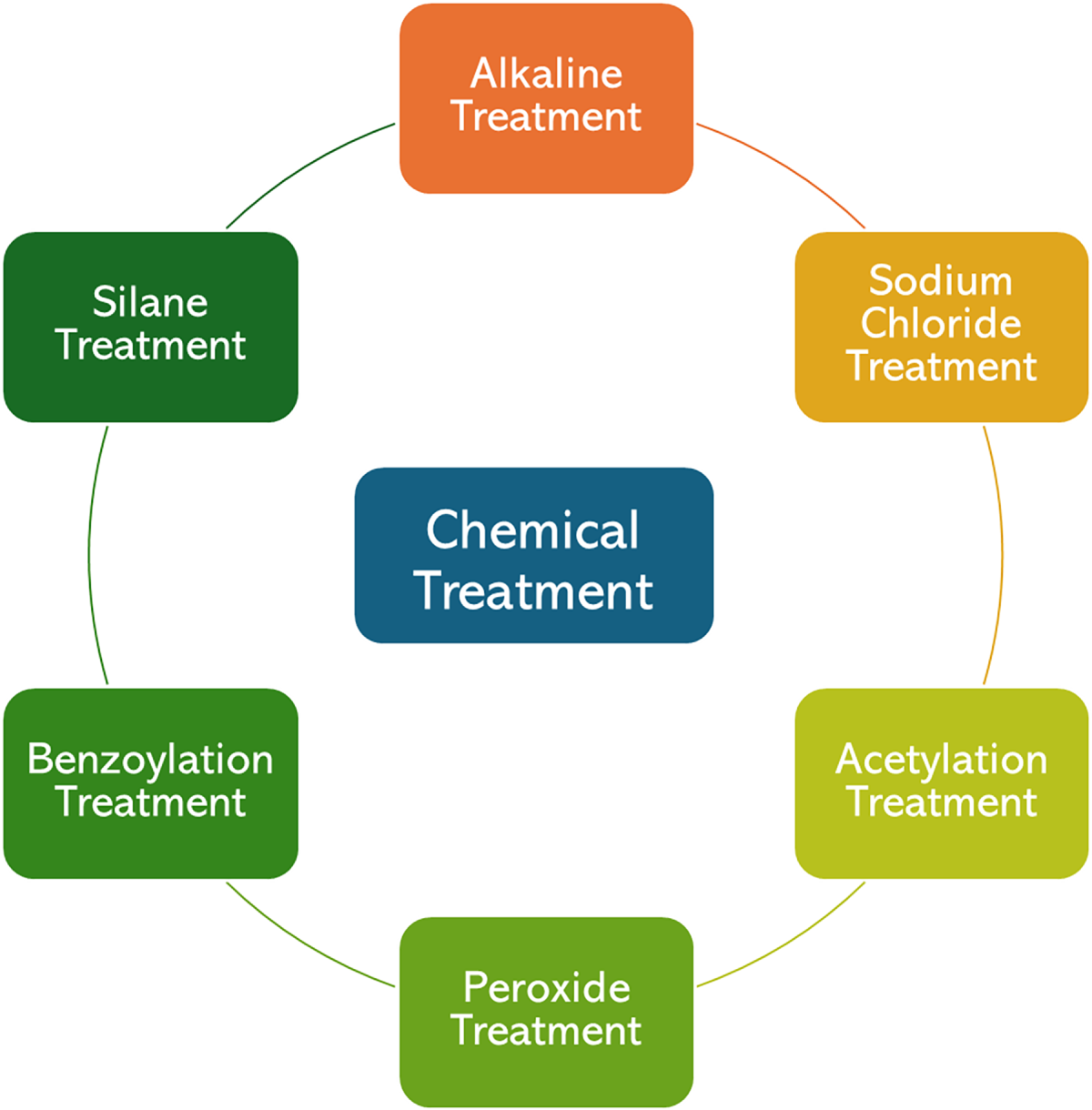
Figure 5: Types of chemical treatments for kenaf fibres.
While processes such as alkalisation, silane treatment, acetylation, and peroxide modification are effective in enhancing interfacial bonding, moisture resistance, and mechanical properties, they may also introduce additional chemical consumption, energy use, and waste generation. This raises valid questions regarding the sustainability of such treatments when applied to NFCs. However, it should be emphasised that these treatments do not remove the environmental benefits of kenaf fibres; rather, they highlight the need for carefully optimised processing strategies. Hence, the use of chemical treatments in kenaf fibre composites should not be viewed as contradictory to sustainability goals. Instead, when applied judiciously and at controlled levels, such treatments enable the development of composites that meet engineering performance requirements while still offering a reduced environmental footprint compared to conventional synthetic fibre systems.
4 Marine Composite Materials: Performance Requirements and Durability Challenges
Marine structures impose stringent performance requirements on composite materials due to the aggressive nature of the ocean environment. Materials used in marine applications must provide high strength, stiffness, and fatigue resistance to withstand dynamic loads generated by waves, currents, and operational forces. At the same time, they must resist environmental degradation caused by prolonged exposure to seawater, salt spray, ultraviolet (UV) radiation, thermal cycling, and biological activity [9,79]. In service conditions, marine components are frequently subjected to saltwater immersion, hydrostatic pressure, solar radiation, and biofouling organisms, all of which can progressively deteriorate material performance. Fibre-reinforced polymer (FRP) composites are widely adopted in marine structures because they do not undergo electrochemical corrosion in seawater, unlike conventional metallic materials such as steel or aluminium. Nevertheless, corrosion resistance alone does not guarantee long-term durability, and marine composites must still be carefully engineered to withstand the combined mechanical and environmental stresses encountered in ocean conditions.
Despite their advantages, traditional synthetic composites reinforced with glass or carbon fibres can still experience ageing and degradation in marine environments. Moisture diffusion into the composite laminate gradually plasticises the polymer matrix and causes swelling of the reinforcing fibres, which weakens the fibre–matrix interface. This process often leads to microcracking, void formation, and eventual delamination within the laminate structure, thereby reducing stiffness, strength, and fatigue resistance over time. Ultraviolet radiation further accelerates degradation through photo-oxidative reactions, which induce surface cracking, embrittlement, and roughening of the composite surface. In addition, continuous cyclic loading generated by wave action and operational stresses promote fatigue damage and crack propagation within the composite structure [40]. Marine biofouling organisms such as algae, barnacles, and microorganisms also contribute to material deterioration by increasing structural weight, altering surface roughness, and increasing hydrodynamic drag. Consequently, the combined effects of moisture ingress, UV exposure, mechanical fatigue, and biological activity can significantly compromise the long-term integrity of composite materials unless appropriate protective measures and design strategies are implemented [80].
Natural fibre-reinforced composites have recently attracted attention as environmentally sustainable alternatives to conventional FRP systems. Polymer reinforced with plant fibres such as kenaf offer several advantages, including low density, renewability, and reduced environmental impact. In addition, natural fibres are electrically non-conductive and therefore do not promote galvanic corrosion when used in hybrid structural systems. However, the hydrophilic nature of lignocellulosic fibres introduces challenges related to moisture absorption. Natural fibres readily absorb water into their microstructure, which leads to fibre swelling, interfacial debonding, and deterioration of the fibre–matrix bonding. As a result, mechanical load transfer between the reinforcement and matrix becomes less effective, ultimately reducing the structural performance of the composite. Experimental studies have demonstrated that moisture-induced degradation in NFCs primarily occurs within the fibre phase and at the fibre–matrix interface rather than within the polymer matrix itself [81]. For instance, kenaf fibre composites exhibited mass losses of 15.56% and 27.56% after 100 days of soil burial under controlled conditions, demonstrating the enhanced degradability of PLA-based systems compared with conventional polymers [59].
To overcome these limitations, several material engineering strategies have been developed to improve the moisture resistance and durability of NFCs. Chemical surface treatments, including alkali and silane treatments, are widely applied to modify the fibre surface by reducing hydrophilic hydroxyl groups and improving interfacial adhesion with the polymer matrix. Fibre hybridisation, optimised laminate stacking sequences, and improved matrix selection can also reduce water diffusion and enhance structural performance [82]. These approaches strengthen the fibre–matrix interface and significantly reduce moisture uptake within the composite laminate. When such treatments and design strategies are implemented, NFCs such as kenaf-reinforced laminates have demonstrated the ability to retain a substantial proportion of their mechanical properties even after prolonged exposure to marine environments.
Beyond performance considerations, sustainability has become an increasingly important factor in the development of marine composite materials. Conventional FRP systems rely heavily on petroleum-based resins and energy-intensive reinforcing fibres such as carbon and glass, which contribute to high embodied energy and limited recyclability. Carbon fibre composites, in particular, are associated with significant carbon emissions during production and present substantial challenges in end-of-life recycling due to the thermoset matrix. In contrast, bio-based resins and natural fibres offer a more sustainable alternative by reducing life-cycle environmental impacts. Plant fibres such as kenaf, flax, and bamboo not only require lower energy inputs during processing but also act as carbon sinks during growth, thereby contributing to reduced greenhouse gas emissions.
However, the successful implementation of sustainable composites in marine structures requires careful integration of environmental durability and structural performance. Marine materials must be designed to withstand simultaneous exposure to seawater, ultraviolet radiation, cyclic mechanical loading, and biological fouling while maintaining long-term structural stability. Recent studies have demonstrated that the incorporation of advanced material technologies, including silane-based fibre treatments, nanocellulose reinforcements, and hybrid fibre architectures, can significantly enhance the durability and moisture resistance of NFCs. In addition, protective surface coatings and antifouling treatments further improve long-term performance in marine environments. Through the combination of advanced resin systems, tailored fibre treatments, and protective design strategies, modern composite materials can meet both performance and sustainability requirements, enabling the development of durable and environmentally responsible marine structures.
5 Kenaf Fibre as Key Components in Composite Materials
5.1 Matrix Compatibility with Kenaf Fibre
Kenaf fibres exhibit favourable compatibility with a wide range of polymer matrices, particularly when appropriate surface treatments are applied to enhance interfacial bonding. Both chemical and physical modification techniques have been shown to improve the adhesion between kenaf fibres and polymer matrices, thereby enhancing the mechanical performance of the resulting composites [66]. Thermoplastic polymers such as polyamide, polypropylene, polyethylene terephthalate (PET), and polybutylene terephthalate (PBT) are increasingly employed in marine-related applications due to their good processability, recyclability, and resistance to environmental degradation.
Among these matrices, polylactic acid (PLA) has attracted significant attention as a bio-based alternative to conventional petroleum-derived polymers. Although PLA exhibits higher susceptibility to hydrolytic degradation, particularly under prolonged exposure to moisture and elevated temperatures, its selection in composite systems is driven by sustainability considerations rather than universal structural suitability. The use of PLA is therefore most appropriate in applications where environmental performance and reduced carbon footprint are prioritised over long-term structural endurance. The performance limitations of PLA-based composites can be effectively mitigated through material engineering strategies. Fibre surface modification, polymer blending, and the incorporation of nanofillers have been shown to improve interfacial adhesion, reduce moisture sensitivity, and enhance overall durability. When reinforced with kenaf fibres, PLA-based composites demonstrate a favourable balance between mechanical strength and environmental sustainability. Studies have reported that appropriate fibre–matrix combinations can significantly improve tensile and flexural properties, while simultaneously reducing environmental impact. In particular, a PLA–kenaf composite with a fibre-to-matrix ratio of 50:50 has been shown to achieve increases of 224% and 239% in tensile and flexural strength, respectively [59].
Hence, the findings highlight the potential of such systems for use in non-load-bearing and semi-structural marine components, including interior panels and secondary structural elements. Although bio-based composites remain less widely adopted than conventional materials, their capacity to reduce toxic emissions, enhance recyclability, and support circular material flows positions them as promising candidates for sustainable marine applications [83].
5.2 Fabrication Techniques and Performance Implications
The fabrication of kenaf fibre composites is governed by application requirements, material characteristics, and economic considerations [84]. A range of manufacturing techniques has been developed to optimise mechanical performance and structural integrity. Among these, Resin Transfer Moulding (RTM) is widely employed for producing high-quality composite components with complex geometries. RTM enables efficient resin impregnation of fibre preforms and offers good control over fibre volume fraction, resulting in enhanced mechanical performance. Trofimov et al. [85] reported that RTM-fabricated composites reinforced with three-dimensional woven fibres exhibited high structural efficiency, making them suitable for demanding applications in the marine sectors. An optimal fibre loading of approximately 40% has been shown to produce tensile strengths of up to 55 MPa [86].
Vacuum-Assisted Resin Infusion (VARI) represents another widely adopted technique, offering improved resin distribution and reduced void content compared with conventional methods. The enhanced impregnation achieved through VARI contributes to superior tensile and flexural properties, particularly in large or complex composite structures [87]. In addition to these advanced processes, conventional fabrication techniques such as compression moulding and hand lay-up continue to be utilised, especially in cost-sensitive or low-volume production scenarios [14,88], While these methods may offer lower processing precision, they remain attractive due to their simplicity, flexibility, and economic viability, particularly for prototyping and small-scale manufacturing.
Collectively, the selection of an appropriate fabrication method plays a critical role in determining the mechanical performance, structural reliability, and economic feasibility of kenaf fibre composites, and must therefore be carefully aligned with the intended application and performance requirements.
6 Performance of Kenaf Fibre Composites in Marine Environments
Natural fibre–reinforced composites, particularly those incorporating kenaf fibres, have attracted increasing interest for marine applications due to their favourable environmental profile and mechanical potential. Several studies have demonstrated that kenaf fibre–reinforced cementitious and polymer composites can exhibit improved resistance to seawater penetration compared with unreinforced systems.
For instance, Hashim et al. [89] reported that the incorporation of kenaf fibres enhanced the sealing of surface pores in cementitious matrices, thereby reducing seawater ingress and improving overall durability. Additionally, several studies on kenaf fibre–reinforced PLA composites revealed that prolonged exposure to seawater resulted in fibre swelling, matrix plasticisation, and progressive interfacial debonding, ultimately leading to mechanical degradation [90]. Similar trends have been observed in composites containing hydroxyapatite (HA), where exposure to different seawater temperatures induced further reductions in mechanical performance, suggesting that filler–matrix interactions play a significant role in governing durability under marine conditions [91].
Apart from that, one of the principal challenges associated with the use of biocomposites in marine environments is their inherent tendency to absorb moisture, even under routine service conditions such as cleaning or exposure to humid atmospheres. Water uptake leads to plasticisation and swelling of the polymer matrix, which in turn weakens fibre–matrix interfacial bonding and accelerates mechanical degradation [37]. Prolonged exposure to seawater further exacerbates this process, promoting structural deterioration and facilitating biofouling, defined as the accumulation of biological organisms on material surfaces [92]. In this context, NFCs, including those reinforced with kenaf fibres, present a complex behaviour. On one hand, several studies suggest that lignocellulosic fibres may inherently limit microbial adhesion due to their surface chemistry, potentially reducing biofouling under certain conditions [93]. On the other hand, their hydrophilic nature enables significant water absorption, which can increase biological activity within the material and accelerate interfacial degradation. This dual behaviour indicates that natural fibres may act not only as passive reinforcements but also as active contributors to moisture transport and microbial interaction within the composite system.
Experimental evidence supports these concerns, as kenaf fibres have been shown to absorb greater amounts of water when immersed in seawater compared with distilled or acidic environments. Extended exposure results in measurable reductions in tensile strength, reflecting progressive fibre degradation and loss of structural integrity [94]. These findings highlight the complex and sometimes competing roles of natural fibres in marine composites, where their environmental advantages and potential resistance to surface biofouling must be carefully balanced against their susceptibility to moisture-induced degradation. Consequently, effective material design strategies, including fibre surface modification, matrix optimisation, and protective coatings, are essential to mitigate these effects and enhance long-term performance in marine applications.
7 Environmental Impact and Sustainability
7.1 Kenaf Fibre as an Environmentally Sustainable Resource
The rapid expansion of industrial activity and global population growth has intensified environmental degradation, prompting an urgent search for sustainable material alternatives. In this context, bast fibres such as kenaf have gained increasing attention due to their favourable environmental profile and multifunctional potential [95]. Bast fibre plants demonstrate significant phytoremediation potential, as their rapid growth rates and well-developed root systems enable the uptake of heavy metals and other contaminants from soil and water environments as shown in Table 4. This characteristic allows such plants to contribute to the rehabilitation of polluted sites while simultaneously improving soil structure and fertility. However, this beneficial trait also raises an important consideration for composite applications. As highlighted by the reviewer, there is a potential risk that heavy metals absorbed during phytoremediation may be retained within the plant biomass and subsequently transferred into composite materials if the fibres are used without appropriate control measures.
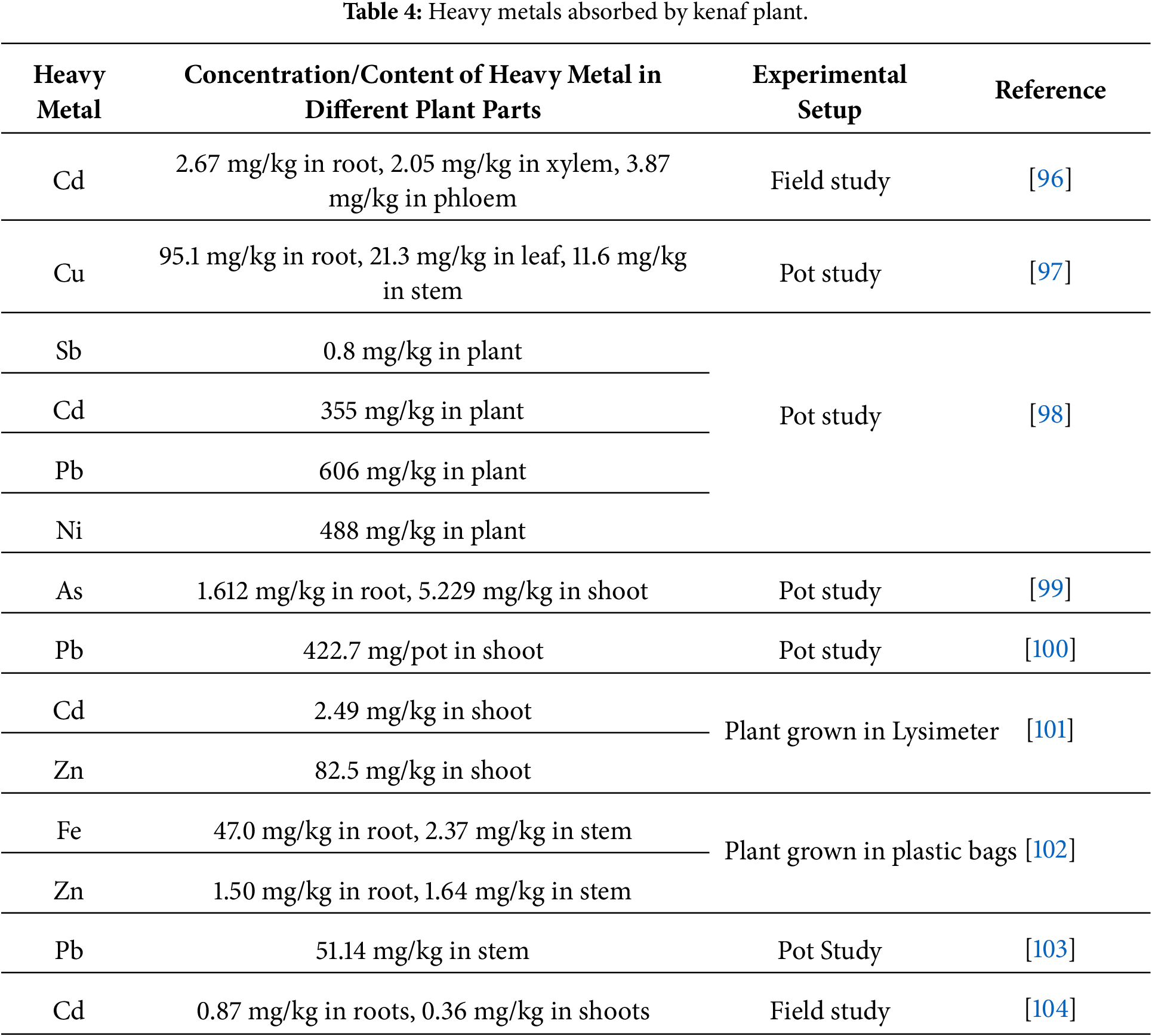
In the context of kenaf fibre, this issue is particularly relevant, as the plant is widely recognised for its high uptake efficiency of certain heavy metals. Therefore, careful material selection and feedstock management are essential to minimise the risk of contamination. This includes ensuring that kenaf fibres intended for composite reinforcement are sourced from controlled cultivation environments rather than from soils with known heavy metal contamination. In addition, monitoring soil quality and implementing appropriate agricultural management practices can further reduce the likelihood of metal uptake.
Despite this consideration, the utilisation of kenaf fibres remains highly attractive due to their considerable economic and environmental value. Harvested fibres are widely applied in textiles, biocomposites, and construction materials, linking environmental remediation with value-added industrial applications [95,105]. When appropriate sourcing and quality control measures are implemented, kenaf fibres can be safely and effectively integrated into composite systems, enabling the development of sustainable materials while mitigating potential risks associated with heavy metal accumulation. Additionally, kenaf fibre is particularly promising due to its combination of favourable properties, including high mechanical strength, ease of processing, and inherent biodegradability [20]. These attributes position kenaf not only as a sustainable raw material for composite applications but also as a strategic eco-friendly alternative to conventional synthetic fibres in support of global sustainability goals.
7.2 Life Cycle Assessment of Kenaf Fibre Composites
Life Cycle Assessment (LCA) provides a comprehensive framework for evaluating the environmental impacts associated with materials throughout their entire life cycle, from raw material extraction to end-of-life disposal. In the context of kenaf fibre composites, LCA has been instrumental in quantifying energy consumption, greenhouse gas emissions, and overall environmental burden relative to conventional composite systems [106].
Studies have demonstrated that kenaf-based composites generally exhibit lower embodied energy and reduced carbon footprints compared with glass fibre-reinforced counterparts. For example, life cycle assessments of kenaf-based structural components have shown substantial reductions in non-renewable energy use and greenhouse gas emissions. Batouli and Zhu [107] reported that kenaf-based structural insulated panels performed favourably in several environmental impact categories, although certain trade-offs were observed, highlighting the importance of optimised material design and processing conditions. Further investigations have shown that replacing conventional glass fibres with kenaf fibres can lead to energy savings of up to 22–23 MJ per component during manufacturing. Such reductions contribute significantly to the sustainability of composite materials, particularly in applications where large volumes of material are required.
Collectively, these findings underscore the potential of kenaf fibre composites to support circular economy principles by reducing resource consumption, minimising environmental impact, and enhancing material sustainability across their life cycle.
8 Applications of NFCs from Kenaf in Marine Industry
The use of FRP composites in marine applications dates back to the late 1940s, when such materials were first introduced for boat hull construction [10]. Since then, composite technologies have become firmly established within the maritime sector. Conventional marine structures predominantly rely on glass fibre–reinforced polymer composites [8] and, while more advanced applications employ carbon or aramid fibre composites combined with epoxy or vinyl ester matrices to meet demanding mechanical and durability requirements. These materials are widely favoured for their high strength-to-weight ratio, corrosion resistance, and design flexibility.
In contemporary practice, composite materials are extensively used in shipbuilding and repair, particularly for hull repairs, deck structures, and secondary load-bearing components. Glass fibre composites remain the most common choice, while carbon fibre systems are increasingly adopted for high-performance and weight-sensitive applications. In parallel with these developments, growing environmental awareness has driven interest in sustainable and bio-based alternatives, leading to increased research into natural fibre–reinforced composites for marine use [12].
Among these, kenaf fibre–based composites have attracted attention due to their low density, renewability, and favourable mechanical properties. Their resistance to corrosion and suitability for pultruded components such as walkways, gratings, and structural panels make them attractive candidates for certain marine applications. Commercial initiatives, including eco-boat hulls and marine components developed by companies such as Sustainable Composites and Movevirgo, demonstrate the practical potential of NFCs in low- to moderate-load marine environments [108].
However, despite these promising attributes, it is important to recognise that kenaf-based composites are not yet suitable for safety-critical or primary load-bearing marine structures, such as ship hulls, deep-sea mooring systems, or offshore load-bearing components. Exposure to seawater, cyclic loading, and long-term environmental ageing can significantly affect their mechanical integrity. Current evidence indicates that, while kenaf composites perform well under moderate service conditions, their long-term durability under extreme marine environments remains limited when compared with conventional fibre-reinforced systems.
Nevertheless, this limitation does not preclude their broader application. Rather, it highlights the need for targeted material development strategies. The integration of kenaf fibres with advanced polymer matrices such as bio-based epoxies and PLA, along with hybridisation approaches combining natural and synthetic fibres, offers a promising pathway to improve mechanical performance and durability. Such strategies allow kenaf-based composites to be effectively utilised in non-load-bearing or semi-structural marine components, including interior panels, decking, protective covers, and secondary structural elements.
In this context, the future of kenaf fibre composites lies not in replacing high-performance synthetic composites entirely, but in complementing them within a sustainable materials framework. Through continued optimisation of fibre treatment, matrix selection, and composite architecture, kenaf-based systems can contribute meaningfully to reducing the environmental footprint of marine structures while maintaining acceptable levels of safety and performance [10].
This review has synthesised current research on kenaf fibre–reinforced composites with particular emphasis on their potential for marine engineering applications. The literature consistently demonstrates that kenaf fibres provide several advantages over conventional synthetic reinforcements, including low density, renewability, biodegradability, and reduced environmental impact. When combined with suitable polymer matrices and appropriate surface modification techniques, kenaf-based composites can achieve mechanical properties that are suitable for a range of semi-structural marine applications. In particular, studies have shown that chemical surface treatments, hybrid fibre architectures, and optimisation of processing parameters can significantly improve fibre–matrix interfacial bonding and enhance composite performance. Despite these promising developments, several key challenges remain unresolved. The hydrophilic nature of lignocellulosic fibres results in moisture absorption, which can lead to fibre swelling, interfacial debonding, and progressive mechanical degradation under prolonged marine exposure. In addition, long-term resistance to biofouling, ultraviolet radiation, and cyclic mechanical loading remains insufficiently understood. These limitations indicate that further research is required to improve the durability and reliability of kenaf fibre composites in harsh marine environments.
Future research should therefore focus on several critical directions. First, more comprehensive investigations into long-term environmental ageing and seawater exposure are needed to better understand degradation mechanisms. Second, the development of advanced fibre treatment methods and hybrid composite architectures may further enhance durability and mechanical stability. Third, lifecycle assessment and large-scale manufacturing studies are required to evaluate the practical feasibility and environmental benefits of these materials in real marine applications. Overall, the current body of literature suggests that kenaf fibre composites have significant potential as sustainable alternatives to conventional materials in marine engineering. While they may not yet fully replace high-performance synthetic composites in primary load-bearing structures, their application in secondary and non-structural marine components offers a promising pathway towards more environmentally responsible marine material systems.
Acknowledgement: The authors would like to thank the Ministry of Higher Education (MOHE), Malaysia, for financial support under the Fundamental Research Grant Scheme (FRGS) project under grant No. FRGS/1/2024/TK04/UTM/02/1. The authors also would like to express gratitude to Universiti Teknologi Malaysia through the Centre for Advanced Composites Materials (CACM) and the Faculty of Mechanical Engineering (FKM) for providing facilities to conduct this work.
Funding Statement: This work was funded by Ministry of Higher Education, Malaysia through Fundamental Research Grant Scheme (FRGS) project (grant number: FRGS/1/2024/TK04/UTM/02/1).
Author Contributions: Harmiansyah and Muhammad Asyraf Muhammad Rizal did the investigation on the subject matter. Muhammad Asyraf Muhammad Rizal did the project administrations. Harmiansyah and Muhammad Asyraf Muhammad Rizal wrote the main manuscript text. Melbi Mahardika, Rushdan Ahmad Ilyas and Mohd Yazid Yahya supervised the students. All authors reviewed and approved the final version of the manuscript.
Availability of Data and Materials: All data and materials are available within this review article.
Ethics Approval: Not applicable.
Conflicts of Interest: The authors declare no conflicts of interest.
References
1. Skosana SJ, Khoathane C, Malwela T. Driving towards sustainability: a review of natural fiber reinforced polymer composites for eco-friendly automotive light-weighting. J Thermoplast Compos Mater. 2025;38(2):754–80. doi:10.1177/08927057241254324. [Google Scholar] [CrossRef]
2. Chandel S, Shaji A, Chutturi M, Raj UA. Life cycle assessment of biocomposites: environmental impacts and sustainability perspectives. In: Innovations and applications of advanced biomaterials in healthcare and engineering. Hershey, PA, USA: IGI Global Scientific Publishing; 2025. p. 439–502. doi:10.4018/979-8-3373-1305-4.ch013. [Google Scholar] [CrossRef]
3. Baley C, Davies P, Troalen W, Chamley A, Dinham-Price I, Marchandise A, et al. Sustainable polymer composite marine structures: developments and challenges. Prog Mater Sci. 2024;145(3):101307. doi:10.1016/j.pmatsci.2024.101307. [Google Scholar] [CrossRef]
4. Hussnain SM, Shah SZH, Megat-Yusoff PSM, Hussain MZ. Degradation and mechanical performance of fibre-reinforced polymer composites under marine environments: a review of recent advancements. Polym Degrad Stab. 2023;215:110452. doi:10.1016/j.polymdegradstab.2023.110452. [Google Scholar] [CrossRef]
5. Ghani SN, Alithari AS, Hasan HS. Influence of adding tungsten carbide and titanium dioxide nanoparticles on the impact strength of epoxy based composite materials used in marine applications. Results Eng. 2025;25:104012. doi:10.1016/j.rineng.2025.104012. [Google Scholar] [CrossRef]
6. Qiao Z, Yang R, Liu Y, Feng X, Huang J, Tian Y, et al. A feasible strategy to construct WC-Co-Cr/Cu composite coating with good tribo-corrosion behavior and anti-fouling properties for marine applications. Wear. 2025;564:205738. doi:10.1016/j.wear.2025.205738. [Google Scholar] [CrossRef]
7. Islam F, Caldwell R, Phillips AW, St John NA, Prusty BG. A review of relevant impact behaviour for improved durability of marine composite propellers. Compos Part C Open Access. 2022;8(4):100251. doi:10.1016/j.jcomc.2022.100251. [Google Scholar] [CrossRef]
8. University NM, Okuma SO, Obaseki M, Okiemute Ofuyekpone D, Endurance Ashibudike O. A review assessment of fiber-reinforced polymers for maritime applications. J Adv Ind Technol Appl. 2023;4(1):17–28. doi:10.30880/jaita.2023.04.01.003. [Google Scholar] [CrossRef]
9. El Hawary O, Boccarusso L, Ansell MP, Durante M, Pinto F. An overview of natural fiber composites for marine applications. J Mar Sci Eng. 2023;11(5):1076. doi:10.3390/jmse11051076. [Google Scholar] [CrossRef]
10. Davies P. Evaluation of new composite materials for marine applications. Appl Compos Mater. 2024;31(6):1933–54. doi:10.1007/s10443-024-10232-1. [Google Scholar] [CrossRef]
11. Rubino F, Nisticò A, Tucci F, Carlone P. Marine application of fiber reinforced composites: a review. J Mar Sci Eng. 2020;8(1):26. doi:10.3390/jmse8010026. [Google Scholar] [CrossRef]
12. Crupi V, Epasto G, Napolitano F, Palomba G, Papa I, Russo P. Green composites for maritime engineering: a review. J Mar Sci Eng. 2023;11(3):599. doi:10.3390/jmse11030599. [Google Scholar] [CrossRef]
13. Everaert G, De Rijcke M, Lonneville B, Janssen CR, Backhaus T, Mees J, et al. Risks of floating microplastic in the global ocean. Environ Pollut. 2020;267(44):115499. doi:10.1016/j.envpol.2020.115499. [Google Scholar] [PubMed] [CrossRef]
14. Gautam P, Rai N, Shrestha MM, Groβmann L, Nase M, Adhikari R. Adding value to natural fibers by surface modification and their uses in polymer biocomposites. Surf Interfaces. 2025;62(18):106197. doi:10.1016/j.surfin.2025.106197. [Google Scholar] [CrossRef]
15. Mundhe A, Kandasubramanian B. Advancements in natural fiber composites: innovative chemical surface treatments, characterizaton techniques, environmental sustainability, and wide-ranging applications. Hybrid Adv. 2024;7:100282. doi:10.1016/j.hybadv.2024.100282. [Google Scholar] [CrossRef]
16. Velasco-Parra JA, Valencia FR, Lopez-Arraiza A, Ramón-Valencia B, Castillo-López G. Jute fibre reinforced biocomposite: seawater immersion effects on tensile properties and its application in a ship hull design by finite-element analysis. Ocean Eng. 2023;290(25):116301. doi:10.1016/j.oceaneng.2023.116301. [Google Scholar] [CrossRef]
17. Aravindh M, Sathish S, Ranga Raj R, Karthick A, Mohanavel V, Patil PP, et al. A review on the effect of various chemical treatments on the mechanical properties of renewable fiber-reinforced composites. Adv Mater Sci Eng. 2022;2022(1):2009691. doi:10.1155/2022/2009691. [Google Scholar] [CrossRef]
18. Xu J, Tao A, Qi J, Wang Y. Bast fibres: kenaf. In: Handbook of natural fibres. 2nd ed. Amsterdam, The Netherlands: Elsevier; 2020. p. 71–92. doi:10.1016/B978-0-12-818398-4.00005-0. [Google Scholar] [CrossRef]
19. Anuar NAS, Abdul-Talib S, Chia-Chay T, Abdullah S, Jaafar J, Lokman NF. Green kenaf-based adsorbent for adsorption of Pb(II) ions in water. Int J Environ Sci Dev. 2022;13(3):77–84. doi:10.18178/ijesd.2022.13.3.1375. [Google Scholar] [CrossRef]
20. Khan A, Sapuan SM, Siddiqui VU, Zainudin ES, Zuhri MYM, Harussani MM. A review of recent developments in kenaf fiber/polylactic acid composites research. Int J Biol Macromol. 2023;253(4):127119. doi:10.1016/j.ijbiomac.2023.127119. [Google Scholar] [PubMed] [CrossRef]
21. Abdullah HH, Zakaria S, Anuar NIS, Mohd Salleh K, Syed Jaafar SN. Effect of harvesting time and water retting fiber processing methods on the physico-mechanical properties of kenaf fiber. BioResources. 2020;15(3):7207–22. doi:10.15376/biores.15.3.7207-7222. [Google Scholar] [CrossRef]
22. Mashelmie S, Manisah MR, Baba NB, Mohd A. The effect of kenaf loading on kenaf/ABS composites structure and thermal properties. J Achiev Mater Manuf Eng. 2022;111(2):49–56. doi:10.5604/01.3001.0015.9994. [Google Scholar] [CrossRef]
23. Nurazzi NM, Shazleen SS, Aisyah HA, Asyraf MRM, Sabaruddin FA, Mohidem NA, et al. Effect of silane treatments on mechanical performance of kenaf fibre reinforced polymer composites: a review. Funct Compos Struct. 2021;3(4):045003. doi:10.1088/2631-6331/ac351b. [Google Scholar] [CrossRef]
24. Asyraf MRM, Sheng DDCV, Mas’ood NN, Khoo PS. Thermoplastic composites reinforced chemically modified kenaf fibre: current progress on mechanical and dynamic mechanical properties. Biomass Convers Biorefin. 2025;15(5):6629–49. doi:10.1007/s13399-024-05659-2. [Google Scholar] [CrossRef]
25. Akil H, Zamri MH, Osman MR. The use of kenaf fibers as reinforcements in composites. In: Biofiber reinforcements in composite materials. Amsterdam, The Netherlands: Elsevier; 2015. p. 138–61. doi:10.1533/9781782421276.1.138. [Google Scholar] [CrossRef]
26. Sherwani SFK, Sapuan SM, Zainudin ES, Leman Z, Khalina A, Tarique J. Analysing the evolution of sugar palm fiber (Arenga pinnata wurmb. merr) polymer hybrid composites: a review. In: Emerging sustainable and renewable composites. Boca Raton, FL, USA: CRC Press; 2024. p. 1–32. doi:10.1201/9781003408215-1. [Google Scholar] [CrossRef]
27. Narkpiban K, Poonsawat T. Optimizing cellulose extraction from kenaf (Hibiscus cannabinus L.) fiber by selective retting and hydrothermal pretreatment. J Nat Fibres. 2022;19(2):700–13. doi:10.1080/15440478.2020.1758982. [Google Scholar] [CrossRef]
28. Sabaruddin FA, Paridah MT, Sapuan SM, Ilyas RA, Lee SH, Abdan K, et al. The effects of unbleached and bleached nanocellulose on the thermal and flammability of polypropylene-reinforced kenaf core hybrid polymer bionanocomposites. Polymers. 2020;13(1):116. doi:10.3390/polym13010116. [Google Scholar] [PubMed] [CrossRef]
29. Wang C, Bai S, Yue X, Long B, Choo-Smith LP. Relationship between chemical composition, crystallinity, orientation and tensile strength of kenaf fiber. Fibres Polym. 2016;17(11):1757–64. doi:10.1007/s12221-016-6703-5. [Google Scholar] [CrossRef]
30. Anuar NIS, Zakaria S, Kaco H, Chia CH, Wang C, Abdullah HS. Physico-mechanical, chemical composition, thermal degradation and crystallinity of oil palm empty fruit bunch, kenaf and polypropylene fibres: a comparatives study. Sains Malays. 2018;47(4):839–51. doi:10.17576/jsm-2018-4704-24. [Google Scholar] [CrossRef]
31. Jonoobi M, Harun J, Shakeri A, Misra M, Oksman K. Chemical composition, crystallinity, and thermal degradation of bleached and unbleached kenaf bast (Hibiscus cannabinus) pulp and nanofibers. BioResources. 2009;4(2):626–39. doi:10.15376/biores.4.2.626-639. [Google Scholar] [CrossRef]
32. Guo A, Sun Z, Satyavolu J. Impact of chemical treatment on the physiochemical and mechanical properties of kenaf fibers. Ind Crops Prod. 2019;141:111726. doi:10.1016/j.indcrop.2019.111726. [Google Scholar] [CrossRef]
33. Amel BA, Paridah MT, Sudin R, Anwar UMK, Hussein AS. Effect of fiber extraction methods on some properties of kenaf bast fiber. Ind Crops Prod. 2013;46(1):117–23. doi:10.1016/j.indcrop.2012.12.015. [Google Scholar] [CrossRef]
34. Ramesh P, Prasad BD, Narayana KL. Effect of fiber hybridization and montmorillonite clay on properties of treated kenaf/Aloe vera fiber reinforced PLA hybrid nanobiocomposite. Cellulose. 2020;27(12):6977–93. doi:10.1007/s10570-020-03268-6. [Google Scholar] [CrossRef]
35. Ya Z, Sulong AB, Mohd Radzuan NA. Characterization of bio-retted kenaf (Hibiscus cannabinus L.) bast fibre. J Kejuruter. 2024;36(4):1599–611. doi:10.17576/jkukm-2024-36(4)-25. [Google Scholar] [CrossRef]
36. Fiore V, Sanfilippo C, Calabrese L. Influence of sodium bicarbonate treatment on the aging resistance of natural fiber reinforced polymer composites under marine environment. Polym Test. 2019;80:106100. doi:10.1016/j.polymertesting.2019.106100. [Google Scholar] [CrossRef]
37. Fragassa C, Mattiello S, Fronduti M, Del Gobbo J, Gagic R, Santulli C. Prevention of biofouling due to water absorption of natural fiber composites in the aquatic environment: a critical review. J Compos Sci. 2024;8(12):532. doi:10.3390/jcs8120532. [Google Scholar] [CrossRef]
38. Abdul Khalil HPS, Ireana Yusra AF, Bhat AH, Jawaid M. Cell wall ultrastructure, anatomy, lignin distribution, and chemical composition of Malaysian cultivated kenaf fiber. Ind Crops Prod. 2010;31(1):113–21. doi:10.1016/j.indcrop.2009.09.008. [Google Scholar] [CrossRef]
39. Verma D, Goh KL. Effect of mercerization/alkali surface treatment of natural fibres and their utilization in polymer composites: mechanical and morphological studies. J Compos Sci. 2021;5(7):175. doi:10.3390/jcs5070175. [Google Scholar] [CrossRef]
40. Supian ABM, Asyraf MRM, Syamsir A, Ma Q, Hazrati KZ, Azlin MNM, et al. Kenaf/glass fiber-reinforced polymer composites: pioneering sustainable materials with enhanced mechanical and tribological properties. Polym Compos. 2024;45(16):14421–47. doi:10.1002/pc.28785. [Google Scholar] [CrossRef]
41. Balakrishnan TS, Sultan MTH, Shahar FS, Basri AA, Shah AUM, Ali Sebaey T, et al. Fatigue and impact properties of kenaf/glass-reinforced hybrid pultruded composites for structural applications. Materials. 2024;17(2):302. doi:10.3390/ma17020302. [Google Scholar] [PubMed] [CrossRef]
42. Radzuan NAM, Tholibon D, Sulong AB, Muhamad N, Che Haron CH. Effects of high-temperature exposure on the mechanical properties of kenaf composites. Polymers. 2020;12(8):1643. doi:10.3390/polym12081643. [Google Scholar] [PubMed] [CrossRef]
43. Akhtar MN, Sulong AB, Fadzly Radzi MK, Ismail NF, Raza MR, Muhamad N, et al. Influence of alkaline treatment and fiber loading on the physical and mechanical properties of kenaf/polypropylene composites for variety of applications. Prog Nat Sci Mater Int. 2016;26(6):657–64. doi:10.1016/j.pnsc.2016.12.004. [Google Scholar] [CrossRef]
44. Khan A, Sapuan SM, Zainudin ES, Zuhri MYM. Physical, mechanical and thermal properties of novel bamboo/kenaf fiber-reinforced polylactic acid (PLA) hybrid composites. Compos Commun. 2024;51(1):102103. doi:10.1016/j.coco.2024.102103. [Google Scholar] [CrossRef]
45. Nor MAM, Sapuan SM, Yusoff MZM, Zainudin ES. Mechanical, thermal and morphological properties of woven kenaf fiber reinforced polylactic acid (PLA) composites. Fibres Polym. 2022;23(10):2875–84. doi:10.1007/s12221-022-4370-2. [Google Scholar] [CrossRef]
46. Tharazi I, Abdul Azam FA, Muhamad N, Hui D, Sulong AB, Gaff M. Effect of fiber orientation and elevated temperature on the mechanical properties of unidirectional continuous kenaf reinforced PLA composites. Rev Adv Mater Sci. 2023;62(1):20220275. doi:10.1515/rams-2022-0275. [Google Scholar] [CrossRef]
47. Jamadi AH, Razali N, Petrů M, Taha MM, Muhammad N, Ahmad Ilyas R. Effect of chemically treated kenaf fibre on mechanical and thermal properties of PLA composites prepared through fused deposition modeling (FDM). Polymers. 2021;13(19):3299. doi:10.3390/polym13193299. [Google Scholar] [PubMed] [CrossRef]
48. Kumar S, Dang R, Manna A, Sharma S, Dwivedi SP, Kumar A, et al. Effect of chemically treated kenaf fiber on the mechanical, morphological, and microstructural characteristics of PLA-based sustainable bio-composites fabricated via direct injection molding route. Biomass Convers Biorefin. 2024;14(24):31383–99. doi:10.1007/s13399-023-04916-0. [Google Scholar] [CrossRef]
49. Hazrol MD, Sapuan SM, Zainudin ES, Wahab NIA, Ilyas RA. Effect of kenaf fibre as reinforcing fillers in corn starch-based biocomposite film. Polymers. 2022;14(8):1590. doi:10.3390/polym14081590. [Google Scholar] [PubMed] [CrossRef]
50. Feng NL, Malingam SD, Razali N, Subramonian S. Alkali and silane treatments towards exemplary mechanical properties of kenaf and pineapple leaf fibre-reinforced composites. J Bionic Eng. 2020;17(2):380–92. doi:10.1007/s42235-020-0031-6. [Google Scholar] [CrossRef]
51. Yusuff I, Sarifuddin N, Mohamad Badari SN, Mohd Ali A. Mechanical properties, water absorption, and failure analyses of kenaf fiber reinforced epoxy matrix composites. IIUM Eng J. 2021;22(2):316–26. doi:10.31436/iiumej.v22i2.1747. [Google Scholar] [CrossRef]
52. Ramesh M, Nijanthan S. Mechanical property analysis of kenaf–glass fibre reinforced polymer composites using finite element analysis. Bull Mater Sci. 2016;39(1):147–57. doi:10.1007/s12034-015-1129-z. [Google Scholar] [CrossRef]
53. Rahman M, Islam MN, Ara MA, Habib MA, Parvez MMH. Mechanical properties of Kenaf and Palmyra Palm leaf stalk fiber reinforced composite. Results Surf Interfaces. 2024;15(7):100229. doi:10.1016/j.rsurfi.2024.100229. [Google Scholar] [CrossRef]
54. Fauzi FA, Ghazalli Z, Siregar JP. Effect of various kenaf fiber content on the mechanical properties of composites. J Mech Eng Sci. 2016;10(3):2226–33. doi:10.15282/jmes.10.3.2016.2.0208. [Google Scholar] [CrossRef]
55. Fu JX, Chen L, Wu CJ, Wu YX. Marine engineering steels–properties requirements and evaluation. Appl Mech Mater. 2014;692:465–9. doi:10.4028/www.scientific.net/amm.692.465. [Google Scholar] [CrossRef]
56. Nadeem MM, Sayem Mozumder M, Saba N, Safwan Ismail A, Jawaid M. Effect of kenaf and oil palm fibers on the mechanical, physical and morphological properties of the bio-epoxy hybrid composites. J Mater Res Technol. 2025;38(4):3472–81. doi:10.1016/j.jmrt.2025.08.180. [Google Scholar] [CrossRef]
57. Verma R, Shukla M, Shukla DK. Effect of glass fiber hybridization on the mechanical properties of unidirectional, alkali-treated kenaf-epoxy composites. Polym Compos. 2022;43(10):7483–99. doi:10.1002/pc.26835. [Google Scholar] [CrossRef]
58. Huang R, Zhang S, Lin R, Jin H. Mechanical properties and marine durability of epoxy resin-modified binary geopolymer composites. Constr Build Mater. 2025;474(5):141135. doi:10.1016/j.conbuildmat.2025.141135. [Google Scholar] [CrossRef]
59. Atiqah Abdul Azam F, Tharazi I, Bakar Sulong A, Che Omar R, Muhamad N. Mechanical durability and degradation characteristics of long kenaf-reinforced PLA composites fabricated using an eco-friendly method. Eng Sci Technol Int J. 2024;57:101820. doi:10.1016/j.jestch.2024.101820. [Google Scholar] [CrossRef]
60. Ja’e IA, Salih AR, Syamsir A, Min TH, Itam Z, Amaechi CV, et al. Experimental and predictive evaluation of mechanical properties of kenaf-polypropylene fibre-reinforced concrete using response surface methodology. Dev Built Environ. 2023;16(1):100262. doi:10.1016/j.dibe.2023.100262. [Google Scholar] [CrossRef]
61. Abare AY, Jawaid M, Hamid NH, Bakar BFA, Ismail AS, Sarmin SN, et al. Evaluation of physical, mechanical, and thermal properties of woven kenaf/bio-epoxy composites. J Ind Text. 2023;53:15280837231163342. doi:10.1177/15280837231163342. [Google Scholar] [CrossRef]
62. Ahmad Nadzri SNZ, Hameed Sultan MT, Md Shah AU, Safri SNA, Basri AA. A review on the kenaf/glass hybrid composites with limitations on mechanical and low velocity impact properties. Polymers. 2020;12(6):1285. doi:10.3390/polym12061285. [Google Scholar] [PubMed] [CrossRef]
63. Ansong G, Fiagbe YAK, Tetteh AY, Davis F. Tensile strength and elongation of selected Kenaf fibres of Ghana. Cogent Eng. 2023;10(1):2202036. doi:10.1080/23311916.2023.2202036. [Google Scholar] [CrossRef]
64. Sidik M, Mohamed RM, Baba NB, Mohd A. Water absorption study on kenaf/ABS composites. J Adv Res Fluid Mech Therm Sci. 2022;99(2):180–6. doi:10.37934/arfmts.99.2.180186. [Google Scholar] [CrossRef]
65. Chen W, Yang T, Dong L, Elmasry A, Song J, Deng N, et al. Properties and applications. Nanotechnol Precis Eng. 2023;3(4):189–210. doi:10.1016/j.npe.2020.12.003. [Google Scholar] [CrossRef]
66. Kumar S, Dang R, Manna A, Dhiman NK, Sharma S, Dwivedi SP, et al. Optimization of chemical treatment process parameters for enhancement of mechanical properties of Kenaf fiber-reinforced polylactic acid composites: a comparative study of mechanical, morphological and microstructural analysis. J Mater Res Technol. 2023;26(1):8366–87. doi:10.1016/j.jmrt.2023.09.157. [Google Scholar] [CrossRef]
67. Rozyanty AR, Zhafer SF, Shayfull Z, Nainggolan I, Musa L, Zheing LT. Effect of water and mechanical retting process on mechanical and physical properties of kenaf bast fiber reinforced unsaturated polyester composites. Compos Struct. 2021;257(7):113384. doi:10.1016/j.compstruct.2020.113384. [Google Scholar] [CrossRef]
68. Lee CH, Khalina A, Lee SH, Liu M. A comprehensive review on bast fibre retting process for optimal performance in fibre-reinforced polymer composites. Adv Mater Sci Eng. 2020;2020(1):6074063. doi:10.1155/2020/6074063. [Google Scholar] [CrossRef]
69. Ben Mlik Y, Jaoudi M, Khoffi F, Slah M, Durand B. Study the effect of chemical and enzymatic extraction methods on the kenaf fibers properties. J Nat Fibers. 2022;19(3):1168–77. doi:10.1080/15440478.2020.1837327. [Google Scholar] [CrossRef]
70. Asyraf MRM, Rafidah M, Azrina A, Razman MR. Dynamic mechanical behaviour of kenaf cellulosic fibre biocomposites: a comprehensive review on chemical treatments. Cellulose. 2021;28(5):2675–95. doi:10.1007/s10570-021-03710-3. [Google Scholar] [CrossRef]
71. Manral A, Bajpai PK. Analysis of properties on chemical treatment of kenaf fibers. Mater Today Proc. 2021;40:S35–8. doi:10.1016/j.matpr.2020.03.266. [Google Scholar] [CrossRef]
72. Song Y, Nie K, Ji P, Sun C, He P, Zhang S, et al. A green degumming approach for lignocellulosic kenaf bast using ethanolamine deep eutectic solvent. Int J Biol Macromol. 2025;311:143717. doi:10.1016/j.ijbiomac.2025.143717. [Google Scholar] [PubMed] [CrossRef]
73. Yahaya R, Sapuan SM, Jawaid M, Leman Z, Zainudin ES. Effect of layering sequence and chemical treatment on the mechanical properties of woven kenaf-aramid hybrid laminated composites. Mater Des. 2015;67:173–9. doi:10.1016/j.matdes.2014.11.024. [Google Scholar] [CrossRef]
74. Khalil HA, Suraya NL, Atiqah N, Jawaid M, Hassan A. Mechanical and thermal properties of chemical treated kenaf fibres reinforced polyester composites. J Compos Mater. 2013;47(26):3343–50. doi:10.1177/0021998312465026. [Google Scholar] [CrossRef]
75. Datta J, Kopczyńska P. Effect of kenaf fibre modification on morphology and mechanical properties of thermoplastic polyurethane materials. Ind Crops Prod. 2015;74(6):566–76. doi:10.1016/j.indcrop.2015.05.080. [Google Scholar] [CrossRef]
76. Razak NIA, Ibrahim NA, Zainuddin N, Rayung M, Saad WZ. The influence of chemical surface modification of kenaf fiber using hydrogen peroxide on the mechanical properties of biodegradable kenaf fiber/poly(lactic acid) composites. Molecules. 2014;19(3):2957–68. doi:10.3390/molecules19032957. [Google Scholar] [PubMed] [CrossRef]
77. Asim M, Jawaid M, Abdan K, Ishak MR. Effect of alkali and silane treatments on mechanical and fibre-matrix bond strength of kenaf and pineapple leaf fibres. J Bionic Eng. 2016;13(3):426–35. doi:10.1016/S1672-6529(16)60315-3. [Google Scholar] [CrossRef]
78. Nursheila Wan Jusoh W, Adlina Syed Abdullah S, Hafizu Ahmad Hamzah A, Zainal Abidin R, Muhammad Tengku Harun T, Naqiyah Khalid N, et al. Surface treatments on thermal properties of kenaf fibers. Mater Today Proc. 2023;74(11):528–32. doi:10.1016/j.matpr.2022.12.074. [Google Scholar] [CrossRef]
79. Wijewickrama L, Jeewantha J, Perera GIP, Alajarmeh O, Epaarachchi J. Fiber-reinforced composites used in the manufacture of marine decks: a review. Polymers. 2025;17(17):2345. doi:10.3390/polym17172345. [Google Scholar] [PubMed] [CrossRef]
80. Jung JS, Song KH, Kim SH. Biodegradable acetylated kenaf fiber composites. Fibres Polym. 2021;22(12):3437–43. doi:10.1007/s12221-021-1237-x. [Google Scholar] [CrossRef]
81. Davies P. Environmental degradation of composites for marine structures: new materials and new applications. Philos Trans A Math Phys Eng Sci. 2016;374(2071):20150272. doi:10.1098/rsta.2015.0272. [Google Scholar] [PubMed] [CrossRef]
82. Nurazzi NM, Asyraf MRM, Athiyah SF, Shazleen SS, Rafiqah SA, Harussani MM, et al. A review on mechanical performance of hybrid natural fiber polymer composites for structural applications. Polymers. 2021;13(13):2170. doi:10.3390/polym13132170. [Google Scholar] [PubMed] [CrossRef]
83. Fragassa C. Marine applications of natural fibre-reinforced composites: a manufacturing case study. In: Advances in applications of industrial biomaterials. Berlin/Heidelberg, Germany: Springer; 2017. p. 21–47. doi:10.1007/978-3-319-62767-0_2. [Google Scholar] [CrossRef]
84. Al-Furjan MSH, Shan L, Shen X, Zarei MS, Hajmohammad MH, Kolahchi R. A review on fabrication techniques and tensile properties of glass, carbon, and Kevlar fiber reinforced rolymer composites. J Mater Res Technol. 2022;19(3):2930–59. doi:10.1016/j.jmrt.2022.06.008. [Google Scholar] [CrossRef]
85. Trofimov A, Ravey C, Droz N, Therriault D, Lévesque M. A review on the representative volume element-based multi-scale simulation of 3D woven high performance thermoset composites manufactured using resin transfer molding process. Compos Part A Appl Sci Manuf. 2023;169(2):107499. doi:10.1016/j.compositesa.2023.107499. [Google Scholar] [CrossRef]
86. Uzoma AE, Nwaeche CF, Al-Amin M, Muniru OS, Olatunji O, Nzeh SO. Development of interior and exterior automotive plastics parts using kenaf fiber reinforced polymer composite. Eng. 2023;4(2):1698–710. doi:10.3390/eng4020096. [Google Scholar] [CrossRef]
87. Gohel G, Bhudolia SK, Leong KF, Gerard P. Understanding the impact properties and damage phenomenon of ultra-lightweight all-thermoplastic composite structures. Int J Impact Eng. 2023;172(6):104405. doi:10.1016/j.ijimpeng.2022.104405. [Google Scholar] [CrossRef]
88. Ramu S, Senthilkumar N. Approaches of material selection, alignment and methods of fabrication for natural fiber polymer composites: a review. J Appl Nat Sci. 2022;14(2):490–9. doi:10.31018/jans.v14i2.3351. [Google Scholar] [CrossRef]
89. Hashim NF, Zainal NM, Jamil N, Nor NNM, Jusoh SM. Strength and durability of kenaf fiber reinforced concrete for marine structures. Univ Malays Terengganu J Undergrad Res. 2021;1(1):113–8. doi:10.46754/umtjur.v1i1.57. [Google Scholar] [CrossRef]
90. Manral A, Radhakrishnan S, Dwivedi SP, Sharma B, Gupta P, Chaudhary V. Effect of water ageing on mechanical performance of Kenaf/PLA bio-composites. Biomass Convers Biorefin. 2025;15(4):6113–30. doi:10.1007/s13399-024-05471-y. [Google Scholar] [CrossRef]
91. Prakoso MW, Baroroh DN, Setswalo K. Water absorption rate of kenaf fiber (KF)/hydroxiteapatite (HA) in simulated sea water. MEMI. 2024;1(1):35–41. doi:10.21776/ub.memi.2024.001.01.5. [Google Scholar] [CrossRef]
92. Gkotsis PK, Banti DC, Peleka EN, Zouboulis AI, Samaras PE. Fouling issues in membrane bioreactors (MBRs) for wastewater treatment: major mechanisms, prevention and control strategies. Processes. 2014;2(4):795–866. doi:10.3390/pr2040795. [Google Scholar] [CrossRef]
93. Lobo FCM, Franco AR, Fernandes EM, Reis RL. An overview of the antimicrobial properties of lignocellulosic materials. Molecules. 2021;26(6):1749. doi:10.3390/molecules26061749. [Google Scholar] [PubMed] [CrossRef]
94. Nosbi N, Akil HM, Mohd Ishak ZA, Abu Bakar A. Behavior of kenaf fibers after immersion in several water conditions. BioResources. 2011;6(2):950–60. doi:10.15376/biores.6.2.950-960. [Google Scholar] [CrossRef]
95. Rehman M, Luo D, Pan J, Mubeen S, Cao S, Saeed W, et al. Sustainable environmental remediation with bast fiber crops: phytoremediation potential and resource management. Sci Total Environ. 2025;977(7):179403. doi:10.1016/j.scitotenv.2025.179403. [Google Scholar] [PubMed] [CrossRef]
96. Guo Y, Xiao Q, Zhao X, Wu Z, Dai Z, Zhang M, et al. Phytoremediation with kenaf (Hibiscus cannabinus L.) for cadmium-contaminated paddy soil in Southern China: translocation, uptake, and assessment of cultivars. Environ Sci Pollut Res Int. 2023;30(1):1244–52. doi:10.1007/s11356-022-22111-y. [Google Scholar] [PubMed] [CrossRef]
97. Rehman M, Pan J, Mubeen S, Ma W, Luo D, Cao S, et al. Intercropping of kenaf and soybean affects plant growth, antioxidant capacity, and uptake of cadmium and lead in contaminated mining soil. Environ Sci Pollut Res Int. 2023;30(38):89638–50. doi:10.1007/s11356-023-28757-6. [Google Scholar] [PubMed] [CrossRef]
98. Zhao X, Guo Y, Papazoglou EG. Screening flax, kenaf and hemp varieties for phytoremediation of trace element-contaminated soils. Ind Crops Prod. 2022;185:115121. doi:10.1016/j.indcrop.2022.115121. [Google Scholar] [CrossRef]
99. Nizam MU, Wahid-U-Zzaman M, Rahman MM, Kim JE. Phytoremediation potential of kenaf (Hibiscus cannabinus L.Mesta (Hibiscus sabdariffa L.and jute (Corchorus capsularis L.) in arsenic-contaminated soil. Korean J Environ Agric. 2016;35(2):111–20. doi:10.5338/kjea.2016.35.2.15. [Google Scholar] [CrossRef]
100. Uddin MN. Phytoremediation potentiality of lead from contaminated soils by fibrous crop varieties. Am J Appl Sci Res. 2016;2(5):22. doi:10.11648/j.ajasr.20160205.11. [Google Scholar] [CrossRef]
101. Arbaoui S, Evlard A, El Wafi Mhamdi M, Campanella B, Paul R, Bettaieb T. Potential of kenaf (Hibiscus cannabinus L.) and corn (Zea mays L.) for phytoremediation of dredging sludge contaminated by trace metals. Biodegradation. 2013;24(4):563–7. doi:10.1007/s10532-013-9626-5. [Google Scholar] [PubMed] [CrossRef]
102. Abioye OP, Agamuthu P, Aziz AA. Phytoremediation potential of kenaf (Hibiscus cannabinus) in soil contaminated with used lubricating oil. Linnaeus Eco-Tech. 2010;2017:808–16. doi:10.15626/eco-tech.2010.087. [Google Scholar] [CrossRef]
103. Ho WM, Ang LH, Lee DK. Assessment of Pb uptake, translocation and immobilization in kenaf (Hibiscus cannabinus L.) for phytoremediation of sand tailings. J Environ Sci. 2008;20(11):1341–7. doi:10.1016/s1001-0742(08)62231-7. [Google Scholar] [PubMed] [CrossRef]
104. Shehata SM, Badawy RK, Aboulsoud YIE. Phytoremediation of some heavy metals in contaminated soil. Bull Natl Res Cent. 2019;43(1):189. doi:10.1186/s42269-019-0214-7. [Google Scholar] [CrossRef]
105. Fernando AL, Duarte MP, Vatsanidou A, Alexopoulou E. Environmental aspects of fiber crops cultivation and use. Ind Crops Prod. 2015;68(1):105–15. doi:10.1016/j.indcrop.2014.10.003. [Google Scholar] [CrossRef]
106. Ead AS, Appel R, Alex N, Ayranci C, Carey JP. Life cycle analysis for green composites: a review of literature including considerations for local and global agricultural use. J Eng Fibres Fabr. 2021;16:15589250211026940. doi:10.1177/15589250211026940. [Google Scholar] [CrossRef]
107. Batouli SM, Zhu Y. Comparative life-cycle assessment study of kenaf fiber-based and glass fiber-based structural insulation panels. In: Proceedings of the ICCREM 2013: Construction and Operation in the Context of Sustainability; 2013 Oct 10–11; Karlsruhe, Germany. doi:10.1061/9780784413135.036. [Google Scholar] [CrossRef]
108. Mansingh BB, Binoj JS, Manikandan N, Sai NP, Siengchin S, Mavinkere Rangappa S, et al. Kenaf fibers, their composites and applications. In: Plant fibers, their composites, and applications. Amsterdam, The Netherlands: Elsevier; 2022. p. 283–304. doi:10.1016/b978-0-12-824528-6.00011-4. [Google Scholar] [CrossRef]
Cite This Article
 Copyright © 2026 The Author(s). Published by Tech Science Press.
This work is licensed under a Creative Commons Attribution 4.0 International License , which permits unrestricted use, distribution, and reproduction in any medium, provided the original work is properly cited.
 Downloads
 Citation Tools
