
 Login
Login Register
 Submit a Paper
 Propose a Special lssue
 Open Access
ARTICLE
Valorization of Agricultural Lignocellulosic Residues into Mycelium-Based Biofoams: Processing-Structure–Property Relationships and Cushioning Performance
1 Centre of Excellence in Bio-Based Materials and Packaging Innovation, Faculty of Agro-Industry, Prince of Songkla University, Hat Yai, Songkhla, Thailand
2 Research Center of Innovative Food Packaging and Biomaterials Unit, School of Agro-Industry, Mae Fah Luang University, Chiang Rai, Thailand
3 Centre of Excellence in Fungal Research, Mae Fah Luang University, Chiang Rai, Thailand
* Corresponding Author: Supachai Pisuchpen. Email:
Journal of Renewable Materials 2026, 14(9), 5 https://doi.org/10.32604/jrm.2026.02026-0036
Received 03 March 2026; Accepted 25 August 2026; Issue published 23 September 2026
 View Full Text
 Download PDF
Abstract
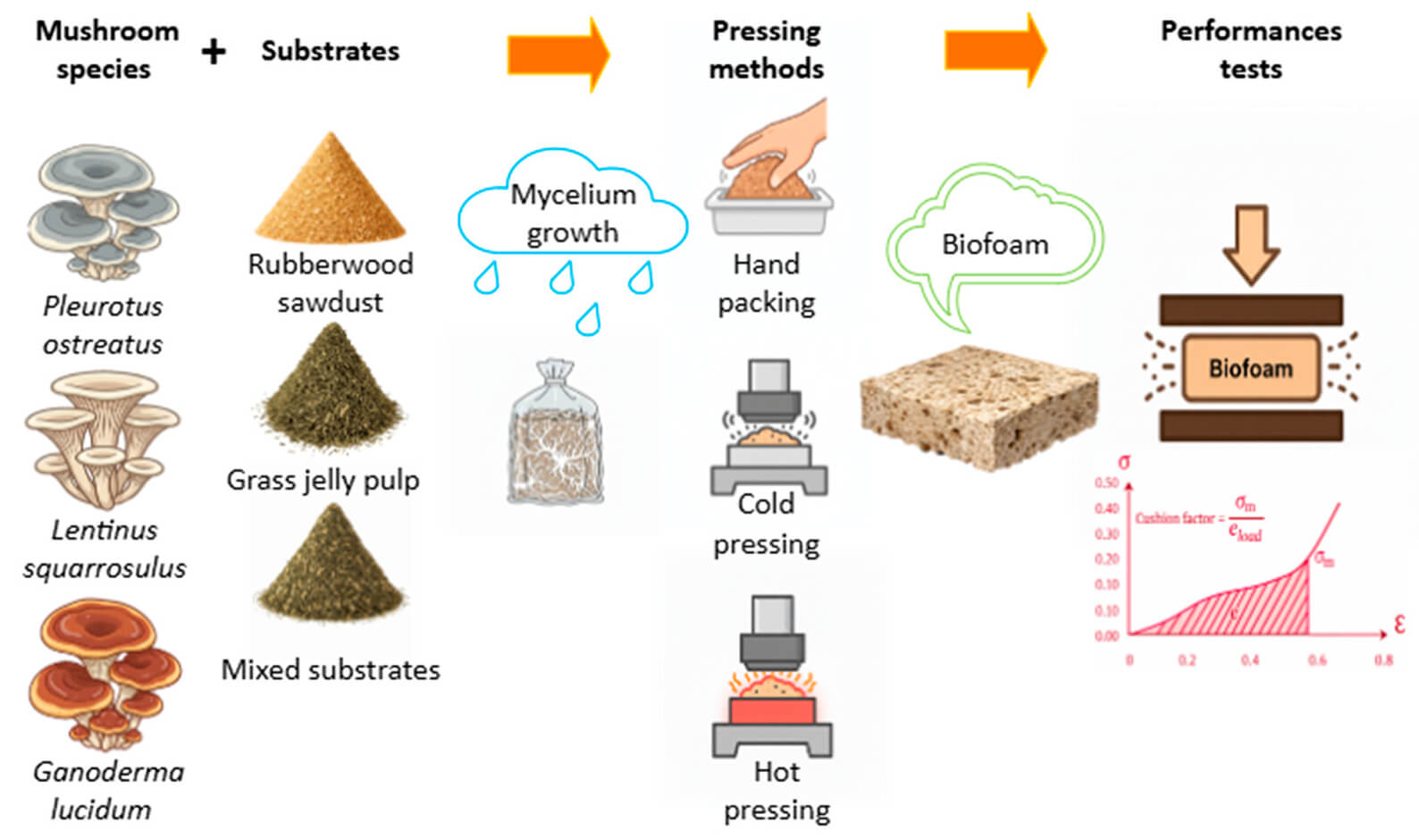
The environmental burden of petroleum-based cushioning materials has driven the search for sustainable, bioderived alternatives. This study developed mycelium-based biofoams from locally available agro-industrial residues, rubberwood sawdust, and grass jelly pulp using Pleurotus ostreatus, Lentinus squarrosulus, and Ganoderma lucidum. The effects of nutritional supplementation, substrate morphology, and processing conditions on growth behavior and material performance were systematically investigated. Nutritional supplementation significantly enhanced fungal colonization, with bran increasing the growth rate of L. squarrosulus to 17.0 mm/day and promoting dense, interconnected hyphal networks. Substrate morphology governed the resulting foam structure and properties: surface wood sawdust (SW) produced compact biofoams with higher density (up to 0.31 g/cm3), low thickness swelling (~2%), and increased hydrophobicity (contact angle up to 104°), whereas grass jelly pulp generated lower-density materials (0.14–0.18 g/cm3) with greater shrinkage and moisture sensitivity. Processing conditions further influenced the performance. Hot pressing (150°C, 3–4 MPa) enhanced densification and increased compressive strength to 0.42 MPa, whereas cold-pressed biofoams derived from fine and coarse core wood sawdust (CWS and CWL) achieved a more balanced combination of structural uniformity, mechanical integrity, and cushioning efficiency, with cushion factor values of 4.3–5.0. These values fall within the functional range of conventional cushioning materials, indicating a comparable energy absorption capability. This study demonstrates that mycelium-based biofoams can be rationally engineered through the integrated control of biological (fungal species and nutrition), structural (substrate type), and processing parameters. These findings provide a scalable and sustainable strategy for developing biodegradable cushioning materials with tunable properties for packaging applications.Graphic Abstract
Keywords
Polymer-based materials are widely used in packaging due to their durability, light weight, and cost-effectiveness. However, their reliance on non-renewable resources and resistance to degradation have raised significant environmental concerns, particularly for single-use cushioning materials, such as expanded polystyrene (EPS). Although EPS provides excellent energy absorption, its poor recyclability and environmental persistence have intensified the search for sustainable alternatives [1,2]. These challenges are further exacerbated by inadequate waste management and recycling infrastructure [3,4]. Therefore, there is an urgent need to develop sustainable, biodegradable, and eco-efficient materials that can maintain functional performance while reducing environmental impact. Mycelium-based biofoams have emerged as promising biodegradable materials produced by growing fungal networks on lignocellulosic residues. The interwoven hyphal structure acts as a natural binder, forming lightweight, porous composites with tunable mechanical properties. The material performance is governed by the fungal species, substrate characteristics, and processing conditions, including pressing and drying. These biofoams exhibit low density, require minimal energy during production, and can achieve mechanical properties comparable to petroleum-based foams such as EPS [5–7]. Their properties can be further tailored through species selection, substrate composition, growth conditions, and postprocessing treatments [8–10]. Owing to their tunable porosity, compressive strength, and biodegradability, mycelium-based biofoams have demonstrated potential in packaging, building insulation, and acoustic applications [8,11]. Additionally, they can biodegrade under composting conditions within weeks, returning nutrients to the soil and supporting a circular bio-economy [10]. Despite these advantages, key research gaps remain. Most studies have focused on a limited range of fungal species and agricultural substrates, with limited attention to region-specific agro-industrial residues [5,8,12,13]. Furthermore, the combined effects of substrate characteristics, fungal growth behavior, and post-processing conditions on mechanical and cushioning performance are not fully understood. In particular, the quantitative relationships between densification, microstructural evolution, and shock absorption efficiency remain insufficiently explored. Therefore, this study aimed to develop and evaluate mycelium-based biofoams using three fungal species (Pleurotus ostreatus, Lentinus squarrosulus, and Ganoderma lucidum) and locally available residues in Thailand, including rubberwood sawdust and grass jelly pulp. The effects of substrate composition, nutritional supplementation, and pressing methods on fungal growth and material structure were systematically investigated. The resulting biofoams were characterized in terms of density, mechanical properties, cushioning performance, and morphology. By integrating locally available biomass with controlled processing conditions, this study provides new insights into processing–structure–property relationships and demonstrates the potential of mycelium-based biofoams as sustainable cushioning materials for packaging applications.
Pure mycelium cultures of Pleurotus ostreatus (PO), Lentinus squarrosulus (LS), and Ganoderma lucidum (GL) were obtained from the Centre of Excellence in Fungal Research, Mae Fah Luang University (Chiang Rai, Thailand). Potato Dextrose Agar (PDA) and yeast extract were purchased from Himedia (India); other analytical-grade chemicals were supplied by Ajax Finechem (Australia). Bran and millet grains were procured from a local market in Songkhla, Thailand. Rubberwood sawdust was obtained from a particleboard manufacturing factory in Songkhla and classified into surface wood sawdust (SW) and core wood sawdust fractions (Fig. 1). The materials were washed with warm water, dried, and sieved. SW particles ranged from 1–2 mm, whereas the core wood sawdust was separated into two size fractions: 1–2 mm fine core wood sawdust (CWS) and 2–3 mm coarse core wood sawdust (CWL). Grass jelly pulp (GJ) was collected from a local food processing factory in Songkhla. The material was washed to remove residual gel, dried, ground, and sieved into two particle sizes: 1–2 mm fine grass jelly pulp (GJS) and 2–3 mm coarse grass jelly pulp (GJL) (Fig. 1).
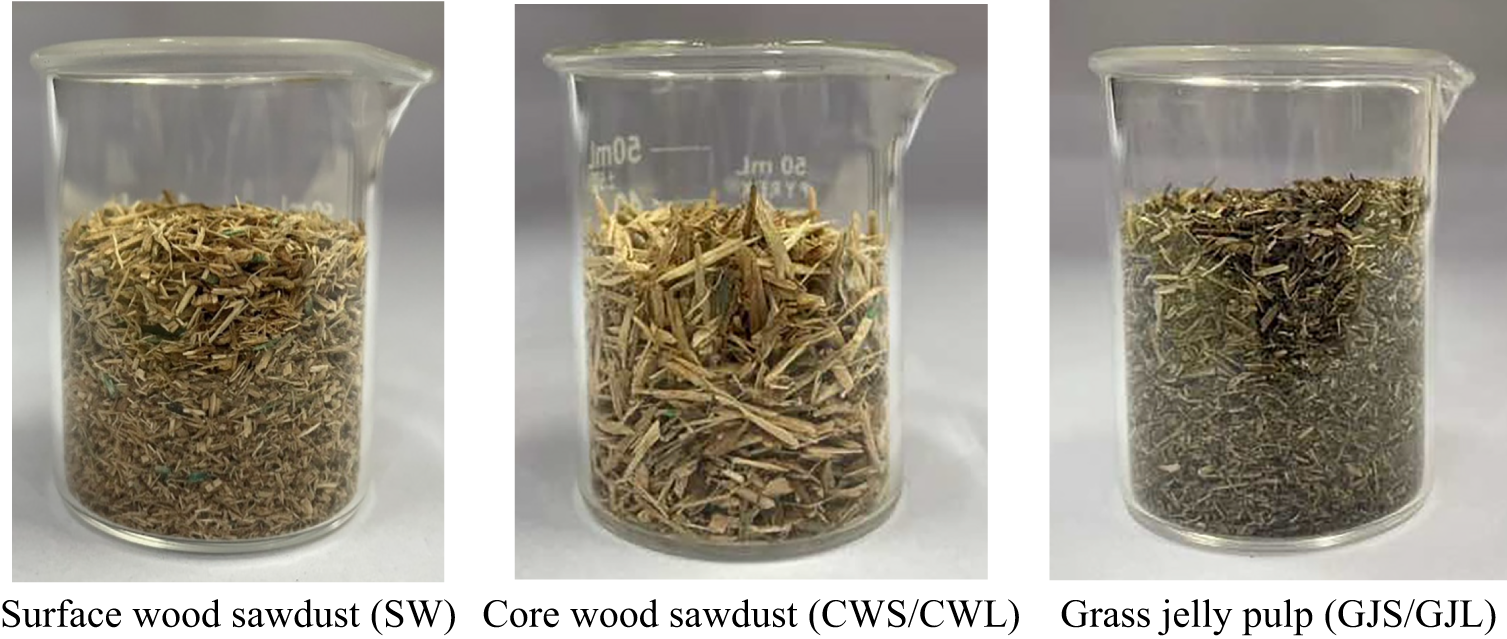
Figure 1: Visual appearance of surface wood sawdust, core wood sawdust, and grass jelly pulp.
2.2 Preparation of Solid Media
Solid media were prepared based on previously reported formulations [14,15]. Two formulations were used. The bran formulation consisted of 5% bran, 1% CaCO3, 2% CaSO4, and 0.2% Na2SO4, while the dextrose formulation contained 1% dextrose, 1.5% yeast extract, 2% CaCO3, and 4% CaSO4. The moisture content of each substrate was adjusted to 70% (wet basis) using distilled water. Approximately 30 g of the prepared medium was transferred into Petri dishes and sterilized at 121°C for 20 min prior to inoculation.
2.3 Chemical Composition Analysis of Substrates
The chemical composition analysis of the substrates included moisture, ash, and fiber contents according to A.O.A.C. methods [16] Cellulose, lignin, and hemicellulose contents were determined using the method of Van Soest and Wine [17].
2.4 Mycelium Growth Performance on Different Formulations and Substrate Types
A 5 mm diameter mycelium plug was aseptically transferred to the center of each sterilized medium. Control plates without nutrient supplementation were included. All samples were incubated at 30°C and 70% relative humidity (RH). All experiments were conducted in triplicate (n = 3).
2.4.2 Mycelium Growth Performance
Mycelium growth was evaluated by measuring colony diameter daily until full coverage of the Petri dish was achieved. The average diameter was calculated from two perpendicular measurements. The mycelium linear growth rate (MLGR) was determined using Eq. (1) [12,18]:
where MLGR (mm/day) is the mycelium linear growth rate, diameter n′ (mm) is the average diameter of the day, and diameter n (mm) is the average diameter of the previous day.
2.5 Production of Mycelium-Based Biofoams
2.5.1 Mycelium Inoculum Preparation
Mycelium inoculum was prepared using a grain-based method. Millet grains were cleaned, soaked overnight, cooked by boiling or steaming, and air-dried. The grains were filled into polypropylene (PP) bottles (approximately 75% volume), plugged with cotton, and sterilized at 121°C for 20 min. After cooling, the grains were inoculated with five mycelial plugs (1 cm × 1 cm) under aseptic conditions and incubated at 30°C and 70% relative humidity (RH) until fully colonized.
Spawn was prepared using rubberwood sawdust, grass jelly pulp, and their mixtures. Mixed substrates were formulated at a 1:1 ratio (w/w) using the same particle size fractions: 1–2 mm (SW/GJS, CWS/GJS) and 2–3 mm (CWL/GJL). All substrates were prepared using the nutrient formulation that yielded the highest mycelial growth (Section 2.4). Moisture content was adjusted to 70% (wet basis) using distilled water before packing into PP bags. The bags were sterilized at 121°C for 20 min and cooled prior to inoculation. Grain inoculum was added at a ratio of 1:20 (w/w) under aseptic conditions. The inoculated substrates were incubated at 30°C and 70% RH for 3–5 days until approximately one-third colonization was achieved.
Biofoams were fabricated using two methods: hand packing (HP) and pressing. Colonized substrates were packed into molds (50 mm × 50 mm × 25 mm and 150 mm × 35 mm × 15 mm for flexural testing) and incubated for 7 days, followed by flipping and further incubation for 3 days to ensure uniform colonization.
(a) Hand Packing (HP)
Samples were dried at 70°C until constant weight to terminate mycelial growth [12].
(b) Pressing Treatment
HP samples were subjected to either cold pressing (CO, room temperature) or hot pressing (HO, 150°C) at 3–4 MPa for 10 min. After pressing, if dimensional changes occurred after pressing, additional spawn was added to the mold to restore the desired dimensions, followed by re-pressing under the same conditions. Samples were re-incubated for 5–7 days to restore mycelial bonding and structural integrity, followed by drying at 70°C to constant weight. Sample weights were recorded before and after drying. A schematic overview of the fabrication process is shown in Fig. 2.
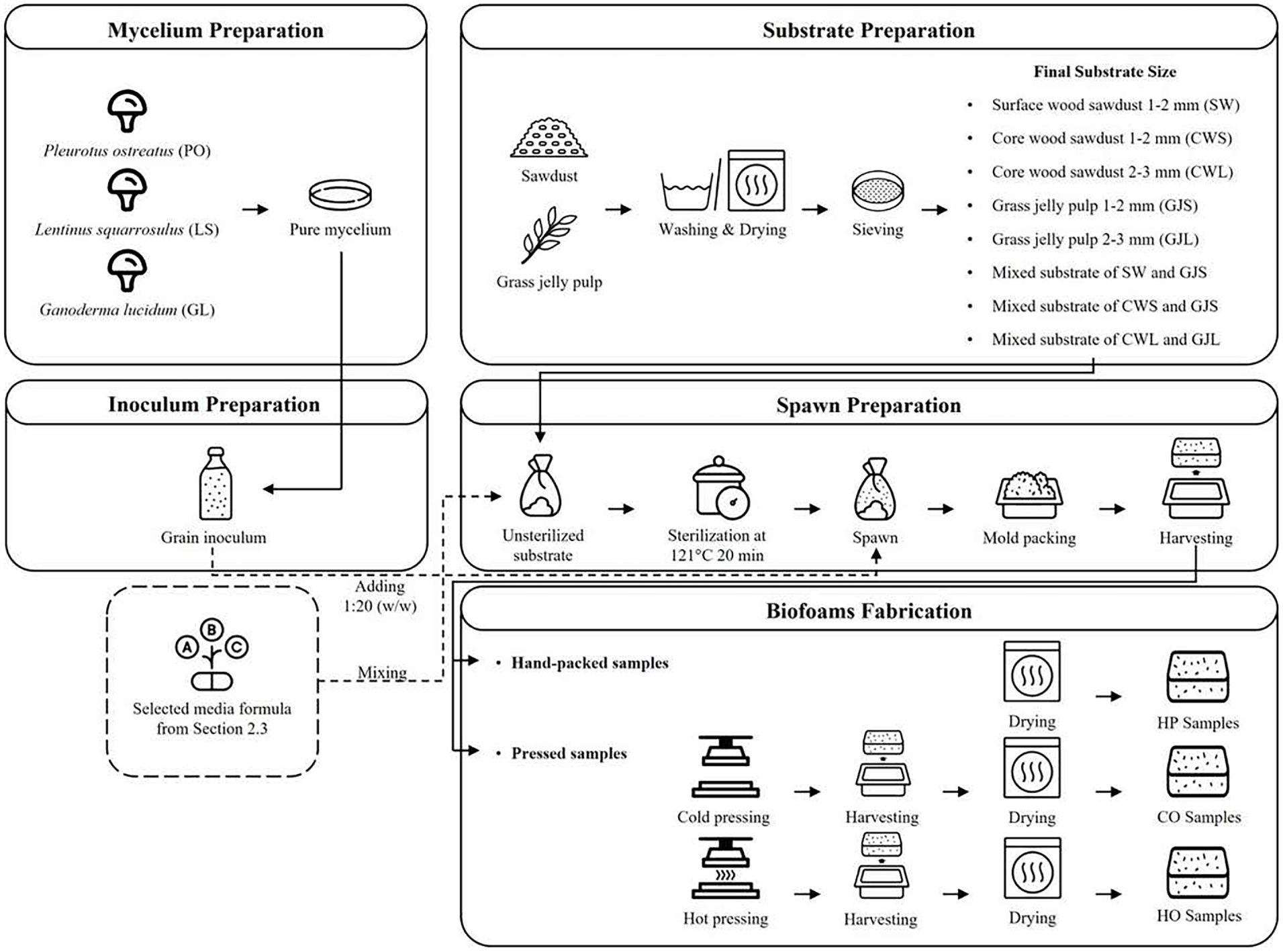
Figure 2: An overview of the fabrication process of mycelium-based biofoams.
2.6 Characterization of Mycelium-Based Biofoams
The appearance of the biofoams was documented using digital photography to assess surface coverage, uniformity, and mycelial distribution.
Surface morphology and cross-sectional structures were examined using scanning electron microscopy (SEM, FEI Quanta 400) at an accelerating voltage of 20 kV. Samples (~1 mm thick) were mounted on a platform with conductive tape, sputter-coated with gold–palladium, and observed under vacuum. Fiber diameter was measured using ImageJ, and cross-sectional images were used to evaluate internal structure.
2.6.3 Fourier Transform Infrared Spectroscopy (FTIR)
Chemical functional groups of substrates and biofoams were analyzed using an FTIR spectrometer (Bruker Alpha II) over a wavenumber range of 4000–500 cm−1 at a resolution of 1 cm−1.
Density was determined following ASTM C303-02 based on dry weight and sample volume using Eq. (2). Shrinkage (%) was calculated using Eq. (3):
where V1 and V2 are the volumes before and after drying, respectively.
Compressive strength was measured according to ASTM C165-07 using a universal testing machine (Tinius Olsen HK 10KS) at a crosshead speed of 12.7 mm/min. The stress at 10% strain was recorded.
Flexural strength was determined following ASTM D790-17 using a three-point bending test with a span length of 50 mm and a crosshead speed of 5 mm/min.
Water absorption was measured according to ASTM D570-22. Dried samples were immersed in distilled water at room temperature for 24 h. Water absorption (%) was calculated using Eq. (4):
where Wi and Wf are the initial and final weights, respectively.
Thickness swelling (%) was determined after 24 h water immersion by measuring the thickness at the center of the sample before and after soaking.
2.6.9 Water Contact Angle (WCA)
Surface wettability was evaluated by measuring the water contact angle using a ~5 μL droplet of distilled water. Images were analyzed using ImageJ software.
All experiments were conducted in triplicate (n = 3), and results are reported as mean ± standard deviation. Statistical analysis was performed using one-way ANOVA followed by Duncan’s multiple range test at a significance level of p < 0.05 using SPSS (version 25, IBM Corp., Armonk, NY, USA).
The cushioning performance of the biofoams was evaluated using a quasi-static compression approach based on ASTM D3574-05. Stress–strain curves were obtained at a crosshead speed of 12.7 mm/min up to 25%, 50%, and 65% strain. The energy density (e) was calculated from the area under the stress–strain curve using Eq. (5):
where σ (MPa) is the compressive stress and
The cushion factor (C), representing the material’s energy absorption efficiency, was estimated using Eq. (6):
where σm (MPa) is the maximum compressive stress and e (MPa) is the corresponding energy density.
It should be noted that the cushion factor obtained in this study represents an estimation based on quasi-static compression data. The relationship between the estimated cushion factor and cushioning performance is further discussed in Section 3.4.
3.1 Chemical Composition Analysis of Substrates
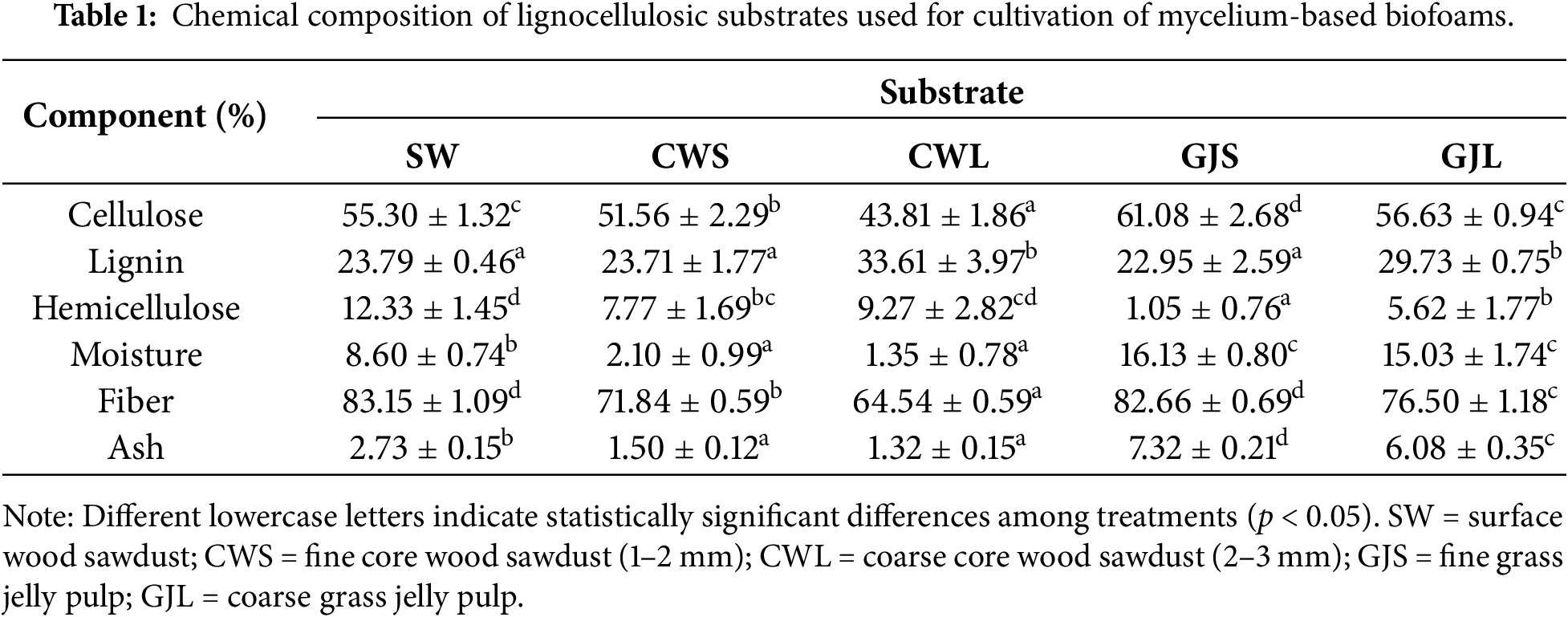
The chemical composition of the lignocellulosic substrates used for mycelial cultivation is presented in Table 1. Significant differences (p < 0.05) were observed among the substrates in cellulose, lignin, hemicellulose, moisture, fiber, and ash contents, which may influence fungal growth and biofoam properties. GJS and GJL exhibited the highest cellulose content (56.63%–61.08%), whereas CWL showed the highest lignin content (33.61%). Cellulose and hemicellulose serve as major carbon sources for fungal metabolism, whereas lignin contributes to structural rigidity and resistance to degradation [13,19]. Therefore, substrates with higher cellulose and lower lignin contents, such as GJS and SW, may promote better nutrient accessibility and mycelial colonization. Sawdust substrates, particularly SW and CWS, showed relatively balanced cellulose, lignin, and fiber contents, which may provide favorable structural support for hyphal attachment and interparticle bonding. The ash content was substantially higher in the grass jelly pulp substrates than in the sawdust-based substrates. Increased ash content may provide additional minerals beneficial for fungal metabolism, but excessive ash may alter the substrate pH and negatively affect fungal growth. Variations in lignocellulosic composition can influence fungal colonization, mechanical properties, moisture sensitivity, and energy absorption behavior of the resulting material.
3.2 Mycelium Growth Performance on Different Formulations and Substrate Types
As shown in Table 2 and Fig. 3, the addition of nutritional supplements (bran and dextrose) significantly increased the mycelium linear growth rate (MLGR) of all species compared to the control. The time required for complete colonization ranged from 5 to 19 days. Among the species, L. squarrosulus exhibited the highest responsiveness to supplementation, achieving an MLGR approximately 2.4 times higher than the control. In contrast, G. lucidum showed the slowest growth with only slight improvement, whereas P. ostreatus exhibited intermediate performance. Bran supplementation was more effective than dextrose in promoting mycelial growth. This finding is likely associated with the richer nutrient composition of bran, which provides carbon and additional nutrients that better support fungal growth than simple carbohydrate sources [20]. In contrast, the dextrose-based formulation mainly supplies simple sugars and yeast extract, offering a limited nutrient profile for sustained growth. These findings are consistent with previous studies reporting enhanced fungal growth on bran-supplemented substrates [21]. The improved MLGR in the bran-treated samples suggests that complex nutrients stimulate lignocellulolytic enzyme production, thereby enhancing substrate degradation and mycelial colonization. The substrate type also significantly influenced mycelial growth (Fig. 3a–c). Core wood sawdust supported the highest growth rates, particularly for L. squarrosulus and G. lucidum (Fig. 3b,c), with CWL showing the best performance. Despite its high lignin content (~33.61%), both species grew effectively on core wood substrates, indicating strong ligninolytic capabilities. Both fungi belong to the white-rot basidiomycetes, which are known to produce ligninolytic enzymes, including lignin peroxidase, manganese peroxidase, versatile peroxidase, and laccase, which enable lignin depolymerization and improve access to cellulose and hemicellulose [22]. This enzymatic activity explains the superior colonization observed in L. squarrosulus. P. ostreatus exhibited moderate growth (Fig. 3a), even under bran supplementation. This may be related to its enzymatic preference for substrates with a higher hemicellulose content rather than lignin-rich materials. Although it produces lignin-degrading enzymes, its growth is typically more efficient on substrates with a balanced polysaccharide composition. In contrast, grass jelly pulp resulted in lower growth rates for all species, despite its lower cellulose and lignin contents. One possible explanation is its markedly lower hemicellulose content (particularly GJS, ~1.05%), which may reduce the availability of readily degradable polysaccharides required for substrate colonization. Previous studies have shown that fungal growth is influenced by the proportions of cellulose, hemicellulose, lignin, and nitrogen within lignocellulosic substrates [23]. Additionally, the relatively high ash content (6.08%–7.32%) may have influenced mycelial growth by altering the physicochemical properties of the substrate [24]. The soft and hydrophilic nature of the pulp likely led to compaction during incubation, thereby reducing aeration and oxygen diffusion. Consequently, the conditions were less favorable for hyphal elongation, resulting in reduced growth, particularly for G. lucidum.
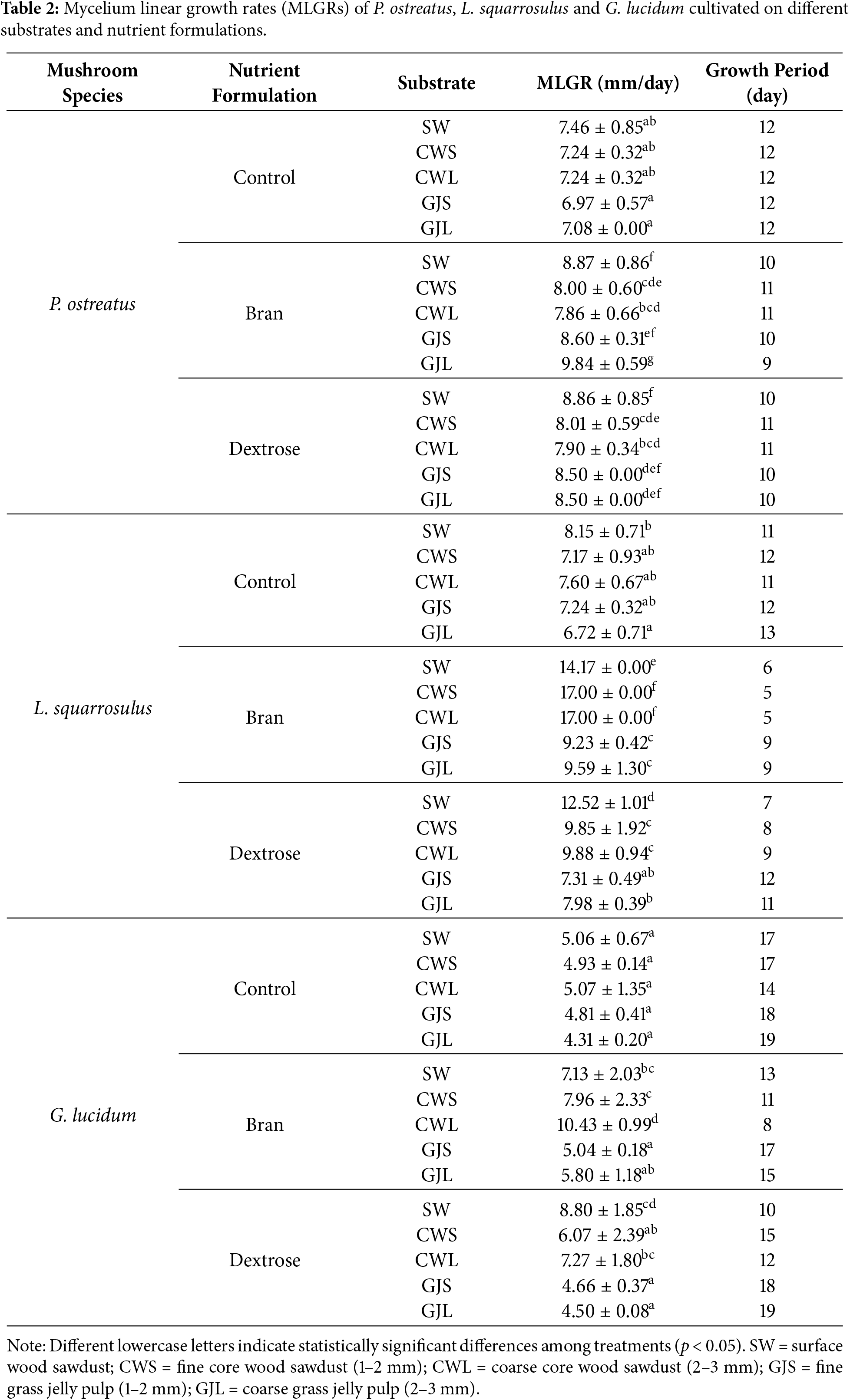
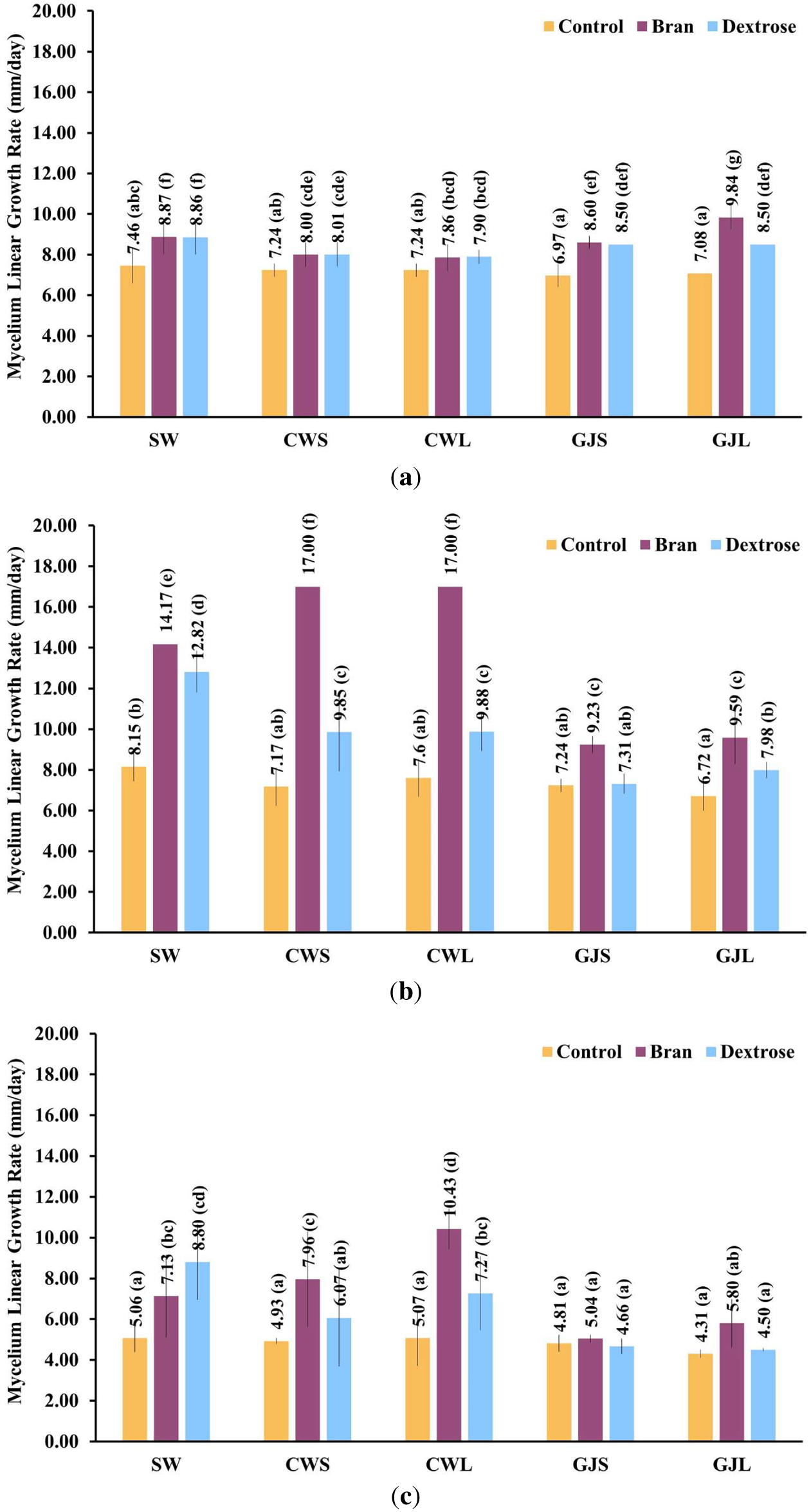
Figure 3: Mycelium growth performance of (a) Pleurotus ostreatus (b) Lentinus squarrosulus and (c) Ganoderma lucidum on different substrate types and nutrient formulations. Abbreviations: SW = surface wood sawdust; CWS = fine core wood sawdust (1–2 mm); CWL = coarse core wood sawdust (2–3 mm); GJS = fine grass jelly pulp (1–2 mm); GJL = coarse grass jelly pulp (2–3 mm). Different lowercase letters indicate statistically significant differences among treatments (p < 0.05) within each species.
3.2.2 Morphology and Diameter Analysis of Mycelium Fibers
Based on the MLGR results, the selected treatments exhibiting the highest growth rates were further analyzed for mycelial morphology and fiber diameter (Table 3, Fig. 4). SEM images of cross-sectional morphology of mycelium fiber revealed distinct differences in hyphal structure, thickness, and network density among species, influenced by both nutrient formulation and substrate type. P. ostreatus formed moderately dense and interwoven networks, with fiber diameters ranging from 1.93 to 2.51 μm. Bran supplementation consistently produced thicker fibers than dextrose, with the largest diameter observed in GJL-B (2.51 ± 0.54 μm). This suggests that nutrient-rich bran promotes cell wall development and hyphal branching, whereas dextrose provides limited nutritional diversity for sustained structural growth. L. squarrosulus exhibited the largest fiber diameters (1.80–3.90 μm), with the thickest fibers observed in CWL-B (3.90 ± 0.93 μm). The SEM images showed dense, highly interconnected networks with extensive branching. This behavior reflects strong ligninolytic activity, which enables efficient substrate degradation and continuous hyphal expansion. A broader diameter distribution indicates active growth, where mature and newly formed hyphae coexist. In contrast, G. lucidum produced the smallest fiber diameters (1.41–1.83 μm) and formed compact, uniform networks. This corresponds to a slower growth rate and suggests a more controlled growth pattern, consistent with previous reports [8]. Overall, the fiber diameter followed the order L. squarrosulus > P. ostreatus > G. lucidum, which aligns with the MLGR trends (Table 2, Fig. 3). This suggests that species exhibiting faster mycelial growth develop thicker hyphal networks. Thicker hyphae have been reported to contribute to denser fibrous networks and improved structural stability in mycelium materials, although the relationship between hyphal diameter, nutrient transport, and enzymatic activity was not investigated in this study [25]. The substrate type also played a critical role. Sawdust-based substrates, particularly CWL, promoted thicker and more interconnected fibers compared to grass jelly pulp. The lignocellulosic composition and coarse particle structure of sawdust provided mechanical support, improved aeration, and enhanced hyphal attachment, facilitating network development. Moreover, the lignocellulosic composition of sawdust may stimulate the production of ligninolytic enzymes, including laccase, manganese peroxidase, and lignin peroxidase, thereby promoting lignin depolymerization and facilitating fungal colonization of substrates [26,27].
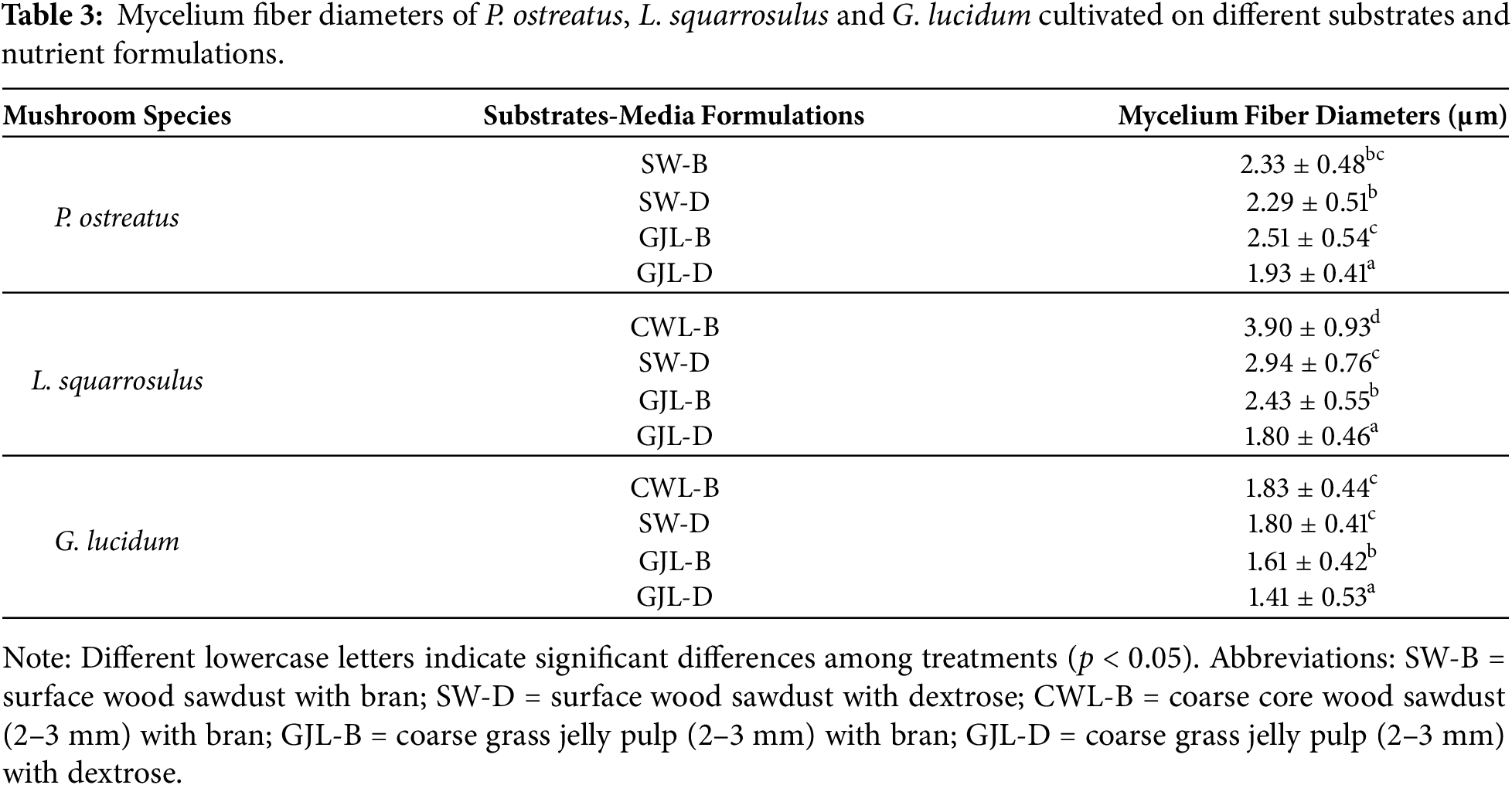
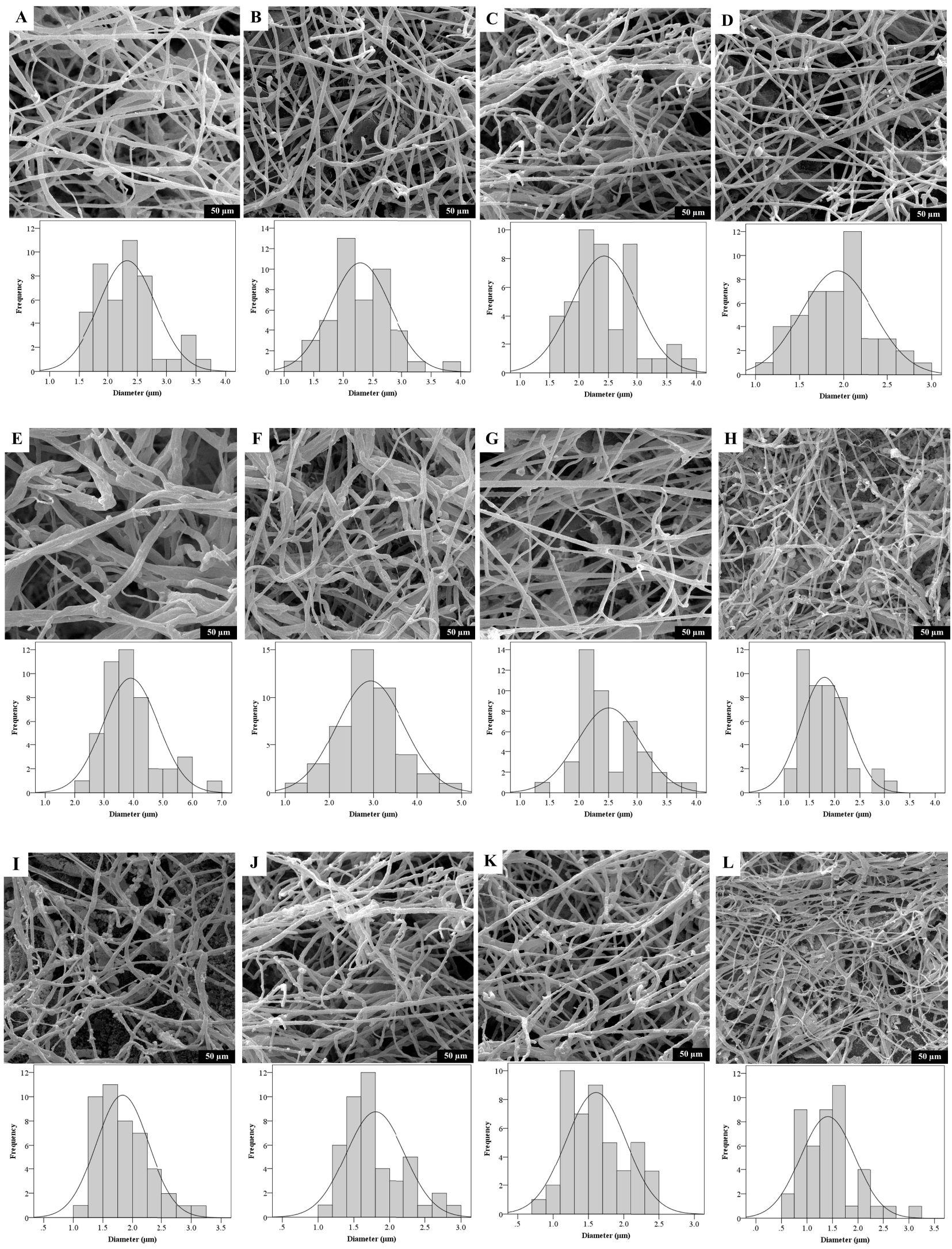
Figure 4: SEM images of cross-sectional morphology and corresponding frequency distribution of mycelium fiber diameters for different fungal species, substrates, and nutrient formulations. (A–D) Pleurotus ostreatus: (A) surface wood sawdust with bran (SW-B); (B) surface wood sawdust with dextrose (SW-D); (C) coarse grass jelly pulp (2–3 mm) with bran (GJL-B); (D) coarse grass jelly pulp (2–3 mm) with dextrose (GJL-D). (E–H) Lentinus squarrosulus: (E) coarse core wood sawdust (2–3 mm) with bran (CWL-B); (F) coarse core wood sawdust (2–3 mm) with dextrose (CWL-D); (G) coarse grass jelly pulp (2–3 mm) with bran (GJL-B); (H) coarse grass jelly pulp (2–3 mm) with dextrose (GJL-D). (I–L) Ganoderma lucidum: (I) coarse core wood sawdust (2–3 mm) with bran (CWL-B); (J) coarse core wood sawdust (2–3 mm) with dextrose (CWL-D); (K) coarse grass jelly pulp (2–3 mm) with bran (GJL-B); (L) coarse grass jelly pulp (2–3 mm) with dextrose (GJL-D). Scale bar = 50 μm.
In contrast, grass jelly pulp produced thinner and less interconnected mycelial networks, possibly because its compact structure may restrict oxygen diffusion and reduce the available surface for hyphal colonization, thereby limiting mycelial development [28]. These results demonstrate that both nutrient composition and substrate structure govern mycelial network formation, which is essential for developing strong and cohesive biofoam.
Fig. 5 illustrates the relationship between mycelium fiber diameter and mycelium linear growth rate (MLGR) for all species cultivated under bran and dextrose formulations. Overall, bran supplementation resulted in both higher MLGR and larger fiber diameters compared to dextrose. This behavior can be attributed to the balanced nutrient composition of bran, which provides carbohydrates, proteins, lipids, and minerals that enhance enzymatic activity, accelerate substrate colonization, and promote thicker hyphal development. In contrast, the dextrose formulation, composed mainly of simple sugars, supported moderate growth and produced thinner fibers, reflecting limited nutrient diversity and reduced capacity for sustained cell wall biosynthesis. L. squarrosulus exhibited the strongest correlation between MLGR and fiber diameter, particularly in CWL-B, which showed both the highest growth rate and largest fiber diameter. Among the fungal species investigated, samples exhibiting higher MLGR also tended to develop thicker hyphal fibers. Although the relationship between growth rate and hyphal diameter has not been directly established, previous studies have shown that hyphal morphology, including fiber radius and network structure, varies during mycelial development and strongly influences the structural and mechanical properties of the mycelium [29].
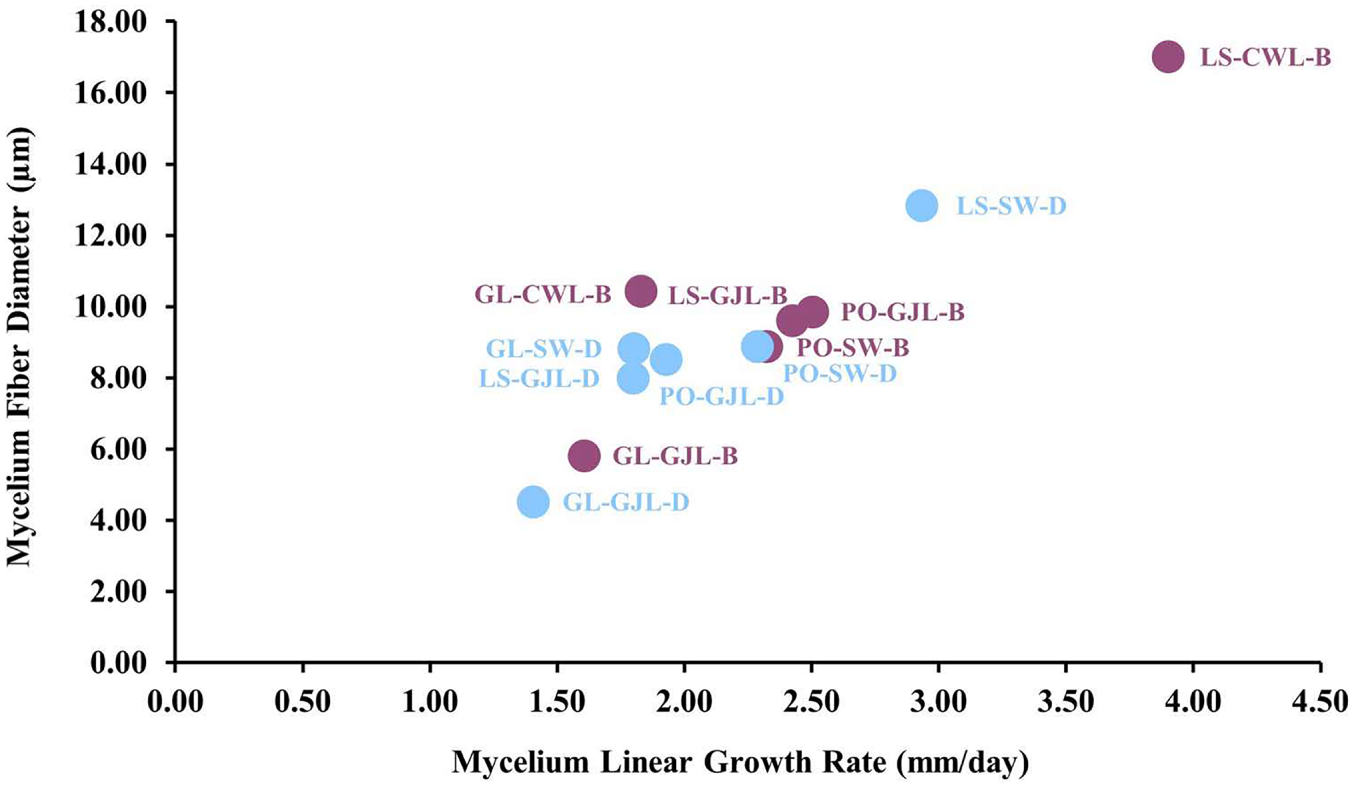
Figure 5: Relationship between mycelium fiber diameter and mycelium linear growth rate for different fungal species, substrates, and nutrient formulations. Samples include Pleurotus ostreatus (PO), Lentinus squarrosulus (LS), and Ganoderma lucidum (GL) cultivated on surface wood sawdust (SW), coarse core wood sawdust (2–3 mm, CWL), and coarse grass jelly pulp (2–3 mm, GJL), using bran (B) and dextrose (D) formulations. Sample codes: PO-SW-B, PO-SW-D, PO-GJL-B, PO-GJL-D; LS-CWL-B, LS-CWL-D, LS-GJL-B, LS-GJL-D; GL-CWL-B, GL-CWL-D, GL-GJL-B, GL-GJL-D.
3.3 Characterization of Mycelium-Based Biofoams
Fig. 6 shows the visual characteristics of mycelium-based biofoams. Clear differences in surface coverage, compactness, and fungal skin formation were observed among the fungal species, substrate types, and processing conditions. Among the species, L. squarrosulus and G. lucidum produced denser and more uniform fungal skins than P. ostreatus, which exhibited partial surface coverage and visible substrate exposure. These differences may reflect species-dependent variations in mycelial colonization and hyphal network formation. Previous studies have reported that fungal species significantly influence mycelial growth, substrate binding, and the physical and mechanical properties of mycelium-based composites [7]. However, ligninolytic enzyme activity was not determined in this study. Therefore, the role of enzymatic degradation in the observed surface morphology requires further investigation.
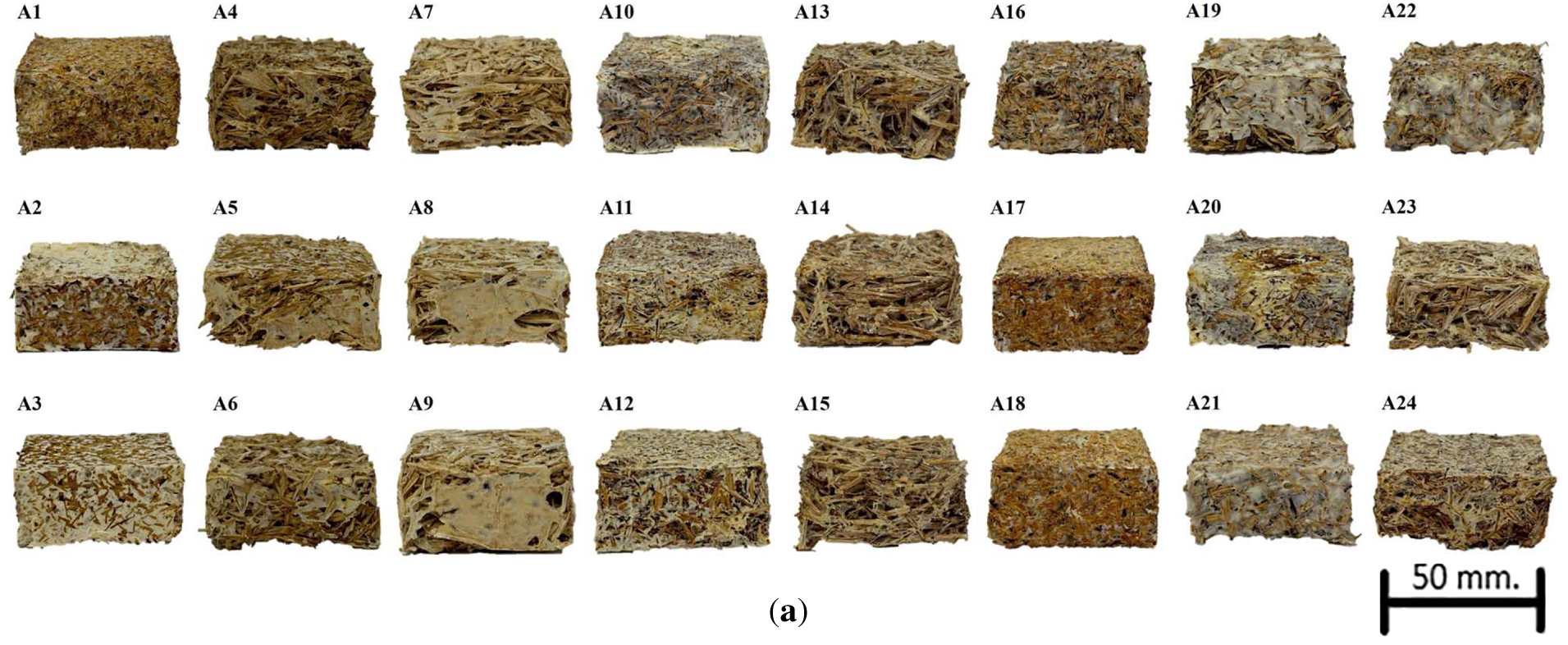
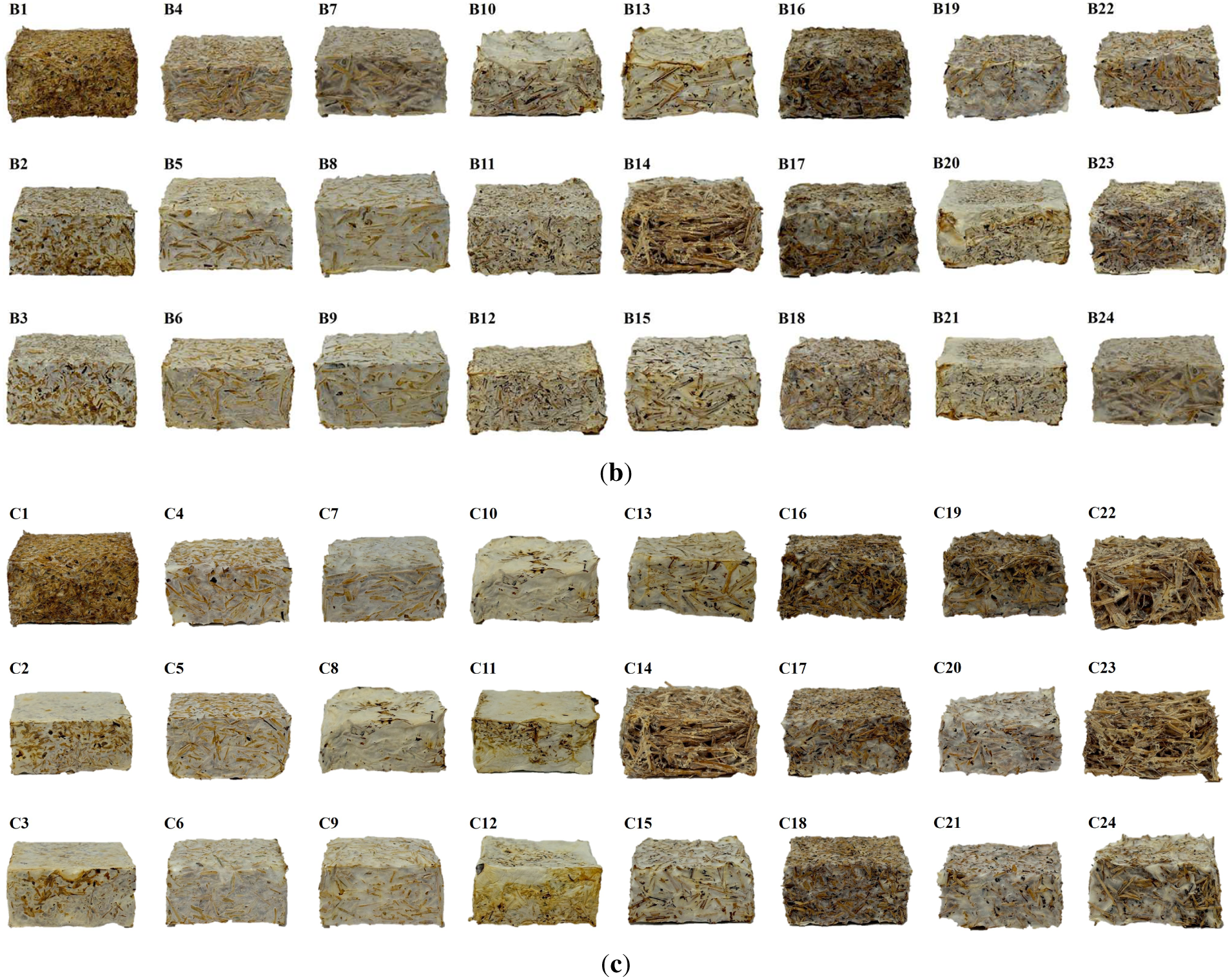
Figure 6: Visual appearance of mycelium-based biofoams produced by (a) Pleurotus ostreatus (b) Lentinus squarrosulus and (c) Ganoderma lucidum. For each substrate, samples are arranged from top to bottom according to pressing method: hand packing (HP), cold pressing (CO), and hot pressing (HO). A1–C3: surface wood sawdust (SW); A4–C6: fine core wood sawdust (1–2 mm, CWS); A7–C9: coarse core wood sawdust (2–3 mm, CWL); A10–C12: fine grass jelly pulp (1–2 mm, GJS); A13–C15: coarse grass jelly pulp (2–3 mm, GJL); A16–C18: mixture of surface wood sawdust and fine grass jelly pulp (SW/GJS); A19–C21: mixture of fine core wood sawdust and fine grass jelly pulp (CWS/GJS); A22–C24: mixture of coarse core wood sawdust and coarse grass jelly pulp (CWL/GJL). All images were acquired at the same magnification (scale bar = 50 mm).
The substrate type significantly influenced the biofoam structure. SW and CWS produced more compact and uniform biofoams due to their regular particle morphology and better support for hyphal attachment. In contrast, CWL resulted in larger voids and less uniform structures, particularly for P. ostreatus, although pressing improved the compactness. These results indicate that smaller and more uniform particles facilitate stronger mycelial interconnections and continuous skin formation. Grass jelly pulp exhibited distinct behavior due to its high moisture retention and soft structure. While it supported fungal growth, it led to surface shrinkage and reduced structural stability, particularly in GJL. The tendency of this substrate to compact during incubation likely limited oxygen diffusion, resulting in thinner hyphal networks and less cohesive biofoams. Mixed substrates showed intermediate performance but revealed compatibility challenges. The combination of rigid sawdust and soft grass jelly pulp resulted in uneven structures and reduced uniformity, particularly when the particle sizes differed. This mismatch limited consistent hyphal penetration and bonding, particularly for G. lucidum. Processing conditions also played a critical role. Pressing, particularly hot pressing, significantly reduced voids, improved particle contact, and enhanced fungal skin continuity across all substrates. This resulted in more compact and structurally stable biofoams with lower porosity. Overall, L. squarrosulus produced the most uniform and well-colonized biofoams, followed by G. lucidum, while P. ostreatus showed limited surface development. Sawdust-based substrates, particularly those with finer and more uniform particles, were more suitable for producing dense and homogeneous biofoams. These findings demonstrate that fungal species, substrate characteristics, and processing conditions collectively govern the structural quality of mycelium-based biofoams.
The internal morphology of the mycelium-based biofoams was examined using SEM (Fig. 7), revealing the effects of substrate type, particle size, and pressing conditions on hyphal network formation and interparticle bonding. Mycelium colonization consistently produced fibrous networks that penetrated the substrate, even when surface coverage appeared thin, consistent with previous studies [7,10]. Hand-packed samples exhibited loose and discontinuous structures across all substrates. In CWL and GJL, large particles resulted in reduced contact area, leading to incomplete hyphal bridging and the formation of large pores. These porous structures indicate limited interfacial bonding and inefficient load transfer, which may negatively affect mechanical performance. Hot pressing significantly improved the internal structure of the biofoams. SW-HO showed dense and well-interconnected fibrous networks, particularly for L. squarrosulus, which exhibited smooth and continuous mycelial coverage. This behavior reflects strong substrate colonization and effective lignocellulosic degradation. Although P. ostreatus and G. lucidum also showed improved connectivity after pressing, small pores remained, indicating less efficient hyphal consolidation. Grass jelly pulp-based biofoams remained more porous even after hot pressing. This is attributed to the soft, hydrophilic nature of the substrate, which undergoes significant compression during pressing but forms microvoids during drying. Consequently, these samples exhibited lower structural compactness compared to sawdust-based biofoams. Mixed substrates (SW/GJS) revealed compatibility challenges between rigid sawdust and soft pulp. Hand-packed samples showed uneven hyphal distribution and large voids, while hot pressing improved particle contact and network continuity. However, residual pores persisted, indicating incomplete integration of the heterogeneous components. Across all treatments, G. lucidum consistently formed thinner hyphae compared to P. ostreatus and L. squarrosulus, consistent with the fiber diameter results in Section 3.2.2. This species-specific characteristic likely limits hyphal interweaving and contributes to lower structural compactness. In contrast, L. squarrosulus produced thicker and more interconnected networks, supporting improved structural integrity. Pressing contributed significantly to enhancing biofoam structure by reducing voids, improving particle contact, and strengthening hyphal bonding. These microstructural differences directly influence the mechanical properties and cushioning performance of the biofoams.
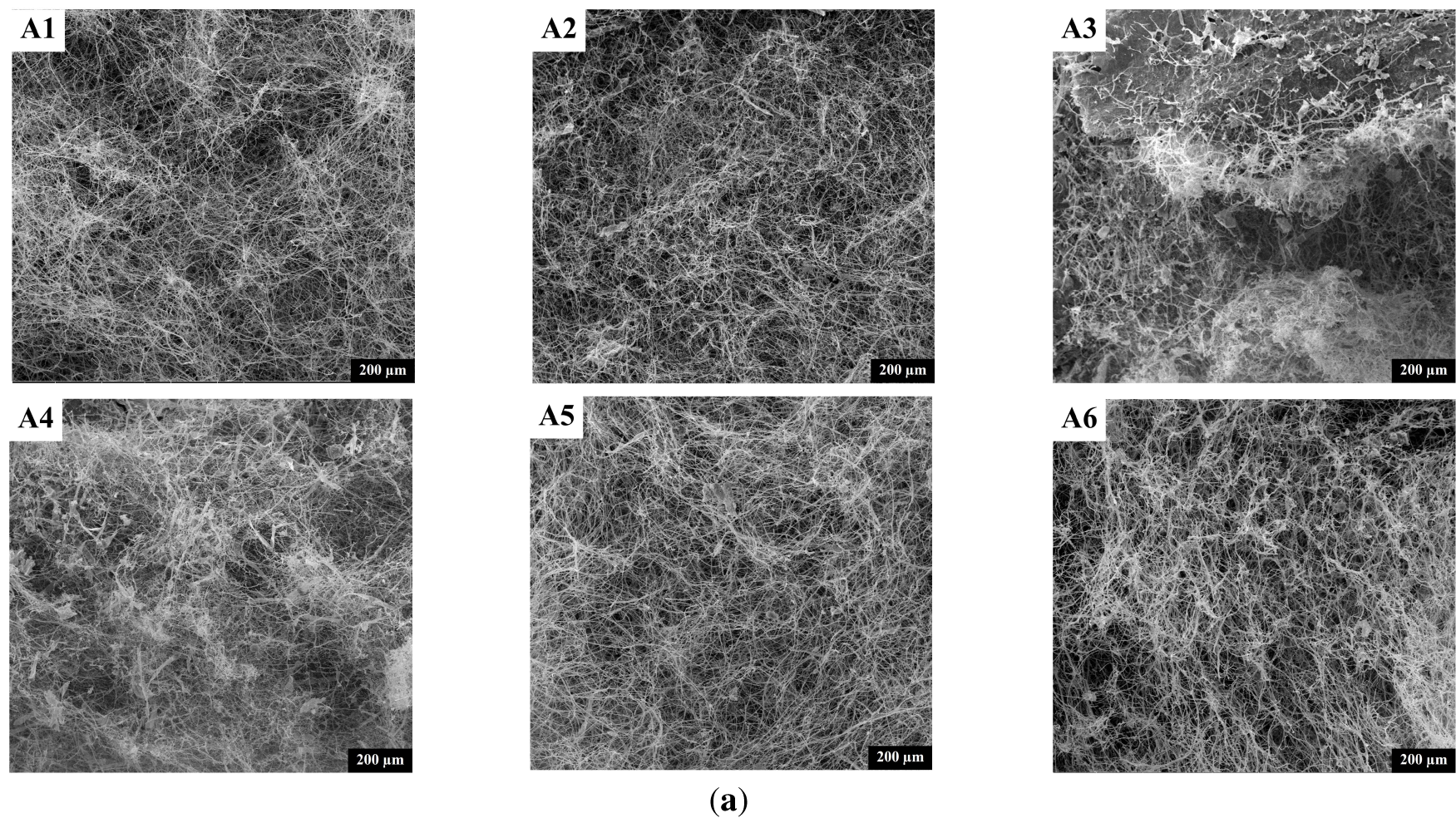
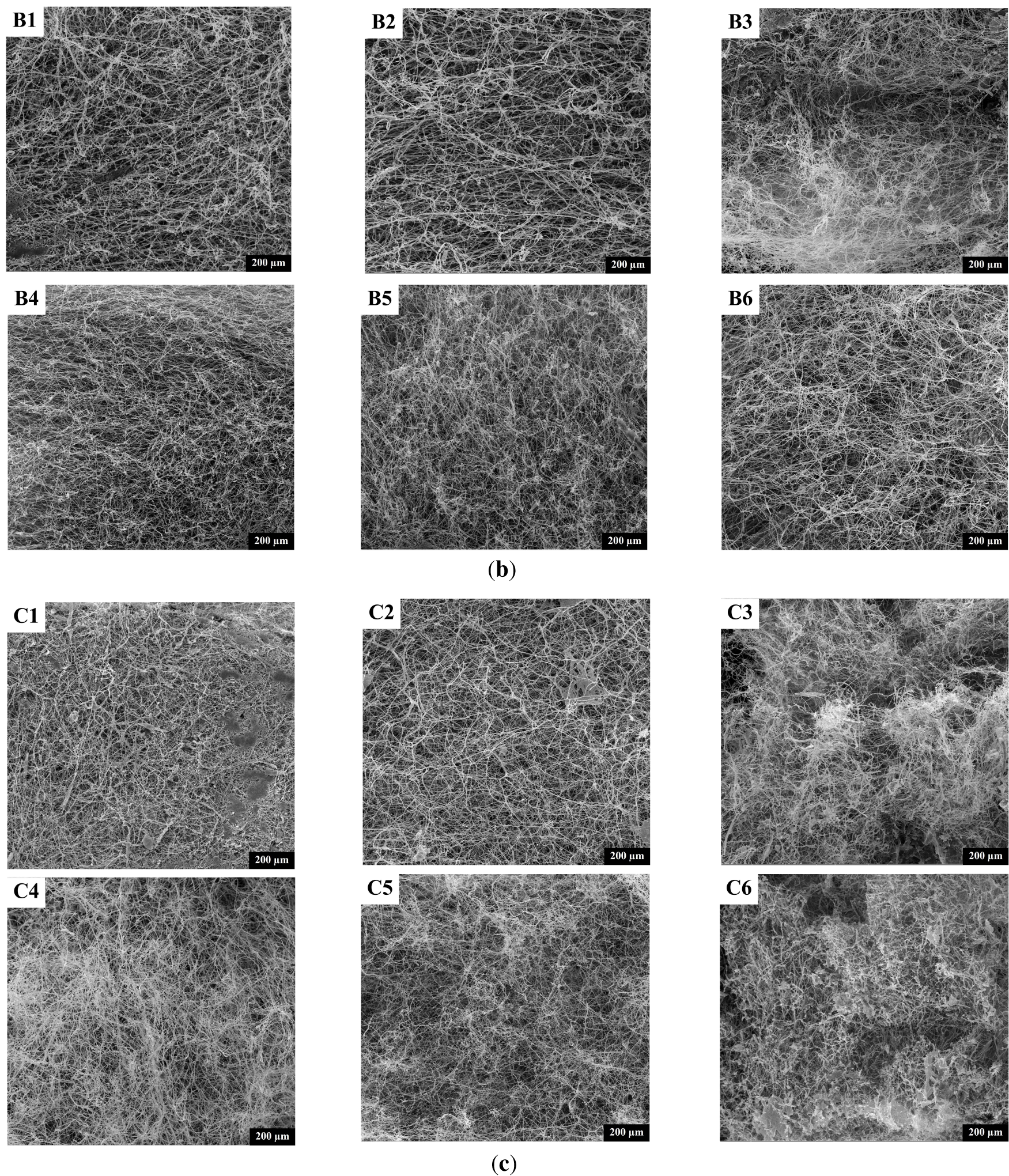
Figure 7: SEM images of cross-sectional morphology of mycelium-based biofoams produced by (a) Pleurotus ostreatus (b) Lentinus squarrosulus and (c) Ganoderma lucidum. A1–C1: coarse core wood sawdust (2–3 mm) with hand packing (CWL-HP); A2–C2: coarse grass jelly pulp (2–3 mm) with hand packing (GJL-HP); A3–C3: mixture of surface wood sawdust and fine grass jelly pulp (1–2 mm) with hand packing (SW/GJS-HP); A4–C4: surface wood sawdust with hot pressing (SW-HO); A5–C5: fine grass jelly pulp (1–2 mm) with hot pressing (GJS-HO); A6–C6: mixture of surface wood sawdust and fine grass jelly pulp (1–2 mm) with hot pressing (SW/GJS-HO). Scale bar = 200 μm.
3.3.3 Fourier Transform Infrared Spectroscopy
The FTIR spectra of the mycelium-based biofoams (Fig. 8) exhibited characteristic absorption bands corresponding to cellulose, lignin, lipids, proteins, and polysaccharides, confirming the coexistence of fungal and lignocellulosic components, consistent with previous studies [12,30,31]. Although the overall spectral profiles were similar across all samples, variations in peak intensity and shape reflected differences in fungal colonization, substrate composition, and processing conditions. A broad absorption band around 3300 cm−1, attributed to O–H stretching vibrations of cellulose, lignin, and bound water, was observed in all samples. P. ostreatus exhibited broader O–H bands, whereas L. squarrosulus showed relatively sharper peaks, suggesting differences in hydrogen bonding and microstructural organization, consistent with the SEM observations. G. lucidum displayed intermediate behavior. Substrate effects were also observed, with sawdust-based biofoams exhibiting sharper O–H bands than grass jelly pulp-based samples. Hot pressing reduced the intensity of the O–H band, consistent with partial dehydration and reduced moisture availability, which may contribute to improved dimensional stability. Bands in the region of 3000–2800 cm−1, assigned to C–H stretching vibrations of aliphatic groups, were observed in all samples [8]. G. lucidum exhibited relatively stronger signals, consistent with the differences in the chemical composition of the fungal biomass. Protein-related bands were observed at approximately 1630 cm−1 (amide I), 1550 cm−1 (amide II), and 1230–1300 cm−1 (amide III), indicating the fungal proteins within the composite matrix [12]. These bands were most prominent in L. squarrosulus, suggesting a relatively greater contribution of fungal biomass to the composite matrix. The persistence of these protein-related bands after pressing suggests that the fungal proteins remained integrated within the composite structure. Strong absorption in the 1200–900 cm−1 region, corresponding to the C–O, C–C, and C–O–C vibrations of polysaccharides, confirmed that carbohydrate components remained the primary structural backbone of the biofoams [12]. A weak band near 1250 cm−1 was associated with phosphate-containing compounds in the fungal biomass [32]. These findings indicate that fungal colonization and pressing influenced the chemical characteristics of the mycelium-based biofoams while preserving the major lignocellulosic and fungal components. These chemical characteristics are consistent with the observed microstructural differences and may contribute to the physical and mechanical properties of the biofoams.
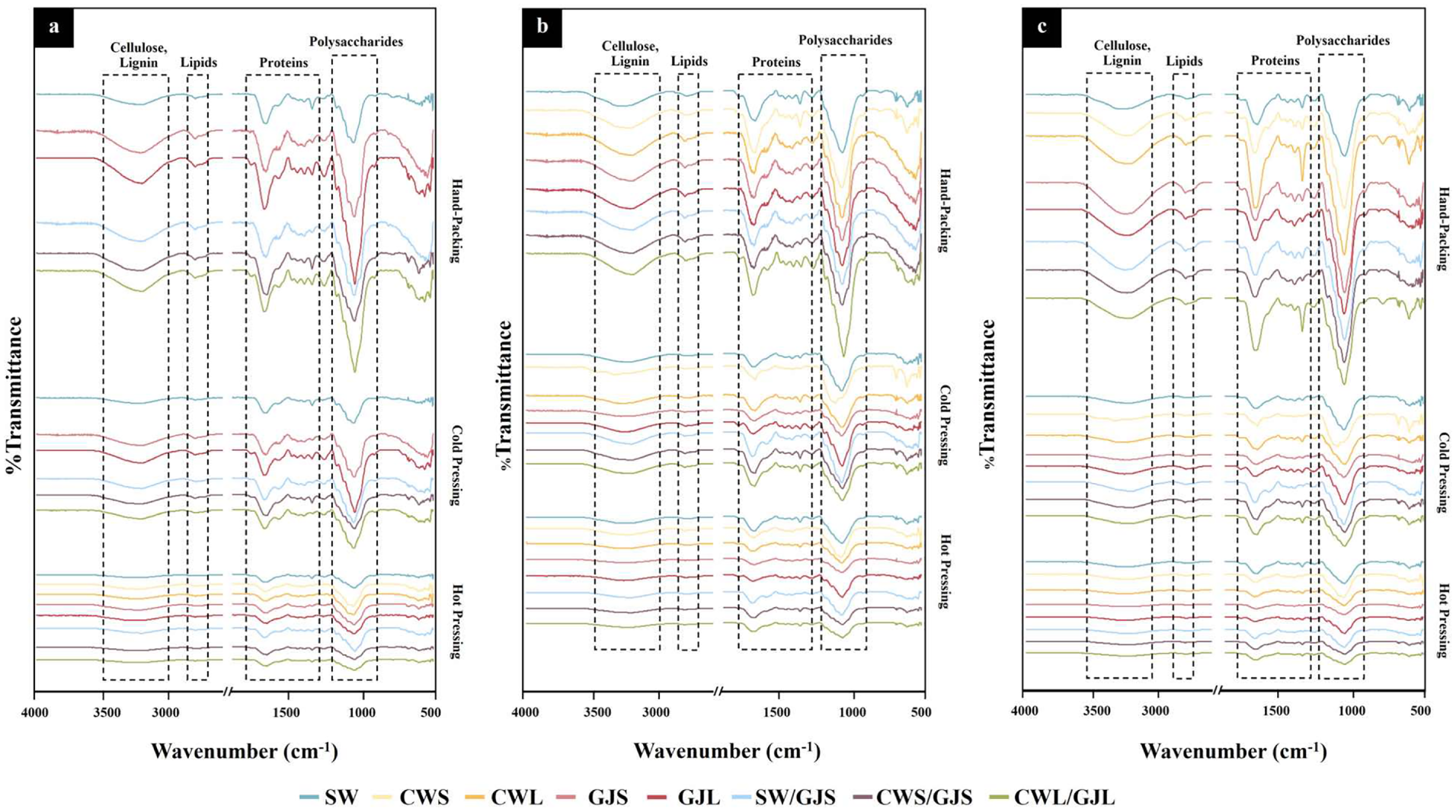
Figure 8: Fourier transform infrared (FTIR) of mycelium-based biofoams derived from each substrate type produced by (a) Pleurotus ostreatus (b) Lentinus squarrosulus and (c) Ganoderma lucidum. SW: surface wood sawdust; CWS: fine core wood sawdust with a particle size of 1–2 mm; CWL: coarse core wood sawdust with a particle size of 2–3 mm; GJS: fine grass jelly pulp with a particle size of 1–2 mm; GJL: coarse grass jelly pulp with a particle size of 2–3 mm. SW/GJS: mixture of surface wood sawdust and fine grass jelly pulp with a particle size of 1–2 mm; CWS/GJS: mixture of fine core wood sawdust with a particle size of 1–2 mm and fine grass jelly pulp with a particle size of 1–2 mm; CWL/GJL: mixture of coarse core wood sawdust with a particle size of 2–3 mm and coarse grass jelly pulp with a particle size of 2–3 mm.
The density and shrinkage of the mycelium-based biofoams are shown in Fig. 9. Both properties were significantly influenced by the substrate type, fungal species, and pressing method (p < 0.05). Density reflects the degree of compaction and mycelial binding, whereas shrinkage indicates dimensional changes during drying and consolidation. The density values ranged from 0.14 to 0.31 g/cm3. Sawdust-based biofoams exhibited higher density than grass jelly pulp across all treatments. The results are comparable to those reported for other mycelium-based biofoams [6,7,12,33]. Among them, SW produced the highest density, particularly under hot pressing, due to its uniform particle size and improved packing efficiency. In contrast, CWL,GJS and GJL resulted in lower densities owing to irregular particle shapes, higher moisture retention, and formation of microvoids during drying. Mixed substrates exhibited intermediate behavior, although the incompatibility between rigid sawdust and soft pulp reduced the packing efficiency and created interfacial gaps. Pressing significantly increased the density compared to hand packing. Both cold and hot pressing reduced internal voids and enhanced particle contact; however, hot pressing was more effective because of simultaneous densification and moisture removal, resulting in a more cohesive structure. Fungal species also influenced density development. L. squarrosulus produced the highest densities, followed by G. lucidum and P. ostreatus. This trend reflects the differences in hyphal morphology, where thicker and more interconnected networks enhance particle binding and structural consolidation.
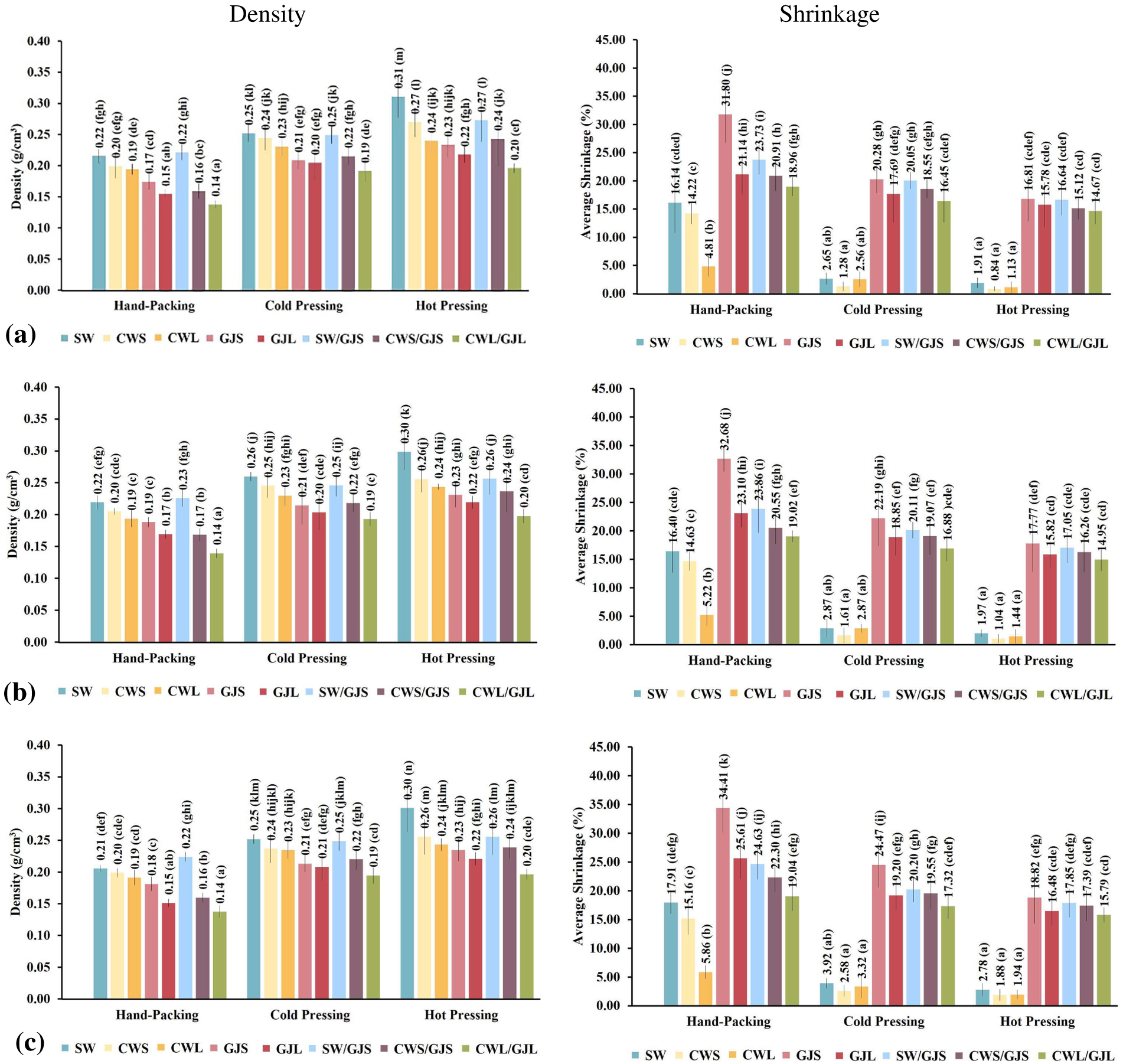
Figure 9: Density (left) and average shrinkage (right) of mycelium-based biofoams derived from each substrate type produced by (a) Pleurotus ostreatus (b) Lentinus squarrosulus and (c) Ganoderma lucidum. SW: surface wood sawdust; CWS: fine core wood sawdust with a particle size of 1–2 mm; CWL: coarse core wood sawdust with a particle size of 2–3 mm; GJS: fine grass jelly pulp with a particle size of 1–2 mm; GJL: coarse grass jelly pulp with a particle size of 2–3 mm. SW/GJS: mixture of surface wood sawdust and fine grass jelly pulp with a particle size of 1–2 mm; CWS/GJS: mixture of fine core wood sawdust with a particle size of 1–2 mm and fine grass jelly pulp with a particle size of 1–2 mm; CWL/GJL: mixture of coarse core wood sawdust with a particle size of 2–3 mm and coarse grass jelly pulp with a particle size of 2–3 mm. Different lowercase letters indicate significant differences between treatments (p < 0.05).
Shrinkage exhibited an inverse relationship with the density. The highest shrinkage was observed in GJS biofoams under hot pressing (31.80%–34.41%), whereas the lowest was observed in CWS samples (0.84%–1.88%). The high shrinkage of GJS is attributed to its soft, moisture-retentive structure, which leads to significant contraction and microstructural collapse during drying. In contrast, sawdust-based biofoams maintained dimensional stability due to stronger particle frameworks. Among species, P. ostreatus showed the lowest shrinkage, likely due to its less cohesive mycelial network, while L. squarrosulus and G. lucidum exhibited greater shrinkage associated with stronger hyphal bonding and internal contraction forces. The enzymatic degradation of lignocellulosic components may further reduce particle rigidity, contributing to contraction during drying. These results demonstrate that a higher density is associated with reduced shrinkage, highlighting the importance of substrate selection and pressing conditions in achieving structurally stable biofoams. These findings are consistent with previous reports that densification correlates inversely with shrinkage, leading to greater mechanical stability and dimensional retention [7].
3.3.5 Compressive and Flexural Strength
The compressive and flexural strengths of the mycelium-based biofoams are presented in Fig. 10. Both properties were significantly affected by the substrate type, fungal species, and pressing method (p < 0.05). As expected for porous materials, the compressive strength values were higher than the flexural strength values, reflecting the dominant load-bearing mechanism under compression [12]. The substrate type played a key role in determining the mechanical performance. Sawdust-based biofoams, particularly SW and CWS, exhibited the highest strengths due to their rigid and uniform particles, which enhanced stress transfer and interparticle bonding. This behavior is consistent with previous reports, indicating that increased density and enhanced interparticle bonding contribute to improved compressive strength in mycelium-based composites [11,29]. SW produced the highest values, reaching approximately 0.42 MPa in compression and 0.24 MPa in flexure under hot pressing. In contrast, CWLGJS and GJL resulted in significantly lower strengths due to irregular particle geometry, higher porosity, and weaker interfacial bonding. The soft and moisture-retentive nature of the grass jelly pulp further reduced the structural integrity by promoting internal void formation and limiting stress distribution. This behavior is supported by previous reports indicating that low-density and highly porous materials are more susceptible to deformation and crushing [11,12,29]. The mixed substrates exhibited intermediate behavior. The SW/GJS maintained a relatively high strength, indicating that the rigid sawdust fraction dominated the load-bearing structure. However, CWS/GJS and CWL/GJL showed reduced performance due to the incompatibility between the rigid and soft components, leading to weak interfaces and non-uniform stress transfer. These findings are consistent with morphological observations (Figs. 6 and 7), where heterogeneous packing resulted in discontinuous mycelial networks. Fungal species also significantly influenced mechanical properties. L. squarrosulus consistently exhibited the highest compressive and flexural strengths, followed by G. lucidum and P. ostreatus. This trend corresponds with the density and morphological results, where L. squarrosulus formed dense and highly interconnected hyphal networks that enhanced load transfer. In contrast, the looser and less cohesive structure of P. ostreatus resulted in lower mechanical performance. Pressing had a significant effect on strength development. Hot-pressed samples showed the highest values across all treatments, attributed to reduced porosity, improved particle contact, and enhanced hyphal bonding. This observation is consistent with previous reports indicating that hot pressing enhances the homogeneity, strength, and stiffness of mycelium-based materials [11,34]. In addition to physical densification, thermal effects during hot pressing likely contributed to stronger interfacial bonding through lignin softening and partial fusion, as well as intermolecular hydrogen bonding and cross-linking reactions between fungal cell wall polysaccharides and lignin-derived degradation products [11,34,35]. These combined effects resulted in a more cohesive and mechanically robust composite structure. A strong correlation was observed between the compressive and flexural strengths, indicating that both properties are governed by density, particle contact, and mycelial bonding.
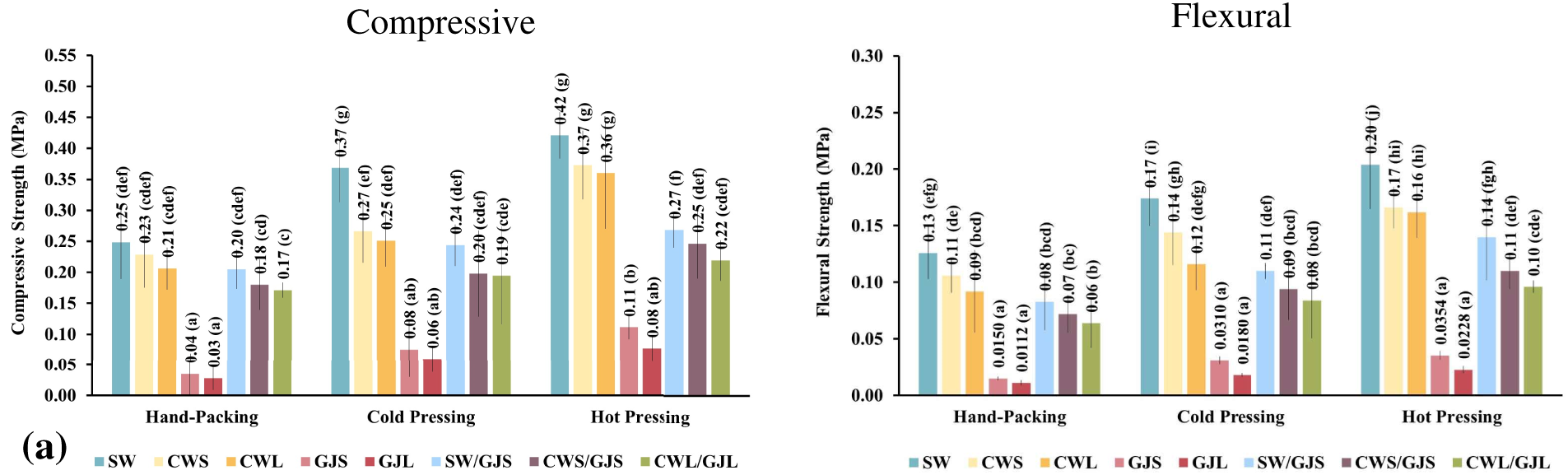
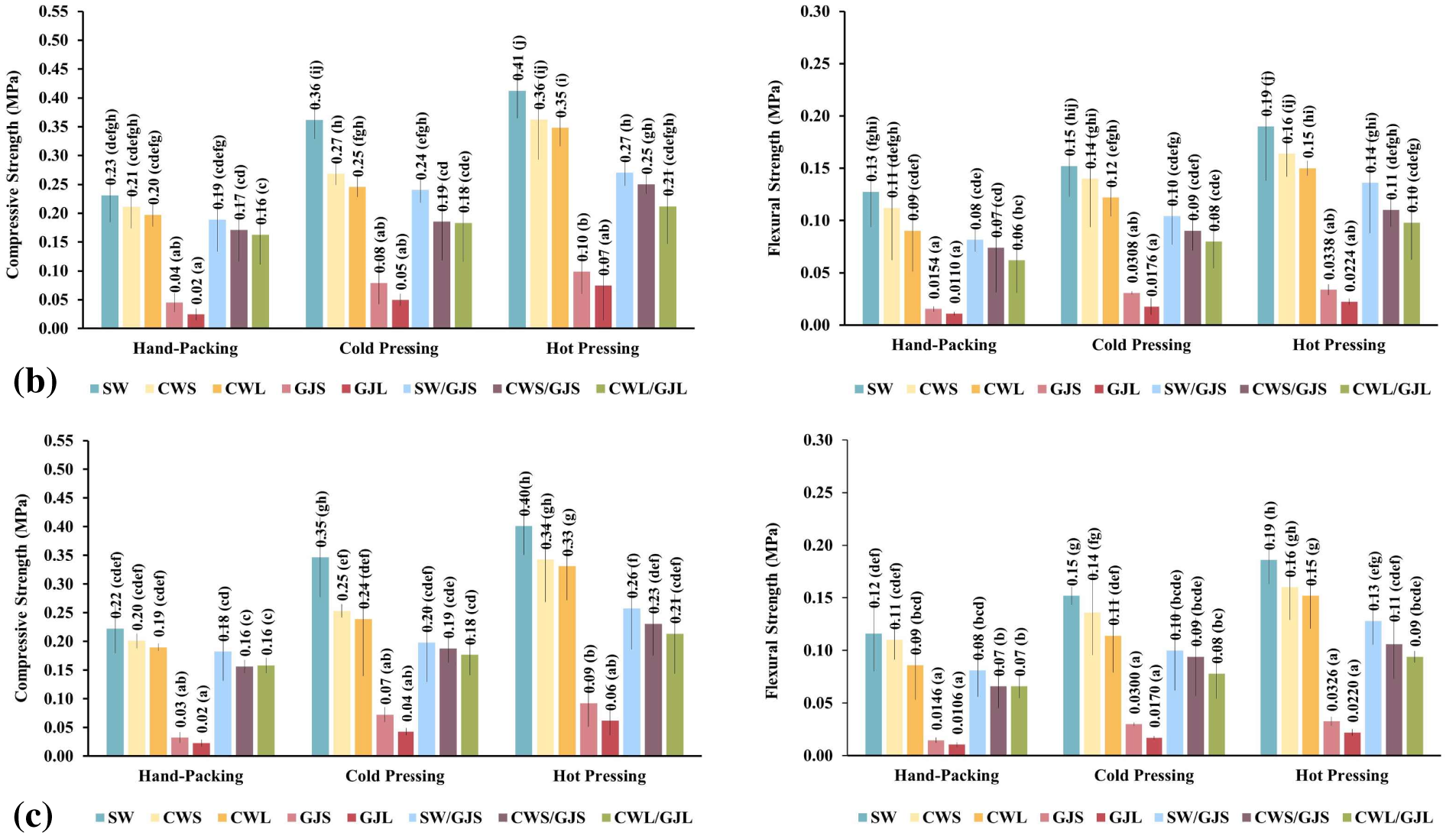
Figure 10: Compressive strength (left) and flexural strength (right) of mycelium-based biofoams derived from each substrate type produced by (a) Pleurotus ostreatus (b) Lentinus squarrosulus and (c) Ganoderma lucidum. SW: surface wood sawdust; CWS: fine core wood sawdust with a particle size of 1–2 mm; CWL: coarse core wood sawdust with a particle size of 2–3 mm; GJS: fine grass jelly pulp with a particle size of 1–2 mm; GJL: coarse grass jelly pulp with a particle size of 2–3 mm. SW/GJS: mixture of surface wood sawdust and fine grass jelly pulp with a particle size of 1–2 mm; CWS/GJS: mixture of fine core wood sawdust with a particle size of 1–2 mm and fine grass jelly pulp with a particle size of 1–2 mm; CWL/GJL: mixture of coarse core wood sawdust with a particle size of 2–3 mm and coarse grass jelly pulp with a particle size of 2–3 mm. Different lowercase letters indicate significant differences between treatments (p < 0.05).
The water absorption behavior of the mycelium-based biofoams is shown in Fig. 11. Water uptake is a key indicator of moisture sensitivity and dimensional stability, particularly for packaging and cushioning applications. The substrate type, fungal species, and pressing method significantly influenced water absorption (p < 0.05). Hand-packed samples exhibited the highest absorption, followed by cold-pressed and hot-pressed samples, highlighting the role of densification in reducing the porosity and limiting moisture ingress. Substrate characteristics strongly governed the water uptake. Sawdust-based biofoams, particularly SW, showed the lowest absorption due to their uniform particle size and compact structure, which minimized voids and restricted water penetration. In contrast, CWS and CWL exhibited higher absorption because particle irregularity and larger size created microvoids that facilitated moisture entry. CWL samples were particularly susceptible because of discontinuities within the hyphal network. Although lignin-rich substrates are generally more hydrophobic, structural defects and incomplete mycelium coverage reduced their resistance to water. The fungal skin plays a critical role in moisture resistance, and defects or discontinuities in this layer substantially increase the water permeability [11,36]. Grass jelly pulp-based biofoams exhibited the highest absorption among single substrates. Despite its smaller particle size, GJS absorbed more water than GJL, likely because of its higher cellulose content, greater surface area, and increased hydrophilicity. The soft and deformable nature of the pulp also promoted water retention within the matrix. In contrast, GJL showed slightly lower absorption due to reduced hydrophilic sites and a coarser particle structure. No particle detachment or disintegration was observed after testing, indicating that the internal pores accommodated water without structural breakdown. This behavior is consistent with previous observations reported for other porous bio-based composites [6,8]. Mixed substrates showed the highest overall water absorption. This was attributed to incomplete mycelium coverage and the incompatibility between rigid sawdust and soft grass jelly pulp, which created interfacial gaps and microchannels that facilitated moisture ingress. These findings emphasize that density alone does not determine water resistance; rather, uniform mycelial bonding and surface continuity are the critical factors. These results reinforce the protective role of the mycelial skin, consistent with previous studies demonstrating that dense and continuous mycelial surface layers reduce moisture penetration and water uptake by acting as an effective moisture barrier [11,36]. Pressing significantly reduced water absorption in all treatments. Both cold and hot pressing improved particle alignment, reduced porosity, and enhanced hyphal bonding. Hot pressing was the most effective method, reducing absorption by approximately 30%–40% compared to hand-packed samples. This improvement can be attributed to the combined physical densification and thermal effects, including lignin softening and partial fusion, which produce a denser and less permeable structure. Similar outcomes have been reported, highlighting the enhanced compactness and reduced water uptake in hot-pressed mycelium composites [11,34]. Therefore, improving compactness and establishing continuous mycelial networks are essential for enhancing the moisture resistance of mycelium-based biofoams.
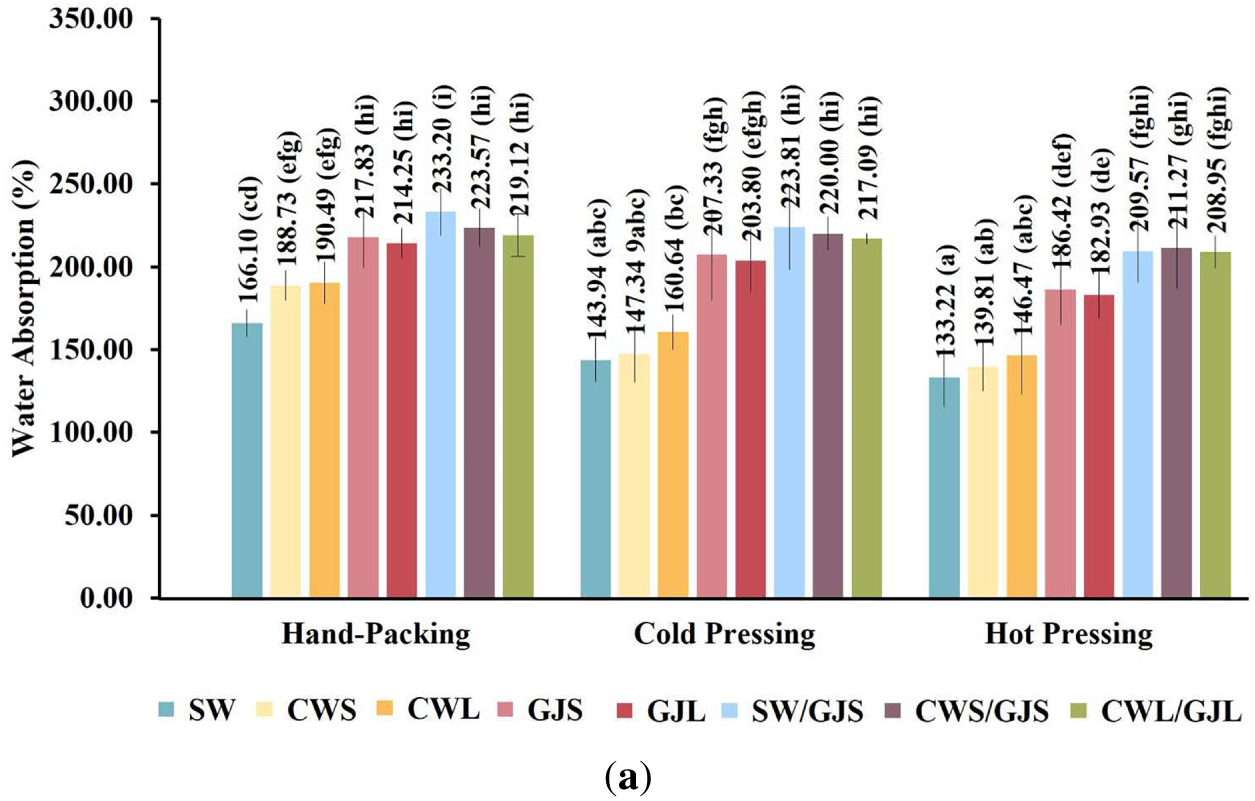
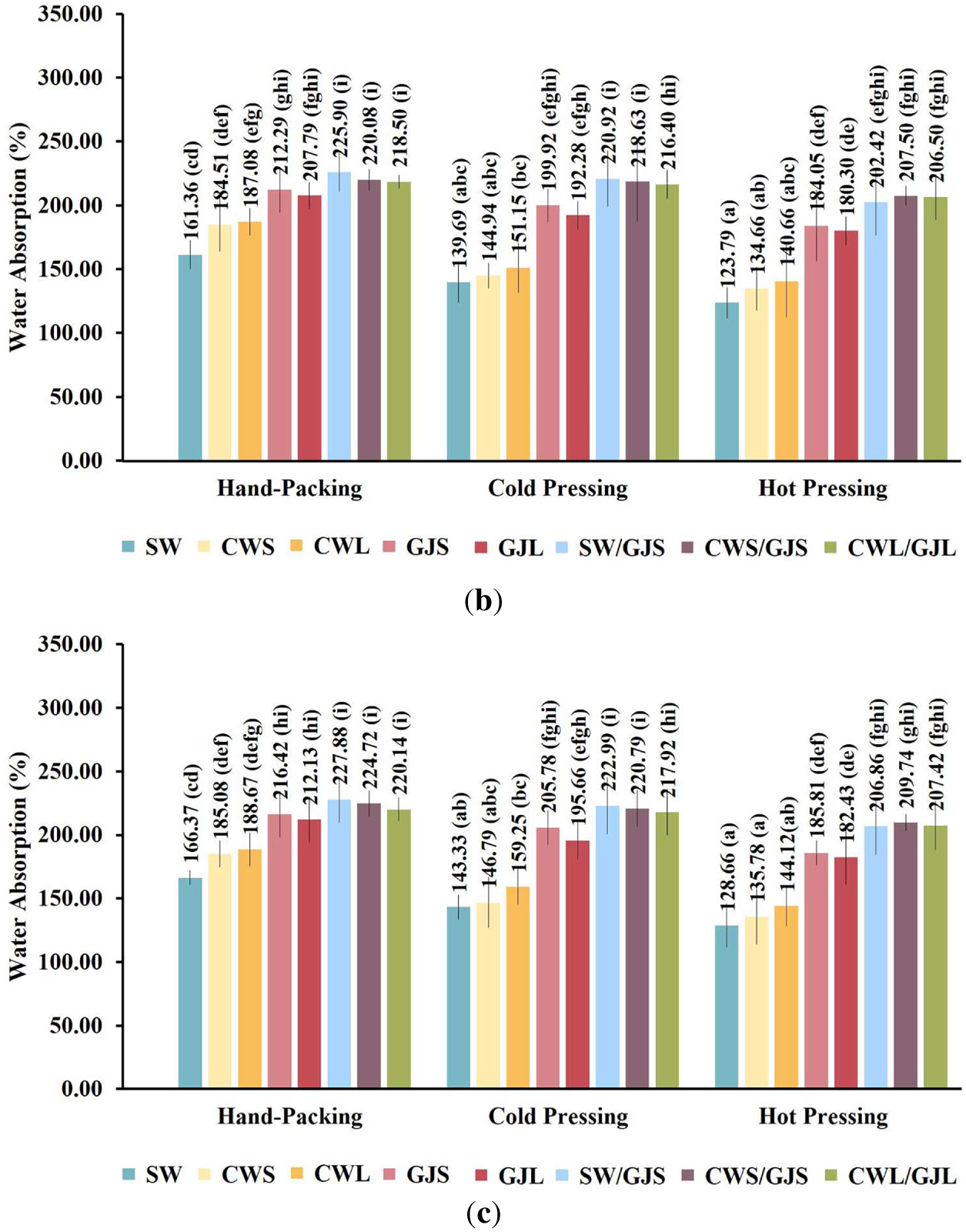
Figure 11: Water absorption of mycelium-based biofoams derived from each substrate type produced by (a) Pleurotus ostreatus (b) Lentinus squarrosulus and (c) Ganoderma lucidum. SW: surface wood sawdust; CWS: fine core wood sawdust with a particle size of 1–2 mm; CWL: coarse core wood sawdust with a particle size of 2–3 mm; GJS: fine grass jelly pulp with a particle size of 1–2 mm; GJL: coarse grass jelly pulp with a particle size of 2–3 mm. SW/GJS: mixture of surface wood sawdust and fine grass jelly pulp with a particle size of 1–2 mm; CWS/GJS: mixture of fine core wood sawdust with a particle size of 1–2 mm and fine grass jelly pulp with a particle size of 1–2 mm; CWL/GJL: mixture of coarse core wood sawdust with a particle size of 2–3 mm and coarse grass jelly pulp with a particle size of 2–3 mm. Different lowercase letters indicate significant differences between treatments (p < 0.05).
The thickness swelling of the mycelium-based biofoams after water immersion is shown in Fig. 12. The swelling values ranged from approximately 2% to 6%, indicating moderate dimensional changes across all treatments. The substrate type, fungal species, and pressing method significantly influenced swelling (p < 0.05), with trends consistent with the water absorption behavior (Fig. 11). The hand-packed samples exhibited the highest swelling, followed by the cold-pressed and hot-pressed samples, confirming that densification reduces pore connectivity and limits water-induced expansion. Among the substrates, sawdust-based biofoams, particularly SW and CWS, showed the lowest swelling due to their uniform particle size and compact structure. In contrast, CWL exhibited higher swelling, as larger and irregular particles created internal gaps that facilitated water uptake and expansion. GJS and GJL showed higher swelling than sawdust-based samples, reflecting their higher hydrophilicity and more porous structure. GJS exhibited slightly greater swelling than GJL, likely because of its higher cellulose content and greater water retention capacity. Mixed substrates showed intermediate but generally higher swelling than single-sawdust systems, as the incompatibility between rigid and soft components introduced weak interfaces that promoted moisture penetration. Fungal species also influenced swelling behavior. L. squarrosulus consistently exhibited the lowest swelling, followed by G. lucidum and P. ostreatus, respectively. This trend corresponds to the differences in the mycelial network structure, where denser and more continuous hyphal networks more effectively restrict moisture ingress and dimensional changes. Pressing significantly reduced the swelling in all treatments. Hot pressing produced the lowest values due to enhanced compaction, reduced porosity, and improved interparticle bonding. Thermal effects during pressing may increase hydrophobicity and promote intermolecular interactions within lignocellulosic components, further limiting water-induced expansion, which is consistent with reports that heat treatment enhances hydrophobicity and induces hydrogen bonding and cross-linking reactions [8,34].
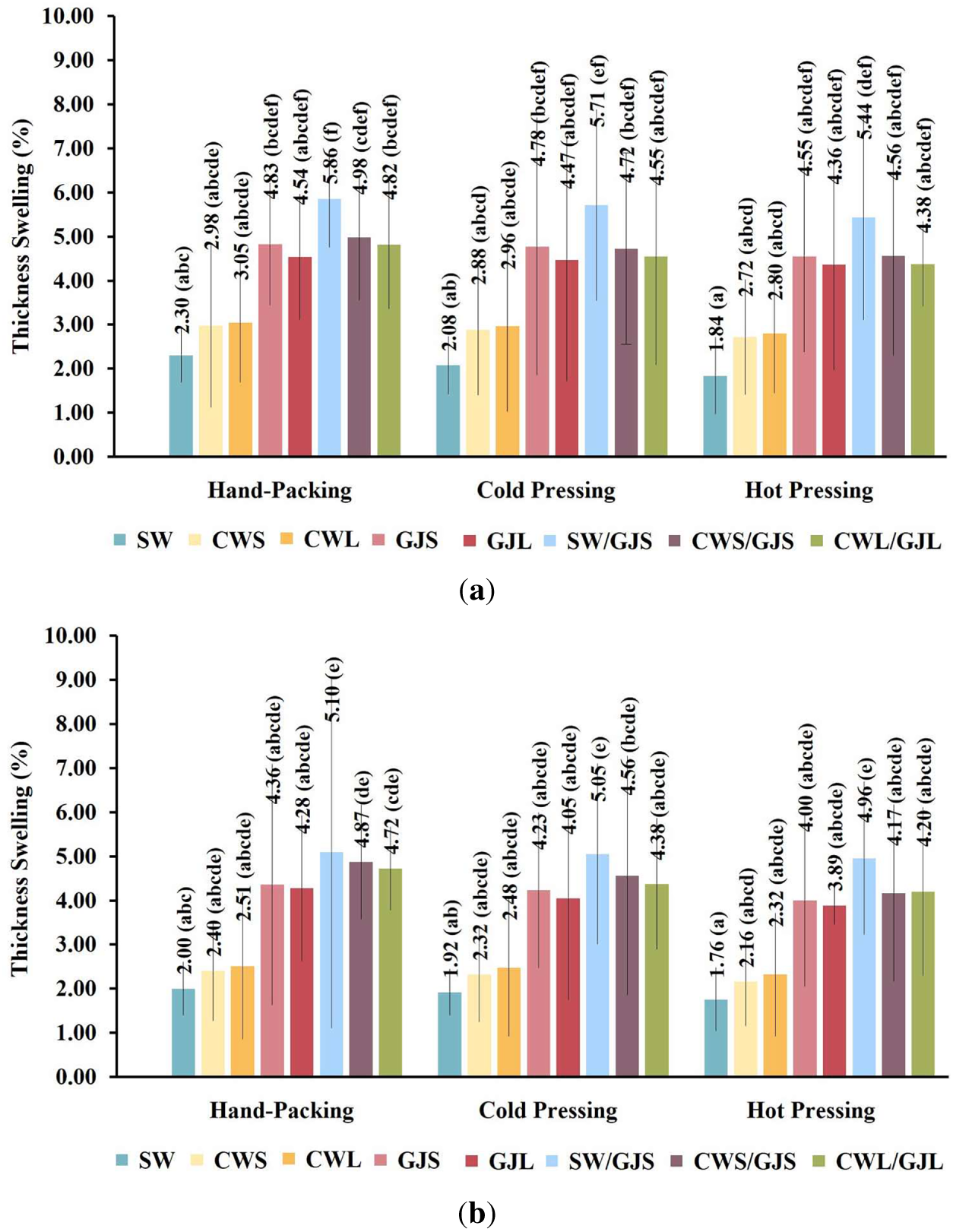
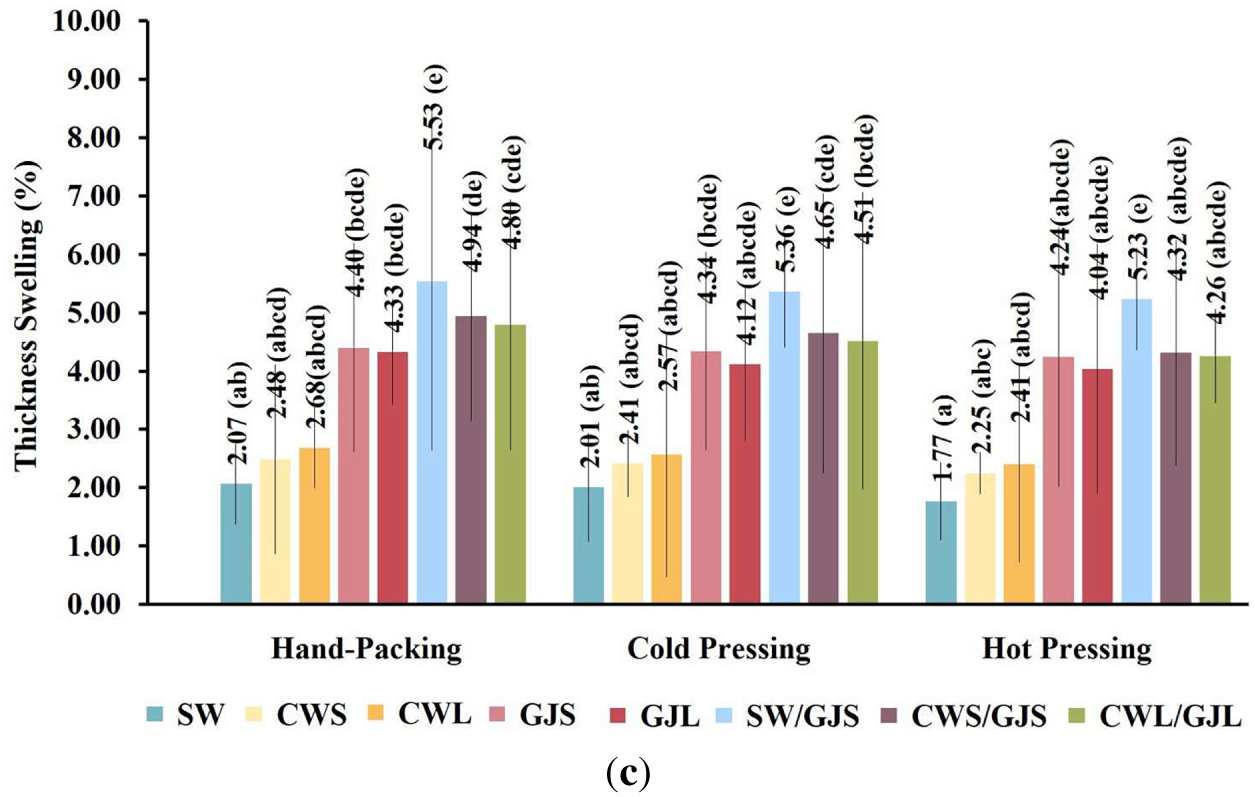
Figure 12: Thickness swelling of mycelium-based biofoams derived from each substrate type produced by (a) Pleurotus ostreatus (b) Lentinus squarrosulus and (c) Ganoderma lucidum. SW: surface wood sawdust; CWS: fine core wood sawdust with a particle size of 1–2 mm; CWL: coarse core wood sawdust with a particle size of 2–3 mm; GJS: fine grass jelly pulp with a particle size of 1–2 mm; GJL: coarse grass jelly pulp with a particle size of 2–3 mm. SW/GJS: mixture of surface wood sawdust and fine grass jelly pulp with a particle size of 1–2 mm; CWS/GJS: mixture of fine core wood sawdust with a particle size of 1–2 mm and fine grass jelly pulp with a particle size of 1–2 mm; CWL/GJL: mixture of coarse core wood sawdust with a particle size of 2–3 mm and coarse grass jelly pulp with a particle size of 2–3 mm. Different lowercase letters indicate significant differences between treatments (p < 0.05).
3.3.8 Water Contact Angle (WCA)
The water contact angles of the mycelium-based biofoams are presented in Fig. 13, ranging from approximately 73° to 105°, indicating moderate hydrophilicity to hydrophobicity, depending on the formulation and processing. Substrate type, fungal species, and pressing method significantly affected wettability (p < 0.05). In general, the hot-pressed samples exhibited the highest contact angles, followed by the cold-pressed and hand-packed samples, confirming that densification reduces surface porosity and limits water spreading. The substrate composition strongly influenced the surface wettability. Sawdust-based biofoams (SW, CWS, and CWL) consistently exhibited higher contact angles than grass jelly pulp-based samples because of their higher lignin content and lower intrinsic hydrophilicity. Among them, SW showed the highest contact angles (up to ~104° under hot pressing), attributed to its uniform particle size and formation of a compact surface with continuous mycelium coverage. In contrast, CWS and especially CWL exhibited lower values due to increased surface irregularity and porosity, which facilitated droplet penetration. GJS and GJL showed lower contact angles, reflecting their higher cellulose content and hydrophilic nature. GJS exhibited slightly lower values than GJL, likely due to its finer particles and higher surface area, which enhanced water absorption and spreading. These findings are consistent with the water absorption and swelling results (Figs. 11 and 12), confirming the greater moisture sensitivity of these substrates. Mixed substrates exhibited intermediate wettability but generally lower contact angles than pure sawdust systems. This behavior is attributed to the heterogeneous particle distribution and discontinuous mycelium skin formation, which create pathways for water ingress [37]. Among them, SW/GJS exhibited the highest contact angle, likely due to its superior surface uniformity and stronger mycelial cohesion, consistent with reports linking dense fungal coverage to enhanced water repellency [6]. Fungal species also influenced wettability. L. squarrosulus consistently exhibited the highest contact angles, followed by G. lucidum and P. ostreatus, respectively. This trend reflects the differences in surface morphology, where dense and continuous mycelial layers enhance water repellency. Notably, the SW-based biofoams produced with L. squarrosulus showed contact angles above 90°, indicating hydrophobic behavior. Pressing significantly improved the surface hydrophobicity. Hot pressing produced the highest contact angles by reducing the surface porosity and promoting substrate consolidation. Thermal effects, including lignin softening and intermolecular interactions, likely contributed to the smoother and less permeable surfaces [34,35]. Cold pressing showed moderate improvement, whereas hand-packed samples exhibited the lowest contact angles due to their porous and discontinuous surfaces.
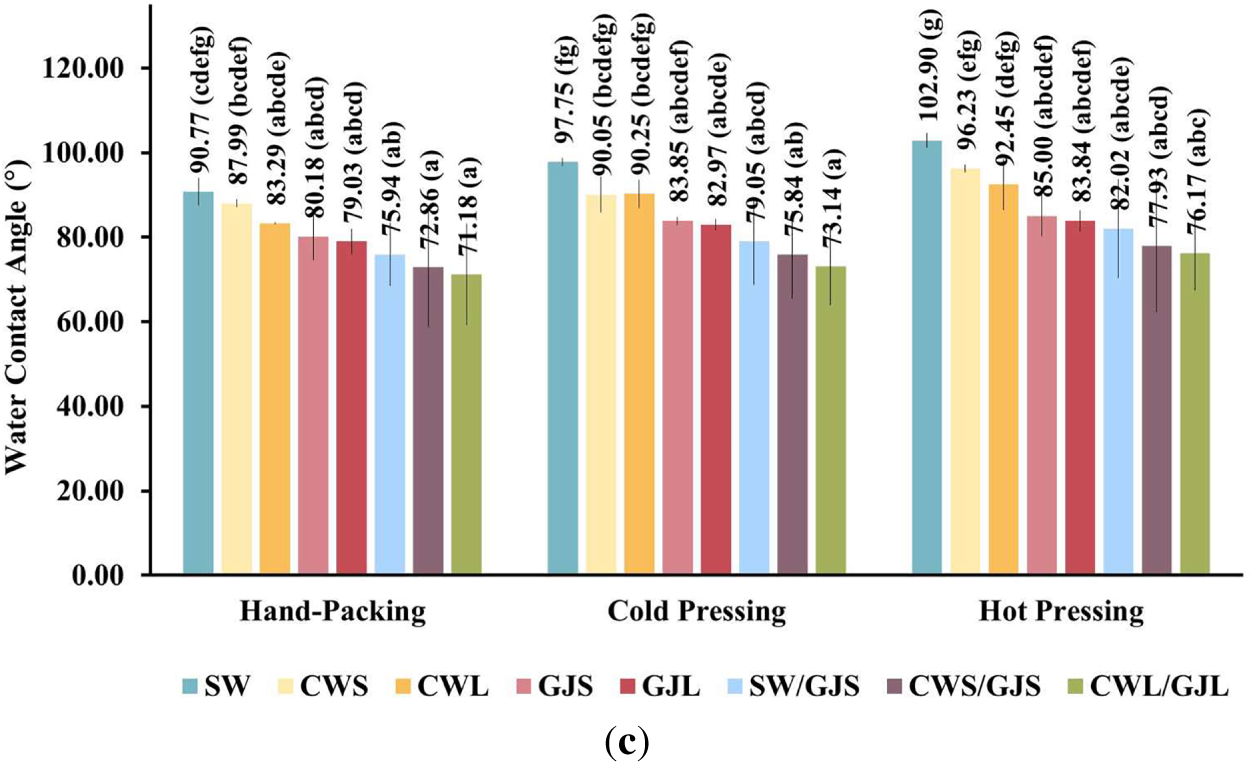
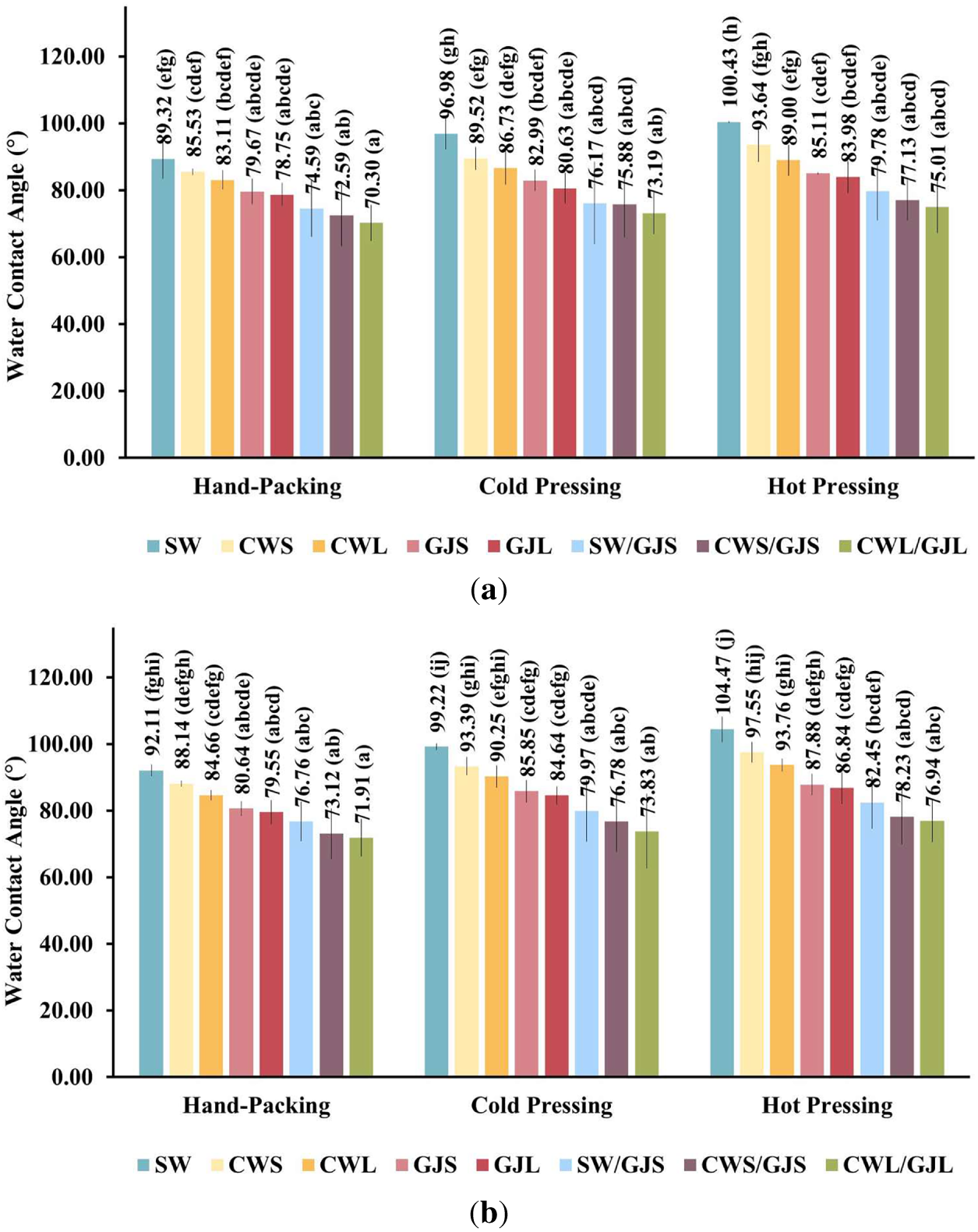
Figure 13: Water contact angle of mycelium-based biofoams derived from each substrate type produced by (a) Pleurotus ostreatus (b) Lentinus squarrosulus and (c) Ganoderma lucidum. SW: surface wood sawdust; CWS: fine core wood sawdust with a particle size of 1–2 mm; CWL: coarse core wood sawdust with a particle size of 2–3 mm; GJS: fine grass jelly pulp with a particle size of 1–2 mm; GJL: coarse grass jelly pulp with a particle size of 2–3 mm. SW/GJS: mixture of surface wood sawdust and fine grass jelly pulp with a particle size of 1–2 mm; CWS/GJS: mixture of fine core wood sawdust with a particle size of 1–2 mm and fine grass jelly pulp with a particle size of 1–2 mm; CWL/GJL: mixture of coarse core wood sawdust with a particle size of 2–3 mm and coarse grass jelly pulp with a particle size of 2–3 mm. Different lowercase letters indicate significant differences between treatments (p < 0.05).
The cushion factor (C) represents a material’s ability to absorb impact energy, with lower values indicating better shock absorption [38,39]. The substrate type, fungal species, and processing conditions significantly influenced the cushioning performance (p < 0.05). As shown in Fig. 14, the cushion factors of the mycelium-based biofoams ranged from approximately 4 to 15 across 25%, 50%, and 65% strains. Across all species and substrates, these values indicate a cushioning performance comparable to, and in some cases approaching, that of commercial packaging materials such as expanded polystyrene (EPS), polyethylene (PE) foam, and corrugated board [40]. This performance is consistent with previous reports demonstrating that dense, interconnected mycelial networks and well-consolidated cellular structures enhance the compressive response and energy absorption in mycelium-based composites [10,11,25].
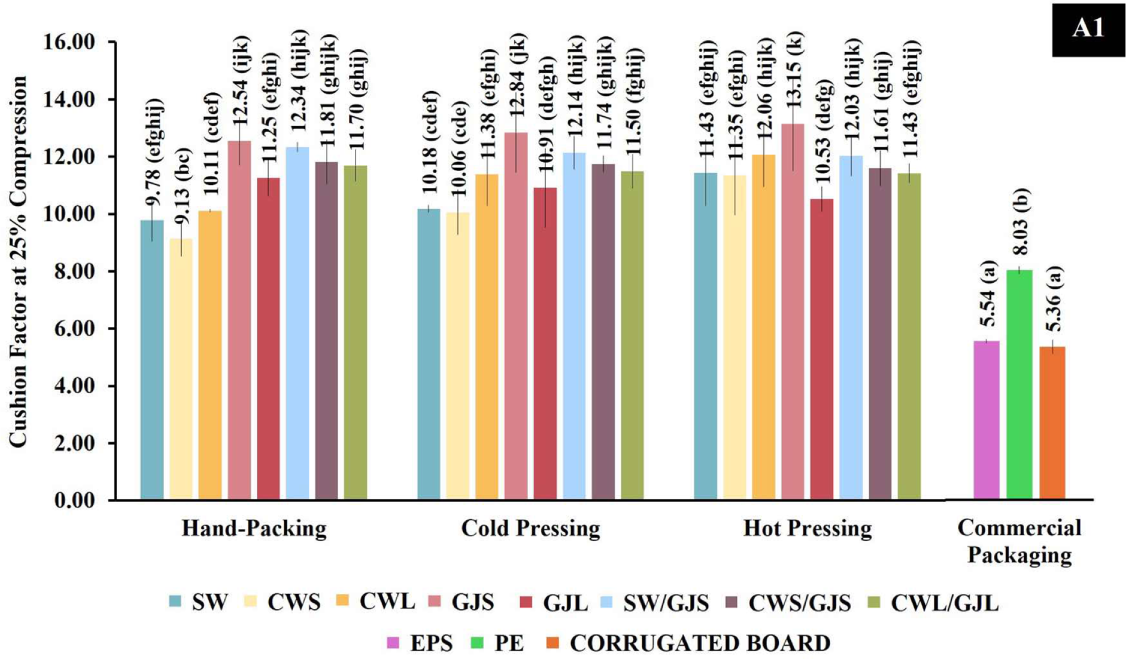
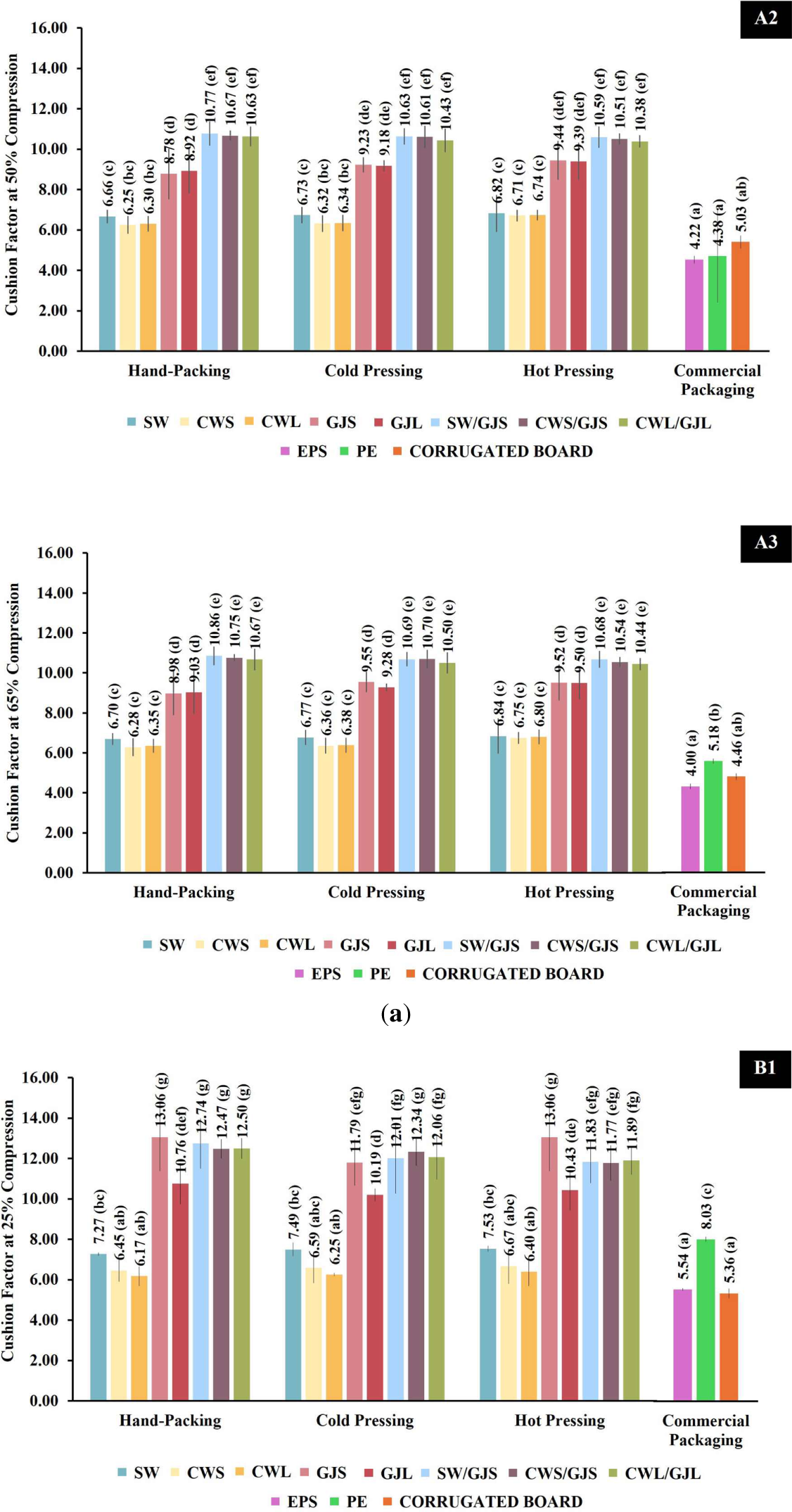
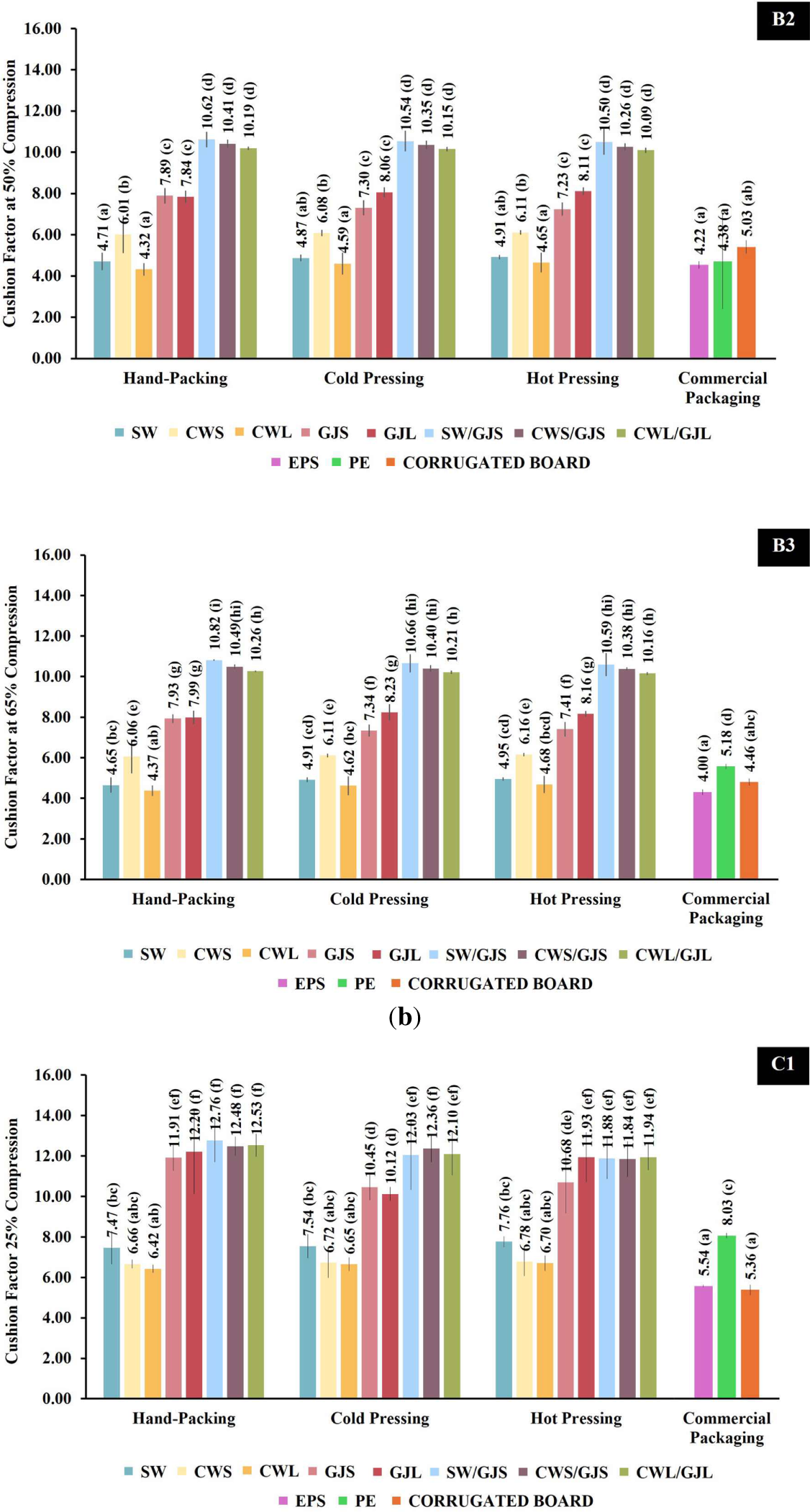
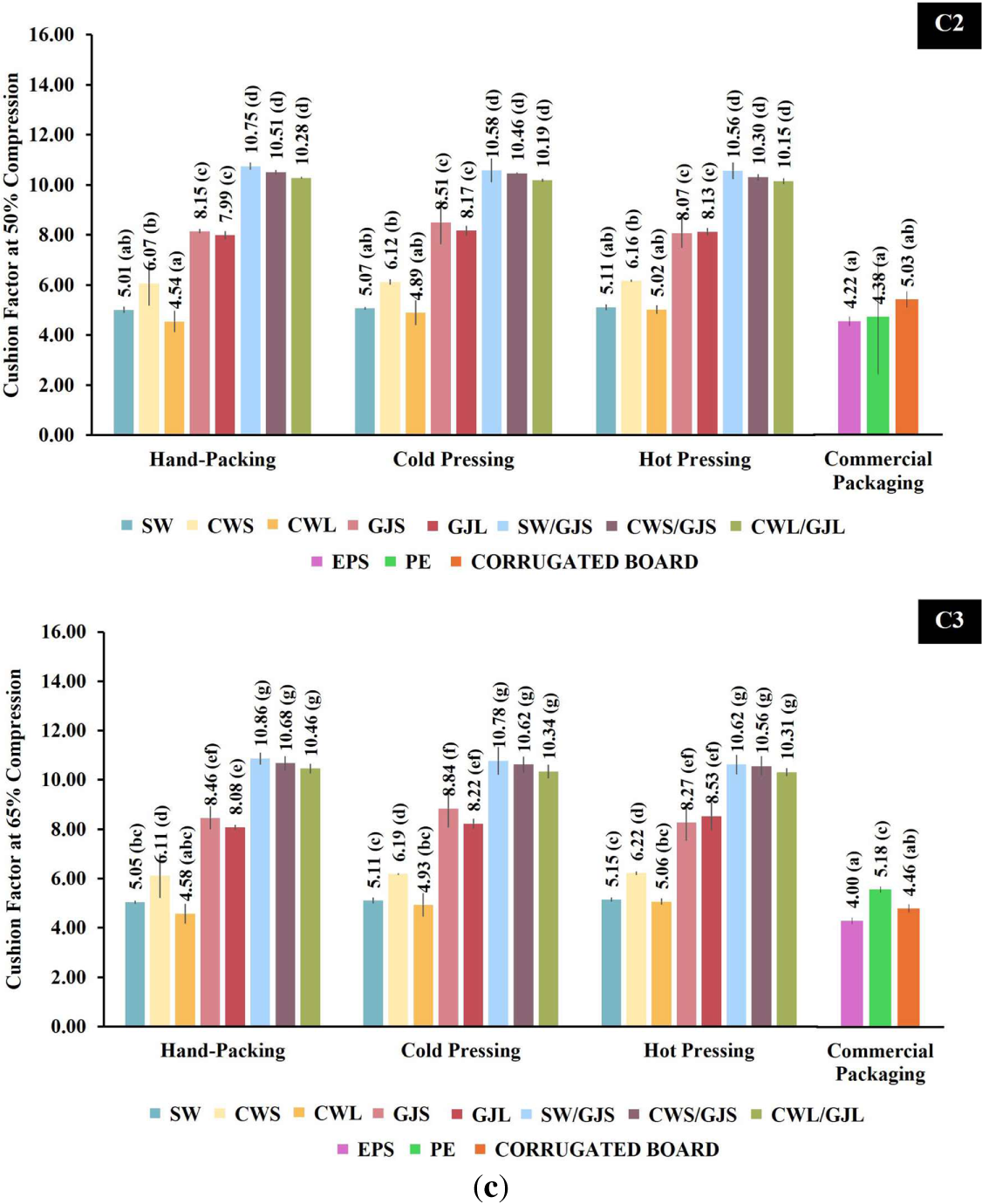
Figure 14: Cushion factor of mycelium-based biofoams produced by (a) Pleurotus ostreatus, (b) Lentinus squarrosulus, and (c) Ganoderma lucidum at 25%, 50%, and 65% compression levels. Panels A1–A3, B1–B3, and C1–C3 represent the 25%, 50%, and 65% compression levels for P. ostreatus, L. squarrosulus, and G. lucidum, respectively. SW: surface wood sawdust; CWS: fine core wood sawdust with a particle size of 1–2 mm; CWL: coarse core wood sawdust with a particle size of 2–3 mm; GJS: fine grass jelly pulp with a particle size of 1–2 mm; GJL: coarse grass jelly pulp with a particle size of 2–3 mm. SW/GJS: mixture of surface wood sawdust and fine grass jelly pulp with a particle size of 1–2 mm; CWS/GJS: mixture of fine core wood sawdust with a particle size of 1–2 mm and fine grass jelly pulp with a particle size of 1–2 mm; CWL/GJL: mixture of coarse core wood sawdust with a particle size of 2–3 mm and coarse grass jelly pulp with a particle size of 2–3 mm. The cushion factor values of the commercial packaging materials (expanded polystyrene (EPS), polyethylene (PE) foam, and corrugated board) were reproduced from our previous study [40]. Different lowercase letters indicate significant differences between treatments (p < 0.05).
At 25% compression, the differences among the formulations were evident. P. ostreatus exhibited relatively high cushion factors, indicating stiffer structures with limited energy absorption, whereas L. squarrosulus and G. lucidum showed lower values, indicating greater compliance. At 50% compression, the cushion factors decreased across all samples due to progressive cell collapse, which enhanced energy absorption. Biofoams based on CWS and CWL, particularly those produced by L. squarrosulus and G. lucidum, exhibited values approaching those of commercial foams.
At 65% compression, the differences were most pronounced. L. squarrosulus and G. lucidum biofoams produced from core wood sawdust exhibited the lowest cushion factors (≈4.3–5.0), approaching those of conventional materials such as expanded polystyrene (EPS) and polyethylene (PE) foams. In contrast, P. ostreatus consistently showed higher values, indicating less effective cushioning under severe deformation. The emphasis on 65% compression is justified because this strain level corresponds to the densification region of cellular materials, where most of the impact energy is absorbed. The decrease in cushion factor with increasing strain is consistent with previous reports showing that lightweight fiber-based cushioning materials generally exhibit minimum cushion factor values around at a 60% strain [38]. At lower strains, deformation is primarily elastic and does not fully represent the energy absorption capacity, whereas at intermediate strains, cell collapse is incomplete. Therefore, an evaluation at 65% compression provides a more representative basis for comparing the cushioning performance under high-impact conditions relevant to packaging applications.
The substrate and processing conditions strongly influenced the performance. Sawdust-based biofoams, particularly those derived from CWS and CWL, consistently exhibited lower cushion factors due to improved structural uniformity and effective load distribution. In contrast, the grass jelly pulp and mixed substrates showed higher values, reflecting heterogeneous structures and weaker interfacial bonding. Pressing increased stiffness and resulted in slightly higher cushion factors, with hot pressing producing the most rigid structures, whereas hand-packed and cold-pressed samples retained greater deformability and energy absorption. Compared with conventional cushioning materials, the optimized mycelium-based biofoams demonstrated competitive performance, particularly at higher compression levels. At 65% strain, the cushion factors of L. squarrosulus and G. lucidum biofoams (≈4.3–5.0) were comparable to those of EPS (~4.0) and PE foam (~4.2–4.3) reported in our previous study [40], indicating similar energy absorption efficiency at high compression levels. In contrast, at lower compression levels (25%–50%), EPS and PE generally exhibited lower cushion factors, reflecting their more uniform cellular structures and superior elastic response [40]. Despite this difference, mycelium-based biofoams offer key advantages, including biodegradability, renewable feedstocks, and lower energy requirements during production [41]. Their performance can also be tuned through substrate selection and processing conditions [40,42]. However, variability in the microstructure, particularly in mixed or less compact systems, may limit consistency compared to synthetic foams [40,42]. Therefore, while mycelium-based biofoams may not fully replace EPS in all applications, they demonstrate strong potential as sustainable cushioning materials, especially in moderate- to high-impact packaging scenarios. Overall, L. squarrosulus and G. lucidum consistently demonstrated superior cushioning performance due to their dense and cohesive hyphal networks. Biofoams produced from core wood sawdust, particularly under controlled pressing conditions, achieved an effective balance between energy absorption and structural integrity, highlighting their potential for sustainable protective packaging applications [40,43,44].
In addition to cushioning performance, the developed biofoams exhibited densities (0.14–0.31 g/cm3) and compressive strengths (up to 0.42 MPa) comparable to the lower range of conventional polymeric foams, although moisture sensitivity remains a limitation compared to synthetic materials [7,40,45]. From an industrial perspective, mycelium-based biofoams require longer production times because of the biological growth stage, which typically requires several days for complete colonization, compared with the rapid processing of petroleum-based foams [46,47]. Nevertheless, the scalability of these materials may be improved through the optimization of nutrient formulations, the use of pre-colonized inoculum to shorten incubation periods, and the implementation of controlled environmental systems enabling continuous or semi-continuous cultivation [48]. Furthermore, the valorization of low-cost agro-industrial by-products and lignocellulosic residues, together with the relatively low energy requirements of the process, could partially offset the longer production time, particularly in applications where biodegradability, renewability, and reduced environmental impact are prioritized over high-throughput manufacturing processes [49].
This study demonstrates that mycelium-based biofoams derived from agro-industrial residues can be systematically engineered by selecting fungal species, substrate characteristics, and processing conditions. Lentinus squarrosulus exhibited the highest growth rate (17.0 mm/day) and formed dense, interconnected hyphal networks, thereby enhancing interparticle bonding within the substrate matrix. The substrate morphology significantly influenced the material performance. Sawdust-based substrates, particularly surface and core wood sawdust, produced compact biofoams with densities up to 0.31 g/cm3, low shrinkage (0.84%–1.88%), and improved hydrophobicity (contact angle up to 104°). In contrast, grass jelly pulp resulted in lower-density materials with higher shrinkage (up to 34.41%) and greater moisture sensitivity, indicating limitations in dimensional stability. The processing conditions also governed the functional properties. Hot pressing (150°C, 3–4 MPa) increased densification and compressive strength (up to 0.42 MPa), whereas cold pressing of the core wood sawdust substrate achieved a more balanced combination of cushioning efficiency (cushion factor 4.3–5.0), structural uniformity, and dimensional stability. Hand-packed samples exhibited lower cushioning performance owing to structural heterogeneity, limiting their practical applicability. Overall, biofoams produced from L. squarrosulus and G. lucidum on a core wood sawdust substrate exhibited cushioning performance within the functional range of commercial packaging materials under comparable compression conditions. These results highlight the potential of region-specific lignocellulosic residues as sustainable feedstocks for biodegradable cushioning materials. Future studies should focus on microstructural optimization, surface modification, and scalable processing to improve performance consistency and facilitate industrial applications in protective packaging and lightweight structural systems.
Acknowledgement: The authors thank the Prince of Songkla University and the Faculty of Agro-Industry for equipment and laboratory support.
Funding Statement: This research received financial support through a grant (AGR6801228S) jointly provided by the National Science, Research and Innovation Fund (NSRF) and Prince of Songkla University.
Author Contributions: Supachai Pisuchpen: conceptualization, methodology, investigation, formal analysis, data curation, project administration, funding acquisition, writing—review & editing, statistical analysis, visualization. Tanyawan Suwandecha: methodology, investigation, formal analysis, data curation, writing—original draft, statistical analysis, visualization. Ponusa Jitphuthi: supervision, validation, writing—review & editing. Somporn Nilmanee: supervision, validation, writing—review & editing. Wirongrong Tongdeesoontorn: supervision, validation, writing—review & editing. Thatsanee Luangharn: resources, supervision, validation, writing—review & editing. All authors reviewed and approved the final version of the manuscript.
Availability of Data and Materials: Data will be made available on request.
Ethics Approval: This study did not involve experiments on humans or animals. No ethical approval was required.
Conflicts of Interest: The authors declare no conflicts of interest.
References
1. Enarevba DR, Haapala KR. A comparative life cycle assessment of expanded polystyrene and mycelium packaging box inserts. Procedia CIRP. 2023;116:654–9. doi:10.1016/j.procir.2023.02.110. [Google Scholar] [CrossRef]
2. Alemu D, Tafesse M, Mondal AK. Mycelium-based composite: the future sustainable biomaterial. Int J Biomater. 2022;2022(1):8401528. doi:10.1155/2022/8401528. [Google Scholar] [CrossRef]
3. Rendón-Villalobos R, Ortíz-Sánchez A, Tovar-Sánchez E, Flores-Huicochea E. The role of biopolymers in obtaining environmentally friendly materials. In: Matheus P, editor. Composites from renewable and sustainable materials. London, UK: IntechOpen; 2016. doi:10.5772/65265. [Google Scholar] [CrossRef]
4. Garcia-Garcia D, Quiles-Carrillo L, Balart R, Torres-Giner S, Arrieta MP. Innovative solutions and challenges to increase the use of poly(3-hydroxybutyrate) in food packaging and disposables. Eur Polym J. 2022;178(21):111505. doi:10.1016/j.eurpolymj.2022.111505. [Google Scholar] [CrossRef]
5. Alemu D, Tafesse M, Gudetta Deressa Y. Production of mycoblock from the mycelium of the fungus Pleurotus ostreatus for use as sustainable construction materials. Adv Mater Sci Eng. 2022;2022(1):2876643. doi:10.1155/2022/2876643. [Google Scholar] [CrossRef]
6. Peng L, Yi J, Yang X, Xie J, Chen C. Development and characterization of mycelium bio-composites by utilization of different agricultural residual byproducts. J Bioresour Bioprod. 2023;8(1):78–89. doi:10.1016/j.jobab.2022.11.005. [Google Scholar] [CrossRef]
7. Aiduang W, Kumla J, Srinuanpan S, Thamjaree W, Lumyong S, Suwannarach N. Mechanical, physical, and chemical properties of mycelium-based composites produced from various lignocellulosic residues and fungal species. J Fungi. 2022;8(11):1125. doi:10.3390/jof8111125. [Google Scholar] [CrossRef]
8. Haneef M, Ceseracciu L, Canale C, Bayer IS, Heredia-Guerrero JA, Athanassiou A. Advanced materials from fungal mycelium: fabrication and tuning of physical properties. Sci Rep. 2017;7(1):41292. doi:10.1038/srep41292. [Google Scholar] [CrossRef]
9. Yang L, Park D, Qin Z. Material function of mycelium-based bio-composite: a review. Front Mater. 2021;8:737377. doi:10.3389/fmats.2021.737377. [Google Scholar] [CrossRef]
10. Sun W, Tajvidi M, Howell C, Hunt CG. Insight into mycelium-lignocellulosic bio-composites: essential factors and properties. Compos Part A Appl Sci Manuf. 2022;161(22):107125. doi:10.1016/j.compositesa.2022.107125. [Google Scholar] [CrossRef]
11. Appels FVW, Camere S, Montalti M, Karana E, Jansen KMB, Dijksterhuis J, et al. Fabrication factors influencing mechanical, moisture- and water-related properties of mycelium-based composites. Mater Des. 2019;161:64–71. doi:10.1016/j.matdes.2018.11.027. [Google Scholar] [CrossRef]
12. Elsacker E, Vandelook S, Brancart J, Peeters E, de Laet L. Mechanical, physical and chemical characterisation of mycelium-based composites with different types of lignocellulosic substrates. PLoS One. 2019;14(7):e0213954. doi:10.1371/journal.pone.0213954. [Google Scholar] [CrossRef]
13. Sreerag NK, Kashyap P, Shilpa VS, Thakur M, Goksen G. Recent advances on mycelium based BioComposites: synthesis, strains, lignocellulosic substrates, production parameters. Polym Rev. 2025;65(1):169–98. doi:10.1080/15583724.2024.2423949. [Google Scholar] [CrossRef]
14. Kupradi C, Khongla C, Musika S, Ranok A, Tamaruay K, Woraratphoka J, et al. Cultivation of Lentinus squarrosulus and Pleurotus ostreatus on cassava bagasse based substrates. Int J Agric Technol. 2017;13(6):883–92. doi:10.18488/33.v10i1.3354. [Google Scholar] [CrossRef]
15. Werghemmi W, Abou Fayssal S, Mazouz H, Hajjaj H, Hajji L. Olive and green tea leaves extract in Pleurotus ostreatus var. florida culture media: effect on mycelial linear growth rate, diameter and growth induction index. IOP Conf Ser Earth Environ Sci. 2022;1090(1):012020. doi:10.1088/1755-1315/1090/1/012020. [Google Scholar] [CrossRef]
16. Association of Official Agricultural Chemists. Official methods of analysis. 21st ed. Washington, DC, USA: Association of Official Agricultural Chemists; 2019. [Google Scholar]
17. Van Soest PJ, Wine RH. Use of detergents in the analysis of fibrous feeds. IV. Determination of plant cell-wall constituents. J Assoc off Anal Chem. 1967;50(1):50–5. doi:10.1093/jaoac/50.1.50. [Google Scholar] [CrossRef]
18. Owaid MN, Jaloot AS, Ahmed DM. Influence of Ficus carica and Olea europaea leaves extracts on the mycelial growth of mushrooms in vitro. Acta Ecol Sin. 2019;39(1):36–41. doi:10.1016/j.chnaes.2018.06.003. [Google Scholar] [CrossRef]
19. Butu A, Rodino S, Miu B, Butu M. Mycelium-based materials for the ecodesign of bioeconomy. Dig J Nanomater Bios. 2020;15(4):1129–40. doi:10.15251/djnb.2020.154.1129. [Google Scholar] [CrossRef]
20. Poudel S, Bhusal P, Poudel S. Evaluation of different culture media on the mycelial proliferation of Pleurotus ostreatus in vitro. J Plant Physiol Pathol. 2023;11(4):1000365. doi:10.4172/2329-955X.1000365. [Google Scholar] [CrossRef]
21. Joshi K, Meher MK, Poluri KM. Fabrication and characterization of bioblocks from agricultural waste using fungal mycelium for renewable and sustainable applications. ACS Appl Bio Mater. 2020;3(4):1884–92. doi:10.1021/acsabm.9b01047. [Google Scholar] [CrossRef]
22. Mäkelä MR, Bredeweg EL, Magnuson JK, Baker SE, de Vries RP, Hildén K. Fungal ligninolytic enzymes and their applications. Microbiol Spectr. 2016;4(6):10–128. doi:10.1128/microbiolspec.funk-0017-2016. [Google Scholar] [CrossRef]
23. de Lima GG, Schoenherr ZCP, Magalhães WLE, Tavares LBB, Helm CV. Enzymatic activities and analysis of a mycelium-based composite formation using peach palm (Bactris gasipaes) residues on Lentinula edodes. Bioresour Bioprocess. 2020;7(1):58. doi:10.1186/s40643-020-00346-2. [Google Scholar] [CrossRef]
24. Hnydiuk-Stefan A, Królczyk JB, Matuszek DB, Biłos Ł, Grzywacz Ż, Bożym M, et al. Impact of bottom ash addition on Pleurotus ostreatus cultivation on coffee ground substrate. Sci Rep. 2024;14(1):31890. doi:10.1038/s41598-024-83434-z. [Google Scholar] [CrossRef]
25. Olivero E, Gawronska E, Manimuda P, Jivani D, Chaggan FZ, Corey Z, et al. Gradient porous structures of mycelium: a quantitative structure–mechanical property analysis. Sci Rep. 2023;13(1):19285. doi:10.1038/s41598-023-45842-5. [Google Scholar] [CrossRef]
26. Wang P, Feng X, Lv Z, Liu J, Teng Q, Chen T, et al. Temporal dynamics of lignin degradation in Quercus acutissima sawdust during Ganoderma lucidum cultivation. Int J Biol Macromol. 2024;268(Pt 1):131686. doi:10.1016/j.ijbiomac.2024.131686. [Google Scholar] [CrossRef]
27. Kumla J, Suwannarach N, Sujarit K, Penkhrue W, Kakumyan P, Jatuwong K, et al. Cultivation of mushrooms and their lignocellulolytic enzyme production through the utilization of agro-industrial waste. Molecules. 2020;25(12):2811. doi:10.3390/molecules25122811. [Google Scholar] [CrossRef]
28. Nussbaum N, Repond N, Gandia A, Fischer P, Rühs PA. Mycelial growth of wood fungus Ganoderma sessile in porous scaffolds. Mater Today Bio. 2025;35:102282. doi:10.1016/j.mtbio.2025.102282. [Google Scholar] [CrossRef]
29. Ghazvinian A, Farrokhsiar P, Vieira F, Pecchia J, Gursoy B. Mycelium-based bio-composites for architecture: assessing the effects of cultivation factors on compressive strength. Mater Res Innov. 2019;23(Suppl 1):S505–14. [Google Scholar]
30. Schultz N, Fazli A, Piros S, Barranco-Origel Y, DeLa Cruz P, Schneider DY. Characterization of mycelium biocomposites under simulated weathering conditions. ACS Appl Bio Mater. 2024;7(12):8408–22. doi:10.1021/acsabm.4c01192. [Google Scholar] [CrossRef]
31. Nguyen THP, Thompson L, Jahromi FT, Sumer H, Alam MM, Nikzad M. Upcycling end-of-life mattresses into sustainable insulation materials through development of mycelium based biocomposites. Sci Rep. 2025;16(1):1604. doi:10.1038/s41598-025-30954-x. [Google Scholar] [CrossRef]
32. Dzurendová S, Shapaval V, Tafintseva V, Kohler A, Byrtusová D, Szotkowski M, et al. Assessment of biotechnologically important filamentous fungal biomass by Fourier transform Raman spectroscopy. Int J Mol Sci. 2021;22(13):6710. doi:10.3390/ijms22136710. [Google Scholar] [CrossRef]
33. Wang Y, Hausner G, Rout PR, Yuan Q. Investigation of fungal mycelium-bound bio-foams from agricultural wastes as sustainable and eco-conscious packaging innovations. J Clean Prod. 2025;501(1):145206. doi:10.1016/j.jclepro.2025.145206. [Google Scholar] [CrossRef]
34. Liu R, Long L, Sheng Y, Xu J, Qiu H, Li X, et al. Preparation of a kind of novel sustainable mycelium/cotton stalk composites and effects of pressing temperature on the properties. Ind Crops Prod. 2019;141:111732. doi:10.1016/j.indcrop.2019.111732. [Google Scholar] [CrossRef]
35. Felby C, Hassingboe J, Lund M. Pilot-scale production of fiberboards made by laccase oxidized wood fibers: board properties and evidence for cross-linking of lignin. Enzym Microb Technol. 2002;31(6):736–41. doi:10.1016/S0141-0229(02)00111-4. [Google Scholar] [CrossRef]
36. Antinori ME, Ceseracciu L, Mancini G, Heredia-Guerrero JA, Athanassiou A. Fine-tuning of physicochemical properties and growth dynamics of mycelium-based materials. ACS Appl Bio Mater. 2020;3(2):1044–51. doi:10.1021/acsabm.9b01031. [Google Scholar] [CrossRef]
37. Kuribayashi T, Lankinen P, Hietala S, Mikkonen KS. Dense and continuous networks of aerial hyphae improve flexibility and shape retention of mycelium composite in the wet state. Compos Part A Appl Sci Manuf. 2022;152(17):106688. doi:10.1016/j.compositesa.2021.106688. [Google Scholar] [CrossRef]
38. Kaur H, Dutt D, Alam T, Gaikwad KK. Agro-waste-based cushioning material for sustainable protective packaging: a comprehensive review. J Packag Technol Res. 2026;10(1):1–17. doi:10.1007/s41783-025-00198-1. [Google Scholar] [CrossRef]
39. Ge C. Theory and practice of cushion curve: a supplementary discussion. Packag Technol Sci. 2019;32(4):185–97. doi:10.1002/pts.2427. [Google Scholar] [CrossRef]
40. Suwandecha T, Pisuchpen S. Characterization and performance evaluation of mycelium-based biofoams for cushioning materials using edible mushrooms. J Renew Mater. 2024;12(11):1811–36. doi:10.32604/jrm.2024.056334. [Google Scholar] [CrossRef]
41. Muiruri JK, Chuan Yeo JC, Zhu Q, Ye E, Loh XJ, Li Z. Sustainable mycelium-bound biocomposites: design strategies, materials properties, and emerging applications. ACS Sustain Chem Eng. 2023;11(18):6801–21. doi:10.1021/acssuschemeng.3c00831. [Google Scholar] [CrossRef]
42. Camilleri E, Narayan S, Lingam D, Blundell R. Mycelium-based composites: an updated comprehensive overview. Biotechnol Adv. 2025;79(1):108517. doi:10.1016/j.biotechadv.2025.108517. [Google Scholar] [CrossRef]
43. Rajendran RC. Packaging applications of fungal mycelium-based biodegradable composites. In: Deshmukh SK, Deshpande MV, Sridhar KR, editors. Fungal biopolymers and biocomposites: prospects and avenues. Singapore, Singapore: Springer; 2022. p. 189–208. doi:10.1007/978-981-19-1000-5_11. [Google Scholar] [CrossRef]
44. Biby SR, Surendran V, Kundanati L. Mycelium biocomposites from agricultural and paper waste: sustainable alternative to plastic foam based secondary packaging. Bioresour Technol Rep. 2025;31(3):102177. doi:10.1016/j.biteb.2025.102177. [Google Scholar] [CrossRef]
45. Teeraphantuvat T, Jatuwong K, Jinanukul P, Thamjaree W, Lumyong S, Aiduang W. Improving the physical and mechanical properties of mycelium-based green composites using paper waste. Polymers. 2024;16(2):262. doi:10.3390/polym16020262. [Google Scholar] [CrossRef]
46. Zoungrana A, Hausner G, Yuan Q. Sustainability assessment of mycelium bio-foam packaging compared to expanded polystyrene through environmental impact assessment. Discover Sustain. 2025;6(1):1119. doi:10.1007/s43621-025-02025-8. [Google Scholar] [CrossRef]
47. Alaux N, Vašatko H, Maierhofer D, Saade MRM, Stavric M, Passer A. Environmental potential of fungal insulation: a prospective life cycle assessment of mycelium-based composites. Int J Life Cycle Assess. 2024;29(2):255–72. doi:10.1007/s11367-023-02243-0. [Google Scholar] [CrossRef]
48. Majib NM, Yaacob ND, Ting SS, Rohaizad NM, Azizul Rashidi AM. Fungal mycelium-based biofoam composite: a review in growth, properties and application. Prog Rubber Plast Recycl Technol. 2025;41(1):91–123. doi:10.1177/14777606241252702. [Google Scholar] [CrossRef]
49. Ruiz A, Cogdell C, Mak J, Rowe A, Wan S, La Saponara V. Valorization and biorefinery of local agricultural and textile wastes through mycelium composites for structural applications. Res Dir Biotechnol Des. 2024;2:e10. doi:10.1017/btd.2024.8. [Google Scholar] [CrossRef]
Cite This Article
 Copyright © 2026 The Author(s). Published by Tech Science Press.
This work is licensed under a Creative Commons Attribution 4.0 International License , which permits unrestricted use, distribution, and reproduction in any medium, provided the original work is properly cited.
 Downloads
 Citation Tools
