
 Login
Login Register
 Submit a Paper
 Propose a Special lssue
 Open Access
ARTICLE
Effect of Fiber Content on the Mechanical Performance of Bamboo Microfiber Reinforced PLA Composites
1 Department of Forest Engineering, Faculty of Technology, University of Brasília (UnB), Brasília, Brazil
2 Federal Institute of Education, Science and Technology of Brasília (IFB), Brasília, Brazil
* Corresponding Author: Cláudio Del Menezzi. Email:
Journal of Renewable Materials 2026, 14(9), 6 https://doi.org/10.32604/jrm.2026.02026-0052
Received 26 March 2026; Accepted 30 July 2026; Issue published 23 September 2026
 View Full Text
 Download PDF
Abstract
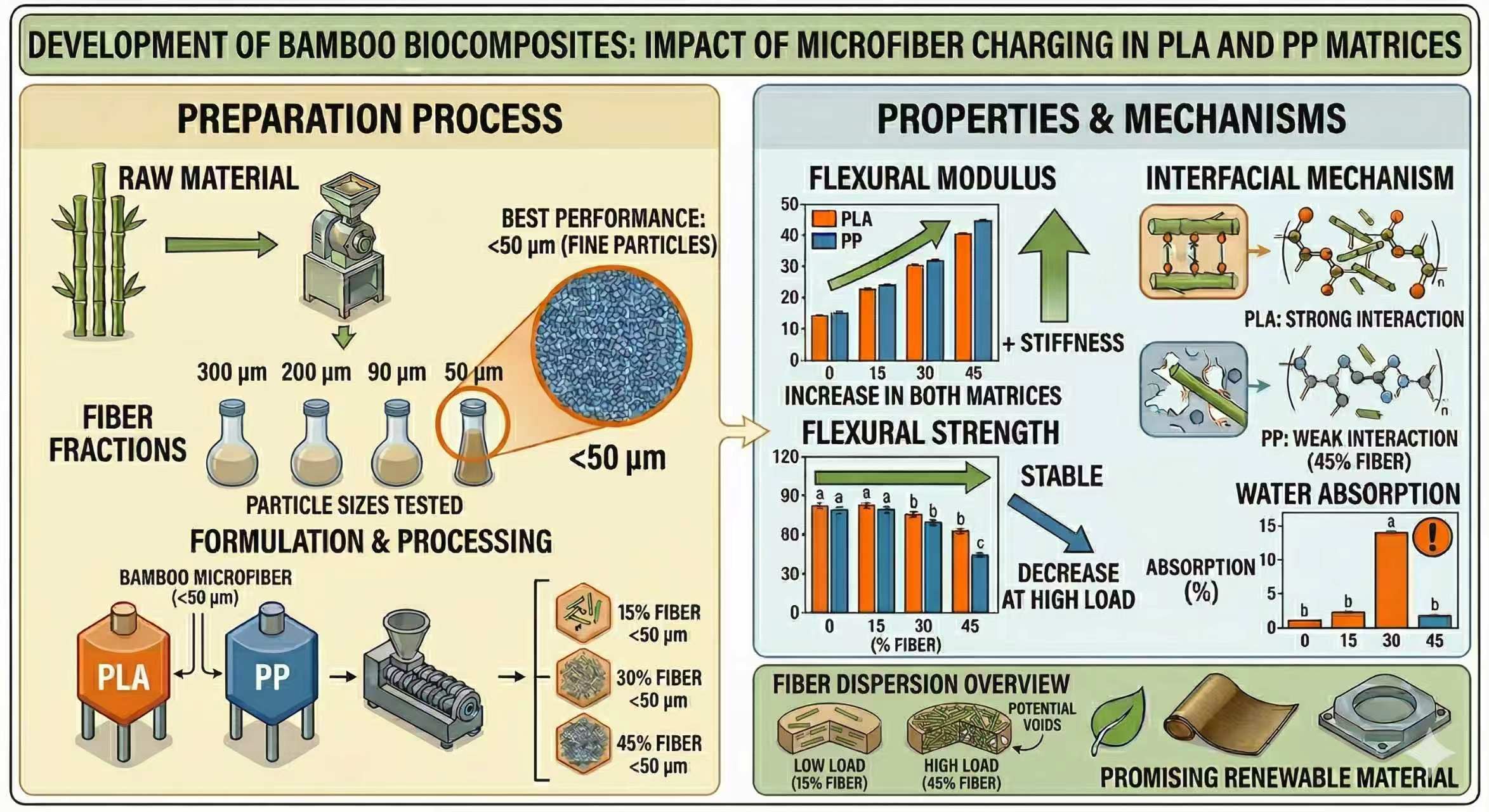
This study investigated the effect of bamboo fiber (BF) content on properties of polylactic acid (PLA) composites, using polypropylene (PP) as a control for comparative purposes. Initially, the BF was evaluated in four particle sizes (300, 200, 90, and 50 μm) through dynamic mechanical analysis to identify the most suitable particle size regarding viscoelastic behavior. The 50 μm fiber was selected based on a multi-criteria approach balancing interfacial restriction, structural stiffness, and microstructural homogeneity. Subsequently, the 50 μm fibers were combined with PLA and PP polymers in different polymer/fiber ratios, corresponding to 85%/15%, 70%/30%, and 55%/45% by weight (wt%). The results showed that the incorporation of microfibers promoted an increase in the storage modulus in both matrices. A statistically significant increase in the flexural modulus was observed at 30% and 45% fiber loading for both matrices. At 45% loading, the flexural modulus of PLA increased by approximately 43% (reaching ~5900 MPa) and nearly doubled in PP (reaching ~2658 MPa). Meanwhile, flexural strength remained stable in PLA but significantly decreased in PP (dropping to ~45 MPa) at 45% fiber content. Regarding surface hardness, both composites exhibited a non-significant upward trend with fiber addition, reaching maximum mean values of ~4481 N/mm for PLA and ~2334 N/mm for PP. 24 h-water absorption remained low and stable in PP but increased sharply in PLA at 45% reinforcement. The composites showed similar behavior with increasing fiber content, regardless of matrix type, for flexural modulus and hardness, while statistically significant differences were observed for flexural strength.Graphic Abstract
Keywords
In a scenario that increasingly demands socioeconomic and technological advancements to reduce the use of non-renewable resources, vegetable fibers have emerged as a versatile alternative. As renewable and biodegradable materials, they have gained industrial relevance, enabling the generation of various bioproducts with lower environmental impact throughout their life cycle while also representing an alternative to petroleum-derived synthetic materials [1].
Beyond the manufacturing of everyday goods such as household objects and clothing, the industry has recognized the potential of vegetable fibers in the automotive, civil construction, and nanotechnology sectors. This potential is evidenced by the significant increase in the use of vegetable fibers in biopolymers, biofilms, and especially in the development of polymer composites [1–6].
In this context, the wide variety of existing vegetable fibers and the possibility of associating them with different polymers are noteworthy, resulting in composites with diverse properties and applications. Vegetable fiber composites have enabled the creation of materials that combine the properties of thermoplastics with the sustainability of natural fibers. This technology contributes to the reduction of plastic usage in composite manufacturing, replaces fossil-based synthetic fibers, decreases energy consumption in the production process, improves the biodegradability of the final material, and offsets, at least partially, the CO2 emissions associated with production. Furthermore, it helps reduce dependence on non-renewable resources by expanding the use of plant-based raw materials, thereby promoting sustainable development [7].
Composites are formed by combining two or more distinct materials to achieve desirable characteristics that their constituents do not possess individually. Generally, vegetable fiber composites consist of a thermoplastic polymer matrix and a plant-based fiber reinforcement. Thus, the material offers the appearance and stiffness of vegetable fibers combined with the toughness and processability of plastic [8]. Through this combination, these composites offer benefits such as good thermal and acoustic insulation, biodegradability, resistance to deformation or cracking, an aesthetically pleasing natural appearance, and the possibility of manufacturing at relatively low initial costs compared to petroleum-based fiber composites, in addition to lower energy consumption [8,9].
The performance of vegetable fiber composites depends on the type of plant-based content and the polymer matrix used, considering the specific characteristics of these raw materials. Some disadvantages and limitations include incompatibility between the polymer matrix and vegetable filler, significant variability in mechanical properties, low processing temperatures, poor dimensional stability, and moderate mechanical properties compared to traditional structural materials [8].
Given the technological possibilities and advantages of these materials, it is essential to study the aspects that impact their performance. These include matrix-fiber compatibility, the improvement of dimensional stability and mechanical properties, and industrial process optimizations aimed at preserving characteristics and enhancing raw material interaction, ultimately refining and expanding the applications of these composites.
Among the plant fibers with the greatest potential for application in composites, bamboo fiber is noteworthy due to its high availability, rapid growth, and significant environmental benefits. Products derived from bamboo can store carbon for long periods and maintain a low, or even neutral, carbon footprint throughout their life cycle. In addition, a bamboo forest area can release about 35% more oxygen than a conventional forest. This rapid growth capacity, associated with high carbon sequestration efficiency, makes bamboo a promising raw material. Thus, bamboo fiber proves to be a versatile material that can reduce greenhouse gas emissions, replacing plastics, concrete, and steel, which consume large amounts of energy and are highly pollutant [10].
Regarding the most promising polymers for bamboo fiber-reinforced composites, polylactic acid (PLA) and polypropylene (PP) are highly noteworthy [11,12]. PP, a fossil-derived thermoplastic, is widely valued for its lightness, chemical resistance, and excellent processability via industrial methods such as injection molding and extrusion. Its applications range from flexible packaging to complex structural components. When reinforced with natural fibers like bamboo, PP shows significant improvements in composite properties, expanding its use in the civil construction and automotive sectors [12–14]. From the perspective of sustainability and end-of-life removability, incorporating bamboo fibers to replace part of synthetic polymers like PP with a renewable lignocellulosic reinforcement reduces dependence on fossil sources and the total volume of plastic consumed.
In contrast, PLA is a bio-based polymer produced from the bacterial fermentation of carbohydrates (found in corn, sugarcane, beets, cassava, etc.), thus obtained from renewable resources and used in various industrial applications. It is characterized by good mechanical behavior, processability, biodegradability, and biocompatibility. In this scenario, bamboo fiber reinforcement emerges as a synergistic solution, making the resulting composite entirely derived from renewable sources, with enhanced mechanical performance and reduced cost, facilitating large-scale application and strengthening its sustainability profile [8,15–19].
Although the general behavior of PLA- and PP-based composites reinforced with natural fibers has been widely investigated in the literature, gaps regarding the response of microfibers in matrices with distinct chemical natures still remain, especially when subjected to critical reinforcement contents [20]. Increasing the fiber fraction may compromise microstructural homogeneity, stress-transfer efficiency, and moisture resistance, making the mechanical behavior of composites more complex and, in many cases, less predictable due to the interaction of these factors with parameters such as fiber dispersion, interfacial adhesion, and processing conditions [20].
In this context, the present study distinguishes itself by comparatively evaluating, under equivalent conditions, bamboo microfiber-reinforced composites based on chemically distinct matrices (PLA and PP), combining a preliminary granulometric assessment with an investigation of the effect of fiber loading on the mechanical and physical properties of the composites. Thus, the study seeks to identify more efficient material combinations for performance optimization and for the development of technically viable alternatives capable of maximizing the performance of biodegradable polymers (PLA) while reducing dependence on fossil-based matrices (PP).
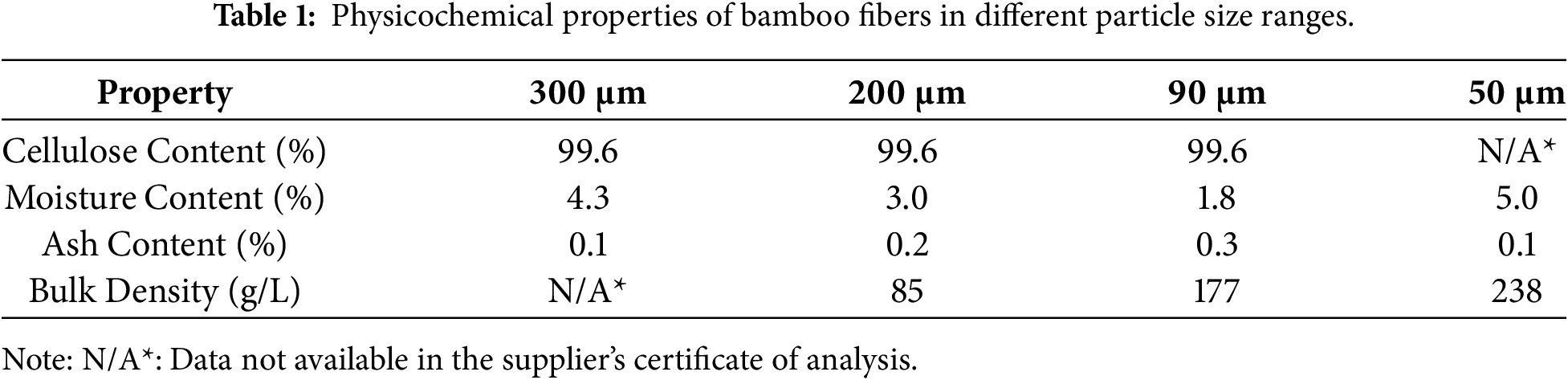
For the development of this study and the fabrication of the composites, bamboo fibers provided by the company Nutrassim Food Ingredients Ltd.a, were used as cellulosic reinforcement. Designed primarily for the food industry, this material undergoes specific industrial processing that highly concentrates its cellulosic fraction, reducing other structural components such as lignin and hemicellulose. The fibers were classified into four different particle sizes for preliminary analysis: 300, 200, 90, and 50 μm. According to the supplier’s technical specifications, the fibers have a cellulose content of approximately 99.6% (calculated on a dry mass basis) and low levels of inorganic residues (ash content ≤ 0.3%). The pH of the fibers is within the neutral range (7.0 to 7.3), and the moisture content ranged between 1.8% and 5.0% depending on the particle size. Table 1 presents the physicochemical properties of the bamboo fibers according to the supplier’s certificate of analysis. Two thermoplastics of distinct natures were used as polymer matrices: polylactic acid (PLA), a biodegradable polymer from a renewable source, obtained from 3D Lab Indústria Ltd.a; and polypropylene (PP), of fossil origin, obtained from Petrocuyo do Sul Ltd. a, used as a control.
Before the mixing process, the moisture content of the raw materials was monitored. The bamboo fibers were conditioned and kept in a temperature-controlled room. Immediately before the manufacture of the composites, the moisture content of the fibers was measured, and all batches showed moisture levels strictly below 7%.
2.2 Processing of the Composites
The fabrication of the test specimens was carried out in the Laboratory of Lignocellulosic Composites, Department of Forestry Engineering (EFL) at the University of Brasília (UnB), using an extrusion and injection molding process. Initially, the thermoplastic matrices (PP or PLA) were processed separately in a co-rotating twin-screw extruder (Thermo Scientific™ Process 11 Parallel Twin-Screw Extruder) to ensure better homogenization with the reinforcement. After this step, the processed polymers and bamboo fibers were inserted into the mixing chamber of the extruder. The equipment promotes the homogenization, dispersion, and adhesion of the cellulosic reinforcement to the polymer matrix, resulting in a molten mixture of polymer and fiber, which was subsequently pelletized. The extrusion parameters of the different composites are listed in Table 2. The processing temperatures (ranging from 165°C to 200°C) used were kept within the established safe thermal window to prevent the degradation of the bamboo microfibers during extrusion and injection molding. Additionally, since the thermal degradation profiles of PLA and PP are also well-documented in the literature, a specific thermogravimetric analysis was not within the scope of this study.

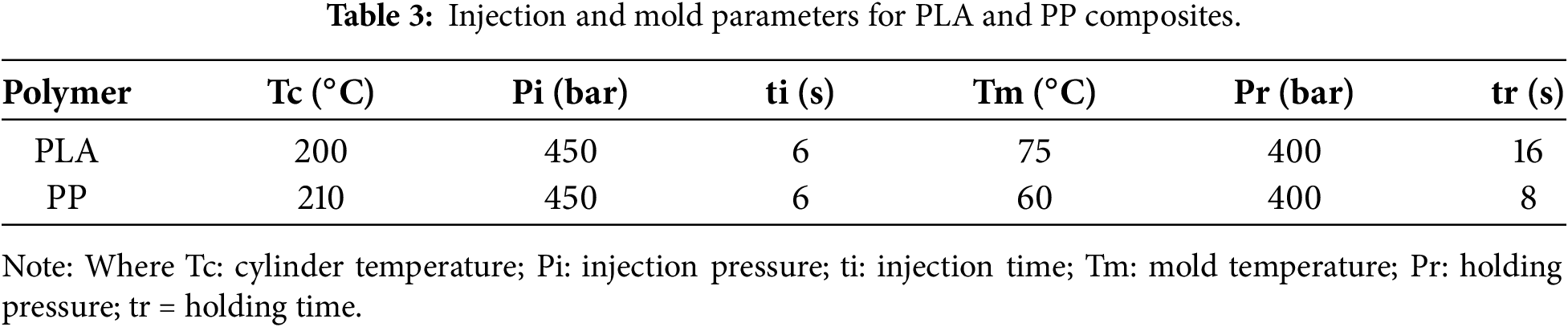
In the subsequent stage, the resulting pellets were processed in a piston-driven injection molding system (HAAKE™ MiniJet Pro). During this step, the pellets were heated to their melting point and then injected under pressure into molds with specific geometries for the proposed tests. After the mold was filled, the system underwent cooling until solidification, generating the final test specimens. Table 3 shows the parameters used in the injection of the composite samples.
Specific temperature profiles for extrusion and injection molding were established to ensure that the processing conditions of the PLA and PP matrices remained below the thermal degradation range of the cellulosic fiber constituents. According to the literature, cellulosic components undergo significant thermal degradation, generally starting above 220°C [21]. Therefore, the selected processing temperatures were chosen based on literature-reported degradation ranges for cellulosic constituents and were maintained below the commonly reported onset of significant thermal degradation. However, since TGA/DSC analysis was not performed, the absence of thermal degradation was not directly verified in this study.
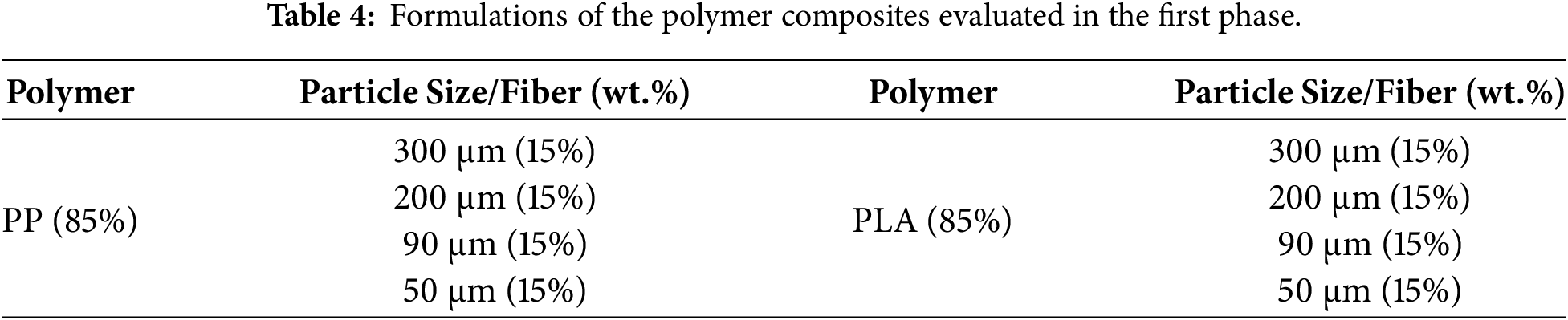
The experimental design was structured into two distinct stages to optimize material selection and evaluate the mechanical performance of the composites. In the first phase, a preliminary screening analysis was conducted to identify the bamboo fiber particle size that would provide the best interaction with each matrix. To this end, composites were produced with a fixed ratio of 15% fiber and 85% polymer by weight (wt.%), as shown in Table 4. The selection of the ideal particle size for the subsequent stages of the study was based on the results obtained through dynamic mechanical analysis (DMA).
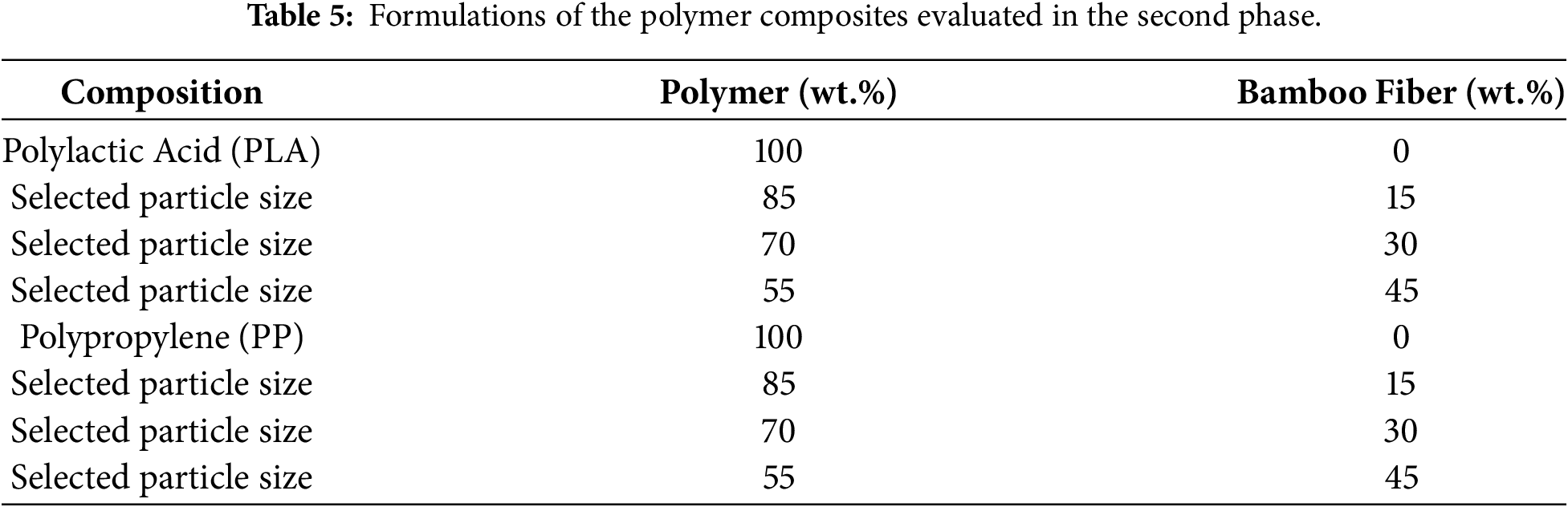
The second phase involved the preparation of the composites incorporating the particle size selected in the previous stage. In this phase, the composites were produced with different fiber ratios to investigate the influence of the reinforcement fraction on the final properties of the material, using fiber concentrations of 15%, 30%, and 45% by weight (wt.%), as shown in Fig. 1. Additionally, control groups consisting of 100% neat polymer (PP and PLA) were produced. In total, eight composite formulations were prepared, varying according to the fiber-to-matrix ratio, as detailed in Table 5.
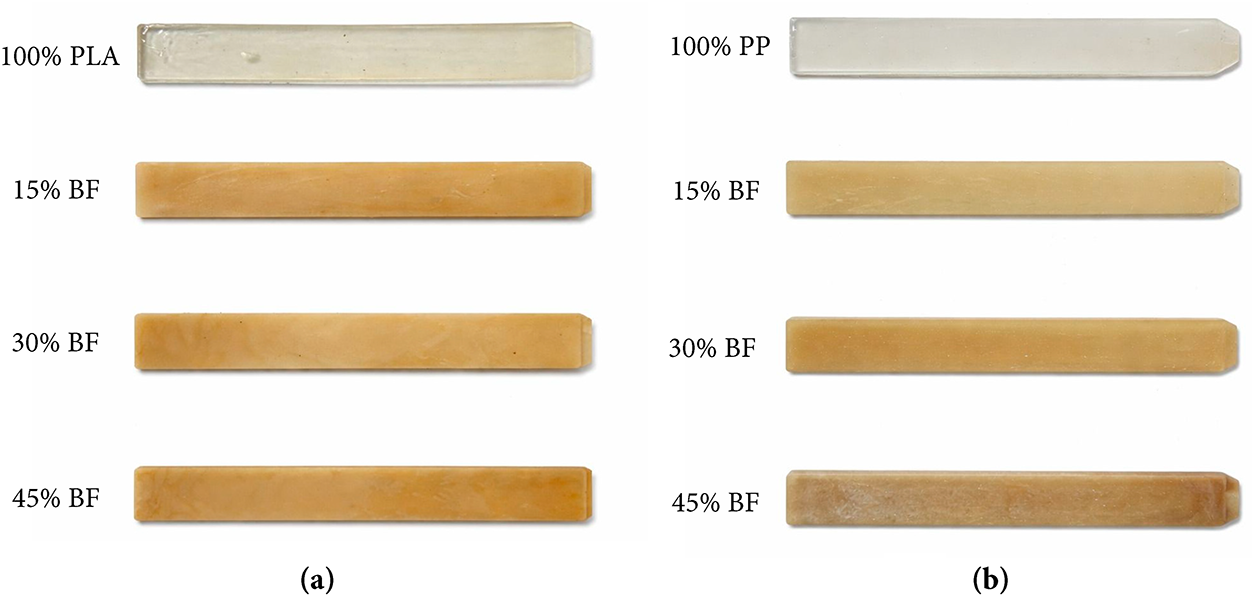
Figure 1: Test specimens with different polymer and bamboo fiber (BF) ratios fabricated for the second phase: (a) bamboo fiber-reinforced polylactic acid (PLA) matrix composites and (b) bamboo fiber-reinforced polypropylene (PP) matrix composites.
2.3 Characterization of the Composites
2.3.1 Dynamic Mechanical Analysis (DMA)
The analysis was conducted using a dynamic mechanical analyzer (DMA-342E, NETZSCH Co. Ltd.) in 3-point bending mode. In accordance with the ASTM D4065-20 [22] standard, this method subjects the sample to cyclic loading, applying a periodic force while controlling variables such as temperature and oscillation frequency. Consequently, three parameters were obtained: storage modulus (E′), loss modulus (E″), and damping factor (tan δ). Initially, one specimen of each fiber particle size was analyzed for the composites made with PLA and PP. Subsequently, one specimen of each composite with varying fiber/polymer ratios was tested. Fig. 2 below illustrates the specimen positioned in the analysis equipment.
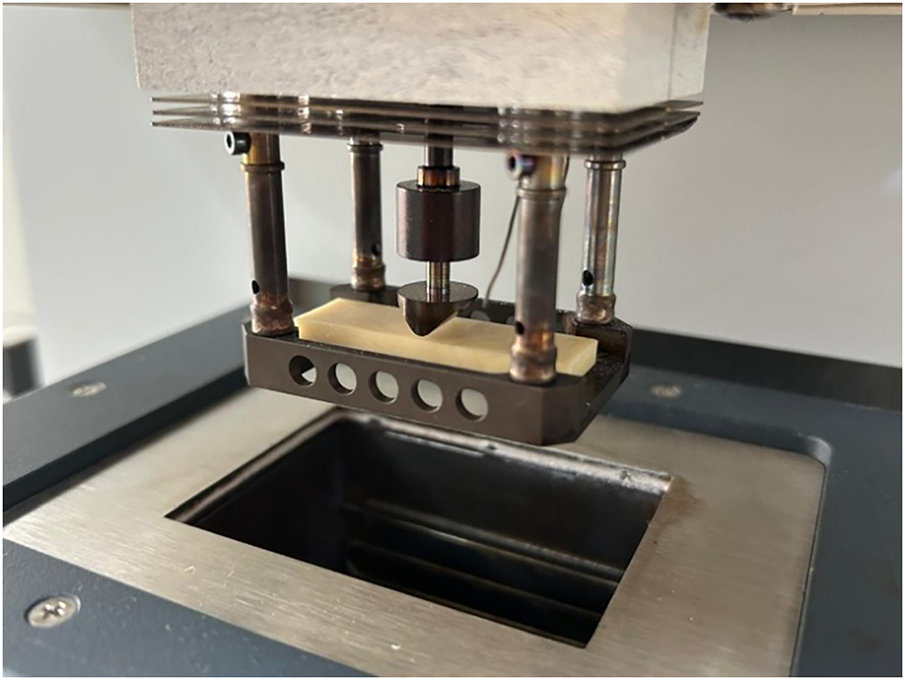
Figure 2: Specimesn undergoing dynamic mechanical analysis in 3-point bending mode.
Considering the screening objective of this specific characterization, it is important to emphasize that only one sample was analyzed for each condition. Therefore, the DMA data collected in both the particle size selection and fiber content assessment are treated as a preliminary and qualitative investigation and rather than as definitive statistical parameters.
The three-point bending test was conducted to evaluate the load required for bending or rupturing the PP and PLA-based composites with different fiber ratios, using an EMIC Universal Testing Machine (DL30000). The tests were conducted at the Laboratory of Physical and Mechanical Properties of Wood, Department of Forestry Engineering (EFL) at the University of Brasília (UnB), according to the ASTM D790-15 [23] standard. Three specimens were used for each fiber/polymer ratio at a crosshead speed of 1.5 mm/min. Thus, the data provided the necessary information to determine the flexural modulus and flexural strength according to Eqs. (1) and (2) below:
(a) Flexural Modulus (Ef):
Ef is given in N/mm2, L (mm) represents the support span, while b (mm) and d (mm) correspond to the width and thickness of the specimen’s cross-section, respectively. The term ΔP/Δδ defines the slope of the load-deflection curve in the elastic region, where ΔP (N) is the change in the applied load and Δδ (mm) is the resultant deflection.
(b) Flexural Strength (σf):
In the equation, σf (N/mm2) represents the flexural strength, F(N) represents the maximum load recorded during the test, while L (mm) denotes the fixed support span. The cross-sectional dimensions are given by b (width) and d (thickness), both in mm.
The hardness characterization of the composites was performed using an EMIC Universal Testing Machine (DL30000). The methodology was adapted from the ASTM D1037-12 [24] standard to suit the laboratory’s available analytical capabilities while still fulfilling the fundamental purpose of a hardness evaluation: assessing the material’s surface resistance to localized deformation. The test consisted of the continuous penetration of a spherical indenter into the surface of the specimens at a constant crosshead speed of 1.3 mm/min, up to a depth of 1.3 mm. Instead of a conventional static indentation reading, this adaptation recorded the continuous force-displacement response. Therefore, the “hardness modulus” (Hm) defined in this study represents the localized compressive stiffness of the material. It was determined by the slope of the load-displacement curve (ΔP/Δδ) in the linear elastic region of the test, according to Eq. (3).
In the equation,
The evaluation of the water absorption of the composites was conducted in accordance with the ASTM D570-98:2018 [25] standard. The procedure consisted of the full immersion of the specimens in distilled water maintained at room temperature. Prior to immersion, the samples were weighed using an analytical balance. To monitor the mass gain associated with the water absorption, the samples were weighed at intervals of 2 and 24 h after the start of the test. The water absorption (WA) was calculated according to Eq. (4).
M1(g) corresponds to the mass of the samples (g) at a given time (t), and M0 represents the initial mass of the sample (g).
To evaluate the effect of fiber content variation on the mechanical performance of PP and PLA composites reinforced with different bamboo fiber ratios, an Analysis of Variance (ANOVA) was performed to determine whether statistically significant overall differences existed between the evaluated groups under the different conditions. Using Tukey’s test at a 5% significance level, it was possible to identify which groups presented statistically significant differences for each matrix with different bamboo fiber loadings. Thus, results for flexural modulus (Ef), flexural strength (σf) and hardness, as well as water absorption (WA), were evaluated.
The mechanical and physical properties of the composites were evaluated using different numbers of replicates depending on the test. Flexural properties were determined using three specimens per treatment and two specimens for the control groups, whereas hardness was assessed using four specimens per treatment and two specimens for the controls. Water absorption was evaluated using five specimens per condition. Although statistically significant trends were observed, the relatively limited number of specimens, particularly for the control groups, should be considered when interpreting the statistical comparisons. Future studies should include larger sample sets to improve statistical confidence and repeatability.
Prior to performing the Analysis of Variance (ANOVA), the assumptions of normality and homogeneity of variances were verified using the Shapiro-Wilk and Levene tests, respectively. Although minor deviations were observed for some parameters, ANOVA was maintained to ensure a comparative standard across all analyses. Additionally, the data were analyzed under a 2 × 4 factorial experimental design, considering the polymer matrix type (PP and PLA) and the bamboo fiber content (0%, 15%, 30%, and 45%) as independent factors. This analysis allowed for the assessment of both the main effects of each factor individually and the interaction between the matrix and the reinforcement loading on the composite properties.
3.1 Effect of Bamboo Microfiber Particle Size
The results of the indicative profile obtained from preliminary dynamic mechanical analysis (DMA) of the composites, considering different bamboo fiber particle sizes at a fixed ratio of 15 wt.%, indicated that the 200 µm size exhibited the highest Storage Modulus (E′) throughout most of the initial temperature range evaluated for the PLA composites. This behavior demonstrated a greater elastic energy storage capacity, reflecting a superior increase in material stiffness. The subsequent particle sizes with the highest E′ values were, respectively, 90, 300 µm, and finally, 50 µm. Notably, all particle size variations resulted in an increase in E′ compared to neat PLA, demonstrating the role of the fibers as structural reinforcement, as shown in Fig. 3.
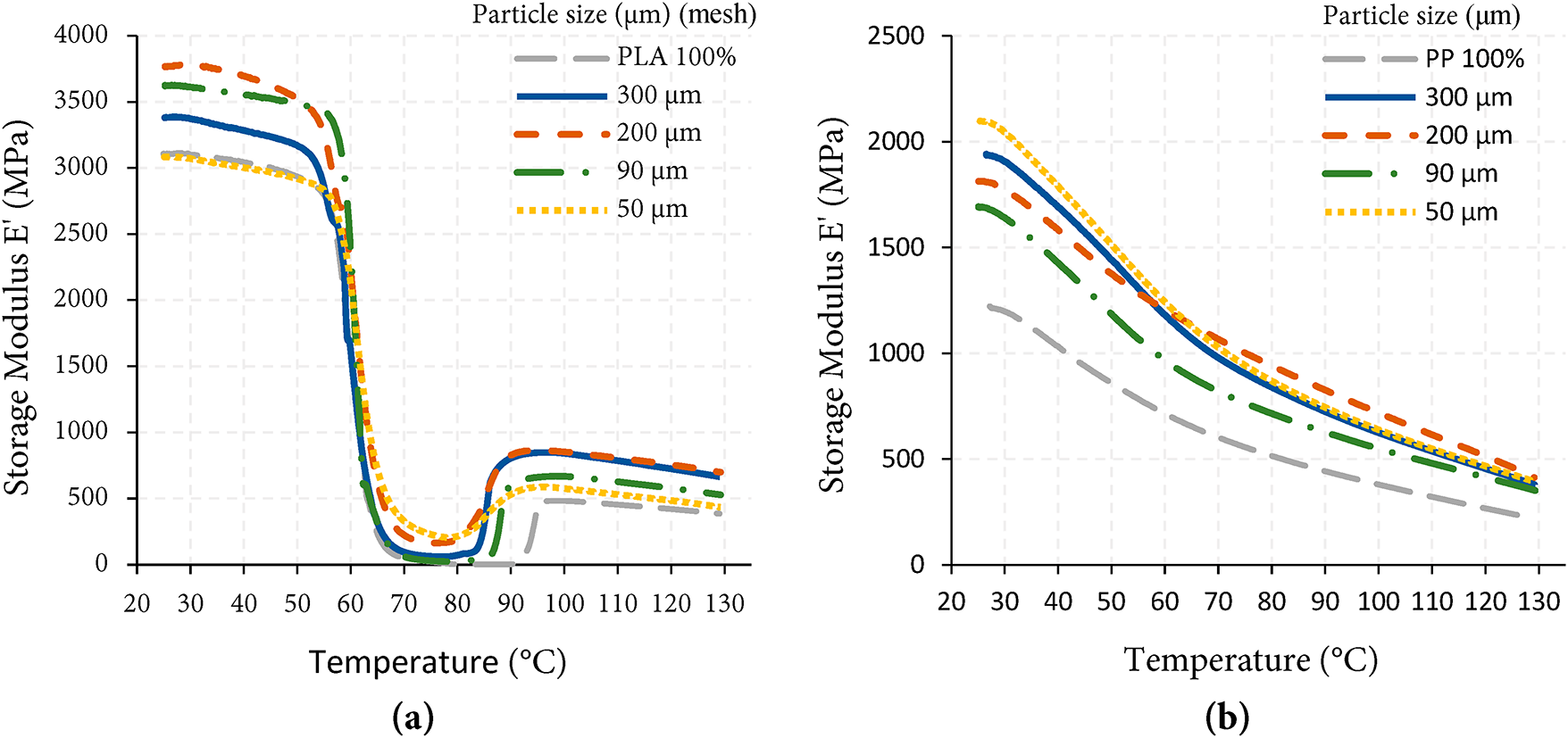
Figure 3: Storage modulus (E′) of PLA and PP matrix composites reinforced with 15% bamboo fiber at different fiber sizes (μm): (a) Polylactic acid (PLA) matrix composites; (b) Polypropylene (PP) matrix composites.
The lower stiffness observed in the PLA composites reinforced with smaller fiber sizes (50 μm) may be attributed to a loss of structural continuity due to the fiber size compared to other granulometries, resulting in decreased efficiency in stress transfer from the matrix to the reinforcement. Under this condition, fibers with reduced dimensions may have a lower capacity to act as reinforcing elements, predominantly functioning as a filler material [26–28].
For the PP composites, the results also indicate an increase in E′ relative to the neat polymer, evidencing the reinforcement effect. However, unlike in the PLA, the 50 μm size presented the highest E′ values, followed by the 300, 200, and 90 μm sizes (Fig. 3). This contrast with the PLA composite results suggests that, for PP, the smaller fiber diameter resulted in a larger specific surface area and, consequently, a larger interfacial area, favoring the reinforcement effect [26]. It is noteworthy that the reinforcing capacity reflects the intrinsic properties of the fiber, interfacial adhesion, and the critical fiber length, which justifies the distinct behaviors for matrices of different chemical natures [13,26,27].
Furthermore, the difference between the curves of the PLA and PP-based composites is explained by the distinct thermal behavior of these polymers within the analyzed temperature range. PLA exhibited a glass transition temperature (Tg) around 60°C, within the test window, while PP has a Tg well below the evaluated temperature range.
Regarding the loss modulus (E″), shown in Fig. 4, which quantifies the energy dissipated by the material and is associated with its viscosity, it was observed that for the PLA-based composites, the highest E″ peaks were recorded for the 300, 200, and 90 μm sizes. In contrast, the composite reinforced with 50 μm fibers exhibited the lowest dissipation peak. This behavior is associated with a greater capacity to restrict polymer chain mobility, suggesting a potentially more efficient fiber-matrix adhesion [29].
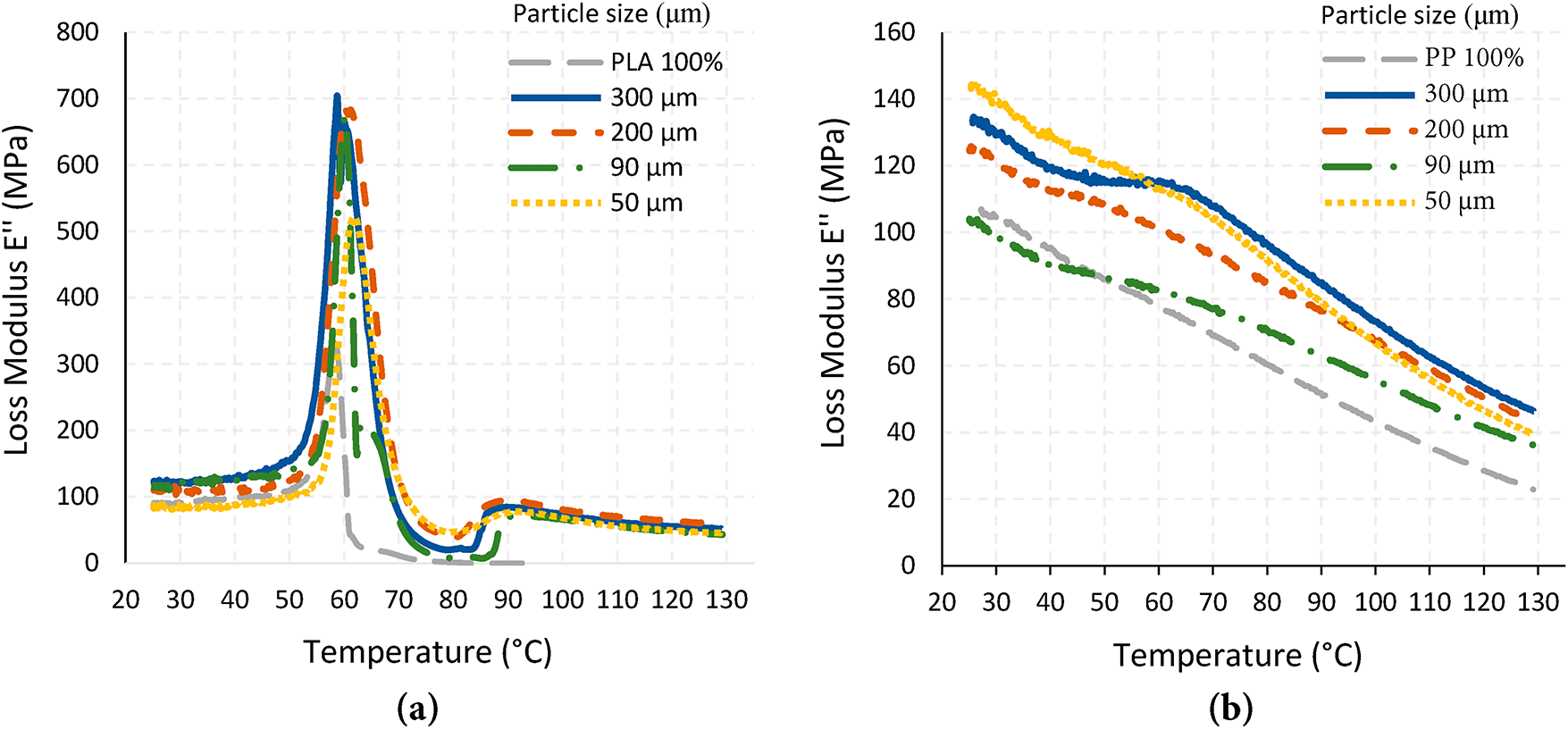
Figure 4: Loss modulus (E″) of PLA and PP matrix composites reinforced with 15% bamboo fiber at different fiber particle sizes (μm): (a) Polylactic acid (PLA) matrix composites; (b) Polypropylene (PP) matrix composites.
For the PP-based composites, the E″ results indicated that the 90 μm size presented the lowest E″, values, suggesting lower internal interfacial friction and indicating that the particles may be more well-distributed. The 200 and 300 μm sizes exhibited intermediate behavior, while the 50 μm size showed higher E″ values. This behavior corroborates the results observed for E′, as the high specific surface area of the smaller particle size fibers can imply high internal fiber-matrix friction. Furthermore, higher E″ values may suggest a possible reduction in interfacial chemical compatibility compared to the other particle sizes, as greater interfacial friction can represent lower fiber-matrix adhesion [26], as evidenced by the results in Fig. 4.
The tan δ values, which correspond to the damping factor (the ratio between the loss modulus, E″, and the storage modulus, E′), reflect the balance between the viscous and elastic components of the material. For the PLA-based composites (Fig. 5), the highest tan δ peaks were observed for the 90 μm particle size, followed in descending order by the 300, 200, and 50 μm sizes.
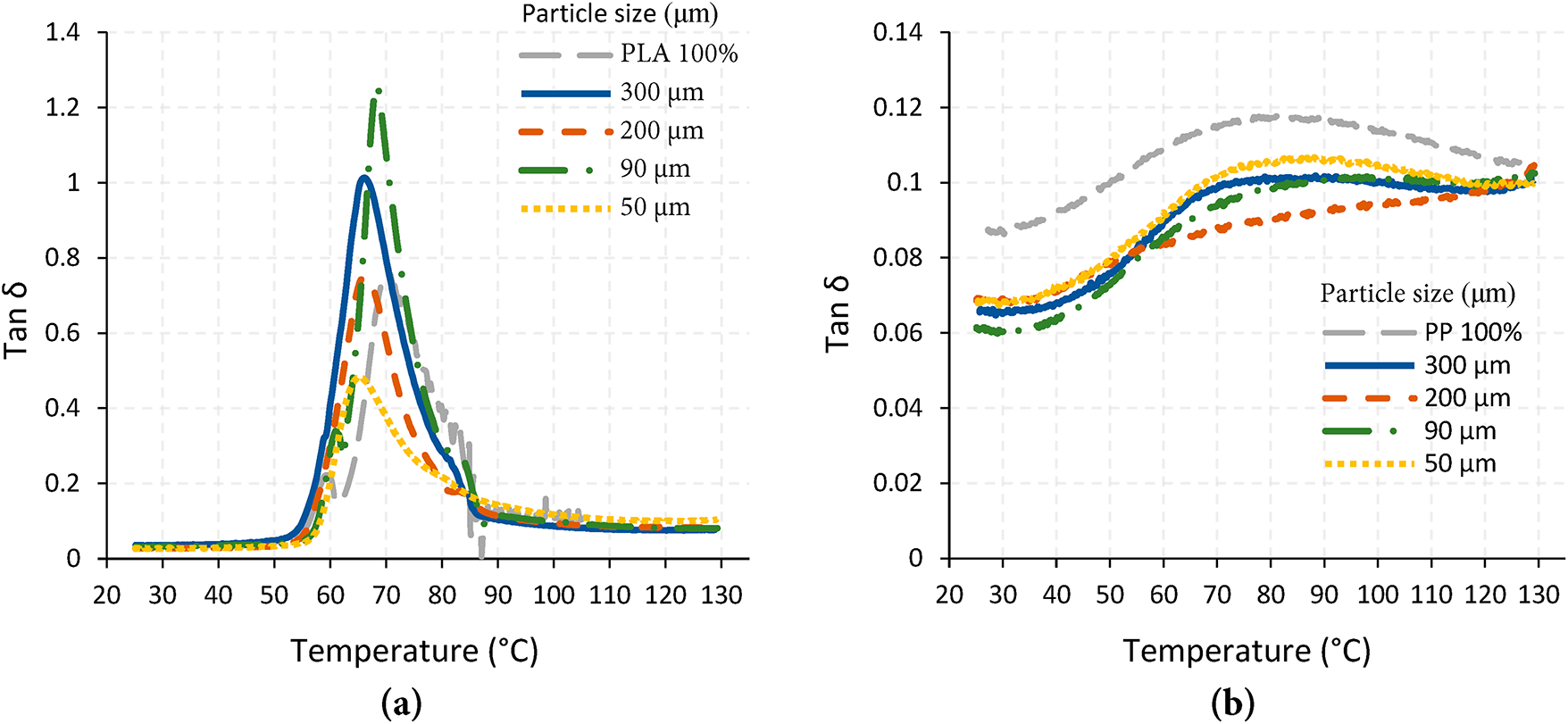
Figure 5: Tan delta (tan δ) of PLA and PP matrix composites reinforced with 15% bamboo fiber at different fiber μm sizes: (a) Polylactic acid (PLA) matrix composites; (b) Polypropylene (PP) matrix composites.
These findings show significant variations in the degree of fiber–matrix interfacial interaction, as higher tan δ values are associated with greater energy dissipation, suggesting that the polymer chains have greater freedom of movement at the interface. Conversely, the composite with 50 μm fibers exhibited the lowest tan δ peak, which reinforces its role in efficiently restricting molecular mobility [30].
For the PP-based composites, the 90 μm size showed the lowest initial tan δ values, indicating lower internal energy dissipation and a predominance of elastic behavior, followed by the 300, 200, 50 μm particle sizes. This behavior suggests that, although the fibers contribute to increasing the stiffness of the material, the viscoelastic characteristics of the system remain active. Thus, the results indicate a fiber–matrix interaction that alters the mechanical response of the composite while maintaining both elastic and viscous components, as illustrated in Fig. 5.
Based on preliminary results for different microfiber sizes, distinct patterns were observed for each of the three analyzed parameters. For the PLA/Bamboo system, although the 200 μm fibers yielded higher values for the storage modulus (E′), a component associated with stiffness, the tan δ analysis demonstrated that the 50 μm size provided greater restriction to polymer chain mobility. This characteristic suggests possible restriction of polymer chain mobility, which may be associated with improved interfacial interaction between the reinforcement and the matrix. While scanning electron microscopy (SEM) is traditionally used to provide direct visual evidence of fiber-matrix adhesion, in this study, the dynamic mechanical analysis—specifically the E′ and tan δ—was employed as a macro-scale indicator of interfacial interaction and polymer chain restriction.
The preliminary DMA screening suggested favorable storage modulus behavior for the 50 μm fibers in the PP system. However, the observed increase in internal friction may suggest lower interfacial adhesion efficiency, although direct microstructural confirmation was not performed. In non-polar polymer matrices such as PP, which possess lower chemical affinity with the fibers, maximizing the contact area with the reinforcement material through smaller particles is a suitable mechanism to compensate for lower interfacial adhesion [31].
In addition to the aforementioned factors, the selection of 50 μm fibers is justified by the pursuit of greater microstructural homogeneity. Smaller particles may facilitate dispersion and reduce the likelihood of agglomeration and void formation, although this was not directly verified in the present study. This ensures that variations in mechanical properties result from the fiber proportion rather than processing defects [27].
Therefore, considering that this first stage was designed as a preliminary investigation to define a standard reinforcement size for the subsequent analyses, the selection of the 50 µm particle size was based on a multi-criteria approach rather than on the maximization of a single property. The selected size represented the best overall balance among viscoelastic performance, interfacial interaction, processability, and microstructural homogeneity. For the PLA system, although the 50 µm fibers did not provide the highest storage modulus (E′), they exhibited the lowest tan δ peak, indicating stronger restriction of polymer chain mobility and more efficient interfacial interaction. In contrast, for the PP system, the 50 µm fibers presented the highest storage modulus, demonstrating superior stiffness performance. Furthermore, smaller particles favor more homogeneous dispersion during extrusion and injection molding, reducing the likelihood of fiber agglomeration and processing-related defects. Thus, the adoption of a single standard particle size also enabled a more equivalent comparative evaluation of fiber loading effects in chemically distinct matrices under the same reinforcement conditions.
3.2 Effect of Bamboo Microfiber Content
3.2.1 Dynamic Mechanical Analysis of the Composites
The qualitative evaluation of the storage modulus (E′) for composites with different bamboo fiber/polymer ratios (15, 30, and 45 wt.%) demonstrated that fiber incorporation promotes an increase in the stiffness of both systems (PLA/Bamboo and PP/Bamboo), as shown in Fig. 6,
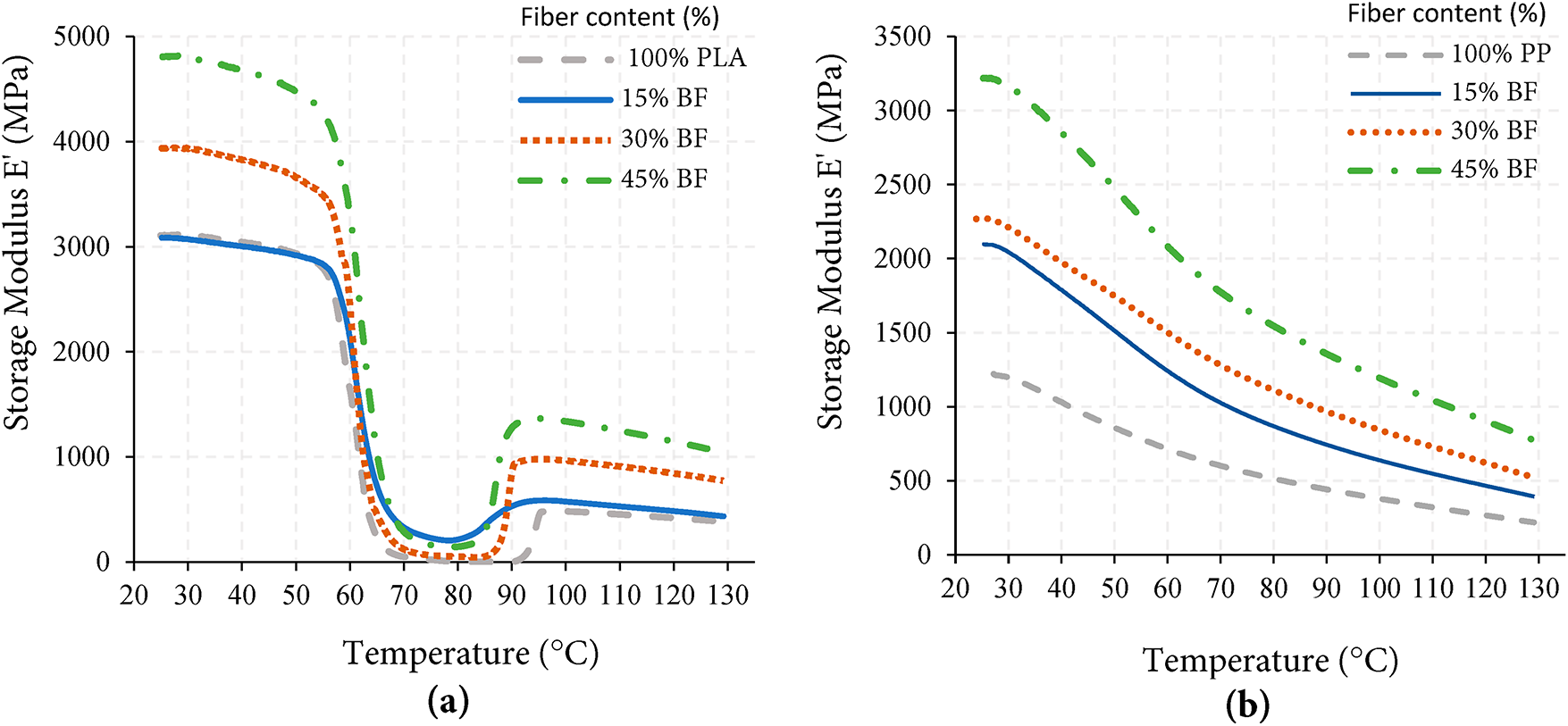
Figure 6: Storage modulus (E′) of PLA and PP matrix composites reinforced with different bamboo fiber (BF) contents: (a) Polylactic acid (PLA) matrix composites; (b) Polypropylene (PP) matrix composites.
In both systems, increasing the bamboo fiber proportion resulted in a progressive increase in E′, evidencing the efficiency of the fibers as rigid reinforcing agents that enhance the material’s capacity to store elastic energy under load. For PLA-based composites, it was observed that low fiber contents may not significantly alter the material’s stiffness, as the E′ curves for pure PLA and the 15% fiber composite are relatively close. In contrast, fiber contents of 30% and 45% promoted a substantial increase in E′, representing increments of approximately 33% and 55%, respectively, compared to pure PLA.
A sharp drop in E′ is also observed as temperature increases, specifically in the glass transition region (Tg), located between 55°C and 65°C, which results from the increased mobility of the PLA chains in this range. Subsequently, a recovery in stiffness occurs, a phenomenon characterized as cold crystallization, which is well-documented in PLA composites reinforced with natural fibers [32]. Notably, PLA/Bamboo composites crystallized at lower temperatures than the neat polymer, corroborating the role of fibers as heterogeneous nucleating agents [33]. The reduction in the cold crystallization temperature with increasing fiber loading, combined with the fact that the 45% curve remains significantly above the others after 90°C, suggests that the increased fiber content not only reinforces the matrix but also alters the crystallization kinetics, which influences the final thermal and mechanical properties of the material [29].
The stiffness gain for the PP-based composites is even more pronounced with the addition of bamboo fibers. For the 45% BF content, the E′ values represented a nearly threefold increase compared to the neat polymer at initial temperatures, highlighting a clear correlation between increased fiber loading and the storage modulus.
During the test, a gradual and continuous reduction in E′ was observed for PP throughout the entire evaluated temperature range (25°C to 130°C). This profile is characteristic of matrices operating above their glass transition temperature (Tg), a condition in which the polymer exhibits greater molecular mobility. This profile differs from the behavior observed for PLA, which exhibits a glass transition within the analysis range (between 55°C and 65°C).
Regarding the loss modulus (E″) shown in Fig. 7, it is observed that the dissipation peak for the PLA matrix composites intensifies significantly with increasing reinforcement loading (45% BF > 30% BF > 15% BF > neat PLA). The same trend is observed for the PP matrix composites, in which E″ values increase as the bamboo fiber content rises. This behavior can be attributed to the increase in internal friction at the fiber-matrix interface, as the higher fiber concentration expands the surface contact areas and, consequently, the energy dissipation. This result confirms that, although the fiber reinforces the material (increasing stiffness) in both matrices, it also enhances energy dissipation, which favors the viscous component of the material.
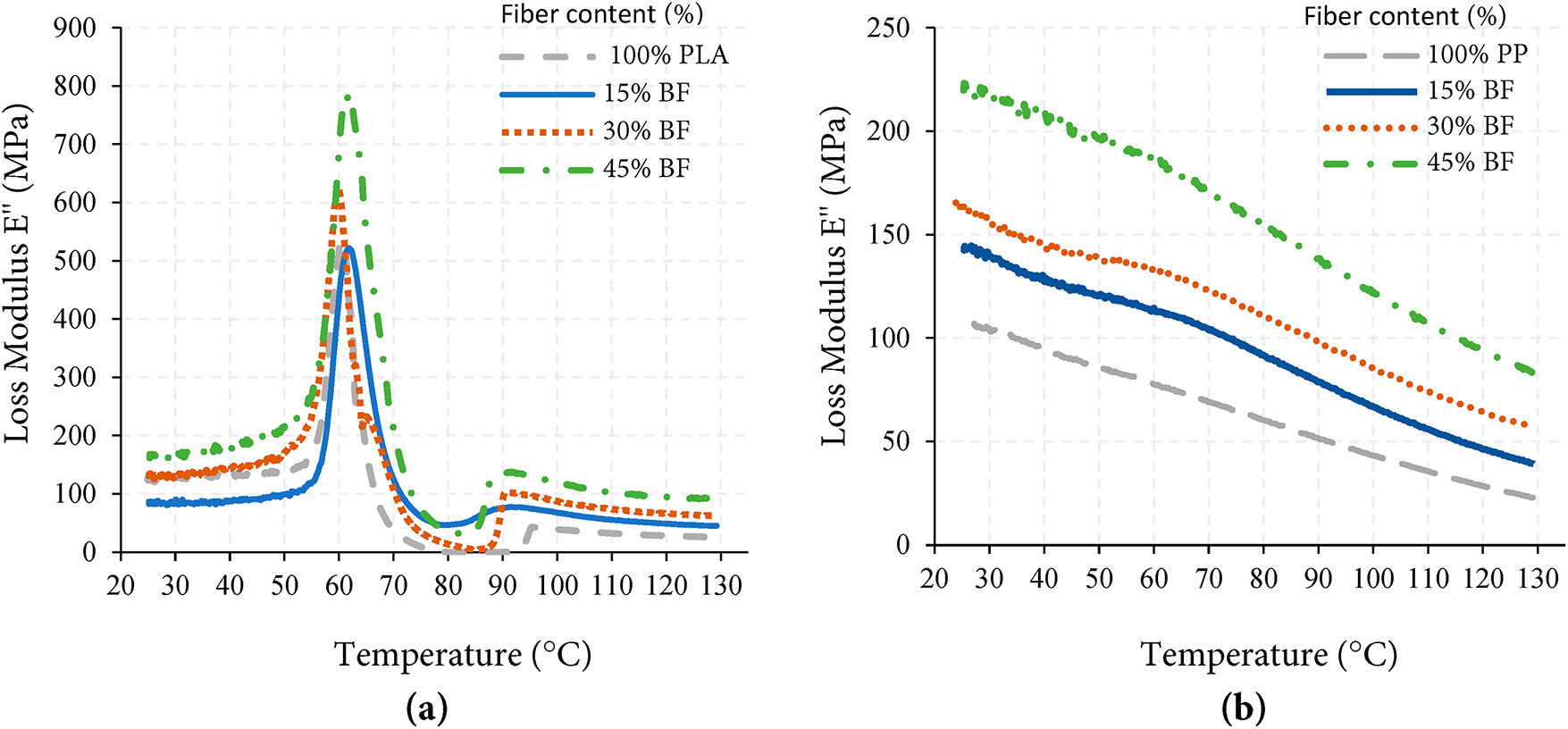
Figure 7: Loss modulus (E″) of PLA and PP matrix composites reinforced with different bamboo fiber (BF) contents: (a) Polylactic acid (PLA) matrix composites; (b) Polypropylene (PP) matrix composites.
Regarding the tan δ of the PLA matrix composites, as observed in Fig. 8, the results demonstrate that the composite with 30% bamboo fiber exhibits the highest tan δ peak, surpassing neat PLA. This suggests that, at this concentration, there was considerably high energy dissipation, characteristic of significant interfacial friction that was not compensated for by the elastic nature (E′) or the restriction of PLA chain mobility. This specific result for this fiber content may be a consequence of poor fiber dispersion within the matrix during processing and fabrication, which creates areas of fiber agglomeration and, therefore, leads to higher internal friction [34].
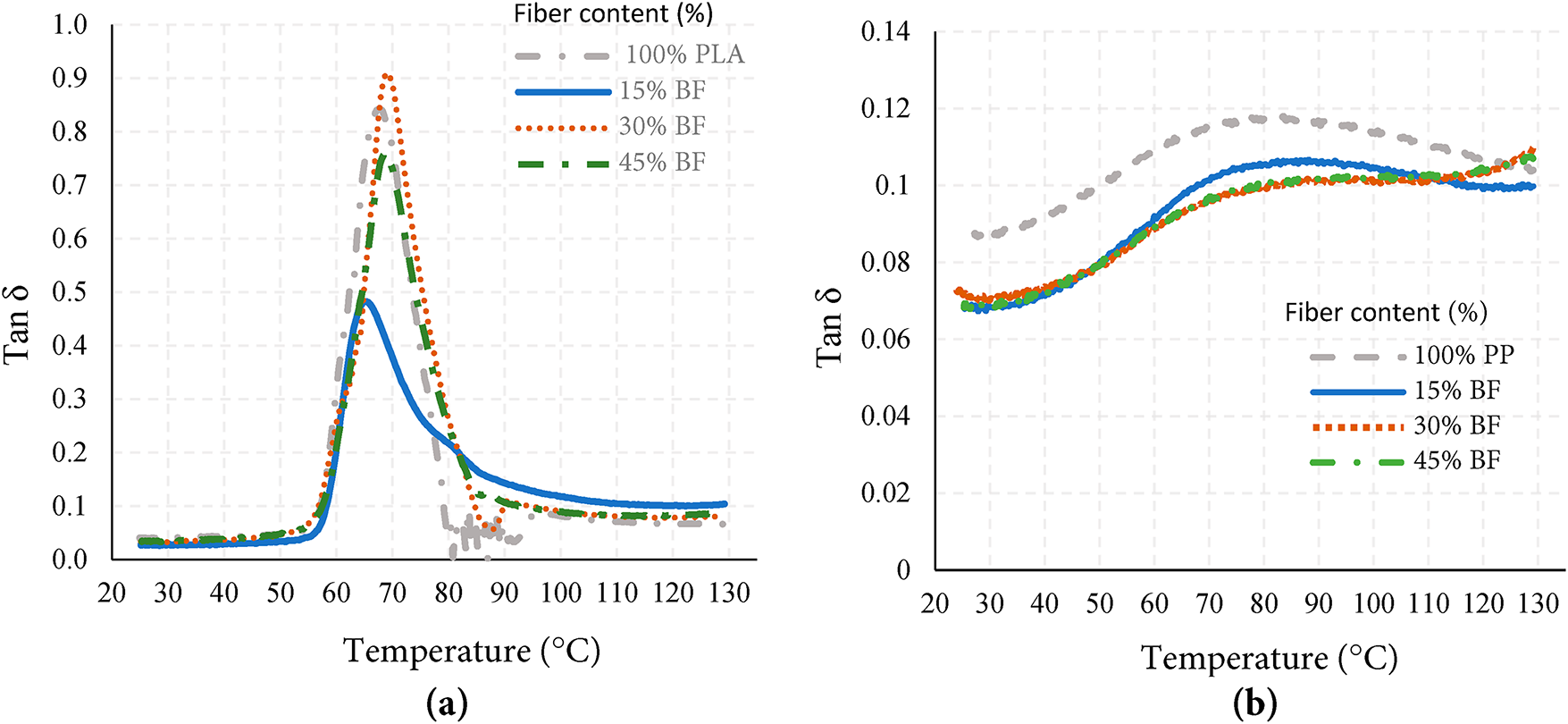
Figure 8: Tan delta of PLA and PP matrix composites reinforced with different bamboo fiber (BF) contents: (a) Polylactic acid (PLA) matrix composites; (b) Polypropylene (PP) matrix composites.
The 15% fiber composites exhibit the lowest peak, indicating strong restriction of PLA chain mobility at this ratio. This also suggests efficient fiber-matrix interaction, such that the elastic character (E′) predominates significantly over the viscous character (E″) during the glass transition peak. This demonstrates that the matrix-filler interaction is stronger in the composite material with the lower filler volume fraction, as energy dissipation in composite materials increases due to the greater contact within the matrix promoted by the increase in fiber content [30,35,36].
The 45% bamboo fiber PLA composite yielded intermediate values for the damping factor, which were still lower than those of neat PLA, indicating a greater influence of E′ and the reinforcement’s role in restricting the PLA chains.
For the PP-based composites (Fig. 8), the addition of bamboo fibers progressively decreases the tan δ values as the fiber content increases compared to neat PP. This reduction indicates the role of the fibers as rigid reinforcement (predominance of the E′ factor), suggesting that the fiber-matrix interface is efficient in improving the stress-bearing and stress-transfer capacities by limiting molecular mobility [29].
3.2.2 Mechanical and Physical Properties of Composites
Regarding the results obtained from the three-point bending test shown in Fig. 9, it is observed that the flexural modulus (Ef) increased gradually with the increment of bamboo fiber loading. Tukey’s test at a 5% significance level revealed that the addition of 15% fiber did not result in a statistically significant gain in the flexural modulus compared to neat PLA (both sharing the same grouping letter ‘a’). This demonstrates that, at these concentrations, the fiber volume did not considerably alter the performance of the matrix.
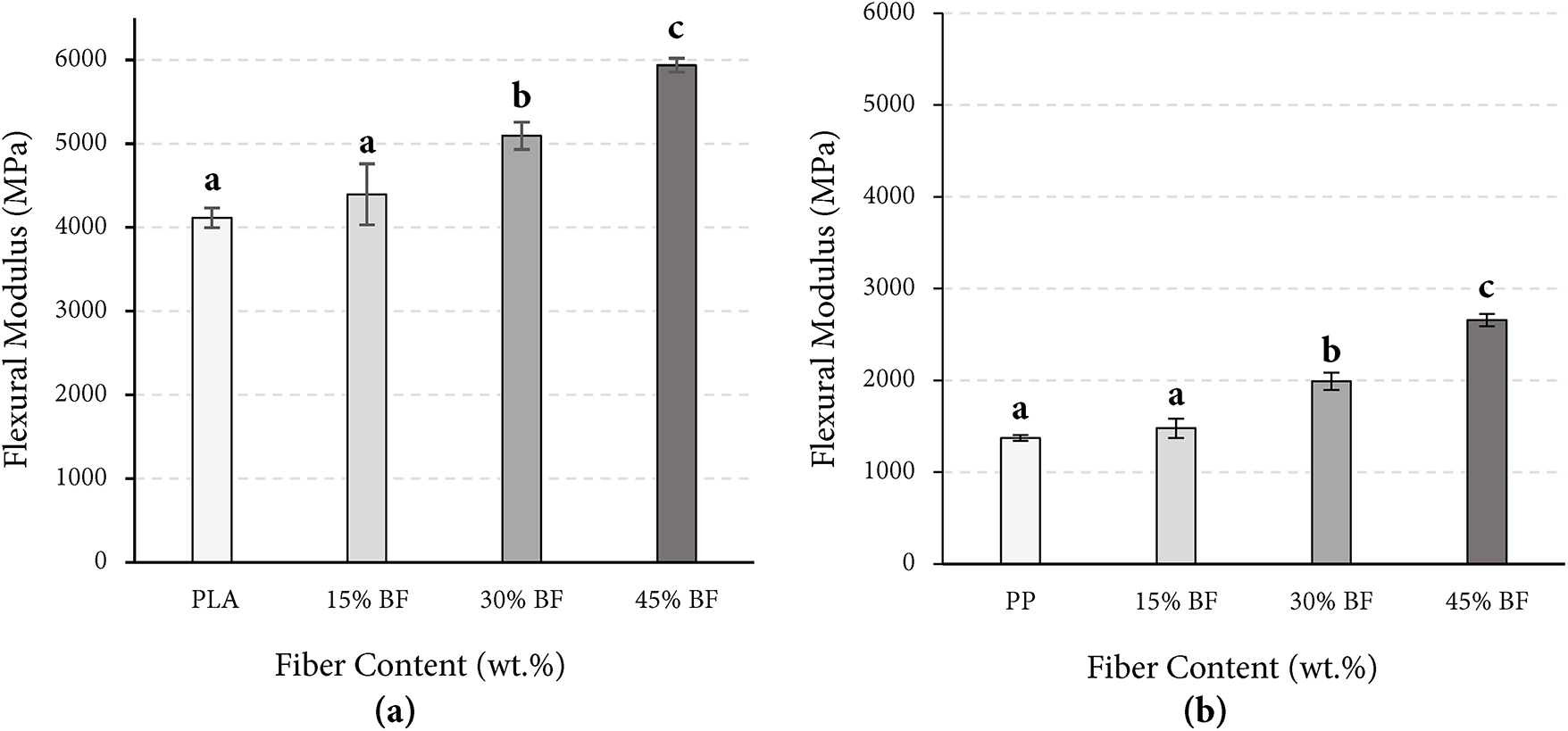
Figure 9: Flexural modulus (Ef) of PLA and PP matrix composites reinforced with bamboo fiber (BF) as a function of fiber content (wt.%): (a) polylactic acid (PLA) matrix composites; (b) polypropylene (PP) matrix composites. Means followed by the same letters for the same matrix do not show statistically significant differences by Tukey’s test (p > 0.05).
However, from 30% fiber loading onwards, a significant increase in the modulus occurred, reaching approximately 5100 MPa (indicated by the letter ‘b’). The maximum value is observed at 45% content (indicated by the letter ‘c’), approaching 6000 MPa. This behavior demonstrates that the bamboo fiber effectively acted as a reinforcing agent, and that increasing the fiber fraction has a significant effect on the stiffness properties of the composites.
The PP matrix composites exhibit an analogous trend to the results observed for the PLA matrix. Neat PP and the 15% fiber composite are statistically similar (indicated by the letter ‘a’); from 30% fiber onwards, the fiber increment becomes statistically different from the results for neat PP. For the 45% fiber content, the mean modulus values are nearly double relative to the neat matrix (from 1372 to 2658 MPa). Despite the higher absolute increase for the PLA matrix composites, as it is a naturally stiffer matrix, the percentage increase relative to the neat PP matrix is remarkable, indicating that bamboo fiber exerts considerable mechanical influence on the PP matrix.
The flexural strength results for the PLA matrix composites (Fig. 10) did not show statistically significant variations with the incorporation of bamboo fibers. According to Tukey’s test, all samples were classified within the same statistical group. Although an upward trend in strength was observed for the 45% content, the high variability (standard deviation) verified especially in neat PLA, combined with the low oscillation between proportions, precludes the assertion of a statistical gain. This scenario indicates that, while the fibers provide stiffness to the system, stress transfer at the fiber-matrix interface was not efficient enough to increase the strength. However, the fact that there was no reduction in strength even at 45% loading is a positive result, considering the common tendency for maximum stress reduction due to void formation and fiber agglomeration at higher fiber increments. Thus, maintaining strength suggests that the processing was efficient in ensuring the homogeneity of the composite, a factor that increases the matrix’s ability to encapsulate the fibers [37–39].
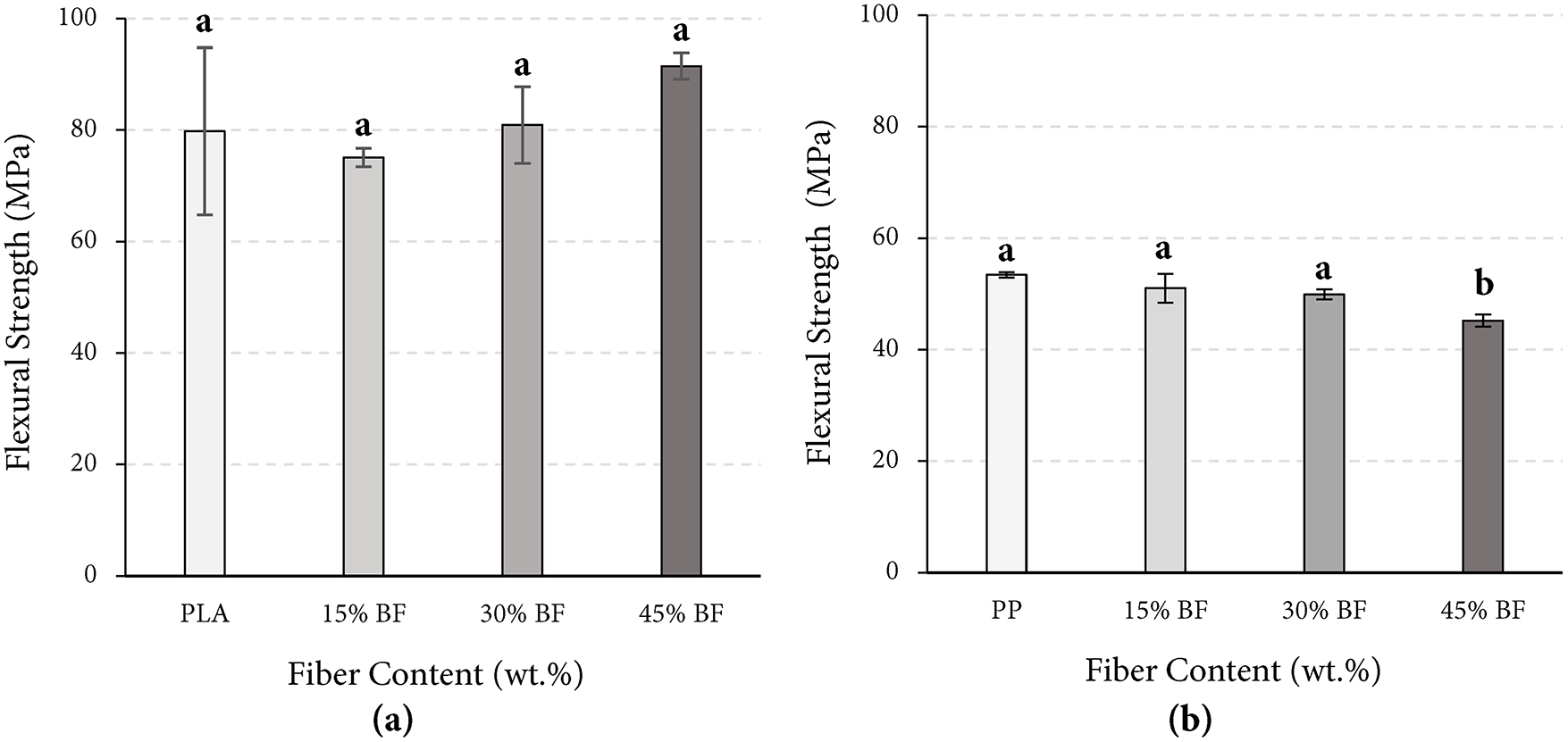
Figure 10: Flexural strength (σf) of PLA and PP matrix composites reinforced with bamboo fiber (BF) as a function of fiber content (wt.%): (a) polylactic acid (PLA) matrix composites; (b) polypropylene (PP) matrix composites. Means followed by the same letters for the same matrix do not show statistically significant differences by Tukey’s test (p > 0.05).
For the PP-based composites, the behavior was distinct. Statistical maintenance of strength is observed for fiber contents up to 30% (represented by the letter ‘a’). However, upon reaching 45% content, a significant reduction in flexural strength occurs (indicated by the letter ‘b’), dropping from approximately 53 MPa (neat matrix) to about 45 MPa. This behavior raises the hypothesis that the dispersion of bamboo might have been hindered by the increase in their fraction (which promotes agglomeration), which could lead to a portion of the fibers not being completely encapsulated by the PP matrix. This can result in internal defects and lead to a reduction in the stress transfer efficiency from the PP matrix to the bamboo fibers [40].
The results of Tukey’s test for the hardness modulus, shown in Fig. 11, demonstrate that the incorporation of bamboo fibers did not significantly alter the hardness of either polymer matrix. For both the PLA and PP matrix systems, all fiber fractions were classified within the same statistical group (indicated by the letter ‘a’).
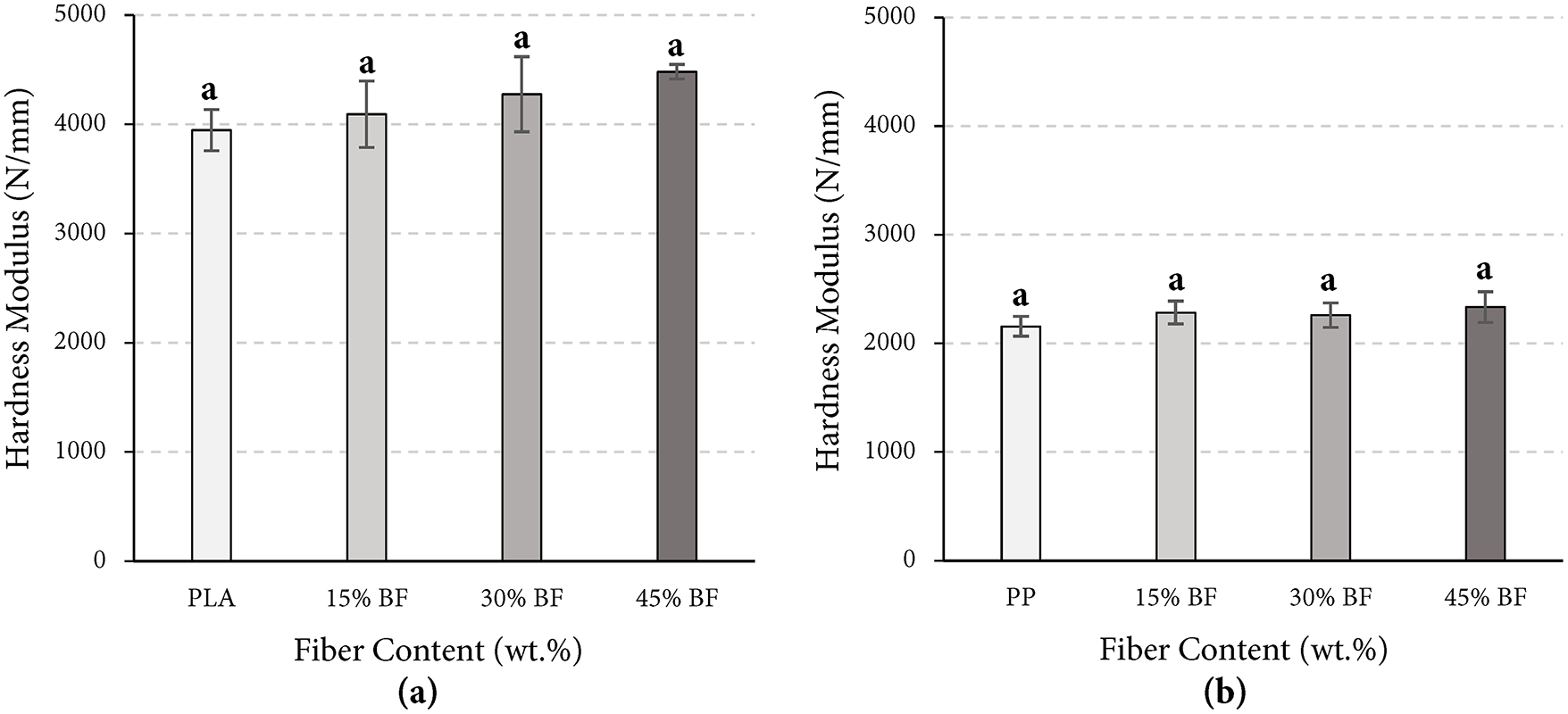
Figure 11: Hardness (N/mm) of PLA and PP matrix composites reinforced with bamboo fiber (BF) as a function of fiber content (wt.%): (a) polylactic acid (PLA) matrix composites; (b) polypropylene (PP) matrix composites. Means followed by the same letters for the same matrix do not show statistically significant differences by Tukey’s test (p > 0.05).
However, a trend toward increased hardness was observed as the fiber content increased. For the PLA composites, mean values rose from approximately 3946 to 4481 N/mm, while for PP, the values remained more stable in the 2157–2334 N/mm range. Nevertheless, this variation lacks statistical significance (at a 5% significance level).
This proximity between the mean hardness values for the different reinforcement loadings and the neat polymer is expected, as the test primarily evaluates the composite surface where the matrix is the dominant phase. Nonetheless, the slight increase observed indicates a contribution from the fibers to the penetration resistance, which may also represent a lower propensity for frictional wear and water absorption [41].
It should be noted that since the hardness modulus (Hm) obtained in this study is derived from the slope of a dynamic penetration curve (adapted for the universal testing machine), it serves as an internal comparative metric to evaluate the stiffening effect of different bamboo fiber loads. Consequently, these values should not be directly correlated with the conventional static hardness scales normally used for plastics.
The results of the short-term water absorption rate analysis for the PLA matrix composites (Fig. 12) indicate initial stability in water absorption for fiber contents up to 30% over the 24-h immersion period. According to Tukey’s test, there was no statistically significant difference between neat PLA, 15%, and 30% bamboo fiber (all classified under group ‘b’). In these fiber fractions, the polymer matrix appears to be capable of efficiently encapsulating the plant fibers, limiting moisture access to the fibers’ hydrophilic groups.
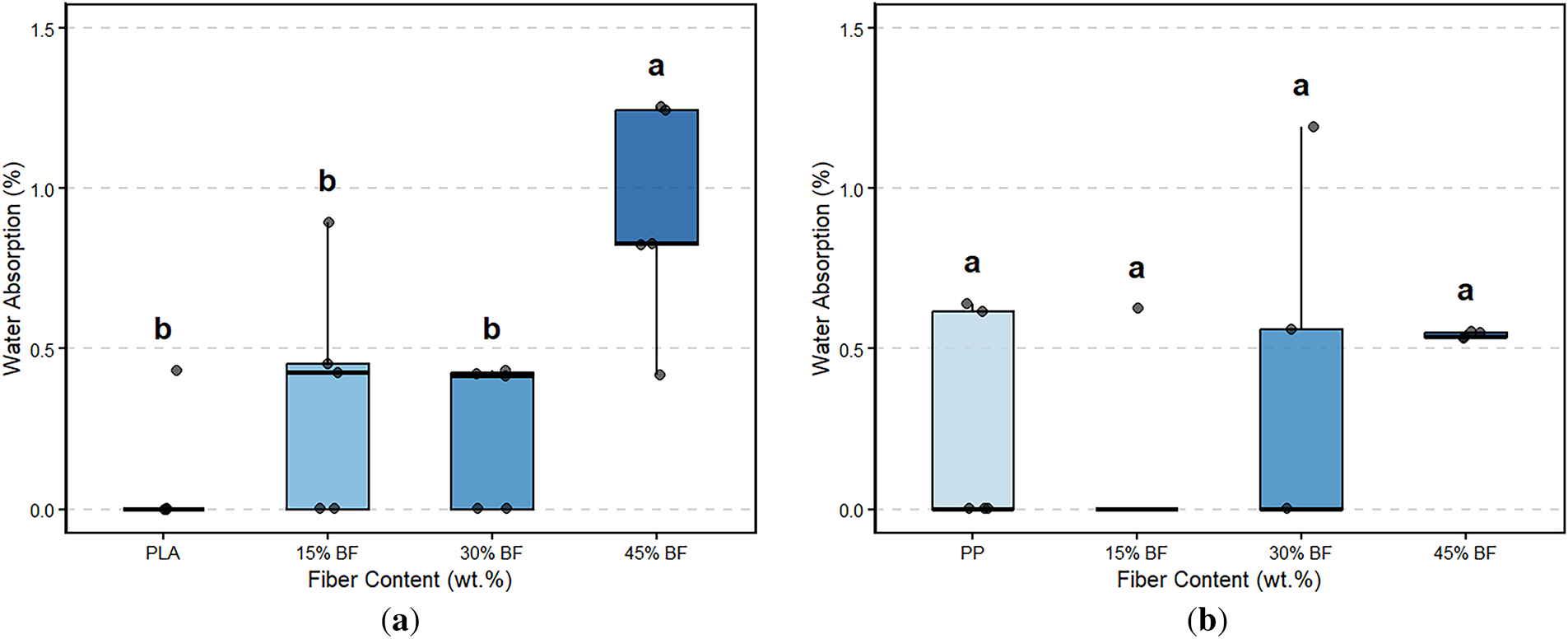
Figure 12: Water absorption (%) of PLA and PP matrix composites reinforced with bamboo fiber (BF) as a function of fiber content (wt.%): (a) polylactic acid (PLA) matrix composites and (b) polypropylene (PP) matrix composites. Means followed by the same letters for the same matrix do not show statistically significant differences by Tukey’s test (p > 0.05).
However, a significant boost in absorption occurs upon reaching a 45% fiber content (indicated by the letter ‘a’). This abrupt increase suggests that, at high loadings, the matrix volume may no longer be sufficient to fully coat the reinforcement.
This behavior is associated with the inherent hydrophilic nature of bamboo fiber; thus, as the filler content increases, a larger surface area of the reinforcement becomes exposed within the matrix. Consequently, at higher fiber fractions, the matrix volume may be insufficient to adequately surround the fibers and act as a physical barrier to water absorption, resulting in higher absorption by the composite [42,43].
In contrast to PLA, the polypropylene-based composites did not show statistically significant variations among any of the tested groups during the initial 24 h of immersion, demonstrating resistance to short-term water absorption. All samples were grouped under the letter ‘a’.
This behavior can be attributed to the extremely hydrophobic nature of polypropylene. Unlike PP, which consists only of carbon-carbon and carbon-hydrogen bonds, PLA’s primary functional group is the ester group (–COOR). The presence of these groups results in a slight increase in matrix polarity due to the oxygen atoms in the chain, which improves fiber-matrix compatibility but also favors interaction with water [44]. Thus, within a 24-h period, the barrier provided by the PP matrix hinders water penetration. The high variability observed in some groups (especially 30% BF) again suggests heterogeneity in fiber dispersion, which, however, was not sufficient to statistically alter the material’s absorption profile significantly.
3.3 Factor Analysis of the Mechanical Properties of Composites
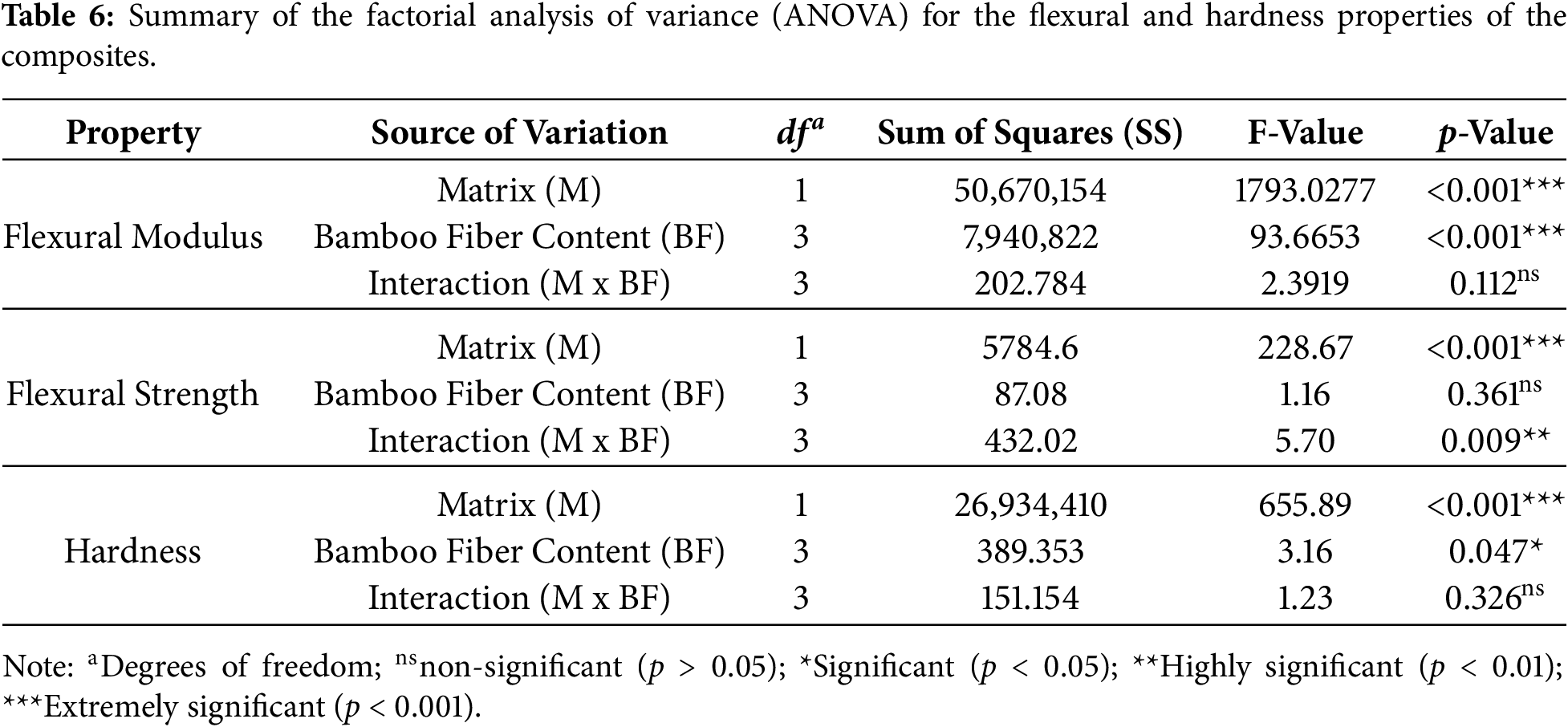
Analysis of variance (ANOVA) in a 2 × 4 factorial design approach was used to investigate whether the observed variations in flexural properties and hardness stemmed from independent main effects or from interactions at the matrix-fiber interface. Table 6 summarizes the statistical parameters obtained for both polymer systems.
The factorial analysis of variance was performed based on the premise that PLA and PP matrices possess distinct, well-known rheological natures, making a direct comparison of their scales less relevant than evaluating the reinforcement efficiency within each system. Thus, the aim was to highlight the effect of incorporating bamboo fiber into the mechanical properties relative to the neat matrices and, comparatively speaking, between the matrices.
The results for the flexural modulus demonstrated that, regardless of the matrix used, the incorporation of bamboo fiber proved to be an effective and statistically significant reinforcement method (p < 0.001). This outcome confirms the role of bamboo fiber as an efficient reinforcing agent, capable of increasing the stiffness of the studied polymers. The progressive increase in fiber content resulted in continuous mechanical gain, indicating that the fibers act as mobility restrictors for the polymer chains in both systems, a finding supported by the previously observed results for the storage modulus (E′) [45].
The results also revealed a non-significant interaction between matrix type and fiber content (p = 0.112). This interaction indicates that the performance improvement provided by fiber reinforcement is similar for both polymers studied, regardless of the matrix for this property. However, when evaluating the absolute stiffness increment (Fig. 13), it is observed that the PLA matrix showed higher efficiency regarding the addition of reinforcement, incorporating a gain of approximately 1822 MPa in its elastic modulus at 45% fiber. In contrast, the PP matrix, although showing a higher relative increase due to its lower intrinsic stiffness, achieved a lower absolute gain (1287 MPa).
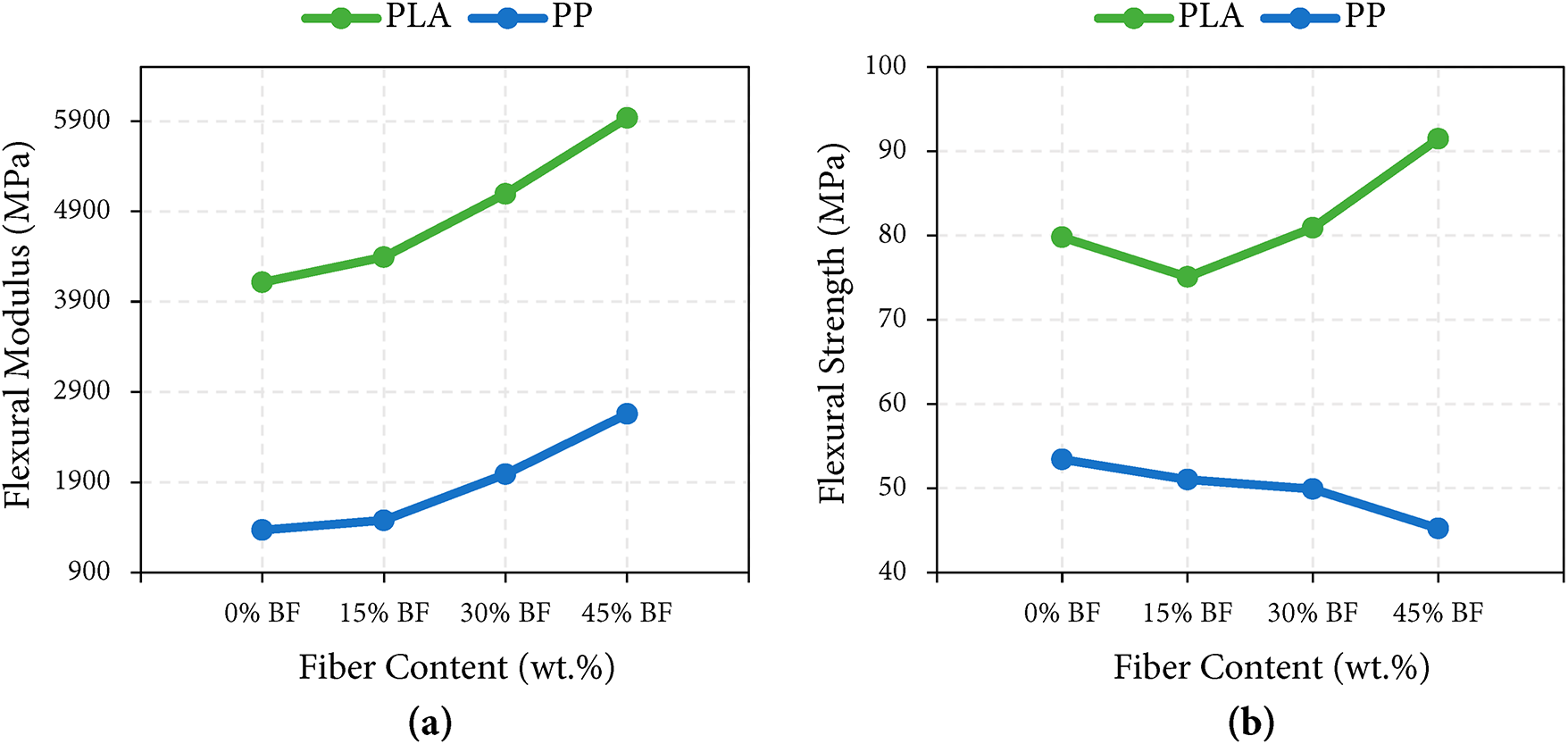
Figure 13: Comparison of the flexural properties of PLA and PP composites as a function of bamboo fiber (BF) content: (a) Flexural modulus; (b) Flexural strength.
The factorial analysis results for flexural strength show a contrasting pattern between the matrices for the isolated factor corresponding to fiber content. It was observed that there was no statistical significance (p = 0.361), indicating that the addition of bamboo fiber does not generate an overall strength gain.
Furthermore, a significant interaction was found (p = 0.009), revealing that the PLA and PP matrices respond differently to reinforcement incorporation for this parameter. In the PLA/Bamboo system, a recovery of strength is observed at high contents (45%), where the material exceeds the strength of the neat matrix, while for PP, there was a decrease in strength.
The statistically significant results for the interaction between matrix type and fiber content for strength indicate that the effect of fiber loading depends on chemical compatibility with the polymer (matrix). Thus, the affinity between the polar groups of PLA and the hydrophilic nature of bamboo fiber provides greater interfacial adhesion and consequently better stress transfer between the matrix and the fiber. Similar results demonstrating mechanical superiority for PLA composites were observed by Oksman et al. (2003) when comparing the strength of PLA and PP matrices in natural fiber composites [46,47].
For hardness, the bamboo fiber content showed a statistically significant influence (p = 0.047), confirming that the incorporation of fiber reinforcement promotes an effective increase in the surface hardness of both systems. Unlike the flexural strength properties discussed earlier, the interaction between the matrix and fiber content was not statistically significant (p = 0.326). From this perspective, the absence of interaction suggests that the surface reinforcement mechanism acts independently and in parallel in both systems; that is, the bamboo fiber exerts an effect of similar intensity on both the PLA and PP matrices.
Graupner and Müssig (2017), when comparing composites containing 30% lyocell fibers in PLA and PP matrices, observed better fiber/matrix adhesion in the PLA-based system compared to the PP system. However, in terms of hardness, the incorporation of fibers did not promote significant changes in the PLA, while for the PP, an increment of only 6% was observed. This behavior indicates that, for hardness, the reinforcement efficiency is not affected by differences in interfacial compatibility between the fiber and the polymers, resulting in a common benefit. Thus, for this specific property, the performance gain responds to the increase in fiber loading, without the choice of matrix altering the hardening pattern of the composite [48], as visualized in Fig. 14.
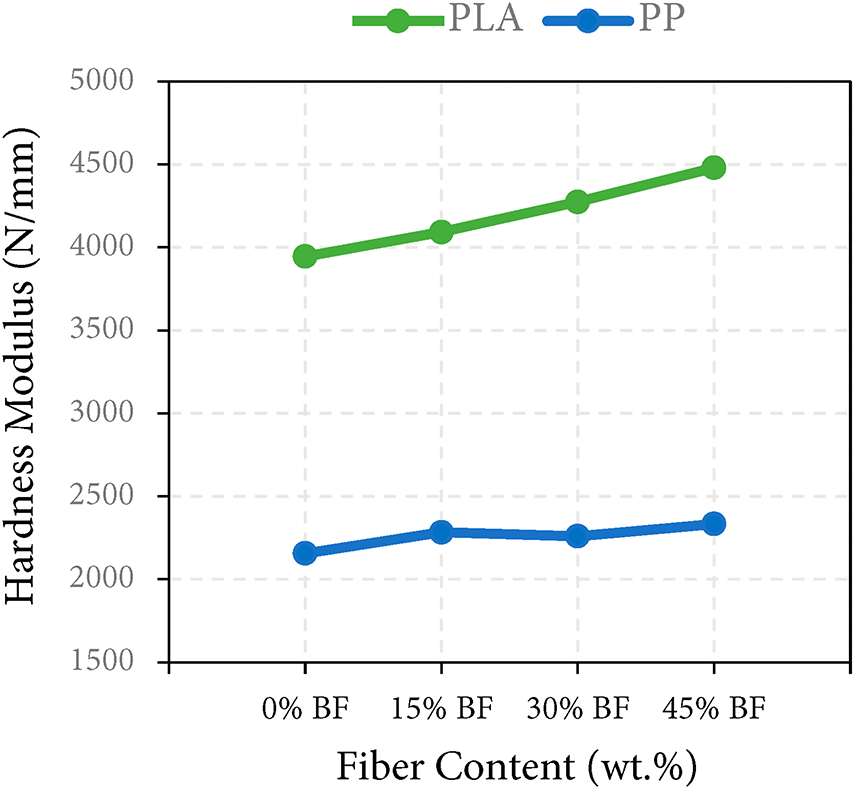
Figure 14: Comparison of the hardness of PLA and PP composites as a function of bamboo fiber (BF) content.
The present research highlighted the potential of bamboo microfibers as reinforcement in thermoplastic matrices of distinct natures. Preliminary dynamic mechanical analysis (DMA) corroborated the selection of the 50 µm microfiber size as the standard reinforcement for both systems, based on a multicriteria approach. This choice was made considering the observed balance between processability, microstructural homogeneity, potential interfacial restraint (lower tan δ) for the PLA matrix and greater structural stiffness (storage modulus, E′) for the PP matrix.
Fiber incorporation also promoted a progressive increase in the flexural modulus for both systems, with statistically significant differences for the 30% and 45% contents. In the flexural test, the modulus of PLA increased by approximately 43% compared to its neat polymer, while PP showed mean values nearly double those of its neat matrix at 45% loading. Factorial analysis demonstrated that the incorporation of bamboo fiber acts as a statistically significant reinforcing agent, progressively increasing the structural stiffness of the composites. Furthermore, the non-significant interaction between matrix type and fiber content indicated that this stiffening effect occurred with similar intensity regardless of the polymer matrix used. In absolute terms, the PLA matrix composites benefited more from the reinforcement addition, whereas PP composites showed the highest proportional gain relative to their neat matrix.
Regarding flexural strength, the macroscopic results showed that it did not vary statistically in the PLA/bamboo system, while PP composites showed a significant reduction at 45% fiber concentration. Based on these confirmed mechanical behaviors, distinct underlying mechanisms can be inferred: the maintenance of strength in PLA indicates a potentially more efficient stress transfer, likely favored by the chemical affinity between the polar groups of the matrix and the hydrophilic fiber. Conversely, the significant strength reduction in PP raises the hypothesis that its non-polar nature leads to poorer filler encapsulation and fiber agglomeration at high contents.
Despite an upward trend in hardness, fiber addition did not result in a statistically significant increase for either composite. Factorial analysis revealed no significant interaction for this property, suggesting that the surface hardening mechanism acts independently of interfacial compatibility. Finally, the 24-h water absorption test showed that PP maintained short-term stability, while PLA exhibited initially stable absorption behavior up to a fiber content of 30%; however, at 45%, a sharp increase was observed, suggesting that the matrix volume became insufficient to completely coat the exposed hydrophilic fibers.
Considering the mechanical and physical performance observed in this study, from an industrial and market perspective, the significant increase in stiffness, combined with the maintenance of strength in the PLA/bamboo system, suggests that these biocomposites are highly suitable for semi-structural applications in indoor environments and in sectors where high flexural modulus and biodegradability are prioritized over high strength. To further expand the market applicability of these biocomposites, future research should focus on direct morphological characterizations (e.g., Scanning Electron Microscopy) to visually assess agglomeration dynamics and interfacial bonding. Furthermore, investigating impact resistance, tensile fatigue, long-term durability, and the application of chemical surface modifications is essential to fully map the characteristics of these composites in future use.
Acknowledgement: The experimental results reported here are part of the Master’s dissertation in Forest Sciences of the first author, who gratefully acknowledges the institutional support received from the Department of Forestry Engineering (UnB) and sincerely thanks all those who contributed to the completion of this research.
Funding Statement: This research was supported by the Brazilian National Council for Scientific and Technological Development (CNPq) through a research fellowship grant (#300134/2025-8) awarded to the second author. The authors also acknowledge financial support from the Brazilian Innovation Agency (FINEP) for the acquisition of the equipment used in this study (FINEP CT-Infra Call for Proposals 2011/12).
Author Contributions: The authors confirm contribution to the paper as follows: Conception and design, Laura Silva and Cláudio Del Menezzi; Planning and execution of experiments, Laura Silva; Sample preparation and analysis, Laura Silva and Paula Dornelles; Formal analysis and interpretation of results, Laura Silva and Cláudio Del Menezzi; Writing—preparation of the original draft, Laura Silva; Supervision and technical review, Cláudio Del Menezzi. All authors reviewed and approved the final version of the manuscript.
Availability of Data and Materials: The datasets generated during and/or analyzed during the current study are available from the corresponding author on reasonable request.
Ethics Approval: Not applicable.
Conflicts of Interest: The authors declare no conflicts of interest.
References
1. Zuffo AM, Aguilera JG, Marques LF. Inovações em pesquisas agrárias e ambientais. Nova Xavantina, Brazil: Pantanal Editora; 2024. doi:10.46420/9786585756433. [Google Scholar] [CrossRef]
2. Shettigar S, Gowrishankar MC, Shettar M. Review on aging behavior and durability enhancement of bamboo fiber-reinforced polymer composites. Molecules. 2025;30(15):3062. doi:10.3390/molecules30153062. [Google Scholar] [PubMed] [CrossRef]
3. Kannan G, Thangaraju R. Recent progress on natural lignocellulosic fiber reinforced polymer composites: a review. J Nat Fibres. 2022;19(13):7100–31. doi:10.1080/15440478.2021.1944425. [Google Scholar] [CrossRef]
4. Martínez Ángeles H, Navarro Rubio CA, Ríos Moreno JG, Garcia-Barajas MG, Carrillo-Serrano RV, Reyes Araiza JL, et al. Materials pathways for low-carbon construction: a systematic review of bio-based, recycled, and alternative cementitious systems. Infrastructures. 2026;11(5):158. doi:10.3390/infrastructures11050158. [Google Scholar] [CrossRef]
5. Ahmed R, Manik KH, Nath A, Shohag JR, Mim JJ, Hossain N. Recent advances in sustainable natural fiber composites: environmental benefits, applications, and future prospects. Mater Today Sustain. 2025;32(3):101220. doi:10.1016/j.mtsust.2025.101220. [Google Scholar] [CrossRef]
6. Le Guen MJ, Newman RH, Fernyhough A, Hill SJ, Staiger MP. Correlations between the physiochemical characteristics of plant fibres and their mechanical properties. In: Natural fibres: advances in science and technology towards industrial applications. Dordrecht, the Netherlands: Springer; 2016. p. 35–47. doi:10.1007/978-94-017-7515-1_3. [Google Scholar] [CrossRef]
7. Neto FL, Pardini LC. Compósitos estruturais: ciência e tecnologia. São Paulo, Brazil: Editora Blucher; 2021. 419 p. [Google Scholar]
8. Jiang L, Li Y, Ma B, Ding H, Su S, Xiong C. Effect of bamboo fiber length on mechanical properties, crystallization behavior, and in vitro degradation of bamboo fiber/nanohydroxyapatite/poly(lactic-co-glycolic) composite. Ind Eng Chem Res. 2018;57(13):4585–91. doi:10.1021/acs.iecr.7b05354. [Google Scholar] [CrossRef]
9. Mitaľová Z, Mitaľ D, Berladir K. A concise review of the components and properties of wood–plastic composites. Polymers. 2024;16(11):1556. doi:10.3390/polym16111556. [Google Scholar] [PubMed] [CrossRef]
10. Xu D, He S, Leng W, Chen Y, Wu Z. Replacing plastic with bamboo: a review of the properties and green applications of bamboo-fiber-reinforced polymer composites. Polymers. 2023;15(21):4276. doi:10.3390/polym15214276. [Google Scholar] [PubMed] [CrossRef]
11. Yu H, Wu J, Gao Y, Lu Z, Hu W. Research progress on bamboo fiber reinforced polymeric composites: processes, properties, and future directions. Polym Compos. 2024;45(11):9629–46. doi:10.1002/pc.28436. [Google Scholar] [CrossRef]
12. Fornari Junior CCM. Fibras vegetais para compósitos poliméricos. Ilhéus, Brazil: Editus; 2017. [Google Scholar]
13. Callister WD, Rethwisch DG. Materials science and engineering. 10th ed. Hoboken, NJ, USA: Wiley; 2020. [Google Scholar]
14. Wasti S, Kore S, Yeole P, Tekinalp H, Ozcan S, Vaidya U. Bamboo fiber reinforced polypropylene composites for transportation applications. Front Mater. 2022;9:967512. doi:10.3389/fmats.2022.967512. [Google Scholar] [CrossRef]
15. Qian S, Sheng K, Yu K, Xu L, Fontanillo Lopez CA. Improved properties of PLA biocomposites toughened with bamboo cellulose nanowhiskers through silane modification. J Mater Sci. 2018;53(15):10920–32. doi:10.1007/s10853-018-2377-2. [Google Scholar] [CrossRef]
16. Valente BFA, Silvestre AJD, Neto CP, Vilela C, Freire CSR. Improving the processability and performance of micronized fiber-reinforced green composites through the use of biobased additives. Polymers. 2022;14(17):3451. doi:10.3390/polym14173451. [Google Scholar] [PubMed] [CrossRef]
17. Sari NH, Fatriasari W. Integration of biopolyesters and natural fibers in structural composites: an innovative approach for sustainable materials. J Renew Mater. 2025;13(8):1521–46. doi:10.32604/jrm.2025.02024-0058. [Google Scholar] [CrossRef]
18. Wang Y, Sultana J, Rahman MM, Ahmed A, Azam A, Mushtaq RT, et al. A sustainable and biodegradable building block: review on mechanical properties of bamboo fibre reinforced PLA polymer composites and their emerging applications. Fibres Polym. 2022;23(12):3317–42. doi:10.1007/s12221-022-4871-z. [Google Scholar] [CrossRef]
19. Wu CS, Wu DY, Wang SS. Preparation and characterization of polylactic acid/bamboo fiber composites. ACS Appl Bio Mater. 2022;5(3):1038–46. doi:10.1021/acsabm.1c01082. [Google Scholar] [PubMed] [CrossRef]
20. Boey JY, Lee CK, Tay GS. Factors affecting mechanical properties of reinforced bioplastics: a review. Polymers. 2022;14(18):3737. doi:10.3390/polym14183737. [Google Scholar] [PubMed] [CrossRef]
21. Zadeh ZE, Abdulkhani A, Aboelazayem O, Saha B. Recent insights into lignocellulosic biomass pyrolysis: a critical review on pretreatment, characterization, and products upgrading. Processes. 2020;8(7):799. doi:10.3390/pr8070799. [Google Scholar] [CrossRef]
22. ASTM D4065-20. Standard practice for plastics: dynamic mechanical properties: determination and report of procedures. West Conshohocken, PA, USA: ASTM International; 2020. [Google Scholar]
23. ASTM D0790-15. Standard test methods for flexural properties of unreinforced and reinforced plastics and electrical insulating materials. West Conshohocken, PA, USA: ASTM International; 2015. [Google Scholar]
24. ASTM D1037-12. Standard test methods for evaluating properties of wood-base fiber and particle panel materials. West Conshohocken, PA, USA: ASTM International; 2012. [Google Scholar]
25. ASTM D0570-98. Standard test method for water absorption of plastics. West Conshohocken, PA, USA: ASTM International; 2018. [Google Scholar]
26. Ren W, Zhang D, Wang G, Cheng H. Mechanical and thermal properties of bamboo pulp fiber reinforced polyethylene composites. BioResources. 2014;9(3):4117–27. doi:10.15376/biores.9.3.4117-4127. [Google Scholar] [CrossRef]
27. Xu H, Yang Y, Li L, Liu B, Fu X, Yang X, et al. Mechanical properties variation in wood—plastic composites with a mixed wood fiber size. Materials. 2023;16(17):5801. doi:10.3390/ma16175801. [Google Scholar] [PubMed] [CrossRef]
28. Karunanidhi K, Manoharan M, Sivanantham G, Sadayan Mottaiyan R. Performance enhancement of PLA hybrid biocomposites using flax fiber and agricultural waste biofillers: a comparative study with jute-based systems supported by fuzzy CRITIC-COPRAS analysis. Polymers. 2026;18(4):439. doi:10.3390/polym18040439. [Google Scholar] [PubMed] [CrossRef]
29. Xia X, Shi X, Liu W, Zhao H, Li H, Zhang Y. Effect of flax fiber content on polylactic acid (PLA) crystallization in PLA/flax fiber composites. Iran Polym J. 2017;26(9):693–702. doi:10.1007/s13726-017-0554-9. [Google Scholar] [CrossRef]
30. Loganathan K, Giri R, Srinivasan SP, Vimalanathan P. Experimental investigation on mechanical, thermal, DMA, and dielectric analysis of Cordia dichotoma with PLA composites. Biomass Convers Biorefin. 2024;14(24):31789–804. doi:10.1007/s13399-023-04882-7. [Google Scholar] [CrossRef]
31. Ashraf MA, Peng W, Zare Y, Rhee KY. Effects of size and aggregation/agglomeration of nanoparticles on the interfacial/interphase properties and tensile strength of polymer nanocomposites. Nanoscale Res Lett. 2018;13(1):214. doi:10.1186/s11671-018-2624-0. [Google Scholar] [PubMed] [CrossRef]
32. Xia L, Wu J, Wang H, Huang Z, Yang R, Zhang X, et al. Enhanced mechanical performance of bamboo fiber/polypropylene composites via micro-nano reinforcing strategy. Compos Part B Eng. 2024;280(22):111488. doi:10.1016/j.compositesb.2024.111488. [Google Scholar] [CrossRef]
33. Shi K, Liu G, Sun H, Yang B, Weng Y. Effect of biomass as nucleating agents on crystallization behavior of polylactic acid. Polymers. 2022;14(20):4305. doi:10.3390/polym14204305. [Google Scholar] [PubMed] [CrossRef]
34. Mu W, Chen X, Li S, Sun Y, Wang Q, Na J. Mechanical performances analysis and prediction of short plant fiber-reinforced PLA composites. Polymers. 2023;15(15):3222. doi:10.3390/polym15153222. [Google Scholar] [PubMed] [CrossRef]
35. Tian Y, Kim W, Kiziltas A, Mielewski D, Argento A. Effects of interfacial dynamics on the damping of biocomposites. Sci Rep. 2022;12(1):20042. doi:10.1038/s41598-022-23355-x. [Google Scholar] [PubMed] [CrossRef]
36. Khalil HPSA, Sharifah Shahnaz SB, Ratnam MM, Ahmad F, Nik Fuaad NA. Recycle polypropylene (RPP)—wood saw dust (WSD) composites—part 1: the effect of different filler size and filler loading on mechanical and water absorption properties. J Reinf Plast Compos. 2006;25(12):1291–303. doi:10.1177/0731684406062060. [Google Scholar] [CrossRef]
37. Khan A, Sapuan SM, Zainudin ES, Zuhri MYM. Physical, mechanical and thermal properties of novel bamboo/kenaf fiber-reinforced polylactic acid (PLA) hybrid composites. Compos Commun. 2024;51(1):102103. doi:10.1016/j.coco.2024.102103. [Google Scholar] [CrossRef]
38. Ochi S. Flexural properties of long bamboo fiber/PLA composites. Open J Compos Mater. 2015;5(3):70–8. doi:10.4236/ojcm.2015.53010. [Google Scholar] [CrossRef]
39. Fazita RN, Johary N, Khalil HPSA, Norazli N, Azniwati A, Mohamad Haafiz MK. Parameter optimization via the Taguchi method to improve the mechanical properties of bamboo particle reinforced polylactic acid composites. BioResources. 2020;16(1):1914–39. doi:10.15376/biores.16.1.1914-1939. [Google Scholar] [CrossRef]
40. Xu J, Hao X, Tang W, Zhou H, Chen L, Guo C, et al. Mechanical properties, morphology, and creep resistance of ultra-highly filled bamboo fiber/polypropylene composites: effects of filler content and melt flow index of polypropylene. Constr Build Mater. 2021;310(2):125289. doi:10.1016/j.conbuildmat.2021.125289. [Google Scholar] [CrossRef]
41. Quintero L, García A, Alcaraz A, Fajardo J, Cruz L. Efecto de variables de proceso en el comportamiento mecánico y térmico de un composite de polipropileno reforzado con fibras cortas de bambú por compresión en caliente. Ingenius. 2025;34(34):20–30. doi:10.17163/ings.n34.2025.02. [Google Scholar] [CrossRef]
42. Bukar M, Aji IS, Mshelia ZA, Hammajam AA. Effects of fibre length and fibre loading on tensile and flexural properties of luffa cylindrica reinforced polylactic acid composite. Arid Zone J Eng Technol Environ. 2025;21(1):309–17. [Google Scholar]
43. Azka MA, Sapuan SM, Abral H, Zainudin ES, Aziz FA. An examination of recent research of water absorption behavior of natural fiber reinforced polylactic acid (PLA) composites: a review. Int J Biol Macromol. 2024;268:131845. doi:10.1016/j.ijbiomac.2024.131845. [Google Scholar] [PubMed] [CrossRef]
44. Oliver-Ortega H, Tarrés Q, Mutjé P, Delgado-Aguilar M, Méndez JA, Espinach FX. Impact strength and water uptake behavior of bleached kraft softwood-reinforced PLA composites as alternative to PP-based materials. Polymers. 2020;12(9):2144. doi:10.3390/polym12092144. [Google Scholar] [PubMed] [CrossRef]
45. Mofokeng JP, Luyt AS, Tábi T, Kovács J. Comparison of injection moulded, natural fibre-reinforced composites with PP and PLA as matrices. J Thermoplast Compos Mater. 2012;25(8):927–48. doi:10.1177/0892705711423291. [Google Scholar] [CrossRef]
46. Wahit MU, Akos NI, Laftah WA. Influence of natural fibers on the mechanical properties and biodegradation of poly(lactic acid) and poly(ε-caprolactone) composites: a review. Polym Compos. 2012;33(7):1045–53. doi:10.1002/pc.22249. [Google Scholar] [CrossRef]
47. Oksman K, Skrifvars M, Selin JF. Natural fibres as reinforcement in polylactic acid (PLA) composites. Compos Sci Technol. 2003;63(9):1317–24. doi:10.1016/S0266-3538(03)00103-9. [Google Scholar] [CrossRef]
48. Graupner N, Müssig J. Cellulose fiber-reinforced PLA versus PP. Int J Polym Sci. 2017;2017(46):6059183. doi:10.1155/2017/6059183. [Google Scholar] [CrossRef]
Cite This Article
 Copyright © 2026 The Author(s). Published by Tech Science Press.
This work is licensed under a Creative Commons Attribution 4.0 International License , which permits unrestricted use, distribution, and reproduction in any medium, provided the original work is properly cited.
 Downloads
 Citation Tools
