
 Login
Login Register
 Submit a Paper
 Propose a Special lssue
 Open Access
REVIEW
Multi-Omics Approaches to Improve Rice Quality Characteristics under Abiotic and Biotic Environmental Stresses
Department of Botany and Microbiology, College of Science, King Saud University, Riyadh, Saudi Arabia
* Corresponding Author: Jawaher Alkahtani. Email:
Phyton-International Journal of Experimental Botany 2026, 95(9), 2 https://doi.org/10.32604/phyton.2026.086622
Received 02 June 2026; Accepted 27 August 2026; Issue published 24 September 2026
 View Full Text
 Download PDF
Abstract
Rice, the most widely consumed grain by billions of people worldwide, has become the first crop to have a complete genome sequence and serves as a model crop for monocots. Advancements in multi-omics methodologies have provided a comprehensive understanding of the molecular mechanisms underlying stress tolerance in rice and have accelerated the development of rice varieties with improved grain quality under both abiotic and biotic stresses. Recently, high-throughput multi-omics technologies have identified numerous key genes, proteins, and metabolites linked to stress-tolerance mechanisms. This review summarizes recent studies across multi-omics disciplines, including genomics, transcriptomics, proteomics, metabolomics, and epigenomics, and their applications in improving rice quality traits under abiotic and biotic stresses. These challenging environments include extreme temperatures, drought, salinity, submergence, infection with rice stripe virus, bacterial blight, and blast. The article also discusses combining multi-omics data to identify key genes, molecular pathways, and gene regulatory networks responsible for abiotic and biotic stress responses and resistance mechanisms, especially as they relate to rice quality traits. It describes the potential of multi-omics-assisted breeding methodologies for developing environmental stress-tolerant rice varieties with improved quality traits. It also elucidates the limitations, challenges, and future perspectives of adopting multi-omics methodologies to improve rice quality traits under various environmental stress conditions.Keywords
Rice (Oryza sativa L.) is a global dietary staple for more than half of the world’s population, and is one of the most harvested crops with high economic value [1]. Rice grain contains important nutrients including starch, lipids, protein, minerals, vitamins, phytochemicals, and dietary fiber [2]. Rice has a genome size of 430 Mb and has become a model cereal crop for genomics and breeding studies. With increasing standards of living, rice consumers demand high-quality rice, which is associated with physical characteristics, including grain weight, grain length, grain width, and ratio of grain length to width; and also sensory traits such as percent chalkiness, grain appearance, milling performance, nutrient composition, and aroma [3,4]. Demand for rice grains with a low glycemic index (GI) and higher protein (more than 14%) is also increasing due to rising diabetes cases and the need to meet daily protein intake. These physical, sensory, and nutritional properties are important factors in rice marketing and affect consumers [5]. Additionally, cultures and habits of rice consumers also influence the preference for rice quality. For example, rice consumers from Thailand, China, and India prefer long, slender grains. Meanwhile, consumers in Korea and Japan prefer wide, short rice grains. Therefore, rice producers face a major challenge in improving rice grain quality characteristics to meet market demands.
Recently, rice production faces serious challenges from abiotic and biotic environmental stresses such as salinity, drought, submergence, extreme temperatures, and diseases, which have already contributed to reduced grain yield and rice quality characteristics [6]. Studies show that by 2050, about 27% of the rice-growing area will experience extreme temperatures during the grain-filling reproductive stage, causing severe damage to grain quality [7]. Consequently, developing new rice varieties with improved grain quality under multiple environmental stresses is critical.
Multi-omics technologies have a major impact on improving rice grain quality characteristics under abiotic and biotic environmental stresses, contributing to rice market demands. These multi-omics approaches integrate genomics, transcriptomics, proteomics, metabolomics, and epigenomics to provide an extensive understanding of complex biological mechanisms under challenging environments (Fig. 1). Compared to single-omics methods, multi-omics approaches can be employed to overcome the negative impacts of environmental stresses on rice quality by providing a deep understanding of molecular mechanisms under abiotic and biotic stress conditions. Traditional rice breeding methods can be replaced by a combination of -omics technologies to accelerate the development of more resilient rice varieties under environmental stress conditions [8,9].
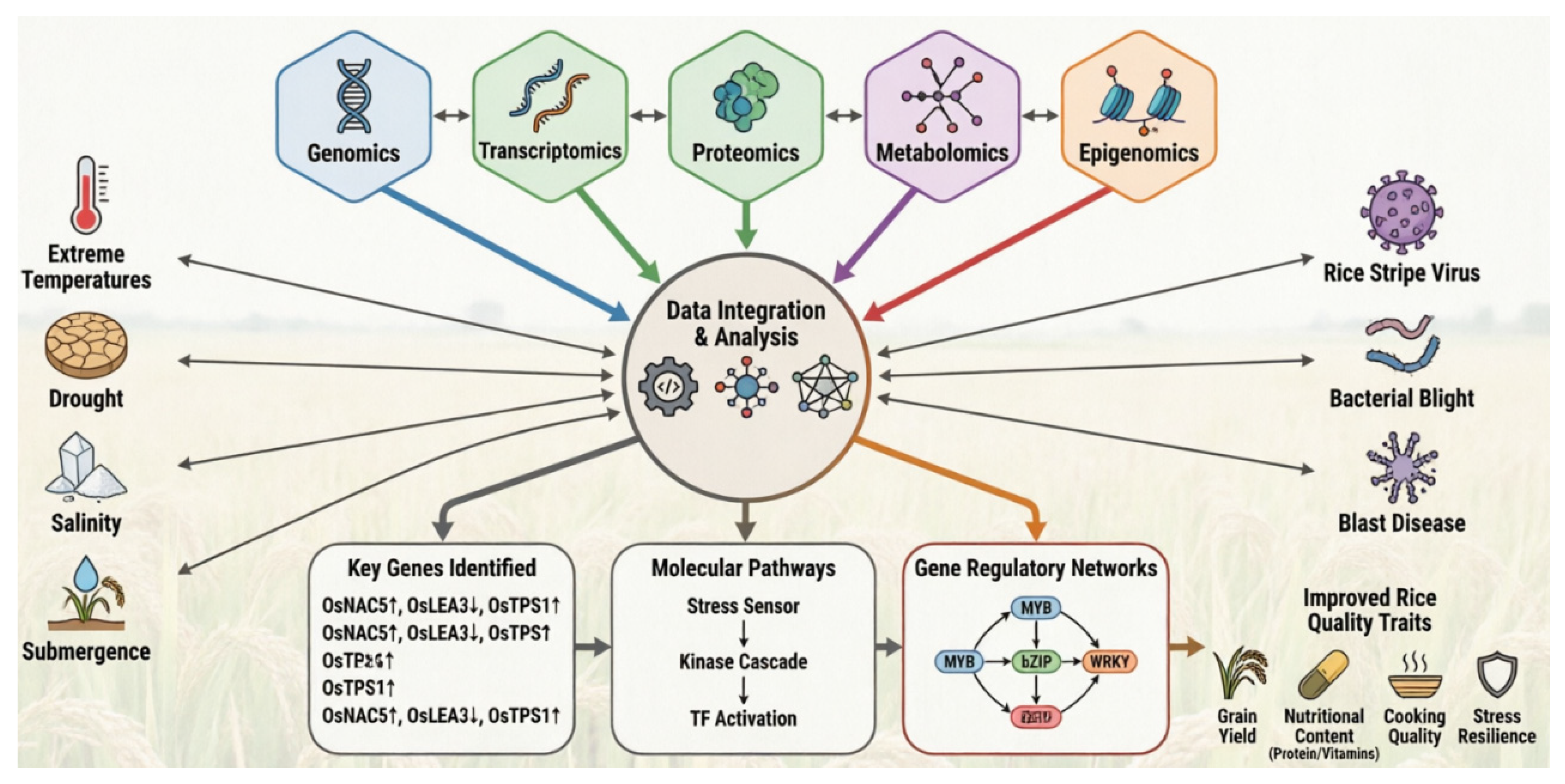
Figure 1: Multi-omics strategies for enhancing rice quality traits amid abiotic and biotic stresses.
Genomics helps identify candidate genes that regulate abiotic tolerance mechanisms and detect gene expression patterns under abiotic stress conditions. Genomics, supported by the innovations of next-generation sequencing (NGS) technologies for DNA sequencing, such as PacBio and Illumina, has advanced the high resolution of quantitative trait loci (QTL) mapping, genome-wide association studies (GWAS), and bulk segregant analysis (BSA-Seq), which facilitated the highly accurate identification of candidate genes controlling abiotic stress tolerance. Furthermore, RNA-seq analyses the pattern of gene expression changes under abiotic and biotic environmental stresses [10,11]. Advanced bioinformatics tools also play an important role in genomics. Consequently, conventional breeding has been replaced by genomic-assisted breeding, which employs advanced genomic tools that generate highly accurate genomic data and accelerate the development of rice varieties with improved grain quality under stress conditions [12].
Transcriptomics has become essential for analyzing gene expression profiles in rice under environmental stress conditions. Using a transcriptomics approach, researchers can identify key regulatory pathways and stress-tolerance genes associated with enhanced stress resilience [13]. Furthermore, differentially expressed genes (DEGs) under stress conditions can be identified by comparing gene expression patterns between normal and stressed levels, which leads to the identification of stress-response mechanisms [14].
Proteomics methods allow identification of differentially expressed proteins (DEPs) under environmental stress conditions, enabling a comprehensive understanding of molecular mechanisms in stress tolerance. Proteomics data provide high-throughput information on protein characteristics, such as expression patterns, protein-protein interactions, post-translational modifications, and protein function. Proteins can be identified and quantified by using mass spectrometry (MS), two-dimensional electrophoresis (2-DE), and isobaric tags for relative and absolute quantification (iTRAQ). Data from omics methods were integrated into bioinformatics databases to deepen understanding of stress-responsive mechanisms that enhance rice grain quantity and quality.
Under environmental stress conditions, rice plants urgently need to produce various metabolites with molecular masses less than 1000 to cope with abiotic and biotic stresses [15]. Physiological and biochemical conditions of the rice plants during stress conditions can be detected by using metabolomics analysis approaches, such as high-performance liquid chromatography (HPLC), gas chromatography (GC), liquid chromatography-mass spectrometry (LC-MS), Fourier transform infrared spectroscopy (FTIR), nuclear magnetic resonance (NMR), and mass spectrometry (MS). Products and substrates resulting from rice plant metabolic pathways under changing environments can be analyzed qualitatively and quantitatively. Furthermore, epigenomics analyses identified DNA methylation, chromatin accessibility, and histone modification.
Abiotic and biotic stress conditions decreased rice yield and grain quality characteristics, including physical appearance and nutritional compositions. Rice grain yield under fluctuating conditions significantly decreased due to a higher percentage of sterile grains. Grain appearance that generally reduced during stress conditions related to grain length, thickness, width, and weight. The composition of starch, lipid, protein, vitamins, minerals, flavonoids, and nucleotides in the grains was changed during unfavorable conditions. The essential nutrient in rice grains is starch, which accounts for about 80% and consists of amylopectin (70–90%) and amylose (10–30%) [16]. Rice quality traits controlled by multiple genes. Using integrated-omics analysis, researchers identified about 30,000 genes and 550 metabolites linked to rice yield and grain quality traits under abiotic and biotic stress conditions.
This review discusses recent studies of multi-omics approaches and their applications in improving rice quality traits under abiotic and biotic environmental stresses. It emphasizes combining multi-omics data to identify key genes, molecular pathways, and gene regulatory networks associated with abiotic and biotic stress responses and resistance mechanisms, particularly those related to rice quality traits. Additionally, it analyses the potential of multi-omics-assisted breeding methodologies for developing environmental stress-tolerant rice varieties with improved quality traits. The limitations, challenges, and future perspectives in adopting multi-omics methodologies to enhance rice quality traits under environmental stress conditions are also discussed.
2 Integrated Multi-Omics Platforms Enhance Understanding of the Biological Mechanisms Governing Stress Tolerance and the Maintenance of Rice Quality Traits under Environmental Stress Conditions
Integrated multi-omics approaches provide a comprehensive framework for elucidating the molecular mechanisms underlying rice stress tolerance and grain quality. Genomics approaches, including genome-wide association studies (GWAS), quantitative trait locus (QTL) mapping, and bulked segregant analysis sequencing (BSA-seq), can first identify genomic regions associated with environmental stress tolerance and grain quality characteristics [6]. Moreover, transcriptomic analyses can then prioritize these genomic regions by identifying differentially expressed genes and regulatory networks activated under environmental stress conditions. Integrating transcriptomics with metabolomics further reveals the relationships between gene expression and metabolic compounds that influence grain size, starch accumulation, nutritional composition, and other quality-related traits [10]. Proteomics adds a functional layer by identifying differential protein compositions, post-translational modifications, and stress-responsive biochemical pathways, while combined proteomic and metabolomic analyses offer complementary insights into biochemical and physiological responses to abiotic and biotic environmental stress conditions [11]. Metabolomics links these molecular changes to downstream phenotypes by characterizing metabolites associated with starch quality, amino acid composition, aroma compounds, antioxidants, and other grain quality characteristics [12]. Furthermore, epigenomic analyses help explain stress memory, chromatin accessibility, and epigenetic regulation of gene expression under fluctuating environmental conditions [13]. For example, integrating QTL mapping or GWAS with transcriptomics enables the identification of candidate genes underlying stress tolerance and grain quality, whereas combining transcriptomics with metabolomics links transcriptional regulation to metabolic alterations affecting grain composition. Similarly, integrating proteomics with metabolomics provides mechanistic insights into stress-induced changes in grain quality and physiological performance. Thus, these multi-omics approaches enable a systems-level understanding of the complex regulatory networks controlling rice adaptation to environmental stress conditions while facilitating the development of climate-resilient rice varieties with superior grain quality.
Although each omics technology provides valuable insights into the molecular basis of rice adaptation to environmental stresses, each also possesses strengths and limitations (Table 1). Genomics approaches, including GWAS, QTL mapping, and BSA-seq, are highly effective for identifying genomic loci associated with stress tolerance and grain quality traits; however, they do not directly reveal gene activity or downstream biological functions [16]. Transcriptomics overcomes this limitation by identifying differentially expressed genes and regulatory networks under environmental stress conditions, but transcript results do not always correlate with protein levels or biological activity. Proteomics provides a functional perspective by characterizing protein characteristics, post-translational modifications, and signaling pathways, although protein detection remains technically challenging because of the wide dynamic range of protein expression and the complexity of post-translational regulation. Metabolomics directly reflects cellular physiological status by identifying metabolites that correlate to grain quality characteristics, such as starch composition, amino acid content, aroma compounds, antioxidants, and other nutritional compounds; however, metabolite profiles are highly dynamic and can be strongly influenced by the developmental stage of the rice plant and environmental conditions. Epigenomics offers unique insights into chromatin accessibility, DNA methylation, histone modifications, and stress memory, revealing regulatory mechanisms that other omics platforms cannot capture, although interpreting causal relationships between epigenetic modifications and phenotypic variation remains challenging. Consequently, no single omics technology can fully explain the complex regulatory mechanisms underlying rice responses to abiotic and biotic environmental stresses. Integrating multiple-omics platforms overcomes the limitations of individual approaches by linking genomic variation with transcriptional regulation, protein function, metabolite accumulation, and epigenetic control. This systems-level integration provides a more comprehensive understanding of the molecular networks governing stress tolerance and grain quality, accelerating the identification of key regulatory genes, biomarkers, and breeding targets for developing climate-resilient rice varieties with superior grain quality traits.
Table 1: A comprehensive comparison of each-omics platform.
| Criteria | Genomics | Transcriptomics | Proteomics | Metabolomics | Epigenomics |
|---|---|---|---|---|---|
| Biological information provided | Identifies DNA sequence variation, genes, alleles, QTLs, SNPs, and genomic regions associated with target traits. | Measures gene expression profiles, regulatory networks, and transcriptional responses under specific conditions. | Quantifies protein abundance, post-translational modifications (PTMs), enzyme activities, and signaling proteins. | Profiles small-molecule metabolites representing the biochemical and physiological state of the cell. | Characterizes DNA methylation, histone modifications, chromatin accessibility, and other epigenetic regulatory mechanisms. |
| Resolution and analytical capabilities | High-resolution mapping of genetic variation using GWAS, QTL mapping, whole-genome sequencing, and BSA-seq. | Genome-wide quantification of RNA transcripts using RNA-seq, single-cell RNA-seq, and spatial transcriptomics. | Comprehensive identification and quantification of proteins using LC-MS/MS, tandem mass spectrometry, and phosphoproteomics. | High-throughput identification and quantification of metabolites using GC-MS, LC-MS, NMR, and targeted metabolomics. | Genome-wide analysis of epigenetic modifications using bisulfite sequencing, ChIP-seq, CUT&Tag, ATAC-seq, and Hi-C. |
| Applications in rice grain quality research | Identification of genes and QTLs controlling grain size, chalkiness, amylose content, aroma, nutritional quality, and stress tolerance for marker-assisted breeding. | Investigation of stress-responsive genes regulating starch biosynthesis, grain filling, grain quality formation, and adaptation to heat, drought, salinity, flooding, and cold stress. | Analysis of stress-responsive proteins involved in starch synthesis, storage protein accumulation, grain filling, enzyme regulation, and defense mechanisms affecting grain quality. | Characterization of metabolic pathways associated with starch composition, sugars, amino acids, aroma compounds, antioxidants, vitamins, flavonoids, and nutritional quality under stress conditions. | Investigation of epigenetic regulation controlling stress memory, chromatin remodeling, gene expression, and transgenerational adaptation influencing grain quality. |
| Advantages | Stable genetic information; highly reproducibl; ideal for identifying heritable loci and molecular markers for breeding. | Captures dynamic gene expression responses and identifies regulatory pathways activated during environmental stress. | Provides direct functional information because proteins execute most biological processes; identifies PTMs and signaling pathways. | Closely reflects plant physiological status and directly links molecular changes with grain quality phenotypes and stress adaptation. | Reveals regulatory mechanisms beyond DNA sequence variation and explains stress memory, developmental plasticity, and environmental adaptation. |
| Limitations | Cannot determine gene activity or functional regulation; limited in explaining environmental responses. | mRNA abundance does not always correlate with protein abundance or biological function due to post-transcriptional regulation. | Lower throughput than genomics/transcriptomics; technically challenging because of protein extraction, low-abundance proteins, and PTMs. | Metabolite concentrations are highly dynamic and influenced by developmental stage, genotype, and environmental conditions; metabolite identification remains challenging. | Epigenetic modifications are highly dynamic, tissue-specific, and environmentally responsive; causal relationships with phenotypes are often difficult to establish. |
| Data complexity | Moderate to high; relatively stable datasets with well-established analytical pipelines. | High; requires differential expression analysis, network inference, and functional annotation. | Very high; complex protein identification, quantification, PTM analysis, and pathway interpretation. | Very high; extensive metabolite annotation, pathway reconstructio, and integration with transcriptomic and proteomic data. | Very high; integrates multiple epigenetic marks with transcriptomic and genomic information and requires sophisticated computational analysis. |
| Cost considerations | Moderate; sequencing costs continue to decline, making large-scale genomic studies increasingly affordable. | Moderate to high; RNA sequencing is relatively cost-effective but increases with sample number and sequencing depth. | High; requires advanced mass spectrometry instrumentation, specialized expertise, and extensive sample preparation. | High; metabolite extraction, instrument maintenance, and metabolite annotation substantially increase overall costs. | High to very high; genome-wide epigenomic profiling requires specialized sequencing methods, high sequencing depth, and complex bioinformatics analyses. |
The suitability of each omics approach for studying rice grain quality under environmental stress depends on the specific biological questions, as each technology captures different layers of molecular regulation. Genomics is particularly valuable for identifying quantitative trait loci (QTLs), genomic regions, and allelic variation associated with grain quality traits, providing stable genetic markers for breeding programs. However, genomic analyses alone cannot explain how these loci are dynamically regulated in response to environmental stresses. Transcriptomics addresses this limitation by revealing differential gene expression and the regulatory networks activated under heat, drought, salinity, and other stress conditions, thereby providing insights into the molecular mechanisms underlying stress adaptation. Nevertheless, transcript abundance does not necessarily correspond to protein accumulation or biological function due to post-transcriptional and post-translational regulation. Integrated proteomics and transcriptomics by directly characterizing stress-responsive proteins, protein abundance, and post-translational modifications involved in starch biosynthesis, grain filling, and grain development, thereby providing a more functional perspective on stress-induced changes that affect grain quality. However, the complexity of protein extraction, low-abundance proteins, and dynamic protein turnover can limit proteomic coverage. In contrast, metabolomics provides the closest representation of the plant phenotype by profiling metabolites associated with aroma, starch composition, nutritional quality, antioxidants, amino acids, and other quality-related compounds that directly influence rice consumer preferences and market value.
Despite the remarkable advances in integrated multi-omics technologies, several challenges remain in fully elucidating the complex molecular mechanisms governing rice grain quality under abiotic and biotic environmental stresses. One major limitation is integrating and interpreting heterogeneous datasets generated from genomics, transcriptomics, proteomics, metabolomics, and epigenomics, which differ in scale, temporal resolution, and data structure. Furthermore, molecular responses to environmental stresses are highly dynamic and vary across developmental stages, tissues, and rice genotypes, making it difficult to identify universal regulatory networks. The lack of standardized experimental protocols, bioinformatics pipelines, and publicly accessible multi-omics databases further complicates cross-study comparisons and data reproducibility.
Several important knowledge gaps remain. Although numerous studies have identified stress-responsive genes, QTLs, proteins, metabolites, and epigenetic modifications, relatively few have established causal relationships among these molecular layers and their direct contributions to grain quality characteristics such as chalkiness, amylose content, grain filling, nutritional composition, aroma, and milling quality. Moreover, most studies investigate individual environmental stresses under controlled laboratory conditions, whereas rice production in the field is frequently exposed to combinations of heat, drought, salinity, flooding, nutrient deficiency, and pathogen infection. Consequently, the molecular mechanisms underlying combined or sequential stress responses and their effects on grain quality remain poorly understood. Another significant knowledge gap is the limited understanding of genotype-by-environment (G × E) interactions and their influence on multi-omics regulatory networks across diverse rice genotypes and agroecological environments.
Future research should prioritize integrating genomics, transcriptomics, proteomics, metabolomics, epigenomics, and phenomics with advanced computational approaches, including artificial intelligence (AI), machine learning, and systems biology, to construct predictive models of stress tolerance and grain quality traits. Integrated multi-omics studies that monitor molecular changes throughout rice development under field conditions will provide a more comprehensive understanding of stress adaptation. Expanding research on beneficial plant–microbe interactions using integrated host and microbiome multi-omics approaches will also reveal new mechanisms for enhancing stress resilience while maintaining grain quality. Furthermore, integrating multi-omics with high-throughput phenotyping, remote sensing, and environmental monitoring will improve the prediction of genotype performance under future climate scenarios.
3 Employing Multi-Omics Technologies to Improve Rice Quality Characteristics under Abiotic Environmental Stresses
3.1 Multi-Omics Approaches Are Helpful to Elucidate the Tolerance Mechanism during Extreme Temperature Conditions to Enhance Grain Quality Traits
Grain quality characteristics are quantitative traits governed by multiple genes. One of the primary determinants of rice grain yield and quality is grain size, which is determined by hull and endosperm development. Starch and sugar biosynthetic pathways determine grain quality characteristics that influence embryo development, aleurone differentiation, and nutrient accumulation, including proteins, lipids, vitamins, minerals, and pigments. In the most rice-producing areas, grain chalkiness has become a major problem because chalky grains negatively affect grain appearance, eating, milling, and cooking processes [17]. Chalky grains develop when rice plants are grown under high nighttime temperature conditions during the reproductive stage, especially at the grain-filling stage [18,19,20]. Under heat stress conditions, identified heat-responsive genes, QTLs, proteins, and metabolites are strongly associated with chalkiness formation, starch biosynthesis, amylose stability, glycemic index, and protein accumulation (Table 2). Furthermore, under high temperature conditions, amylose and amylopectin biosynthesis were reduced. Grain chalkiness is an opaque area in the rice grain at the belly, back, center, or throughout the grain area that can develop in more than half of the total grain area. Moreover, rice grain with more than 2% of chalkiness will not be accepted by the rice markets. Because of the lower density of starch granules, chalky grains are prone to breaking during milling. Broken rice grains have a lower price than unbroken grains. Because of the transverse and longitudinal cracks in the chalky grain area, the palatability also decreases. Additionally, low-temperature conditions during grain filling and reproductive stress also reduce yield and grain quality because of nutrient imbalances and tapetal hypertrophy [21].
Based on the genomic data, Heat Shock Factors (HSFs) are identified as responding to heat stress; they are activated and then translocated to the nucleus [22]. Under heat stress, HSF concentrations increase, protecting cells from heat damage. Gene expression analysis detected eight OsHsfs that are highly responsive to extreme temperature: OsHsfA2a is more responsive to heat stress, while OsHsfA3 is highly responsive to cold stress. Moreover, OsHsfs gene expression is also influenced by various hormones, such as salicylic acid, brassinosteroids, and abscisic acid (ABA) [23].
By integrating transcriptome analysis and GWAS, 11 genes associated to heat stress tolerance were identified, including OsCML4, LOC_Os02g12890, LOC_Os03g16460, and LOC_Os05g07050 [24,25]. Co-expression analysis also detected the AP2/EREBP family as a rice starch biosynthesis regulator [26]. This starch biosynthesis is a critical factor in rice quality characteristics. Elucidating starch biosynthesis provides important information for improving rice quality under heat stress conditions. The qSAC3 gene improved the physical characteristics and cooking traits of rice grains with low amylose content [27]. The gene OsMADS7 was identified in the rice endosperm, which improved the stability of amylose content under heat stress [28]. Enhancing OsbZIP58 expression during heat stress improves the nutritional composition and appearance of grains [29]. Under heat stress, the transcription factors NAC (OsNAC127 and OsNAC129) are involved in maintaining normal grain filling and starch biosynthesis in rice grains [30]. Gene expression of SSRGs under fluctuating temperatures during the grain-filling stage promotes normal starch metabolism [31].
Heat stress conditions at the grain-filling reproductive stage also influenced the glycemic index (GI), amylose, and protein contents of the rice grains. QTLs, candidate genes, and proteins linked to low GI, increased amylose content, and higher protein in rice grains were identified by using QTL mapping, QTL-seq, association analyses, and metabolomics methods. Candidate gene qGI2.1/qAC2.1 on chromosome 2 associated with low GI and higher amylose was detected from a recombinant inbred line rice population crossing from rice variety IR-36 and Samba Mahsuri [32]. Moreover, multi-omics approaches also identified starch branching enzyme 2b (sbellb) regulating low GI with increased amylose and protein. Based on metabolomics data, rice grains with lower GI, higher protein, and higher amylose were enriched in amino acid and glycolytic metabolism, whereas high-GI grains were enriched in fatty acid metabolism.
Proteomic studies identified several crucial proteins and pathways involved in heat-response mechanisms. Proteomic data from the heat-sensitive rice variety IET21405 identified proteins that regulate photosynthesis and energy production under heat stress [33]. Heat-stress tolerance proteins such as ubiquitin-specific protease OsUBP21 were identified by using two-dimensional difference gel electrophoresis (2D-DIGE) [34]. Under heat stress conditions, proteins linked to glycolysis, redox homeostasis, and the TCA cycle in rice grains were altered [35].
Protein sbellb and five important QTLs related to low GI and high protein were also detected by using a combination of bulk segregant analysis (BSA-Seq) and next-generation sequencing. These five QTLs were qseqAC1.1 on chromosome 1; qseqAC2.1, qseqAC2.2, and qseqAC2.3 on chromosome 2; and qseqAC6.1 on chromosome 6, which contain Glutelin B6 involved in the meiotic process during fertilization and sugar transportation. Numerous candidate genes involved in higher amylose and protein contents were also found in stress response mechanisms, including LOC_Os02g33110 (OsCIN1), LOC_Os02g15070, LOC_Os02g34560 (OsNIN8), LOC_Os02g31290 (LARGE1 regulating grain weight and size), and LOC_Os02g34630 (MYB transcription factor) [32].
One important rice quality characteristic is the aroma of rice grains. Proteomic analysis of Thai Jasmine rice by using 2-DE identified a vital enzyme associated with the flavor compound 2-acetyl-1-pyrroline (2AP) production. This enzyme is aldehyde dehydrogenase [36]. Previously, two genes responsible for aromatic compounds in rice grains were also identified, including glyceraldehyde-3-phosphate dehydrogenase [37] and betaine-aldehyde dehydrogenase [38]. The gene expression of these genes is very sensitive to heat stress conditions.
Anthocyanin content in the rice grains, especially in the black and red rice varieties, is also important in rice quality traits. Anthocyanin belongs to the flavonoid compound. RNA sequencing and iTRAQ analysis were performed to understand the flavonoid biosynthetic pathway in the white, black, and red rice genotypes. This analysis identified 32 genes involved in flavonoid biosynthesis, such as FLS, ANS, F3H, and CHI [39]. A total of 13,996 peptides differentiate the proteomic profiles of white, black, and red rice varieties.
Low-temperature stress is a major constraint on rice seedling establishment, particularly in high-latitude regions, reducing plant growth and yield potential. Transcriptomic and metabolic analyses identified OsSEH1 as a key gene related to cold tolerance [40]. OsSEH regulates a nucleoporin/WD40 that contributes to redox processes under cold conditions. A proteomics approach also identified numerous cold-responsive proteins. A total of 59 proteins associated to cold stress tolerance were detected by comparing cold-tolerant and cold-sensitive rice genotypes [41]. Cold tolerance can be enhanced by regulating jasmonate, abscisic acid, and MAPK signaling pathways [42].
Recently, multi-omics studies have also been applied to beneficial microbe-mediated stress tolerance in rice under chilling conditions [43]. Beneficial microbial associations have emerged as a promising strategy to enhance chilling tolerance; however, the molecular mechanisms underlying the synergistic effects of arbuscular mycorrhizal–microbial consortia remain poorly understood. Using integrated physiological, transcriptomic, and metabolomic analyses, recent research demonstrated that a microbial consortium comprising Rhizophagus intraradices, Agrobacterium rhizogenes, and Bacillus subtilis effectively established root symbiosis and mitigated chilling-induced growth inhibition in rice seedlings. Inoculated plants exhibited significant improvements in root and shoot growth, enhanced antioxidant enzyme activities, increased osmoprotectant and ATP levels, improved photosynthetic performance, and reduced lipid peroxidation compared with non-inoculated plants. Transcriptomic analyses further revealed that microbial inoculation reprogrammed gene expression by shifting stress responses from generalized defense mechanisms toward pathways involved in cell wall integrity, structural maintenance, and cellular adaptation. Metabolomic analyses identified increased accumulation of membrane-associated lipids and compatible osmolytes, while integrated multi-omics analyses demonstrated coordinated regulation of phenylpropanoid, α-linolenic acid, flavonoid, and proline biosynthetic pathways, together with abscisic acid signaling. These findings indicate that beneficial microbial symbioses enhance rice tolerance to chilling stress by maintaining physiological homeostasis and orchestrating complex molecular regulatory networks, highlighting the potential of multi-omics-guided microbial strategies for improving rice resilience under low-temperature conditions.
3.2 Monitoring Drought-Tolerant Responses Related to Rice Grain Quality Characteristics by Using Multi-Omics Methods
Drought stress during the reproductive stage of rice plants significantly disrupts grain filling. This leads to significant yield loss and grain quality reduction [44,45]. Under drought stress, drought-associated omics signals, including identified genes, QTLs, proteins, and metabolites, are linked to grain nutritional quality (starch and amino acid accumulation) (Table 2). Recently, genomic studies have revealed 47 critical genomic regions related to drought stress tolerance, including ws1, OsSIRP4, and AIM1 [46]. Furthermore, researchers identified 42 QTLs associated with drought tolerance, and most QTL regions were linked to root architecture traits [47]. For example, the QTL on chromosome 12, qDTY12.1, increases root length and branching, leading to increased water uptake from deeper soil layers. QTL region on chromosome 3, qDTY3.1, significantly improves root length and biomass, leading to better water absorption capacity. Additionally, qDTY1.1 on chromosome 1 improves water-use efficiency (WUE) by decreasing stomatal conductance, which minimizes water evaporation via transpiration. Numerous QTLs responsible for yield and grain-quality characteristics under drought were identified, such as qPL3-1, qFLW4-1, qPH12-1, qPW3-1, and qYLD3-1 [48]. The transcriptomics approach helps to identify OsPhyB and 29 genes related to drought tolerance [49,50].
Based on the proteomic data analyses, numerous proteins linked to drought tolerance were identified from diverse rice varieties. A total of 42 proteins involved in antioxidant mechanisms and photosynthesis under drought stress conditions were found. Altered expression patterns of 31 proteins under drought stress at the reproductive stage were detected [51]. Proteomic studies also revealed that several metabolic pathways of starch, sugar, and amino acid are important for drought stress tolerance. QTL associated with drought stress, qDTY12.1, was also identified in a near-isogenic line (NIL) rice population by using a TMT (tandem mass tag)-based proteomic method [51]. OsbZIP18 was identified as a candidate gene for improving nutritional content in rice grains that controls branched-chain amino acids. OsbZIP18 was detected in 520 rice varieties [52]. A proteomic assay using LC-MS-MS identified proteins associated with drought stress tolerance and photosynthesis adaptations via NADP(H) homeostasis in drought conditions [53]. Furthermore, metabolic profiles of the rice under drought stress were analyzed by using Nuclear Magnetic Resonance (NMR). Several metabolites were elevated during drought stress, including aminoethanol (192.4%), glycine (65.8%), glycerol (57.2%), glucose (211.0%), fructose (155.7%), and GABA (244.6%) [54]. GABA regulates stress during drought conditions [55,56].
Transcription factor WRKY, like OsWRKY45 and OsWRKY11, as the primary regulator of drought responses, were found by using RNA-seq data and metabolomics analyses. Furthermore, multi-omics approaches also detected MYB proteins, including OsMYB3R and OsMYB2, that control drought genes. Based on the multi-omics data, NAC transcription factors such as OsNAC1, OsNAC6, and OsNAC10 were also identified, which regulate drought-responsive genes by stimulating stomatal closure, minimizing water loss, and increasing root length. OsDREB2A expression was also high during drought stress. Transcription factors AP2/ERF also enhanced drought-stress tolerance [57].
3.3 Multi-Omics Data Reveal the Metabolic Mechanisms Involved in Salinity Tolerance for Improving Grain Quality Properties
At the reproductive stage of rice plants, salinity stress also reduces grain-filling mechanisms and leads to reduced grain quality [58]. Multi-omics approaches have elucidated salt-tolerance mechanisms that help maintain grain weight and nutritional composition (Table 2). Several genomic studies have found critical genomic regions controlling tolerance mechanisms under salinity stress conditions. A genome-wide association study (GWAS) using five varying rice varieties with different salt tolerance identified DNA polymorphisms on chromosome 1 [59]. Furthermore, combining these DNA polymorphisms with salt-tolerance QTLs has been shown to differentially express genes (DEGs) related to salt-tolerance mechanisms. These highlighted genes include OsSAP16, associated with shoot growth under salinity conditions [60]. The study integrated GWAS and linkage mapping using japonica rice, identifying the candidate gene LOC_Os12g34450 on chromosome 12, which is related to salt tolerance mechanisms by regulating potassium and sodium concentrations inside cells under salt stress [61]. Saltol gene was found on chromosome 1, involved in ion homeostasis and osmo-protectants under saline stress conditions [62]. Rice varieties with all of these genes exhibit salt tolerance and maintain excellent growth with high yield and good grain quality under salt stress [63].
Based on transcriptome analysis of 202 rice varieties under non-stress and salt stress conditions, an important gene regulating salt tolerance, STG5, was identified that maintains Na+ and K+ homeostasis under saline conditions [62,63]. A total of four QTLs associated with salt tolerance were also identified from a recombinant inbred line (RIL) rice population of the crossing RPY geng and Luohui 9 [64]. These QTLs are qST-3.1 on chromosome 3, qST-5.1 on chromosome 5, qST-6.1 and qST-6.2 on chromosome 6. Primary candidate genes related to these QTLs are LOC_Os05g14880, LOC_Os06g37300, and LOC_Os06g01250. Transcription factors linked to salinity stress mechanisms were also identified, such as MYB, NAC, and HD-ZIP [64].
Proteomics profiles of salt-tolerant Pokkali and salt-sensitive IR-64 were analyzed using iTRAQ, showing that Pokkali roots accumulated more Na+ than IR-64 [65,66]. Saltol proteins also identified during salinity stress for maintaining amino acid metabolism and mitochondrial activity [67]. A proteomics approach also identified OsCYP2, which improves salinity tolerance by reducing lipid peroxidation and maintaining photochemical efficiency [68].
Salt tolerance in rice plants can be improved by soaking seeds in AgNP or spraying leaves with an AgNP solution. AgNP priming significantly enhanced grain yield by up to 25.8% and increased rice grain quality under salinity stress conditions [69]. A multi-omics approach revealed salt stress response mechanisms of AgNP priming by upregulating osmo-protectants in seeds and leaves. Under salt stress, AgNP priming significantly enhanced plant height, biomass, carotenoids, chlorophyll, and total antioxidant capacity, whereas malondialdehyde (MDA) concentration decreased. Under saline environments, numerous transcriptional factors (TFs) and vital salt-tolerance genes were upregulated. These TFs included NAC and WRKY. Critical salt-tolerance genes such as OsHAK5, OsHKT2;4, CAX4, and CCX4.
Multi-omics analyses promote the development of salt-tolerant rice varieties [70]. Integrating QTL mapping and mutant map-based cloning has identified 85 QTLs and key genes associated with salt-stress response mechanisms [71]. SKC1 is a critical gene involved in salt tolerance that encodes a Na+ transporter. OsNHX1 controlled the transport of highly accumulated sodium ions in the cytoplasm to the vacuole. Additionally, OsAKT1 and OsAKT2 regulate K+ absorption by the roots under salinity stress conditions [72].
Candidate genes linked to salt tolerance were also identified using bulked segregant analysis (BSA-seq) based on data from whole-genome sequencing [73]. BSA-seq approach accelerates gene identification at a lower cost. In BSA-seq, rice genotypes with large phenotypic variation in salt stress responses were used, and extreme samples with high salt tolerance and very high salt sensitivity were selected. Based on the BSA-seq data, OsRR22, which is responsible for salt tolerance, was detected. Furthermore, RNA-seq and Real-time PCR assays of the rice roots showed that OsC2DP also regulated the salinity tolerance [74]. According to biochemical data and RNA-seq analyses, OsPRR73 was also identified as a salt tolerance gene [75]. Small RNAs of 20–40 nucleotides are also involved in salinity stress response mechanisms through gene silencing at the transcriptional and post-transcriptional levels [76]. High-throughput sequencing technology has identified 80,990 small RNAs from rice plants under salt stress.
Proteome data reveal that proteomic profiles of salt-tolerant rice were composed of glutathione reductase (GR), glutathione peroxidase (GPX), ascorbate peroxidase (APX), peroxidase (POD), superoxide dismutase (SOD), and catalases (CAT) [77]. Based on the metabolite profiling of 38 rice genotypes under salinity conditions, 30 metabolites were identified, such as amino acids, glucose, fructose, sucrose, glucose-6-P, fructose-6-P, etc. These metabolites changed under salt stress. In the salt-tolerant rice variety, gentisic acid and serotonin concentrations were high [78]. The MIPS gene was also identified as a vital gene for enhancing salt tolerance by activating several important metabolic pathways, including inositol metabolism, the pentose phosphate pathway, the tricarboxylic acid cycle, and glycolysis [79].
3.4 Integrated Multi-Omics Technologies to Strengthen the Understanding of Submergence Tolerance Associated with Enhanced Rice Grain Quality Traits
Flooding stress conditions at the flowering reproductive stage also decrease grain quality because of oxygen deprivation [80]. Multi-omics approaches have identified genes, QTLs, transcription factors, and phytohormones that play critical roles in submergence tolerance and contribute to maintaining grain length and grain weight under submergence stress (Table 2). SUB1A gene plays an important role in submergence-tolerant mechanisms identified using marker-assisted selection (MAS) from the submergence-tolerant rice FR13A. This SUB1A gene was transferred to Swarna, a high-yielding rice variety, leading to the development of Swarna-Sub1, which combines submergence tolerance and high yield with good grain-quality characteristics, significantly benefiting flood-prone rice-growing areas [81]. SUB1A gene is responsible for survival strategies during submergence by activating alcohol dehydrogenase and reducing chlorophyll degradation. Under flooding stress, plant hormones of gibberellins (GA), abscisic acid (ABA), and ethylene play an important role in internode elongation.
Genotyping by sequencing (GBS) was used to identify QTLs associated with submergence tolerance using a RIL rice population derived from Rashpanjor and Swarna. Two QTLs were detected on chromosomes 1 and 3. Within these QTL regions, several candidate genes were also identified that are directly linked to auxin-responsive factors and ethylene biosynthesis, which are important for adaptation mechanisms during flooding stress conditions. Several transcription factors were also found, such as NAC, MRKY, and MYB, which are responsible for ROS scavenging and metabolite accumulation to improve flooding tolerance [82]. These two flooding-tolerance QTLs also correlated with grain quality traits such as grain length and weight. Gene expression of OsSK1 and OsSK2, as the flooding-tolerant genes, was triggered by the transcription factor AP2/ERF.
4 Utilizing Multi-Omics Approaches to Increase Rice Quality Properties under Biotic Stresses
Diseases, a biotic stress in rice plants caused by bacterial, viral, and fungal pathogens, dramatically reduce rice yield and grain quality characteristics. Rice diseases significantly reduced the starch, lipids, proteins, amino acids (L-glutamic acid and L-aspartic acid), and vitamins (vitamin B, vitamin C, and vitamin K) in the rice grains. Meanwhile, several organic acids, such as citric acid, malic acid, and succinic acid, were accumulated during biotic stress. Chemical agents and conventional rice breeding offered temporary control of these diseases. Multi-omics approaches provide better solutions to control biotic stresses by identifying key resistance genes, understanding plant host responses, and uncovering interactions between plants and pathogens, which accelerates the development of resistant rice varieties. The adoption of multi-omics technologies has become an effective and sustainable method in rice disease management. Integrated omics data revealed rice plants’ resistance mechanisms to pathogens. Resistance genes were identified using genomic analyses, and gene expression profiles during infections were detected using transcriptomics data. Transcriptome assays also identified gene regulatory networks responsible for plant immunity. Proteomics revealed key enzymes of the plant’s response to pathogens. Metabolomics mapped out biochemical pathways in response to pathogen infections [6]. Interaction of rice plants and pathogens, accumulation of secondary metabolites, and nitrogen-activated protein kinase (MAPK) activity were revealed by using Kyoto Encyclopedia of Genes and Genomes (KEGG).
4.1 Comprehensive Understanding of Molecular Mechanisms of Rice Stripe Virus Related to Grain Quality Traits by Using Multi-Omics Perspectives
Brown planthopper (BPH) transmitted viral disease that causes significant grain yield losses and decreased grain quality in most rice-growing areas; urgent solutions are needed. Integrated transcriptomic and metabolomic analyses identified the Bph30 gene and the OsmiR396–OsGRF8–OsF3H–flavonoid pathway as key regulators of BPH resistance, which help preserve grain quality by maintaining grain dimensions and nutritional composition, including starch, sugars, amino acids, and vitamins. Applying microRNA (miRNA) technology to control BPH significantly accelerates BPH-resistant rice breeding programs [83]. Based on the miRNA sequencing data, OsmiR396-OsGRF8-OsF3H-flavonoid pathways were identified that are involved in BPH resistance. Overexpression of OsGRF8 and elevated flavonoid concentrations in the transgenic rice lines resulted in high yield and good grain quality under BPH attack. By analyzing miRNA data of 39 rice genotypes, the increased flavonoid concentrations were identified to be linked with elevated BPH resistance. Thus, the flavonoid biosynthetic pathway controlled OsGRF8 expression.
BPH resistance gene Bph30 was identified by using transcriptomic and metabolomic technologies of over-expressed Bph30 transgenic lines and Nipponbare BPH-susceptible [84] (Table 2). Bph30 regulated the transport of hormones and metabolites through the shikimate pathway to increase rice plants’ resistance to BPH.
4.2 Integrated Multi-Omics Technologies: Bacterial Blight Resistance and Rice Grain Quality Traits
Bacterial blight is one of the major diseases limiting rice production that is caused by Xanthomonas oryzae pv. oryzae (Xoo). Multi-omics approaches have identified resistance genes, QTLs, proteins, and metabolites involved in bacterial blight resistance, contributing to grain size (weight, length, width, and thickness) and nutritional composition, including total protein, total nitrogen, starch, and amino acid contents. By integrating QTL mapping and QTL sequencing, the primary QTL linked to bacterial blight resistance, qBPB3.1 on chromosome 3, was detected [85] (Table 2). Proteomics analysis data identified an arginase that controlled rice resistance to combat Xanthomonas oryzae pv. Oryzae [86]. This protein was revealed by comparing the proteome profile of susceptible rice (Dongjin) and resistant rice (Hwayeong). In the resistant variety, 23 candidate proteins were identified as potentially involved in plant resistance against Xoo. Transgenic rice plants with overexpression of OsArg1 (arginase) significantly enhanced resistance against Xoo compared to the wild-type plants. Furthermore, transcriptomics and metabolomics assays also highlighted GS10 (Glutathione-S-transferase), ICL1 (Isocitrate lyase), PAL (Phenylalanine ammonia-lyase), and GAD (Glutamate decarboxylase) involved in the bacterial blight resistance mechanisms [87].
Infection of Xanthomonas oryzae pv. Oryzae caused significant reductions in thousand-grain weight, grain width, length, and thickness. Meanwhile, infection enhances rice grain sterility, leading to reduced yield. Nutrient compositions, such as total protein, total nitrogen, starch, and amino acids, were also significantly reduced during the infection. Bacterial blight reduced sugar accumulation in the grains, including glucose, fructose, sucrose, D-glucose-6-phosphate, and glucose-1-phosphate, as measured by HPLC. Numerous amino acids were induced during bacterial blight attacking, including saccharopine, L-lysine, L-tyrosine, L-valine, leucine, N-acetyl-L-glutamine, serine, and isoleucine. Based on the metabolomic data, vitamin composition in the grains also decreased under bacterial blight, including vitamin B, vitamin C, and vitamin K. During infection, umami compounds in grains also changed; these include organic acids, amino acids, and nucleotides.
Sheath blight in rice plants is caused by the fungus Rhizoctonia solani. During the infection, sugar metabolism and photosynthesis activity significantly decrease. In sheath blight-resistant rice varieties, PR1b was identified as a resistance-related gene; transcription factors PAL genes and OsWRKY30; and metabolic pathways, including plant hormone biosynthesis pathways, alkaloid metabolic pathways (pyridine, piperidine, and tropane), and phenylalanine biosynthesis pathways [88]. Numerous candidate genes related to sheath blight resistance also detected by using transcriptomics and proteomics methods, such as LOC_Os04g43290.3, LOC_Os04g46980.1, LOC_Os06g45890.1, LOC_Os09g12790.1, LOC_Os09g29480.2, LOC_Os11g48000.1, and LOC_Os12g44010.1 [89]. Metabolite profiles of the infected rice revealed the accumulation of glycolysis and TCA compounds (aconitate, pyruvate, and succinate), decreased sugar concentrations (glucopyranose, maltose, hexopyranose, galactose, turanose, glucosone, fructose, glucose, and sucrose), elevated concentrations of phenylpropanoids, aromatic aliphatic amino acids, jasmonic acid, salicylic acid, and ROS, and reduced levels of myo-inositol. Plant hormones, abscisic acid, were also identified in the response mechanisms to pathogen infections [90]. Based on the MALDI-TOF-MS-MS and 2-DE data, the key compounds associated with R. solani infection were detected, including heat shock protein, probable trehalose-phosphate phosphatase 2, probable protein phosphatase 2C1, and mitogen-activated protein kinase 6 [91]. The iTRAQ assay showed that ROS regulation differed between tolerant and susceptible rice varieties [92].
4.3 Multi-Omics Approaches Identify Molecular Biosynthesis of Blast Resistance and Grain Quality Properties
Blast is a devastating disease in rice plants caused by Magnaporthe oryzae that can infect all growth stages and significantly decrease yield and grain quality. M. oryzae infects leaves and panicles, resulting in neck blast. Integrated multi-omics approaches, combining RNA-seq, CUT&Tag, and metabolomics, revealed that the blast resistance gene OsPIL1, together with key metabolites (riboflavin, genistein, choline, serotonin, D-glucose, trigonelline, vitamin E, and linolenic acid) and signaling regulators (transcription factors, phytohormones, kinases, and phosphatases), plays an important role in maintaining grain size stability under blast infection (Table 2). QTL mapping analyses of Jin23B/QingGuAi3 and Jin23B/CR071 rice populations highlighted 16 and 13 QTLs responsible for blast resistance, respectively. The genetic mechanism of blast resistance was also identified in QingGuAi3 and CR071 rice genotypes [93]. Liang et al. (2016) also identified the recessive blast-resistance gene pi66 (t) [94]. Molecular markers were used to study the major genes governing blast resistance, such as Pi5, Pi1, Pi9, Pi2, Pita/Pita-2, PikmPik-h, Pik-p, Pi-kh, Pik, Piz-t, Piz, Pib, and Pi54 [6,94,95,96]. iTRAQ data showed that phenylpropanoids were found in the susceptible rice cultivars, while probenazole-inducible protein 1 (PBZ1) accumulated in resistant genotypes [96]. A metabolic study by performing QTOF-UPHPLC identified a new saponin compound, Bayogenin 3-O-cellobioside, linked to rice blast resistance [97].
During M. oryzae attacks, mitogen-activated protein kinases (MAPKs), receptor-like kinases (RLKs), and proteins related to the defense system, protein degradation, secondary metabolism, photosynthetic activity, hormone modulating, and reactive oxygen (ROS) signaling have been found [98]. Several candidate genes responsible for blast resistance have also been found, such as Os11g0703600, Os11g0702400, Os11g0704000, and Os11g0700900 [99]. Integrated-omics analysis, including RNA-Seq, CUT&Tag, and metabolomics, validated a blast-resistant gene, OsPIL1, that was linked to the longer rice grains under M. oryzae attack [100]. During M. oryzae infection, metabolic compounds (riboflavin, genistein, choline, serotonin, D-glucose, trigonelline, vitamin E, linolenic acid) and numerous signaling genes (transcription factors, plant hormones, kinases, phosphatases) contributed to grain size stability.
Table 2: Summary of multi-omics approaches to improve rice grain quality traits under abiotic and biotic environmental stresses.
| Environmental Stress | Multi-Omics Approach | Key genes/QTLs/Proteins/Metabolites | Related Quality Traits | Main Findings |
|---|---|---|---|---|
| High-Temperature | Genomics | Heat Shock Factors (HSFs): OsHsfA2a [22] | Grain chalkiness, nutrient compositions (starch, protein, glycemic index), fragrant aroma | Under heat stress condition, identified heat-responsive genes, QTLs, proteins, and metabolites are strongly associated with chalkiness formation, starch biosynthesis, amylose stability, glycemic index, and protein accumulation. |
| Transcriptomics | OsCML4, LOC_Os02g12890, LOC_Os03g16460, and LOC_Os05g07050 [24,25]; AP2/EREBP [26]; qSAC3 [27]; OsMADS7 [28]; OsbZIP58 [29]; OsNAC127 and OsNAC129 [30]; SSRGs [31]; gene qGI2.1/qAC2.1 [32]; LOC_Os02g33110 (OsCIN1), LOC_Os02g15070, LOC_Os02g34560 (OsNIN8), LOC_Os02g31290 (LARGE1 regulating grain weight and size), and LOC_Os02g34630 (MYB transcription factor) [32]; 32 genes responsible for the flavonoid biosynthesis pathway, such as FLS, ANS, F3H, and CHI [39] | |||
| Metabolomics | Enzyme 2b (sbellb) [32] | |||
| Proteomics | Ubiquitin-specific protease OsUBP21 [34]; protein sbellb and QTLs related to low GI and high protein: qseqAC1.1 on chromosome 1; qseqAC2.1, qseqAC2.2, and qseqAC2.3 on chromosome 2; and qseqAC6.1 on chromosome 6 which contain Glutelin B6 involved in meiotic process during fertilization and sugar transportation; aldehyde dehydrogenase [36]; glyceraldehyde-3-phosphate dehydrogenase [37] and betaine-aldehyde dehydrogenase [38] | |||
| Low-Temperature | Transcriptomics and Metabolomics | OsSEH1 [40] | Grain size | OsSEH regulating a nucleoporin/WD40 that contributed to the oxidation-reduction process during cold conditions. |
| Proteomics | A total of 59 proteins associated to cold stress tolerance were detected: jasmonate, abscisic acid, and MAPK cascades [41,42] | |||
| Drought | Genomics | 47 critical genomic regions related to drought stress tolerance, including ws1, OsSIRP4, and AIM1 [46]; 42 QTLs associated with drought tolerance [47]; qPL3-1, qFLW4-1, qPH12-1, qPW3-1, and qYLD3-1 [48] | Grain nutritional quality (starch and amino acid accumulation) | In the drought stress condition, drought-associated omics signals, including identified genes, QTLs, proteins, and metabolomics are related to grain nutritional quality (starch and amino acid accumulation). |
| Transcriptomics | OsPhyB and 29 genes related to drought tolerance [49]; QTL associated to drought stress qDTY12.1 [51]; OsbZIP18 [52] | |||
| Proteomics | 42 proteins involved in antioxidant mechanism and photosynthesis under drought stress conditions were found [50]; revealed that several metabolic pathways of starch, sugar, and amino acid are important for drought stress tolerance [51]; proteins in the drought stress tolerance associated to photosynthesis adaptations via NADP(H) homeostasis in drought conditions [53] | |||
| Metabolomics | Metabolites were elevated during drought stress, including aminoethanol (192.4%), glycine (65.8%), glycerol (57.2%), glucose (211.0%), fructose (155.7%), and GABA (244.6%) [54] | |||
| Transcriptomics & metabolomics | Transcription factor WRKY like OsWRKY 45 and OsWRKY11 | |||
| Transcriptomics, Proteomics, and Metabolomics | MYB proteins, including OsMYB3R and OsMYB2; NAC transcription factor such as OsNAC1, OsNAC6, and OsNAC10; gene OsDREB2A; transcription factors AP2/ERF [57] | |||
| Salinity | Genomics | OsSAP16 [59]; LOC_Os12g34450 [61]; Saltol gene [62] | Grain weight and nutritional composition | Multi-omics approaches elucidated salt tolerance mechanisms that help maintain grain weight and nutritional composition. |
| Transcriptomics | Gene regulating salt tolerance STG5 [64]; qST-3.1 on chromosome 3, qST-5.1 on chromosome 5, qST-6.1 and qST-6.2 on chromosome 6 [64]; LOC_Os05g14880, LOC_Os06g37300, and LOC_Os06g01250 [64]; Transcription factors linked to salinity stress mechanisms also identified such as MYB, NAC, and HD-ZIP [65] | |||
| Proteomics | Saltol proteins [67]; OsCYP2 [68]; proteomic profiles of salt tolerance rice were composed of glutathione reductase (GR), glutathione peroxidase (GPX), ascorbate peroxidase (APX), peroxidase (POD), superoxide dismutase (SOD), and catalases (CAT) [77] | |||
| Transcriptomics, Proteomics, and Metabolomics | Upregulating osmo-protectants of seed and leaves; TFs including NAC and WRKY; critical salt-tolerance genes such as OsHAK5, OsHKT2;4, CAX4, and CCX4; 85 QTLs and vital genes associated to salt-stress response mechanisms: SKC1, OsNHX1, OsAKT1 and OsAKT2 [71,72]; OsC2DP [74]; OsPRR73 [75]; MIPS gene [79] | |||
| Metabolomics | 30 metabolites were identified, such as amino-acids, glucose, fructose, sucrose, glucose-6-P, fructose-6P, etc [78]; gentisic acid and serotonin [78]; inositol metabolism, the pentose phosphate pathway, the tricarboxylic acid cycle, and glycolysis [79] | |||
| Submergence | Genomics | SUB1A gene [81]; two QTLs was detected on chromosome 1 and 3 [82] | Grain length and grain weight | Multi-omics approaches have identified genes, QTLs, transcription factors, and phytohormones that play critical roles in submergence tolerance and contribute to the maintenance of grain length and grain weight under submergence stress. |
| Proteomics | Plant hormones of gibberellins (GA), abscisic acid (ABA), and ethylene [81] | |||
| Transcriptomics | Transcription factors: NAC, MRKY, and MYB [82]; OsSK1 and OsSK2 [82]; transcription factor AP2/ERF [82] | |||
| Rice stripe virus | Transcriptomics and metabolomics | Bph30 gene and the OsmiR396–OsGRF8–OsF3H–flavonoid pathway [84] | Grain dimensions and nutritional composition, including starch, sugars, amino acids, and vitamins | Integrated transcriptomic and metabolomic analyses identified the Bph30 gene and the OsmiR396–OsGRF8–OsF3H–flavonoid pathway as key regulators of BPH resistance, which help preserve grain quality by maintaining grain dimensions and nutritional composition, including starch, sugars, amino acids, and vitamins. |
| Bacterial blight | Transcriptomics | qBPB3.1 [85] | Grain size (weight, length, width, and thickness) and nutritional composition, including total protein, total nitrogen, starch, and amino acid contents | Multi-omics approaches have identified resistance genes, QTLs, proteins, and metabolites involved in bacterial blight resistance, contributing to the maintenance of grain size (weight, length, width, and thickness) and nutritional composition, including total protein, total nitrogen, starch, and amino acid contents. |
| Proteomics | Arginase [85] | |||
| Transcriptomics and Metabolomics | GS10 (Glutathione-S-transferase), ICL1 (Isocitrate lyase), PAL (Phenylalanine ammonia-lyase), and GAD (Glutamate decarboxylase) [87]; PR1b as a resistant-related gene, transcription factor PAL genes and OsWRKY30, and metabolic pathways including plant hormone biosynthesis pathways, alkaloid metabolic pathways (pyridine, piperidine, and tropane), and phenylalanine biosynthesis pathways [88] | |||
| Metabolomics | Sugars: glucose, fructose, sucrose, D-glucose-6-phosphate, and glucose-1-phosphate; amino acids: saccharopine, L-lysine, L-tyrosine, L-valine, leucine, N-acetyl-L-glutamine, serine, and isoleucine; vitamins: vitamin B, vitamin C, and vitamin K [87]; heat shock protein, probable trehalose-phosphate phosphatase 2, probable protein phosphatase 2C1, and mitogen-activated protein kinase 6 [91] | |||
| Transcriptomics and proteomics | LOC_Os04g43290.3, LOC_Os04g46980.1, LOC_Os06g45890.1, LOC_Os09g12790.1, LOC_Os09g29480.2, LOC_Os11g48000.1, and LOC_Os12g44010.1 [88]; glycolysis and TCA compounds (aconitate, pyruvate, and succinate); sugar concentrations (glucopyranose, maltose, hexopyranose, galactose, turanose, glucosone, fructose, glucose, and sucrose); concentrations of phenylpropanoids, aromatic aliphatic amino acids, jasmonic acid, salicylic acid, and ROS, myo-inositol, and plant hormones, abscisic acid [90] | |||
| Blast | Genomics | 16 and 13 QTLs responsible for blast resistance [93]; gene pi 66(t) [94] | Grain size | Integrated multi-omics approaches, combining RNA-seq, CUT&Tag, and metabolomics, revealed that the blast resistance gene OsPIL1, together with key metabolites (riboflavin, genistein, choline, serotonin, D-glucose, trigonelline, vitamin E, and linolenic acid) and signaling regulators (transcription factors, phytohormones, kinases, and phosphatases), plays an important role in maintaining grain size stability under blast infection. |
| Metabolomics | Saponin compound, Bayogenin 3-O-cellobioside linked to rice blast resistance [97] | |||
| Genomics, Transcriptomics, and Metabolomics | Os11g0703600, Os11g0702400, Os11g0704000, and Os11g0700900 [99]; metabolic compounds (riboflavin, genistein, choline, serotonin, D-glucose, trigonelline, vitamin E, linolenic acid) and numerous signalling genes (transcriptions factors, plant hormones, kinases, phosphatases) [99] |
Multi-omics technologies generate datasets that improve understanding of rice biological mechanisms, helping enhance rice yield, grain quality, and performance under abiotic and biotic stress conditions and contributing to sustainable agriculture and global food security. Recently, multi-omics analyses have become a powerful methodology in agricultural systems by integrating several-omics data, including genomics, transcriptomics, proteomics, metabolomics, and epigenomics. Based on multi-omics data, numerous primary tolerance genes to abiotic and biotic stress have been identified, which are very important for developing high-yield and premium-quality rice varieties under stress environments. Multi-omics technologies have become an important part of agricultural management strategies.
Standardized, accurate identification of rice plant phenotypes under abiotic and biotic stress conditions is important for multi-omics analysis. Automation technologies, advanced sensor tools, modern imaging devices, high-throughput phenotyping platforms, artificial intelligence (AI), and machine learning (ML) have enabled more accurate, higher-resolution phenotyping of rice plants in large-scale fields using non-destructive methods. Rapid development of genotyping techniques with lower sequencing costs also accelerates multi-omics analysis. Therefore, integrated-omics data provide a sustainable approach to rice farming under variable conditions by reducing reliance on chemical pesticides and boosting rice resilience. Rice breeders can increase grain production and improve grain quality while practicing environmentally friendly systems.
Abiotic and biotic stress tolerance and grain quality characteristics are multigenic traits that involve complex responses at the molecular, metabolic, cellular, phenotypic, anatomical, physiological, and whole-plant levels. Multi-omics methods are interdependent and essential for a deep understanding of tolerance mechanisms, spanning gene identification and expression patterns, protein changes, and metabolite production. Bioinformatics databases that integrate multi-omics data offer a comprehensive understanding of tolerance mechanisms and improvements in grain quantity and quality under stress conditions. Thus, multi-omics analysis can accelerate the development of high-yield premium-quality rice varieties. By integrating multi-omics approaches with advanced AI and gene-editing techniques, precision breeding of resilient rice genotypes can be achieved.
Acknowledgement:
Funding Statement: The author received no specific funding for this study.
Availability of Data and Materials: Not applicable.
Ethics Approval: Not applicable.
Conflicts of Interest: The author declares no conflicts of interest.
References
1. International Rice Genome Sequencing Project, Sasaki T . The map-based sequence of the rice genome. Nature. 2005; 436( 7052): 793– 800. doi:10.1038/nature03895. [Google Scholar] [CrossRef]
2. Pradhan SK , Pandit E , Pawar S , Baksh SY , Mukherjee AK , Mohanty SP . Development of flash-flood tolerant and durable bacterial blight resistant versions of mega rice variety ‘Swarna’ through marker-assisted backcross breeding. Sci Rep. 2019; 9( 1): 12810. doi:10.1038/s41598-019-49176-z. [Google Scholar] [CrossRef]
3. Mané I , Bassama J , Ndong M , Mestres C , Diedhiou PM , Fliedel G . Deciphering urban consumer requirements for rice quality gives insights for driving the future acceptability of local rice in Africa: Case study in the city of Saint-Louis in Senegal. Food Sci Nutr. 2021; 9( 3): 1614– 24. doi:10.1002/fsn3.2136. [Google Scholar] [CrossRef]
4. Dwiningsih Y , Kumar A , Thomas J , Ruiz C , Alkahtani J , Al-Hashimi A , et al. Identification of genomic regions controlling chalkiness and grain characteristics in a recombinant inbred line rice population based on high-throughput SNP markers. Genes. 2021; 12( 11): 1690. doi:10.3390/genes12111690. [Google Scholar] [CrossRef]
5. Zhang H , Li Y , Zhu JK . Developing naturally stress-resistant crops for a sustainable agriculture. Nat Plants. 2018; 4( 12): 989– 96. doi:10.1038/s41477-018-0309-4. [Google Scholar] [CrossRef]
6. Iqbal Z , Iqbal MS , Khan MIR , Ansari MI . Toward integrated multi-omics intervention: Rice trait improvement and stress management. Front Plant Sci. 2021; 12: 741419. doi:10.3389/fpls.2021.741419. [Google Scholar] [CrossRef]
7. Xu Y , Chu C , Yao S . The impact of high-temperature stress on rice: Challenges and solutions. Crop J. 2021; 9( 5): 963– 76. doi:10.1016/j.cj.2021.02.011. [Google Scholar] [CrossRef]
8. Archana P , Ramamoorthy P , Swaminathan M , Muthurajan R , Alagarsamy S , Kathiresan PK . Multi-omics approaches for abiotic stress tolerance in rice (Oryza sativa L.). Plant Sci Today. 2024; 11( sp4): 1– 13. doi:10.14719/pst.4843. [Google Scholar] [CrossRef]
9. Khan MIR , Jalil SU , Chopra P , Chhillar H , Ferrante A , Khan NA , et al. Role of GABA in plant growth, development and senescence. Plant Gene. 2021; 26: 100283. doi:10.1016/j.plgene.2021.100283. [Google Scholar] [CrossRef]
10. Singh RK , Sood P , Prasad A , Prasad M . Advances in omics technology for improving crop yield and stress resilience. Plant Breed. 2021; 140( 5): 719– 31. doi:10.1111/pbr.12963. [Google Scholar] [CrossRef]
11. Yang Y , Saand MA , Huang L , Abdelaal WB , Zhang J , Wu Y , et al. Applications of multi-omics technologies for crop improvement. Front Plant Sci. 2021; 12: 563953. doi:10.3389/fpls.2021.563953. [Google Scholar] [CrossRef]
12. Song S , Tian D , Zhang Z , Hu S , Yu J . Rice genomics: Over the past two decades and into the future. Genom Proteom Bioinform. 2018; 16( 6): 397– 404. doi:10.1016/j.gpb.2019.01.001. [Google Scholar] [CrossRef]
13. Mochida K , Shinozaki K . Advances in omics and bioinformatics tools for systems analyses of plant functions. Plant Cell Physiol. 2011; 52( 12): 2017– 38. doi:10.1093/pcp/pcr153. [Google Scholar] [CrossRef]
14. Conesa A , Madrigal P , Tarazona S , Gomez-Cabrero D , Cervera A , McPherson A , et al. A survey of best practices for RNA-seq data analysis. Genome Biol. 2016; 17( 1): 13. doi:10.1186/s13059-016-0881-8. [Google Scholar] [CrossRef]
15. Yang Y , Zhang C , Zhu D , He H , Wei Z , Yuan Q , et al. Identifying candidate genes and patterns of heat-stress response in rice using a genome-wide association study and transcriptome analyses. Crop J. 2022; 10( 6): 1633– 43. doi:10.1016/j.cj.2022.02.011. [Google Scholar] [CrossRef]
16. Lu C , Yue Y , Liu B , Jiang Y , Li Z , Latif MZ , et al. A multi-omics approach reveals the effects of bio- and chemical-pesticides on rice yield and quality under disease stress. Rice. 2025; 18( 1): 63. doi:10.1186/s12284-025-00822-3. [Google Scholar] [CrossRef]
17. Siebenmorgen TJ , Grigg BC , Lanning SB . Impacts of preharvest factors during kernel development on rice quality and functionality. Annu Rev Food Sci Technol. 2013; 4: 101– 15. doi:10.1146/annurev-food-030212-182644. [Google Scholar] [CrossRef]
18. Counce PA , Bryant RJ , Bergman CJ , Bautista RC , Wang YJ , Siebenmorgen TJ , et al. Rice milling quality, grain dimensions, and starch branching as affected by high night temperatures. Cereal Chem. 2005; 82( 6): 645– 8. doi:10.1094/cc-82-0645. [Google Scholar] [CrossRef]
19. Yamakawa H , Hirose T , Kuroda M , Yamaguchi T . Comprehensive expression profiling of rice grain filling-related genes under high temperature using DNA microarray. Plant Physiol. 2007; 144( 1): 258– 77. doi:10.1104/pp.107.098665. [Google Scholar] [CrossRef]
20. Lanning SB , Siebenmorgen TJ , Counce PA , Ambardekar AA , Mauromoustakos A . Extreme nighttime air temperatures in 2010 impact rice chalkiness and milling quality. Field Crops Res. 2011; 124( 1): 132– 6. doi:10.1016/j.fcr.2011.06.012. [Google Scholar] [CrossRef]
21. Arshad MS , Farooq M , Asch F , Krishna JSV , Vara Prasad PVV , Siddique KHM . Thermal stress impacts reproductive development and grain yield in rice. Plant Physiol Biochem. 2017; 115: 57– 72. doi:10.1016/j.plaphy.2017.03.011. [Google Scholar] [CrossRef]
22. Morimoto RI . The heat shock response: Systems biology of proteotoxic stress in aging and disease. Cold Spring Harbor Symp Quant Biol. 2011; 76: 91– 9. doi:10.1101/sqb.2012.76.010637. [Google Scholar] [CrossRef]
23. Chauhan H , Khurana N , Agarwal P , Khurana P . Heat shock factors in rice (Oryza sativa L.): Genome-wide expression analysis during reproductive development and abiotic stress. Mol Genet Genom. 2011; 286( 2): 171– 87. doi:10.1007/s00438-011-0638-8. [Google Scholar] [CrossRef]
24. Wei H , Wang X , Zhang Z , Yang L , Zhang Q , Li Y , et al. Uncovering key salt-tolerant regulators through a combined eQTL and GWAS analysis using the super pan-genome in rice. Natl Sci Rev. 2024; 11( 4): nwae043. doi:10.1093/nsr/nwae043. [Google Scholar] [CrossRef]
25. Yang C , Shen S , Zhou S , Li Y , Mao Y , Zhou J , et al. Rice metabolic regulatory network spanning the entire life cycle. Mol Plant. 2022; 15( 2): 258– 75. doi:10.1016/j.molp.2021.10.005. [Google Scholar] [CrossRef]
26. Fu FF , Xue HW . Coexpression analysis identifies rice starch regulator1, a rice AP2/EREBP family transcription factor, as a novel rice starch biosynthesis regulator. Plant Physiol. 2010; 154( 2): 927– 38. doi:10.1104/pp.110.159517. [Google Scholar] [CrossRef]
27. Zhang H , Zhou L , Xu H , Wang L , Liu H , Zhang C , et al. The qSAC3 locus from indica rice effectively increases amylose content under a variety of conditions. BMC Plant Biol. 2019; 19( 1): 275. doi:10.1186/s12870-019-1860-5. [Google Scholar] [CrossRef]
28. Zhang H , Xu H , Feng M , Zhu Y . Suppression of OsMADS7 in rice endosperm stabilizes amylose content under high temperature stress. Plant Biotechnol J. 2018; 16( 1): 18– 26. doi:10.1111/pbi.12745. [Google Scholar] [CrossRef]
29. Xu H , Li X , Zhang H , Wang L , Zhu Z , Gao J , et al. High temperature inhibits the accumulation of storage materials by inducing alternative splicing of OsbZIP58 during filling stage in rice. Plant Cell Environ. 2020; 43( 8): 1879– 96. doi:10.1111/pce.13779. [Google Scholar] [CrossRef]
30. Ren Y , Huang Z , Jiang H , Wang Z , Wu F , Xiong Y , et al. A heat stress responsive NAC transcription factor heterodimer plays key roles in rice grain filling. J Exp Bot. 2021; 72( 8): 2947– 64. doi:10.1093/jxb/erab027. [Google Scholar] [CrossRef]
31. Qin P , Zhang G , Hu B , Wu J , Chen W , Ren Z , et al. Leaf-derived ABA regulates rice seed development via a transporter-mediated and temperature-sensitive mechanism. Sci Adv. 2021; 7( 3): eabc8873. doi:10.1126/sciadv.abc8873. [Google Scholar] [CrossRef]
32. Badoni S , Pasion-Uy E , Kor S , Kim S , Misra G , Tiozon R , et al. Multi-omics of a rice population identifies genes and genomic regions in rice that bestow low glycemic index and high protein content. bioRxiv. 2024. doi:10.1101/2024.03.21.586029. [Google Scholar] [CrossRef]
33. Kumar N , Suyal DC , Sharma IP , Verma A , Singh H . Elucidating stress proteins in rice (Oryza sativa L.) genotype under elevated temperature: A proteomic approach to understand heat stress response. 3 Biotech. 2017; 7( 3): 205. doi:10.1007/s13205-017-0856-9. [Google Scholar] [CrossRef]
34. Zhou H , Wang X , Huo C , Wang H , An Z , Sun D , et al. A quantitative proteomics study of early heat-regulated proteins by two-dimensional difference gel electrophoresis identified OsUBP21 as a negative regulator of heat stress responses in rice. Proteomics. 2019; 19( 20): e1900153. doi:10.1002/pmic.201900153. [Google Scholar] [CrossRef]
35. Timabud T , Yin X , Pongdontri P , Komatsu S . Gel-free/label-free proteomic analysis of developing rice grains under heat stress. J Proteom. 2016; 133: 1– 19. doi:10.1016/j.jprot.2015.12.003. [Google Scholar] [CrossRef]
36. Wongpia A , Roytrakul S , Nomura M , Tajima S , Lomthaisong K , Mahatheeranont S , et al. Proteomic analysis of isogenic rice reveals proteins correlated with aroma compound biosynthesis at different developmental stages. Mol Biotechnol. 2016; 58( 2): 117– 29. doi:10.1007/s12033-015-9906-x. [Google Scholar] [CrossRef]
37. Li Y , Nie Y , Zhang Z , Ye Z , Zou X , Zhang L , et al. Comparative proteomic analysis of methyl jasmonate-induced defense responses in different rice cultivars. Proteomics. 2014; 14( 9): 1088– 101. doi:10.1002/pmic.201300104. [Google Scholar] [CrossRef]
38. Bradbury LM , Gillies SA , Brushett DJ , Waters DL , Henry RJ . Inactivation of an aminoaldehyde dehydrogenase is responsible for fragrance in rice. Plant Mol Biol. 2008; 68( 4–5): 439– 49. doi:10.1007/s11103-008-9381-x. [Google Scholar] [CrossRef]
39. Chen X , Tao Y , Ali A , Zhuang Z , Guo D , Guo Q , et al. Transcriptome and proteome profiling of different colored rice reveals physiological dynamics involved in the flavonoid pathway. Int J Mol Sci. 2019; 20( 10): 2463. doi:10.3390/ijms20102463. [Google Scholar] [CrossRef]
40. Gu S , Zhuang J , Zhang Z , Chen W , Xu H , Zhao M , et al. Multi-omics approach reveals the contribution of OsSEH1 to rice cold tolerance. Front Plant Sci. 2022; 13: 1110724. doi:10.3389/fpls.2022.1110724. [Google Scholar] [CrossRef]
41. Ji L , Zhou P , Zhu Y , Liu F , Li R , Qiu Y . Proteomic analysis of rice seedlings under cold stress. Protein J. 2017; 36( 4): 299– 307. doi:10.1007/s10930-017-9721-2. [Google Scholar] [CrossRef]
42. Zhang Z , Xiao W , Qiu J , Xin Y , Liu Q , Chen H , et al. Nystose regulates the response of rice roots to cold stress via multiple signaling pathways: A comparative proteomics analysis. PLoS One. 2020; 15( 9): e0238381. doi:10.1371/journal.pone.0238381. [Google Scholar] [CrossRef]
43. Shi F , He X , Zhang B , Cao M , Song G , Xu T , et al. Mycorrhizal fungi–helper bacteria synergy improves rice chilling tolerance through coordinated physiological, transcriptomic and metabolomic reprogramming. Ind Crops Prod. 2026; 246: 123368. doi:10.1016/j.indcrop.2026.123368. [Google Scholar] [CrossRef]
44. Hassan MA , Ni D , Tong H , Zhu Q , Yi Y , Li Y , et al. Drought stress in rice: Morpho-physiological and molecular responses and marker-assisted breeding. Front Plant Sci. 2023; 14: 1215371. doi:10.3389/fpls.2023.1215371. [Google Scholar] [CrossRef]
45. Dwiningsih Y . Utilizing the genetic potentials of traditional rice varieties and conserving rice biodiversity with system of rice intensification management. Agronomy. 2023; 13( 12): 3015. doi:10.3390/agronomy13123015. [Google Scholar] [CrossRef]
46. Jiang C , Wang Y , Zhou J , Rashid MAR , Li Y , Peng Y , et al. Genome-wide scan for genetic signatures based on the whole-genome resequencing of salt- and drought-tolerant rice varieties. Agronomy. 2023; 13( 7): 1936. doi:10.3390/agronomy13071936. [Google Scholar] [CrossRef]
47. Wang N , Gao Z , Zhang W , Qian Y , Bai D , Zhao X , et al. Genome-wide association analysis reveals the gene loci of yield traits under drought stress at the rice reproductive stage. Agronomy. 2023; 13( 8): 2096. doi:10.3390/agronomy13082096. [Google Scholar] [CrossRef]
48. Kulkarni SR , Balachandran SM , Ulaganathan K , Balakrishnan D , Praveen M , Prasad ASH , et al. Molecular mapping of QTLs for yield related traits in recombinant inbred line (RIL) population derived from the popular rice hybrid KRH-2 and their validation through SNP genotyping. Sci Rep. 2020; 10( 1): 13695. doi:10.1038/s41598-020-70637-3. [Google Scholar] [CrossRef]
49. Yoo YH , Nalini Chandran AK , Park JC , Gho YS , Lee SW , An G , et al. OsPhyB-mediating novel regulatory pathway for drought tolerance in rice root identified by a global RNA-seq transcriptome analysis of rice genes in response to water deficiencies. Front Plant Sci. 2017; 8: 580. doi:10.3389/fpls.2017.00580. [Google Scholar] [CrossRef]
50. Muthurajan R , Shobbar ZS , Jagadish SV , Bruskiewich R , Ismail A , Leung H , et al. Physiological and proteomic responses of rice peduncles to drought stress. Mol Biotechnol. 2011; 48( 2): 173– 82. doi:10.1007/s12033-010-9358-2. [Google Scholar] [CrossRef]
51. Raorane ML , Pabuayon IM , Varadarajan AR , Mutte SK , Kumar A , Treumann A , et al. Proteomic insights into the role of the large-effect QTL qDTY12.1 for rice yield under drought. Mol Breed. 2015; 35( 6): 139. doi:10.1007/s11032-015-0321-6. [Google Scholar] [CrossRef]
52. Sun Y , Shi Y , Liu G , Yao F , Zhang Y , Yang C , et al. Natural variation in the OsbZIP18 promoter contributes to branched-chain amino acid levels in rice. New Phytol. 2020; 228( 5): 1548– 58. doi:10.1111/nph.16800. [Google Scholar] [CrossRef]
53. Chintakovid N , Maipoka M , Phaonakrop N , Mickelbart MV , Roytrakul S , Chadchawan S . Proteomic analysis of drought-responsive proteins in rice reveals photosynthesis-related adaptations to drought stress. Acta Physiol Plant. 2017; 39( 10): 240. doi:10.1007/s11738-017-2532-4. [Google Scholar] [CrossRef]
54. Nam KH , Shin HJ , Pack IS , Park JH , Kim HB , Kim CG . Metabolomic changes in grains of well-watered and drought-stressed transgenic rice. J Sci Food Agric. 2016; 96( 3): 807– 14. doi:10.1002/jsfa.7152. [Google Scholar] [CrossRef]
55. Khan MIR , Palakolanu SR , Chopra P , Rajurkar AB , Gupta R , Iqbal N , et al. Improving drought tolerance in rice: Ensuring food security through multi-dimensional approaches. Physiol Plant. 2021; 172( 2): 645– 68. doi:10.1111/ppl.13223. [Google Scholar] [CrossRef]
56. Ansari MI , Jalil SU , Ansari SA , Hasanuzzaman M . GABA shunt: A key-player in mitigation of ROS during stress. Plant Growth Regul. 2021; 94( 2): 131– 49. doi:10.1007/s10725-021-00710-y. [Google Scholar] [CrossRef]
57. Dwiningsih Y , Thomas J , Kumar A , Gupta C , Gill N , Ruiz C , et al. QTLs and candidate loci associated with drought tolerance traits of kaybonnet x ZHE733 recombinant inbred lines rice population. Int J Mol Sci. 2023; 24( 20): 15167. doi:10.3390/ijms242015167. [Google Scholar] [CrossRef]
58. Samarah NH . Understanding how plants respond to drought stress at the molecular and whole plant levels. In: Drought stress tolerance in plants. Vol 2. Cham, Switzerland: Springer; 2016. p. 1– 37. doi:10.1007/978-3-319-32423-4_1. [Google Scholar] [CrossRef]
59. Subudhi PK , Shankar R , Jain M . Whole genome sequence analysis of rice genotypes with contrasting response to salinity stress. Sci Rep. 2020; 10( 1): 21259. doi:10.1038/s41598-020-78256-8. [Google Scholar] [CrossRef]
60. Lei L , Zheng H , Bi Y , Yang L , Liu H , Wang J , et al. Identification of a major QTL and candidate gene analysis of salt tolerance at the bud burst stage in rice (Oryza sativa L.) using QTL-seq and RNA-seq. Rice. 2020; 13( 1): 55. doi:10.1186/s12284-020-00416-1. [Google Scholar] [CrossRef]
61. Xu S , Cui J , Cao H , Liang S , Ma T , Liu H , et al. Identification of candidate genes for salinity tolerance in Japonica rice at the seedling stage based on genome-wide association study and linkage mapping. Front Plant Sci. 2023; 14: 1184416. doi:10.3389/fpls.2023.1184416. [Google Scholar] [CrossRef]
62. Chen T , Shabala S , Niu Y , Chen ZH , Shabala L , Meinke H , et al. Molecular mechanisms of salinity tolerance in rice. Crop J. 2021; 9( 3): 506– 20. doi:10.1016/j.cj.2021.03.005. [Google Scholar] [CrossRef]
63. Gupta R , Khan MIR , Gonzalez Hernandez JL , Wang W , Bindschedler LV . Editorial: Improvement of rice through “-omics” approaches. Front Plant Sci. 2022; 13: 926976. doi:10.3389/fpls.2022.926976. [Google Scholar] [CrossRef]
64. Kong W , Zhang C , Zhang S , Qiang Y , Zhang Y , Zhong H , et al. Uncovering the novel QTLs and candidate genes of salt tolerance in rice with linkage mapping, RTM-GWAS and RNA-seq. Rice. 2021; 14( 1): 93. doi:10.1186/s12284-021-00535-3. [Google Scholar] [CrossRef]
65. Lakra N , Kaur C , Anwar K , Singla-Pareek SL , Pareek A . Proteomics of contrasting rice genotypes: Identification of potential targets for raising crops for saline environment. Plant Cell Environ. 2018; 41( 5): 947– 69. doi:10.1111/pce.12946. [Google Scholar] [CrossRef]
66. Lakra N , Kaur C , Singla-Pareek SL , Pareek A . Mapping the ‘early salinity response’ triggered proteome adaptation in contrasting rice genotypes using iTRAQ approach. Rice. 2019; 12( 1): 3. doi:10.1186/s12284-018-0259-5. [Google Scholar] [CrossRef]
67. López-Cristoffanini C , Bundó M , Serrat X , San Segundo B , López-Carbonell M , Nogués S . A comprehensive study of the proteins involved in salinity stress response in roots and shoots of the FL478 genotype of rice (Oryza sativa L. ssp. indica). Crop J. 2021; 9( 5): 1154– 68. doi:10.1016/j.cj.2020.10.009. [Google Scholar] [CrossRef]
68. Ruan SL , Ma HS , Wang SH , Fu YP , Xin Y , Liu WZ , et al. Proteomic identification of OsCYP2, a rice cyclophilin that confers salt tolerance in rice (Oryza sativa L.) seedlings when overexpressed. BMC Plant Biol. 2011; 11: 34. doi:10.1186/1471-2229-11-34. [Google Scholar] [CrossRef]
69. Chen S , Pan Z , Peralta-Videa JR , Zhao L . Multi-omics revealed the mechanisms of AgNP-priming enhanced rice salinity tolerance. Environ Sci Nano. 2025; 12( 1): 466– 80. doi:10.1039/d4en00685b. [Google Scholar] [CrossRef]
70. Dai L , Li P , Li Q , Leng Y , Zeng D , Qian Q . Integrated multi-omics perspective to strengthen the understanding of salt tolerance in rice. Int J Mol Sci. 2022; 23( 9): 5236. doi:10.3390/ijms23095236. [Google Scholar] [CrossRef]
71. Ponce KS , Guo L , Leng Y , Meng L , Ye G . Advances in sensing, response and regulation mechanism of salt tolerance in rice. Int J Mol Sci. 2021; 22( 5): 2254. doi:10.3390/ijms22052254. [Google Scholar] [CrossRef]
72. Tian Q , Shen L , Luan J , Zhou Z , Guo D , Shen Y , et al. Rice shaker potassium channel OsAKT2 positively regulates salt tolerance and grain yield by mediating K+ redistribution. Plant Cell Environ. 2021; 44( 9): 2951– 65. doi:10.1111/pce.14101. [Google Scholar] [CrossRef]
73. Huang L , Tang W , Wu W . Optimization of BSA-seq experiment for QTL mapping. G3. 2022; 12( 1): jkab370. doi:10.1093/g3journal/jkab370. [Google Scholar] [CrossRef]
74. Fu S , Fu L , Zhang X , Huang J , Yang G , Wang Z , et al. OsC2DP, a novel C2 domain-containing protein is required for salt tolerance in rice. Plant Cell Physiol. 2019; 60( 10): 2220– 30. doi:10.1093/pcp/pcz115. [Google Scholar] [CrossRef]
75. Wei H , Wang X , He Y , Xu H , Wang L . Clock component OsPRR73 positively regulates rice salt tolerance by modulating OsHKT2;1-mediated sodium homeostasis. EMBO J. 2021; 40( 3): e105086. doi:10.15252/embj.2020105086. [Google Scholar] [CrossRef]
76. Sunkar R , Zhou X , Zheng Y , Zhang W , Zhu JK . Identification of novel and candidate miRNAs in rice by high throughput sequencing. BMC Plant Biol. 2008; 8: 25. doi:10.1186/1471-2229-8-25. [Google Scholar] [CrossRef]
77. Peng P , Gao Y , Li Z , Yu Y , Qin H , Guo Y , et al. Proteomic analysis of a rice mutant sd58 possessing a novel d1 allele of heterotrimeric G protein alpha subunit (RGA1) in salt stress with a focus on ROS scavenging. Int J Mol Sci. 2019; 20( 1): 167. doi:10.3390/ijms20010167. [Google Scholar] [CrossRef]
78. Gupta P , De B . Metabolomics analysis of rice responses to salinity stress revealed elevation of serotonin, and gentisic acid levels in leaves of tolerant varieties. Plant Signal Behav. 2017; 12( 7): e1335845. doi:10.1080/15592324.2017.1335845. [Google Scholar] [CrossRef]
79. Kusuda H , Koga W , Kusano M , Oikawa A , Saito K , Hirai MY , et al. Ectopic expression of myo-inositol 3-phosphate synthase induces a wide range of metabolic changes and confers salt tolerance in rice. Plant Sci. 2015; 232: 49– 56. doi:10.1016/j.plantsci.2014.12.009. [Google Scholar] [CrossRef]
80. Bui LT , Ella ES , Dionisio-Sese ML , Ismail AM . Morpho-physiological changes in roots of rice seedling upon submergence. Rice Sci. 2019; 26( 3): 167– 77. doi:10.1016/j.rsci.2019.04.003. [Google Scholar] [CrossRef]
81. Ismail AM , Singh US , Singh S , Dar MH , MacKill DJ . The contribution of submergence-tolerant (Sub1) rice varieties to food security in flood-prone rainfed lowland areas in Asia. Field Crops Res. 2013; 152: 83– 93. doi:10.1016/j.fcr.2013.01.007. [Google Scholar] [CrossRef]
82. Chattopadhyay K , Chakraborty K , Samal P , Sarkar RK . Identification of QTLs for stagnant flooding tolerance in rice employing genotyping by sequencing of a RIL population derived from Swarna × Rashpanjor. Physiol Mol Biol Plants. 2021; 27( 12): 2893– 909. doi:10.1007/s12298-021-01107-x. [Google Scholar] [CrossRef]
83. Dai Z , Tan J , Zhou C , Yang X , Yang F , Zhang S , et al. The OsmiR396–OsGRF8–OsF3H-flavonoid pathway mediates resistance to the brown planthopper in rice (Oryza sativa). Plant Biotechnol J. 2019; 17( 8): 1657– 69. doi:10.1111/pbi.13091. [Google Scholar] [CrossRef]
84. Shi S , Zha W , Yu X , Wu Y , Li S , Xu H , et al. Integrated transcriptomics and metabolomics analysis provide insight into the resistance response of rice against brown planthopper. Front Plant Sci. 2023; 14: 1213257. doi:10.3389/fpls.2023.1213257. [Google Scholar] [CrossRef]
85. Ontoy JC , Shrestha B , Karki HS , Barphagha I , Angira B , Famoso A , et al. Genetic characterization of the partial disease resistance of rice to bacterial panicle blight and sheath blight by combined QTL linkage and QTL-seq analyses. Plants. 2023; 12( 3): 559. doi:10.3390/plants12030559. [Google Scholar] [CrossRef]
86. Gupta R , Min CW , Son S , Lee GH , Jang JW , Kwon SW , et al. Comparative proteome profiling of susceptible and resistant rice cultivars identified an arginase involved in rice defense against Xanthomonas oryzae pv. oryzae. Plant Physiol Biochem. 2022; 171: 105– 14. doi:10.1016/j.plaphy.2021.12.031. [Google Scholar] [CrossRef]
87. Sana TR , Fischer S , Wohlgemuth G , Katrekar A , Jung KH , Ronald PC , et al. Metabolomic and transcriptomic analysis of the rice response to the bacterial blight pathogen Xanthomonas oryzae pv. oryzae. Metabolomics. 2010; 6( 3): 451– 65. doi:10.1007/s11306-010-0218-7. [Google Scholar] [CrossRef]
88. Yang X , Gu X , Ding J , Yao L , Gao X , Zhang M , et al. Gene expression analysis of resistant and susceptible rice cultivars to sheath blight after inoculation with Rhizoctonia solani. BMC Genom. 2022; 23( 1): 278. doi:10.1186/s12864-022-08524-6. [Google Scholar] [CrossRef]
89. Prathi NB , Palit P , Madhu P , Ramesh M , Laha GS , Balachandran SM , et al. Proteomic and transcriptomic approaches to identify resistance and susceptibility related proteins in contrasting rice genotypes infected with fungal pathogen Rhizoctonia solani. Plant Physiol Biochem. 2018; 130: 258– 66. doi:10.1016/j.plaphy.2018.07.012. [Google Scholar] [CrossRef]
90. Cohen SP , Liu H , Argueso CT , Pereira A , Vera Cruz C , Verdier V , et al. RNA-Seq analysis reveals insight into enhanced rice Xa7-mediated bacterial blight resistance at high temperature. PLoS One. 2017; 12( 11): e0187625. doi:10.1371/journal.pone.0187625. [Google Scholar] [CrossRef]
91. Karmakar S , Datta K , Molla KA , Gayen D , Das K , Sarkar SN , et al. Proteo-metabolomic investigation of transgenic rice unravels metabolic alterations and accumulation of novel proteins potentially involved in defence against Rhizoctonia solani. Sci Rep. 2019; 9( 1): 10461. doi:10.1038/s41598-019-46885-3. [Google Scholar] [CrossRef]
92. Ma H , Sheng C , Qiao L , Zhao H , Niu D . A comparative proteomic approach to identify defence-related proteins between resistant and susceptible rice cultivars challenged with the fungal pathogen Rhizoctonia solani. Plant Growth Regul. 2020; 90( 1): 73– 88. doi:10.1007/s10725-019-00551-w. [Google Scholar] [CrossRef]
93. Jiang H , Feng Y , Qiu L , Gao G , Zhang Q , He Y . Identification of blast resistance QTLs based on two advanced backcross populations in rice. Rice. 2020; 13( 1): 31. doi:10.1186/s12284-020-00392-6. [Google Scholar] [CrossRef]
94. Liang Z , Wang L , Pan Q . A new recessive gene conferring resistance against rice blast. Rice. 2016; 9( 1): 47. doi:10.1186/s12284-016-0120-7. [Google Scholar] [CrossRef]
95. Yadav MK , Aravindan S , Ngangkham U , Shubudhi HN , Bag MK , Adak T , et al. Use of molecular markers in identification and characterization of resistance to rice blast in India. PLoS One. 2017; 12( 4): e0176236. doi:10.1371/journal.pone.0176236. [Google Scholar] [CrossRef]
96. Ma Z , Wang L , Zhao M , Gu S , Wang C , Zhao J , et al. iTRAQ proteomics reveals the regulatory response to Magnaporthe oryzae in durable resistant vs. susceptible rice genotypes. PLoS One. 2020; 15( 1): e0227470. doi:10.1371/journal.pone.0227470. [Google Scholar] [CrossRef]
97. Norvienyeku J , Lin L , Waheed A , Chen X , Bao J , Aliyu SR , et al. Bayogenin 3-O-cellobioside confers non-cultivar-specific defence against the rice blast fungus Pyricularia oryzae. Plant Biotechnol J. 2021; 19( 3): 589– 601. doi:10.1111/pbi.13488. [Google Scholar] [CrossRef]
98. Meng Q , Gupta R , Min CW , Kwon SW , Wang Y , Je BI , et al. Proteomics of rice—Magnaporthe oryzae interaction: What have we learned so far? Front Plant Sci. 2019; 10: 1383. doi:10.3389/fpls.2019.01383. [Google Scholar] [CrossRef]
99. Tan Q , He H , Chen W , Huang L , Zhao D , Chen X , et al. Integrated genetic analysis of leaf blast resistance in upland rice: QTL mapping, bulked segregant analysis and transcriptome sequencing. AoB Plants. 2022; 14( 6): plac047. doi:10.1093/aobpla/plac047. [Google Scholar] [CrossRef]
100. Zhao T , Tang P , Liu C , Zuo R , Su S , Zhong Y , et al. Multi-omics approach reveals OsPIL1 as a regulator promotes rice growth, grain development, and blast resistance. J Agric Food Chem. 2024; 72( 3): 1822– 43. doi:10.1021/acs.jafc.3c07330. [Google Scholar] [CrossRef]
Cite This Article
 Copyright © 2026 The Author(s). Published by Tech Science Press.
This work is licensed under a Creative Commons Attribution 4.0 International License , which permits unrestricted use, distribution, and reproduction in any medium, provided the original work is properly cited.
 Downloads
 Citation Tools
