
 Login
Login Register
 Submit a Paper
 Propose a Special lssue
 Open Access
REVIEW
Gut Microbiota-Derived Exosomes Are Unique Natural Nanocarriers for Therapeutics
1 Department of Clinical Pharmacology, Faculty of Medicine, King Abdulaziz University, Jeddah, Saudi Arabia
2 Department of Pharmaceutics, Faculty of Pharmacy, King Abdulaziz University, Jeddah, Saudi Arabia
* Corresponding Author: Shadab Md. Email:
(This article belongs to the Special Issue: Bioactive Natural Components as Regulators of Cellular Pathways and Disease Progression)
BIOCELL 2026, 50(7), 3 https://doi.org/10.32604/biocell.2026.077548
Received 11 December 2025; Accepted 25 February 2026; Issue published 29 June 2026
 View Full Text
 Download PDF
Abstract
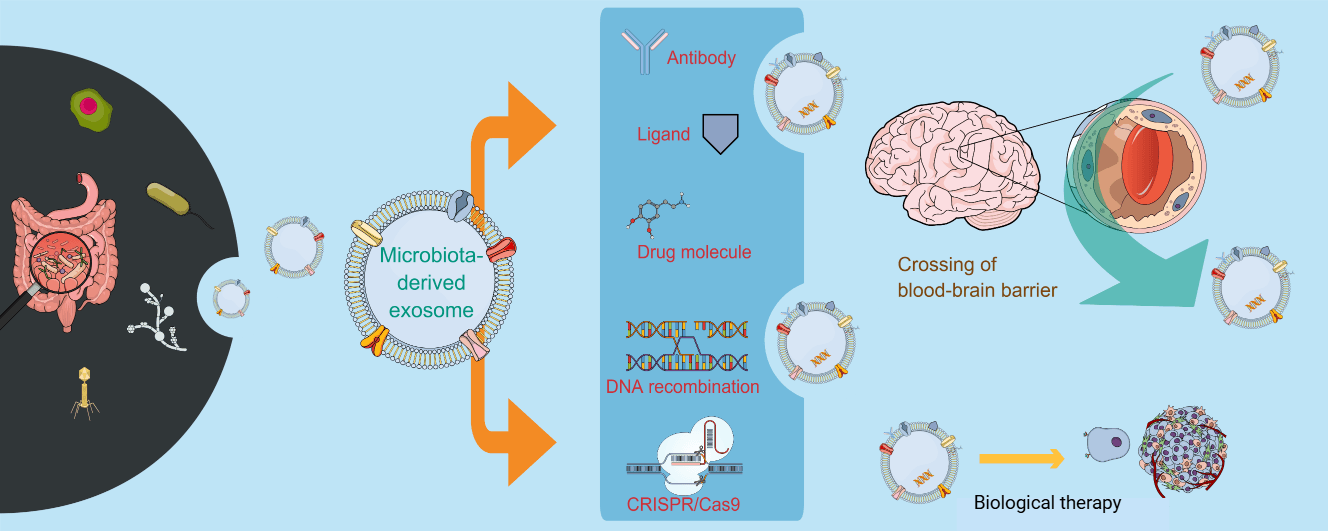
Gut microbiota-derived exosomes (MDEs) have emerged as a novel class of drug delivery and are secreted by bacteria, fungi, and archaea in the human microbiota within the human intestinal ecosystem and possess inherent biocompatibility and lower immunogenicity, enabling seamless integration within host intestinal and systemic bioenvironments. This review elucidates the cellular and molecular mechanisms governing MDE function, explaining how their unique lipid bilayer composition facilitates cellular entry via receptor-mediated endocytosis and membrane fusion. This review discusses how gut MDEs traverse biological barriers, such as the blood-brain barrier and intestinal mucosa, by modulating tight junction proteins and accurately transporting cargoes to desired tissues. Upon internalization, MDE cargoes actively modulate intracellular signaling cascades. Various drugs, including RNA, proteins, and small molecules, can be loaded into MDEs via physical or biological methods. Furthermore, bioengineering strategies to functionalize MDE surfaces with specific ligands for precise molecular targeting are evaluated. While obstacles regarding standardized production and quality control remain, gut MDEs have great promise in achieving personalized and precision medicine by targeting diseases such as cancer, inflammatory diseases, and male infertility. Future clinical translation relies on exploring these molecular interactions to generate highly efficient, engineered nanocarriers.Graphic Abstract
Keywords
Cite This Article
 Copyright © 2026 The Author(s). Published by Tech Science Press.
This work is licensed under a Creative Commons Attribution 4.0 International License , which permits unrestricted use, distribution, and reproduction in any medium, provided the original work is properly cited.
 Downloads
 Citation Tools
