Home / Journals / BIOCELL / Vol.50, No.7, 2026
Special Issues
Table of Content
cover

On the Cover

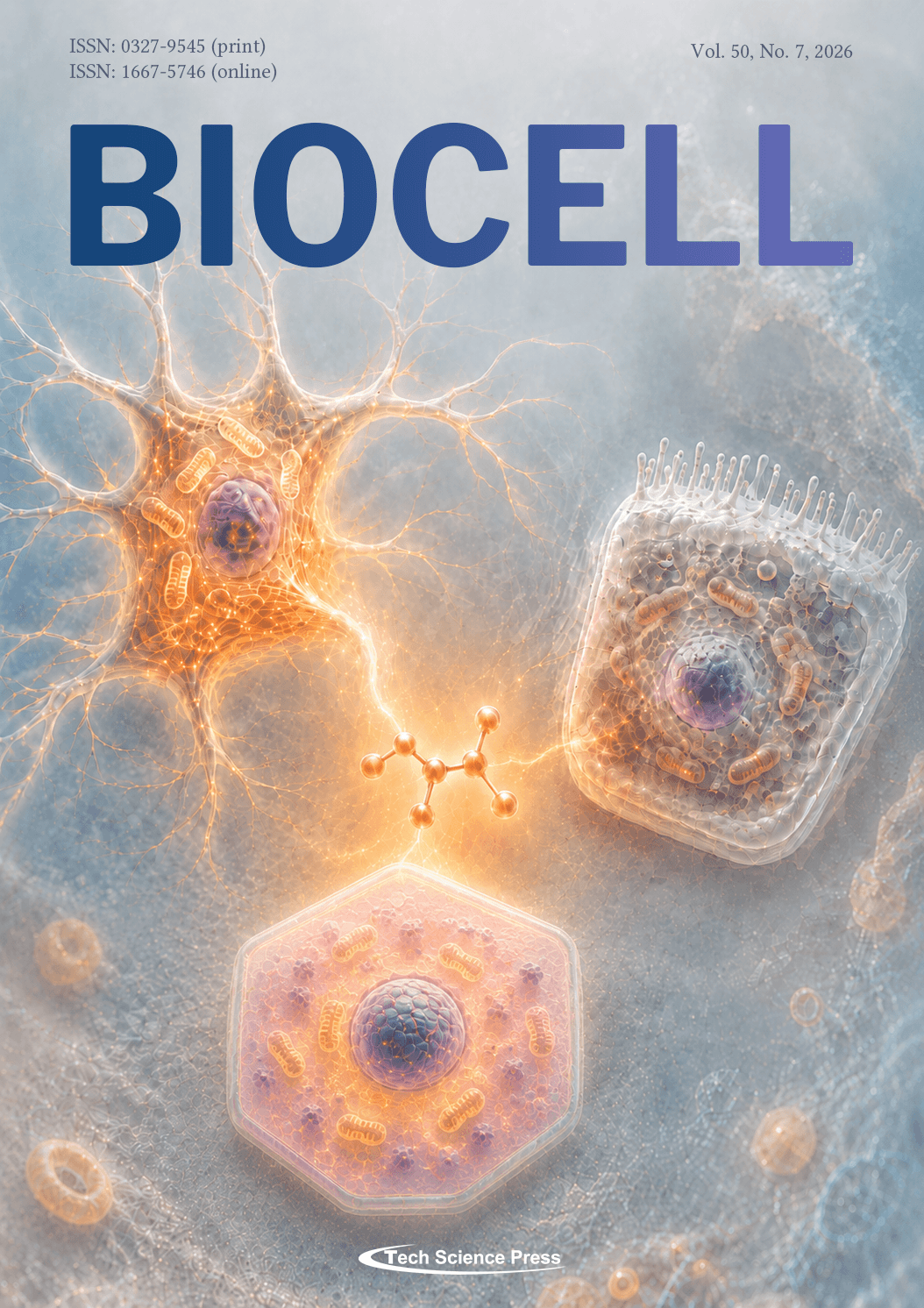
The cover depicts the organ-specific cellular response to ischemic injury and energy substrate deprivation. Fumarate, a tricarboxylic acid cycle intermediate, differentially modulates mitochondrial function and cell survival across tissues - conferring strong protection in the brain, intermediate protection in the liver, and only weak recovery in the kidney. Understanding such tissue-specific responses is key to developing targeted metabolic therapies. The cover image was created with AI-generated content via ChatGPT-5 and contains no copyrighted elements or misleading representations.

View this paper

  • Open AccessOpen Access

    REVIEW

    Cellular Senescence in the Cardiovascular System: Molecular Mechanisms, Pathophysiology, and Senotherapeutic Interventions

    Beata Franczyk1, Anna Bajer1,#, Anna Bulicz1,#, Mikołaj Grabarczyk1,#, Paulina Jakubowska1,#, Katarzyna Krawiranda1,#, Natalia Kustosik1,#, Przemysław Kuzar1,#, Klaudia Leszto1,#, Maja Mejza1,#, Weronika Mstowska1,#, Jacek Rysz2, Ewelina Młynarska1,*
    BIOCELL, Vol.50, No.7, 2026, DOI:10.32604/biocell.2026.075767 - 29 June 2026
    (This article belongs to the Special Issue: Cellular Senescence in Health and Disease)
    Abstract Cellular senescence and the Senescence-Associated Secretory Phenotype (SASP) play both physiological and pathological roles in the cardiovascular system. While transient senescence aids regeneration, chronic accumulation of senescent cells promotes endothelial dysfunction, arterial stiffening, and maladaptive cardiac remodeling. This review elucidates the pivotal role of the immune system in senescent cell clearance and explores how immunosenescence drives systemic low-grade inflammation. Significant emphasis is placed on emerging pharmacological strategies, specifically senolytics and senomorphics, assessing their capacity to restore cardiac function and attenuate atherosclerosis. Additionally, the utility of molecular biomarkers and diverse in vitro and in vivo models is analyzed More >

  • Open AccessOpen Access

    REVIEW

    Extracellular Vesicles in Acute Myeloid Leukemia: Biology, Diagnostic Applications, and Therapeutic Potential

    Rashid Mir1,*, Jameel Barnawi1, Naseh A. Algehainy1, Mohammed M. Jalal1, Malik A. Altayar1, Mohammad A. Alanazi1, Mamdoh Moawadh1, Faris J. Tayeb1, Syed Khalid Mustafa2, Abdullatif Taha Babakr3, Umair Manghrio4, Jaber Alfaifi5, Faisal H. Altemani1
    BIOCELL, Vol.50, No.7, 2026, DOI:10.32604/biocell.2026.076199 - 29 June 2026
    (This article belongs to the Special Issue: Epigenetic and ncRNA Biomarkers in Cancer: Diagnostic and Prognostic Value)
    Abstract Acute Myeloid Leukemia (AML) is one of the most complex hematological malignancies associated with the rapid production of immature myeloid cells and poor prognosis, even with the development of therapeutic options. Exosomes, which are extracellular vesicles with sizes ranging from 30 to 150 nm, have drawn a lot of interest because of their capacity to carry molecular cargoes, including DNA, mRNA, and non-coding RNAs. Various cells produce these vesicles, which have been shown to effectively transport their molecular contents to target cells via a variety of bodily fluids. This review comprehensively discusses the importance of More >

  • Open AccessOpen Access

    REVIEW

    Gut Microbiota-Derived Exosomes Are Unique Natural Nanocarriers for Therapeutics

    Ibrahim M. Ibrahim1, Shadab Md2,*
    BIOCELL, Vol.50, No.7, 2026, DOI:10.32604/biocell.2026.077548 - 29 June 2026
    (This article belongs to the Special Issue: Bioactive Natural Components as Regulators of Cellular Pathways and Disease Progression)
    Abstract Gut microbiota-derived exosomes (MDEs) have emerged as a novel class of drug delivery and are secreted by bacteria, fungi, and archaea in the human microbiota within the human intestinal ecosystem and possess inherent biocompatibility and lower immunogenicity, enabling seamless integration within host intestinal and systemic bioenvironments. This review elucidates the cellular and molecular mechanisms governing MDE function, explaining how their unique lipid bilayer composition facilitates cellular entry via receptor-mediated endocytosis and membrane fusion. This review discusses how gut MDEs traverse biological barriers, such as the blood-brain barrier and intestinal mucosa, by modulating tight junction proteins… More >

    Graphic Abstract

    Gut Microbiota-Derived Exosomes Are Unique Natural Nanocarriers for Therapeutics

  • Open AccessOpen Access

    REVIEW

    Neuroinflammation and Oxidative Stress: Their Pathophysiological Roles in Amyotrophic Lateral Sclerosis and Alzheimer’s Disease

    Aslı Aykaç1,*, Eda Becer2, Ahmet Özer Şehirli3
    BIOCELL, Vol.50, No.7, 2026, DOI:10.32604/biocell.2026.077114 - 29 June 2026
    (This article belongs to the Special Issue: Cellular and Molecular Mechanisms of Neurodegeneration: From Pathogenesis to Therapeutic Strategies)
    Abstract Neurodegenerative diseases such as Amyotrophic Lateral Sclerosis (ALS) and Alzheimer’s disease (AD) are driven by complex, multifactorial mechanisms in which oxidative stress (OS) and neuroinflammation (NI) play central, mutually reinforcing roles. Their interaction is mediated through key signaling pathways, including nuclear factor kappa-light-chain-enhancer of activated B cells (NF-κB), nuclear factor erythroid 2–related factor 2–Kelch-like ECH-associated protein 1 (Nrf2-Keap1), and the mitogen-activated protein kinase (MAPK) pathway, as well as mitochondrial dysfunction, microglial activation, and dysregulated redox homeostasis. Increasing attention has been directed toward understanding how Food and Drug Administration (FDA)-approved neuroprotective agents influence these interconnected processes. More >

    Graphic Abstract

    Neuroinflammation and Oxidative Stress: Their Pathophysiological Roles in Amyotrophic Lateral Sclerosis and Alzheimer’s Disease

  • Open AccessOpen Access

    REVIEW

    Decoding Enterovirus 71: Molecular Functions of Structural and Nonstructural Proteins in Viral Replication and Host Manipulation

    Jiamei Wu1,*, Yuechuan Zhang2, Junxue Wu2, Chengxin Hao1
    BIOCELL, Vol.50, No.7, 2026, DOI:10.32604/biocell.2026.071704 - 29 June 2026
    Abstract Enterovirus 71 (EV71), a member of the family Picornaviridae, genus Enterovirus, is an agent of hand, foot, and mouth disease (HFMD) and remains a persistent global health concern, particularly among children under five years of age. Although most infections are self-limiting, a significant proportion can progress to severe neurological manifestations such as aseptic meningitis, encephalitis, and fatal pulmonary oedema. Despite substantial advances in research, no universally effective antiviral therapy or broadly protective vaccine has yet been developed. Drawing upon both foundational and recent studies, we evaluate the strength of existing evidence and delineate how these viral… More >

  • Open AccessOpen Access

    ARTICLE

    Modulating the Biological Processes and Glycolysis of Hepatocellular Carcinoma Cells by UBR7’s Suppression of Pyruvate Kinase PKM2

    Bo Liu, Xue Li*
    BIOCELL, Vol.50, No.7, 2026, DOI:10.32604/biocell.2026.077797 - 29 June 2026
    Abstract Background: As a key glycolytic enzyme, Pyruvate kinase M2 (PKM2), which is highly expressed in cancer cells, promotes hepatocellular carcinoma (HCC) proliferation/metastasis. This research investigates the involvement of Ubiquitin protein ligase E3 component N-recognin 7 (UBR7) in HCC progression/glycolysis and its potential mechanisms. Methods: UBR7 expressions in HHL-5, Huh-7, and HepG2 cells were investigated using Quantitative Reverse Transcription Polymerase Chain Reaction and Western Blot. Cell counting kit-8, clone formation experiment, scratch-wound assay, and transwell testing were conducted to assess the malignant biological behaviors of HepG2 and Huh-7 cells; the absorption level of glucose and generation levels… More >

  • Open AccessOpen Access

    ARTICLE

    Organ-Specific Metabolic Adaptations to Acute Injury and Their Modulation by Fumarate

    Marina I. Buyan1,2,#, Kseniia S. Cherkesova1,3,#, Anna A. Brezgunova1, Andrey I. Buyan4, Polina A. Abramicheva1, Irina B. Pevzner1, Nadezda V. Andrianova1,*, Egor Y. Plotnikov1,*
    BIOCELL, Vol.50, No.7, 2026, DOI:10.32604/biocell.2026.078925 - 29 June 2026
    Abstract Objectives: Metabolic substrate deficiency is a key factor in many pathologies, with organ vulnerability depending on specialized metabolic profiles. In this study, we aimed to investigate the impact of deprivation stress on mitochondria and cell functions in different cell types and to assess the potential of fumarate, a tricarboxylic acid (TCA) cycle intermediate, to modulate these stress responses. Methods: We assessed the effects of fumarate on cell proliferation and mitochondrial membrane potential under both normal conditions and serum deprivation in vitro in astrocytes, renal epithelial cells, and hepatic stellate cells. Subsequently, we performed bioinformatic analysis of transcriptomic… More >

  • Open AccessOpen Access

    ARTICLE

    METTL3-Mediated m6A Regulation of PTEN Promotes Macrophage Ferroptosis in Gouty Arthritis

    Gang Yang#, Xiongwu Long#, Xingchang Fu*
    BIOCELL, Vol.50, No.7, 2026, DOI:10.32604/biocell.2026.075362 - 29 June 2026
    (This article belongs to the Special Issue: Targeting Inflammatory Diseases with Novel Strategies: Cellular and Molecular Mechanisms)
    Abstract Objectives: Macrophage ferroptosis is linked to the pathogenesis of gouty arthritis (GA), yet the precise regulatory mechanism needs to be elucidated. This study aimed to investigate the role of macrophage ferroptosis in GA and its potential mechanisms. Methods: THP-1 macrophages were stimulated with monosodium urate (MSU) crystals to simulate the GA model. The co-culture system of macrophages and primary chondrocytes (hCDs) was employed to analyze the effects of macrophage-mediated inflammation on chondrocyte degeneration. Results: MSU stimulation induced ferroptosis in macrophages, accompanied by increased methyltransferase-like 3 (METTL3) expression (p = 0.003) and total m6A modification level (p = 0.0058).… More >

  • Open AccessOpen Access

    ARTICLE

    Linalool Promotes Osteoblast Differentiation via SELENBP1-Dependent Signaling in MC3T3-E1 and C3H10T1/2 Cells

    Kyeong-Min Kim1,2, A-Rang Kim1,2, Won-Gu Jang1,2,3,*
    BIOCELL, Vol.50, No.7, 2026, DOI:10.32604/biocell.2026.077163 - 29 June 2026
    (This article belongs to the Special Issue: Innovations in Musculoskeletal Biology, Disease, and Regeneration)
    Abstract Background: Linalool is a monoterpene alcohol with known anti-inflammatory and antioxidant properties, but its role in osteoblast differentiation remains unclear. This study aimed to investigate the osteogenic potential of linalool and to examine the role of selenium-binding protein 1 (Selenbp1) in mediating its effects. Methods: Murine MC3T3-E1 and C3H10T1/2 cells were treated with linalool under osteogenic conditions. Osteoblast differentiation was assessed by alkaline phosphatase (ALP) activity, Alizarin Red S staining, and expression of runt-related transcription factor 2 (Runx2) and distal-less homeobox 5 (Dlx5). The involvement of Selenbp1 was examined using siRNA knockdown and plasmid overexpression. A… More >

  • Open AccessOpen Access

    ARTICLE

    Mitochondrial Calcium Uniporter (MCU) Inhibition Disrupts Bone Remodeling and Impairs Mitochondrial Function via Aberrant Mitochondrial Dynamics

    Xinliang Fu1,#, Wen Du1,#, Tao Li2, Yifei Shen1, Ngai-Fung Ruan1, Huiling Ling1, Xingbo Wu1, Ziqi Qin1, Xiting Zhu1, Xueqi Gan1,*
    BIOCELL, Vol.50, No.7, 2026, DOI:10.32604/biocell.2026.077349 - 29 June 2026
    (This article belongs to the Special Issue: MitoROS: Exploring Mitochondria and Oxidative Stress)
    Abstract Objectives: Mitochondrial function is intricately linked to osteogenic and osteoclastic differentiation. The mitochondrial calcium uniporter (MCU) is a critical regulator of mitochondrial function, influencing key aspects of cellular metabolism and signaling. However, the precise mechanisms by which MCU modulates osteogenic activity remain unclear. This study aimed to elucidate the impact of MCU-mediated regulation of mitochondrial function on bone remodeling and to explore the underlying mechanisms. Methods: The mouse pre-osteoblastic cells (MC3T3-E1) were treated with the MCU-specific inhibitor Ru265 during osteogenic induction to assess changes in osteogenic differentiation capacity, mitochondrial function, and mitochondrial dynamics. Additionally, MCU global… More >

Per Page:

Share Link
