Home / Journals / BIOCELL / Vol.49, No.10, 2025
Special Issues
Table of Content
cover

On the Cover

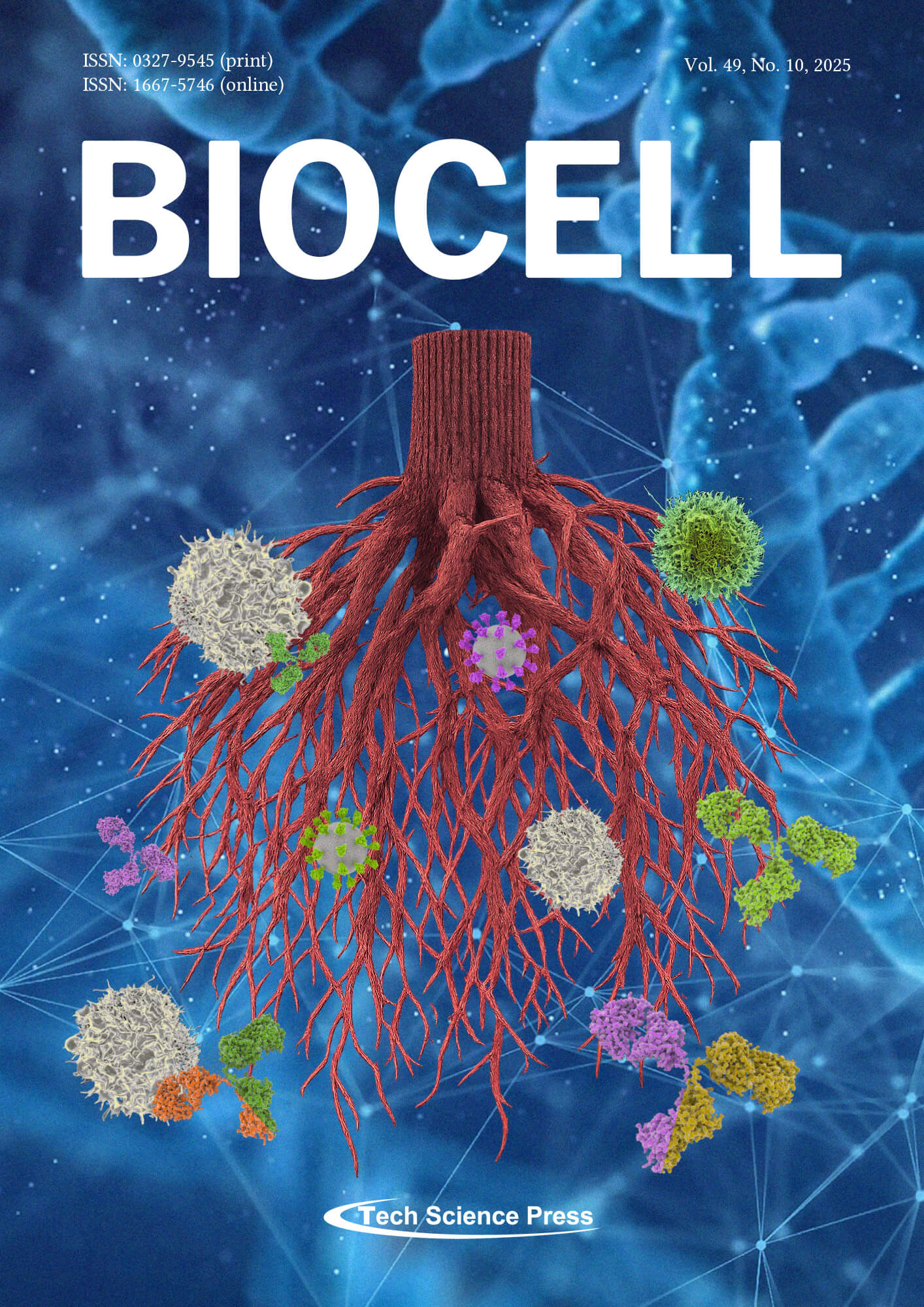
The cover depicts the stump and roots of a tree whose trunk has been cut off, a common stage in the removal process of a tree. This element refers to the cancer stem cells, sometimes left over from previous rounds of therapy, that are key drivers behind the occurrence, relapse, and aggressiveness of hematological malignancies. Additionally, several elements reflect the various immunotherapeutic methods used, including checkpoint inhibitors, bispecific antibodies, oncolytic viruses, chimeric antigen receptor T cells, and other cell therapies. These therapies may be key in addressing the cancer stem cells overlapped by previous therapeutic approaches. The cover image was partially created with AI-generated content via DALL•E 3, as part of the GPT-5 version of ChatGPT by OpenAI, and it contains no copyrighted elements or misleading representations.

View this paper

  • Open AccessOpen Access

    REVIEW

    Assessing the Hematological Cancer Stem Cell Landscape to Improve Immunotherapy Clinical Decisions

    Sotirios Charalampos Diamantoudis1,#,*, Androulla N. Miliotou2,#, Eleftheria Galatou2, Stergiani Telliou3, Konstantinos Sideris4, Nikolaos Grigoriadis1, Ioannis S. Vizirianakis1,2,*
    BIOCELL, Vol.49, No.10, pp. 1799-1858, 2025, DOI:10.32604/biocell.2025.067216 - 22 October 2025
    (This article belongs to the Special Issue: Stem Cells Therapy in Health and Disease)
    Abstract Hematological cancer stem cells (HCSCs) is a subpopulation of cells within hematological cancers that, through their characteristics, enhance malignancy and render their therapy more challenging. By uncovering the underlying mechanisms behind characteristic properties such as self-renewal, immune evasion, and conventional therapy resistance, as well as the major differences between other cancers and physiological cells, new and alternative targets can be assessed for use in existing and novel immunotherapeutic interventions. Through the evaluation of the existing literature, one can realize that there have already been several studies addressing the use of stem cell transplantation (SCT), monoclonal More >

    Graphic Abstract

    Assessing the Hematological Cancer Stem Cell Landscape to Improve Immunotherapy Clinical Decisions

  • Open AccessOpen Access

    MINI REVIEW

    Emerging Roles of Fc Receptor-Like 1 in Immunotherapy of Diffuse Large B-Cell Lymphoma

    Kayce Blumenstock1,2, Vandana Zaman2,3, Camille Green3, Narendra L. Banik1,2,3, Azizul Haque1,2,3,*
    BIOCELL, Vol.49, No.10, pp. 1859-1871, 2025, DOI:10.32604/biocell.2025.068773 - 22 October 2025
    (This article belongs to the Special Issue: Genetic Biomarkers of Cancer: Insights into Molecular and Cellular Mechanisms)
    Abstract Fc Receptor-Like 1 (FCRL1), a member of the FCRL family, contains two immunoreceptor tyrosine-based activation motifs (ITAMs) in its cytoplasmic domain and plays a critical role in B-cell biology. Its expression begins in pre-B-cells, dynamically shifts during B-cell development, and contributes to the regulation of human B-cell activation. Notably, FCRL1 is overexpressed in subsets of naive and memory B-cells, as well as in malignant B-cells, including those in diffuse large B-cell lymphoma (DLBCL), an aggressive and often treatment-resistant hematological malignancy. Among FCRL family members, FCRL1 stands out as a promising immunotherapeutic target due to its More >

  • Open AccessOpen Access

    MINI REVIEW

    Role of Adipose-Derived Stem Cells Therapy in Heart Failure

    Gabriel Matheus Da Silva Batista, Lucas Pina Rodrigues, Andrey Jorge Serra*
    BIOCELL, Vol.49, No.10, pp. 1873-1885, 2025, DOI:10.32604/biocell.2025.067186 - 22 October 2025
    (This article belongs to the Special Issue: Stem Cells Therapy in Health and Disease)
    Abstract Adipose-derived stem cells (ADSCs) therapy has emerged as a promising strategy for treating degenerative, inflammatory, and cardiometabolic diseases. In addition to their higher bioavailability in adipose tissue, ADSCs demonstrate superior activity in producing specific immune modulators and growth factors when compared to other stem cell types. The detrimental impact of heart failure (HF)—a condition that still lacks a fully effective therapy—has driven significant interest in the therapeutic potential of ADSCs. This interest is supported by robust evidence from experimental studies employing HF animal models. Accordingly, this review aims to explore the cardioprotective mechanisms through which More >

  • Open AccessOpen Access

    REVIEW

    Malignant Transformation of Diabetic Foot Ulcer: Pathophysiology, Molecular Mechanisms, and Clinical Implications

    Sophia Strukel1, Vikrant Rai1,2,*
    BIOCELL, Vol.49, No.10, pp. 1887-1911, 2025, DOI:10.32604/biocell.2025.067207 - 22 October 2025
    (This article belongs to the Special Issue: Understanding Cellular Mechanisms in Wound Healing During Therapeutic Interventions)
    Abstract Diabetic foot ulcers (DFUs) are a serious complication of diabetes mellitus and are associated with high morbidity, risk of amputation, and increased mortality. Although DFUs typically remain a chronic, non-healing wound, a small portion of DFUs may undergo malignant transformation. The subsequent malignancies are skin cancers such as squamous cell carcinoma (SCC), basal cell carcinoma, or melanoma. Understanding the pathophysiology of DFUs and the molecular and clinical determinants that contribute to their potential malignant transformation if crucial for clinical management. Chronic inflammation, dysregulation of cytokine signaling, faulty immune surveillance, and impaired wound healing all play… More >

  • Open AccessOpen Access

    REVIEW

    Auxin-Mediated Redox Control of the Ubiquitin-Proteasome System: A Key Mechanism for Plant Growth and Development

    Nuria Malena Tebez1, María Cecilia Terrile1,*, María Elisa Picco1, María José Iglesias2,*
    BIOCELL, Vol.49, No.10, pp. 1913-1928, 2025, DOI:10.32604/biocell.2025.067833 - 22 October 2025
    (This article belongs to the Special Issue: Unraveling the Complexity of Ubiquitin E3 Ligases: Implications for Cellular Regulation and Disease)
    Abstract In plants, the ubiquitin–proteasome system (UPS) plays a central role in hormonal regulation, including the action of the phytohormone auxin, which orchestrates numerous aspects of growth and development. Auxin modulates redox metabolism and promotes the accumulation of nitric oxide (NO) in various tissues and physiological contexts. NO functions as a redox signaling molecule, exerting its effects in part through the reversible oxidation of cysteine residues via a post-translational modification known as S-nitrosylation. Recent findings highlight a dynamic interplay between S-nitrosylation and the ubiquitination machinery, shaping critical aspects of auxin-mediated plant responses. In this review, we More >

  • Open AccessOpen Access

    ARTICLE

    LncRNA CRYBG3 Regulates Adaptive Radioresistance in Non-Small Cell Lung Cancer Cells through the p53/HSF1/TRAP1 Axis

    Xiangyu Yan1,#, Yusheng Jin1,#, Yan Yuan1, Xubaihe Zhang1, Jiayi Li1, Ying Xu1, Yangyang Ge2, Anqing Wu1,*
    BIOCELL, Vol.49, No.10, pp. 1929-1946, 2025, DOI:10.32604/biocell.2025.066935 - 22 October 2025
    (This article belongs to the Special Issue: Mitochondrial Dynamics and Oxidative Stress in Disease: Cellular Mechanisms and Therapeutic Targets)
    Abstract Objectives: Fractionated radiotherapy represents a standardized and widely adopted treatment modality for cancer management, with approximately 40% of non-small cell lung cancer (NSCLC) patients receiving it. However, repeated irradiation may induce radioresistance in cancer cells, reducing treatment effectiveness and raising recurrence risk. The long noncoding RNA CRYBG3 (lncRNA CRYBG3), which is upregulated in lung cancer cells after X-ray irradiation, contributes to the radioresistance of NSCLC cells by promoting wild-type p53 protein degradation. This study aims to elucidate the mechanism of fractionated irradiation-induced radioresistance, in which lncRNA CRYBG3 regulates radiation-induced mitochondrial damage and reactive oxygen species… More >

  • Open AccessOpen Access

    ARTICLE

    miR-122-5p Regulates Ferroptosis through Targeting the Glutamine Transporter SLC1A5 in Hepatocellular Carcinoma

    Mingxuan Lei1, Jiayin Xu2, Xiaoying Hu2, Lin Feng3, Baoping Luo4,5,6,*
    BIOCELL, Vol.49, No.10, pp. 1947-1965, 2025, DOI:10.32604/biocell.2025.068926 - 22 October 2025
    Abstract Background: Hepatocellular carcinoma (HCC) typically begins inconspicuously and progresses swiftly, leading to most patients being diagnosed at an advanced stage. Accordingly, a pressing priority is to clarify the development mechanisms of HCC and devise efficient intervention and treatment protocols. Methods: An upstream miRNA of solute carrier transporter family 1 member 5 (SLC1A5) was predicted to be miR-122-5p by various databases, and a dual-luciferase reporter gene assay was used to verify the SLC1A5- and miR-122-5p-targeting relationship. SLC1A5 and miR-122-5p expression in HCC cells was quantitatively assessed using quantitative reverse transcription polymerase chain reaction (qRT–PCR). Western blotting… More >

  • Open AccessOpen Access

    ARTICLE

    3,9-Di-O-Methylnissolin Inhibits Gastric Cancer Progression by the RIPK2-Mediated Suppression of the NF-κB Pathway

    Yun Zhou1,2, Shixiong Liu1,2, Ya Zheng1,3,4, Yuping Wang1,3,4,*, Yongning Zhou1,3,4,*
    BIOCELL, Vol.49, No.10, pp. 1967-1983, 2025, DOI:10.32604/biocell.2025.069869 - 22 October 2025
    Abstract Background: Gastric cancer (GC) is a prevalent cause of death. 3,9-Di-O-methylnissolin (DOM) is a flavonoid isolated from Astragalus membranaceus. It has anticancer and anti-inflammatory effects, but its effect and mechanism of action on GC are not very clear. Methods: The appropriate concentration was selected after observing the effects of varying concentrations of DOM on the viability of GC cells, which was examined through the cell counting kit-8 (CCK-8) assay. The receptor-interacting protein kinase 2 (RIPK2) overexpression plasmid was transfected into GC cells, which were then treated with DOM. Cell cycle and proliferation, RIPK2 levels, and inflammatory… More >

    Graphic Abstract

    3,9-Di-O-Methylnissolin Inhibits Gastric Cancer Progression by the RIPK2-Mediated Suppression of the NF-κB Pathway

  • Open AccessOpen Access

    ARTICLE

    Tetramethylpyrazine Alleviates Pancreatitis Progression by Regulating Inflammation and Autophagy through the YAP-RIPK1-NF-κB Axis

    Hong Wu, Yang Liu*
    BIOCELL, Vol.49, No.10, pp. 1985-2006, 2025, DOI:10.32604/biocell.2025.069527 - 22 October 2025
    Abstract Background: Acute pancreatitis (AP) is a serious gastrointestinal disorder. Tetramethylpyrazine (TMP), a bioactive alkaloid extracted from Ligusticum chuanxiong, exhibits various pharmacological effects, but its protective mechanisms against AP remain unclear. This study aimed to investigate the protective effects and underlying mechanisms of TMP in AP. Methods: The study utilized Cerulein (CER) to model pancreatitis across experimental systems. Cellular responses were characterized through functional assays (CCK-8 viability, EdU proliferation, Transwell migration, flow cytometric apoptosis, Fluo-3/AM calcium imaging) and inflammatory profiling (ELISA for trypsin, CRP, TNF-α, IL-1β, IL-6). Autophagy was monitored via mRFP-GFP-LC3 flux and LysoTracker staining, with… More >

    Graphic Abstract

    Tetramethylpyrazine Alleviates Pancreatitis Progression by Regulating Inflammation and Autophagy through the YAP-RIPK1-NF-<b>κ</b>B Axis

  • Open AccessOpen Access

    ARTICLE

    Strain-Specific Trajectories of Behavioural, Neuroinflammatory, and Microbiota Changes under Chronic Stress in Rats with Contrast Levels of Nervous System Excitability

    Anastasia Vylegzhanina1,2, Irina Shalaginova2,*, Dana Korolevich1, Dmitry Katserov1, Alexandra Semenova1, Maria Sidorova1, Sergey Eresko3, Marat Airapetov3, Marina Pavlova2, Anna Levina2, Natalia Dyuzhikova2
    BIOCELL, Vol.49, No.10, pp. 2007-2031, 2025, DOI:10.32604/biocell.2025.071198 - 22 October 2025
    (This article belongs to the Special Issue: Cellular and Molecular Mechanisms Underlying Complex Behaviors and Neuropsychiatric Disorders)
    Abstract Objectives: Chronic stress can trigger neuroinflammation and gut microbiota alterations, contributing to post-stress disorders. Individual differences in stress responses, shaped by genetic and physiological factors, require better characterization. We aimed to investigate the long-term effects of chronic stress in rats selectively bred for high and low nervous system excitability. Methods: Adult male rats from two strains selectively bred for high (HT) and low (LT) excitability thresholds of the nervous system underwent a 15-day chronic emotional-pain stress protocol. Behavioral assessments (elevated plus maze), cytokine levels (TNF, IL-1β, IL-6, IL-10) in the hippocampus and amygdala measured by… More >

Per Page:

Share Link