Home / Journals / BIOCELL / Vol.50, No.3, 2026
Special Issues
Table of Content
cover

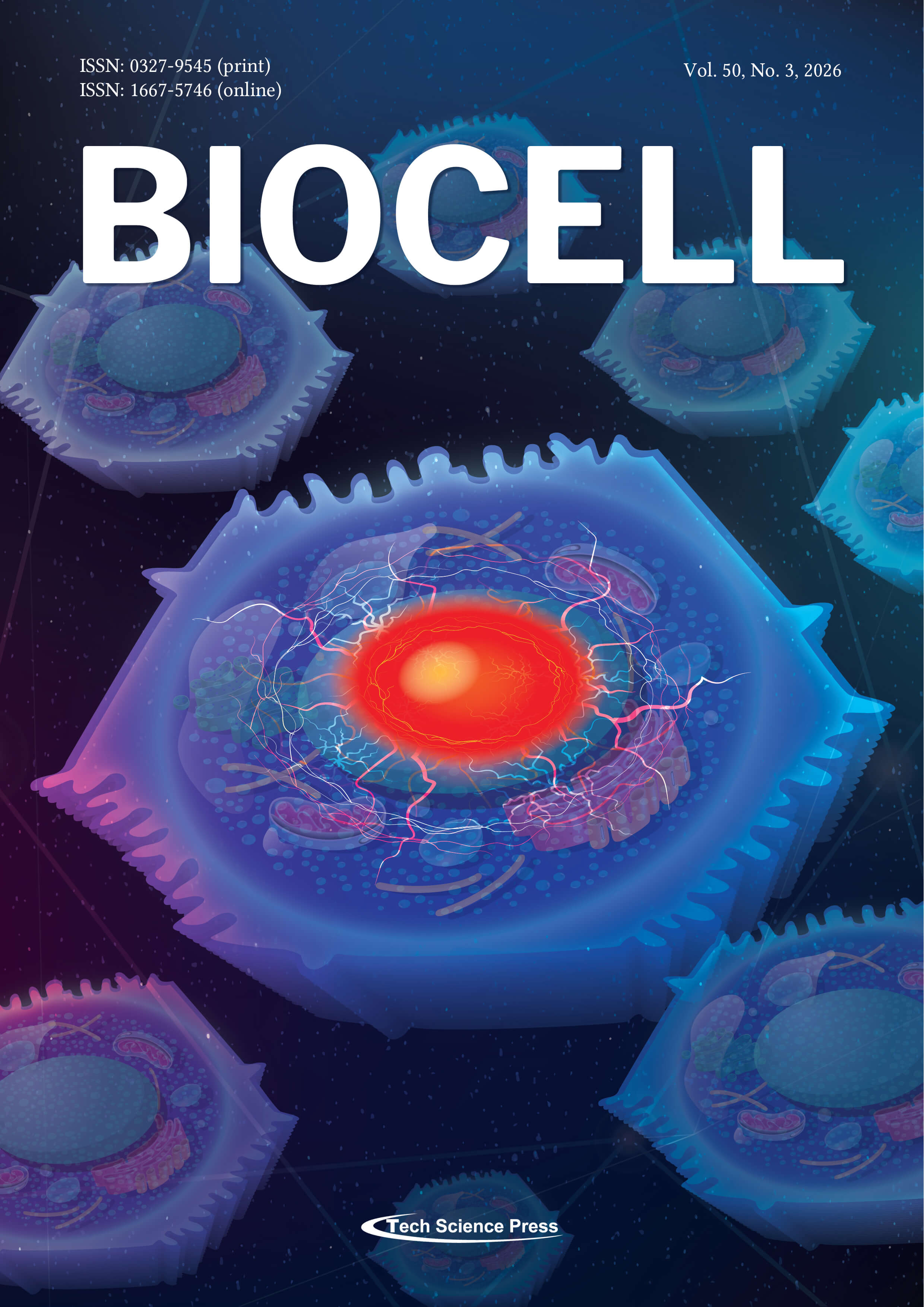
On the Cover

This cover illustrates a hepatitis B virus–infected liver cell in which the viral X protein (HBx) appears as a diffuse internal signal that disrupts cellular organization and regulation. By highlighting HBx-driven alterations within a single hepatocyte against surrounding healthy cells, the image reflects HBx’s central role in hepatocellular carcinoma development and its relevance as a therapeutic target.

View this paper

  • Open AccessOpen Access

    REVIEW

    HBx Protein in Hepatitis B Virus-Related Hepatocellular Carcinoma: Pathogenic Mechanisms and Emerging Interventions

    Chung-Che Tsai1,#, Chih-Hung Lin2,#, Katherine Lin3,4, Jia Hong Hubert Chen4,5, Ying Jie Celia Chen4,5, Ilyssa Ting-Ying Chang3,4, Hsu-Hung Chang6, Jin-Yin Chang7, Tin-Yi Chu8, Po-Chih Hsu4,8,*, Chan-Yen Kuo8,*
    BIOCELL, Vol.50, No.3, 2026, DOI:10.32604/biocell.2025.073698 - 23 March 2026
    Abstract Hepatocellular carcinoma (HCC) is a leading cause of cancer-related death worldwide, most commonly driven by chronic hepatitis B virus (HBV) infection. The HBV X protein (HBx) plays a central role in hepatocarcinogenesis by regulating transcription, signal transduction, epigenetic modification, and interactions with noncoding RNAs. This review summarizes current advances in HBx-mediated signaling pathways and mutation-specific functions, highlighting its potential as a prognostic biomarker and therapeutic target, and providing insights for future strategies in HCC treatment and HBV eradication. Activation of nuclear factor kappa-light-chain-enhancer of activated B cells (NF-κB), cAMP response element binding protein/activating transcription factor More >

    Graphic Abstract

    HBx Protein in Hepatitis B Virus-Related Hepatocellular Carcinoma: Pathogenic Mechanisms and Emerging Interventions

  • Open AccessOpen Access

    REVIEW

    Mitochondrial Dysfunction as a Pathophysiological Bridge between Metabolic Dysfunction-Associated Fatty Liver Disease and Chronic Kidney Disease

    Congwei You1,#, Anwen Yin2,#, Jia Xia3, Le Zhang4,*, Xiaolei Wang1,*, Yutong Hou4,*
    BIOCELL, Vol.50, No.3, 2026, DOI:10.32604/biocell.2025.072971 - 23 March 2026
    Abstract Metabolic dysfunction-associated fatty liver disease (MAFLD) and chronic kidney disease (CKD) have shown a marked global increase in prevalence, placing a substantial burden on public health and healthcare systems worldwide. Epidemiological data demonstrate a significant overlap between these two conditions, with further evidence from research identifying common pathophysiological features, such as lipid metabolism dysregulation, disrupted energy balance, and chronic systemic inflammation. Mitochondria are central to the pathophysiology of both diseases. In addition to their role in energy production, mitochondria are involved in numerous critical cellular processes, including biosynthesis, lipid metabolism, oxidative phosphorylation, signal transduction, and More >

  • Open AccessOpen Access

    REVIEW

    Region-Specific Astrocyte Endfeet Disruption as a Driver of Pyramidal Neuron Death after Ischemia-Reperfusion in the Hippocampus

    Joongbum Moon1, Ji Hyeon Ahn2, Moo-Ho Won3,*
    BIOCELL, Vol.50, No.3, 2026, DOI:10.32604/biocell.2025.072635 - 23 March 2026
    (This article belongs to the Special Issue: Cellular and Molecular Insights into Brain Ischemic Insults)
    Abstract Ischemia-reperfusion (I/R) injury induces region-specific neuronal vulnerability within the hippocampus, with the cornu ammonis 1 (CA1) subfield particularly prone to delayed neuronal death. While intrinsic neuronal factors have been implicated, emerging evidence highlights the decisive contribution of astrocyte endfeet (AEF)—specialized perivascular structures that regulate ion and water homeostasis, glutamate clearance, and blood–brain barrier (BBB) stability. This review synthesizes structural and molecular alterations of AEF across the CA1–CA3 subfields following I/R and their correlation with neuronal fate. In CA1, AEF undergo early-onset swelling and detachment from the vascular basal lamina due to dysfunction of critical proteins… More >

  • Open AccessOpen Access

    REVIEW

    Exploring the Latest Developments in Natural Killer (NK) Cell-Based Therapies for Diffuse Intrinsic Pontine Glioma (DIPG)

    Kawaljit Kaur*
    BIOCELL, Vol.50, No.3, 2026, DOI:10.32604/biocell.2025.073340 - 23 March 2026
    (This article belongs to the Special Issue: Novel Targeted Therapy in Oncology)
    Abstract Diffuse intrinsic pontine glioma (DIPG) is a pediatric brainstem tumor with a very poor prognosis, characterized by immunosuppressive tumor microenvironment (TME) that limits immune infiltration, including a significant reduction in circulating natural killer (NK) cells. This drop in NK cell levels and activity may promote tumor growth and immune evasion, making NK cells a promising target for immunotherapy. NK cells can attack and eliminate DIPG tumor cells, including glioma stem cells, while counteracting certain immune evasion strategies. Although the DIPG microenvironment and blood-brain barrier present challenges, NK cell-based therapies have shown encouraging tumor control and… More >

  • Open AccessOpen Access

    REVIEW

    Cellular and Molecular Insights into the Pathophysiology of Obesity-Related Asthma

    Huan Zhou1, Jiami Jiang2, Yuqing Zou1, Jiahui Zhang1,*, Zhiwei Yu3,*
    BIOCELL, Vol.50, No.3, 2026, DOI:10.32604/biocell.2025.073989 - 23 March 2026
    Abstract Obesity-related asthma is a distinct clinical phenotype, characterized by severe respiratory symptoms, reduced responsiveness to conventional glucocorticoid therapy, and a significantly increase in disease burden. With the rising global prevalence of obesity, the number of individuals affected by obesity-related asthma is steadily growing, presenting a pressing public health issue. The pathogenesis of obesity-related asthma is multifactorial, involving a complex interplay of metabolic and immune pathways. Key mechanisms include dysregulated T-cell differentiation, pro-inflammatory macrophage polarization, oxidative stress, and altered cytokines and adipokines secretion, all contributing to airway inflammation and remodeling. Additionally, metabolic factors, such as adiposity… More >

  • Open AccessOpen Access

    REVIEW

    Understanding Endoplasmic Reticulum Stress as a Central Driver of Atherosclerosis

    Alessio L. Ravani1, Michael I. Bukrinsky2, Anastasia V. Poznyak3,*
    BIOCELL, Vol.50, No.3, 2026, DOI:10.32604/biocell.2025.074266 - 23 March 2026
    (This article belongs to the Special Issue: Molecular Basis for the Involvement of Inflammation and Lipids in Pathologies)
    Abstract Atherosclerosis (AS) remains a major contributor to cardiovascular disease (CVD) mortality worldwide. Its development involves dysregulated lipid handling, persistent vascular inflammation, and endothelial cell (EC) dysfunction, influenced by genetic, environmental, and lifestyle factors. Increasing evidence highlights a pivotal role of endoplasmic reticulum (ER) stress as a molecular link between lipid dysregulation and inflammatory signaling in AS pathogenesis. ER stress is triggered by modified LDL, oxidized lipids, hyperhomocysteinemia, oxidative stress (OS), and disrupted calcium (Ca2+) homeostasis, leading to activation of the unfolded protein response (UPR). Core UPR mediators—inositol-requiring enzyme 1 (IRE1), protein kinase RNA-like ER kinase (PERK),… More >

  • Open AccessOpen Access

    ARTICLE

    sIL-2RA Exacerbates Multiple Sclerosis by Activating Microglia and Upregulating Fc Receptors on Microglia

    Jingfei Shi#, Yi Ding#, Hui Lu*
    BIOCELL, Vol.50, No.3, 2026, DOI:10.32604/biocell.2026.073956 - 23 March 2026
    (This article belongs to the Special Issue: Autoantibodies and Emerging Biomarkers in Immune-Mediated Neurological Disorders)
    Abstract Objective: Multiple sclerosis (MS) is a chronic inflammatory demyelinating disease of the central nervous system (CNS). Soluble interleukin-2 receptor alpha (sIL-2Rα) has been implicated in MS pathogenesis, but its mechanisms remain unclear. This study investigates how sIL-2Rα exacerbates MS by modulating microglial activation and antibody-dependent cellular cytotoxicity (ADCC) in an experimental autoimmune encephalomyelitis (EAE) mouse model. Methods: Female C57BL/6J mice were induced with EAE and treated with sIL-2Rα. Clinical symptoms, histopathology, and molecular changes were analyzed. Microglial activation was assessed via immunohistochemistry, Western blot, and RNA sequencing. In vitro, ADCC-mediated oligodendrocyte injury was evaluated using More >

  • Open AccessOpen Access

    ARTICLE

    Melatonin Ameliorates Hippocampal Excitotoxicity and Neuroinflammation in Permanent MCAO by Targeting NMDA/AMPA Receptors and the NLRP3 Inflammasome via Nrf2/PPARγ/JNK/NF-κB Crosstalk

    Abdullah Alattar1, Reem Alshaman1, Fawaz E. Alanazi1, Yusuf S. Althobaiti2, Ghareb M. Soliman3, Waleed Salman Khubrni1, Howaida S. Ali4, Fawad Ali Shah5,6,*
    BIOCELL, Vol.50, No.3, 2026, DOI:10.32604/biocell.2026.074865 - 23 March 2026
    (This article belongs to the Special Issue: Neuroinflammation and Neuroprotection in CNS Diseases: From Mechanisms to Therapeutic Targets)
    Abstract Objectives: Permanent middle cerebral artery occlusion (pMCAO) can lead to hippocampal damage through multiple linked pathways such as reactive oxidative stress (ROS), neuroinflammation mediated by NOD-, LRR- and pyrin domain-containing protein 3 (NLRP3), tumour necrosis factor-alpha (TNF-α), and nuclear factor kappa-light-chain-enhancer of activated B cells (NF-κB), and glutamate excitotoxicity involving N-methyl-D-aspartate receptor subunits 2a and 2b (NR2a/NR2b) and α-amino-3-hydroxy-5-methyl-4-isoxazolepropionic acid receptor (AMPAR/GluR1). The hippocampus, which is essential for memory and cognition, is at a substantial risk of ischemic degeneration. The aim of this study was to investigate the neuroprotective potential of melatonin in regulating these… More >

    Graphic Abstract

    Melatonin Ameliorates Hippocampal Excitotoxicity and Neuroinflammation in Permanent MCAO by Targeting NMDA/AMPA Receptors and the NLRP3 Inflammasome via Nrf2/PPAR<b>γ</b>/JNK/NF-<b>κ</b>B Crosstalk

  • Open AccessOpen Access

    ARTICLE

    BORIS/CTCFL Reprograms Glioblastoma Transcriptional Networks through the Regulation of Tumor-Associated Genes such as CD36 and FBN2

    Gerardo Ramírez-Mejía1,#, Sofía Plata-Burgos1,#, Raquel Cuevas-Díaz Duran2, Adrian Ledesma-Beiza1, Cynthia Sámano1, Thalía Estefanía Sánchez-Correa3, Ernesto Soto-Reyes1,*
    BIOCELL, Vol.50, No.3, 2026, DOI:10.32604/biocell.2026.075061 - 23 March 2026
    (This article belongs to the Special Issue: Cellular Mechanisms in Neurodegeneration, Injury, and Regeneration)
    Abstract Objectives: Glioblastoma multiforme (GBM) is a highly aggressive brain tumor characterized by extensive transcriptional and epigenetic dysregulation. Brother of the Regulator of Imprinted Sites (BORIS/CTCFL) has been implicated in oncogenic transcriptional programs in several cancers, but its role in GBM remains poorly defined. This study aimed to characterize BORIS-associated transcriptional programs in GBM and to assess their functional relevance using integrative computational and experimental approaches. Methods: Transcriptomic data from The Cancer Genome Atlas (TCGA)-GBM and Genotype-Tissue Expression (GTex) brain cortex were analyzed following batch correction, differential expression analysis, and gene ontology enrichment. TCGA-GBM samples were… More >

  • Open AccessOpen Access

    ARTICLE

    Integrated WGCNA and Experimental Validation Reveals LINC00595 as Necroptosis-Regulating lncRNAs in Prostate Cancer

    Kai Tang1, Shengxing Lu1, Cuie He2, Ruozeng Rong1,*
    BIOCELL, Vol.50, No.3, 2026, DOI:10.32604/biocell.2026.072154 - 23 March 2026
    Abstract Objectives: Prostate cancer (PCa) is a highly prevalent male malignancy with limited efficacy in advanced stages. Dysregulated modulation of necroptosis was reported to be tightly correlated with PCa initiation and progression. Herein, we aimed to identify necroptosis-associated long non-coding RNAs (lncRNAs) and delineate their functional roles in PCa through an integrated approach combining bioinformatic analyses and in vitro experimental validation. Methods: RNA sequencing data and corresponding clinical information of PCa were downloaded from The Cancer Genome Atlas (TCGA). Differentially expressed necroptosis-related genes (NRGs) and lncRNAs were screened, and necroptosis activity was assessed by single-sample gene set… More >

  • Open AccessOpen Access

    ARTICLE

    Dexmedetomidine Protects Intestinal Mucosal Barrier via Activating the α7-nAChR-GDNF in Enteric Glial Cells

    Yuanhong Mao#, Yunlan Yang#, Kun Yang§, Yongqiang Sun, Kun Yang*
    BIOCELL, Vol.50, No.3, 2026, DOI:10.32604/biocell.2026.075138 - 23 March 2026
    Abstract Objective: Intestinal barrier disruption is a critical event in sepsis and ischemia–reperfusion (I/R) injury. Enteric glial cells (EGCs) maintain barrier integrity by secreting glial cell line–derived neurotrophic factor (GDNF). This study aimed to determine whether Dexmedetomidine (Dex) protects the intestinal barrier via α7-nicotinic acetylcholine receptor (α7-nAChR) signaling in EGCs. Methods: An in vitro EGC-intestinal epithelial cell (IEC) co-culture system and a murine intestinal I/R model were established. EGCs were selectively ablated in vivo using benzalkonium chloride (BAC). Barrier integrity was evaluated by transmembrane electrical resistance (TEER) and plasma FITC-dextran permeability. Enzyme-Linked Immunosorbent Assay (ELISA) and Western blotting… More >

  • Open AccessOpen Access

    ARTICLE

    ERK- and p53-Mediated ATF3 Expression Contributes to Cisplatin-Induced DNA Damage in Renal Epithelial Cells

    Semin Lee1,2,#, Minjun Kim3,4,#, Seungmin Lee2,5, Jiyun Yoo1,5, Soo Seok Hwang6,7, Seongchan Kim8, Seung Pil Yun9,10, Dong Kyu Choi11,12,*, Sangdun Choi13,14,*, Hyuk-Kwon Kwon1,2,5,*
    BIOCELL, Vol.50, No.3, 2026, DOI:10.32604/biocell.2026.074555 - 23 March 2026
    Abstract Objective: Cisplatin is a widely used chemotherapeutic agent due to its ability to damage DNA in the treatment of cancer. However, its clinical application is often limited by adverse effects on normal tissues, especially the kidneys. Understanding the molecular mechanisms of cisplatin-induced nephrotoxicity is crucial for developing strategies to mitigate its side effects. In this study, we aimed to elucidate the molecular mechanisms underlying cisplatin-induced DNA damage and apoptosis in human renal epithelial cells, with a focus on key signaling pathways and mediators that drive nephrotoxicity. Methods: To explore these mechanisms, human proximal tubule epithelial… More >

Per Page:

Share Link