Guest Editor(s)
Dr. Tsvetelina Velikova
Email: tsvelikova@medfac.mu-sofia.bg
Affiliation: Medical Faculty, Sofia University St. Kliment Ohridski, Sofia 1407, Bulgaria
Homepage: www.drvelikova.com
Research Interests: autoimmunity, autoimmune diseases, inflammation, neuroinflammation, biomarkers, cytokines

Dr. Georgi Vasilev
Email: vvasilev.georgi@gmail.com
Affiliation: Multiprofile Hospital for Active Treatment "Uni Hospital", Panagyurishte 4500, Bulgaria
Medical Faculty, Sofia University St. Kliment Ohridski, Sofia 1407, Bulgaria
Department of Neurology, University Multiprofile Hospital for Active Treatment in Neurology and Psychiatry "St. Naum", Medical University of Sofia, Sofia 1113 , Bulgaria
Research Interests: neuroimmunology, neuroendocrinology, cerebrovascular disease, critical care, internal medicine
Summary
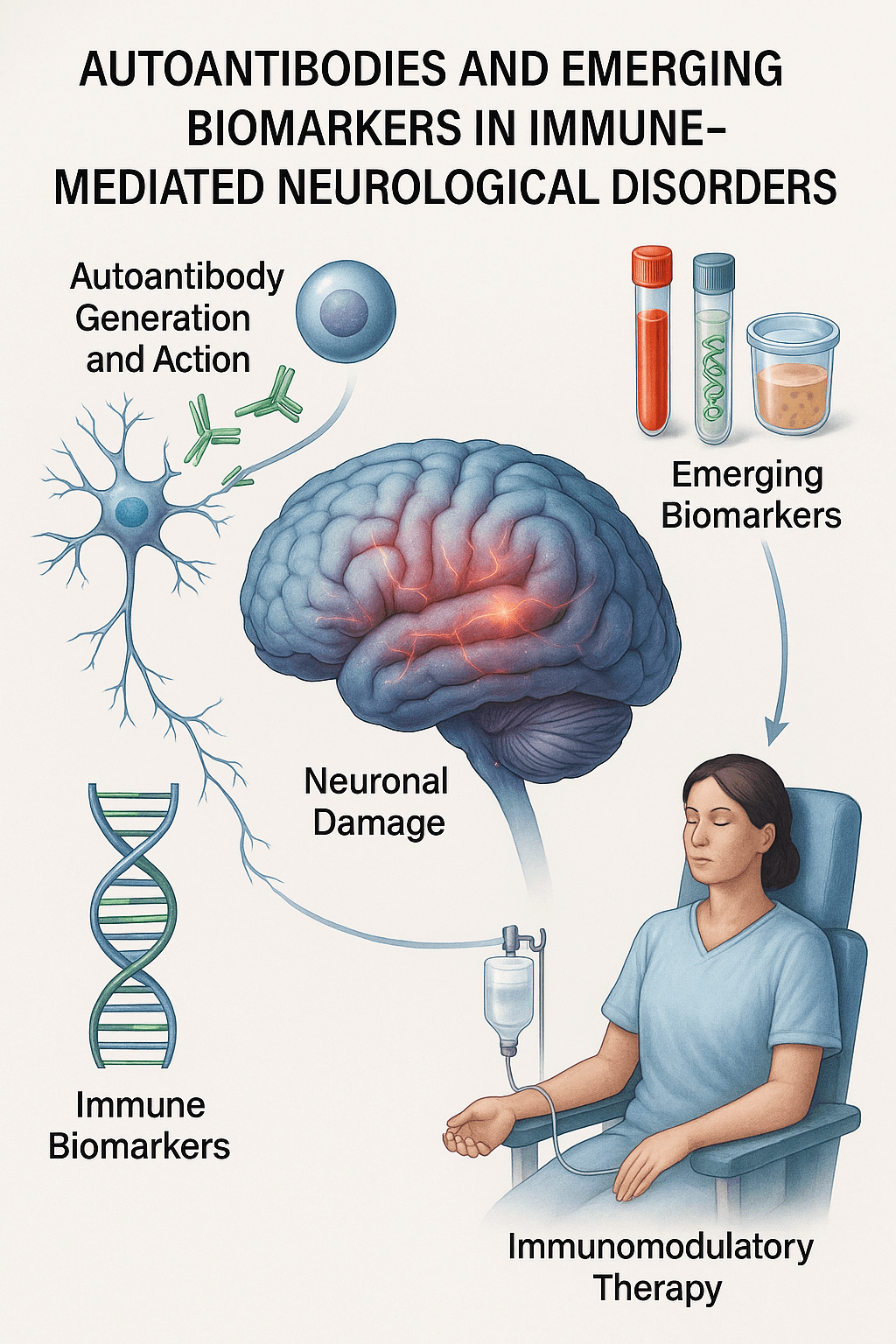
Autoantibodies and emerging biomarkers have become essential focal points in understanding immune-mediated neurological disorders. These complex diseases involve intricate interactions between the immune system and the nervous system, where autoantibodies contribute to neuronal damage and disease progression. Recent studies emphasize the critical role of cellular and molecular mechanisms in the generation of autoantibodies, their pathogenic effects, and the identification of novel biomarkers that aid in diagnosis, prognosis, and therapeutic monitoring.
This Special Issue aims to highlight the latest advances in dissecting the cellular and molecular pathways underlying autoantibody production and function, as well as the discovery and validation of emerging biomarkers in immune-mediated neurological diseases. By focusing on these processes at the cellular level, we seek to deepen mechanistic understanding and promote innovative diagnostic and therapeutic strategies.
Subtopics of interest include, but are not limited to:
1. Cellular mechanisms of autoantibody generation and regulation
Investigations into the immune cell types and signaling pathways responsible for the production and modulation of pathogenic autoantibodies.
2. Pathogenic roles of autoantibodies in neuronal injury and signaling disruption
Studies exploring how autoantibodies affect neuronal cells and synaptic function through molecular and cellular interactions.
3. Emerging biomarkers: discovery, cellular sources, and functional roles
Research focusing on novel biomarkers derived from immune and neural cells that can improve disease diagnosis and monitoring.
4. Neuroimmune communication and microenvironment in disease progression
Insights into how immune cells interact with neural cells and the local environment to influence inflammation and neurodegeneration.
5. Cellular mechanisms underlying immunomodulatory therapies and biomarker-guided treatment
6. Evaluation of how immune-targeted therapies affect cellular processes and biomarker dynamics in patients.
This Special Issue welcomes interdisciplinary contributions integrating immunology, neurobiology, cell biology, and clinical research. We encourage original research articles, comprehensive reviews, and short communications that advance our understanding of autoantibodies and biomarkers in immune-mediated neurological disorders and foster translational applications for improved patient care.
Graphic Abstract
Keywords
autoantibodies, emerging biomarkers, immune-mediated neurological disorders, cellular mechanisms, neuroimmune interactions, neuronal injury, immunomodulatory therapy, biomarker discovery, neuroinflammation.
Published Papers

 Login
Login Register
 Submit a Paper
 Propose a Special lssue