Home / Journals / BIOCELL / Vol.50, No.6, 2026
Special Issues
Table of Content
cover

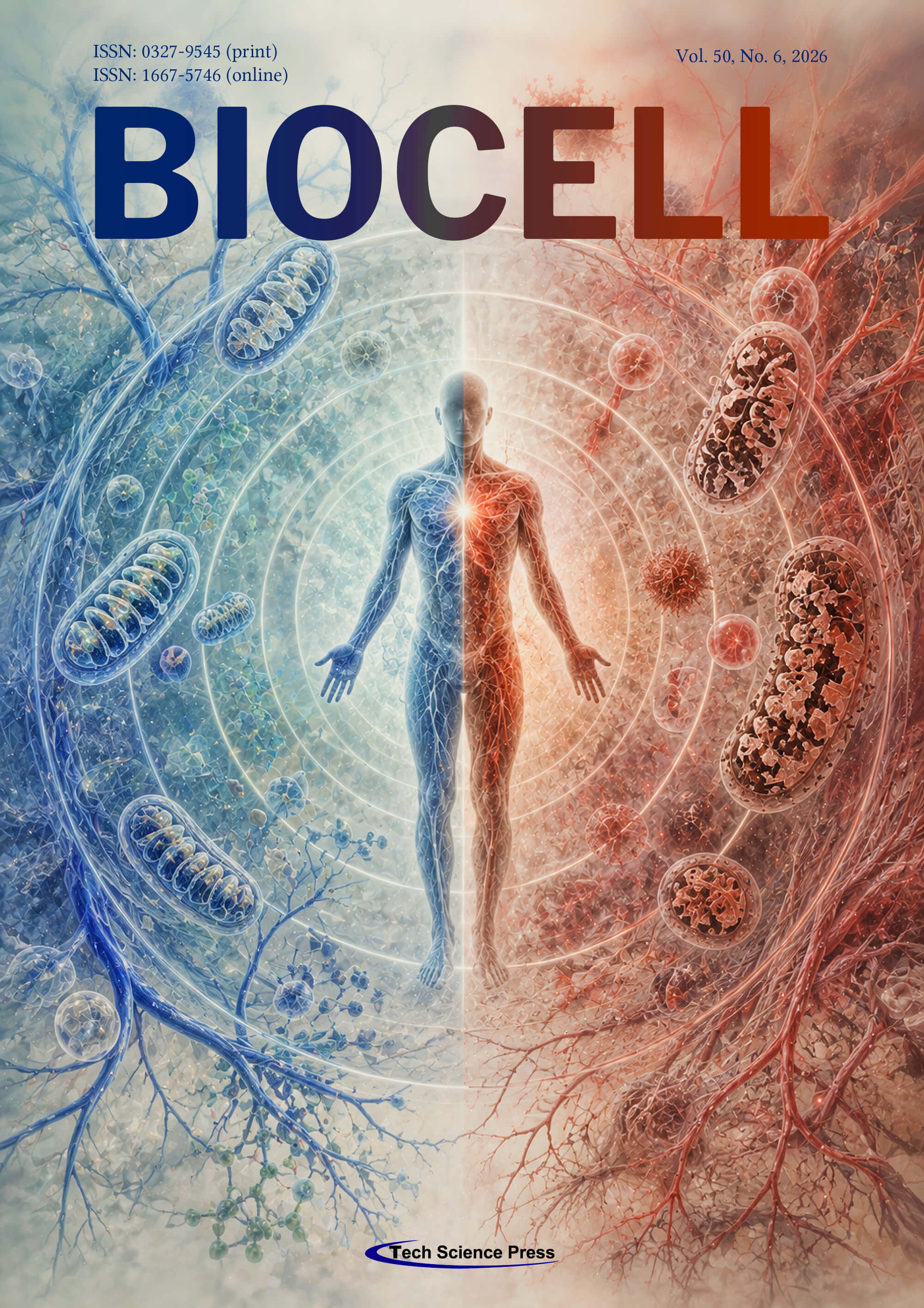
On the Cover

A conceptual model is presented on adaptive balance which defines the transition from fixed homeostasis to flexible homeodynamics, with a consequential progressive contraction of this adaptive capacity associated with the ageing phenotype. From metabolic flexibility to rigidity, this framework links mitochondrial dysfunction, impaired autophagy, NAD⁺ depletion, and oxidative stress to chronic disease. Ketosis, principally defined by the production of β-hydroxybutyrate, represents a targeted strategy to restore homeodynamics and enhance physiological resilience.
This cover image was created with AI-assisted digital illustration tools and refined by the authors. It contains no copyrighted elements or misleading scientific representations.

View this paper

  • Open AccessOpen Access

    REVIEW

    Restoring Homeodynamics: Autophagy, Ageing and the Metabolic Correction of Disease

    Andrew Scarborough1, Yvoni Kyriakidou1, Derek C. Lee2, Tomás Duraj2, Thomas N. Seyfried2, Isabella D. Cooper1,*
    BIOCELL, Vol.50, No.6, 2026, DOI:10.32604/biocell.2026.074152 - 09 June 2026
    (This article belongs to the Special Issue: Homeostasis of Mitochondria: Unraveling its Multifaceted Role in Health and Disease)
    Abstract The global rise in chronic, non-communicable diseases (NCDs) is inextricably linked to metabolic dysfunction, with hyperinsulinaemia acting as a potent upstream driver of ageing and age-related disease. Some of the most burdensome diseases of our time, including type 2 diabetes, cardiovascular disease, cancer, and neurodegenerative conditions, such as Alzheimer’s disease (AD), are largely underpinned by insulin resistance as part of a broader system of metabolic and mitochondrial dysfunction. These pathologies are particularly pronounced in the developed world, where obesity and other lifestyle-related conditions are major contributors to disease burden and premature mortality. As an upstream… More >

  • Open AccessOpen Access

    REVIEW

    Polyphenols in mtDNA Repair, Mitochondrial Biogenesis, and Mitophagy: An Integrative Review

    Desirée Victoria-Montesinos*, Pablo Barcina-Pérez*, Ana María García-Muñoz
    BIOCELL, Vol.50, No.6, 2026, DOI:10.32604/biocell.2026.077286 - 09 June 2026
    (This article belongs to the Special Issue: MitoROS: Exploring Mitochondria and Oxidative Stress)
    Abstract Mitochondrial dysfunction is a central hallmark of metabolic, hepatic, cardiovascular, and neurodegenerative diseases. Dietary polyphenols modulate mitochondrial pathways, but their integrated effects remain poorly appreciated. This narrative review synthesizes preclinical and clinical evidence on four polyphenols (resveratrol, epigallocatechin-3-gallate, quercetin, and oleuropein) and examines their mechanisms in mitochondrial biogenesis, mtDNA protection, and mitophagy. Experimental studies indicate that these compounds activate conserved adaptive pathways, including sirtuin 1 (SIRT1) and peroxisome proliferator-activated receptor gamma coactivator 1 alpha (PGC-1α), AMP-activated protein kinase (AMPK), and PTEN-induced kinase 1 (PINK1) with Parkin, therapy enhancing mitochondrial biogenesis, reducing oxidative stress, and promoting More >

  • Open AccessOpen Access

    REVIEW

    Mitochondria as the Bridge between Injury and Protection: The Role of Melatonin in Non-Steroidal Anti-Inflammatory Drug-Induced Gastric Ulcers

    Debasish Bandyopadhyay1,*, Romit Majumder1,2,#, Madhuri Datta1,2,#, Adrita Banerjee1,2, Aindrila Chattopadhyay2
    BIOCELL, Vol.50, No.6, 2026, DOI:10.32604/biocell.2026.075963 - 09 June 2026
    (This article belongs to the Special Issue: Melatonin and Mitochondria: Exploring New Frontiers)
    Abstract Non-steroidal anti-inflammatory drugs (NSAIDs) are widely prescribed, but their long-term use frequently results in gastric mucosal injury. Emerging evidence indicates that, beyond cyclooxygenase inhibition, mitochondrial dysfunction represents a central mechanism driving NSAID-induced gastric epithelial damage. This review aims to critically synthesize current evidence on mitochondria-centered pathways involved in NSAID-induced gastric ulceration and to evaluate the therapeutic relevance of melatonin in this context. We highlight how NSAIDs impair mitochondrial bioenergetics, promote excessive reactive oxygen species generation, disrupt membrane potential, and activate apoptotic signaling, thereby compromising mucosal integrity. Importantly, melatonin exerts multifaceted gastroprotective actions by preserving mitochondrial More >

  • Open AccessOpen Access

    REVIEW

    Emerging Role of ACOD1/Itaconate in Cancer: Bridging Metabolic Reprogramming and Signaling in the Tumor Microenvironment

    Xing-Guo Li1,2,3,#, Lu-Kai Wang4,#, Fu-Ming Tsai5, Hsueh-Chun Wang1,*
    BIOCELL, Vol.50, No.6, 2026, DOI:10.32604/biocell.2026.075492 - 09 June 2026
    (This article belongs to the Special Issue: Natural and Synthetic Small Molecules in the Regulation of Immune Cell Functions)
    Abstract Itaconate, produced by aconitate decarboxylase 1 (ACOD1, also known as IRG1), acts as a key immunometabolite that inhibits succinate dehydrogenase (SDH) and can engage reduction-oxidation (redox)-sensitive signaling programs. This review summarizes the emerging, context-dependent roles of the ACOD1-itaconate axis in cancer, while critically distinguishing between the effects of endogenous itaconate and its cell-permeable derivatives. In tumor cells, endogenous ACOD1 expression or uptake via solute carrier family 13 member 3 (SLC13A3) alters oxidative phosphorylation and glycolysis. In the tumor microenvironment, myeloid-derived itaconate contributes to immune tolerance by reducing dendritic-cell cross-priming and limiting CD8+ T-cell metabolic activity. Moreover, More >

  • Open AccessOpen Access

    REVIEW

    Revisiting Vesicle Trafficking in Astrocytes

    Jernej Jorgačevski1,2, Maja Potokar1,2,*
    BIOCELL, Vol.50, No.6, 2026, DOI:10.32604/biocell.2026.077871 - 09 June 2026
    (This article belongs to the Special Issue: Transporters and Channels in Brain Physiology: From Molecular Biophysics to Cellular Dynamics)
    Abstract Astrocytes contribute to central nervous system (CNS) homeostasis by taking up and releasing various transmitters, ions, water, and energy molecules, thereby modulating neuronal function and maintaining the blood-brain barrier. The dynamic delivery, retrieval, and recycling of transporters, channels, receptors, and vesicular cargo at the astrocyte plasma membrane are regulated by the cytoskeleton networks composed of microtubules, actin filaments, and intermediate filaments. Increasing evidence indicates that changes in vesicle trafficking disrupt astrocyte–neuron communication and contribute to CNS dysfunction in pathological conditions. This review presents recent findings on vesicle trafficking in astrocytes with emphasis on the cytoskeletal More >

  • Open AccessOpen Access

    ARTICLE

    Lycium Barbarum Polysaccharides Upregulate Trx2 in Schwann Cells through ESR1 to Repair Sciatic Nerve Injury in Rats

    Guoxu Ma, Yonglu Huang, Fan Gong, Jianke Wu, Yi Ding, Ziyang Zhang, Xiaoliang Li, Jian Gao, Tingting Dang, Bowen Zhang*
    BIOCELL, Vol.50, No.6, 2026, DOI:10.32604/biocell.2026.078402 - 09 June 2026
    (This article belongs to the Special Issue: Bioactive Natural Components as Regulators of Cellular Pathways and Disease Progression)
    Abstract Objectives: Sciatic nerve injury (SNI) impairs quality of life, and Lycium barbarum polysaccharides (LBP) may exert therapeutic effects via regulating Schwann cell (SC) mitochondrial stability, though the mechanism remains unclear. The study aimed to elucidate the therapeutic mechanisms of LBP in mitigating sciatic nerve injury by protecting Schwann cells via the estrogen receptor 1 (ESR1)/thioredoxin 2 (Trx2) pathway. Methods: An in vitro SNI model was established by inducing RSC96 cells with H2O2. Cell counting kit-8 (CCK8) assay, enzyme-linked immunosorbent assay (ELISA), Western blot, reactive oxygen species (ROS) and adenosine triphosphate (ATP) quantification, and mitochondrial membrane potential (MMP) detection were… More >

  • Open AccessOpen Access

    ARTICLE

    Knockdown of PKM2 Promotes Proliferation and Neuronal Differentiation of Neural Stem Cells by Inhibiting PINK1/Parkin-Mediated Excessive Mitophagy

    Junming Yan, Boran Xiong, Yingjie Zhu*
    BIOCELL, Vol.50, No.6, 2026, DOI:10.32604/biocell.2026.075319 - 09 June 2026
    (This article belongs to the Special Issue: Homeostasis of Mitochondria: Unraveling its Multifaceted Role in Health and Disease)
    Abstract Objective: Neural stem cells (NSCs) are essential for replenishing nerve cells, providing neuroprotection, and repairing damaged brain function, while mitophagy is critical for maintaining NSCs’ homeostasis. The study investigated whether pyruvate kinase M2 (PKM2) regulates NSCs’ proliferation and differentiation by modulating mitophagy. Method: This study established a model of excessive autophagy in neural stem cell mitochondria induced by cobalt chloride (CoCl2) and used plasmid transfection technology to knock down PKM2 expression, examining its effects on NSCs proliferation and differentiation. Additionally, potential mechanisms were explored by overexpressing phosphatase and tensin homolog-induced putative kinase 1 (PINK1) and adding the… More >

    Graphic Abstract

    Knockdown of PKM2 Promotes Proliferation and Neuronal Differentiation of Neural Stem Cells by Inhibiting PINK1/Parkin-Mediated Excessive Mitophagy

  • Open AccessOpen Access

    ARTICLE

    Overexpression of GluN2B Regulates Neuroinflammation through the BDNF/TrkB Signaling Pathway to Improve Postoperative Cognitive Dysfunction

    Bohan Lin#, Wei Liu#, Xiu Ni, Fuyi Shen*
    BIOCELL, Vol.50, No.6, 2026, DOI:10.32604/biocell.2026.077413 - 09 June 2026
    Abstract Background: Postoperative cognitive dysfunction (POCD) is a common neurological complication in elderly patients. However, the mechanism by which glutamate ionotropic receptor NMDA type subunit 2B (GluN2B) contributes to POCD development remains incompletely understood. This study aimed to investigate the effects of GluN2B overexpression on POCD improvement and elucidate its underlying molecular mechanisms. Methods: In vitro, lipopolysaccharide (LPS) was used to induce inflammation in mouse primary microglia, and a microglia-HT22 neuron co-culture system was established to simulate the neurotoxic environment. Overexpression and knockdown constructs for GluN2B and brain-derived neurotrophic factor (BDNF) were generated. Western blot, ELISA, immunofluorescence, and… More >

  • Open AccessOpen Access

    ARTICLE

    miR-216a-5p Improves Macrophage M1 Polarization and Pyroptosis in URSA via Modulating HMGB1 to Regulate TLR4/NF-κB/NLRP3 Axis

    Weina Xu1, Yi Xia1, Qing Shen1, Ling Ai1, Yingye Lu2,*
    BIOCELL, Vol.50, No.6, 2026, DOI:10.32604/biocell.2026.076001 - 09 June 2026
    Abstract Background: Dysfunction of decidual macrophages (dMφ) mediated by high mobility group box 1 (HMGB1) is related to unexplained recurrent spontaneous abortion (URSA), but its upstream regulatory mechanism remains unclear. The research explores whether miR-216a-5p regulates the toll-like receptor 4/nuclear factor-κB/nucleotide-binding oligomerization domain-like receptor protein 3 (TLR4/NF-κB/NLRP3) signaling axis by targeting HMGB1, thereby affecting the M1 polarization and pyroptosis of dMφ in URSA. Methods: The URSA mouse model was established, and primary dMφ was isolated and cultured. HMGB1 and miR-216a-5p were overexpressed or knocked down. Their expressions were examined. Their targeting relationship was verified through a bioinformatics… More >

    Graphic Abstract

    miR-216a-5p Improves Macrophage M1 Polarization and Pyroptosis in URSA via Modulating HMGB1 to Regulate TLR4/NF-κB/NLRP3 Axis

  • Open AccessOpen Access

    ARTICLE

    12-O-Tetradecanoylphorbol-13-Acetate Inhibits TGF-β1-Induced Proliferation and Fibrosis in LX-2 Hepatic Stellate Cells by Regulating both YAP and AKT Activities

    Moo Hyun Kim1, Yongdae Yoon2, Chang Wan Kim1, Jun-Won Lee3, Bhupendra Regmi2, Saher Fatima2, Moon Young Kim2,3, Soon Koo Baik2,3, Pil Young Jung1,*, Young Woo Eom2,*
    BIOCELL, Vol.50, No.6, 2026, DOI:10.32604/biocell.2026.076364 - 09 June 2026
    Abstract Background: Although transforming growth factor-β (TGF-β) drives hepatic stellate cell activation and fibrogenesis, the mechanisms by which 12-O-tetradecanoylphorbol-13-acetate (TPA) modulates these processes in TGF-β1-activated hepatic stellate cells remain to be determined. Therefore, we investigated whether TPA alleviates fibrosis in TGF-β1-treated hepatic stellate cells and regulates both canonical and non-canonical pathways. Further, we assessed whether inhibitors of these pathways similarly affect proliferation and fibrosis in LX-2 cells. Methods: LX-2 hepatic stellate cells were used as the experimental model. Cells were treated with TPA, TGF-β, or TGF-β plus TPA, and Yes-associated protein (YAP) and protein kinase B (PKB;… More >

Per Page:

Share Link