
 Login
Login Register
 Submit a Paper
 Propose a Special lssue
 Open Access
REVIEW

Arrowroot Based Nanocomposite Films: Properties, Applications, and Sustainability Prospects: A Review
1 Institute of Tropical Forestry and Forest Products (INTROP), Universiti Putra Malaysia, Serdang, 43400, Selangor, Malaysia
2 Advanced Engineering Materials and Composites Research Center (AEMC), Department of Mechanical and Manufacturing Engineering, Faculty of Engineering, Universiti Putra Malaysia, Serdang, 43400, Selangor, Malaysia
3 Interdisciplinary Research Center for Advanced Materials, King Fahd University of Petroleum and Minerals, Dhahran, 31261, Saudi Arabia
* Corresponding Author: Edi Syams Zainudin. Email:
(This article belongs to the Special Issue: Biomass-based Thermoset and Thermoplastic Polymers for Biomass-based Composites)
Journal of Renewable Materials 2026, 14(2), 1 https://doi.org/10.32604/jrm.2025.02025-0139
Received 07 July 2025; Accepted 11 November 2025; Issue published 25 February 2026
 View Full Text
 Download PDF
Abstract
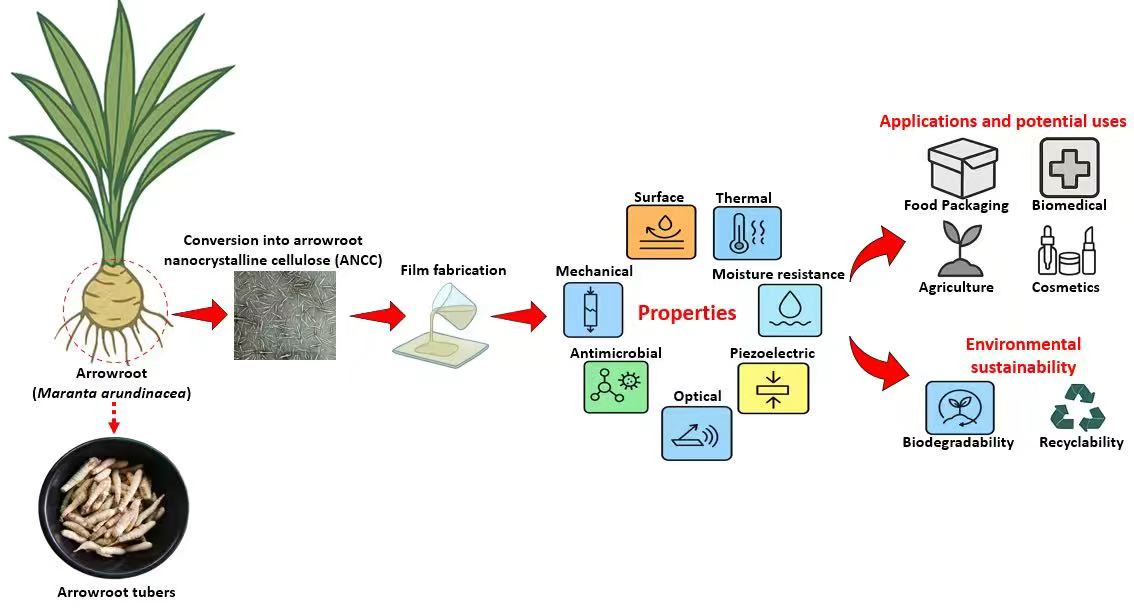
This review draws attention to the innovative use of arrowroot (Maranta arundinacea) fiber as a unique and underutilized biomass source for nanocrystalline cellulose (NCC)-based nanocomposites, presenting a noteworthy alternative to extensively researched materials like wood pulp, bacterial cellulose, and chemically modified NCCs. In contrast to traditional sources, arrowroot possesses a naturally elevated cellulose and diminished lignin content, facilitating more effective NCC extraction requiring reduced chemical input and enabling environmentally friendly processing techniques. The review evaluates the performance of arrowroot-derived nanocomposites against systems documented in the literature, including NCC-based shape memory composites and nanoparticle-reinforced films, demonstrating enhanced tensile strength, improved moisture barrier properties, and thermal stability, as well as potential piezoelectric response. This study recognizes arrowroot as a viable option in the biomass-based nanocellulose sector, providing ecological and functional benefits while tackling significant issues such as process scalability and feedstock variability, thereby offering important insights for the advancement of sustainable materials.Graphic Abstract
Keywords
Natural fiber-based composite films have emerged as promising alternatives to traditional petroleum-based plastics due to their biodegradability, renewable nature, and minimal environmental impact. These composites are typically fabricated by integrating natural fibers, such as cellulose, hemp, jute, or flax, with biodegradable polymers to produce materials with enhanced mechanical and functional properties. Their use spans a wide range of applications, including packaging, automotive components, and construction materials, driven by global efforts to reduce carbon footprints and combat plastic pollution [1,2]. A key advantage of natural fiber composites is their inherent ability to improve the mechanical strength and thermal stability of biopolymer matrices without compromising their biodegradability. These materials also exhibit excellent barrier properties against gases and moisture, making them particularly attractive for food packaging applications [3]. Furthermore, advancements in nanotechnology have enabled the extraction of nanocellulose from these fibers, offering superior reinforcement capabilities in nanocomposite films [4]. Arrowroot fibers, extracted from the rhizomes of Maranta arundinacea as shown in Fig. 1, present considerable promise as a sustainable material due to their distinctive properties. Rich in cellulose, with lower lignin content, these fibers are lightweight, renewable, and have a favorable stiffness-to-weight ratio and adequate tensile strength (280–320 MPa) compared to high performance natural fibers such as jute (400–800 MPa) and flax (500–1500 MPa), making them suitable for composite reinforcement applications [5]. Their fine microstructure facilitates efficient processing and uniform dispersion within polymer matrices, enhancing film homogeneity and performance [5].
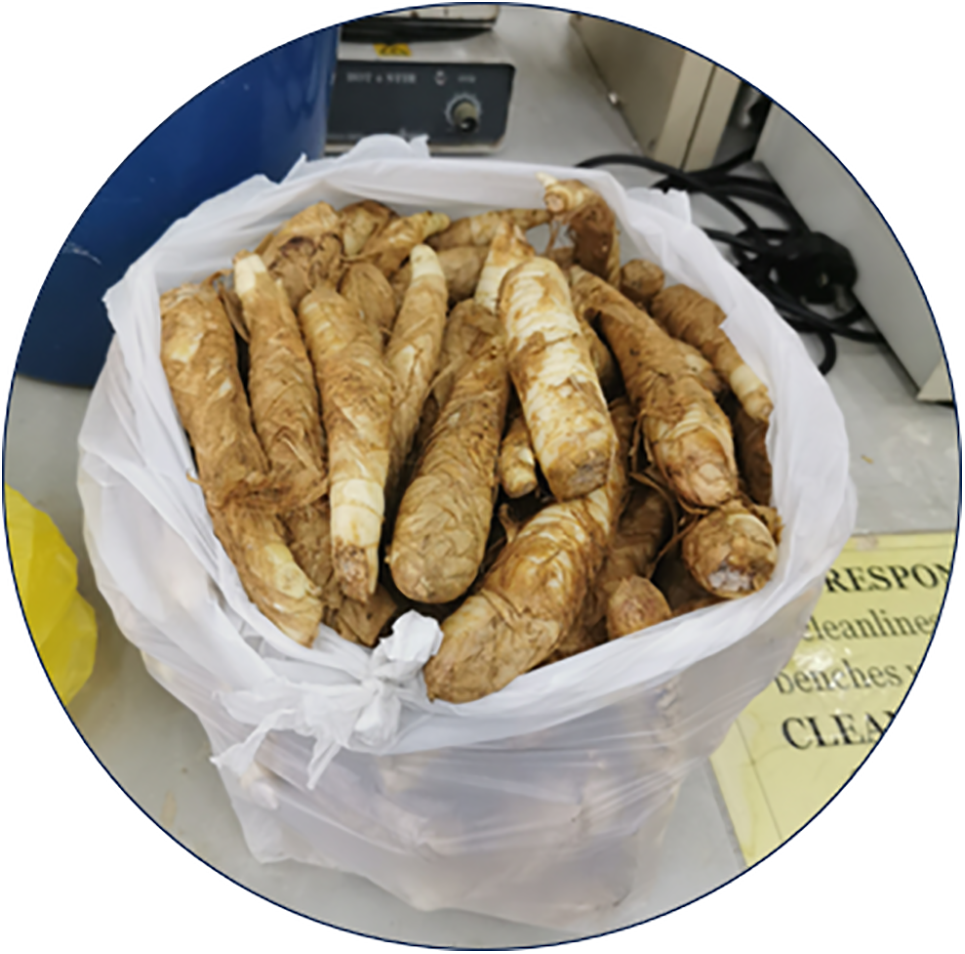
Figure 1: Arrowroot (Maranta arundinacea) rhizomes used as raw material for nanocellulose extraction
The availability of arrowroot in tropical and subtropical regions, where it is cultivated as a food crop, makes these fibers both cost-effective and readily accessible [6]. Furthermore, they can be processed using sustainable extraction techniques [7], reducing chemical consumption and waste generation aligning with broader sustainability goals [8]. As a result, arrowroot fibers are increasingly explored for applications such as biodegradable packaging, agricultural films, and other environmentally friendly products [1,5]. Despite their potential, the application of arrowroot fibers in nanocomposite film production remains underexplored. This is not merely due to their early-stage investigation, but rather reflects a significant opportunity to valorize an abundant, underutilized biowaste stream with promising cellulose content, excellent biodegradability, and regional availability in tropical and subtropical areas. Further exploration is critical to unlock their full potential for scalable, low impact bio-based materials in packaging, electronics, and biomedical fields. This review provides a comprehensive overview of arrowroot fiber-based nanocomposite films, examining their properties, processing methods, challenges, and future opportunities in the realm of sustainable materials.
2 Properties and Characteristics of Arrowroot Fibers
2.1 Chemical Composition and Structural Advantages
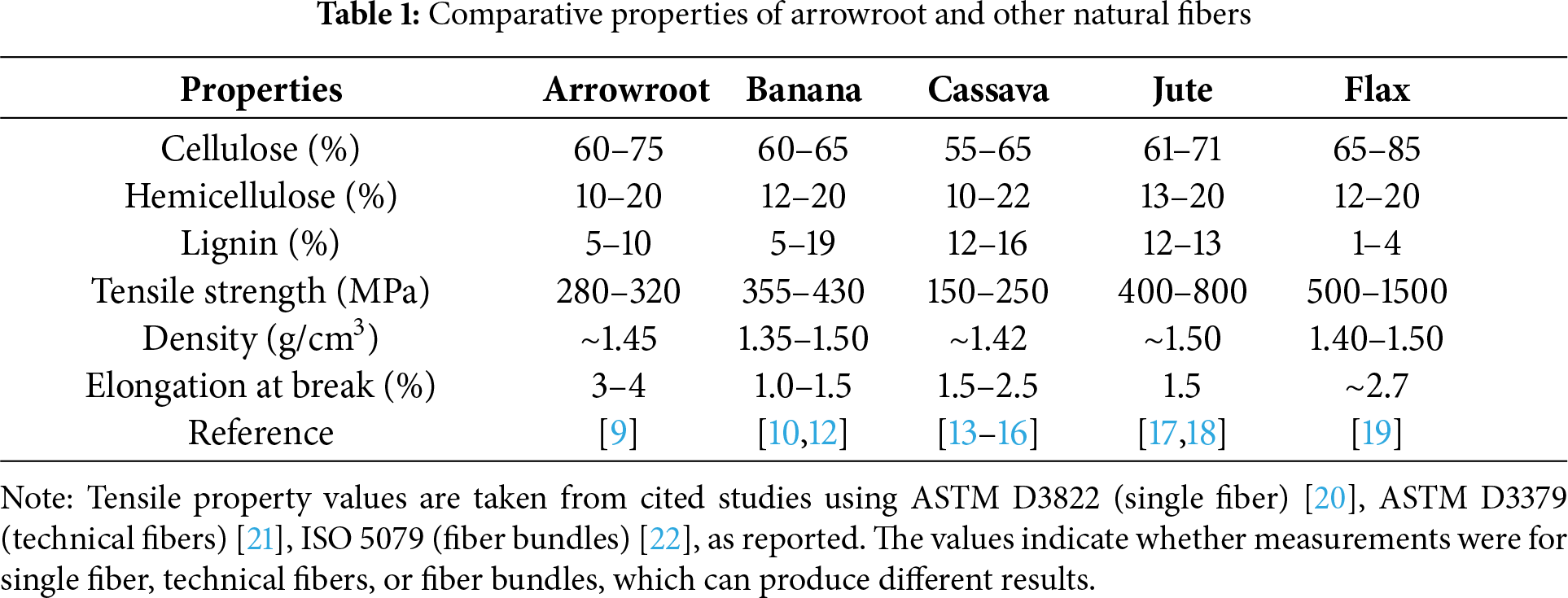
Arrowroot fibers are gaining attention as a renewable material source due to their high cellulose content and favorable structural properties. The fibers consist mainly of cellulose (approximately 60%–75%), hemicellulose (10%–20%), lignin (5%–10%), and minor constituents such as ash, pectin, and waxes [9]. The high cellulose content is beneficial for reinforcement purposes, particularly in starch-based biopolymer matrices, as it contributes significantly to mechanical strength, stiffness, and film-forming ability [10]. Structurally, arrowroot fibers have a fine and smooth surface morphology, which promotes good dispersion and distribution within composite matrices during film fabrication. Their relatively low lignin content, compared to fibers like jute or hemp, also allows for easier chemical and mechanical processing, including nanocellulose extraction [5].
Arrowroot-derived nanowhiskers exhibit a high aspect ratio (length-to-diameter), a key factor in enhancing reinforcement efficiency in nanocomposites. Reported dimensions range from 120–160 nm in length and 3–4 nm in diameter with aspect ratios reaching up to 46 [11]. This high aspect ratio makes them particularly effective as a nanoscale reinforcing phase. Arrowroot nanocrystalline cellulose (ANCC) retains the native cellulose I crystalline structure post-processing and demonstrates notable thermal stability, both critical for applications requiring durability and heat resistance. Moreover, ANCC has been shown to significantly enhance the mechanical performance of biopolymer films, improving tensile strength, elongation at break, and stress distribution [9]. In starch or biodegradable polymer matrices, the addition of ANCC increases notably a 72% increase in tensile strength [6].
Thermally, arrowroot fibers begin to degrade at approximately 200°C–220°C, making them well-suited for low temperature film processing methods such as solution casting and melt blending. Their hydrophilic nature attributed to the abundance of hydroxyl groups in cellulose and hemicellulose enables strong hydrogen bonding with hydrophilic biopolymers like starch, thereby enhancing interfacial adhesion in composite systems [3]. These structural and chemical characteristics support the development of fully biodegradable and functional films for packaging and other sustainable applications.
2.2 Comparative Analysis with Other Natural Fibers
Compared to widely studied natural fibers such as jute, flax, banana, and hemp, arrowroot fibers offer a balanced combination of mechanical performance, processing simplicity, and environmental sustainability, as summarized in Table 1. While fibers like flax and hemp are typically favored for their superior tensile strength and stiffness making them suitable for load-bearing or structural applications arrowroot fibers are better suited for applications where biodegradability, flexibility, and simple processing are essential. These characteristics make arrowroot particularly promising for non-structural uses such as biodegradable films, packaging, and disposable products, where environmental compatibility is a priority over mechanical strength [5]. A distinguishing advantage of arrowroot is its lower lignin content and fine fiber size, which enable more efficient extraction of nanocellulose. In contrast, fibers like jute or coir require more aggressive chemical treatments to achieve similar levels of refinement, leading to higher energy consumption and chemical waste [2].
Moreover, the thermal stability of arrowroot fiber composites is comparable to that of other starch-based systems, but with enhanced barrier and mechanical properties when nanocellulose is incorporated [1]. Additionally, the cultivation and harvesting of arrowroot plants demand fewer chemical inputs, and the crop can be grown on marginal lands, making it a more sustainable and accessible resource in tropical and subtropical regions [6]. This local availability supports rural economies and reduces dependence on imported fibers, which often involve higher production costs and carbon footprints. In summary, while arrowroot fibers may not replace high strength fibers in advanced engineering applications, they represent a promising alternative for the production of bio-based films, especially when processed into nanocellulose. Their compositional and structural benefits make them suitable for packaging, agriculture, and biodegradable consumer products.
3 Isolation and Processing Techniques for Nanocrystalline Cellulose (NCC)
3.1 Conventional Acid Hydrolysis Techniques
Nanocrystalline cellulose (NCC), also referred to as cellulose nanocrystals (CNC), can be extracted from various lignocellulosic feedstocks, including wood pulp, agricultural residues, and natural fibers such as sisal, jute, root and tubers [23–26]. The conventional extraction of nanocellulose commonly uses strong acid hydrolysis to decompose the amorphous regions of cellulose, resulting in rod-like crystalline nanocellulose [27]. Sulfuric acid hydrolysis has been utilized on arrowroot fiber waste to produce cellulose nanowhiskers, resulting in crystals exhibiting high thermal stability, crystallinity, and an aspect ratio similar to those derived from wood or cotton [11,28]. Conventional methods typically necessitate the use of highly concentrated acids (60%–65% H2SO4) and involve prolonged processing, which is subsequently accompanied by extensive washing and the process of neutralization as shown in Fig. 2. This process is time-consuming and environmentally burdensome due to the significant volumes of acid, chemical handling safety, and water required [29–31].
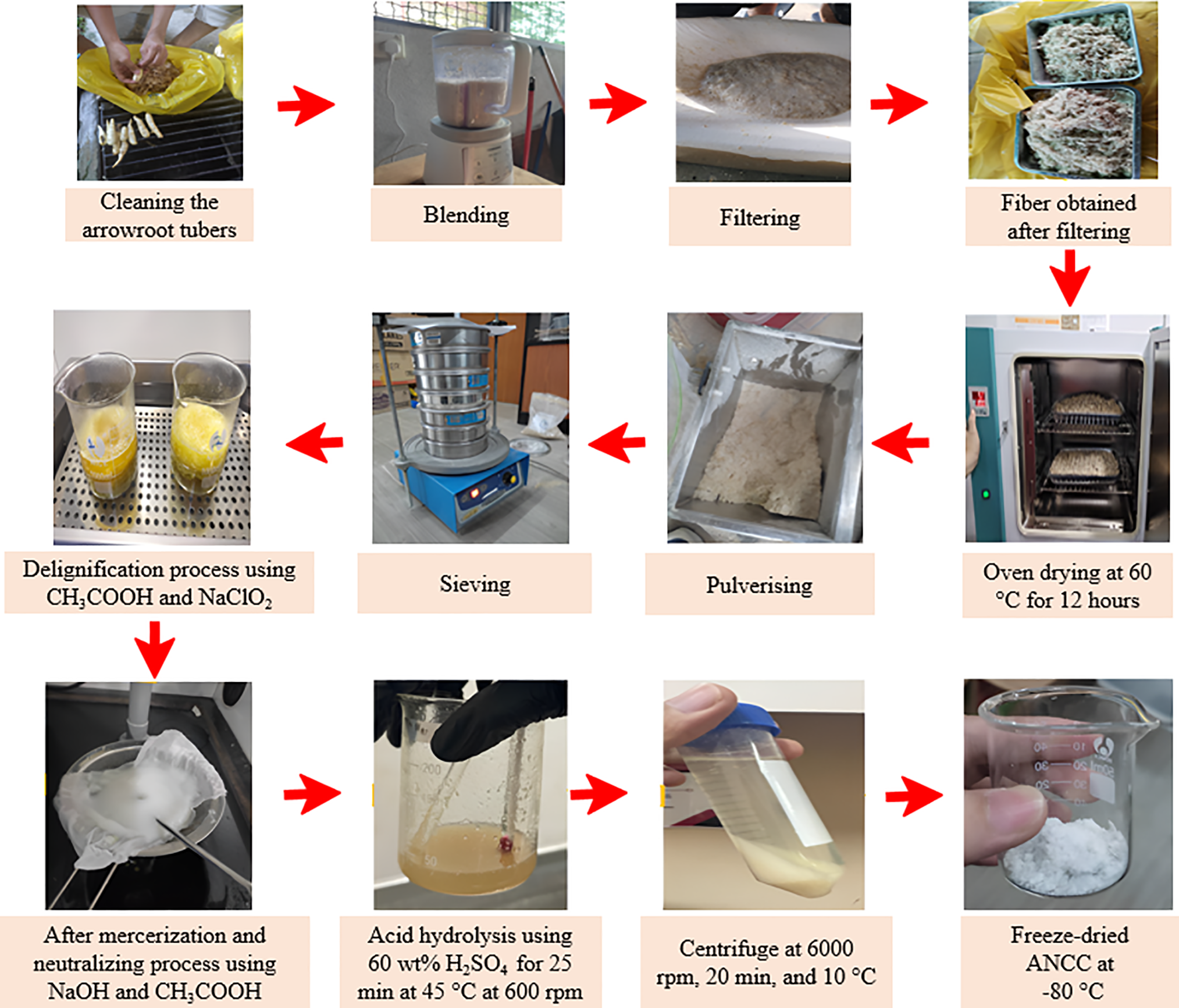
Figure 2: Conventional acid hydrolysis techniques for arrowroot nanocrystalline cellulose (ANCC) process
Despite these limitations, sulfuric acid hydrolysis remains widely adopted due to its efficiency and reproducibility [23,28,31]. Recent advancements in process optimization have concentrated on adjusting acid concentration, temperature, and duration to enhance yield while reducing cellulose degradation. Through precise control of these parameters and the application of pretreatments, such as alkali and bleaching to eliminate lignin and hemicellulose, researchers can achieve NCC with elevated crystallinity and yield [25–27]. One study on arrowroot fibers examined different hydrolysis conditions and demonstrated that the resulting NCC exhibited aspect ratios along with thermal behavior comparable to NCC derived from conventional sources [11]. Aigaje et al. [32] highlight the feasibility of utilizing natural fiber feedstocks to produce NCC.
3.2 Green and Emerging Extraction Methods
Conventional acid hydrolysis, while widely used for the isolation of NCC, is often constrained by environmental and scalability challenges, including high chemical consumption, long processing times, and low yields. In response, sustainable extraction techniques have been developed to enhance efficiency while reducing ecological impact. These approaches aim to preserve or improve NCC yield and quality, minimize the use of hazardous chemicals, lower energy demands, and limit waste generation. Among these methods, steam explosion-assisted hydrolysis has shown particular promise. This process integrates thermomechanical pretreatment using pressurized steam with subsequent mild chemical treatment. Vishnoi et al. [29] demonstrated that NCC could be successfully extracted from sisal fibers using this technique in combination with moderate acid/base treatment and mechanical grinding. The method not only reduced chemical consumption and processing duration but also yielded NCC with high crystallinity and an average aspect ratio of approximately 12. Importantly, yields exceeded 50%, representing a substantial improvement compared to the <30% typically achieved with sulfuric acid hydrolysis. Such advancements highlight the potential of steam explosion-assisted hydrolysis for industrial-scale NCC production.
Another promising strategy involves the use of ionic liquids (ILs) and deep eutectic solvents (DES) as eco-friendly hydrolysis media. For example, Raza et al. [33] demonstrated an IL-based hydrolysis of date palm biomass using 1-butyl-3-methylimidazolium chloride ([Bmim]Cl) coupled with a catalytic transition metal complex and hydrogen peroxide. This green solvent system facilitated more effective cellulose breakdown, increasing nanocellulose yield by 25% and producing smaller particle sizes compared to ILs used without catalysts. The recyclability of ILs and their operation under mild conditions offer significant advantages for minimizing environmental impact and energy input.
Recent advances in enzymatic and mechanochemical techniques also highlight sustainable alternatives. Cellulase enzymes, when used to selectively degrade amorphous cellulose, can yield NCC with relatively controlled morphology. However, enzymatic methods alone typically produce NCC with lower aspect ratios and broader size distributions due to their milder action [32]. Nonetheless, these processes are non-toxic and well-suited for integration into biorefinery systems [34]. Improvements in yield and quality have been achieved through hybrid strategies, such as mild microwave-assisted acid hydrolysis followed by enzymatic saccharification. This method has proven effective in enhancing enzyme accessibility to biomass such as corn stover and teff straw, leading to increased NCC recovery [35].
Ultrasonication following acid hydrolysis has also been used to improve dispersion and reduce agglomeration, as shown in recent studies on ANCC [9]. Meanwhile, organic acids such as citric and oxalic acid, and DES formulations, are being explored as viable, low-toxicity alternatives to mineral acids. While these greener solvents are more sustainable and recyclable, they often result in lower NCC yields or require intensified mechanical input to achieve comparable outcomes [17]. The choice of extraction method plays a pivotal role in determining the environmental footprint of NCC production. For instance, life cycle assessments have shown that enzymatic approaches, when optimized, possess a lower global warming potential than conventional acid hydrolysis [32]. Agricultural residues such as banana peels and sugarcane bagasse are also being tapped as renewable feedstocks, further reducing biomass waste and enhancing economic value [11,29].
Despite the progress, several challenges remain for the industrial implementation of green solvents like ILs and DES. These include high material costs, limited commercial availability, solvent regeneration complexity, high viscosity, and potential cytotoxic effects. Additionally, their scalability is limited by the requirement for specialized recovery systems and energy-intensive processes. Therefore, while these green methods offer reduced environmental impact at the laboratory scale, their transition to industrial settings will require further techno-economic evaluation, process optimization, and integration with circular manufacturing strategies. While conventional acid hydrolysis remains widely used due to its ability to produce high-quality NCC, emerging green technologies are gaining traction for their potential to reduce chemical waste and support cost-effective, large-scale production. The ongoing development of sustainable, high-yield NCC isolation methods, combined with renewable feedstocks and reagent recycling, brings the goal of environmentally responsible nanocellulose manufacturing within reach.
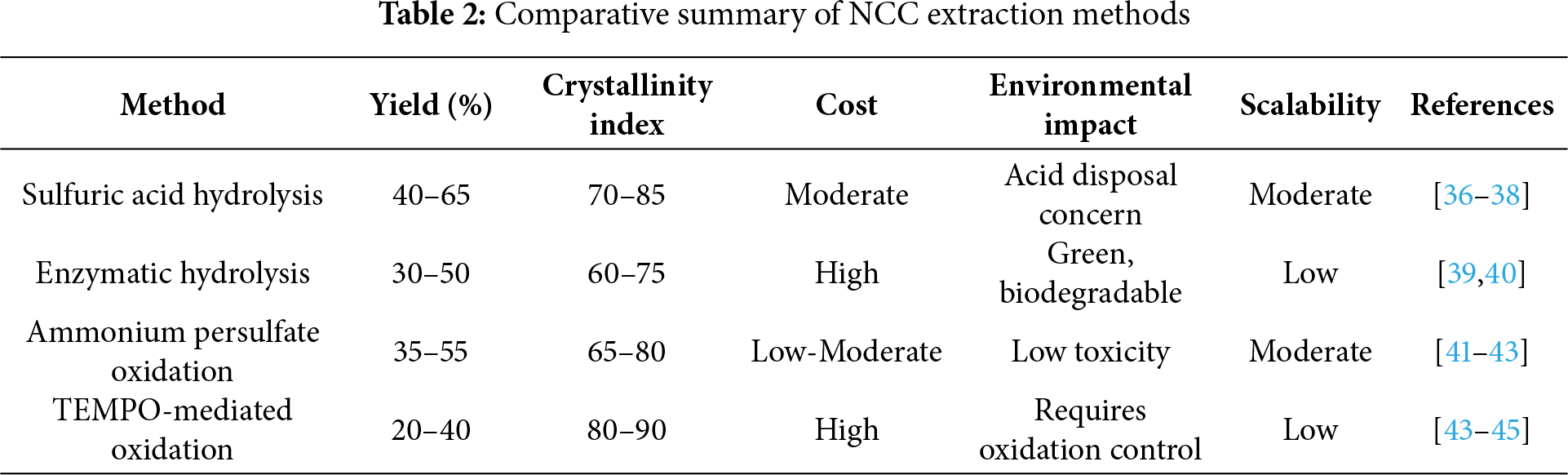
As shown in Table 2, the choice of method for NCC extraction has significant implications for yield, crystallinity, cost, environmental impact, and scalability. Sulfuric acid hydrolysis remains widely used due to its relatively high yield (40%–65%) and crystallinity index (70%–85%), although concerns over acid disposal and corrosivity pose environmental and operational challenges. Enzymatic hydrolysis offers a greener alternative, with biodegradable byproducts and low toxicity, but its high cost and limited scalability, due to slower reaction times and enzyme sensitivity, restrict its broader industrial use. Ammonium persulfate emerges as a more balanced option, with moderate yield and crystallinity, lower toxicity, and better environmental performance. Meanwhile, TEMPO-mediated oxidation delivers the highest crystallinity (up to 90%) but suffers from low yields, high cost, and scalability limitations due to the need for strict oxidation control.
4 Development of Nanocomposite Films
The fabrication of nanocomposite films incorporating NCC generally involves two principal techniques: solution casting and melt processing, each with distinct advantages and limitations depending on scale, polymer compatibility, and processing constraints.
Solution casting is the most widely adopted approach for biopolymer films, including those based on starch, chitosan, alginate, and polyvinyl alcohol. In this method, the polymer is dissolved in a solvent, typically water or ethanol, and a stable aqueous suspension of NCC is introduced under mechanical stirring or ultrasonication to achieve homogeneous dispersion [32]. This prevents agglomeration of nanocrystals, which commonly occurs due to hydrogen bonding. The resulting mixture is then cast into molds and dried under ambient or controlled conditions to form a uniform film (Fig. 3). This low-temperature method avoids degradation of heat-sensitive components and is compatible with bioactive additives. However, its scalability is constrained by batch processing, solvent recovery needs, and extended drying durations [32].
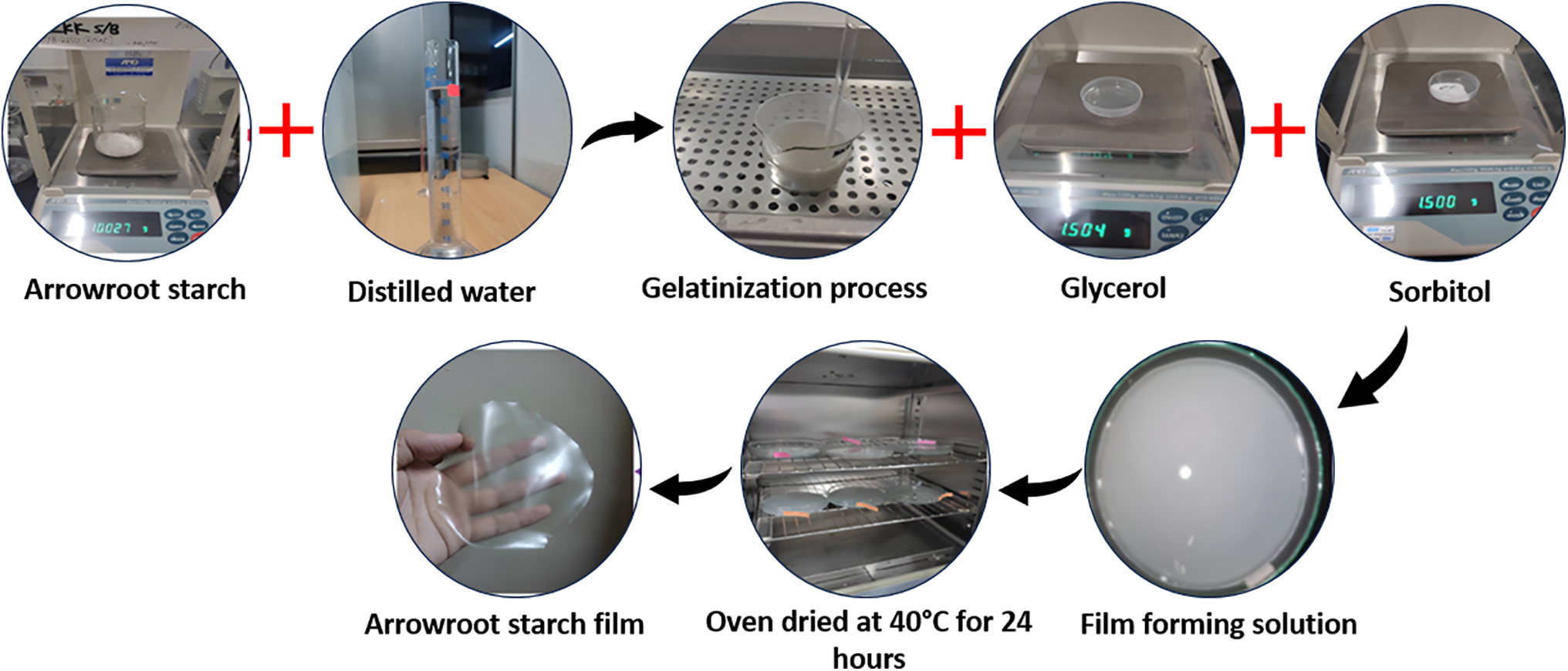
Figure 3: Schematic of ANCC nanocomposite film fabrication via solution casting
Melt processing offers greater industrial scalability. In this approach, thoroughly dried NCC is incorporated into molten thermoplastics such as polylactic acid (PLA) or polycaprolactone (PCL) via extrusion or injection molding [37]. Despite its compatibility with conventional plastic manufacturing equipment, melt processing introduces several challenges. NCC must be thoroughly dehydrated to avoid steam generation and structural degradation, high shear during extrusion can disrupt nanocrystal morphology, and poor compatibility between hydrophilic NCC and hydrophobic matrices may lead to aggregation or phase separation [29]. Surface modifications, such as acetylation or grafting of hydrophobic groups onto NCC, have been shown to improve dispersion and interfacial bonding in hydrophobic polymer matrices like PLA and polybutylene succinate (PBS) [32]. This promotes better matrix-filler interaction and reduces mechanical defects associated with agglomerates.
4.3 Nanofiller Loading and Processing Considerations
Achieving optimal NCC loading and uniform dispersion is critical. In arrowroot starch-based matrices, reinforcement occurs via extensive hydrogen bonding at the biopolymer NCC interface; however, the mechanism is strongly influenced by arrowroot’s comparatively high amylose content (20%–25%), which is greater than in many common starches such as corn or cassava [7]. Amylose is a largely linear α-(1→4)-linked D-glucose polymer that exposes a higher density of accessible hydroxyl groups along its unbranched chains compared to the branched architecture of amylopectin [46]. This linearity facilitates closer chain-to-chain alignment and more ordered molecular packing, enabling stronger and more numerous hydrogen bonds with the hydroxyl rich NCC surface. The resulting dense interfacial hydrogen-bond network improves adhesion between NCC and the starch matrix, enhancing load transfer efficiency under tensile stress [46]. Moreover, the higher crystallinity associated with amylose-rich matrices can anchor NCC more effectively, providing a rigid framework for stress propagation. In contrast, amylopectin-rich starches may limit hydroxyl accessibility for bonding, resulting in weaker interfacial interactions and less efficient reinforcement [47].
Studies suggest ideal NCC concentrations range between 2–5 wt.%, where significant property enhancements occur without excessive agglomeration [32]. Above this range, aggregation is frequently observed, which can diminish composite performance. This clustering is often linked to exceeding the percolation threshold, where van der Waals attractions and hydrogen-bond-driven hydrophilic interactions in aqueous media outweigh dispersion forces, leading to nanocrystal agglomeration [48]. For example, Pires et al. [49] observed maximum tensile performance in chitosan/NCC films at 2 wt.%, with property deterioration at 2.5% due to aggregation. To mitigate these effects, several advanced dispersion strategies have been reported. Chemical surface modifications such as acetylation and sialylation can reduce NCC hydrophilicity and improve compatibility with hydrophobic matrices [47]. Surfactants and compatibilizers, including polyethylene glycol (PEG) and maleic anhydride-grafted polymers, can enhance interfacial adhesion and prevent re-agglomeration [50]. Processing innovations such as prolonged ultrasonication, high-shear mixing, in-situ polymerization, and hybrid casting methods have also been shown to improve nanocrystal distribution and delay aggregation [47,48]. These approaches can extend the effective NCC loading range beyond 5 wt.% while maintaining homogeneity, thereby maximizing the reinforcing potential of NCC in arrowroot-based nanocomposites. Solution casting remains ideal for laboratory scale, functional film development due to its simplicity and low-temperature compatibility, while melt processing is more viable for commercial production, albeit with greater technical complexity. Continued optimization of NCC surface chemistry and process control is essential to scale high-performance arrowroot nanocomposites.
5 Properties of Arrowroot-Based Nanocomposite Films
Arrowroot-based nanocomposite films reinforced with NCC exhibit significant improvements in mechanical, thermal, barrier, surface, and functional properties. These enhancements are attributable to the high stiffness, aspect ratio, and interfacial compatibility of the nanocrystals, particularly at optimized loadings.
Arrowroot-based films possess moderate yet highly customizable mechanical properties, making them suitable for a wide range of applications. The naturally high amylose content of arrowroot starch enhances intrinsic cohesion and flexibility, providing a baseline mechanical strength sufficient for basic packaging needs [51]. For more demanding applications, these films can be significantly strengthened through the incorporation of chemical modifiers, plasticizers, and nanomaterial reinforcements. Plasticizers such as glycerol reduce intermolecular forces within the starch matrix, allowing polymer chains to move more freely and improving both tensile strength and elongation at break [51–53]. This adaptability is particularly advantageous for food packaging, where durability and flexibility are required across diverse product types [54]. Incorporating nanomaterials such as NCC, zinc oxide (ZnO), and graphene oxide can enhance tensile strength by up to 50% compared with unreinforced films, owing to the formation of a more ordered starch network that distributes mechanical loads more evenly and increases structural integrity [1]. NCCs, in particular, not only improve tensile properties but also enhance barrier performance, making them attractive for applications where oxygen permeability must be reduced [55].
The inclusion of ANCC provides additional benefits due to its nanoscale dimensions (5–20 nm diameter, 100–300 nm length), high crystallinity (>70%), and excellent dispersion, which promote effective stress transfer and the formation of a percolating crystalline network. These characteristics guarantee higher reinforcing efficacy and greater compatibility with both hydrophilic (starch, chitosan) and hydrophobic polymers (PLA, PCL) [56]. Rice straw nanocellulose (RSNC) typically exhibits lower crystallinity (60%–65%), increased ash content, and residual silica particles, which cause aggregation, restrict uniform dispersion, and impair interfacial adhesion [57–61]. Although RSNC has been shown to improve mechanical strength for example, adding 1 wt.% RSNC into starch films increased tensile strength from 3–5.2 MPa (a 76% improvement) [57]. ANCC provides more consistent reinforcement due to its high purity [59] and reduced contamination by lignin and hemicellulose [60].
Despite these advantages, arrowroot-based films remain sensitive to ambient humidity due to their hydrophilic nature. High moisture uptake can cause plasticization, reduce tensile strength and increase brittleness [61]. To address these limitations, strategies such as chemical cross-linking and blending with hydrophobic biopolymers (e.g., PLA, PCL) have been employed to improve moisture resistance while maintaining mechanical integrity. When optimally reinforced, arrowroot films achieve a balance of flexibility, tear resistance, and strength that positions them as viable, sustainable alternatives to petroleum-based plastics for applications in food packaging, agricultural films, and biomedical devices. The tunability of their mechanical and barrier properties further supports their potential as eco-friendly materials capable of meeting diverse functional and environmental benefits.
The thermal stability of arrowroot-based films renders them suitable for many packaging applications, with breakdown temperatures typically ranging from 200°C to 300°C [46]. This thermal behavior ensures that the films maintain their structural integrity during both standard storage conditions and thermal processing, such as extrusion or heat sealing. The high amylose content in arrowroot starch creates an ordered crystalline structure that offers heat resistance until a key degradation point, contributing to its relatively high thermal stability [1]. One of the limitations of arrowroot-based films is their relatively low glass transition temperature (Tg), which typically ranges from 50°C–70°C. At temperatures below Tg, these films may become brittle, posing challenges for handling and use, particularly in colder environments. This brittleness is primarily attributed to restricted molecular mobility within the starch matrix. To mitigate this issue, plasticizers such as sorbitol and glycerol are commonly incorporated into the film formulation. These plasticizers disrupt intermolecular interactions among starch chains, thereby increasing polymer chain mobility, lowering Tg, and enhancing film flexibility [57]. Another strategy to improve thermal stability involves reinforcing the matrix with nanomaterials. The incorporation of nanofillers, such as montmorillonite clay or nanocrystalline cellulose, helps form a more thermally stable network structure, effectively delaying the onset of thermal degradation. ANCC improves thermal stability by introducing heat-resistant crystalline regions into the polymer matrix, thereby increasing the onset decomposition temperature (>250°C) and decreasing thermal degradation rates [49]. For example, NCC dispersed in a PVA matrix using ultrasonication increased the degradation temperature by ~13°C [62]. Additionally, NCC restricts chain mobility, increasing the glass transition temperature (Tg) and storage modulus.
On the other hand, RSNC often exhibits reduced heat stability, degrading between 200°C and 230°C [58]. Decomposition is accelerated and heat resistance is decreased by residual silica and other inorganic impurities acting as catalytic sites. As a result, RSNC-based composites have a smaller processing window than ANCC, which makes them less appropriate for applications requiring high heat. ANCC-based reinforcements increase the mechanical properties and thermal stability of arrowroot films, expanding their potential uses in fields like sterilizable biomedical materials, biodegradable dinnerware, and high-temperature food packaging.
Apart from enhancing thermal properties, researchers have investigated hybrid films that integrate hydrophobic biopolymers using PLA. Because of their increased thermal stability and resistance to heat-induced deformation, these hybrids are suitable for uses such as food containers exposed to high temperatures or biodegradable tableware. According to Goizueta [2], surface coatings containing heat-resistant compounds have also been used to shield the films from thermal stresses resulting from extended exposure to elevated temperatures. Future research seeks to improve the thermal properties of arrowroot-based films using advanced cross-linking techniques and bio-based heat-resistant additives. Arrowroot films can therefore achieve higher thermal stability without sacrificing biodegradability or mechanical flexibility, further broadening their industrial applications.
5.3 Barrier and Moisture Resistance
Films made from arrowroot have strong oxygen barrier potential in dry environments, as indicated by their dense, compact starch matrix that hinders oxygen diffusion. However, quantitative oxygen transfer rate (OTR) statistics for clean arrowroot starch films under standard conditions (ASTM D3985, 23°C, 0% RH) [63] are currently unavailable in peer-reviewed literature, with the majority of investigations reporting only water vapor permeability. This represents an important data gap for future research. For benchmarking, common food packaging polymers such as polyethylene terephthalate (PET) typically exhibit OTR values of 31–93 cm3 m−2 day−1 bar−1, while representative biopolymer films range from 0.07–0.79 cm3 m−2 day−1 bar−1 for chitosan (humidity dependent) to approximately 4.3 cm3 m−2 day−1 bar−1 for optimized thermoplastic starch systems. These values suggest that starch-based films can achieve excellent oxygen barrier performance in dry conditions; however, without measured OTR values for arrowroot, this claim remains qualitative and should be confirmed experimentally.
In practical packaging applications, the oxygen barrier property of arrowroot films is particularly valuable for extending the shelf life of dry products such as cereals, nuts, and dried fruits by slowing oxidative spoilage. Their tightly packed starch molecules form a compact matrix that restricts oxygen penetration, making them a competitive alternative to some synthetic polymers for dry goods. Nevertheless, in humid environments, the hydrophilic nature of starch-based polymers including those derived from arrowroot presents challenges. High water vapor permeability (WVP) results from the strong affinity of hydroxyl groups in starch for water molecules, which increases permeability and induces structural swelling [61]. Researchers have developed hybrid polymers incorporating hydrophobic components such as carnauba wax, polylactic acid (PLA), or essential oils to overcome these moisture-related limitations. For example, carnauba wax coatings have been shown to reduce moisture absorption while preserving oxygen barrier properties, enabling their use under moderately humid conditions [3]. Essential oil nano-emulsions, such as those containing oregano or clove oil, not only enhance water resistance but also impart antimicrobial activity, effectively inhibiting microbial growth and extending the shelf life of perishable foods [1].
The incorporation of nanofillers such as NCC can further enhance barrier performance. The tortuous and dense structure formed by well-dispersed NCC significantly improves both oxygen and moisture barrier properties. Louis et al. [58] reported that adding 1 wt.% NCC to starch films reduced the water vapor transmission rate (WVTR) by 75%, from 1.31 × 10⁻⁹ to 0.31 × 10⁻⁹ g·m−1·s−1·Pa−1. Although sulfate groups introduced during NCC preparation via sulfuric acid hydrolysis may increase water affinity, the overall network still provides effective resistance to gas and moisture permeability [64]. Additional strategies, such as cross-linking starch chains with agents like citric acid, can modify hydroxyl groups to reduce hydrophilicity, thereby improving water resistance and durability. Furthermore, nanocomposites reinforced with montmorillonite clay or other layered silicates have demonstrated improved structural stability and barrier performance under varying environmental conditions [2]. Collectively, these advancements point out the advantages of arrowroot-based films as viable, eco-friendly packaging materials. By addressing their inherent hydrophilicity through targeted material modifications, arrowroot films can meet diverse packaging requirements while promoting sustainability.
5.4 Optical and Surface Properties
Arrowroot fiber-based nanocomposite films exhibit favorable optical and surface properties, as shown in Table 3, which make them promising candidates for applications such as food packaging, transparent coatings, and biodegradable wraps. The optical performance of these films primarily characterized by transparency, gloss, and light transmittance is closely influenced by the dispersion quality of NCC and the structural homogeneity of the film matrix. When NCC is incorporated at low concentrations (typically 1–3 wt.%), it enhances the polymer network without significantly scattering visible light, thus preserving high transparency. This optical clarity is attributed to the nanoscale dimensions of NCC, which are comparable to the wavelength of visible light, allowing it to integrate smoothly within the matrix and avoid optical disruption [47,65]. In well processed arrowroot-based nanocomposite films, light transmittance values exceeding 80% have been reported, supporting their use in packaging where product visibility and aesthetic quality are essential. In addition, the optical and mechanical behavior of arrowroot starch films plasticized with glycerol follows the same trend reported by Tarique et al. [51], increasing glycerol concentration improves film flexibility and surface smoothness without compromising translucency.
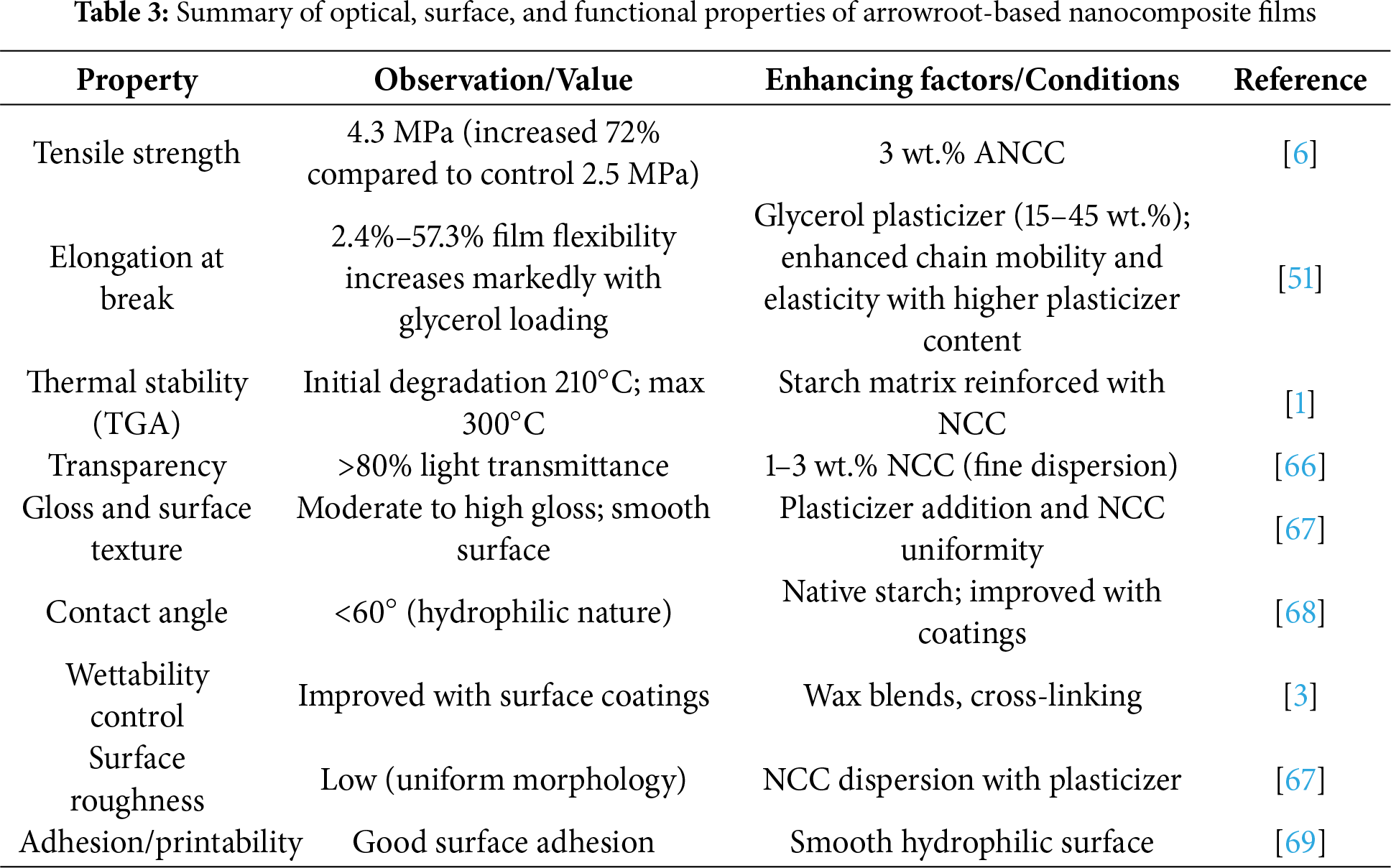
Arrowroot-based nanocomposite films typically retain high transparency (>80% light transmittance) at low NCC concentrations (1–3 wt.%), due to the nanoscale dimension of ANCC and its uniform dispersion within the matrix [48,66]. According to Tarique et al. [51], the addition of glycerol (15–45 wt. %) greatly increases film flexibility and surface smoothness by enhancing polymer-chain mobility while maintaining high translucency. Plasticizers enhance surface smoothness and flexibility, while nanocellulose contributes to uniform morphology and reduced roughness [67,69]. Nevertheless, their hydrophilic surface results in low contact angles (<60°), limiting their use in moisture-sensitive applications [64]. Surface modification strategies such as waxing and cross-linking have been explored to reduce wettability and improve film durability [3].
Surface properties, including surface roughness, hydrophilicity, and contact angle, play a critical role in film performance, particularly in adhesion, printability, and water resistance. The incorporation of plasticizers like glycerol reduces brittleness and improves the surface texture by increasing polymer chain mobility, resulting in smoother, more flexible films [67]. In addition, nanocellulose contributes to surface uniformity through strong hydrogen bonding with the starch matrix, leading to a denser structure with fewer surface irregularities [69]. However, due to the hydrophilic nature of starch and cellulose, these films tend to exhibit low water contact angles (typically <60°), which limits their use in moisture-sensitive applications. Surface modifications such as waxing, cross-linking, or incorporation of hydrophobic biopolymers have been shown to reduce wettability and improve barrier performance [68]. Overall, the optical and surface qualities of arrowroot nanocomposite films can be tailored by optimizing formulation parameters such as nanocellulose content, plasticizer type, and surface treatments. These enhancements contribute to their functional value in environmentally friendly packaging and coating applications, where both appearance and surface stability are essential [70].
5.5 Functional and Antimicrobial Properties
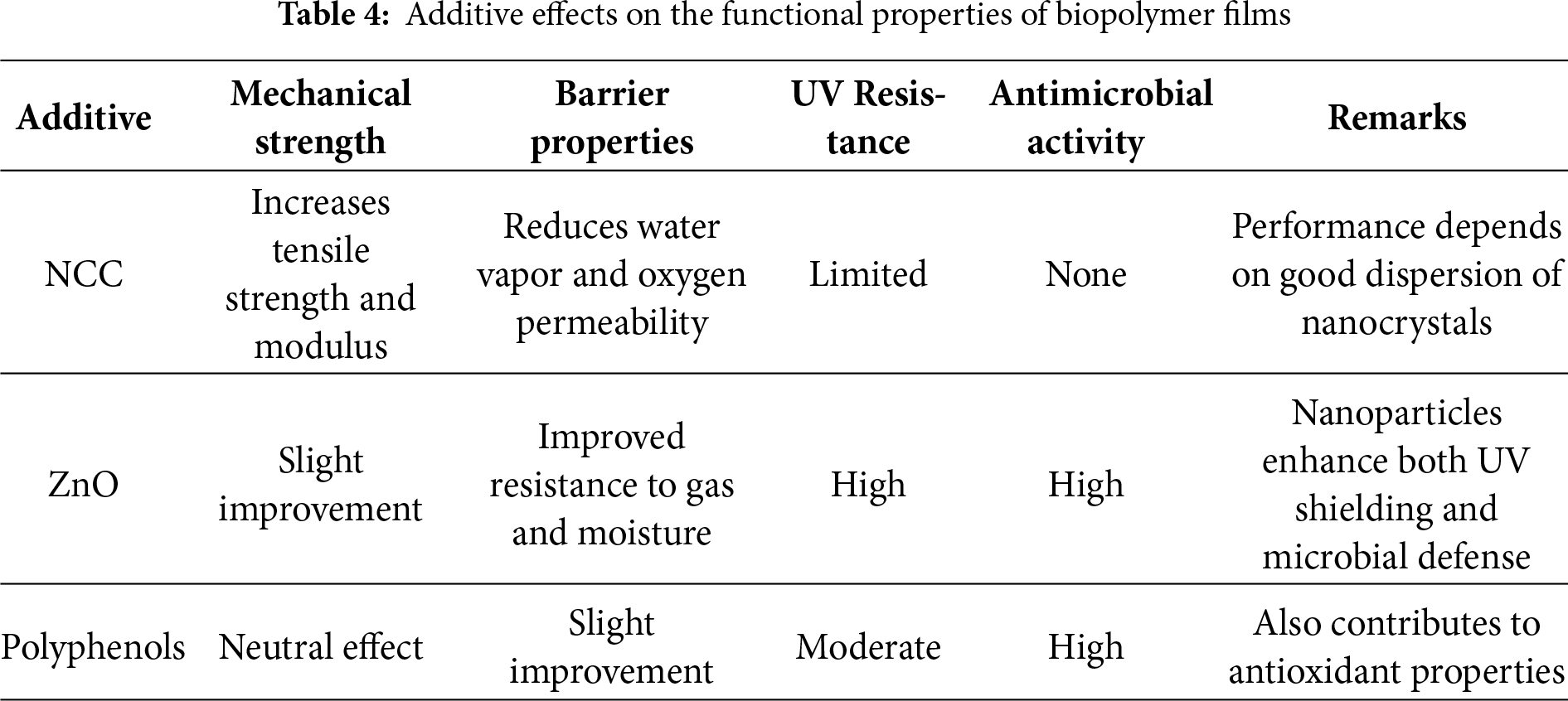
ANCC’s high surface area allows it to serve as a carrier for functional agents like wax emulsions or essential oils. Oliveira Filho et al. [66] demonstrated that edible arrowroot films reinforced with NCC and carnauba wax nanoemulsions extended the refrigerated shelf life of strawberries by reducing moisture loss and microbial deterioration by 40%–60%. The sustained release of mint and palmarosa essential oils added antibacterial functionality. Other studies have incorporated ZnO, polyphenols, and conductive polymers into NCC-based films to introduce UV resistance, antimicrobial effects, or electrical conductivity [50,58]. ZnO nanoparticles contribute to UV blocking and antimicrobial effects due to their high refractive index and reactive oxygen species generation, respectively [6], while polyphenols improve antioxidant and antimicrobial resistance by disrupting microbial membranes and neutralizing free radicals [6]. Table 4 illustrates the distinct functional enhancements provided by different additives in biopolymer films.
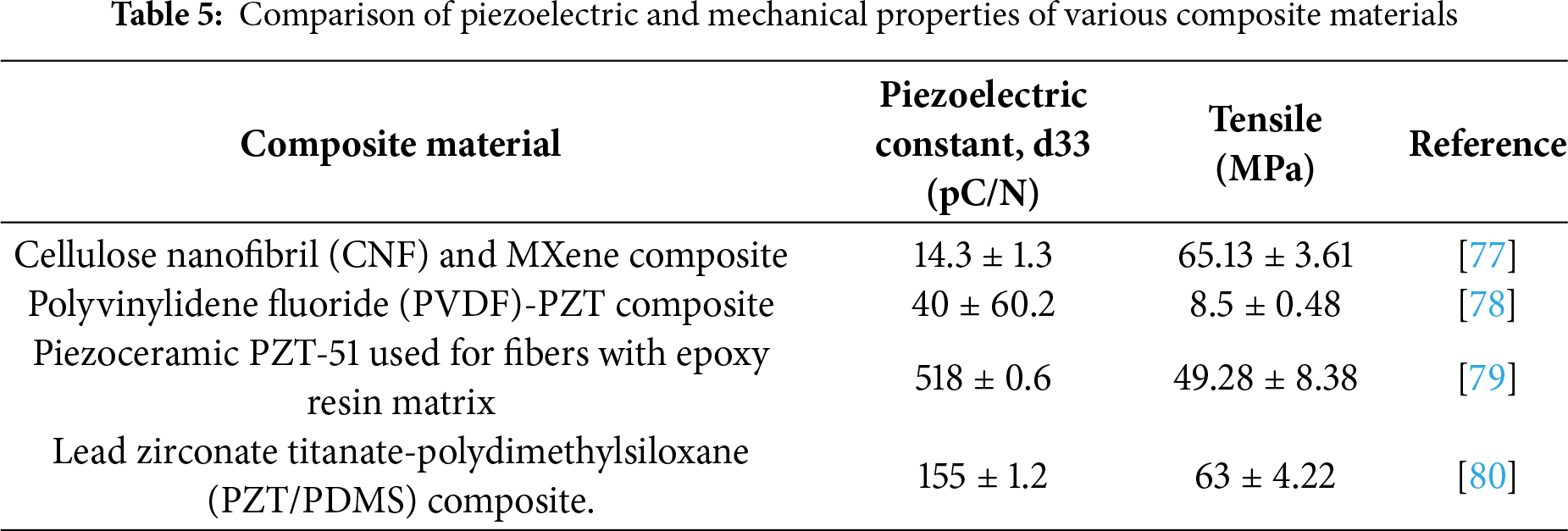
The investigation into the piezoelectric characteristics of starch-based biopolymer films reinforced with arrowroot-derived nanocellulose represents a notable advancement in expanding the functional scope of bio-based nanocomposites [71,72]. Piezoelectric materials generate electrical charges when subjected to mechanical force, and incorporating them into biodegradable matrices opens up avenues for environmentally friendly, low-impact sensing devices [72,73]. In this regard, reinforcing arrowroot starch (AS) films with ANCC has demonstrated promising potential to introduce piezoelectric behavior, making these materials viable for use in pressure sensors, wearable devices, and energy-harvesting systems [74,75]. Table 5 presents a comparison of the piezoelectric and mechanical properties of composite materials reported in previous studies [73]. While inorganic piezoelectric ceramics, such as lead zirconate titanate (PZT), demonstrate substantially higher d33 values, arrowroot-based films offer a biodegradable and environmentally sustainable alternative with competitive mechanical strength [76].
The crystalline structure of cellulose is the primary reason why it also has intrinsic piezoelectric properties, especially cellulose I that has a non-centrosymmetic lattice [81,82]. The structural asymmetry is imperative to piezoelectric action, in the sense that an electric polarization may be created by mechanically deforming the object. This effect has originated in the fact that the electric dipole formed by hydroxyl (OH) groups as a result of the orientation of the glucose molecule chains [83,84]. By placing the dipoles under stress, these dipoles slip into a synchronous fashion giving rise to a measurable electric charge. Result in a macroscopic piezoelectric effect, the nanocrystals or microfibrils need to be axisionally aligned in the polymer-matrix [85,86]. Random oriented can negate dipole contributions which give negligible overall output. Thus, the molecular order as well as the mesoscale order is imperative to realize the piezoelectric potential of cellulose-based materials which are also backed by numerous studies in the literature of science [87,88].
The integration of piezoelectric functionality into biodegradable films significantly broadens their applicability in advanced green technologies [89–91]. Traditional piezoelectric polymers, such as polyvinylidene fluoride (PVDF), are non-biodegradable and environmentally persistent, limiting their sustainability [92–95]. In contrast, arrowroot based piezoelectric films offer a renewable, eco-friendly, and non-toxic alternative, with promising potential in areas such as smart packaging, medical diagnostics, and disposable electronic devices [96–98]. This innovation aligns closely with the sustainability objectives emphasized in this review [99,100]. To further improve performance, future work should focus on optimizing filler alignment and exploring conductive additives like graphene [101]. These improvements will advance the design of green piezoelectric materials that balance mechanical strength, electrical output, and biodegradability for multifunctional applications [90,102].
6 Applications and Potential Uses of Arrowroot Fiber Based Nanocomposite Films
Arrowroot-based nanocomposite films represent a versatile and sustainable class of biomaterials with wide-ranging applications across food packaging, agriculture, cosmetics, and biomedical sectors. Their unique combination of biocompatibility, biodegradability, and functional adaptability provides significant advantages over conventional petroleum-based polymers. In the food packaging sector, arrowroot-based films are highly suitable due to their inherent food safety, transparency, and compostability. They have proven particularly effective for packaging dry goods such as cereals, nuts, and dried fruits, owing to their excellent oxygen barrier properties that help preserve freshness [1,103]. Their flexibility and clarity further make them ideal for wrapping fresh produce like fruits and vegetables, ensuring prolonged shelf life [104]. When infused with antimicrobial agents, these films can even function as edible packaging for cheese, meat, and baked goods, thereby reducing food waste and enhancing preservation [105].
Another promising application is in biomedical applications [106], which represent one of the most promising avenues for arrowroot fiber-based nanocomposites. Nanocellulose, a key reinforcement agent derived from arrowroot starch, has demonstrated excellent structural integrity, hydrophilicity, and biocompatibility, making it ideal for wound dressings, scaffolds for tissue regeneration, medical implants, and drug delivery systems as shown in Fig. 4 [107–109]. The incorporation of antibacterial nanocomposites such as zinc oxide or silver nanoparticles further enhances their therapeutic potential by preventing infection [105,110]. Recent studies confirm their cytocompatibility, 3-(4,5-dimethylthiazol-2-yl)-2,5-diphenyltetrazolium bromide (MTT) assay results show that fibroblasts maintain high viability when cultured on arrowroot gellan scaffolds, demonstrating their non-toxic and biofriendly nature. The inclusion of gellan gum, a widely used hydrocolloid, augments scaffold biocompatibility by reinforcing the hydrogel network and supporting cellular attachment, proliferation, and migration [107]. Moreover, the tailored structural integrity and viscoelastic properties of these scaffolds mimic native tissue mechanics, facilitating cellular remodeling and integration into host tissues [108]. Collectively, these features make arrowroot-based nanocomposites effective platforms for wound healing and soft tissue repair. In addition to these traditional biomedical uses, nanocellulose, including ANCC, has been studied for cutting-edge uses such site-specific drug delivery and intelligent wound dressings. Functionalized nanocellulose hydrogels, for example, can be designed to react to light, temperature, or pH changes, allowing for the regulated and prolonged release of medicinal substances [106,108]. These intelligent systems expand nanocellulose’s biomedical use beyond straightforward structural reinforcement, opening the door to the development of medical devices that are both stimuli-responsive and infection-resistant [111].
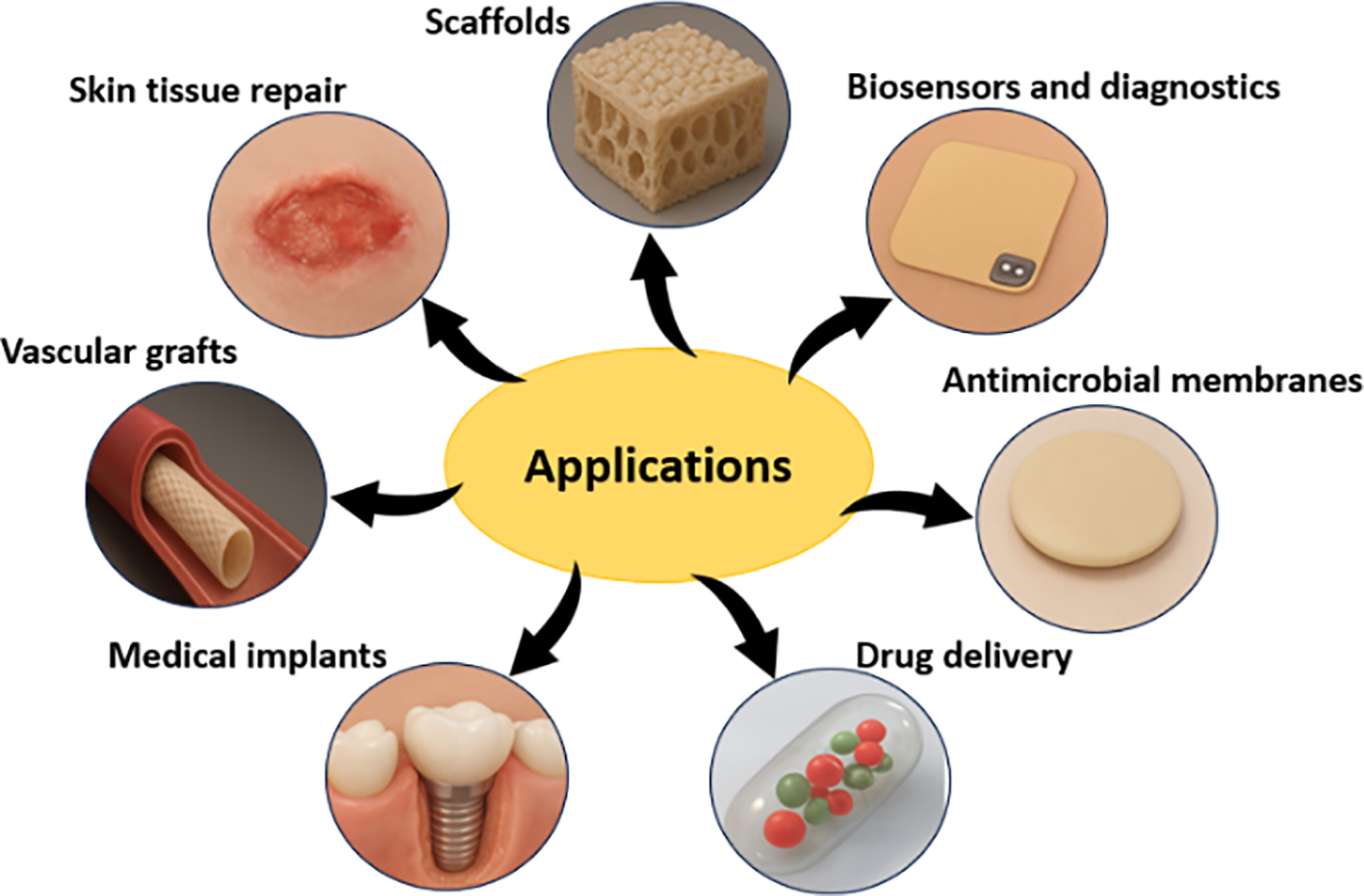
Figure 4: Applications of nanocellulose in the biomedical field
In drug delivery systems, as illustrated in Fig. 5, nanocellulose enables controlled and sustained release of therapeutic agents by modulating diffusion pathways within the polymer matrix. Chitosan/nanocellulose hybrids, for example, have exhibited more uniform release profiles compared to pure chitosan, particularly when higher nanocellulose contents are incorporated [112–114]. Additionally, stimuli-responsive systems such as bacterial nanocellulose (BNC)/sodium alginate hybrid hydrogels have shown accelerated drug release under alkaline conditions and electrical stimulation, highlighting their potential in site-specific and smart delivery platforms [115–118]. Such properties make arrowroot-derived nanocomposites viable candidates for next-generation bioactive dressings and advanced pharmaceutical formulations.
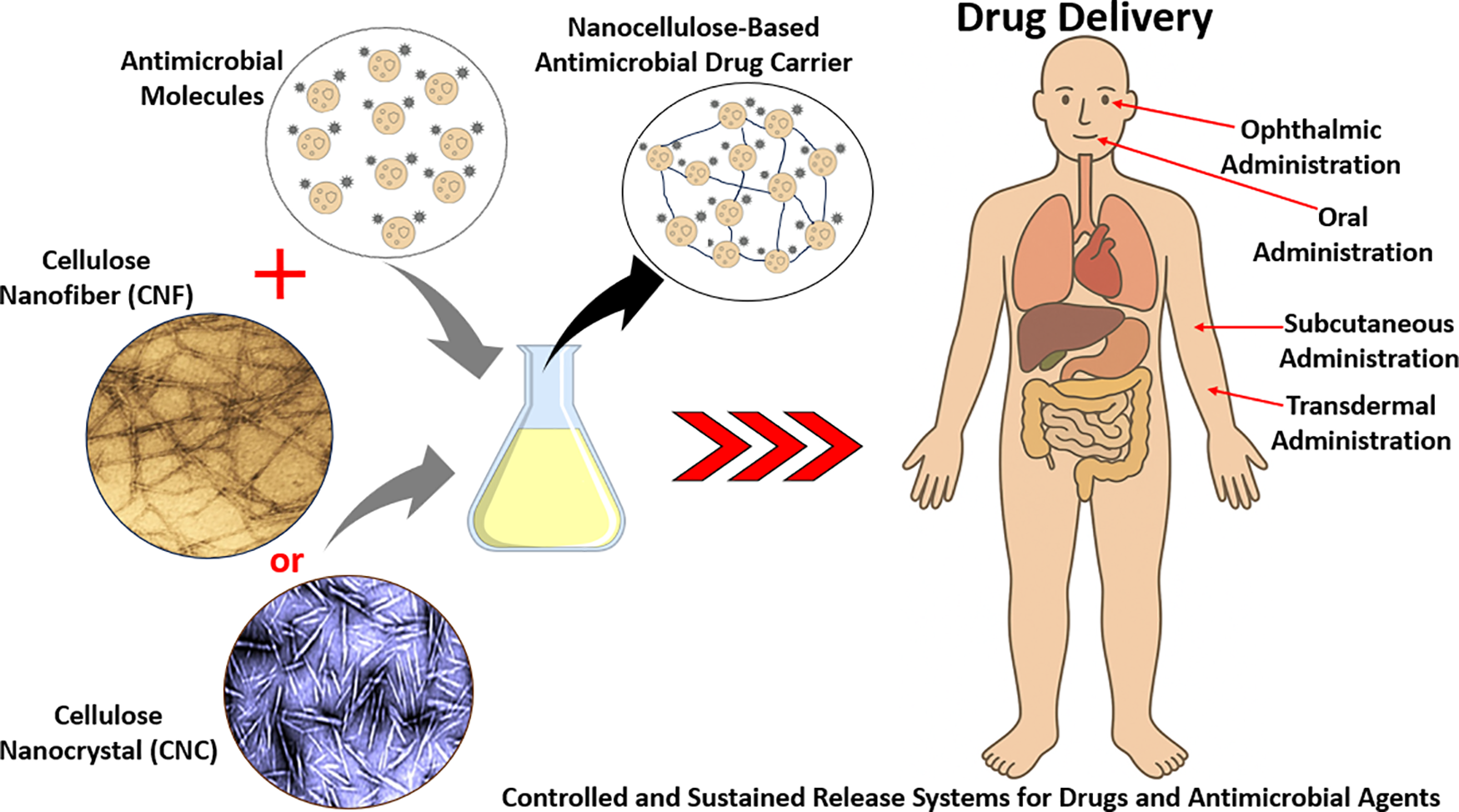
Figure 5: Nanocellulose-based drug delivery systems
Aside from medical and pharmacological applications, arrowroot-based nanocomposites are increasingly being regarded as industrial and smart materials. Polyurethane composites containing modified cellulose nanocrystals, for example, have shown shape-memory behavior when exposed to light stimuli, paving the way for possible applications in sensors, actuators, and biomedical devices [111,119]. In example, light-induced shape-memory polyurethane composite films reinforced with modified nanocellulose exhibited reversible deformation following irradiation, highlighting nanocellulose’s promise in optical and smart material applications [111,119]. ANCC, with its high crystallinity and uniform nanoscale structure, can be similarly tailored for such responsive systems, expanding its application beyond packaging to include biomedical devices and advanced functional materials [120].
Reinforced films also exhibit enhanced tensile strength, flexibility, and barrier properties, making them suitable for biodegradable laminates in electronics packaging and disposable tableware [1,104,121,122]. The promise of arrowroot fiber-based nanocomposite films as next-generation biomaterials is demonstrated by their multifunctionality when combined. These films can satisfy the performance demands of contemporary businesses while maintaining environmental sustainability by combining nanocellulose, antimicrobial agents, and intelligent nanostructures [121,122]. Ongoing research focused on hybridization strategies, surface modification, and large-scale production will be key to unlocking their full potential across biomedical, pharmaceutical, and industrial applications [123].
6.1 Biodegradability and Recyclability Characteristics of Arrowroot-Based Films
A defining attribute of arrowroot-based films is their biodegradability, which addresses one of the most pressing environmental challenges of our time is plastic pollution. These films break down within weeks to months under appropriate environmental conditions, such as in composting facilities or natural soil environments. Factors such as temperature, humidity, and microbial activity influence their degradation rate, making them adaptable to different ecological settings [7]. This rapid decomposition alleviates the burden on waste management systems, especially in regions struggling with inefficient recycling infrastructure. Unlike conventional plastics, which contribute to microplastic pollution, arrowroot-based films decompose into harmless components, eliminating the risk of long-term contamination in soil and water bodies.
Material science advancements have further improved the performance of these films. Incorporating nanofillers, such as zinc oxide nanoparticles or cellulose nanocrystals, has enhanced their mechanical strength and barrier properties. These enhancements make arrowroot films suitable for various applications, including food packaging, where durability and moisture resistance are critical [1,2].
While compostability remains a key strength of arrowroot starch-based films, recyclability is not entirely precluded. When blended with biopolymers such as polylactic acid (PLA), these composites can, in principle, be mechanically recycled under controlled conditions. However, practical implementation is hindered by several challenges. The inherent immiscibility between hydrophilic starch and hydrophobic PLA often results in phase separation and poor interfacial adhesion, compromising the mechanical integrity of the recycled material. Moreover, starch is prone to thermal degradation during repeated processing cycles, which can degrade material quality and introduce contaminants into PLA-rich recycling streams. These limitations necessitate the development of effective compatibilization strategies and thorough life cycle assessments to ensure material performance and sustainability. Despite these hurdles, the ability to tailor these blends for both end-of-life scenarios, composting and recycling, enhances their versatility and supports resource recovery in line with circular economy principles [2].
6.2 Mitigation of Plastic Pollution
Arrowroot-derived films present a compelling solution to the escalating plastic pollution crisis, which severely impacts terrestrial and marine ecosystems. Unlike conventional petroleum-based plastics, renowned for their environmental persistence and adverse effects on biodiversity, arrowroot films undergo natural biodegradation, thereby reducing the accumulation of persistent waste in the environment [124]. Their integration into sectors such as packaging, agriculture, and healthcare significantly mitigates the ecological footprint of single-use plastics.
In agriculture, biodegradable mulch films derived from arrowroot starch retain soil moisture, suppress weed growth, and decompose harmlessly after use supporting more sustainable farming practices. In food packaging, these films extend product shelf life while offering an environmentally responsible end-of-life option, making them attractive alternatives to conventional materials. Biopolymer-based biodegradable films, including arrowroot variants, are gaining attention for their favourable barrier properties and eco-friendly lifecycle [125].
However, achieving a truly circular model for arrowroot-based films requires a more comprehensive end-of-life framework. Although these films are renewable, their recyclability remains constrained by polymer incompatibility and thermal degradation, particularly in starch PLA hybrid systems. Consequently, industrial composting represents the most practical circular pathway, provided that controlled aerobic composting facilities and microbial inoculants are available to accelerate degradation. To realize this circular vision, supportive policy measures are essential. These include incentives for compostable packaging, the establishment of transparent bioplastic certification standards, and regulatory mechanisms to prevent greenwashing. In parallel, the advancement of closed-loop valorization strategies such as enzymatic depolymerization or conversion into secondary high-value bio-based products offers a promising approach to enhance material recovery and extend lifecycle utility.
6.3 Prospects for the Future and Developments
The next phase of development for arrowroot-based films will focus on improving their durability, functional characteristics, and scalability. Current efforts are focused on improving water resistance, thermal performance, and mechanical strength through nanomaterial reinforcement and crosslinking strategies. Incorporating agents such as essential oils, silver nanoparticles, or biodegradable hydrophobic additives may also extend shelf life and enable active packaging applications [1,66]. Hybrid systems blending arrowroot starch with other biopolymers like PLA are being explored to overcome limitations such as moisture sensitivity. These approaches not only expand the functional range of arrowroot films but also ensure their relevance in sectors like food packaging, healthcare, and electronics. Efficient production methods and cost-effective processing remain key challenges that must be addressed for wider adoption. Ultimately, these research directions align with broader sustainability goals. Enhancing the functionality of arrowroot-based materials while maintaining biodegradability and low environmental impact supports their role in the global transition toward circular economy materials [61].
7 Challenges in the Development and Commercialization, Environmental and Sustainability Considerations
Arrowroot-based films represent a promising and innovative solution to environmental challenges, offering renewable origin, biodegradability, and a significantly reduced carbon footprint compared to petroleum-derived polymers. Life cycle assessment (LCA) studies affirm that both the production and end-of-life stages of these films result in substantially lower greenhouse gas emissions, supporting global climate change mitigation strategies [46]. The extraction of starch from arrowroot is notably energy efficient, requiring minimal inputs and generating low levels of waste, thereby aligning with environmentally responsible manufacturing practices. Moreover, the cultivation of arrowroot contributes to sustainability due to its adaptability to diverse climates and minimal dependency on chemical fertilizers or pesticides, which reduces ecological strain and supports agroecological resilience [3].
Arrowroot’s regenerative growth cycle further enhances its sustainability by enriching soil organic matter and reducing erosion, thereby promoting long-term soil health. At the end of their life cycle, arrowroot-based films exhibit excellent compostability, degrading into non-toxic byproducts such as water and carbon dioxide, and eliminating the risk of persistent environmental pollution typical of conventional plastics [1,2]. These benefits extend across the product lifecycle: from reduced fossil fuel reliance during synthesis to responsible land use, as arrowroot can be cultivated on marginal lands without competing with staple crops [3].
Despite these environmental advantages and promising laboratory outcomes, the commercial scalability of arrowroot-based nanocomposite films faces practical hurdles. Variability in starch and fiber composition, due to factors such as genotype, harvest season, and regional origin can influence nanocellulose yield and film performance. Additionally, although green extraction methods are environmentally superior, their industrial scalability is currently constrained by processing costs and time requirements. Therefore, achieving commercial viability will depend on the development of robust supply chains, cost-effective valorization strategies, and industrially adaptable processing technologies.
8 Future Perspectives and Research Directions
While arrowroot fiber-based nanocomposites hold significant promise, several research gaps need to be addressed to maximize their potential. One major gap lies in the lack of standardized methods for isolating and characterizing NCC from arrowroot fibers. Most studies have focused on small scale extractions, with limited exploration of industrially scalable processes. Additionally, the compatibility of arrowroot derived NCC with diverse biopolymer matrices remains underexplored, particularly in terms of optimizing the interfacial bonding for enhanced composite performance. Emerging technologies, such as green solvent systems and enzymatic treatment methods, offer opportunities to overcome these challenges. Innovations like microwave-assisted and ultrasonic extraction techniques can improve the efficiency of NCC isolation while reducing energy and water consumption. Furthermore, advanced computational tools, such as molecular dynamics simulations, could provide insights into the interaction mechanisms between NCC and polymers, aiding in the design of superior nanocomposite systems.
Achieving scalable production of arrowroot fiber-based nanocomposites requires the development of cost effective and environmentally friendly processing technologies. Refinement of green extraction methods such as those utilizing ionic liquids or deep eutectic solvents is essential to improve the yield and purity of NCC. Moreover, incorporating bio-based crosslinkers and plasticizers can enhance the functional properties of nanocomposite films while preserving their biodegradability. Another key strategy involves fostering collaborations between academia, industry, and policymakers to create a comprehensive framework for scaling production. Investment in pilot-scale facilities and the establishment of quality standards for arrowroot fibers and their derivatives would ensure consistency and reliability in large-scale applications. Integrating circular economy principles, such as recycling and upcycling of production waste, could further enhance the sustainability of these materials. Finally, the incorporation of emerging trends, such as additive manufacturing and three dimensions (3D) printing, could expand the application scope of arrowroot fiber-based nanocomposites. For example, these materials could be tailored for use in complex geometries and multifunctional designs, opening new possibilities in sectors like healthcare, electronics, and automotive industries.
This review highlights arrowroot fiber as a technically feasible and underutilized biomass source for the production of NCC reinforced nanocomposite films. Arrowroot presents intrinsic advantages over commonly studied lignocellulosic sources like wood pulp, flax, or chemically modified NCCs. These advantages include a high cellulose content, a low lignin fraction, and minimal extractives, facilitating efficient NCC isolation through both conventional and green extraction methods. The biopolymer-based nanocomposites demonstrate improved tensile strength, thermal stability, and moisture barrier properties, along with potential applications in piezoelectric and sensing technologies. The characteristics presented align positively with those documented in the literature regarding hybrid systems that integrate NCCs with inorganic nanoparticles or grafted polymers. Challenges that remain include the scalability of processes, the heterogeneity of raw materials, and the environmental impact linked to extraction chemistry. Addressing these limitations through lifecycle optimization, fiber matrix interface engineering, and process intensification is essential. This review emphasizes arrowroot-derived NCC as an innovative, renewable platform that significantly advances high performance, sustainable nanocomposites in line with global circular economy and material innovation objectives.
Acknowledgement: The authors would like to express their sincere gratitude to the Advanced Engineering Materials and Composites Research Center (AEMC), Department of Mechanical and Manufacturing Engineering, Faculty of Engineering, and the Institute of Tropical Forestry and Forest Products (INTROP), as well as the Faculty of Forestry and Environment, Universiti Putra Malaysia, for the facilities and support provided. Special thanks are also extended to Prof. Dr. Bashir Jarrar from the Nanobiology Unit, College of Sciences, Jerash University, Jordan, for his valuable assistance.
Funding Statement: The authors would like to acknowledge the financial support provided by Universiti Putra Malaysia. This research was supported by the Matching Grant (9300489).
Author Contributions: Conceptualization, writing—original draft, writing—review and editing: Rasdianah Dahali, Edi Syams Zainudin, Mohammed Abdillah Ahmad Farid, Tarique Jamal, Mohd Sapuan Salit and Muhammad Firdaus Abdul Halim; resources and project administration: Rasdianah Dahali; funding acquisition: Edi Syams Zainudin and Tarique Jamal; investigation: Rasdianah Dahali, Edi Syams Zainudin and Mohammed Abdillah Ahmad Farid; visualization: Mohammed Abdillah Ahmad Farid and Tarique Jamal. All authors reviewed the results and approved the final version of the manuscript.
Availability of Data and Materials: The authors confirm that the data supporting the findings of this study are available within the article.
Ethics Approval: This study does not involve human participants, animal studies, or any research requiring ethical approval. Therefore, ethical approval is not applicable.
Conflicts of Interest: The authors declare no conflicts of interest to report regarding the present study.
References
1. Jamroz E, Kulawik P, Kopel P. The effect of nanofillers on the functional properties of biopolymer-based films: a review. Polymers. 2019;11(4):675. doi:10.3390/polym11040675. [Google Scholar] [PubMed] [CrossRef]
2. Goizueta IR. Effect of nano-fillers on tensile properties of biopolymer films [master’s thesis]. Urbana-Champaign, IL, USA: University of Illinois at Urbana-Champaign; 2019. [Google Scholar]
3. Susmita Devi L, Kalita S, Mukherjee A, Kumar S. Carnauba wax-based composite films and coatings: recent advancements. Trends Food Sci Technol. 2022;129:296–305. [Google Scholar]
4. Klemm D, Kramer F, Moritz S, Lindström T, Ankerfors M, Gray D, et al. Nanocelluloses: a new family of nature-based materials. Angew Chem Int Ed. 2011;50(24):5438–66. doi:10.1002/anie.201001273. [Google Scholar] [PubMed] [CrossRef]
5. Tarique J, Sapuan SM, Khalina A, Ilyas RA, Zainudin ES. Thermal, flammability, and antimicrobial properties of arrowroot (Maranta arundinacea) fiber reinforced arrowroot starch biopolymer composites for food packaging applications. Int J Biol Macromol. 2022;213:1–10. doi:10.1016/j.ijbiomac.2022.05.104. [Google Scholar] [PubMed] [CrossRef]
6. Nogueira GF, de Oliveira Leme B, dos Santos GRS, da Silva JV, Nascimento PB, Soares CT, et al. Edible films and coatings formulated with arrowroot starch as a non-conventional starch source for plums packaging. Polysaccharides. 2021;2(2):373–86. doi:10.3390/polysaccharides2020024. [Google Scholar] [CrossRef]
7. Ren H, Huang Y, Yang W, Ling Z, Liu S, Zheng S, et al. Emerging nanocellulose from agricultural waste: recent advances in preparation and applications in biobased food packaging. Int J Biol Macromol. 2024;277:134512. doi:10.1016/j.ijbiomac.2024.134512. [Google Scholar] [PubMed] [CrossRef]
8. Nogueira GF, Fakhouri FM, de Oliveira RA. Extraction and characterization of arrowroot (Maranta arundinacea L.) starch and its application in edible films. Carbohydr Polym. 2018;186:64–72. doi:10.1016/j.carbpol.2018.01.024. [Google Scholar] [PubMed] [CrossRef]
9. Tarique J, Zainudin ES, Sapuan SM, Ilyas RA, Khalina A. Physical, mechanical, and morphological performances of arrowroot fiber reinforced starch biopolymer composites. Polymers. 2022;14(3):388. doi:10.3390/polym14030388. [Google Scholar] [PubMed] [CrossRef]
10. Mahato KK, Hossain MK, Hasan M. A review on banana fiber and its polymer composites. Heliyon. 2021;7(10):e08057. doi:10.1016/j.heliyon.2021.e08057. [Google Scholar] [CrossRef]
11. de Sa RM, de Miranda CS, José NM. Preparation and characterization of nanowhiskers cellulose from fiber arrowroot (Maranta arundinacea). Mater Res. 2015;18:225–9. doi:10.1590/1516-1439.366214. [Google Scholar] [CrossRef]
12. Satyanarayana KG, Mariano M, Wypych F. Biodegradable composites based on lignocellulosic fibers: an overview. Prog Polym Sci. 2022;125:101479. doi:10.1016/j.progpolymsci.2022.101479. [Google Scholar] [CrossRef]
13. Widiarto S, Pramono E, Suharso, Rochliadi A, Arcana IM. Cellulose nanofibers preparation from cassava peels via mechanical disruption. Fibers. 2019;7(5):44. doi:10.3390/fib7050044. [Google Scholar] [CrossRef]
14. Ruangudomsakul W, Ruksakulpiwat C, Ruksakulpiwat Y. Preparation and characterization of cellulose nanofibers from cassava pulp. Macromol Symp. 2015;354:170–6. doi:10.1002/masy.201400096. [Google Scholar] [CrossRef]
15. Teixeira EM, Curvelo AAS, Corrêa AC, Marconcini JM, Glenn GM, Mattoso LHC. Properties of thermoplastic starch from cassava bagasse and cassava starch and their blends with poly (lactic acid). Ind Crops Prod. 2012;37(1):61–8. doi:10.1016/j.indcrop.2011.11.036. [Google Scholar] [CrossRef]
16. Daud Z, Kassim M, Sari A, Mohd Aripin A, Awang H, Hatta M, et al. Chemical composition and morphology of cocoa pod husks and cassava peels for pulp and paper production. Aust J Basic Appl Sci. 2013;7:406–11. [Google Scholar]
17. Islam MT, Alam F, Zoccola M. Lignocellulosic fiber-reinforced biocomposites: a review of recent advances. Carbohydr Polym. 2023;303:120403. doi:10.1016/j.carbpol.2022.120403. [Google Scholar] [CrossRef]
18. Sharma S, Thakur M, Bhattacharya M. Natural fiber-reinforced composites for structural applications. Compos B Eng. 2020;182:107663. doi:10.1016/j.compositesb.2019.107663. [Google Scholar] [CrossRef]
19. Ramesh M, Palanikumar K, Reddy KH. Mechanical property analysis of kenaf-flax hybrid composites with polyester resin. Mater Today Proc. 2021;45:7283–7. doi:10.1016/j.matpr.2021.01.621. [Google Scholar] [CrossRef]
20. ASTM D3822/D3822M-14. ASTM international. Standard test method for tensile properties of single textile fibers. West Conshohocken, PA, USA: ASTM International; 2020. [Google Scholar]
21. ASTM D3379-75. Standard test method for tensile strength and young’s modulus for high-modulus single-filament materials. West Conshohocken, PA, USA: ASTM International; 1989. [Google Scholar]
22. ISO 5079:2020. Textile fibres—determination of breaking force and elongation at break of individual fibres. Geneva, Switzerland: International Organization for Standardization; 2020. [Google Scholar]
23. Munawar RF, Mohd Abid MA, Kosnan MA, Othman IS, Abd Razak J, Safie NE, et al. A mini review on recent nanocellulose production from natural fibers and lignocellulosic biomass via acid hydrolysis. J Adv Res Micro Nano Eng. 2024;23(1):106–14. doi:10.37934/armne.23.1.106114. [Google Scholar] [CrossRef]
24. Dagnino EP, Ehman N, Area MC. Recent advances in cellulose nanocrystal production from green methods. Processes. 2025;13:790. doi:10.3390/pr13030790. [Google Scholar] [CrossRef]
25. de Farias DT, Labidi J, Pedrazzi C, Gatto DA, de Cademartori PHG, Welter CA, et al. Acid-hydrolysis-assisted cellulose nanocrystal isolation from Acacia mearnsii de Wild. wood kraft pulp. Polymers. 2024;16:3371. doi:10.3390/polym16233371. [Google Scholar] [PubMed] [CrossRef]
26. Thakur M, Sharma A, Ahlawat V, Bhattacharya M, Goswami S. Process optimization for the production of cellulose nanocrystals from rice straw-derived α-cellulose. Mater Sci Energy Technol. 2020;3:328–34. doi:10.1016/j.mset.2019.12.005. [Google Scholar] [CrossRef]
27. Hassan AA, Shakir IK. Synthesis of nanocellulose using ultrasound-assisted acid hydrolysis for adsorption/oxidation of organic pollutants in wastewater under UV and solar light. J Sustain Sci Manage. 2024;19(12):120–40. [Google Scholar]
28. Beltramino F, Roncero MB, Torres AL, Vidal T, Valls C. Optimization of sulfuric acid hydrolysis conditions for preparation of nanocrystalline cellulose from enzymatically pretreated fibers. Cellulose. 2016;23:1777–89. doi:10.1007/s10570-016-0897-y. [Google Scholar] [CrossRef]
29. Vishnoi Y, Trivedi AK, Gupta MK, Singh H, Rangappa SM, Siengchin S. Extraction of nano-crystalline cellulose for development of aerogel: structural, morphological and antibacterial analysis. Heliyon. 2024;10:e23846. doi:10.1016/j.heliyon.2023.e23846. [Google Scholar] [PubMed] [CrossRef]
30. Rana AK, Alam MS, Mandal RN. Challenges in large-scale production of nanocellulose: environmental and economic considerations. Ind Crops Prod. 2021;171:113927. doi:10.1016/j.indcrop.2021.113927. [Google Scholar] [CrossRef]
31. Kusmono, Listyanda RF, Wildan MW, Ilman MN. Preparation and characterization of cellulose nanocrystal extracted from ramie fibers by sulfuric acid hydrolysis. Heliyon. 2020;6:e05486. doi:10.1016/j.heliyon.2020.e05486. [Google Scholar] [PubMed] [CrossRef]
32. Aigaje E, Riofrio A, Baykara H. Processing, properties, modifications, and environmental impact of nanocellulose/biopolymer composites: a review. Polymers. 2023;15:1219. doi:10.3390/polym15051219. [Google Scholar] [PubMed] [CrossRef]
33. Raza M, Jawaid M, Jdayil BA. Enhanced nanocellulose extraction from date palm waste: green solvent hydrolysis with transition metal complex. Sci Rep. 2024;14:1–15. doi:10.1038/s41598-024-72078-8. [Google Scholar] [PubMed] [CrossRef]
34. Arockiasamy FS, Manoharan B, Santhi VM, Prakalathan K, Periasamy D, Dhandapani A, et al. Navigating the nano-world future: harnessing cellulose nanocrystals from green sources for sustainable innovation. Heliyon. 2025;11:e41188. doi:10.1016/j.heliyon.2024.e41188. [Google Scholar] [PubMed] [CrossRef]
35. Qian M, Lei H, Villota E, Zhao Y, Wang C, Huo E, et al. High yield production of nanocrystalline cellulose by microwave-assisted dilute-acid pretreatment combined with enzymatic hydrolysis. Chem Eng Process. 2021;160:108292. doi:10.1016/j.cep.2020.108292. [Google Scholar] [CrossRef]
36. Shailaja K, Ragini P. Nanocellulose: preparation, characterization and applications. J Pharmaceut Pharmacolog Res. 2022;5(1):1–15. doi:10.31579/2693-7247/039. [Google Scholar] [CrossRef]
37. Yu X, Jiang Y, Wu Q, Wei Z, Lin X, Chen Y. Preparation and characterization of cellulose nanocrystal extraction from Pennisetum hydridum fertilized by municipal sewage sludge via sulfuric acid hydrolysis. Front Energy Res. 2021;9:1–11. doi:10.3389/fenrg.2021. [Google Scholar] [CrossRef]
38. Garcia GD, Balart R, Lopez-Martinez J, Ek M, Moriana R. Optimizing the yield and physico-chemical properties of pine cone cellulose nanocrystals by different hydrolysis time. Cellulose. 2018;25:2925–38. doi:10.1007/s10570-018-1760-0. [Google Scholar] [CrossRef]
39. Chong WT, Siow LF, Chan ES, Tey BT, Lee Y-Y. Enzymatic hydrolysis of palm cellulose to yield nanocrystals with potential roles in lipid and cholesterol digestion and absorption. Cellulose. 2025;32:1575–95. doi:10.1007/s10570-025-06382-5. [Google Scholar] [CrossRef]
40. Dias IKR, Lacerda BK, Arantes V. High-yield production of rod-like and spherical nanocellulose by controlled enzymatic hydrolysis of mechanically pretreated cellulose. Int J Biol Macromol. 2023;242(Pt 4):125053. doi:10.1016/j.ijbiomac.2023.125053. [Google Scholar] [PubMed] [CrossRef]
41. Indirasetyo NL, Kusmono. Isolation and properties of cellulose nanocrystals fabricated by ammonium persulfate oxidation from Sansevieria trifasciata fibers. Fibers. 2022;10(7):61. doi:10.3390/fib10070061. [Google Scholar] [CrossRef]
42. Wu Y, Cao F, Jiang H, Zhang Y. Carboxyl cellulose nanocrystal extracted from hybrid poplar residue. BioRes. 2017;12(4):8775–85. doi:10.15376/biores.12.4.8775-8785. [Google Scholar] [CrossRef]
43. Haunreiter KJ, Dichiara AB, Gustafson R. Nanocellulose by ammonium persulfate oxidation: an alternative to TEMPO-mediated oxidation. ACS Sustain Chem Eng. 2022;10(12):3882–91. doi:10.1021/acssuschemeng.1c07814. [Google Scholar] [CrossRef]
44. Wang H, Pudukudy M, Ni Y, Zhi Y, Zhang H, Wang Z, et al. Synthesis of nanocrystalline cellulose via ammonium persulfate-assisted swelling followed by oxidation and their chiral self-assembly. Cellulose. 2020;27:657–76. doi:10.1007/s10570-019-02789-z. [Google Scholar] [CrossRef]
45. Saito T, Kimura S, Nishiyama Y, Isogai A. Cellulose nanofibers prepared by TEMPO-mediated oxidation of native cellulose. Biomacromolecules. 2007;8(8):2485–91. doi:10.1021/bm0703970. [Google Scholar] [PubMed] [CrossRef]
46. Shanbhag C, Shenoy R, Shetty P, Srinivasulu M, Nayak R. Formulation and characterization of starch-based novel biodegradable edible films for food packaging. J Food Sci Technol. 2023;60(11):2858–67. doi:10.1007/s13197-023-05803-2. [Google Scholar] [PubMed] [CrossRef]
47. Agarwal A, Mohanty AK, Misra M. Biodegradable and transparent nanocellulose-based films for packaging applications: a review. J Clean Prod. 2020;265:121762. doi:10.1016/j.jclepro.2020.121762. [Google Scholar] [CrossRef]
48. Fortunati E, Puglia D, Luzi F, Santulli C, Kenny JM, Torre L. Binary PVA bio-nanocomposites containing cellulose nanocrystals extracted from different natural sources: part I. Carbohydr Polym. 2013;97:825–36. doi:10.1016/j.carbpol.2013.03.075. [Google Scholar] [PubMed] [CrossRef]
49. Pires JRA, Souza VGL, Gomes LA, Coelhoso IM, Godinho MH, Fernando AL. Micro and nanocellulose extracted from energy crops as reinforcement agents in chitosan films. Ind Crops Prod. 2022;186:115247. doi:10.1016/j.indcrop.2022.115247. [Google Scholar] [CrossRef]
50. Eichers M, Bajwa D, Shojaeiarani J, Bajwa S. Biobased plasticizer and cellulose nanocrystals improve mechanical properties of polylactic acid composites. Ind Crops Prod. 2022;183:114981. doi:10.1016/j.indcrop.2022.114981. [Google Scholar] [CrossRef]
51. Tarique J, Sapuan SM, Khalina A. Effect of glycerol plasticizer loading on the physical, mechanical, thermal, and barrier properties of arrowroot (Maranta arundinacea) starch biopolymers. Sci Rep. 2021;11:13900. doi:10.1038/s41598-021-93094-y. [Google Scholar] [PubMed] [CrossRef]
52. Ling TY. Effect of glycerol as plasticizing agent on the mechanical properties of polyvinyl alcohol/banana peel powder blend film [bachelor’s thesis]. Kampar, Malaysia: Universiti Tunku Abdul Rahman; 2022. [Google Scholar]
53. Zhu YB, Samsudin H, Yhaya MF. Glycerol: its properties, polymer synthesis, and applications in starch-based films. Eur Polym J. 2022;175:111377. doi:10.1016/j.eurpolymj.2022.111377. [Google Scholar] [CrossRef]
54. Wang L, Kan J, Tang L, Zainul Abidin S. The effects of glycerol addition on the physicochemical, structural and mechanical properties of salt-gelatinized rice starch-based film. LWT. 2025;218:117427. doi:10.1016/j.lwt.2025.117427. [Google Scholar] [CrossRef]
55. Missale E, Maniglio D, Speranza G, Frasconi M, Pantano MF. Cellulose nanocrystal composites with enhanced mechanical properties for robust transparent thin films. ACS Appl Nano Mater. 2024;7(16):18167–76. doi:10.1021/acsanm.3c02946. [Google Scholar] [CrossRef]
56. Liu X, Basta AH, Liu R, Fu S. Preparation of shape memory polyurethane composite materials by grafting PCL onto CNFs with different carboxyl content. Discov Appl Sci. 2024;6(4):148. doi:10.1007/s42452-024-06249-9. [Google Scholar] [CrossRef]
57. Catherine N, Lee YY, Tan LK, Abdullah M. Reinforcement of corn starch films with nanocellulose extracted from rice straw: effects on mechanical and barrier properties. Polymers. 2022;14(19):3996. doi:10.3390/polym14193996. [Google Scholar] [CrossRef]
58. Louis ACF, Venkatachalam S, Gupta S. Innovative strategy for rice straw valorization into nanocellulose and nanohemicellulose and its application. Ind Crops Prod. 2022;179:114695. doi:10.1016/j.indcrop.2022.114695. [Google Scholar] [CrossRef]
59. Kheam R, Zhang K, Elder T, Bryant N, Ragauskas A, Li M. Totally chlorine-free peracetic acid pulping for nanocellulose isolation from hemp and poplar. TAPPI J. 2023;22(8):529–40. doi:10.32964/TJ22.8.529. [Google Scholar] [CrossRef]
60. Almeida RO, Ramos A, Kimiaei E, Osterberg M, Maloney TC, Gamelas JAF. Improvement of the properties of nanocellulose suspensions and films by the presence of residual lignin. Cellulose. 2024;31:10951–67. doi:10.1007/s10570-024-06222-y. [Google Scholar] [CrossRef]
61. Tarique J, Sapuan SM, Khalina A, Ilyas RA, Zainudin ES. Moisture barrier and mechanical performance of arrowroot starch-based biocomposite films: effects of PLA blending and cross-linking strategies. Int J Biol Macromol. 2021;193:1066–75. doi:10.1016/j.ijbiomac.2021.10.045. [Google Scholar] [CrossRef]
62. Habibi Y, Lucia LA, Rojas OJ. Cellulose nanocrystals: chemistry, self-assembly, and applications. Chem Rev. 2010;110:3479–500. doi:10.1021/cr900339w. [Google Scholar] [PubMed] [CrossRef]
63. ASTM D3985-17. Standard test method for oxygen gas transmission rate through plastic film and sheeting using a coulometric sensor. West Conshohocken, PA, USA: ASTM International; 2017. 10.1520/D3985-17. [Google Scholar] [CrossRef]
64. Azeredo HMCD, Rosa MF, Mattoso LHC. Nanocellulose in bio-based food packaging applications. Ind Crops Prod. 2017;97:664–71. doi:10.1016/j.indcrop.2016.03.013. [Google Scholar] [CrossRef]
65. Qian Y, He Y, Wang W, Yang X. Effect of nanocellulose on optical and barrier properties of starch-based biodegradable films. Carbohydr Polym. 2023;304:120519. doi:10.1016/j.carbpol.2022.120519. [Google Scholar] [CrossRef]
66. Oliveira Filho JG, Albiero BR, Calisto IH, Bertolo MRV, Oldoni FCA, Egea MB, et al. Bio-nanocomposite edible coatings based on arrowroot starch/cellulose nanocrystals/carnauba wax nanoemulsion containing essential oils to preserve quality and improve shelf life of strawberry. Int J Biol Macromol. 2022;219:812–23. doi:10.1016/j.ijbiomac.2022.08.049. [Google Scholar] [PubMed] [CrossRef]
67. Wang L, Mikkonen KS, Tenkanen M. Effect of glycerol and sorbitol on surface and barrier properties of starch–nanocellulose films. Polymers. 2021;13(3):354. doi:10.3390/polym13030354. [Google Scholar] [PubMed] [CrossRef]
68. Maneerat C, Phongam T, Siripatrawan U. Enhancing water resistance of starch-based films by surface coating with hydrophobic biopolymer blends. Food Hydrocoll. 2023;142:108764. doi:10.1016/j.foodhyd.2023.108764. [Google Scholar] [CrossRef]
69. Salas C, Nypelo T, Rodriguez-Abreu C, Carrillo C, Rojas OJ. Nanocellulose properties and applications in colloids and interfaces. Curr Opin Colloid Interface Sci. 2020;45:1–17. doi:10.1016/j.cocis.2019.11.002. [Google Scholar] [CrossRef]
70. Lv Q, Ma X, Zhang C, Han J, He S, Liu K, et al. Nanocellulose-based nanogenerators for sensor applications: a review. Int J Biol Macromol. 2024;259(Pt 2):129268. doi:10.1016/j.ijbiomac.2024.129268. [Google Scholar] [PubMed] [CrossRef]
71. Xie F. Natural polymer starch-based materials for flexible electronic sensor development: a review of recent progress. Carbohydr Polym. 2024;337:122116. doi:10.1016/j.carbpol.2024.122116. [Google Scholar] [PubMed] [CrossRef]
72. Li X, Zhang QK, Hu Z, Hua C, Xue L, Lu P, et al. Fully biodegradable piezoelectric nanogenerator based on cellulose/PLLA electrospun fibers with high-performance for mechanical energy harvesting. Colloids Surf A Physicochem Eng Asp. 2025;706:135813. doi:10.1016/j.colsurfa.2024.135813. [Google Scholar] [CrossRef]
73. Chen B, Feng Z, Yao FZ, Zhang MH, Wang K, Wei Y, et al. Flexible piezoelectrics: integration of sensing, actuating and energy harvesting. npj Flex Electron. 2025;9:58. doi:10.1038/s41528-025-00432-5. [Google Scholar] [CrossRef]
74. Mahanty B, Ghosh SK, Lee DW. Advancements in polymer nanofiber-based piezoelectric nanogenerators: revolutionizing self-powered wearable electronics and biomedical applications. Chem Eng J. 2024;495:153481. doi:10.1016/j.cej.2024.153481. [Google Scholar] [CrossRef]
75. Lv F, Hong Z, Ahmad Z, Li H, Wu Y, Huang Y. Design of flexible piezoelectric nanocomposite for energy harvesters: a review. Energy Mater Adv. 2023;4:0043. doi:10.34133/energymatadv.0043. [Google Scholar] [CrossRef]
76. Zidani J, Tajounte L, Benzaouak A, Touach N, Duong A, Zannen M, et al. Advances in lead-free flexible piezoelectric materials for energy and evolving applications. Adv Ind Eng Polym Res. 2025;8(3):341–86. doi:10.1016/j.aiepr.2025.04.001. [Google Scholar] [CrossRef]
77. Zhu Q, Chen X, Li D, Xiao L, Chen J, Zhou L, et al. Large enhancement on performance of flexible cellulose-based piezoelectric composite film by welding CNF and MXene via growing ZnO to construct a “brick-rebar-mortar” structure. Adv Funct Mater. 2024;34:2408588. doi:10.1002/adfm.202408588. [Google Scholar] [CrossRef]
78. Jain A, Kumar SJ, Kumar MR, Ganesh AS, Srikanth S. PVDF-PZT composite films for transducer applications. Mech Adv Mater Struct. 2014;21:181–6. doi:10.1080/15376494.2013.834094. [Google Scholar] [CrossRef]
79. Lu F, Lin X, Ma Y, Huang S. Fabrication of piezoelectric fiber composites by the double cutting-filling method and properties characterisation. RSC Adv. 2016;6:45624–9. doi:10.1039/C6RA02671K. [Google Scholar] [CrossRef]
80. Shen ZH, Tang TX, Wang J, Zhou MJ, Liu HX, Chen L, et al. Computation-guided design of flexible piezoelectric composites by optimizing charge-stress transmission. Nano Energy. 2023;110:108933. doi:10.1016/j.nanoen.2023.108933. [Google Scholar] [CrossRef]
81. Ye D, Rongpipi S, Kiemle SN, Barnes WJ, Chaves AM, Zhu C, et al. Preferred crystallographic orientation of cellulose in plant primary cell walls. Nat Commun. 2020;11:4720. doi:10.1038/s41467-020-18449-x. [Google Scholar] [PubMed] [CrossRef]
82. Wang J, Carlos C, Zhang Z, Li J, Long Y, Yang F, et al. Piezoelectric nanocellulose thin film with large-scale vertical crystal alignment. ACS Appl Mater Interfaces. 2020;12(23):26399–404. doi:10.1021/acsami.0c05680. [Google Scholar] [PubMed] [CrossRef]
83. Rajala S, Siponkoski T, Sarlin E, Mettänen M, Vuoriluoto M, Pammo A, et al. Cellulose nanofibril film as a piezoelectric sensor material. ACS Appl Mater Interfaces. 2016;8:15607–14. doi:10.1021/acsami.6b03597. [Google Scholar] [PubMed] [CrossRef]
84. Zhai L, Kim HC, Kim JW, Kim J. Alignment effect on the piezoelectric properties of ultrathin cellulose nanofiber films. ACS Appl Bio Mater. 2020;3(7):4329–34. doi:10.1021/acsabm.0c00364. [Google Scholar] [PubMed] [CrossRef]
85. Abas Z, Kim HS, Zhai L, Kim J, Kim JH. Possibility of cellulose-based electro-active paper energy scavenging transducer. J Nanosci Nanotechnol. 2014;14:7458–62. doi:10.1166/jnn.2014.9566. [Google Scholar] [PubMed] [CrossRef]
86. Ghosh SK, Matino F, Favrin FL, Tonazzini I, D’Orsi R, de la Ossa JG, et al. Fully biodegradable hierarchically designed high-performance nanocellulose piezo-arrays. Sci Adv. 2025;11:eads0778. doi:10.1126/sciadv.ads0778. [Google Scholar] [PubMed] [CrossRef]
87. Lee SH, Kim J. Cellulose nanofiber films and their vibration energy harvesting. Sensors. 2022;22(16):6280. doi:10.3390/s22166280. [Google Scholar] [PubMed] [CrossRef]
88. Lim JY, Kwak WS, Park M, Kim YS. Enhancing piezoelectricity of polyacrylonitrile–cellulose composite nanofibers via zigzag conformation. Polymers. 2025;17(4):465. doi:10.3390/polym17040465. [Google Scholar] [PubMed] [CrossRef]
89. Ali M, Bathaei MJ, Istif E, Hosseini Karimi SN, Beker L. Biodegradable piezoelectric polymers: recent advancements in materials and applications. Adv Healthc Mater. 2023;12:2300318. doi:10.1002/adhm.202300318. [Google Scholar] [PubMed] [CrossRef]
90. Dai F, Geng Q, Hua T, Sheng X, Yin L. Organic biodegradable piezoelectric materials and their potential applications as bioelectronics. Soft Sci. 2023;3:7. doi:10.20517/ss.2022.30. [Google Scholar] [CrossRef]
91. Xu M, Wen Y, Shi Z, Xiong C, Zhu F, Yang Q. Piezoelectric biopolymers: advancements in energy harvesting and biomedical applications. Polymers. 2024;16:3314. doi:10.3390/polym16233314. [Google Scholar] [PubMed] [CrossRef]
92. Smith M, Kar-Narayan S. Piezoelectric polymers: theory, challenges, and opportunities. Int Mater Rev. 2021;67(1):65–88. doi:10.1080/09506608.2021.1915935. [Google Scholar] [CrossRef]
93. Ahbab N, Naz S, Xu T-B, Zhang S. A comprehensive review of piezoelectric PVDF polymer fabrications and characteristics. Micromachines. 2025;16(4):386. doi:10.3390/mi16040386. [Google Scholar] [PubMed] [CrossRef]
94. Alam MM, Crispin X. The past, present, and future of piezoelectric fluoropolymers: towards efficient and robust wearable nanogenerators. Nano Res Energy. 2023;2:e9120076. doi:10.26599/NRE.2023.9120076. [Google Scholar] [CrossRef]
95. Liu C, Xu H, Huo B, Wang J, Wang Z, Chen X, et al. Research progress of PVDF-based piezoelectric polymer composites in water pollution remediation. J Water Process Eng. 2023;55:104181. doi:10.1016/j.jwpe.2023.104181. [Google Scholar] [CrossRef]
96. Liu Z, Xue Y, Yang J, Lin W, Babichuk IS. Sustainable, biodegradable, flexible piezoelectric quaternary ammonium chitosan film pressure sensors for human motion detection and human–computer interaction. Sens Actuators A Phys. 2025;389:116549. doi:10.1016/j.sna.2025.116549. [Google Scholar] [CrossRef]
97. Liu J, Li S, Zhou S, Chen Z, Xu J, Cui N, et al. A high-performance, biocompatible, and fully biodegradable piezo-triboelectric hybrid nanogenerator based on PVA/glycine/PVA heterostructured piezoelectric film. Nano Energy. 2024;122:109310. doi:10.1016/j.nanoen.2024.109310. [Google Scholar] [CrossRef]
98. Lu J, Hu S, Li W, Wang X, Mo X, Gong X, et al. A biodegradable and recyclable piezoelectric sensor based on a molecular ferroelectric embedded in a bacterial cellulose hydrogel. ACS Nano. 2022;16(3):3744–55. doi:10.1021/acsnano.1c07614. [Google Scholar] [PubMed] [CrossRef]
99. Wu Z, Ding X, Chen X, Chen J, Chang X, Liu Z, et al. Recent progress of polymer-based piezoelectric nanogenerators. Adv Compos Hybrid Mater. 2025;8:225. doi:10.1007/s42114-025-01225-0. [Google Scholar] [CrossRef]
100. Song Z, Hou R, Jiang F. Recent progress in piezoelectric thin films as self-powered devices: material and application. Front Mater. 2024;11:1373040. doi:10.3389/fmats.2024.1373040. [Google Scholar] [CrossRef]
101. Hu Y, Wang ZL. Recent progress in piezoelectric nanogenerators as a sustainable power source in self-powered systems and active sensors. Nano Energy. 2014;14:3–14. doi:10.1016/j.nanoen.2014.11.038. [Google Scholar] [CrossRef]
102. Li J, Long Y, Yang F, Wang X. Degradable piezoelectric biomaterials for wearable and implantable bioelectronics. Curr Opin Solid State Mater Sci. 2020;24(1):100806. doi:10.1016/j.cossms.2020.100806. [Google Scholar] [PubMed] [CrossRef]
103. Babu RP, O’Connor K, Seeram R. Current progress on bio-based polymers and their future trends. Prog Biomater. 2013;2(1):8. doi:10.1186/2194-0517-2-8. [Google Scholar] [PubMed] [CrossRef]
104. Klemm D, Cranston ED, Fischer D, Gama M, Kedzior SA, Kralisch D, et al. Nanocellulose as a natural source for groundbreaking applications in materials science: today’s state. Mater Today. 2018;21(7):720–48. doi:10.1016/j.mattod.2018.02.001. [Google Scholar] [CrossRef]
105. Shah N, Ul-Islam M, Khattak WA, Park JK. Overview of bacterial cellulose composites: a multipurpose advanced material. Carbohydr Polym. 2013;98(2):1585–98. doi:10.1016/j.carbpol.2013.08.01. [Google Scholar] [CrossRef]
106. Lin N, Dufresne A. Nanocellulose in biomedicine: current status and future prospect. Eur Polym J. 2014;59:302–25. doi:10.1016/j.eurpolymj.2014.07.025. [Google Scholar] [CrossRef]
107. Hickey RJ, Pelling AE. Cellulose biomaterials for tissue engineering. Front Bioeng Biotechnol. 2019;7:45. doi:10.3389/fbioe.2019.00045. [Google Scholar] [PubMed] [CrossRef]
108. Wang C, Bai J, Tian P, Xie R, Duan Z, Lv Q, et al. The application status of nanoscale cellulose-based hydrogels in tissue engineering and regenerative biomedicine. Front Bioeng Biotechnol. 2021;9:732513. doi:10.3389/fbioe.2021.732513. [Google Scholar] [PubMed] [CrossRef]
109. Toro RG, Adel AM, de Caro T, Federici F, Cerri L, Bolli E, et al. Evaluation of long-lasting antibacterial properties and cytotoxic behavior of functionalized silver-nanocellulose composite. Materials. 2021;14(15):4198. doi:10.3390/ma14154198. [Google Scholar] [PubMed] [CrossRef]
110. Kupnik K, Primozic M, Kokol V, Leitgeb M. Nanocellulose in drug delivery and antimicrobially active materials. Polymers. 2020;12(12):2825. doi:10.3390/polym12122825. [Google Scholar] [PubMed] [CrossRef]
111. Li M, Fu S, Basta AH. Light-induced shape-memory polyurethane composite film containing copper sulfide nanoparticles and modified cellulose nanocrystals. Carbohydr Polym. 2020;230:115676. doi:10.1016/j.carbpol.2019.115676. [Google Scholar] [PubMed] [CrossRef]
112. Xu Q, Ji Y, Sun Q, Fu Y, Xu Y, Jin L. Fabrication of cellulose nanocrystal/chitosan hydrogel for controlled drug release. Nanomaterials. 2019;9(2):253. doi:10.3390/nano9020253. [Google Scholar] [PubMed] [CrossRef]
113. Emediegwu CH, Oseni BA, Ologunagba MO, Kolawole OM, Azubuike CP. Nanocellulose crystals reinforced chitosan hydrogel loaded with artemether-lumefantrine to achieve a sustained release formulation. Trop J Phytochem Pharm Sci. 2024;3(3):1–12. doi:10.26538/tjpps/v3i3.5. [Google Scholar] [CrossRef]
114. Dacrory S, D’Amora U, Longo A, Hasanin MS, Soriente A, Fasolino I, et al. Chitosan/cellulose nanocrystals/graphene oxide scaffolds as a potential pH-responsive wound dressing: tuning physico-chemical, pro-regenerative and antimicrobial properties. Int J Biol Macromol. 2024;278(Pt 1):134643. doi:10.1016/j.ijbiomac.2024.134643. [Google Scholar] [PubMed] [CrossRef]
115. Puiggalí-Jou A, Cazorla E, Ruano G, Babeli I, Ginebra MP, García-Torres J, et al. Electroresponsive alginate-based hydrogels for controlled release of hydrophobic drugs. ACS Biomater Sci Eng. 2020;6(11):6228–40. doi:10.1021/acsbiomaterials.0c01400. [Google Scholar] [PubMed] [CrossRef]
116. Liang S. Advances in drug delivery applications of modified bacterial cellulose-based materials. Front Bioeng Biotechnol. 2023;11:1252706. doi:10.3389/fbioe.2023.1252706. [Google Scholar] [PubMed] [CrossRef]
117. Munhoz LLS, Guillens LC, Alves BC, Nascimento MGOFD, Meneguin AB, Carbinatto FM, et al. Bacterial nanocellulose/calcium alginate hydrogel for the treatment of burns. Acta Cir Bras. 2024;39:e393324. doi:10.1590/acb393324. [Google Scholar] [PubMed] [CrossRef]
118. Tamo AK. Nanocellulose-based hydrogels as versatile materials with interesting functional properties for tissue engineering applications. J Mater Chem B. 2024;12:7692–759. doi:10.1039/D4TB00397G. [Google Scholar] [PubMed] [CrossRef]
119. Gorbunova M, Grunin L, Morris RH, Imamutdinova A. Nanocellulose-based thermoplastic polyurethane biocomposites with shape memory effect. J Compos Sci. 2023;7(4):168. doi:10.3390/jcs7040168. [Google Scholar] [CrossRef]
120. Sajab MS, Mohan D, Teo TT, Kaco H, Wan Ishak WH, Ding G. Nanocellulose-based composites for 3D printed stimuli-responsive swelling hydrogel. Ind Crops Prod. 2024;222(1):119541. doi:10.1016/j.indcrop.2024.119541. [Google Scholar] [CrossRef]
121. Halagalimath R, Jyothilakshmi R, Kottom N. Biodegradable nano-cellulose and its composite materials for food packaging applications: a review. J Mines Met Fuels. 2022;70(10A):108–15. doi:10.18311/jmmf/2022/31060. [Google Scholar] [CrossRef]
122. Sun J, Yang X, Bai Y, Fang Z, Zhang S, Wang X, et al. Recent advances in cellulose nanofiber modification and characterization and cellulose nanofiber-based films for eco-friendly active food packaging. Foods. 2024;13(24):3999. doi:10.3390/foods13243999. [Google Scholar] [PubMed] [CrossRef]
123. Norizan MN, Shazleen SS, Alias AH, Sabaruddin FA, Asyraf MRM, Zainudin ES, et al. Nanocellulose-based nanocomposites for sustainable applications: a review. Nanomaterials. 2022;12(19):3483. doi:10.3390/nano12193483. [Google Scholar] [PubMed] [CrossRef]
124. Abdillah AA, Charles AL. Characterization of a natural biodegradable edible film obtained from arrowroot starch and iota-carrageenan and application in food packaging. Int J Biol Macromol. 2021;191:618–26. doi:10.1016/j.ijbiomac.2021.09.141. [Google Scholar] [PubMed] [CrossRef]
125. Dirpan A, Ainani AF, Djalal M. A review on biopolymer-based biodegradable film for food packaging: trends over the last decade and future research. Polymers. 2023;15(13):2781. doi:10.3390/polym15132781. [Google Scholar] [PubMed] [CrossRef]
Cite This Article
 Copyright © 2026 The Author(s). Published by Tech Science Press.
This work is licensed under a Creative Commons Attribution 4.0 International License , which permits unrestricted use, distribution, and reproduction in any medium, provided the original work is properly cited.
 Downloads
 Citation Tools
