
 Login
Login Register
 Submit a Paper
 Propose a Special lssue
 Open Access
ARTICLE

Impact of Fertilizer Types on the Physicochemical Parameters of Culture Substrate and the Growth of Pelargonium zonale
1 Faculty of Horticulture and Business in Rural Development, University of Agricultural Sciences and Veterinary Medicine Cluj-Napoca, 3–5 Mănăstur Way, Cluj-Napoca, 400372, Romania
2 Horticultural Research Station, University of Agricultural Sciences and Veterinary Medicine Cluj-Napoca, 5 Horticultorilor Street, Cluj-Napoca, 400372, Romania
3 Faculty of Agriculture, University of Agricultural Sciences and Veterinary Medicine Cluj-Napoca, 3–5 Mănăstur Way, Cluj-Napoca, 400372, Romania
4 Faculty of Horticulture, Iasi University of Life Sciences, Mihail Sadoveanu Alley, No. 3, Iaşi, 700490, Romania
* Corresponding Authors: Ioana Moldovan. Email: ; Maria Cantor. Email:
Phyton-International Journal of Experimental Botany 2025, 94(9), 2767-2779. https://doi.org/10.32604/phyton.2025.069324
Received 20 June 2025; Accepted 28 August 2025; Issue published 30 September 2025
 View Full Text
 Download PDF
Abstract
Pelargonium zonale is an important ornamental and medicinal plant. The purpose of this investigation was to evaluate the effects of conventional and unconventional fertilization on variations in the physicochemical parameters of the culture substrate (temperature, pH, and electrical conductivity) in two cultivars of Pelargonium zonale (L.) L’Hér., grown in pots. This study was conducted under greenhouse conditions, using Pindstrup peat as the culture substrate. The analysis focused on how these physicochemical indicators of peat influenced plant height and development under fertilization conditions. Results revealed that in the ‘Tango Salmon’ cultivar, both fertilization regimes significantly modified substrate temperature and electrical conductivity (conventional fertilization leading to the highest electric conductivity values of 0.77 mS/cm) while in control, was observed the highest substrate temperature (21.24°C). In contrast, pH remained relatively stable across treatments. In the ‘Tango Dark Red’ cultivar, no significant differences were observed between substrate physicochemical parameters regardless of treatment. The multiple correlations coefficients values showed that substrate parameters influenced plant height with varying degrees of intensity depending on cultivar and fertilization scheme, reaching up the highest predictability of 60.6% in the ‘Tango Dark Red’ control variant. The study highlighted that physicochemical properties of the substrate (particularly electric conductivity and temperature) are for were the main contributors to optimal plant development and should be carefully managed within fertilization strategies.Keywords
Plants of the genus Pelargonium from the Geraniaceae family occupy an important place worldwide. In Romania geraniums are among the most popular flowers used as houseplants or landscape design. This genus is rich in essential oils, which have a wide industrial application in perfumery, cosmetics, soap and cream production due to their good antioxidant potential and anti-ageing/rejuvenating properties [1]. The representatives of the Geraniaceae are mainly herbaceous plants, native to South Africa (about 80% of the species), mainly in the winter rainfall region of the south-western Cape and cultivated in the Mediterranean basin and subtropical regions [2].
They are essential for summer landscaping, encompassing both traditional garden decoration and home terrace beautification, with flowers playing a crucial role in well-being [3]. According to available data, the species Pelargonium zonale (L.) L’Hér. ex Aiton is widely distributed in its native region of South Africa and in various parts of the world where it is cultivated as an ornamental plant, including Europe, the United States, Bolivia, Colombia, and parts of the West Indies [4–7].
According to specialized literature, geraniums exhibit a great variety, comprising over 280 species [8,9], which have long been utilized in ancient medical practices worldwide [10]. Although the genus Pelargonium comprises more than 280 recognized species, it remains significantly underexplored regarding its phytochemical and pharmacological potential [11]. Besides their decorative role, geraniums are an important horticultural product due to their potential applications in the cosmetic and pharmaceutical industries, through the volatile oil extracted from the flowers, as well as their effectiveness as an antimicrobial agent [12] and a natural bioaccumulator for heavy metals [13].
The varieties vary in shape, color, and size of the flowers and can tolerate high temperatures during the summer [14]. Geraniums are commonly used as potted or container plants. Most selections are not cold-hardy, but they thrive indoors in sunny southern windows during the winter [15].
Ensuring appropriate environmental conditions for development, including adequate plant nutrition, is a crucial factor in the successful production of geraniums [16]. In this context, fertilization plays an essential role in crop technology, supporting both growth and flowering. It is important to note that Pelargonium zonale L’Hér. ex Aiton species grown in greenhouse conditions typically require more fertilizer than those cultivated in field conditions [17].
Furthermore, the application of homeopathic products in ornamental plant production can influence their biological processes, either accelerating or delaying growth. Additionally, when used as fertilizers, they directly promote increased production. Agricultural homeopathy, which is based on the principle that a substance causing symptoms in a healthy individual can cure similar symptoms in a sick individual, offers an ecologically and economically sustainable approach with the potential to reduce dependence on agrochemicals in global agricultural practices [12].
Bonato et al. [18] and Andrade et al. [19] observed in their studies that homeopathic preparations can enhance photosynthetic rates by affecting physiological mechanisms, which may, for instance, lead to greater amounts of photo-assimilated compounds as a result of stimulating leaf growth. Various homeopathic treatments stimulated biological and genetic responses in plants including Ocimum basilicum, Phaseolus vulgaris, Cucumis sativus, and Solanum lycopersicum, under abiotic stress conditions, by elevating total sugar, antioxidant capacity, and chlorophyll levels [20]. The unconventional fertilization with homeopathic mixtures of Schuessler salts of Pelargonium zonale is an eco-friendly option to conventional fertilizers. When used with organic amendments, it works even better [21]. Additionally, organic compounds used in the growing media for Pelargonium peltatum offer a viable alternative to costly and less readily available organic materials, such as peat moss and bio-fertilizer, in cultivation substrates that contain a variety of organic compounds. The best results were achieved when the plants were grown in a mixture of sand, tea compost, cocopeat, and pond sediment [22].
According to Wallace (2001), plants grown in soils enriched with organic fertilizers are more tolerant of water stress than those grown in soils with chemical fertilizers. Reducing the use of chemical fertilizers helps prevent environmental pollution [23]. For Pelargonium zonale L’Hér. ex Aiton, well-drained soil that ensures good air circulation is essential [19,24]. Some geranium varieties thrive in moist soil, while others prefer dry, sandy regions. The soil should be slightly acidic, with a pH of 6.0 to 6.8 [25]. Peat serves as the primary component of most substrates used for ornamental plants, including potted geraniums. The high demand for peat in greenhouse flower production presents a limiting factor; therefore, there is increasing interest in finding a substitute with similar properties, ideally derived from renewable materials [26].
Considering all these factors, the current research was conducted to determine the physicochemical parameters of the growing substrate under the influence of various fertilization systems and their impact on the growth of two cultivars of geraniums, ‘Tango Salmon’ and ‘Tango Dark Red’, respectively.
2.1 Plant Materials and Experimental Design
In this experiment, during the experimental period (2019–2020), geranium (P. zonale (L.) L’Hér. ex Aiton), an ornamental-medical species was used as biological material, which was purchased from Syngenta Romania.
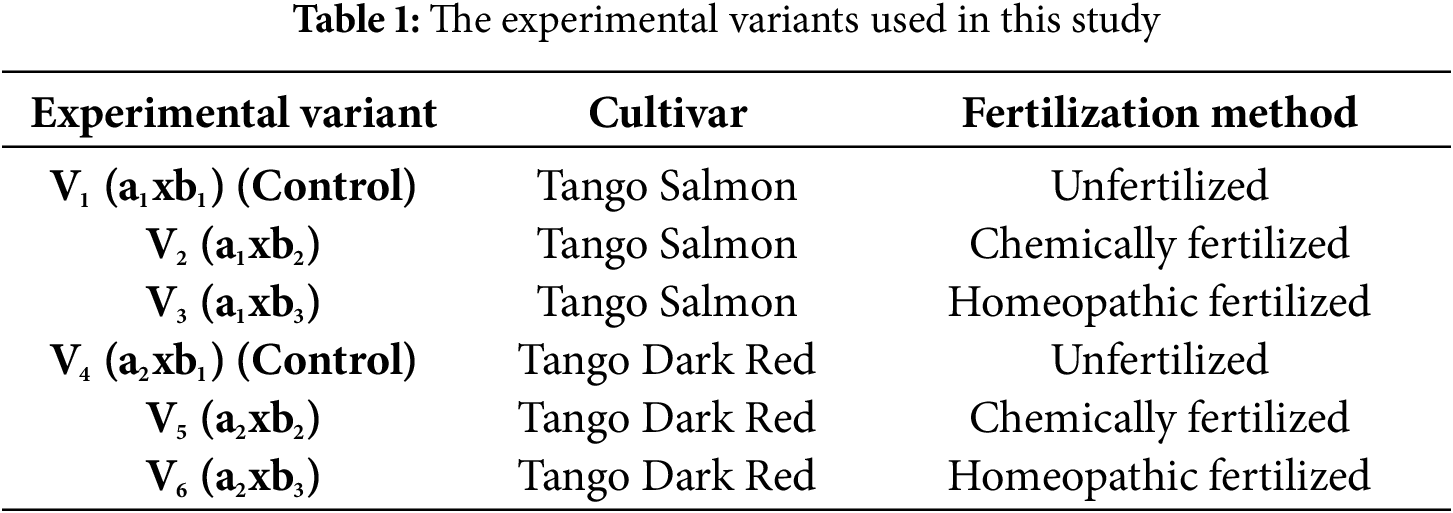
The experiment was conducted as a two-factor factorial study consisting of factor 1 (a), the geraniums’ cultivar (P. zonale (L.) L’Hér. ex Aiton), with two graduations, a1 = ‘Tango Salmon’ and a2 = ‘Tango Dark Red’, and factor 2 (b) was the fertilization method, with three graduations: b1 = unfertilized (control), b2 = chemically fertilized with Peters Professional 15-11-29+TE, in a dose of 1–2 g/L weekly, by drip, and b3 = unconventional fertilization with a mixture of natural homeopathic compound known as Schuessler Salts, at a dose of 5 mL/L tap water. The product was developed by a German physician from the 19th century (Dr. Wilhelm Heinrich Schuessler), who discovered the health benefits of various mineral salts and developed a homeopathic approach to utilize these mineral salts, allowing for their assimilation by the human body’s cells. The salts were purchased from homeopathic pharmacies as twelve separate liquid solutions.
The concentration of each homeopathic solution (DHU-Arzneimittel GmbH & Co. KG, Dieburg, Germany), was 100% (undiluted mother tincture, D1), as purchased from specialized homeopathic pharmacies. All solutions were in liquid form, ethanol-based, stored at room temperature. Prior to each application, equal volumes (calcium fluorite, calcium phosphate, iron phosphate, potassium chloride, potassium phosphate, potassium sulfate, magnesium phosphate, sodium chloride, sodium phosphate, sodium sulphate, silica and calcium sulfate, in a ratio of 1:1:1:1:1:1:1:1:1:1:1:1), of all 12 individual salt solutions were mixed to form a final composite mixture, and then diluted at a ratio of 5 mL per liter of tap water. This final mixture was freshly prepared and administered weekly by foliar spraying for 12 consecutive weeks, until the end of the flowering period.
From the combination of the two factors, six experimental variants were obtained which were placed in randomized blocks, in three repetitions each, with ten plants/repetition (Table 1).
The plants were planted in plastic pots (with a capacity of 1.5 L each, and a diameter of 12 cm), in a greenhouse located in the Transylvanian Horticultural Research Institute—ICHAT, within the University of Agricultural Sciences and Veterinary Medicine Cluj-Napoca. Chemical analyses were performed within the Environmental Quality Monitoring Laboratory of the Faculty of Agriculture. Pindstrup peat was used as soil substrate. Laboratory analyses consisted of determining pH using the potentiometric method and electrical conductivity [27].
The determination of the physicochemical parameters of the Pindstrup peat growing substrate targeted the following indicators: temperature, pH and electrical conductivity (EC), which were quantified on how they influence the growth of geranium plants.
Soil salinity can be estimated by measuring the EC of a saturated soil paste and estimating the percent saturation. The amount of total dissolved solids in a sample is determined by weighing the residue obtained after evaporation of a sample that has been filtered to remove particulate matter [28].
The results were expressed as means for the entire period of the investigation, in order to note the differences among the variants.
The IBM SPSS Statistics v.20 program for Windows was used to calculate the statistical parameters of interest corresponding to descriptive statistics (mean, standard error of the mean,), and the application of Least Significant Differences analysis at 5% significance threshold (LSD 5%). The Pearson multiple regression parametric test was chosen because the variability values (CV%) indicated the homogeneity of data and the representativeness of the means [29].
3.1 Analyzing the Physicochemical Indicators of Culture Substrate
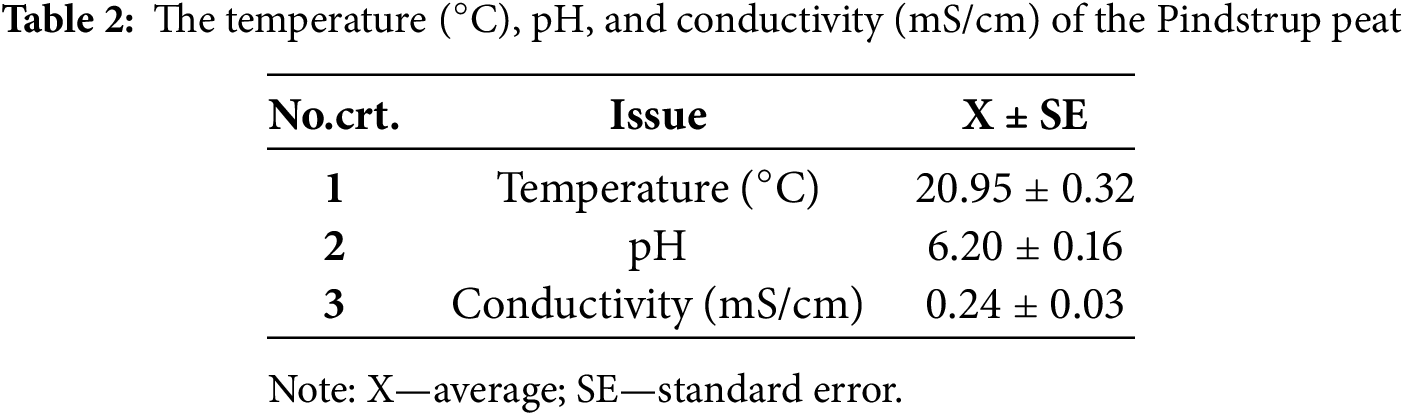
According to Table 2, the analysis of the properties of the Pindstrup peat growing substrate before culture installation revealed a series of notable characteristics.
As shown in Table 3, the physicochemical indicators of peat (pH, temperature, and electrical conductivity) influenced by plant growth under both conventional and unconventional fertilization variants used in this study.
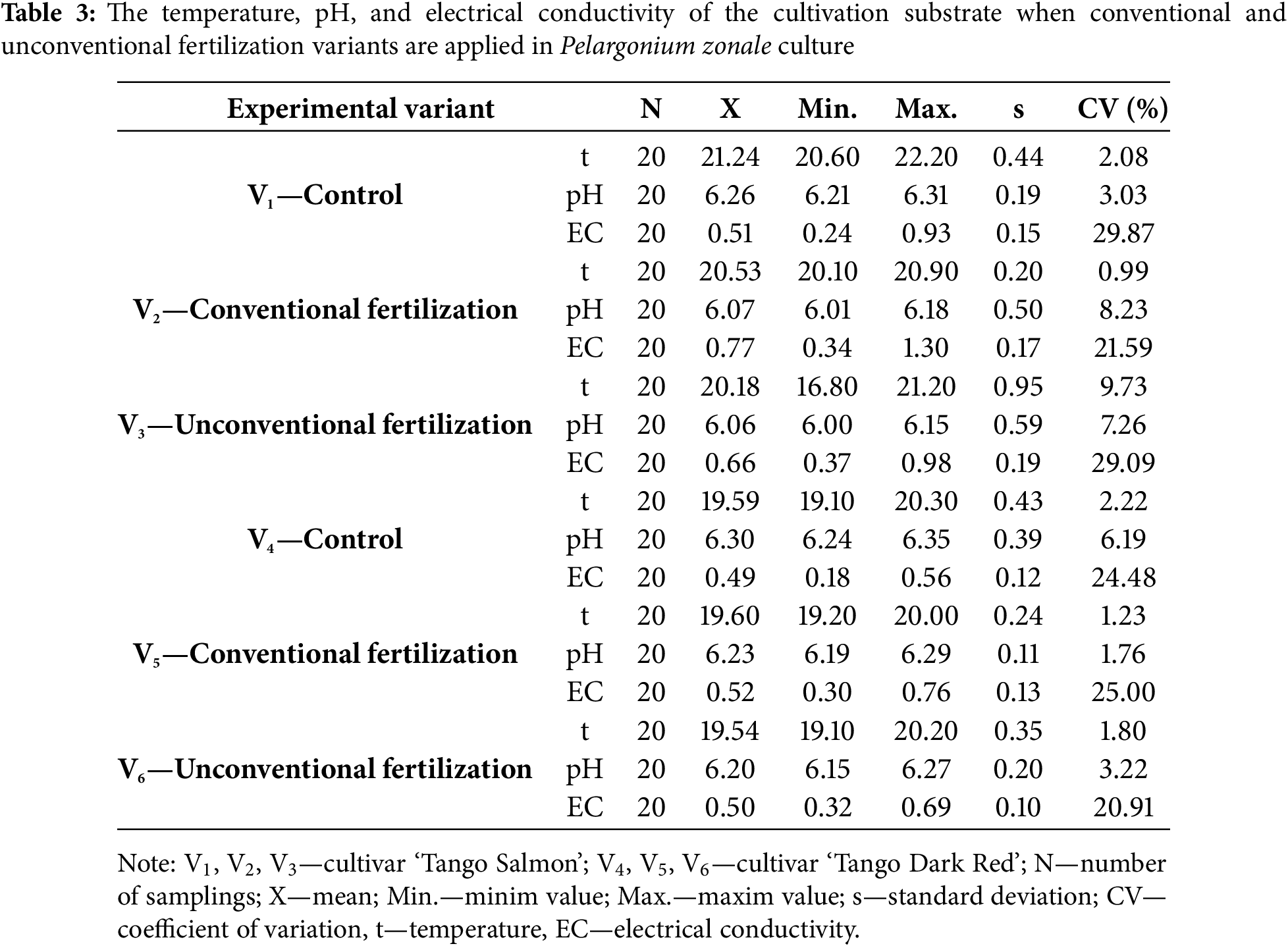
Analysis of Table 3 reveals that the geranium cultivar ‘Tango Salmon’ displays varying values across the experimental period regarding the analyzed culture substrate parameters, including temperature, pH, and electrical conductivity of peat, which depend on the fertilization variant.
The average soil temperature ranged from 20.18°C (V3) to 21.24°C in the control variant V1. The minimum temperature of the peat substrate, reported at 16.80°C, was observed in the unconventionally fertilized experimental variant V3, while the maximum value of 22.20°C was found in the control variant.
The peat pH exhibited average values ranging from 6.26 (V1) to 6.06 (V3), which are lower than the initial pH measured before planting (Table 2) of the peat substrate. The lowest value of individual pH measurements (6.00) is recorded under unconventional fertilization conditions V3, while the highest (6.31) is for the unfertilized control variant (V1). The greatest variability value (CV = 8.23%) is noted for the conventionally fertilized experimental variant, in contrast to the values recorded for pH under conditions V1 (CV = 3.03%) and unconventional fertilization V3 (CV = 7.26%).
The EC reflected the salt content of the treatments. The lowest average soil electrical conductivity, equal to 0.51 mS/cm, is reported for the control variant V1, while the highest, equal to 0.77 mS/cm, is for the conventionally fertilized variant V2 (Table 3). The minimum electrical conductivity—0.24 mS/cm—corresponds to the control experimental variant V1, and the maximum conductivity—1.30 mS/cm—corresponds to the conventionally fertilized experimental variant V2.
The temperature of the cultivation substrate changed significantly in the case of fertilization treatment and a descending gradient from control (21.24°C), via conventional (20.53°C) and unconventional fertilized variants (20.18°C) is observed, with differences exceeding LSD5% threshold (Table 3).
The present investigation for the ‘Tango Dark Red’ cultivar (Table 3) showed that the average temperatures of the growing substrate, namely the peat moss, are very close in value, falling within the range of 19.54°C (V6)–19.60°C (V5).The minimum value of peat temperature (19.1°C) is reported for both control variant V4, as well as for the unconventionally fertilized variant V6, while the maximum value (20.3°C), is reported for the control variant V4. The average peat pH has values ranging from 6.30 (V4) to 6.20 (V6).
These obtained values highlight the acidifying action on peat mosses of both the geranium cultivars studied and the fertilization system, respectively, conventional and unconventional (Table 3). The lowest pH value (6.15) and the highest (6.24) are reported for the unconventionally fertilized variant and the V4 control, which we consider to be also reflected by the fact that the highest variability value (CV = 6.19%) is also observed for control variant V4. Comparatively, in the fertilized experimental varieties, the coefficients of variation have the values: CV = 1.76% (V5) and CV = 3.22% (V6), this indicates a low variability of pH.
The average electrical conductivity of peat moss has values ranging from 0.49 mS/cm (V4) to 0.52 mS/cm (V5), with a minimum in the control variant V4 (0.18 mS/cm) and a maximum (0.76 mS/cm) in the conventionally fertilized experimental variant V5.
The coefficients of variation within the range CV = 20.91% (V6)—CV = 25% (V5), highlight the homogeneity of the evolution of the electrical conductivity of the peat during the plant cultivation process and the representativeness of the obtained averages (Table 3).
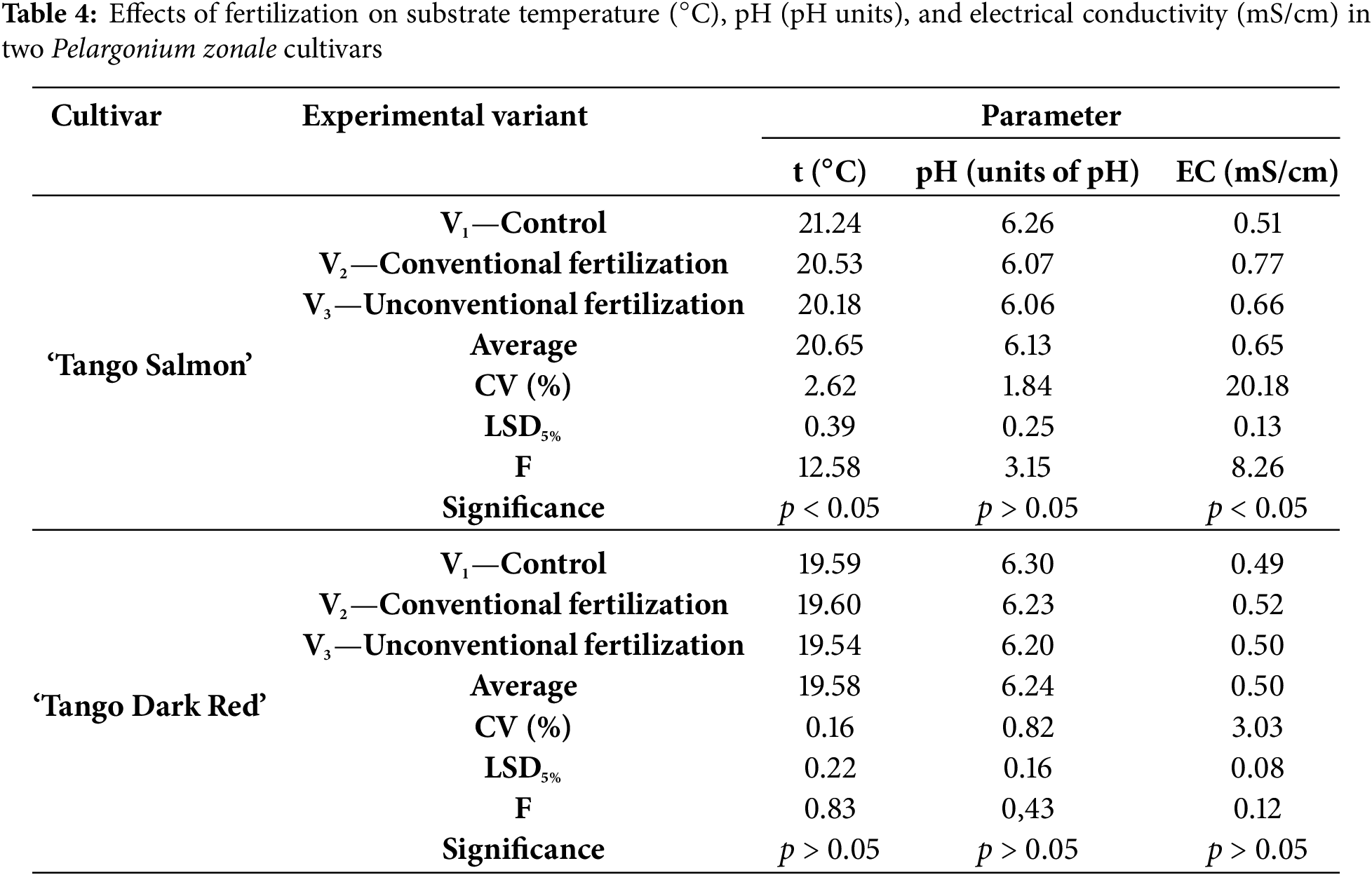
The response of the cultivar against fertilization input may be related to uptake efficiency, or physiological adaptability (Table 4).
For the ‘Tango Salmon’ cultivar (Table 5), the temperature of the substrate exhibited highly significant differences between all fertilization treatments. The p-values associated with the comparisons V1S–V2S (p = 1.02E−09) and V1S–V3S (p = 2.29E−05) were extremely low, confirming that both conventional and unconventional fertilization significantly reduced substrate temperature compared to the control. The comparison between V2S and V3S also reached significance (p = 0.027), though the effect size, as reflected in the F value, was smaller.
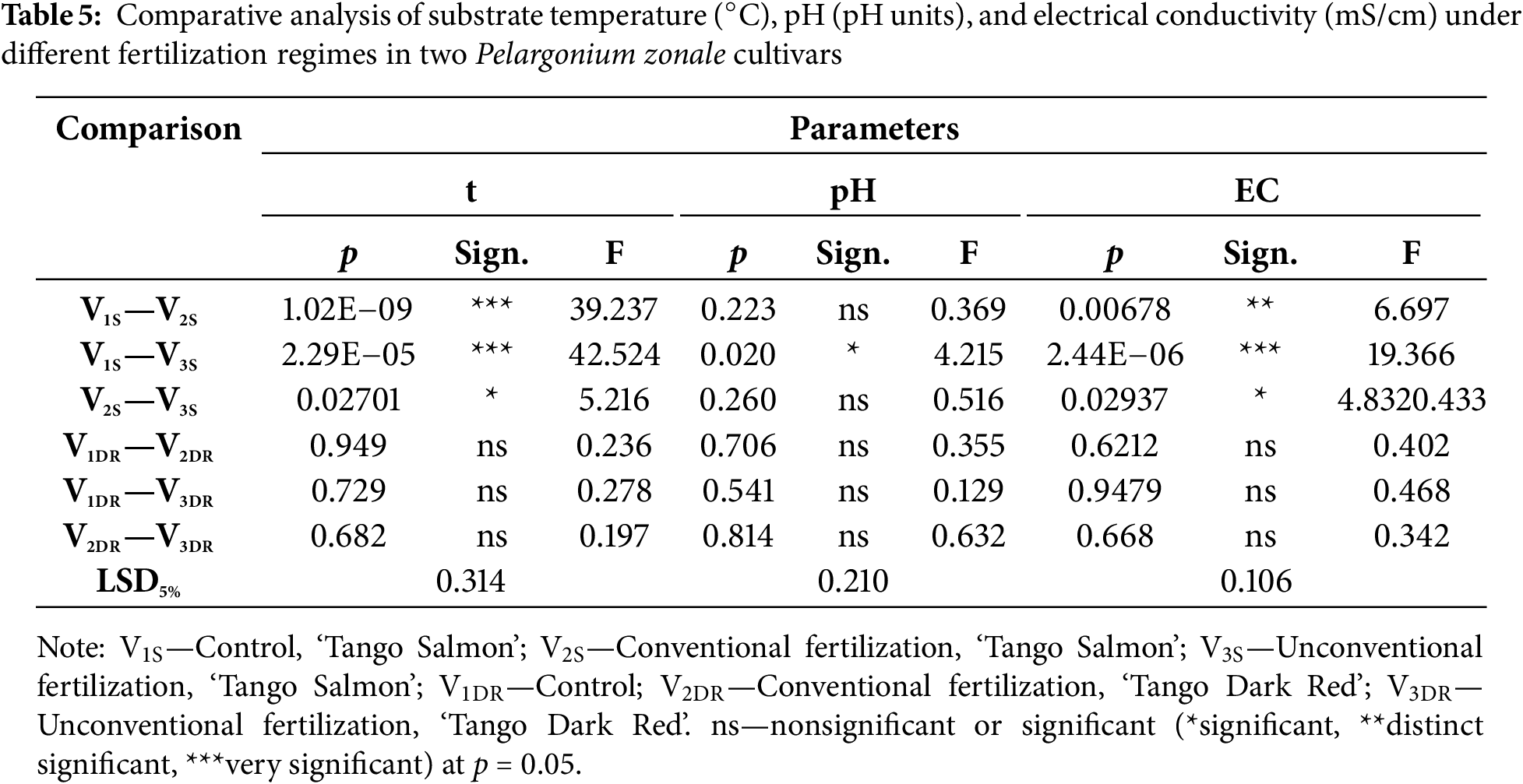
Regarding electrical conductivity, the results align consistently with the temperature pattern. Highly significant differences were observed between V1S and V3S (p = 2.44E−06; F = 19.366) and between V1S and V2S (p = 0.00678; F = 6.697), indicating that both fertilization methods substantially increased substrate salinity. The V2S–V3S comparison also yielded a statistically significant outcome (p = 0.029), suggesting that unconventional fertilization had a slightly stronger impact on EC than the conventional treatment. In terms of pH, the only statistically significant difference was recorded between V1S and V3S (p = 0.020; F = 4.215), suggesting a mild acidifying effect associated with unconventional fertilization. However, the other comparisons did not reach significance, and the absolute differences were relatively small, indicating that pH remains comparatively stable across treatments in this cultivar.
In contrast, the ‘Tango Dark Red’ cultivar exhibited no statistically significant differences for any of the three substrate parameters across all fertilization treatments. The p-values were uniformly above 0.6, and the F values remained very low, reflecting minimal variance between groups. This pattern confirms earlier observations (from Tables 3 and 4).
3.2 The Influence of the Physicochemical Parameters of the Cultivation Substrate on Geranium Height of Plant
Different substrates have different physical and chemical properties, such as water retention, aeration, pH, and nutrient availability, which affect plant growth and development [30]. According to the [31], different cultivation substrates significantly affect the growth and physiology of the Chinese rose, making substrate selection crucial for optimizing plant development. Therefore, the selection of a suitable substrate is essential for successful plant cultivation.
Results in Table 6 shows that both in the conditions of lack of fertilization V1 and the use of conventional fertilization V2, correlations of medium intensity are reported, adequate in value (R = 0.519 and, respectively, R = 0.509), which have representativeness equal to 27% and, respectively, 25.9%.
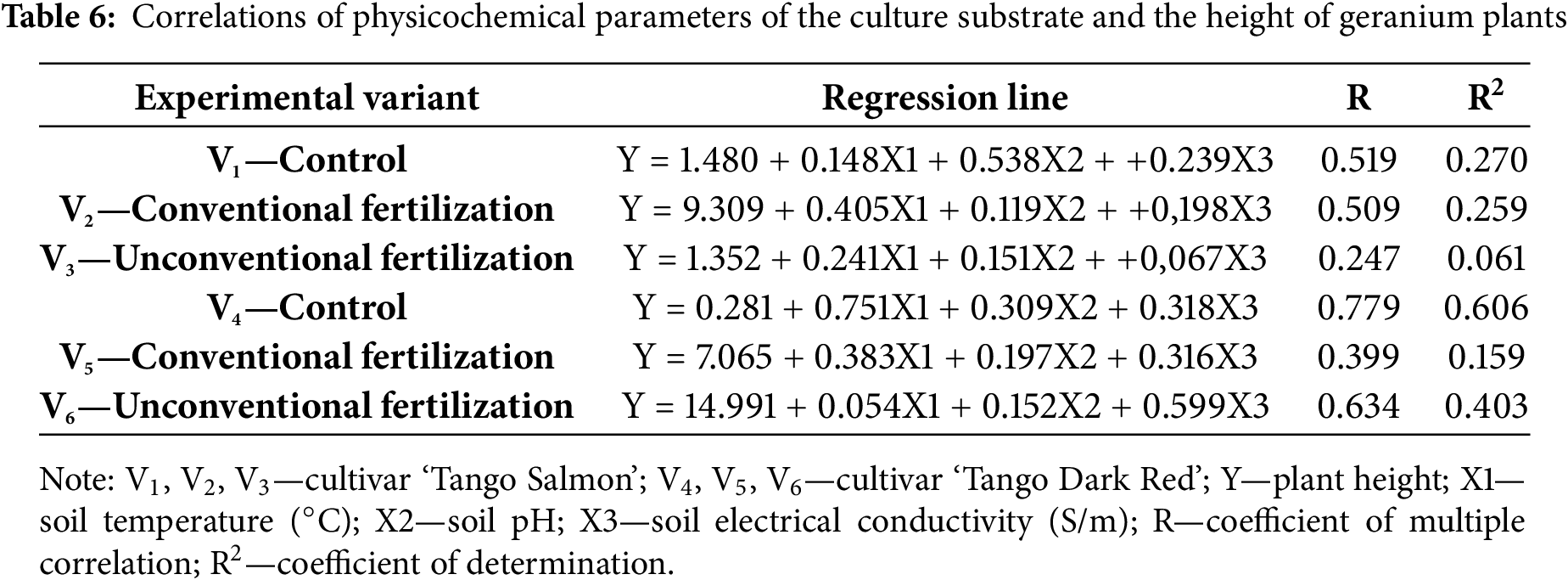
A different situation, however, is reported in the case of applying unconventional fertilization V3, for which a weak correlation is recorded (R = 0.247).
In this case, only for 6.1% of the total geraniums included in the experiment in which unconventional fertilization is administered, their height growth is influenced by the physicochemical parameters of the peat (temperature, pH, electrical conductivity), in a manner described by the regression line: if soil temperature (X1) increases by one unit, plant height (Y) increases by 0.241 units, when the other factors (soil pH (X2) and soil electrical conductivity (X3) remain constant.
4.1 Analyzing the Physicochemical Indicators of Culture Substrate
The study analyzed how different fertilization methods can influence the physicochemical indicators of the culture substrate, respectively of the peat (temperature, pH and electrical conductivity) of two varieties of Pelargonium zonale (L.) L’Hér., grown in pots, under greenhouse conditions.
The data obtained of the geranium cultivar ‘Tango Salmon’ based on the results presented, it can be stated that acidification is attenuated by fertilization, more significantly in the case of conventional fertilization V2 (chemically fertilized with Peters Professional 15-11-29+TE, in a dose of 1–2 g/L weekly) and less in the case of unconventional fertilization V3 (homeopathic fertilized). This could suggest that the fertilization solution contributes to the modification of soil pH to a lesser extent compared to the type of crop installed.
Regarding the evolution of temperature and pH of peat, low variability is reported (CV < 10.00%), highlighting the homogeneity of these parameters and the strong representativeness of their averages. In contrast, the electrical conductivity of peat shows significant variation (over 20%), which nonetheless indicates the consistency of individual values and the representativeness of the averages. In the case of unconventional fertilization (CV = 29.09%) and the unfertilized control variant (CV = 29.87%), the coefficients of variation are very close to the maximum threshold that indicates homogeneity in the evolution of the discussed parameter and the representativeness of the averages. For the conventionally fertilized experimental variant, the variation is lower than in the control and unconventional variants (CV = 21.59%). This value implies that the addition of electrolytes (which are present in conventional fertilizer) enhances the uniformity of electrical conductivity in the culture substrate compared to the other experimental variants.
The temperature of the cultivation substrate changed significantly in case of fertilization treatment. A descending gradient from control (21.24°C), via conventional (20.53°C) and unconventional fertilized variants (20.18°C) is observed, with differences exceeding LSD5% threshold. These results show that fertilization, especially unconventional treatment, modify the microclimatic conditions in the substrate, probably by different microbial activity or nutrient changes affecting heat retention. Similarly, electric conductivity showed significantly higher values in the fertilized variants, especially when conventional treatment was administered (0.77 mS/cm) compared with control (0.51 mS/cm), which suggests a possible nutrient accumulation in the root zone. In contrast, variations in pH are nonsignificant, perhaps because of a relative buffering capacity of the substrate (Table 3).
The present study for the ‘Tango Dark Red’ cultivar showed that the average temperatures of the peat moss, are very close in value. The values obtained highlight the acidifying action on peat moss of both the studied geranium varieties and the fertilization system, respectively conventional and unconventional. Thus, our study shows in ‘Tango Dark Red’ cultivar, few differences between temperature, pH, and EC values measured in growing substrate function of treatments, and they are statistical not significant.
Comparative analysis of substrate temperature, pH and electrical conductivity under different fertilization regimes in two P. zonale cultivars indicated differences between the analyzed cultivars. Thus, for the ‘Tango Salmon’ cultivar, very significant differences in substrate temperature between all fertilization treatments, suggest that nutrient input—regardless of its source—may alter microbial activity, moisture retention, or thermal conductivity in the substrate, resulting in measurable thermal shifts. Also, electrical conductivity recorded highly significant differences, which confirm the sensitivity of EC to nutrient load and further reinforce the role of fertilization in modifying the ionic environment of the rhizosphere. In contrast, regarding pH the small differences indicate that this parameter remains comparatively stable across treatments in this cultivar. For the ‘Tango Dark Red’ cultivar no statistically significant differences confirms earlier observations and suggest that maintains substrate homeostasis regardless of fertilization strategy. This may reflect cultivar-specific physiological traits, such as a more conservative nutrient uptake strategy, reduced root exudation, or stronger internal buffering mechanisms.
The cultivar-specific effects of fertilization on substrate properties show that while ‘Tango Salmon’ appears highly responsive to both conventional and unconventional nutrient inputs, showing measurable changes particularly in temperature and electric conductivity, in ‘Tango Dark Red’ they exhibit stability, potentially offering advantages in variable or low-input cultivation systems (Table 5). These findings may be relevant for precision horticulture, where the selection of cultivar–treatment combinations can be optimized to support both crop performance and substrate sustainability.
Results of some studies [32] indicated that certain chemical and physical properties of cocopeat can be improved by incorporating burnt rice husk and its positive effect was clearly reflected in the growth and development of Celosia cristata. They states that the positive effects of burnt rice hull were seen in the elevation of nutrient availability (as indicated by higher EC), increased bulk density, air-filled porosity, available water and wettability. Improvement in chemical and physical properties following incorporation of burnt rice hull into cocopeat was reflected in a better plant growth.
Other studies show that the parameters temperature, pH and Dissolvedoxygen (DO) have a strong negative correlation with orthophosphate (OP) and total phosphate (TP) concentrations with a correlation value of 0.828–0.982. In addition, ANOVA showed that both depth stratification and sampling location were influenced by the physicochemical parameters, i.e., temperature, pH and DO [33].
4.2 The Influence of the Physicochemical Parameters of the Cultivation Substrate on Geranium Height of Plant
The influence of chemical indicators of the culture substrate (pH, temperature, electrical conductivity) on the plant growth in the ‘Tango Dark Red’ geranium cultivar presents specific particularities.
All the physicochemical characteristics of peat moss analyzed in the present study positively influence plant growth, with an intensity, expressed by the multiple correlation coefficient (R), that differs greatly, depending on the fertilization variant.
If in the control variant V4, fertilization is not administered to care and in the conditions of unconventional fertilization V6, strong correlations are observed (R = 0.779 and, respectively, R = 0.634), with representativeness equal to 60% and, respectively, 40.3%, in the case of conventional fertilization V5, the correlation is average media (R = 0.399), and in this case, its representativeness suggests that under conventional V5 fertilization conditions, for 15.9% of the plants studied, their height growth is influenced by the physicochemical parameters of the soil (temperature, pH, electrical conductivity), in a manner described by the regression line.
Moldovan et al. [12] were reported that the morpho-decorative characters of ‘Tango Salmon’ and ‘Tango Dark Red’ geranium cultivars differ significantly depending on the fertilization scheme applied. Concerning the plants’ height, number of stems/plants, leaves/plant, and flowers/inflorescence were all advantaged when using the unconventional fertilization scheme in ‘Tango Salmon’ geranium cultivar, while in ‘Tango Dark Red’ cultivar when conventional scheme was applied.
According to the results obtained by Moldovan et al. [21] for the cultivar ‘Tango Salmon’, it can be observed that differential fertilization led to significant differences in plant height and the number of flowers inside the inflorescence. The same authors mention that in the ‘Tango Dark Red’ cultivar, the use of conventional fertilization led to the best results for all morphological characteristics analyzed (18.90 cm height, 5.90 stems/plant, 14.95 leaves/plant and 37.55 flowers/inflorescence), while the lack of fertilization (control scheme) caused a decrease in the values of the above-mentioned characters. Gong et al. [34] obtained higher plant height values in the geranium varieties analyzed in the present study (39.98–61.51 cm), when residual compost and vermicompost as peat substitutes were used as growing media. The use of linear regression analysis to determine a relationship between two variables in order to derive information about one of them from the values of the other has also been used for other floricultural species [35].
The results of this study on the cultivar ‘Tango Salmon’ indicated that the physicochemical parameters of the cultivation substrate present the following maximum average values: 21.24°C (unfertilized control), pH = 6.26 and conductivity equal to 0.77 mS/cm (conventional fertilization), and for the cultivar ‘Tango Dark Red’ 19.6°C, conductivity equal to 0.52 mS/cm (conventional fertilization) and pH = 6.30 (unfertilized control).
These physicochemical characteristics of the culture substrate in the cultivar ‘Tango Salmon’ positively influence plant growth, with a medium intensity, in the absence of fertilization and in the case of conventional fertilization, and in the case of cultivar ‘Tango Dark Red’ cultivar with a strong intensity, in the absence of fertilization and in the case of unconventional fertilization In conclusion, results of this study indicated that all the tested physicochemical characteristics of the peat positively influence plant height, with an intensity expressed by the multiple correlation coefficients (R), whose value differs considerably, depending on the fertilization option and variety.
The findings of this research demonstrate that fertilization affects the physicochemical properties of the growing substrate and, thus, the growth performance of cultivars of Pelargonium zonale. In the case of the ‘Tango Salmon’ cultivar, conventional fertilization led to the highest average electrical conductivity (0.77 mS/cm), while in control, which was not fertilized, we obtained the highest average temperature (21.24°C). Regardless of treatment, pH shows small variations but statistically not significant.
In ‘Tango Dark Red’ cultivar, variations in substrate above mentioned parameters were negligible, suggesting a relatively constant physiological response to the varying fertilization input. Correlation analysis between substrate parameters and plant height indicated that substrate physicochemical properties influence plant growth depending on cultivar and fertilization patterns. Moderate correlations were recorded in ‘Tango Salmon’ control (R2 = 0.270) and under conventional treatment (R2 = 0.259), whereas strong correlations were observed in control (R2 = 0.606) and unconventional fertilization (R2 = 0.403) variants in the ‘Tango Dark Red’ cultivar. The results of the study indicate that Pelargonium zonale cultivars perceive fertilization strategies differently in a cultivar-specific way, with substrate temperature and electrical conductivity playing a significant positive role in plant development. Our findings also suggest that targeted fertilization strategies focused on cultivar and its response in interaction with substrate physicochemical parameters could further improve both plant quality and production of potted geraniums.
Acknowledgement: The authors are grateful to the University of Agricultural Sciences and Veterinary Medicine Cluj-Napoca for their support.
Funding Statement: This research received no specific grant from any funding agency in the public, commercial, or not-profit sectors.
Author Contributions: The authors confirm contribution to the paper as follows: Conceptualization: Andreea Moldovan and Maria Cantor; Data curation: Ioana Moldovan and Lukács Lehel; Formal analysis: Antonia Odagiu; Funding acquisition: Andreea Moldovan; Investigation: Andreea Moldovan and Ioana Moldovan; Methodology: Maria Cantor and Antonia Odagiu; Project administration: Andreea Moldovan; Resources: Andreea Moldovan and Ioana Moldovan; Software: Antonia Odagiu and Luchia Draghia; Supervision: Maria Cantor and Lucia Draghia; Validation: Maria Cantor and Antonia Odagiu; Visualization: Andreea Moldovan and Antonia Odagiu; Writing—original draft: Andreea Moldovan; Writing—review and editing: Antonia Odagiu, Lucia Draghia and Maria Cantor. All authors reviewed the results and approved the final version of the manuscript.
Availability of Data and Materials: The data that support the findings of this study are available from the first author Andreea Moldovan and Corresponding Authors, Ioana Moldovan and Maria Cantor, upon reasonable request.
Ethics Approval: Not applicable.
Conflicts of Interests: The authors declare no conflicts of interest to report regarding the present study.
References
1. Ben Hsouna A, Chahdoura H, Generalić Mekinić I, Maisto M, Kukula-Koch W, Ćavar Zeljković S, et al. A comprehensive review on traditional uses, chemical composition, pharmacological effects and applications in the food industry of Pelargonium odoratissimum (L.) L’Hér. in comparison to other Pelargonium spp. S Afr N J Bot. 2024;174(8):456–67. doi:10.1016/j.sajb.2024.09.027. [Google Scholar] [CrossRef]
2. Mativandlela SPN, Lall N, Meyer JJM. Antibacterial, antifungal and antitubercular activity of (the roots of) Pelargonium reniforme (CURT) and Pelargonium sidoides (DC) (Geraniaceae) root extracts. S Afr N J Bot. 2006;72(2):232–7. doi:10.1016/j.sajb.2005.08.002. [Google Scholar] [CrossRef]
3. Toma F. Floriculture and floral art, species used as pot plants for indoor design. Vol. 3. Bucuresti, România: INVEL Multimedia; 2009. [Google Scholar]
4. Batool S, Khan T, Misbah, Nasreen, Ayaz G. Morphometric and allometric study of zonal geranium (Pelargonium × Hortorum) species collected from northern Pakistan. Biomed Nurs. 2024;10(4). doi:10.7537/marsbnj100424.01. [Google Scholar] [CrossRef]
5. Flora of Pakistan. Flora of Pakistan/Pakistan Plant Database (PPD) [Internet]. St. Louis, MO, USA: Missouri Botanical Garden. Cambridge, MA, USA: and Harvard University Herbaria; 2014 [cited 2025 Aug 1]. Available from: http://www.tropicos.org/Project/Pakistan. [Google Scholar]
6. SANBI. South African National Biodiversity Institute plant information website [Internet]. Cape Town, South Africa: Kirstenbosch National Botanical Garden. Pretoria, South Africa: South African National Biodiversity Institute; 2014 [cited 2025 Aug 1]. Available from: http://pza.sanbi.org/. [Google Scholar]
7. Karagüzel Ö, Kahraman MU, Alp Ş. Enhancing genetic diversity in Pelargonium: insights from crossbreeding in the gene pool. PeerJ. 2024;12(4):e17993. doi:10.7717/peerj.17993. [Google Scholar] [PubMed] [CrossRef]
8. Celi D, Quiroz E, Beltrán-Noboa A, Machado A, Tejera E, Fernandez-Soto P. A chemical analysis of the Pelargonium species: P. odoratissimum, P. graveolens, and P. zonale identifies secondary metabolites with activity against gram-positive bacteria with multidrug-resistance. PLoS One. 2024;19:e0306637. doi:10.1371/journal.pone.0306637. [Google Scholar] [PubMed] [CrossRef]
9. Dole JM, Wilkins HF. Floriculture-principles and species. Englewood Cliffs, NJ, USA: Prentice Hall Inc.; 1999. p. 451–5. [Google Scholar]
10. Alshehri B. The Geranium genus: a comprehensive study on ethnomedicinal uses, phytochemical compounds, and pharmacological importance. Saudi J Biol Sci. 2024;31(4):103940. doi:10.1016/j.sjbs.2024.103940. [Google Scholar] [PubMed] [CrossRef]
11. Graça VC, Ferreira ICFR, Santos PF. Bioactivity of the Geranium genus: a comprehensive review. Curr Pharm Des. 2020;26(16):1838–65. doi:10.2174/1381612826666200114110323. [Google Scholar] [PubMed] [CrossRef]
12. Moldovan A, Odagiu A, Moldovan I, Dan C, Cantor M. Morpho-decorative characteristics of two geraniums (Pelargonium zonale L’Hér. ex Aiton) cultivars influenced by fertilization. Not Bot Horti Agrobot. 2023;51(2):13173. doi:10.15835/nbha51213173. [Google Scholar] [CrossRef]
13. Di O, Lavado RS. Heavy metal accumulation in Pelargonium hortorum: effects on growth and development. Phyton. 2009;78(1):75–82. doi:10.32604/phyton.2009.78.075. [Google Scholar] [CrossRef]
14. Cantor M, Buta E, Buru T. Cultura plantelor ornamentale in climat controlat (Cultivation of ornamental plants in controlled climate). Cambridge, MA, USA: Academic Press; 2021, publisher is AcademicPres Cluj-Napoca, Romania (In Romanian). [Google Scholar]
15. Draghia L, Chelariu EL. Floriculture. Iasi, Romania: Ion Ionescu de la Brad; 2011. (In Romanian). [Google Scholar]
16. Aboksari HA, Hashemabadi D, Kaviani B. Application of bio-fertilizer for Pelargonium peltatumgrowth in new organic substrates. J Plant Nutr. 2017;5:1–13. doi:10.1080/01904167.2017.1381733. [Google Scholar] [CrossRef]
17. Amidon C, Brobst J. Fun with pelargoniums. The Herbarist. 2001;67:26–30. [Google Scholar]
18. Bonato CM, Proença GT, Reis B. Homeopathic drugs Arsenicum album and Sulphur affect the growth and essential oil content in mint (Mentha arvensis L.). Acta Sci-Agron. 2009;3(1):101–5. doi:10.4025/actasciagron.v31i1.6642. [Google Scholar] [CrossRef]
19. Andrade MA, Casali VWD, Cecon PR. Growth and production of coumarone in the plants of cambá (Justicia pectoralis Jacq.) treated with isoterapic. Revista Brasileira de Plantas Medicinais. 2012;4(1):154–8. doi:10.1590/S151605722012000500005. [Google Scholar] [CrossRef]
20. Abasolo Pacheco F, Ojeda Silvera CM, García Gallirgos V, Melgar Valdes C, Nuñez Cerezo K, Mazón Suástegui JM. Efecto de medicamentos homeopáticos durante la etapa inicial y desarrollo vegetativo de plantas de pepino (Cucumis sativus L.). Terra. 2020;38(1):53. doi:10.28940/terra.v38i1.666. [Google Scholar] [CrossRef]
21. Moldovan AI. The influence of some technological links on growth and development of Pelargonium zonale (L) L’her. ex Aiton [Internet]. [cited 2025 Aug 1]. Available from: https://www.usamvcluj.ro/wp-content/uploads/2023/09/Moldovan-Andreea-Rezumat-1.pdf. [Google Scholar]
22. Aboksari HA, Hashemabadi D, Kaviani B. Effects of an organic substrate on Pelargonium peltatum and improvement of its morphological, biochemical, and flowering parameters by root-inoculated phosphate solubilizing microorganisms. Commun Soil Sci Plant Anal. 2021;52(15):1772–89. doi:10.1080/00103624.2021.1892735. [Google Scholar] [CrossRef]
23. Wallace J. Organic field crops. In: Hand book. Ottana, ON, USA: Canadian Organic Growers; 2001. [Google Scholar]
24. Amidon C, Brobst J. The Scented Pelargonium (family Geraniaceae). [cited 2025 Aug 1]. Available from: https://herbsocietyblog.wordpress.com/2023/11/27/the-scented-pelargonium-family-geraniaceae/. [Google Scholar]
25. Becker J. Brawner, Scented geraniums: knowing, growing and enjoying scented pelargoniums. Loveland, CO, USA: Interweave Press; 1996. [Google Scholar]
26. Bonaguro J, Coletto L, Sambo P, Nicoletto C, Zanin G. Environmental analysis of sustainable production practices applied to Cyclamen and zonal Geranium. Horticulturae. 2021;7(1):8. doi:10.3390/horticulturae7010008. [Google Scholar] [CrossRef]
27. Odagiu A. Basics of environmental monitoring. Cluj-Napoca, Romania: Bioflux; 2014. (In Romanian) [Google Scholar]
28. Rhoades JD. Salinity: electrical conductivity and total dissolved solids. In: Methods of soil analysis. Madison, WI, USA: Soil Science Society of America, American Society of Agronomy; 2018. p. 417–35. doi:10.2136/sssabookser5.3.c14. [Google Scholar] [CrossRef]
29. Merce E, Merce C. Statistics—consecrated paradigms and fulfilling paradigms. Cluj-Napoca, Romania: AcademicPres; 2009. [Google Scholar]
30. Dresbøll DB. Effect of growing media composition, compaction and periods of Anoxia on the quality and keeping quality of potted roses (Rosa sp.). Sci Hortic. 2010;126(1):56–63. doi:10.1016/j.scienta.2010.06.004. [Google Scholar] [CrossRef]
31. Wang Y, Cao T, Li J, Zhou H, Zhang H. Study on the main physicochemical characteristics of different plant cultivation substrates and their effects on standard roses. Plant Soil Environ. 2024;70(12):799–808. doi:10.17221/258/2024-pse. [Google Scholar] [CrossRef]
32. Ahmad. Chemical and physical characteristics of cocopeat-based media mixtures and their effects on the growth and development of Celosia cristata. Am J Agric Biol Sci. 2009;4(1):63–71. doi:10.3844/ajab.2009.63.71. [Google Scholar] [CrossRef]
33. Komala PS, Primasari B, Ayunin Q. The influence of the physicochemical parameters on the ortho phosphate and total phosphate concentrations of maninjau lake. J Phys: Conf Ser. 2020;1625(1):012061. doi:10.1088/1742-6596/1625/1/012061. [Google Scholar] [CrossRef]
34. Gong X, Li S, Sun X, Wang L, Cai L, Zhang J, et al. Green waste compost and vermicompost as peat substitutes in growing media for Geranium (Pelargonium zonale L.) and Calendula (Calendula officinalis L.). Sci Hortic. 2018;236:186–91. doi:10.1016/j.scienta.2018.03.051. [Google Scholar] [CrossRef]
35. Apostol M, Draghia L, Sîrbu C, Efrose RC, Flemetakis E, Hlihor RM, et al. Morphological, anatomical, physiological and genetic studies of iris Aphylla L. wild species conservation in “ex situ” conditions. Agriculture. 2024;14(12):2358. doi:10.3390/agriculture14122358. [Google Scholar] [CrossRef]
Cite This Article
 Copyright © 2025 The Author(s). Published by Tech Science Press.
This work is licensed under a Creative Commons Attribution 4.0 International License , which permits unrestricted use, distribution, and reproduction in any medium, provided the original work is properly cited.
 Downloads
 Citation Tools
