Guest Editor(s)
Prof. Dr. Ming Zhang
Email:mattzhming@163.com
Affiliation: Wood Material Science and Engineering Key Laboratory of Jilin Province, School of Materials Science and Engineering, Beihua University
Homepage:
Research Interests: Biomimetic intelligent research of biomass composites: (1) Structural design of superwetting wood nanocomposites and their applications in water purification and photothermal water collection; (2) Component disassembly, intelligent recombination and structural regulation mechanism of lignocellulose-based materials; (3) Biomimetic construction of biomimetic nanocomposites, control of surface interface wettability and its guiding water mechanism

Summary
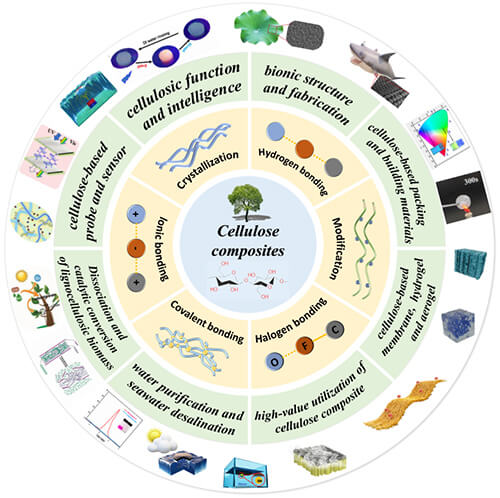
Cellulose composites involve multiple disciplines such as chemistry, physics, biology, materials science, environmental science, etc. in their sustainable developments and multifunctional material applications. With unique advantages of environmentally friendly, multifunctional, economical and innovative potential, cellulose composites (e.g. membrane, hydrogel and aerogel) have been widely applied in biomedicine, catalysis, seawater desalination, water purification, textiles, food packing, building materials, probe and sensor. Due to traditional processing methods, some cellulose composites may have drawbacks such as insufficient mechanical properties, complex processing steps, high energy consumption, poor environmental adaptability, flammability, etc. In this Special Issue, our intention is to gather researchers and practitioners from different fields to share their latest research findings on the progress of cellulose composites in sustainable development and multifunctional applications.
The topics of interest include but are not limited to:
dissociation of lignocellulosic biomass;
cellulosic function and intelligence;
catalytic conversion of lignocellulose;
bionic structure and fabrication;
cellulose-based membrane, hydrogel and aerogel;
water purification and seawater desalination;
cellulose-based probe and sensor;
cellulose-based packing and building materials;
high-value utilization of cellulose composite
Graphic Abstract
Keywords
lignocellulosic biomass; lignocellulose dissociation; cellulose composite; cellulosic function and intelligence; catalytic conversion of lignocellulose; bionic structure and fabrication; porous membrane, hydrogel and aerogel; high-value utilization
Published Papers

 Login
Login Register
 Submit a Paper
 Propose a Special lssue