Guest Editor(s)
Dr. Dongdong Wang
Email: wangdd526@163.com
Affiliation: School of Energy and Environment, Anhui University of Technology, Ma'anshan, China
Homepage:
Research Interests: phase change, loop heat pipe, enhanced heat transfer
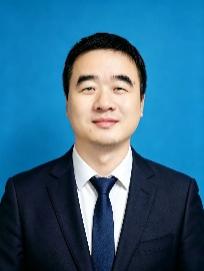
Prof. Huaqiang Chu
Email: hqchust@163.com
Affiliation: School of Energy and Environment, Anhui University of Technology, Ma'anshan, China
Homepage:
Research Interests: boiling heat transfer, radiative heat transfer
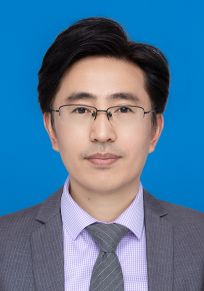
Dr. Jinxin Wang
Email: wangjx@bzuu.edu.cn
Affiliation: Department of Electronic and Information Engineering, Bozhou University, Bozhou, China
Homepage:
Research Interests: machine Learning, multiphase flow, heat and mass transfer

Summary
Multiphase flow and heat and mass transfer lie at the core of numerous critical applications, including fuel cells, spray cooling, microelectronics thermal management, porous media drying, HVAC systems, and advanced energy conversion devices. From droplet dynamics in electrohydrodynamic atomization and evaporation within capillary wicks to multiphase transport in electrochemical reactors and boiling in high-heat-flux components, these processes inherently involve complex interfacial evolution, phase interactions, and multiscale heat and mass exchange. Such richness in physics poses formidable challenges for traditional modeling and experimental diagnostics. The advent of machine learning is now transforming this landscape, offering unprecedented capabilities to extract patterns from high-dimensional data, accelerate multiphysics simulations, and enable real-time monitoring and intelligent control.
This Special Issue aims to spotlight pioneering research that fuses machine learning methodologies with the physics of multiphase flow and heat and mass transfer. We seek contributions that advance data-driven algorithms, physics-informed learning, and their seamless integration with experiments and simulations, spanning from mechanistic understanding to applied thermal-fluid system optimization.
Suggested themes include, but are not limited to:
· Physics-informed and data-driven modeling of multiphase flow and transport;
· Deep learning for phase-change heat transfer, boiling, condensation, and evaporation;
· Flow regime identification and multiphase pattern recognition via neural networks;
· Surrogate models and reduced-order modeling for heat and mass transfer systems;
· Reinforcement learning for active flow and thermal control;
· Image-based multiphase diagnostics and experimental data assimilation;
· Uncertainty quantification, inverse problems, and design optimization;
· Digital twins for intelligent thermal management and energy systems.
Keywords
machine learning; multiphase flow; heat and mass transfer; data-driven modeling; physics-informed neural networks; flow pattern recognition; thermal management

 Login
Login Register
 Submit a Paper
 Propose a Special lssue