Guest Editor(s)
Prof. Dr. Mohammad Salman
Email: mohammad.salman@aum.edu.kw
Affiliation: College of Engineering and Technology, American University of the Middle East, Egaila, Kuwait
Homepage:
Research Interests: adaptive control, optimization and signal processing

Assoc. Prof. Dr. Mostafa Rashdan
Email: mostafa.rashdan@aum.edu.kw
Affiliation: College of Engineering and Technology, American University of the Middle East, Egaila, Kuwait
Homepage:
Research Interests: mixed signal integrated circuit design, control theory and digital signal processing
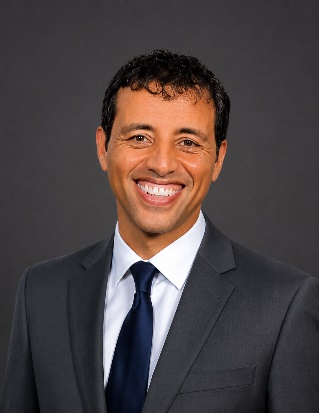
Assoc. Prof. Dr. Davut Izci
Email: davutizci@uludag.edu.tr
Affiliation: Department of Electrical and Electronic Engineering, Bursa Uludag University, Bursa, Turkey
Homepage:
Research Interests: control system design, metaheuristics, optimization and engineering applications

Assoc. Prof. Dr. Mohammad Al-Abed
Email: mohammad.al-abed@aum.edu.kw
Affiliation: College of Engineering and Technology, American University of the Middle East, Egaila, Kuwait
Homepage:
Research Interests: sleep apnea, signals and systems, detection of pathology, neural networks and classification modeling of renewable energy systems

Summary
The complexity of modern engineering systems such as autonomous vehicles, smart grids, flexible manufacturing cells, biomedical devices, and aerospace platforms, demands control strategies that are not merely reactive but genuinely adaptive. Classical fixed-gain regulators, however carefully tuned, cannot compensate for the structural uncertainties, time-varying dynamics, and unpredictable external disturbances that characterize these environments. Over the past decade, the convergence of model-based adaptive control theory with data-driven learning paradigms has opened a remarkable frontier: controllers that refine their internal representations in real time, guarantee closed-loop stability under rigorously stated conditions, and progressively improve performance as operational experience accumulates.
This Special Issue is conceived as a dedicated forum for high-quality, original research that advances the theory and practice of adaptive control. It brings together contributions from control engineers, applied mathematicians, robotics researchers, and practitioners to chart the current state of the field and articulate its most compelling open challenges.
The issue is structured around the following thematic pillars:
• Model reference adaptive control (MRAC): stability analysis, transient-performance, and command-filtered extensions;
• Self-tuning regulators and online parameter estimation: recursive least squares, Kalman-filter-based identifiers, and Bayesian approaches;
• Reinforcement learning and data-driven adaptive control: policy-gradient methods, actor-critic architectures, safe exploration, and sample efficiency;
• Robust and fault-tolerant adaptive control: H-infinity frameworks, sliding-mode strategies, and accommodation of actuator or sensor faults;
• Intelligent adaptive control: fuzzy-logic supervisors, neural-network approximators, and neuro-fuzzy hybrids for nonlinear plant compensation.
• Adaptive control of biomedical systems: patient-specific physiological modeling, identification of time-varying and inter-subject biological dynamics, and closed-loop regulation in drug delivery, autoregulation, neuromodulation, and assistive devices.
Beyond purely theoretical developments, the issue expressly welcomes application-oriented studies in which rigorous performance metrics, comparative benchmarks, and reproducible experimental protocols validate the proposed methods in realistic settings. Interdisciplinary contributions that bridge adaptive control with the Internet of Things, digital-twin platforms, or cyber-physical security are especially encouraged.
Keywords
adaptive control, data-driven control, neural network control, fuzzy adaptive systems, autonomous systems, online parameter estimation, nonlinear systems, intelligent control, biomedical system modelling

 Login
Login Register
 Submit a Paper
 Propose a Special lssue