Guest Editor(s)
Assist. Prof. Vikul Vasudev
Email: vikulvasudev@njfu.edu.cn
Affiliation: National-provincial joint engineering research center of biomaterials for Machinery Package, Nanjing Forestry University, Nanjing, China
Homepage:
Research Interests: biomass; biochar; machine learning; modelling, optimization algorithm
Dr. Shri Ram
Email: shri.ram@hit.edu.cn
Affiliation: School of Energy Science and Engineering, Harbin Institute of Technology, Harbin, China
Homepage:
Research Interests: catalysts; kinetic modeling; thermochemical conversion of biomass; algal biomass; biochar

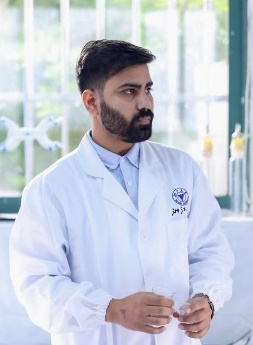
Dr. Noor-Ul-Huda Altaf
Email: 20250379@hit.edu.cn
Affiliation: School of Energy Science and Engineering, Harbin Institute of Technology, Harbin, China
Homepage:
Research Interests: biomass; biochar; carbon materials; nanocomposites; degradation
Summary
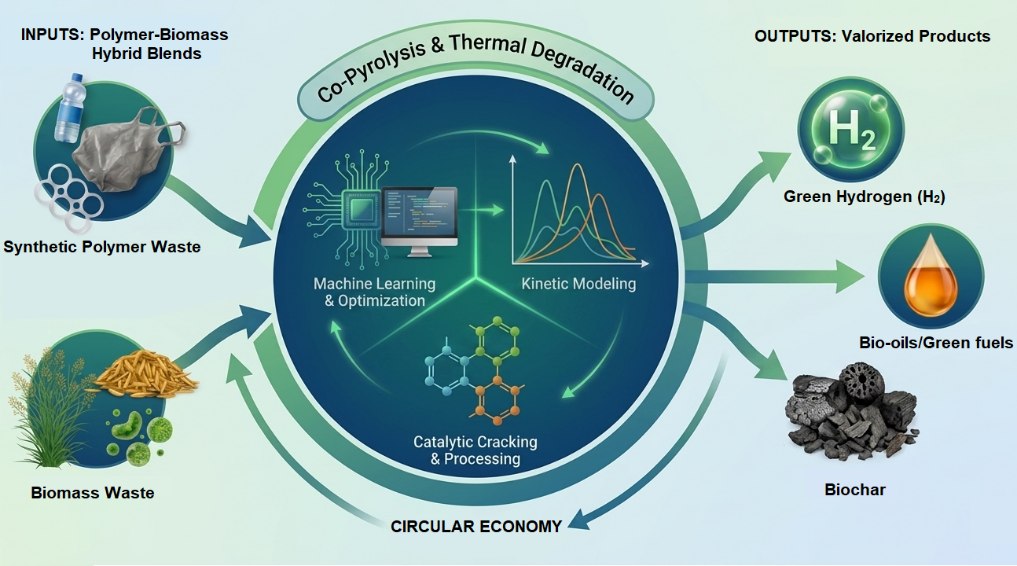
As a critical pillar of modern circular economy initiatives and sustainable engineering, the thermochemical co-processing of synthetic polymer waste with lignocellulosic or algal biomass residues has shown broad application prospects in chemical recycling, green hydrogen generation, and carbon-neutral energy production. With the continuous progress of materials recovery technologies, unlocking the complex thermal degradation mechanisms of comingled polymer-biomass feeds has become a key force to promote high-efficiency conversion and chemical upcycling pathways. These advanced co-processing methodologies cover many aspects, including but not limited to: synergistic free-radical interaction pathways, interfacial mass transfer, catalytic cracking, multi-component co-pyrolysis kinetics, and advanced mathematical optimization. In addition, we focus heavily on the integration of data-driven approaches such as the Non-linear regressions coupled with evolutionary algorithms and machine learning architectures to accurately identify overlapping thermal reactions.
The purpose of this special issue is to bring together researchers from different engineering and chemistry fields to share their advanced experimental frameworks, multi-step modeling ideas, and numerical parameter estimation routines for hybrid polymer waste streams. These innovations not only provide more reliable, predictive modeling tools for scaling up thermochemical reactors but also accelerate the transition of polymer-based materials toward high-performance, green, and circular industrial frameworks.
Graphic Abstract
Keywords
polymer degradation; co-pyrolysis; thermochemical recycling; ulti-step kinetics; synergistic effects; biomass-plastic blends; numerical optimization; circular economy

 Login
Login Register
 Submit a Paper
 Propose a Special lssue