
 Login
Login Register
 Submit a Paper
 Propose a Special lssue
 Open Access
REVIEW

Cellulose-Chitosan Based Bioplastics: Sustainable Production Approaches, Advanced Applications and Emerging Prospects
1 Department of Chemistry and Chemical Technology, M.Kh. Dulaty Taraz University, Taraz, Kazakhstan
2 Department of Science and Humanities, Providence College of Engineering, Chengannur, Kerala, India
3 Department of Chemistry, School of Advanced Sciences, Vellore Institute of Technology, Vellore, Tamil Nadu, India
4 Department of Chemistry, Research Centre of University of Kerala, Christian College, Chengannur, Kerala, India
5 Santhigiri Scientific and Industrial Research Institute (SSIRI), Trivandrum, Kerala, India
6 Department of Biochemistry, College of Medicine, University of Hail, Hail, Saudi Arabia
7 Department of Bioengineering, Integral University, Lucknow, India
* Corresponding Author: Mohammed Kuddus. Email:
(This article belongs to the Special Issue: Cellulose and Nanocellulose in Polymer Composites: Sustainable Engineering Approach)
Journal of Polymer Materials 2026, 43(2), 6 https://doi.org/10.32604/jpm.2026.075396
Received 30 October 2025; Accepted 27 April 2026; Issue published 30 June 2026
 View Full Text
 Download PDF
Abstract
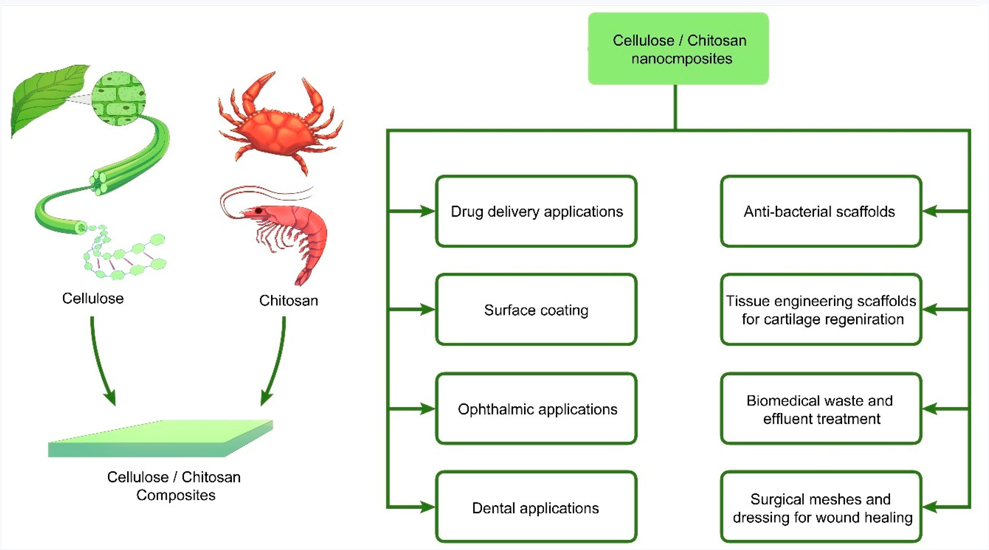
It takes centuries for chemically reinforced, short-term designed plastics to decompose naturally. Despite this, there has been a significant surge in plastics production recently, accounting for a considerable part of the total historical output. Forecasts indicate that plastics production could reach unprecedented levels if this trend continues. However, increasing environmental concerns and stricter waste regulations have intensified research into biodegradable alternatives. As a result, there is a growing shift toward sustainable polymeric systems capable of replacing conventional petroleum-based plastics. One such class of promising and renewable materials is cellulose-chitosan bioplastic. This review provides an in-depth justification for the incorporation of cellulose and chitosan into bioplastic matrices, emphasizing their biodegradability, biocompatibility, mechanical performance, and non-toxicity. In addition, specific surface modification strategies are highlighted, including plasma activation, chemical grafting, and nanoparticle-assisted functional coating, which significantly enhance interfacial compatibility and biological activity. The review also summarizes advanced production methodologies, such as solution casting, plasticizer-assisted blending, and controlled cross-linking, to demonstrate improvements in processing cellulose-chitosan bioplastics. Furthermore, emerging biomedical applications are discussed, in which cellulose-chitosan composites show substantial potential due to their antibacterial activity, bioresorbable, and wound-healing properties. These applications encompass vascular graft materials, hernia meshes, dural repair membranes, wound dressings, drug-delivery platforms, and scaffolds for tissue engineering. Overall, this review aims to outline “Cellulose-chitosan bioplastics: approaches to sustainable production”, while demonstrating how these multifunctional bio composites can reduce environmental burdens. The findings are expected to guide future research toward scalable fabrication, targeted surface engineering, and the development of next-generation biomedical materials.Graphic Abstract
Keywords
The global reliance on conventional plastics has led to an environmental crisis, with plastic waste accumulating in landfills, oceans, and ecosystems at an alarming rate [1]. These synthetic polymers, primarily derived from petrochemical sources, are non-biodegradable and persist in the environment for centuries, contributing to severe ecological damage, including microplastic pollution, soil contamination, and harm to marine life [2]. The increasing awareness of these detrimental effects has accelerated research into sustainable alternatives that can replace traditional plastics without compromising functionality [3]. Among the most promising solutions are bio-composites derived from natural polymers such as cellulose and chitosan [4]. These biopolymers offer exceptional biodegradability, biocompatibility, and versatility, making them highly suitable for biomedical engineering, food packaging, wastewater treatment, and other advanced applications [5].
Cellulose is the most abundant organic polymer on Earth, providing structural reinforcement, mechanical durability, and a renewable feedstock [6], while chitosan, a derivative of chitin, possesses intrinsic antimicrobial properties, excellent film-forming ability, and high compatibility with biological systems [7]. The integration of these two biopolymers yields materials with enhanced mechanical strength, thermal stability, and controlled degradation [8].
Recent literature highlights growing interest in cellulose-chitosan composites due to their potential in flexible electronics, biosensing, energy storage, and sustainable packaging. Chemical and physical modification of cellulose nanofibers has enabled the fabrication of active and eco-friendly packaging films with improved mechanical and antimicrobial performance [9]. Progress in the synthesis and surface functionalization of cellulose nanocrystals has resulted in tailored morphological, optical, and rheological properties suitable for advanced polymer composites [10]. In addition, sustainable biomaterials integrating cellulose, chitin, and chitosan exhibit enhanced biodegradability, film-forming ability, and structural stability [11]. Furthermore, blending nanocellulose with functional plant-based additives has enabled the development of antibacterial nanocomposite films for active food packaging applications [12].
Plastic has become integral to human life due to its low price, versatility, durability, and lightness. Despite its advantages, the harmful environmental impact of plastic is undeniable. Reinforced plastics may take up to 400 years to decompose, and over the past 15 years, production has increased significantly, accounting for half of all plastics ever produced. Projections indicate that, if this trend persists, global plastic production may reach 1 billion tons [13].
Bioplastics, regarded as eco-friendly alternatives, have gained growing attention. Chitosan and cellulose are especially promising due to their biodegradability, non-toxicity, and favorable physicochemical properties [14]. Chitosan is insoluble in most solvents but dissolves in mildly acidic solutions through protonation, which disrupts intermolecular hydrogen bonds. It is widely used in medicine owing to its biocompatibility; for example, chitosan hydrogels show excellent compatibility with chondrocytes. Chitosan is typically obtained by alkaline deacetylation of chitin from crustaceans and insects [15].
The use of bioplastics is expanding across various industries. In packaging, biodegradable films support high safety standards and environmental protection. Cellulose ensures biodegradability and renewability [16], while also providing significant mechanical strength to biodegradable films [17]. Cellulose can be extracted from agricultural residues such as corn, wheat, rice, sorghum, barley, and sugarcane. For example, cellulose extracted from barley bran requires lipid removal, alkali treatment, and bleaching using sodium acetate buffer [18]. However, this multi-step process takes up to 72 h and requires significant chemical use.
Recent studies propose more efficient extraction protocols, including alkaline pulping followed by acidification and deep eutectic solvent extraction, which reduce processing time and energy demand while increasing cellulose purity [19].
The past decades have witnessed substantial research in polymer-based materials across multiple fields due to improvements in functional performance after chemical modification. Remarkable progress has been made in biomedical applications through polymer-based scaffolds and biocompatible coatings [19], while polymeric adsorbents and membrane systems have significantly advanced wastewater treatment technologies [20]. Furthermore, polymer composites have demonstrated improved durability for construction applications [21–24], and functional polymeric nanostructures have enhanced performance in electronic and sensor devices [25,26]. These developments are largely attributed to property tuning achieved through chemical modification and structural optimization of polymeric matrices [27]. Recent studies also emphasize that tailored molecular interactions and crosslinking can significantly improve physicochemical performance and long-term stability [28], while nanoscale modifications further enhance mechanical strength, electrical conductivity, and functional responsiveness [29]. Significant advancements include cellulose/chitosan biomaterials for skin tissue regeneration due to their haemostatic, antibacterial, biodegradable, and biocompatible properties [30].
Chitosan, identified by Rouget in 1859, remains commercially important among natural polymers [31]. Chitosan is widely applied in pharmaceuticals, biotechnology, food packaging, functional membranes, and environmental remediation because both chitosan and its degradation products are environmentally benign [32]. In addition, its biocompatibility and natural biodegradability support applications in active food packaging and biomedical formulations [33]. Furthermore, its inherent antimicrobial properties and low toxicity make it useful in functional membranes and environmental remediation [34]. The primary amine groups present in chitosan allow versatile chemical functionalization, enabling custom physicochemical and biological properties tailored for specific applications [35]. These functional groups facilitate cross-linking, grafting, and blending with other polymers, thus enhancing structural stability and performance [36]. Moreover, tailored modification strategies have expanded its use in controlled drug delivery, biosensing, and tissue engineering [37,38].
This review explores the utilisation of cellulose/chitosan composites and their fabrication methods. The main focus is on bioplastic polymeric scaffolds derived from cellulose and chitosan. The review concludes with a critical assessment of existing scaffold-preparation techniques and discusses current limitations and future opportunities for advanced material development.
2 Natural Sources for the Production of Biodegradable Plastics
The shift toward biodegradable plastics has increasingly focused on naturally derived feedstocks, not only to reduce environmental burden but also to establish sustainable material life cycles. Rather than serving merely as polymer substitutes, natural biopolymers are now being strategically engineered to meet specific functional requirements such as barrier performance, mechanical robustness, and biological activity. Current research converges on four dominant classes, polysaccharides, proteins, lipids, and microbial biopolymers each offering distinct advantages and inherent limitations that dictate their processing routes and application domains [39–42]. A critical challenge across all natural polymers remains the trade-off between biodegradability and performance stability, particularly moisture sensitivity and mechanical fragility. Consequently, recent studies increasingly emphasize chemical modification, polymer blending, and nano structuring strategies to overcome these intrinsic constraints, shifting the field from simple material extraction toward functional bioplastic design.
Starch is the most extensively investigated natural polymer for biodegradable plastics due to its global abundance, renewability, and low cost [43]. Thermoplastic starch (TPS), obtained through gelatinization in the presence of plasticizers such as glycerol or sorbitol, enables melt processing using conventional polymer technologies [44]. However, native and plasticized starch films typically exhibit low tensile strength (2–6 MPa), poor elongation, and high moisture uptake (>40%), severely limiting direct substitution for petroleum-based plastics. To overcome these intrinsic weaknesses, recent studies increasingly emphasize polymer blending and nanostructural reinforcement. Blends with PLA or PCL enhance tensile strength to approximately 10–25 MPa while improving dimensional stability, although phase incompatibility often constrains long-term durability [45]. More recent works from 2019–2024 demonstrates that incorporation of nanocellulose or starch nanocrystals at low loadings (3–8 wt%) can raise tensile strength into the 20–40 MPa range, while reducing water vapor permeability by up to 60%, reflecting a decisive shift from bulk plasticization toward interface-engineered starch systems [46].
Despite these advances, starch-based bioplastics remain thermodynamically unstable in humid environments and display limited thermal resistance, positioning them primarily for short-life packaging, disposable products, and agricultural mulches, where rapid biodegradation is advantageous rather than restrictive.
2.2 Alginate-Based Bioplastics
Alginate, extracted from brown seaweed, has attracted sustained attention due to its exceptional film-forming ability, biocompatibility, and intrinsic oxygen barrier performance [47]. Compared to starch films, alginate typically exhibits one order of magnitude lower oxygen permeability, making it particularly attractive for food-packaging applications where oxidative degradation is a concern [48,49]. However, neat alginate films are mechanically weak, with tensile strengths commonly below 5 MPa, and exhibit pronounced swelling in humid conditions. Contemporary research therefore increasingly positions alginate not as a standalone matrix but as a cross-linkable bio-scaffold. Ionic gelation with Ca2+ significantly improves cohesive strength, while hybridization with gelatin, starch, or cellulose nanofibers raises tensile strength into the 20–45 MPa range and markedly reduces water solubility [50]. Recent studies further demonstrate that incorporation of ZnO or Ag nanoparticles simultaneously enhances mechanical stability, UV shielding, and antimicrobial efficacy (>99% bacterial inhibition), redefining alginate bioplastics as multifunctional active materials rather than passive films [51].
This convergence of mechanical reinforcement and biological functionality has expanded alginate’s relevance from food packaging to wound dressings and controlled-release biomedical systems, although long-term stability under fluctuating humidity remains a persistent limitation.
Pectin, predominantly recovered from citrus and apple processing waste, represents a structurally diverse polysaccharide platform with adjustable esterification degrees [52,53]. While pectin-based films offer biodegradability, non-toxicity, and excellent film uniformity, they typically display brittle mechanical behavior (tensile strength <5 MPa) and high-water vapor permeability, limiting their direct use in structural packaging [54,55]. To address these shortcomings, pectin systems are increasingly engineered through plasticization, polymer blending, and nanoscale reinforcement. Blends with starch, gelatin, or PLA raise tensile performance to approximately 10–22 MPa, though often at the expense of barrier properties [56]. More advanced strategies reported between 2020 and 2023 demonstrate that pectin-nanocellulose hybrid networks can achieve tensile strengths exceeding 30 MPa with 30%–55% reductions in water vapor permeability, indicating the emergence of pectin as a viable component in high-performance biocomposite films. Consequently, pectin bioplastics are evolving from brittle edible coatings toward engineered matrices for active food packaging and pharmaceutical systems, where controlled degradation and functional tunability are prioritized over long-term load-bearing capacity [57].
Protein-based bioplastics offer a chemically versatile alternative to polysaccharides due to their heterogeneous amino acid composition and reactive functional groups [58]. This molecular diversity enables extensive cross-linking and intermolecular interactions, allowing property modulation across a broader range than most carbohydrate polymers. Nevertheless, most protein films remain mechanically brittle and hydrophilic, necessitating systematic modification.
2.4.1 Soy Protein-Based Bioplastics
Soy protein films are attractive due to abundance and biodegradability, yet typically exhibit tensile strengths below 5 MPa and high moisture sensitivity [59]. Cross-linking and polymer blending elevate tensile values to approximately 12–25 MPa, while recent nanocomposite strategies report strengths approaching 30 MPa with substantial reductions in water uptake [60]. These improvements have repositioned soy protein from a fragile biofilm to a viable short-life packaging and agricultural material, although humidity-induced plasticization remains a fundamental challenge.
Zein differs fundamentally from most protein polymers due to its hydrophobicity and superior oxygen barrier properties, which often surpass those of starch and gelatin systems [61–64]. Zein films routinely demonstrate lower water vapor transmission and improved solvent resistance; however, brittleness and poor flexibility limit standalone applications. Recent cross-linked zein nanocomposites exhibit tensile strengths exceeding 35 MPa, highlighting zein’s potential in coatings, encapsulation technologies, and controlled-release systems rather than bulk packaging.
2.4.3 Gelatin-Based Bioplastics
Gelatin forms transparent, flexible films with tensile strengths ranging from 15–40 MPa, outperforming many plant-derived polysaccharides [65,66]. Its biological origin confers inherent cell affinity, supporting extensive use in wound dressings, scaffolds, and bioactive films [67–69]. However, gelatin’s rapid moisture absorption and thermal instability restrict long-term environmental applications, reinforcing its positioning within biomedical rather than commodity plastic sectors.
2.4.4 Casein-Based Bioplastics
Casein is historically significant in biodegradable plastics and continues to attract interest due to its high cohesive strength and biodegradability [70]. Nevertheless, unmodified casein films are rigid and moisture-sensitive, and extensive cross-linking is required to achieve flexibility. As a result, contemporary research increasingly frames casein not as a bulk polymer but as a functional additive or composite phase.
2.5 Microbial-Derived Biopolymers
Microbial-derived biopolymers occupy a distinct and strategically important position in the biodegradable plastics landscape because, unlike most plant-derived polymers, they exhibit thermoplastic behavior, controllable molecular architecture, and mechanical performance approaching that of commodity plastics [71,72]. These systems bypass several limitations of polysaccharides and proteins, particularly poor melt processability and uncontrolled water sensitivity. However, their broader adoption is fundamentally constrained by economic feasibility, fermentation scalability, and downstream processing efficiency. Compared with starch or protein-based plastics, microbial polymers typically demonstrate higher tensile strengths (20–70 MPa), superior elongation behavior, and wider thermal processing windows (Tm ≈ 120°C–180°C) [73]. This positions them as leading candidates for replacing conventional packaging plastics. Nevertheless, their environmental advantage is maximized only when renewable feedstocks and low-energy purification routes are employed, prompting recent research emphasis on integrated biorefinery models.
2.5.1 Polyhydroxyalkanoates (PHAs)
PHAs represent the most extensively investigated class of microbial bioplastics due to their structural tunability, complete biodegradability, and intrinsic biocompatibility [74,75]. Their mechanical properties span a wide spectrum, from brittle thermoplastics such as PHB (tensile strength ~30–40 MPa, elongation <5%) to elastomeric PHAs exhibiting elongations exceeding 300%, enabling application-specific material design [76]. In comparison to plant-derived polymers, PHAs exhibit superior water resistance, higher crystallinity, and melt processability, enabling conventional extrusion and injection molding [77,78]. These advantages have supported their evaluation in food packaging, resorbable medical devices, sutures, and controlled-release systems. However, PHAs are often thermally unstable near their melting temperatures, leading to narrow processing windows and thermal degradation during melt processing [79]. Economically, fermentation-derived PHAs remain 3–10 times more expensive than petroplastics, largely due to substrate cost and energy-intensive recovery. Consequently, recent advances have focused on metabolically engineered strains, mixed microbial cultures, and low-cost waste substrates (food waste, crude glycerol, lignocellulosic hydrolysates), achieving reported cost reductions of 30%–60%. Parallel progress in solvent-free and enzymatic extraction technologies further reflects a shift from laboratory feasibility toward industrial viability [80]. Critically, while PHAs are frequently described as fully biodegradable, their degradation kinetics vary widely depending on crystallinity, copolymer composition, and environmental conditions, emphasizing the need for standardized biodegradation assessment frameworks to ensure environmental relevance.
Bacterial cellulose differs fundamentally from PHAs and plant-derived polysaccharides due to its ultrapure composition, nanoscale fibrillar architecture, and exceptional crystallinity (>80%) [81,82]. These features translate into tensile strengths commonly exceeding 70 MPa and elastic moduli approaching 15–30 GPa, far surpassing most starch-, alginate-, and protein-based films.
Unlike plant cellulose, bacterial cellulose is synthesized as a three-dimensional nanofiber network, eliminating the need for harsh purification and enabling direct integration into biomedical and composite systems [83]. Its high water-holding capacity (>90%) and structural similarity to extracellular matrices have driven extensive application in wound dressings, artificial skin, vascular grafts, and tissue scaffolds. Recent studies increasingly frame bacterial cellulose not merely as a biopolymer, but as a nano-engineered platform. Hybridization with graphene oxide, chitosan nanoparticles, or metal oxide nanostructures has yielded films with simultaneously enhanced tensile strength, electrical conductivity, and antimicrobial performance, enabling multifunctional materials for smart packaging and biosensing. However, bacterial cellulose production remains slow (typically <10 g/L yields) and sensitive to fermentation conditions. The future scalability of bacterial cellulose bioplastics therefore hinges on bioreactor engineering, strain optimization, and valorization of low-cost carbon sources, highlighting a critical gap between laboratory performance and industrial implementation.
2.6 Lipid-Based Biodegradable Plastics
Lipid-derived bioplastics constitute a chemically distinct class of biodegradable polymers characterized by intrinsic hydrophobicity, flexible chain architectures, and extensive chemical modifiability [84]. In contrast to carbohydrate-based systems, vegetable-oil-derived polymers exhibit higher elongation at break (often > 100%–300%) and improved moisture resistance, aligning them more closely with flexible synthetic plastics [85]. Epoxidized and functionalized plant oils serve as versatile precursors for biodegradable polyesters, polyurethanes, and alkyd resins, with reported thermal stabilities exceeding 150°C–200°C and tunable cross-link densities [86]. Recent works emphasizes the synthesis of fully bio-based polyurethanes and non-isocyanate routes, reflecting increasing regulatory pressure and sustainability targets [85].
From a critical standpoint, lipid-based bioplastics offer mechanical flexibility and chemical versatility, but often suffer from slower biodegradation rates, oxidative instability, and feedstock variability, which complicate performance standardization [85].
3 Biodegradable Plastics Based on Chitosan and Cellulose
Among naturally derived polymers, chitosan and cellulose occupy a distinctive position in biodegradable plastics research due to their structural robustness, high functional group density, and exceptional adaptability to chemical and nanoscale modification. Unlike starch or pectin, which primarily serve as bulk biodegradable matrices, chitosan and cellulose increasingly function as performance-defining components, enabling mechanical reinforcement, barrier enhancement, and biological functionality. Consequently, current research trends emphasize not only their abundance, but their capacity to serve as engineered platforms for high-value biodegradable plastics.
Chitosan is obtained through the partial deacetylation of chitin, the second most abundant natural polysaccharide after cellulose, which occurs as highly ordered crystalline microfibrils in arthropod exoskeletons and fungal cell walls [87]. Structurally, chitosan is composed of β-(1→4)-linked D-glucosamine and N-acetyl-D-glucosamine units, rendering it analogous to cellulose but distinguished by the presence of primary amine groups at the C-2 position. This structural feature fundamentally differentiates chitosan from other polysaccharides by conferring cationic character, enhanced chemical reactivity, and strong intermolecular interaction capacity. While chitin naturally occurs in α-, β-, and γ-polymorphic forms, their crystalline arrangements strongly influence solubility and reactivity. α-Chitin, characterized by antiparallel chain packing, exhibits the highest crystallinity and chemical resistance, whereas β-chitin possesses a more open parallel structure, resulting in greater swelling capacity, higher solubility, and improved accessibility for chemical modification [88]. The γ-form, containing mixed chain orientations, remains the least stable and least exploited industrially [89]. These polymorphic differences critically determine downstream chitosan yield, degree of deacetylation, and ultimately, film-forming and mechanical behaviour in bioplastic systems.
Industrial chitosan production relies on chitin deacetylation following demineralization and deproteinization. Conventional chemical routes are efficient but chemically intensive, whereas biological methods employing lactic-acid-producing bacteria and proteolytic enzymes offer a more sustainable alternative by simultaneously reducing mineral content and protein residues [90]. Beyond environmental considerations, biological processing often yields chitosan with higher molecular integrity and narrower property distributions, which is increasingly valued for reproducible bioplastic fabrication [91]. From a biodegradable plastics perspective, chitosan’s significance extends beyond its biocompatibility and non-toxicity. The presence of reactive–NH2 groups enables extensive chemical grafting, ionic cross-linking, and nanoparticle coordination, allowing precise tuning of solubility, crystallinity, and intermolecular cohesion [92]. Compared with cellulose and starch, chitosan typically forms films with higher cohesive strength, intrinsic antimicrobial activity, and superior gas barrier performance, but also exhibits greater moisture sensitivity and brittleness in unmodified states.
Consequently, modern chitosan-based bioplastics are rarely formulated as neat films. Instead, contemporary research frames chitosan as a functional backbone integrated with plasticizers, secondary biopolymers, and nanofillers to overcome its mechanical fragility and humidity-dependent instability [93]. This evolution reflects a broader transition from chitosan as a simple biodegradable polymer to chitosan as a multifunctional bioplastic platform, particularly valuable in active packaging, biomedical films, and wound-healing materials, where antimicrobial activity and cellular affinity provide performance advantages unattainable with most other natural polymers [94].
Cellulose is the most abundant renewable polymer on Earth and remains the structural benchmark for biodegradable plastics derived from natural sources [95]. It is composed of linear β-(1→4)-linked D-glucose chains stabilized by dense intra- and intermolecular hydrogen bonding networks, giving rise to semi-crystalline microfibrils with high tensile strength, thermal stability, and chemical resistance [96]. These attributes fundamentally distinguish cellulose from most other polysaccharides, positioning it not merely as a biodegradable matrix, but as a load-bearing biopolymer and reinforcement phase.
The extensive hydrogen-bonded architecture that endows cellulose with mechanical robustness also confers limited solubility and processability, historically restricting its application in plastics. However, this limitation has increasingly been reframed as an opportunity: rather than dissolving cellulose, contemporary biodegradable plastics research emphasizes its transformation into nanocellulose architectures, where high aspect ratios and surface functionality generate exceptional reinforcing efficiency [97]. Nanocellulose materials exhibit tensile strengths and moduli that surpass many synthetic polymers, while maintaining biodegradability and renewability. Their abundant surface hydroxyl groups enable extensive chemical derivatizationincluding oxidation, esterification, and silanizationallowing interfacial compatibility with both hydrophilic and hydrophobic polymer matrices [98]. Oxidative modification routes, such as glutaraldehyde cross-linking and Fenton-type reactions, introduce aldehyde and carboxyl functionalities that enhance mechanical stability, moisture resistance, and reactive grafting potential, thereby extending cellulose’s functional domain from structural reinforcement to active material design [99].
From a biological perspective, cellulose and its derivatives possess a rare convergence of mechanical integrity and extracellular-matrix-like architecture, promoting moisture retention, cellular adhesion, and proliferation [100]. These attributes have catalyzed their extensive incorporation into biomedical bioplastics, including wound dressings, tissue scaffolds, and drug-delivery platforms.
Cellulose sourcing further reinforces its strategic importance (Fig. 1). Annual plants such as cotton and bamboo exhibit cellulose contents approaching 80%, while flax and hemp contain approximately 75%, supporting their selection as high-performance biopolymer feedstocks [101]. Sisal, jute, and abaca offer moderate cellulose fractions yet remain valuable due to rapid renewability and mechanical reinforcement potential [102,103]. Moreover, microbial cellulose synthesized by Acetobacter xylinum provides an ultrapurified nanofibrillar form that circumvents lignin and hemicellulose removal, enabling direct integration into high-value biodegradable plastic systems [104].

Figure 1: Abundant plant sources of cellulose and its cellulose composition.
4 Production of Bioplastics Based on Chitosan and Cellulose
Cellulose has attracted much interest, particularly in medical applications such as advanced biosensing devices. Cellulose-based bioplastics can be produced from various lignocellulosic sources using multi-step fractionation and purification processes [105]. For example, cellulose can be isolated from barley husks. First, barley husks are treated with 0.05 M HCl solution, and 20 mL g−1 barley husks are used. The mixture is stirred for 16 h at room temperature and centrifuged to remove the liquid. After this step, lignin removal should be performed three times with deionized water and sodium chlorite by adjusting pH to 3 using hydrochloric acid at 80°C for 3 h. Subsequently, the mixture is centrifuged and slurried with deionized water and again centrifuged. After completion of delignification, alkali treatment is performed using 1 M NaOH solution by stirring the mixture at room temperature overnight. The mixture is neutralized by HCl and then centrifuged to separate hemicellulose in the aqueous phase and cellulose in the insoluble phase. Both phases are purified by adding ethanol solution and then centrifuged. The obtained samples are dried at room temperature [106].
In recent years, greener extraction routes have been introduced to minimize chemical usage and energy consumption while preserving cellulose yield and purity. Deep eutectic solvent (DES) systems have emerged as promising alternatives to harsh mineral acids due to their tunable hydrogen-bonding interactions and low toxicity [107]. Enzyme-assisted delignification has also been reported to selectively degrade lignin without damaging cellulose microfibrils, resulting in improved purity and reduced processing waste [108]. Additionally, reduced-temperature alkali treatments have been developed to decrease energy demand while maintaining acceptable cellulose crystallinity and extraction efficiency [109].
Chitosan does not usually occur in a fully deacetylated form in nature and is therefore obtained from chitin via alkaline deacetylation [110]. Hydrolysis in strongly alkaline conditions with different combinations of solid potassium and sodium hydroxide solutions (30%–60%), different temperatures (70°C–140°C) and different treatment times (up to 10 h) is applied until the degree of deacetylation (DDA) reaches the desired level. The DDA is a critical parameter that governs chitosan’s solubility, charge density and biological activity; therefore, maintaining both high DDA and sufficiently high molecular weight is essential for most applications. To obtain high DDA while limiting chain degradation, alternative approaches involving enzymatic treatment, low-frequency ultrasound or steam explosion can be utilized [111]. These hybrid or assisted processes allow better control over chitosan structure and reduce the environmental impact of conventional chemical deacetylation.
Fig. 2 schematically illustrates the main production routes involved in the fabrication of cellulose- and chitosan-based bioplastics, including raw material pretreatment, polymer isolation, chemical modification and subsequent film or scaffold formation.


Figure 2: Bioplastic production using different techniques. (A): Vacuum filtration method; (B): Electrospinning method; (C): Interfacial polymerization casting method; (D): Solvent casting method; (E): In-situ precipitation method; (F): Freeze-thawmethod.
4.1 The Vacuum Filtration Method
For the production of biopolymer films through the vacuum filtration method, a mixture of 0.5% chitosan and 5% acetic acid is prepared. This chitosan solution is then combined with nanocellulose suspensions to obtain various mass ratios of nanocellulose to chitosan (10:1, 10:2, 10:4, and 10:5), resulting in chitosan contents ranging from approximately 9% to 33%. The obtained nanocellulose–chitosan composite is dried under a vacuum-contained filtration system for about 20 h. After filtration, the composites are washed with water to remove acetic acid residues. Finally, each composite is dried under pressure for 72 h [112].
In recent studies, similar vacuum-assisted filtration routes have been optimized to shorten drying times and improve film homogeneity, often by adjusting solid content, filtration pressure and post-pressing conditions [113].
4.2 The Electrospinning Method
Electrospinning is a versatile process for the manufacture of cellulose/chitosan-based polymers, involving the jetting of a polymer solution or melt within a high electric field to produce nanofibers [114]. Over the past decades, electrospinning has become one of the most common methods for producing nanofibrous composites with high surface area and tunable porosity.
First, polymer solutions are mixed in ionic liquid solvents like 1-ethyl-3-imidazolium acetate. Then, the mixture is electrospun into ethanol to remove 1-ethyl-3-imidazolium acetate. Alternatively, cellulose and chitosan ester derivatives (cellulose acetate and dibutyryl chitin) can be electrically spun and hydrolyzed in alkaline conditions to produce cellulose and chitosan. This second approach improves solution processability and often leads to enhanced absorption capacity and mechanical strength in the resulting nanofibrous mats [115].
More recent work has also explored co-axial electrospinning and the incorporation of nanoparticles or bioactive agents into cellulose/chitosan nanofibers to tailor mechanical, barrier and biofunctional properties [116].
Solvent casting is one of the most commonly used methods to produce nanocomposites. For the preparation of cellulose/chitosan composites, chitosan powder is dissolved in 1% (v/v) acetic acid solution to obtain a 2% (w/v) chitosan solution, which is magnetically stirred for an hour. Cellulose nanocrystals are added at 5%, 10%, 15%, and 50% (wt%). The mixture is stirred for about 24 h until homogeneous. Following that, 1% glycerol is poured into the mixture, and sonication of the mixture in an ultrasonic bath for 1 h is performed. After this step, the solution is cast on Petri dishes, and then the obtained films are dried at 35°C for two days [117].
Solvent casting is particularly attractive for laboratory-scale production because it requires simple equipment and allows precise control of composition; however, the use of volatile organic solvents and long drying times limit its scalability. Recent reports have therefore focused on water-based systems and accelerated drying protocols to improve process sustainability [118].
4.4 Combination of Freeze-Thaw Method and Solvent Casting Method
The freeze–thaw technique is one of the widely used methods for the preparation of hydrogels from cellulose and chitosan, particularly when a porous, cryogel-like structure is desired. Ananikov reported the reinforcing ability and surface chemistry of nanocellulose derivatives in cryogel formulations using repeated freeze–thaw cycles [119]. The technique involves freezing and thawing polymer solutions to induce physical gelation and generate specific pore architectures.
Chitosan and cellulose (1:1) are added to an aqueous LiOH/urea/water mixture (4.6:15:8.4 w/w). The mixture is kept at −35°C until it is fully frozen. After that, the mixture is allowed to stand at room temperature and then stirred for about 2 min at 20°C. The freezing-thawing-stirring process is repeated two times. The sample is centrifuged at 0°C and 8000 rpm for 10 min. Film casting is done with the sample on a 20 cm × 20 cm glass plate (1 mm thick), which is then washed with ethanol and water. Finally, the chitosan–cellulose nanocomposites are dried under vacuum for 10 min [120].
Recent freeze-thaw/solvent-casting hybrids have been shown to further improve mechanical strength and interconnected porosity, which is particularly beneficial for tissue engineering scaffolds and highly absorbent bioplastics [121].
4.5 Interfacial Polymerization Method
Interfacial polymerization involves reactions taking place at the interface between two immiscible phases, often leading to thin films or membranes with controlled morphology. Chitosan and cellulose (1:6 w/w) are dissolved in N-methylmorpholine-N-oxide solvent, and propyl gallate is added. The mixture is heated under reduced pressure and stirred simultaneously. The non-woven textile polyethylene terephthalate (PET) is mounted on the coater’s glass plate. The mixture is poured onto the non-woven PET, and the roll is moved at a speed of 20 mm s−1. The membrane is placed in a water coagulation bath at room temperature. After that, water is used to wash the membrane, and then it is allowed to dry at room temperature to obtain cellulose–chitosan biopolymer [122].
This method enables the formation of thin, defect-free composite membranes suitable for separation, filtration and biomedical barrier applications. Recent studies have also employed green coagulants and alternative solvents to reduce the toxicity associated with conventional cellulose solvents [123].
4.6 In-Situ Precipitation Method
For the in-situ precipitation method, initially a cellulose solution is obtained by dissolving 20 g of cotton linear pulp in 500 g of an aqueous solution containing 8 wt% LiOH and 15 wt% urea at −13°C. Chitosan solution is obtained by dissolving 20 g of chitosan in an aqueous solution containing 2 wt% KOH, 5 wt% LiOH and 14 wt% urea and stored below −30°C until frozen; the chitosan solution is then thawed and stirred at room temperature. Afterward, cellulose and chitosan solutions are mixed and stirred for about an hour. Subsequently, Zn(NO2)3·6H2O is added to the solution and stirred for one hour. Different concentrations of silver nitrate (0.5, 1.0, 1.25, 1.5 mM) are poured into the solution. The mixture is centrifuged at 7000 rpm for 10 min at 5°C and then placed on a glass plate to coagulate. The cellulose–chitosan-based composite is washed with deionized water and dried at 25°C [124].
The in-situ precipitation approach is particularly useful for preparing metal- or metal-oxide-loaded cellulose–chitosan bioplastics with antimicrobial or catalytic activity, because the inorganic phase is generated directly within the polymer network. Recent reports have optimized this strategy to control particle size distribution and prevent aggregation of metallic nanoparticles [125]. Table 1 describes the properties of cellulose–chitosan bioplastic materials formed by different methods and their applications.

5 Applications of Cellulose/Chitosan Bioplastics
Cellulose has hydrophilicity and mechanical strength, which allows it to be widely used in food packaging, medicine, and hygiene. However, antimicrobial properties are critical in these applications, and cellulose does not have antibacterial activity, while chitosan has antibacterial properties but has poor mechanical strength. Fig. 3 shows the use of bioplastics in diverse ways. When combined with cellulose, these materials create biocomposites that retain impressive mechanical and hydrophilic properties and have vital antimicrobial properties. According to Esmaeili et al., cellulose-chitosan fibres tensile modulus is in the range of 236–3316 MPa, while tensile strength is 22–80 MPa. This combination allows for the creation of highly functional materials with various applications. The combination of cellulose with chitosan increase increases the tensile strength of cellulose by 129% [126]. Moreover, low cost, widespread availability, biodegradability, reusability, non-toxicity, and improved transparency make cellulose and chitosan even more attractive. The combination of cellulose and chitosan provides more useful cellulose-chitosan-based bioplastics with unique properties making them more attractive as demonstrated in Fig. 4.

Figure 3: Usage of cellulose/chitosan in various applications.

Figure 4: Main characteristics of cellulose-chitosan bioplastic.
Microfibrilated cellulose is an eco-friendly and sustainable alternative to petrochemical-based polymers such as polyethylene tetraphelete and polyimide-based polymers [127]. These listed properties make cellulose/chitosan-based bioplastics useful in food packaging, wastewater remediation and medicine as illustrated in Fig. 5.

Figure 5: Application of cellulose-chitosan bioplastics.
5.1 Cellulose-Chitosan Bioplastics in Food Packaging
The characteristics, such as mechanical strength, and biodegradability, barrier properties, should be present in Cellulose/Chitosan bioplastics to utilize them in the food packaging industry [128]. Cellulose and chitosan-consumed biopolymers are used as food packaging materials, keeping food quality and extending food storage life [129]. These materials maintain odour and texture by protecting them from the external environment due to barrier property. They also keep food quality, carrying antimicrobial substances, antioxidants, and vitamins [130]. Moreover, proper gas, oil, UV protection, great film-forming ability, low production cost, less health hazard, and transparency demonstrate the possibility of large-scale production of biopolymer-based food packaging [131]. Moreover, cellulose-chitosan-based bioplastics are better than other bioplastic materials such as polylactic acid (PLA), Polyhydroxyalkanoates (PHA), and starch-based bioplastics [132]. The advantages and disadvantages of other bioplastic materials used in food packaging are provided in Table 2.

One of the applications of cellulose-chitosan-based biopolymer is in producing pads for meat packaging, and the main reason for the use is bacteriostatic activity against gram-negative and gram-positive bacteria. They are more efficient commercial membranes in slowing down the growth of bacteria in meat. For example, Enterobacteriaceae and Pseudomonas bacteria are the most common bacteria resulting in spoilage, while E. coli is one of the microbial pathogens found in fresh meat. Cabanas-Romero et al. demonstrate that the listed microorganisms’ activity is lower in cellulose-chitosan-based biopolymers than in commercially available membranes.
The high barrier capacity for protection is another crucial cause of cellulose-chitosan-based biopolymer application in meat packaging. The oxidation of lipids and myoglobin in meat, as well as beef and tuna, is considered the main reason for deterioration, causing loss of nutrients, quality, unpleasant colour, and taste [133]. The other application of chitosan-cellulose biopolymers in the food industry is producing intelligent food packaging. Smart packaging monitors have an indicator that emits real-time signals about the food quality storage time, tightness, pH, and freshness of the food and gives information about the conditions of the food to consumers. Usually, the indicator is incorporated into the packaging material matrix, so to make environmentally friendly innovative packaging, the biopolymer allows incorporation with different indicators while maintaining essential properties needed for food packaging. An example of such biopolymer is cellulose-chitosan biopolymer matrices, which is incorporated with barberry anthocyanin to get intelligent food packaging. This material changes the color of the food package when pH alters and is utilized to indicate the freshness of seafood and meat [134].
5.2 Cellulose/Chitosan Bioplastics in Medicine
Tissue and organ failure caused by defects, injuries, and other types of dysfunctions is among the most serious and costly challenges in healthcare. Several surgical solutions have been devised to solve these issues with some of them being the application of total artificial replacement like a prosthetic joint, processed non-living tissues like an artificial heart valve, and transplantation of tissues utilizing autogenic or allogenic sources [135]. In this regard, naturally obtained bioplastics like cellulose and chitosan have become essential wound healing materials because they are biocompatible, renewable and functional which is very important in the creation of advanced wound dressing. They form a protective barrier over wounds, preventing infections and providing a favourable environment for tissue regeneration. Their absorbent properties help to regulate exudate levels, promoting a balanced healing process. In addition, these bioplastics are gentle on the skin, reducing patient irritation and discomfort [136]. Their biodegradability sets them apart, eliminating the need to remove the dressing and reducing potential wound trauma. This sustainable approach is consistent with the shift towards green healthcare solutions. Overall, cellulose and chitosan-based bioplastics are examples of integrating innovative biomaterials into modern wound care, promising improved outcomes and increased patient comfort. Their versatility and biocompatibility are promising for future wound-healing technologies [137].
5.2.1 Cellulose/Chitosan Bioplastics for Drug Delivery
The controlled release and delivery of drugs is another promising area for cellulose/chitosan sustainable composites. To address chitosan oral immediate, chitosan is dissolved in hydrophobic cellulose to create a polymer that may release proteins and drug particles. Sulfuric acid was used to hydrolyze wood pulp to produce cationic polysaccharides and cellulose nano crystals [28]; it was then mixed with chitosan solution to make a new polymer; the obtained nanoparticles have good application prospects in drug delivery. The demand for the application of biopolymers such as cellulose/chitosan-based biopolymers in drug delivery is growing due to larger prolonged saturation time, surface-area-to-volume ratio, high water-holding capacity, high crystallinity, and biocompatibility [138]. The promising material’s important usage is targeted drug delivery, being able to respond to pH changes. For instance, swelling ratios of cellulose-chitosan hydrogel change as pH changes. In gastric media, hydrogel achieves approximately 85% drug release, while in intestinal fluids (pH 7.4), the drug release is reduced to 23%; this property makes cellulose-chitosan hydrogel useful in the carrier of theophylline, which is used in the treatment of asthma.
Cellulose-chitosan has become a promising material for efficient cancer treatment. Nowadays, active chemicals are commonly applied to treat cancer, but active chemicals cannot differentiate cancer cells from healthy cells, which results in detrimental effects because of non-targeted action. The reason for destructive consequences is that healthy cells are also exposed to cytotoxic drugs, limiting the efficiency of the drug and inducing adverse side impacts in patients. One of the high-dose chemo drugs that lead to such an effect is 5-fluorouracil with non-targeted action, resulting in unwanted toxicities of healthy cells. Moreover, reduced risk of irritation due to uniform drug release and a larger interface for partitioning due to a large surface-area-to-volume ratio make cellulose-chitosan-based carriers for drugs and make them more attractive in this field [139]. Therefore, cellulose/chitosan-based biocomposites with a controlled drug delivery system with excellent biocompatibility can be good candidates to treat cancer without side effects. Currently, organic cross-linked cellulose-chitosan is the most stable system as the carrier of 8-Cyclopentyl-1,3-dimethylxanthine anticancer drug, and experiments show that drug release reached approximately 75% [140].
Additionally, researchers are studying chitosan-coated magnetic cellulose nano whiskers (CNW) for colorectal cancer treatment and their low-cost delivery system, desired drug conjugation capacity, swelling property, biocompatibility, and enzymatic degradation properties. Most importantly, CNW nanocomposites have a high encapsulation efficiency of 89%–95%. This biopolymer can be applied to treat different types of cancer treatments like breast and ovarian.
5.2.2 Cellulose/Chitosan Bioplastics in Tissue Engineering
The main purpose of tissue engineering is to implant tissue-like structures to repair or regenerate damaged tissues or whole organs due to their similarity to extracellular matrix (ECM), biopolymers’ potential applications in tissue engineering are expanding. Biopolymers like cellulose-chitosan-based matrices are promising materials in soft and hard tissue engineering [36]. They promote essential cell functions like cell division, adhesion, and cell differentiation far better than synthetic polymers. The body’s immune system can tolerate cellulose-chitosan-based biopolymers because of the similarities of cellulose and chitosan with ECM, and they offer a natural environment for cell growth. Chitosan-based materials encourage three-dimensional cell development and homeostasis, quarantining quick regeneration of skin and bone tissues. Additionally, cellulose/chitosan scaffolds can transfer fluids in uniform cells [141].
Cellulose/Chitosan Bioplastics for Wound Healing
Due to their ability to control bacterial infections, cellulose and chitosan-based bioplastics have emerged as crucially important materials for wound healing. Its main goal is maintaining biological principles of blood flow, oxygenation, moisture, and heat. Water can be stored up to 99% and kept by cellulose-chitosan-based materials due to hydrophilic groups (-OH, -CONH-, -CONH2), which help keep wounds warm and moist. Moreover, they form a protective barrier over wounds, preventing infections and providing a favorable environment for the wound-healing process. Their absorbent properties are crucial to take control of exudate levels. These bioplastics are soft, so they minimize the discomfort of patients. Overall, cellulose and chitosan-based bioplastics are examples of innovative biomaterials in modern wound dressings, promising improved outcomes and increased patient comfort. Future wound-healing technologies could benefit from cellulose-chitosan-based materials’ biocompatibility and antibacterial qualities [142]. In addition, drugs can be loaded with cellulose-chitosan-based wound dressing materials.
Cellulose/Chitosan Bioplastics for Treating Hernia
Bacterial cellulose modified with chitosan (MBC) is a potential implanted biomaterial for treating hernia in repair surgery. MBC mesh enhances absorption in native tissue and owns less mesh-related infection and imperceptible irritation without signs of allergic reactions, sensitization, or adverse immune response. Compared to the newest polypropylene mesh, due to biomimetic properties, MBC has considerably improved in treating hernia [143].
Cellulose/Chitosan Bioplastics for Promising Material for Artificial Dura Matter
Duraplasty is one of the most difficult issues in neurosurgical procedures because of the many difficulties in creating worthwhile artificial human dura matter [144]. Bacterial cellulose-chitosan-based material fulfills the requirement of mechanical strength, elongation values and cell viability. However, the swelling ratio and degradation ratio need to be still increased to heal head trauma.
Cellulose/Chitosan Bioplastics in Vascular Surgery
Due to the fact that autogenous vessels are biocompatible, they are the most frequently used in vascular grafts; nonetheless, the process of using autogenous arteries has limitations as they are larger than 3 mm and sometimes demand further surgery. This disadvantage creates the need for other materials to treat vascular diseases. The material used for vascular surgery will have contact with blood, so it should meet the following properties: biocompatibility, stabilizability, blood compatibility, and physiological function. Bacterial cellulose/chitosan bioplastics meet these essential characteristics and are applied to make blood vessels. Toxicological studies of artificial blood vessels made of cellulose/cellulose show that they are non-toxic and do not cause allergic reactions, hyperplasia or inflammatory responses [102].
5.3 Cellulose/Chitosan Bioplastics for Wastewater Remediation
Contamination of water sources has become a huge problem as the negative consequences of urbanization and industrialization. Among contaminants of water, heavy metals have been one of the most concerning problems as well as they are carcinogenic, toxic and able to bioaccumulate. As a result, heavy metals threaten human health and the ecosystem. Nowadays, many methods exist to remove heavy water, but they have both advantages and disadvantages, as described in Table 3 [145].

Generally, traditional methods are not cost-effective or may not meet standards of heavy metal purification. Widespread availability, biodegradability, and eco-friendly and easy way of preparation make cellulose-chitosan-based biopolymers useful for wastewater remediation. In cellulose-chitosan biocomposite, chitosan provides metal adsorption and enzyme immobilisation properties, while cellulose provides mechanical support for chitosan in acidic media [146]. Herein, chitosan is essential for adsorbing contaminants from water because of the availability of amino groups, whereas cellulose offers mechanical firm support. Oil spills, dyes, and heavy metals like Cu(II), Hg(II), and Pb(II) can be removed from water using their combination; the removal amounts are 252.6, 125–253, and 170.2 mg/g, respectively. Additionally according to Munim et al. in chitosan–cellulose beads, the adsorption extent for Ni(II), Cu(II), and Cr(III) ions are 99.8, 79.98, and 99.10 mg/g, respectively. Moreover, cellulose-chitosan-based bioplastics are utilized to purify water from oil and dye contaminants. The oil adsorption capacity is 125–253 g/g, while the dye adsorption capacity is 1170.2 mg/g. The summary of the use of cellulose-chitosan bioplastic is illustrated in Fig. 6 [135].

Figure 6: Cellulose-chitosan-based bioplastic for water purification.
5.4 Cellulose-Chitosan Bioplastics for Electrical/Optical Applications
5.4.1 Cellulose-Chitosan Bioplastics for Energy Storage
Nowadays, demand for natural materials in electrochemistry is increasing due to their environmentally benign advantage over conventional materials. Chitosan biopolymer utilizes electrolytes to serve as a strong ionic conductor, while cellulose can provide needed thermal and mechanical properties. Both cellulose and chitosan contain oxygen with lone pairs in their chemical backbone, which serves as potential carriers of charges, and to this electrolyte system, dopant salt ammonium thiocyanate is applied as a charge provider. Herein, cellulose-chitosan-based bioplastics can be applied for energy storage by using them as materials for high ion-conducting electrodes [145].
The shifts toward sustainable electrochemical systems have increased the interest in biodegradable solid polymer electrolytes. Cellulose–chitosan blends provide a synergistic matrix where chitosan contributes proton-conducting pathways, while cellulose increases mechanical integrity and thermal stability. Their abundant -OH and –NH2 groups coordinate dopant ions, generating ion-transport channels essential for high ionic conductivity. Recent studies show that structural amorphization caused by salt addition (e.g., NH2SCN, LiTFSI) significantly enhances ion mobility due to segmental polymer relaxation.
For this purpose, the biopolymer electrolyte system is prepared by blending cellulose-chitosan with dopant salt. According to Wang et al. [147] cellulose-chitosan-based electrolyte shows the highest room temperature conductivity of 2.29 × 10⁻⁴ S cm−1.
Such conductivity values indicate the suitability of these bioplastics for supercapacitors, flexible batteries, proton exchange membranes and transient energy-storage devices. Current research trends involve incorporating graphene, activated carbon, and MXene fillers to further enhance conductivity and electrochemical stability.
5.4.2 Cellulose/Chitosan Bioplastics for Electrochemical Biosensors
Cellulose/chitosan has attracted much interest, particularly in medical applications such as advanced biosensing devices. The composites could provide biosensors with enhanced biocompatibility, biodegradability and non-toxicity, which could be useful for biosensors. Cellulose-chitosan-based biopolymer prepared by electrospinning technique to obtain non-soluble fine fibers in aqueous media. Then glucose oxidase (GOx) is mobilized on electrode-coated cellulose acetate-chitosan (CA-CS) biocomposite to obtain. CA-CS/GOx system can be used as a surface material for biosensors to detect glucose samples in synthetic samples [145].
Electrospun CA-CS nanofibers possess high porosity and surface area, enabling efficient enzyme immobilization and rapid analyte diffusionkey factors for sensitive electrochemical detection. The amino and hydroxyl groups on the composite surface create strong interactions with biomolecules, preventing enzyme denaturation. The CA-CS/GOx platform demonstrates fast response time, improved selectivity, and reduced signal drift compared to conventional polymer films. Beyond glucose sensing, cellulose-chitosan films are also applied in DNA sensors, immunosensors, pathogen assays, and wearable diagnostic systems, especially when doped with Au, Ag, or ZnO nanoparticles for signal amplification.
5.4.3 Advantages and Limitations of Cellulose–Chitosan Bioplastics: Sustainable Production Approaches, Advanced Applications and Emerging Prospects
Cellulose-chitosan bioplastics offer several advantages over both conventional plastics and many other bio-based polymers. The combination of cellulose, which provides mechanical strength, dimensional stability and renewability, with chitosan, which contributes inherent antimicrobial activity, bioadhesion and film-forming ability, yields multifunctional materials with excellent potential in food packaging, biomedical engineering, wastewater remediation and energy-related devices. Their origin from abundant lignocellulosic residues and crustacean/fungal biomass supports sustainable production concepts, especially when coupled with green extraction routes such as deep eutectic solvents and enzyme-assisted processes. At the same time, cellulose-chitosan systems face important limitations. Compared to petroleum-derived polymers, they often exhibit lower thermal stability, higher sensitivity to moisture and restricted processing windows in conventional melt-based technologies. The need for acidic media or specialized solvents can increase cost and complicate solvent recovery, while high-purity cellulose and chitosan feedstocks remain relatively expensive in many regions. In addition, the integration of functional additives (e.g., nanoparticles, plasticizers, dyes) can introduce concerns regarding toxicity and may interfere with biodegradation if not carefully designed.
Cellulose–chitosan bioplastics exhibit a distinctive combination of mechanical robustness, bioactivity, and environmental sustainability, which collectively distinguish them from other natural and synthetic bioplastics such as starch, PLA, and PHAs. The cellulose component imparts high tensile strength, dimensional stability, and renewability, whereas chitosan provides intrinsic antimicrobial properties, film-forming ability, and bioadhesion, enabling applications in active food packaging, biomedical scaffolds, and water treatment membranes. Relative to other bioplastics, cellulose-chitosan systems demonstrate enhanced barrier properties and multifunctionality, while maintaining biodegradability and compatibility with green production methods [4]. However, they also face limitations, including lower thermal stability, moisture sensitivity, narrower processing windows for melt-based technologies, and higher costs associated with high-purity feedstocks and specialized solvents. Furthermore, incorporation of functional additives, if not carefully designed, may influence both toxicity and biodegradation. Overall, cellulose–chitosan bioplastics offer a strategically advantageous platform for high-value, multifunctional applications, particularly when sustainable production strategies-such as utilization of agricultural or marine waste streams, enzyme-assisted extraction, and energy-efficient process, positioning them as promising alternatives or complements to conventional and other bio-based plastics. From a future perspective, sustainable production of cellulose–chitosan bioplastics will depend on (i) maximizing the use of inexpensive agricultural and marine waste streams as raw materials; (ii) implementing energy-efficient, low-toxicity processing routes; and (iii) tailoring material architectures for high-value, advanced applications where their unique properties are fully exploited (e.g., smart packaging, implantable scaffolds, biosensors). Under these conditions, cellulose–chitosan bioplastics are poised to complement, and in selected niches replace, both commodity plastics and other bio-based materials. Fig. 7 (Radar Chart) provides a visual summary of cellulose–chitosan bioplastics performance relative to average bioplastics, highlighting their superior mechanical strength, barrier properties, bioactivity, and environmental sustainability, alongside moderate limitations in processability and cost efficiency. The chart underscores the multifunctional potential and high-value application prospects of these bioplastics in both industrial and biomedical contexts.

Figure 7: Comparative analysis of cellulose-chitosan bioplastics relative to average bioplastics (starch, PLA, PHA) across seven performance criteria.
The future development of cellulose-chitosan bioplastics requires a multidisciplinary approach combining polymer chemistry, nanotechnology, green manufacturing strategies, and biomedical engineering. As research evolves, several key directions should be prioritized to achieve scalable, high-performance, and environmentally responsible alternatives to petroleum-based plastics.
Innovative approaches such as molecular dynamics simulations, selective cross-linking, nanoparticle-assisted reinforcement, and controlled hydrogen-bonding networks may enable tunable mechanical behavior. Rational engineering of cellulose-chitosan interactions at the nanolevel could produce bioplastics with strength and elasticity comparable to, or even surpassing, petroleum-based materials (e.g., polyethylene and polyimides).
Future research should focus on industrially viable processes that minimize toxic reagents, reduce energy input, and employ renewable solvents such as deep eutectic solvents (DES), ionic liquids, enzymatic treatments, and microwave/ultrasound-assisted processing. These routes must preserve product performance while lowering the environmental burden of extraction, modification, and bioplastic fabrication.
Advanced analytical tools (XRD, FTIR mapping, Raman depth profiling, solid-state NMR) should be utilized to understand how the degree of deacetylation (DDA) of chitosan and the crystalline index of cellulose influence barrier performance. Optimizing these parameters may improve resistance to oxygen and moisture diffusion and offer enhanced antimicrobial protection for packaging, medical devices, and biosensing applications.
A major challenge is ensuring both biodegradability and long-term performance under humid environments or elevated temperatures. Hybrid approaches such as incorporation of hydrophobic polysaccharide derivatives, bio-based polyesters, surface functional coatings, and multi-layered laminationmay balance durability and biodegradability, enabling applications in flexible electronics, high-humidity packaging, and implantable biomaterials.
Future advancements require harmonized biodegradation standards, scalable testing protocols, and safety regulations for biomedical and food-contact applications. Collaboration between industry, academia, and international regulatory agencies will accelerate commercialization and ensure societal acceptance of cellulose–chitosan bioplastics.
Cellulose-chitosan bioplastics have emerged as a versatile class of sustainable materials that bridge the gap between environmental responsibility and functional performance. By combining the mechanical robustness and renewability of cellulose with the antimicrobial activity, biocompatibility and film-forming capability of chitosan, these biocomposites can address key challenges in food packaging, biomedical devices, wastewater remediation and emerging electrochemical applications.
Despite these advantages, several barriers still limit large-scale implementation, including modest thermal and moisture resistance relative to petrochemical plastics, relatively high production costs and the need for greener, more energy-efficient processing technologies. Future research should therefore focus on optimizing feedstock utilization, refining scalable green-chemistry routes, engineering nanoscale interactions for superior mechanical and barrier properties, and clarifying biodegradation pathways in different environments. Addressing these issues will be crucial for translating cellulose-chitosan bioplastics from promising laboratory materials into commercially competitive and environmentally safe solutions.
Acknowledgement: This work is supported by the M. Kh. Dulaty Taraz Regional University, Kazakhstan. The authors gratefully acknowledge Vellore Institute of Technology, India for providing the seed grant support (SG20230132).
Funding Statement: This research received funding from the Department of Biotechnology, Government of India.
Author Contributions: Gaziza Zhussipnazarova: First draft of the manuscript, and all authors commented on previous versions. Reshmy Rajasekharan: Contributed to the study’s conception and design, review & editing. Sachin Kalumkumvathukkal Sajeev, Jijo Thomas Koshy and Dhanaraj Sangeetha: Primary conceptualization. Rekha Unni, Raveendran Sindhu, Akmaral Darmenbayeva and Muhammed Kuddus: Performed supervision and review. All authors reviewed and approved the final version of the manuscript.
Availability of Data and Materials: The datasets generated during the study are not publicly available but can be accessed from the corresponding author upon reasonable request.
Ethics Approval: Not applicable.
Conflicts of Interest: The authors declare no conflicts of interest.
References
1. Dokl M, Copot A, Krajnc D, Van Fan Y, Vujanović A, Aviso KB, et al. Global projections of plastic use, end-of-life fate and potential changes in consumption, reduction, recycling and replacement with bioplastics to 2050. Sustain Prod Consum. 2024;51(1):498–518. doi:10.1016/j.spc.2024.09.025. [Google Scholar] [CrossRef]
2. Singh RP, Mishra S, Das AP. Synthetic microfibers: pollution toxicity and remediation. Chemosphere. 2020;257(4):127199. doi:10.1016/j.chemosphere.2020.127199. [Google Scholar] [PubMed] [CrossRef]
3. Zhao X, Wang Y, Chen X, Yu X, Li W, Zhang S, et al. Sustainable bioplastics derived from renewable natural resources for food packaging. Matter. 2023;6(1):97–127. doi:10.1016/j.matt.2022.11.006. [Google Scholar] [CrossRef]
4. Darmenbayeva A, Zhussipnazarova G, Rajasekharan R, Massalimova B, Zharlykapova R, Nurlybayeva A, et al. Applications and advantages of cellulose–chitosan biocomposites: sustainable alternatives for reducing plastic dependency. Polymers. 2025;17(1):23. doi:10.3390/polym17010023. [Google Scholar] [PubMed] [CrossRef]
5. El Bourakadi K, Semlali FZ, Hammi M, El Achaby M. A review on natural cellulose fiber applications: empowering industry with sustainable solutions. Int J Biol Macromol. 2024;281:135773. doi:10.1016/j.ijbiomac.2024.135773. [Google Scholar] [PubMed] [CrossRef]
6. Seddiqi H, Oliaei E, Honarkar H, Jin J, Geonzon LC, Bacabac RG, et al. Cellulose and its derivatives: towards biomedical applications. Cellulose. 2021;28(4):1893–931. doi:10.1007/s10570-020-03674-w. [Google Scholar] [CrossRef]
7. Harugade A, Sherje AP, Pethe A. Chitosan: a review on properties, biological activities and recent progress in biomedical applications. React Funct Polym. 2023;191:105634. doi:10.1016/j.reactfunctpolym.2023.105634. [Google Scholar] [CrossRef]
8. Sun J, Yang X, Bai Y, Fang Z, Zhang S, Wang X, et al. Recent advances in cellulose nanofiber modification and characterization and cellulose nanofiber-based films for eco-friendly active food packaging. Foods. 2024;13(24):3999. doi:10.3390/foods13243999. [Google Scholar] [PubMed] [CrossRef]
9. Zhang X, Ni H, Xu X, Li L, Kang H, Li D. Recent advancements in the synthesis, functionalization, and utilization of cellulose nanocrystals. Resour Chem Mater. 2025;4(1):100073. doi:10.1016/j.recm.2024.05.003. [Google Scholar] [CrossRef]
10. Kostag M, El Seoud OA. Sustainable biomaterials based on cellulose, chitin and chitosan composites—A review. Carbohydr Polym Technol Appl. 2021;2(3):100079. doi:10.1016/j.carpta.2021.100079. [Google Scholar] [CrossRef]
11. Madhavan A, Reshmy R, Arun KB, Philip E, Sindhu R, Nair BG, et al. Murraya koenigii extract blended nanocellulose-polyethylene glycol thin films for the sustainable synthesis of antibacterial food packaging. Sustain Chem Pharm. 2023;32:101021. doi:10.1016/j.scp.2023.101021. [Google Scholar] [CrossRef]
12. Tsague FL, Chimeni DY, Assonfack HL, Abo MT, Cheumani AMY, Ndinteh DT, et al. Study of oxidation of cellulose by Fenton-type reactions using alkali metal salts as swelling agents. Cellulose. 2024;31(11):6643–61. doi:10.1007/s10570-024-05970-1. [Google Scholar] [CrossRef]
13. Francis Suh JK, Matthew HWT. Application of chitosan-based polysaccharide biomaterials in cartilage tissue engineering: a review. Biomaterials. 2000;21(24):2589–98. doi:10.1016/S0142-9612(00)00126-5. [Google Scholar] [PubMed] [CrossRef]
14. Reshmy R, Madhavan A, Arun KB, Philip E, Sindhu R, Binod P, et al. Chili post-harvest residue-derived nanocellulose composite as a matrix for in vitro cell culture and Hemigraphis colorata blended nanocellulose extends antimicrobial potential. Sustain Chem Pharm. 2022;25:100584. doi:10.1016/j.scp.2021.100584. [Google Scholar] [CrossRef]
15. Abe MM, Martins JR, Sanvezzo PB, Macedo JV, Branciforti MC, Halley P, et al. Advantages and disadvantages of bioplastics production from starch and lignocellulosic components. Polymers. 2021;13(15):2484. doi:10.3390/polym13152484. [Google Scholar] [PubMed] [CrossRef]
16. El Halal SLM, Colussi R, Deon VG, Pinto VZ, Almeida Villanova F, Carreño NLV, et al. Films based on oxidized starch and cellulose from barley. Carbohydr Polym. 2015;133:644–53. doi:10.1016/j.carbpol.2015.07.024. [Google Scholar] [PubMed] [CrossRef]
17. Ahmad A, Mubarak NM, Jannat FT, Ashfaq T, Santulli C, Rizwan M, et al. A critical review on the synthesis of natural sodium alginate based composite materials: an innovative biological polymer for biomedical delivery applications. Processes. 2021;9(1):137. doi:10.3390/pr9010137. [Google Scholar] [CrossRef]
18. Ulery BD, Nair LS, Laurencin CT. Biomedical applications of biodegradable polymers. J Polym Sci B Polym Phys. 2011;49(12):832–64. doi:10.1002/polb.22259. [Google Scholar] [PubMed] [CrossRef]
19. Zhou J, Xia K, Liu X, Fang L, Du H, Zhang X. Utilization of cationic polymer-modified fly ash for dye wastewater treatment. Clean Technol Environ Policy. 2021;23(4):1273–82. doi:10.1007/s10098-020-02019-2. [Google Scholar] [CrossRef]
20. Deng Y, Lu T, Cui J, Keshari Samal S, Xiong R, Huang C. Bio-based electrospun nanofiber as building blocks for a novel eco-friendly air filtration membrane: a review. Sep Purif Technol. 2021;277:119623. doi:10.1016/j.seppur.2021.119623. [Google Scholar] [CrossRef]
21. Pattanaik SC, Patro SK, Das B. Polymeric materials for repair of distressed concrete structures. In: Recent developments in sustainable infrastructure. Singapore, Singapore: Springer; 2020. p. 659–68. doi:10.1007/978-981-15-4577-1_57. [Google Scholar] [CrossRef]
22. Moussa GS, Abdel-Raheem A, Abdel-Wahed T. Effect of nanoclay particles on the performance of high-density polyethylene-modified asphalt concrete mixture. Polymers. 2021;13(3):434. doi:10.3390/polym13030434. [Google Scholar] [PubMed] [CrossRef]
23. Xiong SW, Zhang P, Xia Y, Zou Q, Jiang MY, Gai JG. Unique antimicrobial/thermally conductive polymer composites for use in medical electronic devices. J Appl Polym Sci. 2021;138(13):50113. doi:10.1002/app.50113. [Google Scholar] [CrossRef]
24. Sukumaran S, Chatbouri S, Rouxel D, Tisserand E, Thiebaud F, Ben Zineb T. Recent advances in flexible PVDF based piezoelectric polymer devices for energy harvesting applications. J Intell Mater Syst Struct. 2021;32(7):746–80. doi:10.1177/1045389x20966058. [Google Scholar] [CrossRef]
25. Ravula T, Hardin NZ, Ramamoorthy A. Polymer nanodiscs: advantages and limitations. Chem Phys Lipids. 2019;219:45–9. doi:10.1016/j.chemphyslip.2019.01.010. [Google Scholar] [PubMed] [CrossRef]
26. Tian Q, Liu Z, Zhu Y, Dong X, Saih Y, Basset JM, et al. Beyond creation of mesoporosity: the advantages of polymer-based dual-function templates for fabricating hierarchical zeolites. Adv Funct Mater. 2016;26(12):1881–91. doi:10.1002/adfm.201504888. [Google Scholar] [CrossRef]
27. Zhang X, Li BW, Dong L, Liu H, Chen W, Shen Y, et al. Superior energy storage performances of polymer nanocomposites via modification of filler/polymer interfaces. Adv Materials Inter. 2018;5(11):1800096. doi:10.1002/admi.201800096. [Google Scholar] [CrossRef]
28. Madni A, Kousar R, Naeem N, Wahid F. Recent advancements in applications of chitosan-based biomaterials for skin tissue engineering. J Bioresour Bioprod. 2021;6(1):11–25. doi:10.1016/j.jobab.2021.01.002. [Google Scholar] [CrossRef]
29. Patrulea V, Ostafe V, Borchard G, Jordan O. Chitosan as a starting material for wound healing applications. Eur J Pharm Biopharm. 2015;97:417–26. doi:10.1016/j.ejpb.2015.08.004. [Google Scholar] [PubMed] [CrossRef]
30. Arfin T. Chitosan and its derivatives: overview of commercial applications in diverse fields. In: Chitosan: derivatives, composites and applications. Hoboken, NJ, USA: John Wiley & Sons, Inc.; 2017. p. 115–49. doi:10.1002/9781119364849.ch5. [Google Scholar] [CrossRef]
31. Alves NM, Mano JF. Chitosan derivatives obtained by chemical modifications for biomedical and environmental applications. Int J Biol Macromol. 2008;43(5):401–14. doi:10.1016/j.ijbiomac.2008.09.007. [Google Scholar] [PubMed] [CrossRef]
32. de Almeida FTR, Ferreira BCS, da Silva Lage Moreira AL, de Freitas RP, Gil LF, Gurgel LVA. Application of a new bifunctionalized chitosan derivative with zwitterionic characteristics for the adsorption of Cu2+, Co2+, Ni2+, and oxyanions of Cr6+ from aqueous solutions: kinetic and equilibrium aspects. J Colloid Interface Sci. 2016;466(4):297–309. doi:10.1016/j.jcis.2015.12.037. [Google Scholar] [PubMed] [CrossRef]
33. Souza VGL, Pires JRA, Rodrigues C, Coelhoso IM, Fernando AL. Chitosan composites in packaging industry—current trends and future challenges. Polymers. 2020;12(2):417. doi:10.3390/polym12020417. [Google Scholar] [PubMed] [CrossRef]
34. Croisier F, Jérôme C. Chitosan-based biomaterials for tissue engineering. Eur Polym J. 2013;49(4):780–92. doi:10.1016/j.eurpolymj.2012.12.009. [Google Scholar] [CrossRef]
35. Elgadir MA, Uddin MS, Ferdosh S, Adam A, Chowdhury AJK, Sarker MZI. Impact of chitosan composites and chitosan nanoparticle composites on various drug delivery systems: a review. J Food Drug Anal. 2015;23(4):619–29. doi:10.1016/j.jfda.2014.10.008. [Google Scholar] [PubMed] [CrossRef]
36. Wan Ngah WS, Teong LC, Hanafiah MAKM. Adsorption of dyes and heavy metal ions by chitosan composites: a review. Carbohydr Polym. 2011;83(4):1446–56. doi:10.1016/j.carbpol.2010.11.004. [Google Scholar] [CrossRef]
37. Moshood TD, Nawanir G, Mahmud F, Mohamad F, Ahmad MH, AbdulGhani A. Sustainability of biodegradable plastics: new problem or solution to solve the global plastic pollution? Curr Res Green Sustain Chem. 2022;5:100273. doi:10.1016/j.crgsc.2022.100273. [Google Scholar] [CrossRef]
38. Singh N, Ogunseitan OA, Wong MH, Tang Y. Sustainable materials alternative to petrochemical plastics pollution: a review analysis. Sustain Horiz. 2022;2(1):100016. doi:10.1016/j.horiz.2022.100016. [Google Scholar] [CrossRef]
39. Getahun MJ, Kassie BB, Alemu TS. Recent advances in biopolymer synthesis, properties, & commercial applications: a review. Process Biochem. 2024;145(5):261–87. doi:10.1016/j.procbio.2024.06.034. [Google Scholar] [CrossRef]
40. Cheng H, Chen L, McClements DJ, Yang T, Zhang Z, Ren F, et al. Starch-based biodegradable packaging materials: a review of their preparation, characterization and diverse applications in the food industry. Trends Food Sci Technol. 2021;114:70–82. doi:10.1016/j.tifs.2021.05.017. [Google Scholar] [CrossRef]
41. Apriyanto A, Compart J, Fettke J. A review of starch, a unique biopolymer—structure, metabolism and in planta modifications. Plant Sci. 2022;318(1):111223. doi:10.1016/j.plantsci.2022.111223. [Google Scholar] [PubMed] [CrossRef]
42. do Val Siqueira L, La Fuente Arias CI, Maniglia BC, Tadini CC. Starch-based biodegradable plastics: methods of production, challenges and future perspectives. Curr Opin Food Sci. 2021;38:122–30. doi:10.1016/j.cofs.2020.10.020. [Google Scholar] [CrossRef]
43. Kumar Y, Singh S, Saxena DC. A comprehensive review on methods, mechanisms, properties, and emerging applications of crosslinked starches. Int J Biol Macromol. 2025;306(1):141526. doi:10.1016/j.ijbiomac.2025.141526. [Google Scholar] [PubMed] [CrossRef]
44. Lee KY, Mooney DJ. Alginate: properties and biomedical applications. Prog Polym Sci. 2012;37(1):106–26. doi:10.1016/j.progpolymsci.2011.06.003. [Google Scholar] [PubMed] [CrossRef]
45. Sreya ES, Kumar DP, Balakrishnan P, Gopi S. Science and technology of alginates: a review. In: Handbook of biomass. Singapore: Springer Nature Singapore; 2023. p. 1–28. doi:10.1007/978-981-19-6772-6_48-1. [Google Scholar] [CrossRef]
46. Fernando IPS, Lee W, Han EJ, Ahn G. Alginate-based nanomaterials: Fabrication techniques, properties, and applications. Chem Eng J. 2020;391(3):123823. doi:10.1016/j.cej.2019.123823. [Google Scholar] [CrossRef]
47. Metha C, Pawar S, Suvarna V. Recent advancements in alginate-based films for active food packaging applications. Sustainable Food Technol. 2024;2(5):1246–65. doi:10.1039/d3fb00216k. [Google Scholar] [CrossRef]
48. Roman-Benn A, Contador CA, Li MW, Lam HM, Ah-Hen K, Ulloa PE, et al. Pectin: An overview of sources, extraction and applications in food products, biomedical, pharmaceutical and environmental issues. Food Chem Adv. 2023;2(1):100192. doi:10.1016/j.focha.2023.100192. [Google Scholar] [CrossRef]
49. Said NS, Olawuyi IF, Lee WY. Pectin hydrogels: Gel-forming behaviors, mechanisms, and food applications. Gels. 2023;9(9):732. doi:10.3390/gels9090732. [Google Scholar] [PubMed] [CrossRef]
50. Butler IP, Banta RA, Tyuftin AA, Holmes J, Pathania S, Kerry J. Pectin as a biopolymer source for packaging films using a circular economy approach: origins, extraction, structure and films properties. Food Packag Shelf Life. 2023;40:101224. doi:10.1016/j.fpsl.2023.101224. [Google Scholar] [CrossRef]
51. Mehraj S, Sistla YS, Garg M, Santra B, Grewal HS, Kanjilal A. Improvement of moisture barrier and tensile properties of pectin films by incorporating Terminalia catappa Linn. leaf wax and xylitol. J Polym Environ. 2023;31(8):3522–37. doi:10.1007/s10924-023-02805-1. [Google Scholar] [CrossRef]
52. Roy S, Priyadarshi R, Biswas D, Rhim J. Pectin-based food packaging film. In: Biopolymers in pharmaceutical and food applications. Hoboken, NJ, USA: John Wiley & Sons, Inc.; 2024. p. 113–39. doi:10.1002/9783527848133.ch6. [Google Scholar] [CrossRef]
53. Mohamed SAA, El-Sakhawy M, El-Sakhawy MA. Polysaccharides, protein and lipid-based natural edible films in food packaging: a review. Carbohydr Polym. 2020;238(2):116178. doi:10.1016/j.carbpol.2020.116178. [Google Scholar] [PubMed] [CrossRef]
54. Álvarez-Castillo E, Bengoechea C, Felix M, Guerrero A. Protein-based bioplastics from biowastes: sources, processing, properties and applications. In: Bioplastics for sustainable development. Singapore: Springer Singapore; 2021. p. 137–76. doi:10.1007/978-981-16-1823-9_5. [Google Scholar] [CrossRef]
55. Subi BS, Shabanamol S. Soy protein biopolymer. In: Handbook of biopolymers. Singapore: Springer Nature Singapore; 2023. p. 175–200. doi:10.1007/978-981-19-0710-4_7. [Google Scholar] [CrossRef]
56. Granados-Carrera CM, Castro-Criado D, Jiménez-Rosado M, Romero A, Perez-Puyana VM. Reinforcement of soy protein-based bioplastics as potential sustainable packaging solutions. Future Foods. 2025;11:100524. doi:10.1016/j.fufo.2024.100524. [Google Scholar] [CrossRef]
57. Bhavya EP, Raman M. Protein based bio-nanocomposite food packaging and applications: A review. Food Humanity. 2025;4(4):100565. doi:10.1016/j.foohum.2025.100565. [Google Scholar] [CrossRef]
58. Zhang Y, Cui L, Che X, Zhang H, Shi N, Li C, et al. Zein-based films and their usage for controlled delivery: origin, classes and current landscape. J Control Release. 2015;206:206–19. doi:10.1016/j.jconrel.2015.03.030. [Google Scholar] [PubMed] [CrossRef]
59. Wittaya T. Protein-based edible films: characteristics and improvement of properties. In: Structure and function of food engineering. London, UK: IntechOpen; 2012. doi:10.5772/48167. [Google Scholar] [CrossRef]
60. De Marco I. Zein microparticles and nanoparticles as drug delivery systems. Polymers. 2022;14(11):2172. doi:10.3390/polym14112172. [Google Scholar] [PubMed] [CrossRef]
61. Lu Y, Luo Q, Chu Y, Tao N, Deng S, Wang L, et al. Application of gelatin in food packaging: a review. Polymers. 2022;14(3):436. doi:10.3390/polym14030436. [Google Scholar] [PubMed] [CrossRef]
62. Tyuftin AA, Kerry JP. Gelatin films: study review of barrier properties and implications for future studies employing biopolymer films. Food Packag Shelf Life. 2021;29(4):100688. doi:10.1016/j.fpsl.2021.100688. [Google Scholar] [CrossRef]
63. Jaipan P, Nguyen A, Narayan RJ. Gelatin-based hydrogels for biomedical applications. MRS Commun. 2017;7(3):416–26. doi:10.1557/mrc.2017.92. [Google Scholar] [CrossRef]
64. Bin Rashid A, Showva NN, Hoque ME. Gelatin-based scaffolds: an intuitive support structure for regenerative therapy. Curr Opin Biomed Eng. 2023;26(2):100452. doi:10.1016/j.cobme.2023.100452. [Google Scholar] [CrossRef]
65. Mushtaq F, Ali Raza Z, Batool SR, Zahid M, Onder OC, Rafique A, et al. Preparation, properties, and applications of gelatin-based hydrogels (GHs) in the environmental, technological, and biomedical sectors. Int J Biol Macromol. 2022;218(1):601–33. doi:10.1016/j.ijbiomac.2022.07.168. [Google Scholar] [PubMed] [CrossRef]
66. Chaudhary V, Kajla P, Kumari P, Bangar SP, Rusu A, Trif M, et al. Milk protein-based active edible packaging for food applications: an eco-friendly approach. Front Nutr. 2022;9:942524. doi:10.3389/fnut.2022.942524. [Google Scholar] [PubMed] [CrossRef]
67. Choi SY, Lee Y, Yu HE, Cho IJ, Kang M, Lee SY. Sustainable production and degradation of plastics using microbes. Nat Microbiol. 2023;8(12):2253–76. doi:10.1038/s41564-023-01529-1. [Google Scholar] [PubMed] [CrossRef]
68. Verma ML, Kumar S, Jeslin J, Dubey NK. Microbial production of biopolymers with potential biotechnological applications. In: Biopolymer-based formulations. Amsterdam, The Netherlands: Elsevier; 2020. p. 105–37. doi:10.1016/b978-0-12-816897-4.00005-9. [Google Scholar] [CrossRef]
69. Li Z, Yang J, Loh XJ. Polyhydroxyalkanoates: opening doors for a sustainable future. NPG Asia Mater. 2016;8(4):e265. doi:10.1038/am.2016.48. [Google Scholar] [CrossRef]
70. Behera S, Priyadarshanee M, Vandana, Das S. Polyhydroxyalkanoates, the bioplastics of microbial origin: properties, biochemical synthesis, and their applications. Chemosphere. 2022;294(3):133723. doi:10.1016/j.chemosphere.2022.133723. [Google Scholar] [PubMed] [CrossRef]
71. Mathuriya AS, Yakhmi JV. Polyhydroxyalkanoates: biodegradable plastics and their applications. In: Handbook of ecomaterials. Berlin/Heidelberg, Germany: Springer; 2019. p. 2873–900. doi:10.1007/978-3-319-68255-6_84. [Google Scholar] [CrossRef]
72. Zhang Z, Wang Y, Wang X, Zhang Y, Zhu T, Peng L, et al. Towards scaling-up implementation of polyhydroxyalkanoate (PHA) production from activated sludge: progress and challenges. J Clean Prod. 2024;447(1):141542. doi:10.1016/j.jclepro.2024.141542. [Google Scholar] [CrossRef]
73. Gregory DA, Taylor CS, Fricker ATR, Asare E, Tetali SSV, Haycock JW, et al. Polyhydroxyalkanoates and their advances for biomedical applications. Trends Mol Med. 2022;28(4):331–42. doi:10.1016/j.molmed.2022.01.007. [Google Scholar] [PubMed] [CrossRef]
74. Przygrodzka K, Charęza M, Banaszek A, Zielińska B, Ekiert E, Drozd R. Bacterial cellulose production by komagateibacter xylinus with the use of enzyme-degraded oligo- and polysaccharides as the substrates. Appl Sci. 2022;12(24):12673. doi:10.3390/app122412673. [Google Scholar] [CrossRef]
75. Naomi R, Bt Hj Idrus R, Fauzi MB. Plant- vs. bacterial-derived cellulose for wound healing: A review. Int J Environ Res Public Health. 2020;17(18):6803. doi:10.3390/ijerph17186803. [Google Scholar] [PubMed] [CrossRef]
76. Gouripriya DA, Adhikari J, Debnath P, Ghosh S, Ghosh P, Thomas S, et al. 3D printing of bacterial cellulose for potential wound healing applications: current trends and prospects. Int J Biol Macromol. 2024;279(11):135213. doi:10.1016/j.ijbiomac.2024.135213. [Google Scholar] [PubMed] [CrossRef]
77. Coles S. Bioplastics from lipids. In: Bio-based plastics. Hoboken, NJ, USA: John Wiley & Sons, Inc.; 2013. p. 117–35. doi:10.1002/9781118676646.ch6. [Google Scholar] [CrossRef]
78. Paraskar PM, Prabhudesai MS, Hatkar VM, Kulkarni RD. Vegetable oil based polyurethane coatings—A sustainable approach: a review. Prog Org Coat. 2021;156(58):106267. doi:10.1016/j.porgcoat.2021.106267. [Google Scholar] [CrossRef]
79. Ahmad Sawpan M. Polyurethanes from vegetable oils and applications: a review. J Polym Res. 2018;25(8):184. doi:10.1007/s10965-018-1578-3. [Google Scholar] [CrossRef]
80. Huq T, Khan A, Brown D, Dhayagude N, He Z, Ni Y. Sources, production and commercial applications of fungal chitosan: a review. J Bioresour Bioprod. 2022;7(2):85–98. doi:10.1016/j.jobab.2022.01.002. [Google Scholar] [CrossRef]
81. Lavall R, Assis O, Campana-Filho S. β-chitin from the pens of Loligo sp. extraction and characterization. Bioresour Technol. 2007;98(13):2465–72. doi:10.1016/j.biortech.2006.09.002. [Google Scholar] [PubMed] [CrossRef]
82. Hackman RH, Goldberg M. Studies on chitin. VI. The nature of alpha- and beta-chitins. Aust J Biol Sci. 1965;18(4):935–46. doi:10.1071/bi9650935. [Google Scholar] [PubMed] [CrossRef]
83. Rinaudo M. Chitin and chitosan: properties and applications. Prog Polym Sci. 2006;31(7):603–32. doi:10.1016/j.progpolymsci.2006.06.001. [Google Scholar] [CrossRef]
84. Tran VT, Nguyen LT, Nguyen N, Le PTK. A review on green porous composites made of cellulose and chitosan derivatives for water treatment. Chem Eng Trans. 2022;97:55–60. doi:10.3303/CET2297010. [Google Scholar] [CrossRef]
85. Unni R, Reshmy R, Latha MS, Philip E, Sindhu R, Binod P, et al. Enhancement of mechanical and thermal properties of Ixora coccinea L. plant root derived nanocellulose using polyethylene glycol-glutaraldehyde system. Chemosphere. 2022;298:134324. doi:10.1016/j.chemosphere.2022.134324. [Google Scholar] [PubMed] [CrossRef]
86. Synowiecki J, Ali Al-Khateeb N. Production, properties, and some new applications of chitin and its derivatives. Crit Rev Food Sci Nutr. 2003;43(2):145–71. doi:10.1080/10408690390826473. [Google Scholar] [PubMed] [CrossRef]
87. Salah R, Michaud P, Mati F, Harrat Z, Lounici H, Abdi N, et al. Anticancer activity of chemically prepared shrimp low molecular weight chitin evaluation with the human monocyte leukaemia cell line, THP-1. Int J Biol Macromol. 2013;52:333–9. doi:10.1016/j.ijbiomac.2012.10.009. [Google Scholar] [PubMed] [CrossRef]
88. Giyose NY, Mazomba NT, Mabinya LV. Evaluation of proteases produced by Erwinia chrysanthemi for the deproteinization of crustacean waste in a chitin production process. Afr J Biotechnol. 2010;9(5):707–10. doi:10.5897/ajb2010.000-3008. [Google Scholar] [CrossRef]
89. Etale A, Onyianta AJ, Turner SR, Eichhorn SJ. Cellulose: a review of water interactions, applications in composites, and water treatment. Chem Rev. 2023;123(5):2016–48. doi:10.1021/acs.chemrev.2c00477. [Google Scholar] [PubMed] [CrossRef]
90. Pongchaiphol S, Preechakun T, Raita M, Champreda V, Laosiripojana N. Characterization of cellulose-chitosan-based materials from different lignocellulosic residues prepared by the ethanosolv process and bleaching treatment with hydrogen peroxide. ACS Omega. 2021;6(35):22791–802. doi:10.1021/acsomega.1c03141. [Google Scholar] [PubMed] [CrossRef]
91. Duceac IA, Tanasa F, Coseri S. Selective oxidation of cellulose—A multitask platform with significant environmental impact. Materials. 2022;15(14):5076. doi:10.3390/ma15145076. [Google Scholar] [PubMed] [CrossRef]
92. Aswini K, Gopal NO, Uthandi S. Optimized culture conditions for bacterial cellulose production by Acetobacter senegalensis MA1. BMC Biotechnol. 2020;20(1):46. doi:10.1186/s12896-020-00639-6. [Google Scholar] [PubMed] [CrossRef]
93. Manian AP, Cordin M, Pham T. Extraction of cellulose fibers from flax and hemp: a review. Cellulose. 2021;28(13):8275–94. doi:10.1007/s10570-021-04051-x. [Google Scholar] [CrossRef]
94. Ahmad Ilyas R, Aisyah HA, Nordin AH, Ngadi N, Zuhri MYM, Asyraf MRM, et al. Natural-fiber-reinforced chitosan, chitosan blends and their nanocomposites for various advanced applications. Polymers. 2022;14(5):874. doi:10.3390/polym14050874. [Google Scholar] [PubMed] [CrossRef]
95. Ruiz-Caldas MX, Carlsson J, Sadiktsis I, Jaworski A, Nilsson U, Mathew AP. Cellulose nanocrystals from postconsumer cotton and blended fabrics: a study on their properties, chemical composition, and process efficiency. ACS Sustainable Chem Eng. 2022;10(11):3787–98. doi:10.1021/acssuschemeng.2c00797. [Google Scholar] [CrossRef]
96. Rahman MM, Jahan MS. Evaluation of mulberry plant as a pulping raw material. Biomass Convers Biorefin. 2014;4(1):53–8. doi:10.1007/s13399-013-0095-1. [Google Scholar] [CrossRef]
97. Börjesson M, Härdelin L, Nylander F, Karlsson K, Larsson A, Westman G. Arabinoxylan and nanocellulose from a kilogram-scale extraction of barley husk. BioResources. 2018;13(3):6201–20. doi:10.15376/biores.13.3.6201-6220. [Google Scholar] [CrossRef]
98. Cabañas-Romero LV, Valls C, Valenzuela SV, Roncero MB, Javier Pastor FI, Diaz P, et al. Bacterial cellulose-chitosan paper with antimicrobial and antioxidant activities. Biomacromolecules. 2020;21(4):1568–77. doi:10.1021/acs.biomac.0c00127. [Google Scholar] [PubMed] [CrossRef]
99. Strnad S, Zemljič LF. Cellulose-chitosan functional biocomposites. Polymers. 2023;15(2):425. doi:10.3390/polym15020425. [Google Scholar] [PubMed] [CrossRef]
100. Szymańska-Chargot M, Chylińska M, Pertile G, Pieczywek PM, Cieślak KJ, Zdunek A, et al. Influence of chitosan addition on the mechanical and antibacterial properties of carrot cellulose nanofibre film. Cellulose. 2019;26(18):9613–29. doi:10.1007/s10570-019-02755-9. [Google Scholar] [CrossRef]
101. Nie G, Zhao X, Luan Y, Jiang J, Kou Z, Wang J. Key issues facing electrospun carbon nanofibers in energy applications: on-going approaches and challenges. Nanoscale. 2020;12(25):13225–48. doi:10.1039/d0nr03425h. [Google Scholar] [PubMed] [CrossRef]
102. Ambaye TG, Vaccari M, Prasad S, van Hullebusch ED, Rtimi S. Preparation and applications of chitosan and cellulose composite materials. J Environ Manage. 2022;301(4):113850. doi:10.1016/j.jenvman.2021.113850. [Google Scholar] [PubMed] [CrossRef]
103. Shao L, Xi Y, Weng Y. Recent advances in PLA-based antibacterial food packaging and its applications. Molecules. 2022;27(18):5953. doi:10.3390/molecules27185953. [Google Scholar] [PubMed] [CrossRef]
104. Borbolla-Jiménez FV, Peña-Corona SI, Farah SJ, Jiménez-Valdés MT, Pineda-Pérez E, Romero-Montero A, et al. Films for wound healing fabricated using a solvent casting technique. Pharmaceutics. 2023;15(7):1914. doi:10.3390/pharmaceutics15071914. [Google Scholar] [PubMed] [CrossRef]
105. Waresindo WX, Luthfianti HR, Priyanto A, Ahmad Hapidin D, Edikresnha D, Aimon AH, et al. Freeze–thaw hydrogel fabrication method: basic principles, synthesis parameters, properties, and biomedical applications. Mater Res Express. 2023;10(2):024003. doi:10.1088/2053-1591/acb98e. [Google Scholar] [CrossRef]
106. Weng R, Huang X, Liao D, Xu S, Peng L, Liu X. A novel cellulose/chitosan composite nanofiltration membrane prepared with piperazine and trimesoyl chloride by interfacial polymerization. RSC Adv. 2020;10(3):1309–18. doi:10.1039/c9ra09023a. [Google Scholar] [PubMed] [CrossRef]
107. Tan SX, Andriyana A, Ong HC, Lim S, Pang YL, Ngoh GC. A comprehensive review on the emerging roles of nanofillers and plasticizers towards sustainable starch-based bioplastic fabrication. Polymers. 2022;14(4):664. doi:10.3390/polym14040664. [Google Scholar] [PubMed] [CrossRef]
108. González-López ME, de Jesús Calva-Estrada S, Gradilla-Hernández MS, Barajas-Álvarez P. Current trends in biopolymers for food packaging: A review. Front Sustain Food Syst. 2023;7:1225371. doi:10.3389/fsufs.2023.1225371. [Google Scholar] [CrossRef]
109. Perera KY, Jaiswal AK, Jaiswal S. Biopolymer-based sustainable food packaging materials: challenges, solutions, and applications. Foods. 2023;12(12):2422. doi:10.3390/foods12122422. [Google Scholar] [PubMed] [CrossRef]
110. Malek NSA, Faizuwan M, Khusaimi Z, Bonnia NN, Rusop M, Asli NA. Preparation and characterization of biodegradable polylactic acid (PLA) film for food packaging application: a review. J Phys Conf Ser. 2021;1892(1):012037. doi:10.1088/1742-6596/1892/1/012037. [Google Scholar] [CrossRef]
111. Naser AZ, Deiab I, Darras BM. Poly(lactic acid) (PLA) and polyhydroxyalkanoates (PHAsgreen alternatives to petroleum-based plastics: a review. RSC Adv. 2021;11(28):17151–96. doi:10.1039/d1ra02390j. [Google Scholar] [PubMed] [CrossRef]
112. Wu JH, Hu TG, Wang H, Zong MH, Wu H, Wen P. Electrospinning of PLA nanofibers: recent advances and its potential application for food packaging. J Agric Food Chem. 2022;70(27):8207–21. doi:10.1021/acs.jafc.2c02611. [Google Scholar] [PubMed] [CrossRef]
113. Zhao X, Vodovotz Y. Bioplastics based nanocomposites for packaging applications. In: Handbook of bioplastics and biocomposites engineering applications. Hoboken, NJ, USA: John Wiley & Sons, Inc.; 2023. p. 425–44. doi:10.1002/9781119160182.ch19. [Google Scholar] [CrossRef]
114. Tripathi AD, Mishra PK, Darani KK, Agarwal A, Paul V. Hydrothermal treatment of lignocellulose waste for the production of polyhydroxyalkanoates copolymer with potential application in food packaging. Trends Food Sci Technol. 2022;123(1):233–50. doi:10.1016/j.tifs.2022.03.018. [Google Scholar] [CrossRef]
115. Alizadeh-Sani M, Tavassoli M, Mohammadian E, Ehsani A, Khaniki GJ, Priyadarshi R, et al. pH-responsive color indicator films based on methylcellulose/chitosan nanofiber and barberry anthocyanins for real-time monitoring of meat freshness. Int J Biol Macromol. 2021;166(1):741–50. doi:10.1016/j.ijbiomac.2020.10.231. [Google Scholar] [PubMed] [CrossRef]
116. Gardikiotis I, Cojocaru FD, Mihai CT, Balan V, Dodi G. Borrowing the features of biopolymers for emerging wound healing dressings: a review. Int J Mol Sci. 2022;23(15):8778. doi:10.3390/ijms23158778. [Google Scholar] [PubMed] [CrossRef]
117. Gilmutdinova IR, Kostromina E, Yakupova RD, Eremin PS. Development of nanostructured bioplastic material for wound healing. Eur J Transl Myol. 2021;31(1):9388. doi:10.4081/ejtm.2021.9388. [Google Scholar] [PubMed] [CrossRef]
118. Wang H, Roman M. Formation and properties of chitosan-cellulose nanocrystal polyelectrolyte-macroion complexes for drug delivery applications. Biomacromolecules. 2011;12(5):1585–93. doi:10.1021/bm101584c. [Google Scholar] [PubMed] [CrossRef]
119. Ananikov VP. Organic-inorganic hybrid nanomaterials. Nanomaterials. 2019;9(9):1197. doi:10.3390/nano9091197. [Google Scholar] [PubMed] [CrossRef]
120. Yezer I, Demirkol DO. Cellulose acetate–chitosan based electrospun nanofibers for bio-functionalized surface design in biosensing. Cellulose. 2020;27(17):10183–97. doi:10.1007/s10570-020-03486-y. [Google Scholar] [CrossRef]
121. Shi W, Ching YC, Chuah CH. Preparation of aerogel beads and microspheres based on chitosan and cellulose for drug delivery: a review. Int J Biol Macromol. 2021;170(51):751–67. doi:10.1016/j.ijbiomac.2020.12.214. [Google Scholar] [PubMed] [CrossRef]
122. Xu Q, Ji Y, Sun Q, Fu Y, Xu Y, Jin L. Fabrication of cellulose nanocrystal/chitosan hydrogel for controlled drug release. Nanomaterials. 2019;9(2):253. doi:10.3390/nano9020253. [Google Scholar] [PubMed] [CrossRef]
123. Sharma P, Kumar P, Sharma R, Bhatt VD, Dhot PS. Tissue engineering; current status & futuristic scope. J Med Life. 2019;12(3):225–9. doi:10.25122/jml-2019-0032. [Google Scholar] [PubMed] [CrossRef]
124. Trivedi P, Saloranta-Simell T, Maver U, Gradišnik L, Prabhakar N, Smått JH, et al. Chitosan–cellulose multifunctional hydrogel beads: design, characterization and evaluation of cytocompatibility with breast adenocarcinoma and osteoblast cells. Bioengineering. 2018;5(1):3. doi:10.3390/bioengineering5010003. [Google Scholar] [PubMed] [CrossRef]
125. Phatchayawat PP, Khamkeaw A, Yodmuang S, Phisalaphong M. 3D bacterial cellulose-chitosan-alginate-gelatin hydrogel scaffold for cartilage tissue engineering. Biochem Eng J. 2022;184:108476. doi:10.1016/j.bej.2022.108476. [Google Scholar] [CrossRef]
126. Esmaeili J, Jadbabaee S, Far FM, Lukolayeh ME, Kırboğa KK, Rezaei FS, et al. Decellularized Alstroemeria flower stem modified with chitosan for tissue engineering purposes: a cellulose/chitosan scaffold. Int J Biol Macromol. 2022;204(2):321–32. doi:10.1016/j.ijbiomac.2022.02.019. [Google Scholar] [PubMed] [CrossRef]
127. Osorio Echavarría J, Gómez Vanegas NA, Orozco CPO. Chitosan/carboxymethyl cellulose wound dressings supplemented with biologically synthesized silver nanoparticles from the ligninolytic fungus Anamorphous Bjerkandera sp. R1. Heliyon. 2022;8(9):e10258. doi:10.1016/j.heliyon.2022.e10258. [Google Scholar] [PubMed] [CrossRef]
128. Elangwe CN, Morozkina SN, Olekhnovich RO, Krasichkov A, Polyakova VO, Uspenskaya MV. A review on chitosan and cellulose hydrogels for wound dressings. Polymers. 2022;14(23):5163. doi:10.3390/polym14235163. [Google Scholar] [PubMed] [CrossRef]
129. Piasecka-Zelga J, Zelga P, Szulc J, Wietecha J, Ciechańska D. An in vivo biocompatibility study of surgical meshes made from bacterial cellulose modified with chitosan. Int J Biol Macromol. 2018;116:1119–27. doi:10.1016/j.ijbiomac.2018.05.123. [Google Scholar] [PubMed] [CrossRef]
130. Chuan D, Wang Y, Fan R, Zhou L, Chen H, Xu J, et al. Fabrication and properties of a biomimetic dura matter substitute based on stereo complex poly(lactic acid) nanofibers. Int J Nanomedicine. 2020;15:3729–40. doi:10.2147/IJN.S248998. [Google Scholar] [PubMed] [CrossRef]
131. Bella FR, Widiyanti P, Aminatun. The effect of glycerol concentration on biocomposite bacterial cellulose-chitosan characterization as dura mater artificial. J Biomim Biomater Biomed Eng. 2020;45:40–8. doi:10.4028/www.scientific.net/jbbbe.45.40. [Google Scholar] [CrossRef]
132. Tamilarasi GP, Sabarees G, Manikandan K, Gouthaman S, Alagarsamy V, Solomon VR. Advances in electrospun chitosan nanofiber biomaterials for biomedical applications. Mater Adv. 2023;4(15):3114–39. doi:10.1039/d3ma00010a. [Google Scholar] [CrossRef]
133. Nishat A, Yusuf M, Qadir A, Ezaier Y, Vambol V, Khan MI, et al. Wastewater treatment: A short assessment on available techniques. Alex Eng J. 2023;76:505–16. doi:10.1016/j.aej.2023.06.054. [Google Scholar] [CrossRef]
134. Shahrajabian MH, Chaski C, Polyzos N, Tzortzakis N, Petropoulos SA. Sustainable agriculture systems in vegetable production using chitin and chitosan as plant biostimulants. Biomolecules. 2021;11(6):819. doi:10.3390/biom11060819. [Google Scholar] [PubMed] [CrossRef]
135. Munim SA, Saddique MT, Ali Raza Z, Majeed MI. Fabrication of cellulose-mediated chitosan adsorbent beads and their surface chemical characterization. Polym Bull. 2020;77(1):183–96. doi:10.1007/s00289-019-02711-4. [Google Scholar] [CrossRef]
136. Aziz SB, Asnawi ASFM, Kadir MFZ, Alshehri SM, Ahamad T, Yusof YM, et al. Structural, electrical and electrochemical properties of glycerolized biopolymers based on chitosan (CSmethylcellulose (MC) for energy storage application. Polymers. 2021;13(8):1183. doi:10.3390/polym13081183. [Google Scholar] [PubMed] [CrossRef]
137. Geyer R, Jambeck JR, Law KL. Production, use, and fate of all plastics ever made. Sci Adv. 2017;3(7):e1700782. doi:10.1126/sciadv.1700782. [Google Scholar] [PubMed] [CrossRef]
138. Koronis G, Silva A, Fontul M. Green composites: a review of adequate materials for automotive applications. Compos Part B Eng. 2013;44(1):120–7. doi:10.1016/j.compositesb.2012.07.004. [Google Scholar] [CrossRef]
139. Habibi Y. Key advances in the chemical modification of nanocelluloses. Chem Soc Rev. 2014;43(5):1519–42. doi:10.1039/c3cs60204d. [Google Scholar] [PubMed] [CrossRef]
140. Murugesan S, Scheibel T. Chitosan-based nanocomposites for medical applications. J Polym Sci. 2021;59(15):1610–42. doi:10.1002/pol.20210251. [Google Scholar] [CrossRef]
141. Rodríguez-Vázquez M, Vega-Ruiz B, Ramos-Zúñiga R, Saldaña-Koppel DA, Quiñones-Olvera LF. Chitosan and its potential use as a scaffold for tissue engineering in regenerative medicine. BioMed Res Intl. 2015;1:821279. doi:10.1155/2015/821279. [Google Scholar] [PubMed] [CrossRef]
142. Carrera C, Bengoechea C, Carrillo F, Calero N. Effect of deacetylation degree and molecular weight on surface properties of chitosan obtained from biowastes. Food Hydrocoll. 2023;137(32):108383. doi:10.1016/j.foodhyd.2022.108383. [Google Scholar] [CrossRef]
143. Muhmed SA, Nor NAM, Jaafar J, Ismail AF, Othman MHD, Rahman MA, et al. Emerging chitosan and cellulose green materials for ion exchange membrane fuel cell: a review. Energy Ecol Environ. 2020;5(2):85–107. doi:10.1007/s40974-019-00127-4. [Google Scholar] [CrossRef]
144. Shukur DA, Aziz BK, Aziz SB. Structural and electrical properties of biopolymer blend electrolytes based on chitosan: dextran doped with lithium nitrate (LiNO3) salt. Sci Rep. 2026;16(1):4752. doi:10.1038/s41598-025-34823-5. [Google Scholar] [PubMed] [CrossRef]
145. Guan G, Qu L, Zhao Y, Wang P, Kong F, Zhang Y, et al. Recent advances in glucose monitoring utilizing oxidase electrochemical biosensors integrating carbon-based nanomaterials and smart enzyme design. Front Chem. 2025;13:1591302. doi:10.3389/fchem.2025.1591302. [Google Scholar] [PubMed] [CrossRef]
146. Abdulsalam L, Abubakar S, Permatasari I, Lawal AA, Uddin S, Ullah S, et al. Advanced biocompatible and biodegradable polymers: a review of functionalization, smart systems, and sustainable applications. Polymers. 2025;17(21):2901. doi:10.3390/polym17212901. [Google Scholar] [PubMed] [CrossRef]
147. Wang Z, Liu J, Zhang J, Hao S, Duan X, Song H, et al. Novel chemically cross-linked chitosan-cellulose based ionogel with self-healability, high ionic conductivity, and high thermo-mechanical stability. Cellulose. 2020;27(9):5121–33. doi:10.1007/s10570-020-03144-3. [Google Scholar] [CrossRef]
Cite This Article
 Copyright © 2026 The Author(s). Published by Tech Science Press.
This work is licensed under a Creative Commons Attribution 4.0 International License , which permits unrestricted use, distribution, and reproduction in any medium, provided the original work is properly cited.
 Downloads
 Citation Tools
