Guest Editor(s)
Dr. Tian Su
Email: sutian@sdut.edu.cn
Affiliation: Department of Civil Engineering, School of Civil Engineering and Geomatics, Shandong University of Technology, 255000, Zibo, China
Homepage:
Research Interests: durability of concrete structures, structural health monitoring and intelligent maintenance, green construction technology, resource utilization of construction wastes
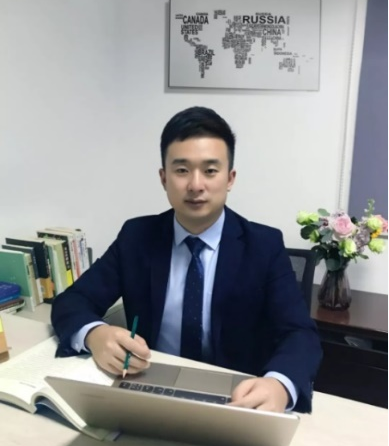
Prof. Dr. Fubo Cao
Email: caofubo@imust.edu.cn
Affiliation: School of Civil Engineering, Inner Mongolia University of Science and Technology, Baotou 014010, China
Homepage:
Research Interests: recycled concrete and its durability, intelligent construction technology of PEC structures, low-carbon strengthening technology for buildings
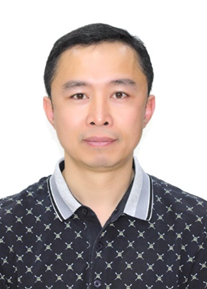
Dr. Lu Zhang
Email: Zlu@sdut.edu.cn
Affiliation: Department of Civil Engineering, School of Civil Engineering and Geomatics, Shandong University of Technology, Zibo 255000, China
Homepage:
Research Interests: solid waste building materials and structures, material and structural performance optimization, structural health monitoring

Summary
The escalating demand for modern buildings and infrastructure has underscored pressing sustainability challenges, particularly concerning the long-term resilience and performance of engineering structures. Overcoming these challenges requires innovative and integrated approaches to ensure structural safety, durability, and serviceability across their entire lifecycle. This Special Issue, entitled "Durability Assessment of Engineering Structures and Advanced Construction Technologies", aims to present cutting-edge advances in monitoring, diagnosing, and enhancing the service life of civil infrastructure systems.
We seek to compile high-quality contributions that provide new insights and practical solutions in the fields of structural performance monitoring, health diagnosis technologies, and durability assessment methodologies. This issue will highlight interdisciplinary research focusing on innovative sensor technologies, data-driven condition evaluation, intelligent maintenance strategies, and the integration of advanced construction materials and techniques. A key emphasis is placed on emerging methods for real-time monitoring, non-destructive testing, and predictive modeling that support the accurate assessment and prolonged durability of structures. Additionally, we encourage research on the implementation of advanced engineering technologies, including digital fabrication, automation, and intelligent structural systems.
We invite the submission of original research articles and comprehensive reviews that address, but are not limited to, the following themes:
• Structural health monitoring and sensor technologies;
• Non-destructive testing and evaluation techniques;
• Condition assessment and damage diagnosis;
• Predictive modeling for durability and service life;
• Low carbon materials and structural properties;
• Advanced Construction Materials and infrastructure systems;
• Sensors, smart structures, and intelligent control systems;
• Integrated applications of BIM and AI in construction monitoring;
• Advanced construction and management methods;
• Structural health monitoring and intelligent maintenance technologies.
Keywords
structural health monitoring, durability assessment, advanced construction materials, predictive modelling, low carbon materials and structures, non-destructive testing.
Published Papers

 Login
Login Register
 Submit a Paper
 Propose a Special lssue