Guest Editor(s)
Assoc. Prof. Manoj Khandelwal
Email: m.khandelwal@federation.edu.au
Affiliation: Institute of Innovation, Science and Sustainability, Federation University Australia, Ballarat, VIC 3350, Australia
Homepage:
Research Interests: AI, machine learning, predictive modelling in tunnelling and geomechanics, rock mass behaviour, ground stability in underground excavations, automation and data-driven optimisation in tunnel engineering

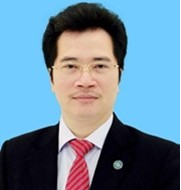
Prof. Xuan-Nam Bui
Email: buixuannam@tdtu.edu.vn
Affiliation: Institute for Advanced Study in Technology, Ton Duc Thang University, Ho Chi Minh City, 700000, Vietnam
Homepage:
Research Interests: AI and data-driven methods in underground and geotechnical engineering, numerical modelling of tunnels and rock mass behaviour, monitoring, safety assessment, and optimisation of tunnelling operations
Assoc. Prof. Muhammad Zaka Emad
Email: muhammadzaka.emad@kfupm.edu.sa
Affiliation: Department of Petroleum Engineering, King Fahd University of Petroleum & Minerals, Dhahran 31261, Saudi Arabia
Homepage:
Research Interests: rock mechanics, ground behaviour, geotechnical stability in underground excavations, data-driven modelling, AI applications, digital tools for tunnel and subsurface engineering, monitoring, hazard assessment, optimisation of underground construction and tunnelling operations

Prof. Panagiotis G. Asteris
Email: asteris@aspete.gr
Affiliation: Computational Mechanics Laboratory, School of Pedagogical and Technological Education, Athens, 12243, Greece
Homepage:
Research Interests: computational modelling and simulation for tunnel and underground infrastructure engineering, AI, machine learning, and data-driven approaches in structural and geotechnical analysis, digital monitoring, structural health assessment, optimisation of underground structures

Dr. Yewuhalashet Fissha
Email: yewuhala@asahikawa-nct.ac.jp
Affiliation: Department of Electrical and Computer Engineering, National Institute of Technology, Asahikawa College, Asahikawa, 071-8142, Japan
Homepage:
Research Interests: geotechnical engineering and ground behaviour analysis for underground and tunnel structures, application of numerical and computational modelling in subsurface engineering, monitoring, safety assessment, and performance evaluation of tunnels and underground excavations

Summary
The field of tunnel engineering is undergoing a rapid transformation driven by digital technologies, automation, and advanced data analytics. This special issue, "Digital Transformation in Tunnel Engineering: Automation, Monitoring, and AI Applications," aims to highlight the latest innovations that are reshaping tunnel design, construction, and maintenance. With increasing complexity in underground projects, engineers are turning to intelligent solutions to enhance safety, efficiency, and sustainability. Key areas of focus include automated construction methods, real-time monitoring systems, and the integration of artificial intelligence and machine learning for predictive modelling and decision-making. Advances in sensor technologies, digital twins, and remote monitoring enable continuous assessment of structural health, geotechnical conditions, and operational risks, minimising downtime and improving project outcomes. Contributions exploring the development, application, and performance of digital tools in tunnelling, from conceptual design and excavation to maintenance and lifecycle management, are particularly encouraged. By bringing together research, case studies, and practical insights, this special issue seeks to provide a comprehensive overview of how digital transformation is shaping the future of tunnel engineering and driving the adoption of smart, data-driven practices across the industry.
Keywords
tunnel engineering, digital transformation, automation in tunneling, real-time monitoring, artificial intelligence (AI), geotechnical and structural modeling

 Login
Login Register
 Submit a Paper
 Propose a Special lssue