Guest Editor(s)
Dr. Jiaxing Ma
Email: jma007@e.ntu.edu.sg
Affiliation: School of Civil Engineering and Architecture, NingboTech University, Ningbo, China
Homepage:
Research Interests: LCA, AI, sustainable material

Dr. Junsheng Su
Email: junshengsu@tju.edu.cn
Affiliation: School of Civil Engineering, Tianjin University, Tianjin, China
Homepage:
Research Interests: lifetime resilience evaluation of bridges
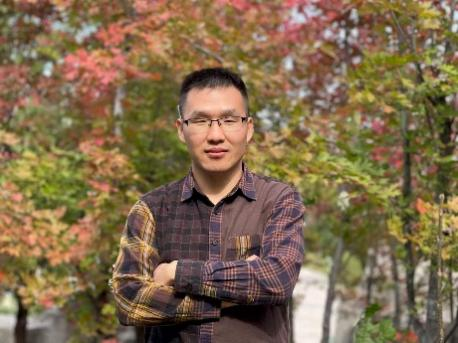
Dr. Siha A
Email: asiha333@163.com
Affiliation: School of Civil Engineering, Inner Mongolia University of Technology, Hohhot, China
Homepage:
Research Interests: generative AI, seismic strengthening, solid waste resource utilization

Dr. Jianze Wang
Email: jzwang@scu.edu.cn
Affiliation: Department of Civil Engineering, Sichuan University, Chengdu, China
Homepage:
Research Interests: generative AI for structural damage assessment

Dr. Lik Ho TAM
Email: leo_tam@buaa.edu.cn
Affiliation: School of Transportation Science and Engineering, Beihang University, Beijing, China
Homepage:
Research Interests: integrated health monitoring and disaster risk warning for transportation infrastructures

Summary
Generative Artificial Intelligence (Generative AI) is creating new opportunities for structural inspection, health monitoring, and damage assessment. Recent advances in large language models, vision-language models, multimodal large models, generative models, and AI agents are extending artificial intelligence beyond conventional task-specific recognition and prediction toward multimodal understanding, knowledge integration, reasoning, and intelligent decision support. These capabilities are particularly relevant to civil infrastructure, where structural condition assessment often relies on heterogeneous information from images, videos, sensing signals, inspection records, numerical simulations, and engineering knowledge.
Despite substantial progress in AI-based structural health monitoring, many existing approaches remain limited to individual data modalities or predefined tasks and often require extensive labeled datasets. Their capabilities for cross-modal reasoning, knowledge-informed assessment, generalization, and transparent engineering interpretation are still limited. Generative AI offers a promising pathway toward more integrated frameworks that connect structural perception, damage identification, condition understanding, performance assessment, and engineering decision-making.
This Special Issue aims to promote interdisciplinary research integrating Generative AI with structural engineering, structural health monitoring, and nondestructive evaluation. Particular attention will be given to multimodal data fusion, structural damage identification and quantification, knowledge-enhanced reasoning, performance prediction, rapid post-disaster assessment, and intelligent inspection workflows. Studies addressing reliability, interpretability, uncertainty, generalization, and real-world engineering deployment are especially encouraged.
Topics of interest include, but are not limited to:
· Generative AI-driven methods for structural inspection and health monitoring
· Vision-language models and multimodal large models for structural damage identification and assessment
· Multimodal fusion and reasoning across images, videos, sensing signals, and engineering texts
· Generative AI for structural condition assessment, performance prediction, and rapid post-disaster evaluation
· Knowledge-enhanced AI, retrieval-augmented generation, and AI agents for structural inspection and health monitoring
· Reliability, interpretability, generalization, and uncertainty quantification of Generative AI models
· Generative data augmentation, few-shot learning, and synthetic data generation for structural monitoring
· Engineering applications of Generative AI in bridges, buildings, marine structures, and other civil infrastructure
Keywords
generative artificial intelligence, structural health monitoring, structural inspection, damage assessment, multimodal AI, vision-language models

 Login
Login Register
 Submit a Paper
 Propose a Special lssue