Guest Editor(s)
Prof. Dr. Charaf Laghlimi
Email: c.laghlimi@uae.ac.ma
Affiliation: ERCI2A, FSTH, Abdelmalek Essaadi University, Tangier, Morocco
Homepage:
Research Interests: analytical electrochemistry, electrochemical sensors and biosensors, wastewater treatment, electrochemical materials, cyclic voltammetry, square wave voltammetry, surface analysis techniques, electrode materials, hydrogen production
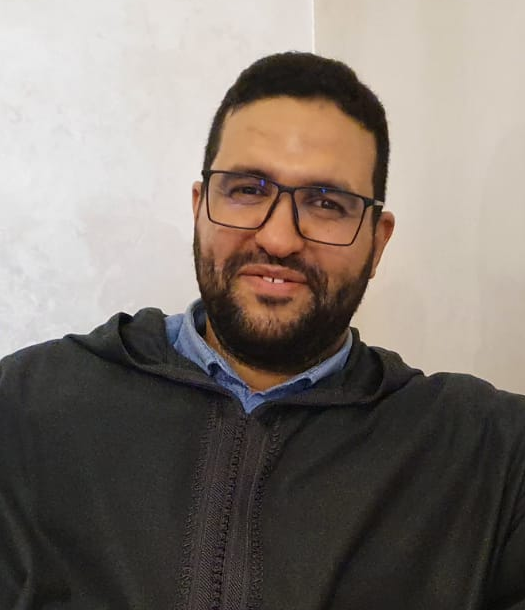
Prof. Dr. Younes Ziat
Email: ziat.estbm@gmail.com
Affiliation: Engineering and Applied Physics Team (EAPT), Superior School of Technology, Sultan Moulay Slimane University, Beni Mellal 23000, Morocco
Homepage:
Research Interests: photovoltaic, solar radiation, solar thermal, photocatalytic water splitting by semiconductors, pollution reduction by semiconductors, materials for energy storage, density functional theory (dft), hydrogen production
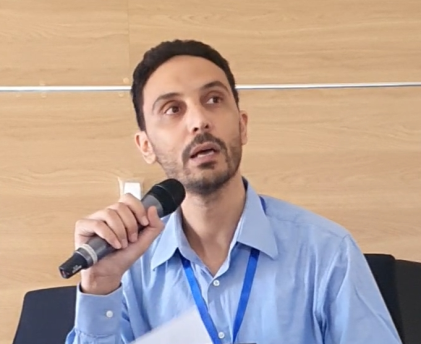
Dr Abdelaziz Moutcine
Email: abdelaziz.moutcine@usmba.ac.ma
Affiliation: ERCI2A, FSTH, Abdelmalek Essaadi University, Tangier, Morocco
Homepage:
Research Interests: analytical electrochemistry, electrochemical sensors and biosensors, wastewater treatment, electrochemical materials, cyclic voltammetry, square wave voltammetry, surface analysis techniques, electrode materials, hydrogen production

Summary
Current advances in industrial and technological fields are becoming increasingly dependent on energy. The widespread adoption of renewable energies is a fundamental step to meet these unceasing needs and allows moving towards environmental sustainability, creating a healthier planet and a safer energy future for all, thus avoiding abrupt climate changes largely caused by greenhouse gas emissions and pollution from the use of fuels that emit CO2 and other gases.
The development of new electrode materials intended to produce clean energy and contributing to environmental and health monitoring has thus become a major area of interest with regard to the improvement and generation of cost-effective electrodes, scalable and durable with large surfaces, excellent conductivity, energy density, cycle life, safety and tailored functionality for specific electrochemical applications including (but not limited to) energy storage and conversion, sensing (monitoring of food and drugs), water treatment technologies, green hydrogen production, greenhouse gas conversion, sustainable manufacturing, advanced characterization, and performance evaluation in batteries and supercapacitors....
The purpose of this special issue is to select innovative articles (original papers, reviews, and communications) related to the development of new electrode materials for energy storage, batteries, supercapacitors, fuel cells and environmental and health monitoring as well as emerging applications and industrial scalability. The present scope of this Special Issue addresses (but is not limited to) the following concepts:
· Advanced materials for fuel cell electrodes
· Electrodes for energy storage
· Electrode materials for batteries, supercapacitors, and fuel cells
· Performance evaluation in batteries and supercapacitors
· Advanced Technologies for the Electrochemical Production of Hydrogen and Protection Of The Environment
· Water Splitting, Electrolysis Efficiency, Fuel Cell And Innovative Materials For Electrodes And Electrolytes
· Electrochemical Carbon Capture And Concentration Techniques
· Sustainable manufacturing
· DFT study of photocatalytic materials", i.e. Hydrogen production, CH4 production
· DFT study of energy storage materials" i.e perovskite hydride, double perovskite hydride, MXenes
· Concepts and methods for the recycling of electrode materials
· Synthesis and characterization of novel electrode materials, nanostructured and composite
· Sustainable and low-cost electrode material designs
· Green hydrogen production and hydrogen storage
Keywords
advanced electrode materials, wastewater treatment technologies, surface modifications, sensors and biosensors, batteries, supercapacitors, fuel cells, electrolysis and green hydrogen production, energy storage,organic electrodes, electrochemistry

 Login
Login Register
 Submit a Paper
 Propose a Special lssue