Guest Editor(s)
Prof. Dr. Wenbing Zhao
Email: w.zhao1@csuohio.edu
Affiliation: Department of Electrical and Computer Engineering, Cleveland State University, Cleveland, 44115, United States
Homepage:
Research Interests: computational intelligence, Internet of Things, smart grid
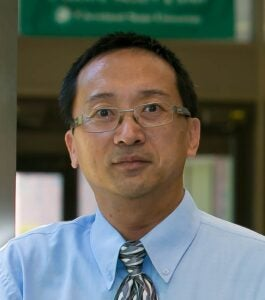
Prof. Dr. Pan Wang
Email: wangpan@njupt.edu.cn
Affiliation: School of Modern Posts, Nanjing University of Posts and Telecommunications, Nanjing, 210023, China
Homepage:
Research Interests: AI enabled network management, information and network security, Internet of Things, AI for recommender system, future communications and networks, smart grid

Dr. Zixuan Wang
Email: 420600@njupt.edu.cn
Affiliation: School of Modern Posts, Nanjing University of Posts and Telecommunications, Nanjing, 210023, China
Homepage:
Research Interests: AI enabled network management, AI for recommender system, future communications and networks, smart grid

Summary
The rapid proliferation of Artificial Intelligence (AI) workloads—particularly large-scale model training and inference—has significantly increased the energy demands of computing centers worldwide. AI computing centers, often powered by high-density GPU/TPU clusters, now represent a growing share of global electricity consumption and carbon emissions. At the same time, the integration of renewable energy, advanced cooling systems, and demand response strategies offers unprecedented opportunities for sustainable operation. However, existing research on energy-aware workload scheduling and energy system management often treats these domains separately. A siloed approach fails to fully exploit the synergistic potential of co-optimizing computational workloads with energy systems—especially under dynamic power availability, fluctuating renewable generation, and real-time carbon intensity variations in power grids. This Special Issue (SI) aims to bring together researchers, practitioners, and industry experts to explore novel methods, architectures, and tools for energy- and carbon-aware co-optimization in sustainable AI computing centers.
The SI will focus on interdisciplinary strategies that jointly optimize workload scheduling and energy system operations, leveraging advanced optimization, AI/ML algorithms, and emerging energy-aware computing paradigms.
The scope includes (but is not limited to):
· Energy- and carbon-aware workload scheduling in AI computing clusters.
· Co-optimization of computation and power provisioning for mixed renewable-grid energy supply.
· Carbon-intensity-driven workload migration in geo-distributed AI data centers.
· Integration of AI/ML techniques for predictive energy and carbon management.
· Digital twin and simulation platforms for co-optimization of computing and energy systems.
· Demand response participation of AI computing centers in smart grids.
· Energy storage and cooling system co-design for AI data center sustainability.
· Policy, economic, and regulatory frameworks for low-carbon AI computing.
Keywords
energy-aware computing, carbon-aware scheduling, workload scheduling optimization, energy systems integration, sustainable AI data centers, co-optimization strategies

 Login
Login Register
 Submit a Paper
 Propose a Special lssue