Guest Editor(s)
Prof. Xunpeng Shi
Email: xunpeng.shi@uts.edu.au
Affiliation: ACRI, University of Technology Sydney, Ultimo, 2007, Australia
Homepage:
Research Interests: energy and environmental economics, sustainable development
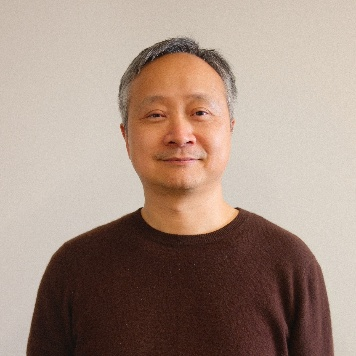
Prof. Fushuan Wen
Email: wenfs@hotmail.com
Affiliation: College of Electrical Engineering, Zhejiang University, Hangzhou, 310027, China
Homepage:
Research Interests: power system, electricty market
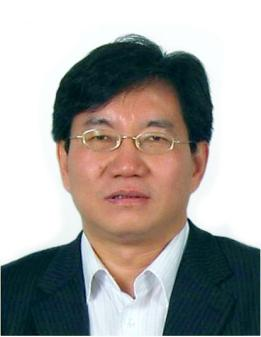
Assoc. Prof. Kaveh Khalilpour
Email: kaveh.khalilpour@uts.edu.au
Affiliation: School of Civil and Environmental Engineering, University of Technology Sydney, Ultimo, 2007, Australia
Homepage:
Research Interests: operations research (OR), AI and data science, energy-water-food-justice nexus

Summary
Achieving global carbon neutrality requires not only breakthroughs in clean energy science and engineering but also effective integration of technologies, systems, and policies. While innovations in renewables, storage, hydrogen, and power systems are advancing rapidly, large-scale deployment remains constrained by system-level, economic, and governance challenges.
This Special Issue aims to bring together researchers and practitioners from diverse disciplines to explore integrated scientific, engineering, and policy approaches that accelerate the deployment of clean and sustainable energy technologies. We particularly welcome contributions that bridge the gap between innovation and implementation—connecting laboratory progress, system optimisation, and policy design.
This Special Issue is dedicated to the 3rd ISETS International Conference on Energy Transition Studies (ISETS 2025), to be held at the University of Tokyo, Japan, from 28 November to 1 December 2025. Authors who present papers at the conference are warmly invited to submit their extended or revised manuscripts to this Special Issue.
Topics of interest include, but are not limited to:
· Power systems and grid integration for high renewable penetration
· Hydrogen, storage, and multi-energy system coupling
· Carbon capture, utilisation, and storage (CCUS) engineering
· Digital and smart energy systems for flexibility and resilience
· Energy materials, efficiency, and sustainable design
· Techno-economic, policy, and regulatory frameworks for clean energy deployment
· Life-cycle and system modelling for decarbonisation strategies
· Critical minerals, recycling, and circular economy in energy technologies
We look forward to contributions that advance interdisciplinary knowledge and practical pathways toward a sustainable, secure, and equitable energy future.
Keywords
clean energy systems, energy transition, technology integration, energy policy, renewable energy, hydrogen, energy storage, CCUS, system modelling
Published Papers

 Login
Login Register
 Submit a Paper
 Propose a Special lssue