Guest Editor(s)
Dr. Yiyan Sang
Email: yiyansang@shiep.edu.cn
Affiliation: Department of Electrical Engineering, Shanghai University of Electrical Power, Shanghai, China
Homepage:
Research Interests: HVDC, nonlinear control, power electronic converters

Prof. Dr. Xingwu Yang
Email: yangxingwu@shiep.edu.cn
Affiliation: Department of Electrical Engineering, Shanghai University of Electrical Power, Shanghai, China
Homepage:
Research Interests: flexible HVDC transmission, grid-forming control for renewable energy
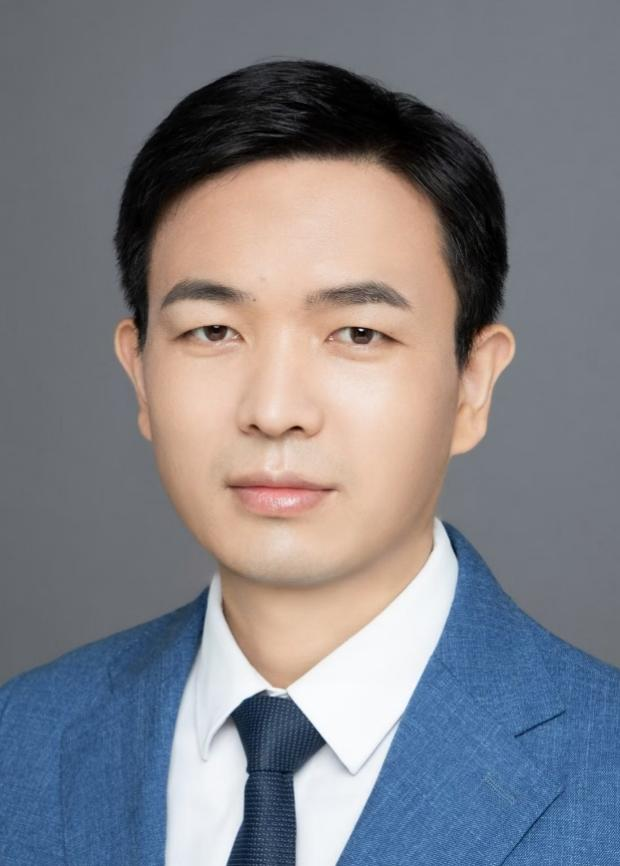
Prof. Dr. Hua Xue
Email: xuehua@shiep.edu.cn
Affiliation: Department of Electrical Engineering, Shanghai University of Electrical Power, Shanghai, China
Homepage:
Research Interests: HVDC, wind power, nonlinear control, grid-connected technology

Dr. Ning Yang
Email: ning.yang@strath.ac.uk
Affiliation: Department of Electronic and Electrical Engineering, University of Strathclyde, Glasgow, United Kingdom
Homepage:
Research Interests: power systems with wind power and synchronous generators, controller design/simulation and experimental verification of power electronic converter (DC/DC converter)

Summary
High Voltage Direct Current (HVDC) technology plays a key role in modern power systems by enabling efficient long distance transmission, supporting asynchronous grid interconnections, and facilitating the integration of remote renewable energy sources. With the increasing penetration of power electronics and renewable generation, HVDC systems are facing greater operational complexity, which requires more advanced modelling, stability analysis, and control strategies.
The dynamic behaviour of HVDC systems spans multiple timescales and involves strong interactions with AC networks. This complexity makes small signal modelling and analysis essential for identifying potential instabilities, control interactions, and resonance issues that may affect system performance. In addition, the wide range of HVDC applications, including point to point links and multi terminal systems, requires flexible and application specific control approaches.
This Special Issue focuses on recent developments in HVDC system modelling, analysis, and control. It aims to provide a platform for sharing innovative methods and practical insights to address emerging challenges and to support the development of reliable and efficient HVDC systems.
Suggested themes:
1. Modelling and simulation of HVDC systems and power-electronics-dominated grids
2. Small-signal stability, oscillation mechanisms, and interaction analysis in HVDC-integrated AC/DC power systems
3. Control strategies for power converters and power-electronic-based power systems, including grid-forming, virtual inertia, and damping control
4. Operation and coordination of multi-terminal HVDC (MTDC) systems and AC/DC power systems
5. Integration of renewable energy systems, including offshore wind, into large-scale AC/DC power systems
6. Planning, optimization, and operation of large-scale AC/DC power systems
7. Data-driven, AI-based, and learning-assisted methods for HVDC system monitoring and control
Keywords
HVDC systems, small-signal modelling, stability analysis, AC/DC interaction, sdvanced control strategies, multi-terminal DC systems, offshore wind integration, power electronics, renewable energy connection

 Login
Login Register
 Submit a Paper
 Propose a Special lssue