Guest Editor(s)
Prof. Dr. Song Deng
Email: dengsong@njupt.edu.cn
Affiliation: Nanjing University of Posts and Telecommunications, Nanjing, China
Homepage:
Research Interests: AI, data security, big data analysis, CPS security
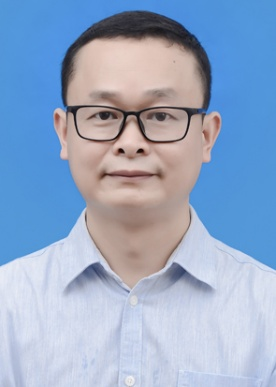
Dr. Chongxin Huang
Email: huangchongxin@foxmail.com
Affiliation: College of Automation, Nanjing University of Posts and Telecommunications, Nanjing, China
Homepage:
Research Interests: optimization and control of power grids, coordinated control of active distribution networks and microgrids, CPS cybersecurity
Summary
The transition to renewable energy introduces complex stochasticity and non-linear challenges to power grids. As cyber-physical coupling deepens, AI is now essential to process heterogeneous data and ensure stability where traditional analytical models fall short.
This issue aims to bridge data-driven methods with power engineering physics. We focus on the source-grid-load-storage, emphasizing the integration of physical constraints and advanced architectures (e.g., PINN, LLMs) to enhance situational awareness and autonomous decision-making for zero-carbon goals.
Topic:
· Physics-Informed AI: Integrating physical laws into deep learning.
· LLMs & Agents: Generative AI for dispatching and grid maintenance.
· Data Security: Anomaly detection, FDIA defense, and privacy computing.
· Distributed Optimization: VPP coordination and resource aggregation.
· Resilience: Causal evolution analysis and recovery under extreme conditions.
Keywords
modern power systems, physics-informed neural networks (PINN), situational awareness, data security and anomaly detection, grid resilience, distributed energy resources (DERs), large language models (LLMs) in energy

 Login
Login Register
 Submit a Paper
 Propose a Special lssue