Guest Editor(s)
Prof. Dr. Jianheng CHEN
Email: jianheng.chen@upc.edu.cn
Affiliation: School of Pipeline and Civil Engineering, China University of Petroleum (East China), No. 66, West Changjiang Road, Huangdao District, Qingdao City, Shandong Province, 266580, China
Homepage:
https://orcid.org/0000-0002-4770-4879
Research Interests: radiative cooling, renewable energy, energy saving, carbon neutrality, thermal management, building energy
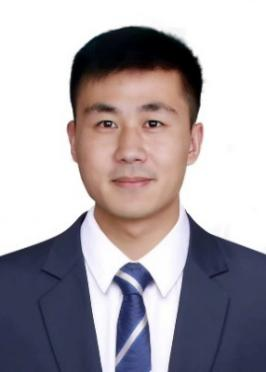
Prof. Dr. Jia LIU
Email: jiajia.liu@gzhu.edu.cn
Affiliation: School of Civil Engineering and Transportation, Guangzhou University, Guangzhou, China
Homepage:
Research Interests: net-zero energy buildings, solar photovoltaic technology, renewable energy, system optimization

Prof. Dr. Yelin ZHANG
Email: yelinzhang@upc.edu.cn
Affiliation: School of Pipeline and Civil Engineering, China University of Petroleum (East China), No. 66, West Changjiang Road, Huangdao District, Qingdao City, Shandong Province, 266580, China
Homepage:
Research Interests: radiative sky cooling, net zero energy building, photovoltaic/thermal, building simulation, optimum design, system control
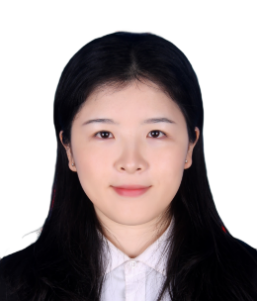
Prof. Dr. Kai JIAO
Email: kaijiao@hit.edu.cn
Affiliation: School of Architecture and Design, Harbin Institute of Technology
Homepage:
Research Interests: thermal energy storage, building envelope, thermal management

Summary
Thermal management is a critical frontier in the global pursuit of energy efficiency and sustainability. The built environment and industrial sectors are among the largest consumers of energy, a significant portion of which is dedicated to heating and cooling. Advancements in smart controls, novel materials, and integrated energy systems present unprecedented opportunities to revolutionize how we manage thermal energy, reducing both environmental impact and operational costs.
This Special Issue aims to showcase high-quality research and innovative developments in smart thermal management technologies. We seek contributions that explore the integration of digitalization, AI, and advanced energy technologies to create more responsive, efficient, and sustainable thermal systems for buildings and industrial applications. The scope bridges the gap between theoretical research and practical implementation.
Suggested themes include, but are not limited to:
· AI-driven and model-predictive control for HVAC&R systems.
· Integration of renewable thermal and electrical energy sources.
· Advanced heat recovery and waste heat utilization technologies.
· Smart grid-interactive buildings and thermal energy storage.
· Next-generation heat pumps and refrigeration cycles.
· IoT and sensor networks for real-time thermal optimization.
· Case studies on digital twins and energy management platforms.
· New technologies for oil and gas fields for energy savings.
We invite you to submit your original research and review articles to this important collection.
Keywords
thermal management, energy efficiency, smart buildings, industrial processes, renewable energy, system optimization, machine learning
Published Papers

 Login
Login Register
 Submit a Paper
 Propose a Special lssue