Special Issues

Neutronic and Thermal-Hydraulic Analysis of Advanced Nuclear Reactors

Submission Deadline: 01 July 2026 View: 1223 Submit to Special Issue

Guest Editor(s)

Prof. Shichang Liu

Email: liu-sc@ncepu.edu.cn

Affiliation: School of Nuclear Science and Engineering, North China Electric Power University, Beinong Road No.2, Changping, Beijing, 102206, China

Homepage:

Research Interests: neutronics, particle transport

图片5.png


Prof. Fudong Liu

Email: Liufudong1968@sina.com

Affiliation: Nuclear and radiation safety center, Ministry of Ecology and Environment, 9 Zhixing East Rd., FangShan, Beijing, 102400, China

Homepage:

Research Interests: radiation protection and environment protect

图片6.png


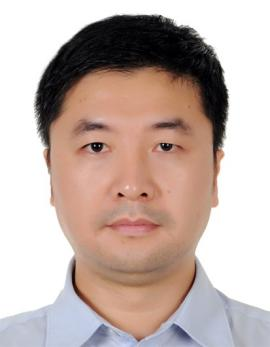
Mr. Jinggang Li

Email: Jacky.li2016@qq.com

Affiliation: China Nuclear Power Technology Research Institute Co.,Ltd., ShenZhen, 518000, China

Homepage:

Research Interests: nuclear reactor design, nuclear engineering software
图片7.png


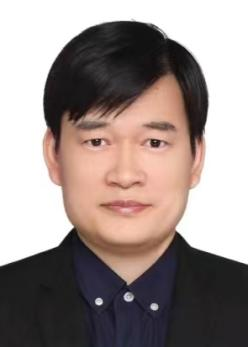
Dr. Peng Zhang

Email: zhangpengg@cnpe.cc

Affiliation: Beijing Institute of Nuclear Engineering, China Nuclear Power Engineering Co. Ltd. No. 117, West 3Rd N. Road, Haidian, Beijing, 100840, China

Homepage:

Research Interests: computational reactor physics, innovative nuclear system design, multiphysics simulation, high performance computing
图片8.png


Summary

The accelerated deployment of advanced nuclear reactors—such as small modular reactors (SMRs), Generation IV fast-spectrum, molten-salt, and high-temperature gas-cooled concepts—is pivotal to achieving deep-decarbonization targets and ensuring resilient, low-carbon baseload power. These designs promise enhanced safety, flexible grid integration, and resource utilization, yet their neutronic and thermal-hydraulic behaviors depart significantly from legacy light-water fleets. Multiphysics phenomena, including strong coupling between neutron kinetics, coolant flow, and heat transfer, introduce new challenges in reactor licensing, operation, and safety assessment.

This Special Issue provides a dedicated forum for cutting-edge research on coupled neutronics and thermal-hydraulic analysis of advanced reactors. We solicit original research papers and comprehensive reviews that advance multiscale modeling, high-fidelity simulation, experimental validation, and code development. Contributions should address fundamental physics, engineering methodologies, regulatory frameworks, and practical deployment experiences.

Suggested topics include:
· Advanced Reactor Design and Analysis;
· Reactor Physics, Thermal-hydraulics, and Safety;
· Nuclear Fuel and Materials;
· Uncertainty Quantification;
· CFD Analysis of Advanced Reactor;
· Advanced thorium uranium/uranium plutonium fuel cycle scheme;
· Transient accident safety of advanced nuclear energy systems;
· Research on Multi-physics Coupling of Advanced Nuclear Energy Systems;
· Radiation protection and environment protect;
· Other related topics in the field of advanced nuclear energy.

By consolidating the latest theoretical, computational, and experimental advances, this Special Issue aims to accelerate the safe, efficient, and economic deployment of next-generation nuclear technologies.


Keywords

neutronics, thermal-hydraulics, advanced reactors, multiphysics coupling, safety analysis, CFD, uncertainty quantification

Published Papers


  • Open Access

    ARTICLE

    Sampling Representativeness Optimization for Irregular Fan-Shaped Nuclear Chimneys Based on CFD Simulation of Flow Field and Pollutant Distribution

    Jinjiang Cui, Feifei Wu, Jing Kang, Bing Lian
    Energy Engineering, DOI:10.32604/ee.2026.080280
    (This article belongs to the Special Issue: Neutronic and Thermal-Hydraulic Analysis of Advanced Nuclear Reactors)
    Abstract The representativeness of sampling is crucial for the radiation impact assessment of airborne effluents from nuclear facilities. Irregularly-shaped chimneys (e.g., fan-shaped ones) are increasingly used in nuclear industries, posing challenges to industrial emission monitoring and the analysis of sampling representativeness. Their structures result in a complex internal flow field and uneven pollutant distribution. Current international standards do not clearly specify the sampling methods for such chimneys. This study conducts CFD simulations and analysis of sampling representativeness for a typical fan-shaped chimney. The simulation results show upward spiral eddies in the chimney, leading to significant spatial… More >

  • Open Access

    ARTICLE

    Study on Higher-Order Harmonic Calculation of Neutron Diffusion Equation and Its Application in Core Power Monitoring of the Gas-Cooled Microreactor

    Kui Hu, Peng Zhang, Xiang Xiao, Yuan Xu, Yunhuang Zhang, Yuan Yuan, Zhiyuan Feng
    Energy Engineering, DOI:10.32604/ee.2026.078340
    (This article belongs to the Special Issue: Neutronic and Thermal-Hydraulic Analysis of Advanced Nuclear Reactors)
    Abstract The rapid development of gas-cooled microreactors (GMRs) for remote and modular power supply necessitates highly efficient and autonomous core power monitoring systems. Traditional monitoring systems, such as those deployed in commercial power plants, rely on dense in-core instrumentation, whereas due to the limitation of space and simplicity in hardware designs, only sparse ex-core detectors are employed in microreactor designs. To address this challenge, this study proposes an advanced online power reconstruction approach based on the higher-order harmonic expansion. A dedicated higher-order harmonic calculation module was developed within a multi-group diffusion framework, capable of executing rapid… More >

  • Open Access

    ARTICLE

    Dynamic Modeling and Transient Analysis of Micro Reactor with Direct Helium Brayton Cycle Based on Modelica

    Yunlong Li, Yuer Zhao, Li Pan, Huimin Zhang, Jun Wang
    Energy Engineering, DOI:10.32604/ee.2026.078123
    (This article belongs to the Special Issue: Neutronic and Thermal-Hydraulic Analysis of Advanced Nuclear Reactors)
    Abstract Micro Gas-Cooled Reactor (MGCR) has garnered attention in relevant domains, owing to its advantages of miniaturization and transportability, which is capable of providing stable electrical power to off-grid and special regions. As a typical multi-physics coupled system, a dynamic model for the MGCR integrating nuclear, thermal-hydraulic, mechanical, and electrical subsystems was developed in this study using the multi-physics modeling language Modelica. Steady-state validation results indicate that the maximum deviation between the simulated values and the design parameters is merely 1.05%. Meanwhile, transient validation demonstrates a high degree of consistency with the outcomes generated by the… More >

  • Open Access

    ARTICLE

    Data-Driven and Physics-Informed Surrogate Modeling for Heat Conduction in the Pressurizer Wall of Pressurized Water Reactors under Severe Accident Scenarios

    Fabiano Thulu, Zeyun Wu
    Energy Engineering, Vol.123, No.5, 2026, DOI:10.32604/ee.2026.076328
    (This article belongs to the Special Issue: Neutronic and Thermal-Hydraulic Analysis of Advanced Nuclear Reactors)
    Abstract Real-time prediction of temperature distribution in the pressurizer walls of Pressurized Water Reactors (PWRs) during severe accidents, such as Station Blackout (SBO) and Loss-of-Coolant Accident (LOCA) is vital for structural integrity assessment. However, conventional thermal-hydraulic simulations used for such predictions are computationally intensive, limiting their applicability for real-time analysis. This study develops and compares three surrogate models: Polynomial Regression, Deep Neural Network (DNN), and a Physics-Informed Neural Network (PINN). Thermal-hydraulic simulation data generated by RELAP5-3D are integrated with physics-constrained learning techniques to model transient heat conduction in the pressurizer wall. The internal wall temperature evolution… More >

  • Open Access

    ARTICLE

    Development of a Diffusion Core Calculation Scheme for the GCMR

    Xiang Xiao, Peng Zhang, Yuan Yuan, Zhiyuan Feng, Kui Hu, Yuan Xu, Yunhuang Zhang, Guoming Liu
    Energy Engineering, Vol.123, No.5, 2026, DOI:10.32604/ee.2026.073741
    (This article belongs to the Special Issue: Neutronic and Thermal-Hydraulic Analysis of Advanced Nuclear Reactors)
    Abstract As a promising solution to the challenges of future clean and reliable energy supply, the Gas-Cooled Micro-Reactor (GCMR) has attracted increasing attention due to its potential for decentralized power generation, carbon-free operation, and flexible deployment in remote or extreme environments. As a novel reactor concept, the GCMR offers advantages such as compact size, inherent safety, and high thermal efficiency. However, conventional core calculation methods face significant challenges due to the complex geometric configurations, heterogeneous material distribution, and pronounced neutron leakage characteristics of the GCMR. This study proposes a diffusion-based homogenization method for GCMR analysis. First,… More >

    Graphic Abstract

    Development of a Diffusion Core Calculation Scheme for the GCMR

Share Link
