Guest Editor(s)
Dr. Liuhua Mu
Email: muliuhua@nbu.edu.cn
Affiliation: School of Physical Science and Technology, Ningbo University, Ningbo, China
Homepage:
Research Interests: two-dimensional materials, materials physics, computational physics, materials design

Dr. Shiqi Sheng
Email: shengshiqi@ecust.edu.cn
Affiliation: School of Physics, East China University of Science and Technology, Shanghai, China
Homepage:
Research Interests: two-dimensional materials, membrane separation, interfacial water evaporation
Summary
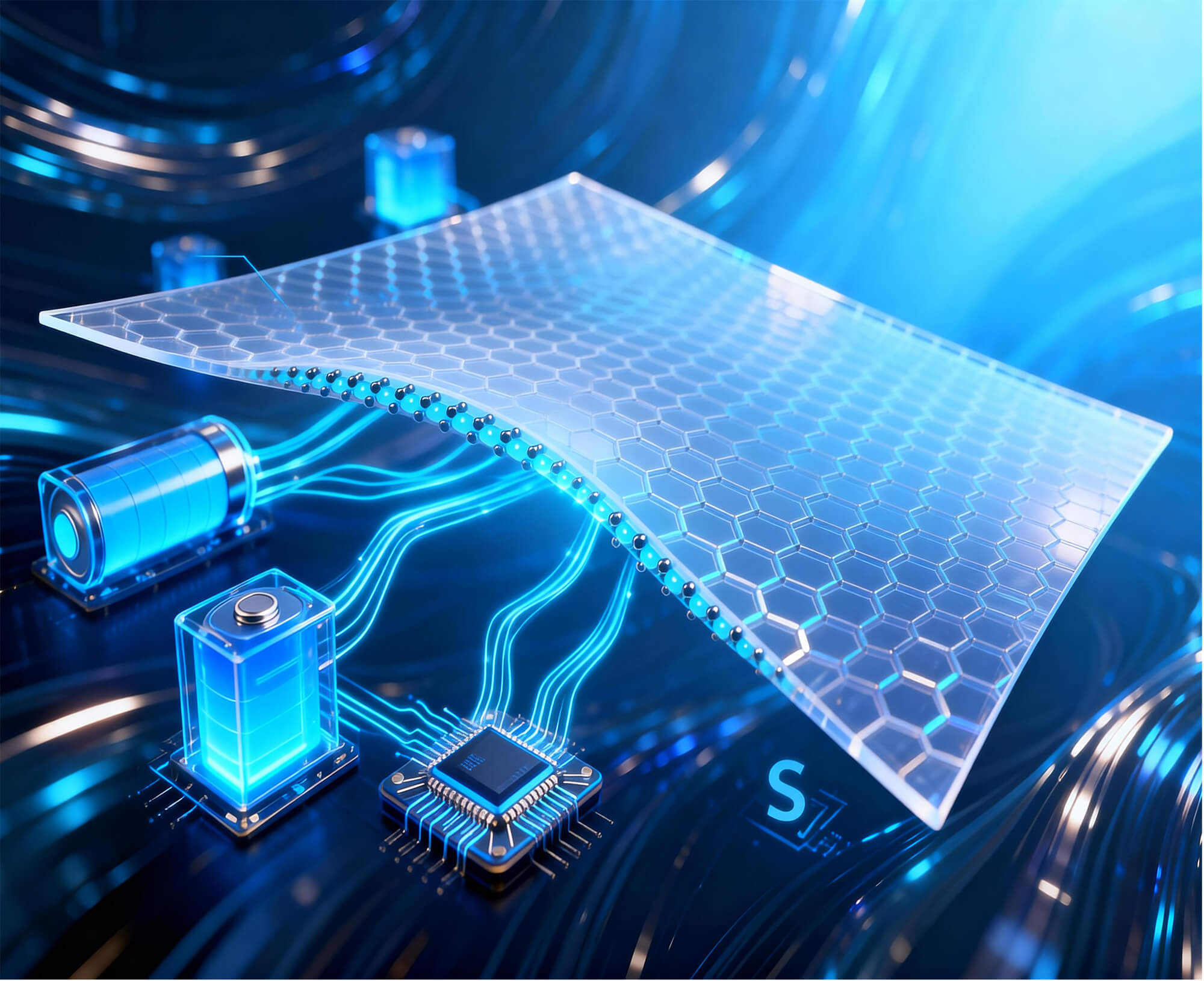
Sulfur-based two-dimensional (2D) materials, particularly transition metal dichalcogenides (TMDCs), have emerged as a versatile class of materials owing to their tunable electronic structures, rich polymorphism, and strong surface activity, enabling broad applications in electronics, optoelectronics, energy storage, and catalysis. Their atomic-scale thickness and sulfur chemistry offer unique opportunities for interface engineering and performance optimization beyond conventional bulk materials.
This Special Issue aims to provide a comprehensive platform for recent advances in sulfur-based two-dimensional materials, covering fundamental understanding, theoretical modeling, material synthesis, and device-oriented applications. Particular attention is given to structure–property relationships, defect and interface engineering, and performance enhancement strategies in electronic and optoelectronic devices, as well as energy-storage systems such as rechargeable batteries and supercapacitors. Despite significant progress, challenges including limited electrical conductivity, structural instability, volume expansion, and sulfur dissolution still hinder practical applications. By bringing together experimental, computational, and theoretical studies, this Special Issue seeks to stimulate innovative solutions and accelerate the development of high-performance sulfur-based 2D materials for next-generation technologies.
The following topics are of particular interest, including but not limited to:
• Design, synthesis, and characterization of sulfur-based two-dimensional materials
• Electronic and optoelectronic devices based on 2D transition metal dichalcogenides and heterostructures
• Defect engineering, phase control, and interface modulation in sulfur-based 2D materials
• Energy storage applications in lithium-, sodium-, and potassium-ion batteries and supercapacitors
• Mechanistic studies of charge transport, ion diffusion, and electrochemical reactions
• Computational and theoretical investigations of structure–property relationships
• Stability, scalability, and integration of sulfur-based 2D materials for practical applications
Graphic Abstract
Keywords
sulfur-based 2D materials, TMDCs, 2D heterostructures, defect/interface engineering, electronic & optoelectronic devices, energy storage & conversion, batteries, charge transport & ion diffusion, computational materials science, structure–property relationships
Published Papers

 Login
Login Register
 Submit a Paper
 Propose a Special lssue