Guest Editor(s)
Dr. Qi Chen
Email: q.chen@auckland.ac.nz
Affiliation: Obstetrics, Gynaecology and Reproductive Sciences, The University of Auckland, Auckland, New Zealand
Homepage:
Research Interests: EVs in cancer therapy, EVs in endometriosis, EVs in complicated pregnancy

Dr. Yunhui Tang
Email: tangyunhui1786@fckyy.org.cn
Affiliation: The Hospital of Obstetrics and Gynaecoloy, Fudan University, Shanghai, China
Homepage:
Research Interests: EVs in pathological pregnancy, EVs in the treatment of gynecological tumors

Summary
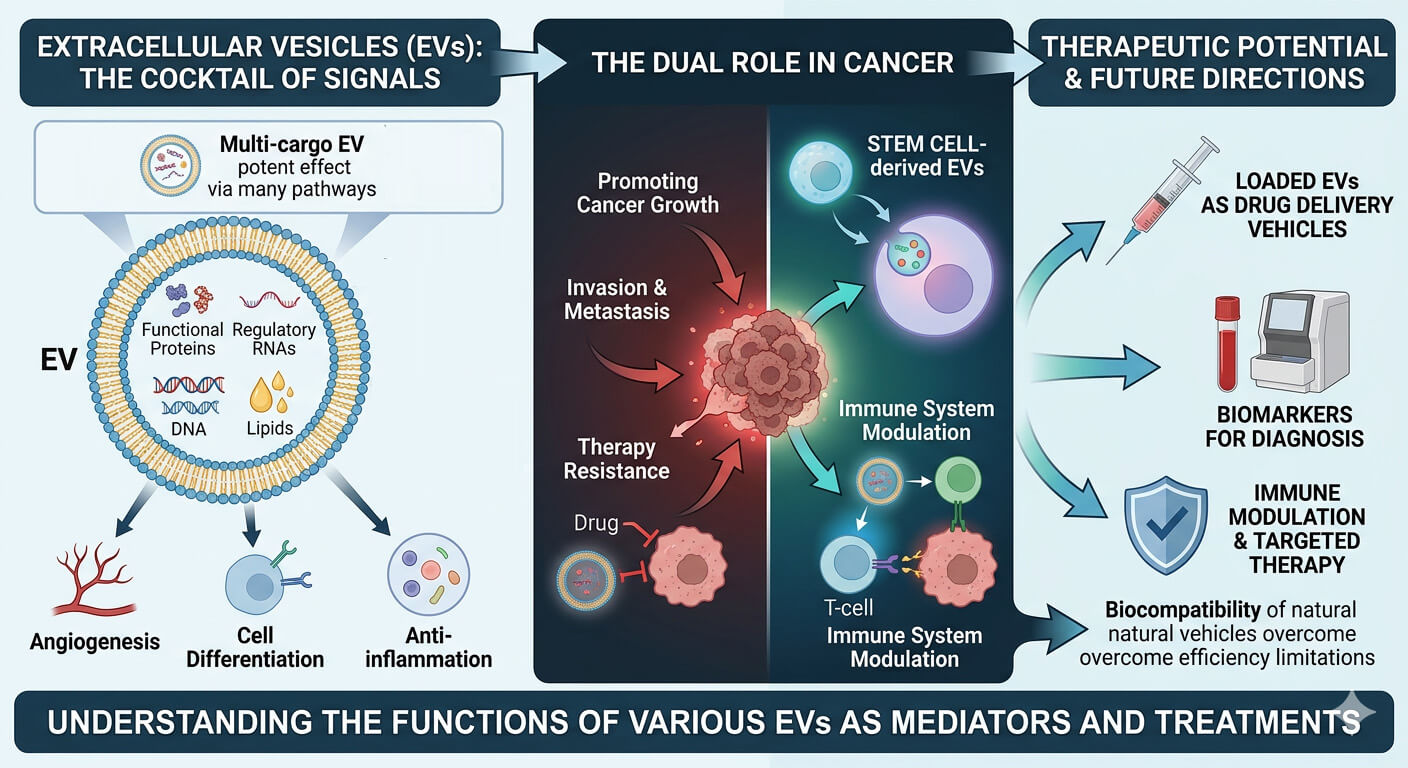
Extracellular vesicles (EVs) are lipid-enclosed packages of cellular contents produced by all cells and contain a cocktail of bioactive molecules (functional proteins, regulatory RNAs, DNA, and lipids) that work together synergistically as cofactors. These vesicles function similarly to hormones, regulating cell function at a distance after they are taken up by target cells. Unlike hormones, a single EV can carry multiple biological signals, enabling it to exert extremely potent effects through multiple signalling pathways, such as angiogenesis, cell differentiation, and anti-inflammation. By nature, EVs can have either positive or negative effects on cancer development, including promoting cancer cell growth, invasion, metastasis, and therapy resistance. However, the therapeutic effects of EVs, including stem cell-derived EVs, have been widely investigated for several diseases, including cancers. The therapeutic roles of EVs include serving as biomarkers for diagnosis, acting as natural, biocompatible drug-delivery vehicles for anticancer agents to overcome efficiency limitations, and modulating the immune system. To better understand the functions of EVs derived from various sources, this special issue aims to examine their roles in cancer progression and as potential therapeutics.
Graphic Abstract
Keywords
extracellular vesicles, cancer, cancer progression, cancer therapy

 Login
Login Register
 Submit a Paper
 Propose a Special lssue