Home / Journals / OR / Vol.33, No.11, 2025
Special Issues
Table of Content
cover

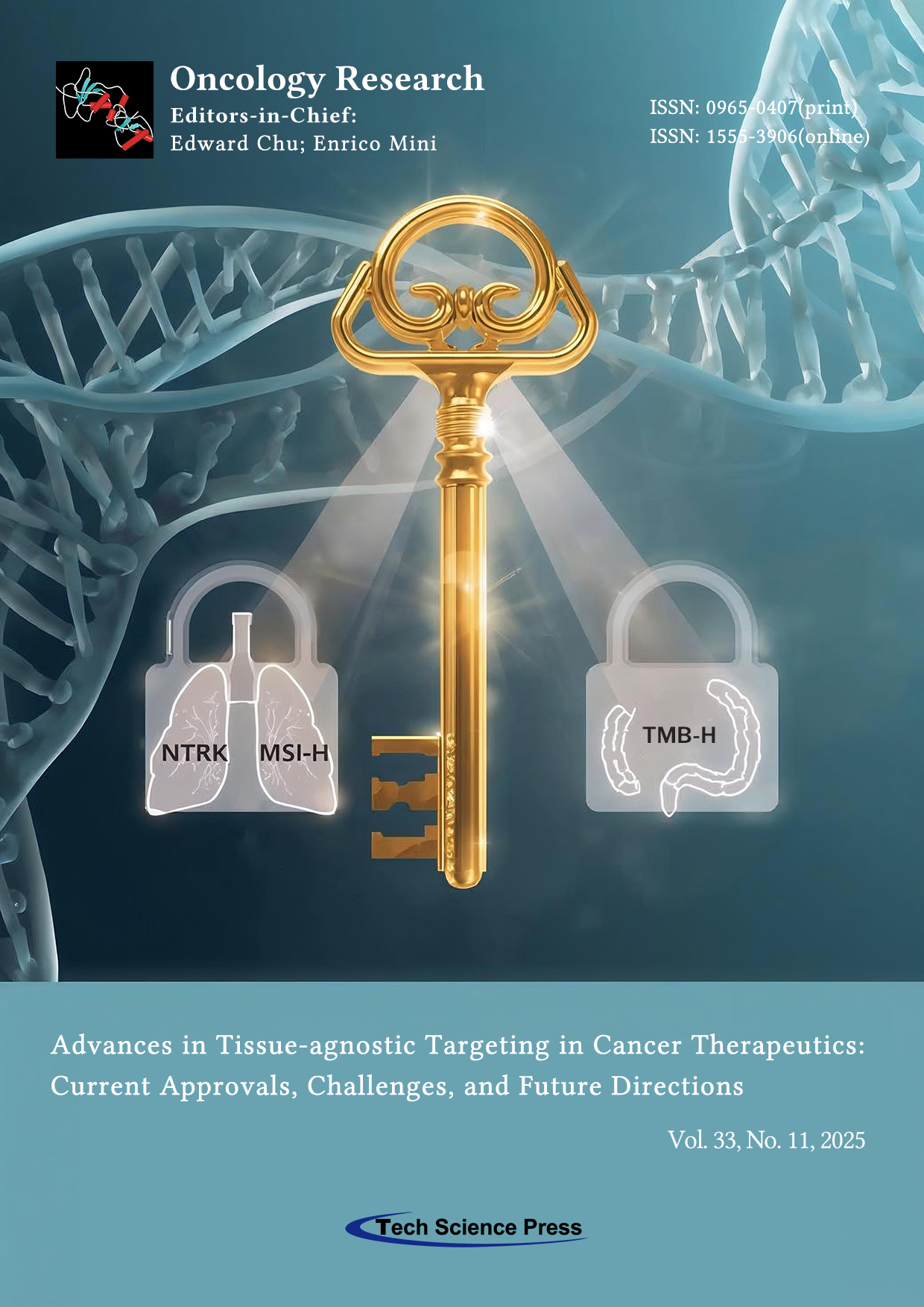
On the Cover

This review discusses the emergence of tissue-agnostic cancer therapy—a treatment paradigm that targets tumors based on their shared genetic and molecular biomarkers, rather than their tissue of origin. Driven by a deeper understanding of oncogenic drivers, this approach enables the use of drugs like pembrolizumab, larotrectinib, and trastuzumab deruxtecan across multiple cancer types, leading to more personalized and effective treatments. While these therapies offer significant promise—especially for rare or hard-to-treat cancers—challenges such as treatment resistance, complex clinical trials, and limited access to biomarker testing remain. Ongoing research into new targets like KRASG12C and NRG fusions aims to expand this field, underscoring the need to overcome barriers for broader application and to move further beyond traditional, histology-based cancer care.
View this paper

  • Open AccessOpen Access

    REVIEW

    Advances in Tissue-Agnostic Targeting in Cancer Therapeutics: Current Approvals, Challenges, and Future Directions

    Matthew Rubinstein1,*, Madeline Lauren Hong1, Rishi Kumar Nanda1, Daniel Thomas Jones1, Hazem Aboaid2, Yin Mon Myat3, Kyaw Zin Thein4
    Oncology Research, Vol.33, No.11, pp. 3161-3183, 2025, DOI:10.32604/or.2025.067791 - 22 October 2025
    Abstract The ever-expanding development of tissue-agnostic therapies which target malignancies based on specific mutations rather than tissue origin have transformed the landscape of oncology. The purpose of this review is to explore the impact, safety, and challenges of tissue-agnostic therapies including pembrolizumab, dostarlimab, larotrectinib, entrectinib, repotrectinib, dabrafenib plus trametinib, selpercatinib, and trastuzumab deruxtecan. As the therapeutic arsenal continues to grow, it is crucial to understand how these therapies truly benefit patients and to address the barriers that stand in the way of making them more widely available. Although these therapies have shown effectiveness across multiple cancer More >

  • Open AccessOpen Access

    REVIEW

    Immune Checkpoint Inhibitors in Gastrointestinal Cancers: Current Evidence and Future Directions

    Takeshi Toyozumi1,*, Hideaki Shimada2, Hisahiro Matsubara1
    Oncology Research, Vol.33, No.11, pp. 3185-3206, 2025, DOI:10.32604/or.2025.065818 - 22 October 2025
    (This article belongs to the Special Issue: Advances in Cancer Immunotherapy)
    Abstract Cancer immunotherapy has long been established as an important treatment option for cancers. In particular, Immune Checkpoint Inhibitor (ICI) has been reported to be effective against various gastrointestinal cancers (esophageal cancer, gastric cancer, colorectal cancer); however, the treatment phase in which ICI should be used and how it should be incorporated into the treatment strategy vary depending on the cancer type being treated. Multiple clinical trials and basic research on ICIs are currently underway, and new insights from these results will continue to change the clinical treatment strategy of gastrointestinal cancers. While it is desirable… More >

  • Open AccessOpen Access

    REVIEW

    Exosomal Non-Coding RNAs in Pancreatic Cancer: From Mechanisms to Clinical Applications

    Chengru Yang1,#, Zhiyu Wang1,#, Shaowu Bi1, Xinmiao Zhang1, Zhaoqiang Xu1, Yifei Ge1, Tianjie Zhang1, Nan Wang1, Yi Xu1,2,3,4,5,6,7,8,9,*, Xiangyu Zhong1,*
    Oncology Research, Vol.33, No.11, pp. 3207-3229, 2025, DOI:10.32604/or.2025.066150 - 22 October 2025
    (This article belongs to the Special Issue: New Insights in Drug Resistance of Cancer Therapy: A New Wine in an Old Bottle)
    Abstract Pancreatic cancer (PC) is an extremely aggressive cancer of the digestive system with insidious onset and the lack of effective biomarkers, resulting in late-stage diagnosis and poor prognosis. Exosomal non-coding RNAs (ncRNAs) are key mediators of intercellular communication that drive PC initiation and advancement. By modulating gene expression, they impact tumor microenvironment (TME) remodeling, proliferation, migration, apoptosis, and immune evasion. Critically, exosomal ncRNAs serve as promising biomarkers for early diagnosis and prognostic assessment. This review summarizes the current research achievements regarding exosomal ncRNAs in PC, systematically elaborating on their roles in tumor occurrence, metastasis, chemoresistance More >

  • Open AccessOpen Access

    REVIEW

    The Role of UFMylation in the Development and Progression of Gastric Cancer

    Ying Fang1,2,3,#, Anqi Wu2,4,#, Yu-Sheng Cong5,*, Guoqing Li1,2,*
    Oncology Research, Vol.33, No.11, pp. 3231-3245, 2025, DOI:10.32604/or.2025.066402 - 22 October 2025
    Abstract Gastric Cancer (GC) is a highly prevalent and poorly prognostic gastrointestinal malignancy with low overall treatment efficacy worldwide. Early diagnostic markers and potential therapeutic targets for GC treatment are urgently needed. UFMylation, a novel ubiquitin-like modification is indispensable for numerous fundamental cellular processes. Deficiency in this modification is reported to be associated with several human diseases including cancer. Accumulating evidence suggests that the expression of the key UFMylation components is closely associated with GC cell proliferation, invasion, metastasis, and chemotherapy resistance. Recent clinical studies have further highlighted the prognostic value and therapeutic potential of UFMylation More >

  • Open AccessOpen Access

    REVIEW

    Novel Strategies against Hepatocellular Carcinoma through Lipid Metabolism

    Yuanyuan Yang1,2,#, Peipei Zhao1,2,#, Hepu Chen1,3, Yixuan Tu4, Yujia Zhou2, Xu Liu3, Lyly Sreang3, Zhigang Zhou3,5,*, Jian Tu1,2,*
    Oncology Research, Vol.33, No.11, pp. 3247-3268, 2025, DOI:10.32604/or.2025.066440 - 22 October 2025
    (This article belongs to the Special Issue: Novel Biomarkers and Treatment Strategies in Solid Tumor Diagnosis, Progression, and Prognosis)
    Abstract Hepatocellular carcinoma (HCC) is characterized by its highly invasive and metastatic potential, as well as a propensity for recurrence, contributing to treatment failure and increased mortality. Under physiological conditions, the liver maintains a balance in lipid biosynthesis, degradation, storage, and transport. HCC exhibits dysregulated lipid metabolism, driving tumor progression and therapeutic resistance. This review aims to elucidate the roles of fatty acid, sphingolipid, and cholesterol metabolism in HCC pathogenesis and explore emerging therapeutic strategies targeting these pathways. Key findings demonstrate that upregulated enzymes like fatty acid synthase (FASN), acetyl-CoA carboxylase (ACC), enhance de novo lipogenesis and… More >

  • Open AccessOpen Access

    REVIEW

    Reprogramming the Tumor Microenvironment in Head and Neck Squamous Cell Carcinoma: Therapeutic Targets and Innovations

    Bruno Špiljak1,#, Bojan Poposki2,#, Stjepanka Lešić3,*
    Oncology Research, Vol.33, No.11, pp. 3269-3292, 2025, DOI:10.32604/or.2025.068395 - 22 October 2025
    (This article belongs to the Special Issue: Head & Neck Cancer: Innovation in Diagnosis, Multidisciplinary Care and Treatment)
    Abstract Head and neck squamous cell carcinoma (HNSCC) is an aggressive cancer with high recurrence rates and prevalent resistance to therapeutic interventions. Tumor behavior is largely dependent on the tumor microenvironment (TME) that includes immune cells, stromal components, cancer-associated fibroblasts (CAFs), the extracellular matrix (ECM), and an associated cytokine network. In this review, we examine principal mechanisms of the tumorigenic transformation, encompassing immune checkpoint disruption, therapy resistance mediated through CAFs, the contribution of hypoxic niches, and several metabolic dependencies that hold potential as future targets. Novel therapeutics developed and/or repurposed, such as immune checkpoint inhibitors (ICIs),… More >

  • Open AccessOpen Access

    REVIEW

    RNA Expression Signatures in Glioblastoma: A Systematic Review of Tumour Biology and Therapeutic Targets

    Amber Hassan1, Badr Hafiz2, Taghreed Alsinani3, Rakan Bokhari4, Dahlia Mirdad5, Awab Tayyib5, Alaa Alkhotani6, Ahmad Fallata7, Iman Mirza8, Eyad Faizo9,10, Saleh Baeesa2, Huda Alghefari11, Maher Kurdi11,*
    Oncology Research, Vol.33, No.11, pp. 3293-3325, 2025, DOI:10.32604/or.2025.070031 - 22 October 2025
    (This article belongs to the Special Issue: The Identification of Novel Therapeutic Targets and Elucidation of Molecular Mechanisms of Tumorigenesis)
    Abstract Background: Glioblastoma (GBM) remains the most aggressive primary brain tumour in adults, marked by pronounced cellular heterogeneity, diffuse infiltration, and resistance to conventional treatment. In recent years, transcriptomic profiling has provided valuable insights into the molecular mechanisms that govern the progression of glioblastoma. This systematic review aims to synthesise the current literature on dysregulated gene expression in GBM, focusing on gene signatures associated with stemness, immune modulation, extracellular matrix remodelling, metabolic adaptation, and therapeutic resistance. Methods: We conducted a systematic search of PubMed, The Cancer Genome Atlas (TCGA), Chinese Glioma Genome Atlas (CGGA), and the GlioVis… More >

  • Open AccessOpen Access

    REVIEW

    Lactylation in Cancer: Unlocking the Key to Drug Resistance and Therapeutic Breakthroughs

    Xiangnan Feng1,#, Dayong Li2,#, Pingyu Wang1, Xinyu Li2, Guangyao Li2,*
    Oncology Research, Vol.33, No.11, pp. 3327-3346, 2025, DOI:10.32604/or.2025.067343 - 22 October 2025
    (This article belongs to the Special Issue: New Insights in Drug Resistance of Cancer Therapy: A New Wine in an Old Bottle)
    Abstract Lactylation, a post-translational modification process that adds lactate groups to lysine residues, plays a crucial role in cancer biology, especially in drug resistance. However, the specific molecular mechanisms of lactylation in cancer progression and drug resistance are still unclear, and therapeutic strategies targeting the lactylation pathway are expected to overcome metabolic reprogramming and immune evasion. Therefore, this article provides a comprehensive description and summary of lactylation modification and tumor drug resistance. Numerous studies have shown that, due to the Warburg effect, there is an abnormally high level of lactate in tumor cells. Elevated levels of… More >

  • Open AccessOpen Access

    REVIEW

    Universal CAR-T Cell Therapy for Cancer Treatment: Advances and Challenges

    Jianan Lei*, Zhuona Ni, Ruidi Zhang
    Oncology Research, Vol.33, No.11, pp. 3347-3373, 2025, DOI:10.32604/or.2025.067445 - 22 October 2025
    (This article belongs to the Special Issue: Advances in Cancer Immunotherapy)
    Abstract This review aims to explore the development, challenges, and future directions of UCAR cell therapy as a scalable alternative to autologous CAR-T for cancer treatment. Consequently, limitations of autologous CAR-T, including long production, variable quality, and cost, drive off-the-shelf UCAR development to standardize manufacturing and improve access. Current UCAR-T cell strategies focus on mitigating the risks of graft-vs.-host disease and host-vs.-graft rejection through advanced gene editing technologies, including clustered regularly interspaced short palindromic repeat-associated system Cas9-mediated knockout of the T cell receptor, human leukocyte antigen, and cluster of differentiation 52 (CD52). Beyond conventional T cells, cell… More >

  • Open AccessOpen Access

    COMMENTARY

    CD47-Targeted Therapy in Cancer Immunotherapy: At a Crossroads of Promise and Challenge

    Xuejun Guo1,2, Yilin Fu3, Natalia Baran4,5, Wenxue Ma6,*
    Oncology Research, Vol.33, No.11, pp. 3375-3385, 2025, DOI:10.32604/or.2025.071708 - 22 October 2025
    Abstract Cluster of differentiation 47 (CD47), an immune checkpoint commonly referred to as the “don’t eat me” signal, plays a pivotal role in tumor immune evasion by inhibiting phagocytosis through interaction with signal regulatory protein alpha (SIRPα) on macrophages and dendritic cells (DCs). Although early enthusiasm drove broad clinical development, recent discontinuations of major CD47-targeted programs have prompted re-evaluation of its therapeutic potential. The purpose of this commentary is to contextualize the setbacks observed with first-generation CD47 inhibitors and to highlight strategies aimed at overcoming their limitations. Clinical challenges, including anemia, thrombocytopenia, suboptimal pharmacokinetics, and limited… More >

  • Open AccessOpen Access

    ARTICLE

    Alisol A Exerts Anti-Proliferative Activity against Human Oral Cancer Cells through Triggering JNK/p38 MAPK-Mediated Apoptotic Cascade

    Yi-Tzu Chen1,2,3,#, Shao-Hsuan Kao4,5,#, Chun-Yi Chuang6,7, Chun-Wen Su4,5, Wei-En Yang4,5, Chih-Hsin Tang8,9,10, Shun-Fa Yang4,5,*, Chiao-Wen Lin2,3,*
    Oncology Research, Vol.33, No.11, pp. 3387-3404, 2025, DOI:10.32604/or.2025.069877 - 22 October 2025
    Abstract Background: Alisol A is a natural compound isolated from Alismatis Rhizoma, known for its diverse pharmacological activities, including anticancer and neuroprotective effects. This study aimed to explore the anticancer effects of Alisol A on oral cancer cells and elucidate its underlying mechanisms. Methods: Cell viability was measured by MTT assay, cell cycle by flow cytometry, and apoptosis by Annexin V/PI staining and caspase activation. Regulation of signaling pathways was analyzed using an apoptosis-related protein array, immunoblotting, and specific kinase inhibitors. Results: Alisol A reduced the viability of oral cancer cell lines, induced sub-G1 phase accumulation, and augmented… More >

  • Open AccessOpen Access

    ARTICLE

    Significance of CA125 Monitoring during Maintenance Treatment with Poly(ADP-Ribose) Polymerase Inhibitor in Ovarian Cancer after First-Line Chemotherapy: Multicenter, Observational Study

    Szymon Piątek1, Anna Dańska-Bidzińska2,*, Paweł Derlatka2, Bartosz Szymanowski3, Renata Duchnowska3, Aleksandra Zielińska4, Natalia Sawicka4, Aleksander Gorzeń5, Wojciech Michalski6, Mariusz Bidziński1
    Oncology Research, Vol.33, No.11, pp. 3405-3416, 2025, DOI:10.32604/or.2025.068609 - 22 October 2025
    Abstract Objectives: Monitoring of Cancer Antigen 125 (CA125) during ovarian cancer (OC) maintenance treatment with poly(ADP-ribose) polymerase inhibitors (PARPis) may be insufficient when using Gynecologic Cancer Intergroup (GCIG) biochemical progression criteria. This study aimed to evaluate the usefulness of CA125 monitoring in detecting OC recurrence during PARPis maintenance treatment. Methods: This multicenter retrospective cohort study included patients with primary OC who achieved complete or partial response after first-line platinum-based chemotherapy followed by PARPis maintenance treatment. Progression was defined using Response Evaluation Criteria in Solid Tumors (RECIST) and GCIG biochemical criteria. New biochemical progression definitions, based on… More >

  • Open AccessOpen Access

    ARTICLE

    Diverse PD-1, CD163, and FOXP3 Profiles in Primary and Metastatic Microenvironments of Prostate Cancer

    Ana Clara Ciglioni Salustiano1,2, Gabriela Barbosa1,3,4, Rodolfo Borges dos Reis2,4, Amílcar Castro de Mattos5,6, Athanase Billis6, Leonardo O. Reis1,3,4,*
    Oncology Research, Vol.33, No.11, pp. 3417-3428, 2025, DOI:10.32604/or.2025.068023 - 22 October 2025
    Abstract Objective: The tumor microenvironment plays a pivotal role in prostate cancer progression and may differ across metastatic sites. This study aimed to evaluate and compare the primary and metastatic prostate adenocarcinoma tumor microenvironment. Methods: A total of 27 formalin-fixed paraffin-embedded tissue samples derived from 17 patients diagnosed with prostate adenocarcinoma, including the primary tumors, and the corresponding metastatic lymphatic and hematogenous lesions from various anatomical sites. Immunohistochemical labeling was performed using antibodies against Cluster of Differentiation 3 epsilon chain (CD3e), CD8 alpha chain (CD8a), Cluster of Differentiation 68 (CD68), Cluster of Differentiation 163 (CD163), Forkhead… More >

    Graphic Abstract

    Diverse PD-1, CD163, and FOXP3 Profiles in Primary and Metastatic Microenvironments of Prostate Cancer

  • Open AccessOpen Access

    ARTICLE

    Efficacy of Wee1 G2 Checkpoint Kinase and Mouse Double Minute 2 Homolog Inhibitors in Gastrointestinal Stromal Tumors Determined by p53 Status

    Chiao-Ping Chen1,2, Yan-Jei Tang1,2, You-Yan Cai1, Yi-Ru Pan3, Chun-Nan Yeh3,4, Wen-Kuan Huang1,2, Chih-Hong Lo1,2, Yu-Tien Hsiao1,2, Hsuan-Jen Shih1,*, Chiao-En Wu1,2,4,5,*
    Oncology Research, Vol.33, No.11, pp. 3429-3446, 2025, DOI:10.32604/or.2025.066672 - 22 October 2025
    (This article belongs to the Special Issue: Pharmacological Bases of Anticancer Drug Therapies in Precision Oncology)
    Abstract Background: KIT proto-oncogene, receptor tyrosine kinase (KIT, CD117) and platelet-derived growth factor-alpha (PDGFRA) are key drivers of gastrointestinal stromal tumors (GIST), but resistance to targeted therapy often arises from tumor protein p53 (p53) alterations and loss of cell cycle control. However, the role of p53 status in GIST therapeutic potential has rarely been studied, so this study aimed to employ both wild-type and mutant p53 GIST models to investigate how p53 dysfunction influences the efficacy of p53 pathway-targeted therapies. Methods: The efficacy of the mouse double minute 2 homolog (MDM2) inhibitor (HDM201) and the Wee1… More >

  • Open AccessOpen Access

    ARTICLE

    Investigation on the Anti-Cancer Effects of HER2-Targeted CAR-T Cells Engineered Using the PiggyBac Transposon System

    Tian-Tian Li1,2,3,#, Ming-Yao Meng1,2,4,#, Zheng Yu5, Yang-Fan Guo1,2,4, Yi-Yi Zhao1,2,4, Hui Gao1,2,4, Li-Li Yang1,2,3, Li-Rong Yang1,2,3, Meng-Yuan Chu1,2,3, Shan He1,2,4, Yuan Liu1,2,4, Xiao-Dan Wang1,2,4, Wen-Ju Wang1,2,4, Zong-Liu Hou1,2,4, Li-Wei Liao1,2,4,*, Lin Li1,2,4,*
    Oncology Research, Vol.33, No.11, pp. 3447-3467, 2025, DOI:10.32604/or.2025.065394 - 22 October 2025
    (This article belongs to the Special Issue: Novel Biomarkers and Treatment Strategies in Solid Tumor Diagnosis, Progression, and Prognosis)
    Abstract Background: Chimeric antigen receptor T (CAR-T) cell therapies have demonstrated significant clinical efficacy in hematological malignancies. However, their application to solid tumors remains substantially limited by multiple challenges, including the risk of off-target effects. Hence, optimizing CAR-T cells for stronger antigen binding is essential. Methods: In this study, we employed a classical anti-human endothelial growth factor receptor 2 (HER2) single-chain variable fragment (scFv) derived from trastuzumab, alongside an anti-HER2-13 scFv identified from a combinatorial cellular CAR library, for the construction of a third-generation CAR-T cell. Meanwhile, the phenotypes and both in vitro and in vivo functions of… More >

    Graphic Abstract

    Investigation on the Anti-Cancer Effects of HER2-Targeted CAR-T Cells Engineered Using the <i>PiggyBac</i> Transposon System

  • Open AccessOpen Access

    ARTICLE

    A Machine-Learning Prognostic Model for Colorectal Cancer Using a Complement-Related Risk Signature

    Jun Li1, Kangmin Yu1, Zhiyong Chen1, Dan Xing2, Binshan Zha1, Wentao Xie1, Huan Ouyang1, Changjun Yu3,*
    Oncology Research, Vol.33, No.11, pp. 3469-3492, 2025, DOI:10.32604/or.2025.066193 - 22 October 2025
    (This article belongs to the Special Issue: New Insights in Drug Resistance of Cancer Therapy: A New Wine in an Old Bottle)
    Abstract Objectives: Colorectal cancer (CRC) remains a major contributor to global cancer mortality, ranking second worldwide for cancer-related deaths in 2022, and is characterized by marked heterogeneity in prognosis and therapeutic response. We sought to construct a machine-learning prognostic model based on a complement-related risk signature (CRRS) and to situate this signature within the CRC immune microenvironment. Methods: Transcriptomic profiles with matched clinical annotations from TCGA and GEO CRC cohorts were analyzed. Prognostic CRRS genes were screened using Cox proportional hazards modeling alongside machine-learning procedures. A random survival forest (RSF) predictor was trained and externally validated.… More >

  • Open AccessOpen Access

    ARTICLE

    Construction of a Prognostic Model of Prostate Cancer Based on Immune and Metabolic Genes and Experimental Validation of the Gene AK5

    Wenjie Zhou#, Jiawei Ding#, Danfeng Xu*
    Oncology Research, Vol.33, No.11, pp. 3493-3522, 2025, DOI:10.32604/or.2025.066783 - 22 October 2025
    Abstract Objectives: Despite the fact that prostate cancer is one of the most common tumors in men, this study intends to evaluate the predictive significance of immune and metabolic genes in prostate cancer using multi-omics data and experimental validation. Methods: The research developed and validated a prognostic model utilizing The Cancer Genome Atlas (TCGA) and Gene Expression Omnibus (GEO) databases, integrating immune and metabolic gene sets. Additionally, the prognostic gene Adenylate Kinase 5 (AK5) was analyzed in prostate cancer tissue microarrays from Ruijin Hospital. The functional role of the AK5 gene was validated through knockdown and… More >

  • Open AccessOpen Access

    ARTICLE

    RAD23B Promotes Colorectal Cancer Metastasis via the Talin1/Integrin/PI3K/AKT/MMP9 Axis

    Jun Li1,#, Yang Chen1,#, Zhijiao Hao2, Zhiyong Zhang3, Jingyi Fan1, Xiao Liu1, Xueli Zhao3, Hongyan Zhang4, Chenpeng Wu3,*
    Oncology Research, Vol.33, No.11, pp. 3523-3541, 2025, DOI:10.32604/or.2025.067535 - 22 October 2025
    (This article belongs to the Special Issue: Novel Targets and Biomarkers in Solid Tumors)
    Abstract Background: Radiation sensitive 23 homolog B (RAD23B), a DNA repair-related protein, plays a contributory role in the development of multiple malignancies. This study aimed to explore the role of RAD23B in promoting colorectal cancer (CRC) metastasis and to elucidate the underlying molecular mechanisms. Methods: RAD23B was overexpressed in CRC cell lines SW480 and HCT-8, with empty vectors serving as controls. Invasion, cell proliferation, and migration were assessed using CCK-8 and Transwell assays. A xenograft mouse model was used to evaluate metastatic potential in vivo. Immunoprecipitation-mass spectrometry (IP-MS) and transcriptomic analysis by RNA sequencing (RNA-seq) were performed… More >

  • Open AccessOpen Access

    ARTICLE

    Isoliquiritigenin Inhibits Triple-Negative Breast Cancer Progression via Targeting the IRF5/SLC7A5/IDO1-Mediated Tryptophan Metabolism Pathway

    Sihai Duan1,2,#, Xiaoyan Li3,#, Cailu Song3, Song Wu3, Yunyun Tang3,4, Qing Bao3,4, Na Li3,*, Hailin Tang3,*
    Oncology Research, Vol.33, No.11, pp. 3543-3556, 2025, DOI:10.32604/or.2025.068292 - 22 October 2025
    (This article belongs to the Special Issue: Breast Cancer Biomarkers and Drug Targets Discoveries Towards a More Personalized Treatment Setting)
    Abstract Objectives: Triple-negative breast cancer (TNBC) is the breast cancer subtype with the poorest prognosis. This study aimed to elucidate the molecular pathways through which isoliquiritigenin (ISL), a natural chalcone compound derived from licorice and other plant roots, targets interferon regulatory factor 5 (IRF5) in TNBC. Methods: TNBC cell lines were cultured and subjected to IRF5 knockdown using short hairpin RNA. Cell proliferation was assessed by cell counting kit-8 (CCK-8) assay and colony formation assays. Western blotting and quantitative reverse transcription polymerase chain reaction (RT-PCR) were employed to measure expression levels of IRF5, solute carrier family… More >

  • Open AccessOpen Access

    ARTICLE

    Multi-Omics Insights into the Impact of MDH2 on Breast Cancer Progression: A Promising Druggable Target

    Botao Pan1, Zirun Luo2, Xiujuan Yang1, Qingqing Liu3, Zhimin Yang4,*, Chenglai Xia1,3,*
    Oncology Research, Vol.33, No.11, pp. 3557-3582, 2025, DOI:10.32604/or.2025.068119 - 22 October 2025
    Abstract Objectives: Breast cancer is characterized by significant metabolic dysregulation, in which altered enzyme activity plays a central role. Malate dehydrogenase 2 (MDH2), a key enzyme in the tricarboxylic acid cycle, has been implicated in several malignancies, but its role in breast cancer tumorigenesis and progression remains unclear. We aimed to elucidate the oncogenic role of MDH2 in breast cancer and to evaluate its potential as a diagnostic, therapeutic, and prognostic biomarker. Methods: We combined in vitro cell-based assays with mouse xenograft models to systematically dissect how MDH2 governs breast cancer growth. In vitro, we assessed the effects… More >

  • Open AccessOpen Access

    ARTICLE

    MINDY1 Induces PD-L1 Deubiquitination to Promote Immune Escape in Hepatocellular Carcinoma by the Wnt/β-Catenin Pathway

    Xingchao Song1,#, Qiuyu Song2,#, Xiao Ma1, Anzhi Xu1, Chunyan Tian1,*
    Oncology Research, Vol.33, No.11, pp. 3583-3603, 2025, DOI:10.32604/or.2025.067638 - 22 October 2025
    (This article belongs to the Special Issue: Signaling Pathway Crosstalk in Malignant Tumors: Molecular Targets and Combinatorial Therapeutics)
    Abstract Background: Motif interacting with ubiquitin-containing novel DUB family-1 (MINDY1) could enhance the stability of programmed death-ligand 1 (PD-L1). The study aimed to investigate whether MINDY1 regulates the immune escape of hepatocellular carcinoma (HCC) mediated by PD-L1. Methods: MINDY1 and PD-L1 levels were detected through Western blot. The link between MINDY1 and PD-L1 was validated using the co-immunoprecipitation assay. The malignant biology of HCC cells was assessed through Cell Counting Kit-8, Carboxyfluorescein Succinimidyl Ester staining, transwell, and wound healing assay. CD8+ T cells were isolated and then co-cultured with HCC cells. Enzyme-linked immunosorbent Assay kits detected CD8+More >

    Graphic Abstract

    MINDY1 Induces PD-L1 Deubiquitination to Promote Immune Escape in Hepatocellular Carcinoma by the Wnt/β-Catenin Pathway

  • Open AccessOpen Access

    RETRACTION

    Retraction: CSTB Downregulation Promotes Cell Proliferation and Migration and Suppresses Apoptosis in Gastric Cancer SGC-7901 Cell Line

    Oncology Research Editorial Office
    Oncology Research, Vol.33, No.11, pp. 3605-3605, 2025, DOI:10.32604/or.2025.074402 - 22 October 2025
    Abstract This article has no abstract. More >

  • Open AccessOpen Access

    RETRACTION

    Retraction: MicroRNA-133b Inhibits Cell Proliferation and Invasion in Osteosarcoma by Targeting Sirt1

    Oncology Research Editorial Office
    Oncology Research, Vol.33, No.11, pp. 3607-3607, 2025, DOI:10.32604/or.2025.074403 - 22 October 2025
    Abstract This article has no abstract. More >

  • Open AccessOpen Access

    RETRACTION

    Retraction: Overexpression of miR-1283 Inhibits Cell Proliferation and Invasion of Glioma Cells by Targeting ATF4

    Oncology Research Editorial Office
    Oncology Research, Vol.33, No.11, pp. 3609-3609, 2025, DOI:10.32604/or.2025.074405 - 22 October 2025
    Abstract This article has no abstract. More >

Per Page:

Share Link
