Guest Editor(s)
Prof. Shang-Pin Ma
Email: albert@ntou.edu.tw
Affiliation: Department of Computer Science and Engineering, National Taiwan Ocean University, Keelung City, 202, Taiwan
Homepage:
Research Interests: software engineering, service-oriented computing, chatbot architecture
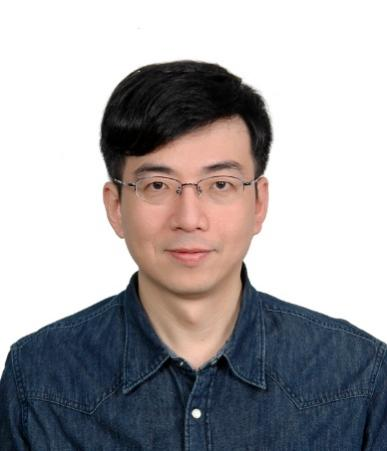
Assoc. Prof. Shin-Jie Lee
Email: jielee@mail.ncku.edu.tw
Affiliation: Department of Computer Science and Information Engineering, National Cheng Kung University, Tainan City, 701, Taiwan
Homepage:
Research Interests: software engineering, AI for software testing, web automation
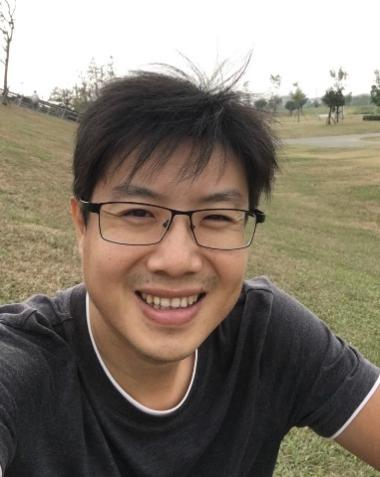
Prof. Wen-Tin Lee
Email: wtlee@mail.nknu.edu.tw
Affiliation: Department of Software Engineering and Management, National Kaohsiung Normal University, Kaohsiung, 802, Taiwan
Homepage:
Research Interests: software engineering, software testing, microservice architecture, DevOps, artificial intelligence (AI)

Prof. Hsi-Min Chen
Email: hsiminc@fcu.edu.tw
Affiliation: Department of Information Engineering and Computer Science, Feng Chia University, Taichung, 407, Taiwan
Homepage:
Research Interests: software engineering, programming education, service-oriented computing, distributed computing
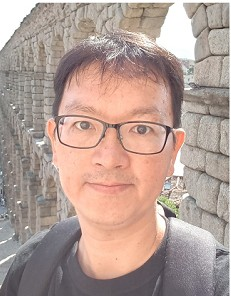
Prof. Nien-Lin Hsueh
Email: nlhsueh@fcu.edu.tw
Affiliation: Department of Information Engineering and Computer Science, Feng Chia University, Taichung, 407, Taiwan
Homepage:
Research Interests: software engineering, software testing, software framework design, programming education
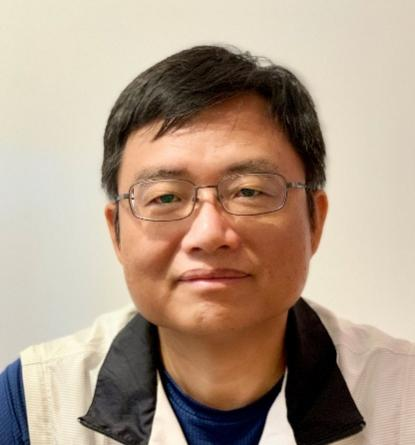
Summary
Artificial intelligence (AI) is revolutionizing software engineering practices across the development lifecycle. The emergence of large language and foundation models creates unprecedented opportunities for automation, collaboration, and innovation in software creation. This special issue aims to explore cutting-edge research in AI-Powered Software Engineering, emphasizing novel applications that enhance the productivity, quality, and reliability of software systems. We welcome studies that advance the synergistic relationship between software engineers and AI systems, address trustworthiness concerns, and propose novel metrics for evaluating AI efficacy in software engineering contexts.
This special issue focuses on original research papers addressing AI applications in software engineering that are aligned with the scope of the CMC journal. We seek high-quality contributions that demonstrate innovative AI approaches to solve challenges in software design, development, testing, and maintenance. The special issue welcomes interdisciplinary research that bridges AI with software engineering methodologies and practices.
Suggested Themes:
· Requirements and Design
· AI-assisted software design and model-driven engineering
· Prompt engineering for SE
· Development and Testing
· AI-enabled code generation and program repair
· Test case generation and defect prediction
· Novel efficacy metrics for AI-powered tools
· Operations and Maintenance
· AI for DevOps automation
· AI-assisted software maintenance and evolution
· Cross-cutting Concerns
· Human-centered and collaborative AI for SE
· Trustworthy AI systems for software engineering
· AI for programming education
· Empirical studies of AI tools in practice
Keywords
software engineering, artificial intelligence, large language models, DevOps, software testing, programming education, Human-AI collaboration
Published Papers

 Login
Login Register
 Submit a Paper
 Propose a Special lssue