Guest Editor(s)
Prof. Dr. Tien-Chi Huang
Email: tchuang@nutc.edu.tw
Affiliation: Department of Information Management, National Taichung University of Science and Technology, Taichung, Taiwan.
Homepage:
Research Interests: generative artificial intelligence, educational technology, e-learning, Cognitive load in HCI, AI-assisted coding education
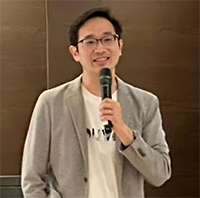
Prof. Dr. Jason C. Hung
Email: jhung@gm.nutc.edu.tw
Affiliation: Department of Computer Science and Information Engineering, National Taichung University of Science and Technology, 404, Taichung City, Taiwan
Homepage:
Research Interests: e-learning, intelligent system, social computing, affective computing, multimedia system, artificial intelligence

Dr. Yu-Hung Chiang
Email: yhchiang@nuk.edu.tw
Affiliation: Department of Asia-Pacific Industrial and Business Management, National University of Kaohsiung, Kaohsiung, Taiwan
Homepage:
Research Interests: Educational Technology, E-learning, Machine Learning, Natural Language Processing, AI in Education

Summary
Over the past decade, rapid progress in large-scale language modeling has transformed how people interact with software and how software maintains itself. Conversational interfaces now appear in customer service, education, and industrial operations, yet they still require domain adaptation, transparency, and safeguards before non-specialists can rely on them in critical settings. At the same time, learning-based techniques that automatically diagnose and repair code have evolved from isolated proofs of concept into viable tools, but their robustness, evaluative standards, and privacy implications remain open questions. These parallel developments create an urgent need for systematic scholarship that reconciles user-friendly dialogue with dependable, self-correcting software under clear governance principles.
This Special Issue concentrates on two converging research trajectories: (i) conversational systems that can quickly adapt to specialised domains while remaining easy for non-experts to configure, and (ii) data-driven approaches to automated software maintenance that detect and repair coding faults with minimal human oversight. We welcome studies that advance language-aware interaction, evaluate or enhance learning-based program-repair methods, and examine the privacy, reliability, and governance questions that arise when these capabilities are combined. By uniting work on human-AI dialogue and self-healing code, the Issue aims to articulate broad, forward-looking principles for building trustworthy and accessible intelligent systems.
Potential topics include but are not limited to:
· Domain-adaptive and multilingual named-entity recognition techniques that enable conversational agents to understand specialised terminology without extensive manual annotation.
· Lightweight language-model compression, distillation, and edge deployment strategies that maintain conversational fidelity while meeting resource constraints.
· Zero-shot and few-shot customization methods let non-experts configure dialogue systems for new domains with minimal data.
· Benchmark design and evaluation metrics tailored to task-oriented chatbots operating in technical or safety-critical contexts.
· Privacy-preserving data governance frameworks for training, fine-tuning and serving language models in compliance-sensitive environments.
· Learning-based automated program-repair approaches that address a broad spectrum of defect types and programming languages.
· Prompt engineering, transfer learning and alignment techniques aimed at improving the precision, recall and stability of repair suggestions.
· Reproducible benchmarking protocols and open datasets for systematic comparison of program-repair methods across diverse codebases.
· Formal verification, safety assurance and risk assessment of machine-generated patches in production software.
· Integrated system architectures that couple real-time conversational monitoring with autonomous repair to create closed-loop, self-healing applications.
· Ethical, legal and regulatory analyses of deploying autonomous language technologies in settings that demand transparency and accountability.
· Empirical studies on user trust, adoption dynamics and human oversight models when conversational interfaces and self-repair mechanisms converge.
Keywords
Conversational AI; Named Entity Recognition; Large Language Models; Automated Program Repair; Edge AI Deployment; Model Distillation; Privacy-Preserving Computing; Trustworthy Software Engineering; Domain Adaptation; Self-Healing Systems

 Login
Login Register
 Submit a Paper
 Propose a Special lssue