Special Issues
Table of Content

Advanced Modeling of Smart and Composite Materials and Structures

Submission Deadline: 31 July 2025 (closed) View: 1250 Submit to Journal

Guest Editors

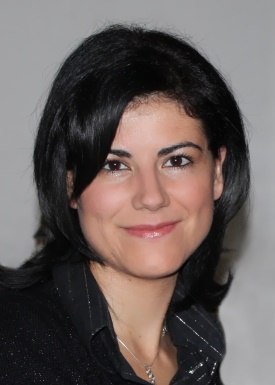
Prof. Dr. Rossana Dimitri 

Email: rossana.dimitri@unisalento.it

Affiliation: Department of Innovation Engineering, University of Salento, Lecce, Italy

Homepage:

Research Interests: Structural Mechanics; Fracture Mechanics; Mechanics of Materials and Solids; Computational Mechanics; Interfacial Problems
图片3.png


Prof. Dr. Francesco Tornabene  

Email: francesco.tornabene@unisalento.it

Affiliation: Department of Innovation Engineering, University of Salento, 73100 Lecce, Italy

Homepage:

Research Interests: Theory of shells, plates, arches, and beams; Generalized differential quadrature; FEM; SFEM; WFEM; IGA; Advanced composite materials; Functionally graded materials; Nanomaterials and nanotechnology

图片2.png


Dr. Matteo Viscoti

Email: matteo.viscoti@unisalento.it

Affiliation: Department of Innovation Engineering, University of Salento, 73100 Lecce, Italy

Homepage:

Research Interests: Advanced composite materials; Doubly-curved shells; Functionally graded materials; Generalized differential quadrature; Higher-order theories; Lattice honeycomb and anisogrid; Multifield analysis; Semi-analytical solutions

图片1.png


Summary

The development of advanced theoretical and computational models for smart and composite materials and structures is a subject of active research and will be explored for complex systems and structural components, involving many problems from statics, dynamics, and fracture phenomena at different scales and interfaces. In the last decades, practical strategies for advanced generally-shaped structures have been affected by many evaluation techniques, computational capabilities, and communication technologies, with increased use of intelligent optimization algorithms and tools for a high performance-oriented structural design.


Among the most common materials, this special issue explores the use of fiber-reinforced composites and laminates, but also functionally graded materials (FGMs), carbon nanotubes (CNTs), graphene nanoplatelets, SMART constituents, and further innovative and advanced classes of composites. To this end, classical or advanced theories, multiscale approaches, multiobjective optimization algorithms, and advanced computational tools, can be presented and discussed. Contributions on theoretical and numerical aspects are welcome from scientists working on computational materials and mechanics, involving different engineering applications.


Keywords

Computational Methods, Composite materials and structure, Smart materials and structures, Homogenization techniques, Constitutive models, Fracture mechanics, Optimization design, Plates and shells, Multiphysics

Published Papers


  • Open Access

    ARTICLE

    Magneto-Electro-Elastic 3D Coupling in Free Vibrations of Layered Plates

    Salvatore Brischetto, Domenico Cesare, Tommaso Mondino
    CMC-Computers, Materials & Continua, Vol.85, No.3, pp. 4491-4518, 2025, DOI:10.32604/cmc.2025.068518
    (This article belongs to the Special Issue: Advanced Modeling of Smart and Composite Materials and Structures)
    Abstract A three-dimensional (3D) analytical formulation is proposed to put together magnetic, electric and elastic fields to analyze the vibration modes of simply-supported layered piezo-electro-magnetic plates. The present 3D model allows analyses for layered smart plates in both open-circuit and closed-circuit configurations. The second-order differential equations written in the mixed curvilinear reference system govern the magneto-electro-elastic free vibration problem for multilayered plates. This set consists of the 3D equations of motion and the 3D divergence equations for the magnetic induction and electric displacement. Navier harmonic forms in the planar directions and the exponential matrix method in… More >

  • Open Access

    ARTICLE

    A New Quadrilateral Finite Element Formulation for the Free Vibration Analysis of CNT-Reinforced Plates with Cutouts

    Boudjema Bendaho, Abdelhak Mesbah, Zakaria Belabed
    CMC-Computers, Materials & Continua, Vol.85, No.2, pp. 2781-2805, 2025, DOI:10.32604/cmc.2025.069709
    (This article belongs to the Special Issue: Advanced Modeling of Smart and Composite Materials and Structures)
    Abstract A new quadrilateral finite element IQ4 is developed for the free vibration of carbon nanotube-reinforced composite (CNTRC) perforated plates with a central cutout. By enriching the membrane part and incorporating a projected shear technique, the IQ4 element is proposed to address the known limitations of the standard Q4 element, such as shear locking and limited consistency in the coupling of membrane-bending components. The proposed element is formulated within the FSDT-based framework and assessed through benchmark tests to verify its convergence and accuracy. The governing equations are obtained via the weak form of Hamilton’s principle. Particular… More >

  • Open Access

    ARTICLE

    Numerical Homogenization Approach for the Analysis of Honeycomb Sandwich Shell Structures

    Martina Rinaldi, Stefano Valvano, Francesco Tornabene, Rossana Dimitri
    CMC-Computers, Materials & Continua, Vol.83, No.2, pp. 2403-2428, 2025, DOI:10.32604/cmc.2025.060672
    (This article belongs to the Special Issue: Advanced Modeling of Smart and Composite Materials and Structures)
    Abstract This study conducts a thorough examination of honeycomb sandwich panels with a lattice core, adopting advanced computational techniques for their modeling. The research extends its analysis to investigate the natural frequency behavior of sandwich panels, encompassing the comprehensive assessment of the entire panel structure. At its core, the research applies the Representative Volume Element (RVE) theory to establish the equivalent material properties, thereby enhancing the predictive capabilities of lattice structure simulations. The methodology applies these properties in the core of infinite panels, which are modeled using double periodic boundary conditions to explore their natural frequencies.… More >

Share Link
