Guest Editor(s)
Assoc. Prof. Dr. Jin Yang
Email: jinyang@hbut.edu.cn
Affiliations: Centre for Advanced Innovation Technologies, VSB-Technical University of Ostrava, 708 00 Ostrava-Poruba, Czech Republic;
School of Civil Engineering, Architecture and Environment, Hubei University of Technology, Wuhan 430068, China
Homepage:
Research Interests: Low carbon and functional cement-based materials
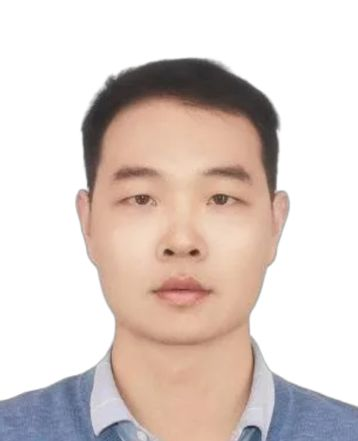
Prof. Dr. Xingyang He
Email: hexycn@163.com
Affiliation: School of Civil Engineering, Architecture and Environment, Hubei University of Technology, Wuhan 430068, China
Homepage:
Research Interests: Solid wastes utilization in low-carbon cement-based materials

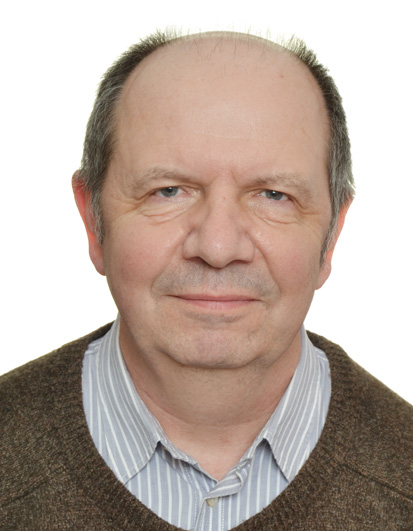
Prof. Dr. Bohumir Strnadel
Email: bohumir.strnadel@vsb.cz
Affiliation: Centre for Advanced Innovation Technologies, VSB-Technical University of Ostrava, 708 00 Ostrava-Poruba, Czech Republic
Homepage:
Research Interests: Sereological methosd of microstructure evaluation, nonstandard methods of fracture touhness evaluation, microstructural mechanical properties, fractal mechanics.
Assoc. Prof., Dr. Zongwu Chen
Email: chenzw@cug.edu.cn
Affiliation: Faculty of Engineering, China University of Geosciences (Wuhan), Wuhan 430074, China
Homepage: https://gcxy.cug.edu.cn/info/1091/2382.htm
Research Interests: Processing, Modification, and Utilization of Solid Wastes in Civil Engineering
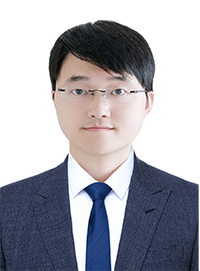
Assoc. Prof. Dr. Vlastimil Bilek
Email: vlastimil.bilek@vsb.cz
Affiliation: Faculty of Civil Engineering, VSB-Technical University of Ostrava, 708 00 Ostrava-Poruba, Czech Republic
Homepage:
Research Interests: Development of new materials for the sustainability of concrete structures; Eco-concrete with recycled materials and alkali-activated binders

Summary
Civil engineering materials are the fundamental materials for construction projects, and reducing the carbon footprint is key to the sustainable development of engineering construction. The high-efficient processing of solid waste (including but not limited to steel slag, waste concrete, fly ash, red mud, phosphogypsum, tailings, recycled asphalt, etc.) and the realization of its scaled and functional application in civil engineering materials (including but not limited to ordinary concrete, ultra-high-performance concrete, geopolymers, asphalt concrete, filling materials, soil materials, etc.) is an important way to achieve the low-carbon development of civil engineering materials. On the other hand, the fluid characteristics of civil engineering materials during the plastic stage determine their workability and operability in the application process. Due to the diverse types and complex components of solid waste, systematic research on the influence of different types of solid waste on the fluid mechanics of low-carbon civil engineering materials, such as fluidity, thixotropy, pumpability, and creep behavior, is of great significance for supporting the utilization of solid waste in low-carbon civil engineering materials. Furthermore, civil engineering materials, in a broad sense, belong to porous media materials, and the transport characteristics of media (including but not limited to CO2, ions, water, sound, radiation and heat transport) within them are significantly related to the long-term durability and service performances of the engineering materials. To promote the development of low-carbon civil engineering materials, the aim of this special issue is to summarize the materials processing, fluids and medium transport aspects of civil engineering materials. Suggested topics related to this special issue include, but are not limited to:
· Processing and application technologies of solid wastes
· Fluid related properties of low-carbon civil engineering materials
· CO2 transport and sequestration in low-carbon civil engineering materials
· Water and ion transport in low-carbon civil engineering materials
· Sound and radiation transport in low-carbon civil engineering materials
· Heat transport in low-carbon civil engineering materials
· Fluid and medium transport modelling
Keywords
Solid waste processing; Fluid related properties; Medium transport; Civil engineering materials; Low carbon
Published Papers

 Login
Login Register
 Submit a Paper
 Propose a Special lssue