Guest Editor(s)
Assoc. Prof. Weiwei Li
Email: liweiwei197@126.com
Affiliation: School of Chemistry and Chemical Engineering, North University of China, Taiyuan, 030051, China
Homepage:
Research Interests: multiscale mathematical simulation in chemical engineering, CFD, aspen, ANN, empirical simulation, DFT, MS, machine learning
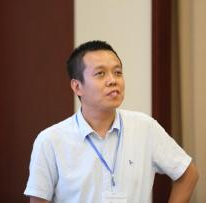
Assoc. Prof. Jing Guo
Email: guojing0519@nuc.edu.cn
Affiliation: School of Chemistry and Chemical Engineering, North University of China, Taiyuan, 030051, China
Homepage:
Research Interests: high gravity technology, nanoparticle fluidization and ALD nanoparticle surface modification

Summary
Aims and Scope
The efficient, clean conversion and high-value utilization of carbon-containing resources, such as coal, biomass, solid waste, and petroleum coke, are critical for sustainable energy development and advanced material innovation. Fluidized bed technology, renowned for its superior heat and mass transfer characteristics, flexible operating conditions, and scalability, has emerged as a core reactor technology for the thermo-conversion of carbon-containing resources, including combustion, pyrolysis, gasification, and liquefaction, as well as the synthesis of functional materials such as carbon-based materials, catalysts, and adsorbents.
Fluidized beds, however, involve complex multi-scale, coupled processes encompassing gas–solid multiphase flow, heat and mass transfer, and chemical reactions. A fundamental understanding of these processes is essential for optimizing reactor design, enhancing process efficiency, controlling product distribution, minimizing pollutant emissions, and enabling innovative material preparation strategies. Achieving this understanding requires the close integration of experimental investigations and numerical simulations, as well as collaborative efforts bridging these approaches.
This Special Issue aims to showcase the latest research and technological advances in this field, with emphasis on experimental studies, high-fidelity simulations, and their integration to uncover the intrinsic mechanisms governing fluidized bed reactors. We invite scholars, engineers, and researchers to submit original research articles, comprehensive reviews, and short communications that advance both the scientific understanding and industrial application of fluidized bed technology. This Special Issue covers (but is not limited to) the following topics:
1 Experimental Research
· Combustion characteristics of carbon-containing resources in fluidized beds; formation and control of pollutants (SOx, NOx, PM, heavy metals).
· Product distribution, reaction kinetics, and catalyst performance in fluidized bed pyrolysis, gasification, and liquefaction.
· Preparation and characterization of novel carbon-based materials, functional materials, catalysts, and adsorbents based on fluidized bed technology.
· Experimental observation and analysis of physical processes in reactors, such as particle mixing, attrition, agglomeration, and ash deposition.
· Application of advanced online/in-situ measurement techniques in fluidized bed process diagnostics (e.g., PIV/DIA, high-speed imaging, laser measurement, mass spectrometry coupling, etc.).
2 Numerical Simulation and Multi-Scale Modeling
Computational Fluid Dynamics (CFD) simulation of fluidized bed processes, including:
· Eulerian-Eulerian Two-Fluid Model (TFM)
· Eulerian-Lagrangian Discrete Particle Model (DPM/CFD-DEM)
· MP-PIC method for dense particle flows
· Reactive flow simulation coupled with complex chemical reaction networks
· Process modeling, system design, optimization, and techno-economic analysis of fluidized bed systems using process simulation software (e.g., Aspen Plus, ChemCAD).
· Microscopic mechanism studies based on molecular simulation (e.g., Density Functional Theory - DFT, Molecular Dynamics - MD), revealing reaction pathways, catalyst surface reaction mechanisms, molecular adsorption/diffusion behavior on material surfaces, etc.
· Machine Learning (ML) and Artificial Intelligence (AI) Applications in Fluidized Bed Technology
Submission Guidelines
Manuscripts should be submitted online through the journal's submission system. When submitting, please select the Special Issue "Fluidized Bed in Thermo-conversion & Material Preparation" or its corresponding designation.
All submissions will undergo a rigorous peer-review process. Before submission, please carefully read the journal's Guide for Authors to ensure the manuscript conforms to its format requirements.
We look forward to your outstanding contributions!
Keywords
fluidized bed, CFD, aspen, DFT, MS, machine learning, thermal conversion, material preparation
Published Papers

 Login
Login Register
 Submit a Paper
 Propose a Special lssue