Guest Editor(s)
(Associate Prof.) Mohammad Akbari
Email: m.akbari.g80@gmail.com
Affiliation: Department of Mechanical Engineering, University of Najafabad, Isfahan, 8514143131, Iran
Homepage:
Research Interests: thermal-fluid science, nanotechnology, computational fluid dynamics, material processing, machine learning
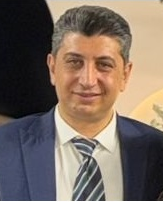
(Dr.) Hamidreza Azimy
Email: hamidrezaazimy@gmail.com
Affiliation: Department of Mechanical Engineering, University of Najafabad, Isfahan, 8514143131, Iran
Homepage:
Research Interests: experimental fluid dynamics, thermophysical properties of materials, heat transfer, artificial intelligence (AI), thermo-fluid sciences in manufacturing

Summary
Scope and Motivation
Emerging technologies in thermal-fluid science and materials engineering are reshaping the foundations of energy conversion, manufacturing, and thermal management systems. At the core of this evolution lies the ability to control and optimize heat and mass transfer through the rational design of working fluids, materials, and processes.
This Special Issue of Fluid Dynamics & Materials Processing (FDMP) aims to provide an integrated platform for the most recent advances in nanofluid dynamics, smart thermal materials, and intelligent process modeling, with a focus on understanding, predicting, and optimizing complex thermo-fluid behavior across engineering applications.
Rather than treating nanofluid studies, manufacturing processes, and AI-based modeling as separate topics, this issue emphasizes the continuum of scales and methods connecting them, from microscale heat transport in engineered fluids to macroscale process optimization in industrial systems. By unifying experimental, computational, and data-driven approaches, we aim to advance a coherent framework for sustainable and high-performance thermal-fluid systems.
Rationale
The past decade has seen remarkable progress in the development of nanofluids, hybrid nanofluids, and smart thermal materials, all designed to overcome the limitations of conventional fluids and solids in heat transfer and energy transport. Their enhanced thermophysical properties, improved thermal conductivity, tailored viscosity, and optimized specific heat, depend strongly on particle characteristics such as composition, morphology, and dispersion stability.
While the early focus of research was primarily experimental, the field is now transitioning toward multiscale modeling and data-driven prediction, aiming to provide a deeper mechanistic understanding of how nanostructure and composition affect macroscopic transport phenomena.
Simultaneously, industries such as additive manufacturing, thermal energy storage, and electronics cooling demand precise thermofluid control, often under extreme conditions involving rapid phase changes, localized heating, or strong electromagnetic fields. The integration of smart materials and nanostructured coatings offers new pathways to tailor energy transport in these processes.
To connect fundamental research with technological application, machine learning (ML) and artificial intelligence (AI) tools are increasingly used to augment traditional numerical simulations (CFD, FEM) and experimental design. These hybrid methodologies provide predictive insights into flow dynamics, heat transfer optimization, and process parameter selection, accelerating innovation in both materials processing and energy system design.
This Special Issue thus focuses on the rational coupling of fluid dynamics, materials science, and computational intelligence to achieve improved thermal-fluid performance, reliability, and sustainability.Topics of Interest include (but are not limited to):
· Experimental and numerical investigations of nanofluid and material processing heat transfer.
· Fluid/material interaction in manufacturing and energy devices.
· Magnetohydrodynamics (MHD) and entropy generation in nanofluid systems.
· Thermophysical characterization of smart and phase-change materials.
· Thermofluid modeling of additive and laser-based manufacturing (welding, cladding, melting).
· Machine learning, neural networks, optimization and hybrid physics–AI modeling in fluid dynamics and materials processing.
· Porous media flow, rheology, and complex fluids under magnetic/electric fields.
Keywords
nanofluids, smart thermal materials, heat and mass transfer, magnetohydrodynamics (MHD), computational fluid dynamics (CFD), additive manufacturing. laser material processing., machine learning, thermal management, energy systems

 Login
Login Register
 Submit a Paper
 Propose a Special lssue